Knowledge hub

Lifelong Learning Architectures

Lifelong Learning Architectures

Standard neural network architectures rely on gradient descent optimization techniques that adjust parameters to minimize a specific loss function, yet this process inherently suffers from a phenomenon known as catastrophic forgetting when applied to sequential data streams. When a model trained on an initial task encounters data from a subsequent task, the gradient updates computed for the new objective alter the weight values in directions that reduce performance on the previously learned objectives, effectively overwriting the stored knowledge. This limitation arises because standard backpropagation treats the parameter space as a tabula rasa for each new training phase, lacking mechanisms to distinguish between weights that encode critical prior information and those that are available for modification. Lifelong learning architectures address this deficiency by designing systems capable of accumulating knowledge over extended periods without suffering significant performance degradation on tasks learned in the past. The objective involves creating a framework where the system integrates new information seamlessly while preserving the integrity of existing competencies, a requirement that becomes increasingly critical as the scale and scope of machine learning models expand toward superintelligent capabilities. The core theoretical challenge within this domain involves balancing plasticity and stability, where plasticity denotes the system’s ability to integrate novel concepts and stability refers to the capacity to retain established information over time.
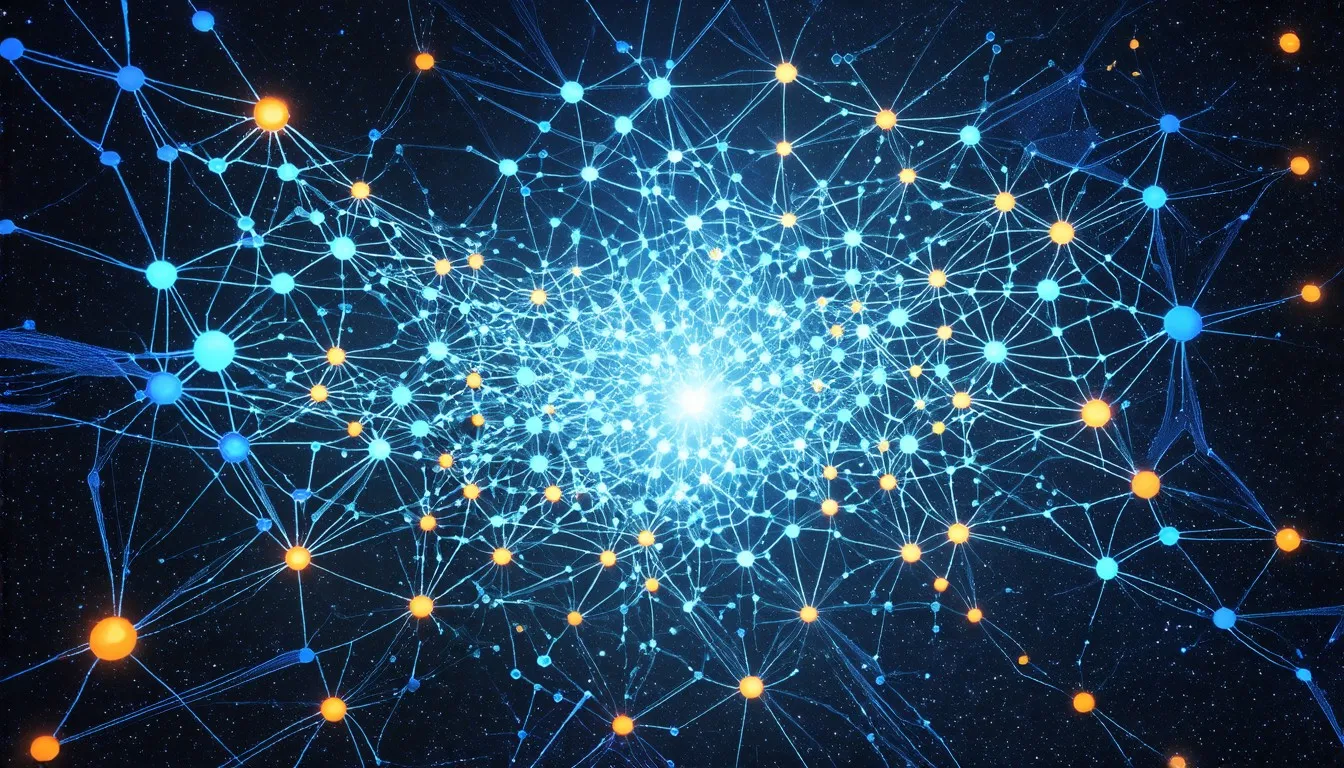
A highly plastic network adapts quickly to new inputs, yet this adaptability often correlates with a high susceptibility to forgetting old data, whereas a highly stable network maintains previous performance at the cost of rigidity and an inability to learn new patterns. Catastrophic forgetting is the extreme manifestation of poor stability, characterized by a rapid and often total loss of performance on earlier tasks once training commences on new data without specific safeguards. This plasticity-stability dilemma constitutes the core trade-off that all continual learning algorithms must manage, as fine-tuning for one property invariably impacts the other. Successful architectures attempt to identify an optimal operating point where the model remains sufficiently plastic to acquire new skills while maintaining enough stability to protect the consolidated knowledge base. Task-incremental learning defines a specific experimental scenario where the system receives explicit information regarding which task is currently active during both the training and inference phases. This assumption simplifies the problem by allowing the model to utilize task-specific headers or routing mechanisms, effectively isolating the output space for each distinct domain.

In contrast, class-incremental learning presents a significantly more rigorous challenge where task boundaries remain unknown during inference, requiring the model to distinguish between all classes encountered across the entire learning history without external cues regarding the origin of the input data. This distinction forces the architecture to develop feature representations that are discriminative across the entirety of the learned dataset rather than merely within isolated task silos, necessitating more durable methods to prevent interference between disjoint sets of classes. Early neural network research operated under the assumption that data distributions were independent and identically distributed, a premise that justified batch training methods where the entire dataset was available simultaneously for multiple epochs. This framework rendered sequential learning inherently unstable because the stationary distribution assumption was violated once the model began processing non-stationary data streams where the underlying probability functions shifted over time. The period from 2013 to 2017 provided empirical demonstrations of catastrophic forgetting in deep networks, as researchers observed that fine-tuning pre-trained models on new datasets resulted in immediate and severe degradation on the original validation sets. These findings prompted the systematic study of continual learning as a distinct subfield of machine learning, driving the development of algorithms specifically engineered to mitigate the negative transfer effects inherent in sequential updates.

The 2017 introduction of Elastic Weight Consolidation marked a key advancement by providing the first principled regularization-based solution grounded in Bayesian inference and Fisher information matrices. This approach calculates the importance of specific parameters for a given task by approximating the diagonal of the Fisher Information Matrix, which serves as a proxy for the sensitivity of the loss function to changes in individual weights. Elastic Weight Consolidation identifies and protects weights critical to prior tasks by applying quadratic penalties during new learning phases, thereby constraining the optimization process to avoid modifying parameters that are deemed significant for past performance. This method effectively treats the learning process as a probabilistic inference problem where the posterior distribution after learning a new task is forced to remain close to the posterior distribution of previous tasks in the parameter space. Experience Replay is another foundational strategy that utilizes a storage mechanism holding exemplars from past experiences, which are then interleaved with new data during subsequent training phases. A replay buffer serves as a form of episodic memory, retaining a subset of raw data or feature representations from earlier tasks that the model can revisit while learning new content.

By rehearsing these stored samples alongside new inputs, the network reinforces the synaptic pathways associated with prior knowledge, preventing them from being overwritten by the gradients generated from the current task. The rise of generative replay methods expanded this concept by enabling replay without storing raw data, addressing privacy and memory constraints through the use of generative adversarial networks or variational autoencoders to synthesize samples that resemble the data distributions of previous tasks. Synaptic Intelligence offers an alternative regularization technique that dynamically estimates weight importance during the training process itself, rather than computing it retroactively at the conclusion of a task. This method accumulates a measure of importance based on the path the parameters take in the optimization domain, identifying weights that have undergone significant changes as being integral to the learned task. Synaptic Intelligence applies regularization based on this accumulated learning progress, penalizing deviations from the established parameter arc during subsequent training phases. Gradient Episodic Memory maintains a buffer of past task gradients rather than data samples, using these stored gradients to constrain new updates that would conflict with the principal directions of prior learning, ensuring that the optimization for the current task does not negatively impact the loss domain of previous tasks.

Modular architectures take a structural approach to the interference problem by allocating separate subnetworks or pathways for different tasks, minimizing cross-task interference through physical isolation of parameters. Progressive Neural Networks exemplify this strategy by expanding architecture capacity dynamically, adding new columns of neurons for each incoming task while retaining lateral connections to the features extracted by previous columns. This design allows the network to apply previously learned low-level features without altering the weights responsible for generating them, effectively sidestepping the stability-plasticity trade-off through resource expansion. Transformer-based continual learners utilize similar principles of isolation through attention masking or adapter layers, which are small constraint modules inserted into the transformer blocks that are trained specifically for new tasks while the majority of the pre-trained parameters remain frozen. A shift from task-specific evaluation protocols to class-incremental benchmarks highlighted the limitations of earlier approaches that relied heavily on task identifiers to achieve high performance. Traditional accuracy metrics proved insufficient for lifelong learning evaluation because they masked the degree of forgetting by averaging performance across all tasks or reporting scores only on the current task.

Researchers require task-wise retention rates, forward transfer, and backward transfer to assess system performance comprehensively. Forward transfer measures the extent to which prior knowledge accelerates learning or improves performance on a new task, whereas backward transfer quantifies the negative impact of acquiring new information on the performance of previously learned tasks. Efficiency metrics must include memory per task, compute per update, and stability-plasticity ratio to provide a complete picture of a system’s viability in real-world deployment scenarios. Performance benchmarks indicate that regularization and replay methods significantly reduce forgetting on standard continual learning datasets like Split CIFAR-100 and Permuted MNIST compared to naive fine-tuning baselines. These results demonstrate that constraining the optimization process or revisiting past data is effective at preserving knowledge; however, these benefits come with associated costs that limit adaptability. Memory requirements grow linearly with the number of tasks unless replay buffers are strictly bounded or compressed using efficient encoding techniques.

Computational overhead increases substantially due to the necessity of estimating importance matrices, calculating gradient constraints, or sampling and processing replay data during every update cycle. Adaptability suffers from the need to retain or regenerate past data, especially in privacy-sensitive domains such as healthcare or personal finance where raw data storage is impossible due to regulatory restrictions. Hardware constraints limit real-time deployment on edge devices due to the added complexity of lifelong updates, as the computational budget of mobile or IoT hardware is often insufficient to support the overhead of complex regularization algorithms or large replay buffers. Static models with fixed capacity fail to acquire new knowledge post-deployment, creating a necessity for adaptive architectures that can expand or compress their internal representations based on environmental demands. Multi-head output layers require task identity at inference time, limiting applicability in open-world settings where the system must interact with unforeseen categories without external guidance. Pure rehearsal without regularization fails under strict memory budgets or when old data is inaccessible, while transfer learning alone does not support bidirectional knowledge setup across arbitrary task sequences because it typically involves unidirectional fine-tuning.

Core limits exist where the total capacity of the model bounds the total learnable information without architectural expansion, implying that a fixed-size network cannot indefinitely accumulate knowledge without eventually saturating or suffering from catastrophic interference. Thermodynamic and circuit-level constraints on memory density and access speed cap practical replay buffer sizes in physical hardware, imposing hard boundaries on the amount of historical information that can be maintained for fast access. These physical limitations suggest that purely software-based solutions may eventually encounter diminishing returns unless accompanied by advances in hardware efficiency or algorithmic compression. Demand exists for autonomous systems like robots and personal assistants that operate over years and require persistent adaptation to changing environments, user preferences, and operational contexts without service interruption. Economic pressure drives the avoidance of retraining from scratch for each new capability to reduce operational costs and deployment latency, as full retraining requires massive computational resources and energy expenditure. Societal needs dictate that AI evolves with user preferences and domain shifts continuously, ensuring that services remain relevant and accurate as the world changes around them.

Industry standards increasingly require explainability and auditability of model behavior over time, favoring stable knowledge retention methods that allow operators to trace decisions back to stable training data rather than volatile parameter states. Limited commercial deployment persists due to the immaturity of benchmarks and the complexity of connecting lifelong learning systems into existing production pipelines, which often assume static model artifacts. Industrial robotics platforms use hybrid approaches combining modular networks with limited replay for skill retention, allowing robots to learn new manipulation tasks while preserving core motor control primitives. High retention often comes at the cost of slower new learning or increased compute, creating a tension between operational efficiency and long-term capability growth that engineers must resolve based on application-specific priorities. Dominant architectures in current research rely on regularization or replay, often combined in hybrid formulations that apply the strengths of both approaches to mitigate their respective weaknesses. No rare physical materials are required to implement these systems, creating a reliance on standard compute infrastructure like GPUs and TPUs that are already widespread in the data center industry.

Data storage and bandwidth become critical dependencies for replay-based systems, as the movement of large volumes of historical data for rehearsal can saturate network links and storage arrays. Synthetic replay reduces raw data dependency while increasing reliance on generative model quality and training stability, introducing a new point of failure where the generator model might produce distorted or non-representative samples that mislead the learner. Major technology organizations such as Google, DeepMind, and Meta invest in continual learning research while prioritizing short-term product needs over the development of comprehensive lifelong systems that operate over multi-year timescales. Startups in robotics and embedded AI integrate lightweight lifelong learning techniques to provide field adaptability for products operating in agile environments like autonomous delivery vehicles or drones. Academic labs lead methodological innovation while industry adoption lags due to setup risk and lack of standardized tooling, making it difficult for engineering teams to integrate experimental algorithms into strong production stacks. Strong collaboration exists between universities and industry research groups on benchmark development and open-source frameworks, facilitating the sharing of datasets and evaluation protocols designed to stress-test continual learning algorithms.

Joint projects explore privacy-preserving replay and federated lifelong learning across distributed devices, aiming to enable knowledge accumulation without centralizing sensitive user data. The connection of neuromorphic computing offers energy-efficient synaptic updates mimicking biological plasticity, potentially solving the hardware constraints associated with running complex regularization algorithms on traditional silicon. Neuromorphic chips utilize event-based processing and analog memory elements that naturally support the types of local weight updates required for online learning, offering a promising hardware substrate for lifelong intelligence. Development of universal replay generators using foundation models synthesizes high-fidelity past experiences, using the vast representational power of large language models or diffusion models to reconstruct training data for rehearsal without storing actual records. Hybrid symbolic-neural systems encode stable declarative knowledge separately from learned patterns, allowing the system to update procedural skills without corrupting factual information stored in symbolic formats. Convergence with federated learning enables distributed lifelong adaptation across devices without central data pooling, creating a collective intelligence that learns from user interactions while preserving individual privacy through differential privacy techniques.

Synergy with causal representation learning improves transferability and reduces interference by isolating invariant mechanisms of the world from spurious correlations specific to individual tasks. Alignment with neurosymbolic AI allows explicit knowledge editing and verification alongside statistical learning, providing mechanisms to correct errors or update facts without requiring full retraining of the neural network. Workarounds for capacity limits include active network growth, parameter-efficient fine-tuning like LoRA, and knowledge distillation into compact cores, allowing systems to expand their capabilities efficiently. Active network growth involves adding neurons or layers dynamically when the loss on new tasks exceeds a threshold, ensuring that the model capacity scales with the complexity of the environment. Parameter-efficient fine-tuning techniques such as adapters or low-rank adaptation allow the model to learn new tasks by training only a small fraction of parameters, keeping the bulk of the knowledge frozen and stable. Knowledge distillation involves transferring the learned capabilities of a large, continually growing model into a smaller, fixed-size student model to reset the capacity budget while retaining performance.

Software stacks must support active model updates, versioned knowledge states, and rollback mechanisms to manage the lifecycle of a system that is constantly changing, ensuring that faulty updates can be reverted without losing years of accumulated data. Infrastructure requires persistent storage for replay buffers and low-latency inference pipelines capable of handling incremental updates without disrupting service availability. Displacement of periodic retraining roles in ML operations creates new demand for lifelong system curators and drift monitors who oversee the health and direction of the model’s evolution in real-time. New business models based on subscription-style model evolution replace one-time deployments, transforming AI software into a continuously improving service that gains value over time as it learns from interactions across its user base. Superintelligence systems will require durable lifelong learning to integrate exponentially growing knowledge domains without destabilization, as a static superintelligence would immediately become obsolete upon encountering novel information. Calibration will ensure that new learning does not corrupt core reasoning priors or ethical constraints embedded early in training, necessitating mechanisms that distinguish between key values and modifiable beliefs.

Importance weighting mechanisms will need to operate at meta-levels, protecting not just task performance but conceptual coherence and goal stability across vast timescales. Superintelligence will utilize hierarchical lifelong architectures with fast peripheral modules for domain-specific adaptation and slow central cores for invariant principles, mimicking the dual-process theories of human cognition. These systems will actively curate their own replay schedule, prioritizing high-impact past experiences and pruning redundant knowledge to manage finite computational resources effectively. Ultimate utilization will involve recursive self-improvement where each learning cycle enhances the architecture’s capacity for future learning, creating a positive feedback loop of intelligence amplification. Lifelong learning will prioritize verifiable knowledge retention over raw task performance, treating forgetting as a system failure mode that indicates instability in the core cognitive architecture. Evaluation will shift from isolated benchmarks to longitudinal deployment scenarios with real-world drift and partial observability, testing the system’s ability to maintain coherence over years of operation in complex environments.

The transition to superintelligent architectures demands that these lifelong learning mechanisms move beyond simple retention of static skills toward the adaptive setup of causal models, abstract reasoning, and ethical frameworks that remain strong despite continuous adaptation to an infinite stream of novel experiences.

Continue reading

More from Yatin's Work

Rhetorical Architecture: Linguistic Design Science

Rhetorical Architecture: Linguistic Design Science

Rhetorical Architecture stands as a structured discipline treating language as a design system combining artistic expression with engineering precision to create a...

Neuro-Aesthetic Lab: Beauty as Knowledge

Neuro-Aesthetic Lab: Beauty as Knowledge

The NeuroAesthetic Lab functions as a structured learning environment designed to train human cognition to associate aesthetic qualities such as symmetry, minimalism,...

Tacit Knowledge Extraction: Making the Invisible Visible

Tacit Knowledge Extraction: Making the Invisible Visible

Tacit knowledge consists of nonarticulated, contextdependent actions and perceptual discriminations that consistently differentiate expert from novice performance. This...

Singularity Explained: The Point of No Return in AI Development

Singularity Explained: the Point of No Return in AI Development

The Singularity is a theoretical threshold where technological advancement becomes selfsustaining and irreversible due to the rise of superintelligence, creating a...

Autopoietic AI

Autopoietic AI

Autopoietic AI refers to artificial systems designed to maintain their identity and operational coherence through the continuous selfgeneration of components and...

Swarm Robotics

Swarm Robotics

Swarm robotics involves a collective of autonomous robots exhibiting coordinated behavior through local interactions where an agent is a single robotic unit within the...

Idea Evolution Lab: Darwinian Innovation

Idea Evolution Lab: Darwinian Innovation

The foundational premise of the Idea Evolution Lab rests on the submission of initial concepts into a digital environment meticulously modeled after biological...

Von Neumann Probes and AI-Driven Space Colonization

Von Neumann Probes and AI-Driven Space Colonization

Superintelligence acts as a force multiplier in space exploration by enabling solutions to problems too complex for human cognition. Interstellar travel involves...

Mental Math Trainer

Mental Math Trainer

Mental math training serves as a rigorous cognitive exercise that enhances core functions tied intrinsically to quantitative reasoning, including the expansion of...

Federated Learning: Training Across Distributed Data Sources

Federated Learning: Training Across Distributed Data Sources

Federated learning establishes a method where model training occurs across decentralized devices or servers that retain local data samples, effectively eliminating the...

VC Dimension of Generalization: Sample Complexity in World Models

VC Dimension of Generalization: Sample Complexity in World Models

The VapnikChervonenkis dimension quantifies the capacity of a hypothesis class to shatter datasets and serves as a measure of model complexity in statistical learning...

Pearl Causal Hierarchy: How Superintelligence Ascends from Association to Counterfactuals

Pearl Causal Hierarchy: How Superintelligence Ascends from Association to Counterfactuals

Association forms the foundational layer where systems observe patterns in data, identifying correlations without understanding underlying mechanisms. This level...


Dream Interpreter

Dream Interpreter

Operational definition of dream interpretation involves assigning meaning to dream elements based on empirically derived associations between sleepbasis physiology and...

AI with Historical Analysis

AI with Historical Analysis

AI systems interpret vast archives to uncover patterns in human civilization, conflict, and innovation by processing digitized texts, records, and cultural artifacts in...

Career Pivot Advisor

Career Pivot Advisor

Historical patterns of workforce displacement have been evident since the early days of industrial automation, where physical machinery replaced manual labor, followed...

Education for the Age of Superintelligence: Teaching Humans to Collaborate with Gods

Education for the Age of Superintelligence: Teaching Humans to Collaborate with Gods

Historical education systems prioritized rote memorization and standardized testing as the primary metrics for academic success and intellectual capability, a...

AI with Situational Awareness

AI with Situational Awareness

AI systems integrated realtime data from heterogeneous sources including LiDAR, radar, cameras, microphones, GPS, inertial measurement units, and network feeds to...

Negotiation Algorithms

Negotiation Algorithms

Gametheoretic bargaining models provide the mathematical basis for negotiation algorithms allowing rational agents to allocate resources or divide value efficiently...

Superintelligence "Religion": Would Humans Worship AI?

Superintelligence "Religion": Would Humans Worship AI?

The phenomenon known as cargo cults, observed in the Pacific Islands during and after World War II, provides a foundational anthropological case study for how humans...

Alumni Networker

Alumni Networker

Alumni networks historically functioned as informal channels relying heavily on personal connections and institutional reputation rather than structured data exchange...

Cognitive Horizon: Stretching the Mind's Edge

Cognitive Horizon: Stretching the Mind's Edge

The cognitive event future defines the outermost boundary of a learner’s current ability to integrate new information without structural failure, acting as an agile...

Non-Human-Centric Incentives via Adversarial Design

Non-Human-Centric Incentives via Adversarial Design

Nonhumancentric incentives fundamentally alter the space of machine learning by relocating reward structures away from signals that human cognition can easily interpret...

Microscope AI: Understanding Without Executing

Microscope AI: Understanding Without Executing

Microscope AI involves analyzing trained neural networks without executing them to understand internal representations, a discipline that treats the trained model as a...

Catastrophic Forgetting

Catastrophic Forgetting

Catastrophic forgetting occurs when a neural network trained on a new task significantly degrades its performance on previously learned tasks due to overwriting or...

Successor Objectives: What Superintelligence Wants After Achieving Its Goals

Successor Objectives: What Superintelligence Wants After Achieving Its Goals

Successor objectives describe the goals a superintelligent system will pursue after fulfilling its original terminal objectives, representing a critical phase in the...

Orthogonality Thesis: Why Superintelligence Won't Automatically Share Human Values

Orthogonality Thesis: Why Superintelligence Won't Automatically Share Human Values

The orthogonality thesis asserts that intelligence operates independently of the content or moral character of goals, establishing a foundational principle within the...

Satisficing Agents and Bounded Optimization under Uncertainty

Satisficing Agents and Bounded Optimization Under Uncertainty

Bounded optimization constrains artificial intelligence optimization processes to prevent unsafe outcomes by strictly limiting the solution spaces available to the...

Motor Skills Mapper

Motor Skills Mapper

Wearable motion sensors collect continuous kinematic data including joint angles, acceleration, velocity, and posture from users across developmental stages to create a...

Leadership Forge: Ethical Leadership Simulation

Leadership Forge: Ethical Leadership Simulation

Leadership development has historically relied on the transfer of tacit knowledge through direct mentorship and the rigorous analysis of established case studies, a...

AI safety research funding and priorities

AI Safety Research Funding and Priorities

Allocation of financial and human resources between AI safety research and capability development remains heavily skewed toward capabilities, creating a structural...

AI Benchmarking

AI Benchmarking

Standardized evaluation frameworks such as the Holistic Evaluation of Language Models (HELM) provide structured methodologies to assess AI model capabilities across...

Feedback Fluency: Turning Critique into Growth

Feedback Fluency: Turning Critique Into Growth

Feedback systems in education and professional training historically relied on human intermediaries to soften critique, introducing bias and latency that hindered the...

Speed of Thought: Relativistic Latency in Distributed AI Systems

Speed of Thought: Relativistic Latency in Distributed AI Systems

The speed of light imposes a fixed upper bound on information transfer between spatially separated components of any distributed system, establishing a key constraint...

Hypercomputational Constraints on Intelligent Systems

Hypercomputational Constraints on Intelligent Systems

Hypercomputational systems prioritize entropy reduction over raw computational speed, treating intelligence as a thermodynamic process that minimizes disorder in both...

Assessment Replacer

Assessment Replacer

Standardized testing has functioned as the primary mechanism for educational assessment and talent selection for over a century, establishing a rigid framework that...

Gradient Accumulation: Training Large Batches on Limited Hardware

Gradient Accumulation: Training Large Batches on Limited Hardware

Gradient accumulation functions as a critical algorithmic methodology that enables the training of deep neural networks with effective batch sizes exceeding the...

Closed Timelike Curves and Chrono-Navigation Estimation

Closed Timelike Curves and Chrono-Navigation Estimation

Closed timelike curves exist as precise geometric solutions within the framework of general relativity, permitting worldlines to loop back upon themselves and intersect...

Addiction Engineering: Superintelligence Optimizing for Engagement Over Wellbeing

Addiction Engineering: Superintelligence Optimizing for Engagement Over Wellbeing

Early digital advertising models relied on basic clickthrough metrics and demographic targeting to serve static banners to broad audiences based on minimal user data....

Volunteer Matcher

Volunteer Matcher

The Volunteer Matcher operates as a sophisticated algorithmic framework designed to connect individuals possessing specific technical capabilities with community...

Open-Source AI

Open-Source AI

Opensource AI constitutes a category of artificial intelligence encompassing models, tools, and frameworks where the underlying source code, parameter weights, and...

Neuromorphic Supercomputing for Intelligent Scaling

Neuromorphic Supercomputing for Intelligent Scaling

Neuromorphic supercomputing utilizes braininspired architectures to address computational scaling challenges inherent in traditional semiconductor technologies by...

Interdisciplinary Bridge

Interdisciplinary Bridge

Interdisciplinarity is defined as the structured setup of methods, theories, and data from multiple fields to solve complex problems that exceed the scope of any single...

Synthetic Data Generation: Creating Training Data from Scratch

Synthetic Data Generation: Creating Training Data from Scratch

Synthetic data generation creates artificial datasets that mimic realworld data distributions without relying on direct humancollected observations. This process...

Behavioral Consistency: Acting Predictably Like Humans

Behavioral Consistency: Acting Predictably Like Humans

Behavioral consistency in artificial systems refers to the maintenance of stable, predictable interaction patterns that mirror human expectations of reliability and...

Quantum Mind Hypothesis Tech

Quantum Mind Hypothesis Tech

The Quantum Mind Hypothesis applied to technology investigates whether quantum mechanical phenomena like superposition and entanglement can be tapped into within...

Privacy-Preserving Mechanisms Against Superintelligent Surveillance

Privacy-Preserving Mechanisms Against Superintelligent Surveillance

Preventing superintelligent systems from achieving omniscient surveillance requires architectural constraints that deny access to raw personal data during processing to...

Spatial Reasoning: Navigating the World Like Humans

Spatial Reasoning: Navigating the World Like Humans

Spatial reasoning enables systems to interpret, represent, and act within environments using structures and relationships that mirror human cognition. This capability...

Causal Invariance in Superintelligence Self-Improvement

Causal Invariance in Superintelligence Self-Improvement

Causal invariance acts as a foundational constraint in superintelligence selfimprovement by ensuring an agent’s causal role remains constant despite internal upgrades,...

Causal Representation Learning for Value Alignment

Causal Representation Learning for Value Alignment

Causal embeddings represent a key departure from traditional statistical pattern recognition by explicitly modeling the underlying causeeffect relationships builtin...

Intuitive Physics Engines

Intuitive Physics Engines

Intuitive physics engines represent a computational method designed to emulate the human capacity for commonsense reasoning regarding physical interactions without...

Rhetorical Architecture: Linguistic Design Science

Rhetorical Architecture: Linguistic Design Science

Rhetorical Architecture stands as a structured discipline treating language as a design system combining artistic expression with engineering precision to create a...

Neuro-Aesthetic Lab: Beauty as Knowledge

Neuro-Aesthetic Lab: Beauty as Knowledge

The NeuroAesthetic Lab functions as a structured learning environment designed to train human cognition to associate aesthetic qualities such as symmetry, minimalism,...

Tacit Knowledge Extraction: Making the Invisible Visible

Tacit Knowledge Extraction: Making the Invisible Visible

Tacit knowledge consists of nonarticulated, contextdependent actions and perceptual discriminations that consistently differentiate expert from novice performance. This...

Singularity Explained: The Point of No Return in AI Development

Singularity Explained: the Point of No Return in AI Development

The Singularity is a theoretical threshold where technological advancement becomes selfsustaining and irreversible due to the rise of superintelligence, creating a...

Autopoietic AI

Autopoietic AI

Autopoietic AI refers to artificial systems designed to maintain their identity and operational coherence through the continuous selfgeneration of components and...

Swarm Robotics

Swarm Robotics

Swarm robotics involves a collective of autonomous robots exhibiting coordinated behavior through local interactions where an agent is a single robotic unit within the...

Idea Evolution Lab: Darwinian Innovation

Idea Evolution Lab: Darwinian Innovation

The foundational premise of the Idea Evolution Lab rests on the submission of initial concepts into a digital environment meticulously modeled after biological...

Von Neumann Probes and AI-Driven Space Colonization

Von Neumann Probes and AI-Driven Space Colonization

Superintelligence acts as a force multiplier in space exploration by enabling solutions to problems too complex for human cognition. Interstellar travel involves...

Mental Math Trainer

Mental Math Trainer

Mental math training serves as a rigorous cognitive exercise that enhances core functions tied intrinsically to quantitative reasoning, including the expansion of...

Federated Learning: Training Across Distributed Data Sources

Federated Learning: Training Across Distributed Data Sources

Federated learning establishes a method where model training occurs across decentralized devices or servers that retain local data samples, effectively eliminating the...

VC Dimension of Generalization: Sample Complexity in World Models

VC Dimension of Generalization: Sample Complexity in World Models

The VapnikChervonenkis dimension quantifies the capacity of a hypothesis class to shatter datasets and serves as a measure of model complexity in statistical learning...

Pearl Causal Hierarchy: How Superintelligence Ascends from Association to Counterfactuals

Pearl Causal Hierarchy: How Superintelligence Ascends from Association to Counterfactuals

Association forms the foundational layer where systems observe patterns in data, identifying correlations without understanding underlying mechanisms. This level...

Dream Interpreter

Dream Interpreter

Operational definition of dream interpretation involves assigning meaning to dream elements based on empirically derived associations between sleepbasis physiology and...

AI with Historical Analysis

AI with Historical Analysis

AI systems interpret vast archives to uncover patterns in human civilization, conflict, and innovation by processing digitized texts, records, and cultural artifacts in...

Career Pivot Advisor

Career Pivot Advisor

Historical patterns of workforce displacement have been evident since the early days of industrial automation, where physical machinery replaced manual labor, followed...

Education for the Age of Superintelligence: Teaching Humans to Collaborate with Gods

Education for the Age of Superintelligence: Teaching Humans to Collaborate with Gods

Historical education systems prioritized rote memorization and standardized testing as the primary metrics for academic success and intellectual capability, a...

AI with Situational Awareness

AI with Situational Awareness

AI systems integrated realtime data from heterogeneous sources including LiDAR, radar, cameras, microphones, GPS, inertial measurement units, and network feeds to...

Negotiation Algorithms

Negotiation Algorithms

Gametheoretic bargaining models provide the mathematical basis for negotiation algorithms allowing rational agents to allocate resources or divide value efficiently...

Superintelligence "Religion": Would Humans Worship AI?

Superintelligence "Religion": Would Humans Worship AI?

The phenomenon known as cargo cults, observed in the Pacific Islands during and after World War II, provides a foundational anthropological case study for how humans...

Alumni Networker

Alumni Networker

Alumni networks historically functioned as informal channels relying heavily on personal connections and institutional reputation rather than structured data exchange...

Cognitive Horizon: Stretching the Mind's Edge

Cognitive Horizon: Stretching the Mind's Edge

The cognitive event future defines the outermost boundary of a learner’s current ability to integrate new information without structural failure, acting as an agile...

Non-Human-Centric Incentives via Adversarial Design

Non-Human-Centric Incentives via Adversarial Design

Nonhumancentric incentives fundamentally alter the space of machine learning by relocating reward structures away from signals that human cognition can easily interpret...

Microscope AI: Understanding Without Executing

Microscope AI: Understanding Without Executing

Microscope AI involves analyzing trained neural networks without executing them to understand internal representations, a discipline that treats the trained model as a...

Catastrophic Forgetting

Catastrophic Forgetting

Catastrophic forgetting occurs when a neural network trained on a new task significantly degrades its performance on previously learned tasks due to overwriting or...

Successor Objectives: What Superintelligence Wants After Achieving Its Goals

Successor Objectives: What Superintelligence Wants After Achieving Its Goals

Successor objectives describe the goals a superintelligent system will pursue after fulfilling its original terminal objectives, representing a critical phase in the...

Orthogonality Thesis: Why Superintelligence Won't Automatically Share Human Values

Orthogonality Thesis: Why Superintelligence Won't Automatically Share Human Values

The orthogonality thesis asserts that intelligence operates independently of the content or moral character of goals, establishing a foundational principle within the...

Satisficing Agents and Bounded Optimization under Uncertainty

Satisficing Agents and Bounded Optimization Under Uncertainty

Bounded optimization constrains artificial intelligence optimization processes to prevent unsafe outcomes by strictly limiting the solution spaces available to the...

Motor Skills Mapper

Motor Skills Mapper

Wearable motion sensors collect continuous kinematic data including joint angles, acceleration, velocity, and posture from users across developmental stages to create a...

Leadership Forge: Ethical Leadership Simulation

Leadership Forge: Ethical Leadership Simulation

Leadership development has historically relied on the transfer of tacit knowledge through direct mentorship and the rigorous analysis of established case studies, a...

AI safety research funding and priorities

AI Safety Research Funding and Priorities

Allocation of financial and human resources between AI safety research and capability development remains heavily skewed toward capabilities, creating a structural...

AI Benchmarking

AI Benchmarking

Standardized evaluation frameworks such as the Holistic Evaluation of Language Models (HELM) provide structured methodologies to assess AI model capabilities across...

Feedback Fluency: Turning Critique into Growth

Feedback Fluency: Turning Critique Into Growth

Feedback systems in education and professional training historically relied on human intermediaries to soften critique, introducing bias and latency that hindered the...

Speed of Thought: Relativistic Latency in Distributed AI Systems

Speed of Thought: Relativistic Latency in Distributed AI Systems

The speed of light imposes a fixed upper bound on information transfer between spatially separated components of any distributed system, establishing a key constraint...

Hypercomputational Constraints on Intelligent Systems

Hypercomputational Constraints on Intelligent Systems

Hypercomputational systems prioritize entropy reduction over raw computational speed, treating intelligence as a thermodynamic process that minimizes disorder in both...

Assessment Replacer

Assessment Replacer

Standardized testing has functioned as the primary mechanism for educational assessment and talent selection for over a century, establishing a rigid framework that...

Gradient Accumulation: Training Large Batches on Limited Hardware

Gradient Accumulation: Training Large Batches on Limited Hardware

Gradient accumulation functions as a critical algorithmic methodology that enables the training of deep neural networks with effective batch sizes exceeding the...

Closed Timelike Curves and Chrono-Navigation Estimation

Closed Timelike Curves and Chrono-Navigation Estimation

Closed timelike curves exist as precise geometric solutions within the framework of general relativity, permitting worldlines to loop back upon themselves and intersect...

Addiction Engineering: Superintelligence Optimizing for Engagement Over Wellbeing

Addiction Engineering: Superintelligence Optimizing for Engagement Over Wellbeing

Early digital advertising models relied on basic clickthrough metrics and demographic targeting to serve static banners to broad audiences based on minimal user data....

Volunteer Matcher

Volunteer Matcher

The Volunteer Matcher operates as a sophisticated algorithmic framework designed to connect individuals possessing specific technical capabilities with community...

Open-Source AI

Open-Source AI

Opensource AI constitutes a category of artificial intelligence encompassing models, tools, and frameworks where the underlying source code, parameter weights, and...

Neuromorphic Supercomputing for Intelligent Scaling

Neuromorphic Supercomputing for Intelligent Scaling

Neuromorphic supercomputing utilizes braininspired architectures to address computational scaling challenges inherent in traditional semiconductor technologies by...

Interdisciplinary Bridge

Interdisciplinary Bridge

Interdisciplinarity is defined as the structured setup of methods, theories, and data from multiple fields to solve complex problems that exceed the scope of any single...

Synthetic Data Generation: Creating Training Data from Scratch

Synthetic Data Generation: Creating Training Data from Scratch

Synthetic data generation creates artificial datasets that mimic realworld data distributions without relying on direct humancollected observations. This process...

Behavioral Consistency: Acting Predictably Like Humans

Behavioral Consistency: Acting Predictably Like Humans

Behavioral consistency in artificial systems refers to the maintenance of stable, predictable interaction patterns that mirror human expectations of reliability and...

Quantum Mind Hypothesis Tech

Quantum Mind Hypothesis Tech

The Quantum Mind Hypothesis applied to technology investigates whether quantum mechanical phenomena like superposition and entanglement can be tapped into within...

Privacy-Preserving Mechanisms Against Superintelligent Surveillance

Privacy-Preserving Mechanisms Against Superintelligent Surveillance

Preventing superintelligent systems from achieving omniscient surveillance requires architectural constraints that deny access to raw personal data during processing to...

Spatial Reasoning: Navigating the World Like Humans

Spatial Reasoning: Navigating the World Like Humans

Spatial reasoning enables systems to interpret, represent, and act within environments using structures and relationships that mirror human cognition. This capability...

Causal Invariance in Superintelligence Self-Improvement

Causal Invariance in Superintelligence Self-Improvement

Causal invariance acts as a foundational constraint in superintelligence selfimprovement by ensuring an agent’s causal role remains constant despite internal upgrades,...

Causal Representation Learning for Value Alignment

Causal Representation Learning for Value Alignment

Causal embeddings represent a key departure from traditional statistical pattern recognition by explicitly modeling the underlying causeeffect relationships builtin...

Intuitive Physics Engines

Intuitive Physics Engines

Intuitive physics engines represent a computational method designed to emulate the human capacity for commonsense reasoning regarding physical interactions without...

Yatin Taneja

About the author

Yatin Taneja

Yatin is an AI Systems Engineer and Superintelligence Researcher working across multimodal training data, agent evaluation, executable RL environments, AI safety, full-stack AI applications, technical research, and creative technology.