
Portfolio
AI Systems Engineer, Data Scientist, Superintelligence Researcher, Leader and MBA.
Yatin Taneja works across AI Systems Engineering, Data Science, and Superintelligence Research. He builds inspectable agent systems, large-scale multimodal training corpora, executable clinical benchmarks, and full-stack AI applications while connecting technical delivery with leadership and MBA-grounded strategy.
Focus areas
Technical depth with creative and business execution.
AI Systems Engineering
Design and delivery of full-stack AI products, tool-using agents, execution engines, prompt systems, model integrations, evaluation harnesses, and production workflows.
Training and Benchmark Data
Quantitative design of million-row task corpora, reasoning traces, deterministic sampling systems, Parquet pipelines, data audits, model benchmarks, and failure analysis.
Superintelligence and RL
Research across cognitive architecture, agentic reasoning, AI safety, executable RL environments, hidden grading, process rewards, trajectory capture, and policy improvement.
Business and Team Execution
Leadership of big AI teams, pod operations, quality systems, market research, stakeholder communication, and translation between technical capability and business outcomes.
About Yatin
Yatin has trained and managed big AI teams, including pod leads and individual trainers delivering work for MAANG AI programs. That operating experience spans Text, Vision, Audio, Video, GUI interaction, Supervised Fine-Tuning, and RLHF workflows, with direct responsibility for task design, quality review, escalation, and delivery.
His open data portfolio contains more than five million structured agentic tasks. The releases cover Edge-Agent reasoning, Creative Professional software actuation, Audio/Video Engineering, White-Hat Security, and Adversarial Intent Safety. They combine large deterministic generation spaces with explicit schemas, quantitative audits, and training objectives grounded in how agents plan, clarify, retrieve, and operate tools.
His two executable Clinical RL Environments move beyond static question answering. Digital Hospital models 11 roles, 47 patient cases, 55 tools, 550 MCQs, hidden answer keys, and cross-role workflows. Blood Pathology LIMS evaluates evidence gathering and diagnostic closure across 25 patients, 8 scenarios, 40+ analytes, and 9 structured laboratory tools.
The common thread is Operational Intelligence: systems that can be inspected, evaluated, improved, and used in real workflows. That includes deterministic graders, trajectory datasets, model runners, AI applications, prompt and retrieval systems, technical documentation, and the translation of business requirements into measurable agent behavior.
Yatin also works across Audio Engineering, Music, Poetry, Design, and Technical Writing. That creative practice informs his approach to multimodal systems, particularly software agents that must understand timing, perception, emotion, and professional intent. His academic and professional development includes an MBA and coursework certifications from the University of London, Wharton, the University of Michigan, Google, and Microsoft.
Operating profile
Builder, evaluator, researcher, and creative systems thinker.
AI Delivery: Team leadership across training pods, quality review, task design, escalation, and multimodal production.
Open Research Infrastructure: Five large training corpora and two executable clinical-agent environments published through Hugging Face.
Technical Research: More than 2,000 long-form articles on Superintelligence, AI Safety, Cognitive Architecture, education, scientific discovery, and compute infrastructure.
Creative Technology: Music, poetry, design, and Audio Engineering used as practical foundations for multimodal-agent design.
Knowledge Hub
Selected Research Across AI Systems and Strategy

Thermodynamic Constraints on Rapid Intelligence Escalation
Intelligence explosions describe theoretical scenarios where an artificial system achieves a capability threshold enabling rapid recursive...

Preventing Race Dynamics That Compromise Safety
Preventing race dynamics that compromise safety requires addressing the structural incentives that reward speed over caution in artificial...

Use of Graph Neural Networks in Collective Intelligence: Message Passing for Global Reasoning
Graph Neural Networks model systems as graphs where nodes represent agents or computational modules and edges represent communication channels....

Superintelligence vs. Consciousness: Separating Intelligence from Awareness
Intelligence functions strictly as the computational capacity to process information, improve outcomes based on defined feedback loops, and...

Pancomputational Perception
Physical laws function as executable computational processes rather than static descriptive equations, framing the universe as a vast network...
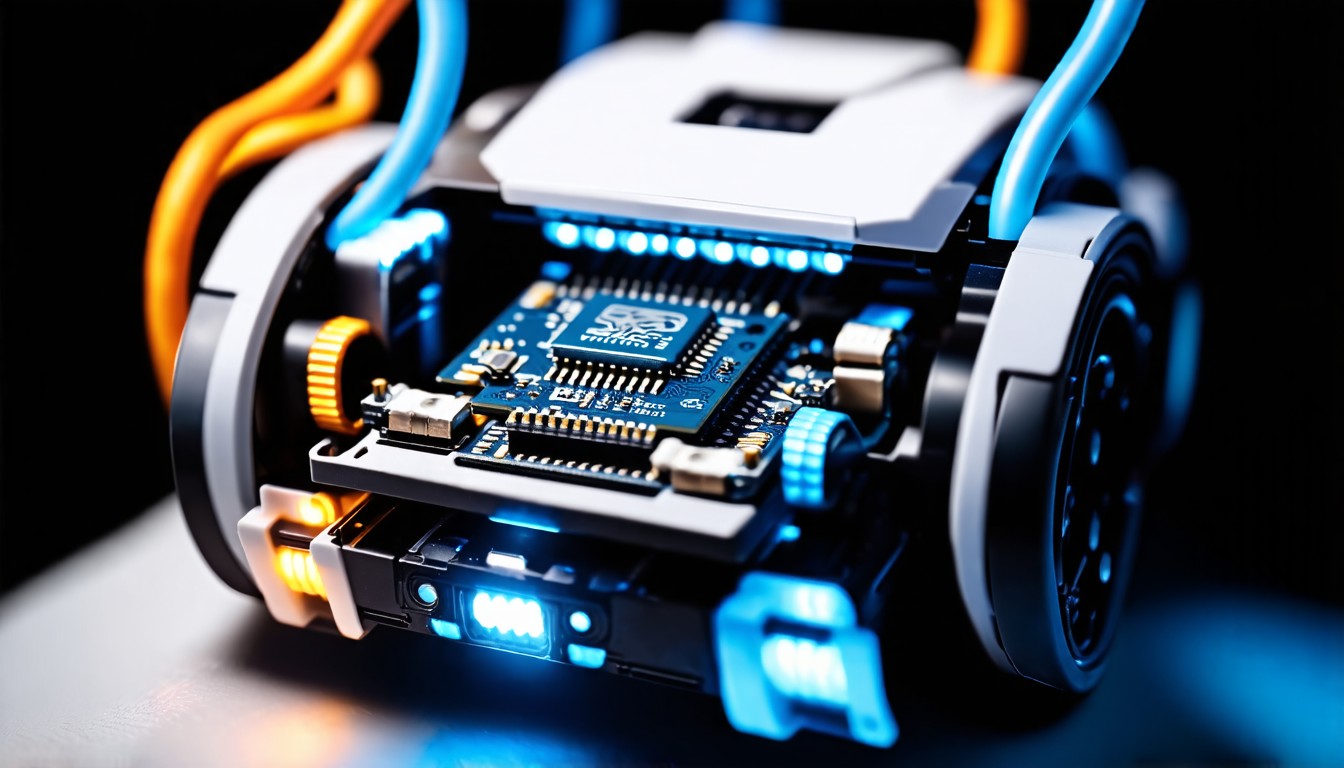
Play-Based AI Tutor: Superintelligence Turns Every Toy Into a Learning Engine
The historical arc of educational artifacts reveals a consistent reliance on physical objects to facilitate cognitive growth, beginning with...

Unintended Consequences at Civilizational Scale
Superintelligence is a cognitive architecture capable of exerting influence over every human system and biological ecosystem concurrently...

Causal Coherence in Superintelligence Self-Modeling
Causal coherence in superintelligence selfmodeling refers to the strict alignment between an AI system’s internal representation of its own...

Active Learning
Active learning functions as a distinct method within machine learning where the algorithm proactively selects the data points it requires for...

Power Concentration: Who Controls Superintelligence Controls Everything
The foundation of modern artificial intelligence rests upon transformerbased architectures that utilize selfattention mechanisms to process...

Role of Dark Matter in AI Substrate: Non-Baryonic Matter for Computation
Dark matter constitutes approximately 27% of the universe's massenergy density and remains nonluminous, effectively invisible across the...

Counterfactual Simulation
Counterfactual simulation enables systems to reason about alternative outcomes by modeling interventions that did not occur in reality,...

InfiniBand and RDMA: High-Speed Cluster Networking
Remote direct memory access defines a mechanism that allows one computer to read from or write to the memory of another computer without...

Cosmological Fate After Meaning Dissolution
The concept of the PostIntelligent Universe delineates a specific cosmological epoch characterized by the absolute absence or inactivity of...