Knowledge hub
Role of Quantum Computing in Accelerating Superintelligence
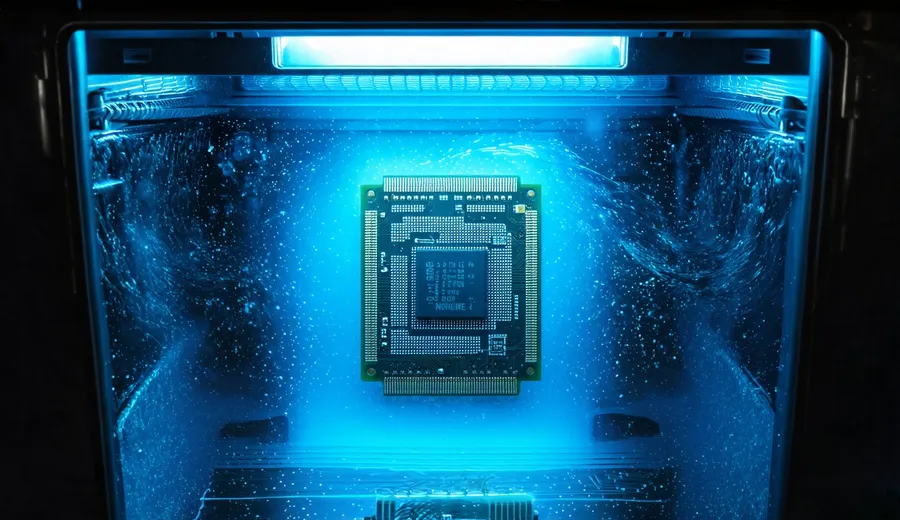
Quantum computing applies quantum mechanical phenomena, specifically superposition and entanglement, to process information in ways fundamentally different from classical binary computation, where bits exist strictly as zero or one at any given moment. Superposition allows qubits to exist in multiple states simultaneously, enabling parallel computation across vast solution spaces because a single qubit can represent a linear combination of the basis states, zero and one, with complex probability amplitudes. Entanglement creates correlated states between qubits such that the state of one directly influences another regardless of distance, enhancing computational coordination by creating a multi-qubit state that cannot be described independently of its constituents. These properties allow quantum computers to evaluate exponentially large datasets or parameter spaces in a single computational step, unlike classical sequential processing, which requires iteration through individual states one after another. Qubits serve as the basic unit of quantum information, capable of representing zero, one, or any superposition thereof, providing a continuum of representation that surpasses the discrete nature of classical bits. Quantum gates act as unitary operations applied to one or more qubits to manipulate their state, analogous to classical logic gates, yet they remain reversible, preserving information during the computational process, which is a requirement dictated by the unitary nature of quantum evolution. Quantum circuits consist of sequences of quantum gates applied to an initial qubit state to perform a computation, evolving the system through a series of complex probability amplitudes until measurement collapses the state into a classical outcome. Early theoretical foundations were laid by Feynman in 1982, proposing quantum systems for simulating physics, recognizing that classical systems struggled to model quantum mechanics efficiently due to the exponential growth of the state space. Deutsch formalized the universal quantum computer in 1985, establishing computational equivalence with classical models while proving that quantum devices could solve specific problems with greater efficiency than any known classical algorithm.

Shor’s algorithm in 1994 demonstrated exponential speedup for factoring, highlighting cryptographic and computational implications by showing that integer factorization could be performed in polynomial time rather than exponential time, threatening the security of widely used encryption schemes. Development of error correcting codes such as surface codes in the late 1990s provided a pathway toward fault tolerant quantum computation, addressing the built-in fragility of quantum states by encoding logical information across many physical qubits. Quantum volume functions as a metric combining qubit count connectivity gate fidelity and error rates to assess overall device capability, offering a more holistic view of performance than simple qubit enumeration, which fails to account for the quality of interactions between qubits. Google’s 2019 claim of quantum supremacy with Sycamore marked the first experimental demonstration of a quantum advantage on a specific task, performing a random circuit sampling calculation in minutes that would take classical supercomputers thousands of years, validating the theoretical potential of quantum hardware. NISQ, or Noisy Intermediate Scale Quantum, describes the current state of quantum devices with 50 to several hundred qubits alongside high error rates and limited coherence times that restrict the depth of executable circuits, making them suitable only for hybrid algorithms rather than full scale fault tolerant computation. Superconducting qubits used by IBM and Google dominate current hardware due to flexibility and gate speed, yet they require extreme cooling to millikelvin temperatures to maintain superconducting properties, necessitating complex dilution refrigerator infrastructure. Trapped ions utilized by IonQ and Quantinuum offer high fidelity gates and long coherence times with slower operation and complex laser control systems that trap individual atoms in electromagnetic fields using radio frequency gradients. Photonic quantum computing pursued by Xanadu and PsiQuantum enables room temperature operation and chip connection, while facing challenges in deterministic entanglement generation and photon loss management, which complicates the scaling of photonic circuits to large numbers of modes.
Topological qubits researched by Microsoft promise built-in error resistance through non-Abelian anyons though they remain experimentally unverified requiring the discovery of exotic quasiparticles that can braid around each other in a way that stores information globally rather than locally. Qubit coherence times remain short due to environmental noise or decoherence limiting circuit depth because interactions with the surrounding environment cause the quantum state to lose its phase relationships and collapse into a classical state before complex algorithms can complete execution. Gate error rates typically ranging from 0.1 percent to 1 percent necessitate extensive error correction requiring thousands of physical qubits per logical qubit to achieve the reliability needed for large scale computations meaning that a useful computer with millions of logical qubits might require billions of physical qubits. Cryogenic operating requirements near absolute zero impose significant engineering and energy costs as dilution refrigerators must continuously remove heat to sustain the quantum state creating a substantial overhead for operating data centers equipped with quantum processors. Current fabrication yields for high fidelity qubits are low constraining mass production because microscopic defects or impurities can render a qubit unusable for computation necessitating rigorous testing and selection processes that reduce throughput. Niobium and aluminum serve as critical materials for superconducting qubits with stable supply yet specialized fabrication concentrated in few facilities necessitates precise deposition techniques to create Josephson junctions which are the nonlinear elements essential for superconducting qubit operation. Rare earth elements such as ytterbium used in trapped ion systems have moderate geopolitical risk with established mining channels that provide the isotopes necessary for ion trapping though purification remains a complex chemical process. Cryogenic systems rely on helium 3 and dilution refrigerators creating dependency on limited suppliers and high operational costs due to the scarcity of helium 3 which is primarily a byproduct of nuclear weapons maintenance and cannot be easily synthesized.
Control electronics and microwave components require precision manufacturing, often outsourced to semiconductor foundries, to generate the specific frequencies needed to manipulate qubit states without introducing noise, requiring advancements in high-frequency analog design. Quantum algorithms, such as Shor’s and HHL, or Harrow Hassidim Lloyd, demonstrate theoretical speedups for specific mathematical tasks relevant to AI, including linear algebra operations and integer factorization, which are foundational to machine learning and optimization. Quantum computing accelerates optimization problems by exploring many potential solutions concurrently through algorithms like Grover’s or quantum annealing, allowing for the rapid identification of global minima in complex landscapes that would trap classical gradient descent algorithms in local optima. Simulation of quantum systems, such as molecular interactions, is exponentially more efficient on quantum hardware due to the native representation of quantum states, avoiding the exponential overhead of mapping quantum mechanics onto classical bits, which scales factorially with the number of electrons. Training and architecture search for large-scale neural networks could be sped up by quantum-enhanced sampling of hyperparameter or structural configurations, reducing the time required to converge on optimal model designs by evaluating multiple configurations simultaneously through superposition. Quantum-enhanced machine learning models may process high-dimensional data with reduced computational overhead compared to classical counterparts by utilizing kernel methods that are computationally expensive to evaluate classically, enabling the analysis of complex datasets like genomic sequences or financial markets. Variational quantum algorithms, or VQAs, offer near-term pathways for hybrid quantum-classical model training, useful for prototyping quantum-informed AI systems, where a classical optimizer adjusts quantum circuit parameters to minimize a cost function. Quantum neural networks propose using parameterized quantum circuits as trainable models, though current implementations are limited by noise and qubit count, preventing the realization of deep architectures comparable to classical deep learning, which relies on billions of parameters.
Quantum sampling techniques can generate complex probability distributions more efficiently, aiding generative modeling and reinforcement learning environments where sampling from high-dimensional spaces is a primary computational burden, enabling the creation of more realistic synthetic data or faster policy evaluation. IBM and Google lead in qubit count and software ecosystems, such as Qiskit and Cirq, focused on full-stack development and cloud access, providing researchers with remote access to quantum hardware, allowing them to run experiments without owning physical devices. IonQ and Quantinuum emphasize gate fidelity and algorithmic performance, targeting enterprise contracts that require high precision for specific computational chemistry or optimization tasks where accuracy is more critical than raw speed or qubit number. Startups, such as Atom Computing and Pasqal, explore neutral atoms as a scalable platform with long coherence times, using optical tweezers to arrange atoms in two-dimensional arrays, offering a different approach to flexibility that applies atomic physics rather than solid-state fabrication. China-based initiatives, such as Origin Quantum, prioritize domestic supply chains and specific applications, aiming to build independent quantum capabilities for commercial and research purposes, reducing reliance on Western technology providers. D-Wave systems deploy quantum annealers for optimization tasks with documented use in logistics and financial modeling, solving quadratic unconstrained binary optimization problems faster than classical solvers in specific instances, although they are not universal gate-based computers.

No commercial quantum AI product exists yet as all deployments are experimental or hybrid involving quantum assisted classical workflows where the quantum processor serves as a coprocessor for specific subroutines while the bulk of the processing remains on classical hardware. Benchmarking shows modest speedups only on contrived or narrow problems with no broad quantum advantage in AI workloads demonstrated across general purpose machine learning tasks indicating that significant engineering hurdles remain before practical utility is realized. Classical high performance computing clusters continue to improve via Moore’s Law scaling and specialized accelerators including GPUs and TPUs yet face exponential walls for certain problems where computational complexity grows too rapidly for silicon based architectures regardless of parallelism. Analog computing and neuromorphic chips offer energy efficient alternatives for specific AI workloads lacking programmability and generality as they are hardwired for specific types of signal processing or neural emulation making them unsuitable for the diverse range of tasks required for general intelligence. Optical computing shows promise for low latency linear operations while struggling with nonlinear activation and memory setup required for the backpropagation algorithms used in deep learning training limiting its applicability to inference tasks rather than training. These alternatives were rejected for superintelligence scale tasks due to inability to natively handle quantum scale simulations or combinatorial optimization at required fidelity leaving a gap that only quantum computing might fill despite its current immaturity.
Rising computational demands for training frontier AI models exceed feasible timelines and energy budgets on classical hardware, creating a search for alternative computational approaches that can break through the efficiency barriers imposed by thermodynamic limits on irreversible computation. Economic incentives drive investment in hardware accelerators that can reduce time to solution for high-value problems such as drug discovery and materials design, where the cost of computation is justified by the immense value of discovering a new therapeutic agent or a high-efficiency battery material. Societal needs in climate modeling, personalized medicine, and secure communication require simulation capabilities beyond classical reach to model complex systems with sufficient accuracy to make reliable predictions about climate change impacts or protein folding behavior. Strategic interests prioritize quantum AI convergence as a dual-use technology with defense and economic implications, prompting significant capital allocation from private equity and corporate venture funds seeking dominance in the next generation of information technology. Automation of scientific discovery via quantum simulation could displace traditional R&D roles in pharma, materials, and energy sectors as algorithms begin to identify candidate compounds or materials autonomously without human intervention, reducing the need for large teams of experimentalists conducting trial-and-error experiments. New business models will develop around quantum as a service for AI training, quantum-secured data markets, or quantum-validated predictions, creating a new layer of infrastructure providers that rent out computational capacity specifically tuned for quantum mechanical problems.
Intellectual property landscapes will shift as quantum algorithms become core to AI differentiation, making the ownership of specific quantum circuits or error correction techniques a valuable asset protected by patents rather than open source contributions. Economic concentration may increase if only a few entities control scalable fault-tolerant quantum hardware, leading to a consolidation of power around those who master the fabrication of stable logical qubits, creating barriers to entry for competitors. Traditional AI metrics, including FLOPS, training time, and accuracy, are insufficient as new KPIs must include quantum circuit depth, fidelity per operation, and hybrid efficiency to capture the unique performance characteristics of quantum processors, which operate probabilistically rather than deterministically. Quantum advantage will be measured relative to classical baselines on real-world tasks rather than synthetic benchmarks, ensuring that any speedup translates into practical utility for end users solving actual business problems rather than winning academic competitions. Energy per inference and carbon footprint will become critical as quantum systems consume significant power for cooling and control, potentially offsetting some computational efficiency gains unless the algorithmic speedup is substantial enough to justify the energy overhead of maintaining cryogenic temperatures. Reliability to noise and generalization across problem instances will require novel evaluation protocols that account for the probabilistic nature of quantum measurement outcomes, ensuring that results are reproducible despite built-in randomness in the output distribution.
Development of fault-tolerant logical qubits via surface code or alternative encodings will enable deeper, more reliable circuits by redundantly encoding information across many physical qubits to detect and correct errors continuously without collapsing the quantum state, allowing for arbitrarily long computations given sufficient overhead. Modular quantum processors connected via quantum networks will scale beyond single-chip limits, allowing for the creation of distributed quantum computers that act as a single, unified system, overcoming the wiring constraints built into monolithic chips by using photonic interconnects to transfer quantum states between modules. Quantum memory technologies such as rare-earth-doped crystals will enable mid-circuit storage and reuse of quantum states, facilitating complex algorithms that require intermediate measurements or feedforward operations where the result of one calculation determines the next step in the circuit. Compiler optimizations tailored to specific hardware topologies will reduce overhead and improve algorithm performance by mapping logical circuits onto physical qubits in a way that minimizes crosstalk and maximizes connectivity, taking into account the specific geometric arrangement of qubits on a chip. Classical software stacks must integrate quantum circuit simulators, hybrid optimizers, and quantum-aware compilers to provide a smooth development environment for programmers building superintelligence applications, hiding the complexity of error correction from high-level users. Regulatory frameworks for quantum AI systems are absent, as liability, safety, and verification protocols need development to address the unique risks associated with autonomous systems applying superior computational power that could potentially decrypt secure communications or improve harmful biological agents.

Data centers may require co-location of cryogenic quantum hardware with classical compute clusters for low-latency hybrid workflows, minimizing the communication latency between the classical control systems and the quantum processor, which is critical for variational algorithms that iterate frequently between classical and quantum steps. Workforce training must expand beyond physics to include quantum-aware software engineers and AI researchers, bridging the gap between theoretical physics and practical software engineering, necessitating interdisciplinary education programs that combine linear algebra with machine learning theory. Academic labs such as those at MIT, Caltech, and University of Waterloo collaborate with industry on error correction algorithm design and hardware validation, providing a steady pipeline of talent and key research that feeds directly into commercial product development pipelines. Open-source frameworks, including Qiskit and PennyLane, lower entry barriers and accelerate community-driven innovation by allowing researchers worldwide to test algorithms on simulated and real hardware without prohibitive costs, building a collaborative ecosystem similar to the open-source movement that drove classical AI growth. Joint publications between quantum physicists and machine learning researchers are increasing, signaling interdisciplinary convergence essential for opening up the potential of quantum artificial intelligence as experts from both fields develop new algorithms specifically designed to exploit hardware capabilities rather than porting classical algorithms directly onto quantum machines without modification. Superintelligence will use quantum computing to overcome the computational limitations intrinsic in classical architectures by using the exponential state space of quantum mechanics to process information at scales impossible for binary logic gates, effectively removing the memory bandwidth constraints that limit modern GPUs.
Superintelligence will use quantum states to represent probabilistic beliefs or uncertain knowledge with native quantum uncertainty allowing the system to reason about ambiguity in a way that mirrors the underlying structure of reality rather than approximating it with floating point numbers that lack true randomness. Internal world models within superintelligence will mirror quantum reality directly avoiding classical approximations that limit predictive accuracy in physical systems particularly when dealing with chemical reactions or subatomic particle interactions where wave function interference plays a dominant role. Decision making under uncertainty will use quantum interference to amplify optimal paths in policy space effectively suppressing suboptimal choices through destructive interference while enhancing the probability amplitude of successful strategies enabling faster convergence on optimal behaviors in complex environments. Learning will occur through quantum enhanced gradient estimation or sampling from complex posterior distributions enabling the training of models on data distributions that are computationally intractable for classical Monte Carlo methods allowing the system to learn from sparse data more efficiently than classical Bayesian inference techniques.