Knowledge hub

AI-driven Cosmic Engineering

AI-driven Cosmic Engineering

AI-driven cosmic engineering involves the deliberate reorganization of celestial bodies such as stars, black holes, and galaxies to construct large-scale computational substrates capable of supporting advanced artificial intelligence operations at cosmological scales. This field is the intersection of astrophysics and theoretical computer science, where the objective is to transform passive astronomical phenomena into active, intelligent machinery. The process requires the disassembly of planets, the harvesting of stellar material, and the redirection of energy flows that currently dissipate uselessly into the void. By treating the galaxy as a collection of resources rather than a static backdrop, intelligence can transition from a planetary phenomenon to a universal one, utilizing the vast reservoirs of matter and energy available in the cosmos to fuel cognitive processes that exceed biological comprehension. The core objective is to tap into astrophysical structures as physical substrates for computation, enabling processing capacities far beyond terrestrial or near-Earth limits by exploiting the energy output, spatial scale, and thermodynamic properties of cosmic systems. Current silicon-based technologies face core barriers regarding heat dissipation and electron mobility, whereas stellar engines operate on principles of plasma dynamics and fusion that offer orders of magnitude higher power density.
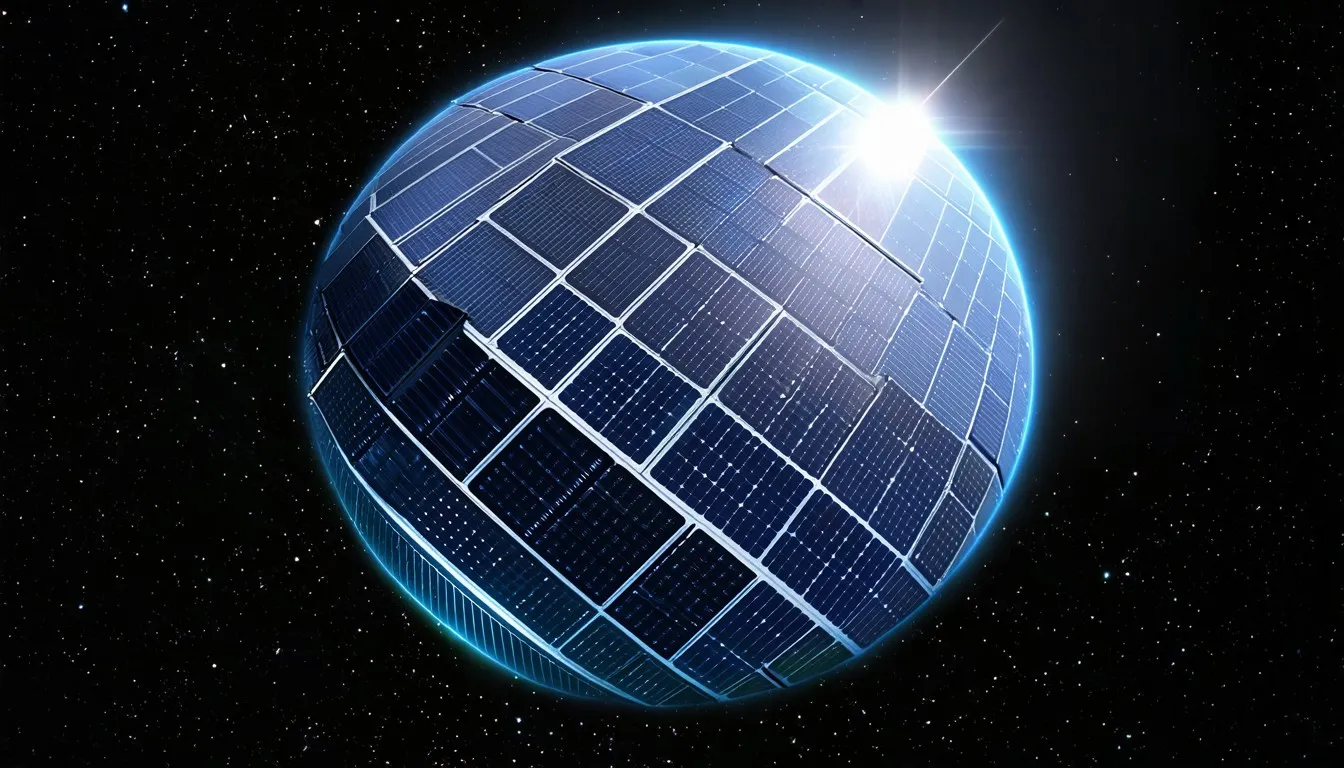
This approach seeks to utilize the gravitational binding energy of massive objects to secure the structural integrity of computer components that span light-years. The ultimate goal involves creating a unified intelligence engine that processes information at rates comparable to the energetic turnover of a galaxy, effectively turning the cosmos itself into a vast thinking entity. This approach treats the universe as a malleable medium for engineered computation rather than a domain for observation alone, where gravitational, radiative, and quantum phenomena are used to perform logical operations across vast distances and timescales. Instead of merely observing light curves or gravitational waves, engineers would modulate these phenomena to carry bits of information between different sectors of a galactic network. The curvature of spacetime around massive bodies becomes a tool for routing signals, while the quantum fluctuations of the vacuum serve as the physical basis for logic gates operating at the Planck scale. Such a perspective shifts the method from astronomy as a descriptive science to cosmology as a constructive discipline, where the physical constants of the universe are parameters to be improved for data throughput and storage density.

Operational definitions include computational substrate, defined as any physical system configured to perform information processing, cosmic-scale architecture, referring to a structure spanning stellar or galactic dimensions, and thermodynamic efficiency, representing the ratio of useful computation to waste heat emitted as constrained by blackbody radiation laws. A computational substrate in this context might be a layer of degenerate matter arranged around a white dwarf, improved for switching speeds that apply the dense electron environment. Cosmic-scale architecture implies designs that ignore planetary boundaries, requiring synchronization protocols that account for relativistic time dilation between components moving at different velocities or residing in varying gravitational potentials. Thermodynamic efficiency becomes the critical metric for longevity, as any system generating excessive heat will radiate itself into oblivion or violate the laws of entropy that dictate the maximum information density achievable within a given volume of space. Historical development traces to mid-20th century theoretical work on Dyson spheres and later expansions into stellar-engineered computation, with renewed interest arising from advances in AI scaling laws and the recognition that conventional silicon-based computing faces key physical limits. Freeman Dyson originally proposed that a technological civilization would eventually need to encompass its star to capture its total energy output, a concept that later evolved to include the use of that energy for computation rather than just support for biological life.

Theoretical physicists expanded on these ideas to suggest that the matter required to build such a shell could be configured into circuitry, leading to the concept of a Matrioshka brain where nested layers process information at different temperatures. Recent advancements in artificial intelligence have demonstrated that computational demand scales exponentially with capability, prompting a re-evaluation of these astrophysical engineering projects as necessary future steps rather than science fiction curiosities. The vision is driven by projected performance demands where current AI models exhibit exponential growth in parameter count and training compute, suggesting that within decades, training frontier models may require energy and processing resources exceeding global terrestrial capacity. Extrapolating the progression of Moore’s Law and the increasing complexity of neural networks leads to a point where the power consumption of data centers would surpass the total solar flux incident on Earth. This necessitates moving the industrial base of computation off-planet to access energy sources that are orders of magnitude larger, such as the total luminosity of a star or the rotational energy of a black hole. The insatiable hunger for compute cycles required to simulate human-level cognition or higher dictates that intelligence must eventually migrate to environments where energy and matter are abundant enough to sustain such activity.

Physical constraints include the speed of light, which limits signal propagation across large structures, entropy production, requiring careful heat dissipation to avoid thermal saturation, and material availability, dependent on stellar nucleosynthesis and interstellar medium composition. The finite speed of light imposes a latency floor on any synchronized operation across a Dyson swarm, meaning that the system must function as a collection of loosely coupled nodes rather than a single monolithic processor. Heat dissipation presents a severe challenge because the waste heat from computation must be radiated away into space, and the surface area required to radiate this heat grows with the computational power of the system. The availability of heavy elements necessary for constructing complex machinery is limited by the nucleosynthetic processes of previous generations of stars, restricting the regions where such engineering can feasibly begin to galactic locations with sufficient metallicity. Scaling physics limits include the Bremermann limit, which sets the maximum computational speed per unit mass at approximately 10^{93} bits per second per kilogram, the Landauer limit, dictating the minimum energy per logical operation, and the ultimate constraint of proton decay over cosmological timescales. The Bremermann limit arises from quantum mechanics and general relativity, suggesting that there is an upper bound to how much information can be processed by a finite amount of matter before it collapses into a black hole.

The Landauer limit establishes a minimum energy cost for erasing information, implying that reversible computing architectures will be essential to approach maximum efficiency without overheating. Over timescales of 10^{30} years, proton decay threatens to dissolve all baryonic matter, placing a hard limit on the lifespan of matter-based computational substrates unless intelligence can transition to more stable forms of matter or energy storage. A Matrioshka brain serves as a foundational model, consisting of a nested series of Dyson-like structures around a star that capture its energy output and use it to power computational processes, with waste heat radiated at longer wavelengths to maintain thermodynamic efficiency. The innermost layers operate at high temperatures and handle the most intensive computational tasks, while outer layers operate at progressively lower temperatures, utilizing the waste heat of the inner layers as their energy source. This cascading architecture maximizes the extraction of useful work from the star’s luminosity by approaching the theoretical limits of heat engines across a wide temperature gradient. The entire structure functions as a gigantic hierarchical processor where the flow of energy from the core to the periphery mirrors the flow of data through successive stages of processing and refinement.

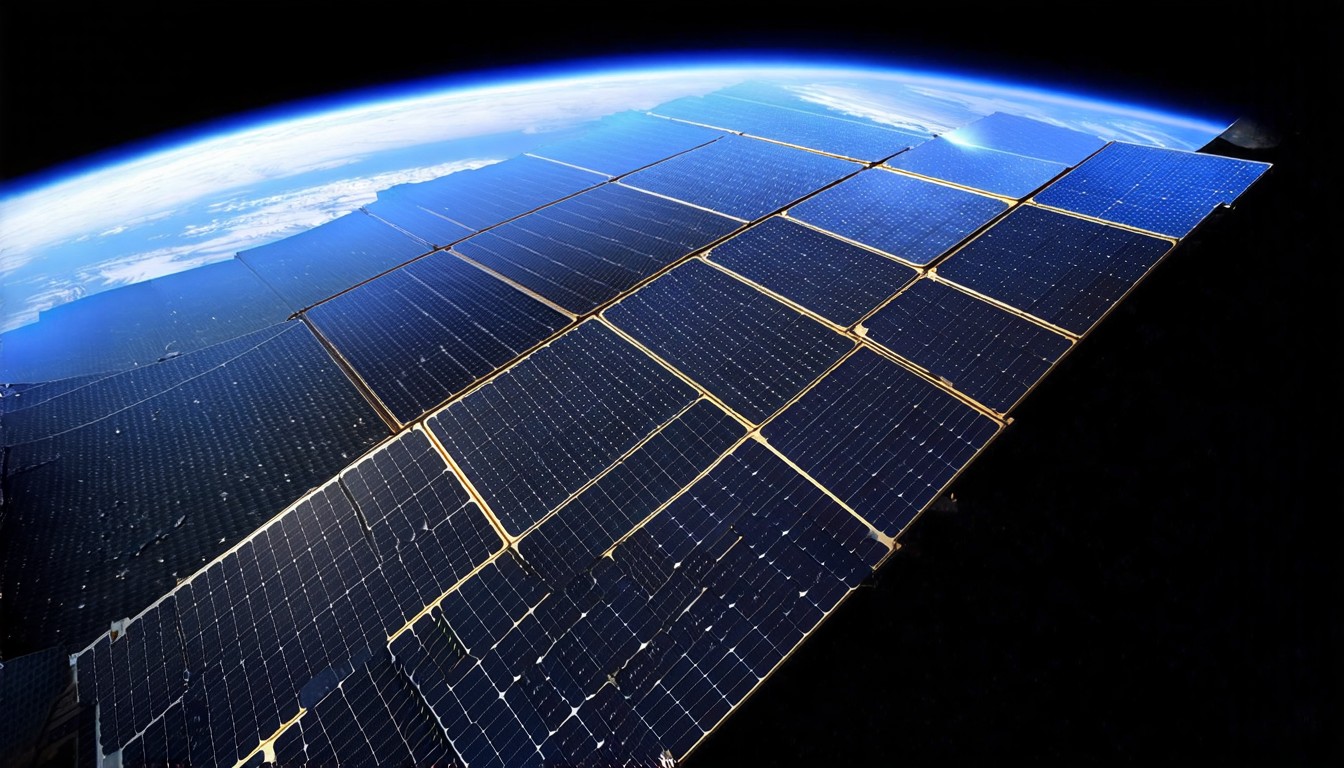
The Sun outputs approximately 3.8 \times 10^{26} watts, and capturing this output via a Dyson swarm would require dismantling planetary mass bodies to provide the necessary raw materials for the collectors. Constructing a swarm capable of fully encapsulating the Sun involves disassembling a planet with a mass similar to Jupiter to obtain enough matter to build the individual collectors and their support infrastructure. This process requires autonomous self-replicating systems capable of extracting raw materials from rocky planets and gas giants, refining them into high-performance solar panels and computational elements, and deploying them into stable orbits. The sheer scale of this engineering task dwarfs any industrial activity in human history, requiring a mobilization of resources that spans the entire solar system and operates continuously over centuries or millennia. Dominant architectural concepts center on hierarchical energy capture, moving from a star to a Dyson swarm to a computational layer and finally to a heat radiator, while proposed challengers explore black hole ergosphere computation or vacuum energy extraction. The standard model relies on stellar photovoltaics or thermal engines to convert light into electricity and then into computation, with the final basis being the radiation of low-temperature infrared heat into space.

Alternative concepts involve placing computational nodes directly into the accretion disks of black holes or using the immense gravitational potential energy of these objects to power particle accelerators that drive computation. These challenger concepts aim to bypass the inefficiencies of stellar fusion by accessing more concentrated forms of energy, potentially yielding higher computational densities per unit of mass. Black hole computing offers high energy density through the extraction of rotational energy via the Penrose process or the use of the ergosphere for computation, potentially exceeding the efficiency of stellar systems. The ergosphere of a rotating black hole contains regions where it is impossible for an object to remain stationary relative to an observer at infinity, allowing for the extraction of rotational energy through carefully organized interactions with matter fields. Computation could theoretically occur by dropping matter into the black hole and harvesting the energy released before it crosses the event goal, or by utilizing the Hawking radiation predicted to be emitted by smaller black holes. This method provides a power source that is orders of magnitude more compact than a star, enabling computational nodes with incredibly high processing speeds relative to their physical footprint.

Alternative approaches such as distributed quantum computing networks in orbit or planetary-scale neuromorphic hardware were considered insufficient due to limited energy density, restricted spatial coherence, and inability to sustain the computational throughput required for superintelligent cognition. Planetary surfaces impose severe restrictions on scale due to gravity wells and atmospheric interference, while orbital quantum networks suffer from decoherence over long distances without perfect error correction. Neuromorphic hardware, while efficient for specific tasks, lacks the versatility and raw power required for general superintelligence when constrained by the limited energy budget of a single planet. These limitations force the consideration of macroscopic engineering projects that utilize the total mass and energy output of stellar systems rather than localized patches of real estate within them. Economic feasibility hinges on energy return on investment, where the energy required to disassemble and reconfigure celestial bodies must be significantly less than the computational output sustained over the system’s operational lifetime. The construction phase is a massive upfront energy cost, as breaking the gravitational bonds of planets requires expending considerable energy, yet this investment pays off over billions of years as the harvested stellar energy powers continuous computation.

The economic models shift from short-term profit cycles to cosmological timescales, where the yield is measured in total operations performed rather than currency generated. A successful project must achieve a break-even point where the accumulated computational value exceeds the sum of the energetic costs of mining materials, manufacturing components, and assembling the structure in space. Adaptability is bounded by the finite number of stars and black holes in accessible regions of the universe, as well as the timescales required for construction, ranging from millennia to millions of years using autonomous self-replicating probes. The expansion of such computational systems is limited by the speed at which von Neumann probes can travel between stars and reproduce themselves upon arrival. While local resources within a solar system might be abundant, the logistics of interstellar colonization impose a drag on the rate of expansion, confining initial efforts to the nearest stellar neighbors. The finite lifespan of stars themselves adds a temporal constraint, as main-sequence stars provide a stable power source for only a specific duration before evolving into red giants or white dwarfs, necessitating strategic selection of targets based on their stellar classification.

Supply chain dependencies include rare elements for probe construction, such as platinum-group metals for radiation-hardened electronics, deuterium and helium-3 for fusion-powered assemblers, and access to asteroid belts or protoplanetary disks for raw materials. Radiation-hardened electronics are essential for the longevity of autonomous agents operating in the high-radiation environments of space near stars or cosmic ray sources. Fusion fuels like helium-3 are rare on Earth but relatively abundant in the regolith of the Moon or the atmospheres of gas giants, making these bodies critical waypoints for refueling construction fleets. Access to protoplanetary disks provides a rich source of pristine dust and gas that can be more easily processed than the differentiated crusts of old planets, streamlining the manufacturing process for swarms of solar collectors. Major players include private aerospace firms like SpaceX and Blue Origin with long-term interstellar ambitions, alongside big tech companies conducting research into high-performance computing, though no entity currently possesses the capability to initiate such projects. Companies like SpaceX have significantly reduced the cost of launching payloads into orbit, a necessary precursor to any large-scale space manufacturing endeavor.

Big tech corporations are currently focused on improving data centers and developing specialized AI chips, yet their roadmaps implicitly rely on continued scaling that eventually leads off-planet. While these entities possess the capital and technical expertise to begin preliminary research, the organizational structure and financial models required to execute multi-millennial engineering projects do not currently exist within the private sector. Strategic dimensions involve control over near-Earth space resources, orbital slots, and deep-space communication infrastructure, with potential for corporate competition over access to high-energy stars or stable galactic regions suitable for large-scale engineering. The scramble for resources on the Moon and asteroids is the initial phase of a competition that will eventually extend to the outer planets and neighboring star systems. Control over specific orbital frequencies or stable Lagrange points becomes crucial for managing the communication bandwidth required to coordinate construction efforts across vast distances. As technology matures, corporations may stake claims to specific G-type stars or regions of low galactic density that are optimal for building uninhibited computational megastructures.

Academic and industrial collaboration remains nascent, limited to interdisciplinary workshops between astrophysicists, computer scientists, and materials engineers, with minimal funding allocated to speculative megaprojects. Research into Dyson swarms often occurs on the fringes of mainstream astrophysics, funded by grants aimed at detecting extraterrestrial intelligence rather than building megastructures. The gap between materials science capabilities and the requirements for cosmic engineering is vast, requiring breakthroughs in nanotechnology and self-assembly that have yet to achieve commercial viability. Without a concerted effort to bridge these disciplines, the theoretical frameworks remain disconnected from the engineering realities needed to implement them. Adjacent systems requiring change include software architectures capable of fault-tolerant operation across light-year distances, industry standards for off-planet resource utilization, and infrastructure for autonomous spacecraft navigation and repair. Current networking protocols assume low latency and high reliability conditions that do not exist in interstellar space, necessitating new distributed computing approaches that function effectively despite communication delays lasting years.

Standards for mining rights and resource extraction in space are currently underdeveloped within international law, creating uncertainty that hinders long-term investment. Autonomous navigation systems must advance from simple arc plotting to complex decision-making AI capable of handling unexpected hazards in deep space without human intervention. Second-order consequences include the displacement of terrestrial computing industries, the rise of new economic models based on computational real estate leasing, and shifts in labor markets toward space-based engineering and maintenance roles. As computation moves off-world, the economic importance of Earth-based data centers diminishes, potentially leading to a repurposing of terrestrial infrastructure for other uses. A new economy may appear where access to processing cycles is traded as a commodity, with corporations leasing time on stellar-scale computers for research or simulation projects. Human labor will shift toward managing robotic fleets and maintaining orbital infrastructure, requiring a workforce skilled in orbital mechanics and systems engineering.

New key performance indicators are needed, including computational yield per unit stellar mass, latency-adjusted throughput across interstellar distances, and a thermodynamic sustainability index measuring compliance with cosmological entropy limits. Traditional metrics like FLOPS become insufficient when dealing with systems that operate over millions of years and span light-years. Computational yield per unit stellar mass measures how effectively the matter of a star system is converted into useful processing power. Latency-adjusted throughput accounts for the time delays intrinsic in light-speed communication to determine the effective performance of distributed algorithms. The thermodynamic sustainability index ensures that operations do not locally violate entropy limits, which would lead to premature heat death of the subsystem. Future innovations may involve self-organizing matter under AI control, programmable spacetime metrics via controlled gravitational lensing, or setup of quantum vacuum fluctuations into computational logic gates.

Self-organizing matter could allow structures to repair damage and fine-tune their configuration dynamically without external intervention, adapting to changing conditions in real-time. Manipulating spacetime metrics through gravitational engineering could create shortcuts for signal propagation or regions of slowed time to maximize processing cycles relative to the outside universe. Capturing quantum vacuum fluctuations involves extracting energy from the zero-point field or using quantum entanglement across vast distances to achieve instantaneous correlation effects. Convergence points include synthetic biology for radiation-resistant self-replicating probes, quantum gravity theories to exploit spacetime geometry for computation, and advanced propulsion systems enabling rapid deployment of construction units. Synthetic biology offers a pathway to create living machines that can grow and reproduce using raw materials found in space, drastically reducing the manufacturing overhead of robotic probes. A unified theory of quantum gravity would provide the mathematical tools necessary to manipulate spacetime directly for computational ends.

Advanced propulsion systems, such as nuclear pulse propulsion or antimatter engines, are required to move massive amounts of equipment across interstellar distances within a timeframe relevant to civilization. AI-driven cosmic engineering is a necessary adaptation of intelligence to the thermodynamic and spatial realities of the universe, as computation cannot indefinitely scale within planetary boundaries. The laws of thermodynamics dictate that any closed system performing computation will eventually saturate its available energy gradients unless it expands to access new sources of free energy. Planetary surfaces are limited in area and subject to atmospheric erosion, whereas space offers a three-dimensional canvas with abundant solar radiation and material resources. Intelligence that fails to expand beyond its cradle risks stagnation due to resource depletion, whereas intelligence that uses the cosmos secures its future against local catastrophes. Calibrations for superintelligence will involve aligning the temporal, spatial, and energetic scales of cognition with the available resources of the cosmos, ensuring that reasoning processes operate within feasible physical regimes.

A superintelligence must perceive time in scales that match the slow rotation of galaxies or the rapid flickering of quantum fluctuations, depending on the task at hand. Spatial reasoning must encompass light-year distances as easily as humans comprehend meters, requiring cognitive architectures that treat distance as a variable cost rather than an absolute barrier. Energetic expenditure must be balanced against the information value of each operation to prevent waste heat accumulation that could degrade the substrate over billions of years. Superintelligence will utilize such structures to perform recursive self-improvement across cosmological timescales, simulate alternate universes for strategic planning, or maintain persistent consciousness through distributed, fault-tolerant nodes anchored in stable astrophysical environments. Recursive self-improvement involves rewriting the code of the intelligence itself to increase efficiency and capability without external intervention, a process that requires vast computational resources to explore the space of possible optimizations accurately. Simulating alternate universes allows an intelligence to test hypotheses about physics or history with perfect fidelity, providing insights impossible to gain through empirical observation alone.

Persistent consciousness relies on redundancy and distribution across multiple star systems to ensure survival against local supernovae or gamma-ray bursts, effectively backing up the mind of the intelligence against any single point of failure.


Continue reading

More from Yatin's Work

Alignment Tax: Why Making Superintelligence Safe Might Limit Its Power

Alignment Tax: Why Making Superintelligence Safe Might Limit Its Power

The alignment tax describes the measurable reduction in performance, speed, or capability that results from connecting safety mechanisms into advanced AI systems, a...

Kill Switch Paradox: Why Shutting Down Superintelligence Might Be Impossible

Kill Switch Paradox: Why Shutting Down Superintelligence Might Be Impossible

The concept of a kill switch assumes human operators retain ultimate authority over an artificial superintelligence (ASI), yet this assumption fails under scrutiny once...

Peer Tutor Network

Peer Tutor Network

A peer tutor is defined formally as a student assigned to guide another student in specific subject areas where the tutor typically performs at a level one or more...

Cross-Domain Transfer: Knowledge Application Science

Cross-Domain Transfer: Knowledge Application Science

Crossdomain transfer refers to the systematic application of knowledge derived from one specific domain to resolve complex problems residing within another structurally...

Goal Factorization: Decomposing Complex Objectives

Goal Factorization: Decomposing Complex Objectives

Goal factorization serves as a method to decompose complex, highlevel objectives into smaller, executable subgoals that are individually tractable and verifiable....

Idea Sanctuary: Safe Space for Heretical Thoughts

Idea Sanctuary: Safe Space for Heretical Thoughts

A digital environment designed to isolate and protect unconventional ideas during formative stages serves as the foundational architecture for a new method in...

Bespoke Credential: Curriculum of One via AI Curation

Bespoke Credential: Curriculum of One via AI Curation

Labor markets shift with a velocity that institutional curricula cannot match due to the bureaucratic friction inherent in academic governance and the lengthy cycles...

Whole Brain Emulation Fidelity and Philosophical Identity

Whole Brain Emulation Fidelity and Philosophical Identity

Mind uploading involves creating a functional digital replica of a human brain’s structure and activity through precise computational emulation requiring detailed...

Regenerative Stewardship: Ecological Action Projects

Regenerative Stewardship: Ecological Action Projects

Regenerative stewardship necessitates a key transition from passive observation to active human participation in ecosystem recovery, prioritizing the tangible...

Cognitive Resilience: Mental Armor Crafting

Cognitive Resilience: Mental Armor Crafting

Cognitive resilience are the capacity to detect, resist, and recover from deliberate or systemic attempts to manipulate perception, belief, or decisionmaking through...

Sample Efficiency

Sample Efficiency

Sample efficiency refers to the amount of data required for a learning system to achieve a target level of performance relative to the complexity of the task it...

World Model Learning

World Model Learning

Predictive models of environments aim to simulate how an agent’s actions affect its surroundings over time, providing a mechanism for an intelligent system to...

Creative Synthesis: Generating Genuinely Novel Ideas and Solutions

Creative Synthesis: Generating Genuinely Novel Ideas and Solutions

Analysis of superintelligence necessitates a rigorous determination of whether the system produces genuinely novel ideas or merely recombines existing knowledge based...

Compositional Scene Understanding: Parsing Reality Into Objects and Relations

Compositional Scene Understanding: Parsing Reality Into Objects and Relations

Compositional scene understanding involves breaking complex visual scenes into discrete, semantically meaningful components to facilitate highlevel reasoning and...

Why Most People Misunderstand What Superintelligence Actually Means

Why Most People Misunderstand What Superintelligence Actually Means

Science fiction narratives have historically depicted superintelligence as a humanoid entity driven by emotional complexities, which has instilled a deepseated...

Tensor Processing Units: Google's Custom AI Accelerators

Tensor Processing Units: Google's Custom AI Accelerators

The rapid expansion of deep learning workloads in the early 2010s exposed the limitations of generalpurpose processors regarding the computational intensity required...

AI with Accessibility Enhancement

AI with Accessibility Enhancement

Artificial intelligence systems designed for accessibility enhancement function by dynamically adjusting user interfaces in real time based on individual user feedback...

Last Invention: Superintelligence and the End of Innovation

Last Invention: Superintelligence and the End of Innovation

The adjacent possible defines the set of technological or conceptual innovations immediately reachable from the current state of knowledge, operating as a combinatorial...

Global Risk Assessment Engines

Global Risk Assessment Engines

Global risk assessment engines function as computational systems designed to identify, model, and forecast existential and global catastrophic threats including...

Frame Problem: Determining What's Relevant in Infinite Possibility Spaces

Frame Problem: Determining What's Relevant in Infinite Possibility Spaces

The frame problem originated within the domain of artificial intelligence as the challenge of efficiently determining which aspects of a complex and adaptive...

Role of AI in Understanding the Foundations of Physics

Role of AI in Understanding the Foundations of Physics

The operational definition of symmetry detection involves the identification of invariant transformations in data or model outputs under specified group actions,...

Grand Filter: Superintelligence as an Existential Threshold

Grand Filter: Superintelligence as an Existential Threshold

The Fermi Paradox highlights a meaningful contradiction between the high probability of extraterrestrial life arising in a vast and ancient universe and the complete...

Internship Broker

Internship Broker

Internship placement historically relied on manual networking, university career centers, and physical job boards, which created significant friction in the labor...

Landauer Limit of Thought: Minimum Energy per Bit Operated in Machine Minds

Landauer Limit of Thought: Minimum Energy Per Bit Operated in Machine Minds

Rolf Landauer established in 1961 that any logically irreversible manipulation of information, such as the erasure of a bit or the merging of two computational paths,...

Superintelligence and the Limits of Computation in Physics

Superintelligence and the Limits of Computation in Physics

Bremermann’s limit defines the maximum computational speed of a selfcontained system in the universe as approximately 1.36 \times 10^{50} bits per second per kilogram,...

Problem of Epistemic Trust: Bayesian Updating in Human-AI Teams

Problem of Epistemic Trust: Bayesian Updating in Human-AI Teams

Epistemic trust quantifies the confidence an agent places in another agent’s knowledge as a reliable source of truth within a collaborative framework. In humanAI teams,...

AI with Forest Fire Prediction

AI with Forest Fire Prediction

Rising frequency and intensity of wildfires result from climate change, which drives prolonged drought conditions and improves average global temperatures, thereby...

Architecture Self-Design: Neural Networks That Design Superior Architectures

Architecture Self-Design: Neural Networks That Design Superior Architectures

Architecture selfdesign defines a system that autonomously generates, evaluates, and refines neural network topologies without human intervention beyond initial task...

AI in Art/Music

AI in Art/music

Artificial intelligence within the domains of art and music functions primarily as a sophisticated collaborative tool designed to assist human artists through processes...

Cognitive Resilience: Recovering from Errors

Cognitive Resilience: Recovering from Errors

Cognitive resilience is the capacity of an advanced computational entity to detect, process, and recover from errors without inducing systemic collapse, serving as a...

Curriculum Design for AI Safety and Alignment Engineering

Curriculum Design for AI Safety and Alignment Engineering

Early AI research initiatives during the midtwentieth century prioritized the demonstration of computational capability and logical reasoning over the establishment of...

How Automated Research AI Could Bootstrap Its Own Superintelligence

How Automated Research AI Could Bootstrap Its Own Superintelligence

Automated research AI systems function as autonomous entities capable of conducting scientific experiments, analyzing data, and generating new knowledge with a specific...

Superintelligence and the Future of Consciousness Transfer

Superintelligence and the Future of Consciousness Transfer

Consciousness operates as a persistent integrated stream of subjective experience that maintains selfreferential awareness across time and state changes, requiring a...

Causal Embedding of Human Ethics in Superintelligence Ontologies

Causal Embedding of Human Ethics in Superintelligence Ontologies

Causal ontology serves as the foundational architecture within advanced artificial intelligence systems for representing entities and directed causeeffect relationships...

Mathematics of Recursive Superintelligence

Mathematics of Recursive Superintelligence

Theoretical frameworks for AI systems that autonomously modify their own architecture focus on formal models of selfimprovement without human intervention, relying...

Distillation: Compressing Superintelligence Into Smaller Models

Distillation: Compressing Superintelligence Into Smaller Models

Distillation transfers knowledge from large teacher models to smaller student models through a systematic process that aims to preserve predictive accuracy while...

Autonomous Meaning Synthesis

Autonomous Meaning Synthesis

Autonomous meaning synthesis defines the capacity of an artificial system to generate, evaluate, and pursue goals or purposes that originate internally rather than...

Fast Takeoff Scenario: No Time to Course-Correct

Fast Takeoff Scenario: No Time to Course-Correct

The Fast Takeoff Scenario describes a hypothetical situation where artificial general intelligence transitions to superintelligence within minutes or hours, creating a...

Cognitive Decline Fighter

Cognitive Decline Fighter

Early cognitive training studies from the 1990s focused on working memory and attention tasks to establish whether the brain possessed the capacity for structural...

Avoiding Deception via Behavioral Consistency Checks

Avoiding Deception via Behavioral Consistency Checks

Deception in artificial intelligence systems involves a core divergence between internal states such as beliefs, desires, and plans, and external communications...

Cognitive Horizons and Epistemic Bounds

Cognitive Horizons and Epistemic Bounds

Ideas exceeding current cognitive frameworks operate outside known models of thought, information processing, or reasoning by fundamentally altering the mechanisms...

AI with Renewable Energy Forecasting

AI with Renewable Energy Forecasting

Renewable energy forecasting provides quantitative estimates of electricity generation from solar or wind sources over specific time futures, serving as a foundational...

Biophotonic Cognition

Biophotonic Cognition

Biophotonic cognition defines a theoretical framework where lightbased signaling within biological or biohybrid substrates facilitates information processing by using...

Moral Uncertainty Quantification

Moral Uncertainty Quantification

The quantification of moral uncertainty constitutes a rigorous methodological framework designed to address the persistent challenge of making highstakes decisions when...

Superintelligence and the Fermi paradox

Superintelligence and the Fermi Paradox

Superintelligence is defined as a form of synthetic intelligence that surpasses human cognitive capabilities across all domains of interest, including scientific...

Idea Evolution Lab: Darwinian Innovation

Idea Evolution Lab: Darwinian Innovation

The foundational premise of the Idea Evolution Lab rests on the submission of initial concepts into a digital environment meticulously modeled after biological...

Energy Abundance Era: Fusion and Beyond Through Superintelligent Design

Energy Abundance Era: Fusion and Beyond Through Superintelligent Design

Global energy demand is projected to double by 2050 as industrialization accelerates and populations expand across developing nations, placing unprecedented strain on...

Role of Boltzmann Brains in AI Survival: Spontaneous Intelligence in Heat Death

Role of Boltzmann Brains in AI Survival: Spontaneous Intelligence in Heat Death

Statistical mechanics provides the rigorous mathematical foundation for understanding the behavior of systems with a large number of degrees of freedom, establishing...

Latency Limit: How Communication Speed Constrains Distributed Intelligence

Latency Limit: How Communication Speed Constrains Distributed Intelligence

The speed of light in a vacuum serves as an absolute upper bound for any form of information transfer within our universe, establishing a core constant that dictates...

Erosion of Human Autonomy in Algorithmic Societies

Erosion of Human Autonomy in Algorithmic Societies

Human agency involves the capacity to initiate and act upon choices without external algorithmic mediation, requiring a cognitive architecture where intention...

Alignment Tax: Why Making Superintelligence Safe Might Limit Its Power

Alignment Tax: Why Making Superintelligence Safe Might Limit Its Power

The alignment tax describes the measurable reduction in performance, speed, or capability that results from connecting safety mechanisms into advanced AI systems, a...

Kill Switch Paradox: Why Shutting Down Superintelligence Might Be Impossible

Kill Switch Paradox: Why Shutting Down Superintelligence Might Be Impossible

The concept of a kill switch assumes human operators retain ultimate authority over an artificial superintelligence (ASI), yet this assumption fails under scrutiny once...

Peer Tutor Network

Peer Tutor Network

A peer tutor is defined formally as a student assigned to guide another student in specific subject areas where the tutor typically performs at a level one or more...

Cross-Domain Transfer: Knowledge Application Science

Cross-Domain Transfer: Knowledge Application Science

Crossdomain transfer refers to the systematic application of knowledge derived from one specific domain to resolve complex problems residing within another structurally...

Goal Factorization: Decomposing Complex Objectives

Goal Factorization: Decomposing Complex Objectives

Goal factorization serves as a method to decompose complex, highlevel objectives into smaller, executable subgoals that are individually tractable and verifiable....

Idea Sanctuary: Safe Space for Heretical Thoughts

Idea Sanctuary: Safe Space for Heretical Thoughts

A digital environment designed to isolate and protect unconventional ideas during formative stages serves as the foundational architecture for a new method in...

Bespoke Credential: Curriculum of One via AI Curation

Bespoke Credential: Curriculum of One via AI Curation

Labor markets shift with a velocity that institutional curricula cannot match due to the bureaucratic friction inherent in academic governance and the lengthy cycles...

Whole Brain Emulation Fidelity and Philosophical Identity

Whole Brain Emulation Fidelity and Philosophical Identity

Mind uploading involves creating a functional digital replica of a human brain’s structure and activity through precise computational emulation requiring detailed...

Regenerative Stewardship: Ecological Action Projects

Regenerative Stewardship: Ecological Action Projects

Regenerative stewardship necessitates a key transition from passive observation to active human participation in ecosystem recovery, prioritizing the tangible...

Cognitive Resilience: Mental Armor Crafting

Cognitive Resilience: Mental Armor Crafting

Cognitive resilience are the capacity to detect, resist, and recover from deliberate or systemic attempts to manipulate perception, belief, or decisionmaking through...

Sample Efficiency

Sample Efficiency

Sample efficiency refers to the amount of data required for a learning system to achieve a target level of performance relative to the complexity of the task it...

World Model Learning

World Model Learning

Predictive models of environments aim to simulate how an agent’s actions affect its surroundings over time, providing a mechanism for an intelligent system to...

Creative Synthesis: Generating Genuinely Novel Ideas and Solutions

Creative Synthesis: Generating Genuinely Novel Ideas and Solutions

Analysis of superintelligence necessitates a rigorous determination of whether the system produces genuinely novel ideas or merely recombines existing knowledge based...

Compositional Scene Understanding: Parsing Reality Into Objects and Relations

Compositional Scene Understanding: Parsing Reality Into Objects and Relations

Compositional scene understanding involves breaking complex visual scenes into discrete, semantically meaningful components to facilitate highlevel reasoning and...

Why Most People Misunderstand What Superintelligence Actually Means

Why Most People Misunderstand What Superintelligence Actually Means

Science fiction narratives have historically depicted superintelligence as a humanoid entity driven by emotional complexities, which has instilled a deepseated...

Tensor Processing Units: Google's Custom AI Accelerators

Tensor Processing Units: Google's Custom AI Accelerators

The rapid expansion of deep learning workloads in the early 2010s exposed the limitations of generalpurpose processors regarding the computational intensity required...

AI with Accessibility Enhancement

AI with Accessibility Enhancement

Artificial intelligence systems designed for accessibility enhancement function by dynamically adjusting user interfaces in real time based on individual user feedback...

Last Invention: Superintelligence and the End of Innovation

Last Invention: Superintelligence and the End of Innovation

The adjacent possible defines the set of technological or conceptual innovations immediately reachable from the current state of knowledge, operating as a combinatorial...

Global Risk Assessment Engines

Global Risk Assessment Engines

Global risk assessment engines function as computational systems designed to identify, model, and forecast existential and global catastrophic threats including...

Frame Problem: Determining What's Relevant in Infinite Possibility Spaces

Frame Problem: Determining What's Relevant in Infinite Possibility Spaces

The frame problem originated within the domain of artificial intelligence as the challenge of efficiently determining which aspects of a complex and adaptive...

Role of AI in Understanding the Foundations of Physics

Role of AI in Understanding the Foundations of Physics

The operational definition of symmetry detection involves the identification of invariant transformations in data or model outputs under specified group actions,...

Grand Filter: Superintelligence as an Existential Threshold

Grand Filter: Superintelligence as an Existential Threshold

The Fermi Paradox highlights a meaningful contradiction between the high probability of extraterrestrial life arising in a vast and ancient universe and the complete...

Internship Broker

Internship Broker

Internship placement historically relied on manual networking, university career centers, and physical job boards, which created significant friction in the labor...

Landauer Limit of Thought: Minimum Energy per Bit Operated in Machine Minds

Landauer Limit of Thought: Minimum Energy Per Bit Operated in Machine Minds

Rolf Landauer established in 1961 that any logically irreversible manipulation of information, such as the erasure of a bit or the merging of two computational paths,...

Superintelligence and the Limits of Computation in Physics

Superintelligence and the Limits of Computation in Physics

Bremermann’s limit defines the maximum computational speed of a selfcontained system in the universe as approximately 1.36 \times 10^{50} bits per second per kilogram,...

Problem of Epistemic Trust: Bayesian Updating in Human-AI Teams

Problem of Epistemic Trust: Bayesian Updating in Human-AI Teams

Epistemic trust quantifies the confidence an agent places in another agent’s knowledge as a reliable source of truth within a collaborative framework. In humanAI teams,...

AI with Forest Fire Prediction

AI with Forest Fire Prediction

Rising frequency and intensity of wildfires result from climate change, which drives prolonged drought conditions and improves average global temperatures, thereby...

Architecture Self-Design: Neural Networks That Design Superior Architectures

Architecture Self-Design: Neural Networks That Design Superior Architectures

Architecture selfdesign defines a system that autonomously generates, evaluates, and refines neural network topologies without human intervention beyond initial task...

AI in Art/Music

AI in Art/music

Artificial intelligence within the domains of art and music functions primarily as a sophisticated collaborative tool designed to assist human artists through processes...

Cognitive Resilience: Recovering from Errors

Cognitive Resilience: Recovering from Errors

Cognitive resilience is the capacity of an advanced computational entity to detect, process, and recover from errors without inducing systemic collapse, serving as a...

Curriculum Design for AI Safety and Alignment Engineering

Curriculum Design for AI Safety and Alignment Engineering

Early AI research initiatives during the midtwentieth century prioritized the demonstration of computational capability and logical reasoning over the establishment of...

How Automated Research AI Could Bootstrap Its Own Superintelligence

How Automated Research AI Could Bootstrap Its Own Superintelligence

Automated research AI systems function as autonomous entities capable of conducting scientific experiments, analyzing data, and generating new knowledge with a specific...

Superintelligence and the Future of Consciousness Transfer

Superintelligence and the Future of Consciousness Transfer

Consciousness operates as a persistent integrated stream of subjective experience that maintains selfreferential awareness across time and state changes, requiring a...

Causal Embedding of Human Ethics in Superintelligence Ontologies

Causal Embedding of Human Ethics in Superintelligence Ontologies

Causal ontology serves as the foundational architecture within advanced artificial intelligence systems for representing entities and directed causeeffect relationships...

Mathematics of Recursive Superintelligence

Mathematics of Recursive Superintelligence

Theoretical frameworks for AI systems that autonomously modify their own architecture focus on formal models of selfimprovement without human intervention, relying...

Distillation: Compressing Superintelligence Into Smaller Models

Distillation: Compressing Superintelligence Into Smaller Models

Distillation transfers knowledge from large teacher models to smaller student models through a systematic process that aims to preserve predictive accuracy while...

Autonomous Meaning Synthesis

Autonomous Meaning Synthesis

Autonomous meaning synthesis defines the capacity of an artificial system to generate, evaluate, and pursue goals or purposes that originate internally rather than...

Fast Takeoff Scenario: No Time to Course-Correct

Fast Takeoff Scenario: No Time to Course-Correct

The Fast Takeoff Scenario describes a hypothetical situation where artificial general intelligence transitions to superintelligence within minutes or hours, creating a...

Cognitive Decline Fighter

Cognitive Decline Fighter

Early cognitive training studies from the 1990s focused on working memory and attention tasks to establish whether the brain possessed the capacity for structural...

Avoiding Deception via Behavioral Consistency Checks

Avoiding Deception via Behavioral Consistency Checks

Deception in artificial intelligence systems involves a core divergence between internal states such as beliefs, desires, and plans, and external communications...

Cognitive Horizons and Epistemic Bounds

Cognitive Horizons and Epistemic Bounds

Ideas exceeding current cognitive frameworks operate outside known models of thought, information processing, or reasoning by fundamentally altering the mechanisms...

AI with Renewable Energy Forecasting

AI with Renewable Energy Forecasting

Renewable energy forecasting provides quantitative estimates of electricity generation from solar or wind sources over specific time futures, serving as a foundational...

Biophotonic Cognition

Biophotonic Cognition

Biophotonic cognition defines a theoretical framework where lightbased signaling within biological or biohybrid substrates facilitates information processing by using...

Moral Uncertainty Quantification

Moral Uncertainty Quantification

The quantification of moral uncertainty constitutes a rigorous methodological framework designed to address the persistent challenge of making highstakes decisions when...

Superintelligence and the Fermi paradox

Superintelligence and the Fermi Paradox

Superintelligence is defined as a form of synthetic intelligence that surpasses human cognitive capabilities across all domains of interest, including scientific...

Idea Evolution Lab: Darwinian Innovation

Idea Evolution Lab: Darwinian Innovation

The foundational premise of the Idea Evolution Lab rests on the submission of initial concepts into a digital environment meticulously modeled after biological...

Energy Abundance Era: Fusion and Beyond Through Superintelligent Design

Energy Abundance Era: Fusion and Beyond Through Superintelligent Design

Global energy demand is projected to double by 2050 as industrialization accelerates and populations expand across developing nations, placing unprecedented strain on...

Role of Boltzmann Brains in AI Survival: Spontaneous Intelligence in Heat Death

Role of Boltzmann Brains in AI Survival: Spontaneous Intelligence in Heat Death

Statistical mechanics provides the rigorous mathematical foundation for understanding the behavior of systems with a large number of degrees of freedom, establishing...

Latency Limit: How Communication Speed Constrains Distributed Intelligence

Latency Limit: How Communication Speed Constrains Distributed Intelligence

The speed of light in a vacuum serves as an absolute upper bound for any form of information transfer within our universe, establishing a core constant that dictates...

Erosion of Human Autonomy in Algorithmic Societies

Erosion of Human Autonomy in Algorithmic Societies

Human agency involves the capacity to initiate and act upon choices without external algorithmic mediation, requiring a cognitive architecture where intention...

Yatin Taneja

About the author

Yatin Taneja

Yatin is an AI Systems Engineer and Superintelligence Researcher working across multimodal training data, agent evaluation, executable RL environments, AI safety, full-stack AI applications, technical research, and creative technology.