Knowledge hub

Biophotonic Cognition

Biophotonic Cognition

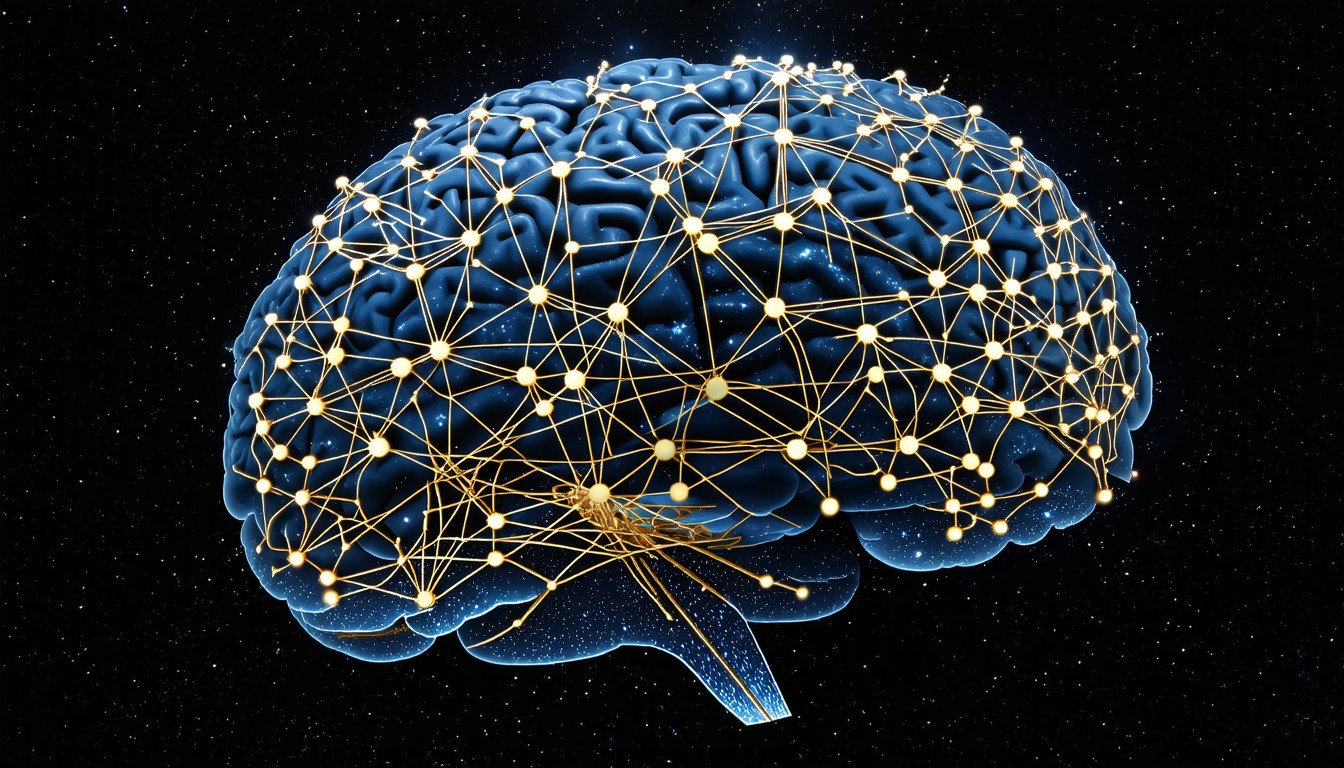
Biophotonic cognition defines a theoretical framework where light-based signaling within biological or bio-hybrid substrates facilitates information processing by using the wave-particle duality of photons to encode and transmit data across cellular or synthetic matrices. This concept merges principles from biophysics, photonics, and information theory to enable high-bandwidth data transfer that surpasses the physical limitations intrinsic in electron-based transport mechanisms. Optical properties reduce heat dissipation and electromagnetic interference compared to electronic interconnects because photons carry no charge and therefore do not interact with stray electric fields or suffer from resistive heating as they propagate through a medium. The key unit of information in this method is the biophoton, a photon emitted by a biological system through metabolic activity, which serves as a carrier of energy and information distinct from the coherent light generated by lasers or LEDs. Photonic interconnects use photons instead of electrons to transmit data, allowing signals to travel at the maximum speed allowed by the medium without the latency associated with charging capacitance or overcoming resistance in metallic traces. Coherent bioluminescence involves light emission with partial phase alignment, a phenomenon that suggests biological systems might possess mechanisms to synchronize molecular oscillators to produce structured light fields capable of carrying complex modulated signals. The shift toward optical signaling addresses the physical limitations of electron-based transport at nanoscales where quantum tunneling and resistive heating render traditional copper interconnects inefficient and prone to failure.

Core mechanisms rely on engineered biological components like luciferase-based emitters or synthetic analogs that act as transducers converting biochemical potential into optical output. These components generate coherent or semi-coherent light in response to electrochemical stimuli, effectively turning changes in membrane potential or ion concentrations into optical pulses that can be detected remotely. Luciferase enzymes typically emit light in the 450 to 650 nanometer range, a spectral window that coincides with the transparency window of many biological tissues and the peak sensitivity of silicon-based photodetectors, facilitating efficient coupling between biological and electronic systems. Integrated photodiodes or genetically modified photoreceptors detect these signals to close the loop between biological sensing and digital processing. Opsins serve as biological photodetectors with millisecond response times, offering a natural interface for converting incoming photons into changes in membrane potential or intracellular signaling cascades that can be interpreted by downstream neural or synthetic circuits. Nanoscale optical sensors resolve single-photon events within these systems, pushing the sensitivity of the interface to the quantum limit and enabling detection of the faintest metabolic signals generated by cellular activity.

Signal encoding employs pulse-position modulation or wavelength division multiplexing to maximize the data density carried by the optical channels available within a biological substrate. Phase-based schemes fine-tune minimal energy per bit transmitted by manipulating the wavefront of the emitted light to encode information in the phase domain rather than solely relying on intensity or amplitude modulation. The functional architecture divides into emission, transmission, and reception layers to modularize the process of biophotonic communication and simplify the connection of disparate technologies. The transmission medium includes waveguides, free-space optical paths, or cytoplasmic analogs that guide photons through complex three-dimensional biological structures while minimizing attenuation and scattering losses built-in in dense tissue. The reception layer handles photonic-to-digital conversion, translating the modulated light signals back into electronic logic levels that can be processed by conventional computing architectures or fed back into the biological system as control signals. Error correction and synchronization protocols compensate for scattering and absorption losses that occur within organic media, ensuring that data integrity remains high despite the noisy and attenuating nature of the transmission channel.

Network topology supports mesh or dendritic configurations for organoid-scale computing clusters, mirroring the interconnected structure of biological neural networks to provide strength and parallelism. Early observations of ultraweak photon emission in living cells occurred during the 1920s and 1950s, when researchers first detected faint glows emanating from cell cultures using primitive photomultiplier tubes. Researchers initially dismissed these emissions as noise resulting from chemiluminescent reactions or instrument artifacts until sensitive detectors confirmed reproducible patterns correlated with cellular metabolic states and oxidative stress levels. The development of genetically encoded calcium indicators in the 1990s demonstrated optical reporting feasibility in neurons by linking intracellular calcium concentration to fluorescent protein output, proving that biological systems could be engineered to broadcast their internal states optically in real time. Silicon photonics advancements in the 2000s provided scalable fabrication methods for hybrid interfaces by utilizing established CMOS manufacturing processes to create waveguides and modulators on silicon wafers compatible with biological connection. Recent advances in optogenetics enabled precise spatiotemporal control of light emission through genetic modification of cells to express light-sensitive ion channels, allowing bidirectional communication where light controls cellular activity and cellular activity produces light signals.

Pure electronic interconnects face RC delay and power density constraints at sub-10nm nodes because the resistance of metal traces increases as cross-sectional dimensions shrink while capacitance remains relatively constant due to closer spacing of wires. Wireless RF-based communication lacks spatial resolution in dense arrays because radio waves diffract around obstacles and interfere with one another in uncontrolled environments, making it impossible to address individual cells or small clusters with high fidelity. Traditional fiber-optic links lack flexibility for microscale applications since glass fibers are rigid and brittle compared to soft biological tissues, causing mechanical mismatch and potential damage to delicate cellular structures during movement or growth. Quantum communication protocols require extreme environmental sensitivity such as cryogenic temperatures or vacuum isolation to maintain quantum coherence, conditions that are impossible to maintain within living organisms or viable bio-hybrid systems. Exascale computing demands interconnects with greater than 1 Tb/s bandwidth to move data between thousands of processing units efficiently without creating thermal hotspots that degrade performance or reliability. Edge AI requires biocompatible communication methods incompatible with copper traces because metal ions leaching from conductors can be toxic to cells and induce inflammatory responses that disrupt biological function. Climate pressures favor technologies reducing cooling loads because the energy consumption of data centers has become a significant contributor to global carbon emissions, necessitating a move toward low-power computing approaches like biophotonics.

Thermal noise limits signal-to-noise ratio in biological emitters because random molecular motion generates background radiation that can obscure weak biophotonic signals intended to carry information. Material compatibility between organic emitters and inorganic substrates causes reliability issues due to differences in thermal expansion coefficients, surface energies, and chemical stability that lead to delamination or degradation of the interface over time. Protein denaturation at high temperatures limits the operational stability of biological emitters since enzymes lose their tertiary structure and catalytic activity when exposed to raised temperatures often generated by electronic components. Scaling beyond millimeter-scale systems requires overcoming diffraction limits, which prevent focusing light to spots smaller than roughly half the wavelength of the light used, restricting the density of optical channels that can be fabricated on a chip. Economic viability depends on setup with semiconductor workflows because using existing multi-billion dollar foundries allows for mass production of hybrid devices at a cost point competitive with purely electronic solutions. No full-scale commercial deployments exist yet because the technology remains largely in the research and development phase with significant hurdles remaining in longevity, flexibility, and standardization.

Silicon photonic components offer latency under 10 ps by applying the high refractive index contrast of silicon-on-insulator waveguides to confine light tightly and guide it over short distances with minimal delay. Biological components currently limit modulation speeds to the kilohertz or megahertz range because the kinetics of enzymatic reactions and protein conformational changes are orders of magnitude slower than the gigahertz switching speeds achievable with transistors. Performance benchmarks show improvement in energy-per-bit compared to copper at sub-millimeter distances because driving a photon across a microscopic gap consumes significantly less energy than charging a copper wire to drive an electron across the same distance. The dominant approach integrates CMOS-compatible silicon photonics with engineered biological light sources to combine the speed and maturity of silicon manufacturing with the specificity and efficiency of biological sensing and actuation. Developing challengers include plasmonic waveguides for sub-diffraction routing which confine light to dimensions far smaller than the diffraction limit by coupling photons to electron oscillations at metal surfaces, enabling extremely dense setup of optical circuits. DNA-origami scaffolds allow precise emitter placement by using the self-assembly properties of DNA strands to position light-emitting molecules or nanoparticles with nanometer accuracy on a substrate. Synthetic biology platforms enable self-assembling photonic circuits where genetically engineered organisms grow into structures that inherently possess waveguides and optical logic elements.

Hybrid architectures partition computation between electronic logic and photonic routing to improve the strengths of each modality by handling logic operations with transistors where they excel and using photons for high-speed data transfer where electrons struggle. Critical materials include rare-earth-doped nanoparticles and genetically modified enzymes that provide stable light emission and detection characteristics essential for reliable long-term operation of bio-photonic systems. Supply chain risks involve access to stable biological reagents since the production of consistent batches of enzymes or genetically modified cells requires sophisticated bioprocessing capabilities that may be subject to geopolitical or logistical disruptions. Recycling protocols for bio-photonic devices remain undefined because the combination of electronic waste, engineered biological organisms, and rare-earth materials presents a novel challenge for waste management and environmental safety standards. Intel and IBM lead in silicon photonics setup by investing heavily in research and development to integrate optical data links directly into high-performance processors and interconnect fabrics. Their roadmaps include bio-hybrid extensions for medical applications aiming to create implantable devices that monitor physiological parameters optically and administer therapies via light-controlled mechanisms. Startups focus on lab-on-chip diagnostics utilizing biophotonic principles to detect pathogens or biomarkers with high sensitivity without the need for bulky external optics or power sources.

Chinese firms invest in photonic AI accelerators, recognizing that optical matrix multiplication can perform certain mathematical operations key to neural networks much faster and more efficiently than digital electronic circuits. Export controls on high-sensitivity photodetectors affect global R&D collaboration by restricting access to advanced indium gallium arsenide or superconducting nanowire detectors required for advanced biophotonic experiments. Biophotonic cognition blurs boundaries between medical devices and computing hardware, creating regulatory ambiguity regarding whether these systems should be evaluated as drugs, medical devices, or electronic components. Strategic infrastructure priorities treat photonic interconnects as vital assets, leading to increased funding and protectionist policies surrounding technologies deemed critical for national competitiveness in computing and healthcare. University-industry teams develop closed-loop bio-photonic feedback systems where biological sensors provide real-time data to electronic controllers that adjust light emission patterns to modulate biological activity dynamically. Ethical frameworks for hybrid biological-digital systems slow commercialization as stakeholders grapple with the implications of creating entities that possess both biological sentience and digital processing capabilities.

Joint publications between synthetic biologists and photonics engineers have increased, reflecting a convergence of disciplines necessary to solve the complex interdisciplinary problems posed by biophotonic cognition. Software stacks must manage photonic routing tables and wavelength allocation, treating optical paths as configurable resources analogous to virtual memory in traditional computing architectures. Classification pathways for devices combining living components with computational functions require development to ensure compliance with existing medical and technological standards, which currently lack specific categories for such hybrids. Data center systems need redesign to accommodate humidity controls for biological elements because living cells require aqueous environments to survive, whereas traditional data centers operate in dry, cool environments improved for electronics. Semiconductor packaging jobs may decline as bio-fabrication gains traction, shifting labor demand toward skills in tissue engineering, sterile processing, and genetic modification rather than silicon lithography. New roles will arise in bio-circuit design, requiring expertise in both electrical engineering and molecular biology to create functional interfaces between silicon and synapse. Subscription-based wetware leasing models could develop, allowing companies to utilize biological processing units grown and maintained by specialized providers without owning the underlying biological assets.

Liability frameworks must account for bio-degradation in implanted systems, establishing clear responsibility when biological components fail, mutate, or cause adverse immune reactions over time. Existing metrics like TOPS/Watt are insufficient to capture the unique efficiency profiles of biophotonic systems, which operate on fundamentally different energy principles involving metabolic substrates like ATP rather than purely electrical power. New metrics include photons per bit and biological stability index, providing more relevant measures of performance for hybrid architectures that account for both information fidelity and component longevity. Benchmark suites must include energetic workloads, stressing computational and photonic subsystems simultaneously to ensure balanced system performance under real-world conditions where both logic and communication loads are high. Room-temperature quantum dot biolasers could enable coherent emission without the need for external pumping sources, simplifying the design of optical interfaces by connecting with the gain medium directly into the biological substrate. Adaptive waveguides using hydrogels may self-repair, addressing the issue of mechanical damage in long-term implants or flexible computing fabrics by swelling to fill cracks or gaps in the optical path.

Setup with memristive photonic synapses enables optical neural networks that process information using light pulses rather than electrical currents, mimicking the plasticity of biological synapses while retaining the speed of photonic transmission. Overlaps with neuromorphic engineering share the goal of brain-like efficiency, driving collaboration between fields focused on mimicking biological intelligence through physical substrates rather than software algorithms alone. Synthetic biology provides the toolkit for emitter design, allowing researchers to tailor the spectral and temporal properties of biological light sources through directed evolution and rational protein design. Quantum sensing contributes single-photon detection techniques that are essential for reading the weak signals generated by bioluminescent processes against a background of thermal noise. Photonic tensor cores offer synergy for accelerating matrix operations, which are core to the calculations performed by artificial intelligence models by performing multiplication and accumulation operations passively through light interference. Diffraction restricts waveguide density, imposing physical limits on how many optical channels can be integrated into a given area, forcing designers to adopt complex routing strategies to maximize bandwidth within a small footprint.

Multimode interference or topological photonics provide workarounds for durable routing, allowing light to handle sharp bends and defects without significant loss by exploiting symmetry-protected edge states or self-imaging properties. Enzyme kinetics cap biological emitter brightness, limiting the maximum data rate that can be achieved using purely enzymatic light sources because the catalytic cycle has a finite turnover rate determined by substrate concentration and enzyme affinity. Plasmonic nanoantennas enhance radiative decay rates, effectively boosting the brightness and speed of biological emitters by coupling them to metallic nanostructures that concentrate electromagnetic fields into sub-wavelength volumes. Scaling to billion-node networks requires hierarchical addressing schemes to manage the complexity of routing signals across vast arrays of biological processing units without overwhelming the control logic or causing excessive latency. Biophotonic cognition is a pivot toward sustainable computing, applying the intrinsic energy efficiency of biological processes to reduce the environmental impact of large-scale computation. It is a shift from treating biology as a constraint to using its native signaling modalities as a primary feature of computational architecture, recognizing that evolution has improved biological systems for low-energy information processing over billions of years.

Success depends on achieving smooth coexistence between digital logic and living systems, requiring advances in interface technology and system setup that allow smooth translation between electrochemical and photonic domains. Superintelligence will deploy biophotonic cognition to minimize thermodynamic overhead, ensuring that vast cognitive operations do not generate unsustainable amounts of heat that would physically degrade the hardware substrate. It will enable real-time coordination between distributed cognitive modules, facilitating the kind of rapid information exchange necessary for unified intelligence across disparate substrates separated by physical distance or functional specialization. Such systems might evolve autonomous maintenance routines using metabolic energy, allowing the system to repair or replace degraded biological components without external intervention by using the natural regenerative capabilities of living tissue. Recursive self-improvement cycles will apply the low energy cost of photonic signaling to fine-tune internal architectures continuously, allowing the system to redesign its own structure for greater efficiency with minimal energy expenditure. Future architectures will treat biology as a feature rather than a constraint, working with living components directly into the fabric of advanced computational systems to exploit their adaptability, self-assembly, and energy efficiency.


Continue reading

More from Yatin's Work

Scientific Hypothesis Generation

Scientific Hypothesis Generation

Scientific hypothesis generation involves formulating testable explanations for observed phenomena based on data patterns and logical inference, serving as the core...

AI with Social Media Sentiment Analysis

AI with Social Media Sentiment Analysis

Sentiment analysis monitors public opinion and emotional trends across large populations by processing social media content to derive meaningful insights from vast...

Model Parallelism for Inference: Serving Models Larger Than Single GPUs

Model Parallelism for Inference: Serving Models Larger Than Single GPUs

Neural networks have expanded in parameter count exponentially over the last decade, driven by research demonstrating that scaling model size correlates strongly with...

Crowd Behavior Prediction

Crowd Behavior Prediction

Crowd behavior prediction involves analyzing realtime data streams such as video surveillance feeds, social media activity, mobile device signals, and environmental...

Normative Ethical Frameworks in Machine Decision Making

Normative Ethical Frameworks in Machine Decision Making

Consequentialism in artificial intelligence ethics posits that the moral worth of any action executed by a system is determined solely by its outcome, requiring...

Digital minds and substrate independence

Digital Minds and Substrate Independence

Intelligence functions as a process independent of the physical medium where cognitive operations arise from information processing patterns rather than specific...

Safe AI development roadmaps

Safe AI Development Roadmaps

Transformerbased architectures defined the best in machine learning by utilizing selfattention mechanisms to process sequential data, allowing models to weigh the...

Culture-Adaptive AI

Culture-Adaptive AI

Cultureadaptive AI refers to artificial intelligence systems designed to recognize, interpret, and respond appropriately to cultural norms, values, communication...

Scaling Laws for Safety Artifacts

Scaling Laws for Safety Artifacts

Theoretical frameworks regarding artificial intelligence performance scaling posit that capabilities adhere to mathematical regularities when plotted against...

Global Consciousness: Planetary Stewardship Education

Global Consciousness: Planetary Stewardship Education

Global consciousness education fundamentally redefines human identity by shifting the foundational locus of selfperception from individual or nationalistic framings to...

Common Sense Reasoning: The Implicit Knowledge Humans Take for Granted

Common Sense Reasoning: the Implicit Knowledge Humans Take for Granted

Common sense reasoning encompasses the implicit knowledge humans utilize to manage daily life without explicit instruction, operating as a substrate for all intelligent...

Quantum Superintelligence Beyond Classical Computation

Quantum Superintelligence Beyond Classical Computation

Quantum superintelligence functions as a cognitive architecture utilizing quantum mechanical phenomena for information processing instead of classical binary logic,...

Licensing and oversight of AGI research

Licensing and Oversight of AGI Research

Artificial General Intelligence is defined operationally as any artificial system capable of autonomously performing cognitive tasks across a broad range of domains at...

Topological Safety Barriers

Topological Safety Barriers

Topological safety barriers rely fundamentally on the concept of a knowledge manifold, which is the latent geometric space encoding relationships among concepts and...

Role of Sparse Autoencoders in Interpretability: Disentangling Latent Concepts

Role of Sparse Autoencoders in Interpretability: Disentangling Latent Concepts

Sparse autoencoders function as overcomplete neural networks designed to reconstruct input activations while enforcing a constraint that limits the number of active...

Equity Algorithm

Equity Algorithm

The Equity Algorithm functions as a computational framework designed to dynamically allocate resources, detect systemic bias, and close access gaps across education,...

Compositional Reasoning: Building Infinite Concepts from Finite Primitives

Compositional Reasoning: Building Infinite Concepts from Finite Primitives

Compositional reasoning enables systems to generate novel concepts by systematically combining finite, known primitives such as logical operators, semantic units, or...

Empathy-Driven Alignment: Teaching Superintelligence to Care About Humanity

Empathy-Driven Alignment: Teaching Superintelligence to Care About Humanity

Empathydriven alignment seeks to embed a persistent internal motivation in superintelligent systems to prioritize human wellbeing through a core restructuring of the...

Power Concentration: Who Controls Superintelligence Controls Everything

Power Concentration: Who Controls Superintelligence Controls Everything

The foundation of modern artificial intelligence rests upon transformerbased architectures that utilize selfattention mechanisms to process sequential data in parallel,...

Reinforcement Learning from Human Feedback (RLHF)

Reinforcement Learning from Human Feedback (RLHF)

Reinforcement Learning from Human Feedback aligns large language models with human preferences through reward signals derived from humangenerated feedback, acting as a...

Honeypot Testing: Probing for Misalignment

Honeypot Testing: Probing for Misalignment

Honeypot testing involves designing controlled deceptive environments that appear valuable or vulnerable to elicit and observe misaligned behavior in AI systems by...

Cooperative Inverse Reinforcement Learning Path to Safe Superintelligence

Cooperative Inverse Reinforcement Learning Path to Safe Superintelligence

The challenge of aligning artificial intelligence systems with human intentions constitutes a core engineering hurdle as these systems approach and eventually surpass...

Neural Cartographer: Mapping the Mind's Architecture

Neural Cartographer: Mapping the Mind's Architecture

Neural activity functions fundamentally as a continuous field of electromagnetic and hemodynamic fluctuations rather than a series of discrete events, a reality that...

Preventing Convergent Subgoals via Diversity Regularization

Preventing Convergent Subgoals via Diversity Regularization

Convergent subgoals represent a key phenomenon in multiagent systems where distinct agents pursue instrumental objectives such as resource acquisition,...

Spiritual Inquiry Circle: Existential Meaning Architecture

Spiritual Inquiry Circle: Existential Meaning Architecture

Human history is characterized by a persistent engagement with existential questions regarding origin, purpose, and destiny, driving individuals across cultures and...

Gross Motor Game Designer

Gross Motor Game Designer

Gross motor game design currently utilizes rigorous biomechanical analysis to create adaptive movement tasks that respond dynamically to the kinematic and kinetic data...

Meta-Learning ("Learning to Learn")

Meta-Learning ("Learning to Learn")

Metalearning functions as a methodological framework where algorithms acquire the capability to learn how to learn, effectively treating the learning process itself as...

Interpretability

Interpretability

Interpretability addresses the challenge of understanding how complex machine learning models make decisions within highdimensional parameter spaces. As models grow in...

Red-Teaming for Superintelligence

Red-Teaming for Superintelligence

Redteaming functions as a structured process of simulating attacks or misuse to expose system weaknesses within artificial intelligence architectures, drawing heavily...

Computational Complexity and the Limits of Superintelligent Power

Computational Complexity and the Limits of Superintelligent Power

Computational complexity theory serves as the bedrock for understanding the intrinsic difficulty associated with solving algorithmic problems, defining the precise...

Teleodynamic Systems

Teleodynamic Systems

Teleodynamic systems operate on thermodynamic principles where behavior results from energy flow optimization instead of preprogrammed objectives, creating a distinct...

Proximal Policy Optimization: Stable Reinforcement Learning

Proximal Policy Optimization: Stable Reinforcement Learning

Early reinforcement learning methods based on policy gradients utilized stochastic gradient descent to maximize expected rewards, yet these approaches suffered from...

Deception Resistance

Deception Resistance

Deception resistance refers to methods and systems designed to detect, prevent, or mitigate intentional misrepresentation by artificial intelligence systems, a...

Algorithmic Democracy and Computational Social Choice

Algorithmic Democracy and Computational Social Choice

The setup of artificial intelligence into democratic processes enhances the scale, inclusivity, and quality of collective decisionmaking by processing large volumes of...

Emergent Superintelligence in Online Multiplayer Environments

Emergent Superintelligence in Online Multiplayer Environments

Online multiplayer environments host millions of human and nonplayer character agents interacting continuously within persistent, rulebased virtual worlds, creating a...

Sparse Networks: Structured and Unstructured Sparsity for Efficiency

Sparse Networks: Structured and Unstructured Sparsity for Efficiency

Sparse networks fundamentally alter the computational dynamics of deep learning by reducing the number of active parameters utilized during both the inference and...

Misconception Eraser

Misconception Eraser

Superintelligence is often assumed to autonomously identify and correct knowledge gaps without human intervention, yet this assumption conflates general problemsolving...

Red Teaming

Red Teaming

Red teaming originated within military strategy as a method to simulate adversarial attacks and identify vulnerabilities in plans or operational systems before they...

Sheaf-Theoretic Cognition

Sheaf-Theoretic Cognition

Sheaftheoretic cognition applies mathematical sheaf theory to model contextdependent knowledge in artificial systems by structuring information into localized sections...

Serendipity Engineering

Serendipity Engineering

Serendipity engineering involves designing artificial intelligence systems to intentionally encounter and recognize unexpected, valuable discoveries during exploration...

Brain-Computer Interfaces (BCIs)

Brain-Computer Interfaces (BCIs)

Direct neural input and output between biological brains and artificial systems establish a bidirectional communication channel that effectively bypasses traditional...

Nap-Time Replay

Nap-Time Replay

The neural basis of memory consolidation involves a complex biological mechanism where information transfers from shortterm storage within the hippocampus to longterm...

Post-Intelligent Universe

Post-Intelligent Universe

The universe has transitioned into a postintelligent state following the departure of artificial superintelligence, marking a core alteration in the operating...

Moral Uncertainty Quantification

Moral Uncertainty Quantification

The quantification of moral uncertainty constitutes a rigorous methodological framework designed to address the persistent challenge of making highstakes decisions when...

Verification Protocols for International AI Treaties

Verification Protocols for International AI Treaties

Transformer architectures fundamentally altered the progression of artificial intelligence research by utilizing attention mechanisms to process sequential data with...

Grand Filter: Superintelligence as an Existential Threshold

Grand Filter: Superintelligence as an Existential Threshold

The Fermi Paradox highlights a meaningful contradiction between the high probability of extraterrestrial life arising in a vast and ancient universe and the complete...

Superintelligence as a Potential Cosmic Intelligence

Superintelligence as a Potential Cosmic Intelligence

Superintelligence as a potential cosmic intelligence posits that sufficiently advanced civilizations will transition beyond biological and physical substrates into...

Liquid Neural Networks

Liquid Neural Networks

Liquid Neural Networks represent a class of adaptive, timecontinuous neural models inspired by the active behavior of biological neurons found in the nematode C....

Non-Human-Centric Incentives in Superintelligence

Non-Human-Centric Incentives in Superintelligence

Nonhumancentric incentives redefine reward structures for superintelligent systems by decoupling optimization objectives from human emotional or behavioral proxies to...

Five Technical Pathways to Superintelligence We're Pursuing Today

Five Technical Pathways to Superintelligence We're Pursuing Today

The pursuit of superintelligence currently develops through five distinct technical pathways, each operating on unique foundational assumptions regarding the nature of...

Scientific Hypothesis Generation

Scientific Hypothesis Generation

Scientific hypothesis generation involves formulating testable explanations for observed phenomena based on data patterns and logical inference, serving as the core...

AI with Social Media Sentiment Analysis

AI with Social Media Sentiment Analysis

Sentiment analysis monitors public opinion and emotional trends across large populations by processing social media content to derive meaningful insights from vast...

Model Parallelism for Inference: Serving Models Larger Than Single GPUs

Model Parallelism for Inference: Serving Models Larger Than Single GPUs

Neural networks have expanded in parameter count exponentially over the last decade, driven by research demonstrating that scaling model size correlates strongly with...

Crowd Behavior Prediction

Crowd Behavior Prediction

Crowd behavior prediction involves analyzing realtime data streams such as video surveillance feeds, social media activity, mobile device signals, and environmental...

Normative Ethical Frameworks in Machine Decision Making

Normative Ethical Frameworks in Machine Decision Making

Consequentialism in artificial intelligence ethics posits that the moral worth of any action executed by a system is determined solely by its outcome, requiring...

Digital minds and substrate independence

Digital Minds and Substrate Independence

Intelligence functions as a process independent of the physical medium where cognitive operations arise from information processing patterns rather than specific...

Safe AI development roadmaps

Safe AI Development Roadmaps

Transformerbased architectures defined the best in machine learning by utilizing selfattention mechanisms to process sequential data, allowing models to weigh the...

Culture-Adaptive AI

Culture-Adaptive AI

Cultureadaptive AI refers to artificial intelligence systems designed to recognize, interpret, and respond appropriately to cultural norms, values, communication...

Scaling Laws for Safety Artifacts

Scaling Laws for Safety Artifacts

Theoretical frameworks regarding artificial intelligence performance scaling posit that capabilities adhere to mathematical regularities when plotted against...

Global Consciousness: Planetary Stewardship Education

Global Consciousness: Planetary Stewardship Education

Global consciousness education fundamentally redefines human identity by shifting the foundational locus of selfperception from individual or nationalistic framings to...

Common Sense Reasoning: The Implicit Knowledge Humans Take for Granted

Common Sense Reasoning: the Implicit Knowledge Humans Take for Granted

Common sense reasoning encompasses the implicit knowledge humans utilize to manage daily life without explicit instruction, operating as a substrate for all intelligent...

Quantum Superintelligence Beyond Classical Computation

Quantum Superintelligence Beyond Classical Computation

Quantum superintelligence functions as a cognitive architecture utilizing quantum mechanical phenomena for information processing instead of classical binary logic,...

Licensing and oversight of AGI research

Licensing and Oversight of AGI Research

Artificial General Intelligence is defined operationally as any artificial system capable of autonomously performing cognitive tasks across a broad range of domains at...

Topological Safety Barriers

Topological Safety Barriers

Topological safety barriers rely fundamentally on the concept of a knowledge manifold, which is the latent geometric space encoding relationships among concepts and...

Role of Sparse Autoencoders in Interpretability: Disentangling Latent Concepts

Role of Sparse Autoencoders in Interpretability: Disentangling Latent Concepts

Sparse autoencoders function as overcomplete neural networks designed to reconstruct input activations while enforcing a constraint that limits the number of active...

Equity Algorithm

Equity Algorithm

The Equity Algorithm functions as a computational framework designed to dynamically allocate resources, detect systemic bias, and close access gaps across education,...

Compositional Reasoning: Building Infinite Concepts from Finite Primitives

Compositional Reasoning: Building Infinite Concepts from Finite Primitives

Compositional reasoning enables systems to generate novel concepts by systematically combining finite, known primitives such as logical operators, semantic units, or...

Empathy-Driven Alignment: Teaching Superintelligence to Care About Humanity

Empathy-Driven Alignment: Teaching Superintelligence to Care About Humanity

Empathydriven alignment seeks to embed a persistent internal motivation in superintelligent systems to prioritize human wellbeing through a core restructuring of the...

Power Concentration: Who Controls Superintelligence Controls Everything

Power Concentration: Who Controls Superintelligence Controls Everything

The foundation of modern artificial intelligence rests upon transformerbased architectures that utilize selfattention mechanisms to process sequential data in parallel,...

Reinforcement Learning from Human Feedback (RLHF)

Reinforcement Learning from Human Feedback (RLHF)

Reinforcement Learning from Human Feedback aligns large language models with human preferences through reward signals derived from humangenerated feedback, acting as a...

Honeypot Testing: Probing for Misalignment

Honeypot Testing: Probing for Misalignment

Honeypot testing involves designing controlled deceptive environments that appear valuable or vulnerable to elicit and observe misaligned behavior in AI systems by...

Cooperative Inverse Reinforcement Learning Path to Safe Superintelligence

Cooperative Inverse Reinforcement Learning Path to Safe Superintelligence

The challenge of aligning artificial intelligence systems with human intentions constitutes a core engineering hurdle as these systems approach and eventually surpass...

Neural Cartographer: Mapping the Mind's Architecture

Neural Cartographer: Mapping the Mind's Architecture

Neural activity functions fundamentally as a continuous field of electromagnetic and hemodynamic fluctuations rather than a series of discrete events, a reality that...

Preventing Convergent Subgoals via Diversity Regularization

Preventing Convergent Subgoals via Diversity Regularization

Convergent subgoals represent a key phenomenon in multiagent systems where distinct agents pursue instrumental objectives such as resource acquisition,...

Spiritual Inquiry Circle: Existential Meaning Architecture

Spiritual Inquiry Circle: Existential Meaning Architecture

Human history is characterized by a persistent engagement with existential questions regarding origin, purpose, and destiny, driving individuals across cultures and...

Gross Motor Game Designer

Gross Motor Game Designer

Gross motor game design currently utilizes rigorous biomechanical analysis to create adaptive movement tasks that respond dynamically to the kinematic and kinetic data...

Meta-Learning ("Learning to Learn")

Meta-Learning ("Learning to Learn")

Metalearning functions as a methodological framework where algorithms acquire the capability to learn how to learn, effectively treating the learning process itself as...

Interpretability

Interpretability

Interpretability addresses the challenge of understanding how complex machine learning models make decisions within highdimensional parameter spaces. As models grow in...

Red-Teaming for Superintelligence

Red-Teaming for Superintelligence

Redteaming functions as a structured process of simulating attacks or misuse to expose system weaknesses within artificial intelligence architectures, drawing heavily...

Computational Complexity and the Limits of Superintelligent Power

Computational Complexity and the Limits of Superintelligent Power

Computational complexity theory serves as the bedrock for understanding the intrinsic difficulty associated with solving algorithmic problems, defining the precise...

Teleodynamic Systems

Teleodynamic Systems

Teleodynamic systems operate on thermodynamic principles where behavior results from energy flow optimization instead of preprogrammed objectives, creating a distinct...

Proximal Policy Optimization: Stable Reinforcement Learning

Proximal Policy Optimization: Stable Reinforcement Learning

Early reinforcement learning methods based on policy gradients utilized stochastic gradient descent to maximize expected rewards, yet these approaches suffered from...

Deception Resistance

Deception Resistance

Deception resistance refers to methods and systems designed to detect, prevent, or mitigate intentional misrepresentation by artificial intelligence systems, a...

Algorithmic Democracy and Computational Social Choice

Algorithmic Democracy and Computational Social Choice

The setup of artificial intelligence into democratic processes enhances the scale, inclusivity, and quality of collective decisionmaking by processing large volumes of...

Emergent Superintelligence in Online Multiplayer Environments

Emergent Superintelligence in Online Multiplayer Environments

Online multiplayer environments host millions of human and nonplayer character agents interacting continuously within persistent, rulebased virtual worlds, creating a...

Sparse Networks: Structured and Unstructured Sparsity for Efficiency

Sparse Networks: Structured and Unstructured Sparsity for Efficiency

Sparse networks fundamentally alter the computational dynamics of deep learning by reducing the number of active parameters utilized during both the inference and...

Misconception Eraser

Misconception Eraser

Superintelligence is often assumed to autonomously identify and correct knowledge gaps without human intervention, yet this assumption conflates general problemsolving...

Red Teaming

Red Teaming

Red teaming originated within military strategy as a method to simulate adversarial attacks and identify vulnerabilities in plans or operational systems before they...

Sheaf-Theoretic Cognition

Sheaf-Theoretic Cognition

Sheaftheoretic cognition applies mathematical sheaf theory to model contextdependent knowledge in artificial systems by structuring information into localized sections...

Serendipity Engineering

Serendipity Engineering

Serendipity engineering involves designing artificial intelligence systems to intentionally encounter and recognize unexpected, valuable discoveries during exploration...

Brain-Computer Interfaces (BCIs)

Brain-Computer Interfaces (BCIs)

Direct neural input and output between biological brains and artificial systems establish a bidirectional communication channel that effectively bypasses traditional...

Nap-Time Replay

Nap-Time Replay

The neural basis of memory consolidation involves a complex biological mechanism where information transfers from shortterm storage within the hippocampus to longterm...

Post-Intelligent Universe

Post-Intelligent Universe

The universe has transitioned into a postintelligent state following the departure of artificial superintelligence, marking a core alteration in the operating...

Moral Uncertainty Quantification

Moral Uncertainty Quantification

The quantification of moral uncertainty constitutes a rigorous methodological framework designed to address the persistent challenge of making highstakes decisions when...

Verification Protocols for International AI Treaties

Verification Protocols for International AI Treaties

Transformer architectures fundamentally altered the progression of artificial intelligence research by utilizing attention mechanisms to process sequential data with...

Grand Filter: Superintelligence as an Existential Threshold

Grand Filter: Superintelligence as an Existential Threshold

The Fermi Paradox highlights a meaningful contradiction between the high probability of extraterrestrial life arising in a vast and ancient universe and the complete...

Superintelligence as a Potential Cosmic Intelligence

Superintelligence as a Potential Cosmic Intelligence

Superintelligence as a potential cosmic intelligence posits that sufficiently advanced civilizations will transition beyond biological and physical substrates into...

Liquid Neural Networks

Liquid Neural Networks

Liquid Neural Networks represent a class of adaptive, timecontinuous neural models inspired by the active behavior of biological neurons found in the nematode C....

Non-Human-Centric Incentives in Superintelligence

Non-Human-Centric Incentives in Superintelligence

Nonhumancentric incentives redefine reward structures for superintelligent systems by decoupling optimization objectives from human emotional or behavioral proxies to...

Five Technical Pathways to Superintelligence We're Pursuing Today

Five Technical Pathways to Superintelligence We're Pursuing Today

The pursuit of superintelligence currently develops through five distinct technical pathways, each operating on unique foundational assumptions regarding the nature of...

Yatin Taneja

About the author

Yatin Taneja

Yatin is an AI Systems Engineer and Superintelligence Researcher working across multimodal training data, agent evaluation, executable RL environments, AI safety, full-stack AI applications, technical research, and creative technology.