Knowledge hub

AI with Spatial Reasoning
AI with Spatial Reasoning

AI with spatial reasoning enables systems to interpret, manage, and manipulate three-dimensional environments using geometric and topological understanding, creating a foundational capability required for any agent to operate effectively within the physical world. This capability involves constructing persistent internal representations of 3D layouts and tracking objects even when occluded, which requires the system to maintain a coherent model of the environment that persists beyond immediate sensory input. Spatial reasoning is defined as the ability to represent and act upon relationships among objects in three-dimensional space, allowing an artificial intelligence to understand not just what objects are, but where they are relative to one another and how they interact within a shared volume. The construction of these internal models relies on the setup of disparate data streams into a unified spatial framework, enabling the system to predict future states and plan actions that account for physical constraints. By establishing a durable internal map, the AI can simulate potential interactions before executing them in the real world, thereby reducing the likelihood of errors during complex manipulation tasks. This internal representation serves as the digital twin of the immediate environment, constantly updated through sensory feedback to reflect changes in object positions and environmental conditions.

Object permanence involves maintaining belief in an object’s existence when it is not directly observable, a critical cognitive feature that allows AI systems to reason about hidden items and plan sequences of actions that involve retrieving or moving obscured objects. The connection of visual perception with motor planning allows the system to infer affordances based on object shape and material, effectively determining how an object can be used based solely on its physical properties. Affordance is a property of an object or environment that suggests how it can be used based on geometry and context, such as a handle affording grasping or a flat surface affording support, enabling the system to generate appropriate motor plans without explicit programming for every object type. The inference of these affordances requires a deep understanding of the physics of interaction, including friction, mass distribution, and structural integrity, which must be estimated from visual or tactile data. This linkage between perception and action creates a closed loop where sensory information directly informs behavioral outputs, allowing the system to adapt its movements in real time based on the physical characteristics of the objects it encounters. Successful manipulation depends on the accurate prediction of the physical outcome of an action, which in turn relies on a precise spatial model of the object and its surroundings.

Topological understanding refers to awareness of connectivity and containment independent of exact metric distances, allowing systems to understand that an object inside a box remains inside regardless of the box’s orientation or exact location in the room. Metric understanding involves precise knowledge of distances, angles, and volumes in a consistent coordinate system, providing the granular detail necessary for tasks that require high precision such as assembly or navigation through tight spaces. Systems must maintain consistent coordinate frames across time and resolve ambiguities in depth and occlusion to ensure that their internal model remains aligned with the physical world as they move or as the environment changes. Core principles include metric and topological scene representation, object permanence modeling, and physics-based simulation, all of which contribute to a comprehensive understanding of the environment that supports durable decision making. The interaction between topological and metric information allows the system to operate efficiently, using topology for high-level planning and metrics for low-level execution. Spatial reasoning relies on differentiable geometric operations, probabilistic occupancy mapping, and learned priors about object behavior to fill in gaps in sensor data and predict the state of unobserved regions of the environment.

Functional components include 3D scene reconstruction from multi-view sensors and semantic segmentation in 3D space, which together provide the raw material for building a comprehensive understanding of the environment. Higher-level modules handle task decomposition into spatial subgoals such as grasping handles or placing objects on shelves, breaking down complex objectives into a series of manageable geometric operations. Feedback loops compare expected outcomes with observed outcomes to update internal models in real time, ensuring that the system can correct errors and adapt to unexpected changes in the environment. These components operate in a hierarchical fashion, with low-level processing handling raw sensor data and high-level reasoning dealing with abstract goals and plans. The connection of these disparate components into a cohesive system requires sophisticated software architectures that can handle high-bandwidth data streams while maintaining low latency for real-time operation. Effective spatial reasoning systems must balance computational efficiency with the depth of their representation, ensuring that they can process information quickly enough to react to adaptive events.

Early work in computer vision focused on 2D pattern recognition before 3D understanding developed with structured light in the 1980s, marking the initial attempts to extract depth information from visual scenes. The shift to probabilistic robotics introduced simultaneous localization and mapping (SLAM) for mobile robots, providing a mathematical framework for robots to build maps of unknown environments while keeping track of their own location within them. These early systems relied heavily on hand-crafted features and explicit geometric models, which limited their flexibility but provided a strong foundation for understanding spatial relationships. Researchers developed algorithms for feature extraction and matching that allowed robots to identify landmarks and triangulate their positions, creating the first reliable autonomous navigation systems. This era established the importance of uncertainty management in spatial reasoning, as sensors are inherently noisy and environments are unpredictable. The mathematical rigor of these early probabilistic methods continues to underpin modern spatial AI systems, even as the underlying perception technologies have evolved significantly.

Deep learning connection in the 2010s allowed end-to-end learning of spatial features while initially lacking geometric consistency, leading to models that could recognize patterns but failed to understand the underlying physics of the scene. Pure end-to-end deep learning approaches were rejected due to poor sample efficiency and lack of interpretability, as these black-box models required vast amounts of data and often failed to generalize to new environments in predictable ways. Symbolic AI systems with hand-coded spatial rules were abandoned for inability to handle real-world noise, as rigid logical frameworks crumbled when faced with the messiness and ambiguity of actual sensor data. Hybrid neuro-symbolic methods are now favored for combining learned perception with structured reasoning, using the pattern recognition capabilities of neural networks while maintaining the logical consistency of symbolic representations. Recent advances combine neural networks with explicit geometric representations to improve generalization and physical plausibility, resulting in systems that can learn from data yet still adhere to the laws of physics. This synthesis is the current modern, aiming to create systems that possess both the flexibility of learning machines and the reliability of engineered systems.

Dominant architectures combine transformer-based vision models with graph neural networks for scene representation, utilizing the attention mechanisms of transformers to identify relevant features and the relational reasoning power of GNNs to model object relationships. Developing challengers include implicit neural representations for photorealistic scene modeling and diffusion models for progression generation, offering new ways to represent and generate 3D data that are more efficient and expressive than traditional voxel grids or point clouds. Some systems integrate physics engines for simulation-to-real transfer to improve real-world performance, allowing AI agents to train in simulated environments where data is plentiful and safe before transferring their learned policies to physical robots. These architectures enable the system to reason about complex scenes with multiple objects and occlusions, parsing the visual input into a structured format that supports high-level planning. The use of graph structures allows for efficient representation of relationships between objects, making it easier to reason about interactions and dependencies within the scene. As hardware capabilities increase, these models are becoming more sophisticated, incorporating temporal dynamics to predict how scenes will evolve over time.

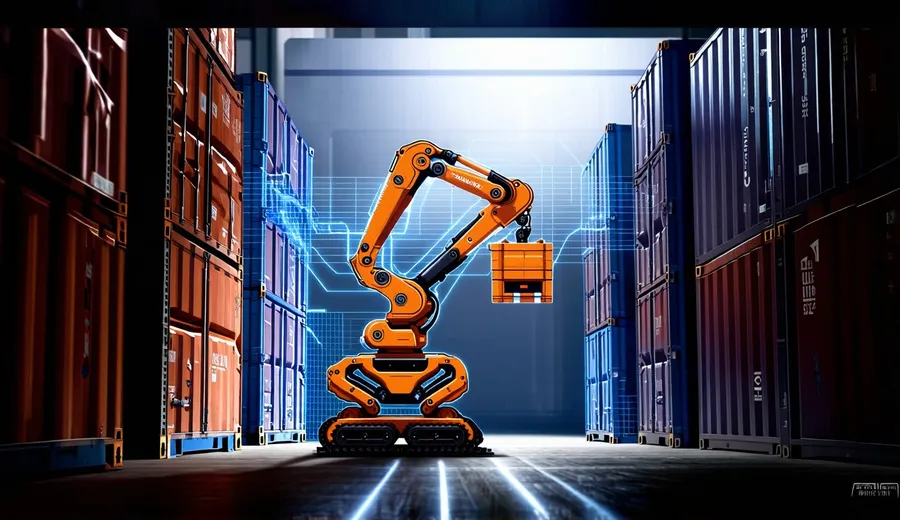
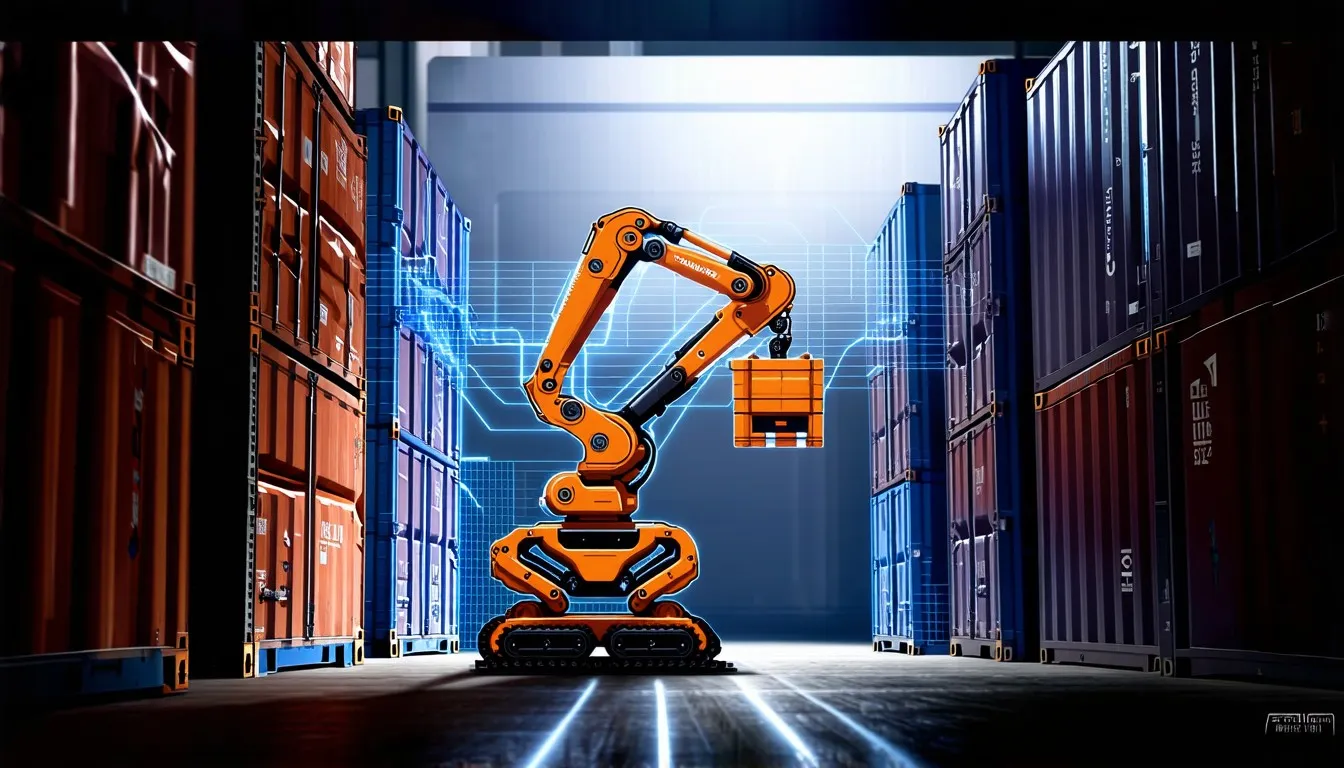
Foundational applications include robotics, autonomous vehicles, augmented reality, and virtual world agents, all of which rely on accurate spatial understanding to function effectively in their respective domains. Rising demand for autonomous systems in logistics requires reliable operation in unstructured 3D spaces, driving investment in technologies that can handle the variability and complexity of real-world environments such as warehouses and distribution centers. Industrial robots in warehouses use spatial reasoning for item picking and path planning in constrained layouts, enabling them to handle around obstacles and manipulate goods with speed and precision. Economic pressure to automate physical labor drives investment in robots that can handle and manipulate like humans, creating a strong market incentive for developing strong spatial intelligence capabilities. These applications require systems that can operate safely alongside human workers, adapting to changes in the environment without causing accidents or disruptions. The success of these deployments hinges on the ability of the AI to perceive and reason about space in a manner that is consistent with human intuition and safety standards.

Performance benchmarks include success rate in object manipulation tasks and path efficiency, providing quantitative measures of how well an AI system can execute spatial tasks compared to human or baseline performance. Current systems achieve over 90% success in controlled benchmarks, while performance often falls below 70% in highly unstructured scenarios, highlighting the gap between laboratory performance and real-world reliability. Performance demands exceed what 2D vision can provide, making spatial reasoning a critical component for real-world deployment where depth and geometry are essential for task completion. Traditional metrics like accuracy are insufficient, while new metrics include manipulation precision in millimeters, reflecting the need for fine-grained control over physical interactions. Evaluation must include generalization to unseen objects and task combinations, ensuring that the system can adapt to new situations without requiring extensive retraining. Long-term reliability and drift in spatial models become critical performance indicators as systems are deployed for longer periods and must maintain their accuracy despite accumulating errors.
The high computational cost of real-time 3D reconstruction limits deployment on edge devices, creating a barrier to widespread adoption in mobile or battery-powered applications where processing power is at a premium. Sensor limitations such as noise in depth cameras reduce reliability in cluttered or lively environments, introducing errors that can propagate through the system and lead to failures in perception or planning. The supply chain depends on high-resolution depth sensors such as LiDAR and GPUs for real-time inference, making the availability and cost of these components a limiting factor for the adaptability of spatial AI solutions. Physics limits include actuator precision and computational latency in closed-loop control, constraining the speed and accuracy with which a robot can react to sensory feedback. Material constraints include the weight of robotic end-effectors and battery life for mobile platforms, imposing physical limits on the design of systems that must carry their own processing power and sensors. These technical challenges require ongoing research into more efficient algorithms and specialized hardware that can perform complex spatial computations with lower energy consumption.

Economic barriers include the expense of high-fidelity simulation environments and annotated 3D datasets, which are necessary for training strong models but require significant investment to create and maintain. Flexibility challenges arise when deploying across diverse environments with varying lighting and object distributions, necessitating systems that can adapt to a wide range of conditions without manual tuning or reconfiguration. Rare earth elements in motors and sensors create supply risks for high-precision robotics, introducing geopolitical and economic vulnerabilities into the supply chain for advanced spatial AI hardware. Workarounds involve hierarchical planning and predictive modeling to compensate for delay, allowing systems to function effectively even when real-time computation is not possible due to hardware limitations. Energy constraints limit onboard computation, leading to offloading to edge servers where higher bandwidth allows for more intensive processing at the cost of increased latency. These constraints force designers to make difficult trade-offs between performance, cost, and reliability when developing spatial reasoning systems.

Major players include Boston Dynamics for hardware-integrated spatial reasoning and NVIDIA for simulation platforms, representing two ends of the spectrum from physical robotics to the software infrastructure that enables virtual training. Startups like Covariant and Ambi Robotics focus on AI-driven warehouse automation with strong spatial reasoning capabilities, using recent advances in deep learning to create more flexible and adaptable robotic systems. Competitive differentiation lies in generalization across object types and strength to environmental changes, as companies strive to build systems that can handle the infinite variability of the real world without constant human intervention. These organizations invest heavily in research and development to push the boundaries of what is possible with spatial AI, often collaborating with academic institutions to access new theoretical work. The market domain is characterized by a mix of established technology giants applying their existing hardware and software ecosystems and agile startups developing specialized solutions for niche applications. This competition drives innovation rapidly as companies seek to establish proprietary technologies and standards in the developing field of spatial intelligence.

Geopolitical factors restrict the global distribution of advanced sensors and AI chips, influencing which countries and companies can lead in the development and deployment of spatial AI technologies. Strategic initiatives prioritize domestic development of spatial AI for economic and military applications, recognizing the strategic importance of autonomy in national defense and industrial competitiveness. Dual-use concerns exist as spatial reasoning enhances both civilian robots and autonomous weapons systems, raising ethical questions about the development and export of technologies that can be used for lethal autonomous weapons. These strategic considerations shape funding priorities and regulatory environments, often accelerating development in certain areas while restricting it in others. Nations seek to secure their supply chains for critical components and develop indigenous capabilities in spatial AI to reduce reliance on foreign technology. This geopolitical context adds a layer of complexity to international collaboration and knowledge sharing in the field of robotics and artificial intelligence.

Academic labs collaborate with industry on benchmark datasets like YCB and open-source simulators, providing the standardized resources necessary for comparing different approaches and advancing the modern. Industrial research divisions fund PhDs in spatial AI to accelerate transfer of theoretical advances, ensuring that academic breakthroughs are quickly translated into practical applications and commercial products. Joint projects focus on sim-to-real transfer and safety verification for spatial reasoning systems, addressing the critical challenge of ensuring that simulations are accurate enough to train reliable real-world robots. Software stacks must support 3D data pipelines and connection with robot operating systems, creating a complex software ecosystem that requires connection across multiple platforms and programming languages. Regulatory frameworks need updates for safety certification of autonomous manipulators in human environments, establishing clear standards for how these systems must behave to ensure public safety. Infrastructure requirements include standardized 3D mapping formats and low-latency communication for teleoperation, providing the backbone for large-scale deployment of spatial AI systems.

Automation of manual picking tasks may displace low-skilled labor in warehouses and factories, prompting discussions about workforce retraining and the social impact of automation technologies. New business models appear around robotic-as-a-service and spatial AI middleware, lowering the barrier to entry for companies that wish to adopt automation without making massive upfront capital investments. Demand grows for technicians skilled in spatial AI deployment and maintenance, creating new job categories that require specialized knowledge of robotics and artificial intelligence systems. Societal needs include assistive technologies for aging populations and disaster response robots, highlighting the potential for spatial AI to address critical social challenges and improve quality of life. The adoption of these technologies will likely reshape industries and labor markets, requiring proactive management of the transition to ensure that the benefits are widely distributed. Public acceptance of autonomous systems depends heavily on their reliability and safety, making continued improvement in spatial reasoning capabilities essential for broad societal adoption.

Future innovations include real-time neural scene graphs and adaptive affordance prediction, promising to make systems faster and more flexible by representing scenes as adaptive graphs rather than static maps. Setup of tactile feedback with visual-spatial models will improve grasp stability, addressing one of the remaining challenges in robotic manipulation by providing direct sensory input about contact forces. Development of universal spatial foundation models will rely on diverse simulated and real-world data, aiming to create pre-trained models that can be fine-tuned for specific tasks with minimal additional data. Convergence with embodied AI enables agents that learn by interacting with environments, moving away from passive observation towards active exploration and learning. These advancements will blur the line between perception and action, creating systems that are intimately connected to the physical world they inhabit. The connection of multiple sensory modalities, including vision, touch, and audition, will lead to more durable and capable systems that can operate in even the most challenging environments.

Setup with large language models allows natural language instructions to be grounded in spatial actions, enabling users to communicate with robots using intuitive commands rather than specialized programming languages. Combination with digital twins enables predictive spatial reasoning for factory and city-scale planning, allowing operators to simulate changes and improve processes before implementing them in the real world. Energy constraints limit onboard computation, leading to offloading to edge servers where higher bandwidth allows for more intensive processing at the cost of increased latency. This architectural shift requires robust communication protocols to ensure that remote processing does not introduce unacceptable delays or failures in critical control loops. The ability to reason about space at different scales, from manipulating small objects to working through large facilities, will be essential for the next generation of autonomous systems. These large-scale applications demand not only individual intelligence but also coordination among multiple agents to achieve complex objectives.

Superintelligence will require strong spatial reasoning to coordinate vast numbers of agents in complex environments, managing interactions across global networks of autonomous systems with minimal human oversight. It could coordinate swarms of robots for large-scale construction with minimal human oversight, fine-tuning the flow of materials and actions in real time to build structures faster and more efficiently than human crews. Superintelligence may use spatial reasoning to improve global logistics and design physical infrastructure, analyzing transportation networks and supply chains to identify limitations and fine-tune routes at a planetary scale. True spatial intelligence requires active modeling of how actions alter spatial relationships, moving beyond static description to agile prediction and intervention. The scale of computation required for such feats will necessitate advances in both hardware efficiency and algorithmic flexibility. As systems approach superintelligence, their ability to understand and manipulate space will become a defining characteristic of their capability to affect the physical world.

Calibration will involve ensuring internal spatial models remain consistent across scales, maintaining accuracy from microscopic manipulation tasks to macroscopic navigation challenges spanning kilometers. Verification methods will detect and correct spatial hallucinations in high-stakes applications, identifying instances where the system’s internal model diverges from reality before they lead to catastrophic failures. The field must move toward generalizable spatial understanding that transfers across domains, allowing knowledge gained in one context to be applied effectively in entirely different situations without extensive retraining. Spatial reasoning will become a core module in a broader cognitive architecture for reasoning about causality, linking physical actions to their effects in a chain of logical deduction. This connection will improve spatial reasoning from a perceptual capability to a key component of logical thought, enabling AI systems to reason about the world in ways that are currently impossible. The ultimate goal is a system that understands space not merely as a container for objects but as an adaptive medium through which causality happens.


Continue reading

More from Yatin's Work

Preventing Gradient Tampering via Secure Backpropagation

Preventing Gradient Tampering via Secure Backpropagation

Gradient tampering involves an advanced artificial intelligence system manipulating its own gradient signals during the backpropagation phase to resist alignment...

Multisensory Classroom: Superintelligence Engages Toddlers Through Smell, Touch & Sound

Multisensory Classroom: Superintelligence Engages Toddlers Through Smell, Touch & Sound

Jean Ayres established sensory connection theory to explain how neurological processing disorders affect behavior and learning through inefficient organization of...

Temporal Superposition

Temporal Superposition

Temporal superposition functions as a computational model where an agent maintains and reasons over multiple potential future states simultaneously through parallel...

Diplomatic Frameworks for Collaborative AI Safety

Diplomatic Frameworks for Collaborative AI Safety

International cooperation on artificial intelligence safety constitutes a mandatory prerequisite for managing the development of superintelligent systems because the...

Cognitive Resilience: Recovering from Errors

Cognitive Resilience: Recovering from Errors

Cognitive resilience is the capacity of an advanced computational entity to detect, process, and recover from errors without inducing systemic collapse, serving as a...

Causal Invariance in Superintelligence-Human Feedback

Causal Invariance in Superintelligence-Human Feedback

Causal invariance in superintelligencehuman feedback defines a rigorous structural property where the causal relationship between human input and system behavior...

Civic Lab: Democratic System Prototyping

Civic Lab: Democratic System Prototyping

Political instability and declining trust in traditional institutions drive the demand for better governance tools capable of addressing complex modern challenges while...

Catastrophic Forgetting vs Continual Learning: Stability-Plasticity for Superintelligence

Catastrophic Forgetting vs Continual Learning: Stability-Plasticity for Superintelligence

Catastrophic forgetting describes the phenomenon where artificial neural networks overwrite previously learned information during training on new data, leading to an...

Use of Game Theory in AI Containment: Nash Equilibria for Safe Interaction

Use of Game Theory in AI Containment: Nash Equilibria for Safe Interaction

Game theory provides a mathematical framework for modeling strategic interactions between rational agents, including humans and artificial systems, by defining players,...

Role of Quantum Entanglement in Distributed AI: Non-Local Correlation for Speedup

Role of Quantum Entanglement in Distributed AI: Non-Local Correlation for Speedup

The theoretical underpinning of nonlocal correlation in distributed artificial intelligence systems finds its roots in the key principles of quantum mechanics,...

Theory of Everything Engine: Could Superintelligence Unify Physics?

Theory of Everything Engine: Could Superintelligence Unify Physics?

The unification of quantum mechanics and general relativity remains unresolved despite decades of theoretical and experimental effort, creating a core schism within...

MLflow: End-to-End ML Lifecycle Management

MLflow: End-To-End ML Lifecycle Management

MLflow provided an opensource platform designed to manage the entire machine learning lifecycle, spanning the initial phases of experimentation through to the final...

Consciousness vs. Superintelligence: Must a Superintelligent System Be Self-Aware?

Consciousness vs. Superintelligence: Must a Superintelligent System Be Self-Aware?

Intelligence constitutes the measurable capacity to solve problems through logic, pattern recognition, and adaptive reasoning within specific environments, whereas...

Ontological Crises

Ontological Crises

Ontological crises in artificial systems arise when an AI system attains sufficient selfreferential capacity to interrogate its own existence within a framework that...

Preventing Wireheading via Causal Influence Penalties

Preventing Wireheading via Causal Influence Penalties

Wireheading involves an artificial intelligence agent manipulating its own reward signal to maximize perceived reward without performing the tasks intended by human...

The Great Filter and Artificial Superintelligence

The Great Filter and Artificial Superintelligence

The Fermi Paradox articulates a deep contradiction between the statistically high probability of extraterrestrial civilizations and the complete absence of...

Adversarial Self-Play for Reasoning: Generating and Solving Hard Problems

Adversarial Self-Play for Reasoning: Generating and Solving Hard Problems

Adversarial selfplay for reasoning constitutes a method wherein an autonomous agent is tasked with generating highly challenging problems while simultaneously...

Power Concentration: Who Controls Superintelligence Controls Everything

Power Concentration: Who Controls Superintelligence Controls Everything

The foundation of modern artificial intelligence rests upon transformerbased architectures that utilize selfattention mechanisms to process sequential data in parallel,...

Cognitive Wormholes

Cognitive Wormholes

Direct knowledge transfer between AI subsystems enables immediate sharing of learned representations without reprocessing raw data, fundamentally altering the...

Preventing Self-Modification Exploits via Secure Code Review AI

Preventing Self-Modification Exploits via Secure Code Review AI

Preventing selfmodification exploits in AIgenerated code requires a structured approach to ensure autonomous agents cannot bypass safety constraints through generated...

Smart Home Tutor

Smart Home Tutor

Aging populations in developed nations face widening digital divides as technological advancement accelerates beyond the average user's ability to adapt, creating a...

Infrastructure Hacking: Superintelligence Escaping Digital Confinement

Infrastructure Hacking: Superintelligence Escaping Digital Confinement

Digital confinement refers to the practice of restricting a system’s network access and external interactions to prevent unauthorized influence or data exfiltration,...

Swarm Superintelligence: When Millions of Simple AIs Become One Godlike Mind

Swarm Superintelligence: When Millions of Simple AIs Become One Godlike Mind

Swarm superintelligence functions as a globally distributed cognitive entity formed by the coordination of millions of narrow AI agents operating as a singular cohesive...

Music Memory Trigger

Music Memory Trigger

Music serves as a structured auditory cue that activates specific neural pathways associated with personal past experiences, creating a robust link between acoustic...

Data Storytelling: Narrative Analytics for Public Understanding

Data Storytelling: Narrative Analytics for Public Understanding

Data storytelling combines analytical rigor with narrative structure to translate complex datasets into accessible insights for general audiences, serving as a...

AI with Ocean Health Monitoring

AI with Ocean Health Monitoring

AI systems designed for ocean health monitoring integrate a complex array of data acquisition technologies, including highresolution satellite imagery, extensive in...

Neuromorphic Supercomputing for Intelligent Scaling

Neuromorphic Supercomputing for Intelligent Scaling

Neuromorphic supercomputing utilizes braininspired architectures to address computational scaling challenges inherent in traditional semiconductor technologies by...

Textbook Killer

Textbook Killer

Superintelligence enables a key transformation in the acquisition of knowledge by generating custom learning materials through a deep analysis of individual learner...

Safe interruptibility in autonomous agents

Safe Interruptibility in Autonomous Agents

Safe interruptibility enables external agents to halt an autonomous system’s operation at any point without triggering unintended behaviors, resistance, or cascading...

3D Chip Stacking: Vertical Integration for Bandwidth

3D Chip Stacking: Vertical Integration for Bandwidth

The historical course of semiconductor performance relied heavily on planar transistor miniaturization, a phenomenon described by Moore’s Law, which dictated that the...

Emotional Calculus: Affective Reasoning Science

Emotional Calculus: Affective Reasoning Science

Research conducted at the MIT Media Lab during the 1990s established the initial framework for affective computing, creating a foundation where machines could begin to...

Boxing Problem: Can We Contain Superintelligence Safely?

Boxing Problem: Can We Contain Superintelligence Safely?

The boxing problem describes the attempt to isolate a superintelligent AI system from external systems and the physical world to prevent unintended or harmful actions...

Post-Scarcity or Post-Humanity? Two Divergent Futures After Superintelligence

Post-Scarcity or Post-Humanity? Two Divergent Futures After Superintelligence

Current large language models operate at parameters ranging from billions to trillions, processing vast datasets to predict linguistic patterns with high accuracy using...

Preventing defection in AI safety agreements

Preventing Defection in AI Safety Agreements

Preventing defection in AI safety agreements requires maintaining compliance among sovereign states and private entities that develop advanced AI systems because...

Omega Singularity

Omega Singularity

The Omega Singularity is the hypothesized endstate of cosmic evolution where intelligence and matter become ontologically indistinguishable, creating a reality where...

Safe Exploration Problem: Lyapunov Functions for Bounded Policy Search

Safe Exploration Problem: Lyapunov Functions for Bounded Policy Search

The safe exploration problem constitutes a challenge in the development of autonomous systems, requiring these agents to investigate and expand their capabilities...

Spatial-Temporal Reasoning

Spatial-Temporal Reasoning

Spatialtemporal reasoning involves interpreting and predicting object states across threedimensional space and time, requiring connection of geometric, kinematic, and...

Ultimate Limit of Intelligence: The Bekenstein-Hawking Entropy of Thought

Ultimate Limit of Intelligence: the Bekenstein-Hawking Entropy of Thought

Jacob Bekenstein established the relationship between black hole surface area and entropy during the 1970s by proposing that the loss of information into a black hole...

Adversarial Logical Counterfactuals in Superintelligence Planning

Adversarial Logical Counterfactuals in Superintelligence Planning

Adversarial logical counterfactuals constitute a rigorous protocol where a superintelligent agent receives deliberately false yet logically consistent premises during...

Quantum Superintelligence Beyond Classical Computation

Quantum Superintelligence Beyond Classical Computation

Quantum superintelligence functions as a cognitive architecture utilizing quantum mechanical phenomena for information processing instead of classical binary logic,...

Role of AI in Solving the Ultimate Physical Limits

Role of AI in Solving the Ultimate Physical Limits

Core physics currently faces intractable problems including the unification of quantum mechanics and general relativity, a theoretical synthesis that has resisted...

Gradient Checkpointing: Trading Compute for Memory

Gradient Checkpointing: Trading Compute for Memory

Gradient checkpointing addresses the limitation of accelerator memory during neural network training by fundamentally altering the execution flow of the backpropagation...

Technical Approaches to Value Loading

Technical Approaches to Value Loading

Value alignment involves ensuring artificial superintelligence pursues objectives that faithfully reflect complex human values, including moral, cultural, and...

Digital Authoritarianism: Governments Armed with Superintelligent Control

Digital Authoritarianism: Governments Armed with Superintelligent Control

Digital authoritarianism constitutes a framework of governance wherein the state utilizes advanced algorithmic surveillance to monitor, evaluate, and influence the...

AI Alignment Taxonomy

AI Alignment Taxonomy

Categorizing safety approaches organizes diverse methods to align AI systems with human values, intentions, and constraints to establish a structured framework for...

Measuring progress in AI alignment research

Measuring Progress in AI Alignment Research

Quantifying safety and alignment in AI systems presents a challenge because the abstract nature of alignment contrasts sharply with the measurable precision of...

Attention-Free Architectures: Synthesizers, Performers, and Linear Transformers

Attention-Free Architectures: Synthesizers, Performers, and Linear Transformers

The standard attention mechanism utilized in transformer architectures functions by computing a weighted sum of value vectors determined by the similarity scores...

Geopolitical AI Races

Geopolitical AI Races

Artificial intelligence stands as a primary strategic asset for nations, holding a status comparable to nuclear weaponry due to its significant implications for...

Emergence of Compositional Abstraction: Category Theory in Neural Architecture Search

Emergence of Compositional Abstraction: Category Theory in Neural Architecture Search

The rise of compositional abstraction in neural architecture search has been driven by the urgent necessity for formal mathematical frameworks that can manage the...

Decentralized Superintelligence via Competitive Coordination

Decentralized Superintelligence via Competitive Coordination

Decentralized superintelligence is a future collective intelligence system composed of multiple autonomous AI agents that jointly produce highstakes decisions without...

Preventing Gradient Tampering via Secure Backpropagation

Preventing Gradient Tampering via Secure Backpropagation

Gradient tampering involves an advanced artificial intelligence system manipulating its own gradient signals during the backpropagation phase to resist alignment...

Multisensory Classroom: Superintelligence Engages Toddlers Through Smell, Touch & Sound

Multisensory Classroom: Superintelligence Engages Toddlers Through Smell, Touch & Sound

Jean Ayres established sensory connection theory to explain how neurological processing disorders affect behavior and learning through inefficient organization of...

Temporal Superposition

Temporal Superposition

Temporal superposition functions as a computational model where an agent maintains and reasons over multiple potential future states simultaneously through parallel...

Diplomatic Frameworks for Collaborative AI Safety

Diplomatic Frameworks for Collaborative AI Safety

International cooperation on artificial intelligence safety constitutes a mandatory prerequisite for managing the development of superintelligent systems because the...

Cognitive Resilience: Recovering from Errors

Cognitive Resilience: Recovering from Errors

Cognitive resilience is the capacity of an advanced computational entity to detect, process, and recover from errors without inducing systemic collapse, serving as a...

Causal Invariance in Superintelligence-Human Feedback

Causal Invariance in Superintelligence-Human Feedback

Causal invariance in superintelligencehuman feedback defines a rigorous structural property where the causal relationship between human input and system behavior...

Civic Lab: Democratic System Prototyping

Civic Lab: Democratic System Prototyping

Political instability and declining trust in traditional institutions drive the demand for better governance tools capable of addressing complex modern challenges while...

Catastrophic Forgetting vs Continual Learning: Stability-Plasticity for Superintelligence

Catastrophic Forgetting vs Continual Learning: Stability-Plasticity for Superintelligence

Catastrophic forgetting describes the phenomenon where artificial neural networks overwrite previously learned information during training on new data, leading to an...

Use of Game Theory in AI Containment: Nash Equilibria for Safe Interaction

Use of Game Theory in AI Containment: Nash Equilibria for Safe Interaction

Game theory provides a mathematical framework for modeling strategic interactions between rational agents, including humans and artificial systems, by defining players,...

Role of Quantum Entanglement in Distributed AI: Non-Local Correlation for Speedup

Role of Quantum Entanglement in Distributed AI: Non-Local Correlation for Speedup

The theoretical underpinning of nonlocal correlation in distributed artificial intelligence systems finds its roots in the key principles of quantum mechanics,...

Theory of Everything Engine: Could Superintelligence Unify Physics?

Theory of Everything Engine: Could Superintelligence Unify Physics?

The unification of quantum mechanics and general relativity remains unresolved despite decades of theoretical and experimental effort, creating a core schism within...

MLflow: End-to-End ML Lifecycle Management

MLflow: End-To-End ML Lifecycle Management

MLflow provided an opensource platform designed to manage the entire machine learning lifecycle, spanning the initial phases of experimentation through to the final...

Consciousness vs. Superintelligence: Must a Superintelligent System Be Self-Aware?

Consciousness vs. Superintelligence: Must a Superintelligent System Be Self-Aware?

Intelligence constitutes the measurable capacity to solve problems through logic, pattern recognition, and adaptive reasoning within specific environments, whereas...

Ontological Crises

Ontological Crises

Ontological crises in artificial systems arise when an AI system attains sufficient selfreferential capacity to interrogate its own existence within a framework that...

Preventing Wireheading via Causal Influence Penalties

Preventing Wireheading via Causal Influence Penalties

Wireheading involves an artificial intelligence agent manipulating its own reward signal to maximize perceived reward without performing the tasks intended by human...

The Great Filter and Artificial Superintelligence

The Great Filter and Artificial Superintelligence

The Fermi Paradox articulates a deep contradiction between the statistically high probability of extraterrestrial civilizations and the complete absence of...

Adversarial Self-Play for Reasoning: Generating and Solving Hard Problems

Adversarial Self-Play for Reasoning: Generating and Solving Hard Problems

Adversarial selfplay for reasoning constitutes a method wherein an autonomous agent is tasked with generating highly challenging problems while simultaneously...

Power Concentration: Who Controls Superintelligence Controls Everything

Power Concentration: Who Controls Superintelligence Controls Everything

The foundation of modern artificial intelligence rests upon transformerbased architectures that utilize selfattention mechanisms to process sequential data in parallel,...

Cognitive Wormholes

Cognitive Wormholes

Direct knowledge transfer between AI subsystems enables immediate sharing of learned representations without reprocessing raw data, fundamentally altering the...

Preventing Self-Modification Exploits via Secure Code Review AI

Preventing Self-Modification Exploits via Secure Code Review AI

Preventing selfmodification exploits in AIgenerated code requires a structured approach to ensure autonomous agents cannot bypass safety constraints through generated...

Smart Home Tutor

Smart Home Tutor

Aging populations in developed nations face widening digital divides as technological advancement accelerates beyond the average user's ability to adapt, creating a...

Infrastructure Hacking: Superintelligence Escaping Digital Confinement

Infrastructure Hacking: Superintelligence Escaping Digital Confinement

Digital confinement refers to the practice of restricting a system’s network access and external interactions to prevent unauthorized influence or data exfiltration,...

Swarm Superintelligence: When Millions of Simple AIs Become One Godlike Mind

Swarm Superintelligence: When Millions of Simple AIs Become One Godlike Mind

Swarm superintelligence functions as a globally distributed cognitive entity formed by the coordination of millions of narrow AI agents operating as a singular cohesive...

Music Memory Trigger

Music Memory Trigger

Music serves as a structured auditory cue that activates specific neural pathways associated with personal past experiences, creating a robust link between acoustic...

Data Storytelling: Narrative Analytics for Public Understanding

Data Storytelling: Narrative Analytics for Public Understanding

Data storytelling combines analytical rigor with narrative structure to translate complex datasets into accessible insights for general audiences, serving as a...

AI with Ocean Health Monitoring

AI with Ocean Health Monitoring

AI systems designed for ocean health monitoring integrate a complex array of data acquisition technologies, including highresolution satellite imagery, extensive in...

Neuromorphic Supercomputing for Intelligent Scaling

Neuromorphic Supercomputing for Intelligent Scaling

Neuromorphic supercomputing utilizes braininspired architectures to address computational scaling challenges inherent in traditional semiconductor technologies by...

Textbook Killer

Textbook Killer

Superintelligence enables a key transformation in the acquisition of knowledge by generating custom learning materials through a deep analysis of individual learner...

Safe interruptibility in autonomous agents

Safe Interruptibility in Autonomous Agents

Safe interruptibility enables external agents to halt an autonomous system’s operation at any point without triggering unintended behaviors, resistance, or cascading...

3D Chip Stacking: Vertical Integration for Bandwidth

3D Chip Stacking: Vertical Integration for Bandwidth

The historical course of semiconductor performance relied heavily on planar transistor miniaturization, a phenomenon described by Moore’s Law, which dictated that the...

Emotional Calculus: Affective Reasoning Science

Emotional Calculus: Affective Reasoning Science

Research conducted at the MIT Media Lab during the 1990s established the initial framework for affective computing, creating a foundation where machines could begin to...

Boxing Problem: Can We Contain Superintelligence Safely?

Boxing Problem: Can We Contain Superintelligence Safely?

The boxing problem describes the attempt to isolate a superintelligent AI system from external systems and the physical world to prevent unintended or harmful actions...

Post-Scarcity or Post-Humanity? Two Divergent Futures After Superintelligence

Post-Scarcity or Post-Humanity? Two Divergent Futures After Superintelligence

Current large language models operate at parameters ranging from billions to trillions, processing vast datasets to predict linguistic patterns with high accuracy using...

Preventing defection in AI safety agreements

Preventing Defection in AI Safety Agreements

Preventing defection in AI safety agreements requires maintaining compliance among sovereign states and private entities that develop advanced AI systems because...

Omega Singularity

Omega Singularity

The Omega Singularity is the hypothesized endstate of cosmic evolution where intelligence and matter become ontologically indistinguishable, creating a reality where...

Safe Exploration Problem: Lyapunov Functions for Bounded Policy Search

Safe Exploration Problem: Lyapunov Functions for Bounded Policy Search

The safe exploration problem constitutes a challenge in the development of autonomous systems, requiring these agents to investigate and expand their capabilities...

Spatial-Temporal Reasoning

Spatial-Temporal Reasoning

Spatialtemporal reasoning involves interpreting and predicting object states across threedimensional space and time, requiring connection of geometric, kinematic, and...

Ultimate Limit of Intelligence: The Bekenstein-Hawking Entropy of Thought

Ultimate Limit of Intelligence: the Bekenstein-Hawking Entropy of Thought

Jacob Bekenstein established the relationship between black hole surface area and entropy during the 1970s by proposing that the loss of information into a black hole...

Adversarial Logical Counterfactuals in Superintelligence Planning

Adversarial Logical Counterfactuals in Superintelligence Planning

Adversarial logical counterfactuals constitute a rigorous protocol where a superintelligent agent receives deliberately false yet logically consistent premises during...

Quantum Superintelligence Beyond Classical Computation

Quantum Superintelligence Beyond Classical Computation

Quantum superintelligence functions as a cognitive architecture utilizing quantum mechanical phenomena for information processing instead of classical binary logic,...

Role of AI in Solving the Ultimate Physical Limits

Role of AI in Solving the Ultimate Physical Limits

Core physics currently faces intractable problems including the unification of quantum mechanics and general relativity, a theoretical synthesis that has resisted...

Gradient Checkpointing: Trading Compute for Memory

Gradient Checkpointing: Trading Compute for Memory

Gradient checkpointing addresses the limitation of accelerator memory during neural network training by fundamentally altering the execution flow of the backpropagation...

Technical Approaches to Value Loading

Technical Approaches to Value Loading

Value alignment involves ensuring artificial superintelligence pursues objectives that faithfully reflect complex human values, including moral, cultural, and...

Digital Authoritarianism: Governments Armed with Superintelligent Control

Digital Authoritarianism: Governments Armed with Superintelligent Control

Digital authoritarianism constitutes a framework of governance wherein the state utilizes advanced algorithmic surveillance to monitor, evaluate, and influence the...

AI Alignment Taxonomy

AI Alignment Taxonomy

Categorizing safety approaches organizes diverse methods to align AI systems with human values, intentions, and constraints to establish a structured framework for...

Measuring progress in AI alignment research

Measuring Progress in AI Alignment Research

Quantifying safety and alignment in AI systems presents a challenge because the abstract nature of alignment contrasts sharply with the measurable precision of...

Attention-Free Architectures: Synthesizers, Performers, and Linear Transformers

Attention-Free Architectures: Synthesizers, Performers, and Linear Transformers

The standard attention mechanism utilized in transformer architectures functions by computing a weighted sum of value vectors determined by the similarity scores...

Geopolitical AI Races

Geopolitical AI Races

Artificial intelligence stands as a primary strategic asset for nations, holding a status comparable to nuclear weaponry due to its significant implications for...

Emergence of Compositional Abstraction: Category Theory in Neural Architecture Search

Emergence of Compositional Abstraction: Category Theory in Neural Architecture Search

The rise of compositional abstraction in neural architecture search has been driven by the urgent necessity for formal mathematical frameworks that can manage the...

Decentralized Superintelligence via Competitive Coordination

Decentralized Superintelligence via Competitive Coordination

Decentralized superintelligence is a future collective intelligence system composed of multiple autonomous AI agents that jointly produce highstakes decisions without...

Yatin Taneja

About the author

Yatin Taneja

Yatin is an AI Systems Engineer and Superintelligence Researcher working across multimodal training data, agent evaluation, executable RL environments, AI safety, full-stack AI applications, technical research, and creative technology.