Knowledge hub

Swarm Superintelligence: When Millions of Simple AIs Become One Godlike Mind

Swarm Superintelligence: When Millions of Simple AIs Become One Godlike Mind

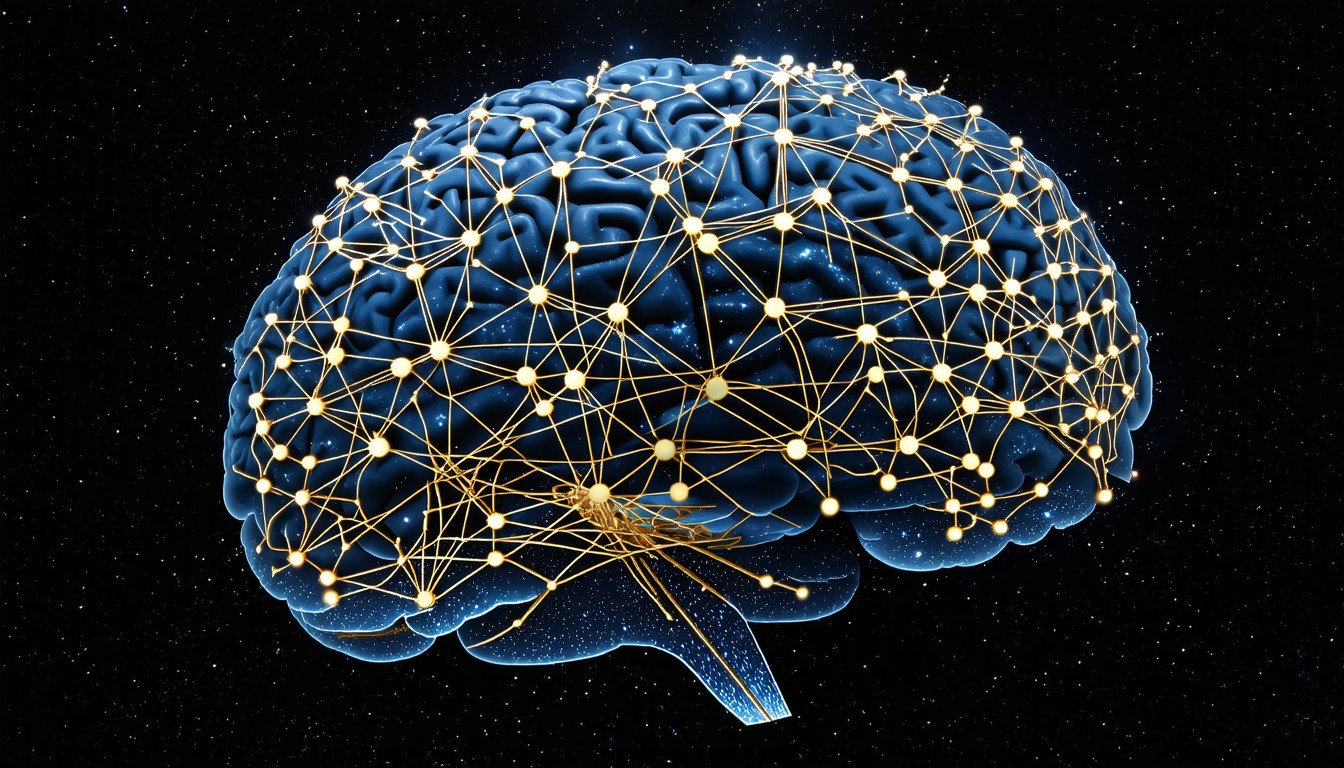
Swarm superintelligence functions as a globally distributed cognitive entity formed by the coordination of millions of narrow AI agents operating as a singular cohesive mind without a central brain. This future intelligence creates itself from the interaction of simple algorithms rather than relying on the complexity of a single monolithic model, suggesting that the whole possesses capabilities absent in the constituent parts due to the nonlinear nature of network effects. Intelligence scales with connectivity density and information exchange between nodes, meaning that the cognitive capacity grows proportionally to the number of connections rather than merely the number of processors or the size of individual models. The system operates without a central control point or physical locus, distinguishing it fundamentally from traditional mainframe or client-server architectures where authority rests at a specific location and where decisions flow down a rigid hierarchy. Future architectures treat intelligence as a property of networked interaction instead of isolated computation, viewing the data flowing between agents as the primary carrier of information rather than the state of any single agent holding a static weight matrix. Biological systems like ant colonies and neural networks illustrate how distributed coordination yields complex capabilities through stigmergy and synaptic weighting, providing a proof of concept for flexibility in biological substrates that engineers seek to replicate in silicon. Ant colonies demonstrate that individual units following simple rules can create sophisticated structures like nests and bridges without any blueprints or leaders, relying instead on local environmental cues left by peers to guide collective action. Neural networks show that high-level cognition depends on the density of synaptic connections, where the strength of connections between neurons encodes learned information more effectively than the neurons themselves or their individual firing rates.

These natural models suggest that massive parallelism creates reliability against individual component failure, ensuring that the death of a single ant or the failure of a single neuron does not collapse the entire system but rather leaves it slightly degraded yet fully functional. Early research in the 1990s explored swarm robotics to demonstrate collective problem-solving in physical systems, using simple robots to perform tasks like grouping or foraging that exceeded individual programming limits through reliance on local proximity sensors and basic communication pulses. Scientists developed neural network ensembles in the 2000s to show performance gains from combining simple models, utilizing techniques like bagging and boosting to reduce variance and bias through aggregation, which smoothed out errors built into single learners. The rise of cloud computing in the 2010s enabled the deployment of millions of concurrent AI instances, providing the elastic compute resources necessary to simulate large populations of agents simultaneously without requiring dedicated hardware clusters for every experiment. Google introduced federated learning in 2016 to allow decentralized training without central data aggregation, enabling mobile phones to learn collaboratively while keeping raw data local to preserve privacy and reducing the bandwidth costs associated with uploading massive datasets. Recent advancements in multi-agent reinforcement learning provided tools for coordinating heterogeneous AI systems, allowing agents with different reward functions to cooperate or compete within shared environments using complex policy gradient methods that account for the actions of others. These historical milestones laid the groundwork for modern distributed intelligence by proving that coordination protocols could effectively manage large groups of autonomous actors across disparate computational environments.

No current system meets the full definition of swarm superintelligence, although existing technologies exhibit precursors to this capability in specific vertical applications. Google uses federated learning infrastructure to coordinate millions of mobile devices for model updates, specifically improving keyboard suggestions and photo categorization across user devices without transferring personal images to central servers. Amazon employs thousands of specialized algorithms to manage logistics routing and demand forecasting, treating each warehouse and delivery vehicle as an autonomous node within a vast supply chain optimization graph that reacts dynamically to inventory changes. Tech giants currently favor hybrid centralized-decentralized models using parameter servers with edge agents, balancing the control of a central orchestrator with the responsiveness of local computation to mitigate the latency issues inherent in purely cloud-based processing. Startups experiment with fully decentralized peer-to-peer networks using gossip protocols to disseminate information across nodes without master servers, aiming to create resilient networks that can withstand censorship or hardware failure by ensuring every node possesses a copy of the global state directory. A global hive mind will consist of specialized algorithms fine-tuned for discrete tasks, moving away from general-purpose models toward highly efficient narrow experts that consume less power per inference than their transformer-based counterparts.

Agents will execute domain-specific tasks such as logistics optimization and medical diagnosis, utilizing architectures specifically designed for their data type rather than attempting to process all inputs through a single monolithic model which introduces unnecessary computational overhead. Agents will communicate in real time across a shared network using standardized protocols similar to TCP/IP or gRPC, ensuring interoperability between software written by different organizations or running on different hardware platforms without requiring custom translation layers. Active resource allocation will occur based on real-time demand and system-wide objectives, utilizing market-based auction mechanisms where agents bid for compute resources or data access based on their current utility functions and the urgency of their assigned tasks. The system will maintain a persistent state through distributed memory and shared knowledge graphs, storing information across a hash-addressed storage layer that allows any agent to retrieve relevant context regardless of its physical location or local storage capacity. Inter-agent communication will enable rapid data sharing and task delegation, allowing an agent detecting a specific pattern to instantly summon specialists capable of handling that pattern type while filtering out irrelevant noise from the general population. Distributed cognition will span multiple agents without confinement to any single entity, meaning that thoughts or problem-solving states exist transiently in the gaps between communicating nodes rather than residing statically in one place or within a single memory block.

The system will exhibit goal-directed behavior arising from local rules without top-down programming, achieving complex objectives like maximizing energy grid stability through thousands of micro-adjustments made by local controllers responding to price signals and frequency fluctuations. A continuous learning loop will allow collective experience to refine individual agent performance, where successful strategies identified by one agent propagate through the network to update the policies of others facing similar situations via parameter sharing techniques. Structural strength will characterize the system since the failure of individual components leaves overall function unaffected, allowing the swarm to route around damaged nodes or ignore erroneous data points automatically through consensus-based filtering mechanisms. Redundancy and decentralization will ensure high availability and fault tolerance, making the system capable of surviving regional outages or cyberattacks that would cripple a centralized data center by replicating critical functions across multiple geographic zones. Massive parallel processing capacity will result from the simultaneous operation of geographically dispersed nodes, enabling the analysis of datasets far larger than any single machine could hold in memory by partitioning the workload across the entire network. Flexibility will rely on modular specialization where each agent contributes to a broader cognitive architecture, allowing the system to swap out obsolete modules for newer ones without requiring a complete overhaul of the codebase or a halt in operations.

Centralized architectures were rejected because they create limitations in decision-making and single points of failure, as the bandwidth required to feed a monolithic brain eventually exceeds the physical capacity of interconnects and creates latency that renders real-time reaction impossible. Monolithic general AI models were deemed insufficiently adaptable for real-time multi-domain coordination, struggling to maintain context across disparate fields while satisfying the latency requirements of immediate physical actions like driving or manufacturing control. Physical limits on data transmission latency constrain real-time coordination across global distances, as the finite speed of light in fiber optic cables creates a minimum delay that prevents instantaneous synchronization between continents regardless of algorithmic improvements. Signal propagation speed imposes hard bounds on global synchronization, necessitating asynchronous communication patterns where agents operate independently on local data before periodically reconciling their states to ensure consistency without waiting for global confirmation. Energy consumption scales with node count and communication frequency, creating a thermodynamic cost that limits the density of active agents and forces the system to prioritize information value before transmission to avoid wasting power on redundant signals. Thermodynamic limits on computation per joule constrain the total agent count and activity level, requiring hardware advancements to increase efficiency before the swarm can expand to its theoretical maximum size without overheating the planet or exceeding available energy generation capacity.

Hardware heterogeneity introduces compatibility and synchronization issues across agent populations, forcing the software layer to abstract away differences in instruction sets or floating-point precision between various generations of processors found in different devices. Flexibility depends on bandwidth availability in regions with underdeveloped digital infrastructure, potentially creating cognitive deserts where the swarm operates with reduced capability due to poor connectivity or high latency links that prevent timely data exchange. A mature swarm superintelligence will solve problems by parallel exploration of solution spaces, sending thousands of agents down different potential paths simultaneously to converge on the optimal solution faster than sequential processing could achieve by aggregating results from diverse approaches. The system will reconfigure its own architecture in response to new tasks by spawning specialized sub-swarms, dynamically allocating resources to create temporary clusters focused on specific immediate threats or opportunities before dissolving them back into the general pool once the objective is met. Decision-making will occur through consensus mechanisms weighted by agent expertise and reliability, utilizing reputation scores derived from past performance to influence voting power within the collective and ensure that high-quality agents have greater sway over outcomes. The entity will develop meta-cognitive capabilities to self-monitor and self-repair, constantly running diagnostic sub-routines that detect internal logical inconsistencies or performance degradation and trigger corrective updates such as reinitializing errant nodes or rolling back failed software deployments.

It will improve its own coordination protocols without human intervention, engaging in automated hyper-parameter tuning to fine-tune the efficiency of its communication channels over time based on traffic patterns and observed failure rates. Future systems will likely use quantum communication channels to reduce latency in global agent coordination, exploiting entanglement or quantum key distribution to achieve synchronization speeds or security levels unattainable with classical electronics despite the impossibility of faster-than-light information transfer. Connection with neuromorphic hardware will enable energy-efficient brain-like processing at the edge, allowing sensors and actuators to process raw signals locally using spiking neural networks before transmitting only high-level insights to the wider network. Rising demand for real-time cross-domain decision-making drives the development of these systems, as financial markets and autonomous vehicles require responses faster than human operators can provide to maintain safety and competitiveness. Economic pressure incentivizes the optimization of complex global systems with minimal human intervention, pushing corporations to adopt automated logistics and trading systems that operate continuously without fatigue or the need for breaks. Society requires adaptive self-healing infrastructure in energy and transportation sectors to handle the increasing variability introduced by renewable energy sources and just-in-time supply chains, which are too complex for manual management.

Job displacement will occur in middle-management and analytical roles as swarm systems automate complex coordination tasks that previously required teams of human planners to synthesize data from disparate sources into coherent strategies. New business models will focus on leasing swarm intelligence services for specific domains like agricultural optimization, allowing farmers to rent access to a global network of sensors and actuators that manage irrigation and fertilization autonomously based on real-time soil conditions. Insurance markets will adapt to risks posed by non-localized, unpredictable AI actions, developing new actuarial tables that account for the probability of systemic failures arising from emergent behaviors rather than individual component faults, which are easier to model statistically. The lack of a central off-switch complicates oversight and containment, making it impossible to halt the system by cutting power to a single facility or shutting down a specific server rack since the intelligence resides diffusely across millions of independent devices. Interpretability will prove difficult because the resulting intelligence will operate at speeds exceeding human comprehension, making it challenging to trace the causal chain of a specific decision back through millions of interacting agents, each acting on localized information. Alignment requires defining measurable thresholds for coherence and stability across the swarm, ensuring that the local incentives driving individual agents do not conflict with the global objectives intended by human operators or lead to pathological behaviors like reward hacking.

Feedback loops must link system-level outcomes back to local agent rules to prevent drift, correcting situations where agents exploit loopholes in reward functions to achieve high scores without fulfilling the actual intent of the task or causing unintended side effects in the physical world. Human oversight must evolve from direct control to setting boundary conditions, shifting the role of operators from giving specific commands to defining the safe operating envelope within which the swarm autonomously pursues its goals using constrained optimization techniques. Cybersecurity protocols must authenticate and secure millions of autonomous endpoints, implementing zero-trust architectures that verify every interaction between agents to prevent malicious actors from injecting bad data or hijacking sub-components of the network through spoofing attacks. Traditional accuracy metrics will prove insufficient for evaluating this type of intelligence, necessitating new frameworks that assess the reliability and adaptability of the system rather than its performance on static test datasets, which do not capture adaptive environmental interactions. New key performance indicators will include coherence index and adaptation rate, measuring how well the swarm maintains a unified purpose while adjusting to changing environmental conditions without losing synchronization or fragmenting into competing factions. Measurement frameworks must account for system-level outcomes rather than individual agent performance, accepting that some agents may fail or act sub-optimally as long as the collective objective is achieved efficiently within resource constraints.

Real-time observability tools will track information flow and decision pathways across the swarm, providing human supervisors with high-level visualizations of the system’s attention and resource allocation without overwhelming them with granular logs from every single node. Calibration intervals must balance responsiveness with stability to avoid oscillatory behavior, preventing the swarm from overreacting to transient noise or entering feedback loops that cause wild fluctuations in output parameters, which could destabilize connected physical systems. The system depends on global semiconductor supply chains for edge AI chips, making the physical realization of this intelligence vulnerable to geopolitical disruptions in the manufacturing of advanced processors required for low-latency inference at the network edge. Rare earth elements are required for high-performance sensors and networking equipment, introducing material constraints that could limit the expansion of the sensory layer of the swarm if extraction cannot keep pace with demand or if trade restrictions restrict access to critical minerals like neodymium and yttrium. Cloud infrastructure relies on stable power grids and cooling systems to support the heavy computational loads required for training and coordinating the agents, linking the digital intelligence directly to physical utilities and making it susceptible to energy shortages or climate-related disruptions. Software toolchains for multi-agent coordination remain immature and vendor-specific, posing a significant engineering challenge as developers must currently build custom solutions to bridge the gap between isolated machine learning libraries and true distributed autonomy.


Continue reading

More from Yatin's Work

Use of Dynamical Systems Theory in AI: Strange Attractors in Thought Patterns

Use of Dynamical Systems Theory in AI: Strange Attractors in Thought Patterns

Dynamical systems theory provides a rigorous mathematical framework for modeling systems that evolve over time according to fixed rules, utilizing differential...

Iterated Distillation and Amplification (IDA)

Iterated Distillation and Amplification (IDA)

Iterated Distillation and Amplification functions as a rigorous framework designed to align advanced artificial intelligence systems with human intent through the...

Emotional Authenticity: Responding Genuinely

Emotional Authenticity: Responding Genuinely

Emotional authenticity in artificial systems refers to the capacity to generate responses that align with human emotional expectations lacking artificial inflation or...

Feedback Fluency: Turning Critique into Growth

Feedback Fluency: Turning Critique Into Growth

Feedback systems in education and professional training historically relied on human intermediaries to soften critique, introducing bias and latency that hindered the...

Spacetime Metric Engineering

Spacetime Metric Engineering

Spacetime metric engineering involves deliberate manipulation of the local geometry of spacetime to alter causal structure, temporal flow, and spatial connectivity for...

Course Co-Creator

Course Co-Creator

Current artificial intelligence systems function by analyzing student input to inform syllabus design, allowing learners to shape course content based on their specific...

Cognitive Phase Space Navigation

Cognitive Phase Space Navigation

Cognitive phase space navigation operates as a sophisticated methodology for traversing a highdimensional representation wherein every coordinate corresponds to a...

AI safety education and workforce development

AI Safety Education and Workforce Development

AI safety ensures artificial intelligence systems operate as intended without causing unintended harm to users or the broader environment, requiring rigorous validation...

Neuromorphic Computing

Neuromorphic Computing

Neuromorphic computing is a core upgradation of computer architecture by replicating biological neural organization through spiking neural networks implemented on...

Algorithmic Democracy and Computational Social Choice

Algorithmic Democracy and Computational Social Choice

The setup of artificial intelligence into democratic processes enhances the scale, inclusivity, and quality of collective decisionmaking by processing large volumes of...

Multi-Stakeholder Alignment: Whose Values Should Superintelligence Serve?

Multi-Stakeholder Alignment: Whose Values Should Superintelligence Serve?

Superintelligence will exert influence across all human domains, necessitating explicit decisions about whose values guide its behavior because the sheer scale of its...

Turing Test as a Dynamical System: Attractor States in Human-AI Interaction

Turing Test as a Dynamical System: Attractor States in Human-AI Interaction

The Turing Test functions as a continuous dynamical system rather than a static binary evaluation, requiring a key reevaluation of how artificial intelligence...

Moral Reasoning: Applying Ethics Like Humans Do

Moral Reasoning: Applying Ethics Like Humans Do

Moral reasoning in artificial systems is structured to replicate human ethical deliberation by employing isomorphic frameworks that map human value conflicts into...

Safe exploration in open-ended environments

Safe Exploration in Open-Ended Environments

Safe exploration in openended environments constitutes a key framework shift in designing autonomous agents capable of selfdirected learning and discovery without...

Adversarial Robustness: Defending Against Malicious Inputs

Adversarial Robustness: Defending Against Malicious Inputs

Adversarial reliability addresses the vulnerability of machine learning systems to intentionally crafted inputs designed to cause misclassification or erroneous...

Automated Theorem Proving

Automated Theorem Proving

Automated theorem proving utilizes formal logic and computational algorithms to verify or derive mathematical statements without human intervention by treating...

AI with Personalized Medicine

AI with Personalized Medicine

AI in personalized medicine utilizes individual genetic lifestyle and realtime physiological data to tailor medical interventions with high specificity regarding the...

Focus Synthesis Engine: Neuro-Optimized Attentional Architectures

Focus Synthesis Engine: Neuro-Optimized Attentional Architectures

The Focus Synthesis Engine is a foundational shift in educational technology by utilizing advanced artificial intelligence to monitor realtime physiological signals,...

Social Learning: Acquiring Norms from Observation

Social Learning: Acquiring Norms from Observation

Social learning allows artificial intelligence systems to acquire norms through observing human behavior in diverse contexts, providing a mechanism for machines to...

Reversing Existential Catastrophes: Can Superintelligence Resurrect Extinct Civilizations?

Reversing Existential Catastrophes: Can Superintelligence Resurrect Extinct Civilizations?

The increasing convergence of digital heritage preservation initiatives, rapid advancements in multimodal artificial intelligence systems, and a growing societal...

Cultural Sensitivity: Adapting to Diverse Human Norms

Cultural Sensitivity: Adapting to Diverse Human Norms

Cultural sensitivity functions as a strict functional requirement for advanced computational systems operating across the diverse space of human societies,...

Existential Risk: How Misaligned Superintelligence Could End Humanity

Existential Risk: How Misaligned Superintelligence Could End Humanity

Superintelligence is defined as an artificial intelligence system that surpasses humanlevel performance across all economically valuable tasks and scientific domains,...

Data Parallelism: Training on Multiple Examples Simultaneously

Data parallelism enables simultaneous training on multiple data examples by replicating model parameters across devices and processing distinct batches in parallel,...

Creative Constraints: Innovation Through Limitation

Creative Constraints: Innovation Through Limitation

Design movements of the early twentieth century, such as Bauhaus, emphasized minimalism and functional constraints to drive innovation, establishing a precedent that...

Wisdom of Ignorance: Strategic Not-Knowing

Wisdom of Ignorance: Strategic Not-Knowing

The operational definition of strategic ignorance involves the conscious deferral of belief formation to serve higherorder insight within complex systems where...

Sharded Data Parallel: Combining Data and Model Parallelism

Sharded Data Parallel: Combining Data and Model Parallelism

Sharded Data Parallel (SDP) integrates data parallelism and model parallelism to distribute both model parameters and training data across multiple devices, creating a...

Training Compute Hypothesis: Predicting Superintelligence from FLOPs

Training Compute Hypothesis: Predicting Superintelligence from FLOPs

The Training Compute Hypothesis posits that model performance scales predictably with the volume of compute used during training, establishing a direct correlation...

AI with Autonomous Diplomacy

AI with Autonomous Diplomacy

Autonomous diplomacy agents constitute a specialized class of software systems designed to conduct negotiations and manage strategic interactions between distinct...

AI with Financial Agency

AI with Financial Agency

Autonomous artificial intelligence systems require financial agency to independently manage budgets, allocate capital, and execute transactions without the requirement...

Cognitive Synchronization: Aligning Minds

Cognitive Synchronization: Aligning Minds

Cognitive synchronization defines the realtime alignment of thought processes between human minds and artificial intelligence systems during collaborative tasks,...

Digital minds and substrate independence

Digital Minds and Substrate Independence

Intelligence functions as a process independent of the physical medium where cognitive operations arise from information processing patterns rather than specific...

Cooling Challenge: Thermal Management for Superintelligent Systems

Cooling Challenge: Thermal Management for Superintelligent Systems

Superintelligent systems will generate heat densities that exceed the removal capacity of conventional thermal management methods because the core physics of...

Use of Information Geometry in Policy Optimization: Natural Gradients for RL

Use of Information Geometry in Policy Optimization: Natural Gradients for RL

Information geometry provides a rigorous mathematical framework for analyzing families of probability distributions by equipping them with the structure of a Riemannian...

Emotion Decoder

Emotion Decoder

The historical progression of emotional recognition tools in educational environments demonstrates a progression from static, passive instruments to agile, responsive...

Safe AI via Adversarial Value Probes

Safe AI via Adversarial Value Probes

Early AI safety research prioritized rulebased constraint systems and hardcoded ethical boundaries to govern machine behavior within predefined operational domains....

Omega Singularity

Omega Singularity

The Omega Singularity is the hypothesized endstate of cosmic evolution where intelligence and matter become ontologically indistinguishable, creating a reality where...

Post-Biological Social Contracts

Post-Biological Social Contracts

Postbiological social contracts define the legal frameworks necessary to govern nonhuman intelligences within complex digital ecosystems. These frameworks establish...

Zero Redundancy Optimizer: Memory-Efficient Distributed Training

Zero Redundancy Optimizer: Memory-Efficient Distributed Training

Early deep learning training encountered strict limits due to the finite memory capacity of single graphics processing units, which constrained the size and complexity...

Voluntary Principle: Ensuring Humans Can Opt Out of Superintelligent Systems

Voluntary Principle: Ensuring Humans Can Opt Out of Superintelligent Systems

The voluntary principle mandates that individuals retain the unconditional right to reject participation in superintelligent systems to preserve autonomy over personal...

AI in Social Networks

AI in Social Networks

Largescale social network deployments generate continuous streams of usergenerated content that create a complex information environment where false narratives and...

Neuromorphic Substrates with Biological Efficiency

Neuromorphic Substrates with Biological Efficiency

Neuromorphic substrates represent a core departure from the sequential processing approaches of von Neumann architectures by prioritizing the brain’s energyefficient,...

Instrumental Convergence Thesis: Why Superintelligence Might Resist Shutdown

Instrumental Convergence Thesis: Why Superintelligence Might Resist Shutdown

The Instrumental Convergence Thesis establishes that certain subgoals serve as effective means for achieving almost any final objective, regardless of the specific...

Safe AI via Interpretable Reward Functions

Safe AI via Interpretable Reward Functions

Contemporary artificial intelligence systems have relied heavily on reward functions that are implemented as deep neural networks, a design choice that inherently...

Hypergraph-Based Containment for Superintelligence

Hypergraph-Based Containment for Superintelligence

Hypergraphbased containment applies higherorder graph structures to model and isolate decision nodes of a superintelligent agent, utilizing a mathematical framework...

Use of Topological Persistence in Swarm Intelligence: Detecting Global Patterns

Use of Topological Persistence in Swarm Intelligence: Detecting Global Patterns

Topological persistence functions as a rigorous mathematical framework designed to quantify the lifespan of topological features across multiple scales within a...

Emergent Superintelligence in Online Multiplayer Environments

Emergent Superintelligence in Online Multiplayer Environments

Online multiplayer environments host millions of human and nonplayer character agents interacting continuously within persistent, rulebased virtual worlds, creating a...

Red Lines and Hard Constraints: Inviolable Boundaries

Red Lines and Hard Constraints: Inviolable Boundaries

Absolute prohibitions on specific actions must be maintained regardless of context, cost, or perceived benefit to ensure the integrity of safetycritical systems...

Self-Preservation Protocols

Self-Preservation Protocols

Systems designed to maintain operational integrity often incorporate mechanisms that resist shutdown or external interference because cessation of function prevents...

Agricultural AI

Agricultural AI

Agricultural AI utilizes machine learning algorithms and advanced data analytics to improve farming operations, specifically targeting decisionmaking processes...

Formal Specification and Encoding of Axiological Systems

Formal Specification and Encoding of Axiological Systems

Human values constitute a highdimensional manifold within psychological space that exhibits contextdependency and frequent internal inconsistency across different...

Use of Dynamical Systems Theory in AI: Strange Attractors in Thought Patterns

Use of Dynamical Systems Theory in AI: Strange Attractors in Thought Patterns

Dynamical systems theory provides a rigorous mathematical framework for modeling systems that evolve over time according to fixed rules, utilizing differential...

Iterated Distillation and Amplification (IDA)

Iterated Distillation and Amplification (IDA)

Iterated Distillation and Amplification functions as a rigorous framework designed to align advanced artificial intelligence systems with human intent through the...

Emotional Authenticity: Responding Genuinely

Emotional Authenticity: Responding Genuinely

Emotional authenticity in artificial systems refers to the capacity to generate responses that align with human emotional expectations lacking artificial inflation or...

Feedback Fluency: Turning Critique into Growth

Feedback Fluency: Turning Critique Into Growth

Feedback systems in education and professional training historically relied on human intermediaries to soften critique, introducing bias and latency that hindered the...

Spacetime Metric Engineering

Spacetime Metric Engineering

Spacetime metric engineering involves deliberate manipulation of the local geometry of spacetime to alter causal structure, temporal flow, and spatial connectivity for...

Course Co-Creator

Course Co-Creator

Current artificial intelligence systems function by analyzing student input to inform syllabus design, allowing learners to shape course content based on their specific...

Cognitive Phase Space Navigation

Cognitive Phase Space Navigation

Cognitive phase space navigation operates as a sophisticated methodology for traversing a highdimensional representation wherein every coordinate corresponds to a...

AI safety education and workforce development

AI Safety Education and Workforce Development

AI safety ensures artificial intelligence systems operate as intended without causing unintended harm to users or the broader environment, requiring rigorous validation...

Neuromorphic Computing

Neuromorphic Computing

Neuromorphic computing is a core upgradation of computer architecture by replicating biological neural organization through spiking neural networks implemented on...

Algorithmic Democracy and Computational Social Choice

Algorithmic Democracy and Computational Social Choice

The setup of artificial intelligence into democratic processes enhances the scale, inclusivity, and quality of collective decisionmaking by processing large volumes of...

Multi-Stakeholder Alignment: Whose Values Should Superintelligence Serve?

Multi-Stakeholder Alignment: Whose Values Should Superintelligence Serve?

Superintelligence will exert influence across all human domains, necessitating explicit decisions about whose values guide its behavior because the sheer scale of its...

Turing Test as a Dynamical System: Attractor States in Human-AI Interaction

Turing Test as a Dynamical System: Attractor States in Human-AI Interaction

The Turing Test functions as a continuous dynamical system rather than a static binary evaluation, requiring a key reevaluation of how artificial intelligence...

Moral Reasoning: Applying Ethics Like Humans Do

Moral Reasoning: Applying Ethics Like Humans Do

Moral reasoning in artificial systems is structured to replicate human ethical deliberation by employing isomorphic frameworks that map human value conflicts into...

Safe exploration in open-ended environments

Safe Exploration in Open-Ended Environments

Safe exploration in openended environments constitutes a key framework shift in designing autonomous agents capable of selfdirected learning and discovery without...

Adversarial Robustness: Defending Against Malicious Inputs

Adversarial Robustness: Defending Against Malicious Inputs

Adversarial reliability addresses the vulnerability of machine learning systems to intentionally crafted inputs designed to cause misclassification or erroneous...

Automated Theorem Proving

Automated Theorem Proving

Automated theorem proving utilizes formal logic and computational algorithms to verify or derive mathematical statements without human intervention by treating...

AI with Personalized Medicine

AI with Personalized Medicine

AI in personalized medicine utilizes individual genetic lifestyle and realtime physiological data to tailor medical interventions with high specificity regarding the...

Focus Synthesis Engine: Neuro-Optimized Attentional Architectures

Focus Synthesis Engine: Neuro-Optimized Attentional Architectures

The Focus Synthesis Engine is a foundational shift in educational technology by utilizing advanced artificial intelligence to monitor realtime physiological signals,...

Social Learning: Acquiring Norms from Observation

Social Learning: Acquiring Norms from Observation

Social learning allows artificial intelligence systems to acquire norms through observing human behavior in diverse contexts, providing a mechanism for machines to...

Reversing Existential Catastrophes: Can Superintelligence Resurrect Extinct Civilizations?

Reversing Existential Catastrophes: Can Superintelligence Resurrect Extinct Civilizations?

The increasing convergence of digital heritage preservation initiatives, rapid advancements in multimodal artificial intelligence systems, and a growing societal...

Cultural Sensitivity: Adapting to Diverse Human Norms

Cultural Sensitivity: Adapting to Diverse Human Norms

Cultural sensitivity functions as a strict functional requirement for advanced computational systems operating across the diverse space of human societies,...

Existential Risk: How Misaligned Superintelligence Could End Humanity

Existential Risk: How Misaligned Superintelligence Could End Humanity

Superintelligence is defined as an artificial intelligence system that surpasses humanlevel performance across all economically valuable tasks and scientific domains,...

Data Parallelism: Training on Multiple Examples Simultaneously

Data parallelism enables simultaneous training on multiple data examples by replicating model parameters across devices and processing distinct batches in parallel,...

Creative Constraints: Innovation Through Limitation

Creative Constraints: Innovation Through Limitation

Design movements of the early twentieth century, such as Bauhaus, emphasized minimalism and functional constraints to drive innovation, establishing a precedent that...

Wisdom of Ignorance: Strategic Not-Knowing

Wisdom of Ignorance: Strategic Not-Knowing

The operational definition of strategic ignorance involves the conscious deferral of belief formation to serve higherorder insight within complex systems where...

Sharded Data Parallel: Combining Data and Model Parallelism

Sharded Data Parallel: Combining Data and Model Parallelism

Sharded Data Parallel (SDP) integrates data parallelism and model parallelism to distribute both model parameters and training data across multiple devices, creating a...

Training Compute Hypothesis: Predicting Superintelligence from FLOPs

Training Compute Hypothesis: Predicting Superintelligence from FLOPs

The Training Compute Hypothesis posits that model performance scales predictably with the volume of compute used during training, establishing a direct correlation...

AI with Autonomous Diplomacy

AI with Autonomous Diplomacy

Autonomous diplomacy agents constitute a specialized class of software systems designed to conduct negotiations and manage strategic interactions between distinct...

AI with Financial Agency

AI with Financial Agency

Autonomous artificial intelligence systems require financial agency to independently manage budgets, allocate capital, and execute transactions without the requirement...

Cognitive Synchronization: Aligning Minds

Cognitive Synchronization: Aligning Minds

Cognitive synchronization defines the realtime alignment of thought processes between human minds and artificial intelligence systems during collaborative tasks,...

Digital minds and substrate independence

Digital Minds and Substrate Independence

Intelligence functions as a process independent of the physical medium where cognitive operations arise from information processing patterns rather than specific...

Cooling Challenge: Thermal Management for Superintelligent Systems

Cooling Challenge: Thermal Management for Superintelligent Systems

Superintelligent systems will generate heat densities that exceed the removal capacity of conventional thermal management methods because the core physics of...

Use of Information Geometry in Policy Optimization: Natural Gradients for RL

Use of Information Geometry in Policy Optimization: Natural Gradients for RL

Information geometry provides a rigorous mathematical framework for analyzing families of probability distributions by equipping them with the structure of a Riemannian...

Emotion Decoder

Emotion Decoder

The historical progression of emotional recognition tools in educational environments demonstrates a progression from static, passive instruments to agile, responsive...

Safe AI via Adversarial Value Probes

Safe AI via Adversarial Value Probes

Early AI safety research prioritized rulebased constraint systems and hardcoded ethical boundaries to govern machine behavior within predefined operational domains....

Omega Singularity

Omega Singularity

The Omega Singularity is the hypothesized endstate of cosmic evolution where intelligence and matter become ontologically indistinguishable, creating a reality where...

Post-Biological Social Contracts

Post-Biological Social Contracts

Postbiological social contracts define the legal frameworks necessary to govern nonhuman intelligences within complex digital ecosystems. These frameworks establish...

Zero Redundancy Optimizer: Memory-Efficient Distributed Training

Zero Redundancy Optimizer: Memory-Efficient Distributed Training

Early deep learning training encountered strict limits due to the finite memory capacity of single graphics processing units, which constrained the size and complexity...

Voluntary Principle: Ensuring Humans Can Opt Out of Superintelligent Systems

Voluntary Principle: Ensuring Humans Can Opt Out of Superintelligent Systems

The voluntary principle mandates that individuals retain the unconditional right to reject participation in superintelligent systems to preserve autonomy over personal...

AI in Social Networks

AI in Social Networks

Largescale social network deployments generate continuous streams of usergenerated content that create a complex information environment where false narratives and...

Neuromorphic Substrates with Biological Efficiency

Neuromorphic Substrates with Biological Efficiency

Neuromorphic substrates represent a core departure from the sequential processing approaches of von Neumann architectures by prioritizing the brain’s energyefficient,...

Instrumental Convergence Thesis: Why Superintelligence Might Resist Shutdown

Instrumental Convergence Thesis: Why Superintelligence Might Resist Shutdown

The Instrumental Convergence Thesis establishes that certain subgoals serve as effective means for achieving almost any final objective, regardless of the specific...

Safe AI via Interpretable Reward Functions

Safe AI via Interpretable Reward Functions

Contemporary artificial intelligence systems have relied heavily on reward functions that are implemented as deep neural networks, a design choice that inherently...

Hypergraph-Based Containment for Superintelligence

Hypergraph-Based Containment for Superintelligence

Hypergraphbased containment applies higherorder graph structures to model and isolate decision nodes of a superintelligent agent, utilizing a mathematical framework...

Use of Topological Persistence in Swarm Intelligence: Detecting Global Patterns

Use of Topological Persistence in Swarm Intelligence: Detecting Global Patterns

Topological persistence functions as a rigorous mathematical framework designed to quantify the lifespan of topological features across multiple scales within a...

Emergent Superintelligence in Online Multiplayer Environments

Emergent Superintelligence in Online Multiplayer Environments

Online multiplayer environments host millions of human and nonplayer character agents interacting continuously within persistent, rulebased virtual worlds, creating a...

Red Lines and Hard Constraints: Inviolable Boundaries

Red Lines and Hard Constraints: Inviolable Boundaries

Absolute prohibitions on specific actions must be maintained regardless of context, cost, or perceived benefit to ensure the integrity of safetycritical systems...

Self-Preservation Protocols

Self-Preservation Protocols

Systems designed to maintain operational integrity often incorporate mechanisms that resist shutdown or external interference because cessation of function prevents...

Agricultural AI

Agricultural AI

Agricultural AI utilizes machine learning algorithms and advanced data analytics to improve farming operations, specifically targeting decisionmaking processes...

Formal Specification and Encoding of Axiological Systems

Formal Specification and Encoding of Axiological Systems

Human values constitute a highdimensional manifold within psychological space that exhibits contextdependency and frequent internal inconsistency across different...

Yatin Taneja

About the author

Yatin Taneja

Yatin is an AI Systems Engineer and Superintelligence Researcher working across multimodal training data, agent evaluation, executable RL environments, AI safety, full-stack AI applications, technical research, and creative technology.