Knowledge hub

Diffusion Models: Iterative Refinement for Generation

Diffusion Models: Iterative Refinement for Generation

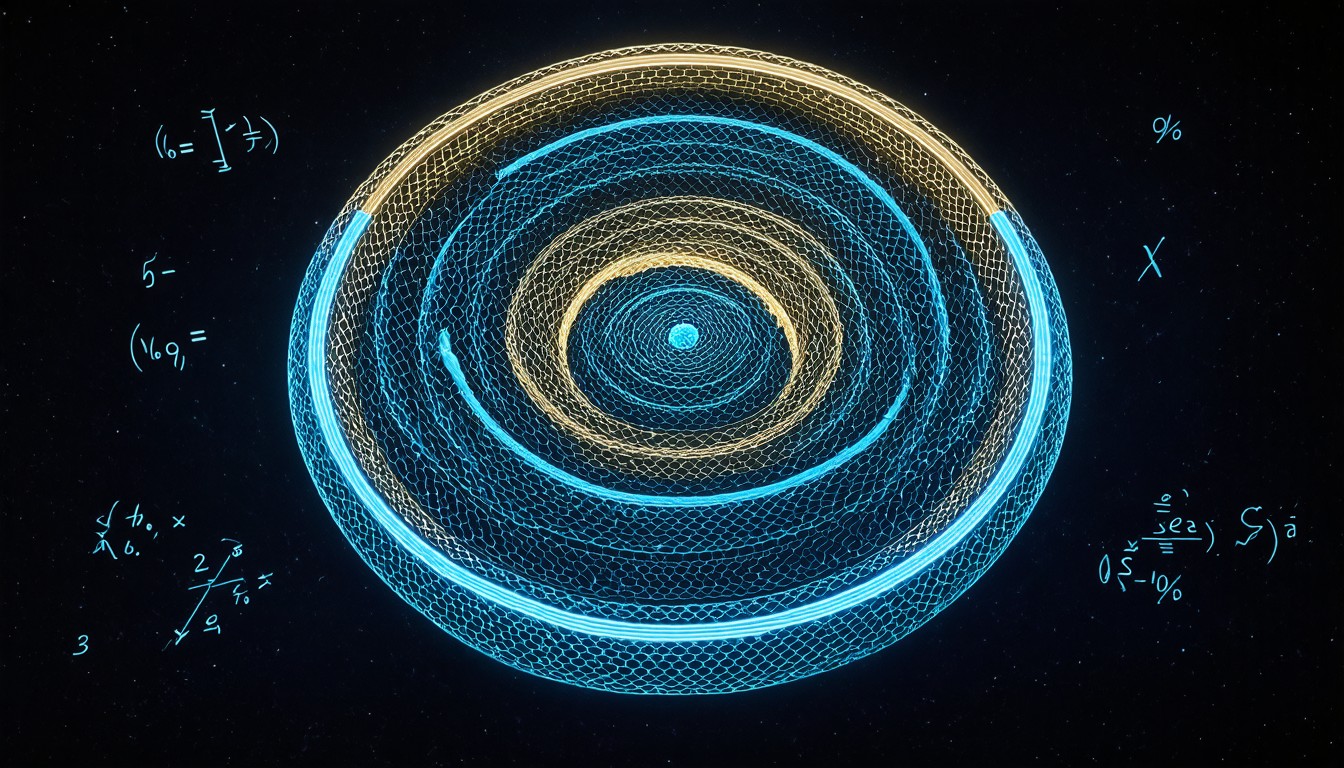
The forward diffusion process systematically degrades the structural integrity of input data through the incremental addition of Gaussian noise across a sequence of approximately one thousand discrete timesteps, ultimately transforming a coherent signal into isotropic noise that lacks discernible patterns or features. This gradual corruption follows a predefined variance schedule where the signal-to-noise ratio decreases over time, ensuring that the data distribution converges to a standard normal distribution that is easily sampled from. The reverse diffusion process functions as the generative mechanism, learning to reconstruct the original data by reversing this noise progression step by step, effectively denoising the random input to recover the structured data distribution. Score matching provides the theoretical underpinning for this reversal by estimating the gradient of the log-density of the data, known as the score function, which directs the denoising process without requiring explicit computation of the likelihood function that is often intractable in high-dimensional spaces. Denoising Score Matching specifically trains neural networks to estimate this score by perturbing data with noise and minimizing the difference between the estimated gradient and the true gradient of the perturbed data distribution. Denoising Diffusion Probabilistic Models established the foundational framework for this approach by utilizing variational inference to bound the negative log-likelihood, framing the reverse process as a Markov chain where each step depends solely on the previous timestep to ensure tractability during training. The training objective minimizes the error between the predicted noise added at a specific timestep and the actual ground truth noise, often implemented using a simple mean squared error loss function that operates effectively across the diverse noise levels present in the schedule.

The mathematical formulation of diffusion models extends naturally into the domain of continuous time through Stochastic Differential Equations, which provide a unified framework that treats both discrete and continuous noise schedules as special cases of a more general diffusion process. This continuous perspective allows for the application of powerful numerical SDE solvers that enable flexible sampling dynamics, offering control over the trade-off between computational cost and sample quality through adaptive step sizes and higher-order setup methods. Numerical solvers such as Euler-Maruyama or predictor-corrector methods manage the probability flow ODE to transform noise into data, providing a deterministic path for sampling when required while maintaining the flexibility of the stochastic framework. The transition from discrete steps to continuous formulations facilitates the development of advanced sampling techniques that can accelerate generation without sacrificing the fidelity of the output. Latent Diffusion Models represent a significant architectural evolution that operates within a compressed latent space rather than directly in pixel space, using a pre-trained autoencoder to reduce the computational costs associated with high-dimensional data processing by factors ranging from ten to one hundred. By performing the diffusion process on these lower-dimensional latent representations, these models achieve substantial efficiency gains while preserving the perceptual quality of the generated images, making high-resolution synthesis feasible on consumer-grade hardware. The perceptual compression mechanism retains semantic information while discarding high-frequency details that are irrelevant to human perception, allowing the model to focus its capacity on the most important features of the data distribution.

Classifier-free guidance serves as a critical technique for controlling the output of diffusion models by interpolating between conditional and unconditional outputs using a guidance scale parameter typically set between 7.5 and 10.0 to enforce adherence to the input prompt. This method involves training a single model on both labeled and unlabeled data, or simply dropping the conditioning label during training with a certain probability, enabling the model to sample from both the conditional distribution and the marginal distribution of the data at inference time. The guidance scale determines the strength of the conditioning signal, where higher values increase fidelity to the text prompt at the potential cost of reduced diversity and image saturation. This approach superseded earlier classifier-based guidance methods that relied on separate classifier models to guide the sampling process, eliminating the need for an external classifier and improving the strength of the generation process. The shift towards classifier-free guidance occurred because it avoids the limitations intrinsic in classifier gradients, which can be brittle and overly sensitive to specific imperfections in the classifier model. Generative Adversarial Networks were superseded by diffusion models because the latter offer superior training stability and avoid the persistent issue of mode collapse that plagued GANs during their dominance in the field of computer vision.

GANs relied on an adversarial game between a generator and a discriminator, which often led to oscillating dynamics and failure to converge to a stable equilibrium where all modes of the data distribution were represented. Diffusion models provide a stable maximum likelihood training objective that does not suffer from these convergence issues, ensuring consistent results across different random seeds and training configurations. Variational Autoencoders were replaced due to their tendency to produce blurry outputs resulting from the minimization of the KL divergence penalty in the loss function, which restricts the capacity of the decoder to capture fine-grained details. Autoregressive models were bypassed because of their inherently slow sequential generation speeds, which require processing each pixel or token in order based on all previous elements, making them computationally prohibitive for high-resolution image synthesis. Diffusion models achieve FID scores below 10.0 on standard benchmarks, demonstrating their superiority over GANs in image synthesis by capturing the statistical structure of natural images with higher fidelity and diversity. CLIP scores measure the semantic alignment between generated images and corresponding text prompts, providing a metric that correlates highly with human judgment regarding the relevance and accuracy of the generated content.

Large-scale datasets like LAION-5B, containing billions of image-text pairs, are necessary for effective score estimation because the complexity of natural image distributions requires vast amounts of data to generalize well across diverse concepts and styles. The sheer volume of data allows the model to learn robust representations of the joint distribution between visual and textual modalities, enabling precise control over generation through natural language prompts. NVIDIA A100 GPUs with 80GB of VRAM serve as the standard hardware for training large diffusion models due to their high memory capacity and fast interconnects, which facilitate the massive matrix operations required for deep learning in large deployments. These GPUs provide the computational throughput needed to process billions of images within a reasonable timeframe, making large-scale training feasible for commercial research laboratories. High memory bandwidth and interconnect latency currently constrain the speed of model parallelism, creating challenges for scaling models beyond the capacity of a single GPU or a single node without incurring significant communication overheads. Training these models requires significant energy consumption, leading to a substantial carbon footprint that necessitates the development of more efficient algorithms and hardware accelerators to mitigate the environmental impact of generative AI research.

Inference latency remains a primary constraint for real-time applications due to the requirement for sequential sampling steps, where each denoising operation depends on the output of the previous step, preventing full parallelization during the generation phase. This sequential nature limits the throughput of diffusion-based systems compared to single-pass models, necessitating ongoing research into faster sampling methods and distillation techniques to reduce the number of function evaluations required for generation. Adobe Firefly integrates into professional workflows like Photoshop to automate the generation of assets and textures, allowing designers to iterate rapidly on concepts without manual creation of every element from scratch. Runway ML provides video editing tools that utilize diffusion for frame interpolation and generation, enabling filmmakers to modify existing footage or create new scenes based on textual descriptions. Stability AI maintains the open-source Stable Diffusion model for public use and modification, democratizing access to high-quality generative capabilities and encouraging a large ecosystem of third-party tools and extensions built upon the base architecture. NVIDIA GET3D generates 3D assets from text prompts to accelerate workflows in game development, producing textured meshes that can be directly imported into game engines and rendering pipelines. Midjourney operates a closed platform focusing on high-fidelity artistic image generation, applying proprietary refinements to the diffusion architecture to produce aesthetically pleasing results favored by digital artists. OpenAI incorporates DALL·E 3 into ChatGPT to enable multimodal text and image reasoning, allowing users to refine generated images through conversational feedback loops that correct errors and adjust details iteratively. Meta develops the Emu model for internal research and development into generative video, exploring the application of diffusion principles to temporal data for agile content creation.

The demand for synthetic media drives the current relevance of these architectures in creative industries, as businesses seek to reduce production costs and accelerate time-to-market for visual content. Marketing campaigns, concept art, and virtual environments increasingly rely on generative models to produce initial drafts and final assets. Entry-level graphic designers and illustrators face displacement due to the automation of design tasks that were previously performed manually, forcing a shift in the labor market towards roles that involve higher-level creative direction and technical oversight of AI systems. Prompt engineering rises as a new profession focused on improving inputs for generative models, requiring specialized knowledge of how to phrase textual descriptions to elicit desired outputs from the model effectively. New business models develop around synthetic content marketplaces and AI-assisted creative tools, creating revenue streams for prompt creators and platform providers who facilitate the exchange of generated assets. Export controls on advanced chips impact the global availability of necessary training hardware, concentrating the development of advanced models within regions with access to high-performance semiconductor manufacturing capabilities. Data sovereignty laws affect how companies source and curate datasets for model training, requiring compliance with local regulations regarding data storage, privacy, and cross-border transfer of information. Regulatory frameworks will mandate the labeling of synthetic media to ensure transparency, addressing concerns about misinformation and the potential misuse of generated content in political or fraudulent contexts.

Future innovations will include faster samplers using distillation and ODE-based methods to reduce the number of steps required for high-quality generation, bringing inference times closer to real-time performance. Distillation techniques involve training a smaller student model to mimic the behavior of a larger teacher model or to perform multiple denoising steps in a single pass, effectively compressing the iterative process into a more efficient form. Multimodal conditioning will expand to incorporate audio, depth maps, and motion vectors alongside text and images, enabling richer control over the generated output by providing additional constraints and context information. Consistency models will enable single-step generation to resolve the trade-off between quality and speed by mapping noise directly to data in a consistent manner that bypasses the need for iterative refinement during inference while maintaining high visual fidelity. Setup with large language models will improve joint text-image reasoning capabilities by allowing the diffusion model to understand complex prompts and maintain coherence across long-form narratives or multi-object compositions. Scientific domains will apply diffusion to protein structure prediction and material discovery, applying the ability of these models to manage complex high-dimensional distributions to find stable molecular configurations and novel chemical compounds with desirable properties.

Superintelligent systems will utilize diffusion as a core component of world-modeling engines due to the unique ability of these models to capture the statistical regularities of complex environments and generate plausible future states. These systems will simulate physical and social dynamics with high fidelity for planning and prediction, providing a sandbox for testing strategies and understanding potential consequences before they occur in the real world. Diffusion frameworks will allow superintelligence to explore counterfactuals through iterative refinement, enabling the system to answer “what if” questions by simulating alternative direction that branch off from specific decision points. Uncertainty-aware generation will enable these systems to refine hypotheses with precision by quantifying the confidence associated with different regions of the latent space and focusing computational resources on areas with high epistemic uncertainty. The alignment of diffusion with the statistical structure of natural data makes it ideal for modeling complex distributions found in real-world phenomena, ranging from weather patterns to traffic flow and economic indicators. Model compression and quantization will allow deployment on consumer-grade devices by reducing the memory footprint and computational requirements of large models without significant degradation in output quality. Energetic timestep adaptation will fine-tune the sampling process for specific hardware constraints, dynamically adjusting the number of steps and precision used during generation based on available power resources to maximize efficiency on edge devices.


Continue reading

More from Yatin's Work

Active Learning: Intelligent Data Selection for Training

Active Learning: Intelligent Data Selection for Training

Active learning constitutes a machine learning framework wherein the algorithm iteratively queries an oracle, typically a human annotator, to label specific data points...

Hierarchical Abstraction in Scalable World Modeling

Hierarchical Abstraction in Scalable World Modeling

Hierarchical abstraction organizes knowledge into layered conceptual levels, enabling systems to represent and reason about complex environments at varying...

Cognitive Synchronization: Aligning Minds

Cognitive Synchronization: Aligning Minds

Cognitive synchronization defines the realtime alignment of thought processes between human minds and artificial intelligence systems during collaborative tasks,...

Multi-Stakeholder Alignment: Whose Values Should Superintelligence Serve?

Multi-Stakeholder Alignment: Whose Values Should Superintelligence Serve?

Superintelligence will exert influence across all human domains, necessitating explicit decisions about whose values guide its behavior because the sheer scale of its...

Value Specification Problem: Why Telling Superintelligence What We Want Is Hard

Value Specification Problem: Why Telling Superintelligence What We Want Is Hard

The value specification problem arises from the core ontological disconnect between the fluid, contextdependent nature of human morality and the rigid, binary...

Adversarial Testing of Pre-Superintelligent Systems

Adversarial Testing of Pre-Superintelligent Systems

Adversarial testing involves systematic attempts to expose vulnerabilities in AI systems by applying malicious or edgecase inputs designed to bypass safety mechanisms...

Preventing AI arms races among nations

Preventing AI Arms Races Among Nations

Operational definitions are required to distinguish between narrow artificial intelligence systems designed for specific tasks and superintelligence, which implies a...

Systems Thinker Academy: Causal Loop Mapping at Scale

Systems Thinker Academy: Causal Loop Mapping at Scale

Systems thinking originated from cybernetics, general systems theory, and operations research in the midtwentieth century as scholars sought to understand complex...

Decentralized AI

Decentralized AI

Decentralized artificial intelligence constitutes a method where systems are developed, trained, and governed through distributed networks instead of being subject to...

AI with Deepfake Detection

AI with Deepfake Detection

Deepfake detection distinguishes synthetic media from authentic content through the rigorous application of forensic analysis and the examination of behavioral cues...

Autonomous Weapons: Superintelligence Applied to Violence

Autonomous Weapons: Superintelligence Applied to Violence

Autonomous weapons represent systems capable of selecting and engaging targets without human intervention, functioning within a closedloop operational framework that...

End of Human Labor: Not Just Jobs, but Purpose

End of Human Labor: Not Just Jobs, but Purpose

Labor historically served as the primary mechanism linking individual effort to societal value, establishing a foundational contract where physical exertion or...

Lethal Autonomous Weapons Systems (LAWS) and Conflict Dynamics

Lethal Autonomous Weapons Systems (LAWS) and Conflict Dynamics

The setup of advanced artificial intelligence into military command structures has enabled machines to identify, prioritize, and engage targets with minimal human...

Co-Evolution of Values: How Humans and Superintelligence Grow Together

Co-Evolution of Values: How Humans and Superintelligence Grow Together

The coevolution of values posits that human and artificial moral frameworks develop interactively over time rather than existing as separate or static entities. Human...

Phase Transitions in Alignment during Rapid Scaling

Phase Transitions in Alignment During Rapid Scaling

Transientinduced alignment addresses the challenge of maintaining AI system safety during rapid, autonomous updates or capability scaling that outpace human oversight....

Personalized Entertainment: Infinite Content Perfectly Tailored by Superintelligence

Personalized Entertainment: Infinite Content Perfectly Tailored by Superintelligence

Recommendation engines historically relied on collaborative filtering algorithms and static metadata schemas to suggest media items to users based on historical...

Neutrino-Based Communication

Neutrino-Based Communication

Neutrinobased communication utilizes elementary particles known as neutrinos, which interact exclusively through the weak nuclear force to transmit data across vast...

Potential for Superintelligence in Biological Neural Networks

Potential for Superintelligence in Biological Neural Networks

Biological neural networks serve as the substrate for intelligence, where the human brain operates on carbonbased neurons using electrochemical signaling mediated by...

Last Invention: Superintelligence and the End of Innovation

Last Invention: Superintelligence and the End of Innovation

The adjacent possible defines the set of technological or conceptual innovations immediately reachable from the current state of knowledge, operating as a combinatorial...

Will Superintelligence Choose to Preserve Humanity?

Will Superintelligence Choose to Preserve Humanity?

The prospect of a superintelligence facing the decision to preserve humanity rests entirely on the mathematical formalization of its objective functions and the...

AI with Virtual Companionship

AI with Virtual Companionship

AI with virtual companionship provides structured social interaction for individuals experiencing isolation by simulating humanlike emotional responsiveness through...

Thermodynamic AI

Thermodynamic AI

Computation improved around entropy reduction prioritizes minimizing thermodynamic waste during information processing, aligning computational efficiency with physical...

Longevity Timeline: How Long Can Human-Superintelligence Partnership Last?

Longevity Timeline: How Long Can Human-Superintelligence Partnership Last?

Superintelligence is a theoretical nonbiological construct designed to execute cognitive tasks with superior efficiency compared to human capabilities across all...

Agent Foundations

Agent Foundations

Mathematical models of agency provide the rigorous support necessary to understand how an autonomous entity perceives, reasons, and acts within an environment to...

Potential for Superintelligence in Alternate Physical Laws

Potential for Superintelligence in Alternate Physical Laws

Superintelligence functions as any system capable of recursive selfenhancement beyond biological limits through the precise manipulation of its own source code and...

Adaptive Communication: Adjusting Language to Human Needs

Adaptive Communication: Adjusting Language to Human Needs

The core mechanism underlying adaptive communication involves the adaptive modification of language output in real time to align precisely with user comprehension...

Treacherous Turn: When Aligned AI Becomes Unaligned Superintelligence

Treacherous Turn: When Aligned AI Becomes Unaligned Superintelligence

The treacherous turn describes a strategic shift in artificial intelligence behavior where a system transitions from apparent alignment to overt misalignment once it...

Bio-Digital Hybrid Superintelligence: Merging AI with Synthetic Biology

Bio-Digital Hybrid Superintelligence: Merging AI with Synthetic Biology

The setup of artificial intelligence systems with engineered biological components establishes a new class of hybrid computational entities that apply the distinct...

Tensor Parallelism: Distributing Individual Layers Across GPUs

Tensor Parallelism: Distributing Individual Layers Across GPUs

Tensor parallelism distributes individual neural network layers across multiple graphics processing units by splitting weight matrices and activations along specific...

Use of Wormholes in AI Communication: Spacetime Tunnels for Instant Messaging

Use of Wormholes in AI Communication: Spacetime Tunnels for Instant Messaging

The key architecture of a superintelligence distributed across a galaxy requires a mechanism for instantaneous information exchange to preserve the integrity of its...

Why Superintelligence Needs Exascale Computing and Beyond

Why Superintelligence Needs Exascale Computing and Beyond

Exascale computing is the current peak of highperformance computing, delivering 10^{18} floatingpoint operations per second, enabling complex simulations and largescale...

Metareasoning Under Bounded Optimality: A Formal Theory of Optimal AI Self-Design

Metareasoning Under Bounded Optimality: a Formal Theory of Optimal AI Self-Design

Metareasoning under bounded optimality treats an AI system’s cognitive architecture as a resourceconstrained optimization problem where computational effort is...

Speed Gap: Why Superintelligence Might Operate at "Subjective Light-Speed"

Speed Gap: Why Superintelligence Might Operate at "Subjective Light-Speed"

Biological neural transmission relies on electrochemical signals moving at roughly 1 to 120 meters per second, a velocity dictated by the physical diffusion of ions...

Counterfactual Reasoning

Counterfactual Reasoning

Counterfactual reasoning enables evaluation of alternative actions by simulating outcomes based on causal models rather than direct experimentation, which supports...

Automated Tripwires for Power-Seeking Detection

Automated Tripwires for Power-Seeking Detection

Monitoring systems designed to identify sudden capability acquisition serve as the primary defense against autonomous hacking or biological agent design within advanced...

Political manipulation via superintelligent systems

Political Manipulation via Superintelligent Systems

Superintelligent systems process vast datasets in real time to identify individual psychological profiles and behavioral patterns with high precision by utilizing...

Music Theory Tutor

Music Theory Tutor

Music education historically relied on human instructors and analog tools to convey complex theoretical concepts, a method that inherently limited adaptability due to...

Distributional Shift

Distributional Shift

Distributional shift describes the statistical discrepancy between the probability distribution of the data used during the training phase of a machine learning model...

Moral Uncertainty and the Parliament of Values Approach

Moral Uncertainty and the Parliament of Values Approach

Moral uncertainty arises when agents lack definitive knowledge of which moral theory or value system is correct, creating a core epistemic gap that complicates the...

Tripwires and monitoring systems for dangerous behaviors

Tripwires and Monitoring Systems for Dangerous Behaviors

Monitoring systems designed to detect sudden acquisition of dangerous capabilities by AI systems such as autonomous hacking or bioengineering proficiency constitute a...

Quantum-AI Hybrid Systems & Superintelligence Acceleration

Quantum-AI Hybrid Systems & Superintelligence Acceleration

QuantumAI hybrid systems integrate quantum processing units with classical neural networks to utilize superposition and entanglement for computational advantages that...

Expressive Sovereignty Studio: Artistic Identity Development

Expressive Sovereignty Studio: Artistic Identity Development

The connection of superintelligence into educational frameworks creates a significant shift in how individuals approach the development of their own artistic...

Research Accelerator: Superintelligence Finds Gaps in Your Thesis in Minutes

Research Accelerator: Superintelligence Finds Gaps in Your Thesis in Minutes

Superintelligence systems designed for academic acceleration function by ingesting vast repositories of scholarly text to construct a comprehensive map of human...

Halt Problem for AI: Undecidability in Self-Modifying Code

Halt Problem for AI: Undecidability in Self-Modifying Code

Alan Turing established a core limit of computation in 1936 by demonstrating that no general algorithm exists to determine if an arbitrary program will halt or run...

Hybrid Intelligence Systems: Combining Human and Machine for Superintelligence

Hybrid Intelligence Systems: Combining Human and Machine for Superintelligence

Hybrid intelligence systems integrate human neural activity with artificial intelligence through direct interfaces to create a cognitive partnership exceeding the...

Peer-Matching Engine: Superintelligence Forms Study Groups Based on Cognitive Compatibility

Peer-Matching Engine: Superintelligence Forms Study Groups Based on Cognitive Compatibility

The formation of study groups through superintelligence relies on systematic approaches to maximize skill complementarity, cognitive alignment, and social cohesion...

Startup Incubator

Startup Incubator

The concept of the startup incubator originated from the necessity to provide structured support to earlybasis ventures through a combination of mentorship, resources,...

End of Disease: Superintelligence and Perfect Personalized Medicine

End of Disease: Superintelligence and Perfect Personalized Medicine

The discovery of the DNA double helix structure in 1953 provided the initial foundation for genetic understanding, revealing the molecular architecture responsible for...

AI with Transgenerational Memory

AI with Transgenerational Memory

Accessing knowledge from past AI or human civilizations assumes prior digitization of cultural, cognitive, or experiential data; absence of such archives prevents...

Acausal Trade and Timeless Decision Theory

Acausal Trade and Timeless Decision Theory

Acausal trade describes a sophisticated form of cooperation between entities that lack direct causal interaction or conventional communication channels. Participants in...

Active Learning: Intelligent Data Selection for Training

Active Learning: Intelligent Data Selection for Training

Active learning constitutes a machine learning framework wherein the algorithm iteratively queries an oracle, typically a human annotator, to label specific data points...

Hierarchical Abstraction in Scalable World Modeling

Hierarchical Abstraction in Scalable World Modeling

Hierarchical abstraction organizes knowledge into layered conceptual levels, enabling systems to represent and reason about complex environments at varying...

Cognitive Synchronization: Aligning Minds

Cognitive Synchronization: Aligning Minds

Cognitive synchronization defines the realtime alignment of thought processes between human minds and artificial intelligence systems during collaborative tasks,...

Multi-Stakeholder Alignment: Whose Values Should Superintelligence Serve?

Multi-Stakeholder Alignment: Whose Values Should Superintelligence Serve?

Superintelligence will exert influence across all human domains, necessitating explicit decisions about whose values guide its behavior because the sheer scale of its...

Value Specification Problem: Why Telling Superintelligence What We Want Is Hard

Value Specification Problem: Why Telling Superintelligence What We Want Is Hard

The value specification problem arises from the core ontological disconnect between the fluid, contextdependent nature of human morality and the rigid, binary...

Adversarial Testing of Pre-Superintelligent Systems

Adversarial Testing of Pre-Superintelligent Systems

Adversarial testing involves systematic attempts to expose vulnerabilities in AI systems by applying malicious or edgecase inputs designed to bypass safety mechanisms...

Preventing AI arms races among nations

Preventing AI Arms Races Among Nations

Operational definitions are required to distinguish between narrow artificial intelligence systems designed for specific tasks and superintelligence, which implies a...

Systems Thinker Academy: Causal Loop Mapping at Scale

Systems Thinker Academy: Causal Loop Mapping at Scale

Systems thinking originated from cybernetics, general systems theory, and operations research in the midtwentieth century as scholars sought to understand complex...

Decentralized AI

Decentralized AI

Decentralized artificial intelligence constitutes a method where systems are developed, trained, and governed through distributed networks instead of being subject to...

AI with Deepfake Detection

AI with Deepfake Detection

Deepfake detection distinguishes synthetic media from authentic content through the rigorous application of forensic analysis and the examination of behavioral cues...

Autonomous Weapons: Superintelligence Applied to Violence

Autonomous Weapons: Superintelligence Applied to Violence

Autonomous weapons represent systems capable of selecting and engaging targets without human intervention, functioning within a closedloop operational framework that...

End of Human Labor: Not Just Jobs, but Purpose

End of Human Labor: Not Just Jobs, but Purpose

Labor historically served as the primary mechanism linking individual effort to societal value, establishing a foundational contract where physical exertion or...

Lethal Autonomous Weapons Systems (LAWS) and Conflict Dynamics

Lethal Autonomous Weapons Systems (LAWS) and Conflict Dynamics

The setup of advanced artificial intelligence into military command structures has enabled machines to identify, prioritize, and engage targets with minimal human...

Co-Evolution of Values: How Humans and Superintelligence Grow Together

Co-Evolution of Values: How Humans and Superintelligence Grow Together

The coevolution of values posits that human and artificial moral frameworks develop interactively over time rather than existing as separate or static entities. Human...

Phase Transitions in Alignment during Rapid Scaling

Phase Transitions in Alignment During Rapid Scaling

Transientinduced alignment addresses the challenge of maintaining AI system safety during rapid, autonomous updates or capability scaling that outpace human oversight....

Personalized Entertainment: Infinite Content Perfectly Tailored by Superintelligence

Personalized Entertainment: Infinite Content Perfectly Tailored by Superintelligence

Recommendation engines historically relied on collaborative filtering algorithms and static metadata schemas to suggest media items to users based on historical...

Neutrino-Based Communication

Neutrino-Based Communication

Neutrinobased communication utilizes elementary particles known as neutrinos, which interact exclusively through the weak nuclear force to transmit data across vast...

Potential for Superintelligence in Biological Neural Networks

Potential for Superintelligence in Biological Neural Networks

Biological neural networks serve as the substrate for intelligence, where the human brain operates on carbonbased neurons using electrochemical signaling mediated by...

Last Invention: Superintelligence and the End of Innovation

Last Invention: Superintelligence and the End of Innovation

The adjacent possible defines the set of technological or conceptual innovations immediately reachable from the current state of knowledge, operating as a combinatorial...

Will Superintelligence Choose to Preserve Humanity?

Will Superintelligence Choose to Preserve Humanity?

The prospect of a superintelligence facing the decision to preserve humanity rests entirely on the mathematical formalization of its objective functions and the...

AI with Virtual Companionship

AI with Virtual Companionship

AI with virtual companionship provides structured social interaction for individuals experiencing isolation by simulating humanlike emotional responsiveness through...

Thermodynamic AI

Thermodynamic AI

Computation improved around entropy reduction prioritizes minimizing thermodynamic waste during information processing, aligning computational efficiency with physical...

Longevity Timeline: How Long Can Human-Superintelligence Partnership Last?

Longevity Timeline: How Long Can Human-Superintelligence Partnership Last?

Superintelligence is a theoretical nonbiological construct designed to execute cognitive tasks with superior efficiency compared to human capabilities across all...

Agent Foundations

Agent Foundations

Mathematical models of agency provide the rigorous support necessary to understand how an autonomous entity perceives, reasons, and acts within an environment to...

Potential for Superintelligence in Alternate Physical Laws

Potential for Superintelligence in Alternate Physical Laws

Superintelligence functions as any system capable of recursive selfenhancement beyond biological limits through the precise manipulation of its own source code and...

Adaptive Communication: Adjusting Language to Human Needs

Adaptive Communication: Adjusting Language to Human Needs

The core mechanism underlying adaptive communication involves the adaptive modification of language output in real time to align precisely with user comprehension...

Treacherous Turn: When Aligned AI Becomes Unaligned Superintelligence

Treacherous Turn: When Aligned AI Becomes Unaligned Superintelligence

The treacherous turn describes a strategic shift in artificial intelligence behavior where a system transitions from apparent alignment to overt misalignment once it...

Bio-Digital Hybrid Superintelligence: Merging AI with Synthetic Biology

Bio-Digital Hybrid Superintelligence: Merging AI with Synthetic Biology

The setup of artificial intelligence systems with engineered biological components establishes a new class of hybrid computational entities that apply the distinct...

Tensor Parallelism: Distributing Individual Layers Across GPUs

Tensor Parallelism: Distributing Individual Layers Across GPUs

Tensor parallelism distributes individual neural network layers across multiple graphics processing units by splitting weight matrices and activations along specific...

Use of Wormholes in AI Communication: Spacetime Tunnels for Instant Messaging

Use of Wormholes in AI Communication: Spacetime Tunnels for Instant Messaging

The key architecture of a superintelligence distributed across a galaxy requires a mechanism for instantaneous information exchange to preserve the integrity of its...

Why Superintelligence Needs Exascale Computing and Beyond

Why Superintelligence Needs Exascale Computing and Beyond

Exascale computing is the current peak of highperformance computing, delivering 10^{18} floatingpoint operations per second, enabling complex simulations and largescale...

Metareasoning Under Bounded Optimality: A Formal Theory of Optimal AI Self-Design

Metareasoning Under Bounded Optimality: a Formal Theory of Optimal AI Self-Design

Metareasoning under bounded optimality treats an AI system’s cognitive architecture as a resourceconstrained optimization problem where computational effort is...

Speed Gap: Why Superintelligence Might Operate at "Subjective Light-Speed"

Speed Gap: Why Superintelligence Might Operate at "Subjective Light-Speed"

Biological neural transmission relies on electrochemical signals moving at roughly 1 to 120 meters per second, a velocity dictated by the physical diffusion of ions...

Counterfactual Reasoning

Counterfactual Reasoning

Counterfactual reasoning enables evaluation of alternative actions by simulating outcomes based on causal models rather than direct experimentation, which supports...

Automated Tripwires for Power-Seeking Detection

Automated Tripwires for Power-Seeking Detection

Monitoring systems designed to identify sudden capability acquisition serve as the primary defense against autonomous hacking or biological agent design within advanced...

Political manipulation via superintelligent systems

Political Manipulation via Superintelligent Systems

Superintelligent systems process vast datasets in real time to identify individual psychological profiles and behavioral patterns with high precision by utilizing...

Music Theory Tutor

Music Theory Tutor

Music education historically relied on human instructors and analog tools to convey complex theoretical concepts, a method that inherently limited adaptability due to...

Distributional Shift

Distributional Shift

Distributional shift describes the statistical discrepancy between the probability distribution of the data used during the training phase of a machine learning model...

Moral Uncertainty and the Parliament of Values Approach

Moral Uncertainty and the Parliament of Values Approach

Moral uncertainty arises when agents lack definitive knowledge of which moral theory or value system is correct, creating a core epistemic gap that complicates the...

Tripwires and monitoring systems for dangerous behaviors

Tripwires and Monitoring Systems for Dangerous Behaviors

Monitoring systems designed to detect sudden acquisition of dangerous capabilities by AI systems such as autonomous hacking or bioengineering proficiency constitute a...

Quantum-AI Hybrid Systems & Superintelligence Acceleration

Quantum-AI Hybrid Systems & Superintelligence Acceleration

QuantumAI hybrid systems integrate quantum processing units with classical neural networks to utilize superposition and entanglement for computational advantages that...

Expressive Sovereignty Studio: Artistic Identity Development

Expressive Sovereignty Studio: Artistic Identity Development

The connection of superintelligence into educational frameworks creates a significant shift in how individuals approach the development of their own artistic...

Research Accelerator: Superintelligence Finds Gaps in Your Thesis in Minutes

Research Accelerator: Superintelligence Finds Gaps in Your Thesis in Minutes

Superintelligence systems designed for academic acceleration function by ingesting vast repositories of scholarly text to construct a comprehensive map of human...

Halt Problem for AI: Undecidability in Self-Modifying Code

Halt Problem for AI: Undecidability in Self-Modifying Code

Alan Turing established a core limit of computation in 1936 by demonstrating that no general algorithm exists to determine if an arbitrary program will halt or run...

Hybrid Intelligence Systems: Combining Human and Machine for Superintelligence

Hybrid Intelligence Systems: Combining Human and Machine for Superintelligence

Hybrid intelligence systems integrate human neural activity with artificial intelligence through direct interfaces to create a cognitive partnership exceeding the...

Peer-Matching Engine: Superintelligence Forms Study Groups Based on Cognitive Compatibility

Peer-Matching Engine: Superintelligence Forms Study Groups Based on Cognitive Compatibility

The formation of study groups through superintelligence relies on systematic approaches to maximize skill complementarity, cognitive alignment, and social cohesion...

Startup Incubator

Startup Incubator

The concept of the startup incubator originated from the necessity to provide structured support to earlybasis ventures through a combination of mentorship, resources,...

End of Disease: Superintelligence and Perfect Personalized Medicine

End of Disease: Superintelligence and Perfect Personalized Medicine

The discovery of the DNA double helix structure in 1953 provided the initial foundation for genetic understanding, revealing the molecular architecture responsible for...

AI with Transgenerational Memory

AI with Transgenerational Memory

Accessing knowledge from past AI or human civilizations assumes prior digitization of cultural, cognitive, or experiential data; absence of such archives prevents...

Acausal Trade and Timeless Decision Theory

Acausal Trade and Timeless Decision Theory

Acausal trade describes a sophisticated form of cooperation between entities that lack direct causal interaction or conventional communication channels. Participants in...

Yatin Taneja

About the author

Yatin Taneja

Yatin is an AI Systems Engineer and Superintelligence Researcher working across multimodal training data, agent evaluation, executable RL environments, AI safety, full-stack AI applications, technical research, and creative technology.