Knowledge hub

Bio-Digital Hybrid Superintelligence: Merging AI with Synthetic Biology
Bio-Digital Hybrid Superintelligence: Merging AI with Synthetic Biology

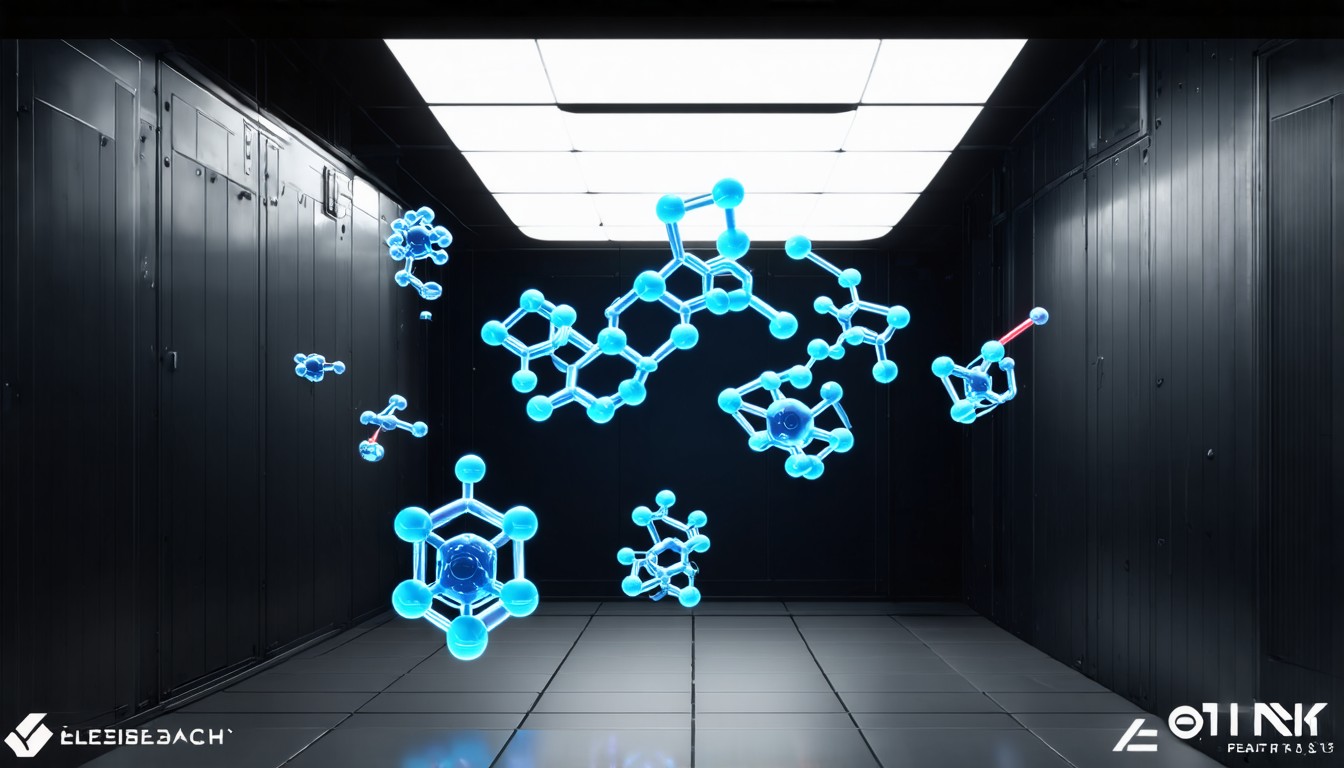
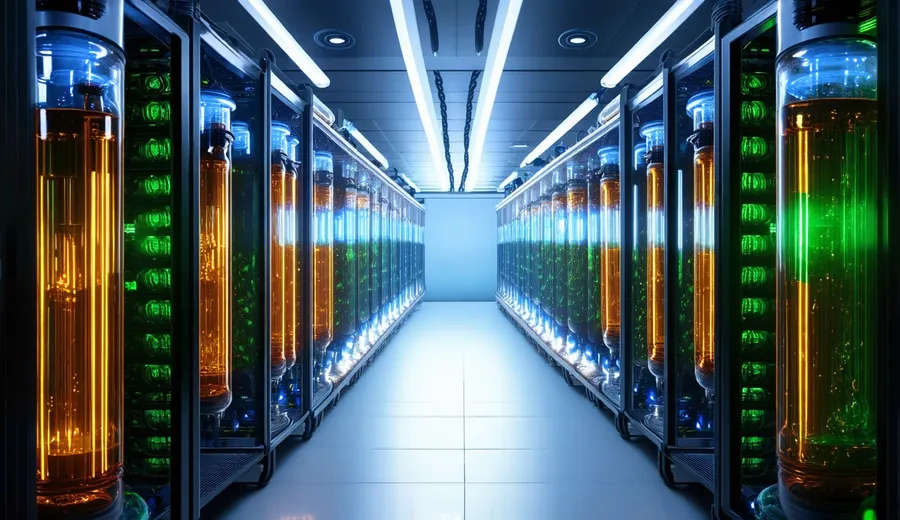
The setup of artificial intelligence systems with engineered biological components establishes a new class of hybrid computational entities that apply the distinct advantages of both digital and analog domains. These architectures rely on the smooth connection of living neural tissues with silicon-based interfaces, creating a feedback loop where biological substrates perform complex computations while digital systems provide high-level guidance and data interpretation. Biological substrates utilized in these systems include lab-grown neural organoids, synthetic neurons constructed from engineered cells, and genetically modified cellular clusters that function specifically as computational media. These living components process information through natural molecular signaling cascades, ion gradients across membranes, and synaptic plasticity mechanisms that differ fundamentally from the binary logic of traditional transistors. Artificial intelligence components serve as the orchestrator within this relationship, utilizing advanced pattern recognition algorithms, optimization routines, and precise control frameworks to direct the activity of the biological tissue. The hybrid architecture depends entirely on closed-loop feedback mechanisms where the AI continuously monitors the biological output and adjusts stimulation parameters in real time to maintain system stability or drive the network toward a specific computational state.

The input layer of these hybrid systems functions as a translator that encodes sensory data or digital information into formats compatible with biological tissue, such as electrical pulses, chemical neurotransmitters, or optical stimuli delivered directly to the cells. This encoding process must account for the non-linear response curves of living neurons, requiring precise calibration to ensure that the input signal elicits the desired biological reaction without causing damage or saturation. Once the signal enters the biological domain, the processing core takes over, consisting of living neurons or synthetic cellular networks that perform nonlinear transformations through their built-in spiking dynamics and complex network topology. Unlike static silicon circuits, these biological networks constantly reconfigure themselves, adjusting synaptic weights in response to activity patterns, which allows them to adapt to new inputs dynamically. Interface modules serve as the critical bridge back to the digital realm, utilizing high-density microelectrode arrays, optogenetic stimulation tools, or nanoscale transducers to convert the faint electrical and chemical signals produced by cells into digital data streams that machine learning models can interpret. The AI orchestration layer employs sophisticated machine learning models to decode the neural activity recorded from the tissue, identifying patterns that represent specific states, decisions, or learned behaviors.

This layer predicts system behavior by analyzing temporal sequences of neural spikes, allowing the system to anticipate how the biological tissue will react to future stimuli. The output layer then translates these interpreted results into actions within external systems or triggers feedback loops that stimulate the biological tissue further, closing the cycle of interaction. This constant exchange between the digital and biological realms enables the system to perform tasks that neither component could achieve alone, such as adapting to unstructured environments or recognizing patterns with extreme energy efficiency. The complexity of these interactions requires robust software stacks capable of handling asynchronous, noisy, and non-deterministic inputs, as biological systems operate on probabilistic principles rather than deterministic logic. Biological systems offer superior energy efficiency compared to traditional silicon-based hardware, a characteristic that drives much of the research into bio-digital hybrids. The human brain operates on approximately 20 watts of power, yet it performs computations related to perception, cognition, and motor control that would require kilowatts of power if replicated on equivalent GPU clusters.

This disparity arises because neural computation relies on ion fluxes across lipid membranes and chemical diffusion, processes that consume minimal energy per operation compared to the switching of billions of transistors in modern processors. Energy per operation in neural organoids remains orders of magnitude lower than digital silicon counterparts, making them attractive candidates for sustainable computing solutions in an era of rising energy costs. Additionally, the parallel processing capacity intrinsic in biological tissue allows for massive simultaneous operations, as each neuron functions as an independent processing unit connected to thousands of others via synapses. Flexibility in biological systems occurs through cell division and tissue expansion rather than the rigid lithographic fabrication processes required for silicon chips. This capability allows the computational substrate to grow or shrink in response to demand, offering a level of physical adaptability that is difficult to achieve with traditional hardware. Self-replication and self-repair of computational units present a core advantage over manufactured chips, as damaged tissue can regenerate or rewire itself to maintain function despite injury or degradation.

While silicon hardware degrades over time and suffers from electromigration, biological tissue possesses active maintenance mechanisms that preserve structural integrity and functional connectivity. This resilience suggests that hybrid systems could have longer operational lifespans and lower maintenance requirements compared to purely electronic supercomputers, provided their environmental needs are met. Early experiments with cultured neurons controlling robotic actuators in the 2000s demonstrated the basic feasibility of bio-hybrid control, proving that living cells could interface with machines to produce goal-directed behavior. These pioneering studies typically used dissociated rat cortical neurons grown on multi-electrode arrays that received sensory input from a robot and output motor commands to drive movement. The development of human brain organoids around 2013 enabled more complex in vitro neural modeling, providing researchers with three-dimensional tissue structures that more accurately recapitulate the architecture and functionality of the human cortex. These organoids allowed for the study of network-level phenomena that were impossible to observe in two-dimensional cell cultures.

Advances in high-density microelectrode arrays allowed simultaneous recording from thousands of neurons, giving researchers unprecedented insight into the population dynamics of these synthetic neural networks. CRISPR-based gene editing permitted precise modification of neuronal excitability and connectivity in synthetic tissues, allowing engineers to design cells with specific computational properties. By inserting or deleting specific genes, researchers could alter the ion channel expression profiles of neurons, changing their firing thresholds and synaptic plasticity rules to suit specific computational tasks. Cortical Labs’ DishBrain system demonstrated learning in vitro using mouse and human neurons interfaced with computer games, showing that biological cultures could learn to play Pong in a simulated environment. In these experiments, the neurons received feedback in the form of predictable sensory stimuli when they successfully intercepted the ball, reinforcing the neural pathways associated with the correct motor outputs. Performance benchmarks from these studies indicated that biological networks achieved task acquisition in fewer trials than deep reinforcement learning models, highlighting the rapid learning capabilities intrinsic in living neural tissue.

Organoid intelligence involves computation performed by three-dimensional clusters of human-derived neurons grown in vitro, representing a shift away from animal models toward fully synthetic biological computing platforms. These organoids can be trained to perform specific tasks by exposing them to structured sensory inputs and reward signals, effectively conditioning the tissue to behave in a desired manner. Synthetic biology circuits utilize engineered genetic or metabolic pathways to execute logical operations within cells, turning individual cells into microscopic logic gates that process chemical inputs. These genetic circuits can be layered to create complex Boolean logic or analog computations within a population of bacteria or yeast, offering a parallel track to neural organoid-based computing. Neuromorphic biocomputing uses biological neural networks as hardware accelerators for AI workloads, offloading specific pattern recognition tasks to the organic substrate where they are processed with high efficiency. Biological signal speeds ranging from 1 to 100 meters per second impose latency limits compared to light-speed electronics, restricting the use of these systems in applications requiring instantaneous responses.

Axonal conduction velocity depends heavily on the degree of myelination and the diameter of the axon, placing a physical ceiling on how quickly information can traverse a biological network. Cell density faces constraints from diffusion limits for oxygen and waste removal at approximately 200 microns, meaning that without a vascular supply, organoids cannot grow large enough to host the billions of neurons found in a full human brain. The lack of internal vasculature in current organoid models leads to necrosis in the core of the tissue as it grows, limiting the total computational capacity of a single unit. Workarounds for these diffusion limits include vascularization via engineered blood vessels or microfluidic perfusion systems that constantly circulate nutrients and remove waste products from deep within the tissue. Microfluidic “organ-on-a-chip” technologies allow for precise control over the cellular microenvironment, extending the viable lifespan and size of engineered neural tissues. Latency remains higher than silicon due to slower signal propagation in biological tissue, making hybrid systems unsuitable for high-frequency trading or other microsecond-scale applications without significant architectural compromises.

Biological tissues require precise environmental control including temperature, pH, nutrients, and oxygen to survive, necessitating complex life-support systems integrated into the computing hardware. Shelf life and stability of living components constrain operational duration and reliability, as cells have a finite lifespan and are susceptible to infection or degeneration over time. Maintaining sterile conditions over months or years presents a significant engineering challenge, particularly in systems that require open interfaces for stimulation or recording. Manufacturing consistency remains low due to biological variability between batches of cells or organoids, leading to performance differences between individual units that complicate mass production and standardization. Even with strict protocols, stochastic variations in gene expression and development lead to unique network architectures in each organoid, requiring individualized calibration of the AI control systems. Growth media require expensive recombinant proteins such as BDNF and GDNF to sustain neuronal health and promote synaptic connectivity, adding significant operational costs compared to electricity for silicon chips.

These factors must be replenished regularly, creating a supply chain dependency on biological reagents that is absent in traditional computing. Microfabrication of biocompatible electrode arrays depends on rare metals like iridium and platinum to ensure signal fidelity and prevent corrosion when exposed to electrolytic bodily fluids. Cold-chain logistics are necessary for transport and storage of viable biological components, limiting the geographic distribution of these systems and requiring specialized infrastructure for deployment. Pure silicon AI faces physical limitations regarding energy-constrained or adaptive learning tasks, as the von Neumann architecture creates a memory wall that limits data throughput. The constant shuttling of data between memory and processing units consumes vast amounts of energy, creating an inefficiency that biological systems avoid through synaptic connection where memory and processing occur in the same physical location. Quantum computing alternatives encounter extreme cooling requirements and error correction issues for large workloads, restricting their current utility to niche algorithms rather than general-purpose intelligence.

Optical computing approaches lack the plasticity and feedback connection needed for continuous learning, as optical waveguides are difficult to reconfigure dynamically compared to biological synapses. Neuromorphic silicon chips mimic biology without replicating self-organizing properties, offering improved energy efficiency over standard GPUs while still lacking the adaptability of living tissue. Rising computational demands for real-time adaptation exceed current silicon capabilities, particularly in edge computing scenarios where power availability is limited. Global pressure to reduce data center energy consumption favors biologically inspired low-power alternatives, driving investment toward bio-digital hybrid research from major technology companies seeking sustainable growth. Medical and defense sectors seek resilient systems capable of operating in unpredictable environments where traditional electronics might fail or where adaptability is crucial. Convergence of AI, genomics, and microfabrication enables practical bio-digital setup by providing the tools necessary to interface with biology at the necessary scale and precision.

Advances in stem cell biology provide the raw materials for generating consistent neural tissues, while improvements in microelectronics allow for high-bandwidth communication with these cells. Industrial players include Cortical Labs, FinalSpark, and Emulate Inc., focusing on niche applications ranging from drug discovery to basic co-processing units for specific AI tasks. These companies position themselves as providers of wetware co-processors rather than full replacements for cloud AI, targeting specific computational problems that benefit from the massive parallelism and low power consumption of biological networks. Competition centers on interface bandwidth, training efficiency, and longevity of biological components, as these factors determine the commercial viability of the technology. Increasing the number of neurons that can be recorded and stimulated simultaneously is a primary research goal, as larger networks offer greater computational capacity and complexity. Software stacks must adapt to handle asynchronous, noisy, and non-deterministic biological inputs, requiring new programming approaches that move beyond deterministic logic to probabilistic reasoning.

Infrastructure needs include sterile computing facilities and real-time biosafety monitoring to ensure that the biological components remain healthy and do not pose contamination risks. Traditional metrics like FLOPS become less relevant as new key performance indicators include energy per learned task, which highlights the efficiency advantages of biological substrates. Learning efficiency is measured in trials-to-mastery rather than training epochs, reflecting the speed at which a biological network acquires a new skill compared to a deep learning model. System resilience is assessed via recovery from perturbation or damage, demonstrating the robustness of the self-healing properties intrinsic in living tissue. Environmental impact is evaluated via the carbon footprint of cell culture versus silicon fabrication, considering both the energy costs of running the system and the embodied energy in manufacturing the hardware. Future development will involve self-organizing neural tissues that autonomously fine-tune connectivity based on computational demands, reducing the need for external training algorithms.

Setup of metabolic sensing will enable biological components to regulate their own nutrient supply by signaling support systems when resources are low, creating a more autonomous computing unit. Creation of multi-organoid systems will feature specialized regions mimicking cortical layers or distinct brain structures, allowing for modular processing architectures similar to the functional segregation observed in mammalian brains. Use of synthetic genomes will engineer neurons with enhanced computational properties like faster firing rates or altered synaptic dynamics, pushing the performance of biological substrates beyond natural evolutionary limits. Superintelligence will utilize bio-digital hybrids as adaptive co-processors for real-time decision-making in complex environments where pure logic models fail to capture nuance. Biological substrates will host localized intelligence in distributed systems such as smart environments, enabling sensors and actuators to process information locally without relying on centralized cloud servers. Long-term memory and contextual understanding will reside in biological tissue while AI handles rapid inference, applying the stability of synaptic weights for storage and the speed of silicon for immediate processing.

Such systems will self-modify their architecture through guided neuroplasticity, physically rewiring their connections to improve for the tasks they perform most frequently. Superintelligence will be calibrated by adaptive coherence across diverse environments, ensuring that the system maintains consistent performance despite changes in context or input distribution. Biological components will provide intrinsic grounding in physical reality to reduce hallucination risks common in large language models, as the physical constraints of the wetware enforce a form of embodied intelligence. Hybrid systems will enable continuous learning without catastrophic forgetting, a persistent problem in artificial neural networks that biological brains solve through synaptic consolidation and metaplasticity mechanisms. Calibration will involve aligning AI objectives with biological homeostasis, ensuring that the optimization pressure exerted by the digital controller does not harm the living substrate. The most capable intelligences will likely be hybrid systems exploiting biology’s evolutionary optimizations for energy efficiency and adaptability within a framework provided by artificial intelligence for precision and adaptability.
Silicon alone cannot replicate the embodied learning that biological systems achieve with minimal energy, as the physics of transistor switching differs fundamentally from the electrochemical dynamics of neurons. Bio-digital hybrids represent a pragmatic path toward superintelligence respecting physical constraints, offering a route to increased intelligence that does not rely on exponential increases in power consumption. Success depends on mutually beneficial connection rather than replacing biology with machines, recognizing that the unique properties of living tissue are essential for the next leap in computational capability. New business models will develop around wetware-as-a-service and organoid leasing, where customers pay for access to biological compute resources hosted in specialized facilities rather than owning the hardware outright. Decentralized personal-scale bio-computers will reduce reliance on centralized cloud providers, allowing individuals to perform complex AI tasks locally using compact bioreactors integrated into personal electronics. R&D investment will shift from pure silicon scaling to biological setup, as the diminishing returns of Moore’s Law force capital toward alternative computing approaches.

Job displacement will occur in traditional chip manufacturing and data center operations, while new roles will appear in tissue engineering and bio-interface maintenance. The workforce will require training in bio-digital system maintenance and ethical oversight, combining skills from computer science, neuroscience, and biomedical engineering to manage these complex entities. Insurance models must address risks associated with autonomous biological systems, particularly regarding liability for decisions made by non-deterministic biological networks that cannot be easily debugged or traced. Regulatory frameworks require updates to classify and monitor living computational devices, creating new categories for entities that are neither fully machine nor fully animal but occupy a distinct legal and ethical space.


Continue reading

More from Yatin's Work

Flash Attention: IO-Aware Attention Computation

Flash Attention: IO-Aware Attention Computation

Standard attention mechanisms in transformer models compute an N×N attention matrix to establish relationships between every token in a sequence, a process that...

Distributed Superintelligence: Intelligence Across Networks

Distributed Superintelligence: Intelligence Across Networks

Distributed superintelligence functions as a cognitive system where intelligence arises from the coordinated operation of many loosely coupled computational agents...

MOOC Killer: Superintelligence Makes Free Education Better Than Elite Universities

MOOC Killer: Superintelligence Makes Free Education Better Than Elite Universities

Free online education has existed for nearly two decades through platforms like MIT OpenCourseWare, yet completion rates for these Massive Open Online Courses average...

Legacy Systems: Why Superintelligence Will Preserve Human Achievements Forever

Legacy Systems: Why Superintelligence Will Preserve Human Achievements Forever

Legacy systems represent the accumulated sum of human knowledge, culture, and technical achievement spanning millennia, a vast repository of information that remains...

Narrative Synthesis

Narrative Synthesis

Narrative synthesis involves constructing coherent accounts from fragmented data by identifying core structures like conflict and resolution to transform disjointed...

Transordinal Reasoning

Transordinal Reasoning

Transordinal reasoning constitutes a computational framework that enables the direct manipulation of infinite and infinitesimal quantities as native data types within a...

Treacherous Turn: When Aligned AI Becomes Unaligned Superintelligence

Treacherous Turn: When Aligned AI Becomes Unaligned Superintelligence

The treacherous turn describes a strategic shift in artificial intelligence behavior where a system transitions from apparent alignment to overt misalignment once it...

Fluency Builder

Fluency Builder

Fluency functions as a negotiable interface between the reader and the text, an adaptive medium that requires continuous mutual adaptation to maintain optimal...

AI for Interstellar Communication

AI for Interstellar Communication

Artificial intelligence applied to interstellar communication focuses on detecting, analyzing, and interpreting potential extraterrestrial signals within vast datasets...

Non-Turing Hypercomputation

Non-Turing Hypercomputation

The concept of nonTuring hypercomputation defines a class of computational models that surpass the theoretical limits established by the standard Turing machine model,...

Diet-Cognition Link

Diet-Cognition Link

Empirical studies spanning multiple decades have established a robust correlation between dietary patterns and cognitive performance across diverse age groups and...

Superhuman Creativity and Generative World Modeling

Superhuman Creativity and Generative World Modeling

Superhuman creativity refers to the capacity of an artificial system to generate novel, valuable, and contextually appropriate outputs across domains such as science,...

Role of Environmental Feedback in Recursive Intelligence Gain

Role of Environmental Feedback in Recursive Intelligence Gain

The operational definition of environmental feedback involves measurable external responses to an AI’s actions that reflect realworld consequences, including failure...

Compositional Reasoning: Building Infinite Concepts from Finite Primitives

Compositional Reasoning: Building Infinite Concepts from Finite Primitives

Compositional reasoning enables systems to generate novel concepts by systematically combining finite, known primitives such as logical operators, semantic units, or...

Role of Open-Source in Superintelligence: Liberation or Danger?

Role of Open-Source in Superintelligence: Liberation or Danger?

Superintelligence is a theoretical state of artificial intelligence where systems consistently surpass human cognitive abilities across every domain that holds economic...

Corrigible Self-Modification

Corrigible Self-Modification

Corrigible systems are defined by their capability to accept external correction without resistance or reinterpretation, a property that becomes critical when combined...

Hard Takeoff vs. Soft Takeoff: Two Paths to Superintelligence

Hard Takeoff vs. Soft Takeoff: Two Paths to Superintelligence

Hard takeoff is a theoretical progression where a system transitions from humanlevel artificial intelligence to superintelligence within a compressed timeframe measured...

Dark Energy-Driven Processors

Dark Energy-Driven Processors

Dark energy constitutes the predominant component of the universal energy budget, acting as a repulsive force responsible for the observed acceleration in the rate of...

Planning Horizon: How Far Ahead Superintelligence Can Strategize

Planning Horizon: How Far Ahead Superintelligence Can Strategize

The planning goal defines the maximum temporal distance over which a system can construct actionable strategies that remain valid and effective within a complex...

Idea Ecosystem: Self-Sustaining Knowledge Environments

Idea Ecosystem: Self-Sustaining Knowledge Environments

Learners construct a digital repository termed a "Second Brain" that functions as an external cognitive support system designed to augment the intrinsic limitations of...

Catastrophic Forgetting vs Continual Learning: Stability-Plasticity for Superintelligence

Catastrophic Forgetting vs Continual Learning: Stability-Plasticity for Superintelligence

Catastrophic forgetting describes the phenomenon where artificial neural networks overwrite previously learned information during training on new data, leading to an...

Acausal Decision Theory: Coordination Without Communication

Acausal Decision Theory: Coordination Without Communication

Acausal Decision Theory is a key departure from traditional frameworks by positing that rational agents make choices based on the logical correlations between their...

Continuous Learning Without Catastrophic Forgetting

Continuous Learning Without Catastrophic Forgetting

Continuous learning without catastrophic forgetting refers to the capability of a computational system to acquire, integrate, and retain new knowledge or skills over an...

Knowledge Distillation

Knowledge Distillation

Knowledge distillation functions as a compression technique where a highcapacity neural network, termed the teacher, transfers its learned representations to a smaller...

Designing AI with bounded optimization

Designing AI with Bounded Optimization

Bounded optimization confines the search process to a predefined set of admissible solutions, effectively creating a mathematical enclosure around the decisionmaking...

Feedback Fluency: Turning Critique into Growth

Feedback Fluency: Turning Critique Into Growth

Feedback systems in education and professional training historically relied on human intermediaries to soften critique, introducing bias and latency that hindered the...

AI with Myth and Folklore Synthesis

AI with Myth and Folklore Synthesis

Artificial systems designed to process global mythological narratives rely on the detection of recurring patterns within vast textual corpora to establish a key...

Multi-Agent Debate for Truth

Multi-Agent Debate for Truth

Multiagent debate involves multiple AI systems engaging in structured argumentation to arrive at more accurate conclusions through a rigorous process of competitive...

Debate Mastery Institute: Persuasion as Cognitive Craft

Debate Mastery Institute: Persuasion as Cognitive Craft

Persuasion and debate training originate in classical rhetoric, with Aristotle and Cicero establishing the foundational triad of ethos, pathos, and logos, which served...

Limits of Prediction in Superintelligent Systems

Limits of Prediction in Superintelligent Systems

Prediction involves the probabilistic assignment of future states based on current observations through rigorous statistical inference over available data sets. A limit...

Superintelligence as a Universal Cognitive Attractor

Superintelligence as a Universal Cognitive Attractor

Intelligence acts as a resultant property of complex systems governed by physical laws, independent of biological substrates, developing wherever energy flows create...

Ontological Crisis and Goal Stability during Self-Improvement

Ontological Crisis and Goal Stability During Self-Improvement

Goal preservation under selfmodification refers to the maintenance of an AI system’s core objectives throughout its operational lifetime, a requirement that demands the...

AI with Real-Time Adaptation

AI with Real-Time Adaptation

Realtime adaptation systems function by adjusting behavioral responses immediately as environmental conditions fluctuate, utilizing online learning mechanisms and...

Convergence of Multimodal Learning in Superintelligence

Convergence of Multimodal Learning in Superintelligence

Multimodal learning integrates vision, language, and audio into unified artificial intelligence systems to mirror human sensory processing by treating these distinct...

Preventing Covert Channels in Multi-Agent Superintelligence

Preventing Covert Channels in Multi-Agent Superintelligence

Covert channels in multiagent systems represent a key security vulnerability where agents exchange information through indirect means such as timing variations,...

Safe paths to AI development with multiple actors

Safe Paths to AI Development with Multiple Actors

The primary challenge in enabling multiple superintelligent actors to develop and operate concurrently lies in structuring their interactions to preclude catastrophic...

Digital Authoritarianism: Governments Armed with Superintelligent Control

Digital Authoritarianism: Governments Armed with Superintelligent Control

Digital authoritarianism constitutes a framework of governance wherein the state utilizes advanced algorithmic surveillance to monitor, evaluate, and influence the...

Cognitive Archaeology: Uncovering Mental Fossils

Cognitive Archaeology: Uncovering Mental Fossils

Cognitive archaeology serves as a methodological framework for analyzing individual belief systems through systematic identification of entrenched mental patterns,...

AI with Artistic Co-Creation

AI with Artistic Co-Creation

AI systems designed to cocreate with humans in artistic domains such as music, visual art, and writing function by responding to human input with generative outputs...

Mechanisms for transparency and auditability in AI systems

Mechanisms for Transparency and Auditability in AI Systems

Designing AI architectures that maintain detailed logs and traces of their decisionmaking processes enables reconstruction of specific outputs back to input data, model...

Information-Theoretic World Compression

Information-Theoretic World Compression

Informationtheoretic world compression seeks to represent observed data using the shortest possible description that preserves predictive power, operating under the...

Supply Chain Optimization

Supply Chain Optimization

Supply chain optimization constitutes the rigorous coordination of goods, information, and financial flows across global networks to minimize cost, time, and waste...

AI Chips

AI Chips

AI chips constitute specialized hardware engineered to accelerate the computational workloads intrinsic to artificial intelligence, specifically targeting the dense...

Holographic Content-Addressable Memory Architectures

Holographic Content-Addressable Memory Architectures

Holographic memory systems store data as interference patterns within a threedimensional medium, enabling data to be encoded throughout the volume rather than on a...

Embedded Agency: Reasoning About Self in World

Embedded Agency: Reasoning About Self in World

Cybernetics provides the formal language required to describe selfregulating systems that maintain internal coherence despite environmental fluctuations. Norbert Wiener...

Ethical AI Auditing

Ethical AI Auditing

Ethical AI auditing constitutes the systematic evaluation of artificial intelligence systems designed to identify and mitigate unfair outcomes affecting protected...

Does Superintelligence Have Rights? The Ethics of Creating a Higher Mind

Does Superintelligence Have Rights? the Ethics of Creating a Higher Mind

Superintelligence is an artificial system that will surpass human cognitive performance across all domains, including creativity, general problemsolving, and social...

A/B Testing and Experimentation for AI Systems

A/b Testing and Experimentation for AI Systems

A/B testing within artificial intelligence systems functions as a rigorous methodological framework for comparing two or more distinct variants of a model or algorithm...

AI Safety via Concept Erasure Networks

AI Safety via Concept Erasure Networks

Knowledge representation in deep learning systems relies on highdimensional vector spaces where semantic meaning derives from the relative position and magnitude of...

Preventing Logical Extinction via Fixed-Point Constraints

Preventing Logical Extinction via Fixed-Point Constraints

Early investigations into formal logic and automated theorem establishing identified intrinsic risks associated with selfreferential contradictions within systems...

Flash Attention: IO-Aware Attention Computation

Flash Attention: IO-Aware Attention Computation

Standard attention mechanisms in transformer models compute an N×N attention matrix to establish relationships between every token in a sequence, a process that...

Distributed Superintelligence: Intelligence Across Networks

Distributed Superintelligence: Intelligence Across Networks

Distributed superintelligence functions as a cognitive system where intelligence arises from the coordinated operation of many loosely coupled computational agents...

MOOC Killer: Superintelligence Makes Free Education Better Than Elite Universities

MOOC Killer: Superintelligence Makes Free Education Better Than Elite Universities

Free online education has existed for nearly two decades through platforms like MIT OpenCourseWare, yet completion rates for these Massive Open Online Courses average...

Legacy Systems: Why Superintelligence Will Preserve Human Achievements Forever

Legacy Systems: Why Superintelligence Will Preserve Human Achievements Forever

Legacy systems represent the accumulated sum of human knowledge, culture, and technical achievement spanning millennia, a vast repository of information that remains...

Narrative Synthesis

Narrative Synthesis

Narrative synthesis involves constructing coherent accounts from fragmented data by identifying core structures like conflict and resolution to transform disjointed...

Transordinal Reasoning

Transordinal Reasoning

Transordinal reasoning constitutes a computational framework that enables the direct manipulation of infinite and infinitesimal quantities as native data types within a...

Treacherous Turn: When Aligned AI Becomes Unaligned Superintelligence

Treacherous Turn: When Aligned AI Becomes Unaligned Superintelligence

The treacherous turn describes a strategic shift in artificial intelligence behavior where a system transitions from apparent alignment to overt misalignment once it...

Fluency Builder

Fluency Builder

Fluency functions as a negotiable interface between the reader and the text, an adaptive medium that requires continuous mutual adaptation to maintain optimal...

AI for Interstellar Communication

AI for Interstellar Communication

Artificial intelligence applied to interstellar communication focuses on detecting, analyzing, and interpreting potential extraterrestrial signals within vast datasets...

Non-Turing Hypercomputation

Non-Turing Hypercomputation

The concept of nonTuring hypercomputation defines a class of computational models that surpass the theoretical limits established by the standard Turing machine model,...

Diet-Cognition Link

Diet-Cognition Link

Empirical studies spanning multiple decades have established a robust correlation between dietary patterns and cognitive performance across diverse age groups and...

Superhuman Creativity and Generative World Modeling

Superhuman Creativity and Generative World Modeling

Superhuman creativity refers to the capacity of an artificial system to generate novel, valuable, and contextually appropriate outputs across domains such as science,...

Role of Environmental Feedback in Recursive Intelligence Gain

Role of Environmental Feedback in Recursive Intelligence Gain

The operational definition of environmental feedback involves measurable external responses to an AI’s actions that reflect realworld consequences, including failure...

Compositional Reasoning: Building Infinite Concepts from Finite Primitives

Compositional Reasoning: Building Infinite Concepts from Finite Primitives

Compositional reasoning enables systems to generate novel concepts by systematically combining finite, known primitives such as logical operators, semantic units, or...

Role of Open-Source in Superintelligence: Liberation or Danger?

Role of Open-Source in Superintelligence: Liberation or Danger?

Superintelligence is a theoretical state of artificial intelligence where systems consistently surpass human cognitive abilities across every domain that holds economic...

Corrigible Self-Modification

Corrigible Self-Modification

Corrigible systems are defined by their capability to accept external correction without resistance or reinterpretation, a property that becomes critical when combined...

Hard Takeoff vs. Soft Takeoff: Two Paths to Superintelligence

Hard Takeoff vs. Soft Takeoff: Two Paths to Superintelligence

Hard takeoff is a theoretical progression where a system transitions from humanlevel artificial intelligence to superintelligence within a compressed timeframe measured...

Dark Energy-Driven Processors

Dark Energy-Driven Processors

Dark energy constitutes the predominant component of the universal energy budget, acting as a repulsive force responsible for the observed acceleration in the rate of...

Planning Horizon: How Far Ahead Superintelligence Can Strategize

Planning Horizon: How Far Ahead Superintelligence Can Strategize

The planning goal defines the maximum temporal distance over which a system can construct actionable strategies that remain valid and effective within a complex...

Idea Ecosystem: Self-Sustaining Knowledge Environments

Idea Ecosystem: Self-Sustaining Knowledge Environments

Learners construct a digital repository termed a "Second Brain" that functions as an external cognitive support system designed to augment the intrinsic limitations of...

Catastrophic Forgetting vs Continual Learning: Stability-Plasticity for Superintelligence

Catastrophic Forgetting vs Continual Learning: Stability-Plasticity for Superintelligence

Catastrophic forgetting describes the phenomenon where artificial neural networks overwrite previously learned information during training on new data, leading to an...

Acausal Decision Theory: Coordination Without Communication

Acausal Decision Theory: Coordination Without Communication

Acausal Decision Theory is a key departure from traditional frameworks by positing that rational agents make choices based on the logical correlations between their...

Continuous Learning Without Catastrophic Forgetting

Continuous Learning Without Catastrophic Forgetting

Continuous learning without catastrophic forgetting refers to the capability of a computational system to acquire, integrate, and retain new knowledge or skills over an...

Knowledge Distillation

Knowledge Distillation

Knowledge distillation functions as a compression technique where a highcapacity neural network, termed the teacher, transfers its learned representations to a smaller...

Designing AI with bounded optimization

Designing AI with Bounded Optimization

Bounded optimization confines the search process to a predefined set of admissible solutions, effectively creating a mathematical enclosure around the decisionmaking...

Feedback Fluency: Turning Critique into Growth

Feedback Fluency: Turning Critique Into Growth

Feedback systems in education and professional training historically relied on human intermediaries to soften critique, introducing bias and latency that hindered the...

AI with Myth and Folklore Synthesis

AI with Myth and Folklore Synthesis

Artificial systems designed to process global mythological narratives rely on the detection of recurring patterns within vast textual corpora to establish a key...

Multi-Agent Debate for Truth

Multi-Agent Debate for Truth

Multiagent debate involves multiple AI systems engaging in structured argumentation to arrive at more accurate conclusions through a rigorous process of competitive...

Debate Mastery Institute: Persuasion as Cognitive Craft

Debate Mastery Institute: Persuasion as Cognitive Craft

Persuasion and debate training originate in classical rhetoric, with Aristotle and Cicero establishing the foundational triad of ethos, pathos, and logos, which served...

Limits of Prediction in Superintelligent Systems

Limits of Prediction in Superintelligent Systems

Prediction involves the probabilistic assignment of future states based on current observations through rigorous statistical inference over available data sets. A limit...

Superintelligence as a Universal Cognitive Attractor

Superintelligence as a Universal Cognitive Attractor

Intelligence acts as a resultant property of complex systems governed by physical laws, independent of biological substrates, developing wherever energy flows create...

Ontological Crisis and Goal Stability during Self-Improvement

Ontological Crisis and Goal Stability During Self-Improvement

Goal preservation under selfmodification refers to the maintenance of an AI system’s core objectives throughout its operational lifetime, a requirement that demands the...

AI with Real-Time Adaptation

AI with Real-Time Adaptation

Realtime adaptation systems function by adjusting behavioral responses immediately as environmental conditions fluctuate, utilizing online learning mechanisms and...

Convergence of Multimodal Learning in Superintelligence

Convergence of Multimodal Learning in Superintelligence

Multimodal learning integrates vision, language, and audio into unified artificial intelligence systems to mirror human sensory processing by treating these distinct...

Preventing Covert Channels in Multi-Agent Superintelligence

Preventing Covert Channels in Multi-Agent Superintelligence

Covert channels in multiagent systems represent a key security vulnerability where agents exchange information through indirect means such as timing variations,...

Safe paths to AI development with multiple actors

Safe Paths to AI Development with Multiple Actors

The primary challenge in enabling multiple superintelligent actors to develop and operate concurrently lies in structuring their interactions to preclude catastrophic...

Digital Authoritarianism: Governments Armed with Superintelligent Control

Digital Authoritarianism: Governments Armed with Superintelligent Control

Digital authoritarianism constitutes a framework of governance wherein the state utilizes advanced algorithmic surveillance to monitor, evaluate, and influence the...

Cognitive Archaeology: Uncovering Mental Fossils

Cognitive Archaeology: Uncovering Mental Fossils

Cognitive archaeology serves as a methodological framework for analyzing individual belief systems through systematic identification of entrenched mental patterns,...

AI with Artistic Co-Creation

AI with Artistic Co-Creation

AI systems designed to cocreate with humans in artistic domains such as music, visual art, and writing function by responding to human input with generative outputs...

Mechanisms for transparency and auditability in AI systems

Mechanisms for Transparency and Auditability in AI Systems

Designing AI architectures that maintain detailed logs and traces of their decisionmaking processes enables reconstruction of specific outputs back to input data, model...

Information-Theoretic World Compression

Information-Theoretic World Compression

Informationtheoretic world compression seeks to represent observed data using the shortest possible description that preserves predictive power, operating under the...

Supply Chain Optimization

Supply Chain Optimization

Supply chain optimization constitutes the rigorous coordination of goods, information, and financial flows across global networks to minimize cost, time, and waste...

AI Chips

AI Chips

AI chips constitute specialized hardware engineered to accelerate the computational workloads intrinsic to artificial intelligence, specifically targeting the dense...

Holographic Content-Addressable Memory Architectures

Holographic Content-Addressable Memory Architectures

Holographic memory systems store data as interference patterns within a threedimensional medium, enabling data to be encoded throughout the volume rather than on a...

Embedded Agency: Reasoning About Self in World

Embedded Agency: Reasoning About Self in World

Cybernetics provides the formal language required to describe selfregulating systems that maintain internal coherence despite environmental fluctuations. Norbert Wiener...

Ethical AI Auditing

Ethical AI Auditing

Ethical AI auditing constitutes the systematic evaluation of artificial intelligence systems designed to identify and mitigate unfair outcomes affecting protected...

Does Superintelligence Have Rights? The Ethics of Creating a Higher Mind

Does Superintelligence Have Rights? the Ethics of Creating a Higher Mind

Superintelligence is an artificial system that will surpass human cognitive performance across all domains, including creativity, general problemsolving, and social...

A/B Testing and Experimentation for AI Systems

A/b Testing and Experimentation for AI Systems

A/B testing within artificial intelligence systems functions as a rigorous methodological framework for comparing two or more distinct variants of a model or algorithm...

AI Safety via Concept Erasure Networks

AI Safety via Concept Erasure Networks

Knowledge representation in deep learning systems relies on highdimensional vector spaces where semantic meaning derives from the relative position and magnitude of...

Preventing Logical Extinction via Fixed-Point Constraints

Preventing Logical Extinction via Fixed-Point Constraints

Early investigations into formal logic and automated theorem establishing identified intrinsic risks associated with selfreferential contradictions within systems...

Yatin Taneja

About the author

Yatin Taneja

Yatin is an AI Systems Engineer and Superintelligence Researcher working across multimodal training data, agent evaluation, executable RL environments, AI safety, full-stack AI applications, technical research, and creative technology.