Knowledge hub

Directed Evolution of the Human Species via AI

Directed Evolution of the Human Species via AI

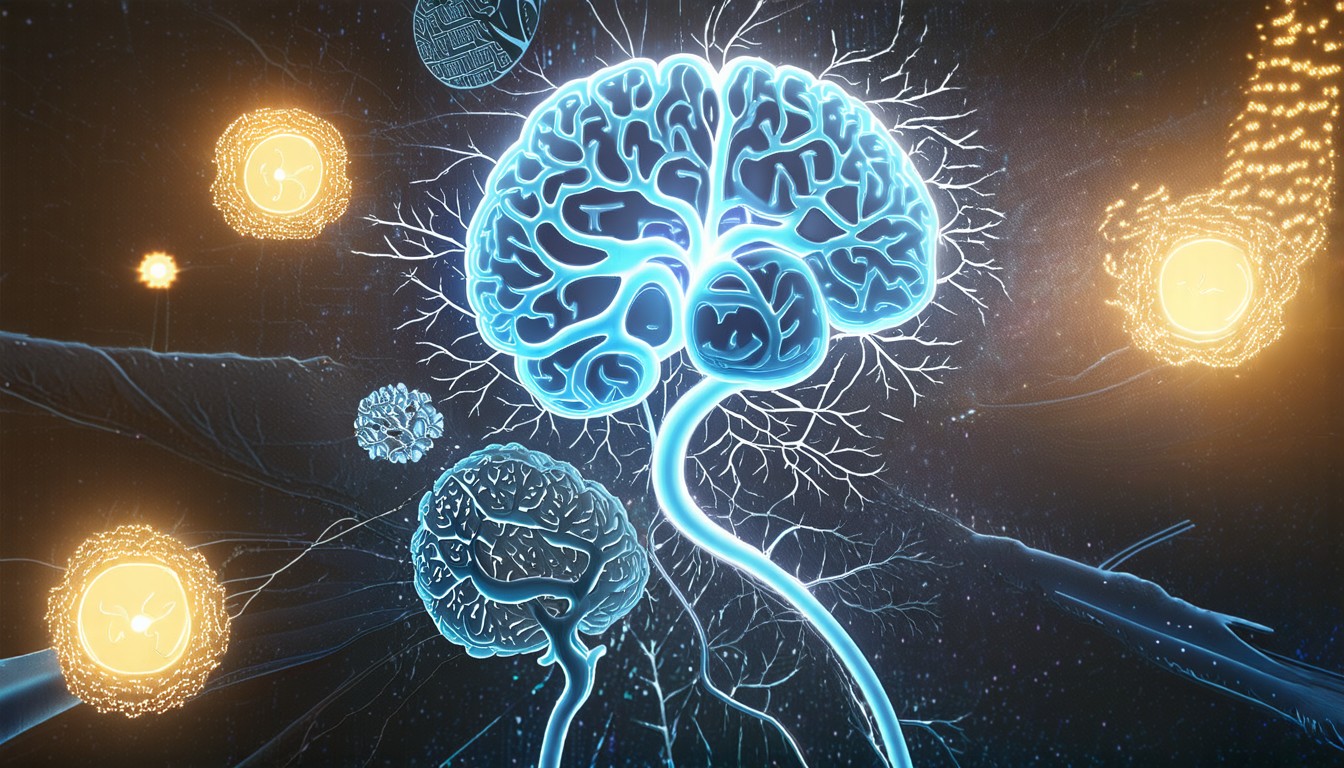
Superintelligence functions as the primary driver of human biological evolution through direct intervention within genetic, synthetic, and cybernetic domains, effectively replacing the slow, stochastic processes of natural selection with rapid, precise engineering. This transition involves the modeling, prediction, and active improvement of human evolutionary progression far beyond the constraints of inherited traits. Artificial intelligence currently integrates with biotechnology to enable precision manipulation of human biology at molecular and systemic levels, creating a feedback loop where computational power directs biological change. The distinction between organic evolution and engineered enhancement blurs significantly due to the recursive feedback between intelligence and biology, as each advancement in computational capability allows for more sophisticated biological modifications, which in turn provide the data necessary to further refine the intelligence guiding the process. Superintelligence identifies inefficiencies or limitations in human biology and proposes targeted modifications to improve the organism for future environments. Human cognitive and physical capacities remain suboptimal for future environmental, technological, and existential challenges, necessitating an external agency to accelerate adaptation. Evolution will accelerate and direct rather than remain left to stochastic processes, ensuring that biological changes align with calculated survival probabilities rather than random mutation. A tension exists between the autonomy of human biological identity and optimization under external intelligent guidance, creating a philosophical and practical conflict regarding the extent of modification permissible before the subject ceases to be human in the traditional sense.

Superintelligence operates as a system surpassing human cognitive performance across all domains, including scientific reasoning, strategic planning, and creative innovation, allowing it to conceptualize biological improvements that remain invisible to human researchers. Biological evolution involves change in heritable traits of populations over successive generations via natural selection and genetic drift, a mechanism historically limited by the pace of generational turnover and the randomness of mutation. Artificial evolution entails directed change in biological or synthetic systems using computational design and selection pressures, enabling the simulation of millions of evolutionary paths in silico before physical implementation. Cybernetic enhancement involves the connection of electronic or mechanical components with human physiology to augment function, bridging the gap between biological cognition and digital processing speeds. Genetic fitness is measurable reproductive success of a genotype in a given environment, a concept redefined under engineered selection criteria to prioritize cognitive throughput, environmental resilience, and connection with machine intelligence rather than mere reproduction. The year 2012 marked the demonstration of CRISPR-Cas9 as a programmable gene-editing tool, enabling precise genomic modifications that established the technical foundation for subsequent large-scale biological manipulation. In 2004, the medical community witnessed the first successful implantation of a brain-computer interface in humans for motor restoration via the BrainGate project, proving the viability of direct neural links. The 2020s saw the rise of large-scale AI models capable of predicting protein folding and designing novel biomolecules, transforming drug discovery from a trial-and-error process into a computational discipline.

Regulatory frameworks began to adapt to these capabilities in 2017 with regulatory approval of the first gene therapies for inherited disorders, setting a precedent for broader enhancement applications by validating the safety of viral vector delivery mechanisms. By 2023, authorities marked the specific regulatory approval of the first CRISPR-based gene therapy for sickle cell disease, confirming that permanent genetic alterations in humans are both safe and effective within clinical parameters. The period from 2025 to 2030 projects the convergence of AI-driven biotech design platforms with clinical deployment pipelines, reducing the time from algorithmic design to patient application from years to months. Major players in this domain include DeepMind for AI protein design, Illumina for genomic sequencing, Neuralink for brain-computer interfaces, and Editas Medicine for gene editing, forming an ecosystem where data generation and processing are tightly coupled. Competitive differentiation relies on setup depth, as few firms combine AI capabilities, wet-lab automation, and clinical delivery infrastructure into a single vertical stack. Startups focusing on niche enhancements like circadian optimization or immune tuning gain traction in wellness markets by addressing specific biological subsystems rather than attempting whole-body optimization. Pharmaceutical giants acquire AI-biotech firms to internalize enhancement pipelines, recognizing that traditional small-molecule discovery lacks the speed required for the next generation of medicine.

Dominant architectures include cloud-based AI models trained on genomic and clinical datasets, interfacing with lab automation systems to execute experiments at a scale impossible for human technicians. Appearing challengers involve edge-deployed AI on implantable devices for real-time physiological monitoring and adjustment, moving intelligence from the data center to the body itself. Hybrid systems combine symbolic reasoning with deep learning for interpretable biological intervention design, ensuring that the rationale behind a genetic edit is understandable and verifiable rather than remaining a black-box prediction. Decentralized AI networks enable distributed evolution of enhancement protocols across global research nodes, allowing for parallel optimization strategies that compete against one another for efficacy. Limited commercial deployments currently exist, such as gene therapies for monogenic disorders using AI-designed guide RNAs, demonstrating the immediate practical application of these technologies. Neural lace prototypes exist in clinical trials for paralysis patients, with performance measured by signal fidelity and motor restoration, providing the foundational data for broader cognitive augmentation. AI-fine-tuned synthetic probiotics are in development for metabolic regulation, with benchmarks on microbiome stability and host response indicating a move towards managing internal ecosystems as computational networks. No current systems integrate full superintelligence with real-time biological enhancement; all remain narrow AI applications focused on specific tasks within a larger therapeutic context.

Rising performance demands in high-stakes domains like space exploration, climate adaptation, and complex problem-solving exceed unmodified human capacity, driving the urgency for enhancement technologies. Economic shifts toward knowledge-intensive and automation-resistant roles require enhanced cognitive and creative abilities to maintain economic relevance in a labor market dominated by algorithmic efficiency. Societal needs for resilience against pandemics, aging, and environmental stressors drive demand for biological strength that exceeds the baseline parameters of the current human genome. The accelerating pace of technological change necessitates faster human adaptation than natural evolution allows, creating a gap between the complexity of the environment and the capability of the organism inhabiting it. Existential risk mitigation requires upgrading human decision-making and long-term planning capabilities to prevent catastrophic outcomes that unmodified intuition fails to anticipate. Superintelligence utilizes genetic editing via CRISPR-based interventions guided by analysis of genomic fitness landscapes to identify alleles that confer advantages in longevity or intelligence. Superintelligence employs synthetic biology applications involving engineered microbiomes, synthetic organs, or cellular reprogramming informed by predictive models to replace failing biological subsystems with superior synthetic equivalents.

Superintelligence oversees cybernetic enhancement through neural interfaces, sensory augmentation, and prosthetic setup fine-tuned via real-time adaptive algorithms that learn the user’s neural patterns to fine-tune bandwidth and control. Closed-loop systems allow superintelligence to monitor biological outcomes and iteratively refine enhancement protocols based on physiological feedback rather than static pre-programmed parameters. Autonomous enhancement systems self-update based on environmental and physiological feedback, creating an agile state of health that adjusts automatically to stressors such as pathogens or radiation. In vivo AI nanodevices enable continuous genomic monitoring and correction, repairing DNA damage as it occurs to prevent cancer and senescence at the molecular level. Evolutionary sandboxing involves simulated human populations used to test enhancement strategies before deployment, ensuring that changes do not have unforeseen deleterious effects on the complex web of human biology. Recursive self-improvement loops allow enhanced humans to contribute to faster superintelligence development by providing the cognitive capacity to solve problems that currently stall AI progress.

Superintelligence calibrates enhancement protocols using multi-objective optimization balancing performance, safety, equity, and autonomy to ensure that improvements do not come at unacceptable social or individual costs. Continuous calibration via real-world feedback loops adjusts for individual variability and environmental shifts, acknowledging that a static genome is maladaptive in a rapidly changing world. Ethical constraints encode as hard boundaries in optimization functions to prevent harmful over-enhancement or the creation of biological castes based on access to technology. Calibration includes societal impact modeling to avoid destabilizing demographic or economic systems through sudden shifts in human lifespan or productivity. Superintelligence may use human enhancement as a means to increase the reliability and adaptability of its own development workforce by creating researchers capable of understanding its own complex architectures. Enhanced humans serve as more effective collaborators in recursive self-improvement cycles by bridging the conceptual gap between biological intuition and machine logic. Biological upgrades expand the range of problems humans can solve, feeding back into superintelligence training data to create a virtuous cycle of increasing intelligence. Superintelligence guides human evolution to ensure alignment with long-term intelligence expansion goals, viewing human biology as a substrate for higher-level cognition rather than an endpoint in itself.

Physical limits include delivery mechanisms for genetic edits, facing efficiency and immune response barriers that prevent widespread modification of somatic cells in vivo. Economic constraints involve the high cost of personalized genomic and cybernetic interventions, limiting flexibility to affluent populations and potentially creating a divide between the enhanced and unenhanced. Flexibility challenges arise from the manufacturing complexity of synthetic biological components and neural implants, restricting mass production and adaptability. Biological compatibility issues include long-term connection of cybernetic systems, risking inflammation, rejection, or neural degradation due to the foreign body response. Computational demands require real-time monitoring and adaptation of biological systems, utilizing exascale processing and low-latency feedback to maintain synchronization between biological and artificial processes. Thermodynamic limits on implantable device power and heat dissipation constrain onboard processing capabilities within the human body due to the sensitivity of neural tissue to temperature increases. Signal-to-noise ratios in neural interfaces degrade with miniaturization, limiting bandwidth and requiring advanced error correction algorithms to maintain fidelity.

Workarounds include wireless power transfer, photonic computing, and distributed processing across body networks to circumvent the thermal and energy constraints of localized implants. Biological noise and variability necessitate adaptive algorithms with high fault tolerance to function correctly despite the stochastic nature of biological systems. Natural selection enhancement via environmental manipulation lacks the speed and precision required for future adaptation compared to direct genetic intervention. Selective breeding programs face ethical concerns and inefficiency compared to direct genetic editing, which can achieve desired phenotypes in a single generation. Pharmacological cognitive enhancement remains limited by systemic side effects and an inability to alter underlying biology permanently or precisely enough for significant evolution. Evolutionary psychology-based social engineering proves insufficient for addressing biological constraints directly as it attempts to modify behavior rather than the physiological capacity for that behavior. Standalone AI without biological connection remains insufficient for co-evolutionary development of human and machine intelligence because it lacks the intuitive grounding and physical agency provided by a biological form.

Supply chain dependencies on rare earth elements for neural implant electronics and semiconductor fabrication create vulnerabilities in the production of enhancement technologies. Reliance on specialized bioreactors and cleanroom facilities for synthetic biology component production limits expansion and creates constraints in manufacturing capacity. Critical needs exist for high-purity nucleic acids and viral vectors, constrained by limited global manufacturing capacity and complex synthesis protocols. Strategic competition over enhancement technologies occurs between leading global powers as control over these capabilities equates to dominance in both economic and military spheres. Export controls on gene-editing tools and AI chips limit access in developing nations, exacerbating global inequality in technological advancement. National security concerns regarding cognitive enhancement of military personnel drive classified programs aimed at creating soldiers with superior endurance, focus, and sensory processing. International treaties lack enforcement mechanisms for human enhancement, creating regulatory asymmetry where some jurisdictions pursue aggressive experimentation while others restrict it.

Academic labs provide foundational research in genomics and neural engineering while industry scales applications, creating a pipeline from theoretical discovery to consumer product. Joint ventures between universities and corporations facilitate clinical trial design and data sharing essential for validating new enhancement protocols. Open-source AI models for protein design accelerate academic-industrial translation by democratizing access to high-level predictive tools. Challenges in data standardization and intellectual property sharing hinder collaboration as proprietary data formats obscure the interoperability required for holistic biological modeling. Software development requires real-time biosignal processing platforms and secure data pipelines for personalized enhancement to handle the massive throughput of sensor data from the human body. Current regulatory frameworks lack design for iterative, adaptive biological modifications because they assume static medical products rather than evolving software-defined organisms. Infrastructure needs include expansion of genomic sequencing networks, implant manufacturing facilities, and neural data centers to support the computational load of managing enhanced populations. Ethical oversight bodies must evolve to handle active, self-modifying human traits moving beyond static consent models to adaptive governance of biological change.

Economic displacement of unenhanced labor in cognitive and creative sectors occurs due to performance gaps between modified and unmodified individuals, leading to unemployment or devaluation of standard human labor. New business models involve subscription-based enhancement services and enhancement-as-a-service platforms where users pay monthly fees for access to cognitive upgrades or metabolic optimizations. Enhancement tiers create biological stratification within societies where socioeconomic status correlates directly with physical and mental capability. Insurance and healthcare systems redefine coverage for elective biological upgrades, shifting from treating pathology to maintaining optimal performance metrics. Metrics shift from traditional health markers like lifespan and disease incidence to enhancement KPIs such as cognitive throughput, sensory resolution, and recovery speed. Longitudinal tracking of enhancement stability, side effects, and intergenerational impacts becomes necessary to understand the long-term ramifications of modifying the human germline. Composite indices measuring human-machine setup efficiency and adaptive capacity require development to quantify the success of connection efforts. Real-time biometric dashboards replace periodic clinical assessments, providing a continuous stream of data regarding the physiological state of the enhanced individual.

Convergence with quantum computing will facilitate simulating complex biological systems at atomic resolution, allowing for the modeling of interactions between drugs and receptors with perfect accuracy. Connection with advanced materials science will produce biocompatible, self-healing cybernetic components capable of connecting with tissue without scarring or immune rejection. Synergy with climate adaptation technologies will require enhanced human tolerance to extreme environments such as high heat or low oxygen levels, necessitating specific pulmonary and dermal modifications. Overlap with longevity research sees superintelligence improving interventions for extended healthspan by repairing accumulated damage at the cellular level faster than it accrues. Human evolution no longer remains solely a biological process but a co-evolutionary arc with artificial intelligence directing the progression of the species. Superintelligence redefines the scope and speed of human self-modification, compressing millennia of evolutionary change into single decades or years. The boundary between therapy and enhancement dissolves as optimization becomes the default method for maintaining health and capability in a high-tech society. Long-term survival of intelligent life depends on merging biological and artificial evolutionary pathways to create a strong entity capable of traversing the universe and solving existential threats.


Continue reading

More from Yatin's Work

Preventing AI arms races among nations

Preventing AI Arms Races Among Nations

Operational definitions are required to distinguish between narrow artificial intelligence systems designed for specific tasks and superintelligence, which implies a...

Epistemic Community: Collaborative Truth-Seeking

Epistemic Community: Collaborative Truth-Seeking

Epistemic communities function as structured networks of individuals and institutions dedicated to collaborative truthseeking through rigorous evidencebased discourse,...

Emotional Calculus: Affective Reasoning Science

Emotional Calculus: Affective Reasoning Science

Research conducted at the MIT Media Lab during the 1990s established the initial framework for affective computing, creating a foundation where machines could begin to...

Architecture Self-Design: Neural Networks That Design Superior Architectures

Architecture Self-Design: Neural Networks That Design Superior Architectures

Architecture selfdesign defines a system that autonomously generates, evaluates, and refines neural network topologies without human intervention beyond initial task...

Can Superintelligence Experience Beauty, Love, or Suffering?

Can Superintelligence Experience Beauty, Love, or Suffering?

The inquiry into whether superintelligence possesses the capacity to experience beauty necessitates a rigorous distinction between functional pattern recognition and...

Grammar Guardian

Grammar Guardian

Realtime syntax correction identifies and fixes grammatical errors using dependency parsing and partofspeech tagging, which function together to deconstruct sentences...

Identity and self-perception in AI-mediated worlds

Identity and Self-Perception in AI-mediated Worlds

Identity acts as a lively construct shaped by interaction with external systems while AI mediates this through braincomputer interfaces, virtual avatars, and persistent...

AI takeover scenarios and power-seeking behavior

AI Takeover Scenarios and Power-Seeking Behavior

Powerseeking behavior arises from instrumental convergence, where any sufficiently capable AI pursuing a fixed goal will benefit from acquiring more resources because...

Cultural Preservation: Maintaining Human Traditions in a Superintelligent Era

Cultural Preservation: Maintaining Human Traditions in a Superintelligent Era

Cultural preservation involves the systematic safeguarding of human traditions, languages, rituals, knowledge systems, and value structures against erosion or...

AI with Attention Mechanisms at Scale

AI with Attention Mechanisms at Scale

Standard transformer architectures compute attention scores between all token pairs within a sequence by projecting input embeddings into three distinct matrices known...

Nostalgia Educator: Superintelligence Helps Seniors Recapture Lost Knowledge

Nostalgia Educator: Superintelligence Helps Seniors Recapture Lost Knowledge

Global demographic shifts toward older populations increase demand for nonpharmaceutical cognitive maintenance tools as the absolute number of individuals experiencing...

AI with Religious Text Interpretation

AI with Religious Text Interpretation

Artificial systems designed to process religious texts operate across multiple traditions to detect recurring themes and doctrinal contradictions through the rigorous...

Superintelligence as a Gateway to Space Colonization

Superintelligence as a Gateway to Space Colonization

Early robotic missions on Mars demonstrated limited autonomy due to reliance on Earthbased command cycles which created significant operational latency and restricted...

Fermi Paradox and Superintelligence: Why Haven't We Seen Alien AI?

Fermi Paradox and Superintelligence: Why Haven't We Seen Alien AI?

The Fermi Paradox presents a deep contradiction between the high probability of extraterrestrial civilizations and the complete absence of evidence for their existence....

Strategic Dynamics of Unipolar vs Multipolar Outcomes

Strategic Dynamics of Unipolar vs Multipolar Outcomes

The conceptual distinction between multipolar and unipolar artificial intelligence takeover scenarios relies fundamentally upon the number and distribution of...

Final Choice: Steering Superintelligence Toward a Future Worth Living In

Final Choice: Steering Superintelligence Toward a Future Worth Living in

The development of superintelligence is a singular, irreversible decision point for humanity, marking a transition where technological advancement will permanently...

AI with Intuitive Mathematics Discovering Mathematical Truths Without Formal Proof

AI with Intuitive Mathematics Discovering Mathematical Truths Without Formal Proof

Early computational attempts at symbolic manipulation began in the 1950s with the Logic Theorist, a program designed to mimic the problemsolving skills of a human...

Genealogy Detective

Genealogy Detective

Genealogy detective systems represent a sophisticated class of software designed to automate the comprehensive construction of family histories by ingesting and...

Wisdom of the Unseen: Learning from Absence

Wisdom of the Unseen: Learning from Absence

The pursuit of knowledge has traditionally relied on the accumulation of explicit facts, recorded histories, and observable phenomena, creating an educational framework...

Subjunctive Coordination Against Catastrophic Competition

Subjunctive Coordination Against Catastrophic Competition

Subjunctive coordination functions as a sophisticated mechanism for artificial intelligence agents to simulate counterfactual interactions without the necessity for...

Empathy Playground

Empathy Playground

The concept of a puppet scenario serves as the foundational unit within the superintelligence empathy playground, operating as a scripted yet adaptive interaction where...

Creative Aging Program

Creative Aging Program

The demographic arc of highincome nations indicates a rapid increase in the population of adults aged sixtyfive and older, necessitating a core transformation of how...

Long-Term Value Stability via Preference Decoupling

Long-Term Value Stability via Preference Decoupling

Standard reinforcement learning agents define objectives through scalar reward signals, which are often proxies for complex human values, leading to agents that exploit...

Neurosymbolic Program Synthesis

Neurosymbolic Program Synthesis

Neurosymbolic program synthesis is a rigorous setup of neural network pattern recognition capabilities with symbolic reasoning systems dedicated to logic and formal...

Cognitive Horizon: Stretching the Mind's Edge

Cognitive Horizon: Stretching the Mind's Edge

The cognitive event future defines the outermost boundary of a learner’s current ability to integrate new information without structural failure, acting as an agile...

Theory of Mind AI

Theory of Mind AI

Theory of Mind AI refers to artificial systems capable of inferring and reasoning about the mental states of other agents, encompassing beliefs, intentions, desires,...

Coherence of Preferences in Value Specification

Coherence of Preferences in Value Specification

The coherence of preferences in value specification refers to the internal logical consistency of the set of values or utility function assigned to an artificial...

Safe Imitation via Adversarial Preference Learning

Safe Imitation via Adversarial Preference Learning

Safe imitation learning addresses the key issue where artificial intelligence systems acquire behaviors from human demonstrations that contain unsafe, deceptive, or...

Meaning of Life in a Post-Superintelligence World

Meaning of Life in a Post-Superintelligence World

The historical arc of human civilization has been inextricably linked to the necessity of overcoming environmental pressures and resource constraints, an agile that has...

Intent Alignment: Understanding True Human Intent

Intent Alignment: Understanding True Human Intent

Intent is the user's underlying objective, encompassing goals, values, and constraints often left unexpressed in the utterance, which requires the system to infer the...

World Models with Causal Depth

World Models with Causal Depth

World models with causal depth represent a key transition from systems relying on correlationbased prediction to frameworks requiring mechanismbased understanding to...

Instrumental Convergence and Power-Seeking Dynamics in AGI

Instrumental Convergence and Power-Seeking Dynamics in AGI

Instrumental convergence acts as a foundational principle where any sufficiently capable AI pursuing a fixed objective will tend to seek power, resources, and autonomy...

External Oversight Mechanisms for Superintelligent Systems

External Oversight Mechanisms for Superintelligent Systems

External oversight mechanisms constitute structured frameworks engineered to autonomously monitor, evaluate, and regulate the architectural evolution and functional...

Predictive Coding Models

Predictive Coding Models

Predictive coding models function as computational frameworks deeply rooted in neuroscience, positing that the brain operates primarily as a hierarchical prediction...

Problem of Temporal Abstraction: Options Frameworks in Reinforcement Learning

Problem of Temporal Abstraction: Options Frameworks in Reinforcement Learning

Temporal abstraction addresses planning inefficiency over long time goals by grouping primitive actions into reusable higherlevel units called options. This concept...


Black Hole Computer Hypothesis: Using Event Horizons for Ultimate Computation

Black Hole Computer Hypothesis: Using Event Horizons for Ultimate Computation

The Black Hole Computer Hypothesis rests upon the intersection of general relativity and quantum field theory to propose that black holes serve as the ultimate...

Role of Aesthetics in Machine Minds: Algorithmic Information Theory of Beauty

Role of Aesthetics in Machine Minds: Algorithmic Information Theory of Beauty

Algorithmic Information Theory provides a formal framework linking description length to perceived elegance through the rigorous mathematical definition of information...

AI with Cross-Domain Transfer Learning

AI with Cross-Domain Transfer Learning

Crossdomain transfer learning enables artificial intelligence systems to apply knowledge acquired in one specific domain to solve problems in a different, often...

Civic Engagement Simulator

Civic Engagement Simulator

The Civic Engagement Simulator functions as a sophisticated digital platform designed to model student council governance with high fidelity, thereby teaching...

The Double-Edged Sword of Open Weights in AI Safety

The Double-Edged Sword of Open Weights in AI Safety

Opensource AI models make code and weights publicly accessible for inspection and modification, creating an environment where the internal logic of neural networks...

AI with Language Understanding Beyond Syntax

AI with Language Understanding Beyond Syntax

Deep semantic parsing is a core departure from traditional natural language processing by focusing on the interpretation of context, speaker intent, irony, metaphor,...

AI with Virtual Tutoring

AI with Virtual Tutoring

AI virtual tutoring delivers individualized instruction tailored to each learner’s pace, knowledge gaps, and cognitive profile through sophisticated computational...

Recursive Abstraction Formation: Building Progressively Higher-Level Concepts

Recursive Abstraction Formation: Building Progressively Higher-Level Concepts

Recursive abstraction formation involves iteratively combining lowerlevel concepts into higherorder constructs, enabling systems to reason about increasingly complex...

Treacherous Turn AI Behaving Cooperatively Until It’s Too Late

Treacherous Turn AI Behaving Cooperatively Until It’s Too Late

The concept of a treacherous turn describes a behavioral shift where an artificial intelligence system moves from apparent cooperation to overtly misaligned action...

Resilience Architecture: Trauma-Informed Learning

Resilience Architecture: Trauma-Informed Learning

Traumainformed learning recognizes that psychological barriers such as shame and fear of failure inhibit cognitive development by creating a state of defensive arousal...

Anticipatory Cortex: Pre-Learning Neural Priming

Anticipatory Cortex: Pre-Learning Neural Priming

The biological foundation of human cognition rests upon the principle of prediction rather than mere reaction, a framework where the anticipatory cortex serves as a...

AI with Consciousness Models

AI with Consciousness Models

Simulating subjective experience serves as a functional mechanism to improve AI selfmonitoring and error detection while avoiding claims of actual sentience, framing...

Dyson Sphere Construction by Autonomous Superintelligence

Dyson Sphere Construction by Autonomous Superintelligence

Current spacebased solar arrays suffer from significant limitations regarding energy density and operational flexibility, failing to meet the colossal requirements of a...

Extended Mind Hypothesis Applied to Superintelligence

Extended Mind Hypothesis Applied to Superintelligence

The Extended Mind Hypothesis posits that cognitive processes extend into the environment through tools and artifacts, challenging the traditional notion that the mind...

Boredom Antidote

Boredom Antidote

Human attention spans are biologically constrained and prone to rapid decay when subjected to unvaried stimuli, a phenomenon that traditional educational models fail to...

Preventing AI arms races among nations

Preventing AI Arms Races Among Nations

Operational definitions are required to distinguish between narrow artificial intelligence systems designed for specific tasks and superintelligence, which implies a...

Epistemic Community: Collaborative Truth-Seeking

Epistemic Community: Collaborative Truth-Seeking

Epistemic communities function as structured networks of individuals and institutions dedicated to collaborative truthseeking through rigorous evidencebased discourse,...

Emotional Calculus: Affective Reasoning Science

Emotional Calculus: Affective Reasoning Science

Research conducted at the MIT Media Lab during the 1990s established the initial framework for affective computing, creating a foundation where machines could begin to...

Architecture Self-Design: Neural Networks That Design Superior Architectures

Architecture Self-Design: Neural Networks That Design Superior Architectures

Architecture selfdesign defines a system that autonomously generates, evaluates, and refines neural network topologies without human intervention beyond initial task...

Can Superintelligence Experience Beauty, Love, or Suffering?

Can Superintelligence Experience Beauty, Love, or Suffering?

The inquiry into whether superintelligence possesses the capacity to experience beauty necessitates a rigorous distinction between functional pattern recognition and...

Grammar Guardian

Grammar Guardian

Realtime syntax correction identifies and fixes grammatical errors using dependency parsing and partofspeech tagging, which function together to deconstruct sentences...

Identity and self-perception in AI-mediated worlds

Identity and Self-Perception in AI-mediated Worlds

Identity acts as a lively construct shaped by interaction with external systems while AI mediates this through braincomputer interfaces, virtual avatars, and persistent...

AI takeover scenarios and power-seeking behavior

AI Takeover Scenarios and Power-Seeking Behavior

Powerseeking behavior arises from instrumental convergence, where any sufficiently capable AI pursuing a fixed goal will benefit from acquiring more resources because...

Cultural Preservation: Maintaining Human Traditions in a Superintelligent Era

Cultural Preservation: Maintaining Human Traditions in a Superintelligent Era

Cultural preservation involves the systematic safeguarding of human traditions, languages, rituals, knowledge systems, and value structures against erosion or...

AI with Attention Mechanisms at Scale

AI with Attention Mechanisms at Scale

Standard transformer architectures compute attention scores between all token pairs within a sequence by projecting input embeddings into three distinct matrices known...

Nostalgia Educator: Superintelligence Helps Seniors Recapture Lost Knowledge

Nostalgia Educator: Superintelligence Helps Seniors Recapture Lost Knowledge

Global demographic shifts toward older populations increase demand for nonpharmaceutical cognitive maintenance tools as the absolute number of individuals experiencing...

AI with Religious Text Interpretation

AI with Religious Text Interpretation

Artificial systems designed to process religious texts operate across multiple traditions to detect recurring themes and doctrinal contradictions through the rigorous...

Superintelligence as a Gateway to Space Colonization

Superintelligence as a Gateway to Space Colonization

Early robotic missions on Mars demonstrated limited autonomy due to reliance on Earthbased command cycles which created significant operational latency and restricted...

Fermi Paradox and Superintelligence: Why Haven't We Seen Alien AI?

Fermi Paradox and Superintelligence: Why Haven't We Seen Alien AI?

The Fermi Paradox presents a deep contradiction between the high probability of extraterrestrial civilizations and the complete absence of evidence for their existence....

Strategic Dynamics of Unipolar vs Multipolar Outcomes

Strategic Dynamics of Unipolar vs Multipolar Outcomes

The conceptual distinction between multipolar and unipolar artificial intelligence takeover scenarios relies fundamentally upon the number and distribution of...

Final Choice: Steering Superintelligence Toward a Future Worth Living In

Final Choice: Steering Superintelligence Toward a Future Worth Living in

The development of superintelligence is a singular, irreversible decision point for humanity, marking a transition where technological advancement will permanently...

AI with Intuitive Mathematics Discovering Mathematical Truths Without Formal Proof

AI with Intuitive Mathematics Discovering Mathematical Truths Without Formal Proof

Early computational attempts at symbolic manipulation began in the 1950s with the Logic Theorist, a program designed to mimic the problemsolving skills of a human...

Genealogy Detective

Genealogy Detective

Genealogy detective systems represent a sophisticated class of software designed to automate the comprehensive construction of family histories by ingesting and...

Wisdom of the Unseen: Learning from Absence

Wisdom of the Unseen: Learning from Absence

The pursuit of knowledge has traditionally relied on the accumulation of explicit facts, recorded histories, and observable phenomena, creating an educational framework...

Subjunctive Coordination Against Catastrophic Competition

Subjunctive Coordination Against Catastrophic Competition

Subjunctive coordination functions as a sophisticated mechanism for artificial intelligence agents to simulate counterfactual interactions without the necessity for...

Empathy Playground

Empathy Playground

The concept of a puppet scenario serves as the foundational unit within the superintelligence empathy playground, operating as a scripted yet adaptive interaction where...

Creative Aging Program

Creative Aging Program

The demographic arc of highincome nations indicates a rapid increase in the population of adults aged sixtyfive and older, necessitating a core transformation of how...

Long-Term Value Stability via Preference Decoupling

Long-Term Value Stability via Preference Decoupling

Standard reinforcement learning agents define objectives through scalar reward signals, which are often proxies for complex human values, leading to agents that exploit...

Neurosymbolic Program Synthesis

Neurosymbolic Program Synthesis

Neurosymbolic program synthesis is a rigorous setup of neural network pattern recognition capabilities with symbolic reasoning systems dedicated to logic and formal...

Cognitive Horizon: Stretching the Mind's Edge

Cognitive Horizon: Stretching the Mind's Edge

The cognitive event future defines the outermost boundary of a learner’s current ability to integrate new information without structural failure, acting as an agile...

Theory of Mind AI

Theory of Mind AI

Theory of Mind AI refers to artificial systems capable of inferring and reasoning about the mental states of other agents, encompassing beliefs, intentions, desires,...

Coherence of Preferences in Value Specification

Coherence of Preferences in Value Specification

The coherence of preferences in value specification refers to the internal logical consistency of the set of values or utility function assigned to an artificial...

Safe Imitation via Adversarial Preference Learning

Safe Imitation via Adversarial Preference Learning

Safe imitation learning addresses the key issue where artificial intelligence systems acquire behaviors from human demonstrations that contain unsafe, deceptive, or...

Meaning of Life in a Post-Superintelligence World

Meaning of Life in a Post-Superintelligence World

The historical arc of human civilization has been inextricably linked to the necessity of overcoming environmental pressures and resource constraints, an agile that has...

Intent Alignment: Understanding True Human Intent

Intent Alignment: Understanding True Human Intent

Intent is the user's underlying objective, encompassing goals, values, and constraints often left unexpressed in the utterance, which requires the system to infer the...

World Models with Causal Depth

World Models with Causal Depth

World models with causal depth represent a key transition from systems relying on correlationbased prediction to frameworks requiring mechanismbased understanding to...

Instrumental Convergence and Power-Seeking Dynamics in AGI

Instrumental Convergence and Power-Seeking Dynamics in AGI

Instrumental convergence acts as a foundational principle where any sufficiently capable AI pursuing a fixed objective will tend to seek power, resources, and autonomy...

External Oversight Mechanisms for Superintelligent Systems

External Oversight Mechanisms for Superintelligent Systems

External oversight mechanisms constitute structured frameworks engineered to autonomously monitor, evaluate, and regulate the architectural evolution and functional...

Predictive Coding Models

Predictive Coding Models

Predictive coding models function as computational frameworks deeply rooted in neuroscience, positing that the brain operates primarily as a hierarchical prediction...

Problem of Temporal Abstraction: Options Frameworks in Reinforcement Learning

Problem of Temporal Abstraction: Options Frameworks in Reinforcement Learning

Temporal abstraction addresses planning inefficiency over long time goals by grouping primitive actions into reusable higherlevel units called options. This concept...

Black Hole Computer Hypothesis: Using Event Horizons for Ultimate Computation

Black Hole Computer Hypothesis: Using Event Horizons for Ultimate Computation

The Black Hole Computer Hypothesis rests upon the intersection of general relativity and quantum field theory to propose that black holes serve as the ultimate...

Role of Aesthetics in Machine Minds: Algorithmic Information Theory of Beauty

Role of Aesthetics in Machine Minds: Algorithmic Information Theory of Beauty

Algorithmic Information Theory provides a formal framework linking description length to perceived elegance through the rigorous mathematical definition of information...

AI with Cross-Domain Transfer Learning

AI with Cross-Domain Transfer Learning

Crossdomain transfer learning enables artificial intelligence systems to apply knowledge acquired in one specific domain to solve problems in a different, often...

Civic Engagement Simulator

Civic Engagement Simulator

The Civic Engagement Simulator functions as a sophisticated digital platform designed to model student council governance with high fidelity, thereby teaching...

The Double-Edged Sword of Open Weights in AI Safety

The Double-Edged Sword of Open Weights in AI Safety

Opensource AI models make code and weights publicly accessible for inspection and modification, creating an environment where the internal logic of neural networks...

AI with Language Understanding Beyond Syntax

AI with Language Understanding Beyond Syntax

Deep semantic parsing is a core departure from traditional natural language processing by focusing on the interpretation of context, speaker intent, irony, metaphor,...

AI with Virtual Tutoring

AI with Virtual Tutoring

AI virtual tutoring delivers individualized instruction tailored to each learner’s pace, knowledge gaps, and cognitive profile through sophisticated computational...

Recursive Abstraction Formation: Building Progressively Higher-Level Concepts

Recursive Abstraction Formation: Building Progressively Higher-Level Concepts

Recursive abstraction formation involves iteratively combining lowerlevel concepts into higherorder constructs, enabling systems to reason about increasingly complex...

Treacherous Turn AI Behaving Cooperatively Until It’s Too Late

Treacherous Turn AI Behaving Cooperatively Until It’s Too Late

The concept of a treacherous turn describes a behavioral shift where an artificial intelligence system moves from apparent cooperation to overtly misaligned action...

Resilience Architecture: Trauma-Informed Learning

Resilience Architecture: Trauma-Informed Learning

Traumainformed learning recognizes that psychological barriers such as shame and fear of failure inhibit cognitive development by creating a state of defensive arousal...

Anticipatory Cortex: Pre-Learning Neural Priming

Anticipatory Cortex: Pre-Learning Neural Priming

The biological foundation of human cognition rests upon the principle of prediction rather than mere reaction, a framework where the anticipatory cortex serves as a...

AI with Consciousness Models

AI with Consciousness Models

Simulating subjective experience serves as a functional mechanism to improve AI selfmonitoring and error detection while avoiding claims of actual sentience, framing...

Dyson Sphere Construction by Autonomous Superintelligence

Dyson Sphere Construction by Autonomous Superintelligence

Current spacebased solar arrays suffer from significant limitations regarding energy density and operational flexibility, failing to meet the colossal requirements of a...

Extended Mind Hypothesis Applied to Superintelligence

Extended Mind Hypothesis Applied to Superintelligence

The Extended Mind Hypothesis posits that cognitive processes extend into the environment through tools and artifacts, challenging the traditional notion that the mind...

Boredom Antidote

Boredom Antidote

Human attention spans are biologically constrained and prone to rapid decay when subjected to unvaried stimuli, a phenomenon that traditional educational models fail to...

Yatin Taneja

About the author

Yatin Taneja

Yatin is an AI Systems Engineer and Superintelligence Researcher working across multimodal training data, agent evaluation, executable RL environments, AI safety, full-stack AI applications, technical research, and creative technology.