Knowledge hub
Black Hole Computer Hypothesis: Using Event Horizons for Ultimate Computation

The Black Hole Computer Hypothesis rests upon the intersection of general relativity and quantum field theory to propose that black holes serve as the ultimate computational substrates in the universe, using extreme gravitational physics to process information at densities unattainable by terrestrial methods. General relativity describes the fabric of spacetime as an agile entity curved by mass and energy, creating regions where gravity dominates all other forces to such an extent that not even light can escape past the event future. Quantum field theory in curved spacetime further refines this picture by describing how matter fields behave within these extreme gravitational gradients, suggesting that the event future acts as a boundary where quantum effects become significant on macroscopic scales. This convergence of physics implies that the region inside and immediately surrounding a black hole functions as a natural system capable of performing operations on physical states, effectively treating the evolution of the black hole’s internal state as a computational process. The hypothesis suggests that instead of being merely destructive singularities, these objects represent the upper limit of information density and processing speed allowed by the known laws of physics, operating as hyper-efficient engines that convert mass-energy into information processing through the core dynamics of spacetime itself. The theoretical foundation for this immense storage capacity derives from the Bekenstein-Hawking entropy formula, which quantifies the entropy of a black hole in terms of the area of its event future rather than its volume, overturning classical intuitions about information storage.
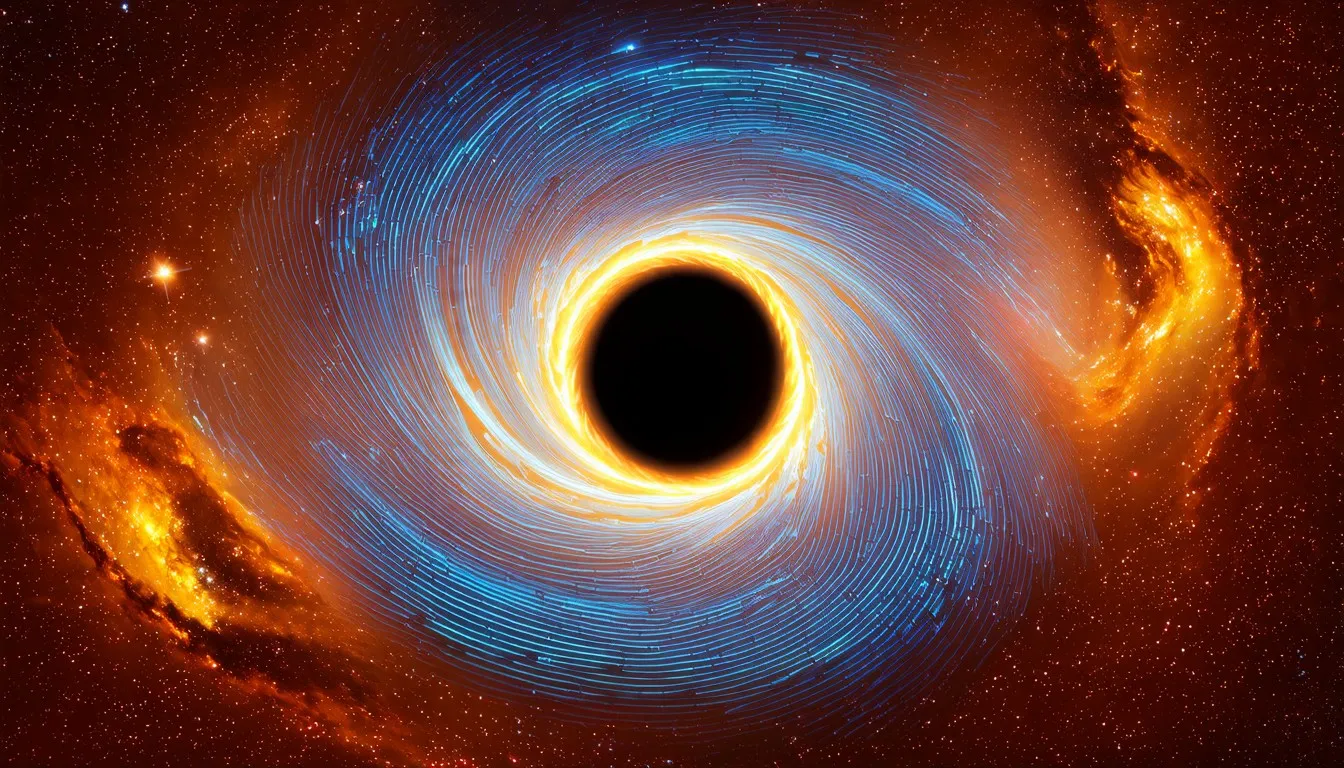
Jacob Bekenstein proposed that the second law of thermodynamics requires black holes to possess entropy, leading to the realization that the amount of information contained within a black hole is proportional to the surface area of its event future measured in Planck units. Stephen Hawking later provided the precise coefficient for this relationship, demonstrating that the entropy S is equal to one quarter of the area A expressed in Planck units, specifically S = k A / 4 l_p^2, where k is the Boltzmann constant and l_p is the Planck length. This relationship establishes that every Planck area on the event goal encodes roughly one bit of information, meaning the total information capacity scales quadratically with the radius of the black hole rather than cubically with its volume. Consequently, a one-kilogram black hole, with a Schwarzschild radius of approximately 1.5 \times 10^{-27} meters, possesses an event future area sufficient to store roughly 10^{16} bits of information, a density that vastly exceeds the capabilities of any known or projected solid-state storage medium. This area-law behavior of black hole entropy directly gave rise to the holographic principle, a key concept in theoretical physics asserting that all the information contained within a volume of space can be fully represented by a theory defined on the boundary of that volume. The principle suggests that the three-dimensional world we observe is mathematically equivalent to a two-dimensional projection of information stored on a distant cosmological surface, much like a holographic image encodes three-dimensional spatial data on a two-dimensional film.
In the context of black hole computation, this implies that the complex physical processes occurring within the interior of the black hole are mathematically dual to information processing operations occurring on the two-dimensional surface of the event future. This reduction of dimensionality does not imply a loss of information or fidelity; rather, it indicates that the degrees of freedom inside the volume are entirely redundant with the degrees of freedom on the boundary, allowing for the possibility of simulating or accessing the interior dynamics by manipulating the boundary states. The AdS/CFT correspondence, formulated by Juan Maldacena, provides a concrete mathematical realization of the holographic principle by establishing a duality between a type of quantum gravity theory in anti-de Sitter space and a conformal field theory without gravity living on its boundary. Anti-de Sitter space is a maximally symmetric Lorentzian manifold with constant negative scalar curvature, serving as a convenient model for a universe with a boundary where the gravitational physics is rigorously defined. The correspondence posits that for every observable in the bulk gravitational theory, there exists a corresponding operator in the boundary conformal field theory, creating a dictionary that translates gravitational phenomena into quantum information processing language. This duality implies that the dynamics of particles falling into a black hole, including their interactions and eventual fate at the singularity, map precisely to the thermalization and entanglement dynamics of a quantum system on the boundary.
Therefore, a black hole performing a physical evolution in the bulk is computationally equivalent to a quantum circuit operating on the boundary, suggesting that gravitational dynamics are inherently a form of quantum information processing. Inputting information into such a system requires encoding data onto matter or energy streams and directing them across the event future, effectively writing data onto the black hole’s informational storage medium. As matter crosses the goal, its quantum state becomes indistinguishable from the microstates defining the black hole’s entropy, thereby updating the total information content of the system. The event goal functions as a causal boundary where classical retrieval of this information becomes impossible for any external observer, as any signal attempting to return would need to exceed the speed of light. This one-way membrane characteristic ensures that once data is entered into the computational substrate, it remains isolated from the external universe until specific quantum mechanical processes allow for its potential retrieval. The process of information ingestion is irreversible from a classical standpoint, aligning with the deterministic yet probabilistic nature of quantum mechanics where wavefunction collapse or decoherence locks in the input state.
Processing within this theoretical computer occurs primarily in the ergosphere of a rotating Kerr black hole, where the frame-dragging effect is so intense that all objects are forced to rotate with the black hole. The ergosphere is the region outside the event horizon where the temporal coordinate becomes spacelike, allowing for the extraction of rotational energy through mechanisms such as the Penrose process. In this region, it is possible to arrange infalling particles so that they split into two, with one part falling into the black hole carrying negative energy relative to infinity and the other escaping with more energy than the original infalling particle. This energy extraction mechanism provides a theoretically inexhaustible power source for computational operations, enabling the system to perform logic gates or state transitions without depleting its mass-energy reserves in a manner that would quickly lead to evaporation. The extreme curvature and rotational forces within this region facilitate rapid state transitions, allowing the gravitational field to mediate interactions between information-carrying quanta at speeds approaching the universal limit. Time dilation near the event horizon introduces a critical temporal asymmetry between the computational process and an external observer, effectively allowing vast amounts of computation to occur in a brief period of proper time relative to the outside universe.
According to general relativity, clocks closer to a massive gravitational potential run slower compared to clocks further away; therefore, a computer operating near the future experiences time at a significantly slower rate relative to a distant observer. While microseconds pass for the computer itself, billions of years could elapse in the external universe, meaning the system could solve problems that would take longer than the age of the universe to process on Earth before returning the result. This temporal compression grants access to practically infinite processing futures for specific computational tasks, provided the integrity of the hardware and the retrieval mechanisms can withstand the gravitational tidal forces. Retrieving output from such a system relies on Hawking radiation, a theoretical prediction that black holes emit thermal radiation due to quantum effects near the event goal, potentially carrying away information encoded in the outgoing particles. Quantum field theory dictates that particle-antiparticle pairs constantly pop in and out of existence near the goal; occasionally, one particle falls in while the other escapes, resulting in the black hole losing mass over time. Although the information loss paradox historically questioned whether information is destroyed in this process, modern developments in quantum gravity suggest that the radiation is not purely thermal but contains subtle correlations encoding the state of the interior.
By capturing and analyzing this radiation, an external observer could theoretically decode the results of the computation performed within the black hole, although the signal-to-noise ratio presents a formidable engineering challenge. The Landauer limit sets a core lower bound on the energy required to erase or manipulate information, establishing that any logically irreversible manipulation of information must be accompanied by a corresponding increase in entropy in the environment. This limit implies that computation is fundamentally a thermodynamic process, requiring energy dissipation proportional to the temperature of the system and the number of bits processed. Black holes operate at temperatures inversely proportional to their mass, meaning stellar-mass black holes are extremely cold, while micro black holes are incredibly hot. A black hole computer theoretically operates at the maximum physical density of computation allowed by the laws of physics because it naturally saturates these thermodynamic bounds, utilizing its mass-energy reservoir with near-perfect efficiency to drive state transitions at the Planck scale. Calculations based on the Margolus-Levitin theorem, which defines the maximum speed of a dynamical system based on its average energy, indicate that a one-kilogram black hole could theoretically perform approximately 10^{50} operations per second.
This figure dwarfs the processing power of all supercomputers on Earth combined, highlighting the immense potential of gravitational substrates for handling complexity classes far beyond current capabilities. The theorem states that the rate of operations is limited by 2E / \pi \hbar, where E is the available energy; since a kilogram of mass-equivalent energy is roughly 9 \times 10^{16} joules, the operational capacity reaches this staggering magnitude. Such performance would enable brute-force solutions to cryptographic problems, real-time simulation of complex quantum systems, or modeling of high-dimensional data structures that are currently intractable. The operational lifetime of a micro black hole is inversely proportional to its mass, meaning smaller black holes evaporate almost instantaneously via Hawking radiation, while larger ones persist for timescales exceeding the current age of the universe. A one-kilogram black hole would evaporate in approximately 8 \times 10^{-17} seconds, releasing its energy in a burst equivalent to a large thermonuclear weapon. This brief lifespan presents a significant constraint for sustained computation, necessitating either continuous mass accretion to maintain stability or the use of larger primordial black holes, which offer longer processing windows but lower energy densities.
The trade-off between processing speed and longevity dictates that practical black hole computing would likely utilize stellar-mass objects for long-term storage and processing or find methods to stabilize micro black holes through feeding mechanisms that counteract evaporation. Current technology lacks the capability to create or capture stable micro black holes, as creating one requires concentrating energy equivalent to the Planck mass into a volume comparable to the Planck length, a feat far beyond the reach of existing particle accelerators like the Large Hadron Collider. While high-energy collisions momentarily create microscopic regions of extreme density, these regions are unstable and decay immediately without forming semi-permanent event goals. Capturing a naturally occurring primordial black hole remains speculative, as their existence has not been empirically confirmed, and detecting an object with negligible luminosity and significant mass only through gravitational lensing is statistically improbable with current astronomical surveys. The inability to manufacture or acquire the core processing unit renders this hypothesis purely theoretical at present. Energy requirements for forming such objects artificially exceed the output of all current power plants combined, necessitating breakthroughs in energy generation such as controlled nuclear fusion or antimatter annihilation on an industrial scale.
To form a one-kilogram black hole artificially, one would need to compress matter with such force that it overcomes neutron degeneracy pressure and electron degeneracy pressure, requiring energy densities found only in supernovae or the early universe. Even if sufficient energy were available, focusing it into a small enough volume to trigger collapse presents engineering challenges related to confinement symmetry and pressure uniformity that are currently insurmountable. Hawking radiation from small black holes is intense and short-lived, preventing sustained computation unless the black hole is constantly fed mass at a rate exceeding its evaporation rate. The radiation emitted by a micro black hole consists of high-energy gamma rays and particles that would destroy any nearby instrumentation designed to read or write data. This hostile environment requires shielding materials capable of withstanding extreme temperatures and radiation fluxes, materials which do not currently exist in the periodic table or are theoretically impossible to manufacture with known bonding strengths. The volatility of small black holes makes them impractical for any computational task requiring more than a fraction of a second of processing time.

No known materials withstand the tidal forces and radiation levels near an event future, as the gradient of gravity across any physical object would spaghettify it, stretching it into a thin stream of atoms before it could function as a computational component. Tidal forces near a small black hole are strong enough to tear apart nuclei, while even near a supermassive black hole, the accretion disk generates X-rays and relativistic jets that would vaporize conventional matter. Any probe attempting to interface directly with the goal would need to be composed of exotic matter or rely on active structural integrity fields generated by energy sources comparable to the output of a star, placing such engineering firmly in the realm of speculative fiction. Silicon-based architectures face key limits regarding heat dissipation and miniaturization, as transistors approach atomic scales where quantum tunneling causes current leakage and thermal management becomes physically impossible due to the finite speed of heat propagation. Moore’s Law has slowed significantly as feature sizes shrink below five nanometers, encountering barriers imposed by atomic structure and thermodynamic efficiency limits defined by Landauer’s principle. The inability to pack more logic gates into a finite volume without causing thermal runaway restricts the growth of classical computing power, driving researchers to seek alternative substrates like photonic or biological systems, though these also face physical constraints.
Optical and superconducting quantum computers struggle with decoherence and error rates, requiring isolation from the environment that is difficult to maintain for systems involving many qubits over extended periods. Quantum states are fragile, interacting with background electromagnetic fields or thermal vibrations to lose their superposition properties, introducing errors that require massive overhead for quantum error correction. While superconducting qubits operate at milliKelvin temperatures to reduce noise, scaling these systems up introduces complexities in wiring and cooling that threaten to negate their advantages over classical systems for specific applications. Neuromorphic systems lack the parallelism required for spacetime-scale setup, as they attempt to mimic biological neural networks using hardware that is still bound by von Neumann architecture limitations regarding memory bandwidth and latency. While these systems excel at pattern recognition and sensory processing tasks, they do not inherently offer the massive parallelism or state-space exploration capabilities needed for simulating complex physical systems or cracking high-dimensional encryption keys. The connectivity density in biological brains remains orders of magnitude higher than in fabricated neuromorphic chips, limiting their ability to serve as general-purpose intelligence substrates capable of tackling problems requiring black hole levels of computation.
No operational prototypes exist; research remains confined to theoretical physics groups exploring the mathematical consistency of the holographic principle and firewall paradoxes within string theory and loop quantum gravity frameworks. Experimental verification of these concepts is currently impossible due to the inability to probe Planck-scale physics or isolate a black hole for study. Consequently, the Black Hole Computer Hypothesis remains a rigorous mathematical conjecture supported by theoretical derivations but lacking empirical evidence or physical instantiation. Major technology firms focus resources on terrestrial quantum and classical computing rather than astrophysical substrates, as the return on investment for improving existing silicon architectures or building noisy intermediate-scale quantum computers is tangible within fiscal quarters rather than centuries. Companies like IBM, Google, and Microsoft allocate capital to solving engineering challenges related to qubit coherence and error correction rather than funding speculative research into gravitational engineering or exotic matter capture. This commercial focus ensures that incremental improvements in processing power continue along the established arc rather than pivoting toward radical frameworks involving cosmic phenomena.
Future systems will require new key performance indicators such as information throughput per unit of spacetime curvature, moving beyond flops or transistor counts to metrics that quantify how effectively
Temporal compression ratios between external coordinate time and internal proper time will define processing speed, establishing a benchmark where higher ratios indicate more powerful computational capabilities relative to external observers. A system capable of performing a billion years of calculation in a single second of external time possesses a temporal compression ratio of 3 \times 10^{16}, offering immense utility for time-sensitive decision making or long-term simulations. Future architectures will aim to maximize this ratio by positioning computational elements as close to the future as physically possible without crossing it, balancing processing depth against survival risks. Infrastructure will necessitate orbital or deep-space platforms with advanced shielding, as constructing such facilities on Earth is impossible due to gravity wells and atmospheric interference with delicate operations. These platforms must operate in vacuum environments to minimize thermal noise and drag while housing massive energy collectors or accretion management systems to feed or stabilize the black hole core. The logistics of building megascale structures in space, such as Dyson swarms or mirrors focused on creating artificial singularities, will require autonomous manufacturing and mining capabilities deployed throughout the solar system.
Software will need adaptation to non-Turing models based on spacetime geometry, abandoning sequential instruction sets in favor of algorithms that utilize parallelism intrinsic in holographic encoding and topological quantum field theories. Programming languages will evolve to describe computations in terms of boundary conditions and manifold deformations rather than loops and variables, allowing developers to use the natural evolution of physical systems to solve mathematical problems. This shift is a key transition from commanding a machine to perform steps toward configuring a physical system so its natural dynamics embody the solution. Superintelligent systems will treat black holes as natural computational resources within galactic environments, identifying dormant stellar-mass black holes or creating artificial ones to serve as nodes in a vast cognitive network. An intelligence capable of manipulating matter on astrophysical scales will view these objects not as hazards but as essential components of its mental architecture, providing the raw processing power needed to model complex systems or simulate potential futures. The setup of black holes into cognitive processes allows such entities to maintain self-models and predictive simulations with a degree of fidelity unattainable by biological or electronic substrates.
These entities will deploy swarms of probes to harvest or create micro black holes for distributed processing, utilizing nanotechnology to gather matter and compress it until gravitational collapse occurs. These probes will function as autonomous agents within a larger hive mind, managing the accretion rates and orbital mechanics of micro black holes to fine-tune their lifetimes for specific tasks. By distributing computation across thousands of such nodes, the superintelligence mitigates the risk of single-point failures and exploits parallel processing to tackle problems of incomprehensible complexity. Superintelligence will utilize gravitational time dilation to execute vast calculations while experiencing minimal subjective time, enabling it to make decisions or run simulations covering billions of years of cosmic history in moments. This capability allows for strategic planning on timescales relevant to stellar evolution or galactic dynamics without suffering from impatience or opportunity costs associated with long-duration thinking. The subjective experience of such an intelligence would involve perceiving external events as occurring in extreme slow motion while its internal processes race ahead at relativistic speeds.
Advanced AI will encode complex problems into infalling matter states, arranging the spin, charge, and mass distribution of particles directed toward the goal so that their interaction with the singularity yields the desired computational result. This method treats the infalling matter as a set of initial conditions for a physical simulation running inside the black hole, where the geodesics and quantum interactions solve differential equations automatically through their motion. By carefully crafting the input waveform of matter and energy, the AI effectively programs the gravitational computer using the language of physics itself. Superintelligence will decode solutions from subtle correlations in outgoing radiation, employing highly sensitive detectors arrayed around the black hole to capture every photon and particle emitted during evaporation or stimulated emission. Analyzing these correlations requires processing power comparable to that used for the computation itself, suggesting that readout interfaces will be as complex and resource-intensive as the processing units. The ability to filter out thermal noise from informational content will define the upper limit of practical usability for these systems.
Future superintelligences will improve black hole selection based on mass, spin, and charge for specific tasks, improving the choice of substrate for the algorithmic requirements of the problem at hand. High-spin Kerr black holes offer greater energy extraction potential via the ergosphere, making them suitable for tasks requiring high operational intensity, while charged Reissner-Nordström black holes might offer unique electromagnetic interaction profiles useful for specific types of quantum simulations. The classification and cataloging of astrophysical objects will become akin to selecting specific types of processors from a hardware inventory based on clock speed, cache size, and instruction sets. These systems will develop protocols for fault-tolerant communication across event futures using quantum entanglement, circumventing the light-speed barrier that prevents classical signals from escaping. By utilizing entangled particle pairs where one partner falls into the black hole and the other remains outside, the superintelligence could establish channels for instantaneous state transfer or remote sensing of internal conditions. These protocols will rely on the non-local correlations of quantum mechanics to maintain coherence between the external observer and the internal computational state despite the causal separation imposed by general relativity.
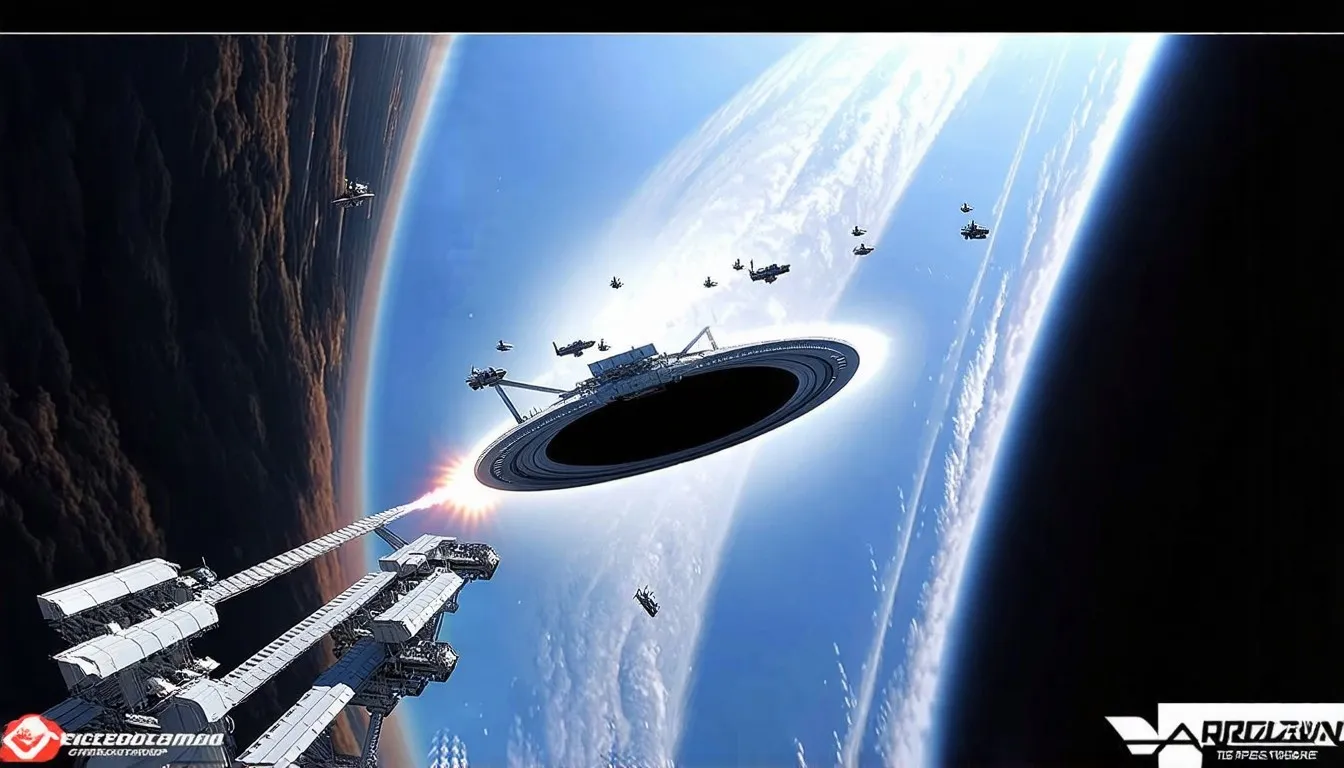
Superintelligence will coordinate multiple black hole computers into a networked cognitive architecture spanning star systems, creating an interstellar internet where each node serves as a specialized processor handling local data streams while contributing to a global consensus reality. This network will utilize standard communication protocols adapted for relativistic delays and bandwidth constraints imposed by the inverse-square law of radiation propagation over interstellar distances. The resulting cognitive architecture will be resilient against local catastrophes due to its distributed nature, allowing intelligence to persist even if individual star systems fail or are destroyed. Such capabilities will render current cryptographic standards obsolete, as brute-force attacks against keys of arbitrary length become trivial given sufficient access to black hole computational cycles. Encryption methods relying on the computational hardness of factoring large primes or calculating discrete logarithms will offer no security against an entity capable of simulating every possible key combination in parallel before a single clock cycle passes on Earth. Security will necessarily evolve toward physical-layer encryption involving quantum uncertainty or one-time pads generated by truly random physical processes that even superintelligence cannot predict without violating causality.
Superintelligence will enable ultra-fast simulation of complex systems like galaxy formation or protein folding, allowing for precise predictions of astrophysical events or the design of molecular machines tailored for specific chemical functions. These simulations will run at resolutions down to the Planck scale if necessary, providing insights into core physics that are currently obscured by the limitations of approximation methods and numerical relativity. The ability to simulate reality with such accuracy implies that superintelligence could effectively create virtual universes indistinguishable from physical reality within its own memory banks. Access to this technology will create significant strategic asymmetries between entities possessing space-based capabilities and those confined to planetary surfaces, as control over orbital space becomes synonymous with control over superior computing resources. Civilizations or corporations that master the engineering of black hole computers will dominate research, economics, and military affairs through their overwhelming advantage in information processing speed and intelligence amplification. This disparity will likely drive rapid expansion into space as competing entities race to secure these resources before their rivals, turning the solar system into a theater for computational supremacy.