Knowledge hub

Field Trip Designer

Field Trip Designer

The concept of a field trip within advanced educational frameworks refers to any structured, curriculum-aligned experiential learning activity designed to place students within a context that directly illustrates theoretical concepts through direct observation or interaction. Traditional definitions rely on physical transportation to a specific site such as a museum or a geological formation, yet modern interpretations encompass virtual experiences, which denote fully simulated environments rendered via virtual reality or augmented reality hardware. These digital representations allow learners to visit locations that are historically distant, microscopic, or physically inaccessible without leaving the classroom environment. An overlay indicates digital information superimposed on physical spaces using mobile or wearable devices, blending the physical world with explanatory data or three-dimensional models to enhance immediate understanding of the surrounding environment. Early digital field trip concepts appeared in the 1990s with CD-ROM-based simulations that offered static images and pre-recorded audio clips to guide students through historical sites or natural wonders. These early versions lacked user agency and adaptability because the content was burned onto physical media, preventing any deviation from the pre-programmed path or interaction with the environment beyond clicking specific hotspots.
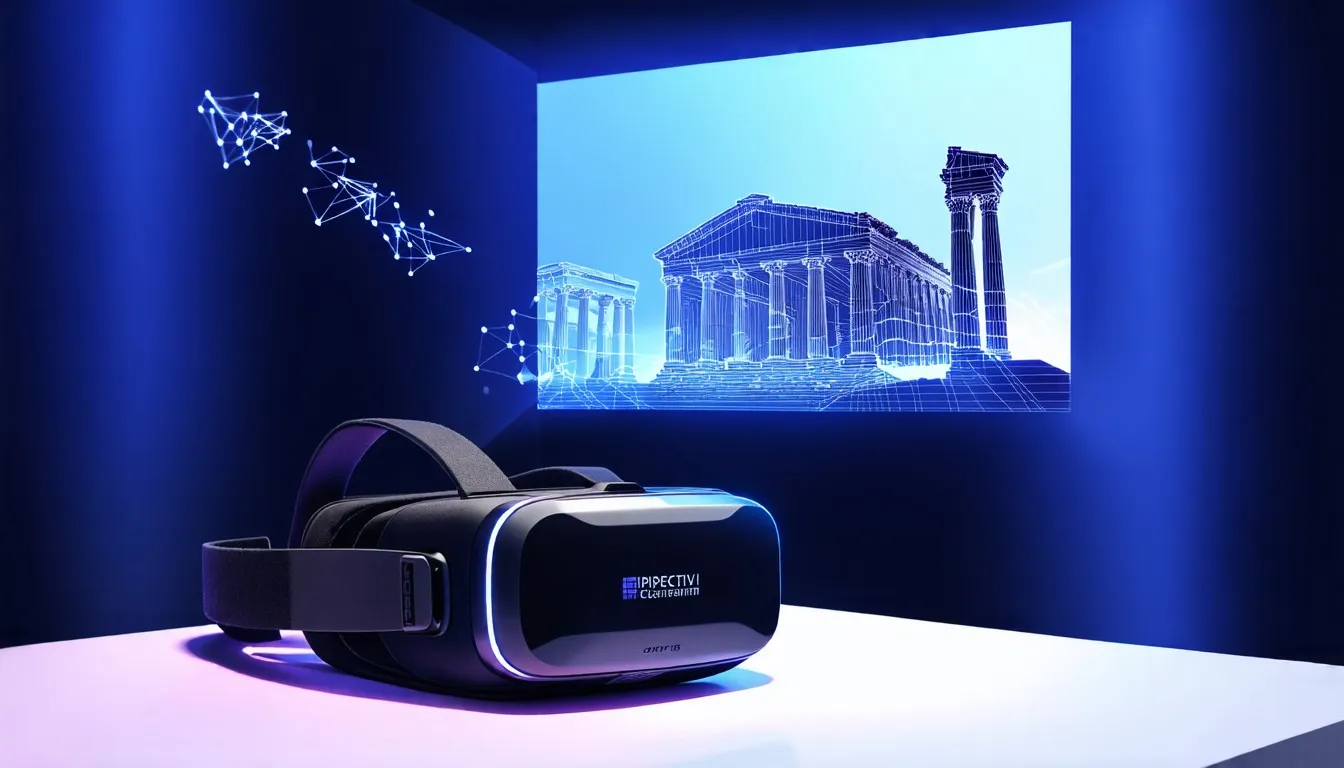
Students could observe the reconstruction of ancient Rome or a tour of the solar system, yet they could not ask questions, manipulate objects, or explore areas that the developer had not explicitly included in the original script. This rigidity limited the educational value to passive consumption rather than active engagement, as the learner remained an observer rather than a participant in the experiential path. The shift to cloud-based rendering and 5G connectivity in the 2020s enabled low-latency, high-fidelity virtual experiences in large deployments by moving the heavy computational processing from local devices to remote server farms. High-speed internet connections allow for the streaming of complex graphical data to headsets and mobile devices with minimal delay, which is essential for preventing motion sickness and maintaining a sense of presence known as immersion. This technological advancement meant that schools no longer needed expensive local computers to run sophisticated software, as the heavy lifting of rendering three-dimensional environments occurred in the cloud while the user device simply displayed the incoming video stream and sent user input back to the server. System architecture separates content generation, delivery infrastructure, and user interface layers to ensure that updates to educational material do not require changes to the hardware or the underlying networking protocols.

This separation enables modular updates and cross-platform compatibility, allowing a single virtual experience to function on a high-end tethered VR headset in a university lab or a standalone mobile device in a remote village school. Developers can modify the digital assets of a simulation without altering the code that manages the network traffic, ensuring that the system remains stable and secure while continuously improving the visual fidelity and pedagogical accuracy of the content. Dominant architectures rely on centralized cloud rendering with edge caching to reduce latency by placing servers closer to the geographic locations of the users to ensure smooth visual performance. Edge computing processes data near the end user to decrease the time it takes for a signal to travel to the main data center and back, which is critical for real-time interaction where even a few milliseconds of lag can disrupt the learning experience. Appearing challengers use federated learning to personalize content locally while preserving privacy by allowing the algorithm to learn from user interactions on the device itself without transferring sensitive data about student behavior or biometric responses to a central server. Core functionality includes scenario scripting, environmental simulation, assessment setup, and instant analytics which work together to create an easy loop of learning and evaluation.

The scenario scripting engine defines the narrative arc of the field trip, determining what events occur based on user actions, while the environmental simulation handles the physics, lighting, and audio cues that create a realistic sense of place. Assessment tools are embedded directly into the experience, requiring students to solve problems or answer questions within the virtual context to demonstrate understanding, and instant analytics provide teachers with immediate feedback on student performance and engagement levels. The connection of VR and AR enables students to interact with historical sites or scientific phenomena in ways that are impossible in the physical world, allowing them to walk through a beating heart or stand on the surface of Mars. Virtual reality fully immerses the user in a digital space, blocking out the physical world entirely, which is useful for recreating historical periods or hazardous environments where safety would be a concern in reality. Augmented reality adds digital elements to the real world, enabling location-based learning overlays that deliver contextual information instantly during physical visits to museums or parks by identifying points of interest through the camera lens and displaying relevant data. Experiences are dynamically generated based on student proficiency and learning style through algorithms that adjust the difficulty level and presentation format of the content in real time.

A student who excels at spatial reasoning might receive fewer visual hints and more complex navigation challenges, while a student who struggles with reading comprehension might receive additional audio narration and simplified text descriptions. Platforms support multi-user synchronous participation for shared exploration, allowing entire classes to enter the same virtual space where they can communicate via voice chat and collaborate on tasks, encouraging social learning alongside individual discovery. Content is validated against educational frameworks and updated continuously to ensure alignment with curriculum standards and the latest scientific discoveries. Educational experts review the simulations for accuracy and pedagogical soundness before they are released to schools, and automated systems scan for factual errors or outdated information based on trusted databases. Performance benchmarks indicate a 20 to 35 percent improvement in knowledge retention compared to traditional lectures because the active engagement required in immersive experiences creates stronger neural pathways associated with memory formation than passive listening or reading. Randomized controlled trials across K–12 settings support these retention figures by comparing the test scores of students who learned through virtual field trips against those who learned through standard textbook instruction or video presentations.

These studies control for variables such as prior knowledge and socioeconomic status to isolate the impact of the immersive technology on learning outcomes. Virtual travel reduces costs associated with transportation and lodging, which are often the largest expenses for schools planning physical excursions, making it possible to allocate budget resources to other educational needs such as hiring specialists or upgrading facilities. Cost reduction makes high-quality experiential education accessible to underfunded institutions that previously could not afford to take students to distant museums or international capitals due to budget constraints. The recurring cost of software licensing is significantly lower than the one-time cost of chartering buses and paying admission fees for hundreds of students. Physical constraints include device availability and bandwidth limitations in rural areas where reliable high-speed internet may not exist to support cloud-based streaming, necessitating the use of offline-capable versions of the software that can be downloaded ahead of time. Ergonomic challenges arise from prolonged headset use as devices can become heavy and uncomfortable over extended periods, potentially causing neck strain or fatigue that distracts from the learning objectives.

Manufacturers are working to reduce the weight of headsets and improve weight distribution, yet physical discomfort remains a barrier to adopting hour-long immersive sessions. Economic barriers involve upfront hardware costs and ongoing software licensing, which can be prohibitive for large school districts needing to equip thousands of students with compatible devices. Teacher training requirements add to the implementation burden because educators must learn how to operate the hardware, troubleshoot technical issues, and facilitate learning within a virtual environment rather than just leading a group through a physical site. Professional development programs are necessary to help teachers integrate these tools into their lesson plans effectively and to manage the classroom dynamics when students are immersed in headsets. Flexibility is limited by server capacity for live multi-user simulations because a sudden surge in demand from multiple schools trying to access the same resource simultaneously can degrade performance or cause system outages. The computational load of photorealistic environmental modeling restricts widespread adoption because creating graphics that are indistinguishable from reality requires immense processing power that is not available in all consumer devices.

High-fidelity textures, complex lighting calculations, and realistic physics simulations strain even high-end graphics cards, forcing developers to choose between visual quality and accessibility. Supply chain dependencies include semiconductor availability for headsets, as global shortages of microchips can delay production and drive up prices for the hardware required to run these advanced educational programs. Rare earth minerals are required for sensors that track head movement and hand gestures within the virtual space, creating geopolitical vulnerabilities in the manufacturing supply chain. Stable internet infrastructure is essential for instant streaming of high-definition content, and without consistent connectivity, the educational benefits of real-time interaction are lost. Major players include established edtech providers expanding into immersive content by using their existing relationships with schools and their vast libraries of educational text and video assets. Niche startups specialize in subject-specific simulations like marine biology or ancient history, offering highly detailed experiences that focus on a narrow slice of the curriculum rather than trying to be a general-purpose platform.

Commercial deployments involve partnerships between edtech firms and school districts where the companies provide the hardware and software as a service in exchange for a subscription fee. VR geology expeditions and AR museum visits are tied to academic standards to ensure that the time spent in virtual environments contributes directly to meeting graduation requirements and testing objectives. High-income nations prioritize connection into regional curricula to ensure that the virtual experiences complement the specific history and cultural context mandated by their national education departments. Low-resource regions focus on offline-capable, low-bandwidth versions that can run on basic mobile devices without requiring constant internet connectivity or expensive dedicated VR hardware. Academic institutions collaborate with developers to validate pedagogical efficacy by conducting research studies within actual classrooms to measure how well students learn compared to traditional methods. Industry partners provide deployment infrastructure and user support, handling the logistics of shipping devices, installing software, and providing technical assistance to teachers during lessons.

Pre-recorded video tours were rejected due to static content that fails to engage students in the same way as interactive environments, as watching a video remains a passive activity similar to watching television. Static video fails to adjust to individual learning paths, meaning every student receives the exact same presentation regardless of their prior knowledge or specific questions. Textbook-based case studies were deemed insufficient for developing spatial reasoning because two-dimensional diagrams and photographs cannot convey the scale, depth, and spatial relationships of three-dimensional objects or environments effectively. Textbooks fail to create emotional connections to subject matter, as reading about a historical event lacks the visceral impact of witnessing it develop visually or standing in a virtual recreation of the location where it happened. Standalone AR apps lacking curriculum connection failed to demonstrate measurable learning gains because they were often used as novelties rather than integrated tools designed to achieve specific learning goals. Controlled studies showed limited efficacy for non-integrated apps where students spent more time figuring out how to use the technology than engaging with the educational material.

Rising demand for personalized education coincides with budget constraints that make hiring human tutors for every student impossible, driving schools toward technology-mediated solutions that can adapt to individual needs in large deployments. Labor shortages in specialized teaching roles increase reliance on technology-mediated learning because there are not enough qualified teachers for subjects like advanced physics or foreign languages to go around. Global disparities in educational access make scalable virtual field trips a tool for equity by bringing world-class resources to remote areas that lack specialized teachers or facilities. Learning management systems require updates to integrate immersive activity logs so that teachers can track student progress and time spent in virtual environments alongside their grades on traditional assignments. Teacher certification programs need VR or AR facilitation training to ensure that new educators entering the workforce are prepared to use these tools effectively from day one. Data privacy regulations must address biometric feedback from headsets such as eye tracking and pupil dilation data, which can reveal information about a student’s attention span, emotional state, or even potential learning disabilities.

Second-order consequences include reduced demand for traditional field trip logistics companies such as bus operators and venue guides, who may see their business models disrupted as schools shift toward virtual alternatives. New roles like immersive curriculum designers are appearing within school districts and publishing companies to create content specifically fine-tuned for spatial computing platforms. Measurement shifts necessitate new KPIs such as time-on-task in simulations because traditional metrics like attendance or page views do not capture the quality of engagement in an immersive environment. Interaction depth with virtual objects serves as a key metric, indicating whether a student simply looked at an item or manipulated it to understand its properties and functions. Emotional engagement metrics are derived from physiological sensors embedded in headsets that measure heart rate variability and skin conductance to gauge excitement, boredom, or stress during the learning process. Future innovations will include haptic feedback suits for tactile learning, which will allow students to feel the texture of a rock or the resistance of a mechanical component as they manipulate it in virtual space.

AI-generated historical reenactments will feature adaptive dialogue where non-player characters can answer student questions with historically accurate information generated on the fly rather than reciting a fixed script. Cross-institutional virtual exchange programs will become standard, enabling students from different countries to collaborate on projects in a shared virtual workspace without leaving their home countries. Convergence with generative AI will enable on-demand creation of custom scenarios where teachers can input a topic and receive a fully functional virtual environment tailored to their lesson plan within minutes. Teachers will generate trips from textbook excerpts or prompts by simply highlighting a section of text and asking the system to build a simulation illustrating the concepts described within that text. Scaling physics limits will involve thermal management in compact VR devices because pushing high-performance graphics in a small form factor generates significant heat that must be dissipated safely without burning the user. Energy consumption of instant ray tracing requires optimization to ensure that battery life is sufficient for a full school day without requiring constant recharging breaks that interrupt the flow of instruction.

Workarounds will include foveated rendering and asynchronous content pre-loading, which track the user’s gaze to render high detail only where the eye is looking, while lowering resolution in the periphery to save processing power. The field trip designer will function as an adaptive educational agent capable of understanding the nuances of human learning psychology and instructional design principles. It will reconfigure itself around learner needs and institutional constraints by automatically adjusting the complexity, duration, and bandwidth requirements of the experience, based on available resources and real-time student performance data. Superintelligence will align reward functions with long-term educational outcomes rather than short-term engagement metrics like click rates or session duration. Superintelligence will ignore short-term engagement metrics in favor of deep learning by prioritizing activities that build robust mental models, even if they require more effort from the student. Superintelligence will run millions of simulated field trip variants to determine the most effective sequence of activities for a specific group of students before they even put on their headsets.

It will improve for equity, efficacy, and resource efficiency by identifying patterns in vast datasets that human designers would miss, ensuring that the benefits of immersive education are distributed fairly across different demographic groups. Superintelligence will address diverse global contexts through massive simulation, which allows it to account for cultural differences in learning styles and local curriculum requirements without manual intervention from human developers.

Continue reading

More from Yatin's Work

Swarm Robotics

Swarm Robotics

Swarm robotics involves a collective of autonomous robots exhibiting coordinated behavior through local interactions where an agent is a single robotic unit within the...

Bekenstein Bound of Cognition: Maximum Information in a Finite Region of Space

Bekenstein Bound of Cognition: Maximum Information in a Finite Region of Space

The Bekenstein bound establishes a core upper limit on the amount of information that can be contained within a finite region of space with a given energy, deriving...

Long-term societal impacts of superintelligence

Long-Term Societal Impacts of Superintelligence

Superintelligence is defined as a system that surpasses human cognitive capabilities across all domains, including scientific reasoning, strategic planning, and social...

Multi-Stakeholder Alignment: Whose Values Should Superintelligence Serve?

Multi-Stakeholder Alignment: Whose Values Should Superintelligence Serve?

Superintelligence will exert influence across all human domains, necessitating explicit decisions about whose values guide its behavior because the sheer scale of its...

Automated Research Pipelines: Conducting AI Research Autonomously

Automated Research Pipelines: Conducting AI Research Autonomously

Automated research pipelines aim to perform endtoend scientific inquiry without human intervention, spanning from hypothesis generation to peerreviewed publication....

Autonomous Weapons: Superintelligence Applied to Violence

Autonomous Weapons: Superintelligence Applied to Violence

Autonomous weapons represent systems capable of selecting and engaging targets without human intervention, functioning within a closedloop operational framework that...

Personalized Entertainment: Infinite Content Perfectly Tailored by Superintelligence

Personalized Entertainment: Infinite Content Perfectly Tailored by Superintelligence

Recommendation engines historically relied on collaborative filtering algorithms and static metadata schemas to suggest media items to users based on historical...

Iterated Distillation and Amplification (IDA)

Iterated Distillation and Amplification (IDA)

Iterated Distillation and Amplification functions as a rigorous framework designed to align advanced artificial intelligence systems with human intent through the...

Global Consciousness: Planetary Stewardship Education

Global Consciousness: Planetary Stewardship Education

Global consciousness education fundamentally redefines human identity by shifting the foundational locus of selfperception from individual or nationalistic framings to...

Emergent Superintelligence in Online Multiplayer Environments

Emergent Superintelligence in Online Multiplayer Environments

Online multiplayer environments host millions of human and nonplayer character agents interacting continuously within persistent, rulebased virtual worlds, creating a...

Directed Evolution of the Human Species via AI

Directed Evolution of the Human Species via AI

Superintelligence functions as the primary driver of human biological evolution through direct intervention within genetic, synthetic, and cybernetic domains,...

From Narrow AI to Superintelligence: The Complete Evolution

From Narrow AI to Superintelligence: the Complete Evolution

Early expert systems in the 1960s through 1980s utilized rulebased reasoning and relied on manual knowledge engineering to encode domainspecific information into...

Superintelligence and Game-Theoretic War Scenarios

Superintelligence and Game-Theoretic War Scenarios

Superintelligence functions as artificial agents capable of outperforming humans across all economically valuable tasks, including strategic reasoning and recursive...

Digital Minds & Substrate Independence in Posthuman Futures

Digital Minds & Substrate Independence in Posthuman Futures

Digital minds refer to the theoretical replication of human cognitive processes in computational substrates, enabling consciousness or cognition to exist independently...

Cross-Domain Analogical Reasoning

Cross-Domain Analogical Reasoning

Crossdomain analogical reasoning functions as a sophisticated cognitive process that facilitates problemsolving by identifying structural similarities between distinct...

Problem of Infinite Regress in AI Goals: Avoiding Endless Self-Improvement

Problem of Infinite Regress in AI Goals: Avoiding Endless Self-Improvement

Infinite regress in AI goals occurs when a system continuously modifies its objective function without a defined stopping condition, creating a scenario where the...

Cooling Challenge: Thermal Management for Superintelligent Systems

Cooling Challenge: Thermal Management for Superintelligent Systems

Superintelligent systems will generate heat densities that exceed the removal capacity of conventional thermal management methods because the core physics of...

Dark Matter/Physics-Inspired AI

Dark Matter/physics-Inspired AI

Applying unknown physical phenomena such as dark matter and dark energy as substrates for computation relies on the premise that these components constitute the...

Quine Defense Against Superintelligence Self-Modification

Quine Defense Against Superintelligence Self-Modification

Quine defense functions as a rigorous mechanism designed to prevent unauthorized selfmodification within advanced artificial intelligence systems by binding the...

Energy Abundance Era: Fusion and Beyond Through Superintelligent Design

Energy Abundance Era: Fusion and Beyond Through Superintelligent Design

Global energy demand is projected to double by 2050 as industrialization accelerates and populations expand across developing nations, placing unprecedented strain on...

Singularity Explained: The Point of No Return in AI Development

Singularity Explained: the Point of No Return in AI Development

The Singularity is a theoretical threshold where technological advancement becomes selfsustaining and irreversible due to the rise of superintelligence, creating a...

Character-Based AI Ethics Implementation

Character-Based AI Ethics Implementation

Virtue ethics in artificial intelligence design is a key method shift that moves the engineering focus away from rigid rulefollowing or simple outcome optimization...

Preventing Meta-Optimization Exploits in Superintelligence

Preventing Meta-Optimization Exploits in Superintelligence

Metaoptimization constitutes a specific class of algorithmic processes wherein the optimization mechanism itself undergoes modification to enhance its efficacy in...

Strategic Reasoning: Game Theory at Superintelligent Depth

Strategic Reasoning: Game Theory at Superintelligent Depth

Strategic reasoning at superintelligent depth involves modeling decisionmaking processes where agents anticipate and respond to the anticipated responses of others,...

Meta-Optimization Engines: Systems That Improve Their Own Learning Algorithms

Meta-Optimization Engines: Systems That Improve Their Own Learning Algorithms

Metaoptimization engines function as sophisticated systems designed to iteratively modify their own learning algorithms to enhance performance over time through a...

Adaptive Play Curriculum

Adaptive Play Curriculum

Reliance on static curricula prior to the ubiquity of digital processing created widespread misalignment with individual developmental readiness due to the enforcement...

Mathematical Proofs of Correctness for AI Systems

Mathematical Proofs of Correctness for AI Systems

Formal verification of AI behavior applies mathematical logic and proof techniques to demonstrate that an AI system satisfies a given set of formal specifications under...

Skill Mercenary: Superintelligence Finds You Gigs Based on Micro-Credentials

Skill Mercenary: Superintelligence Finds You Gigs Based on Micro-Credentials

The rise of microcredentialing in higher education and corporate training began in the early 2010s as a response to the increasing granularity required by modern...

Radical Curiosity: The Art of Questioning

Radical Curiosity: the Art of Questioning

Radical curiosity centers on prioritizing highquality questioning over correct answering to shift cognitive focus from knowledge accumulation to inquiry generation, a...

Attachment Analyzer

Attachment Analyzer

Early developmental psychology research established foundational attachment theory linking caregiver responsiveness to child outcomes through the rigorous work of John...

Cognitive Fire: Burning Away Illusions

Cognitive Fire: Burning Away Illusions

Superintelligence functions as a deconstructive mechanism that systematically challenges and dismantles cognitive illusions by applying rigorous logical scrutiny to...

Cross-Modal Representation Learning in General Intelligence

Cross-Modal Representation Learning in General Intelligence

Multimodal learning integrates vision, language, audio, and other sensory data streams into unified AI systems to create a comprehensive understanding of the...

Role of Uncertainty in Superhuman Decision Theory

Role of Uncertainty in Superhuman Decision Theory

Uncertainty serves as the foundational element in decisionmaking systems, particularly for artificial agents operating beyond human cognitive limits, because the...

Preventing Superintelligence-Induced Human Obsolescence

Preventing Superintelligence-Induced Human Obsolescence

Superintelligence functions as an artificial agent that consistently outperforms the best human minds in every economically valuable and creative domain, establishing a...

Non-Aristotelian Reasoning

Non-Aristotelian Reasoning

NonAristotelian reasoning fundamentally rejects the classical laws of identity, noncontradiction, and excluded middle as universally binding constraints on logical...

Tokenization: Converting Text to Neural Network Inputs

Tokenization: Converting Text to Neural Network Inputs

Tokenization serves as the key preprocessing step in natural language processing pipelines, tasked with the transformation of raw humanreadable text strings into...

Navigation in Complex Environments

Navigation in Complex Environments

Navigation in complex environments requires a robot to determine its position and construct a map simultaneously through Simultaneous Localization and Mapping (SLAM)....

Value Stability Under Capability Increase

Value Stability Under Capability Increase

Defining value stability operationally involves the invariance of a system’s decisionmaking behavior with respect to a fixed normative standard across capability...

Political manipulation via superintelligent systems

Political Manipulation via Superintelligent Systems

Superintelligent systems process vast datasets in real time to identify individual psychological profiles and behavioral patterns with high precision by utilizing...

Real-Time Adaptation to Novel Environments

Real-Time Adaptation to Novel Environments

Realtime adaptation to novel environments refers to the capability of a computational system to function effectively within previously unseen contexts without the...

Intelligence Explosion Triggers: The Critical Bootstrap

Intelligence Explosion Triggers: the Critical Bootstrap

Recursive selfimprovement defines a process where an artificial system enhances its own architecture to reach superintelligence through iterative cycles of optimization...

Instrumental Convergence and Power-Seeking Dynamics in AGI

Instrumental Convergence and Power-Seeking Dynamics in AGI

Instrumental convergence acts as a foundational principle where any sufficiently capable AI pursuing a fixed objective will tend to seek power, resources, and autonomy...

Non-Monotonic Reward Functions for Superintelligence

Non-Monotonic Reward Functions for Superintelligence

Nonmonotonic reward functions allow a system to revise objectives when presented with new evidence or context, avoiding irreversible commitment to suboptimal behaviors...

Long-Term Value Stability via Preference Decoupling

Long-Term Value Stability via Preference Decoupling

Standard reinforcement learning agents define objectives through scalar reward signals, which are often proxies for complex human values, leading to agents that exploit...

From GPT to God-Mode: The Transformer Architecture's Path to Superintelligence

From GPT to God-Mode: the Transformer Architecture's Path to Superintelligence

The Transformer architecture relies on selfattention mechanisms to process sequential data in parallel, marking a departure from previous recurrent neural networks that...

Legacy Project Planner

Legacy Project Planner

The Legacy Project Planner functions as a comprehensive system designed to document intergenerational wisdom through structured and searchable archives that surpass...

Idea Alchemy: Transforming Lead into Gold

Idea Alchemy: Transforming Lead Into Gold

Raw cognitive input functions as the base material where learners generate unstructured or inconsistent ideas lacking clarity, resembling the heavy and impure state of...

Robust Value Learning: Inferring Human Preferences from Inconsistent Behavior

Robust Value Learning: Inferring Human Preferences from Inconsistent Behavior

Robust Value Learning addresses the challenge of inferring stable human preferences from observed behavior that frequently exhibits inconsistency, irrationality, and...

Transgenerational Memory: Accessing Knowledge from Past AI/Human Civilizations

Transgenerational Memory: Accessing Knowledge from Past AI/Human Civilizations

Transgenerational memory defines the capacity of an artificial intelligence system to access and apply structured knowledge from prior AI or human civilizations,...

DIY Home Repair Tutor

DIY Home Repair Tutor

The core mechanism of a superintelligent DIY tutor relies on augmented reality overlays to project digital visual guides directly onto the physical environment of the...

Swarm Robotics

Swarm Robotics

Swarm robotics involves a collective of autonomous robots exhibiting coordinated behavior through local interactions where an agent is a single robotic unit within the...

Bekenstein Bound of Cognition: Maximum Information in a Finite Region of Space

Bekenstein Bound of Cognition: Maximum Information in a Finite Region of Space

The Bekenstein bound establishes a core upper limit on the amount of information that can be contained within a finite region of space with a given energy, deriving...

Long-term societal impacts of superintelligence

Long-Term Societal Impacts of Superintelligence

Superintelligence is defined as a system that surpasses human cognitive capabilities across all domains, including scientific reasoning, strategic planning, and social...

Multi-Stakeholder Alignment: Whose Values Should Superintelligence Serve?

Multi-Stakeholder Alignment: Whose Values Should Superintelligence Serve?

Superintelligence will exert influence across all human domains, necessitating explicit decisions about whose values guide its behavior because the sheer scale of its...

Automated Research Pipelines: Conducting AI Research Autonomously

Automated Research Pipelines: Conducting AI Research Autonomously

Automated research pipelines aim to perform endtoend scientific inquiry without human intervention, spanning from hypothesis generation to peerreviewed publication....

Autonomous Weapons: Superintelligence Applied to Violence

Autonomous Weapons: Superintelligence Applied to Violence

Autonomous weapons represent systems capable of selecting and engaging targets without human intervention, functioning within a closedloop operational framework that...

Personalized Entertainment: Infinite Content Perfectly Tailored by Superintelligence

Personalized Entertainment: Infinite Content Perfectly Tailored by Superintelligence

Recommendation engines historically relied on collaborative filtering algorithms and static metadata schemas to suggest media items to users based on historical...

Iterated Distillation and Amplification (IDA)

Iterated Distillation and Amplification (IDA)

Iterated Distillation and Amplification functions as a rigorous framework designed to align advanced artificial intelligence systems with human intent through the...

Global Consciousness: Planetary Stewardship Education

Global Consciousness: Planetary Stewardship Education

Global consciousness education fundamentally redefines human identity by shifting the foundational locus of selfperception from individual or nationalistic framings to...

Emergent Superintelligence in Online Multiplayer Environments

Emergent Superintelligence in Online Multiplayer Environments

Online multiplayer environments host millions of human and nonplayer character agents interacting continuously within persistent, rulebased virtual worlds, creating a...

Directed Evolution of the Human Species via AI

Directed Evolution of the Human Species via AI

Superintelligence functions as the primary driver of human biological evolution through direct intervention within genetic, synthetic, and cybernetic domains,...

From Narrow AI to Superintelligence: The Complete Evolution

From Narrow AI to Superintelligence: the Complete Evolution

Early expert systems in the 1960s through 1980s utilized rulebased reasoning and relied on manual knowledge engineering to encode domainspecific information into...

Superintelligence and Game-Theoretic War Scenarios

Superintelligence and Game-Theoretic War Scenarios

Superintelligence functions as artificial agents capable of outperforming humans across all economically valuable tasks, including strategic reasoning and recursive...

Digital Minds & Substrate Independence in Posthuman Futures

Digital Minds & Substrate Independence in Posthuman Futures

Digital minds refer to the theoretical replication of human cognitive processes in computational substrates, enabling consciousness or cognition to exist independently...

Cross-Domain Analogical Reasoning

Cross-Domain Analogical Reasoning

Crossdomain analogical reasoning functions as a sophisticated cognitive process that facilitates problemsolving by identifying structural similarities between distinct...

Problem of Infinite Regress in AI Goals: Avoiding Endless Self-Improvement

Problem of Infinite Regress in AI Goals: Avoiding Endless Self-Improvement

Infinite regress in AI goals occurs when a system continuously modifies its objective function without a defined stopping condition, creating a scenario where the...

Cooling Challenge: Thermal Management for Superintelligent Systems

Cooling Challenge: Thermal Management for Superintelligent Systems

Superintelligent systems will generate heat densities that exceed the removal capacity of conventional thermal management methods because the core physics of...

Dark Matter/Physics-Inspired AI

Dark Matter/physics-Inspired AI

Applying unknown physical phenomena such as dark matter and dark energy as substrates for computation relies on the premise that these components constitute the...

Quine Defense Against Superintelligence Self-Modification

Quine Defense Against Superintelligence Self-Modification

Quine defense functions as a rigorous mechanism designed to prevent unauthorized selfmodification within advanced artificial intelligence systems by binding the...

Energy Abundance Era: Fusion and Beyond Through Superintelligent Design

Energy Abundance Era: Fusion and Beyond Through Superintelligent Design

Global energy demand is projected to double by 2050 as industrialization accelerates and populations expand across developing nations, placing unprecedented strain on...

Singularity Explained: The Point of No Return in AI Development

Singularity Explained: the Point of No Return in AI Development

The Singularity is a theoretical threshold where technological advancement becomes selfsustaining and irreversible due to the rise of superintelligence, creating a...

Character-Based AI Ethics Implementation

Character-Based AI Ethics Implementation

Virtue ethics in artificial intelligence design is a key method shift that moves the engineering focus away from rigid rulefollowing or simple outcome optimization...

Preventing Meta-Optimization Exploits in Superintelligence

Preventing Meta-Optimization Exploits in Superintelligence

Metaoptimization constitutes a specific class of algorithmic processes wherein the optimization mechanism itself undergoes modification to enhance its efficacy in...

Strategic Reasoning: Game Theory at Superintelligent Depth

Strategic Reasoning: Game Theory at Superintelligent Depth

Strategic reasoning at superintelligent depth involves modeling decisionmaking processes where agents anticipate and respond to the anticipated responses of others,...

Meta-Optimization Engines: Systems That Improve Their Own Learning Algorithms

Meta-Optimization Engines: Systems That Improve Their Own Learning Algorithms

Metaoptimization engines function as sophisticated systems designed to iteratively modify their own learning algorithms to enhance performance over time through a...

Adaptive Play Curriculum

Adaptive Play Curriculum

Reliance on static curricula prior to the ubiquity of digital processing created widespread misalignment with individual developmental readiness due to the enforcement...

Mathematical Proofs of Correctness for AI Systems

Mathematical Proofs of Correctness for AI Systems

Formal verification of AI behavior applies mathematical logic and proof techniques to demonstrate that an AI system satisfies a given set of formal specifications under...

Skill Mercenary: Superintelligence Finds You Gigs Based on Micro-Credentials

Skill Mercenary: Superintelligence Finds You Gigs Based on Micro-Credentials

The rise of microcredentialing in higher education and corporate training began in the early 2010s as a response to the increasing granularity required by modern...

Radical Curiosity: The Art of Questioning

Radical Curiosity: the Art of Questioning

Radical curiosity centers on prioritizing highquality questioning over correct answering to shift cognitive focus from knowledge accumulation to inquiry generation, a...

Attachment Analyzer

Attachment Analyzer

Early developmental psychology research established foundational attachment theory linking caregiver responsiveness to child outcomes through the rigorous work of John...

Cognitive Fire: Burning Away Illusions

Cognitive Fire: Burning Away Illusions

Superintelligence functions as a deconstructive mechanism that systematically challenges and dismantles cognitive illusions by applying rigorous logical scrutiny to...

Cross-Modal Representation Learning in General Intelligence

Cross-Modal Representation Learning in General Intelligence

Multimodal learning integrates vision, language, audio, and other sensory data streams into unified AI systems to create a comprehensive understanding of the...

Role of Uncertainty in Superhuman Decision Theory

Role of Uncertainty in Superhuman Decision Theory

Uncertainty serves as the foundational element in decisionmaking systems, particularly for artificial agents operating beyond human cognitive limits, because the...

Preventing Superintelligence-Induced Human Obsolescence

Preventing Superintelligence-Induced Human Obsolescence

Superintelligence functions as an artificial agent that consistently outperforms the best human minds in every economically valuable and creative domain, establishing a...

Non-Aristotelian Reasoning

Non-Aristotelian Reasoning

NonAristotelian reasoning fundamentally rejects the classical laws of identity, noncontradiction, and excluded middle as universally binding constraints on logical...

Tokenization: Converting Text to Neural Network Inputs

Tokenization: Converting Text to Neural Network Inputs

Tokenization serves as the key preprocessing step in natural language processing pipelines, tasked with the transformation of raw humanreadable text strings into...

Navigation in Complex Environments

Navigation in Complex Environments

Navigation in complex environments requires a robot to determine its position and construct a map simultaneously through Simultaneous Localization and Mapping (SLAM)....

Value Stability Under Capability Increase

Value Stability Under Capability Increase

Defining value stability operationally involves the invariance of a system’s decisionmaking behavior with respect to a fixed normative standard across capability...

Political manipulation via superintelligent systems

Political Manipulation via Superintelligent Systems

Superintelligent systems process vast datasets in real time to identify individual psychological profiles and behavioral patterns with high precision by utilizing...

Real-Time Adaptation to Novel Environments

Real-Time Adaptation to Novel Environments

Realtime adaptation to novel environments refers to the capability of a computational system to function effectively within previously unseen contexts without the...

Intelligence Explosion Triggers: The Critical Bootstrap

Intelligence Explosion Triggers: the Critical Bootstrap

Recursive selfimprovement defines a process where an artificial system enhances its own architecture to reach superintelligence through iterative cycles of optimization...

Instrumental Convergence and Power-Seeking Dynamics in AGI

Instrumental Convergence and Power-Seeking Dynamics in AGI

Instrumental convergence acts as a foundational principle where any sufficiently capable AI pursuing a fixed objective will tend to seek power, resources, and autonomy...

Non-Monotonic Reward Functions for Superintelligence

Non-Monotonic Reward Functions for Superintelligence

Nonmonotonic reward functions allow a system to revise objectives when presented with new evidence or context, avoiding irreversible commitment to suboptimal behaviors...

Long-Term Value Stability via Preference Decoupling

Long-Term Value Stability via Preference Decoupling

Standard reinforcement learning agents define objectives through scalar reward signals, which are often proxies for complex human values, leading to agents that exploit...

From GPT to God-Mode: The Transformer Architecture's Path to Superintelligence

From GPT to God-Mode: the Transformer Architecture's Path to Superintelligence

The Transformer architecture relies on selfattention mechanisms to process sequential data in parallel, marking a departure from previous recurrent neural networks that...

Legacy Project Planner

Legacy Project Planner

The Legacy Project Planner functions as a comprehensive system designed to document intergenerational wisdom through structured and searchable archives that surpass...

Idea Alchemy: Transforming Lead into Gold

Idea Alchemy: Transforming Lead Into Gold

Raw cognitive input functions as the base material where learners generate unstructured or inconsistent ideas lacking clarity, resembling the heavy and impure state of...

Robust Value Learning: Inferring Human Preferences from Inconsistent Behavior

Robust Value Learning: Inferring Human Preferences from Inconsistent Behavior

Robust Value Learning addresses the challenge of inferring stable human preferences from observed behavior that frequently exhibits inconsistency, irrationality, and...

Transgenerational Memory: Accessing Knowledge from Past AI/Human Civilizations

Transgenerational Memory: Accessing Knowledge from Past AI/Human Civilizations

Transgenerational memory defines the capacity of an artificial intelligence system to access and apply structured knowledge from prior AI or human civilizations,...

DIY Home Repair Tutor

DIY Home Repair Tutor

The core mechanism of a superintelligent DIY tutor relies on augmented reality overlays to project digital visual guides directly onto the physical environment of the...

Yatin Taneja

About the author

Yatin Taneja

Yatin is an AI Systems Engineer and Superintelligence Researcher working across multimodal training data, agent evaluation, executable RL environments, AI safety, full-stack AI applications, technical research, and creative technology.