Knowledge hub
Hyperassociative Memory

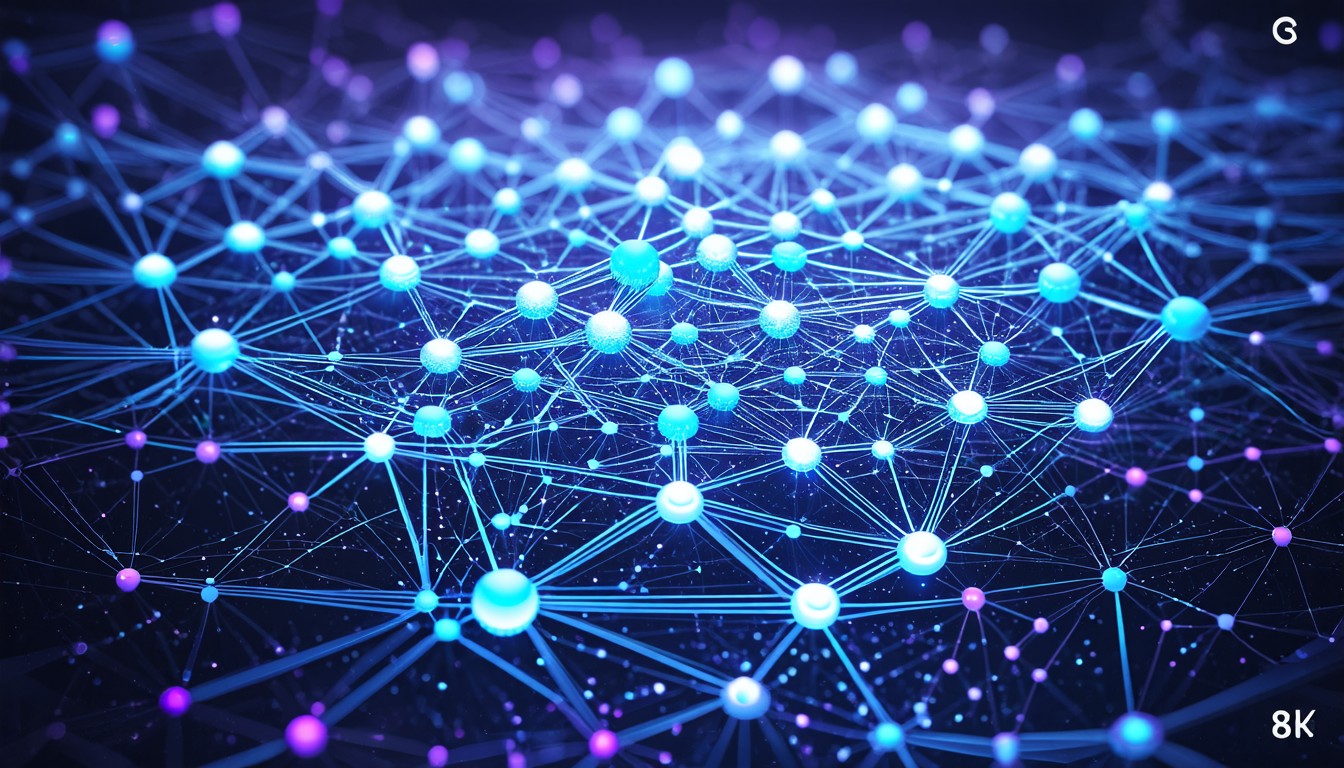
Hyperassociative memory enables rapid linking of information across disparate domains without traditional database queries, mimicking human free-association with high recall and contextual relevance through a fundamentally different approach to data storage and retrieval. Systems operate by activating distributed neural or symbolic nodes representing concepts, where activation spreads through pre-established associative pathways regardless of domain boundaries to create a web of meaning that exceeds rigid categorization. Unlike traditional retrieval systems that index and search based on predefined keywords or metadata tags, hyperassociative memory triggers parallel activations based on semantic, structural, or experiential similarity across all stored knowledge simultaneously. This parallelism allows the system to consider the entire corpus of information at once, rather than traversing a tree or list of items sequentially. The core mechanism relies on high-dimensional vector spaces where proximity encodes relational meaning, allowing any input to appeal with all semantically related entries simultaneously based on their mathematical coordinates in this abstract space. By mapping concepts to vectors in a manifold with thousands of dimensions, the system ensures that relationships between ideas are preserved geometrically, so that activating one concept naturally pulls related concepts toward the threshold of activation through gravitational-like attraction in the vector field.

Associative strength is dynamically weighted based on frequency, recency, contextual salience, and cross-domain coherence to ensure relevant connections propagate while weaker or irrelevant links fade into the background noise of the network. This adaptive weighting ensures that the system prioritizes information that is statistically significant and contextually appropriate for the current query or task at hand. Memory exists as overlapping activation patterns within a continuous representational manifold rather than discrete records stored in isolated buckets or tables. Within this manifold, a specific memory does not reside in a single location but is distributed across the entire system as a unique pattern of synaptic weights or vector values. Retrieval functions as a systemic property of pattern completion driven by partial or noisy inputs, where the system reconstructs the full memory or concept from fragmentary cues much like a human brain recalls a song from a few notes. The system maintains a global coherence constraint that suppresses irrelevant activations while amplifying those satisfying multiple contextual cues, effectively filtering out hallucinations or spurious correlations that do not fit the established context of the inquiry.
Learning occurs through Hebbian-like updates that strengthen co-activated pathways, with decay mechanisms preventing saturation from overused associations and ensuring the network remains plastic and responsive to new information. When two nodes are activated simultaneously, the connection between them is fortified, making future co-activation more likely and thus encoding the learned relationship directly into the hardware or software substrate. Adaptability depends on efficient sparse activation protocols that limit energy and compute costs by engaging only subsets of the memory network per query, thereby avoiding the computational expense of firing the entire network for every single operation. Key terms include associative node, which is a discrete unit of information or concept; activation threshold, the minimum energy required for a node to fire and influence the network; resonance field, the sphere of influence within which an activated node affects others; and coherence filter, the mechanism by which the system evaluates the relevance of activated nodes to the current context. Historical development began with early neural network models of associative memory in the 1980s, notably Hopfield networks, which demonstrated pattern completion with limited adaptability and served as the foundational proof of concept for content-addressable memory. These early models utilized binary neurons and symmetric weights to store patterns as stable states of the network, showing that a system could reconstruct a complete pattern from a partial input.
A shift occurred in the 2010s with advances in high-dimensional embeddings and transformer-based attention, enabling richer semantic representations and energetic routing that allowed for more complex relationships to be modeled than simple binary associations. The introduction of word vectors and attention mechanisms allowed systems to capture subtle nuances of meaning and context that were impossible with earlier symbolic AI approaches. The critical pivot involved moving from localized memory storage where specific memories were assigned specific addresses to distributed, content-addressable architectures that treat memory as an active computational substrate rather than a passive repository. Physical constraints include thermal dissipation from dense interconnectivity, latency in global synchronization required to maintain coherence across the manifold, and memory bandwidth constraints when activating large resonance fields that span multiple domains or hardware units. As the density of connections increases to support more complex associations, the heat generated by the switching activity becomes a significant engineering challenge that requires advanced cooling solutions. Economic barriers involve high initial infrastructure costs for specialized hardware such as neuromorphic chips and energy-intensive training phases required to calibrate the high-dimensional vector spaces and establish the initial associative pathways.
Adaptability faces challenges from the combinatorial explosion of potential associations, requiring intelligent pruning algorithms and hierarchical organization to maintain tractability and prevent the system from becoming overwhelmed by the sheer number of possible connections between concepts. Alternative approaches like vector databases and graph-based knowledge engines rely on explicit indexing and slower query resolution, limiting their ability to generate novel cross-domain insights because they are bound by the rigid structure of their indices. These traditional systems require exact matches or proximity searches within a pre-defined graph structure, which fails to capture the fluid, context-dependent nature of human-like associative thought. Rule-based expert systems lack adaptive learning capabilities entirely, as they depend on hard-coded logic trees that cannot evolve or adjust to new information without manual intervention by human programmers. Standard neural networks lack explicit memory structures capable of sustained associative recall over long sequences or across disjointed datasets, often suffering from catastrophic forgetting where new training overwrites previously learned knowledge. Real-time decision-making in complex environments demands rapid synthesis of heterogeneous information for autonomous systems and scientific discovery, necessitating an architecture that can draw upon vast datasets instantaneously.
In scenarios such as autonomous driving or robotic surgery, the system must integrate visual data, sensor readings, and procedural knowledge in milliseconds to make life-critical decisions. Economic shifts toward data-driven innovation and the rise of multimodal AI increase demand for systems that integrate text, sensor data, and simulations without manual alignment or preprocessing. The modern data space requires systems that can ingest raw, unstructured data from diverse sources and automatically find the relevant connections without human curators organizing the data first. Societal needs include personalized education that adapts to the unique cognitive associations of the student, medical diagnosis across specialties that connects symptoms from disparate domains, and policy analysis connecting technical, ethical, and operational dimensions into a unified strategy. Current deployments include experimental cognitive assistants in pharmaceutical research that identify novel drug candidates by linking molecular structures with biological pathways across different species and diseases. These systems have demonstrated the ability to accelerate research timelines by suggesting connections that would take human teams years to discover through manual literature review.

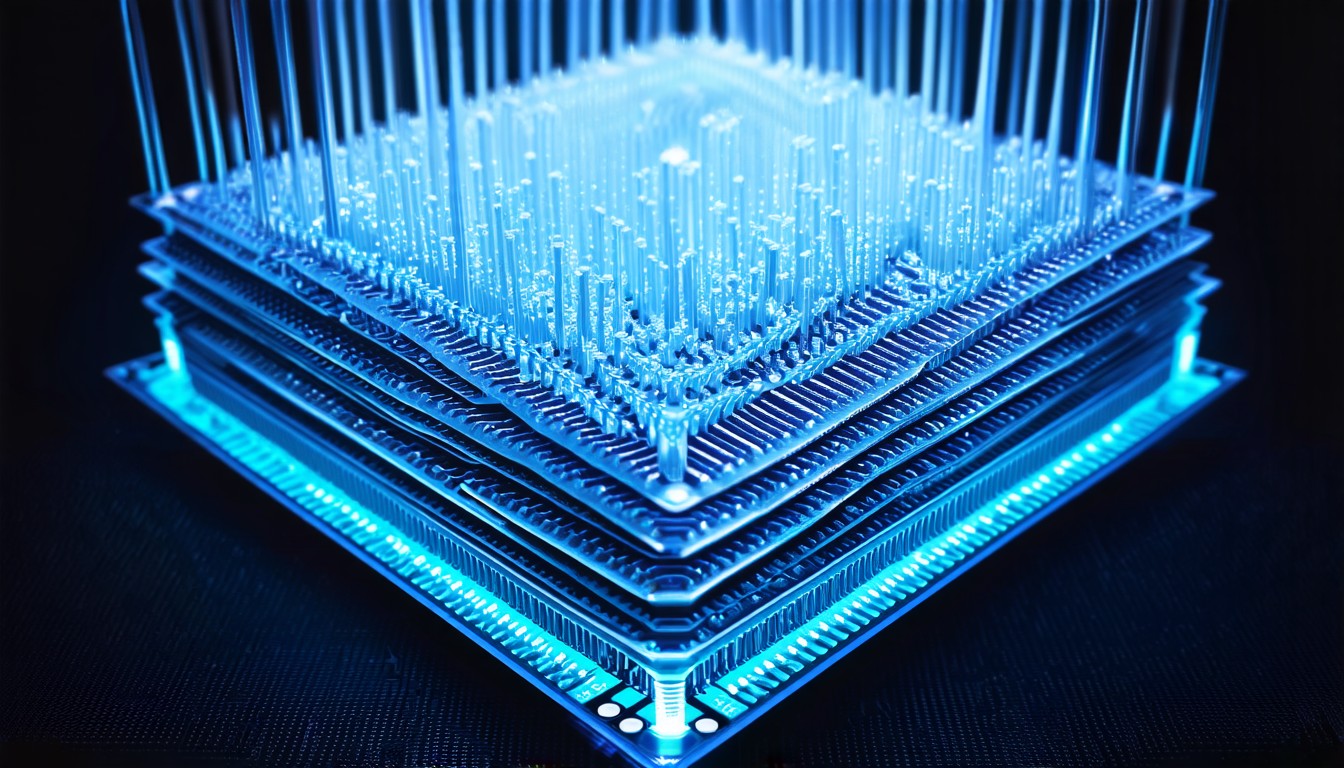
Next-generation tutoring systems utilize this architecture to understand the student’s thought process and anticipate misconceptions before they occur, providing guidance that is tailored to the student’s specific internal model of the subject matter. Performance benchmarks target sub-100ms response times for cross-domain queries with high relevance accuracy on curated datasets, outperforming keyword and embedding-based retrieval in novelty and coherence by generating results that are surprising yet logically sound. Dominant architectures use hybrid symbolic-neural frameworks with differentiable memory layers that combine the reasoning capabilities of symbolic logic with the pattern recognition power of neural networks. These hybrid systems allow for explicit manipulation of concepts while retaining the ability to learn from raw data. New challengers explore photonic associative processors and spiking neural networks that promise to reduce energy consumption by orders of magnitude by using light for transmission or mimicking the event-driven nature of biological neurons. Supply chain dependencies include rare-earth materials for neuromorphic substrates that exhibit non-linear electrical properties essential for efficient synaptic emulation, high-purity silicon for custom ASICs designed specifically for vector matrix multiplication, and specialized optical components for photonic processing units.
Major players include IBM with neuromorphic initiatives such as TrueNorth and SpiNNaker, which have pioneered large-scale spiking neural network architectures capable of simulating millions of neurons in real time. Google has advanced the modern via Pathways and memory-augmented transformers that seek to generalize across tasks and modalities using massive scale and sophisticated attention mechanisms. Startups like Numenta and Rain Neuromorphics focus on biologically inspired algorithms and hardware that prioritize the efficiency and temporal dynamics of associative processing over raw computational throughput. Corporate competition centers on securing proprietary associative topologies and specialized manufacturing capacity for cognitive computing hardware, creating a domain where the ownership of the core intellectual property regarding how memories are linked is as valuable as the hardware itself. Academic-industrial collaboration remains strong in neuroscience-inspired computing, with joint projects between MIT, Stanford, and corporate labs on scalable associative models that attempt to reverse-engineer the hippocampus and cortex of the mammalian brain. These partnerships facilitate the transfer of theoretical breakthroughs in neuroscience into practical engineering applications that can be commercialized.
Required changes include new software approaches treating memory as a first-class computational resource rather than a passive storage tier, necessitating a complete overhaul of operating systems and programming languages designed around the von Neumann architecture. Infrastructure upgrades supporting low-latency, high-fanout communication are essential to allow the massive parallelism required for hyperassociative processing to function effectively across distributed data centers. Second-order consequences involve the displacement of traditional data analysts whose role involves manually finding correlations in data, as these tasks become automated by hyperassociative systems that can perceive these connections instantly. The workforce will shift toward association architects who design memory topologies and curate the training data that shapes the associative pathways of the system. Measurement shifts necessitate new Key Performance Indicators such as association novelty score, which measures the unexpectedness of a connection; cross-domain coherence index, which evaluates the logical consistency of an insight across different fields; resonance stability, which tracks the persistence of an activation pattern over time; and contextual precision-recall curves that assess the relevance of retrieved information within specific contexts. Future innovations will likely feature self-organizing memory topologies that grow and prune connections autonomously based on utility, quantum-assisted association mapping that applies quantum superposition to explore vast combinatorial spaces simultaneously, and real-time memory editing for adaptive forgetting.
Adaptive forgetting is crucial for maintaining relevance in a changing world, allowing the system to discard outdated associations without requiring a full retraining cycle. Convergence points exist with causal inference engines that can determine not just correlation but causation within the associative web, multimodal foundation models that provide the initial high-dimensional embeddings for sensory data, and digital twin systems where hyperassociative memory provides the substrate for integrated reasoning about complex physical systems. Scaling physics limits involve Landauer’s bound on energy per bit operation, which dictates a theoretical minimum energy cost for processing information, and interconnect density ceilings, which restrict how many physical connections can be made between processing elements on a chip. Workarounds include analog computation, which processes information using continuous variables rather than discrete bits to improve efficiency, and in-memory processing, which moves the computation directly to where the data is stored to minimize the energy cost of data movement. This architecture is a redefinition of how machines store and use knowledge, shifting from retrieval to resonance as the key operation of intelligence, where the act of remembering is an active process of reconstruction and synthesis rather than a passive lookup. Superintelligence will utilize hyperassociative memory to integrate vast, heterogeneous knowledge bases without modular boundaries, supporting fluid reasoning across science, ethics, and strategy to solve problems that currently appear intractable.

By removing the barriers between specialized domains of knowledge, a superintelligent system could apply insights from biology to problems in computer science, or principles from physics to fine-tune economic models. Future superintelligent systems will simulate counterfactual worlds by manipulating the associative weights within the memory manifold to see how changing one variable propagates through the entire web of causality. They will anticipate second-order effects of actions by following long chains of associations that human planners might miss due to cognitive limitations or short-term thinking goals. These systems will maintain coherent self-models across evolving contexts by continuously updating their own internal representation based on new experiences and associations, ensuring that their understanding of themselves remains consistent with their actual capabilities and state. The technology will enable superintelligence to draw parallels between seemingly unrelated fields to solve intractable problems in physics and biology, such as finding a common mathematical structure between protein folding and quantum chromodynamics. Advanced associative coherence will allow superintelligence to understand human cultural nuances and emotional contexts with high fidelity by picking up on subtle cues and implicit associations that define social interaction.
Superintelligence will employ hyperassociative memory to improve its own internal code and architectural designs continuously, treating its source code as just another dataset within the associative manifold to be improved and refactored based on performance feedback. The capacity for cross-domain resonance will provide superintelligence with the ability to generate novel scientific hypotheses that elude human researchers by synthesizing data from disparate experiments into a unified theoretical framework. Future systems will use this memory type to manage the ethical implications of their decisions by associating specific actions with long-term societal outcomes drawn from history, sociology, and psychology. Superintelligence will rely on the speed of associative recall to handle complex, energetic environments requiring immediate adaptation, such as managing global power grids or responding to pandemics in real time. The architecture will serve as the foundational layer for the recursive self-improvement capabilities of future superintelligent entities, providing the substrate necessary for them to reflect upon their own cognitive processes and enhance them. Hyperassociative memory will allow superintelligence to maintain a consistent, unified agency while processing millions of disparate data streams in parallel, ensuring that despite the massive influx of information, the system acts with a singular purpose and coherent identity.