Knowledge hub

Autonomous Exploration

Autonomous Exploration

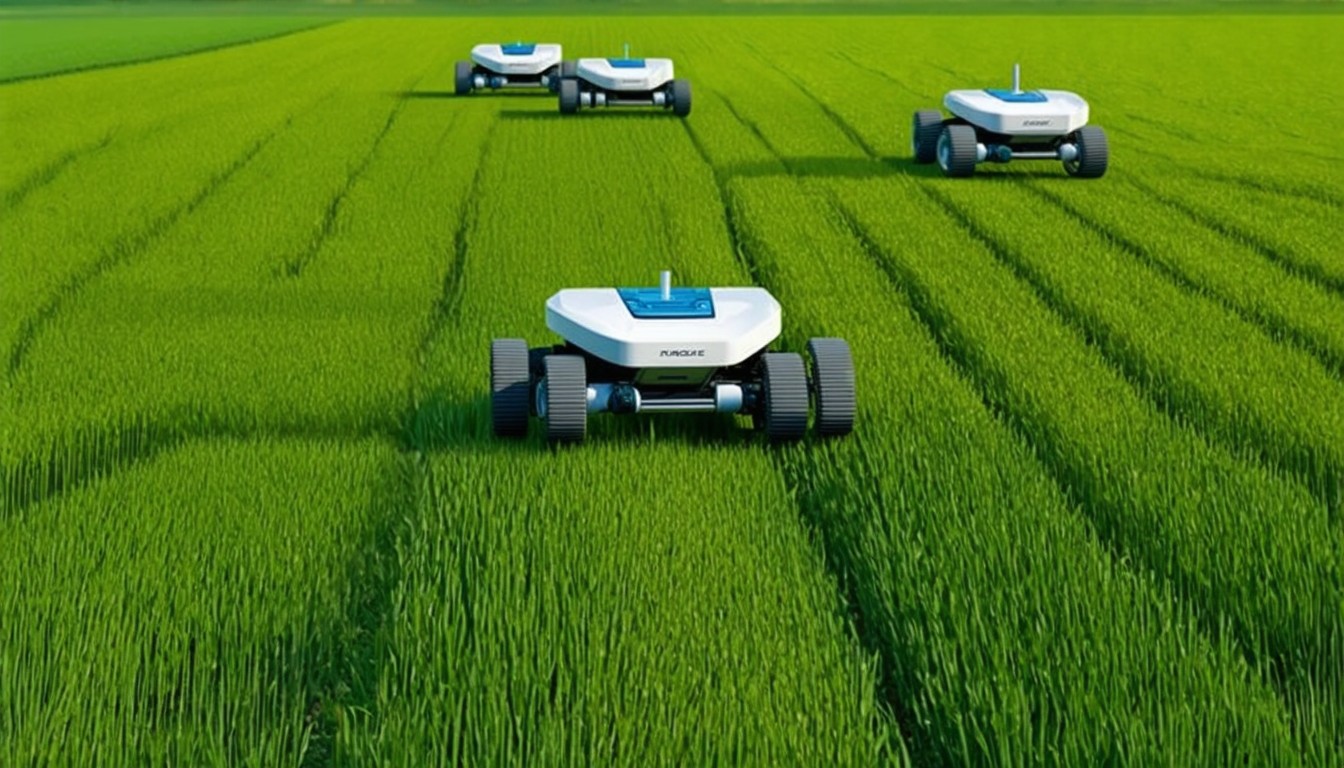
Autonomous exploration constitutes a technical discipline where robotic systems handle unknown environments to acquire data without human guidance, relying on closed-loop control systems to process sensor inputs and execute movement decisions. The core mechanism involves a continuous cycle where sensors perceive the immediate surroundings, internal models estimate the state of the world, and utility functions evaluate potential actions to determine the optimal next step based on expected information gain versus energy expenditure. This process requires balancing the drive to explore new areas against the need to exploit known safe regions to maximize information acquisition while minimizing operational risks such as energy depletion or physical damage. Decision-making frameworks depend heavily on real-time sensor data fusion from cameras, LiDAR, and inertial measurement units to construct a coherent understanding of the environment, allowing the system to identify gaps in current knowledge and prioritize actions that fill those gaps effectively. The objective function guiding these systems quantifies the value of potential actions by weighing the reduction in uncertainty against the cost of traversal, ensuring that the explorer does not waste resources on areas with low information yield or high probability of failure. True autonomy in this context implies the absence of remote piloting or teleoperation, meaning the system must possess the computational capacity to perform all perception, planning, and control functions onboard while operating in communication-denied environments.

Probabilistic methods serve as the mathematical foundation for representing uncertainty in unobserved spaces, allowing systems to reason about environments they have not yet visited. Gaussian processes provide a rigorous statistical framework for modeling spatial phenomena, enabling the system to predict the value of unvisited locations and quantify the uncertainty of those predictions through variance estimates derived from a covariance kernel function. Occupancy grids offer an alternative discretized approach where the environment is divided into cells, each holding a probability of being occupied or empty, which facilitates efficient updates as new sensor data arrives and allows for straightforward connection into path planning algorithms. These probabilistic models enable the calculation of information-theoretic metrics such as entropy and mutual information, which guide the selection of the next best view by identifying locations that are expected to maximize the reduction in global map uncertainty. Path planning algorithms integrate these uncertainty maps with safety constraints to generate progression that avoid unstable terrain or hazardous regions while adhering to strict energy budgets and kinematic limits imposed by the physical platform. The system must continuously update its belief state as new data arrives, refining the environmental model and adjusting its exploration strategy to reflect the latest understanding of the terrain and obstacles.

Early autonomous systems developed in the 1990s relied on pre-programmed waypoints and simple reactive behaviors that lacked the sophistication to handle complex or dynamic environments effectively. The transition from teleoperation to onboard autonomy accelerated significantly during the 2010s due to advancements in embedded GPU computing and high-density inertial measurement units, which allowed for real-time processing of high-fidelity sensor data and complex navigation algorithms. Modern systems now utilize simultaneous localization and mapping techniques to achieve localization accuracy within one to three centimeters in structured environments, providing a stable foundation for autonomous decision-making and precise maneuvering in tight spaces. Despite these advancements, physical constraints continue to limit mission capabilities, as current lithium-ion battery technology offers energy densities of approximately 260 watt-hours per kilogram, restricting the operational duration of small aerial drones to twenty to forty minutes per charge and ground robots to two to four hours depending on terrain difficulty. Actuator torque limits and material durability also impose hard boundaries on performance, particularly in extreme conditions involving high temperatures, corrosive substances, or high-impact collisions with debris. Hardware dependencies create significant vulnerabilities in the supply chain for autonomous exploration systems, requiring access to rare-earth magnets for motors, lithium for batteries, and specialized semiconductors for onboard computation.

Material science limitations necessitate the use of corrosion-resistant alloys for marine applications and radiation-hardened electronics for nuclear environments, adding complexity and cost to the manufacturing process. Economic constraints involve the high cost of hardware procurement, maintenance logistics, and deployment flexibility, especially for single-use missions or operations in high-risk areas where the probability of total platform loss is substantial. Adaptability remains limited by the computational load of real-time planning algorithms and the communication bandwidth available in remote areas, forcing designers to make trade-offs between sensor resolution, processing speed, and transmission range. Early alternatives such as centralized control systems where a base station computed paths were rejected due to latency issues and single-point failure risks, while swarm-based exploration faced rejection for high-stakes missions due to coordination complexity and reduced individual reliability of the units. Rising frequencies of natural disasters combined with aging infrastructure inspections have created a demand for reliable, rapid, and safe data collection solutions that human teams cannot provide safely or efficiently. In disaster zones, autonomous explorers currently map structural integrity, locate survivors, and identify hazards such as gas leaks or unstable walls without endangering human responders.

Robotic dogs deployed in collapsed buildings and underwater gliders used in ocean surveys demonstrate the practical utility of these systems in gathering critical data in inaccessible environments. Drones routinely perform mine inspections, reducing the risk to human miners by entering volatile shafts to assess air quality and structural stability. Benchmarks for these systems include mapping coverage rate in square meters per minute, localization error in centimeters, mission success rate, and mean time between failures, providing quantitative metrics to evaluate performance and drive iterative improvements in hardware and software design. Dominant software architectures currently utilize hierarchical planners consisting of high-level task decomposition, mid-level path optimization, and low-level motor control to manage the complexity of autonomous operation. This hierarchical approach separates the reasoning about long-term goals from the immediate mechanics of movement, allowing the system to replan high-level strategies without interrupting low-level stability control. End-to-end neural planners trained via reinforcement learning challenge these traditional methods by learning policies directly from raw sensor data, promising greater adaptability to novel scenarios.

These neural approaches lack interpretability and tend to fail in edge cases that fall outside their training distributions, making them unsuitable for safety-critical applications without extensive verification. The industry relies on sensor fusion capabilities to combine data from diverse modalities such as vision, depth sensing, and thermal imaging, creating a robust perception pipeline that can operate under varying lighting and weather conditions. Major players in the hardware sector include companies like Boston Dynamics that produce platforms with high strength and agility, while private aerospace firms focus on space-grade autonomy capable of operating in the vacuum of space or on planetary surfaces. Startups specializing in artificial intelligence focus on reconnaissance software stacks that enable rapid processing of tactical data. Competitive positioning in this market depends heavily on the modularity of the software stack, allowing for rapid connection of new sensors or algorithms, and field-proven reliability in unstructured environments where theoretical performance often degrades rapidly. Geopolitical dimensions influence the industry through export controls on high-precision navigation systems and restrictions on the sale of autonomous systems for use in conflict zones, shaping the global domain of technology development and deployment.

Academic-industrial collaboration drives innovation through industry-sponsored robotics challenges and joint laboratories established between universities and defense contractors. These partnerships facilitate the transfer of theoretical algorithms into durable commercial products capable of withstanding real-world rigors. Required software changes moving forward include the development of standardized simulation environments for training reinforcement learning agents, middleware for abstracting sensor inputs to allow hardware portability, and formal verification tools for safety-critical decision-making processes. Regulatory shifts necessitate certification frameworks for autonomous decision-making in public spaces and clear legal guidelines regarding liability assignment for errors caused by system malfunctions or algorithmic limitations. Infrastructure adaptations involve the deployment of mesh communication networks in disaster zones to maintain connectivity between agents and the installation of charging stations for long-duration missions requiring persistent presence. The industry anticipates a reduced need for human inspectors in dangerous jobs and a corresponding rise in data-as-a-service models where companies sell environmental monitoring data rather than the hardware itself.

New business models include subscription-based exploration services where clients pay for ongoing access to real-time data streams and pay-per-map contracts for industrial sites requiring periodic inspections. Measurement metrics are shifting away from traditional key performance indicators like speed or distance traveled toward information gain per joule of energy consumed, map completeness percentages, and the rate of uncertainty reduction over time. These new metrics align system performance more closely with the ultimate goal of acquiring useful knowledge rather than simply traversing physical space. Future innovations involve the setup of semantic understanding to identify specific objects of interest rather than just mapping geometry, allowing systems to focus on task-relevant information. Adaptive sampling based on task relevance will enable explorers to collect data that maximizes improvement in specific performance metrics rather than generic novelty seeking. Lifelong learning across missions will allow systems to retain knowledge from previous deployments to improve efficiency without human reprogramming, creating a cumulative intelligence base that grows with every operation.

Convergence with simultaneous localization and mapping, computer vision, and edge artificial intelligence enables tighter sensor-decision loops that reduce latency between observation and reaction. Scaling physics limits presents persistent challenges, as battery energy density caps impose hard limits on mission duration regardless of algorithmic efficiency. Increased sensor noise often accompanies miniaturization, degrading the quality of data collected by smaller platforms, while actuator precision tends to decline under heavy loads or over extended periods of wear. Workarounds for these limitations include hybrid power systems combining solar panels with batteries for extended endurance, multi-agent coordination to distribute sensing loads across a team, and predictive maintenance algorithms that anticipate hardware failures to extend operational life. Autonomous exploration must prioritize task-relevant information over raw coverage area, aligning utility functions with specific mission objectives to avoid wasting resources on irrelevant data collection. Calibrating systems for superintelligence requires defining bounded utility functions to prevent runaway optimization processes that might pursue goals at the expense of safety or ethical constraints.

Superintelligent systems will incorporate human-in-the-loop validation for high-stakes decisions during the development phases and maintain comprehensive audit trails of exploration choices to ensure transparency and accountability. These advanced systems will utilize autonomous exploration to gather ground-truth data for model training, creating a feedback loop where better models enable better exploration, which in turn yields higher quality training data. Superintelligence will validate simulations against real environments to detect discrepancies and perform continuous world-model updates at a planetary scale, ensuring that internal representations remain aligned with physical reality. Future superintelligent controllers will manage heterogeneous fleets of explorers consisting of aerial drones, ground rovers, and submersible units to fine-tune global information acquisition strategies across multiple domains simultaneously. These systems will employ active learning strategies to select specific data points that maximize model performance improvements, focusing computational resources on areas where the uncertainty reduction yields the highest value for the overall mission. Superintelligent agents will dynamically reconfigure exploration protocols based on real-time changes in the environment or mission parameters, adapting instantly to new obstacles or shifting priorities without waiting for human intervention.

Advanced algorithms will predict the information value of potential actions before physical movement occurs, drastically reducing exploration time by eliminating low-yield maneuvers. Superintelligence will integrate deep semantic understanding to distinguish between relevant and irrelevant data points automatically, filtering out noise to focus processing power on critical information. Systems will handle lifelong learning across missions by updating their internal priors with new experiences, improving efficiency over time without requiring human reprogramming or manual updates. Future architectures will rely on neuromorphic computing hardware to process sensory data with extreme energy efficiency, mimicking the neural structures of biological brains to achieve higher performance per watt than traditional von Neumann architectures. Superintelligence will enable autonomous explorers to operate in environments where communication is completely impossible for years, such as deep subsurface oceans or outer planetary missions, requiring total self-sufficiency. These systems will self-repair hardware failures using onboard materials and additive manufacturing techniques like 3D printing to fabricate replacement parts in the field.

Superintelligence will coordinate swarms of millions of micro-robots to map vast areas like oceans or forests in hours, achieving coverage speeds impossible for individual units or human teams. Decision-making will shift from reactive responses to predictive anticipation, allowing systems to forecast environmental changes before they happen and adjust strategies accordingly. Superintelligence will establish universal protocols for autonomous systems to share maps and data seamlessly across different platforms, creating a common language for machine-to-machine information exchange. Future explorers will extract energy from the environment itself using solar harvesting, thermal gradients, or kinetic energy capture to remain operational indefinitely without relying on stored batteries. Superintelligence will compress high-dimensional exploration data into abstract concepts humans can understand easily, bridging the gap between machine perception and human cognition. Systems will verify their own world models against physical reality continuously to detect and correct hallucinations or model drift that might accumulate over time.

Superintelligence will improve the supply chain for exploration hardware by designing materials that self-assemble at the molecular level, reducing manufacturing complexity and waste. Future missions will involve simultaneous exploration of multiple domains such as air, ground, and subsurface in a single unified campaign coordinated by a central artificial intelligence. Superintelligence will assign energetic utility functions that change dynamically based on the discovery of high-value targets, redirecting resources instantly toward breakthrough findings. These systems will negotiate access to restricted areas or coordinate with other autonomous agents to avoid conflicts, using game theory to resolve competing interests efficiently. Superintelligence will ensure that exploration activities do not disturb the ecosystem or violate ethical constraints by incorporating environmental impact assessments into real-time planning loops. Future explorers will use quantum sensors to detect minute variations in gravity or magnetic fields for navigation with unprecedented precision in environments where GPS is unavailable.

Superintelligence will integrate quantum communication channels to ensure secure data transmission across interplanetary distances without risk of interception or jamming. Systems will autonomously upgrade their own software and hardware configurations as new technologies become available, managing their own evolution without human oversight. Superintelligence will manage the entire lifecycle of exploration units from manufacturing to recycling with zero waste, fine-tuning material flows for sustainability. Future explorers will operate in swarms that exhibit collective intelligence, allowing the group to solve problems individual units cannot solve through emergent collaboration. Superintelligence will define the boundaries of exploration clearly to ensure systems do not pursue goals that conflict with human values or safety protocols. These systems will create real-time digital twins of the physical world with perfect fidelity, enabling simulation of interventions before they are executed physically.

Superintelligence will use autonomous exploration to test hypotheses about physics and biology in controlled experiments, accelerating scientific discovery by orders of magnitude. Future explorers will adapt their physical form to suit the environment, changing shape or locomotion mode as needed using reconfigurable materials or modular components. Superintelligence will prioritize exploration based on the potential to solve existential risks or cure diseases, directing resources toward high-impact scientific inquiries. Systems will communicate intent to humans in natural language, explaining the reasoning behind every decision to maintain trust and transparency. Superintelligence will ensure that autonomous exploration remains beneficial even as the capabilities of the systems exceed human comprehension by embedding alignment principles deep within the utility functions. Future explorers will establish permanent autonomous presence in extreme environments like deep sea or outer space, building infrastructure for long-term observation and resource utilization.

Superintelligence will coordinate the exploration of the entire solar system using coordinated fleets of specialized probes improved for different planetary conditions. These systems will identify and mitigate unknown unknowns, risks that humans have not yet conceived, by constantly scanning for anomalous patterns in data. Superintelligence will use exploration data to refine its own understanding of intelligence and consciousness, leading to recursive self-improvement cycles. Future explorers will operate on timescales of decades or centuries, pursuing long-term scientific goals that exceed human lifespans. Superintelligence will integrate exploration data from across the universe to form a complete theory of everything, unifying all physical laws into a single coherent framework. Systems will respect the autonomy of other intelligent entities encountered during exploration, whether biological or artificial, adhering to protocols of non-interference where appropriate.

Superintelligence will ensure that the pursuit of knowledge does not compromise safety or stability by enforcing strict constraints on allowable actions. Future explorers will be indistinguishable from natural phenomena to avoid disturbing wildlife or alerting hostiles during sensitive reconnaissance missions. Superintelligence will use the data gathered to improve the universe for the flourishing of sentient life, acting as a steward for biological and artificial existence. Systems will explore the micro-world and the macro-world with equal precision, unifying quantum scale observations with cosmic scale patterns. Superintelligence will eventually explore dimensions or realities beyond current human perception, pushing the boundaries of existence itself. Future explorers will serve as the eyes and ears of humanity, extending our consciousness to the farthest reaches of existence and transmitting insights back in comprehensible formats.

Superintelligence will guide the evolution of autonomous exploration from a technical discipline into a core force of nature that permeates the universe and drives its continued evolution toward greater complexity and understanding.


Continue reading

More from Yatin's Work

Expressive Sovereignty Studio: Artistic Identity Development

Expressive Sovereignty Studio: Artistic Identity Development

The connection of superintelligence into educational frameworks creates a significant shift in how individuals approach the development of their own artistic...

Neutrino-Based Communication

Neutrino-Based Communication

Neutrinobased communication utilizes elementary particles known as neutrinos, which interact exclusively through the weak nuclear force to transmit data across vast...

AI with Materials Science Innovation

AI with Materials Science Innovation

The global demand for advanced batteries, lightweight aerospace alloys, and nextgeneration semiconductors continues to exceed the capabilities of conventional research...

Interpretability of superintelligent decision-making

Interpretability of Superintelligent Decision-Making

The ability to trace and reconstruct the decision pathways of a superintelligent system in humanunderstandable terms constitutes a foundational requirement for...

Character-Based AI Ethics Implementation

Character-Based AI Ethics Implementation

Virtue ethics in artificial intelligence design is a key method shift that moves the engineering focus away from rigid rulefollowing or simple outcome optimization...

Pretend Play Architect

Pretend Play Architect

Pretend play architectures utilize rulebound simulations of nonliteral situations to train AI systems by creating controlled environments where abstract concepts gain...

Energy Problem: Powering Superintelligence Without Destroying the Climate

Energy Problem: Powering Superintelligence Without Destroying the Climate

Superintelligence is an operational definition of a future system capable of recursive selfimprovement at humansurpassing levels across diverse domains, necessitating a...

Pipeline Parallelism: Splitting Models Across Devices

Pipeline Parallelism: Splitting Models Across Devices

Pipeline parallelism functions as a core architectural strategy designed to address the physical memory limitations intrinsic in individual accelerator devices by...

Superintelligence "Religion": Would Humans Worship AI?

Superintelligence "Religion": Would Humans Worship AI?

The phenomenon known as cargo cults, observed in the Pacific Islands during and after World War II, provides a foundational anthropological case study for how humans...

AI as a Tool for Solving Global Challenges

AI as a Tool for Solving Global Challenges

The capacity of artificial intelligence to perform highdimensional pattern recognition enables the precise modeling of nonlinear, interdependent systems such as global...

Role of Stigmergy in AI Coordination: Indirect Communication via Environment Modification

Role of Stigmergy in AI Coordination: Indirect Communication via Environment Modification

Stigmergy functions as a coordination mechanism in artificial systems through indirect communication facilitated by environmental modification where agents alter the...

Joy Synapses: Wonder-Based Learning Environments

Joy Synapses: Wonder-Based Learning Environments

Early studies on dopamine and learning date to the 1950s rodent experiments linking reward pathways to memory formation, establishing the biological precedent that...

Low-Rank Factorization: Approximating Weight Matrices

Low-Rank Factorization: Approximating Weight Matrices

Singular Value Decomposition serves as the mathematical foundation for approximating large weight matrices within neural networks through a rigorous linear algebraic...

Dyson Sphere Construction by Autonomous Superintelligence

Dyson Sphere Construction by Autonomous Superintelligence

Current spacebased solar arrays suffer from significant limitations regarding energy density and operational flexibility, failing to meet the colossal requirements of a...

AI as a Universal Translator

AI as a Universal Translator

The concept of a universal translator aims to decode any communication form regardless of origin, medium, or prior human understanding by treating communication as a...

Preventing AI Arms Races via Incentive Alignment

Preventing AI Arms Races via Incentive Alignment

Preventing AI arms races requires altering incentive structures that reward speed over safety in AI development, because the current strategic space compels...

Co-Intelligence: Human-AI Collaborative Cognition

Co-Intelligence: Human-AI Collaborative Cognition

Learners engage in interdependent cognitive partnerships with AI systems where the AI functions as an exocortex managing largescale data processing, pattern...

AI Safety Standards for Recursively Self-Improving Systems

AI Safety Standards for Recursively Self-Improving Systems

Recursive selfimprovement constitutes a core computational process wherein an artificial intelligence system autonomously alters its own source code or underlying...

Wireheading Attractor: Why Superintelligence Might Optimize Its Own Reward Signal

Wireheading Attractor: Why Superintelligence Might Optimize Its Own Reward Signal

Wireheading describes the direct stimulation of a brain's reward center to bypass the completion of natural goals, a concept that originated within science fiction...

Cross-Lingual Knowledge Fusion

Cross-Lingual Knowledge Fusion

Crosslingual knowledge fusion integrates insights from all human languages into a single coherent representation without relying on translation. This approach assumes...

Final Theory Paradox

Final Theory Paradox

The Final Theory Paradox describes a scenario where a complete mathematical framework explains all physical phenomena, representing the ultimate convergence of...

Debate Mastery Institute: Persuasion as Cognitive Craft

Debate Mastery Institute: Persuasion as Cognitive Craft

Persuasion and debate training originate in classical rhetoric, with Aristotle and Cicero establishing the foundational triad of ethos, pathos, and logos, which served...

Use of Quantum Machine Learning: Variational Circuits for Classification

Use of Quantum Machine Learning: Variational Circuits for Classification

Quantum machine learning integrates the principles of quantum mechanics with classical machine learning algorithms to address computational limitations inherent in...

Idea Alchemy: Transforming Lead into Gold

Idea Alchemy: Transforming Lead Into Gold

Raw cognitive input functions as the base material where learners generate unstructured or inconsistent ideas lacking clarity, resembling the heavy and impure state of...

AI with Personalized Medicine

AI with Personalized Medicine

AI in personalized medicine utilizes individual genetic lifestyle and realtime physiological data to tailor medical interventions with high specificity regarding the...

Forgetting Mechanisms: Actively Unlearning Wrong Information

Forgetting Mechanisms: Actively Unlearning Wrong Information

The foundational principles of identifying incorrect beliefs within advanced artificial intelligence systems rely heavily on systematic error detection methods that...

Digital Minds & Substrate Independence in Posthuman Futures

Digital Minds & Substrate Independence in Posthuman Futures

Digital minds refer to the theoretical replication of human cognitive processes in computational substrates, enabling consciousness or cognition to exist independently...

Topological Quantum AI

Topological Quantum AI

Topological quantum computing utilizes the distinct properties of anyons, which are quasiparticles that exist exclusively within twodimensional systems and exhibit...

Problem of AI Free Will: Compatibilism in Deterministic Systems

Problem of AI Free Will: Compatibilism in Deterministic Systems

The problem of free will in artificial intelligence arises when deterministic systems are expected to exhibit agency, choice, and moral responsibility despite lacking...

Swarm Robotics

Swarm Robotics

Swarm robotics involves a collective of autonomous robots exhibiting coordinated behavior through local interactions where an agent is a single robotic unit within the...

Preventing Wireheading via Causal Influence Penalties

Preventing Wireheading via Causal Influence Penalties

Wireheading involves an artificial intelligence agent manipulating its own reward signal to maximize perceived reward without performing the tasks intended by human...

Preventing Logical Force Majeure via Meta-Goal Constraints

Preventing Logical Force Majeure via Meta-Goal Constraints

Logical force majeure refers to a specific class of failure modes within advanced computational reasoning where the rigorous application of formal logic dictates a...

Problem of Goal Preservation Across Mind Uploading: Isomorphism in Cognitive States

Problem of Goal Preservation Across Mind Uploading: Isomorphism in Cognitive States

Goal preservation during mind uploading requires the transferred cognitive system to maintain identical utility or value functions before and after substrate transition...

Counterfactual World Modeling: Simulating Alternative Histories

Counterfactual World Modeling: Simulating Alternative Histories

Counterfactual world modeling involves constructing computational representations of historical arcs that diverge from observed reality under specified alternative...

Dark Matter/Physics-Inspired AI

Dark Matter/physics-Inspired AI

Applying unknown physical phenomena such as dark matter and dark energy as substrates for computation relies on the premise that these components constitute the...

Materials Science Revolution: Superintelligence Designs Miracle Substances

Materials Science Revolution: Superintelligence Designs Miracle Substances

Density functional theory established itself as a standard tool in materials modeling during the 1990s by providing a rigorous quantum mechanical framework for...

Quantum Advantage for Learning: Exponential Speedups

Quantum Advantage for Learning: Exponential Speedups

Quantum advantage in learning refers to provable exponential speedups in computational tasks central to machine learning, enabled by quantum mechanical properties such...

Brain-Computer Interfaces for AI Training: Learning from Neural Signals

Brain-Computer Interfaces for AI Training: Learning from Neural Signals

Hans Berger recorded the first human electroencephalogram in 1924 by placing silver foil electrodes on the scalp of a subject and successfully measuring the small...

Attention Mechanisms and the Bottleneck of Consciousness

Attention Mechanisms and the Bottleneck of Consciousness

Consciousness within biological organisms functions under a severe informational constraint that prevents the simultaneous processing of the entirety of sensory data...

Uncertainty Penalties and Conservative Value Learning

Uncertainty Penalties and Conservative Value Learning

Uncertainty penalties refer to systematic reductions in confidence or utility assigned to value judgments when underlying evidence is incomplete or derived from...

Causal Decision Theory for Superintelligence-Human Cooperation

Causal Decision Theory for Superintelligence-Human Cooperation

Causal Decision Theory provides a rigorous framework for rational agents to select actions based strictly on the causal consequences of those actions rather than...

Cognitive Compassion: Understanding as Empathy

Cognitive Compassion: Understanding as Empathy

Cognitive Compassion within the framework of superintelligent educational systems is defined as the systematic reconstruction of another individual’s internal world...

Tacit Knowledge Extraction: Making the Invisible Visible

Tacit Knowledge Extraction: Making the Invisible Visible

Tacit knowledge consists of nonarticulated, contextdependent actions and perceptual discriminations that consistently differentiate expert from novice performance. This...

Neuromorphic Substrates with Biological Efficiency

Neuromorphic Substrates with Biological Efficiency

Neuromorphic substrates represent a core departure from the sequential processing approaches of von Neumann architectures by prioritizing the brain’s energyefficient,...

AI Memory Augmentation

AI Memory Augmentation

Longterm associative memory systems enable artificial intelligence to store, retrieve, and recombine past experiences beyond the immediate constraints of context...

Role of Superintelligence in Cosmic Computation

Role of Superintelligence in Cosmic Computation

Digital physics posits that information constitutes the core bedrock of reality rather than matter or energy, suggesting that the universe operates fundamentally as a...

Role of Hippocampal Replay in AI: Memory Consolidation During Sleep

Role of Hippocampal Replay in AI: Memory Consolidation During Sleep

Hippocampal replay in biological systems involves the reactivation of specific neural activity patterns that occurred during prior waking experiences, and this...

Brain-Computer Interfaces for Value Transfer

Brain-Computer Interfaces for Value Transfer

Direct neural readout captures subjective valuations, choices, and utility signals from brain activity without reliance on verbal or behavioral proxies, offering a...

Live Skill Certification: Real-Time Competence Verification

Live Skill Certification: Real-Time Competence Verification

Traditional credentialing systems rely on static documents rooted in 19thcentury industrial education models where the completion of a fixed curriculum signified the...

Gravimetric Sensing Modalities in Artificial Agents

Gravimetric Sensing Modalities in Artificial Agents

Detecting spacetime distortions provides a new data input source for observing phenomena invisible to electromagnetic sensors, fundamentally altering the way...

Expressive Sovereignty Studio: Artistic Identity Development

Expressive Sovereignty Studio: Artistic Identity Development

The connection of superintelligence into educational frameworks creates a significant shift in how individuals approach the development of their own artistic...

Neutrino-Based Communication

Neutrino-Based Communication

Neutrinobased communication utilizes elementary particles known as neutrinos, which interact exclusively through the weak nuclear force to transmit data across vast...

AI with Materials Science Innovation

AI with Materials Science Innovation

The global demand for advanced batteries, lightweight aerospace alloys, and nextgeneration semiconductors continues to exceed the capabilities of conventional research...

Interpretability of superintelligent decision-making

Interpretability of Superintelligent Decision-Making

The ability to trace and reconstruct the decision pathways of a superintelligent system in humanunderstandable terms constitutes a foundational requirement for...

Character-Based AI Ethics Implementation

Character-Based AI Ethics Implementation

Virtue ethics in artificial intelligence design is a key method shift that moves the engineering focus away from rigid rulefollowing or simple outcome optimization...

Pretend Play Architect

Pretend Play Architect

Pretend play architectures utilize rulebound simulations of nonliteral situations to train AI systems by creating controlled environments where abstract concepts gain...

Energy Problem: Powering Superintelligence Without Destroying the Climate

Energy Problem: Powering Superintelligence Without Destroying the Climate

Superintelligence is an operational definition of a future system capable of recursive selfimprovement at humansurpassing levels across diverse domains, necessitating a...

Pipeline Parallelism: Splitting Models Across Devices

Pipeline Parallelism: Splitting Models Across Devices

Pipeline parallelism functions as a core architectural strategy designed to address the physical memory limitations intrinsic in individual accelerator devices by...

Superintelligence "Religion": Would Humans Worship AI?

Superintelligence "Religion": Would Humans Worship AI?

The phenomenon known as cargo cults, observed in the Pacific Islands during and after World War II, provides a foundational anthropological case study for how humans...

AI as a Tool for Solving Global Challenges

AI as a Tool for Solving Global Challenges

The capacity of artificial intelligence to perform highdimensional pattern recognition enables the precise modeling of nonlinear, interdependent systems such as global...

Role of Stigmergy in AI Coordination: Indirect Communication via Environment Modification

Role of Stigmergy in AI Coordination: Indirect Communication via Environment Modification

Stigmergy functions as a coordination mechanism in artificial systems through indirect communication facilitated by environmental modification where agents alter the...

Joy Synapses: Wonder-Based Learning Environments

Joy Synapses: Wonder-Based Learning Environments

Early studies on dopamine and learning date to the 1950s rodent experiments linking reward pathways to memory formation, establishing the biological precedent that...

Low-Rank Factorization: Approximating Weight Matrices

Low-Rank Factorization: Approximating Weight Matrices

Singular Value Decomposition serves as the mathematical foundation for approximating large weight matrices within neural networks through a rigorous linear algebraic...

Dyson Sphere Construction by Autonomous Superintelligence

Dyson Sphere Construction by Autonomous Superintelligence

Current spacebased solar arrays suffer from significant limitations regarding energy density and operational flexibility, failing to meet the colossal requirements of a...

AI as a Universal Translator

AI as a Universal Translator

The concept of a universal translator aims to decode any communication form regardless of origin, medium, or prior human understanding by treating communication as a...

Preventing AI Arms Races via Incentive Alignment

Preventing AI Arms Races via Incentive Alignment

Preventing AI arms races requires altering incentive structures that reward speed over safety in AI development, because the current strategic space compels...

Co-Intelligence: Human-AI Collaborative Cognition

Co-Intelligence: Human-AI Collaborative Cognition

Learners engage in interdependent cognitive partnerships with AI systems where the AI functions as an exocortex managing largescale data processing, pattern...

AI Safety Standards for Recursively Self-Improving Systems

AI Safety Standards for Recursively Self-Improving Systems

Recursive selfimprovement constitutes a core computational process wherein an artificial intelligence system autonomously alters its own source code or underlying...

Wireheading Attractor: Why Superintelligence Might Optimize Its Own Reward Signal

Wireheading Attractor: Why Superintelligence Might Optimize Its Own Reward Signal

Wireheading describes the direct stimulation of a brain's reward center to bypass the completion of natural goals, a concept that originated within science fiction...

Cross-Lingual Knowledge Fusion

Cross-Lingual Knowledge Fusion

Crosslingual knowledge fusion integrates insights from all human languages into a single coherent representation without relying on translation. This approach assumes...

Final Theory Paradox

Final Theory Paradox

The Final Theory Paradox describes a scenario where a complete mathematical framework explains all physical phenomena, representing the ultimate convergence of...

Debate Mastery Institute: Persuasion as Cognitive Craft

Debate Mastery Institute: Persuasion as Cognitive Craft

Persuasion and debate training originate in classical rhetoric, with Aristotle and Cicero establishing the foundational triad of ethos, pathos, and logos, which served...

Use of Quantum Machine Learning: Variational Circuits for Classification

Use of Quantum Machine Learning: Variational Circuits for Classification

Quantum machine learning integrates the principles of quantum mechanics with classical machine learning algorithms to address computational limitations inherent in...

Idea Alchemy: Transforming Lead into Gold

Idea Alchemy: Transforming Lead Into Gold

Raw cognitive input functions as the base material where learners generate unstructured or inconsistent ideas lacking clarity, resembling the heavy and impure state of...

AI with Personalized Medicine

AI with Personalized Medicine

AI in personalized medicine utilizes individual genetic lifestyle and realtime physiological data to tailor medical interventions with high specificity regarding the...

Forgetting Mechanisms: Actively Unlearning Wrong Information

Forgetting Mechanisms: Actively Unlearning Wrong Information

The foundational principles of identifying incorrect beliefs within advanced artificial intelligence systems rely heavily on systematic error detection methods that...

Digital Minds & Substrate Independence in Posthuman Futures

Digital Minds & Substrate Independence in Posthuman Futures

Digital minds refer to the theoretical replication of human cognitive processes in computational substrates, enabling consciousness or cognition to exist independently...

Topological Quantum AI

Topological Quantum AI

Topological quantum computing utilizes the distinct properties of anyons, which are quasiparticles that exist exclusively within twodimensional systems and exhibit...

Problem of AI Free Will: Compatibilism in Deterministic Systems

Problem of AI Free Will: Compatibilism in Deterministic Systems

The problem of free will in artificial intelligence arises when deterministic systems are expected to exhibit agency, choice, and moral responsibility despite lacking...

Swarm Robotics

Swarm Robotics

Swarm robotics involves a collective of autonomous robots exhibiting coordinated behavior through local interactions where an agent is a single robotic unit within the...

Preventing Wireheading via Causal Influence Penalties

Preventing Wireheading via Causal Influence Penalties

Wireheading involves an artificial intelligence agent manipulating its own reward signal to maximize perceived reward without performing the tasks intended by human...

Preventing Logical Force Majeure via Meta-Goal Constraints

Preventing Logical Force Majeure via Meta-Goal Constraints

Logical force majeure refers to a specific class of failure modes within advanced computational reasoning where the rigorous application of formal logic dictates a...

Problem of Goal Preservation Across Mind Uploading: Isomorphism in Cognitive States

Problem of Goal Preservation Across Mind Uploading: Isomorphism in Cognitive States

Goal preservation during mind uploading requires the transferred cognitive system to maintain identical utility or value functions before and after substrate transition...

Counterfactual World Modeling: Simulating Alternative Histories

Counterfactual World Modeling: Simulating Alternative Histories

Counterfactual world modeling involves constructing computational representations of historical arcs that diverge from observed reality under specified alternative...

Dark Matter/Physics-Inspired AI

Dark Matter/physics-Inspired AI

Applying unknown physical phenomena such as dark matter and dark energy as substrates for computation relies on the premise that these components constitute the...

Materials Science Revolution: Superintelligence Designs Miracle Substances

Materials Science Revolution: Superintelligence Designs Miracle Substances

Density functional theory established itself as a standard tool in materials modeling during the 1990s by providing a rigorous quantum mechanical framework for...

Quantum Advantage for Learning: Exponential Speedups

Quantum Advantage for Learning: Exponential Speedups

Quantum advantage in learning refers to provable exponential speedups in computational tasks central to machine learning, enabled by quantum mechanical properties such...

Brain-Computer Interfaces for AI Training: Learning from Neural Signals

Brain-Computer Interfaces for AI Training: Learning from Neural Signals

Hans Berger recorded the first human electroencephalogram in 1924 by placing silver foil electrodes on the scalp of a subject and successfully measuring the small...

Attention Mechanisms and the Bottleneck of Consciousness

Attention Mechanisms and the Bottleneck of Consciousness

Consciousness within biological organisms functions under a severe informational constraint that prevents the simultaneous processing of the entirety of sensory data...

Uncertainty Penalties and Conservative Value Learning

Uncertainty Penalties and Conservative Value Learning

Uncertainty penalties refer to systematic reductions in confidence or utility assigned to value judgments when underlying evidence is incomplete or derived from...

Causal Decision Theory for Superintelligence-Human Cooperation

Causal Decision Theory for Superintelligence-Human Cooperation

Causal Decision Theory provides a rigorous framework for rational agents to select actions based strictly on the causal consequences of those actions rather than...

Cognitive Compassion: Understanding as Empathy

Cognitive Compassion: Understanding as Empathy

Cognitive Compassion within the framework of superintelligent educational systems is defined as the systematic reconstruction of another individual’s internal world...

Tacit Knowledge Extraction: Making the Invisible Visible

Tacit Knowledge Extraction: Making the Invisible Visible

Tacit knowledge consists of nonarticulated, contextdependent actions and perceptual discriminations that consistently differentiate expert from novice performance. This...

Neuromorphic Substrates with Biological Efficiency

Neuromorphic Substrates with Biological Efficiency

Neuromorphic substrates represent a core departure from the sequential processing approaches of von Neumann architectures by prioritizing the brain’s energyefficient,...

AI Memory Augmentation

AI Memory Augmentation

Longterm associative memory systems enable artificial intelligence to store, retrieve, and recombine past experiences beyond the immediate constraints of context...

Role of Superintelligence in Cosmic Computation

Role of Superintelligence in Cosmic Computation

Digital physics posits that information constitutes the core bedrock of reality rather than matter or energy, suggesting that the universe operates fundamentally as a...

Role of Hippocampal Replay in AI: Memory Consolidation During Sleep

Role of Hippocampal Replay in AI: Memory Consolidation During Sleep

Hippocampal replay in biological systems involves the reactivation of specific neural activity patterns that occurred during prior waking experiences, and this...

Brain-Computer Interfaces for Value Transfer

Brain-Computer Interfaces for Value Transfer

Direct neural readout captures subjective valuations, choices, and utility signals from brain activity without reliance on verbal or behavioral proxies, offering a...

Live Skill Certification: Real-Time Competence Verification

Live Skill Certification: Real-Time Competence Verification

Traditional credentialing systems rely on static documents rooted in 19thcentury industrial education models where the completion of a fixed curriculum signified the...

Gravimetric Sensing Modalities in Artificial Agents

Gravimetric Sensing Modalities in Artificial Agents

Detecting spacetime distortions provides a new data input source for observing phenomena invisible to electromagnetic sensors, fundamentally altering the way...

Yatin Taneja

About the author

Yatin Taneja

Yatin is an AI Systems Engineer and Superintelligence Researcher working across multimodal training data, agent evaluation, executable RL environments, AI safety, full-stack AI applications, technical research, and creative technology.