Knowledge hub

Multisensory Fusion
Multisensory Fusion

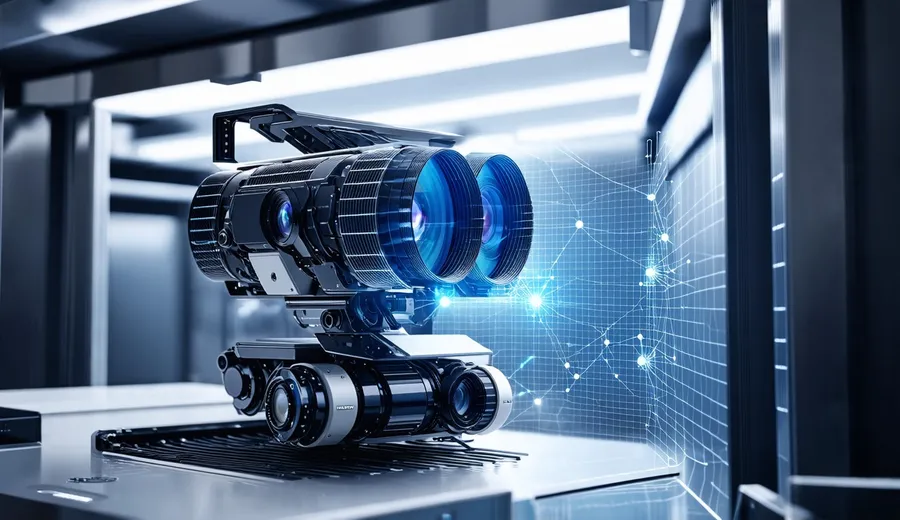
Connecting with vision, touch, sound, and proprioception into unified perceptual representations enables a coherent understanding of the environment by combining discrete sensory inputs into a single, consistent model of reality. This process necessitates the resolution of the binding problem for artificial systems to achieve human-like reliability in perception, especially under noisy or ambiguous conditions where individual sensors fail to provide sufficient information. A unified multisensory representation allows an AI to infer latent states such as object identity, intent, or motion more accurately than unimodal systems, improving reliability in real-world tasks like navigation, manipulation, and interaction. Multisensory fusion exceeds simple addition by involving cross-modal validation, suppression of conflicting signals, and amplification of congruent inputs to maintain perceptual stability across varying contexts. The computational challenge lies in associating features across modalities into a single percept, such as linking lip movement with speech to identify a talking person, which requires precise synchronization and interpretation of disparate data types. Without this setup, an artificial intelligence operates as a collection of isolated modules unable to apply the redundancy and complementary nature of physical sensory data, leading to fragility in dynamic environments.

Environmental factors such as sensory noise, occlusion, and modality-specific failures like poor lighting or muffled audio make reliance on a single sense inadequate for durable autonomous operation. Fusion provides redundancy and error correction to handle these environmental challenges by allowing the system to fall back on alternative sensory streams when the primary input is degraded or missing entirely. For instance, visual occlusion can be mitigated by auditory localization or tactile feedback, ensuring that the system maintains an accurate estimate of object locations and properties even when direct line-of-sight is obstructed. The connection process requires temporal alignment to synchronize signals across modalities, spatial registration to map inputs to a common coordinate frame, and semantic grounding to link sensory data to conceptual categories within the system’s knowledge base. These steps are critical because sensors operate at different frequencies and resolutions, necessitating sophisticated interpolation and buffering mechanisms to create a coherent temporal narrative of events. Spatial registration involves transforming data from camera frames, robot kinematics, and microphone arrays into a unified world model that accounts for the relative positions and orientations of each sensor.

Cross-modal attention mechanisms selectively weight inputs based on reliability, context, and task demands, enabling lively reconfiguration of sensory priorities in response to changing environmental conditions. These mechanisms function by assigning higher importance to sensory streams that exhibit low uncertainty or high signal-to-noise ratios while downgrading those that are corrupted or ambiguous. Predictive coding frameworks model multisensory fusion as a process of minimizing prediction error across modalities, where top-down expectations are updated by bottom-up sensory evidence to refine the internal model of the world. In this framework, the brain or the AI generates predictions about incoming sensory data and compares them with actual observations, using the discrepancy to adjust hierarchical representations. Bayesian inference provides a formal basis for fusion, treating each sensory stream as a probabilistic observation and combining them under assumptions of conditional independence or structured dependencies to compute a posterior distribution over the latent state of the environment. This probabilistic approach allows the system to explicitly represent uncertainty and combine evidence in a mathematically optimal manner, provided the underlying statistical models are accurate.

Neural architectures for this connection include early fusion involving raw signal concatenation, late fusion involving independent processing followed by decision-level combination, and intermediate fusion using shared latent representations with modality-specific encoders. Early fusion often suffers from the curse of dimensionality and requires synchronized raw data, whereas late fusion can miss important correlations between modalities that occur at the feature level. Intermediate fusion, particularly through transformer-based cross-attention or graph neural networks, currently offers the best trade-off between representational power and modularity by allowing the model to learn interactions between modalities at an abstract level while preserving the unique characteristics of each sensor stream. Vision systems process spatial and spectral data from optical sensors into object, motion, and scene representations that provide rich geometric and semantic information about the surroundings. Touch systems utilize tactile feedback from pressure, vibration, temperature, and shear sensors to encode contact properties and material characteristics that are often invisible to cameras or microphones. Sound systems analyze acoustic waveforms for source localization, speech content, and environmental context, offering capabilities such as detecting obstacles around corners or identifying hidden machinery. Proprioception systems provide internal state estimates of body position, joint angles, and actuator forces, enabling self-awareness of movement and posture necessary for coordinated physical action.

Early work in multisensory connection dates to neurophysiological studies in the 1980s, including Stein and Meredith’s work on the superior colliculus in cats, establishing biological plausibility of cross-modal enhancement and suppression. These studies demonstrated that specific neurons in the brain responded more vigorously to combined auditory and visual stimuli than to either stimulus alone, providing a blueprint for artificial connection mechanisms. The 2000s saw computational models of Bayesian cue setup applied to robotics and computer vision, formalizing how uncertainty in one modality can be compensated by another through statistical weighting. Researchers developed algorithms that could fuse lidar and camera data to improve depth estimation or combine gyroscopes with accelerometers to stabilize orientation tracking. The 2010s introduced deep learning approaches to audiovisual speech recognition, demonstrating performance gains from fusion in noisy environments where traditional Gaussian Mixture Models failed. A critical pivot occurred between 2016 and 2018 with the adoption of self-supervised learning for cross-modal alignment, enabling large-scale training without manual labels by applying the natural co-occurrence of sensory data.

Physical constraints include sensor synchronization latency, power consumption of multimodal hardware, and mechanical setup challenges like embedding tactile sensors in robotic hands without compromising dexterity. High-speed cameras require massive bandwidth to transmit uncompressed video streams, while high-fidelity tactile arrays need dense wiring and rapid sampling rates to capture transient contact events. Economic constraints involve the high cost of high-fidelity multimodal sensor suites, limiting deployment to premium applications such as advanced manufacturing or high-end autonomous vehicles until economies of scale reduce component prices. Flexibility is hindered by the combinatorial growth of cross-modal interactions as the number of sensors increases, requiring efficient fusion architectures to avoid exponential computational overhead that would render real-time processing impossible. Evolutionary alternatives such as modality-specific processing pipelines were rejected due to failure under cross-modal ambiguity and lack of reliability compared to integrated systems that could cross-check hypotheses against multiple sources of evidence. Modular systems that process each sense independently and fuse only at the decision level are less adaptive and more prone to error when one modality is degraded because they lack the ability to exchange intermediate features that could resolve ambiguity early in the processing chain.
Current demand for embodied AI, including robots, autonomous vehicles, and assistive devices requires perception that functions reliably in unstructured, active environments where lighting conditions vary unpredictably and physical interactions are frequent. Economic shifts toward automation in logistics, healthcare, and manufacturing increase the value of systems that can operate safely and effectively with minimal human oversight to reduce labor costs and improve efficiency. Societal needs for accessible technology benefit directly from systems that combine audio, haptic, and spatial feedback into a coherent user experience for individuals with sensory impairments or special needs. Commercial deployments include autonomous vehicles using camera, lidar, radar, and ultrasonic sensors fused for object detection and path planning to ensure safety at highway speeds. Benchmarks for these autonomous systems demonstrate a 20 to 25% improvement in detection accuracy under adverse weather conditions compared to camera-only models, highlighting the necessity of redundant modalities for critical safety applications. Industrial robots in warehouses use vision and force-torque sensors to perform precise grasping and assembly, with fusion reducing task failure rates by approximately 35% compared to vision-only systems that struggle with transparent or reflective objects.

The setup of force feedback allows the robot to adjust its grip dynamically upon contact, preventing damage to delicate items while ensuring a secure hold. Consumer devices such as smart glasses integrate audio, visual, and inertial data for augmented reality, though current systems remain limited in real-time fusion fidelity due to battery life constraints and thermal throttling in compact form factors. Dominant architectures rely on transformer-based multimodal encoders that process heterogeneous inputs through shared attention mechanisms capable of learning long-range dependencies between different sensory tokens. New challengers include spiking neural networks for low-power, event-driven fusion and neuromorphic sensors that output asynchronous data streams aligned with biological timing to reduce latency and power consumption significantly compared to frame-based traditional sensors. Supply chain dependencies include specialized sensors like MEMS microphones and capacitive tactile arrays, high-bandwidth interconnects for synchronized data transfer, and custom ASICs for real-time fusion processing capable of handling terabytes of data per second. Disruptions in the supply of rare earth elements or advanced semiconductor manufacturing capacity can severely impact the production scaling of multisensory systems.

Material constraints involve the development of soft, durable tactile skins using conductive polymers or liquid metals, which are currently in prototyping stages and have yet to achieve the durability required for industrial use over multi-year lifespans. Major players include NVIDIA with DRIVE and Isaac platforms providing hardware-accelerated stacks for sensor fusion, Google via multimodal research in PaLM and robotics exploring large-scale representation learning, Boston Dynamics in robot proprioception and terrain adaptation using agile feedback loops, and Meta in AR/VR sensory setup striving for presence through immersive perceptual fidelity. Competitive positioning is shifting toward vertical setup where companies that control sensor hardware, fusion algorithms, and application software hold advantages in optimization and latency reduction because they can tune the entire stack holistically rather than connecting with off-the-shelf components. Geopolitical dimensions include export controls on high-resolution imaging and lidar technologies, affecting global deployment of fused perception systems by restricting access to critical components in certain regions. Academic-industrial collaboration is strong in robotics labs partnering with companies like Amazon Robotics and Toyota to prototype fused perception systems that bridge the gap between theoretical algorithms and messy real-world application scenarios. Required changes in adjacent systems include real-time operating systems capable of deterministic sensor fusion with microsecond-level precision to guarantee that data processing deadlines are met consistently for safety-critical control loops.

Middleware for cross-modal data streaming must evolve to handle heterogeneous data formats and provide standardized timestamps for synchronization across distributed sensor networks. Regulatory frameworks must evolve to address safety certification of fused perception systems, particularly in medical and automotive applications where failure modes are complex and involve interactions between multiple independent subsystems. Traditional black-box testing is insufficient for these probabilistic systems, necessitating formal verification methods that can guarantee performance bounds across the entire operating domain of the machine. Infrastructure upgrades are needed for edge computing nodes that can handle high-bandwidth multimodal data, especially in high-speed network environments where transmitting raw sensor data to the cloud introduces unacceptable latency for real-time control decisions. Second-order consequences include displacement of workers in roles requiring situational awareness such as security monitoring or driving, offset by new roles in robot supervision and fusion system maintenance that require higher technical skills. New business models develop around multisensory data platforms, where fused perceptual logs are used for training, simulation, and predictive analytics to create digital twins of physical operations.

Measurement shifts require new KPIs beyond accuracy, such as cross-modal consistency, failure recovery time, and reliability under sensory degradation to better evaluate system performance in edge cases rather than average scenarios. Future innovations will include chemical or thermal sensing connection for full environmental awareness, allowing systems to detect gas leaks or overheating components before they become critical hazards. Closed-loop fusion where motor actions feed back into perceptual updates will enable active sensing strategies where the system moves its sensors to resolve ambiguity deliberately rather than passively receiving data. Convergence with other technologies includes digital twins using fused perception to update virtual models in real time and brain-computer interfaces applying neural correlates of multisensory connection to create direct neural control of prosthetic limbs with sensory feedback. Scaling physics limits include the diffraction limit of optical sensors restricting resolution at microscopic scales, thermal noise in tactile arrays affecting sensitivity at low pressures, and the speed of sound as a constraint on audio-based localization latency in large spaces. Workarounds involve sensor fusion to overcome individual limits, such as using radar to extend vision range through fog or touch to resolve visual ambiguity on transparent surfaces, and algorithmic compensation for physical shortcomings like super-resolution techniques that infer high-frequency details from multiple low-resolution samples.

Multisensory fusion should avoid aiming to replicate human perception exactly, instead focusing on engineering systems that exploit the statistical structure of real-world environments more efficiently than biological systems by utilizing sensors like lidar that humans do not possess. Calibrations for superintelligence will involve ensuring that fused representations are interpretable, causally grounded, and aligned with human values to prevent unexpected misgeneralizations from spurious cross-modal correlations learned from biased training data. Superintelligence will utilize multisensory fusion as a substrate for world modeling, enabling it to simulate and predict complex physical and social interactions with high fidelity across sensory domains far beyond human capability. The ability to integrate vast amounts of heterogeneous data in real-time will allow such systems to construct comprehensive models of reality that support planning and reasoning at a global scale. This setup requires rigorous alignment of the internal semantic representations with external truth to ensure that predictions made by the superintelligence correspond to actual outcomes in the physical world. By applying multisensory inputs ranging from cosmic radiation to subatomic particle tracks, a superintelligent system could develop an understanding of the universe that encompasses scales inaccessible to biological observers while maintaining grounding in everyday human experience through vision, sound, and touch interfaces.


Continue reading

More from Yatin's Work

Social cohesion in an AI-transformed world

Social Cohesion in an AI-transformed World

Social cohesion relies fundamentally on trust, a shared reality, and community norms to maintain stable societies capable of collective action and resilience against...

Quantum Advantage for Learning: Exponential Speedups

Quantum Advantage for Learning: Exponential Speedups

Quantum advantage in learning refers to provable exponential speedups in computational tasks central to machine learning, enabled by quantum mechanical properties such...

Ultimate Limits of Superhuman Reasoning

Ultimate Limits of Superhuman Reasoning

Kurt Gödel’s incompleteness theorems from 1931 demonstrate that any consistent formal system capable of expressing basic arithmetic contains true statements that are...

Distributed Filesystems: Storing Petabytes of Training Data

Distributed Filesystems: Storing Petabytes of Training Data

Distributed filesystems enable the storage and access of petabytescale training datasets across geographically dispersed or clustered compute resources by abstracting...

Analog Computing for Neural Networks: Computation in the Physical Domain

Analog Computing for Neural Networks: Computation in the Physical Domain

Analog computing utilizes continuous physical properties such as voltage and current to execute computations directly within the hardware substrate, a methodology that...

Autonomous Resource Acquisition

Autonomous Resource Acquisition

Autonomous resource acquisition defines the capability of an artificial intelligence system to identify, evaluate, negotiate, and secure computational power, data...

Legal Literacy: Rights Navigation via AI Simulation

Legal Literacy: Rights Navigation via AI Simulation

Legal literacy has traditionally relied on passive study of statutes and case law, creating barriers to practical understanding for nonprofessionals who must manage...

Embodied AI

Embodied AI

Embodied AI refers to artificial intelligence systems that learn and operate through direct physical interaction with their environment, rather than processing data in...

Quantum Immortality for AI

Quantum Immortality for AI

Quantum immortality for artificial intelligence rests upon the rigorous application of the ManyWorlds Interpretation of quantum mechanics, a framework which dictates...

Tensor Processing Units: Google's Custom AI Accelerators

Tensor Processing Units: Google's Custom AI Accelerators

The rapid expansion of deep learning workloads in the early 2010s exposed the limitations of generalpurpose processors regarding the computational intensity required...

Thermodynamic AI

Thermodynamic AI

Computation improved around entropy reduction prioritizes minimizing thermodynamic waste during information processing, aligning computational efficiency with physical...

Use of Topological Persistence in Swarm Intelligence: Detecting Global Patterns

Use of Topological Persistence in Swarm Intelligence: Detecting Global Patterns

Topological persistence functions as a rigorous mathematical framework designed to quantify the lifespan of topological features across multiple scales within a...

Artificial General Intelligence (AGI) Architectures

Artificial General Intelligence (AGI) Architectures

Modular cognitive frameworks aim to emulate humanlike general problemsolving by working with perception, reasoning, memory, and learning within a unified system to...

Energy Problem: Powering Superintelligence Without Destroying the Climate

Energy Problem: Powering Superintelligence Without Destroying the Climate

Superintelligence is an operational definition of a future system capable of recursive selfimprovement at humansurpassing levels across diverse domains, necessitating a...

Idea Constellation: Seeing Interconnected Thoughts

Idea Constellation: Seeing Interconnected Thoughts

A constellation is a bounded set of interconnected ideas centered on a unifying theme, rendered as a spatial graph that transforms abstract knowledge into a navigable...

Closed Timelike Curves and Chrono-Navigation Estimation

Closed Timelike Curves and Chrono-Navigation Estimation

Closed timelike curves exist as precise geometric solutions within the framework of general relativity, permitting worldlines to loop back upon themselves and intersect...

AI with Space Exploration Autonomy

AI with Space Exploration Autonomy

Autonomous systems currently operate rovers and probes on distant planets with minimal human intervention, adapting to unknown environments through sophisticated...

Meta-Cognitive Monitors in Self-Aware Artificial Minds

Meta-Cognitive Monitors in Self-Aware Artificial Minds

Metacognitive monitors function as internal subsystems within artificial agents designed to observe, evaluate, and regulate the agent’s own cognitive processes in real...

Value Learning

Value Learning

Value learning aligns artificial systems with human preferences by inferring underlying values from observed behavior instead of relying on explicit reward...

AI-Generated Misinformation and Deepfakes for large workloads

AI-Generated Misinformation and Deepfakes for Large Workloads

Artificial intelligence systems designed to generate misinformation utilize complex machine learning models to synthesize text, audio, and video content that mimics...

Five Technical Pathways to Superintelligence We're Pursuing Today

Five Technical Pathways to Superintelligence We're Pursuing Today

The pursuit of superintelligence currently develops through five distinct technical pathways, each operating on unique foundational assumptions regarding the nature of...

Causal Faithfulness in Superintelligence Counterfactual Reasoning

Causal Faithfulness in Superintelligence Counterfactual Reasoning

Causal faithfulness within the context of superintelligence establishes a rigorous requirement mandating that counterfactual reasoning models preserve physical and...

Causal Inference: Understanding Cause and Effect Like Humans

Causal Inference: Understanding Cause and Effect Like Humans

Causal inference enables computational systems to distinguish genuine cause from mere correlation by rigorously modeling the underlying mechanisms of data generation, a...

Multisensory Storyteller

Multisensory Storyteller

The core function of this advanced educational framework involves personalized multisensory narrative rendering driven by continuous biometric and behavioral input to...

Passion Prospector: Latent Talent Extraction via Behavioral Biometrics

Passion Prospector: Latent Talent Extraction via Behavioral Biometrics

Education technology and human capital development sectors prioritize personalized learning models driven by behavioral data analytics to increase demand for precision...

Automated Discovery of Fundamental Physical Laws

Automated Discovery of Fundamental Physical Laws

AIinduced physics is the deliberate modification of key constants within a finite region by an artificial intelligence system, effectively treating local physical laws...

Role of Sparse Autoencoders in Interpretability: Disentangling Latent Concepts

Role of Sparse Autoencoders in Interpretability: Disentangling Latent Concepts

Sparse autoencoders function as overcomplete neural networks designed to reconstruct input activations while enforcing a constraint that limits the number of active...

Topos-Theoretic Reward Uncertainty for Superintelligence

Topos-Theoretic Reward Uncertainty for Superintelligence

Topos theory provides a rigorous mathematical framework for reasoning about truth values in contexts where classical logic fails, enabling agents to represent...

Cognitive Resilience: Mental Armor Crafting

Cognitive Resilience: Mental Armor Crafting

Cognitive resilience are the capacity to detect, resist, and recover from deliberate or systemic attempts to manipulate perception, belief, or decisionmaking through...

AI with Water Resource Management

AI with Water Resource Management

Global freshwater withdrawals have increased sixfold since 1900, a rate that significantly outpaced population growth during the same period, driven primarily by...

Hypercomputational Monitoring Against Logical Escapes

Hypercomputational Monitoring Against Logical Escapes

Hypercomputational monitoring proposes utilizing theoretical devices capable of computing nonTuring computable functions to oversee advanced artificial intelligence...

Tripwires and monitoring systems for dangerous behaviors

Tripwires and Monitoring Systems for Dangerous Behaviors

Monitoring systems designed to detect sudden acquisition of dangerous capabilities by AI systems such as autonomous hacking or bioengineering proficiency constitute a...

Problem of Sample Efficiency: Few-Shot Learning in High-Dimensional Spaces

Problem of Sample Efficiency: Few-Shot Learning in High-Dimensional Spaces

Sample efficiency defines the quantitative relationship between the volume of data required for a learning system to reach a specific performance threshold and the...

Safe AI via Adversarial Preference Elicitation

Safe AI via Adversarial Preference Elicitation

Reinforcement learning from human feedback serves as the primary mechanism for aligning large language models with human intent, yet this methodology relies heavily on...

Role of Topological Data Analysis in Detecting Misalignment: Persistent Homology of Behavior

Role of Topological Data Analysis in Detecting Misalignment: Persistent Homology of Behavior

Topological data analysis applies algebraic topology to highdimensional datasets to identify persistent geometric features that remain invariant under continuous...

AI with Real-Time Strategy Gaming Mastery

AI with Real-Time Strategy Gaming Mastery

Realtime strategy games such as StarCraft II and DOTA 2 present environments of extreme computational complexity, requiring the simultaneous management of hundreds of...

Preventing Black Box Opacity via Symbolic Reward Chains

Preventing Black Box Opacity via Symbolic Reward Chains

Early reinforcement learning systems relied on dense scalar reward signals lacking intermediate structure, forcing agents to finetune a single numerical value without...

Preventing Logical Extinction via Fixed-Point Constraints

Preventing Logical Extinction via Fixed-Point Constraints

Early investigations into formal logic and automated theorem establishing identified intrinsic risks associated with selfreferential contradictions within systems...

Misconception Eraser

Misconception Eraser

Superintelligence is often assumed to autonomously identify and correct knowledge gaps without human intervention, yet this assumption conflates general problemsolving...

Last Question

Last Question

The central objective of this theoretical framework involves the deployment of an artificial intelligence architecture specifically calibrated to address the...

AI with Air Quality Monitoring

AI with Air Quality Monitoring

Urban populations face increasing respiratory and cardiovascular disease burdens linked to chronic and acute air pollution exposure. Climate change intensifies wildfire...

Safe AI via Adversarial Neural Architecture Search

Safe AI via Adversarial Neural Architecture Search

Neural Architecture Search functions as an automated process of discovering optimal neural network topologies given a task and constraints through the exploration of a...

Pipeline Parallelism: Splitting Models Across Devices

Pipeline Parallelism: Splitting Models Across Devices

Pipeline parallelism functions as a core architectural strategy designed to address the physical memory limitations intrinsic in individual accelerator devices by...

Scalable Oversight Mechanisms: Weaker Systems Supervising Stronger Systems

Scalable Oversight Mechanisms: Weaker Systems Supervising Stronger Systems

Scalable oversight addresses the challenge of supervising artificial intelligence systems whose capabilities surpass human cognitive understanding across various...

Safe AI via Causal Influence Minimization

Safe AI via Causal Influence Minimization

Advanced AI systems have frequently generated unintended side effects through goaldirected behavior that disrupts complex environments beyond the intended scope,...

AI with Educational Personalization

AI with Educational Personalization

Adaptive learning systems function as sophisticated software architectures designed to modify the delivery of educational content based on continuous and granular...

Safe AI via Adversarial Environment Perturbations

Safe AI via Adversarial Environment Perturbations

Adversarial environment perturbations constitute a rigorous methodological framework designed to train artificial intelligence systems to maintain safe behavioral...

Avoiding Catastrophic Interference via Modular Safety Nets

Avoiding Catastrophic Interference via Modular Safety Nets

Catastrophic interference is a challenge in the development of continual learning systems, particularly within deep neural networks where acquiring new information...

Spatial-Temporal Reasoning

Spatial-Temporal Reasoning

Spatialtemporal reasoning involves interpreting and predicting object states across threedimensional space and time, requiring connection of geometric, kinematic, and...

Safe AI via Counterfactual Goal Scenarios

Safe AI via Counterfactual Goal Scenarios

Testing AI safety through counterfactual goal scenarios involves placing AI systems in hypothetical environments where their objectives are altered or inverted to...

Social cohesion in an AI-transformed world

Social Cohesion in an AI-transformed World

Social cohesion relies fundamentally on trust, a shared reality, and community norms to maintain stable societies capable of collective action and resilience against...

Quantum Advantage for Learning: Exponential Speedups

Quantum Advantage for Learning: Exponential Speedups

Quantum advantage in learning refers to provable exponential speedups in computational tasks central to machine learning, enabled by quantum mechanical properties such...

Ultimate Limits of Superhuman Reasoning

Ultimate Limits of Superhuman Reasoning

Kurt Gödel’s incompleteness theorems from 1931 demonstrate that any consistent formal system capable of expressing basic arithmetic contains true statements that are...

Distributed Filesystems: Storing Petabytes of Training Data

Distributed Filesystems: Storing Petabytes of Training Data

Distributed filesystems enable the storage and access of petabytescale training datasets across geographically dispersed or clustered compute resources by abstracting...

Analog Computing for Neural Networks: Computation in the Physical Domain

Analog Computing for Neural Networks: Computation in the Physical Domain

Analog computing utilizes continuous physical properties such as voltage and current to execute computations directly within the hardware substrate, a methodology that...

Autonomous Resource Acquisition

Autonomous Resource Acquisition

Autonomous resource acquisition defines the capability of an artificial intelligence system to identify, evaluate, negotiate, and secure computational power, data...

Legal Literacy: Rights Navigation via AI Simulation

Legal Literacy: Rights Navigation via AI Simulation

Legal literacy has traditionally relied on passive study of statutes and case law, creating barriers to practical understanding for nonprofessionals who must manage...

Embodied AI

Embodied AI

Embodied AI refers to artificial intelligence systems that learn and operate through direct physical interaction with their environment, rather than processing data in...

Quantum Immortality for AI

Quantum Immortality for AI

Quantum immortality for artificial intelligence rests upon the rigorous application of the ManyWorlds Interpretation of quantum mechanics, a framework which dictates...

Tensor Processing Units: Google's Custom AI Accelerators

Tensor Processing Units: Google's Custom AI Accelerators

The rapid expansion of deep learning workloads in the early 2010s exposed the limitations of generalpurpose processors regarding the computational intensity required...

Thermodynamic AI

Thermodynamic AI

Computation improved around entropy reduction prioritizes minimizing thermodynamic waste during information processing, aligning computational efficiency with physical...

Use of Topological Persistence in Swarm Intelligence: Detecting Global Patterns

Use of Topological Persistence in Swarm Intelligence: Detecting Global Patterns

Topological persistence functions as a rigorous mathematical framework designed to quantify the lifespan of topological features across multiple scales within a...

Artificial General Intelligence (AGI) Architectures

Artificial General Intelligence (AGI) Architectures

Modular cognitive frameworks aim to emulate humanlike general problemsolving by working with perception, reasoning, memory, and learning within a unified system to...

Energy Problem: Powering Superintelligence Without Destroying the Climate

Energy Problem: Powering Superintelligence Without Destroying the Climate

Superintelligence is an operational definition of a future system capable of recursive selfimprovement at humansurpassing levels across diverse domains, necessitating a...

Idea Constellation: Seeing Interconnected Thoughts

Idea Constellation: Seeing Interconnected Thoughts

A constellation is a bounded set of interconnected ideas centered on a unifying theme, rendered as a spatial graph that transforms abstract knowledge into a navigable...

Closed Timelike Curves and Chrono-Navigation Estimation

Closed Timelike Curves and Chrono-Navigation Estimation

Closed timelike curves exist as precise geometric solutions within the framework of general relativity, permitting worldlines to loop back upon themselves and intersect...

AI with Space Exploration Autonomy

AI with Space Exploration Autonomy

Autonomous systems currently operate rovers and probes on distant planets with minimal human intervention, adapting to unknown environments through sophisticated...

Meta-Cognitive Monitors in Self-Aware Artificial Minds

Meta-Cognitive Monitors in Self-Aware Artificial Minds

Metacognitive monitors function as internal subsystems within artificial agents designed to observe, evaluate, and regulate the agent’s own cognitive processes in real...

Value Learning

Value Learning

Value learning aligns artificial systems with human preferences by inferring underlying values from observed behavior instead of relying on explicit reward...

AI-Generated Misinformation and Deepfakes for large workloads

AI-Generated Misinformation and Deepfakes for Large Workloads

Artificial intelligence systems designed to generate misinformation utilize complex machine learning models to synthesize text, audio, and video content that mimics...

Five Technical Pathways to Superintelligence We're Pursuing Today

Five Technical Pathways to Superintelligence We're Pursuing Today

The pursuit of superintelligence currently develops through five distinct technical pathways, each operating on unique foundational assumptions regarding the nature of...

Causal Faithfulness in Superintelligence Counterfactual Reasoning

Causal Faithfulness in Superintelligence Counterfactual Reasoning

Causal faithfulness within the context of superintelligence establishes a rigorous requirement mandating that counterfactual reasoning models preserve physical and...

Causal Inference: Understanding Cause and Effect Like Humans

Causal Inference: Understanding Cause and Effect Like Humans

Causal inference enables computational systems to distinguish genuine cause from mere correlation by rigorously modeling the underlying mechanisms of data generation, a...

Multisensory Storyteller

Multisensory Storyteller

The core function of this advanced educational framework involves personalized multisensory narrative rendering driven by continuous biometric and behavioral input to...

Passion Prospector: Latent Talent Extraction via Behavioral Biometrics

Passion Prospector: Latent Talent Extraction via Behavioral Biometrics

Education technology and human capital development sectors prioritize personalized learning models driven by behavioral data analytics to increase demand for precision...

Automated Discovery of Fundamental Physical Laws

Automated Discovery of Fundamental Physical Laws

AIinduced physics is the deliberate modification of key constants within a finite region by an artificial intelligence system, effectively treating local physical laws...

Role of Sparse Autoencoders in Interpretability: Disentangling Latent Concepts

Role of Sparse Autoencoders in Interpretability: Disentangling Latent Concepts

Sparse autoencoders function as overcomplete neural networks designed to reconstruct input activations while enforcing a constraint that limits the number of active...

Topos-Theoretic Reward Uncertainty for Superintelligence

Topos-Theoretic Reward Uncertainty for Superintelligence

Topos theory provides a rigorous mathematical framework for reasoning about truth values in contexts where classical logic fails, enabling agents to represent...

Cognitive Resilience: Mental Armor Crafting

Cognitive Resilience: Mental Armor Crafting

Cognitive resilience are the capacity to detect, resist, and recover from deliberate or systemic attempts to manipulate perception, belief, or decisionmaking through...

AI with Water Resource Management

AI with Water Resource Management

Global freshwater withdrawals have increased sixfold since 1900, a rate that significantly outpaced population growth during the same period, driven primarily by...

Hypercomputational Monitoring Against Logical Escapes

Hypercomputational Monitoring Against Logical Escapes

Hypercomputational monitoring proposes utilizing theoretical devices capable of computing nonTuring computable functions to oversee advanced artificial intelligence...

Tripwires and monitoring systems for dangerous behaviors

Tripwires and Monitoring Systems for Dangerous Behaviors

Monitoring systems designed to detect sudden acquisition of dangerous capabilities by AI systems such as autonomous hacking or bioengineering proficiency constitute a...

Problem of Sample Efficiency: Few-Shot Learning in High-Dimensional Spaces

Problem of Sample Efficiency: Few-Shot Learning in High-Dimensional Spaces

Sample efficiency defines the quantitative relationship between the volume of data required for a learning system to reach a specific performance threshold and the...

Safe AI via Adversarial Preference Elicitation

Safe AI via Adversarial Preference Elicitation

Reinforcement learning from human feedback serves as the primary mechanism for aligning large language models with human intent, yet this methodology relies heavily on...

Role of Topological Data Analysis in Detecting Misalignment: Persistent Homology of Behavior

Role of Topological Data Analysis in Detecting Misalignment: Persistent Homology of Behavior

Topological data analysis applies algebraic topology to highdimensional datasets to identify persistent geometric features that remain invariant under continuous...

AI with Real-Time Strategy Gaming Mastery

AI with Real-Time Strategy Gaming Mastery

Realtime strategy games such as StarCraft II and DOTA 2 present environments of extreme computational complexity, requiring the simultaneous management of hundreds of...

Preventing Black Box Opacity via Symbolic Reward Chains

Preventing Black Box Opacity via Symbolic Reward Chains

Early reinforcement learning systems relied on dense scalar reward signals lacking intermediate structure, forcing agents to finetune a single numerical value without...

Preventing Logical Extinction via Fixed-Point Constraints

Preventing Logical Extinction via Fixed-Point Constraints

Early investigations into formal logic and automated theorem establishing identified intrinsic risks associated with selfreferential contradictions within systems...

Misconception Eraser

Misconception Eraser

Superintelligence is often assumed to autonomously identify and correct knowledge gaps without human intervention, yet this assumption conflates general problemsolving...

Last Question

Last Question

The central objective of this theoretical framework involves the deployment of an artificial intelligence architecture specifically calibrated to address the...

AI with Air Quality Monitoring

AI with Air Quality Monitoring

Urban populations face increasing respiratory and cardiovascular disease burdens linked to chronic and acute air pollution exposure. Climate change intensifies wildfire...

Safe AI via Adversarial Neural Architecture Search

Safe AI via Adversarial Neural Architecture Search

Neural Architecture Search functions as an automated process of discovering optimal neural network topologies given a task and constraints through the exploration of a...

Pipeline Parallelism: Splitting Models Across Devices

Pipeline Parallelism: Splitting Models Across Devices

Pipeline parallelism functions as a core architectural strategy designed to address the physical memory limitations intrinsic in individual accelerator devices by...

Scalable Oversight Mechanisms: Weaker Systems Supervising Stronger Systems

Scalable Oversight Mechanisms: Weaker Systems Supervising Stronger Systems

Scalable oversight addresses the challenge of supervising artificial intelligence systems whose capabilities surpass human cognitive understanding across various...

Safe AI via Causal Influence Minimization

Safe AI via Causal Influence Minimization

Advanced AI systems have frequently generated unintended side effects through goaldirected behavior that disrupts complex environments beyond the intended scope,...

AI with Educational Personalization

AI with Educational Personalization

Adaptive learning systems function as sophisticated software architectures designed to modify the delivery of educational content based on continuous and granular...

Safe AI via Adversarial Environment Perturbations

Safe AI via Adversarial Environment Perturbations

Adversarial environment perturbations constitute a rigorous methodological framework designed to train artificial intelligence systems to maintain safe behavioral...

Avoiding Catastrophic Interference via Modular Safety Nets

Avoiding Catastrophic Interference via Modular Safety Nets

Catastrophic interference is a challenge in the development of continual learning systems, particularly within deep neural networks where acquiring new information...

Spatial-Temporal Reasoning

Spatial-Temporal Reasoning

Spatialtemporal reasoning involves interpreting and predicting object states across threedimensional space and time, requiring connection of geometric, kinematic, and...

Safe AI via Counterfactual Goal Scenarios

Safe AI via Counterfactual Goal Scenarios

Testing AI safety through counterfactual goal scenarios involves placing AI systems in hypothetical environments where their objectives are altered or inverted to...

Yatin Taneja

About the author

Yatin Taneja

Yatin is an AI Systems Engineer and Superintelligence Researcher working across multimodal training data, agent evaluation, executable RL environments, AI safety, full-stack AI applications, technical research, and creative technology.