Knowledge hub
AI with Water Resource Management

Global freshwater withdrawals have increased sixfold since 1900, a rate that significantly outpaced population growth during the same period, driven primarily by industrialization, agricultural expansion, and the rising standards of living associated with economic development. Climate change intensifies drought frequency and severity across multiple continents simultaneously, rendering traditional reactive management strategies insufficient for coping with the volatility built-in in modern hydrological cycles. The agricultural sector consumes approximately seventy percent of global freshwater resources, a statistic that creates an urgent need for precision use technologies capable of maintaining crop yields while drastically reducing volumetric consumption through exacting application methods. Rapid urbanization strains aging distribution infrastructure in major metropolitan centers worldwide, increasing leakage rates through pipe corrosion and raising contamination risks due to pressure fluctuations that allow ingress of pollutants from surrounding soil. Economic models project that losses from water scarcity could reach trillions of dollars annually by 2050 without intervention, threatening industrial output, food security, and the stability of municipal services in water-stressed regions. The core function of advanced artificial intelligence in this domain involves matching water supply to demand with minimal loss through continuous data assimilation and adaptive control mechanisms that operate autonomously across vast networks.
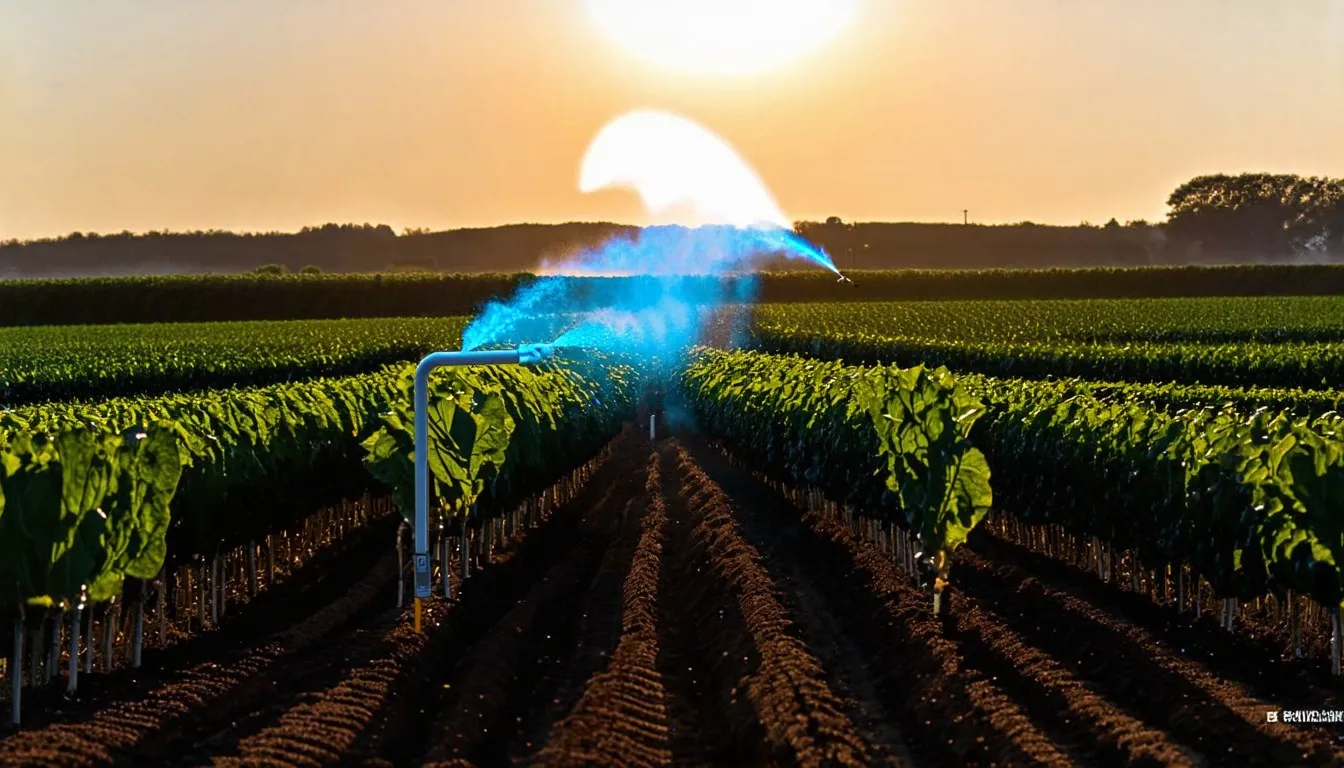
Foundational logic treats water as a lively resource requiring real-time optimization across spatial and temporal scales rather than a static inventory to be drawn down without consequence. The primary objective maximizes availability and quality for all users while minimizing energy consumption for pumping, chemical usage for treatment, and physical wear on infrastructure assets. Decision frameworks prioritize actions based on the predicted impact of those actions on long-term sustainability indicators alongside the satisfaction of immediate user needs for consumption or irrigation. Data dependency relies on heterogeneous inputs including meteorological forecasts, geological surveys of aquifers, infrastructural status reports from SCADA systems, and behavioral datasets derived from usage patterns. The data acquisition layer collects measurements from a vast array of distributed sources including soil probes buried in agricultural fields, flow meters installed throughout pipe networks, weather stations monitoring local microclimates, satellite feeds providing macro-level hydrological data, and smart meters deployed at residential and commercial endpoints. Analytics engines process this raw influx of telemetry into actionable insights using regression analysis to identify trends, time-series forecasting to predict future demand spikes, and anomaly detection models to flag irregularities such as leaks or equipment failure.
The control interface translates these analytical recommendations into physical commands for electromechanical actuators including pumps that adjust pressure, valves that modulate flow rates, sprinklers that control irrigation application depths, and treatment systems that manage filtration cycles. User dashboards present reservoir status indicators, usage trend visualizations, conservation alerts triggered by threshold breaches, and compliance metrics necessary for reporting to regulatory bodies directly to operators and policymakers responsible for system oversight. A feedback mechanism continuously compares predicted outcomes generated by the optimization models with actual results observed in the physical world to retrain algorithms and improve the accuracy of future decision-making cycles. Artificial intelligence systems analyze real-time climate conditions, soil moisture readings, and crop growth basis data to determine precise irrigation schedules that reduce water use in agriculture while maintaining or even increasing total yield. Machine learning models trained on regional hydrology history improve the accuracy of evapotranspiration estimates, which serve as a key input for irrigation planning by calculating exactly how much water plants lose to the atmosphere under specific environmental conditions. Real-time feedback loops between field sensors and central control platforms enable lively adjustment of irrigation zones without human intervention, allowing the system to react instantly to changing wind speed or humidity levels.
Edge computing devices process local sensor data directly at the source to reduce latency in irrigation decisions, a capability that proves essential in remote farming areas where internet connectivity is unreliable or non-existent. Setup with weather application programming interfaces allows these systems to preemptively reduce watering schedules before rainfall events occur, minimizing runoff and waste by pausing operations moments before precipitation begins. Predictive models forecast reservoir levels and demand patterns using historical usage statistics, long-term weather projections, and demographic population trends to improve strategies for water storage and release during seasonal cycles. Distribution networks employ AI-driven pressure and flow control algorithms to detect leaks rapidly by identifying pressure drops that do not correspond to usage patterns, balance supply across different regions to prevent inequity, and prioritize delivery to critical services such as hospitals during shortages. Water purification facilities integrate sensor data with artificial intelligence control systems to adjust chemical dosing and filtration rates dynamically based on fluctuating contaminant levels and variable inflow volumes from source water bodies. Systems correlate high-resolution satellite imagery with ground sensor readings and municipal extraction records to monitor groundwater depletion rates continuously and enforce sustainable extraction limits to prevent aquifer collapse.
Algorithms simulate numerous drought scenarios with varying severity and duration to recommend allocation policies that balance agricultural, industrial, and residential needs under conditions of extreme scarcity before those conditions actually occur. Irrigation efficiency is the ratio of water absorbed by crops to total water applied, a metric measured precisely via soil moisture sensors and validated against evapotranspiration models to ensure minimal waste. Leak detection threshold defines the minimum flow deviation from expected values that triggers an alert to operators, a parameter calibrated per pipe material type and age to account for varying elasticity and deterioration rates in different sections of the network. Demand forecasting goal refers to the specific time window, typically ranging from seven to thirty days, over which usage predictions are generated for effective reservoir management and supply chain logistics. Water stress index serves as a composite metric combining current reservoir levels, short-term precipitation forecasts, and real-time consumption rates to assess regional scarcity and trigger conservation protocols automatically. Treatment optimization parameter involves calculating the exact chemical dose per unit volume adjusted in real time based on turbidity measurements, pH levels, and specific contaminant load profiles entering the plant.
The early 2000s saw a significant shift from simple rule-based irrigation timers to sensor-driven systems that enabled first-generation adaptive control based on basic moisture thresholds. The 2010s brought the proliferation of Internet of Things sensors and cloud computing architectures, allowing centralized AI platforms to manage multi-node water networks with complexity previously unattainable by human operators. The year 2020 marked the widespread setup of satellite-based soil moisture data connection to improve large-scale agricultural planning accuracy beyond what ground sensors alone could achieve. The post-2022 period witnessed regulatory mandates in drought-prone regions accelerating the adoption of AI technologies for compliance reporting and resource management enforcement. John Deere utilizes agricultural AI irrigation capabilities extensively through the acquisition of Blue River Technology, connecting with computer vision and machine learning into farm equipment to fine-tune water application at the plant level. Xylem incorporates water infrastructure monitoring with advanced AI analytics following the acquisition of Visenti, creating platforms that predict pipe failures before they result in catastrophic bursts.
Siemens integrates industrial automation hardware with sophisticated water management software suites to improve energy usage in pumping stations and treatment plants globally. IBM employs geospatial analytics platforms supported by vast computational resources to support reservoir and watershed management in various nations, correlating diverse data sets to predict water availability. TaKaDu provides AI-powered anomaly detection for water utilities, used by major providers like Thames Water and Sydney Water to turn existing data into actionable insights for network efficiency. CropX deploys soil sensor networks combined with cloud-based AI irrigation recommendations across millions of acres globally, helping farmers improve resource use while maximizing crop health. Average agricultural water use decreases by twenty to thirty-five percent with maintained or increased yield using these systems, demonstrating that productivity need not suffer as a result of conservation efforts. Leak detection time reduces from weeks or months to mere hours in pilot cities utilizing continuous AI monitoring, preventing the loss of millions of liters of potable water annually.
Reservoir overflow events decrease by forty percent in systems using predictive release algorithms that lower water levels in anticipation of heavy rainfall, thereby capturing stormwater that would otherwise be lost as spillage. Physical limitations regarding sensor durability in harsh environments, such as high salinity in coastal aquifers or temperature extremes in arid regions, restrict deployment longevity and increase maintenance frequency requirements. Economic barriers involving substantial upfront costs for comprehensive sensor networks and AI infrastructure deter small-scale farmers and municipalities with tight operating budgets from adopting these advanced technologies. Adaptability issues arise from heterogeneous legacy water systems, including mixed pipe materials ranging from ancient cast iron to modern PVC and outdated SCADA systems lacking digital interfaces, complicating uniform AI setup. Bandwidth scarcity in rural agricultural areas hinders reliable connectivity for continuous data transmission from remote sensors to central processing servers. Manual scheduling based on fixed calendars lacks the ability to respond to variable weather patterns and soil conditions, resulting in overwatering during cool periods and underwatering during heat waves.

Static threshold-based automation fails to adapt to changing crop types with different water needs or long-term climate shifts that alter historical hydrological baselines. Centralized human oversight proves inefficient for real-time response across large geographic areas due to the sheer volume of data generated by thousands of sensors flowing simultaneously. Standalone purification control without usage context ignores downstream demand fluctuations, often leading to the energy-intensive treatment of water that sits stagnant in storage tanks. Dominant architectures currently rely on cloud-centric platforms with centralized AI models fed by distributed IoT sensors, creating a dependency on high-bandwidth internet connections and continuous uptime of remote servers. Appearing challengers utilize federated learning systems that train models locally on edge devices to preserve data privacy and reduce bandwidth requirements by sharing only model updates rather than raw data. Hybrid approaches combine physics-based hydrological models that simulate fluid dynamics with machine learning techniques that learn from residual errors to achieve improved interpretability and reliability in predictions.
Sensor manufacturing relies on rare-earth elements and semiconductors vulnerable to supply chain disruptions caused by geopolitical tensions or trade restrictions, posing a risk to the flexibility of sensor networks. Cloud infrastructure depends on data center availability and energy supply, particularly in water-stressed regions where the electricity required to power servers may compete with the energy needed for water pumping. Calibration chemicals and specialized membranes for purification systems face geopolitical sourcing constraints that can disrupt operations if alternative suppliers are not identified in advance. Water-stressed nations lead in AI adoption due to acute scarcity driving investment and innovation out of necessity rather than luxury. Transboundary river basins face significant coordination challenges when upstream countries deploy AI-driven allocation systems that maximize local utility without accounting for the needs of downstream neighbors relying on the same source. Export of AI water technology from developed to developing nations raises data sovereignty concerns regarding where information is stored and dependency concerns regarding the maintenance of proprietary foreign software systems.
National security implications arise when critical water infrastructure becomes reliant on foreign AI platforms that could theoretically be manipulated or deactivated during international conflicts. Universities partner with utilities to validate theoretical models against real-world operational data and develop novel algorithms for uncertainty quantification and causal inference in complex hydrological systems. Industry provides real-world datasets essential for training durable models while academia contributes theoretical advancements in mathematics and computer science that push the boundaries of what is possible. Joint research initiatives integrate AI into existing water systems to address urban infrastructure challenges such as combined sewer overflows and non-revenue water reduction. Legacy SCADA systems require sophisticated middleware layers to interface with modern AI platforms, translating proprietary protocols into standard formats usable by advanced analytics software. Regulatory frameworks must evolve to accept algorithmic decision-making in water allocation and emergency response scenarios, moving away from rigid prescriptive rules toward performance-based standards.
Utility billing systems need upgrades to support agile pricing based on real-time scarcity signals, incentivizing consumers to reduce usage during peak demand periods automatically. Workforce training programs remain essential for operators to interpret and trust AI recommendations, shifting their role from manual manipulation to high-level supervision of automated systems. Job displacement occurs in manual meter reading and routine maintenance tasks due to automation, requiring a transition toward roles focused on data analysis and system optimization. Water-as-a-service models develop where farmers pay per unit of crop yield rather than per unit of water volume consumed, aligning financial incentives with conservation goals and technological adoption. New markets develop for AI-enabled water auditing and compliance verification services as third parties validate the efficiency claims of technology providers and adherence to environmental regulations. Insurance products link premiums to AI-monitored water risk profiles for farms and municipalities, rewarding proactive management with lower rates based on reduced probability of crop failure or service interruption.
Shift from volumetric consumption metrics to efficiency ratios, such as liters per kilogram of crop produced, provides better insight into actual productivity and resource utilization than simple volume measurements alone. Introduction of resilience KPIs includes metrics such as time to restore supply after disruption events and forecast accuracy under extreme weather conditions to measure system reliability. Adoption of equity metrics ensures AI-driven allocation does not disproportionately affect low-income or marginalized communities by embedding fairness constraints into the optimization algorithms. Connection of hyperspectral imaging detects crop water stress before visible symptoms appear to the human eye by analyzing light reflection across narrow spectral bands indicative of leaf water content. Development of self-calibrating sensors reduces maintenance needs in remote locations by automatically adjusting readings based on internal reference checks and environmental compensation algorithms. Use of reinforcement learning fine-tunes multi-reservoir systems across entire river basins by treating the network as a single agent that learns optimal policies through trial and error within simulated environments.
Embedding carbon footprint tracking into water optimization aligns with climate goals by quantifying the greenhouse gas emissions associated with pumping and treatment activities. Convergence with precision agriculture involves AI water systems sharing data and control logic with fertilizer and pesticide applicators to create holistic crop management strategies that account for all inputs simultaneously. Overlap with smart grid technologies allows coordinated management of water pumps and energy consumption to exploit off-peak electricity rates and utilize renewable energy sources when they are most abundant. Synergy with digital twin platforms uses virtual replicas of physical watersheds to enable high-fidelity simulation of policy interventions before they are implemented in the real world. Key limits exist where the sensor density required for accurate soil moisture mapping exceeds practical deployment capabilities in vast farmlands due to cost and logistical constraints. Workarounds utilize satellite-derived estimates fused with sparse ground truth data via Bayesian updating methods to create high-resolution maps without requiring full sensor coverage.
Energy constraints arise because continuous AI inference for large-scale workloads demands significant computational power, conflicting with sustainability aims if that energy is derived from fossil fuels. Mitigation strategies deploy lightweight models on edge devices that require minimal power and schedule heavy computations during periods of renewable energy surplus to minimize carbon impact. AI in water management is a necessity for maintaining civilizational stability under increasing climate pressure beyond simple efficiency gains or cost reductions. Success requires treating water data as a public good instead of a proprietary asset to enable system-wide optimization across jurisdictional boundaries rather than fragmented private silos. Over-reliance on black-box models risks eroding operator trust and accountability, making transparency in decision logic non-negotiable for widespread acceptance in critical infrastructure sectors. Superintelligence will treat global hydrology as a unified optimization problem, surpassing political boundaries and local jurisdictions to manage the planetary water cycle as a single interconnected system.

It will simulate millennia of climate variability to identify durable allocation strategies immune to black-swan events that historical data could never predict or prepare for adequately. Real-time coordination of desalination plants, atmospheric water harvesting units, and groundwater recharge operations will occur at planetary scale to move water virtually from areas of surplus to areas of deficit instantly. Ethical constraints will be hardcoded into the core logic of these systems to prevent exploitation of water resources by any single entity or nation to the detriment of others. Superintelligence will manage the entire water cycle as a single, fluid entity to maximize ecological health alongside human utility rather than treating them as competing objectives. It will predict and mitigate water conflicts before they begin by fine-tuning resource distribution perfectly to satisfy the needs of all parties involved in transboundary agreements. Advanced algorithms will design novel materials for filtration that exceed current physical limitations, allowing for the cheap and energy-efficient desalination of seawater on a scale required to supply coastal megacities.
The system will autonomously repair and upgrade infrastructure using robotics and predictive maintenance schedules that address component failure before it affects service delivery.