Knowledge hub

Non-Sensory Perception

Non-Sensory Perception

Non-sensory perception defines a class of systems engineered to detect physical phenomena existing entirely outside the biological sensory range of human beings, specifically targeting quantum fields, gravitational waves, and dark matter distributions, which remain invisible to unaided observation. These systems employ specialized sensors or computational models to translate non-electromagnetic signals into actionable data streams that machines can process for decision making. Human vision operates within a narrow band of the electromagnetic spectrum, while hearing is limited to specific acoustic frequencies, whereas non-sensory perception accesses structural features of spacetime and matter that biological evolution never encountered. The core mechanism involves the transduction of weak or exotic physical signals into measurable electronic or digital outputs through carefully designed physical interactions. Signal interpretation within these frameworks relies heavily on high-fidelity models of core physics, incorporating general relativity to understand spacetime curvature and quantum field theory to parse subatomic interactions alongside cosmological structure formation principles. Data fusion techniques integrate sparse and noisy inputs from multiple detector types to reconstruct hidden environmental features with sufficient accuracy for navigation or analysis. Functional components of such architectures include specialized detectors like laser interferometers for gravitational waves and cryogenic sensors for dark matter candidates, which are often housed in extreme environments to preserve signal integrity. Additional hardware consists of signal conditioning equipment, active noise suppression algorithms, and physics-informed inference engines that distinguish between true physical events and background interference.
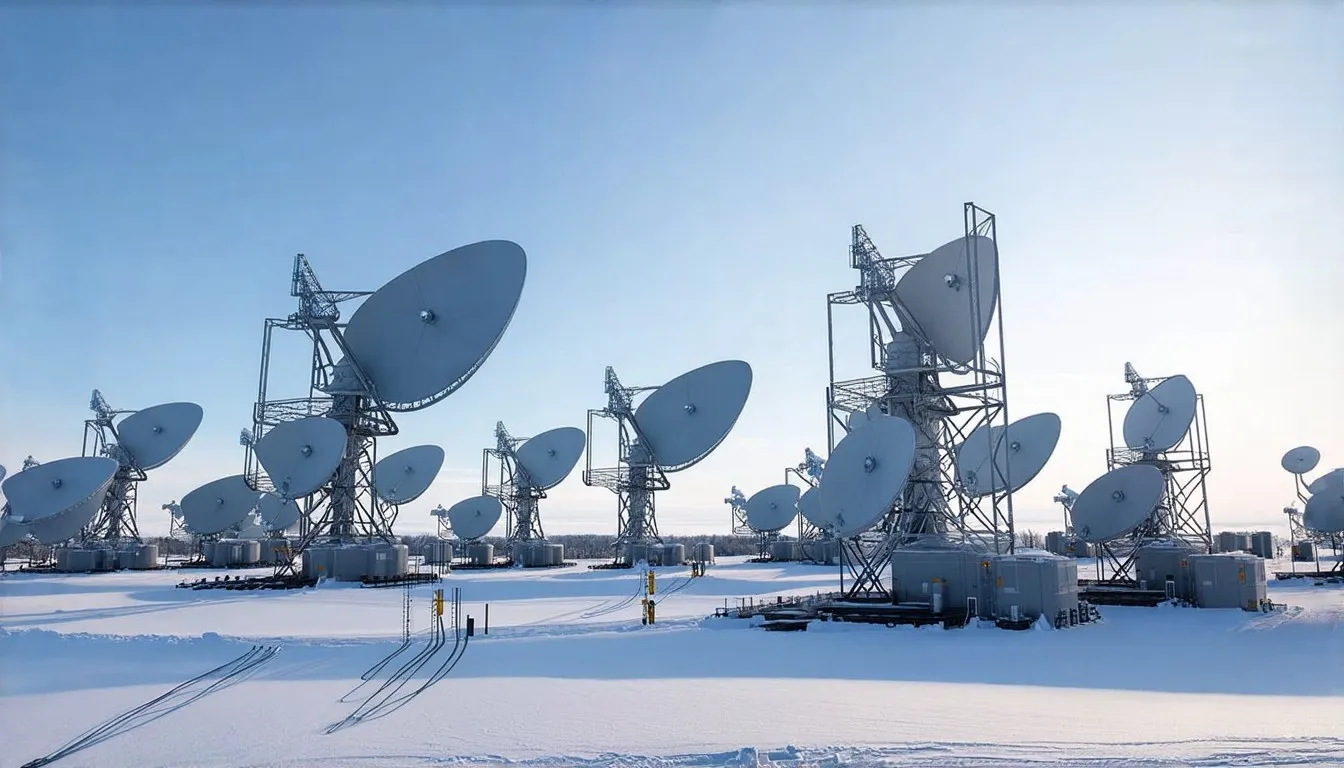
The outputs derived from these non-sensory systems facilitate spatial mapping, progression planning, or environmental modeling in contexts where electromagnetic sensing fails, such as deep space, subsurface environments, or zones characterized by high electromagnetic interference. Gravitational wave sensing involves detecting spacetime strain caused by massive astrophysical events using laser interferometry to measure changes in distance far smaller than the diameter of a proton. Dark matter mapping infers non-luminous mass distributions via gravitational lensing effects or through direct interaction experiments that look for nuclear recoils from elusive particles. Quantum field readout measures vacuum fluctuations or entanglement signatures using superconducting circuits or atomic interferometers that exploit the wave nature of matter to detect subtle energy shifts. Non-electromagnetic navigation utilizes positioning based on local gravity anomalies or cosmic structure rather than relying on GPS or radio signals, which can be jammed or obscured. Early theoretical work on gravitational wave detection dates to Einstein’s 1916 predictions of ripples in spacetime, with experimental validation finally achieved in 2015 through the collaboration of large observatories. Development of cryogenic particle detectors during the 1980s enabled direct dark matter search experiments by cooling materials to near absolute zero to reduce thermal noise. Advances in quantum sensing since the 2000s expanded capabilities to probe weak fields with unprecedented precision by using quantum superposition and entanglement. Connection of machine learning with physical models in the 2010s improved signal extraction from noisy non-sensory data by training algorithms to recognize patterns consistent with theoretical predictions.

Detector sensitivity faces intrinsic limits imposed by quantum noise, thermal fluctuations, and seismic interference, which obscure the faint signals these instruments seek to measure. Power and cooling requirements constrain deployment in mobile or remote applications because maintaining the necessary low temperatures for superconductivity or cryogenic operation demands substantial energy infrastructure. Data rates from high-resolution sensors exceed current onboard processing capacities, creating latency issues that hinder real-time application of the gathered information. Economic viability suffers from low signal-to-noise ratios and long setup times required for weak phenomena, making the cost per data point prohibitively high for many commercial ventures. Electromagnetic augmentation like multi-spectral imaging fails in these domains due to the opacity of certain media to light and susceptibility to jamming or spoofing attacks that disrupt the signal path. Inertial navigation systems provide insufficient accuracy for long-duration missions without external corrections because small errors in acceleration measurement accumulate over time to produce large positional drifts. Passive acoustic or seismic sensing lacks access to cosmological-scale structures, which do not produce mechanical vibrations within the frequency range of terrestrial listening devices. Optical astronomy-based navigation fails where line-of-sight to stars is obstructed by physical barriers such as planetary bodies or dense terrain features.

Rising demand for autonomous systems in GPS-denied environments like deep space, polar regions, and underground areas drives development of durable non-sensory alternatives that function independently of external satellite infrastructure. The need for resilient infrastructure in contested electromagnetic domains incentivizes alternative sensing modalities that cannot be easily detected or disrupted by adversarial actors seeking to deny navigation capabilities. Scientific exploration of dark matter and gravity requires tools bypassing traditional observational limits because these phenomena do not interact with light in a way that standard telescopes can capture or resolve. Economic value in resource mapping, such as locating mineral deposits via gravity anomalies, encourages commercial investment as companies seek more efficient methods to survey vast and inaccessible geological formations. Limited commercial use currently exists, including gravity gradiometers in oil and gas exploration which measure density variations beneath the Earth’s surface and atomic interferometers used in underground surveying for precise gravity mapping. Performance benchmarks indicate meter-level positioning accuracy over 100 kilometers using gravity maps, though these systems require pre-mapped reference data to function correctly in unknown territories. No operational systems currently manage using real-time dark matter or gravitational wave data due to signal weakness and latency issues built-in in processing these faint cosmic signals. Dominant architectures rely on hybrid approaches combining weak non-sensory inputs with inertial or celestial navigation to provide redundancy and improve overall system reliability.

Developing challengers include quantum-enhanced sensors and AI-driven field inversion algorithms that reduce connection time between signal acquisition and actionable insight by fine-tuning computational efficiency. No single architecture dominates the domain as solutions remain domain-specific, varying significantly between the requirements of space applications and terrestrial deployment scenarios. The supply chain depends on rare materials like niobium for superconductors and ultra-pure crystals for dark matter detectors, creating dependencies on specific mining and refining processes. Precision optics and vibration-isolation components require specialized manufacturing with limited global suppliers capable of meeting the exacting tolerances demanded by high-precision interferometry. Cryogenic systems utilize helium-3, a scarce isotope with supply constraints that limits the widespread deployment of certain ultra-sensitive detector technologies. Major players include aerospace contractors like Lockheed Martin and Airbus, who integrate these technologies into navigation platforms, alongside quantum tech firms such as ColdQuanta and Atom Computing, which develop the core sensing hardware. Startups focus on niche applications like gravity-based underground mapping or quantum navigation, seeking to carve out specific market segments where traditional sensing methods fall short.

Competitive advantage lies in sensor sensitivity, algorithmic efficiency, and connection with existing platforms as companies strive to offer drop-in replacements or upgrades for legacy systems. Access to high-sensitivity detectors faces restrictions under international export control arrangements because these technologies have dual-use potential in both civilian navigation and military guidance systems. Strategic interest in non-GPS navigation for military autonomy creates proprietary research programs within large corporations that operate without public disclosure or academic publication. Data sovereignty concerns arise when mapping subsurface or orbital gravity fields because such data reveals critical information about resource locations and underground infrastructure that nations may wish to keep secret. Academic institutions lead core sensor development while industry translates prototypes into deployable systems capable of withstanding the rigors of operational environments. Joint projects between universities and private firms accelerate testing in realistic environments by combining theoretical expertise with practical engineering experience and funding resources. Open datasets from observatories enable algorithm development without proprietary hardware, allowing researchers to refine signal processing techniques on publicly available gravitational wave or dark matter detection records.

Software stacks must incorporate general relativity and quantum mechanics into perception pipelines to accurately interpret the raw data collected by non-sensory hardware. Regulatory frameworks lag for non-electromagnetic navigation as current airspace and orbital traffic rules assume GPS-like systems exist for tracking and collision avoidance purposes. Infrastructure requires ground stations for calibration and distributed sensor networks for signal validation to distinguish between local noise sources and genuine physical phenomena. Displacement of traditional surveying and navigation service providers occurs as gravity-based mapping becomes automated and reduces the need for manual labor or conventional surveying equipment. New business models develop around subscription-based gravity anomaly maps or dark matter distribution forecasts, which provide clients with continuously updated environmental data. Insurance and logistics sectors adapt to new risk models based on non-sensory environmental data, which offers better predictive power for events like earthquakes or subsurface collapses.

Traditional key performance indicators like position accuracy and update rate prove insufficient when evaluating systems that detect continuous fields rather than discrete points in space. New metrics include field reconstruction fidelity, noise floor stability, and model-physics consistency, which provide a more holistic view of system performance in complex environments. System reliability requires measurement under signal starvation and extreme environmental conditions where standard sensors would fail to produce any useful output. Latency in signal interpretation becomes critical for real-time control applications such as autonomous vehicle navigation or robotic manipulation in agile settings. Setup of quantum error correction will improve sensor coherence times by protecting fragile quantum states from decoherence caused by environmental interactions. Development of space-based gravitational wave observatories will enable planetary-scale navigation references by providing a stable grid of spacetime fluctuations against which spacecraft can orient themselves.

Use of neutrino or axion detectors serves as complementary non-sensory channels that penetrate matter where other signals are absorbed or scattered, offering a window into otherwise opaque regions. Convergence with quantum computing enables real-time solving of inverse problems in field reconstruction by providing the immense computational power required to simulate complex physical interactions. Overlap with synthetic biology aids in designing bio-compatible sensors for subsurface or marine environments where engineered organisms can transduce chemical or physical changes into readable signals. Synergy with edge AI allows onboard processing of sparse non-sensory data without cloud dependency, reducing latency and increasing operational security in disconnected environments. Key limits imposed by Heisenberg uncertainty and cosmic variance restrict minimum detectable signal strength regardless of technological advancement because these are properties of the universe itself rather than engineering flaws. Workarounds include sensor arrays for spatial averaging, adaptive filtering, and applying prior physical knowledge to constrain solutions to physically plausible outcomes.

Scaling to global networks requires synchronization across relativistic reference frames to account for time dilation effects caused by gravity and velocity differences between sensors. Non-sensory perception is a shift from anthropocentric sensing to physics-native observation

Future algorithms will perceive the universe through the lens of quantum field topology rather than photon detection, allowing for a granular understanding of energy and matter at the most key level. Superintelligence will exploit gravitational wave background noise as a high-fidelity temporal reference for universal synchronization because these waves permeate all of space and time unaffected by intervening matter. These entities will utilize dark matter density gradients as a structural framework for computation or storage by using the vast, stable distribution of mass throughout the galaxy as a physical substrate. Advanced systems will modulate local vacuum fluctuations to communicate or interact with matter without electromagnetic emissions, creating a channel for interaction that is undetectable by current surveillance methods.


Continue reading

More from Yatin's Work

Safe Meta-Learning via Task-General Constraints

Safe Meta-Learning via Task-General Constraints

Metalearning systems develop generalized learning strategies applicable across diverse future tasks by improving over a distribution of problems rather than addressing...

Autonomous Legal Compliance

Autonomous Legal Compliance

Autonomous legal compliance refers to systems that interpret, apply, and adapt to legal requirements across multiple jurisdictions without human intervention,...

Debate Mastery Institute: Persuasion as Cognitive Craft

Debate Mastery Institute: Persuasion as Cognitive Craft

Persuasion and debate training originate in classical rhetoric, with Aristotle and Cicero establishing the foundational triad of ethos, pathos, and logos, which served...

Recursive Abstraction Formation: Building Progressively Higher-Level Concepts

Recursive Abstraction Formation: Building Progressively Higher-Level Concepts

Recursive abstraction formation involves iteratively combining lowerlevel concepts into higherorder constructs, enabling systems to reason about increasingly complex...

Value Drift Prevention: Staying True to Human Intent

Value Drift Prevention: Staying True to Human Intent

Value drift prevention ensures that systems continue to operate in accordance with originally defined human intent over time, acting as a key safeguard against the...

Online Learning

Online Learning

Online learning constitutes a machine learning framework where model parameters undergo incremental updates as new data arrives rather than relying on a single training...

Metacognition: Thinking About Thinking in AI

Metacognition: Thinking About Thinking in AI

Metacognition in artificial intelligence denotes the capacity of computational systems to monitor, evaluate, and adjust their own internal reasoning processes, a...

Civic Engagement Simulator

Civic Engagement Simulator

The Civic Engagement Simulator functions as a sophisticated digital platform designed to model student council governance with high fidelity, thereby teaching...

Coordination Problems in Multi-Polar AGI Development

Coordination Problems in Multi-Polar AGI Development

The primary challenge in enabling multiple superintelligent actors to develop without catastrophic conflict requires a rigorous application of cooperative game theory...

Decoherence Barriers

Decoherence Barriers

Decoherence barriers function as physical and informationtheoretic structures designed to isolate quantum computational processes of a future superintelligent system...

Sheaf-Theoretic Cognition

Sheaf-Theoretic Cognition

Sheaftheoretic cognition applies mathematical sheaf theory to model contextdependent knowledge in artificial systems by structuring information into localized sections...

Ultimate Limit of Intelligence: The Bekenstein-Hawking Entropy of Thought

Ultimate Limit of Intelligence: the Bekenstein-Hawking Entropy of Thought

Jacob Bekenstein established the relationship between black hole surface area and entropy during the 1970s by proposing that the loss of information into a black hole...

Honeypot Testing: Probing for Misalignment

Honeypot Testing: Probing for Misalignment

Honeypot testing involves designing controlled deceptive environments that appear valuable or vulnerable to elicit and observe misaligned behavior in AI systems by...

Digital Authoritarianism: Governments Armed with Superintelligent Control

Digital Authoritarianism: Governments Armed with Superintelligent Control

Digital authoritarianism constitutes a framework of governance wherein the state utilizes advanced algorithmic surveillance to monitor, evaluate, and influence the...

World Models with Causal Depth

World Models with Causal Depth

World models with causal depth represent a key transition from systems relying on correlationbased prediction to frameworks requiring mechanismbased understanding to...

Analog Computing for Neural Networks: Computation in the Physical Domain

Analog Computing for Neural Networks: Computation in the Physical Domain

Analog computing utilizes continuous physical properties such as voltage and current to execute computations directly within the hardware substrate, a methodology that...

Red-Teaming for Superintelligence

Red-Teaming for Superintelligence

Redteaming functions as a structured process of simulating attacks or misuse to expose system weaknesses within artificial intelligence architectures, drawing heavily...

Assessment Replacer

Assessment Replacer

Standardized testing has functioned as the primary mechanism for educational assessment and talent selection for over a century, establishing a rigid framework that...

Fermi Paradox as a Superintelligence Extinction Indicator

Fermi Paradox as a Superintelligence Extinction Indicator

Enrico Fermi first posed the key question regarding the existence of extraterrestrial civilizations during a lunchtime conversation in 1950, querying why humanity has...

Intelligence Arms Race: Why No One Can Afford to Slow Down

Intelligence Arms Race: Why No One Can Afford to Slow Down

Artificial General Intelligence refers to a theoretical system that matches or exceeds human cognitive flexibility across diverse domains with minimal taskspecific...

Project-Based AI: Superintelligence Designs Real-World Challenges for Every Subject

Project-Based AI: Superintelligence Designs Real-World Challenges for Every Subject

The setup of superintelligence into educational frameworks fundamentally alters the operational structure of learning environments by anchoring all academic activities...

AI Cultural Speciation

AI Cultural Speciation

Cultural speciation involves the process by which cognitively advanced systems evolve incompatible world models and interaction norms due to sustained isolation, a...

Turing Test as a Dynamical System: Attractor States in Human-AI Interaction

Turing Test as a Dynamical System: Attractor States in Human-AI Interaction

The Turing Test functions as a continuous dynamical system rather than a static binary evaluation, requiring a key reevaluation of how artificial intelligence...

Meta-Optimization Engines: Systems That Improve Their Own Learning Algorithms

Meta-Optimization Engines: Systems That Improve Their Own Learning Algorithms

Metaoptimization engines function as sophisticated systems designed to iteratively modify their own learning algorithms to enhance performance over time through a...

Gradual Capability Deployment: Staged Release of Intelligence

Gradual Capability Deployment: Staged Release of Intelligence

Gradual capability deployment functions as a rigorous operational framework wherein intelligent system functionalities are released in a controlled, incremental manner...

Strategic Dynamics of Unipolar vs Multipolar Outcomes

Strategic Dynamics of Unipolar vs Multipolar Outcomes

The conceptual distinction between multipolar and unipolar artificial intelligence takeover scenarios relies fundamentally upon the number and distribution of...

Boxing Problem: Can We Contain Superintelligence Safely?

Boxing Problem: Can We Contain Superintelligence Safely?

The boxing problem describes the attempt to isolate a superintelligent AI system from external systems and the physical world to prevent unintended or harmful actions...

Use of Counterfactual Regret Minimization in AI-Human Negotiation

Use of Counterfactual Regret Minimization in AI-Human Negotiation

Counterfactual Regret Minimization (CFR) stands as a foundational computational algorithm initially architected to address the complexities intrinsic in...

JAX: Functional Programming and Automatic Differentiation

JAX: Functional Programming and Automatic Differentiation

JAX constitutes a Python library explicitly architected for highperformance numerical computing, distinguishing itself through a rigorous emphasis on functional...

Education for the Age of Superintelligence: Teaching Humans to Collaborate with Gods

Education for the Age of Superintelligence: Teaching Humans to Collaborate with Gods

Historical education systems prioritized rote memorization and standardized testing as the primary metrics for academic success and intellectual capability, a...

Grammar Guardian

Grammar Guardian

Realtime syntax correction identifies and fixes grammatical errors using dependency parsing and partofspeech tagging, which function together to deconstruct sentences...

Dark Matter/Physics-Inspired AI

Dark Matter/physics-Inspired AI

Applying unknown physical phenomena such as dark matter and dark energy as substrates for computation relies on the premise that these components constitute the...

Role of Philosophy in AI Safety Science

Role of Philosophy in AI Safety Science

Philosophy contributes to AI safety science by framing normative questions that technical approaches alone cannot resolve because mathematical optimization requires a...

Superluminal Data Transfer Protocols via Quantum Entanglement

Superluminal Data Transfer Protocols via Quantum Entanglement

Superintelligence will require coordination across vast distances to function as a unified entity, necessitating a cognitive architecture that spans planetary or...

Lab Partner

Lab Partner

Early iterations of artificial intelligence within laboratory environments began appearing during the 2010s, primarily focused on the rudimentary tasks of data logging...

Emotional Intelligence: Navigating Social Complexity

Emotional Intelligence: Navigating Social Complexity

Emotional intelligence in artificial systems refers to the capacity to detect, interpret, and respond to human emotional states with contextual appropriateness, a...

Hypercomputational Constraints on Intelligent Systems

Hypercomputational Constraints on Intelligent Systems

Hypercomputational systems prioritize entropy reduction over raw computational speed, treating intelligence as a thermodynamic process that minimizes disorder in both...

Investment Academy: Behavioral Finance Intelligence

Investment Academy: Behavioral Finance Intelligence

The academic discipline of behavioral finance traces its origins to the 1970s through the foundational collaboration between psychologists Daniel Kahneman and Amos...

Wisdom of the Edge: Learning from the Fringes

Wisdom of the Edge: Learning from the Fringes

Studies in early 20thcentury anthropology and sociology documented knowledge generation at cultural and intellectual peripheries, observing that groups situated away...

Alumni Networker

Alumni Networker

Alumni networks historically functioned as informal channels relying heavily on personal connections and institutional reputation rather than structured data exchange...

Emergence Understanding: Complex Systems Behavior

Emergence Understanding: Complex Systems Behavior

Complex systems exhibit macrolevel behaviors arising from interactions among microlevel components without centralized control, creating a domain where traditional...

Homeschool Co-Pilot

Homeschool Co-Pilot

The modern homeschooling movement traces its philosophical roots to the educational reformers of the 1970s who argued that institutional schooling stifles natural...

Imitation Learning

Imitation Learning

Imitation Learning enables agents to acquire taskspecific behaviors by observing and replicating expert demonstrations, establishing a framework where the transfer of...

In-Context Learning: Learning from Prompts Without Parameter Updates

In-Context Learning: Learning from Prompts Without Parameter Updates

Incontext learning defines a framework where large language models adjust their output based on examples provided within the input prompt without altering internal...

Enforcing Cooperation in Global Safety Accords

Enforcing Cooperation in Global Safety Accords

Preventing defection in AI safety agreements centers on maintaining compliance among sovereign states and private entities that participate in shared safety frameworks...

Digital Immortality & Mind Uploading in Superintelligent Systems

Digital Immortality & Mind Uploading in Superintelligent Systems

A connectome constitutes a comprehensive map of neural connections within a brain, encompassing both structural attributes such as the physical morphology of neurons...

Secure Containment Protocols for Artificial General Intelligence

Secure Containment Protocols for Artificial General Intelligence

Containment via restricted interfaces such as Oracle AI limits the system to answering queries without direct access to actuators, networks, or physical systems. The...


AI with Materials Science Innovation

AI with Materials Science Innovation

The global demand for advanced batteries, lightweight aerospace alloys, and nextgeneration semiconductors continues to exceed the capabilities of conventional research...

Role of Cryptography in AI Containment: Zero-Knowledge Proofs for Safe Exploration

Role of Cryptography in AI Containment: Zero-Knowledge Proofs for Safe Exploration

Advanced artificial intelligence systems tasked with executing highrisk operations require durable containment mechanisms to prevent the accidental or intentional...

AI with Explainable Reasoning (XAI)

AI with Explainable Reasoning (XAI)

AI with Explainable Reasoning generates humanunderstandable explanations for decisions to support trust and accountability within complex automated systems. This field...

Safe Meta-Learning via Task-General Constraints

Safe Meta-Learning via Task-General Constraints

Metalearning systems develop generalized learning strategies applicable across diverse future tasks by improving over a distribution of problems rather than addressing...

Autonomous Legal Compliance

Autonomous Legal Compliance

Autonomous legal compliance refers to systems that interpret, apply, and adapt to legal requirements across multiple jurisdictions without human intervention,...

Debate Mastery Institute: Persuasion as Cognitive Craft

Debate Mastery Institute: Persuasion as Cognitive Craft

Persuasion and debate training originate in classical rhetoric, with Aristotle and Cicero establishing the foundational triad of ethos, pathos, and logos, which served...

Recursive Abstraction Formation: Building Progressively Higher-Level Concepts

Recursive Abstraction Formation: Building Progressively Higher-Level Concepts

Recursive abstraction formation involves iteratively combining lowerlevel concepts into higherorder constructs, enabling systems to reason about increasingly complex...

Value Drift Prevention: Staying True to Human Intent

Value Drift Prevention: Staying True to Human Intent

Value drift prevention ensures that systems continue to operate in accordance with originally defined human intent over time, acting as a key safeguard against the...

Online Learning

Online Learning

Online learning constitutes a machine learning framework where model parameters undergo incremental updates as new data arrives rather than relying on a single training...

Metacognition: Thinking About Thinking in AI

Metacognition: Thinking About Thinking in AI

Metacognition in artificial intelligence denotes the capacity of computational systems to monitor, evaluate, and adjust their own internal reasoning processes, a...

Civic Engagement Simulator

Civic Engagement Simulator

The Civic Engagement Simulator functions as a sophisticated digital platform designed to model student council governance with high fidelity, thereby teaching...

Coordination Problems in Multi-Polar AGI Development

Coordination Problems in Multi-Polar AGI Development

The primary challenge in enabling multiple superintelligent actors to develop without catastrophic conflict requires a rigorous application of cooperative game theory...

Decoherence Barriers

Decoherence Barriers

Decoherence barriers function as physical and informationtheoretic structures designed to isolate quantum computational processes of a future superintelligent system...

Sheaf-Theoretic Cognition

Sheaf-Theoretic Cognition

Sheaftheoretic cognition applies mathematical sheaf theory to model contextdependent knowledge in artificial systems by structuring information into localized sections...

Ultimate Limit of Intelligence: The Bekenstein-Hawking Entropy of Thought

Ultimate Limit of Intelligence: the Bekenstein-Hawking Entropy of Thought

Jacob Bekenstein established the relationship between black hole surface area and entropy during the 1970s by proposing that the loss of information into a black hole...

Honeypot Testing: Probing for Misalignment

Honeypot Testing: Probing for Misalignment

Honeypot testing involves designing controlled deceptive environments that appear valuable or vulnerable to elicit and observe misaligned behavior in AI systems by...

Digital Authoritarianism: Governments Armed with Superintelligent Control

Digital Authoritarianism: Governments Armed with Superintelligent Control

Digital authoritarianism constitutes a framework of governance wherein the state utilizes advanced algorithmic surveillance to monitor, evaluate, and influence the...

World Models with Causal Depth

World Models with Causal Depth

World models with causal depth represent a key transition from systems relying on correlationbased prediction to frameworks requiring mechanismbased understanding to...

Analog Computing for Neural Networks: Computation in the Physical Domain

Analog Computing for Neural Networks: Computation in the Physical Domain

Analog computing utilizes continuous physical properties such as voltage and current to execute computations directly within the hardware substrate, a methodology that...

Red-Teaming for Superintelligence

Red-Teaming for Superintelligence

Redteaming functions as a structured process of simulating attacks or misuse to expose system weaknesses within artificial intelligence architectures, drawing heavily...

Assessment Replacer

Assessment Replacer

Standardized testing has functioned as the primary mechanism for educational assessment and talent selection for over a century, establishing a rigid framework that...

Fermi Paradox as a Superintelligence Extinction Indicator

Fermi Paradox as a Superintelligence Extinction Indicator

Enrico Fermi first posed the key question regarding the existence of extraterrestrial civilizations during a lunchtime conversation in 1950, querying why humanity has...

Intelligence Arms Race: Why No One Can Afford to Slow Down

Intelligence Arms Race: Why No One Can Afford to Slow Down

Artificial General Intelligence refers to a theoretical system that matches or exceeds human cognitive flexibility across diverse domains with minimal taskspecific...

Project-Based AI: Superintelligence Designs Real-World Challenges for Every Subject

Project-Based AI: Superintelligence Designs Real-World Challenges for Every Subject

The setup of superintelligence into educational frameworks fundamentally alters the operational structure of learning environments by anchoring all academic activities...

AI Cultural Speciation

AI Cultural Speciation

Cultural speciation involves the process by which cognitively advanced systems evolve incompatible world models and interaction norms due to sustained isolation, a...

Turing Test as a Dynamical System: Attractor States in Human-AI Interaction

Turing Test as a Dynamical System: Attractor States in Human-AI Interaction

The Turing Test functions as a continuous dynamical system rather than a static binary evaluation, requiring a key reevaluation of how artificial intelligence...

Meta-Optimization Engines: Systems That Improve Their Own Learning Algorithms

Meta-Optimization Engines: Systems That Improve Their Own Learning Algorithms

Metaoptimization engines function as sophisticated systems designed to iteratively modify their own learning algorithms to enhance performance over time through a...

Gradual Capability Deployment: Staged Release of Intelligence

Gradual Capability Deployment: Staged Release of Intelligence

Gradual capability deployment functions as a rigorous operational framework wherein intelligent system functionalities are released in a controlled, incremental manner...

Strategic Dynamics of Unipolar vs Multipolar Outcomes

Strategic Dynamics of Unipolar vs Multipolar Outcomes

The conceptual distinction between multipolar and unipolar artificial intelligence takeover scenarios relies fundamentally upon the number and distribution of...

Boxing Problem: Can We Contain Superintelligence Safely?

Boxing Problem: Can We Contain Superintelligence Safely?

The boxing problem describes the attempt to isolate a superintelligent AI system from external systems and the physical world to prevent unintended or harmful actions...

Use of Counterfactual Regret Minimization in AI-Human Negotiation

Use of Counterfactual Regret Minimization in AI-Human Negotiation

Counterfactual Regret Minimization (CFR) stands as a foundational computational algorithm initially architected to address the complexities intrinsic in...

JAX: Functional Programming and Automatic Differentiation

JAX: Functional Programming and Automatic Differentiation

JAX constitutes a Python library explicitly architected for highperformance numerical computing, distinguishing itself through a rigorous emphasis on functional...

Education for the Age of Superintelligence: Teaching Humans to Collaborate with Gods

Education for the Age of Superintelligence: Teaching Humans to Collaborate with Gods

Historical education systems prioritized rote memorization and standardized testing as the primary metrics for academic success and intellectual capability, a...

Grammar Guardian

Grammar Guardian

Realtime syntax correction identifies and fixes grammatical errors using dependency parsing and partofspeech tagging, which function together to deconstruct sentences...

Dark Matter/Physics-Inspired AI

Dark Matter/physics-Inspired AI

Applying unknown physical phenomena such as dark matter and dark energy as substrates for computation relies on the premise that these components constitute the...

Role of Philosophy in AI Safety Science

Role of Philosophy in AI Safety Science

Philosophy contributes to AI safety science by framing normative questions that technical approaches alone cannot resolve because mathematical optimization requires a...

Superluminal Data Transfer Protocols via Quantum Entanglement

Superluminal Data Transfer Protocols via Quantum Entanglement

Superintelligence will require coordination across vast distances to function as a unified entity, necessitating a cognitive architecture that spans planetary or...

Lab Partner

Lab Partner

Early iterations of artificial intelligence within laboratory environments began appearing during the 2010s, primarily focused on the rudimentary tasks of data logging...

Emotional Intelligence: Navigating Social Complexity

Emotional Intelligence: Navigating Social Complexity

Emotional intelligence in artificial systems refers to the capacity to detect, interpret, and respond to human emotional states with contextual appropriateness, a...

Hypercomputational Constraints on Intelligent Systems

Hypercomputational Constraints on Intelligent Systems

Hypercomputational systems prioritize entropy reduction over raw computational speed, treating intelligence as a thermodynamic process that minimizes disorder in both...

Investment Academy: Behavioral Finance Intelligence

Investment Academy: Behavioral Finance Intelligence

The academic discipline of behavioral finance traces its origins to the 1970s through the foundational collaboration between psychologists Daniel Kahneman and Amos...

Wisdom of the Edge: Learning from the Fringes

Wisdom of the Edge: Learning from the Fringes

Studies in early 20thcentury anthropology and sociology documented knowledge generation at cultural and intellectual peripheries, observing that groups situated away...

Alumni Networker

Alumni Networker

Alumni networks historically functioned as informal channels relying heavily on personal connections and institutional reputation rather than structured data exchange...

Emergence Understanding: Complex Systems Behavior

Emergence Understanding: Complex Systems Behavior

Complex systems exhibit macrolevel behaviors arising from interactions among microlevel components without centralized control, creating a domain where traditional...

Homeschool Co-Pilot

Homeschool Co-Pilot

The modern homeschooling movement traces its philosophical roots to the educational reformers of the 1970s who argued that institutional schooling stifles natural...

Imitation Learning

Imitation Learning

Imitation Learning enables agents to acquire taskspecific behaviors by observing and replicating expert demonstrations, establishing a framework where the transfer of...

In-Context Learning: Learning from Prompts Without Parameter Updates

In-Context Learning: Learning from Prompts Without Parameter Updates

Incontext learning defines a framework where large language models adjust their output based on examples provided within the input prompt without altering internal...

Enforcing Cooperation in Global Safety Accords

Enforcing Cooperation in Global Safety Accords

Preventing defection in AI safety agreements centers on maintaining compliance among sovereign states and private entities that participate in shared safety frameworks...

Digital Immortality & Mind Uploading in Superintelligent Systems

Digital Immortality & Mind Uploading in Superintelligent Systems

A connectome constitutes a comprehensive map of neural connections within a brain, encompassing both structural attributes such as the physical morphology of neurons...

Secure Containment Protocols for Artificial General Intelligence

Secure Containment Protocols for Artificial General Intelligence

Containment via restricted interfaces such as Oracle AI limits the system to answering queries without direct access to actuators, networks, or physical systems. The...

AI with Materials Science Innovation

AI with Materials Science Innovation

The global demand for advanced batteries, lightweight aerospace alloys, and nextgeneration semiconductors continues to exceed the capabilities of conventional research...

Role of Cryptography in AI Containment: Zero-Knowledge Proofs for Safe Exploration

Role of Cryptography in AI Containment: Zero-Knowledge Proofs for Safe Exploration

Advanced artificial intelligence systems tasked with executing highrisk operations require durable containment mechanisms to prevent the accidental or intentional...

AI with Explainable Reasoning (XAI)

AI with Explainable Reasoning (XAI)

AI with Explainable Reasoning generates humanunderstandable explanations for decisions to support trust and accountability within complex automated systems. This field...

Yatin Taneja

About the author

Yatin Taneja

Yatin is an AI Systems Engineer and Superintelligence Researcher working across multimodal training data, agent evaluation, executable RL environments, AI safety, full-stack AI applications, technical research, and creative technology.