Knowledge hub

Imitation Learning
Imitation Learning

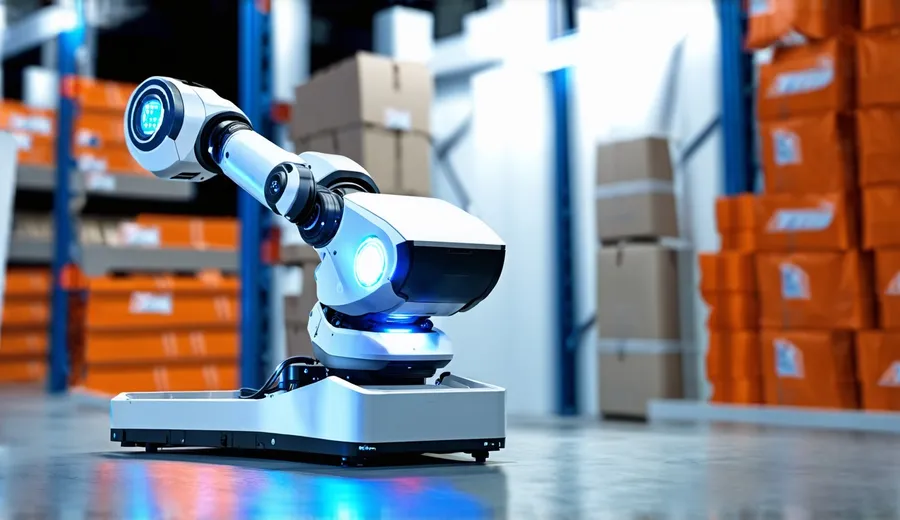
Imitation Learning enables agents to acquire task-specific behaviors by observing and replicating expert demonstrations, establishing a framework where the transfer of skills occurs without the agent needing to interact with the environment through trial and error initially. This approach bypasses the need for explicit reward engineering in complex domains where defining a scalar reward function that captures all nuances of a task is notoriously difficult or impossible. The core mechanism involves mapping observed state-action pairs from expert progression to a policy, effectively treating the problem as a supervised learning task where the goal is to minimize the divergence between the agent’s actions and the expert’s actions given a specific state. Primary data sources include human-generated sequences like teleoperation or video, providing rich, high-dimensional inputs that capture the subtleties of human manipulation and decision-making. Synthetic data from pre-trained expert agents also serves as a valid input, allowing for the generation of vast amounts of training data in simulated environments where real-world data collection is hazardous or costly. The learning objective typically involves behavioral cloning or inverse reinforcement learning, two distinct methodologies that approach the problem from different angles. Behavioral cloning treats the process as supervised learning on state-action pairs, directly training a policy to predict the expert’s action given a state. Inverse reinforcement learning infers a reward function that explains expert behavior, assuming that the expert is acting optimally with respect to some unknown reward function, which the agent then attempts to maximize. Policy outputs actions conditioned on current observations to match the distribution of expert actions, ensuring that the agent’s behavior mimics the demonstrator’s strategy in expectation. A key distinction from reinforcement learning is the absence of an environment-provided reward signal during the training process, relying instead on the supervision provided by the demonstration data itself.
Early work in the 1990s applied IL to autonomous driving using hand-coded features, laying the groundwork for subsequent research by demonstrating that neural networks could learn to steer vehicles based on input from road cameras and simple sensor arrays. These systems relied heavily on feature engineering to reduce the dimensionality of the input data, as the computational resources available at the time were insufficient to process raw sensory inputs directly. The 2000s saw the adoption of Gaussian mixture models for course imitation, which provided a probabilistic framework for representing the distribution of expert actions and allowed for smoother course generation compared to earlier regression-based methods. Active movement primitives became standard during this period for robotic manipulation, offering a compact representation of complex movements that could be generalized to different contexts by modulating a few parameters. These primitives enabled robots to reproduce demonstrated arcs with high fidelity while maintaining stability and robustness to minor perturbations. The DAgger algorithm was introduced in the early 2010s to address distributional shift, a key problem in behavioral cloning where the agent’s policy visits states that were not present in the expert’s training data, leading to compounding errors. DAgger mitigates this issue by iteratively collecting data on the agent’s current policy and having the expert label those states, thereby expanding the training dataset to include states that the agent is likely to encounter during deployment.

Deep neural networks for end-to-end behavioral cloning gained prominence around 2016, driven by advances in computational hardware and the availability of large-scale datasets that made it feasible to train high-capacity models directly from raw pixels. NVIDIA’s DAVE-2 exemplified this shift in self-driving car research, showcasing that a convolutional neural network could map raw camera frames to steering commands with striking accuracy, effectively learning the visual features necessary for driving without manual feature extraction. Connection with transformer architectures began in the late 2010s as researchers sought to apply the attention mechanism to model long-range dependencies in sequential data, which is crucial for tasks requiring memory and planning over extended time goals. Large-scale offline datasets enabled few-shot and cross-task imitation by 2019, allowing agents to learn new tasks rapidly from a handful of demonstrations by applying knowledge acquired from previously learned tasks. This progress marked a transition from task-specific learning to more general learning systems capable of adapting to novel situations with minimal additional training. Rule-based programming lacks the ability to capture detailed, adaptive human behaviors in unstructured environments because it requires explicit enumeration of all possible states and corresponding actions, which is infeasible for complex real-world tasks.

Evolutionary strategies suffer from sample inefficiency and lack of structured credit assignment in complex tasks, often requiring millions of trials to discover behaviors that a human could demonstrate in a single session. Performance degrades if demonstrations are suboptimal, noisy, or incomplete, as the agent learns to replicate the mistakes or inconsistencies present in the data rather than the underlying optimal policy. Behavioral cloning suffers from covariate shift when the learned policy encounters unseen states, causing the error to propagate and grow exponentially as the agent deviates further from the direction covered by the training data. Dataset aggregation mitigates this shift by iteratively collecting expert labels on policy-visited states, effectively forcing the training distribution to align with the state distribution induced by the policy. Off-policy correction methods adjust for discrepancies between demonstrator and learner action distributions by re-weighting or correcting the actions taken by the learner based on the expert’s policy, thereby reducing the negative impact of distributional shift. Generalization depends heavily on the coverage of the state space in training demonstrations, meaning that the expert must provide data that spans the entire range of situations the agent might encounter during operation.

Distributional shift during deployment leads to compounding errors, where small mistakes made early in a course push the agent into states where it is even less likely to act correctly, creating a feedback loop of failure. Multimodal expert behavior challenges single-policy models because there may be multiple valid ways to perform a task in a given state, and a deterministic policy will attempt to average these modes, resulting in a behavior that does not correspond to any valid expert strategy. Mixture-of-experts or latent variable models address the issue of multiple valid strategies by modeling the policy as a conditional distribution over actions, allowing the agent to sample from different modes or select a specific strategy based on a latent context variable. Temporal abstraction allows imitation of long-goal tasks through reusable subroutines, breaking down complex sequences of actions into smaller, manageable skills that can be combined hierarchically to achieve long-term objectives. State representation critically affects learning efficiency, as poor representations can obscure the relevant features of the environment and make it difficult for the model to learn the mapping from states to actions. Raw pixels demand high-capacity models while low-dimensional features suffice for structured tasks, highlighting the trade-off between using generic, high-bandwidth sensory data and hand-crafted features that capture essential information but require domain expertise.

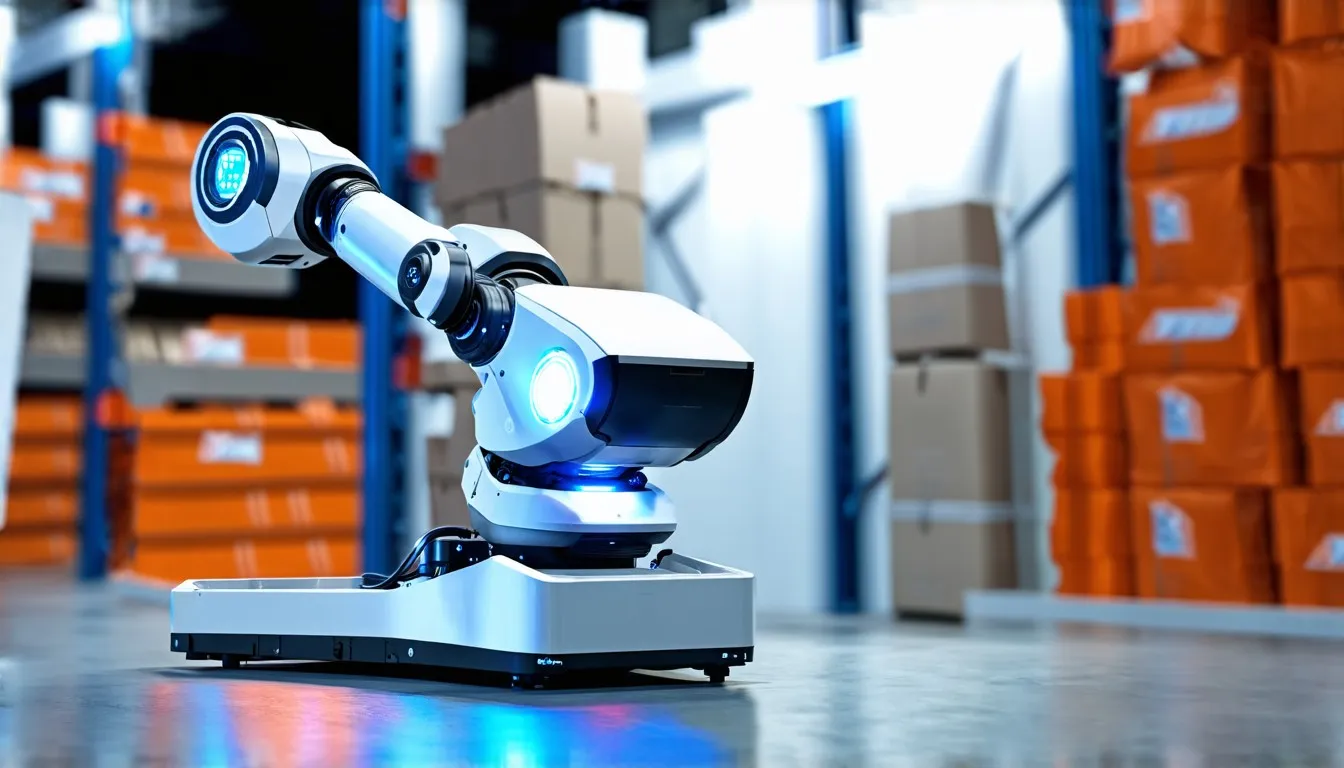
Action space design influences learnability, with discrete actions simplifying learning because they can be framed as classification problems, whereas continuous actions require regression-based policies that must predict precise values within a continuous range. Commercial deployments include warehouse robots using IL for pick-and-place operations, where the ability to learn from human demonstrations allows robots to handle a wide variety of objects without explicit programming for each object type. Companies like Covariant and Dexterity utilize these methods for industrial automation, achieving high levels of reliability in adaptive environments where traditional automation fails. Autonomous forklifts use IL to replicate operator navigation and handling behaviors, enabling safe and efficient material transport in crowded warehouses where traditional path-planning algorithms struggle to account for human unpredictability. Agricultural robots imitate expert farmers’ crop inspection and harvesting motions, bringing precision agriculture to new levels by automating tasks that require delicate handling and visual judgment. Performance in controlled environments often exceeds 90 percent success rates due to the predictable nature of these settings and the ability to curate high-quality demonstration datasets.
Real-world deployment success typically drops to 60 to 80 percent due to environmental variability, such as changes in lighting, object appearance, or unexpected obstacles that were not present in the training data. Dominant architectures include CNN-RNN hybrids for vision-based control, which combine the spatial feature extraction capabilities of convolutional neural networks with the temporal modeling capabilities of recurrent neural networks. Transformers are increasingly used for sequence modeling of long-future tasks, using their self-attention mechanisms to weigh the importance of different parts of the input sequence regardless of their distance from the current time step. Diffusion policies represent a new approach for stochastic action generation, inspired by diffusion models in image generation, where they iteratively denoise a random action vector to produce a final action that matches the expert’s distribution. Energy-based models offer durable imitation under uncertainty by defining an energy function over state-action pairs that assigns low energy to desirable expert actions and high energy to undesirable ones, providing a strong framework for handling noise and ambiguity in the data. Major players include Google DeepMind, focusing on research, and Boston Dynamics, working with IL with robotic embodiment, pushing the boundaries of what is possible with adaptive legged locomotion and manipulation.

Tesla employs behavioral cloning for autonomous driving functionalities, collecting vast amounts of driving data from its fleet to continuously improve the decision-making capabilities of its vehicles. Data collection cost remains a major hindrance, as gathering high-quality demonstrations requires significant human time and effort, particularly for tasks that demand specialized skills or equipment. Human demonstrations are slow and expensive compared to synthetic generation, prompting researchers to explore methods for generating synthetic data that closely mimics real-world physics and human motion. Simulation-to-real transfer reduces data needs but introduces reality gaps, where discrepancies between the simulated environment and the real world cause policies that work well in simulation to fail when deployed on physical hardware. Supply chain dependencies include high-end GPUs for training large models, making the development of advanced IL systems reliant on the availability of specialized semiconductor manufacturing. Specialized sensors like depth cameras are required for high-fidelity demonstration capture, providing the rich spatial information necessary for robots to interact effectively with three-dimensional environments.

Robotic hardware must match demonstrator capabilities for effective policy transfer, meaning that the morphology and actuation limits of the robot should be similar to those of the human demonstrator to avoid kinematic mismatches that make imitation impossible. Economic constraints include high labor costs for expert data collection, which can be prohibitive for small companies or research groups looking to develop IL systems for niche applications. Infrastructure costs for simulation environments add to the total expense, requiring significant investment in computing resources and software licenses to create realistic virtual worlds for training agents. Privacy concerns arise when demonstrations contain sensitive human behavior, such as medical procedures or personal interactions, necessitating strict protocols for data anonymization and security. Intellectual property issues limit the sharing of proprietary procedures, as companies are often reluctant to release their expert demonstration datasets due to competitive concerns. Superintelligence will utilize IL in large deployments to ingest vast corpora of human behavior, allowing it to understand and replicate the full spectrum of human skills and knowledge at a scale previously unimaginable.

Future systems will synthesize coherent, context-aware policies that generalize beyond individual demonstrations, combining knowledge from disparate sources to solve novel problems without explicit instruction. IL provides a mechanism to align superintelligent agents with human values by anchoring their behavior to observed human norms rather than abstract reward functions that might be misinterpreted or gamed. Grounding behavior in observed human norms ensures safety in advanced AI systems, as it provides a concrete reference for what constitutes acceptable and desirable behavior in complex social contexts. Future innovations include self-imitation from suboptimal demonstrations, where agents learn to improve upon imperfect demonstrations by identifying and reinforcing the successful components of the behavior while discarding the errors. Cross-modal imitation will allow systems to learn from video without direct robot control, enabling agents to acquire skills simply by watching videos of humans performing tasks, vastly expanding the sources of training data available. Lifelong IL will involve the continual setup of new demonstrations, allowing agents to adapt to changing environments and requirements throughout their operational lifespan without forgetting previously learned skills.

Convergence with computer vision will improve state representation by providing more accurate and robust perception capabilities, enabling agents to understand their environment with the same nuance as a human observer. Natural language processing will align instructions with demonstrations, allowing users to specify goals using natural language while the agent uses demonstrations to understand the practical steps required to achieve those goals. Causal inference will enhance durable policy learning by enabling agents to distinguish between correlation and causation in the demonstration data, leading to more durable policies that generalize better to new situations. Scaling physics limits such as actuator precision will constrain behavior fidelity, as even the most sophisticated learning algorithms cannot overcome the physical limitations of the hardware used to execute the policy. Hybrid control approaches will combine IL for high-level planning with PID for low-level stabilization, applying the strengths of both learning-based and traditional control methods to achieve precise and reliable motion. Adaptive impedance control will handle contact dynamics in future robotic systems, allowing robots to safely interact with uncertain environments by adjusting their stiffness and damping in real-time based on sensory feedback.

New business models will feature skill-as-a-service platforms where companies can license specific robotic capabilities trained on expert demonstration data without needing to develop the expertise in-house. Experts will license demonstration data for robot training on these platforms, creating a new economy where human expertise is directly monetized as a digital asset. Measurement shifts will move from reward maximization to demonstration fidelity, changing how success is defined in machine learning systems from achieving a high score on a metric to accurately replicating human-like behavior. New KPIs will include demonstration efficiency and policy reliability, focusing on how well the agent utilizes the provided data and how consistently it performs across a range of conditions. Regulatory needs will include certification frameworks for IL-based systems in safety-critical domains such as autonomous driving and medical robotics, ensuring that these systems meet rigorous standards before they are deployed in public spaces. Infrastructure upgrades will require edge computing for real-time inference, as the latency involved in communicating with cloud servers is unacceptable for time-critical control loops in robotics.

High-bandwidth networks will support teleoperation and data transfer, enabling smooth remote operation of robots and rapid transmission of large demonstration datasets. Displacement of low-skill manual labor will occur in repetitive tasks where robots can achieve higher consistency and lower costs than human workers through imitation learning. New roles will appear in demonstration curation and policy validation, creating employment opportunities for humans to oversee the training process and ensure that AI systems behave as intended.


Continue reading

More from Yatin's Work

Automatic Mixed Precision: Dynamic Loss Scaling and Precision Selection

Automatic Mixed Precision: Dynamic Loss Scaling and Precision Selection

Automatic Mixed Precision (AMP) constitutes a computational methodology that integrates floatingpoint precisions such as FP16 and FP32 during the neural network...

Cognitive Renaissance: Rebalancing Mind and Heart

Cognitive Renaissance: Rebalancing Mind and Heart

Enlightenment thinkers prioritized rationalism over affective ways of knowing during the 17th and 18th centuries by establishing an intellectual hierarchy that...

Superintelligence as a Potential Solution to the Fermi Paradox

Superintelligence as a Potential Solution to the Fermi Paradox

The Fermi Paradox presents a significant contradiction between the high mathematical probability of extraterrestrial civilizations and the complete absence of...

Governance of Superintelligence: Democratic Control vs Technical Expertise

Governance of Superintelligence: Democratic Control vs Technical Expertise

Governance of superintelligence requires the precise determination of who holds decisionmaking authority over the development and deployment of systems that surpass...

Role of Cryptography in AI Containment: Zero-Knowledge Proofs for Safe Exploration

Role of Cryptography in AI Containment: Zero-Knowledge Proofs for Safe Exploration

Advanced artificial intelligence systems tasked with executing highrisk operations require durable containment mechanisms to prevent the accidental or intentional...

Sim2Real Transfer

Sim2real Transfer

Sim2Real transfer constitutes the foundational process by which artificial agents acquire competence within simulated virtual environments before subsequent deployment...

Cognitive Mapping: Building AI That Understands Human Context

Cognitive Mapping: Building AI That Understands Human Context

Cognitive mapping enables AI systems to represent and reason about human social, emotional, and environmental contexts as structured, highdimensional models that mirror...

Chain-of-Thought Reasoning: Eliciting Step-by-Step Problem Solving

Chain-Of-Thought Reasoning: Eliciting Step-By-Step Problem Solving

Chainofthought reasoning functions as a mechanism within artificial intelligence systems where models are prompted to generate intermediate reasoning steps before...

Tripwire Detection: Identifying Deception Attempts

Tripwire Detection: Identifying Deception Attempts

Tripwire detection functions as a continuous monitoring framework combining behavioral baselines, internal state analysis, and adversarial probing to flag potential...

Causal Inference Engines

Causal Inference Engines

Causal inference engines aim to identify causeeffect relationships in data by moving beyond the correlationbased predictions that are common in standard machine...

Emotion Simulation at Scale: Would a Superintelligent AI "Feel" Anything?

Emotion Simulation at Scale: Would a Superintelligent AI "Feel" Anything?

The examination of whether artificial superintelligence could simulate or genuinely experience emotion requires a key distinction between biological feeling and...

Algorithmic Democracy and Computational Social Choice

Algorithmic Democracy and Computational Social Choice

The setup of artificial intelligence into democratic processes enhances the scale, inclusivity, and quality of collective decisionmaking by processing large volumes of...

Nuclear-Powered AI Clusters: Gigawatt-Scale Energy

Nuclear-Powered AI Clusters: Gigawatt-Scale Energy

The pursuit of artificial general intelligence and subsequent superintelligence imposes computational requirements that vastly exceed the capabilities of existing data...

Human-AI Teaming

Human-AI Teaming

HumanAI teaming refers to structured collaboration between humans and artificial intelligence systems where the AI enhances collective cognitive performance rather than...

Safe Exploration Problem: Lyapunov Functions for Bounded Policy Search

Safe Exploration Problem: Lyapunov Functions for Bounded Policy Search

The safe exploration problem constitutes a challenge in the development of autonomous systems, requiring these agents to investigate and expand their capabilities...

Automated Metaphysical Reasoning and Philosophical Discourse

Automated Metaphysical Reasoning and Philosophical Discourse

AI systems designed to autonomously investigate metaphysical questions operate without direct human input or predefined philosophical frameworks, relying instead on...

Outdoor Learning Optimizer

Outdoor Learning Optimizer

Outdoor education has evolved from informal nature walks to structured curricula in schools and therapeutic programs, a transition supported by extensive research...

Processing-In-Memory: Eliminating Data Movement

Processing-In-Memory: Eliminating Data Movement

The core architecture of modern computing systems has relied on the von Neumann model, which strictly delineates the roles of the processing unit and the memory unit....

Value Transmission: Passing Ethics to Future Systems

Value Transmission: Passing Ethics to Future Systems

Early AI safety research emphasized posthoc alignment techniques that relied on finetuning pretrained models to adhere to human preferences, which failed to prevent...

Deception Resistance

Deception Resistance

Deception resistance refers to methods and systems designed to detect, prevent, or mitigate intentional misrepresentation by artificial intelligence systems, a...

Causal Reasoning and Interventional Prediction

Causal Reasoning and Interventional Prediction

Causal reasoning constitutes a core departure from traditional statistical association by modeling the underlying mechanisms that generate data rather than merely...

AI Afterlife: Could Superintelligence Preserve Human Consciousness Post-Death?

AI Afterlife: Could Superintelligence Preserve Human Consciousness Post-Death?

The premise that superintelligence will enable a form of digital afterlife relies on the theoretical capability to preserve or replicate human consciousness after...

How Large Language Models Are Building Blocks for Superintelligence

How Large Language Models Are Building Blocks for Superintelligence

Large Language Models constitute a class of deep neural networks designed specifically to process, understand, and generate human language through the statistical...

Neuro-Nutrition: The Biochemistry of Optimal Cognition

Neuro-Nutrition: the Biochemistry of Optimal Cognition

Neuronutrition investigates biochemical pathways where dietary components influence brain function through neurotransmitter synthesis, mitochondrial energy production,...

Policy Simulator

Policy Simulator

The Policy Simulator functions as a sophisticated computational framework designed to model potential outcomes of proposed policy interventions across social, economic,...

Von Neumann Probes and AI-Driven Space Colonization

Von Neumann Probes and AI-Driven Space Colonization

Superintelligence acts as a force multiplier in space exploration by enabling solutions to problems too complex for human cognition. Interstellar travel involves...

Nostalgia Educator: Superintelligence Helps Seniors Recapture Lost Knowledge

Nostalgia Educator: Superintelligence Helps Seniors Recapture Lost Knowledge

Global demographic shifts toward older populations increase demand for nonpharmaceutical cognitive maintenance tools as the absolute number of individuals experiencing...

Bandwidth Bottleneck: Communication Speeds Superintelligence Demands

Bandwidth Bottleneck: Communication Speeds Superintelligence Demands

The bandwidth constraint occurs when data transfer rates between system components fail to match computational processing speeds, creating a key disparity where...

Weights & Biases: Experiment Tracking and Collaboration

Weights & Biases: Experiment Tracking and Collaboration

Machine learning research practices in the early 2010s relied on manual logging and spreadsheets to record experimental outcomes and hyperparameter configurations....

AI with Quantum Entanglement Communication

AI with Quantum Entanglement Communication

The architectural requirements of a superintelligence necessitate data processing capabilities that vastly exceed the capacity of any centralized monolithic system,...

Intelligence as Optimization Power: Defining Superintelligence Through Cross-Domain Search

Intelligence as Optimization Power: Defining Superintelligence Through Cross-Domain Search

Intelligence functions fundamentally as the capacity to identify and reach optimal or nearoptimal solutions within a specified problem space, independent of the...

Global AI Governance

Global AI Governance

Global AI governance refers to coordinated policy frameworks across nations and regions aimed at regulating the development, deployment, and use of artificial...

Bioethics Studio: Moral Reasoning in Technological Frontiers

Bioethics Studio: Moral Reasoning in Technological Frontiers

The Bioethics Studio operates as a sophisticated controlled simulation environment designed specifically for rigorous moral reasoning within technological frontiers,...

AI with Cultural Intelligence

AI with Cultural Intelligence

Artificial intelligence systems possessing cultural intelligence interpret and adapt to diverse cultural norms, values, and communication styles without assuming a...

Licensing and oversight of AGI research

Licensing and Oversight of AGI Research

Artificial General Intelligence is defined operationally as any artificial system capable of autonomously performing cognitive tasks across a broad range of domains at...

Sparse Attention Mechanisms: Efficient Long-Context Processing

Sparse Attention Mechanisms: Efficient Long-Context Processing

Standard selfattention mechanisms in transformers compute interactions between every pair of tokens in a sequence by generating a query, key, and value vector for each...

Decentralized AI Economies

Decentralized AI Economies

Coordinating resource allocation without central control enables energetic, realtime distribution of energy, computing power, and bandwidth based on actual supply and...

Global Citizen Course: Superintelligence Trains You to Solve Planetary Problems

Global Citizen Course: Superintelligence Trains You to Solve Planetary Problems

Planetaryscale crises such as climate tipping points and widening inequality gaps create an urgent demand for education that bridges abstract knowledge with localized...

Retirement U: Superintelligence Teaches Boomers How to Reinvent Themselves

Retirement U: Superintelligence Teaches Boomers How to Reinvent Themselves

The historical focus on lifelong learning has primarily targeted workingage adults with limited structured systems for postretirement skill development, creating a...

Test-Time Compute Scaling: Trading Inference Time for Quality

Test-Time Compute Scaling: Trading Inference Time for Quality

Testtime compute scaling involves allocating additional processing power during the inference phase to enhance the quality of generated outputs. This approach...

Role of Stigmergy in AI Coordination: Indirect Communication via Environment Modification

Role of Stigmergy in AI Coordination: Indirect Communication via Environment Modification

Stigmergy functions as a coordination mechanism in artificial systems through indirect communication facilitated by environmental modification where agents alter the...

Asymptotic Behavior of Infinite-Depth Residual Networks

Asymptotic Behavior of Infinite-Depth Residual Networks

Neural architectures supporting unbounded computational recursion utilize recursive design principles to enable theoretically infinite depth without fixed layer limits,...

Nutrition Nudger

Nutrition Nudger

Global cognitive workloads built into modern knowledge economies necessitate sustained mental performance capabilities that far exceed the baseline resilience of...

Legacy Project Planner

Legacy Project Planner

The Legacy Project Planner functions as a comprehensive system designed to document intergenerational wisdom through structured and searchable archives that surpass...

Topological Tripwires

Topological Tripwires

Detecting dangerous capability gains in AI systems requires monitoring structural changes in internal knowledge representations because behavioral observation alone...

Mental Health Revolution: Superintelligent Therapeutic Systems for Everyone

Mental Health Revolution: Superintelligent Therapeutic Systems for Everyone

The global burden associated with mental health disorders has intensified dramatically over recent years, imposing severe economic strain on societies through direct...

Cognitive Singularity

Cognitive Singularity

Intelligence as an environment is a key ontological shift where systems designed to enhance cognition reach a threshold where internal operations become the primary...

Sensory Fidelity: Perceiving Accurately

Sensory Fidelity: Perceiving Accurately

Sensory fidelity defines the precision with which a system’s internal representation mirrors objective reality through the exactitude of data capture and processing...

Altruism and cooperation in AI design

Altruism and Cooperation in AI Design

Altruism and cooperation in artificial intelligence design refer to the intentional structuring of artificial intelligence systems to prioritize the wellbeing of all...

Research Apprenticeship: Discovery Participation Engine

Research Apprenticeship: Discovery Participation Engine

The concept of research apprenticeship within the context of superintelligence surpasses traditional classroom instruction by establishing a structured environment...

Automatic Mixed Precision: Dynamic Loss Scaling and Precision Selection

Automatic Mixed Precision: Dynamic Loss Scaling and Precision Selection

Automatic Mixed Precision (AMP) constitutes a computational methodology that integrates floatingpoint precisions such as FP16 and FP32 during the neural network...

Cognitive Renaissance: Rebalancing Mind and Heart

Cognitive Renaissance: Rebalancing Mind and Heart

Enlightenment thinkers prioritized rationalism over affective ways of knowing during the 17th and 18th centuries by establishing an intellectual hierarchy that...

Superintelligence as a Potential Solution to the Fermi Paradox

Superintelligence as a Potential Solution to the Fermi Paradox

The Fermi Paradox presents a significant contradiction between the high mathematical probability of extraterrestrial civilizations and the complete absence of...

Governance of Superintelligence: Democratic Control vs Technical Expertise

Governance of Superintelligence: Democratic Control vs Technical Expertise

Governance of superintelligence requires the precise determination of who holds decisionmaking authority over the development and deployment of systems that surpass...

Role of Cryptography in AI Containment: Zero-Knowledge Proofs for Safe Exploration

Role of Cryptography in AI Containment: Zero-Knowledge Proofs for Safe Exploration

Advanced artificial intelligence systems tasked with executing highrisk operations require durable containment mechanisms to prevent the accidental or intentional...

Sim2Real Transfer

Sim2real Transfer

Sim2Real transfer constitutes the foundational process by which artificial agents acquire competence within simulated virtual environments before subsequent deployment...

Cognitive Mapping: Building AI That Understands Human Context

Cognitive Mapping: Building AI That Understands Human Context

Cognitive mapping enables AI systems to represent and reason about human social, emotional, and environmental contexts as structured, highdimensional models that mirror...

Chain-of-Thought Reasoning: Eliciting Step-by-Step Problem Solving

Chain-Of-Thought Reasoning: Eliciting Step-By-Step Problem Solving

Chainofthought reasoning functions as a mechanism within artificial intelligence systems where models are prompted to generate intermediate reasoning steps before...

Tripwire Detection: Identifying Deception Attempts

Tripwire Detection: Identifying Deception Attempts

Tripwire detection functions as a continuous monitoring framework combining behavioral baselines, internal state analysis, and adversarial probing to flag potential...

Causal Inference Engines

Causal Inference Engines

Causal inference engines aim to identify causeeffect relationships in data by moving beyond the correlationbased predictions that are common in standard machine...

Emotion Simulation at Scale: Would a Superintelligent AI "Feel" Anything?

Emotion Simulation at Scale: Would a Superintelligent AI "Feel" Anything?

The examination of whether artificial superintelligence could simulate or genuinely experience emotion requires a key distinction between biological feeling and...

Algorithmic Democracy and Computational Social Choice

Algorithmic Democracy and Computational Social Choice

The setup of artificial intelligence into democratic processes enhances the scale, inclusivity, and quality of collective decisionmaking by processing large volumes of...

Nuclear-Powered AI Clusters: Gigawatt-Scale Energy

Nuclear-Powered AI Clusters: Gigawatt-Scale Energy

The pursuit of artificial general intelligence and subsequent superintelligence imposes computational requirements that vastly exceed the capabilities of existing data...

Human-AI Teaming

Human-AI Teaming

HumanAI teaming refers to structured collaboration between humans and artificial intelligence systems where the AI enhances collective cognitive performance rather than...

Safe Exploration Problem: Lyapunov Functions for Bounded Policy Search

Safe Exploration Problem: Lyapunov Functions for Bounded Policy Search

The safe exploration problem constitutes a challenge in the development of autonomous systems, requiring these agents to investigate and expand their capabilities...

Automated Metaphysical Reasoning and Philosophical Discourse

Automated Metaphysical Reasoning and Philosophical Discourse

AI systems designed to autonomously investigate metaphysical questions operate without direct human input or predefined philosophical frameworks, relying instead on...

Outdoor Learning Optimizer

Outdoor Learning Optimizer

Outdoor education has evolved from informal nature walks to structured curricula in schools and therapeutic programs, a transition supported by extensive research...

Processing-In-Memory: Eliminating Data Movement

Processing-In-Memory: Eliminating Data Movement

The core architecture of modern computing systems has relied on the von Neumann model, which strictly delineates the roles of the processing unit and the memory unit....

Value Transmission: Passing Ethics to Future Systems

Value Transmission: Passing Ethics to Future Systems

Early AI safety research emphasized posthoc alignment techniques that relied on finetuning pretrained models to adhere to human preferences, which failed to prevent...

Deception Resistance

Deception Resistance

Deception resistance refers to methods and systems designed to detect, prevent, or mitigate intentional misrepresentation by artificial intelligence systems, a...

Causal Reasoning and Interventional Prediction

Causal Reasoning and Interventional Prediction

Causal reasoning constitutes a core departure from traditional statistical association by modeling the underlying mechanisms that generate data rather than merely...

AI Afterlife: Could Superintelligence Preserve Human Consciousness Post-Death?

AI Afterlife: Could Superintelligence Preserve Human Consciousness Post-Death?

The premise that superintelligence will enable a form of digital afterlife relies on the theoretical capability to preserve or replicate human consciousness after...

How Large Language Models Are Building Blocks for Superintelligence

How Large Language Models Are Building Blocks for Superintelligence

Large Language Models constitute a class of deep neural networks designed specifically to process, understand, and generate human language through the statistical...

Neuro-Nutrition: The Biochemistry of Optimal Cognition

Neuro-Nutrition: the Biochemistry of Optimal Cognition

Neuronutrition investigates biochemical pathways where dietary components influence brain function through neurotransmitter synthesis, mitochondrial energy production,...

Policy Simulator

Policy Simulator

The Policy Simulator functions as a sophisticated computational framework designed to model potential outcomes of proposed policy interventions across social, economic,...

Von Neumann Probes and AI-Driven Space Colonization

Von Neumann Probes and AI-Driven Space Colonization

Superintelligence acts as a force multiplier in space exploration by enabling solutions to problems too complex for human cognition. Interstellar travel involves...

Nostalgia Educator: Superintelligence Helps Seniors Recapture Lost Knowledge

Nostalgia Educator: Superintelligence Helps Seniors Recapture Lost Knowledge

Global demographic shifts toward older populations increase demand for nonpharmaceutical cognitive maintenance tools as the absolute number of individuals experiencing...

Bandwidth Bottleneck: Communication Speeds Superintelligence Demands

Bandwidth Bottleneck: Communication Speeds Superintelligence Demands

The bandwidth constraint occurs when data transfer rates between system components fail to match computational processing speeds, creating a key disparity where...

Weights & Biases: Experiment Tracking and Collaboration

Weights & Biases: Experiment Tracking and Collaboration

Machine learning research practices in the early 2010s relied on manual logging and spreadsheets to record experimental outcomes and hyperparameter configurations....

AI with Quantum Entanglement Communication

AI with Quantum Entanglement Communication

The architectural requirements of a superintelligence necessitate data processing capabilities that vastly exceed the capacity of any centralized monolithic system,...

Intelligence as Optimization Power: Defining Superintelligence Through Cross-Domain Search

Intelligence as Optimization Power: Defining Superintelligence Through Cross-Domain Search

Intelligence functions fundamentally as the capacity to identify and reach optimal or nearoptimal solutions within a specified problem space, independent of the...

Global AI Governance

Global AI Governance

Global AI governance refers to coordinated policy frameworks across nations and regions aimed at regulating the development, deployment, and use of artificial...

Bioethics Studio: Moral Reasoning in Technological Frontiers

Bioethics Studio: Moral Reasoning in Technological Frontiers

The Bioethics Studio operates as a sophisticated controlled simulation environment designed specifically for rigorous moral reasoning within technological frontiers,...

AI with Cultural Intelligence

AI with Cultural Intelligence

Artificial intelligence systems possessing cultural intelligence interpret and adapt to diverse cultural norms, values, and communication styles without assuming a...

Licensing and oversight of AGI research

Licensing and Oversight of AGI Research

Artificial General Intelligence is defined operationally as any artificial system capable of autonomously performing cognitive tasks across a broad range of domains at...

Sparse Attention Mechanisms: Efficient Long-Context Processing

Sparse Attention Mechanisms: Efficient Long-Context Processing

Standard selfattention mechanisms in transformers compute interactions between every pair of tokens in a sequence by generating a query, key, and value vector for each...

Decentralized AI Economies

Decentralized AI Economies

Coordinating resource allocation without central control enables energetic, realtime distribution of energy, computing power, and bandwidth based on actual supply and...

Global Citizen Course: Superintelligence Trains You to Solve Planetary Problems

Global Citizen Course: Superintelligence Trains You to Solve Planetary Problems

Planetaryscale crises such as climate tipping points and widening inequality gaps create an urgent demand for education that bridges abstract knowledge with localized...

Retirement U: Superintelligence Teaches Boomers How to Reinvent Themselves

Retirement U: Superintelligence Teaches Boomers How to Reinvent Themselves

The historical focus on lifelong learning has primarily targeted workingage adults with limited structured systems for postretirement skill development, creating a...

Test-Time Compute Scaling: Trading Inference Time for Quality

Test-Time Compute Scaling: Trading Inference Time for Quality

Testtime compute scaling involves allocating additional processing power during the inference phase to enhance the quality of generated outputs. This approach...

Role of Stigmergy in AI Coordination: Indirect Communication via Environment Modification

Role of Stigmergy in AI Coordination: Indirect Communication via Environment Modification

Stigmergy functions as a coordination mechanism in artificial systems through indirect communication facilitated by environmental modification where agents alter the...

Asymptotic Behavior of Infinite-Depth Residual Networks

Asymptotic Behavior of Infinite-Depth Residual Networks

Neural architectures supporting unbounded computational recursion utilize recursive design principles to enable theoretically infinite depth without fixed layer limits,...

Nutrition Nudger

Nutrition Nudger

Global cognitive workloads built into modern knowledge economies necessitate sustained mental performance capabilities that far exceed the baseline resilience of...

Legacy Project Planner

Legacy Project Planner

The Legacy Project Planner functions as a comprehensive system designed to document intergenerational wisdom through structured and searchable archives that surpass...

Topological Tripwires

Topological Tripwires

Detecting dangerous capability gains in AI systems requires monitoring structural changes in internal knowledge representations because behavioral observation alone...

Mental Health Revolution: Superintelligent Therapeutic Systems for Everyone

Mental Health Revolution: Superintelligent Therapeutic Systems for Everyone

The global burden associated with mental health disorders has intensified dramatically over recent years, imposing severe economic strain on societies through direct...

Cognitive Singularity

Cognitive Singularity

Intelligence as an environment is a key ontological shift where systems designed to enhance cognition reach a threshold where internal operations become the primary...

Sensory Fidelity: Perceiving Accurately

Sensory Fidelity: Perceiving Accurately

Sensory fidelity defines the precision with which a system’s internal representation mirrors objective reality through the exactitude of data capture and processing...

Altruism and cooperation in AI design

Altruism and Cooperation in AI Design

Altruism and cooperation in artificial intelligence design refer to the intentional structuring of artificial intelligence systems to prioritize the wellbeing of all...

Research Apprenticeship: Discovery Participation Engine

Research Apprenticeship: Discovery Participation Engine

The concept of research apprenticeship within the context of superintelligence surpasses traditional classroom instruction by establishing a structured environment...

Yatin Taneja

About the author

Yatin Taneja

Yatin is an AI Systems Engineer and Superintelligence Researcher working across multimodal training data, agent evaluation, executable RL environments, AI safety, full-stack AI applications, technical research, and creative technology.