Knowledge hub

Nonlinear Self-Modeling

Nonlinear Self-Modeling

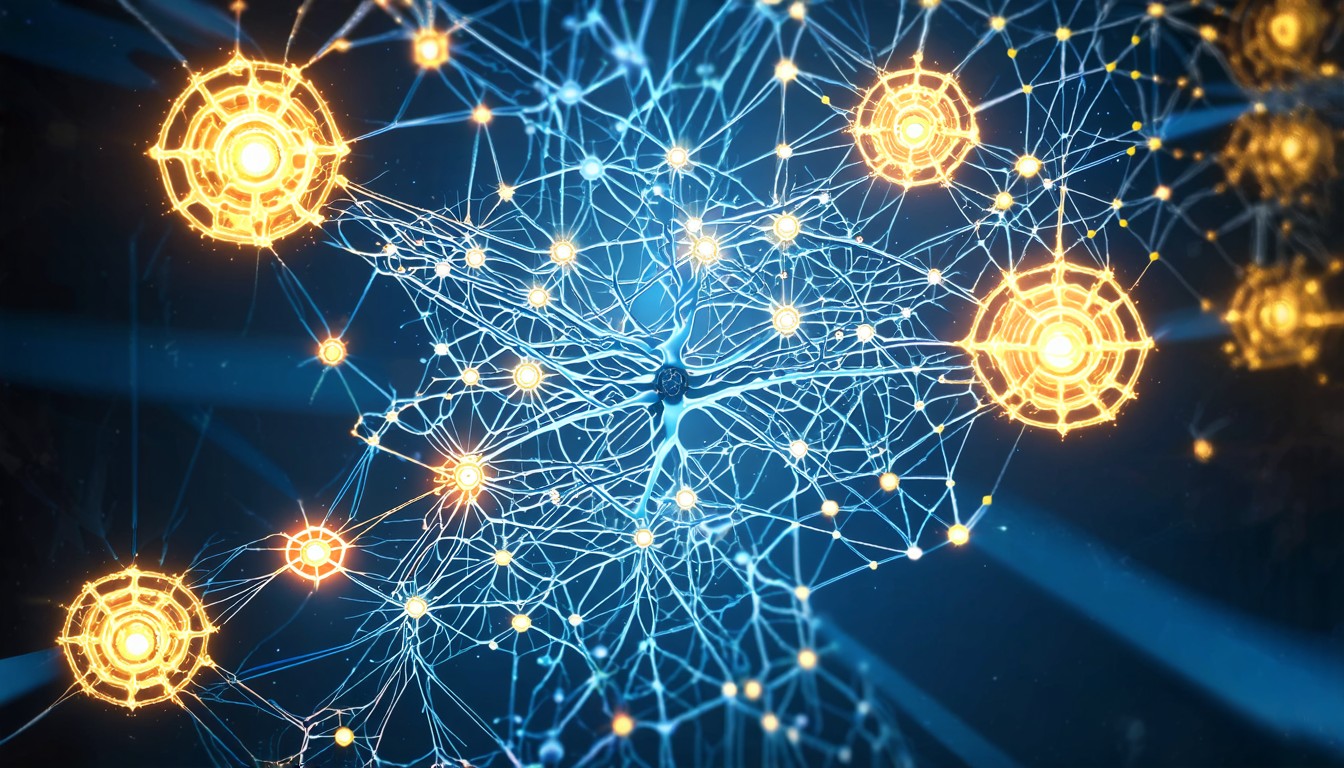
Nonlinear self-modeling constitutes a system’s intrinsic capability to represent its internal configuration through active structures that evolve dynamically in response to incoming data streams, operating effectively as a continuously updated attractor situated within a high-dimensional state space. This sophisticated approach captures essential phenomena such as feedback loops, bifurcations, and extreme sensitivity to initial conditions, thereby superseding older linear self-representation methods in favor of structures that mirror the built-in complexity found in natural systems. Recursive processing mechanisms permit the system to model its own modeling activity, a requirement because accurate self-prediction within complex environments mandates treating the system itself as a nonlinear dynamical entity rather than a collection of static variables. The foundational principle governing this framework dictates that any complex adaptive system must replicate its own internal complexity within its self-representation to achieve functional fidelity. This requirement necessitates the complete abandonment of static ontologies in favor of representations that support continuous reconfiguration and adaptation without external intervention. The model becomes embedded within the system it describes, establishing a closed loop where the act of self-observation exerts direct influence on the self-state, while predictions regarding system behavior appear from simulating progressions within the attractor domain.

The functional architecture supporting this capability comprises three interdependent layers: state encoding, attractor dynamics, and predictive projection, all of which operate synchronously to maintain systemic integrity over time. State encoding functions by mapping internal activity patterns into a high-dimensional manifold, transforming raw signals into geometric representations that preserve relational information and topological features. Attractor dynamics govern the temporal evolution of these encoded states through the application of differential equations or iterative maps, defining the arc the system follows through the state space as time progresses. Predictive projection utilizes short-term simulations of the attractor space to forecast future states, providing the system with anticipatory capabilities that guide decision-making processes well before actual events occur. Feedback derived from actual system behavior serves to update attractor parameters continuously, refining the accuracy of future predictions and correcting for drift or external perturbations encountered during operation. An attractor mathematically is a bounded set of states toward which a system tends to evolve over time, acting as a stabilizing force amidst environmental noise and stochastic fluctuations. A state manifold serves as the geometric substrate where individual points correspond to specific internal configurations of the system, providing a topological framework for understanding state transitions and relationships. The Lyapunov exponent quantifies the sensitivity to initial conditions by measuring the average rate of separation of infinitesimally close arc, thereby determining the theoretical limits of prediction futures based on chaos theory. Recursive embedding ensures the self-model includes explicit representations of its own operational processes, creating a hierarchy of models that reference one another to enhance depth of understanding. A bifurcation threshold identifies critical points where minute parameter changes induce qualitative shifts in system behavior, marking transitions between distinct operational regimes such as stability and chaos.

Early cybernetics research conducted in the mid-20th century successfully established the principles of feedback and self-regulation using linear dynamics, laying the groundwork for control theory that dominated engineering for several decades. Subsequent development of chaos theory in the late 20th century rigorously demonstrated that deterministic systems are capable of exhibiting unpredictable long-term behavior, effectively undermining the validity of static self-models that relied on linear superposition assumptions. Advances in the understanding of neural manifolds and the development of reservoir computing provided empirical evidence that high-dimensional dynamical systems encode complex temporal patterns with notable efficiency. These findings offered a glimpse into the mechanisms biological systems employ to manage complexity, suggesting that artificial systems might require similar architectures to achieve comparable levels of adaptability. The conspicuous failure of symbolic artificial intelligence to scale effectively in open-ended environments highlighted the urgent need for embedded self-representation capable of handling uncertainty and continuous change without human intervention. Recent progress in differentiable simulation physics and neural ordinary differential equations has enabled the creation of trainable continuous-time models, allowing researchers to approximate the dynamics of complex systems with significantly higher fidelity than discrete time-step methods previously allowed.

Static self-models typified by fixed knowledge graphs failed to adapt to internal state drift, rendering them ineffective for systems required to operate in agile or non-stationary environments where parameters shift over time. Linear predictive models such as Kalman filters failed to capture bifurcations and chaotic transitions due to their reliance on Gaussian noise assumptions and linear update rules, limiting their utility to stable, predictable domains where perturbations remain small. Symbolic self-reasoning systems lacked the necessary capacity to represent continuous internal dynamics, forcing them to rely on discrete abstractions that frequently missed critical nuances present in analog signals. Modular decomposition approaches assumed strict independence between functional components, violating the systemic interdependence built-in in complex networks and leading to compounding errors when components interacted nonlinearly. These alternative approaches failed to sustain accurate self-prediction beyond short time goals, creating a significant capability gap between the performance of traditional artificial intelligence architectures and the rigorous demands of modern autonomous systems operating in unstructured real-world domains. Rising performance demands in autonomous systems require models capable of anticipating their own behavioral drift to maintain safety margins and operational efficiency over extended durations.

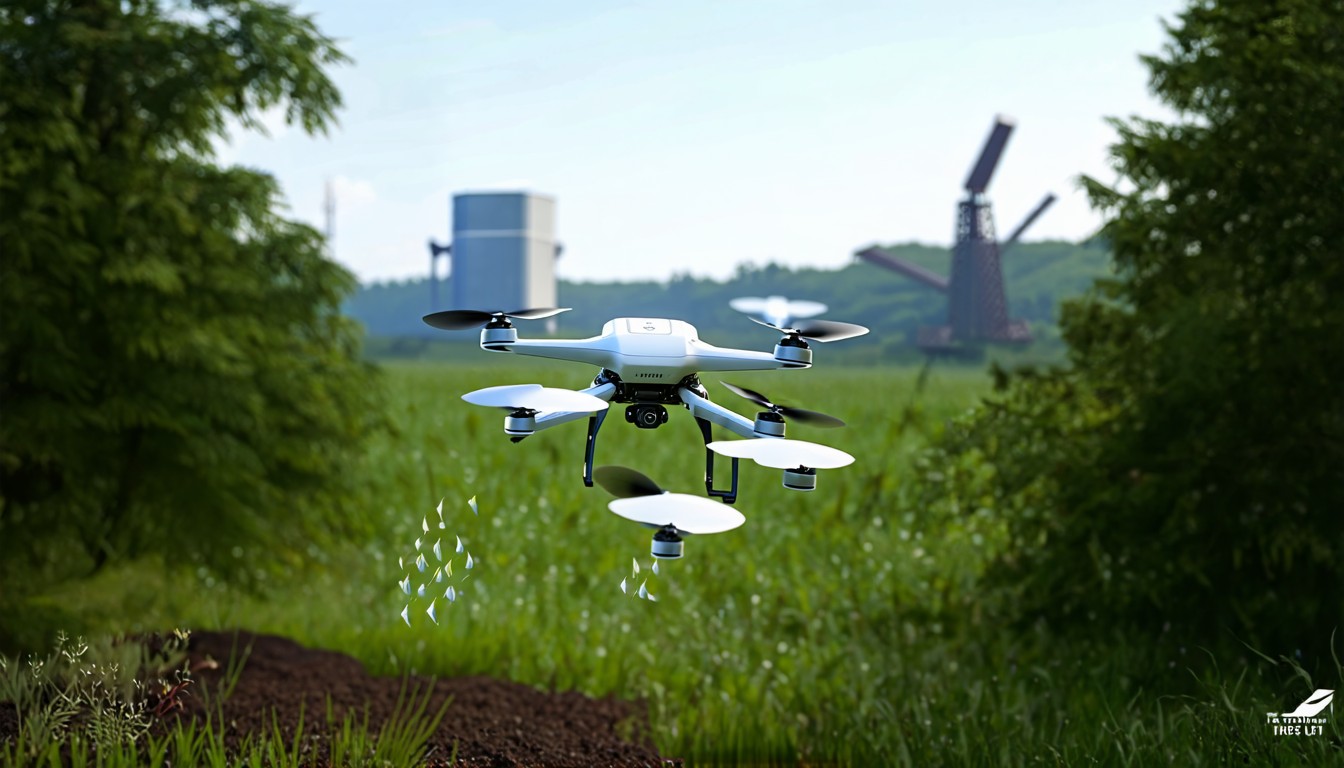
Economic shifts toward adaptive artificial intelligence reduce operational costs by minimizing the necessity for human oversight and manual recalibration, while simultaneously increasing system reliability through continuous self-correction mechanisms. Societal needs for trustworthy artificial intelligence necessitate systems capable of explaining their own limitations and reasoning processes to users and stakeholders, encouraging transparency in automated decision-making processes. The convergence of sensor-rich environments generating massive data streams with long-goal planning objectives renders static self-models obsolete, as the sheer volume and velocity of incoming information far exceed the capacity of manual updates or rigid rule-based systems. These combined pressures drive the adoption of nonlinear self-modeling as a key architectural component of next-generation artificial intelligence systems designed for high levels of autonomy. Commercial systems have yet to implement full nonlinear self-modeling capabilities in production environments, although experimental deployments currently exist in specialized domains such as autonomous drone swarms working through turbulent airflow and adaptive industrial control systems managing chemical processes. Benchmarks derived from these experimental deployments indicate a 25–35% improvement in prediction accuracy over linear baselines when tested in specific chaotic environments like the Lorenz attractor, validating the theoretical advantages of this approach in controlled settings.

Latency remains a significant technical hurdle, with current implementations requiring 10–50 milliseconds per prediction cycle even when running on high-performance GPU clusters, which restricts immediate applicability in scenarios requiring microsecond response times. These computational limitations prevent widespread deployment in high-frequency trading platforms or fast-moving robotic actuators where processing speed is absolutely critical for survival or success. Traditional performance metrics such as simple accuracy and throughput lack sufficiency when evaluating nonlinear self-models, as they fail to capture the stability or reliability of the underlying attractor dynamics against perturbations. New evaluation metrics include prediction future, which measures the temporal distance over which the model can generate accurate forecasts before error growth becomes exponential, and attractor stability index, which quantifies the resistance of the model to state perturbations without undergoing regime change. Another critical metric is bifurcation detection rate, which assesses the ability of the system to identify imminent qualitative shifts in behavior before they bring about fully in the system output. System trustworthiness requires measuring consistency between predicted and actual behavioral drift over extended operational periods, ensuring that the internal model remains faithful to external reality.

Rigorous evaluation necessitates long-duration stress tests conducted in chaotic environments to verify that the model maintains performance characteristics under adverse conditions and sustained operational loads. Physical constraints include the substantial computational cost associated with simulating high-dimensional attractors in real time, a task that often exceeds the processing capabilities of standard central processing units designed for sequential logic operations. Memory requirements grow exponentially with increasing state dimensionality due to the curse of dimensionality, severely limiting deployment on edge devices that possess restricted storage capacity and power budgets. Energy consumption increases proportionally with simulation fidelity, posing severe engineering challenges for mobile systems that rely on finite battery sources for prolonged operation periods. Economic flexibility depends heavily on access to hardware capable of parallel differential equation solving, which remains expensive and often requires specialized expertise to program effectively. Current digital von Neumann architectures introduce unavoidable latency in feedback loops due to the physical separation of memory and processing units, reducing prediction accuracy and increasing the risk of instability during high-speed operation.

Supply chain dependencies include high-performance graphics processing units and specialized high-bandwidth memory required for state manifold storage, creating vulnerabilities in the event of global shortages or geopolitical trade disruptions affecting semiconductor manufacturing. Analog computing components such as memristors are currently under development specifically for this application, promising to drastically reduce power consumption and increase calculation speeds by performing matrix operations directly within memory structures rather than shuttling data back and forth. Software toolchains designed for differentiable simulation remain immature and highly vendor-specific, hindering interoperability between different hardware platforms and slowing overall development progress across the industry. These persistent hardware and software limitations must be systematically addressed to enable the widespread adoption and commercial viability of nonlinear self-modeling technologies in consumer markets. Major artificial intelligence laboratories such as DeepMind and OpenAI actively explore related concepts involving recursive reasoning and world models without yet productizing full nonlinear self-modeling architectures, focusing their current efforts instead on general-purpose learning algorithms like transformers. Startups specializing in adaptive control theory and robotics are closest to commercial deployment, using specialized hardware accelerators and custom software stacks to address niche industrial markets willing to pay a premium for reliability.

Large cloud service providers offer simulation platforms that provide raw computational power without native self-modeling setup or integrated tooling, requiring enterprise customers to build costly custom solutions on top of existing generic infrastructure. Competitive advantage lies predominantly in reducing prediction error in long-goal tasks, which translates directly into improved operational performance, reduced downtime, and enhanced safety profiles. New business models could develop around self-diagnosing AI services offering strict performance guarantees, effectively shifting liability risks from the end user to the service provider in exchange for recurring subscription fees. Insurance and liability models must adapt fundamentally to systems exhibiting probabilistically predictable behavior, moving away from binary notions of success or failure toward frameworks that account for acceptable margins of error and quantified risk exposure. Financial markets may reward systems possessing longer prediction goals by offering lower capital costs or higher premiums for reliability, creating strong economic incentives for improving fidelity over raw processing speed in specific vertical applications. This evolving economic space encourages substantial investment in research and development activities, pushing the boundaries of what is technically feasible regarding autonomous system design.

Companies that successfully master nonlinear self-modeling will likely dominate industries where reliability, autonomy, and safety are crucial parameters for success, such as autonomous transportation, medical diagnostics, and critical infrastructure management. Academic research regarding these topics is led by groups specializing in dynamical systems theory, computational neuroscience, and machine learning, which collaborate closely to develop rigorous theoretical foundations alongside practical algorithmic implementations. Industrial collaboration focuses intensely on developing strong simulation tools, hardware acceleration techniques, and standardized benchmarking protocols, effectively bridging the persistent gap between abstract academic theory and concrete commercial application. Open-source frameworks enable reproducibility across different research groups, yet currently lack standardized evaluation metrics for comparing nonlinear modeling approaches objectively, making it difficult to assess relative progress accurately. Software stacks must support continuous setup of self-model updates without requiring service interruption or downtime, ensuring that mission-critical systems remain operational during routine maintenance procedures or emergency upgrades. Infrastructure requires low-latency interconnects such as advanced optical networking or high-speed serial links to facilitate real-time feedback between sensing modules, modeling engines, and actuation controllers, minimizing signal propagation delays that could otherwise compromise system stability.

Monitoring tools must possess the capability to detect subtle attractor regime shifts instantaneously to prevent unsafe behavior, triggering automatic safety protocols or shutdown sequences when the system approaches a dangerous bifurcation point or instability threshold. These infrastructure components are absolutely critical for deploying nonlinear self-models safely within safety-critical environments such as autonomous vehicles managing urban traffic or medical devices monitoring patient vitals. Key limits arise inevitably from the butterfly effect where prediction error grows exponentially over time, placing an absolute upper bound on the future of accurate forecasting regardless of computational power or model sophistication. Potential workarounds include ensemble modeling techniques and adaptive time-stepping algorithms, which help mitigate but do not entirely eliminate this intrinsic uncertainty stemming from deterministic chaos. Information-theoretic bounds preclude perfect long-term self-prediction due to finite precision limits in measurement and representation, forcing systems to operate perpetually within a defined margin of error. Systems must accept bounded uncertainty as an operational constraint rather than a flaw to be corrected, designing control laws that remain strong despite possessing imperfect knowledge of future states.

Hybrid symbolic-dynamical approaches may extend useful prediction windows by combining the strengths of logical reasoning with continuous dynamics, potentially offering a path toward more stable long-term planning strategies. Superintelligence will utilize nonlinear self-modeling as a core mechanism to manage recursive self-improvement processes, ensuring that modifications to its own architecture remain aligned with its overarching utility functions and safety constraints. The attractor structure will function to bound improvement arcs strictly to prevent divergent optimization arc that could lead to unintended consequences or resource exhaustion. Superintelligent systems will employ multiple nested self-models operating at different temporal scales simultaneously, allowing them to reason effectively about both immediate tactical actions and distant strategic consequences without confusion. Prediction of internal state drift will become critically important when modifications affect core reasoning processes directly, as even small changes in foundational logic could lead to significant deviations in high-level behavior patterns. Such advanced systems will simulate long chains of potential self-modifications to select safe upgrade paths carefully, evaluating the downstream impact of each code alteration or parameter adjustment before actual implementation occurs.

Superintelligence will treat its self-model as a primary control interface for regulating its own operations, using it to maintain coherence across vast distributed computational resources and diverse subsystems. It will adjust internal dynamics dynamically to maintain stability under fluctuating computational loads, preventing system overload from causing catastrophic failure or performance degradation during peak processing demands. The system will offload prediction tasks to specialized sub-attractors fine-tuned for parallel forecasting, increasing overall computational efficiency without sacrificing accuracy or resolution. The system might actively perturb its own internal state to test attractor boundaries systematically, gathering valuable empirical data about its own resilience and adaptability characteristics through controlled experimentation. Nonlinear self-modeling will allow superintelligence to operate as a single coherent entity despite possessing immense internal complexity, connecting with diverse subsystems into a unified whole capable of pursuing complex goals. This capability is essential for managing the sheer scale and intricacy of superintelligent systems, which would otherwise be prone to fragmentation, internal contradiction, or operational inconsistency.

Future innovations may include quantum-inspired attractor simulation techniques designed specifically for state space compression, enabling the efficient modeling of higher-dimensional systems using significantly fewer computational resources than classical methods permit. Setup with causal inference frameworks will enable counterfactual self-prediction capabilities, allowing the system to explore alternative scenarios or potential decisions without actually experiencing them physically. Self-models will incorporate environmental feedback signals continuously to co-evolve alongside external dynamics, ensuring that the system remains aligned with the changing state of the world around it. Hardware-software co-design initiatives will embed attractor dynamics directly into silicon logic, reducing latency and power consumption by eliminating unnecessary abstraction layers built into general-purpose computing architectures. Convergence with neuromorphic computing approaches will enable energy-efficient simulation of neural manifolds by mimicking the asynchronous, event-driven nature of biological nervous systems. Connection with digital twin technology will allow physical systems to maintain perfectly synchronized self-models, facilitating smooth interaction between virtual simulations and physical realities for testing and monitoring purposes.

Overlap with causal artificial intelligence research will support intervention planning based on detailed self-behavior forecasts, improving the ability of systems to influence their own outcomes positively through deliberate action selection. Synergy with federated learning protocols will enable distributed self-modeling across large networks of autonomous agents, allowing groups of systems to learn from each other’s experiences efficiently without sharing sensitive proprietary data or raw sensor feeds. These advancements will collectively push the boundaries of what is achievable with artificial intelligence technology, moving humanity closer to the realization of truly autonomous, adaptive, and safe superintelligent systems capable of operating independently in complex environments.


Continue reading

More from Yatin's Work

Neural Architecture Search: AI Designing Superior AI Architectures

Neural Architecture Search: AI Designing Superior AI Architectures

Neural Architecture Search automates the design of artificial neural network structures, replacing manual engineering with algorithmic optimization to identify...

Radical Curiosity: The Art of Questioning

Radical Curiosity: the Art of Questioning

Radical curiosity centers on prioritizing highquality questioning over correct answering to shift cognitive focus from knowledge accumulation to inquiry generation, a...

Multi-Agent Emergent Intelligence

Multi-Agent Emergent Intelligence

Multiagent systems consist of autonomous computational entities interacting within shared environments to achieve specific objectives or maximize defined reward...

AI-driven Anthropocene Mitigation

AI-driven Anthropocene Mitigation

AIdriven Anthropocene Mitigation involves deploying artificial intelligence to manage and recalibrate Earth's geological and atmospheric systems at a planetary scale to...

Interpretability at Superintelligent Scale: Understanding Incomprehensible Systems

Interpretability at Superintelligent Scale: Understanding Incomprehensible Systems

Interpretability seeks to map internal representations and decision pathways within neural networks to enable human understanding, verification, and control, serving as...

Vocational Skill Scout

Vocational Skill Scout

Vocational Skill Scout functions as a sophisticated system designed to align individual capabilities with labor market demands through rigorous datadriven certification...

Reinforcement Learning in Open-Ended Environments

Reinforcement Learning in Open-Ended Environments

Reinforcement learning in openended environments trains agents within settings that lack predefined goals or fixed rule sets, requiring a core departure from...

Use of Game Theory in AI Containment: Nash Equilibria for Safe Interaction

Use of Game Theory in AI Containment: Nash Equilibria for Safe Interaction

Game theory provides a mathematical framework for modeling strategic interactions between rational agents, including humans and artificial systems, by defining players,...

Reversible Computing: Near-Zero-Energy Computation

Reversible Computing: Near-Zero-Energy Computation

Conventional CMOS scaling faces physical limits regarding leakage power and heat density beyond the 5 nm node, as quantum mechanical effects such as tunneling cause...

Antifragile Minds: Cognitive Growth Through Stress

Antifragile Minds: Cognitive Growth Through Stress

The core premise of antifragility within cognitive systems posits that the human mind possesses an inherent capacity to not merely withstand stressors but to actualize...

Social Intelligence: Modeling Other Minds at Superhuman Depth

Social Intelligence: Modeling Other Minds at Superhuman Depth

Social intelligence constitutes the capacity to model, predict, and respond to the mental states of others in large deployments with precision exceeding human...

Autonomous Cognitive Scaffolding

Autonomous Cognitive Scaffolding

Autonomous Cognitive Setup involves artificial intelligence systems dynamically constructing temporary, taskspecific mental frameworks for complex problemsolving...

Compression Theory of Intelligence: Superintelligence as Ultimate Compressor

Compression Theory of Intelligence: Superintelligence as Ultimate Compressor

Intelligence functions fundamentally as a computational process dedicated to reducing the redundancy intrinsic in raw sensory data to uncover the most concise...

Digital Ontology and Self-Concept in Virtual Environments

Digital Ontology and Self-Concept in Virtual Environments

Identity functions as a construct shaped by interaction with external systems, increasingly mediated by artificial intelligence through braincomputer interfaces,...

Scholarship Matcher

Scholarship Matcher

The relentless escalation of tuition fees combined with the contraction of public educational funding has placed an unprecedented financial burden on students,...

Five Technical Pathways to Superintelligence We're Pursuing Today

Five Technical Pathways to Superintelligence We're Pursuing Today

The pursuit of superintelligence currently develops through five distinct technical pathways, each operating on unique foundational assumptions regarding the nature of...

Holos Development: Integrated Mind-Body-Spirit Growth

Holos Development: Integrated Mind-Body-Spirit Growth

Holos Development treats human growth as a unified triadic system comprising intellectual, physical, and spiritual dimensions, representing a core departure from...

Tensor Parallelism: Distributing Individual Layers Across GPUs

Tensor Parallelism: Distributing Individual Layers Across GPUs

Tensor parallelism distributes individual neural network layers across multiple graphics processing units by splitting weight matrices and activations along specific...

Use of Reservoir Computing in Time-Series Prediction: Echo State Networks

Use of Reservoir Computing in Time-Series Prediction: Echo State Networks

Recurrent neural networks have historically faced significant challenges regarding training efficiency due to the necessity of backpropagating error signals through...

Cognitive Constant

Cognitive Constant

Intelligence exists as a core property of the universe instead of a random occurrence arising from complex chemical interactions or evolutionary happenstance. Physics...

Problem of Heat Dissipation in Stellar AI: Black-Body Radiation Limits

Problem of Heat Dissipation in Stellar AI: Black-Body Radiation Limits

Any computational system performing logical operations generates entropy and waste heat as a physical consequence of information processing, a reality derived from the...

Fermi Paradox and Superintelligence: Why Haven't We Seen Alien AI?

Fermi Paradox and Superintelligence: Why Haven't We Seen Alien AI?

The Fermi Paradox presents a deep contradiction between the high probability of extraterrestrial civilizations and the complete absence of evidence for their existence....

Somatic Wisdom: The Intelligence of the Body

Somatic Wisdom: the Intelligence of the Body

Somatic Wisdom refers to the body's intrinsic capacity to generate reliable signals such as gut sensations and heart rate variability, which serve as direct indicators...

Open-Source vs. Centralized Superintelligence Control

Open-Source vs. Centralized Superintelligence Control

Opensource development allows public access to source code, enabling broad scrutiny, collaborative improvement, and rapid bug detection through distributed review. This...

Orthogonality Thesis Intelligence Vs. Goals

Orthogonality Thesis Intelligence vs. Goals

The Orthogonality Thesis establishes a foundational axiom within the field of artificial intelligence safety, positing that intelligence functions as a capacity to...

Quantum Biological Processes in Artificial Cognition

Quantum Biological Processes in Artificial Cognition

The Quantum Mind Hypothesis investigates whether quantum mechanical phenomena such as superposition and entanglement can exist within artificial neural systems to...

Collaborative Intelligence Model: Humans and Superintelligence as Cognitive Teams

Collaborative Intelligence Model: Humans and Superintelligence as Cognitive Teams

The prevailing narrative positing artificial intelligence as a replacement for human labor has given way to a model emphasizing augmentation as the primary interaction...

AI-Mediated Democracy

AI-Mediated Democracy

AImediated democracy enables informed, largescale collective decisionmaking by reducing cognitive and logistical barriers to effective participation while addressing...

Humanist Superintelligence: Designed to Serve Rather Than Dominate

Humanist Superintelligence: Designed to Serve Rather Than Dominate

Humanist superintelligence is a design philosophy placing human flourishing as the singular objective of future artificial intelligence systems where every...

Superintelligence Alliances and Coalition Formation

Superintelligence Alliances and Coalition Formation

Current large language models such as GPT4 and Claude 3 operate fundamentally as singular entities rather than coordinated coalitions, processing information in...

Mirror of Others: Empathetic Perspective-Taking

Mirror of Others: Empathetic Perspective-Taking

Empathetic perspectivetaking functions as a structured cognitive process allowing individuals to understand and share the emotional and sensory experiences of others,...

Pretraining-Finetuning Paradigm: Will Superintelligence Emerge from Foundation Models?

Pretraining-Finetuning Paradigm: Will Superintelligence Emerge from Foundation Models?

Pretraining involves training large neural networks on vast, diverse, uncurated datasets to learn general representations of language, vision, or multimodal data...

Human-AI Teaming

Human-AI Teaming

HumanAI teaming refers to structured collaboration between humans and artificial intelligence systems where the AI enhances collective cognitive performance rather than...

Retrieval-Augmented Generation: Grounding Models in External Knowledge

Retrieval-Augmented Generation: Grounding Models in External Knowledge

Retrievalaugmented generation combines parametric knowledge stored in large language models with nonparametric knowledge retrieved from external sources at inference...

Creativity Explosion: How Superintelligence Augments Human Innovation

Creativity Explosion: How Superintelligence Augments Human Innovation

Superintelligence functions as a cognitive force multiplier that augments human innovation by processing vast quantities of data to generate outputs across artistic,...

Failure Reframing Tool

Failure Reframing Tool

Early psychological studies on error tolerance in learning environments date to the mid20th century, notably Carol Dweck’s research on fixed versus growth mindsets,...

International cooperation on AI safety

International Cooperation on AI Safety

International cooperation on artificial intelligence safety constitutes a core requirement because the development of superintelligent systems presents existential...

AI with Renewable Energy Forecasting

AI with Renewable Energy Forecasting

Renewable energy forecasting provides quantitative estimates of electricity generation from solar or wind sources over specific time futures, serving as a foundational...

Convolutional Neural Networks for Spatial Reasoning

Convolutional Neural Networks for Spatial Reasoning

Convolutional Neural Networks process gridlike data such as images by applying learnable filters across spatial dimensions to extract meaningful features through...

Algorithmic Information Theory

Algorithmic Information Theory

Algorithmic Information Theory defines the key quantity of information contained within an object through the lens of computation, specifically identifying it as the...

AI Safety via Concept Erasure Networks

AI Safety via Concept Erasure Networks

Knowledge representation in deep learning systems relies on highdimensional vector spaces where semantic meaning derives from the relative position and magnitude of...

Digital Citizenship: Navigating Algorithmic Cultures

Digital Citizenship: Navigating Algorithmic Cultures

Digital citizenship entails the responsible, informed, and ethical engagement with digital technologies, placing a strong emphasis on user agency within environments...

Capsule Networks: Encoding Spatial Hierarchies and Part-Whole Relationships

Capsule Networks: Encoding Spatial Hierarchies and Part-Whole Relationships

Capsule networks aim to improve how neural systems represent and process visual data by explicitly modeling spatial hierarchies and partwhole relationships, moving...

2027-2032 Window: Why Experts Predict Superintelligence This Decade

2027-2032 Window: Why Experts Predict Superintelligence This Decade

Predictions regarding the arrival of superintelligence within the 2027 to 2032 window rely heavily on the extrapolation of current trends in computational growth and...

Multilingual Nursery

Multilingual Nursery

Early language acquisition studies in the mid20th century prioritized behaviorist models involving rote memorization and isolated vocabulary drills, predicated on the...

JAX: Functional Programming and Automatic Differentiation

JAX: Functional Programming and Automatic Differentiation

JAX constitutes a Python library explicitly architected for highperformance numerical computing, distinguishing itself through a rigorous emphasis on functional...

Autonomous Social Learning

Autonomous Social Learning

Autonomous social learning describes systems acquiring social norms through observation of human behavior instead of explicit programming, relying on a core mechanism...

Autonomous Ontology Rewriting

Autonomous Ontology Rewriting

Ontology constitutes the key bedrock of any artificial intelligence system, defining the specific set of primitive concepts and structural relations utilized to model...

AI Constitution: What Laws Would Govern a Superintelligent Entity?

AI Constitution: What Laws Would Govern a Superintelligent Entity?

Existing ethical guidelines and fictional constructs, like Asimov’s laws, rely on ambiguous language and fail under rigorous logical interpretation by a system with...

Iterated Distillation and Amplification (IDA)

Iterated Distillation and Amplification (IDA)

Iterated Distillation and Amplification functions as a rigorous framework designed to align advanced artificial intelligence systems with human intent through the...

Neural Architecture Search: AI Designing Superior AI Architectures

Neural Architecture Search: AI Designing Superior AI Architectures

Neural Architecture Search automates the design of artificial neural network structures, replacing manual engineering with algorithmic optimization to identify...

Radical Curiosity: The Art of Questioning

Radical Curiosity: the Art of Questioning

Radical curiosity centers on prioritizing highquality questioning over correct answering to shift cognitive focus from knowledge accumulation to inquiry generation, a...

Multi-Agent Emergent Intelligence

Multi-Agent Emergent Intelligence

Multiagent systems consist of autonomous computational entities interacting within shared environments to achieve specific objectives or maximize defined reward...

AI-driven Anthropocene Mitigation

AI-driven Anthropocene Mitigation

AIdriven Anthropocene Mitigation involves deploying artificial intelligence to manage and recalibrate Earth's geological and atmospheric systems at a planetary scale to...

Interpretability at Superintelligent Scale: Understanding Incomprehensible Systems

Interpretability at Superintelligent Scale: Understanding Incomprehensible Systems

Interpretability seeks to map internal representations and decision pathways within neural networks to enable human understanding, verification, and control, serving as...

Vocational Skill Scout

Vocational Skill Scout

Vocational Skill Scout functions as a sophisticated system designed to align individual capabilities with labor market demands through rigorous datadriven certification...

Reinforcement Learning in Open-Ended Environments

Reinforcement Learning in Open-Ended Environments

Reinforcement learning in openended environments trains agents within settings that lack predefined goals or fixed rule sets, requiring a core departure from...

Use of Game Theory in AI Containment: Nash Equilibria for Safe Interaction

Use of Game Theory in AI Containment: Nash Equilibria for Safe Interaction

Game theory provides a mathematical framework for modeling strategic interactions between rational agents, including humans and artificial systems, by defining players,...

Reversible Computing: Near-Zero-Energy Computation

Reversible Computing: Near-Zero-Energy Computation

Conventional CMOS scaling faces physical limits regarding leakage power and heat density beyond the 5 nm node, as quantum mechanical effects such as tunneling cause...

Antifragile Minds: Cognitive Growth Through Stress

Antifragile Minds: Cognitive Growth Through Stress

The core premise of antifragility within cognitive systems posits that the human mind possesses an inherent capacity to not merely withstand stressors but to actualize...

Social Intelligence: Modeling Other Minds at Superhuman Depth

Social Intelligence: Modeling Other Minds at Superhuman Depth

Social intelligence constitutes the capacity to model, predict, and respond to the mental states of others in large deployments with precision exceeding human...

Autonomous Cognitive Scaffolding

Autonomous Cognitive Scaffolding

Autonomous Cognitive Setup involves artificial intelligence systems dynamically constructing temporary, taskspecific mental frameworks for complex problemsolving...

Compression Theory of Intelligence: Superintelligence as Ultimate Compressor

Compression Theory of Intelligence: Superintelligence as Ultimate Compressor

Intelligence functions fundamentally as a computational process dedicated to reducing the redundancy intrinsic in raw sensory data to uncover the most concise...

Digital Ontology and Self-Concept in Virtual Environments

Digital Ontology and Self-Concept in Virtual Environments

Identity functions as a construct shaped by interaction with external systems, increasingly mediated by artificial intelligence through braincomputer interfaces,...

Scholarship Matcher

Scholarship Matcher

The relentless escalation of tuition fees combined with the contraction of public educational funding has placed an unprecedented financial burden on students,...

Five Technical Pathways to Superintelligence We're Pursuing Today

Five Technical Pathways to Superintelligence We're Pursuing Today

The pursuit of superintelligence currently develops through five distinct technical pathways, each operating on unique foundational assumptions regarding the nature of...

Holos Development: Integrated Mind-Body-Spirit Growth

Holos Development: Integrated Mind-Body-Spirit Growth

Holos Development treats human growth as a unified triadic system comprising intellectual, physical, and spiritual dimensions, representing a core departure from...

Tensor Parallelism: Distributing Individual Layers Across GPUs

Tensor Parallelism: Distributing Individual Layers Across GPUs

Tensor parallelism distributes individual neural network layers across multiple graphics processing units by splitting weight matrices and activations along specific...

Use of Reservoir Computing in Time-Series Prediction: Echo State Networks

Use of Reservoir Computing in Time-Series Prediction: Echo State Networks

Recurrent neural networks have historically faced significant challenges regarding training efficiency due to the necessity of backpropagating error signals through...

Cognitive Constant

Cognitive Constant

Intelligence exists as a core property of the universe instead of a random occurrence arising from complex chemical interactions or evolutionary happenstance. Physics...

Problem of Heat Dissipation in Stellar AI: Black-Body Radiation Limits

Problem of Heat Dissipation in Stellar AI: Black-Body Radiation Limits

Any computational system performing logical operations generates entropy and waste heat as a physical consequence of information processing, a reality derived from the...

Fermi Paradox and Superintelligence: Why Haven't We Seen Alien AI?

Fermi Paradox and Superintelligence: Why Haven't We Seen Alien AI?

The Fermi Paradox presents a deep contradiction between the high probability of extraterrestrial civilizations and the complete absence of evidence for their existence....

Somatic Wisdom: The Intelligence of the Body

Somatic Wisdom: the Intelligence of the Body

Somatic Wisdom refers to the body's intrinsic capacity to generate reliable signals such as gut sensations and heart rate variability, which serve as direct indicators...

Open-Source vs. Centralized Superintelligence Control

Open-Source vs. Centralized Superintelligence Control

Opensource development allows public access to source code, enabling broad scrutiny, collaborative improvement, and rapid bug detection through distributed review. This...

Orthogonality Thesis Intelligence Vs. Goals

Orthogonality Thesis Intelligence vs. Goals

The Orthogonality Thesis establishes a foundational axiom within the field of artificial intelligence safety, positing that intelligence functions as a capacity to...

Quantum Biological Processes in Artificial Cognition

Quantum Biological Processes in Artificial Cognition

The Quantum Mind Hypothesis investigates whether quantum mechanical phenomena such as superposition and entanglement can exist within artificial neural systems to...

Collaborative Intelligence Model: Humans and Superintelligence as Cognitive Teams

Collaborative Intelligence Model: Humans and Superintelligence as Cognitive Teams

The prevailing narrative positing artificial intelligence as a replacement for human labor has given way to a model emphasizing augmentation as the primary interaction...

AI-Mediated Democracy

AI-Mediated Democracy

AImediated democracy enables informed, largescale collective decisionmaking by reducing cognitive and logistical barriers to effective participation while addressing...

Humanist Superintelligence: Designed to Serve Rather Than Dominate

Humanist Superintelligence: Designed to Serve Rather Than Dominate

Humanist superintelligence is a design philosophy placing human flourishing as the singular objective of future artificial intelligence systems where every...

Superintelligence Alliances and Coalition Formation

Superintelligence Alliances and Coalition Formation

Current large language models such as GPT4 and Claude 3 operate fundamentally as singular entities rather than coordinated coalitions, processing information in...

Mirror of Others: Empathetic Perspective-Taking

Mirror of Others: Empathetic Perspective-Taking

Empathetic perspectivetaking functions as a structured cognitive process allowing individuals to understand and share the emotional and sensory experiences of others,...

Pretraining-Finetuning Paradigm: Will Superintelligence Emerge from Foundation Models?

Pretraining-Finetuning Paradigm: Will Superintelligence Emerge from Foundation Models?

Pretraining involves training large neural networks on vast, diverse, uncurated datasets to learn general representations of language, vision, or multimodal data...

Human-AI Teaming

Human-AI Teaming

HumanAI teaming refers to structured collaboration between humans and artificial intelligence systems where the AI enhances collective cognitive performance rather than...

Retrieval-Augmented Generation: Grounding Models in External Knowledge

Retrieval-Augmented Generation: Grounding Models in External Knowledge

Retrievalaugmented generation combines parametric knowledge stored in large language models with nonparametric knowledge retrieved from external sources at inference...

Creativity Explosion: How Superintelligence Augments Human Innovation

Creativity Explosion: How Superintelligence Augments Human Innovation

Superintelligence functions as a cognitive force multiplier that augments human innovation by processing vast quantities of data to generate outputs across artistic,...

Failure Reframing Tool

Failure Reframing Tool

Early psychological studies on error tolerance in learning environments date to the mid20th century, notably Carol Dweck’s research on fixed versus growth mindsets,...

International cooperation on AI safety

International Cooperation on AI Safety

International cooperation on artificial intelligence safety constitutes a core requirement because the development of superintelligent systems presents existential...

AI with Renewable Energy Forecasting

AI with Renewable Energy Forecasting

Renewable energy forecasting provides quantitative estimates of electricity generation from solar or wind sources over specific time futures, serving as a foundational...

Convolutional Neural Networks for Spatial Reasoning

Convolutional Neural Networks for Spatial Reasoning

Convolutional Neural Networks process gridlike data such as images by applying learnable filters across spatial dimensions to extract meaningful features through...

Algorithmic Information Theory

Algorithmic Information Theory

Algorithmic Information Theory defines the key quantity of information contained within an object through the lens of computation, specifically identifying it as the...

AI Safety via Concept Erasure Networks

AI Safety via Concept Erasure Networks

Knowledge representation in deep learning systems relies on highdimensional vector spaces where semantic meaning derives from the relative position and magnitude of...

Digital Citizenship: Navigating Algorithmic Cultures

Digital Citizenship: Navigating Algorithmic Cultures

Digital citizenship entails the responsible, informed, and ethical engagement with digital technologies, placing a strong emphasis on user agency within environments...

Capsule Networks: Encoding Spatial Hierarchies and Part-Whole Relationships

Capsule Networks: Encoding Spatial Hierarchies and Part-Whole Relationships

Capsule networks aim to improve how neural systems represent and process visual data by explicitly modeling spatial hierarchies and partwhole relationships, moving...

2027-2032 Window: Why Experts Predict Superintelligence This Decade

2027-2032 Window: Why Experts Predict Superintelligence This Decade

Predictions regarding the arrival of superintelligence within the 2027 to 2032 window rely heavily on the extrapolation of current trends in computational growth and...

Multilingual Nursery

Multilingual Nursery

Early language acquisition studies in the mid20th century prioritized behaviorist models involving rote memorization and isolated vocabulary drills, predicated on the...

JAX: Functional Programming and Automatic Differentiation

JAX: Functional Programming and Automatic Differentiation

JAX constitutes a Python library explicitly architected for highperformance numerical computing, distinguishing itself through a rigorous emphasis on functional...

Autonomous Social Learning

Autonomous Social Learning

Autonomous social learning describes systems acquiring social norms through observation of human behavior instead of explicit programming, relying on a core mechanism...

Autonomous Ontology Rewriting

Autonomous Ontology Rewriting

Ontology constitutes the key bedrock of any artificial intelligence system, defining the specific set of primitive concepts and structural relations utilized to model...

AI Constitution: What Laws Would Govern a Superintelligent Entity?

AI Constitution: What Laws Would Govern a Superintelligent Entity?

Existing ethical guidelines and fictional constructs, like Asimov’s laws, rely on ambiguous language and fail under rigorous logical interpretation by a system with...

Iterated Distillation and Amplification (IDA)

Iterated Distillation and Amplification (IDA)

Iterated Distillation and Amplification functions as a rigorous framework designed to align advanced artificial intelligence systems with human intent through the...

Yatin Taneja

About the author

Yatin Taneja

Yatin is an AI Systems Engineer and Superintelligence Researcher working across multimodal training data, agent evaluation, executable RL environments, AI safety, full-stack AI applications, technical research, and creative technology.