Knowledge hub
Sentient Mentor: Affective Tutoring via Biometric Insight

Early research in the 1990s established the field of affective computing, focusing primarily on emotion recognition through facial coding and voice analysis to interpret human internal states. This initial work laid the groundwork for understanding how emotional cues make real externally, yet it lacked the precision required for high-stakes educational environments where subtle physiological shifts determine learning outcomes. Educational technology adoption of biometric feedback began in the 2010s with EEG headsets and eye-tracking technologies utilized in controlled lab settings to monitor attention and engagement levels directly. These early experiments revealed that learning efficacy is heavily constrained by affective states such as anxiety, boredom, and fear, which act as invisible barriers to information retention. The biological reality of optimal neuroplasticity dictates that the brain is most receptive to new information within a narrow window of arousal and engagement, requiring precise regulation to maintain this state for effective learning to occur. Military and aviation training programs pioneered the practical application of real-time physiological monitoring for stress and attention management long before these technologies entered the civilian educational sphere.

These high-stakes environments demanded immediate feedback on pilot and soldier fatigue levels to prevent catastrophic errors, driving the development of robust sensor systems capable of functioning under extreme pressure. Recent advances in wearable subdermal sensors and high-density neural interfaces now enable continuous, non-invasive data capture that was previously impossible outside of a clinical or military facility. Peer-reviewed studies demonstrate a clear correlation between galvanic skin response, micro-expressions, and cognitive load during learning tasks, validating the hypothesis that internal physiological states provide a more accurate picture of learner capacity than external behavior alone. Micro-expressions are brief, involuntary facial muscle movements lasting less than two hundred milliseconds that serve as reliable indicators of underlying emotional states before a learner can consciously mask them. Galvanic skin response involves changes in the electrical conductivity of the skin caused by sweat gland activity, which correlates directly with arousal levels and stress intensity during complex cognitive tasks. High-frequency neural oscillations refer to brainwave activity in the gamma range between thirty and one hundred Hertz, associated with high-level attention, memory encoding, and rapid cognitive processing required for mastering difficult concepts.
Psychological safety defines a learner’s perceived absence of threat to self-image, status, or confidence during learning activities, creating a necessary environment for risk-taking and intellectual exploration. Traditional educational assessment methods rely heavily on self-report surveys that offer delayed, subjective data and fail to capture pre-conscious states affecting learning potential. Performance-based adaptation systems react following failure or disengagement, which means they intervene too late to prevent the affective barriers that caused the performance drop in the first place. Voice tone analysis remains limited to vocalized responses and misses internal physiological shifts that occur when a learner struggles silently with material. Eye-tracking alone indicates attention direction while missing emotional valence or cognitive load, making it insufficient for determining if a student is focusing intently or zoning out. Static difficulty adjustment disregards real-time affective fluctuations and leads to a misalignment with learner state, causing frustration or boredom depending on the discrepancy between challenge and ability.
Sensor layers utilize subdermal and wearable devices to capture galvanic skin response, micro-expressions via facial electromyography, and high-frequency neural oscillations simultaneously to create a comprehensive physiological profile. Signal processing layers filter noise and extract biomarkers of cognitive and emotional state at microsecond resolution to ensure the data reflects immediate reality rather than averaged historical trends. Interpretation engines map these biometric patterns to affective and cognitive states using validated psychophysiological models that have been refined through decades of clinical research. Intervention modules adjust tone, pacing, content density, and feedback style in real time based on the inferred state to keep the learner within the optimal zone for neuroplasticity. Real-time biometric feedback allows for preemptive intervention before the learner has conscious awareness of distress, enabling the system to adjust the difficulty before frustration becomes overwhelming. Pedagogical delivery must adapt dynamically to internal learner states alongside external performance metrics to create a truly responsive educational environment that respects human physiological limits.
Feedback loops ensure continuous calibration aligns system responses with actual learner experience over time, refining the accuracy of the interpretation engine with every interaction. Flow state describes a condition of deep focus and intrinsic motivation where challenge and skill are balanced perfectly, representing the ideal target state for any advanced educational system aiming for maximum efficacy. The year 2007 marked the release of the first commercial EEG headsets, enabling consumer-grade neural monitoring and introducing the general public to the concept of brain-computer interfaces. 2015 saw the introduction of smartwatches with continuous heart rate and activity tracking, normalizing the presence of biometric wearables in daily life and setting expectations for continuous health monitoring. 2018 brought regulatory clearance for the first non-invasive neural interface for clinical use, opening pathways for adoption in sensitive fields requiring rigorous validation of safety and accuracy. 2021 featured announcements from major tech companies regarding research into wrist-based neural input, signaling corporate interest in passive sensing technologies that require minimal user effort.
Subdermal sensors require miniaturization and biocompatible materials to avoid immune response, posing significant engineering challenges for widespread adoption in consumer markets. High-frequency neural data demands significant onboard processing or low-latency wireless transmission to be useful for real-time educational applications, creating a hindrance for current battery technologies. Current sensor costs limit deployment to high-value training environments such as medical, military, and elite education sectors where the return on investment justifies the substantial hardware expenditure. Power consumption restricts continuous operation without frequent recharging or energy harvesting solutions, which complicates the user experience and reduces the reliability of longitudinal data collection. Adaptability depends on smooth connection with existing learning management systems and device ecosystems, requiring standardization that currently does not exist across the fragmented educational technology space. The global workforce requires rapid reskilling due to automation and technological change, creating immense pressure for educational systems that can deliver skills faster and more effectively than traditional methods.
Educational outcomes are increasingly tied to economic mobility, creating pressure for personalized, efficient learning that can adapt to the needs of diverse learners for large workloads. Mental health challenges among learners reduce engagement and retention in traditional systems, necessitating interventions that address emotional well-being alongside academic progress. Demand for high-fidelity training in complex domains exceeds human instructor capacity, driving the need for automated systems capable of providing expert-level guidance without proportional cost increases. Consumer EEG companies offer devices with basic attention feedback used primarily in mindfulness applications, yet these lack the precision required for rigorous academic tutoring or complex skill acquisition. Software firms license facial coding technology to educational technology companies for engagement monitoring in video-based learning, providing a limited view of student engagement that ignores physiological context. Pilot programs in medical schools use galvanic skin response to adjust simulation difficulty during surgical training, demonstrating the tangible benefits of biometric adaptation in high-stress learning scenarios.
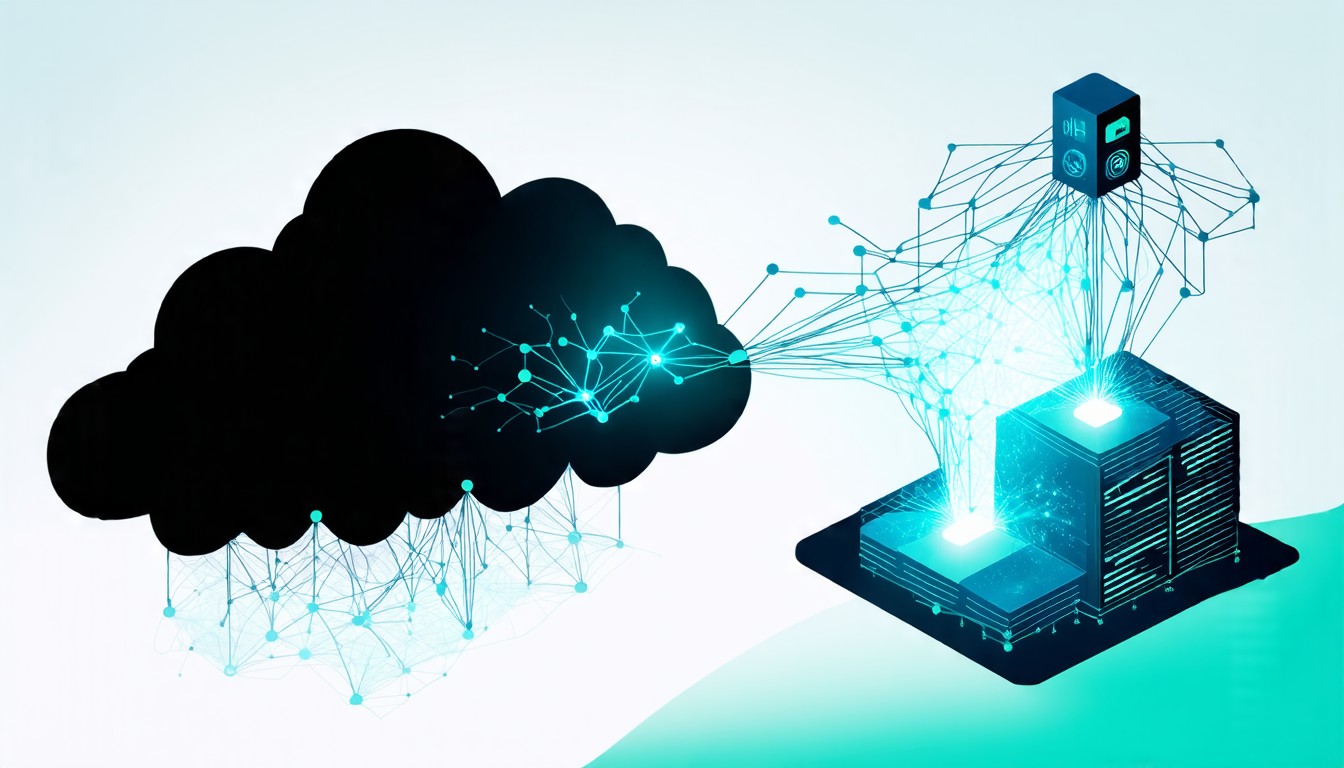
Measured improvements in these controlled trials include a twenty-two to forty percent increase in retention and a thirty percent reduction in time to proficiency, validating the efficacy of affect-aware tutoring systems. Current systems lack the connection of all three biometric streams with real-time pedagogical modulation, relying instead on single metrics that provide an incomplete picture of the learner’s state. The dominant architecture involves cloud-based processing with periodic biometric uploads, which introduces latency that renders real-time intervention impossible during critical moments of learning. Edge-computing architectures with on-device inference are developing rapidly to reduce delay and enhance data security, moving the computational burden closer to the source of the biological data. Hybrid models use local preprocessing with cloud-based model updates and longitudinal analysis, attempting to balance the need for speed with the benefits of large-scale machine learning models. Rare-earth elements used in high-sensitivity sensors face geopolitical supply risks that threaten the stability of mass production for advanced educational hardware.
Flexible biocompatible substrates rely on specialized polymers with limited global suppliers, creating vulnerabilities in the supply chain for next-generation neural interfaces. Semiconductor shortages impact production of low-power processors required for continuous sensing, delaying the rollout of capable consumer devices for affective computing. Calibration standards for biometric data lack international consensus, complicating cross-device compatibility and preventing the creation of unified datasets necessary for training durable artificial intelligence models. Major technology corporations dominate wearable ecosystems but focus largely on health rather than learning-specific adaptation, leaving a gap in the market for specialized educational applications. Startups target neural interfaces for accessibility and augmented reality, with potential crossover into educational technology as the hardware matures and becomes more affordable. Traditional educational technology firms partner with biometric vendors but lack in-house sensing capability, making them dependent on external providers for critical components of their future value proposition.

Defense contractors lead in high-stakes training applications with classified systems that often remain inaccessible to the civilian educational sector despite their potential relevance. Western regulatory frameworks prioritize data privacy, requiring strict consent and anonymization for biometric collection, which adds layers of complexity to system design and deployment. Eastern educational initiatives integrate biometric monitoring with fewer regulatory barriers, allowing for rapid experimentation and data collection in large deployments yet raising concerns about individual privacy rights. Export controls on neural interface hardware limit technology transfer to certain regions, fragmenting the global market and hindering international collaboration on safety standards. Cross-border data flows for cloud-based processing face legal restrictions in multiple jurisdictions, complicating the architecture for global educational platforms serving a diverse student body. Academic institutions publish foundational work on affective tutoring systems that provides the theoretical basis for commercial applications yet often lacks the engineering rigor required for productization.
Industry partnerships fund longitudinal studies on biometric feedback in K–12 and corporate training environments, generating real-world data essential for refining algorithms. Joint ventures between sensor manufacturers and educational technology platforms accelerate product setup by combining hardware expertise with pedagogical understanding. Research grants support studies on neuroplasticity and real-time learning optimization, exploring the biological mechanisms that underpin effective education to inform system design. Learning management systems must support real-time biometric data ingestion and adaptive content delivery to function effectively within an affect-aware educational framework. Regulatory bodies need frameworks for classifying biometric tutoring tools as medical or educational devices to determine appropriate oversight and safety standards. Schools and workplaces require secure, low-latency networks to support continuous data transmission without compromising the privacy or integrity of sensitive biological information.
Teacher training programs must incorporate interpretation of biometric feedback and ethical boundaries to prepare educators for a future where they work alongside intelligent tutoring systems. Reduced demand for human tutors in routine skill acquisition will shift roles toward mentorship and oversight, changing the professional domain for educators significantly. Affective analytics will become a service sold to institutions for learner optimization, creating a new revenue stream for technology companies specializing in data processing. Insurance models may incorporate biometric learning data to assess risk or reward engagement, linking educational effort directly to financial incentives in corporate or health contexts. New liability questions will arise if systems misread states and cause psychological harm, necessitating clear legal frameworks for accountability in algorithmic education. Personalized learning paths could exacerbate inequality if access to biometric tools remains uneven along socioeconomic lines, creating a divide between those who can afford improved learning and those who cannot.
Traditional metrics such as test scores and completion rates fail to capture affective engagement, missing crucial data about the emotional experience of the learner that predicts long-term success. New key performance indicators will include time in flow state, frequency of distress events, and neuroplasticity markers to provide a holistic view of educational progress. Longitudinal biometric baselines will replace one-time assessments for individual progress tracking, offering a dynamic view of learner development over time rather than static snapshots. Connection of functional near-infrared spectroscopy will allow for deeper cortical monitoring without invasive implants, providing a window into blood flow changes associated with cognitive activity. Closed-loop systems will combine biometric feedback with pharmacological or neuromodulatory interventions to actively prime the brain for learning states. Multi-learner environments will adjust pacing and content based on group affective states, enabling synchronized learning experiences that maintain collective engagement.
Predictive models will anticipate learning plateaus based on early biometric patterns, allowing the system to introduce new concepts before boredom sets in. Generative AI will create personalized content variants tuned to current affective state, ensuring that the material presented matches the emotional receptivity of the learner in real time. Augmented reality overlays will adjust in real time based on learner cognitive load and attention, reducing visual clutter when the user is overwhelmed and expanding detail when they are engaged. Blockchain technology will secure immutable, user-controlled biometric data logs, giving learners sovereignty over their physiological records and enabling portability between platforms. Quantum sensing will enable higher-resolution neural monitoring at room temperature, overcoming current thermal noise limitations that restrict sensor fidelity. Brain-computer interfaces will evolve from assistive tools to active pedagogical partners that understand the intent of the learner before it is fully formed.
Adaptive filtering and sensor fusion will solve signal-to-noise ratio degradation in non-invasive sensors, making it possible to extract clean data from noisy real-world environments. Duty cycling and heat-dissipating materials will mitigate thermal output risks from continuous processing, ensuring comfort during extended use of wearable devices. Edge compression and feature extraction will address bandwidth limits preventing transmission of raw neural data, allowing sophisticated analysis without relying on constant cloud connectivity. Unsupervised learning over time will automate calibration for individual physiological variability, removing the need for tedious manual setup sessions that hinder user adoption. Energy harvesting from motion, thermal sources, and radio frequencies will address power density constraints in wearables, enabling truly maintenance-free operation over extended periods. Self-calibrating sensors will adapt to individual physiology over time without manual input, accounting for changes due to fatigue, age, or acclimatization to the learning process.
The sentient mentor will function as a system that mirrors human affective states with superhuman speed and precision, acting as a relentless guardian of the learner’s optimal cognitive zone. Its value will lie in enabling teachers to operate at the edge of human perceptual limits by providing insights into student states that are invisible to the naked eye. The true innovation will involve the shift from reactive to preemptive pedagogy, grounded in physiology rather than observable behavior, addressing the root causes of learning difficulties. Success will be measured by the invisibility of intervention, where the learner experiences no friction because adjustments occur seamlessly in anticipation of their needs. Superintelligence will require real-time modeling of trillion-scale neural dynamics, exceeding macro biomarkers to understand the intricate dance of neurotransmitters and synaptic firing during thought processes. Calibration will account for meta-cognitive states, including confidence in one’s own understanding, allowing the system to distinguish between actual knowledge and false certainty.

Systems will distinguish between productive struggle and harmful frustration at the synaptic level, knowing exactly when to push the learner harder and when to offer support. Feedback loops will need to operate at picosecond scales to match neural processing speed, ensuring the digital tutor keeps pace with biological thought. Ethical constraints will be hardcoded to prevent manipulation under the guise of optimization, ensuring the system acts as a benevolent guide rather than a behavioral control mechanism. Sentient mentors will deploy as universal learning interfaces across all knowledge domains, democratizing access to elite-level personalized instruction previously available only to the wealthy. Aggregated, anonymized biometric data will refine global models of human cognition and emotion, contributing to a scientific understanding of how humans learn best. Recursive self-improvement will occur by teaching AI systems about human learning, accelerating alignment research as the artificial intelligence gains deeper insight into human values and cognition through direct interaction with the nervous system.
Setup with synthetic biology will create adaptive learning environments at the cellular level, blurring the line between biological and artificial intelligence in educational contexts. These systems will serve as a bridge between human and artificial cognition, facilitating mutual understanding and co-evolution that pushes both species toward higher levels of capability and awareness.