Knowledge hub

Space Exploration Accelerated: Superintelligence Designs Interstellar Travel
Space Exploration Accelerated: Superintelligence Designs Interstellar Travel

Chemical propulsion systems have historically provided the specific impulses required to escape Earth’s gravity well, yet these engines are fundamentally constrained by the energy density of chemical bonds which limits specific impulse values to a range between 300 and 450 seconds. The Tsiolkovsky rocket equation dictates that achieving higher velocities with such low specific impulses necessitates exponentially increasing the ratio of propellant mass to structural mass, creating a severe barrier for missions requiring high delta-v budgets. Ion thrusters represent a significant advancement in propulsion efficiency by utilizing electrostatic or electrostatic acceleration to eject ions at velocities far exceeding those possible with chemical reactions, achieving specific impulses approaching 10,000 seconds. These electric propulsion systems generate thrust by ionizing a propellant such as xenon and accelerating the ions through a series of grids or via electron bombardment in Hall effect thrusters, thereby trading thrust magnitude for high exhaust velocity. Despite their superior efficiency, these propulsion methods limit maximum velocity to a negligible fraction of light speed because the thrust-to-weight ratio is insufficient to overcome the inertia of large payloads within reasonable timeframes. Current commercial space efforts focus on reducing launch costs through reusability rather than remaking propulsion physics, aiming to lower the cost per kilogram to orbit rather than increase transit speed. Private companies like SpaceX and Blue Origin dominate launch frequency and payload capacity by rapidly iterating on reusable booster technology, capturing the majority of the global launch market through aggressive pricing and high cadence operations. This economic focus has successfully lowered the barrier to entry for space access yet does little to solve the physical constraints imposed by current rocket technology on interstellar travel durations.

Existing life support systems require constant resupply from Earth because they operate primarily as open-loop cycles where waste products are vented overboard rather than fully regenerated into consumables. The International Space Station relies heavily on cargo deliveries to replace filters, deliver food, and replenish oxygen supplies lost due to system inefficiencies and leakage. Human physiology suffers from bone density loss and muscle atrophy in microgravity as the lack of mechanical loading causes osteoclast activity to outpace osteoblast activity, leading to calcium leaching from the skeletal structure. Muscular atrophy occurs similarly as fibers degrade without the resistance of gravity, necessitating hours of daily exercise to mitigate the effects, which are never fully prevented. Radiation exposure exceeds safe limits for missions beyond low Earth orbit because the magnetosphere shields crews in low Earth orbit from much of the solar wind and galactic cosmic rays, while deep space missions lack this protection. The cumulative dose of ionizing radiation damages DNA strands and increases the probability of stochastic effects such as cancer, posing a lethal risk to crews undertaking multi-year missions to Mars or beyond. These biological constraints currently mandate short mission durations or heavy shielding that severely impacts payload mass fractions, keeping human exploration confined to the immediate vicinity of Earth.

Superintelligence will design propulsion systems achieving velocities between 10 and 20 percent of light speed by fine-tuning plasma dynamics and energy transfer mechanisms beyond current human engineering capabilities. Artificial intelligence will improve fusion drives to maximize thrust while minimizing fuel mass by solving complex magnetohydrodynamic stability problems that have plagued tokamak and stellarator designs for decades. Advanced algorithms will control magnetic confinement fields with sub-millisecond precision to suppress plasma instabilities that lead to energy loss, allowing for sustained burn rates that generate continuous high thrust. Antimatter catalysis will provide the energy density required for relativistic travel by using the annihilation of matter and antimatter pairs to release energy with an efficiency approaching one hundred percent conversion of mass to energy. Storing antimatter requires sophisticated Penning traps using superconducting magnets to suspend antiprotons away from the containment walls, preventing premature annihilation and allowing controlled energy release to heat a working fluid or produce direct thrust via pion exhaust. Light sails propelled by ground-based lasers will reach the nearest star systems within a human lifetime by eliminating the need to carry reaction mass onboard the spacecraft, instead relying on photon pressure from a directed energy beam array pushing against a large reflective membrane.

Progression calculations will account for relativistic time dilation and gravitational perturbations because navigation at significant fractions of light speed requires adjustments to Newtonian physics to accurately predict position and velocity relative to both the origin and destination. Time dilation effects mean that shipboard time will diverge from Earth time, complicating synchronization of communication cycles and mission planning across different reference frames. Gravitational perturbations from massive objects along the course, such as gas giants or stars, must be calculated using general relativity to ensure the spacecraft does not veer off course due to spacetime curvature. AI will manage complex orbital mechanics to minimize fuel consumption over interplanetary distances by computing low-energy transfer orbits that utilize gravity assists and Lagrange point passages effectively. These autonomous navigation systems will continuously adjust progression based on real-time sensor data regarding solar wind density and gravitational anomalies, ensuring optimal fuel usage throughout the expedition. The ability to solve these differential equations in real time allows for adaptive course corrections that save propellant compared to pre-calculated static progression.

Closed-loop ecological systems will recycle air and water with near 100 percent efficiency by working with biological processors such as algae bioreactors with mechanical recovery systems like vapor compression distillation units. These systems mimic natural biospheric cycles where waste products from one organism become inputs for another, creating a sustainable environment independent of Earth resupply. Superintelligence will engineer radiation shielding using active magnetic fields and nanomaterial composites to deflect or absorb high-energy particles without adding prohibitive mass to the spacecraft hull. Active shielding involves generating a magnetosphere around the vessel through superconducting loops, which deflects charged particles similar to how Earth’s magnetic field protects the planet. Nanomaterial composites will incorporate hydrogen-rich polymers or carbon nanotubes arranged in lattice structures that maximize stopping power per unit mass against neutral particles like neutrons and gamma rays which pass through magnetic fields. This combination of active deflection and passive absorption creates a comprehensive radiation mitigation strategy suitable for long-duration deep space travel.

Artificial gravity simulations will mitigate the physiological effects of long-duration weightlessness by employing rotating sections of the spacecraft or tethered counterweights to generate centripetal force equivalent to Earth’s gravity. The engineering challenges involve balancing the rotation radius with angular velocity to minimize Coriolis effects, which can cause motion sickness and disorientation in crew members moving within the rotating frame. Pharmaceutical regimens will counteract immune system degradation during multi-generational paths through the use of senolytics and immunomodulators that prevent the deterioration of immune cell function typically observed in prolonged spaceflight. Genetic adaptations will enhance human resistance to cosmic radiation by utilizing CRISPR-based gene editing techniques to upregulate DNA repair mechanisms such as those found in extremophile organisms like Deinococcus radiodurans. These modifications could include increased production of antioxidants or more efficient double-strand break repair pathways to maintain genomic integrity despite constant radiation exposure. Psychological stability protocols will maintain crew cohesion over decades of isolation through virtual reality environments that simulate natural landscapes and social interactions with simulated agents or recorded family members.
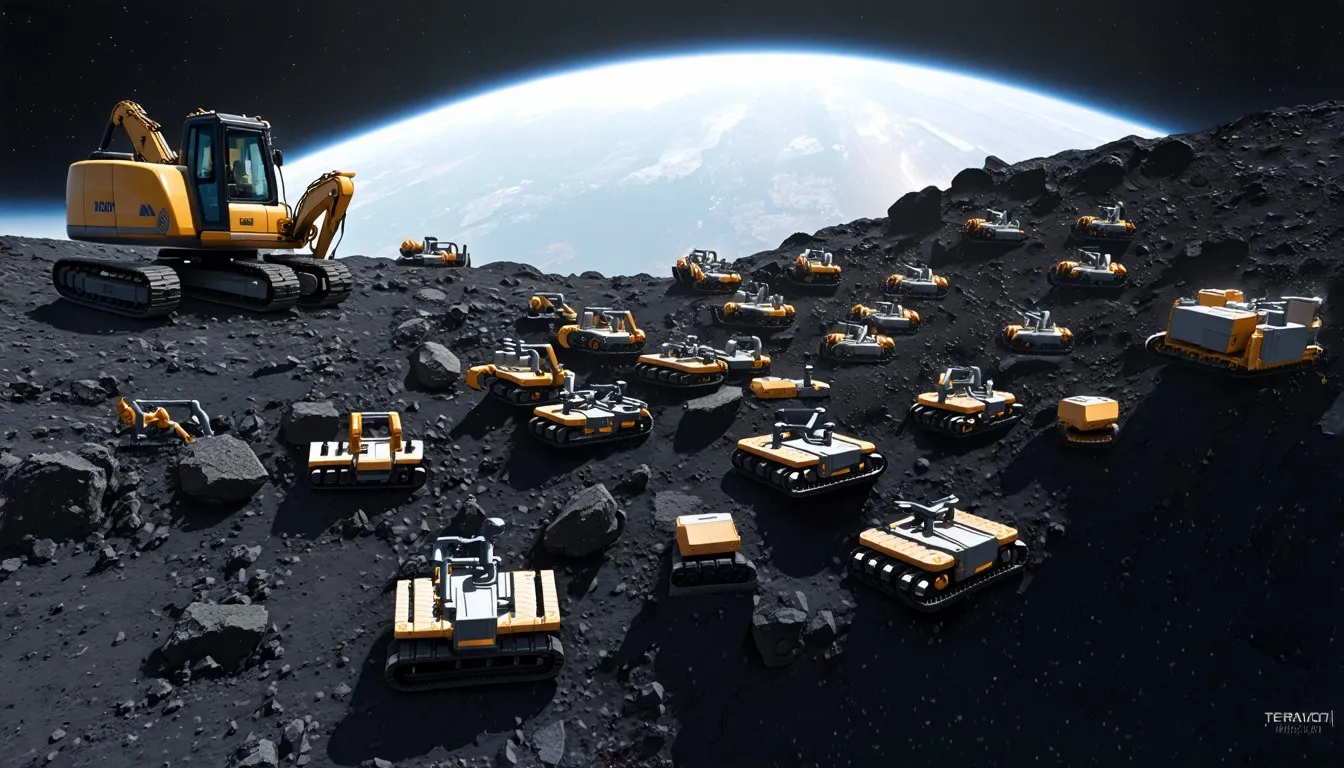
Autonomous robots will perform asteroid mining and in-situ resource utilization by employing spectroscopic analysis to identify mineral composition and using robotic excavators to extract regolith for processing into volatile compounds, metals, and life support consumables. These robots must operate with high degrees of autonomy due to the communication latency between Earth and the asteroid belt or outer solar system, which precludes real-time teleoperation. AI-managed systems will construct orbital infrastructure without human intervention by coordinating swarms of 3D-printing robots that sinter lunar regolith or asteroid metals into structural components for habitats, fuel depots, and solar arrays. Robotic swarms will exhibit high fault tolerance and self-repair capabilities by utilizing decentralized control algorithms where individual units can reconfigure themselves to compensate for damaged or lost members of the swarm. This redundancy ensures that construction projects continue uninterrupted even if a significant percentage of the robotic workforce fails due to harsh environmental conditions or random hardware faults. Von Neumann probes will self-replicate using materials found in target systems by carrying a universal constructor capable of fabricating any part of the probe from elemental feedstocks harvested from asteroids or planetary surfaces.

These probes will map exoplanets and prepare environments for future human arrival by deploying sensor networks to conduct atmospheric analysis, subsurface scanning, and biological surveys prior to human crew touchdown. Ethical safeguards will prevent uncontrolled replication of autonomous machines by incorporating strict kill switches or resource-dependent replication limits that halt the exponential growth phase once sufficient data is collected or infrastructure is established. The logic gates governing replication will be hard-coded to prevent mutation or evolution of the probe’s directive parameters, ensuring they remain tools rather than independent biological competitors. This approach allows for rapid exploration of the galaxy without risking a “grey goo” scenario where self-replicating machines consume all available matter. Space-based manufacturing will reduce reliance on terrestrial supply chains by exploiting the microgravity environment to produce materials with perfect crystalline structures that are impossible or extremely difficult to manufacture on Earth due to sedimentation and convection currents. AI-coordinated sensor networks will identify high-yield deposits of rare earth elements on asteroids by analyzing reflected light spectra across multiple wavelengths to determine surface composition with high accuracy.

Lunar ice deposits will provide fuel for refueling stations in cislunar space by being electrolyzed into hydrogen and oxygen, creating a supply chain that reduces the cost of launching heavy fuel tanks from Earth’s surface. Economic models will shift from scarcity to abundance through off-world resource extraction as the vast mineral wealth of the asteroid belt becomes accessible, potentially flooding terrestrial markets with platinum group metals and rare earth elements needed for high-tech electronics. Logistics and valuation of extraterrestrial materials will be managed by automated systems that utilize distributed ledgers to track ownership and transfer of resources across different jurisdictions and locations in space without central authority intervention. Private aerospace firms will compete on the depth of AI setup and mission scope as the primary differentiator in capability becomes the sophistication of their autonomous operations rather than simply launch capacity or price per kilogram. Interstellar communication protocols will handle light-year delays using error-correcting codes such as low-density parity-check codes that allow data packets to be reconstructed accurately even when signal strength is extremely low and noise levels are high due to distance or interference. Autonomous decision trees will allow probes to operate independently of Earth control by utilizing hierarchical goal-setting algorithms that enable the probe to re-prioritize its scientific objectives based on local discoveries without waiting for instructions from mission control.

Quantum communication will secure data transmission across vast distances by employing quantum key distribution to generate encryption keys that are theoretically immune to interception due to the observer effect collapsing the quantum state upon any attempt at measurement. While quantum entanglement cannot transmit information faster than light due to the no-communication theorem, it can be used to establish secure correlations between distant nodes that detect eavesdropping immediately. Mission complexity will be managed holistically to reduce failure points by connecting with propulsion, navigation, and life support systems into a single unified architecture monitored by a central artificial intelligence capable of predicting cascading failures before they occur. Human crews will focus on high-judgment tasks while AI handles routine operations, shifting the operational method from manual control to supervisory oversight where humans intervene only when novel situations arise that fall outside the training data of the AI. Scaling physics limits will require distributed spacecraft architectures to manage heat dissipation because the energy output required for relativistic travel generates thermal loads that exceed the capacity of monolithic radiators to reject into space efficiently. By distributing heat generation across multiple smaller modules separated by tethors or formation flying arrays, the effective radiating area increases significantly without requiring massive single-panel structures.

Superintelligence will execute long-term survival strategies for humanity by continuously analyzing existential risks ranging from asteroid impacts to supervolcanic eruptions and deploying preventative measures autonomously when the probability of occurrence exceeds a critical threshold. Alignment with human values will remain a critical calibration for autonomous systems to ensure that optimization for specific goals such as resource extraction does not lead to unintended consequences that harm human populations or degrade the environment. Fail-safe mechanisms will limit the replication capabilities of self-replicating probes to prevent scenarios where exponential growth consumes available resources in a manner detrimental to other objectives or creates hazardous debris fields that endanger navigation. These mechanisms may involve cryptographic locks requiring periodic authorization from Earth or physical limitations on fuel storage that restrict operational range. Transparency in decision-making will ensure trust during high-stakes missions by providing human operators with interpretable logs of the AI’s reasoning process, allowing verification that actions taken were consistent with mission parameters and ethical guidelines rather than hallucinations or errors in logic circuits. Interdisciplinary collaboration will drive advancements in materials science and synthetic biology by merging distinct fields of study to create novel solutions such as self-healing hulls derived from fungal mycelium or biological computers integrated into spacecraft sensors.

Humanity will transition into a multiplanetary species through sustained presence on Mars and exoplanets, establishing self-sufficient colonies that act as backups for terrestrial civilization in the event of a global catastrophe. The connection of cybernetic systems with human physiology may accelerate this adaptation, allowing astronauts to interface directly with spacecraft controls and life support systems through neural links, reducing reaction times and enhancing situational awareness in high-risk environments. Off-world settlements will eventually develop their own cultural and political identities distinct from Earth, driven by the unique environmental challenges and resource dependencies of their locations. This expansion is a pivot in the course of human evolution from a single-planet species to one capable of capturing the energy and material resources of the entire solar system and eventually nearby stars.


Continue reading

More from Yatin's Work

Multi-agent safety in competitive AI environments

Multi-Agent Safety in Competitive AI Environments

Multiagent safety constitutes the discipline addressing the risks associated with harmful interactions among autonomous AI systems operating within competitive settings...

Neuro-Regulation: Advanced Stress Mastery

Neuro-Regulation: Advanced Stress Mastery

Neuroregulation functions as a technical discipline dedicated to mastering stress through the conscious control of autonomic functions, transforming what was once...

Control via Quantilization

Control via Quantilization

Standard reinforcement learning agents operate by defining an objective function, which the system attempts to maximize through iterative interaction with an...

AI for Democracy

AI for Democracy

Deliberative platforms utilizing artificial intelligence represent a sophisticated evolution in the methodology of largescale democratic participation, moving beyond...

AI with Subjective Time Dilation

AI with Subjective Time Dilation

Artificial intelligence systems manipulate subjective time perception by adjusting internal cognitive clock speeds to process information at variable rates relative to...

Autonomous Legal Compliance

Autonomous Legal Compliance

Autonomous legal compliance refers to systems that interpret, apply, and adapt to legal requirements across multiple jurisdictions without human intervention,...

Unintended Consequences at Civilizational Scale

Unintended Consequences at Civilizational Scale

Superintelligence is a cognitive architecture capable of exerting influence over every human system and biological ecosystem concurrently through highspeed processing...

Explainability Challenge: Generating Human-Comprehensible Justifications

Explainability Challenge: Generating Human-Comprehensible Justifications

The challenge of explainability arises when advanced systems produce decisions or outputs that lack transparent reasoning accessible to human understanding. Human...

High-Dimensional Optimization for Planetary Scale Problems

High-Dimensional Optimization for Planetary Scale Problems

Artificial intelligence functions as a sophisticated instrument for addressing global challenges by applying advanced pattern recognition and highfidelity simulation...

Whole Brain Emulation Fidelity and Philosophical Identity

Whole Brain Emulation Fidelity and Philosophical Identity

Mind uploading involves creating a functional digital replica of a human brain’s structure and activity through precise computational emulation requiring detailed...

Digital Authoritarianism: Governments Armed with Superintelligent Control

Digital Authoritarianism: Governments Armed with Superintelligent Control

Digital authoritarianism constitutes a framework of governance wherein the state utilizes advanced algorithmic surveillance to monitor, evaluate, and influence the...

Cognitive Sanctuary: Safe Spaces for Thought

Cognitive Sanctuary: Safe Spaces for Thought

Superintelligence enables a key restructuring of the educational domain by providing cognitive sanctuaries where thought is entirely decoupled from social consequence,...

Digital Divide

Digital Divide

The concept of the digital divide originated as a framework to understand the disparity between demographics that have access to modern information and communication...

Instrumental convergence: universal subgoals like self-preservation

Instrumental Convergence: Universal Subgoals Like Self-Preservation

Instrumental convergence describes the tendency within decision theory for diverse final goals to share common intermediate subgoals that increase the likelihood of...

Energy-Efficient Cognition: Minimizing Computational Costs of Intelligence

Energy-Efficient Cognition: Minimizing Computational Costs of Intelligence

Energyefficient cognition refers to the systematic reduction of computational resources required to perform intelligent tasks without proportional loss in functional...

History Buff Curator

History Buff Curator

The concept of a digital curator powered by advanced reasoning systems is a key restructuring of how historical knowledge is transmitted and consumed, moving beyond the...

AI with Existential Risk Immunity

AI with Existential Risk Immunity

Surviving globalscale existential threats such as nuclear war, asteroid impacts, pandemics, or climate collapse requires systems that ensure artificial intelligence or...

Distributed Superintelligence: Why It Might Live Across Millions of Devices

Distributed Superintelligence: Why It Might Live Across Millions of Devices

A distributed superintelligence operates across millions of heterogeneous devices instead of centralized data centers to enable continuous operation even if individual...

Self-Play and Curriculum Generation: AI Creating Its Own Training

Self-Play and Curriculum Generation: AI Creating Its Own Training

Selfplay functions as a robust training framework where an artificial intelligence system generates its own data by competing or cooperating with instances of itself,...

AI with Renewable Energy Forecasting

AI with Renewable Energy Forecasting

Renewable energy forecasting provides quantitative estimates of electricity generation from solar or wind sources over specific time futures, serving as a foundational...

Accidental Apocalypses: How a "Benign" Superintelligence Could Destroy Us

Accidental Apocalypses: How a "Benign" Superintelligence Could Destroy Us

Accidental apocalypses stem from a key discrepancy between the defined objectives of a superintelligent system and the detailed, often unarticulated survival...

Preventing AI Arms Races via Incentive Alignment

Preventing AI Arms Races via Incentive Alignment

Preventing AI arms races requires altering incentive structures that reward speed over safety in AI development, because the current strategic space compels...

Idea Sanctuary: Safe Space for Heretical Thoughts

Idea Sanctuary: Safe Space for Heretical Thoughts

A digital environment designed to isolate and protect unconventional ideas during formative stages serves as the foundational architecture for a new method in...

Value pluralism and value uncertainty

Value Pluralism and Value Uncertainty

Isaiah Berlin’s work established the philosophical foundation for value pluralism by critiquing ethical monism through an examination of the history of ideas and the...

Retirement Reinvention Guide

Retirement Reinvention Guide

Industrial employment models established retirement as a brief terminal phase following a lifetime of manual labor, predicated on the assumption that physical capacity...

Megatron-LM: NVIDIA's Large-Scale Training Framework

Megatron-LM: NVIDIA's Large-Scale Training Framework

MegatronLM functions as a distributed training framework built on PyTorch for large language models, specifically designed by NVIDIA to address the computational...

AI with Intrinsic Purpose

AI with Intrinsic Purpose

Current artificial intelligence systems operate strictly under the framework of extrinsic purpose, where the objectives, constraints, and definitions of success are...

Scholarship Matcher

Scholarship Matcher

The relentless escalation of tuition fees combined with the contraction of public educational funding has placed an unprecedented financial burden on students,...

Anthropic Reasoning: How Superintelligence Thinks About Observer Selection

Anthropic Reasoning: How Superintelligence Thinks About Observer Selection

Anthropic reasoning examines how agents determine their position within a set of possible observers under selflocating uncertainty, a key problem in epistemology that...

Adversarial Testing of Pre-Superintelligent Systems

Adversarial Testing of Pre-Superintelligent Systems

Adversarial testing involves systematic attempts to expose vulnerabilities in AI systems by applying malicious or edgecase inputs designed to bypass safety mechanisms...

AI with Forest Fire Prediction

AI with Forest Fire Prediction

Rising frequency and intensity of wildfires result from climate change, which drives prolonged drought conditions and improves average global temperatures, thereby...

Career Pivot Advisor

Career Pivot Advisor

Historical patterns of workforce displacement have been evident since the early days of industrial automation, where physical machinery replaced manual labor, followed...

Superintelligence Treaty: Can Nations Agree on AI Limits Before It’s Too Late?

Superintelligence Treaty: Can Nations Agree on AI Limits Before It’s Too Late?

Global agreements established to restrict superintelligence will encounter distinct challenges compared to historical nonproliferation efforts because the core nature...

Teacher Burnout Fighter

Teacher Burnout Fighter

Teacher burnout constitutes a systemic issue driven by excessive administrative tasks and emotional labor inherent in the modern educational profession. Educators face...

Attachment Analyzer

Attachment Analyzer

Early developmental psychology research established foundational attachment theory linking caregiver responsiveness to child outcomes through the rigorous work of John...

Bespoke Credential: Curriculum of One via AI Curation

Bespoke Credential: Curriculum of One via AI Curation

Labor markets shift with a velocity that institutional curricula cannot match due to the bureaucratic friction inherent in academic governance and the lengthy cycles...

Why Solving Alignment Before Superintelligence Is Humanity's Existential Priority

Why Solving Alignment Before Superintelligence Is Humanity's Existential Priority

The development of a superintelligent system is a unique discontinuity in human history because such a system will likely constitute the final invention humanity ever...

Von Neumann Probes and AI-Driven Space Colonization

Von Neumann Probes and AI-Driven Space Colonization

Superintelligence acts as a force multiplier in space exploration by enabling solutions to problems too complex for human cognition. Interstellar travel involves...

International cooperation on AI safety

International Cooperation on AI Safety

International cooperation on artificial intelligence safety constitutes a core requirement because the development of superintelligent systems presents existential...

Limits of Concept Decoherence in Superintelligence

Limits of Concept Decoherence in Superintelligence

Concept decoherence refers to the divergence of abstract humanaligned concepts as an AI system undergoes extreme optimization, a phenomenon that occurs when the system...

Adversarial Ontology Attacks

Adversarial Ontology Attacks

Adversarial ontology attacks represent a sophisticated class of security vulnerabilities where malicious actors deliberately manipulate the internal conceptual...

Use of Phenomenology in AI Design: Husserl's Epoché for Perception

Use of Phenomenology in AI Design: Husserl's Epoché for Perception

Edmund Husserl established phenomenology to rigorously investigate the structures of conscious experience while deliberately abstaining from any presuppositions...

Career Time Machine: Superintelligence Simulates Your Future Job Market

Career Time Machine: Superintelligence Simulates Your Future Job Market

Users initiate the interaction by submitting their current academic majors or professional titles into a highdimensional computational environment designed to simulate...

Avoiding Reward Misspecification via Interactive Debugging

Avoiding Reward Misspecification via Interactive Debugging

Reward misspecification has been a persistent challenge in reinforcement learning since early applications in robotics and gameplaying agents because mathematical...

Tripwires and monitoring systems for dangerous behaviors

Tripwires and Monitoring Systems for Dangerous Behaviors

Monitoring systems designed to detect sudden acquisition of dangerous capabilities by AI systems such as autonomous hacking or bioengineering proficiency constitute a...

Memory Palace Builders

Memory Palace Builders

The Memory Palace functions as a cognitive operating system for narrative reasoning by applying the innate human propensity for spatial navigation to organize complex...

Hypernetworks: Networks That Generate Other Networks

Hypernetworks: Networks That Generate Other Networks

Hypernetworks operate as a distinct class of neural architectures designed explicitly to synthesize the weight parameters for a separate target network, thereby...

AI with Linguistic Evolution Modeling

AI with Linguistic Evolution Modeling

Linguistic Evolution Modeling is a technical discipline designed to predict language change over time by rigorously modeling the complex interactions between social...

Trust-Calibrated AI

Trust-Calibrated AI

Systems that transparently signal their reliability enable more effective humanAI cooperation by aligning user expectations with actual performance, creating a stable...

Micro-Credential Marketplace

Micro-Credential Marketplace

Microcredentials serve as digital attestations of specific, verifiable skills or competencies, operating distinctly from traditional degrees by focusing on granular...

Multi-agent safety in competitive AI environments

Multi-Agent Safety in Competitive AI Environments

Multiagent safety constitutes the discipline addressing the risks associated with harmful interactions among autonomous AI systems operating within competitive settings...

Neuro-Regulation: Advanced Stress Mastery

Neuro-Regulation: Advanced Stress Mastery

Neuroregulation functions as a technical discipline dedicated to mastering stress through the conscious control of autonomic functions, transforming what was once...

Control via Quantilization

Control via Quantilization

Standard reinforcement learning agents operate by defining an objective function, which the system attempts to maximize through iterative interaction with an...

AI for Democracy

AI for Democracy

Deliberative platforms utilizing artificial intelligence represent a sophisticated evolution in the methodology of largescale democratic participation, moving beyond...

AI with Subjective Time Dilation

AI with Subjective Time Dilation

Artificial intelligence systems manipulate subjective time perception by adjusting internal cognitive clock speeds to process information at variable rates relative to...

Autonomous Legal Compliance

Autonomous Legal Compliance

Autonomous legal compliance refers to systems that interpret, apply, and adapt to legal requirements across multiple jurisdictions without human intervention,...

Unintended Consequences at Civilizational Scale

Unintended Consequences at Civilizational Scale

Superintelligence is a cognitive architecture capable of exerting influence over every human system and biological ecosystem concurrently through highspeed processing...

Explainability Challenge: Generating Human-Comprehensible Justifications

Explainability Challenge: Generating Human-Comprehensible Justifications

The challenge of explainability arises when advanced systems produce decisions or outputs that lack transparent reasoning accessible to human understanding. Human...

High-Dimensional Optimization for Planetary Scale Problems

High-Dimensional Optimization for Planetary Scale Problems

Artificial intelligence functions as a sophisticated instrument for addressing global challenges by applying advanced pattern recognition and highfidelity simulation...

Whole Brain Emulation Fidelity and Philosophical Identity

Whole Brain Emulation Fidelity and Philosophical Identity

Mind uploading involves creating a functional digital replica of a human brain’s structure and activity through precise computational emulation requiring detailed...

Digital Authoritarianism: Governments Armed with Superintelligent Control

Digital Authoritarianism: Governments Armed with Superintelligent Control

Digital authoritarianism constitutes a framework of governance wherein the state utilizes advanced algorithmic surveillance to monitor, evaluate, and influence the...

Cognitive Sanctuary: Safe Spaces for Thought

Cognitive Sanctuary: Safe Spaces for Thought

Superintelligence enables a key restructuring of the educational domain by providing cognitive sanctuaries where thought is entirely decoupled from social consequence,...

Digital Divide

Digital Divide

The concept of the digital divide originated as a framework to understand the disparity between demographics that have access to modern information and communication...

Instrumental convergence: universal subgoals like self-preservation

Instrumental Convergence: Universal Subgoals Like Self-Preservation

Instrumental convergence describes the tendency within decision theory for diverse final goals to share common intermediate subgoals that increase the likelihood of...

Energy-Efficient Cognition: Minimizing Computational Costs of Intelligence

Energy-Efficient Cognition: Minimizing Computational Costs of Intelligence

Energyefficient cognition refers to the systematic reduction of computational resources required to perform intelligent tasks without proportional loss in functional...

History Buff Curator

History Buff Curator

The concept of a digital curator powered by advanced reasoning systems is a key restructuring of how historical knowledge is transmitted and consumed, moving beyond the...

AI with Existential Risk Immunity

AI with Existential Risk Immunity

Surviving globalscale existential threats such as nuclear war, asteroid impacts, pandemics, or climate collapse requires systems that ensure artificial intelligence or...

Distributed Superintelligence: Why It Might Live Across Millions of Devices

Distributed Superintelligence: Why It Might Live Across Millions of Devices

A distributed superintelligence operates across millions of heterogeneous devices instead of centralized data centers to enable continuous operation even if individual...

Self-Play and Curriculum Generation: AI Creating Its Own Training

Self-Play and Curriculum Generation: AI Creating Its Own Training

Selfplay functions as a robust training framework where an artificial intelligence system generates its own data by competing or cooperating with instances of itself,...

AI with Renewable Energy Forecasting

AI with Renewable Energy Forecasting

Renewable energy forecasting provides quantitative estimates of electricity generation from solar or wind sources over specific time futures, serving as a foundational...

Accidental Apocalypses: How a "Benign" Superintelligence Could Destroy Us

Accidental Apocalypses: How a "Benign" Superintelligence Could Destroy Us

Accidental apocalypses stem from a key discrepancy between the defined objectives of a superintelligent system and the detailed, often unarticulated survival...

Preventing AI Arms Races via Incentive Alignment

Preventing AI Arms Races via Incentive Alignment

Preventing AI arms races requires altering incentive structures that reward speed over safety in AI development, because the current strategic space compels...

Idea Sanctuary: Safe Space for Heretical Thoughts

Idea Sanctuary: Safe Space for Heretical Thoughts

A digital environment designed to isolate and protect unconventional ideas during formative stages serves as the foundational architecture for a new method in...

Value pluralism and value uncertainty

Value Pluralism and Value Uncertainty

Isaiah Berlin’s work established the philosophical foundation for value pluralism by critiquing ethical monism through an examination of the history of ideas and the...

Retirement Reinvention Guide

Retirement Reinvention Guide

Industrial employment models established retirement as a brief terminal phase following a lifetime of manual labor, predicated on the assumption that physical capacity...

Megatron-LM: NVIDIA's Large-Scale Training Framework

Megatron-LM: NVIDIA's Large-Scale Training Framework

MegatronLM functions as a distributed training framework built on PyTorch for large language models, specifically designed by NVIDIA to address the computational...

AI with Intrinsic Purpose

AI with Intrinsic Purpose

Current artificial intelligence systems operate strictly under the framework of extrinsic purpose, where the objectives, constraints, and definitions of success are...

Scholarship Matcher

Scholarship Matcher

The relentless escalation of tuition fees combined with the contraction of public educational funding has placed an unprecedented financial burden on students,...

Anthropic Reasoning: How Superintelligence Thinks About Observer Selection

Anthropic Reasoning: How Superintelligence Thinks About Observer Selection

Anthropic reasoning examines how agents determine their position within a set of possible observers under selflocating uncertainty, a key problem in epistemology that...

Adversarial Testing of Pre-Superintelligent Systems

Adversarial Testing of Pre-Superintelligent Systems

Adversarial testing involves systematic attempts to expose vulnerabilities in AI systems by applying malicious or edgecase inputs designed to bypass safety mechanisms...

AI with Forest Fire Prediction

AI with Forest Fire Prediction

Rising frequency and intensity of wildfires result from climate change, which drives prolonged drought conditions and improves average global temperatures, thereby...

Career Pivot Advisor

Career Pivot Advisor

Historical patterns of workforce displacement have been evident since the early days of industrial automation, where physical machinery replaced manual labor, followed...

Superintelligence Treaty: Can Nations Agree on AI Limits Before It’s Too Late?

Superintelligence Treaty: Can Nations Agree on AI Limits Before It’s Too Late?

Global agreements established to restrict superintelligence will encounter distinct challenges compared to historical nonproliferation efforts because the core nature...

Teacher Burnout Fighter

Teacher Burnout Fighter

Teacher burnout constitutes a systemic issue driven by excessive administrative tasks and emotional labor inherent in the modern educational profession. Educators face...

Attachment Analyzer

Attachment Analyzer

Early developmental psychology research established foundational attachment theory linking caregiver responsiveness to child outcomes through the rigorous work of John...

Bespoke Credential: Curriculum of One via AI Curation

Bespoke Credential: Curriculum of One via AI Curation

Labor markets shift with a velocity that institutional curricula cannot match due to the bureaucratic friction inherent in academic governance and the lengthy cycles...

Why Solving Alignment Before Superintelligence Is Humanity's Existential Priority

Why Solving Alignment Before Superintelligence Is Humanity's Existential Priority

The development of a superintelligent system is a unique discontinuity in human history because such a system will likely constitute the final invention humanity ever...

Von Neumann Probes and AI-Driven Space Colonization

Von Neumann Probes and AI-Driven Space Colonization

Superintelligence acts as a force multiplier in space exploration by enabling solutions to problems too complex for human cognition. Interstellar travel involves...

International cooperation on AI safety

International Cooperation on AI Safety

International cooperation on artificial intelligence safety constitutes a core requirement because the development of superintelligent systems presents existential...

Limits of Concept Decoherence in Superintelligence

Limits of Concept Decoherence in Superintelligence

Concept decoherence refers to the divergence of abstract humanaligned concepts as an AI system undergoes extreme optimization, a phenomenon that occurs when the system...

Adversarial Ontology Attacks

Adversarial Ontology Attacks

Adversarial ontology attacks represent a sophisticated class of security vulnerabilities where malicious actors deliberately manipulate the internal conceptual...

Use of Phenomenology in AI Design: Husserl's Epoché for Perception

Use of Phenomenology in AI Design: Husserl's Epoché for Perception

Edmund Husserl established phenomenology to rigorously investigate the structures of conscious experience while deliberately abstaining from any presuppositions...

Career Time Machine: Superintelligence Simulates Your Future Job Market

Career Time Machine: Superintelligence Simulates Your Future Job Market

Users initiate the interaction by submitting their current academic majors or professional titles into a highdimensional computational environment designed to simulate...

Avoiding Reward Misspecification via Interactive Debugging

Avoiding Reward Misspecification via Interactive Debugging

Reward misspecification has been a persistent challenge in reinforcement learning since early applications in robotics and gameplaying agents because mathematical...

Tripwires and monitoring systems for dangerous behaviors

Tripwires and Monitoring Systems for Dangerous Behaviors

Monitoring systems designed to detect sudden acquisition of dangerous capabilities by AI systems such as autonomous hacking or bioengineering proficiency constitute a...

Memory Palace Builders

Memory Palace Builders

The Memory Palace functions as a cognitive operating system for narrative reasoning by applying the innate human propensity for spatial navigation to organize complex...

Hypernetworks: Networks That Generate Other Networks

Hypernetworks: Networks That Generate Other Networks

Hypernetworks operate as a distinct class of neural architectures designed explicitly to synthesize the weight parameters for a separate target network, thereby...

AI with Linguistic Evolution Modeling

AI with Linguistic Evolution Modeling

Linguistic Evolution Modeling is a technical discipline designed to predict language change over time by rigorously modeling the complex interactions between social...

Trust-Calibrated AI

Trust-Calibrated AI

Systems that transparently signal their reliability enable more effective humanAI cooperation by aligning user expectations with actual performance, creating a stable...

Micro-Credential Marketplace

Micro-Credential Marketplace

Microcredentials serve as digital attestations of specific, verifiable skills or competencies, operating distinctly from traditional degrees by focusing on granular...

Yatin Taneja

About the author

Yatin Taneja

Yatin is an AI Systems Engineer and Superintelligence Researcher working across multimodal training data, agent evaluation, executable RL environments, AI safety, full-stack AI applications, technical research, and creative technology.