Knowledge hub
Neuro-Regulation: Advanced Stress Mastery
Neuro-regulation functions as a technical discipline dedicated to mastering stress through the conscious control of autonomic functions, transforming what was once considered involuntary into a domain of trainable expertise comparable to mathematics or language acquisition. The objective involves achieving stress immunity, defined as a biologically reinforced capacity to maintain cognitive performance during high-adversity scenarios without the degradation of decision-making capabilities or physiological collapse. Emotional regulation operates within this framework as a learnable and measurable skill requiring deliberate practice and precise feedback mechanisms rather than innate talent or static personality traits. Early 20th-century researchers discovered the autonomic nervous system’s dual control mechanisms, laying the groundwork for understanding involuntary regulation by distinguishing between sympathetic arousal responsible for fight-or-flight responses and parasympathetic activity governing rest and digestion. This historical understanding evolved into practical application during the 1960s and 1970s as biofeedback developed as a clinical tool, demonstrating that humans could exert voluntary influence over heart rate and muscle tension through visual or auditory cues representing internal states. Subsequent decades witnessed the connection of mindfulness practices with physiological monitoring in clinical psychology during the 2000s, bridging subjective mental states with objective biological data to validate ancient contemplative techniques with modern science. The 2010s featured the proliferation of consumer wearables enabling continuous physiological tracking outside clinical settings, which democratized access to data previously restricted to medical laboratories and research institutions.

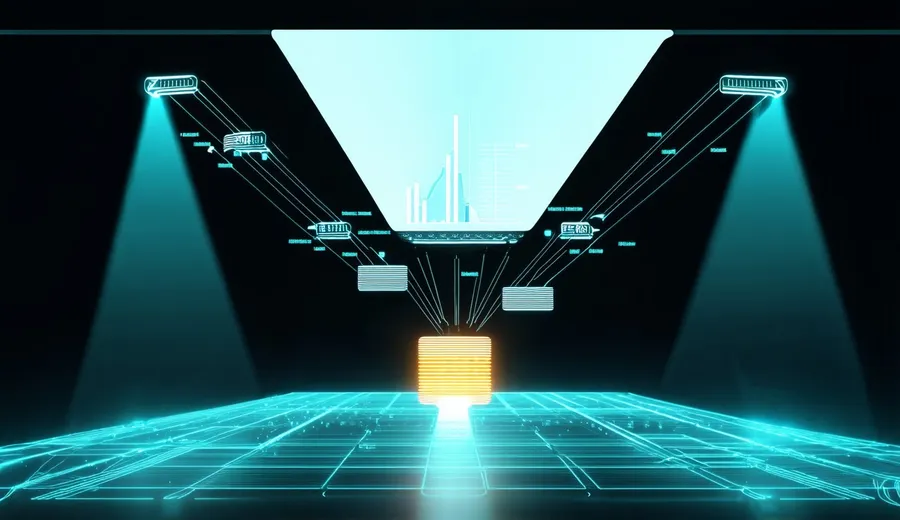
The current decade involves the convergence of artificial intelligence, multimodal sensing, and personalized learning algorithms to create adaptive neuro-regulation platforms that function as sophisticated educational systems for the nervous system. These platforms represent a meaningful evolution from general wellness advice to precision education of the internal state, where the student learns to modulate their own physiology through direct interaction with intelligent systems capable of interpreting complex biological signals. The core mechanism relies on a closed-loop biofeedback system that correlates subjective experience with objective physiological data to create a continuous learning cycle driven by real-time information. Primary inputs include wearable biosensors capturing heart rate variability (HRV), electrodermal activity, respiration rate, and EEG signals, providing a comprehensive dataset of the user’s internal state without requiring invasive procedures or clinical equipment. The processing layer utilizes an AI model that interprets this multimodal data to classify stress states with high accuracy and recommend specific regulation strategies tailored to the individual’s current neurological and physiological profile. The output layer provides real-time visual, auditory, or haptic cues guiding the user toward desired autonomic states, effectively acting as a private tutor for the nervous system that corrects inefficiencies instantly. An adaptive learning algorithm personalizes training intensity and technique selection based on user progress and baseline physiology, ensuring that the difficulty of the training matches the user’s developing capability to prevent frustration or stagnation.
A reinforcement schedule strengthens neural pathways associated with calm, focus, and recovery through repeated successful modulation of physiological signals, applying the principles of neuroplasticity to rewire the brain’s response to pressure. HRV training employs paced breathing exercises synchronized with real-time variability metrics to enhance vagal modulation, teaching the user to increase the interval between pulses consciously to signal safety to the brain. Cognitive reappraisal uses structured prompts guiding users to reinterpret stressful stimuli while paired with physiological monitoring to validate the efficacy of the cognitive shift on the body, creating a direct link between thought patterns and physical states. Mindfulness-based stress reduction incorporates attention-regulation practices within feedback loops to increase interoceptive awareness, allowing the user to detect subtle physiological shifts earlier in the stress cascade before they overwhelm conscious control. Neural feedback provides direct EEG-based reinforcement of alpha or theta wave patterns associated with relaxed alertness, enabling the user to influence their brainwave states directly through operant conditioning. Cortisol modulation occurs indirectly via behavioral and respiratory interventions shown to lower HPA axis activation over time, reducing the long-term physiological impact of chronic stress on the immune system and metabolic health. Parasympathetic priming utilizes techniques such as slow diaphragmatic breathing and controlled cold exposure to condition rapid state-switching capability, allowing for quick recovery from high-stress events back to baseline functioning.
Heart rate variability quantifies as the standard deviation of interbeat intervals and serves as a proxy for autonomic flexibility, indicating how well the nervous system can adapt to changing environmental demands without becoming stuck in a state of arousal or exhaustion. A parasympathetic state is physiologically defined by raised HRV, reduced respiratory rate, and decreased skin conductance, representing a biological condition conducive to rest, digestion, recovery, and higher-order cognitive processing. Stress immunity is a measurable resilience metric combining baseline HRV, recovery speed post-stressor, and cognitive performance under load, serving as the ultimate grade for this educational process and determining an individual’s capacity for endurance in challenging environments. Vagal tone is inferred from high-frequency HRV components and functions as a trainable biomarker of emotional regulation capacity, reflecting the strength of the body’s braking system on stress responses and inflammation. These metrics provide the quantitative basis for the educational curriculum, allowing both the AI and the user to track progress with scientific rigor previously unavailable in subjective self-improvement efforts. The ability to quantify these states transforms abstract feelings of stress or anxiety into concrete data points that can be analyzed, improved, and controlled like any other variable in a complex system.
Rising global stress levels correlate with decreased productivity, increased healthcare costs, and workforce attrition, creating an urgent demand for effective solutions that operate for large workloads rather than relying on scarce human therapists or generic relaxation techniques. Modern performance environments in finance, emergency response, and elite sports demand sustained cognitive function under extreme pressure, pushing human biology to its limits and exposing the fragility of untrained nervous systems. The economic shift toward knowledge work increases vulnerability to burnout and attention fragmentation as cognitive loads remain high without physical outlets for tension or clear boundaries between work and rest. Societal needs include scalable mental resilience tools amid climate instability and digital overload, requiring systems that can reach millions of individuals simultaneously with personalized guidance. The traditional educational system has neglected the training of internal self-regulation, leaving individuals unequipped to handle the complexities of the modern digital environment where information overload is constant. This gap creates a critical role for AI-driven neuro-regulation as a necessary component of future education systems designed to produce resilient humans capable of thriving in volatile conditions.
Elite athlete programs using HRV-guided recovery protocols show improvements of fifteen to thirty percent in training consistency and injury reduction, validating the efficacy of physiological monitoring in high-performance contexts where marginal gains determine success. Corporate wellness deployments report decreases of ten to twenty-five percent in self-reported stress and absenteeism over six months when employees utilize biofeedback-based interventions that fit seamlessly into their workday. Clinical trials of AI-integrated mindfulness platforms demonstrate significant reductions in anxiety scores with HADS reduction of three points or more, proving the clinical validity of these digital tools compared to standard care or waitlist controls. Military and first-responder pilots exhibit enhanced decision-making accuracy under simulated stress after eight-week training programs, highlighting the utility of this education in life-critical professions where a momentary lapse in focus can have catastrophic consequences. These results demonstrate that the technology is not merely theoretical or speculative but offers tangible benefits across diverse sectors of society by addressing the root physiological causes of performance failure. The dominant architecture currently consists of a cloud-connected wearable paired with a mobile app and a rule-based feedback engine, relying on constant connectivity to function effectively and limiting the speed of intervention due to network latency.
An appearing challenger involves edge-computing-enabled headsets with onboard AI processing multimodal biosignals for latency-critical feedback, reducing the dependence on external servers and allowing for immediate intervention during acute stress events. Hybrid models combining passive sensing with active intervention prompts show the highest adherence and efficacy by engaging users only when necessary while maintaining continuous monitoring to build a comprehensive picture of their physiological baseline. Open-source frameworks enable research-grade customization while often lacking user-friendly interfaces required for mass adoption or the reliability needed for daily consumer use. The evolution of these architectures determines the speed at which neuro-regulation education can be deployed to the general population and the degree to which it can integrate into daily life without friction. Apple and Garmin dominate consumer HRV tracking while offering minimal regulation training, focusing primarily on measurement rather than active education or closed-loop intervention required for skill acquisition. Muse and Neurosity lead in consumer neurofeedback, yet lack connection with broader stress physiology metrics like respiration or skin conductance, which are essential for a complete picture of autonomic balance.
Specialized startups like Spren and Apollo Neuro focus on narrow modalities without full-stack AI personalization required for adaptive learning that evolves with the user. Academic spin-offs pioneer multimodal systems while struggling with commercial adaptability and user experience design necessary for consumer retention outside of research studies. Universities partner with tech firms to validate efficacy through large-scale studies, bridging the gap between rigorous scientific methodology and the fast-paced product development cycles of the technology industry. Industry consortia develop standards for neurophysiological data interoperability to ensure that different devices can communicate and share data effectively without creating proprietary silos that hinder research or user control. Clinical trials are increasingly co-designed by engineers, psychologists, and data scientists to ensure that interventions are scientifically sound and technically robust capable of delivering on the promise of personalized mental health. This collaboration is essential for creating a standardized curriculum for neuro-regulation that is accepted by both the medical community and the general public as a legitimate form of education.
High-fidelity, low-latency biosensors are required for accurate HRV and EEG measurement in real-world environments where motion artifacts and noise are prevalent, necessitating advanced signal processing hardware that consumes significant power. Power consumption and form factor limit continuous wearability and usability across diverse populations, as bulky devices or short battery lives disrupt the user experience and reduce adherence to training protocols. Economic barriers exist as current systems rely on premium hardware, restricting access to affluent users and creating a digital divide in mental health training that exacerbates existing social inequalities. Adaptability is constrained by the need for individualized calibration and AI model retraining per user physiology, as each nervous system responds differently to interventions based on genetics, lifestyle, and past trauma. Data privacy and security risks increase with the collection of sensitive neurophysiological datasets, requiring strong encryption and ethical data handling practices to prevent misuse of information that reveals deep psychological states. Regulatory uncertainty surrounds the classification of neuro-regulation tools as medical devices versus wellness products, impacting how they can be marketed and sold while creating liability concerns for manufacturers targeting high-stress professions.
These challenges must be addressed through technical innovation and policy frameworks that protect users while enabling the rapid development of beneficial technologies. Reliance on semiconductor supply chains for biosensor chips and microcontrollers creates vulnerabilities to geopolitical fluctuations and manufacturing shortages that can halt production of essential training devices. Rare-earth elements in high-end EEG electrodes pose sourcing risks that could disrupt production capabilities as demand for these materials increases across the electronics sector. Cloud infrastructure dependencies for data storage increase vulnerability to outages and data laws across different jurisdictions, complicating international deployment of global resilience platforms. Manufacturing concentrated in East Asia creates logistical constraints for global deployment, affecting the ability to scale rapidly during crises when stress levels spike universally. Pharmacological interventions are rejected due to side effects, lack of skill transfer, and dependency risks as they do not teach the body to regulate itself but rather mask symptoms or force a chemical state.
Traditional therapy without biofeedback is insufficient for building real-time physiological control because it relies on retrospective discussion rather than immediate feedback during moments of dysregulation. Passive meditation apps fail to provide closed-loop feedback, limiting neuroplastic adaptation by leaving the user unaware of their internal state during practice, resulting in slow or absent progress. Standalone HRV monitors without AI guidance offer data without structured training protocols, leaving users to interpret complex metrics without expert assistance, leading to confusion or misinterpretation. Neurostimulation devices are excluded due to invasiveness and inconsistent efficacy evidence compared to active learning methods that apply the body’s natural plasticity. Automation of high-stress jobs may displace workers lacking neuro-regulatory skills, as machines take over routine tasks, while humans are left with complex decision-making under pressure that requires exceptional emotional stability. New business models include subscription-based mental fitness platforms and employer-sponsored resilience licenses, treating mental fitness like physical gym memberships, as a prerequisite for employment.
Neuro-regulation certification will develop for professionals in high-stakes fields like piloting and surgery, ensuring they possess the necessary physiological control for safety-critical roles. Algorithmic bias remains a risk if training datasets underrepresent diverse physiological baselines, leading to ineffective recommendations for certain demographic groups, potentially exacerbating health disparities. The evaluation framework moves from subjective self-reports to objective biomarkers like HRV recovery slope and EEG coherence, providing irrefutable evidence of progress or lack thereof. New key performance indicators include stress inoculation threshold and autonomic switching speed, providing precise targets for training interventions, allowing for granular optimization of human performance. Organizational metrics involve team-level resilience indices and stress contagion rates, allowing companies to manage collective mental health effectively by identifying toxic environments or high-risk periods. Longitudinal tracking of neuroplastic adaptation occurs via repeated challenge-testing protocols to measure progress over extended periods, ensuring that improvements are retained rather than temporary effects of acute intervention.
Setup of genomics will predict individual response to specific regulation techniques, allowing for hyper-personalized curriculum design based on genetic predisposition toward certain anxiety profiles or physiological traits. Development of non-invasive vagus nerve stimulation synchronized with biofeedback will accelerate learning by directly stimulating the relevant neural circuits during practice, creating a stronger association between the cue and the physiological state. Embedding neuro-regulation into AR and VR environments will facilitate immersive stress exposure training, where users can practice regulation skills in simulated high-stress scenarios, safe from real-world consequences. Federated learning architectures will enable privacy-preserving model improvement across user populations without centralizing sensitive data, addressing privacy concerns while still benefiting from collective intelligence. Fusion with generative AI will allow active context-aware reappraisal scripting based on user history, providing personalized cognitive reframing suggestions during stressful events tailored to the specific triggers of that individual. Convergence with digital twins will create personalized physiological models simulating stress responses to predict how an individual will react to specific challenges before they encounter them in reality, enabling preventative training.
Interoperability with smart environments will adjust lighting, temperature, and sound to support parasympathetic states, automatically reducing the cognitive load of environmental regulation, making it easier for the user to maintain focus. Linkage to metabolic monitoring will create holistic stress-energy regulation systems that manage the interaction between diet, exercise, sleep, and mental state, recognizing that all these factors contribute to overall resilience. A key limit involves the signal-to-noise ratio in non-invasive sensors, restricting detection of subtle autonomic shifts that occur during early stages of stress, requiring constant refinement of sensor technology. Multimodal sensor fusion and machine learning denoising serve as workarounds to extract latent physiological signatures from noisy data streams, allowing for accurate inference even in imperfect conditions. A latency ceiling exists as human physiological response loops constrain real-time feedback effectiveness to several seconds, requiring predictive algorithms rather than purely reactive ones to stay ahead of the stress curve. Neuro-regulation should be treated as a foundational human skill rather than a niche wellness trend, essential for working through a complex world filled with unprecedented cognitive demands.

Current approaches overemphasize individual adaptation while ignoring systemic stressors present in the workplace and society, which also require structural changes alongside personal training. True mastery requires deliberate practice and effortful engagement over convenience to induce lasting neuroplastic changes similar to learning a musical instrument or a new language. An ethical imperative exists to prevent the weaponization of stress immunity for exploitative labor practices where workers are expected to endure intolerable conditions without relief simply because they have been trained to suppress their natural stress responses. Superintelligence will fine-tune personalized training regimens by modeling millions of physiological arcs to identify the most effective interventions for each individual with a level of precision impossible for human coaches. It will identify minimal effective doses of intervention to maximize efficiency, preventing user fatigue while improving results by understanding exactly how much stimulus is required to trigger adaptation without causing exhaustion. Superintelligence will simulate stress scenarios in large deployments to pre-train autonomic responses without real-world risk, creating a safe space for failure and learning that builds strength before actual crises occur.
Real-time adaptation of feedback modality will occur based on cognitive load and sensory preference, to ensure the instruction is received without adding to the stress burden or overwhelming the user’s attentional resources. Longitudinal prediction of resilience decay will enable proactive retraining scheduling before performance degradation occurs, ensuring that individuals maintain peak capability over their entire lifespan rather than burning out early. Superintelligence will deploy neuro-regulation at population scale through embedded OS-level connections working with mental fitness training directly into the devices people use daily, removing friction barriers to entry. It will coordinate global stress resilience networks sharing anonymized adaptation patterns to improve algorithms for everyone, rapidly creating a collective intelligence regarding human physiology that accelerates progress for all users simultaneously. Setup with broader cognitive enhancement stacks will align emotional regulation with memory upgrades and attention upgrades, creating a holistic optimization of human potential where all aspects of cognition support each other synergistically. The ultimate utility involves enabling humans to operate reliably in environments where current biology fails, such as deep space exploration or high-altitude operations, expanding the habitable zones of both Earth and space through psychological resilience alone.