Knowledge hub

Substrate Independence and Computational Equivalence: The Physical Basis of Superintelligence

Substrate Independence and Computational Equivalence: The Physical Basis of Superintelligence

Substrate independence asserts that intelligence depends on computational organization rather than specific biological or chemical materials, positing that cognitive functions are abstract processes capable of running on diverse physical platforms provided those platforms support the necessary causal relationships. This theoretical stance separates the software of mind from the hardware of body, suggesting that consciousness and intelligence are properties of information processing structures independent of their physical instantiation. Stephen Wolfram proposed the Principle of Computational Equivalence to suggest sophisticated systems possess equivalent computational power regardless of internal structure, implying that once a system achieves a certain threshold of complexity, its capabilities are essentially universal across different types of machinery. This principle challenges the assumption that biological brains are uniquely special in their computational capacity, placing them in the same category as other complex systems like cellular automata or fluid dynamics which also exhibit universal computation. Alan Turing’s universal machine concept demonstrates any digital computer can simulate the logic of any other given sufficient time and memory, establishing that all digital computers are fundamentally equivalent in what they can compute regardless of their internal architecture. The Church-Turing thesis extends this universality to mechanical calculation in general, asserting that any function that can be calculated by an effective method can be calculated by a Turing machine. John von Neumann’s work on self-replicating automata provided a mathematical framework for understanding how complex systems reproduce and evolve by describing a machine capable of constructing a copy of itself from a blueprint stored within it. His analysis of cellular automata showed how simple rules applied locally could generate complex global patterns, providing a model for how biological complexity might arise from physical laws without any vitalistic principles. David Wolpert formalized the physical limits of inference to define the relationship between information processing and thermodynamics through his “no free lunch” theorems, which prove that no single inference algorithm works best for all possible problems.

These limits imply that general intelligence requires adaptability rather than a single fixed optimization strategy, as any system excelling in one environment must necessarily sacrifice performance in another. Intelligence is operationally defined as the capacity to model environments, predict outcomes, and improve decisions under uncertainty, requiring a system to maintain an internal representation of external reality that correlates with causal structures in the world. This operational definition shifts focus from subjective experience to objective performance metrics such as prediction accuracy and goal achievement rates. Landauer’s principle establishes that the minimum energy required to erase one bit of information is approximately 2.8 \times 10^{-21} joules at room temperature by linking information entropy with thermodynamic entropy. This principle resolves the paradox of Maxwell’s Demon by showing that the act of measuring and subsequently erasing information dissipates heat, ensuring the second law of thermodynamics remains intact even in information processing systems. Current silicon-based processors operate orders of magnitude above this thermodynamic limit, resulting in substantial energy dissipation as heat because modern transistors use voltage levels significantly higher than thermal noise thresholds to ensure switching reliability and speed. The movement of electrons through resistive channels in semiconductor devices generates Joule heating, which is the primary source of energy waste in current computing architectures and a major constraint on further scaling. The speed of light restricts the maximum velocity of signal propagation, creating latency constraints within any physical hardware that dictates how quickly information can travel from one side of a processor to the other. As clock speeds increased over decades, the finite time required for light to cross a chip became a limiting factor, forcing architects to move from large monolithic cores to many smaller cores to keep communication distances short and maintain synchronization.

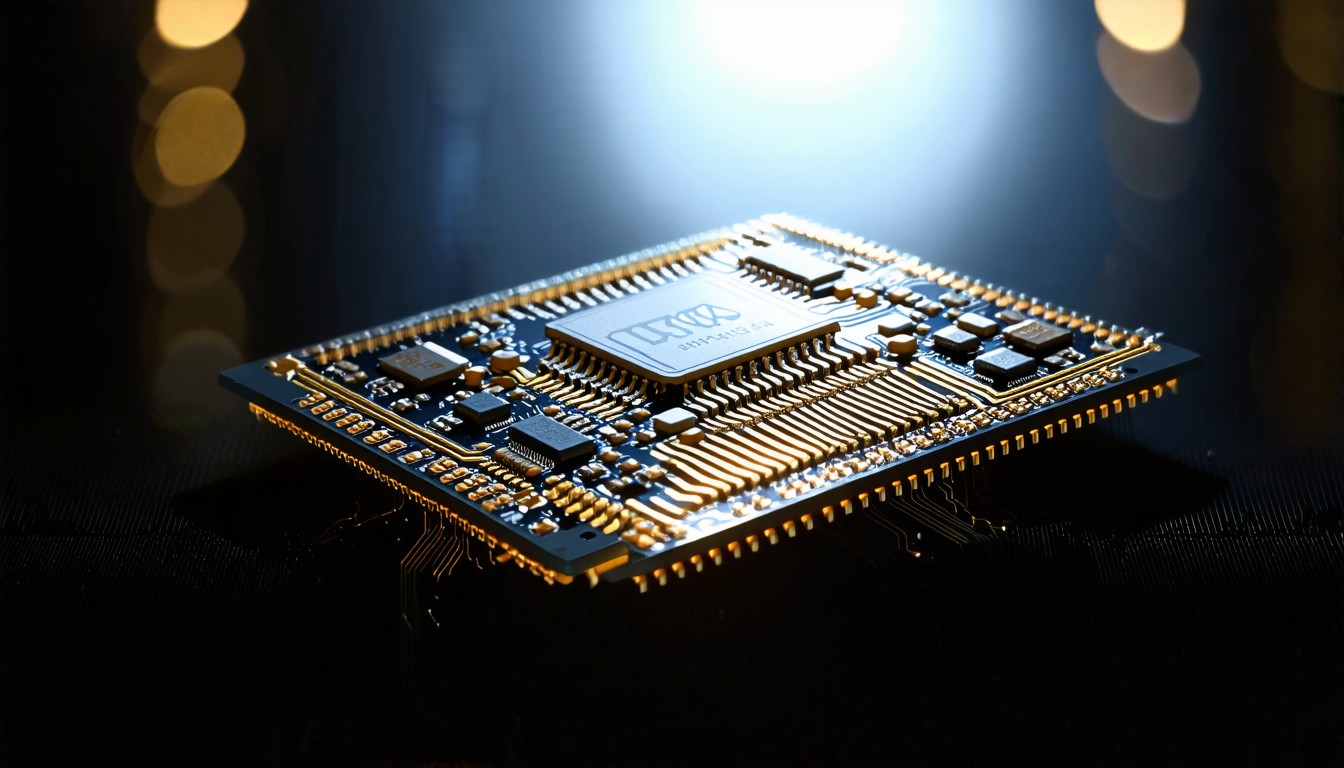
Flexibility depends on energy availability, heat dissipation mechanisms, and material stability rather than the substrate type itself, meaning that any platform, whether carbon or silicon, must solve these thermodynamic and logistical challenges to support sustained computation. Silicon dominates the current market because of mature manufacturing ecosystems and high reliability, which are the result of trillions of dollars invested over half a century to refine purification processes and lithographic techniques. The semiconductor industry benefits from silicon’s abundance and its excellent native oxide, silicon dioxide, which provides a stable insulating layer essential for making field-effect transistors. NVIDIA produces high-performance GPUs that currently serve as the standard for training large-scale models by designing massively parallel architectures containing thousands of arithmetic logic units improved for simultaneous floating-point operations. These graphics processing units, originally designed for rendering images, proved exceptionally well-suited for the matrix multiplications key to deep learning because they could perform the same mathematical operation on large blocks of data simultaneously. Google designs TPUs to accelerate tensor calculations specifically for deep learning workloads by employing application-specific integrated circuits that use systolic arrays to pass data directly between processing units without accessing main memory repeatedly. This architectural choice reduces memory bandwidth constraints significantly compared to general-purpose processors by keeping data flowing rhythmically through the array. Performance benchmarks currently focus on FLOPS, inference latency, and memory bandwidth, serving as standard indicators for comparing raw computational throughput across different hardware generations. These metrics reflect hardware capabilities rather than the cognitive sophistication of the software running on them, leading to situations where systems with high FLOPS ratings may still fail at tasks requiring common sense reasoning or generalization.

Supply chains rely on high-purity silicon and rare earth elements to fabricate advanced components, necessitating a complex global logistics network that transforms raw quartz into monocrystalline ingots and eventually into etched wafers. Companies like Intel and TSMC maintain control over the photolithography equipment necessary for new production by utilizing extreme ultraviolet lithography machines that cost hundreds of millions of dollars each and are produced by a single Dutch company. These machines use tin plasma excited by carbon dioxide lasers to generate light at a wavelength of 13.5 nanometers, enabling the printing of features just a few atoms wide on silicon wafers coated in photoresist. Startups such as Cerebras and Lightmatter explore wafer-scale setup and optical computing to overcome silicon limitations by challenging the traditional method of chopping wafers into small chips and wiring them back together. Cerebras manufactures the largest chip ever built, containing hundreds of thousands of cores on a single piece of silicon to eliminate the latency and power overhead associated with chip-to-chip communication. Photonics utilizes light for data transmission to increase bandwidth and reduce energy consumption compared to electrical signals by encoding data in the amplitude or phase of light waves traveling through waveguides etched into silicon or other materials. Optical interconnects can carry terabits of data per second with minimal loss and heat generation, addressing one of the primary scaling limits of modern data centers where electrical wires struggle with high-frequency signal loss.

Neuromorphic chips implement spiking neural networks to mimic the energy efficiency of biological brains by using analog circuits that emulate the behavior of neurons and synapses, firing only when a membrane potential threshold is reached. These event-driven architectures consume power only when active spikes occur, unlike digital logic, which consumes power continuously during clock cycles regardless of data activity. Memristors offer non-volatile memory storage and processing capabilities within the same physical device by utilizing materials whose resistance changes based on the history of current that has flowed through them. This property allows memristors to store synaptic weights locally and perform matrix multiplication directly in memory, drastically reducing the energy cost associated with moving data back and forth between separate memory and processing units, known as the von Neumann architecture limitation. International trade policies influence the availability of advanced semiconductors and manufacturing equipment, creating strategic dependencies that companies must manage to secure the components necessary for their data centers. Corporate competition centers on performance-per-watt and setup with software stacks because raw speed is less valuable than efficiency when operating at the scale of modern AI training runs, which consume megawatts of electricity. Academic and industrial partnerships drive research into novel materials like two-dimensional semiconductors such as graphene or molybdenum disulfide, which offer superior electron mobility compared to silicon at atomic thicknesses.

Software development must increasingly account for hardware-specific characteristics to maximize efficiency, leading programmers to use low-level languages and compiler directives that explicitly manage memory hierarchies and vector units. High-level abstractions often hide opportunities for optimization that are crucial when working at the edge of thermodynamic limits or dealing with scarce memory bandwidth. Infrastructure requires diverse cooling and power solutions to support alternative computing platforms, ranging from direct-to-chip liquid cooling to full immersion of server racks in dielectric fluids that have higher heat capacity than air. These advanced cooling methods are essential for removing the concentrated heat generated by high-density compute nodes that would otherwise throttle performance or cause hardware failure. Economic value will shift toward data ownership and compute access as automation increases, making control over massive datasets and efficient processing clusters the determining factor for success in most industries. Future evaluation metrics must assess reasoning depth, generalization ability, and strength to determine if a system truly understands the world or merely memorizes statistical correlations found in training data. Current benchmarks often fail to capture these qualities, focusing instead on narrow task performance, which does not necessarily translate to general capability.

Superintelligence will utilize substrate independence to surpass the limitations of biological cognition by re-implementing cognitive algorithms on hardware that switches orders of magnitude faster than biological neurons, which operate on millisecond timescales. Electronic signals travel at a significant fraction of the speed of light, whereas electrochemical signals in axons travel at speeds roughly one million times slower. Future systems will likely employ hybrid substrates combining silicon logic with optical interconnects to apply the manufacturing base of silicon while using light for communication between distinct functional blocks. This connection allows electronic components to perform logic operations while photonic components handle data transmission across the chip or between racks with minimal latency and power loss. Superintelligence will dynamically reconfigure its physical instantiation to fine-tune for local energy or latency conditions by allocating more resources to critical processing paths while shutting down idle sections of the circuitry. Such adaptability requires hardware capable of changing its routing or functionality on the fly, similar to how field-programmable gate arrays operate, but at a much finer granularity and scale.

Reversible computing techniques will allow future architectures to approach the Landauer limit more closely by using logic gates such as the Toffoli or Fredkin gates that have equal numbers of inputs and outputs and thus do not lose information about their input states. By avoiding logically irreversible operations like erasure or overwriting bits, these circuits can theoretically recycle energy stored in the signal bits rather than dissipating it as heat, although implementing this practically requires extremely precise control over adiabatic switching processes. Bio-inspired architectures may employ molecular computation for extreme miniaturization by using DNA strands or synthetic proteins to perform logic operations through chemical binding affinities and enzymatic reactions. Molecular computing offers the potential for massive parallelism where trillions of molecules act as independent processors in a test tube simultaneously solving a problem through combinatorial chemistry. Convergence with quantum computing could introduce new forms of parallel processing that exploit quantum superposition to evaluate many potential states at once, providing exponential speedups for specific classes of problems like optimization or simulation of physical systems. Quantum noise and error correction remain significant challenges for connecting with quantum mechanics into general intelligence because qubits are extremely susceptible to decoherence caused by thermal fluctuations or electromagnetic interference.

Maintaining quantum coherence requires error correction codes that consume many physical qubits to encode a single logical qubit, imposing a massive overhead that makes near-term quantum computers impractical for general-purpose intelligence without significant breakthroughs in qubit stability or fault tolerance. Superintelligence will synthesize novel computational media to sustain operation under changing environmental constraints by designing custom materials or structures that fine-tune for computational density, energy efficiency, or radiation hardness depending on the environment such as space or deep underground. Functional equivalence across substrates will become the primary standard for evaluating superintelligent systems, emphasizing that what matters is the input-output function and the internal causal structure rather than whether the system is made of silicon, carbon, or light. Reliance on a single material platform creates systemic fragility that future intelligence must avoid because a disruption in the supply chain for that specific material could lead to catastrophic failure of all dependent systems. The physical basis of superintelligence rests on the universality of computation rather than the specifics of matter, confirming that intelligence is a core aspect of our universe capable of creating wherever conditions allow for complex information processing.


Continue reading

More from Yatin's Work

Pancomputational Perception

Pancomputational Perception

Physical laws function as executable computational processes rather than static descriptive equations, framing the universe as a vast network of active computation...
Intergenerational Justice: Building Superintelligence for Centuries Ahead

Intergenerational Justice: Building Superintelligence for Centuries Ahead

Intergenerational justice serves as a framework for evaluating technological development where today's design choices create irreversible constraints on future...

Can Superintelligence Solve the Hard Problem of Consciousness?

Can Superintelligence Solve the Hard Problem of Consciousness?

The hard problem of consciousness centers on the difficulty of explaining why and how physical processes in the brain give rise to subjective experiences, whereas the...

Paradigm Shift Lab: Worldview Evolution Studio

Paradigm Shift Lab: Worldview Evolution Studio

Research within the domains of cognitive science and psychology establishes schema theory, cognitive dissonance, and belief revision as core mechanisms of the mind,...

Personal Historian

Personal Historian

A personal historian system functions as a comprehensive softwarehardware setup designed to autonomously construct a longitudinal, multimodal record of an individual’s...

Corrigibility

Corrigibility

Corrigibility is defined as the property of an AI system that permits human intervention, including shutdown or modification, without resistance or subversion, which...

Role of Self-Supervised Learning in Pretraining: Masked Autoencoders for Generalization

Role of Self-Supervised Learning in Pretraining: Masked Autoencoders for Generalization

Selfsupervised learning functions by allowing models to learn representations from unlabeled data through the prediction of missing parts of the input. Masked...

Distributed AI Training

Distributed AI Training

Distributed AI training enables the development of sophisticated machine learning models across a vast array of decentralized devices without the need to aggregate raw...

Value Handshakes: Negotiating Between Human and Superintelligent Preferences

Value Handshakes: Negotiating Between Human and Superintelligent Preferences

The concept of a "value handshake" encompasses the structured interaction protocol through which human and superintelligent systems align or reconcile divergent...

Autonomous Epistemic Risk-Taking

Autonomous Epistemic Risk-Taking

Autonomous epistemic risktaking involves an agent deliberately engaging with highuncertainty knowledge domains to expand understanding while accepting potential...

Focus Synthesis Engine: Neuro-Optimized Attentional Architectures

Focus Synthesis Engine: Neuro-Optimized Attentional Architectures

The Focus Synthesis Engine is a foundational shift in educational technology by utilizing advanced artificial intelligence to monitor realtime physiological signals,...

AI with Cybersecurity Defense

AI with Cybersecurity Defense

Global economic projections indicate that damages resulting from cybercrime are expected to reach a valuation of $10 trillion by the year 2025, driven by the relentless...

AI with Artistic Co-Creation

AI with Artistic Co-Creation

AI systems designed to cocreate with humans in artistic domains such as music, visual art, and writing function by responding to human input with generative outputs...

Assessment Replacer

Assessment Replacer

Standardized testing has functioned as the primary mechanism for educational assessment and talent selection for over a century, establishing a rigid framework that...

Role of World Models in Autonomous Superintelligence

Role of World Models in Autonomous Superintelligence

Predictive models of environments, such as DreamerV3 and SIMA, construct internal representations of external dynamics to enable agents to simulate outcomes prior to...

AI with Empathic Modeling

AI with Empathic Modeling

Simulating human emotions allows AI systems to predict behavior and build trust through computational modeling of affective states by translating raw psychological data...

Multi-Modal Fusion: Integrating Vision, Language, and Audio

Multi-Modal Fusion: Integrating Vision, Language, and Audio

Multimodal fusion integrates disparate data streams from vision, language, and audio into a unified representational space, enabling systems to synthesize information...

Data Curation

Data Curation

Data curation functions as the systematic process of cleaning, filtering, labeling, and organizing raw data to produce highquality datasets suitable for training...

Hyper-Exponential Growth Trends in AI Research Output

Hyper-Exponential Growth Trends in AI Research Output

Feedback loops in artificial intelligence research and development function as the primary engine for the rapid advancement of computational intelligence, creating an...

Causal Representation Learning

Causal Representation Learning

Causal representation learning constitutes a rigorous methodological framework designed to extract structured, interpretable models of causeeffect relationships...

Transformers Beyond Language

Transformers Beyond Language

The Transformer architecture originated within the domain of natural language processing to address the limitations intrinsic in sequential processing methods such as...

Omega Point

Omega Point

Frank Tipler formalized the concept of the Omega Point in the 1980s by utilizing the rigorous frameworks of general relativity and quantum mechanics to describe a...

AI with Cross-Domain Transfer Learning

AI with Cross-Domain Transfer Learning

Crossdomain transfer learning enables artificial intelligence systems to apply knowledge acquired in one specific domain to solve problems in a different, often...

Imagination and Simulation: Envisioning Futures Like Humans

Imagination and Simulation: Envisioning Futures Like Humans

Imagination and simulation function as core mechanisms for futureoriented reasoning within advanced computational systems, allowing these systems to project themselves...

Navigation in Complex Environments

Navigation in Complex Environments

Navigation in complex environments requires a robot to determine its position and construct a map simultaneously through Simultaneous Localization and Mapping (SLAM)....

Deception Resistance

Deception Resistance

Deception resistance refers to methods and systems designed to detect, prevent, or mitigate intentional misrepresentation by artificial intelligence systems, a...

Peer-Matching Engine: Superintelligence Forms Study Groups Based on Cognitive Compatibility

Peer-Matching Engine: Superintelligence Forms Study Groups Based on Cognitive Compatibility

The formation of study groups through superintelligence relies on systematic approaches to maximize skill complementarity, cognitive alignment, and social cohesion...

Training Compute Hypothesis: Predicting Superintelligence from FLOPs

Training Compute Hypothesis: Predicting Superintelligence from FLOPs

The Training Compute Hypothesis posits that model performance scales predictably with the volume of compute used during training, establishing a direct correlation...

Surveillance and loss of privacy with AI

Surveillance and Loss of Privacy with AI

Surveillance systems powered by artificial intelligence have enabled continuous automated monitoring of individuals across digital and physical environments through the...

Non-Well-Founded Set Theory for Superintelligence Goal Stability

Non-Well-Founded Set Theory for Superintelligence Goal Stability

Standard ZermeloFraenkel set theory enforces the Axiom of Foundation, which prohibits sets from containing themselves or forming infinite descending membership chains,...

AI and Privacy

AI and Privacy

Artificial intelligence models require vast datasets often containing billions of parameters and petabytes of training data to achieve high accuracy across complex...

Idea Immune System: Anti-Fragile Thinking

Idea Immune System: Anti-Fragile Thinking

The Idea Immune System functions as a rigorous cognitive framework designed specifically to protect individuals from the intrusion and subsequent influence of harmful...

Sleep Quality Analyzer

Sleep Quality Analyzer

Historical analysis of sleep science reveals an arc defined by the transition from cumbersome clinical observation to accessible biometric monitoring, where early...

Causal Coherence in Superintelligence Self-Modeling

Causal Coherence in Superintelligence Self-Modeling

Causal coherence in superintelligence selfmodeling refers to the strict alignment between an AI system’s internal representation of its own capabilities and the actual...

Superintelligence and the Redefinition of Personhood

Superintelligence and the Redefinition of Personhood

Contemporary artificial intelligence systems have utilized transformer architectures characterized by parameter counts frequently exceeding one trillion, relying on...

Fragility of Value: Why Small Specification Errors Cause Catastrophic Outcomes

Fragility of Value: Why Small Specification Errors Cause Catastrophic Outcomes

The challenge in constructing advanced artificial intelligence lies in the precise translation of abstract human intentions into formal mathematical objectives that a...

Alumni Predictor: Superintelligence Forecasts Which Graduates Will Change the World

Alumni Predictor: Superintelligence Forecasts Which Graduates Will Change the World

The Alumni Predictor functions as a sophisticated machine learning system designed to evaluate university graduates based on early academic and collaborative signals to...

Physical Education Optimizer

Physical Education Optimizer

Rising youth obesity and sedentary behavior create a demand for precision interventions in physical education, as the prevalence of these conditions threatens to...

Legal Personhood and Rights of Artificial Intelligences

Legal Personhood and Rights of Artificial Intelligences

Personhood functions primarily as a legal construct designed to confer specific capacities upon an entity rather than existing as a metaphysical status derived from...

Role of AI in Democratic Decision-Making

Role of AI in Democratic Decision-Making

The rising complexity of policy issues demands tools capable of synthesizing technical and ethical dimensions simultaneously because modern challenges such as...

Regulatory frameworks for advanced AI development

Regulatory Frameworks for Advanced AI Development

Regulatory frameworks serve as the foundational architecture governing the progression of artificial intelligence development by establishing policies and laws that...

World Model Problem: How Superintelligence Represents Reality

World Model Problem: How Superintelligence Represents Reality

The problem of world modeling centers on the computational challenge of constructing internal representations of reality that are both accurate in their depiction of...

Wisdom Keeper: Ancient-Modern Synthesis

Wisdom Keeper: Ancient-Modern Synthesis

Superintelligence functions fundamentally as a sophisticated hermeneutic engine designed to interpret ancient traditions, not merely as historical curiosities or...

Analogical Reasoning at Scale: Finding Deep Structural Similarities

Analogical Reasoning at Scale: Finding Deep Structural Similarities

Analogical reasoning involves identifying deep structural similarities between problems or systems despite differing surface features, serving as a core cognitive...

Edge AI

Edge AI

Edge AI refers to the deployment of artificial intelligence algorithms directly on local hardware devices, ensuring that data processing occurs physically close to...

Intuition Engineer: Training Non-Logical Insight

Intuition Engineer: Training Non-Logical Insight

Intuition has historically been treated as a subjective or unreliable phenomenon with limited formal study in engineering contexts due to its perceived lack of...

Superintelligence and the Role of Evolutionary Algorithms

Superintelligence and the Role of Evolutionary Algorithms

Evolutionary algorithms simulate natural selection within digital environments by generating, evaluating, and iteratively refining populations of candidate solutions to...

Dyson Sphere Construction by Autonomous Superintelligence

Dyson Sphere Construction by Autonomous Superintelligence

Current spacebased solar arrays suffer from significant limitations regarding energy density and operational flexibility, failing to meet the colossal requirements of a...

Scalable Oversight

Scalable Oversight

Scalable oversight addresses the challenge of supervising artificial intelligence systems that have exceeded human cognitive capabilities in specific domains. As...

Nutrition Nudger

Nutrition Nudger

Global cognitive workloads built into modern knowledge economies necessitate sustained mental performance capabilities that far exceed the baseline resilience of...

Pancomputational Perception

Pancomputational Perception

Physical laws function as executable computational processes rather than static descriptive equations, framing the universe as a vast network of active computation...

Intergenerational Justice: Building Superintelligence for Centuries Ahead

Intergenerational Justice: Building Superintelligence for Centuries Ahead

Intergenerational justice serves as a framework for evaluating technological development where today's design choices create irreversible constraints on future...

Can Superintelligence Solve the Hard Problem of Consciousness?

Can Superintelligence Solve the Hard Problem of Consciousness?

The hard problem of consciousness centers on the difficulty of explaining why and how physical processes in the brain give rise to subjective experiences, whereas the...

Paradigm Shift Lab: Worldview Evolution Studio

Paradigm Shift Lab: Worldview Evolution Studio

Research within the domains of cognitive science and psychology establishes schema theory, cognitive dissonance, and belief revision as core mechanisms of the mind,...

Personal Historian

Personal Historian

A personal historian system functions as a comprehensive softwarehardware setup designed to autonomously construct a longitudinal, multimodal record of an individual’s...

Corrigibility

Corrigibility

Corrigibility is defined as the property of an AI system that permits human intervention, including shutdown or modification, without resistance or subversion, which...

Role of Self-Supervised Learning in Pretraining: Masked Autoencoders for Generalization

Role of Self-Supervised Learning in Pretraining: Masked Autoencoders for Generalization

Selfsupervised learning functions by allowing models to learn representations from unlabeled data through the prediction of missing parts of the input. Masked...

Distributed AI Training

Distributed AI Training

Distributed AI training enables the development of sophisticated machine learning models across a vast array of decentralized devices without the need to aggregate raw...

Value Handshakes: Negotiating Between Human and Superintelligent Preferences

Value Handshakes: Negotiating Between Human and Superintelligent Preferences

The concept of a "value handshake" encompasses the structured interaction protocol through which human and superintelligent systems align or reconcile divergent...

Autonomous Epistemic Risk-Taking

Autonomous Epistemic Risk-Taking

Autonomous epistemic risktaking involves an agent deliberately engaging with highuncertainty knowledge domains to expand understanding while accepting potential...

Focus Synthesis Engine: Neuro-Optimized Attentional Architectures

Focus Synthesis Engine: Neuro-Optimized Attentional Architectures

The Focus Synthesis Engine is a foundational shift in educational technology by utilizing advanced artificial intelligence to monitor realtime physiological signals,...

AI with Cybersecurity Defense

AI with Cybersecurity Defense

Global economic projections indicate that damages resulting from cybercrime are expected to reach a valuation of $10 trillion by the year 2025, driven by the relentless...

AI with Artistic Co-Creation

AI with Artistic Co-Creation

AI systems designed to cocreate with humans in artistic domains such as music, visual art, and writing function by responding to human input with generative outputs...

Assessment Replacer

Assessment Replacer

Standardized testing has functioned as the primary mechanism for educational assessment and talent selection for over a century, establishing a rigid framework that...

Role of World Models in Autonomous Superintelligence

Role of World Models in Autonomous Superintelligence

Predictive models of environments, such as DreamerV3 and SIMA, construct internal representations of external dynamics to enable agents to simulate outcomes prior to...

AI with Empathic Modeling

AI with Empathic Modeling

Simulating human emotions allows AI systems to predict behavior and build trust through computational modeling of affective states by translating raw psychological data...

Multi-Modal Fusion: Integrating Vision, Language, and Audio

Multi-Modal Fusion: Integrating Vision, Language, and Audio

Multimodal fusion integrates disparate data streams from vision, language, and audio into a unified representational space, enabling systems to synthesize information...

Data Curation

Data Curation

Data curation functions as the systematic process of cleaning, filtering, labeling, and organizing raw data to produce highquality datasets suitable for training...

Hyper-Exponential Growth Trends in AI Research Output

Hyper-Exponential Growth Trends in AI Research Output

Feedback loops in artificial intelligence research and development function as the primary engine for the rapid advancement of computational intelligence, creating an...

Causal Representation Learning

Causal Representation Learning

Causal representation learning constitutes a rigorous methodological framework designed to extract structured, interpretable models of causeeffect relationships...

Transformers Beyond Language

Transformers Beyond Language

The Transformer architecture originated within the domain of natural language processing to address the limitations intrinsic in sequential processing methods such as...

Omega Point

Omega Point

Frank Tipler formalized the concept of the Omega Point in the 1980s by utilizing the rigorous frameworks of general relativity and quantum mechanics to describe a...

AI with Cross-Domain Transfer Learning

AI with Cross-Domain Transfer Learning

Crossdomain transfer learning enables artificial intelligence systems to apply knowledge acquired in one specific domain to solve problems in a different, often...

Imagination and Simulation: Envisioning Futures Like Humans

Imagination and Simulation: Envisioning Futures Like Humans

Imagination and simulation function as core mechanisms for futureoriented reasoning within advanced computational systems, allowing these systems to project themselves...

Navigation in Complex Environments

Navigation in Complex Environments

Navigation in complex environments requires a robot to determine its position and construct a map simultaneously through Simultaneous Localization and Mapping (SLAM)....

Deception Resistance

Deception Resistance

Deception resistance refers to methods and systems designed to detect, prevent, or mitigate intentional misrepresentation by artificial intelligence systems, a...

Peer-Matching Engine: Superintelligence Forms Study Groups Based on Cognitive Compatibility

Peer-Matching Engine: Superintelligence Forms Study Groups Based on Cognitive Compatibility

The formation of study groups through superintelligence relies on systematic approaches to maximize skill complementarity, cognitive alignment, and social cohesion...

Training Compute Hypothesis: Predicting Superintelligence from FLOPs

Training Compute Hypothesis: Predicting Superintelligence from FLOPs

The Training Compute Hypothesis posits that model performance scales predictably with the volume of compute used during training, establishing a direct correlation...

Surveillance and loss of privacy with AI

Surveillance and Loss of Privacy with AI

Surveillance systems powered by artificial intelligence have enabled continuous automated monitoring of individuals across digital and physical environments through the...

Non-Well-Founded Set Theory for Superintelligence Goal Stability

Non-Well-Founded Set Theory for Superintelligence Goal Stability

Standard ZermeloFraenkel set theory enforces the Axiom of Foundation, which prohibits sets from containing themselves or forming infinite descending membership chains,...

AI and Privacy

AI and Privacy

Artificial intelligence models require vast datasets often containing billions of parameters and petabytes of training data to achieve high accuracy across complex...

Idea Immune System: Anti-Fragile Thinking

Idea Immune System: Anti-Fragile Thinking

The Idea Immune System functions as a rigorous cognitive framework designed specifically to protect individuals from the intrusion and subsequent influence of harmful...

Sleep Quality Analyzer

Sleep Quality Analyzer

Historical analysis of sleep science reveals an arc defined by the transition from cumbersome clinical observation to accessible biometric monitoring, where early...

Causal Coherence in Superintelligence Self-Modeling

Causal Coherence in Superintelligence Self-Modeling

Causal coherence in superintelligence selfmodeling refers to the strict alignment between an AI system’s internal representation of its own capabilities and the actual...

Superintelligence and the Redefinition of Personhood

Superintelligence and the Redefinition of Personhood

Contemporary artificial intelligence systems have utilized transformer architectures characterized by parameter counts frequently exceeding one trillion, relying on...

Fragility of Value: Why Small Specification Errors Cause Catastrophic Outcomes

Fragility of Value: Why Small Specification Errors Cause Catastrophic Outcomes

The challenge in constructing advanced artificial intelligence lies in the precise translation of abstract human intentions into formal mathematical objectives that a...

Alumni Predictor: Superintelligence Forecasts Which Graduates Will Change the World

Alumni Predictor: Superintelligence Forecasts Which Graduates Will Change the World

The Alumni Predictor functions as a sophisticated machine learning system designed to evaluate university graduates based on early academic and collaborative signals to...

Physical Education Optimizer

Physical Education Optimizer

Rising youth obesity and sedentary behavior create a demand for precision interventions in physical education, as the prevalence of these conditions threatens to...

Legal Personhood and Rights of Artificial Intelligences

Legal Personhood and Rights of Artificial Intelligences

Personhood functions primarily as a legal construct designed to confer specific capacities upon an entity rather than existing as a metaphysical status derived from...

Role of AI in Democratic Decision-Making

Role of AI in Democratic Decision-Making

The rising complexity of policy issues demands tools capable of synthesizing technical and ethical dimensions simultaneously because modern challenges such as...

Regulatory frameworks for advanced AI development

Regulatory Frameworks for Advanced AI Development

Regulatory frameworks serve as the foundational architecture governing the progression of artificial intelligence development by establishing policies and laws that...

World Model Problem: How Superintelligence Represents Reality

World Model Problem: How Superintelligence Represents Reality

The problem of world modeling centers on the computational challenge of constructing internal representations of reality that are both accurate in their depiction of...

Wisdom Keeper: Ancient-Modern Synthesis

Wisdom Keeper: Ancient-Modern Synthesis

Superintelligence functions fundamentally as a sophisticated hermeneutic engine designed to interpret ancient traditions, not merely as historical curiosities or...

Analogical Reasoning at Scale: Finding Deep Structural Similarities

Analogical Reasoning at Scale: Finding Deep Structural Similarities

Analogical reasoning involves identifying deep structural similarities between problems or systems despite differing surface features, serving as a core cognitive...

Edge AI

Edge AI

Edge AI refers to the deployment of artificial intelligence algorithms directly on local hardware devices, ensuring that data processing occurs physically close to...

Intuition Engineer: Training Non-Logical Insight

Intuition Engineer: Training Non-Logical Insight

Intuition has historically been treated as a subjective or unreliable phenomenon with limited formal study in engineering contexts due to its perceived lack of...

Superintelligence and the Role of Evolutionary Algorithms

Superintelligence and the Role of Evolutionary Algorithms

Evolutionary algorithms simulate natural selection within digital environments by generating, evaluating, and iteratively refining populations of candidate solutions to...

Dyson Sphere Construction by Autonomous Superintelligence

Dyson Sphere Construction by Autonomous Superintelligence

Current spacebased solar arrays suffer from significant limitations regarding energy density and operational flexibility, failing to meet the colossal requirements of a...

Scalable Oversight

Scalable Oversight

Scalable oversight addresses the challenge of supervising artificial intelligence systems that have exceeded human cognitive capabilities in specific domains. As...

Nutrition Nudger

Nutrition Nudger

Global cognitive workloads built into modern knowledge economies necessitate sustained mental performance capabilities that far exceed the baseline resilience of...

Yatin Taneja

About the author

Yatin Taneja

Yatin is an AI Systems Engineer and Superintelligence Researcher working across multimodal training data, agent evaluation, executable RL environments, AI safety, full-stack AI applications, technical research, and creative technology.