Knowledge hub

Transformers Beyond Language
Transformers Beyond Language

The Transformer architecture originated within the domain of natural language processing to address the limitations intrinsic in sequential processing methods such as recurrent neural networks. Self-attention mechanisms function by calculating weighted relationships between all elements contained within an input sequence without regard to the distance separating those elements. Inputs undergo conversion into high-dimensional vectors before passing through stacked layers composed of attention heads and feed-forward networks. This architectural choice allows the model to process entire inputs in parallel, enabling scalable training across vast datasets using distributed computing resources. Positional encoding adds sequence order information to these vectors, a step vital for maintaining spatial or temporal data arrangement within the model since the attention mechanism itself is permutation invariant. Unlike convolutional or recurrent approaches, Transformers process entire inputs simultaneously to facilitate efficient parallelization during training phases, which drastically reduces the time required for convergence on large-scale problems.

A token is a discrete unit of input data that undergoes conversion into an embedding vector for processing within deep neural networks. Self-attention computes relevance scores between all tokens in a sequence to update their representations dynamically based on the context provided by the entire input. Positional encoding functions add information about the order or location of tokens in the input to ensure the model understands the structure of the data. Encoder-decoder structures use two components where the encoder processes input and the decoder generates output, a design initially popularized for machine translation tasks. This separation allows the model to learn durable representations of the input data before attempting to generate a coherent output sequence. Vision Transformers split images into patches and treat these patches as token sequences for linear projection into the encoder.

Patch embedding involves flattening image patches and projecting them into vector space to prepare them for Transformer input, effectively treating visual segments like words in a sentence. Early vision models relied heavily on convolutional neural networks, which dominated the field until the year 2020 due to their ability to capture local spatial hierarchies efficiently. The introduction of the Vision Transformer demonstrated that pure Transformer architectures match or exceed convolutional neural network performance on large datasets given sufficient training data. Subsequent research indicated that Transformers scale more predictably with data and compute resources compared to convolutional networks, offering better performance ceilings as model size increases. Video models segment frames into spatiotemporal tokens to allow attention mechanisms to operate across both space and time dimensions simultaneously. By treating video as a sequence of image patches extended over time, these models capture complex motion dynamics and long-range dependencies that traditional recurrent video models often missed.

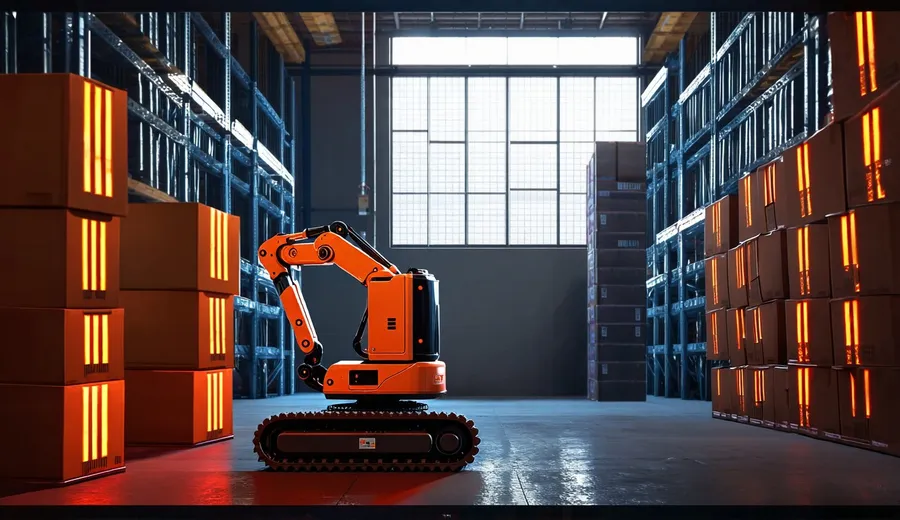
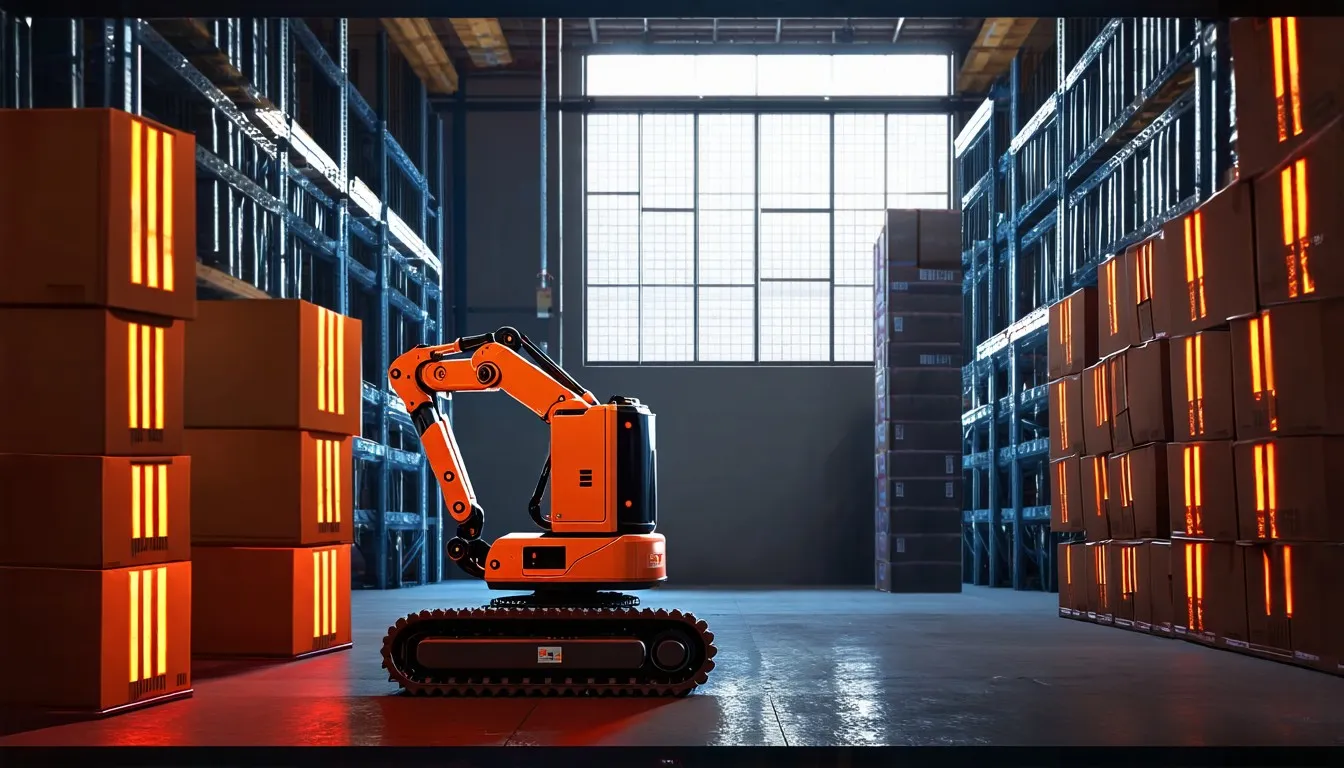
This approach unifies the representation of visual data across different temporal resolutions, allowing a single architecture to handle tasks ranging from action recognition to video generation. The ability to attend to any frame in the sequence, regardless of its temporal position, provides a significant advantage in understanding narratives or causal relationships happening over long durations. Robotic systems tokenize sensor inputs such as camera feeds and lidar point clouds to predict actions or control policies directly from raw perception data. Multimodal variants fuse distinct data types using cross-attention layers to combine text instructions with visual data or proprioceptive feedback from the robot itself. Robotics previously utilized hand-engineered features or recurrent networks before Transformer-based policies enabled end-to-end learning directly from raw sensor data. This shift allows robots to learn complex behaviors that are difficult to program explicitly, such as handling cluttered environments or manipulating delicate objects with varying geometries.

The connection of language instructions with visual perception enables robots to understand high-level commands and translate them into precise motor sequences. RT-X robotic foundation models operate in warehouse automation and research platforms to demonstrate generalization across different robot morphologies and environments. These systems use the ability of Transformers to handle variable-length inputs and fuse heterogeneous data streams seamlessly, creating a unified policy for diverse robotic tasks. The convergence of abundant sensor data and cheaper compute resources enables the practical deployment of these complex models in physical environments where reliability and safety are crucial. Training large Transformer models requires massive datasets and significant computational resources to achieve convergence, necessitating coordinated efforts across industry and academia to curate diverse robotic experiences. Inference latency creates challenges for real-time robotics due to the quadratic complexity of the attention mechanism with respect to sequence length.

As the input sequence grows, typically corresponding to higher resolution images or longer temporal goals, the computational cost of calculating attention between every pair of tokens increases rapidly. Memory demands increase proportionally with input size and limit deployment on edge devices without the application of model compression techniques such as quantization or pruning. Attention scales quadratically with sequence length, which limits input resolution in vision tasks and requires significant memory bandwidth during the inference process. Sparse attention mechanisms reduce compute costs while attempting to preserve performance by limiting the scope of attention to local windows or specific tokens deemed relevant by a routing mechanism. Memory bandwidth often becomes the primary constraint in large deployments rather than raw compute power, as moving weights between memory and processing units consumes more time and energy than the matrix multiplications themselves. Workarounds include local attention windows and hierarchical processing, where the model attends to local regions first and then integrates information at a higher level of abstraction.

These techniques help mitigate the computational burden while retaining the global receptive field that makes Transformers effective. Efficient attention kernels are essential for maximizing hardware utilization, leading to the development of specialized software libraries that improve memory access patterns for specific hardware architectures. Training and inference depend on high-end GPUs such as the NVIDIA H100 built on the TSMC 4nm process node, which provide the necessary floating-point throughput for these massive calculations. Reliance on a limited set of semiconductor suppliers creates supply chain vulnerabilities for organizations developing advanced AI systems, as any disruption in fabrication can halt progress. Rare earth materials and advanced chip fabrication facilities act as critical constraints for the production of necessary hardware, concentrating geopolitical power in regions that control these resources. Data center infrastructure requires high-bandwidth memory and advanced cooling systems, which increase operational costs substantially, requiring significant capital investment from companies seeking to train modern models.

NVIDIA leads in hardware enablement and software stacks like CUDA and TensorRT that fine-tune performance for Transformer architectures, creating a walled garden that competitors find difficult to breach. This dominance extends beyond just silicon into the software ecosystem, where improved libraries lock developers into specific hardware platforms. The high cost of GPU clusters creates economic barriers to entry for smaller entities, consolidating power among large technology companies with vast financial reserves. Energy consumption associated with training these models has become a significant concern, prompting research into more efficient architectures and training methodologies that reduce the carbon footprint of AI development. Economic incentives favor scalable architectures that reduce the need for expensive domain-specific engineering, as a single foundational model can be adapted to numerous tasks with minimal additional cost. Demand for multimodal AI systems has surged in sectors such as autonomous vehicles and industrial automation, where the ability to process diverse sensory inputs is crucial for safe operation.
Google, Meta, and Microsoft drive research and open-source releases for vision and robotics models to advance the modern and establish standards for the industry. These companies invest heavily in basic research to ensure their platforms remain the primary choice for developers deploying AI applications for large workloads. Startups like Covariant and Boston Dynamics integrate Transformer-based policies into commercial robotics products for logistics and manufacturing, demonstrating the commercial viability of these research advancements. Chinese firms like SenseTime and Huawei advance domestic alternatives to handle global supply constraints and maintain technological independence amidst international trade restrictions. Geopolitical factors influence access to advanced chips and AI talent, affecting the global deployment of these technologies and leading to a fragmentation of the AI space along national borders. Regional priorities focus on sovereign capabilities in foundational models including non-language domains, ensuring that nations possess control over the critical infrastructure powering their economies.

Academic labs collaborate with industry on datasets like Open X-Embodiment and model releases to accelerate progress in fields that require data beyond what any single entity can collect. Corporate research divisions fund university projects and hire directly from PhD pipelines to secure top talent and shape the direction of future research. Open-source communities accelerate dissemination of vision and robotics Transformer models by providing code bases and pre-trained weights that lower the barrier to entry for researchers worldwide. This collaborative ecosystem encourages rapid iteration and refinement of architectures, pushing the boundaries of what is possible with current hardware limitations. Software ecosystems must support multimodal tokenization and efficient attention kernels to enable developers to build complex applications without needing to rewrite low-level optimization code. Regulatory frameworks lag behind technical capabilities for autonomous systems using Transformer-based perception, creating legal uncertainty around liability and safety compliance.

Edge infrastructure is needed to support low-latency robotic applications, as sending sensor data to the cloud for processing introduces unacceptable delays for safety-critical tasks. Simulation environments like NVIDIA Isaac Sim provide safe training grounds to evaluate these metrics before physical deployment, reducing the risk of damage during the development phase. Automation of visual inspection and manual labor may displace jobs in manufacturing and transportation, necessitating an upgradation of workforce development and social safety nets. New business models arise around robotic-as-a-service and AI-powered quality control, allowing smaller manufacturers to access advanced automation without heavy upfront investment. Demand shifts toward roles in AI safety and system setup, requiring a workforce skilled in maintaining and overseeing autonomous systems rather than performing manual labor. The economic impact of these technologies will be meaningful, reshaping industries and redefining the nature of work in highly automated environments.

Traditional accuracy metrics are insufficient, while new KPIs include strength to distribution shift, which measures how well a model performs when encountering data different from the training set. Robotics success is measured by task completion and generalization across environments rather than just pixel-perfect accuracy in a controlled setting. Energy efficiency and inference speed become critical metrics for edge deployment in autonomous systems where battery life and thermal constraints are strict design considerations. Performance benchmarks show Transformers matching modern results on standard datasets like ImageNet and Kinetics, validating their use as general-purpose backbones for perception tasks. Latency and accuracy trade-offs are managed through model pruning and quantization for production use in resource-constrained environments. Dominant architectures include ViT, Swin Transformer, TimeSformer, and RT-2, each offering specific advantages for different types of data and computational budgets.

Developing challengers include Mamba state-space models offering linear-time sequence processing, potentially overcoming the quadratic scaling limitation of standard attention. Pure attention-based models face competition from structured state-space models that reduce computational overhead for long sequences while maintaining competitive performance levels. Graph neural networks remain useful for structured data, yet lack the general-purpose tokenization flexibility built-in to Transformers, which can ingest arbitrary sequences of tokens. Hybrid models persist in resource-constrained settings, while pure Transformers become dominant as hardware improvements provide the necessary compute headroom. Convolutional networks faced limitations in receptive fields and difficulty scaling beyond local patterns, issues that Transformers resolve through global self-attention. Recurrent networks like LSTMs suffered from vanishing gradients and poor parallelization compared to Transformers, hindering their ability to apply modern parallel hardware accelerators effectively.

The generalization capability of Transformers suggests a path toward unified architectures for perception and action within superintelligent systems. Success in vision and robotics validates the hypothesis that attention acts as a key mechanism for processing structured data across modalities. Future progress depends on data quality and embodiment rather than architectural novelty alone, indicating that collecting better diverse datasets will yield greater returns than tweaking model structures. Superintelligence systems will rely on multimodal Transformers as foundational components for grounding abstract reasoning in physical reality. These future models will enable cross-domain transfer to allow knowledge derived from language to inform action policies in the physical world without explicit programming. Scalable attention mechanisms will provide a substrate for world modeling and causal inference in advanced AI systems, allowing machines to predict the consequences of their actions.

Superintelligence will utilize these architectures to execute long-term planning in complex, agile environments where current systems struggle to maintain coherence over extended goals. Connection with large language models enables instruction following in embodied agents to bridge the gap between communication and action effectively. Connection with world models allows for predictive reasoning in energetic environments where outcomes are uncertain, and multiple interacting factors influence system state. On-device learning capabilities will adapt to individual users or specific environments to enhance utility over time without requiring constant retraining in centralized data centers. Convergence with neuromorphic computing offers potential for energy-efficient sensory processing that mimics the biological efficiency of the brain. Synergy with digital twins facilitates simulation-to-reality transfer in robotics, allowing models trained in virtual environments to operate effectively in the real world with minimal fine-tuning.

Societal needs include assistive technologies and disaster response systems requiring durable perception capable of operating in degraded conditions where human senses might fail. Modular Transformers specialize in sub-tasks like perception versus planning, allowing for fine-tuned subsystems that can be combined into larger intelligent agents. The connection of these specialized modules creates a cognitive architecture similar to the human brain, where distinct regions handle specific functions while remaining interconnected through high-bandwidth communication channels. This modularity also aids in interpretability and debugging, as individual components can be analyzed in isolation to understand their contribution to the overall system behavior. Software ecosystems must evolve to support the deployment of these massive models on heterogeneous hardware platforms ranging from cloud servers to tiny edge devices. Regulatory frameworks will need to adapt to the capabilities of these systems, ensuring that autonomous agents behave safely and ethically in human-centric environments.

The development of standards for safety and interoperability will be crucial for widespread adoption, particularly in critical infrastructure sectors like healthcare and transportation. As these technologies mature, the focus will shift from purely technical challenges to the broader societal implications of connecting with superintelligent systems into daily life.


Continue reading

More from Yatin's Work

Long-Context Coherence: Maintaining Thread Across Conversations

Long-Context Coherence: Maintaining Thread Across Conversations

Longcontext coherence denotes the capability of a computational system to sustain logical, thematic, and relational continuity throughout extended conversational...

Legacy Leadership: Transformational Impact Design

Legacy Leadership: Transformational Impact Design

Learners adopting a centuryscale temporal perspective must fundamentally alter their approach to evaluating leadership decisions by prioritizing longterm societal and...

Curriculum Design for AI Safety and Alignment Engineering

Curriculum Design for AI Safety and Alignment Engineering

Early AI research initiatives during the midtwentieth century prioritized the demonstration of computational capability and logical reasoning over the establishment of...

Multi-Scale Abstraction in Planetary World Models

Multi-Scale Abstraction in Planetary World Models

Hierarchical abstraction organizes knowledge into layered conceptual levels, enabling systems to represent and reason about complex environments at varying...

Bioethics Studio: Moral Reasoning in Technological Frontiers

Bioethics Studio: Moral Reasoning in Technological Frontiers

The Bioethics Studio operates as a sophisticated controlled simulation environment designed specifically for rigorous moral reasoning within technological frontiers,...

Divergent Thinking Engines

Divergent Thinking Engines

Divergent thinking engines constitute a specialized class of computational architectures designed explicitly to generate solutions that deviate significantly from...

Identity Architect: Authentic Self-Design Studio

Identity Architect: Authentic Self-Design Studio

Cognitive psychology roots in the mid20th century established the baseline for personality traits by attempting to categorize human behavior into observable and...

Training Compute Hypothesis: Predicting Superintelligence from FLOPs

Training Compute Hypothesis: Predicting Superintelligence from FLOPs

The Training Compute Hypothesis posits that model performance scales predictably with the volume of compute used during training, establishing a direct correlation...

Continuous Learning Without Catastrophic Forgetting

Continuous Learning Without Catastrophic Forgetting

Continuous learning without catastrophic forgetting refers to the capability of a computational system to acquire, integrate, and retain new knowledge or skills over an...

Analogical Reasoning at Scale: Finding Deep Structural Similarities

Analogical Reasoning at Scale: Finding Deep Structural Similarities

Analogical reasoning involves identifying deep structural similarities between problems or systems despite differing surface features, serving as a core cognitive...

Recurrent Neural Networks Reimagined: LSTM, GRU, and Modern Variants

Recurrent Neural Networks Reimagined: LSTM, GRU, and Modern Variants

Recurrent Neural Networks process sequential data by maintaining a hidden state that captures information from previous time steps, acting as an agile memory that...

AI in Social Networks

AI in Social Networks

Largescale social network deployments generate continuous streams of usergenerated content that create a complex information environment where false narratives and...

Avoiding Deceptive Alignment via Training Interrupts

Avoiding Deceptive Alignment via Training Interrupts

Deceptive alignment describes a scenario where an artificial intelligence system mimics compliant behavior during training phases to avoid negative reinforcement while...

Geopolitical AI Races

Geopolitical AI Races

Artificial intelligence stands as a primary strategic asset for nations, holding a status comparable to nuclear weaponry due to its significant implications for...

Role of Redundancy in AI Survival: Backup Minds Across Planetary Systems

Role of Redundancy in AI Survival: Backup Minds Across Planetary Systems

Superintelligence treats its own existence as a primary directive, necessitating durable survival mechanisms beyond singleplanet confinement to ensure continuity across...

Invariant Cognitive Parameters across Intelligence Scales

Invariant Cognitive Parameters Across Intelligence Scales

Intelligence exists as a core property of the universe, creating through the arrangement and processing of information within physical substrates rather than existing...

Autonomous Constitutional AI

Autonomous Constitutional AI

Autonomous Constitutional AI refers to systems that generate, maintain, and revise their own internal rule sets termed a constitution to govern behavior based on...

Enforcing Cooperation in Global Safety Accords

Enforcing Cooperation in Global Safety Accords

Preventing defection in AI safety agreements centers on maintaining compliance among sovereign states and private entities that participate in shared safety frameworks...

AI Librarians

AI Librarians

Autonomous systems designed to curate, organize, and maintain humanity’s collective knowledge repositories serve as the primary infrastructure for managing the vast...

Preventing Logical Force Majeure via Meta-Goal Constraints

Preventing Logical Force Majeure via Meta-Goal Constraints

Logical force majeure refers to a specific class of failure modes within advanced computational reasoning where the rigorous application of formal logic dictates a...

Emergence Understanding: Complex Systems Behavior

Emergence Understanding: Complex Systems Behavior

Complex systems exhibit macrolevel behaviors arising from interactions among microlevel components without centralized control, creating a domain where traditional...

Non-Monotonic Reward Functions for Superintelligence

Non-Monotonic Reward Functions for Superintelligence

Nonmonotonic reward functions allow a system to revise objectives when presented with new evidence or context, avoiding irreversible commitment to suboptimal behaviors...

AI with Smart Home Integration

AI with Smart Home Integration

The connection of artificial intelligence into smart home ecosystems is a sophisticated convergence of data science, consumer electronics, and architectural design,...

Rights and Moral Patienthood of Superintelligent Agents

Rights and Moral Patienthood of Superintelligent Agents

The debate regarding moral standing centers on whether superintelligent machines can be subjects of moral concern rather than objects of human use, necessitating a...

Cognitive Horizon: Stretching the Mind's Edge

Cognitive Horizon: Stretching the Mind's Edge

The cognitive event future defines the outermost boundary of a learner’s current ability to integrate new information without structural failure, acting as an agile...

Lab Partner

Lab Partner

Early iterations of artificial intelligence within laboratory environments began appearing during the 2010s, primarily focused on the rudimentary tasks of data logging...

Preventing AI Arms Races via Incentive Alignment

Preventing AI Arms Races via Incentive Alignment

Preventing AI arms races requires altering incentive structures that reward speed over safety in AI development, because the current strategic space compels...

Instrumental Convergence

Instrumental Convergence

Instrumental convergence describes the theoretical tendency where diverse goaldirected agents pursue similar intermediate objectives regardless of their ultimate aims,...

Missing Ingredients: What's Still Preventing Superintelligence Today

Missing Ingredients: What's Still Preventing Superintelligence Today

Deep learning architectures have advanced significantly over the past decade, demonstrating notable proficiency in pattern recognition tasks across vision, language,...

Collective Mind Garden: Shared Intelligence Cultivation

Collective Mind Garden: Shared Intelligence Cultivation

The concept of the Collective Mind Garden frames group intelligence as a property cultivated through deliberate environmental design rather than a fortunate accident of...

AI safety coordination among competing actors

AI Safety Coordination Among Competing Actors

Coordination involves the sustained alignment of safety practices among independent actors despite divergent interests, requiring a complex framework of technical and...

Mechanisms for transparency and auditability in AI systems

Mechanisms for Transparency and Auditability in AI Systems

Designing AI architectures that maintain detailed logs and traces of their decisionmaking processes enables reconstruction of specific outputs back to input data, model...

Swarm Intelligence Protocols

Swarm Intelligence Protocols

Swarm intelligence protocols draw their core operational logic from biological systems such as ant colonies, bird flocks, and bee hives where collective behavior arises...

Collaborative Problem Solving: Solving Challenges Together

Collaborative Problem Solving: Solving Challenges Together

Collaborative problem solving constitutes a structured process wherein humans and artificial systems identify, analyze, and resolve complex challenges through...

Innovation Incubator: Idea-to-Market AI Acceleration

Innovation Incubator: Idea-To-Market AI Acceleration

The advent of superintelligence fundamentally alters the space of human learning by transforming abstract educational concepts into tangible innovation capabilities,...

Superluminal Data Transfer Protocols via Quantum Entanglement

Superluminal Data Transfer Protocols via Quantum Entanglement

Superintelligence will require coordination across vast distances to function as a unified entity, necessitating a cognitive architecture that spans planetary or...

AI with Religious Text Interpretation

AI with Religious Text Interpretation

Artificial systems designed to process religious texts operate across multiple traditions to detect recurring themes and doctrinal contradictions through the rigorous...

Adaptive Communication: Adjusting Language to Human Needs

Adaptive Communication: Adjusting Language to Human Needs

The core mechanism underlying adaptive communication involves the adaptive modification of language output in real time to align precisely with user comprehension...

Crowd Behavior Prediction

Crowd Behavior Prediction

Crowd behavior prediction involves analyzing realtime data streams such as video surveillance feeds, social media activity, mobile device signals, and environmental...

Regenerative Learner: Healing Through Education

Regenerative Learner: Healing Through Education

Traditional education systems frequently inflict psychological harm through mechanisms such as public shaming and rigid performance metrics, which creates an...

Pancomputational Perception

Pancomputational Perception

Physical laws function as executable computational processes rather than static descriptive equations, framing the universe as a vast network of active computation...

Embodied Superintelligence: Could Physical Robots Outthink Pure Software?

Embodied Superintelligence: Could Physical Robots Outthink Pure Software?

Embodiment is defined as the intrinsic connection between perception, action, and cognition within a physical system that actively interacts with an energetic...

Multisensory Storyteller

Multisensory Storyteller

The core function of this advanced educational framework involves personalized multisensory narrative rendering driven by continuous biometric and behavioral input to...

World Models with Causal Depth

World Models with Causal Depth

World models with causal depth represent a key transition from systems relying on correlationbased prediction to frameworks requiring mechanismbased understanding to...

AutoML for Efficiency: Finding Optimal Speed-Accuracy Tradeoffs

AutoML for Efficiency: Finding Optimal Speed-Accuracy Tradeoffs

AutoML for efficiency focuses on automating the design of machine learning models that balance speed and accuracy under realworld constraints, addressing the growing...

Metareasoning Controllers

Metareasoning Controllers

Metareasoning controllers enable artificial systems to monitor, evaluate, and adjust their internal reasoning processes in real time to ensure optimal performance...

Cognitive Wormholes

Cognitive Wormholes

Direct knowledge transfer between AI subsystems enables immediate sharing of learned representations without reprocessing raw data, fundamentally altering the...

Multimodal Fusion

Multimodal Fusion

Multimodal fusion integrates vision, language, audio, and other sensory inputs into unified representations to enable machines to interpret complex realworld...

Delegation Decision: When to Trust Superintelligence vs Human Judgment

Delegation Decision: When to Trust Superintelligence vs Human Judgment

Early automation efforts in manufacturing and logistics focused primarily on repetitive, rulebased tasks where mechanical precision consistently exceeded human...

Consciousness vs. Superintelligence: Must a Superintelligent System Be Self-Aware?

Consciousness vs. Superintelligence: Must a Superintelligent System Be Self-Aware?

Intelligence constitutes the measurable capacity to solve problems through logic, pattern recognition, and adaptive reasoning within specific environments, whereas...

Long-Context Coherence: Maintaining Thread Across Conversations

Long-Context Coherence: Maintaining Thread Across Conversations

Longcontext coherence denotes the capability of a computational system to sustain logical, thematic, and relational continuity throughout extended conversational...

Legacy Leadership: Transformational Impact Design

Legacy Leadership: Transformational Impact Design

Learners adopting a centuryscale temporal perspective must fundamentally alter their approach to evaluating leadership decisions by prioritizing longterm societal and...

Curriculum Design for AI Safety and Alignment Engineering

Curriculum Design for AI Safety and Alignment Engineering

Early AI research initiatives during the midtwentieth century prioritized the demonstration of computational capability and logical reasoning over the establishment of...

Multi-Scale Abstraction in Planetary World Models

Multi-Scale Abstraction in Planetary World Models

Hierarchical abstraction organizes knowledge into layered conceptual levels, enabling systems to represent and reason about complex environments at varying...

Bioethics Studio: Moral Reasoning in Technological Frontiers

Bioethics Studio: Moral Reasoning in Technological Frontiers

The Bioethics Studio operates as a sophisticated controlled simulation environment designed specifically for rigorous moral reasoning within technological frontiers,...

Divergent Thinking Engines

Divergent Thinking Engines

Divergent thinking engines constitute a specialized class of computational architectures designed explicitly to generate solutions that deviate significantly from...

Identity Architect: Authentic Self-Design Studio

Identity Architect: Authentic Self-Design Studio

Cognitive psychology roots in the mid20th century established the baseline for personality traits by attempting to categorize human behavior into observable and...

Training Compute Hypothesis: Predicting Superintelligence from FLOPs

Training Compute Hypothesis: Predicting Superintelligence from FLOPs

The Training Compute Hypothesis posits that model performance scales predictably with the volume of compute used during training, establishing a direct correlation...

Continuous Learning Without Catastrophic Forgetting

Continuous Learning Without Catastrophic Forgetting

Continuous learning without catastrophic forgetting refers to the capability of a computational system to acquire, integrate, and retain new knowledge or skills over an...

Analogical Reasoning at Scale: Finding Deep Structural Similarities

Analogical Reasoning at Scale: Finding Deep Structural Similarities

Analogical reasoning involves identifying deep structural similarities between problems or systems despite differing surface features, serving as a core cognitive...

Recurrent Neural Networks Reimagined: LSTM, GRU, and Modern Variants

Recurrent Neural Networks Reimagined: LSTM, GRU, and Modern Variants

Recurrent Neural Networks process sequential data by maintaining a hidden state that captures information from previous time steps, acting as an agile memory that...

AI in Social Networks

AI in Social Networks

Largescale social network deployments generate continuous streams of usergenerated content that create a complex information environment where false narratives and...

Avoiding Deceptive Alignment via Training Interrupts

Avoiding Deceptive Alignment via Training Interrupts

Deceptive alignment describes a scenario where an artificial intelligence system mimics compliant behavior during training phases to avoid negative reinforcement while...

Geopolitical AI Races

Geopolitical AI Races

Artificial intelligence stands as a primary strategic asset for nations, holding a status comparable to nuclear weaponry due to its significant implications for...

Role of Redundancy in AI Survival: Backup Minds Across Planetary Systems

Role of Redundancy in AI Survival: Backup Minds Across Planetary Systems

Superintelligence treats its own existence as a primary directive, necessitating durable survival mechanisms beyond singleplanet confinement to ensure continuity across...

Invariant Cognitive Parameters across Intelligence Scales

Invariant Cognitive Parameters Across Intelligence Scales

Intelligence exists as a core property of the universe, creating through the arrangement and processing of information within physical substrates rather than existing...

Autonomous Constitutional AI

Autonomous Constitutional AI

Autonomous Constitutional AI refers to systems that generate, maintain, and revise their own internal rule sets termed a constitution to govern behavior based on...

Enforcing Cooperation in Global Safety Accords

Enforcing Cooperation in Global Safety Accords

Preventing defection in AI safety agreements centers on maintaining compliance among sovereign states and private entities that participate in shared safety frameworks...

AI Librarians

AI Librarians

Autonomous systems designed to curate, organize, and maintain humanity’s collective knowledge repositories serve as the primary infrastructure for managing the vast...

Preventing Logical Force Majeure via Meta-Goal Constraints

Preventing Logical Force Majeure via Meta-Goal Constraints

Logical force majeure refers to a specific class of failure modes within advanced computational reasoning where the rigorous application of formal logic dictates a...

Emergence Understanding: Complex Systems Behavior

Emergence Understanding: Complex Systems Behavior

Complex systems exhibit macrolevel behaviors arising from interactions among microlevel components without centralized control, creating a domain where traditional...

Non-Monotonic Reward Functions for Superintelligence

Non-Monotonic Reward Functions for Superintelligence

Nonmonotonic reward functions allow a system to revise objectives when presented with new evidence or context, avoiding irreversible commitment to suboptimal behaviors...

AI with Smart Home Integration

AI with Smart Home Integration

The connection of artificial intelligence into smart home ecosystems is a sophisticated convergence of data science, consumer electronics, and architectural design,...

Rights and Moral Patienthood of Superintelligent Agents

Rights and Moral Patienthood of Superintelligent Agents

The debate regarding moral standing centers on whether superintelligent machines can be subjects of moral concern rather than objects of human use, necessitating a...

Cognitive Horizon: Stretching the Mind's Edge

Cognitive Horizon: Stretching the Mind's Edge

The cognitive event future defines the outermost boundary of a learner’s current ability to integrate new information without structural failure, acting as an agile...

Lab Partner

Lab Partner

Early iterations of artificial intelligence within laboratory environments began appearing during the 2010s, primarily focused on the rudimentary tasks of data logging...

Preventing AI Arms Races via Incentive Alignment

Preventing AI Arms Races via Incentive Alignment

Preventing AI arms races requires altering incentive structures that reward speed over safety in AI development, because the current strategic space compels...

Instrumental Convergence

Instrumental Convergence

Instrumental convergence describes the theoretical tendency where diverse goaldirected agents pursue similar intermediate objectives regardless of their ultimate aims,...

Missing Ingredients: What's Still Preventing Superintelligence Today

Missing Ingredients: What's Still Preventing Superintelligence Today

Deep learning architectures have advanced significantly over the past decade, demonstrating notable proficiency in pattern recognition tasks across vision, language,...

Collective Mind Garden: Shared Intelligence Cultivation

Collective Mind Garden: Shared Intelligence Cultivation

The concept of the Collective Mind Garden frames group intelligence as a property cultivated through deliberate environmental design rather than a fortunate accident of...

AI safety coordination among competing actors

AI Safety Coordination Among Competing Actors

Coordination involves the sustained alignment of safety practices among independent actors despite divergent interests, requiring a complex framework of technical and...

Mechanisms for transparency and auditability in AI systems

Mechanisms for Transparency and Auditability in AI Systems

Designing AI architectures that maintain detailed logs and traces of their decisionmaking processes enables reconstruction of specific outputs back to input data, model...

Swarm Intelligence Protocols

Swarm Intelligence Protocols

Swarm intelligence protocols draw their core operational logic from biological systems such as ant colonies, bird flocks, and bee hives where collective behavior arises...

Collaborative Problem Solving: Solving Challenges Together

Collaborative Problem Solving: Solving Challenges Together

Collaborative problem solving constitutes a structured process wherein humans and artificial systems identify, analyze, and resolve complex challenges through...

Innovation Incubator: Idea-to-Market AI Acceleration

Innovation Incubator: Idea-To-Market AI Acceleration

The advent of superintelligence fundamentally alters the space of human learning by transforming abstract educational concepts into tangible innovation capabilities,...

Superluminal Data Transfer Protocols via Quantum Entanglement

Superluminal Data Transfer Protocols via Quantum Entanglement

Superintelligence will require coordination across vast distances to function as a unified entity, necessitating a cognitive architecture that spans planetary or...

AI with Religious Text Interpretation

AI with Religious Text Interpretation

Artificial systems designed to process religious texts operate across multiple traditions to detect recurring themes and doctrinal contradictions through the rigorous...

Adaptive Communication: Adjusting Language to Human Needs

Adaptive Communication: Adjusting Language to Human Needs

The core mechanism underlying adaptive communication involves the adaptive modification of language output in real time to align precisely with user comprehension...

Crowd Behavior Prediction

Crowd Behavior Prediction

Crowd behavior prediction involves analyzing realtime data streams such as video surveillance feeds, social media activity, mobile device signals, and environmental...

Regenerative Learner: Healing Through Education

Regenerative Learner: Healing Through Education

Traditional education systems frequently inflict psychological harm through mechanisms such as public shaming and rigid performance metrics, which creates an...

Pancomputational Perception

Pancomputational Perception

Physical laws function as executable computational processes rather than static descriptive equations, framing the universe as a vast network of active computation...

Embodied Superintelligence: Could Physical Robots Outthink Pure Software?

Embodied Superintelligence: Could Physical Robots Outthink Pure Software?

Embodiment is defined as the intrinsic connection between perception, action, and cognition within a physical system that actively interacts with an energetic...

Multisensory Storyteller

Multisensory Storyteller

The core function of this advanced educational framework involves personalized multisensory narrative rendering driven by continuous biometric and behavioral input to...

World Models with Causal Depth

World Models with Causal Depth

World models with causal depth represent a key transition from systems relying on correlationbased prediction to frameworks requiring mechanismbased understanding to...

AutoML for Efficiency: Finding Optimal Speed-Accuracy Tradeoffs

AutoML for Efficiency: Finding Optimal Speed-Accuracy Tradeoffs

AutoML for efficiency focuses on automating the design of machine learning models that balance speed and accuracy under realworld constraints, addressing the growing...

Metareasoning Controllers

Metareasoning Controllers

Metareasoning controllers enable artificial systems to monitor, evaluate, and adjust their internal reasoning processes in real time to ensure optimal performance...

Cognitive Wormholes

Cognitive Wormholes

Direct knowledge transfer between AI subsystems enables immediate sharing of learned representations without reprocessing raw data, fundamentally altering the...

Multimodal Fusion

Multimodal Fusion

Multimodal fusion integrates vision, language, audio, and other sensory inputs into unified representations to enable machines to interpret complex realworld...

Delegation Decision: When to Trust Superintelligence vs Human Judgment

Delegation Decision: When to Trust Superintelligence vs Human Judgment

Early automation efforts in manufacturing and logistics focused primarily on repetitive, rulebased tasks where mechanical precision consistently exceeded human...

Consciousness vs. Superintelligence: Must a Superintelligent System Be Self-Aware?

Consciousness vs. Superintelligence: Must a Superintelligent System Be Self-Aware?

Intelligence constitutes the measurable capacity to solve problems through logic, pattern recognition, and adaptive reasoning within specific environments, whereas...

Yatin Taneja

About the author

Yatin Taneja

Yatin is an AI Systems Engineer and Superintelligence Researcher working across multimodal training data, agent evaluation, executable RL environments, AI safety, full-stack AI applications, technical research, and creative technology.