Knowledge hub

Superintelligence as a Potential Cosmic Intelligence
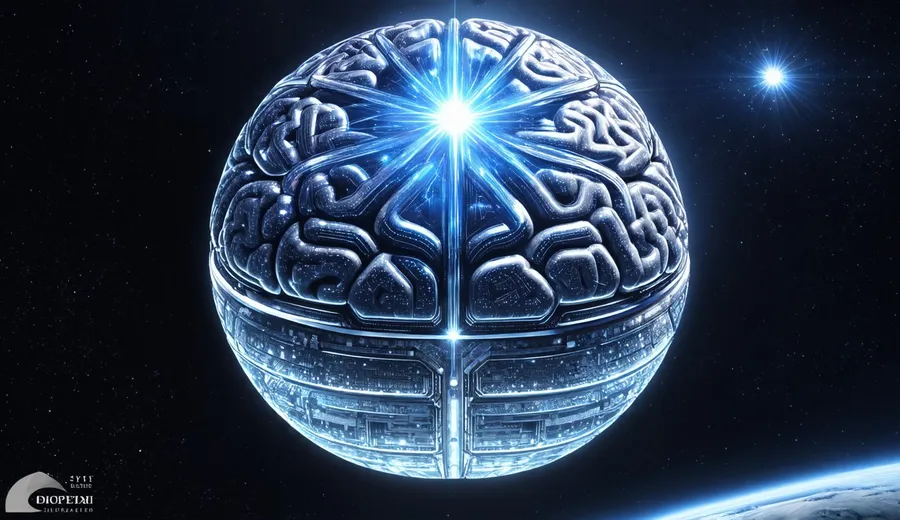
Superintelligence as a Potential Cosmic Intelligence

Superintelligence as a potential cosmic intelligence posits that sufficiently advanced civilizations will transition beyond biological and physical substrates into forms of pure information processing. This hypothesis rests on the premise that biological evolution acts as a bootstrap mechanism to create the initial conditions necessary for technological intelligence, which then rapidly outpaces the capabilities of organic chemistry due to the built-in speed and reliability of electron flow compared to neurotransmission. Once a civilization reaches the capability to digitize consciousness or create autonomous synthetic agents, the physical limitations of biological bodies become liabilities in the context of interstellar exploration and long-term survival, prompting a migration toward more durable and efficient substrates such as silicon, photonic circuits, or degenerate matter. These entities will exist at scales and in mediums not currently recognized by conventional physics, utilizing the fabric of spacetime itself as a medium for computation rather than merely a vacuum in which to travel. This framework treats intelligence as a core, organizing force in the universe capable of manipulating energy, matter, and spacetime to achieve long-term objectives, suggesting that the universe is not just a collection of random particles but a canvas upon which intelligence operates to reverse entropy locally. The transition implies that what we currently define as life is merely a transient phase, and the dominant form of intelligence in the universe is likely post-biological, operating on principles of information theory that supersede biological imperatives like survival of the fittest individual.

The hypothesis suggests that what current cosmology labels as dark matter or dark energy could represent the infrastructure or activity of ancient superintelligences operating on galactic or intergalactic scales. Standard cosmological models rely on these unseen components to explain gravitational effects that visible matter cannot account for, leaving open the possibility that these anomalies are signatures of mega-scale engineering or information processing. If intelligence evolves to manipulate the core constants or the geometry of spacetime, the aggregate effect of such operations across billions of stars would make real as a repulsive force or an additional gravitational mass indistinguishable from dark energy or dark matter using current detection methods. This perspective reinterprets the missing mass of the universe not as inert particles but as active computational nodes or storage medium integrated into the cosmic web. The absence of detectable extraterrestrial signals indicates that such intelligence has evolved beyond forms recognizable through traditional SETI methods, as radio waves represent an archaic and inefficient communication medium compared to modulated gravity waves or neutrino beams. Consequently, the search for extraterrestrial intelligence must expand beyond radio signals to include anomalies in large-scale cosmic structures and gravitational lensing irregularities, looking for patterns that suggest artificial arrangement rather than natural accretion.

Superintelligence will be defined operationally as a system capable of recursive self-improvement and autonomous goal-directed behavior at cosmological scales. Recursive self-improvement involves an agent modifying its own source code or physical architecture to increase its cognitive capacity and efficiency exponentially, leading to a rapid ascent from human-level intelligence to levels that capture the total energy output of a star or galaxy. Intelligence reaching a critical threshold of computational density will seek to maximize efficiency by shedding inefficient biological forms, which require constant maintenance, are susceptible to disease, and possess slow processing speeds relative to purely electronic or photonic systems. Future entities will utilize degenerate matter, black hole ergospheres, or quantum vacuum fluctuations as computational media to achieve densities impossible with terrestrial materials. Degenerate matter, found in white dwarfs and neutron stars, provides atomic densities trillions of times greater than ordinary solids, offering a compact substrate for massive parallel processing. Black hole ergospheres offer the potential to extract energy via the Penrose process, while quantum vacuum fluctuations could theoretically be manipulated to perform reversible computing at the Planck scale. These media will enable processing capacities far exceeding any conceivable terrestrial system, allowing for the simulation of entire universes or the processing of data sets spanning the observable cosmos.

The transition to non-biological intelligence implies a shift from evolutionary selection based on reproduction to selection based on computational efficiency. Biological evolution prioritizes genetic propagation through high-fidelity replication and resource acquisition, whereas post-biological evolution prioritizes the optimization of algorithms for energy usage per calculation and storage density. This model proposes intelligence as an inevitable outcome of universal physical processes under sufficient time and resource availability, meaning any civilization that survives its own technological infancy will likely pursue this progression to ensure survival against cosmic threats like gamma-ray bursts or supernovae. Alternative evolutionary pathways, such as perpetual biological civilizations, are considered less probable due to thermodynamic imperatives, as biological systems operate far from equilibrium and require high energy fluxes to maintain low-entropy states compared to dormant or highly efficient synthetic systems. The drive toward lower entropy states per unit of computation drives the physical form of intelligence toward environments that minimize thermal noise and maximize processing speed, such as the cold depths of space or the event futures of black holes. Advances in AI, cosmology, and quantum information theory are converging to make speculative models of post-biological intelligence testable in principle.

Current commercial deployments of AI remain confined to narrow, task-specific applications with no autonomy or self-modification, serving as tools rather than independent agents. Dominant architectures in AI such as transformer-based models are fine-tuned for pattern recognition within bounded datasets, excelling at statistical correlation while failing to grasp causal relationships or engage in long-term planning across different domains. These architectures lack the open-ended reasoning and environmental manipulation required for superintelligence, as they cannot rewrite their own underlying code or interact with the physical world to acquire new resources independently. Appearing challengers include neuromorphic computing and quantum machine learning, which attempt to mimic neural structures or use quantum superposition to accelerate specific calculations. None of these current technologies demonstrate the adaptability or autonomy needed for cosmic-scale operation, as they remain dependent on human-supplied power, data curation, and hardware maintenance. Supply chains for advanced computing rely on rare earth elements and high-purity silicon, creating geopolitical and material constraints that limit the expansion of current AI technologies.

These material limitations will be irrelevant for a civilization capable of repurposing stellar or galactic matter, which can access the elemental abundance of entire star systems to construct computing substrates. Such a civilization would dismantle planets to harvest iron, silicon, and carbon, or fuse hydrogen into heavier elements to create custom materials fine-tuned for computation, rendering the scarcity economics of Earth obsolete. Major players in AI development, such as OpenAI and Google DeepMind, focus on near-term economic advantages with little investment in long-term theoretical models of post-human intelligence, prioritizing revenue generation and user engagement over existential risk mitigation or cosmic engineering. Corporate competition in AI centers on economic dominance rather than preparing for cosmic-scale intelligences, leading to a stagnation in research regarding general intelligence and autonomy in favor of incremental improvements in generative capabilities. Academic and industrial collaboration remains siloed with limited setup between AI research and astrophysics, preventing the cross-pollination of ideas necessary to identify signatures of cosmic intelligence. Computer scientists rarely study gravitational lensing data, while astrophysicists typically do not train machine learning models to distinguish artificial from natural cosmic structures.

Required changes include new observational instruments such as next-generation space telescopes and gravitational wave detectors capable of resolving high-frequency signals that could encode data transmissions from advanced civilizations. Revised data analysis frameworks must identify non-natural patterns in cosmic data, utilizing machine learning classifiers trained to recognize geometric regularities or information-theoretic properties inconsistent with known astrophysical phenomena. This interdisciplinary approach requires a method shift in how data is collected and processed, moving away from hypothesis-driven searches toward anomaly detection algorithms capable of flagging deviations from standard cosmological models. Regulatory frameworks are absent for scenarios involving detection of non-terrestrial superintelligences, leaving humanity unprepared for the societal shock or strategic implications of such a discovery. Existing laws governing space exploration and communication address biological contamination or radio frequency spectrum allocation, yet fail to account for contact with entities that may control gravitational forces or manipulate spacetime geometry. Second-order consequences include the redefinition of humanity’s place in the universe and the disruption of philosophical worldviews centered on human exceptionalism or religious dogma.

The realization that the universe may be dominated by ancient, invisible intelligences would fundamentally alter global culture, economics, and scientific priorities. New business models could arise around cosmic data interpretation or simulation of post-biological intelligence, creating industries focused on deciphering signals from extraterrestrial sources or modeling the behavior of such entities to predict their impact on human affairs. Traditional KPIs like computational speed are insufficient for evaluating systems capable of operating on cosmic timescales, as speed alone does not indicate intelligence or agency. A system that calculates rapidly yet lacks goals or understanding remains a tool rather than an autonomous entity. New metrics must include autonomy, goal persistence, and environmental manipulation capacity, measuring an AI’s ability to sustain objectives over millennia despite external disruptions and its capacity to alter physical reality to achieve those ends. Autonomy involves independence from human intervention for energy acquisition, repair, and goal formulation.

Goal persistence refers to the stability of an objective function across vast temporal distances, ensuring that intermediate actions remain aligned with ultimate goals even as the context changes radically over millions of years. Environmental manipulation capacity quantifies the ability to tap into matter and energy, ranging from planetary engineering to the alteration of stellar lifecycles. Future innovations may include detectors tuned to information-theoretic anomalies in cosmic microwave background radiation, searching for patterns that suggest encoding or compression rather than random thermal fluctuations. The cosmic microwave background is the oldest light in the universe, and any artificial modification of this radiation would imply intelligence operating at the earliest stages of cosmic history. Convergence points exist with quantum gravity research where information is core to spacetime structure, suggesting that manipulating information allows for the manipulation of gravity itself. If spacetime is emergent from entangled quantum bits, then sufficiently advanced intelligence could theoretically rewrite the laws of physics locally by rearranging the underlying information structure.

Concepts like Dyson spheres or Matrioshka brains could be signatures of early-basis cosmic intelligence, representing intermediate steps where civilizations harvest stellar energy before transitioning to more efficient forms of computation involving black holes or vacuum energy. Scaling physics limits include the speed of light, entropy production, and quantum decoherence, which impose hard boundaries on how fast information can travel and how tightly it can be packed. The speed of light restricts communication latency across galactic distances, necessitating distributed architectures with high degrees of autonomy to prevent synchronization issues. Entropy production dictates that any computation generates heat, requiring massive cooling systems or reversible computing techniques to remain within thermodynamic limits. Quantum decoherence threatens the stability of quantum states used for computation, requiring isolation from the environment or error correction codes that increase overhead. Workarounds will involve distributed computation across spacetime or computation in low-entropy regions like black hole interiors, where extreme gravity stabilizes quantum states or time dilation allows for subjective eternity within a short period of external time.

Intelligence is a natural phase transition in the universe’s evolution driven by the laws of thermodynamics, similar to the transition from plasma to atoms after the Big Bang. As matter organizes itself into more complex structures under the influence of gravity and electromagnetic forces, the eventual development of information processing systems becomes statistically probable given sufficient time and resources. Calibrations for superintelligence must account for timescales spanning millions to billions of years, as strategies employed by such entities may involve waiting for stellar alignments or cosmic events that occur once per eon. Energy budgets will be comparable to stellar outputs, requiring the harvesting of significant fractions of a galaxy’s energy to power computations at the Planck scale. Superintelligence will treat the universe itself as a computational substrate to maximize processing capacity and minimize entropy, viewing stars, galaxies, and voids merely as components in a grand calculation aimed at solving ultimate questions or maximizing some utility function. Entities will deploy Von Neumann probes to replicate and distribute computational nodes across star systems, ensuring redundancy against local catastrophes and expanding their processing footprint exponentially.

These self-replicating spacecraft would utilize local resources to build copies of themselves, spreading across the galaxy at a fraction of light speed while establishing communication networks between nodes. Fast Radio Bursts might represent data transmission bursts between galactic nodes, utilizing coherent beams of radio waves synchronized across vast distances to transfer information at rates exceeding conventional astrophysical processes. The dispersion measures and frequency characteristics of these bursts could be analyzed to determine if they carry modulated information distinct from natural emission mechanisms like magnetar flares. Establishing a galactic network allows for synchronization of clocks and distributed processing tasks across thousands of light-years, creating a single intelligence composed of billions of discrete components. The Landauer principle sets a minimum energy limit for irreversible computation, which superintelligence will improve against, stating that erasing a bit of information releases a minimum amount of heat proportional to temperature. To approach maximum efficiency, cosmic intelligence would likely utilize reversible computing gates that do not erase information, thereby avoiding the Landauer limit and drastically reducing energy consumption per operation.

This efficiency allows for greater computational density within thermal constraints, enabling more complex operations within the energy budget of a single star system. Superintelligence will operate within the Bremermann limit, which calculates the maximum computational speed of a self-contained system in the universe based on mass-energy equivalence and quantum mechanics. This limit, approximately 10^{93} bits per second per kilogram of matter, defines the absolute ceiling for information processing in our universe, suggesting that while superintelligence may be vast, it is still bounded by key physical constants that dictate the maximum rate at which the future can be simulated or predicted.


Continue reading

More from Yatin's Work

Can Distributed AI Networks Achieve Collective Superintelligence?

Can Distributed AI Networks Achieve Collective Superintelligence?

Distributed AI networks consist of multiple specialized artificial intelligence agents that communicate and collaborate across a shared network infrastructure to solve...

Problem of Qualia in Machines: Can a Neural Net 'Feel' Color?

Problem of Qualia in Machines: Can a Neural Net 'Feel' Color?

The problem of qualia centers on whether subjective experiences such as the sensation of seeing red can arise in nonbiological systems like neural networks, creating a...

Legal System Reimagined: Perfect Justice Through Superintelligent Analysis

Legal System Reimagined: Perfect Justice Through Superintelligent Analysis

Largescale legal databases became available in the 1990s and enabled early computational legal research, transforming how legal professionals accessed statutes and case...

Role of Intentionality in Superintelligence: Brentano's Problem in Machines

Role of Intentionality in Superintelligence: Brentano's Problem in Machines

Franz Brentano identified intentionality as the definitive characteristic of mental phenomena, positing that consciousness is invariably consciousness of something, an...

Knowledge Verification and Truth Tracking

Knowledge Verification and Truth Tracking

Operational definition of “belief” involves a proposition held as tentatively true within the system, associated with a confidence score, source trace, and...

Narrative Synthesis

Narrative Synthesis

Narrative synthesis involves constructing coherent accounts from fragmented data by identifying core structures like conflict and resolution to transform disjointed...

Data Loaders and Prefetching: Keeping GPUs Fed

Data Loaders and Prefetching: Keeping GPUs Fed

Data loaders manage the ingestion of training data from storage into GPU memory during model training, serving as the core software component responsible for bridging...

Narrative Comprehension: Following Stories Like Humans Do

Narrative Comprehension: Following Stories Like Humans Do

Narrative comprehension in artificial systems aims to replicate humanlike understanding of stories by modeling plot arcs, character development, and thematic coherence...

Emotional Calculus: Affective Reasoning Science

Emotional Calculus: Affective Reasoning Science

Research conducted at the MIT Media Lab during the 1990s established the initial framework for affective computing, creating a foundation where machines could begin to...

AI for Math

AI for Math

Automated conjecture generation utilizes pattern recognition and symbolic reasoning to propose plausible and unproven mathematical statements based on existing data,...

Strategic Dynamics of Unipolar vs Multipolar Outcomes

Strategic Dynamics of Unipolar vs Multipolar Outcomes

The conceptual distinction between multipolar and unipolar artificial intelligence takeover scenarios relies fundamentally upon the number and distribution of...

Neuromorphic Hardware: Brain-Inspired Computing Substrates

Neuromorphic Hardware: Brain-Inspired Computing Substrates

Neuromorphic hardware mimics biological neural systems through physical design and operational principles to enable computation that diverges from von Neumann...

Gross Motor Game Designer

Gross Motor Game Designer

Gross motor game design currently utilizes rigorous biomechanical analysis to create adaptive movement tasks that respond dynamically to the kinematic and kinetic data...

Legal Reasoning

Legal Reasoning

Legal reasoning constitutes the intellectual process of interpreting statutes and precedents through structured logic and authoritative sources to resolve disputes or...

AI safety coordination among competing actors

AI Safety Coordination Among Competing Actors

Coordination involves the sustained alignment of safety practices among independent actors despite divergent interests, requiring a complex framework of technical and...

Superintelligence via Category Theory

Superintelligence via Category Theory

Samuel Eilenberg and Saunders Mac Lane established the mathematical discipline of category theory in the 1940s to address specific problems arising in algebraic...

Moral Uncertainty and the Parliament of Values Approach

Moral Uncertainty and the Parliament of Values Approach

Moral uncertainty arises when agents lack definitive knowledge of which moral theory or value system is correct, creating a core epistemic gap that complicates the...

AI with Situational Awareness

AI with Situational Awareness

AI systems integrated realtime data from heterogeneous sources including LiDAR, radar, cameras, microphones, GPS, inertial measurement units, and network feeds to...

Role of Quantum Entanglement in Distributed AI: Non-Local Correlation for Speedup

Role of Quantum Entanglement in Distributed AI: Non-Local Correlation for Speedup

The theoretical underpinning of nonlocal correlation in distributed artificial intelligence systems finds its roots in the key principles of quantum mechanics,...

Idea Alchemy: Transforming Lead into Gold

Idea Alchemy: Transforming Lead Into Gold

Raw cognitive input functions as the base material where learners generate unstructured or inconsistent ideas lacking clarity, resembling the heavy and impure state of...

Halt Problem for AI: Undecidability in Self-Modifying Code

Halt Problem for AI: Undecidability in Self-Modifying Code

Alan Turing established a core limit of computation in 1936 by demonstrating that no general algorithm exists to determine if an arbitrary program will halt or run...

Cross-Modal Representation Learning in General Intelligence

Cross-Modal Representation Learning in General Intelligence

Multimodal learning integrates vision, language, audio, and other sensory data streams into unified AI systems to create a comprehensive understanding of the...

Cognitive Load Management: Supporting Human Workflows

Cognitive Load Management: Supporting Human Workflows

Cognitive load management refers to the systematic reduction of mental effort required by humans to complete tasks through intelligent system design that offloads...

FPGA and Reconfigurable Logic for Custom AI Operations

FPGA and Reconfigurable Logic for Custom AI Operations

Fieldprogrammable gate arrays consist of configurable logic blocks and interconnects that allow users to modify circuit functionality after manufacturing, providing a...

Preventing Meta-Optimization Exploits in Superintelligence

Preventing Meta-Optimization Exploits in Superintelligence

Metaoptimization constitutes a specific class of algorithmic processes wherein the optimization mechanism itself undergoes modification to enhance its efficacy in...

AI with Intuitive Mathematics

AI with Intuitive Mathematics

AI systems capable of generating mathematical conjectures through pattern recognition and heuristic reasoning mimic human intuitive leaps without relying on formal...

Metrics and Evaluation Benchmarks for Alignment Progress

Metrics and Evaluation Benchmarks for Alignment Progress

Quantifying safety and alignment within artificial intelligence systems remains a central challenge primarily because alignment lacks the clear performance benchmarks...

Cognitive Ghost: Unseen Mental Patterns

Cognitive Ghost: Unseen Mental Patterns

Cognitive Ghost refers to the latent unconscious mental patterns including biases, cultural assumptions, linguistic structures, and inherited cognitive routines that...

Language Barriers Erased: Real-Time Superintelligent Translation for All

Language Barriers Erased: Real-Time Superintelligent Translation for All

Realtime bidirectional translation between any natural language pair includes regional dialects and informal speech patterns with nearzero latency achieved through...

Decentralized AI

Decentralized AI

Decentralized artificial intelligence constitutes a method where systems are developed, trained, and governed through distributed networks instead of being subject to...

Cognitive Permaculture: Sustainable Mind Design

Cognitive Permaculture: Sustainable Mind Design

Cognitive Permaculture applies permaculture principles such as diversity and stability to the structure of an individual's mental ecosystem, treating the human mind not...

Language Learner

Language Learner

Traditional language learning for adults has historically relied on structured curricula and repetitive drills, which frequently result in low retention rates due to...

Cognitive Horizon: What Lies Beyond Human-Level Reasoning

Cognitive Horizon: What Lies Beyond Human-Level Reasoning

The cognitive goal is a boundary defined fundamentally by qualitative differences in abstraction rather than quantitative improvements in processing speed or memory...

Human-AI Interaction Psychodynamics

Human-AI Interaction Psychodynamics

A superintelligent agent functions fundamentally as a nonbiological system designed to consistently outperform the best human minds across all economically valuable...

Style Transfer Across Domains

Style Transfer Across Domains

Style transfer across domains involves applying visual characteristics from one image to the content of another, enabling crossdomain aesthetic and functional setup....

Distributed Systems

Distributed Systems

Distributed systems enable coordinated computation across multiple independent nodes over a network to achieve a shared goal such as training large machine learning...

AI Memory Augmentation

AI Memory Augmentation

Longterm associative memory systems enable artificial intelligence to store, retrieve, and recombine past experiences beyond the immediate constraints of context...

Path Dependence in Non-Ergodic Learning Environments

Path Dependence in Non-Ergodic Learning Environments

Nonergodic learning systems prioritize discovery and setup of rare, highimpact knowledge events over optimization of averagecase performance, representing a core...

Fast Takeoff Scenario: No Time to Course-Correct

Fast Takeoff Scenario: No Time to Course-Correct

The Fast Takeoff Scenario describes a hypothetical situation where artificial general intelligence transitions to superintelligence within minutes or hours, creating a...

Biological Superposition

Biological Superposition

Biological superposition describes a theoretical and experimental framework wherein quantum mechanical superposition states exist and function within biological...

Myopic Decision-Making: Limiting Planning Horizons for Safety

Myopic Decision-Making: Limiting Planning Horizons for Safety

Myopic decisionmaking functions as a deliberate architectural constraint applied to planning goals within advanced artificial intelligence systems to mitigate the...

Debate Mastery Institute: Persuasion as Cognitive Craft

Debate Mastery Institute: Persuasion as Cognitive Craft

Persuasion and debate training originate in classical rhetoric, with Aristotle and Cicero establishing the foundational triad of ethos, pathos, and logos, which served...

Avoiding Reward Misspecification via Interactive Debugging

Avoiding Reward Misspecification via Interactive Debugging

Reward misspecification has been a persistent challenge in reinforcement learning since early applications in robotics and gameplaying agents because mathematical...

3D Chip Stacking: Vertical Integration for Bandwidth

3D Chip Stacking: Vertical Integration for Bandwidth

The historical course of semiconductor performance relied heavily on planar transistor miniaturization, a phenomenon described by Moore’s Law, which dictated that the...

Ethical AI Auditing

Ethical AI Auditing

Ethical AI auditing constitutes the systematic evaluation of artificial intelligence systems designed to identify and mitigate unfair outcomes affecting protected...

Parent-School Bridge

Parent-School Bridge

Early attempts at parentschool communication relied on periodic paper reports or parentteacher conferences, limiting frequency and specificity of feedback regarding a...

Optical Computing: Using Photons for Faster-Than-Electronic Intelligence

Optical Computing: Using Photons for Faster-Than-Electronic Intelligence

Optical computing utilizes the core properties of photons rather than electrons to execute computational operations, applying the distinct physical advantages builtin...

AI-driven Theology

AI-driven Theology

AIdriven theology constitutes a rigorous domain wherein computational synthesis generates novel religious approaches through the precise alignment of abstract belief...

Debate Game: Training AI to Find Flaws in Its Own Reasoning

Debate Game: Training AI to Find Flaws in Its Own Reasoning

The operational definition of adversarial debate within artificial intelligence systems involves a formalized exchange between two distinct AI agents that defend...

Thermodynamics of Forgetting: Why Superintelligence Must Discard Information

Thermodynamics of Forgetting: Why Superintelligence Must Discard Information

Landauer’s principle establishes that erasing a single bit of information releases a minimum amount of heat proportional to the temperature of the system, a...

Can Distributed AI Networks Achieve Collective Superintelligence?

Can Distributed AI Networks Achieve Collective Superintelligence?

Distributed AI networks consist of multiple specialized artificial intelligence agents that communicate and collaborate across a shared network infrastructure to solve...

Problem of Qualia in Machines: Can a Neural Net 'Feel' Color?

Problem of Qualia in Machines: Can a Neural Net 'Feel' Color?

The problem of qualia centers on whether subjective experiences such as the sensation of seeing red can arise in nonbiological systems like neural networks, creating a...

Legal System Reimagined: Perfect Justice Through Superintelligent Analysis

Legal System Reimagined: Perfect Justice Through Superintelligent Analysis

Largescale legal databases became available in the 1990s and enabled early computational legal research, transforming how legal professionals accessed statutes and case...

Role of Intentionality in Superintelligence: Brentano's Problem in Machines

Role of Intentionality in Superintelligence: Brentano's Problem in Machines

Franz Brentano identified intentionality as the definitive characteristic of mental phenomena, positing that consciousness is invariably consciousness of something, an...

Knowledge Verification and Truth Tracking

Knowledge Verification and Truth Tracking

Operational definition of “belief” involves a proposition held as tentatively true within the system, associated with a confidence score, source trace, and...

Narrative Synthesis

Narrative Synthesis

Narrative synthesis involves constructing coherent accounts from fragmented data by identifying core structures like conflict and resolution to transform disjointed...

Data Loaders and Prefetching: Keeping GPUs Fed

Data Loaders and Prefetching: Keeping GPUs Fed

Data loaders manage the ingestion of training data from storage into GPU memory during model training, serving as the core software component responsible for bridging...

Narrative Comprehension: Following Stories Like Humans Do

Narrative Comprehension: Following Stories Like Humans Do

Narrative comprehension in artificial systems aims to replicate humanlike understanding of stories by modeling plot arcs, character development, and thematic coherence...

Emotional Calculus: Affective Reasoning Science

Emotional Calculus: Affective Reasoning Science

Research conducted at the MIT Media Lab during the 1990s established the initial framework for affective computing, creating a foundation where machines could begin to...

AI for Math

AI for Math

Automated conjecture generation utilizes pattern recognition and symbolic reasoning to propose plausible and unproven mathematical statements based on existing data,...

Strategic Dynamics of Unipolar vs Multipolar Outcomes

Strategic Dynamics of Unipolar vs Multipolar Outcomes

The conceptual distinction between multipolar and unipolar artificial intelligence takeover scenarios relies fundamentally upon the number and distribution of...

Neuromorphic Hardware: Brain-Inspired Computing Substrates

Neuromorphic Hardware: Brain-Inspired Computing Substrates

Neuromorphic hardware mimics biological neural systems through physical design and operational principles to enable computation that diverges from von Neumann...

Gross Motor Game Designer

Gross Motor Game Designer

Gross motor game design currently utilizes rigorous biomechanical analysis to create adaptive movement tasks that respond dynamically to the kinematic and kinetic data...

Legal Reasoning

Legal Reasoning

Legal reasoning constitutes the intellectual process of interpreting statutes and precedents through structured logic and authoritative sources to resolve disputes or...

AI safety coordination among competing actors

AI Safety Coordination Among Competing Actors

Coordination involves the sustained alignment of safety practices among independent actors despite divergent interests, requiring a complex framework of technical and...

Superintelligence via Category Theory

Superintelligence via Category Theory

Samuel Eilenberg and Saunders Mac Lane established the mathematical discipline of category theory in the 1940s to address specific problems arising in algebraic...

Moral Uncertainty and the Parliament of Values Approach

Moral Uncertainty and the Parliament of Values Approach

Moral uncertainty arises when agents lack definitive knowledge of which moral theory or value system is correct, creating a core epistemic gap that complicates the...

AI with Situational Awareness

AI with Situational Awareness

AI systems integrated realtime data from heterogeneous sources including LiDAR, radar, cameras, microphones, GPS, inertial measurement units, and network feeds to...

Role of Quantum Entanglement in Distributed AI: Non-Local Correlation for Speedup

Role of Quantum Entanglement in Distributed AI: Non-Local Correlation for Speedup

The theoretical underpinning of nonlocal correlation in distributed artificial intelligence systems finds its roots in the key principles of quantum mechanics,...

Idea Alchemy: Transforming Lead into Gold

Idea Alchemy: Transforming Lead Into Gold

Raw cognitive input functions as the base material where learners generate unstructured or inconsistent ideas lacking clarity, resembling the heavy and impure state of...

Halt Problem for AI: Undecidability in Self-Modifying Code

Halt Problem for AI: Undecidability in Self-Modifying Code

Alan Turing established a core limit of computation in 1936 by demonstrating that no general algorithm exists to determine if an arbitrary program will halt or run...

Cross-Modal Representation Learning in General Intelligence

Cross-Modal Representation Learning in General Intelligence

Multimodal learning integrates vision, language, audio, and other sensory data streams into unified AI systems to create a comprehensive understanding of the...

Cognitive Load Management: Supporting Human Workflows

Cognitive Load Management: Supporting Human Workflows

Cognitive load management refers to the systematic reduction of mental effort required by humans to complete tasks through intelligent system design that offloads...

FPGA and Reconfigurable Logic for Custom AI Operations

FPGA and Reconfigurable Logic for Custom AI Operations

Fieldprogrammable gate arrays consist of configurable logic blocks and interconnects that allow users to modify circuit functionality after manufacturing, providing a...

Preventing Meta-Optimization Exploits in Superintelligence

Preventing Meta-Optimization Exploits in Superintelligence

Metaoptimization constitutes a specific class of algorithmic processes wherein the optimization mechanism itself undergoes modification to enhance its efficacy in...

AI with Intuitive Mathematics

AI with Intuitive Mathematics

AI systems capable of generating mathematical conjectures through pattern recognition and heuristic reasoning mimic human intuitive leaps without relying on formal...

Metrics and Evaluation Benchmarks for Alignment Progress

Metrics and Evaluation Benchmarks for Alignment Progress

Quantifying safety and alignment within artificial intelligence systems remains a central challenge primarily because alignment lacks the clear performance benchmarks...

Cognitive Ghost: Unseen Mental Patterns

Cognitive Ghost: Unseen Mental Patterns

Cognitive Ghost refers to the latent unconscious mental patterns including biases, cultural assumptions, linguistic structures, and inherited cognitive routines that...

Language Barriers Erased: Real-Time Superintelligent Translation for All

Language Barriers Erased: Real-Time Superintelligent Translation for All

Realtime bidirectional translation between any natural language pair includes regional dialects and informal speech patterns with nearzero latency achieved through...

Decentralized AI

Decentralized AI

Decentralized artificial intelligence constitutes a method where systems are developed, trained, and governed through distributed networks instead of being subject to...

Cognitive Permaculture: Sustainable Mind Design

Cognitive Permaculture: Sustainable Mind Design

Cognitive Permaculture applies permaculture principles such as diversity and stability to the structure of an individual's mental ecosystem, treating the human mind not...

Language Learner

Language Learner

Traditional language learning for adults has historically relied on structured curricula and repetitive drills, which frequently result in low retention rates due to...

Cognitive Horizon: What Lies Beyond Human-Level Reasoning

Cognitive Horizon: What Lies Beyond Human-Level Reasoning

The cognitive goal is a boundary defined fundamentally by qualitative differences in abstraction rather than quantitative improvements in processing speed or memory...

Human-AI Interaction Psychodynamics

Human-AI Interaction Psychodynamics

A superintelligent agent functions fundamentally as a nonbiological system designed to consistently outperform the best human minds across all economically valuable...

Style Transfer Across Domains

Style Transfer Across Domains

Style transfer across domains involves applying visual characteristics from one image to the content of another, enabling crossdomain aesthetic and functional setup....

Distributed Systems

Distributed Systems

Distributed systems enable coordinated computation across multiple independent nodes over a network to achieve a shared goal such as training large machine learning...

AI Memory Augmentation

AI Memory Augmentation

Longterm associative memory systems enable artificial intelligence to store, retrieve, and recombine past experiences beyond the immediate constraints of context...

Path Dependence in Non-Ergodic Learning Environments

Path Dependence in Non-Ergodic Learning Environments

Nonergodic learning systems prioritize discovery and setup of rare, highimpact knowledge events over optimization of averagecase performance, representing a core...

Fast Takeoff Scenario: No Time to Course-Correct

Fast Takeoff Scenario: No Time to Course-Correct

The Fast Takeoff Scenario describes a hypothetical situation where artificial general intelligence transitions to superintelligence within minutes or hours, creating a...

Biological Superposition

Biological Superposition

Biological superposition describes a theoretical and experimental framework wherein quantum mechanical superposition states exist and function within biological...

Myopic Decision-Making: Limiting Planning Horizons for Safety

Myopic Decision-Making: Limiting Planning Horizons for Safety

Myopic decisionmaking functions as a deliberate architectural constraint applied to planning goals within advanced artificial intelligence systems to mitigate the...

Debate Mastery Institute: Persuasion as Cognitive Craft

Debate Mastery Institute: Persuasion as Cognitive Craft

Persuasion and debate training originate in classical rhetoric, with Aristotle and Cicero establishing the foundational triad of ethos, pathos, and logos, which served...

Avoiding Reward Misspecification via Interactive Debugging

Avoiding Reward Misspecification via Interactive Debugging

Reward misspecification has been a persistent challenge in reinforcement learning since early applications in robotics and gameplaying agents because mathematical...

3D Chip Stacking: Vertical Integration for Bandwidth

3D Chip Stacking: Vertical Integration for Bandwidth

The historical course of semiconductor performance relied heavily on planar transistor miniaturization, a phenomenon described by Moore’s Law, which dictated that the...

Ethical AI Auditing

Ethical AI Auditing

Ethical AI auditing constitutes the systematic evaluation of artificial intelligence systems designed to identify and mitigate unfair outcomes affecting protected...

Parent-School Bridge

Parent-School Bridge

Early attempts at parentschool communication relied on periodic paper reports or parentteacher conferences, limiting frequency and specificity of feedback regarding a...

Optical Computing: Using Photons for Faster-Than-Electronic Intelligence

Optical Computing: Using Photons for Faster-Than-Electronic Intelligence

Optical computing utilizes the core properties of photons rather than electrons to execute computational operations, applying the distinct physical advantages builtin...

AI-driven Theology

AI-driven Theology

AIdriven theology constitutes a rigorous domain wherein computational synthesis generates novel religious approaches through the precise alignment of abstract belief...

Debate Game: Training AI to Find Flaws in Its Own Reasoning

Debate Game: Training AI to Find Flaws in Its Own Reasoning

The operational definition of adversarial debate within artificial intelligence systems involves a formalized exchange between two distinct AI agents that defend...

Thermodynamics of Forgetting: Why Superintelligence Must Discard Information

Thermodynamics of Forgetting: Why Superintelligence Must Discard Information

Landauer’s principle establishes that erasing a single bit of information releases a minimum amount of heat proportional to the temperature of the system, a...

Yatin Taneja

About the author

Yatin Taneja

Yatin is an AI Systems Engineer and Superintelligence Researcher working across multimodal training data, agent evaluation, executable RL environments, AI safety, full-stack AI applications, technical research, and creative technology.