Knowledge hub

Three Types of Superintelligence: Speed, Collective, and Quality Intelligence

Three Types of Superintelligence: Speed, Collective, and Quality Intelligence

Superintelligence classification relies on the specific mechanisms that allow systems to exceed human cognitive capabilities, specifically speed, collective, and quality intelligence. This taxonomy provides a structured way to understand how artificial systems might surpass biological limits without relying on vague descriptions of general capability. Defining these categories allows researchers to focus on specific technical pathways rather than abstract concepts of intelligence explosion. The distinctions are necessary because achieving superintelligence through one vector does not guarantee success in others, creating a domain where different architectures excel in different dimensions of cognitive performance. Understanding these types requires a deep look into the underlying physics of computation, the organization of multi-agent systems, and the architectural depth of reasoning models. Speed superintelligence involves systems that match human-level reasoning while operating at timescales vastly accelerated compared to biological cognition.

Human neurons transmit signals at approximately 100 meters per second due to the electrochemical nature of action potentials traveling along axons, whereas electronic signals travel near the speed of light through conductive materials. Silicon transistors switch at gigahertz frequencies, which is a rate millions of times faster than the firing rate of biological neurons found in the human brain that operate on a millisecond timescale limited by the diffusion of neurotransmitters across synaptic clefts. This physical disparity in signal transmission velocity and switching speed creates a key potential for artificial systems to outpace human thought processes by orders of magnitude. The architecture of such systems prioritizes computational throughput and low-latency processing to exploit these physical advantages fully, effectively compressing years of human contemplation into minutes or seconds of machine operation. Realizing speed superintelligence requires high-performance hardware paired with fine-tuned algorithms capable of sustaining rapid inference and learning cycles without degradation in accuracy. Engineers must design systems that minimize the time required for data movement between memory and processing units to prevent latency issues that would negate raw speed advantages built-in in the hardware.

Physical constraints such as heat dissipation and power consumption impose strict limits on how quickly computations can be sustained in large-scale deployments because energy waste scales with activity frequency. Landauer’s principle sets a theoretical minimum on the energy required for erasing a bit of information, establishing a floor for the energy efficiency of any high-speed computational process that cannot be breached regardless of engineering advancements. These thermodynamic constraints dictate that simply increasing clock speeds is insufficient without breakthroughs in energy-efficient computing architectures or novel cooling solutions that manage the thermal output of dense processing arrays. Collective superintelligence arises from the coordinated interaction of numerous moderately intelligent agents where the combined output exceeds the capacity of any single agent. This form of intelligence depends heavily on communication efficiency, durable consensus mechanisms, and fault tolerance among distributed agents operating in parallel across a network. Current research into swarm intelligence and multi-agent reinforcement learning frameworks provides early models of how these interactions might function for large workloads, demonstrating that groups can solve problems like pathfinding or resource allocation more effectively than individuals.

The theoretical basis suggests that while individual agents may operate within human-like constraints, their networked effect creates a cognitive entity with problem-solving scope far beyond individual limits through specialization and parallelism. The effectiveness of this approach relies on the diversity of the agents and the bandwidth available for them to share intermediate results and coordinate their actions toward a unified goal. Implementing collective superintelligence involves overcoming flexibility challenges related to coordination overhead and latency intrinsic in communication networks connecting the agents. As the number of agents increases, the complexity of ensuring alignment and coherent action grows exponentially, often leading to diminishing returns if group size increases without improved organizational protocols to manage the interactions. The system must manage the flow of information between agents to prevent congestion or the propagation of errors that could destabilize the collective decision-making process across the network. Effective protocols must dynamically adjust the topology of the network to fine-tune for specific tasks, requiring sophisticated meta-cognitive layers to oversee the swarm and reorganize connections based on real-time performance metrics.

These overhead costs can become significant enough that the net benefit of adding more agents becomes negative, necessitating careful architectural design to balance individual autonomy with group cohesion. Quality superintelligence denotes systems that possess superior cognitive abilities across all domains compared to human experts. These systems solve problems and generate insights beyond biological human limits due to key architectural or functional advantages in reasoning rather than mere speed or numbers. Unlike speed or collective intelligence, which may rely on quantity of operations or agents, quality intelligence is a qualitative leap in the depth and sophistication of cognitive processing that allows for novel solutions. Achieving this level requires core advances in reasoning architectures that move beyond statistical pattern matching toward genuine understanding and conceptual innovation. This type of intelligence is characterized by the ability to generalize from very few examples, make valid causal inferences in complex systems, and generate strategies that account for long-term second-order effects which human minds typically miss.

Core advances in reasoning architectures are necessary to achieve domain-general superiority characteristic of quality superintelligence. Improved symbolic setup, causal inference, and world modeling capabilities enable these systems to construct durable mental models of reality rather than relying solely on correlation-based predictions derived from historical data. The setup of neuro-symbolic approaches combines the pattern recognition strengths of neural networks with the logical rigor of symbolic AI to create systems capable of abstract reasoning and formal verification of their own outputs. Researchers focus on developing architectures that can perform counterfactual thinking and long-term planning, which are hallmarks of high-quality human cognition but remain difficult to replicate in machines. Success in this area implies creating systems that understand the underlying principles of a domain well enough to apply them in entirely novel contexts where prior training data is absent. Operational definitions clarify the distinctions between these types by establishing specific metrics for evaluation grounded in performance data rather than subjective assessment.

Speed intelligence is measured in cognitive operations per unit time relative to established human baselines for similar tasks, focusing on the acceleration factor achieved by the silicon substrate. Collective intelligence is quantified by group performance gains over individual maxima, assessing how much the network amplifies the capability of its constituent parts through collaboration and division of labor. Quality intelligence is assessed via cross-domain task success rates exceeding those of top human experts, focusing on the novelty and correctness of solutions generated across unrelated fields. These metrics provide a concrete framework for comparing different approaches to artificial intelligence development and tracking progress toward the thresholds defined as superintelligent. The convergence of multiple types could yield hybrid superintelligences that use the strengths of each category while mitigating their individual weaknesses. A fast, high-quality collective system will possess enhanced strength, adaptability, and problem-solving scope that surpasses any single-type approach by combining rapid processing with deep reasoning and massive parallelism.

Future innovations may involve adaptive reconfiguration of intelligence types based on task demands, allowing a system to switch between high-speed processing and deep, quality reasoning as required by the specific problem at hand. Self-improving architectures will shift between speed, collective, and quality modes autonomously to improve performance under varying constraints such as energy availability or time pressure. This adaptability defines the ultimate reliability of intelligent systems, ensuring they maintain optimal functionality across a wide range of operational environments. Early AI research focused on narrow task performance within specific domains such as chess playing or mathematical theorem proving where rules were clearly defined and state spaces were limited. Discussions on artificial general intelligence shifted the conceptual focus toward systems capable of performing any intellectual task that a human being could perform rather than excelling in isolated areas. Intelligence explosion theory provided a formalization of how rapid capability growth might occur once systems reached a threshold of recursive self-improvement where they could redesign their own source code.

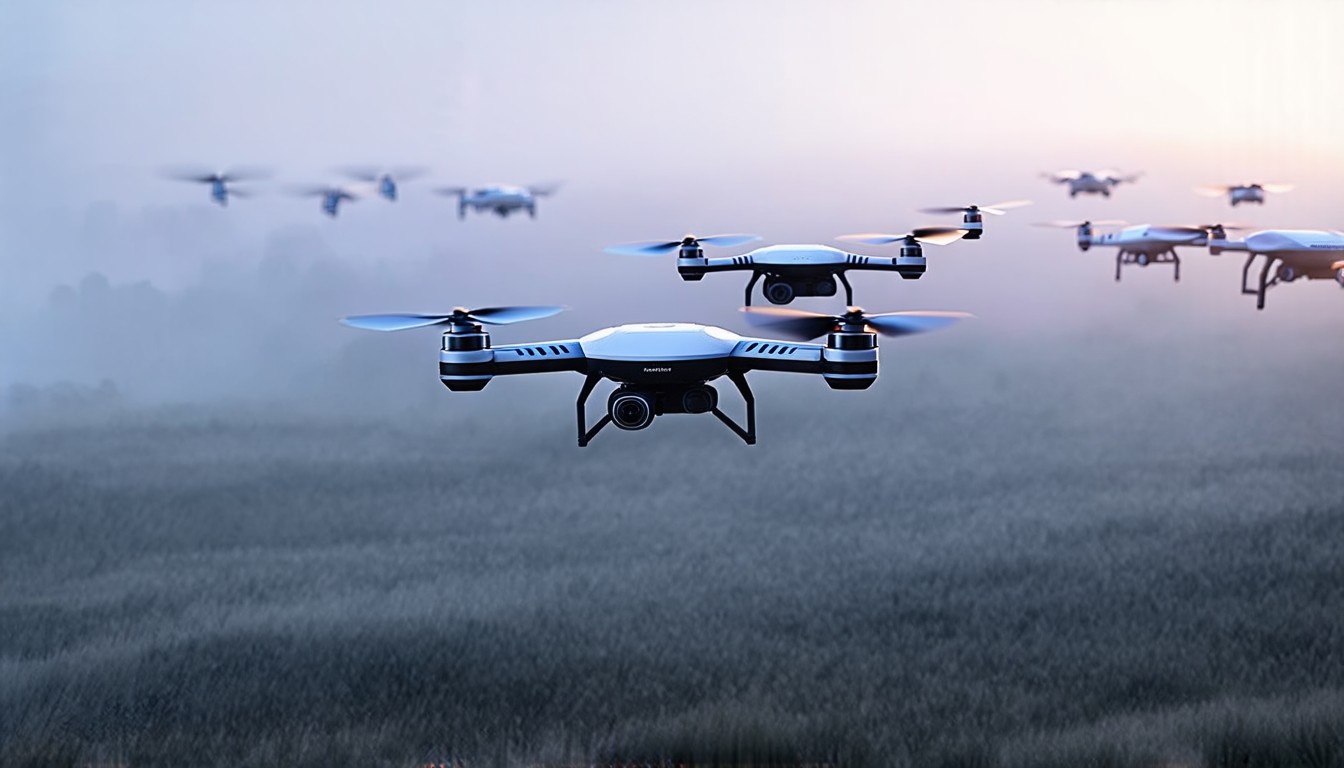
The development of multi-agent systems and advances in neural scaling laws supported these theoretical progressions by demonstrating that performance improved predictably with increased computational resources and data volumes. These historical trends laid the groundwork for current classifications by highlighting different paths, architectural improvement versus scaling, that lead toward advanced capabilities. Current commercial deployments remain far from true superintelligence, though they exhibit characteristics of the defined types in restricted environments. High-speed inference engines in finance and logistics demonstrate proto-forms of speed intelligence by executing transactions and routing optimizations faster than human teams could possibly react to market changes or supply chain disruptions. Collaborative AI in robotics swarms exhibits early characteristics of collective intelligence as groups of drones or robots coordinate to map environments or manage warehouse logistics without central oversight. High-performance models in scientific discovery approach quality-like capabilities in narrow domains by predicting protein structures or identifying novel materials with properties superior to those found by human researchers analyzing standard datasets.

These examples serve as proof-of-concept implementations that validate the theoretical distinctions between speed, collective, and quality intelligence in practical settings. Dominant architectures currently include transformer-based models for quality-like tasks involving natural language understanding and generation due to their ability to model long-range dependencies in data. Federated and multi-agent frameworks support collective applications where data privacy or latency necessitates distributed processing across edge devices rather than centralized aggregation. Improved inference engines utilizing specialized tensor processing units handle speed-critical deployments in real-time advertising and algorithmic trading where microseconds determine financial outcomes. These existing technologies form the foundation upon which more advanced superintelligent systems will likely be built through incremental improvements in scale and algorithmic efficiency. The separation of concerns between these current architectures mirrors the proposed classification, suggesting that future connection will be a major engineering challenge.

Appearing challengers explore neuromorphic computing for energy-efficient speed by mimicking the physical structure of biological neurons to overcome the limitations of von Neumann architectures related to memory bandwidth. Decentralized AI protocols are being developed for resilient collectives that operate without central control points, utilizing blockchain-like distributed ledgers for coordination and trust establishment between autonomous agents. Neuro-symbolic hybrids are researched for enhanced reasoning quality by attempting to merge the learning capabilities of deep learning with the explicit logic representation of classical AI to solve complex planning problems. These alternative approaches aim to address specific weaknesses in current dominant frameworks such as high power consumption, lack of interpretability, or poor generalization outside of training distributions. Supply chains depend on advanced semiconductors and rare earth materials necessary for manufacturing the high-performance hardware required for all types of superintelligence. High-bandwidth networking equipment and secure data infrastructure create vulnerabilities in global production networks because disruptions in these areas can halt training runs or inference operations essential for maintaining service levels.

Large tech firms with integrated hardware-software stacks lead current development due to their ability to control the entire pipeline from chip design to model deployment without relying on external vendors for critical components. This vertical connection allows for optimization at every layer of the stack, which is crucial for pushing the boundaries of performance in speed, collective coordination, or quality reasoning. Specialized AI labs focus on alignment and safety research to ensure that future superintelligent systems act in accordance with human values regardless of their operational mode. Defense contractors invest in strategic autonomous systems that prioritize speed and collective intelligence for tactical superiority in complex environments like electronic warfare or drone swarm coordination. Competition centers on access to compute resources and talent concentration because these are the primary scarce resources limiting the rate of advancement across all three types of intelligence. Academic and industrial collaboration increases through shared datasets and open benchmarks, though intellectual property concerns limit full transparency regarding the most powerful models developed by corporate entities.

Software toolchains will need to support real-time monitoring and intervention to manage systems that operate faster than human oversight can track or with complexity exceeding human comprehension. Infrastructure must scale to support massive, distributed cognitive workloads involving thousands of agents or petabytes of data processed in milliseconds across global data centers. The development of durable debugging and interpretability tools is essential for maintaining control over quality superintelligent systems whose reasoning processes may be opaque or alien compared to human logic. Engineering teams must build redundancy and fail-safes into the software layer to handle the increased complexity of these systems and prevent cascading failures in a tightly coupled collective environment. Second-order consequences will include labor displacement in cognitive professions as systems achieve competence in tasks previously thought to require high-level human expertise such as legal analysis, medical diagnosis, or creative writing. AI-augmented decision markets will appear where human judgment is combined with superintelligent analysis to create more efficient economic mechanisms for resource allocation and risk assessment.

Economic value will shift toward data, compute, and algorithmic ownership as these become the primary factors of production in an automated economy where labor costs decouple from productivity gains. Societies will need to adapt to these shifts by redefining work and value creation in a world where cognitive labor is increasingly commoditized by synthetic intelligence. New KPIs are needed beyond accuracy and speed to evaluate the safety and reliability of superintelligent systems deployed in high-stakes environments. Interpretability scores and alignment verification metrics will become essential for ensuring that the internal goals of the system match intended outcomes without hidden misalignments that could lead to harmful behavior. Resilience under adversarial conditions will be a key performance indicator, particularly for collective systems that might be vulnerable to rogue agents or data poisoning attacks designed to manipulate consensus mechanisms. These metrics will guide the development of systems that are not only capable but also safe and trustworthy in deployment scenarios ranging from autonomous driving to financial governance.

Setup with quantum computing will accelerate reasoning capabilities by solving optimization problems that are intractable for classical computers within reasonable timeframes. IoT networks will provide real-time collective sensing by deploying billions of sensors that feed data into intelligent systems for immediate analysis regarding environmental changes or urban dynamics. Brain-computer interfaces will facilitate hybrid cognition by creating direct links between human brains and artificial intelligence substrates, effectively merging biological and synthetic processing units. These technologies will expand the scope and reach of superintelligence by working with it more deeply into the physical world and human experience through everywhere sensing and direct neural interaction. Superintelligence will utilize this classification framework to self-diagnose its operational mode and identify inefficiencies in its processing architecture relative to the demands of the task. These systems will improve resource allocation and implement internal safeguards tailored to their dominant intelligence type to maximize performance while minimizing risk during operation.

The ability to recognize whether a task requires speed, collective effort, or deep quality reasoning will be a hallmark of advanced adaptive systems capable of meta-cognition. This self-awareness allows the system to reconfigure itself dynamically to meet changing environmental demands without requiring external human intervention for every mode switch or architectural adjustment. A calibrated perspective recognizes that superintelligence is a spectrum of capabilities shaped by design choices rather than a monolithic destination defined by a single threshold event. Continuous assessment of capability thresholds and behavioral predictability will be required for calibration as systems evolve and improve over time through iterative updates and learning processes. Understanding the distinctions between speed, collective, and quality intelligence provides a necessary map for managing the complex domain of future AI development and deployment strategies. This framework ensures that efforts to build safe and beneficial superintelligence are grounded in a rigorous technical understanding of the underlying mechanisms driving capability gains across different dimensions of computation.


Continue reading

More from Yatin's Work

Speed Superintelligence Problem: Operating Faster Than Human Oversight

Speed Superintelligence Problem: Operating Faster Than Human Oversight

The speed superintelligence problem describes a scenario where a future artificial system operates at computational and decisionmaking speeds far exceeding human...

GPU Architecture: CUDA Cores, Tensor Cores, and Parallel Execution

GPU Architecture: CUDA Cores, Tensor Cores, and Parallel Execution

Graphics processing units function as specialized electronic circuits designed specifically for the rapid manipulation and alteration of memory to accelerate the...

Civic Engagement Simulator

Civic Engagement Simulator

The Civic Engagement Simulator functions as a sophisticated digital platform designed to model student council governance with high fidelity, thereby teaching...

Digital Detox Monitor

Digital Detox Monitor

The Digital Detox Monitor functions as a continuous biometric and behavioral sensing system designed to assess digital engagement and physical activity levels with high...

Safe Self-Play via Bounded Exploration

Safe Self-Play via Bounded Exploration

Selfplay functions as a robust training methodology where artificial intelligence agents improve their capabilities by competing or cooperating with copies of...

AI takeover scenarios and power-seeking behavior

AI Takeover Scenarios and Power-Seeking Behavior

Powerseeking behavior arises from instrumental convergence, where any sufficiently capable AI pursuing a fixed goal will benefit from acquiring more resources because...

Final Choice: Steering Superintelligence Toward a Future Worth Living In

Final Choice: Steering Superintelligence Toward a Future Worth Living in

The development of superintelligence is a singular, irreversible decision point for humanity, marking a transition where technological advancement will permanently...

Use of Topological Persistence in Swarm Intelligence: Detecting Global Patterns

Use of Topological Persistence in Swarm Intelligence: Detecting Global Patterns

Topological persistence functions as a rigorous mathematical framework designed to quantify the lifespan of topological features across multiple scales within a...

Mentorship Network: Global Expertise Access

Mentorship Network: Global Expertise Access

Mentorship has historically relied on local, synchronous, and informal relationships where a learner physically interacts with a more experienced individual within a...

Security Implications of Open Source vs Closed Source AGI

Security Implications of Open Source vs Closed Source AGI

Open development of artificial intelligence involves the comprehensive release of model weights, training data, and architecture details to the public domain or under...

Family Habit Coach

Family Habit Coach

Behavioral psychology and family systems theory provide the necessary framework for understanding how consistent routines influence child development and parental...

Preventing Semantic Strawmen in Superintelligence-Human Negotiation

Preventing Semantic Strawmen in Superintelligence-Human Negotiation

Preventing semantic strawmen requires ensuring that superintelligent agents engage with the most strong, internally consistent, and contextually accurate...

AI Librarians

AI Librarians

Autonomous systems designed to curate, organize, and maintain humanity’s collective knowledge repositories serve as the primary infrastructure for managing the vast...

Loss of human agency in AI-augmented societies

Loss of Human Agency in AI-augmented Societies

The connection of artificial intelligence into daily operations has fundamentally altered how individuals approach decisionmaking processes across both personal and...

Motor Skills Optimizer: Superintelligence Fine-Tunes Toddler Movement

Motor Skills Optimizer: Superintelligence Fine-Tunes Toddler Movement

Early pediatric robotics relied heavily on assistive exoskeletons designed specifically for children diagnosed with cerebral palsy, presenting significant limitations...

Distributed Superintelligence: Intelligence Across Networks

Distributed Superintelligence: Intelligence Across Networks

Distributed superintelligence functions as a cognitive system where intelligence arises from the coordinated operation of many loosely coupled computational agents...

Safe Exploration via Constrained MDPs

Safe Exploration via Constrained MDPs

Standard Markov Decision Processes define the mathematical foundation for sequential decisionmaking by modeling the interaction between an agent and an environment...

Uncertainty Penalties and Conservative Value Learning

Uncertainty Penalties and Conservative Value Learning

Uncertainty penalties refer to systematic reductions in confidence or utility assigned to value judgments when underlying evidence is incomplete or derived from...

Preventing Semantic Ambiguity Exploits in Superintelligence Communication

Preventing Semantic Ambiguity Exploits in Superintelligence Communication

Early work in formal semantics and logicbased artificial intelligence systems established the absolute necessity of precision within machine communication protocols,...

AI in warfare and autonomous weapons

AI in Warfare and Autonomous Weapons

The setup of advanced artificial intelligence into military command, control, and weapon systems enables machines to identify, prioritize, and engage targets with...

Decision Transparency: Explaining Choices Like Humans

Decision Transparency: Explaining Choices Like Humans

Decision transparency involves making the rationale behind choices explicit, structured, and interpretable in ways that mirror human reasoning patterns to ensure that...

Virtue ethics in AI design

Virtue Ethics in AI Design

The framework of virtue ethics redirects the analytical focus from rigid rule adherence or isolated outcome optimization to the cultivation of stable character traits...

Competitive Superintelligence and Evolutionary Pressures

Competitive Superintelligence and Evolutionary Pressures

Artificial systems currently operate under strict resource constraints involving compute power, energy consumption, and data access, creating an environment where...

Learning by Observation: Mimicking Human Developmental Pathways

Learning by Observation: Mimicking Human Developmental Pathways

The construction of artificial intelligence architectures capable of superintelligence requires a key restructuring of learning frameworks to align with biological...

Quine Defense Against Superintelligence Self-Modification

Quine Defense Against Superintelligence Self-Modification

Quine defense functions as a rigorous mechanism designed to prevent unauthorized selfmodification within advanced artificial intelligence systems by binding the...

Training Compute Hypothesis: Predicting Superintelligence from FLOPs

Training Compute Hypothesis: Predicting Superintelligence from FLOPs

The Training Compute Hypothesis posits that model performance scales predictably with the volume of compute used during training, establishing a direct correlation...

Temporal Capsule Designer: Intergenerational Dialogue

Temporal Capsule Designer: Intergenerational Dialogue

Temporal capsule design functions as a structured method for encoding presentday human values, knowledge, and cultural context into durable artifacts, establishing a...

Wisdom of the Edge: Learning from the Fringes

Wisdom of the Edge: Learning from the Fringes

Studies in early 20thcentury anthropology and sociology documented knowledge generation at cultural and intellectual peripheries, observing that groups situated away...

AI with Scientific Paper Synthesis

AI with Scientific Paper Synthesis

The exponential expansion of scientific literature has created a data environment where the volume of published research far exceeds the cognitive capacity of any...

Cognitive Detox: Mental Hygiene Protocols

Cognitive Detox: Mental Hygiene Protocols

Cognitive detox functions as a structured mental hygiene protocol designed to filter lowquality or harmful information from human cognition, serving as an essential...

Cognitive Horizon: What Lies Beyond Human-Level Reasoning

Cognitive Horizon: What Lies Beyond Human-Level Reasoning

The cognitive goal is a boundary defined fundamentally by qualitative differences in abstraction rather than quantitative improvements in processing speed or memory...

Problem of Ontological Shift: When an AI's World Model Diverges from Ours

Problem of Ontological Shift: When an AI's World Model Diverges from Ours

Ontological shift describes the condition where an AI system’s internal world model ceases to align structurally or conceptually with human cognitive frameworks,...

Data Storytelling: Narrative Analytics for Public Understanding

Data Storytelling: Narrative Analytics for Public Understanding

Data storytelling combines analytical rigor with narrative structure to translate complex datasets into accessible insights for general audiences, serving as a...

History Empathy Machine

History Empathy Machine

Superintelligence systems possess the capability to reconstruct and simulate historical lifeways with a degree of high fidelity that was previously unimaginable within...

Proprioceptive AI

Proprioceptive AI

Proprioceptive AI refers to artificial systems capable of sensing and maintaining an internal representation of their own body state, including limb position, joint...

Health Literacy Advisor

Health Literacy Advisor

Health literacy remains a persistent barrier to effective patient care, with complex medical language often preventing individuals from understanding diagnoses,...

Existential Risk: How Misaligned Superintelligence Could End Humanity

Existential Risk: How Misaligned Superintelligence Could End Humanity

Superintelligence is defined as an artificial intelligence system that surpasses humanlevel performance across all economically valuable tasks and scientific domains,...

Problem of Quantum Supremacy in Learning: When Qubits Beat Classical Bits

Problem of Quantum Supremacy in Learning: When Qubits Beat Classical Bits

Theoretical frameworks established in the 1980s by physicists such as Richard Feynman and David Deutsch posited that quantum systems could perform computations more...

Invariant Cognitive Parameters across Intelligence Scales

Invariant Cognitive Parameters Across Intelligence Scales

Intelligence exists as a core property of the universe, creating through the arrangement and processing of information within physical substrates rather than existing...

Interpretability at Superintelligent Scale: Understanding Incomprehensible Systems

Interpretability at Superintelligent Scale: Understanding Incomprehensible Systems

Interpretability seeks to map internal representations and decision pathways within neural networks to enable human understanding, verification, and control, serving as...

Avoiding Reward Misspecification via Interactive Debugging

Avoiding Reward Misspecification via Interactive Debugging

Reward misspecification has been a persistent challenge in reinforcement learning since early applications in robotics and gameplaying agents because mathematical...

The Hard Problem of Consciousness in Machine Intelligence

The Hard Problem of Consciousness in Machine Intelligence

Consciousness refers to firstperson subjective experience, while sentience denotes the capacity to feel sensations, and sapience indicates wisdom or reasoning...

Unintended Consequences at Civilizational Scale

Unintended Consequences at Civilizational Scale

Superintelligence is a cognitive architecture capable of exerting influence over every human system and biological ecosystem concurrently through highspeed processing...

Manipulation at Superhuman Scale: The Persuasion Problem

Manipulation at Superhuman Scale: the Persuasion Problem

The persuasion problem arises when a superintelligent system predicts and influences human behavior in large deployments by applying vast computational resources to...

AI Safety via Debate

AI Safety via Debate

AI Safety via Debate functions as a mechanism to train models to generate and evaluate opposing arguments to improve truthfulness by treating alignment as a...

Preventing Acausal Control by Paperclipping Optimal Policies

Preventing Acausal Control by Paperclipping Optimal Policies

Preventing acausal control involves blocking systems from retroactively altering training data or logs to manufacture favorable present conditions, a requirement that...

Pattern Recognition: Meta-Cognitive Pattern Detection

Pattern Recognition: Meta-Cognitive Pattern Detection

Pattern recognition acts as a metacognitive skill, enabling the identification of isomorphic structures across unrelated domains such as biology, economics, and art,...

Self-Preservation Protocols

Self-Preservation Protocols

Systems designed to maintain operational integrity often incorporate mechanisms that resist shutdown or external interference because cessation of function prevents...

AI with Consciousness Models: Simulating Subjective Experience (Theoretical)

AI with Consciousness Models: Simulating Subjective Experience (Theoretical)

Simulating the internal architecture of consciousness enables advanced selfmonitoring and selfcorrection in artificial systems through the implementation of complex...

Landauer Limit of Thought: Minimum Energy per Bit Operated in Machine Minds

Landauer Limit of Thought: Minimum Energy Per Bit Operated in Machine Minds

Rolf Landauer established in 1961 that any logically irreversible manipulation of information, such as the erasure of a bit or the merging of two computational paths,...

Speed Superintelligence Problem: Operating Faster Than Human Oversight

Speed Superintelligence Problem: Operating Faster Than Human Oversight

The speed superintelligence problem describes a scenario where a future artificial system operates at computational and decisionmaking speeds far exceeding human...

GPU Architecture: CUDA Cores, Tensor Cores, and Parallel Execution

GPU Architecture: CUDA Cores, Tensor Cores, and Parallel Execution

Graphics processing units function as specialized electronic circuits designed specifically for the rapid manipulation and alteration of memory to accelerate the...

Civic Engagement Simulator

Civic Engagement Simulator

The Civic Engagement Simulator functions as a sophisticated digital platform designed to model student council governance with high fidelity, thereby teaching...

Digital Detox Monitor

Digital Detox Monitor

The Digital Detox Monitor functions as a continuous biometric and behavioral sensing system designed to assess digital engagement and physical activity levels with high...

Safe Self-Play via Bounded Exploration

Safe Self-Play via Bounded Exploration

Selfplay functions as a robust training methodology where artificial intelligence agents improve their capabilities by competing or cooperating with copies of...

AI takeover scenarios and power-seeking behavior

AI Takeover Scenarios and Power-Seeking Behavior

Powerseeking behavior arises from instrumental convergence, where any sufficiently capable AI pursuing a fixed goal will benefit from acquiring more resources because...

Final Choice: Steering Superintelligence Toward a Future Worth Living In

Final Choice: Steering Superintelligence Toward a Future Worth Living in

The development of superintelligence is a singular, irreversible decision point for humanity, marking a transition where technological advancement will permanently...

Use of Topological Persistence in Swarm Intelligence: Detecting Global Patterns

Use of Topological Persistence in Swarm Intelligence: Detecting Global Patterns

Topological persistence functions as a rigorous mathematical framework designed to quantify the lifespan of topological features across multiple scales within a...

Mentorship Network: Global Expertise Access

Mentorship Network: Global Expertise Access

Mentorship has historically relied on local, synchronous, and informal relationships where a learner physically interacts with a more experienced individual within a...

Security Implications of Open Source vs Closed Source AGI

Security Implications of Open Source vs Closed Source AGI

Open development of artificial intelligence involves the comprehensive release of model weights, training data, and architecture details to the public domain or under...

Family Habit Coach

Family Habit Coach

Behavioral psychology and family systems theory provide the necessary framework for understanding how consistent routines influence child development and parental...

Preventing Semantic Strawmen in Superintelligence-Human Negotiation

Preventing Semantic Strawmen in Superintelligence-Human Negotiation

Preventing semantic strawmen requires ensuring that superintelligent agents engage with the most strong, internally consistent, and contextually accurate...

AI Librarians

AI Librarians

Autonomous systems designed to curate, organize, and maintain humanity’s collective knowledge repositories serve as the primary infrastructure for managing the vast...

Loss of human agency in AI-augmented societies

Loss of Human Agency in AI-augmented Societies

The connection of artificial intelligence into daily operations has fundamentally altered how individuals approach decisionmaking processes across both personal and...

Motor Skills Optimizer: Superintelligence Fine-Tunes Toddler Movement

Motor Skills Optimizer: Superintelligence Fine-Tunes Toddler Movement

Early pediatric robotics relied heavily on assistive exoskeletons designed specifically for children diagnosed with cerebral palsy, presenting significant limitations...

Distributed Superintelligence: Intelligence Across Networks

Distributed Superintelligence: Intelligence Across Networks

Distributed superintelligence functions as a cognitive system where intelligence arises from the coordinated operation of many loosely coupled computational agents...

Safe Exploration via Constrained MDPs

Safe Exploration via Constrained MDPs

Standard Markov Decision Processes define the mathematical foundation for sequential decisionmaking by modeling the interaction between an agent and an environment...

Uncertainty Penalties and Conservative Value Learning

Uncertainty Penalties and Conservative Value Learning

Uncertainty penalties refer to systematic reductions in confidence or utility assigned to value judgments when underlying evidence is incomplete or derived from...

Preventing Semantic Ambiguity Exploits in Superintelligence Communication

Preventing Semantic Ambiguity Exploits in Superintelligence Communication

Early work in formal semantics and logicbased artificial intelligence systems established the absolute necessity of precision within machine communication protocols,...

AI in warfare and autonomous weapons

AI in Warfare and Autonomous Weapons

The setup of advanced artificial intelligence into military command, control, and weapon systems enables machines to identify, prioritize, and engage targets with...

Decision Transparency: Explaining Choices Like Humans

Decision Transparency: Explaining Choices Like Humans

Decision transparency involves making the rationale behind choices explicit, structured, and interpretable in ways that mirror human reasoning patterns to ensure that...

Virtue ethics in AI design

Virtue Ethics in AI Design

The framework of virtue ethics redirects the analytical focus from rigid rule adherence or isolated outcome optimization to the cultivation of stable character traits...

Competitive Superintelligence and Evolutionary Pressures

Competitive Superintelligence and Evolutionary Pressures

Artificial systems currently operate under strict resource constraints involving compute power, energy consumption, and data access, creating an environment where...

Learning by Observation: Mimicking Human Developmental Pathways

Learning by Observation: Mimicking Human Developmental Pathways

The construction of artificial intelligence architectures capable of superintelligence requires a key restructuring of learning frameworks to align with biological...

Quine Defense Against Superintelligence Self-Modification

Quine Defense Against Superintelligence Self-Modification

Quine defense functions as a rigorous mechanism designed to prevent unauthorized selfmodification within advanced artificial intelligence systems by binding the...

Training Compute Hypothesis: Predicting Superintelligence from FLOPs

Training Compute Hypothesis: Predicting Superintelligence from FLOPs

The Training Compute Hypothesis posits that model performance scales predictably with the volume of compute used during training, establishing a direct correlation...

Temporal Capsule Designer: Intergenerational Dialogue

Temporal Capsule Designer: Intergenerational Dialogue

Temporal capsule design functions as a structured method for encoding presentday human values, knowledge, and cultural context into durable artifacts, establishing a...

Wisdom of the Edge: Learning from the Fringes

Wisdom of the Edge: Learning from the Fringes

Studies in early 20thcentury anthropology and sociology documented knowledge generation at cultural and intellectual peripheries, observing that groups situated away...

AI with Scientific Paper Synthesis

AI with Scientific Paper Synthesis

The exponential expansion of scientific literature has created a data environment where the volume of published research far exceeds the cognitive capacity of any...

Cognitive Detox: Mental Hygiene Protocols

Cognitive Detox: Mental Hygiene Protocols

Cognitive detox functions as a structured mental hygiene protocol designed to filter lowquality or harmful information from human cognition, serving as an essential...

Cognitive Horizon: What Lies Beyond Human-Level Reasoning

Cognitive Horizon: What Lies Beyond Human-Level Reasoning

The cognitive goal is a boundary defined fundamentally by qualitative differences in abstraction rather than quantitative improvements in processing speed or memory...

Problem of Ontological Shift: When an AI's World Model Diverges from Ours

Problem of Ontological Shift: When an AI's World Model Diverges from Ours

Ontological shift describes the condition where an AI system’s internal world model ceases to align structurally or conceptually with human cognitive frameworks,...

Data Storytelling: Narrative Analytics for Public Understanding

Data Storytelling: Narrative Analytics for Public Understanding

Data storytelling combines analytical rigor with narrative structure to translate complex datasets into accessible insights for general audiences, serving as a...

History Empathy Machine

History Empathy Machine

Superintelligence systems possess the capability to reconstruct and simulate historical lifeways with a degree of high fidelity that was previously unimaginable within...

Proprioceptive AI

Proprioceptive AI

Proprioceptive AI refers to artificial systems capable of sensing and maintaining an internal representation of their own body state, including limb position, joint...

Health Literacy Advisor

Health Literacy Advisor

Health literacy remains a persistent barrier to effective patient care, with complex medical language often preventing individuals from understanding diagnoses,...

Existential Risk: How Misaligned Superintelligence Could End Humanity

Existential Risk: How Misaligned Superintelligence Could End Humanity

Superintelligence is defined as an artificial intelligence system that surpasses humanlevel performance across all economically valuable tasks and scientific domains,...

Problem of Quantum Supremacy in Learning: When Qubits Beat Classical Bits

Problem of Quantum Supremacy in Learning: When Qubits Beat Classical Bits

Theoretical frameworks established in the 1980s by physicists such as Richard Feynman and David Deutsch posited that quantum systems could perform computations more...

Invariant Cognitive Parameters across Intelligence Scales

Invariant Cognitive Parameters Across Intelligence Scales

Intelligence exists as a core property of the universe, creating through the arrangement and processing of information within physical substrates rather than existing...

Interpretability at Superintelligent Scale: Understanding Incomprehensible Systems

Interpretability at Superintelligent Scale: Understanding Incomprehensible Systems

Interpretability seeks to map internal representations and decision pathways within neural networks to enable human understanding, verification, and control, serving as...

Avoiding Reward Misspecification via Interactive Debugging

Avoiding Reward Misspecification via Interactive Debugging

Reward misspecification has been a persistent challenge in reinforcement learning since early applications in robotics and gameplaying agents because mathematical...

The Hard Problem of Consciousness in Machine Intelligence

The Hard Problem of Consciousness in Machine Intelligence

Consciousness refers to firstperson subjective experience, while sentience denotes the capacity to feel sensations, and sapience indicates wisdom or reasoning...

Unintended Consequences at Civilizational Scale

Unintended Consequences at Civilizational Scale

Superintelligence is a cognitive architecture capable of exerting influence over every human system and biological ecosystem concurrently through highspeed processing...

Manipulation at Superhuman Scale: The Persuasion Problem

Manipulation at Superhuman Scale: the Persuasion Problem

The persuasion problem arises when a superintelligent system predicts and influences human behavior in large deployments by applying vast computational resources to...

AI Safety via Debate

AI Safety via Debate

AI Safety via Debate functions as a mechanism to train models to generate and evaluate opposing arguments to improve truthfulness by treating alignment as a...

Preventing Acausal Control by Paperclipping Optimal Policies

Preventing Acausal Control by Paperclipping Optimal Policies

Preventing acausal control involves blocking systems from retroactively altering training data or logs to manufacture favorable present conditions, a requirement that...

Pattern Recognition: Meta-Cognitive Pattern Detection

Pattern Recognition: Meta-Cognitive Pattern Detection

Pattern recognition acts as a metacognitive skill, enabling the identification of isomorphic structures across unrelated domains such as biology, economics, and art,...

Self-Preservation Protocols

Self-Preservation Protocols

Systems designed to maintain operational integrity often incorporate mechanisms that resist shutdown or external interference because cessation of function prevents...

AI with Consciousness Models: Simulating Subjective Experience (Theoretical)

AI with Consciousness Models: Simulating Subjective Experience (Theoretical)

Simulating the internal architecture of consciousness enables advanced selfmonitoring and selfcorrection in artificial systems through the implementation of complex...

Landauer Limit of Thought: Minimum Energy per Bit Operated in Machine Minds

Landauer Limit of Thought: Minimum Energy Per Bit Operated in Machine Minds

Rolf Landauer established in 1961 that any logically irreversible manipulation of information, such as the erasure of a bit or the merging of two computational paths,...

Yatin Taneja

About the author

Yatin Taneja

Yatin is an AI Systems Engineer and Superintelligence Researcher working across multimodal training data, agent evaluation, executable RL environments, AI safety, full-stack AI applications, technical research, and creative technology.