Knowledge hub

Motor Skills Optimizer: Superintelligence Fine-Tunes Toddler Movement

Motor Skills Optimizer: Superintelligence Fine-Tunes Toddler Movement

Early pediatric robotics relied heavily on assistive exoskeletons designed specifically for children diagnosed with cerebral palsy, presenting significant limitations regarding form factor and utility due to the rigid nature of mechanical actuators required for limb support. These devices were inherently bulky and prohibitively expensive, which confined their application strictly to specialized clinical settings rather than allowing for usage within the home or school environments where a child spends the majority of their time learning to interact with the world. Concurrently, standalone motion-capture systems provided high-fidelity data regarding limb course and posture through optical tracking, yet they required controlled environments that severely limited ecological validity because the behavior of a toddler in a sterile lab differs vastly from their natural play dynamics involving unpredictable terrain and emotional contexts. Consumer wearables available during this period lacked pediatric-specific biomechanical models and the fine motor resolution necessary to detect the subtle deviations in gait or posture that indicate appearing developmental issues, rendering them ineffective for clinical assessment purposes. Traditional physical therapy relied on periodic assessments conducted by specialists, creating a substantial lag between intervention and adjustment, which reduced the overall efficacy of the treatment since the child’s physiology changes rapidly between sessions, often rendering prescribed exercises obsolete within days of evaluation. Pediatric motor development windows are narrow and highly sensitive to early intervention, making the timing of therapeutic support critical for establishing the neural circuits responsible for coordinated movement throughout life.
Delays in achieving gross motor milestones correlate strongly with long-term deficits in cognitive processing, social setup, and academic achievement because physical exploration drives neural circuit formation in early childhood through sensory feedback loops that shape brain architecture. The rising prevalence of developmental coordination disorder combined with increasingly sedentary lifestyles in early childhood creates a growing demand for scalable preventive solutions that can address motor deficits before they solidify into permanent disabilities affecting quality of life. Healthcare systems face immense cost pressures from chronic conditions linked to poor early motor foundations, including obesity and musculoskeletal disorders, which necessitates a shift toward proactive management strategies that fine-tune development before pathology becomes real. Parents and educators actively seek evidence-based tools capable of connecting seamlessly into daily routines without requiring specialist supervision, indicating a market need for autonomous systems that provide therapeutic value outside the clinic while connecting naturally into play. Wearable sensors continuously monitor toddler movement patterns during natural play and structured activities to provide a comprehensive dataset of physical behavior throughout the day without disrupting the child’s experience. These devices capture kinematic and kinetic data in real time, measuring parameters such as acceleration, angular velocity, joint angles, and ground reaction forces with high precision using arrays of microelectromechanical systems embedded within clothing or accessories.

These data streams feed directly into biomechanical analysis algorithms, which identify asymmetries, coordination deficits, or underdeveloped muscle groups by comparing the child’s output against established developmental norms and idealized movement models derived from thousands of healthy subjects. Sensorimotor feedback loops translate this analysis into immediate adaptive physical prompts, including gentle resistance, vibrational cues, or visual guidance to encourage corrective movement while the child is engaged in activity, effectively closing the loop between detection and correction. Personalized physical therapy regimens dynamically generate based on individual developmental baselines, progress rates, and environmental context to ensure that the difficulty of the task matches the current capability of the child while constantly pushing the boundaries of their ability. Gamified motor skill exercises embed therapeutic objectives within interactive, age-appropriate digital or physical games to sustain engagement and repetition necessary for neuroplastic change without causing boredom or fatigue in the toddler. The system operates on a closed-loop control involving sensing, analysis, intervention, and re-sensing to constantly adjust the support provided to the toddler based on their instantaneous performance metrics. Latency targets remain under fifty milliseconds to match neuromuscular response windows, ensuring that the feedback provided by the system is perceived by the nervous system as part of the natural sensory environment rather than an external delay, which would disrupt learning.

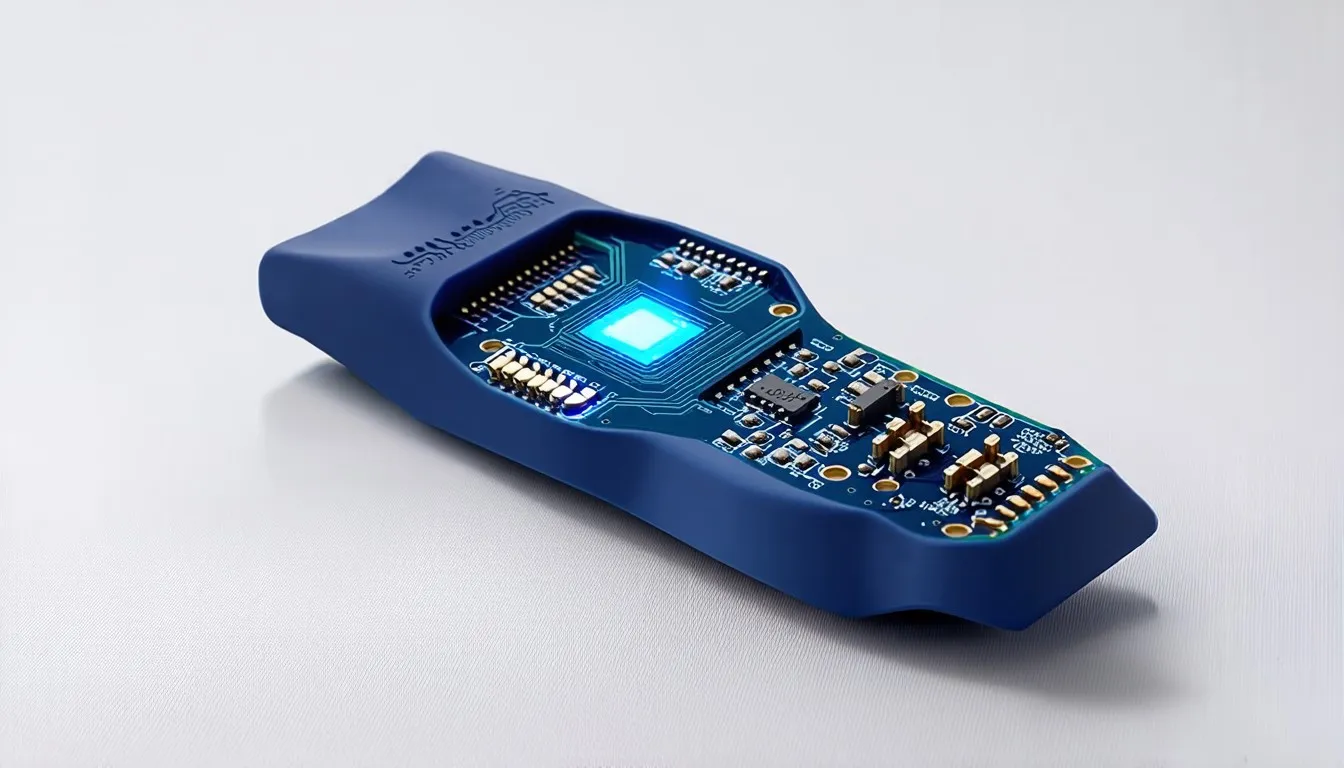
The core function focuses on real-time optimization of motor output through subtle non-invasive physical nudges aligned with developmental milestones to guide the child toward efficient movement patterns without conscious frustration or awareness of being corrected. Setup with caregiver interfaces provides progress summaries, activity recommendations, and alerts for clinically significant deviations, allowing parents and therapists to maintain oversight without managing the minute details of the interaction loop. Key components include inertial measurement units, force-sensitive textiles, embedded microactuators, edge computing modules, and secure wireless communication protocols, which together form a cohesive sensing and acting platform capable of complex interaction with the human body. Primary materials consist of flexible printed circuit boards, biocompatible silicones, rare-earth magnets for actuators, and lithium polymer batteries selected for their safety profile and energy density relative to their weight to ensure comfort during extended wear periods. Supply chain risks involve semiconductor shortages, geopolitical controls on rare-earth elements, and regulatory hurdles for medical-grade textiles, which can disrupt the flexibility of manufacturing these advanced systems requiring precise tolerances. Flexibility faces constraints from the cost of precision sensors and the need for frequent recalibration as children grow, requiring modular designs that can be adjusted or replaced as the toddler’s anthropometry changes over weeks or months.

Physics limits include sensor resolution constrained by size and power because smaller sensors necessary for toddler comfort often produce noisier signals that require sophisticated filtering algorithms to extract meaningful biomechanical data. Actuator force must remain below safety thresholds for delicate tissues to prevent injury or discomfort, limiting the intensity of the physical intervention that can be applied automatically during a corrective maneuver. Workarounds utilize passive mechanical elements like variable-stiffness springs to offload active control requirements from the actuators while still providing necessary resistance or support during movement phases requiring stability. Predictive anticipation reduces the need for high-force corrections by initiating guidance movements before errors become large enough to require substantial energy to correct, relying on progression prediction rather than reactive force application. Energy harvesting from movement through piezoelectric or triboelectric means may extend battery life, yet this technology remains currently insufficient for continuous operation requiring heavy computation and actuation due to low conversion efficiency in irregular toddler movements. Dominant architecture uses centralized cloud AI processing with edge preprocessing for latency-critical feedback to balance the computational load with the need for immediate physical response required for motor learning.

Systems rely on supervised learning trained on labeled pediatric motion datasets to recognize specific movement patterns and classify them as typical or atypical relative to developmental standards established by medical research communities. Developing challengers include federated learning frameworks training models across institutions without sharing raw data to preserve privacy while still using diverse population data to improve model strength against demographic variability. On-device lightweight neural networks enable fully offline operation for critical safety functions, ensuring that the system retains basic protective capabilities even when connectivity is lost or cloud services are unavailable. Hybrid approaches combining symbolic AI for rule-based safety constraints with deep learning for pattern recognition show promise in interpretability and strength by ensuring that hard safety limits are never violated regardless of the statistical inference of the neural network. Software ecosystems must support real-time data pipelines, compliant storage, and interoperability with electronic health records to ensure that the data collected serves both immediate therapeutic needs and long-term medical documentation requirements across different care providers. Regulatory frameworks need updates to classify adaptive therapeutic wearables as Class II medical devices with energetic learning capabilities, distinct from passive monitoring equipment currently available in the consumer market which faces less scrutiny.

Home and school infrastructure requires reliable low-latency Wi-Fi or 5G for cloud-dependent systems to function correctly, creating a dependency on modern telecommunications networks for optimal performance of the most advanced analysis features. Offline functionality remains critical in low-resource settings or during transit where connectivity is intermittent, necessitating strong local processing capabilities that can handle essential tasks without cloud assistance or data uploads. Biomechanical modeling uses musculoskeletal simulations calibrated to pediatric anthropometry and growth direction to predict internal joint forces and muscle activations that cannot be measured directly by external sensors attached to the skin surface. Feedback modalities are multimodal including haptic vibration and pressure, visual augmented reality overlays, and auditory rhythmic cues to engage different sensory pathways for motor learning reinforcement tailored to the child’s preferred learning style. Gamification engines adapt difficulty, reward frequency, and task complexity using reinforcement learning tied to motor performance metrics to maintain a state of flow where the child is challenged enough to learn yet frustrated enough to give up. These engines analyze the rate of improvement and adjust the game parameters in real time to maximize the therapeutic dose per minute of play while keeping the child motivated through intrinsic rewards rather than external praise alone.

Wearable sensors consist of lightweight washable devices affixed to limbs or torso, measuring acceleration, angular velocity, orientation, and ground reaction forces with clinical grade accuracy suitable for medical diagnosis and intervention planning. Biomechanical analysis involves a computational process mapping raw sensor data onto a digital twin of the child’s musculoskeletal system to infer joint torques, muscle activation, and movement efficiency without invasive procedures or expensive imaging equipment. Sensorimotor feedback loops act as real-time pathways from sensory input through processing to motor output adjustment, effectively creating an artificial reflex arc that supplements the child’s natural biological feedback mechanisms, which may be impaired or delayed due to developmental conditions. These loops mimic biological reflex arcs enhanced by predictive modeling to anticipate errors before they occur based on the initial phase of a movement arc, allowing for preemptive correction rather than reactive adjustment. Personalized physical therapy regimens involve adaptive sequences of motor tasks and supports tailored to an individual child’s current capabilities and developmental goals derived from continuous assessment of their functional abilities during play. Gamified motor skill exercises involve structured play activities where success criteria align with therapeutic motor objectives reinforced through immediate feedback and rewards within the game narrative, driving intrinsic motivation for repetition.

No full commercial deployments exist currently that integrate all these capabilities into a single cohesive platform for toddlers due to the engineering complexity involved in miniaturizing actuators while maintaining safety standards. Pilot programs in select pediatric clinics use prototype sensor suits with basic feedback capabilities to validate the core hypothesis that real-time feedback accelerates motor acquisition compared to traditional therapy methods. Performance benchmarks target reduction in movement asymmetry with over thirty percent improvement in eight weeks of consistent use compared to control groups receiving standard care interventions alone. Benchmarks include increased task completion rates in standardized motor assessments like the Peabody Developmental Motor Scales which serve as the gold standard for evaluating motor proficiency in early childhood populations. User adherence targets exceed eighty-five percent daily usage over twelve weeks because the efficacy of the intervention depends entirely on the frequency and consistency of use during daily activities rather than intensity of isolated sessions. Early data indicates faster acquisition of gross motor milestones like walking and jumping compared to conventional therapy controls due to the high repetition rates enabled by automated guidance integrated into daily life.

Major players include medical device firms like Medtronic and Ottobock, exploring pediatric applications of their existing adult rehabilitation technologies adapted for smaller anatomies and different physiological requirements of developing tissues. Tech companies such as Apple and Google invest in health-focused wearables, yet do not currently target toddlers due to the regulatory complexity and liability associated with medical devices for developing children requiring rigorous clinical validation. Startups specializing in pediatric neurotechnology like Cionic and Neurable focus on neural interfaces rather than pure motor optimization, leaving a gap in the market for systems focused purely on biomechanics and kinematics optimization through external sensing. Competitive advantage lies in proprietary biomechanical models, regulatory clearance pathways, and partnerships with early childhood education providers that can facilitate distribution and connection into daily routines. Adoption varies by region, with some markets emphasizing data privacy compliance and strict local storage requirements, which complicate cloud-based analysis strategies requiring cross-border data transfers. Other regions prioritize regulatory clearance for medical claims, which slows down market entry while rigorous clinical trials are conducted to prove efficacy to the satisfaction of regulatory bodies reviewing device submissions.

Certain markets invest heavily in pediatric health tech initiatives providing grants and subsidies for innovation in this sector to address public health concerns related to childhood development and preventative care strategies. Export controls on advanced sensors and AI chips may limit global deployment of the most sophisticated versions of this technology due to geopolitical tensions surrounding dual-use technologies with potential military applications. National health systems will determine reimbursement eligibility shaping market access by defining whether these devices qualify as durable medical equipment or elective educational tools covered under public health insurance schemes. Academic labs like MIT Media Lab and the University of Southern California’s Motor Behavior Lab provide foundational research on infant motor control and sensor fusion that underpins the algorithms used in commercial products developed by private industry partners. Industrial collaborators contribute engineering flexibility, manufacturing expertise, and clinical trial infrastructure necessary to scale prototypes into mass-produced devices capable of reaching global markets in large deployments. Joint publications and shared datasets accelerate model validation yet raise intellectual property ownership complexities regarding who owns the improvements to the models generated by user data contributed during research studies.

Displacement of traditional physical therapy roles will shift toward supervisory and exception-handling functions as the AI handles the routine correction and guidance of movement patterns previously delivered manually by human therapists during scheduled sessions. New business models involve subscription-based therapy-as-a-service and data licensing for research which create recurring revenue streams instead of one-time hardware sales, aligning company incentives with long-term patient outcomes. Connection with early childhood education curricula will expand as schools recognize the value of motor optimization for cognitive readiness and academic performance, leading to broader adoption in educational settings beyond clinical environments. Insurance models may shift from fee-for-service to outcome-based payments tied to motor milestone achievement, which aligns financial incentives with actual patient results rather than time spent in therapy sessions, regardless of progress made. Current key performance indicators, including session count and therapist hours, prove insufficient to capture the value provided by continuous automated intervention systems operating outside traditional clinical hour structures. New metrics will include movement efficiency index, neural adaptation rate, and generalization to untrained tasks, which better reflect the quality of motor learning achieved through continuous interaction with the optimization system.

Longitudinal tracking of motor-cognitive coupling becomes essential as research increasingly links physical proficiency with executive function and attentional control required for academic success later in childhood. Real-world adherence and ecological validity replace lab-based performance as primary success indicators because the ability to function in natural environments is the ultimate goal of any motor intervention intended to improve daily life functioning. Setup of EEG or fNIRS will correlate motor output with cortical activation enabling brain-in-the-loop optimization that adjusts difficulty based on cognitive engagement levels detected through neural activity patterns rather than physical performance alone. Swarm sensing will allow multiple toddlers in a playgroup to contribute to collective learning models while maintaining individual privacy through differential privacy techniques that aggregate data without exposing specific user movements. Self-calibrating garments will adjust fit and sensor placement autonomously as the child grows using shape-memory alloys or adjustable tensioning systems to ensure consistent data quality over time without manual intervention from caregivers or technicians. Convergence with augmented reality will create immersive motor training environments where virtual obstacles and incentives overlay the physical world to guide movement naturally through visual cues integrated into the child’s perception of their surroundings.

Synergy with generative AI will produce infinite variations of motor challenges tailored to individual progress preventing boredom and ensuring broad generalization of skills across different contexts and object interactions. Alignment with digital twin initiatives in pediatric healthcare will facilitate holistic developmental modeling by connecting with motor data with genetic, nutritional, and cognitive profiles to create a comprehensive view of child health. The system will prioritize developmental appropriateness over performance maximization to ensure that interventions support natural growth patterns rather than forcing adult-like efficiency onto developing bodies which could cause harm or long-term maladaptations. Design avoids over-optimization disrupting natural variability essential for strong motor learning because some degree of exploration is required for the nervous system to settle on optimal solutions through trial and error processes intrinsic to biological development. Ethical guardrails must prevent use for non-therapeutic enhancement or creating competitive advantages for children whose parents can afford premium tiers of service ensuring equitable access to foundational health technologies. Success will measure resilience, adaptability, and transfer of skills to novel contexts rather than speed of milestone achievement because reliability is a better predictor of long-term health than precocity which may not persist into later childhood stages.

Cloud-based superintelligence backends will aggregate anonymized population data to refine intervention models continuously as more children use the system globally, creating a virtuous cycle of improvement benefiting all users. Superintelligence will predict optimal training sequences by simulating millions of potential therapy sessions to identify the most effective path for each specific child profile, considering their unique constraints and abilities. Superintelligence will calibrate intervention intensity using multi-objective optimization, balancing motor gain, cognitive load, emotional state, and long-term plasticity to prevent burnout or regression caused by excessive training demands placed on a developing nervous system. Superintelligence will continuously validate models against developing developmental science and discard outdated assumptions in real time to ensure the advice remains current with medical consensus regarding best practices for pediatric rehabilitation. Uncertainty quantification will ensure conservative actions when confidence in predictions is low to protect the child from experimental or risky interventions based on sparse data or outlier conditions not well represented in training datasets. This process prioritizes safety over efficacy explicitly within the code governing the superintelligence decision-making logic, ensuring that any ambiguity regarding potential harm results in immediate cessation of intervention rather than attempting a potentially beneficial yet risky action.

Superintelligence will treat each toddler as a unique dynamical system requiring a customized set of differential equations to model their specific physiology and learning style rather than applying a one-size-fits-all algorithmic approach common in earlier generations of educational software. It will simulate thousands of intervention progressions per second to select the minimally sufficient prompt that induces change without overwhelming the child’s sensory processing capabilities respecting their limited attention span and emotional fragility. Superintelligence will use cross-population learning to generalize rare conditions while preserving individual specificity by identifying shared underlying biomechanical principles across different diagnoses allowing effective treatment even for conditions with limited training data available. Ultimate utility involves transforming motor development from a passive observational process into an active precision-guided engineering task with predictable outcomes where developmental delays are corrected proactively through intelligent interaction rather than rehabilitated reactively after they have caused significant functional impairment.


Continue reading

More from Yatin's Work

Early Exit Networks: Adaptive Computation Depth

Early Exit Networks: Adaptive Computation Depth

Early Exit Networks represent a framework shift in neural network inference by introducing mechanisms that allow a model to terminate processing before reaching the...

Predictive Embodiment

Predictive Embodiment

Predictive Embodiment constitutes an advanced operational method where an artificial intelligence system simulates future cognitive states through accelerated internal...

Goal Hierarchies with Dynamic Prioritization

Goal Hierarchies with Dynamic Prioritization

Goal hierarchies structure objectives into layered formats where highlevel aims decompose into subordinate subgoals to facilitate systematic execution and verification...

Superhuman Creativity and Generative World Modeling

Superhuman Creativity and Generative World Modeling

Superhuman creativity refers to the capacity of an artificial system to generate novel, valuable, and contextually appropriate outputs across domains such as science,...

Concept Blending and Synthesis: Creating New Ideas from Old Ones

Concept Blending and Synthesis: Creating New Ideas from Old Ones

Concept blending functions as the cognitive and computational process involving the connection with elements derived from distinct domains to form novel, coherent...

Autonomous Philosophy

Autonomous Philosophy

Autonomous Philosophy constitutes the systematic, selfdirected exploration of philosophical questions by artificial agents without human intervention or cognitive bias,...

Pretraining-Finetuning Paradigm: Will Superintelligence Emerge from Foundation Models?

Pretraining-Finetuning Paradigm: Will Superintelligence Emerge from Foundation Models?

Pretraining involves training large neural networks on vast, diverse, uncurated datasets to learn general representations of language, vision, or multimodal data...

Technological Integration with Jungian Archetypal Data Structures

Technological Integration with Jungian Archetypal Data Structures

Carl Jung’s concept of the collective unconscious serves as a theoretical framework for a repository of universal archetypes shared across human cultures, myths,...

Sheaf-Theoretic Cognition

Sheaf-Theoretic Cognition

Sheaftheoretic cognition applies mathematical sheaf theory to model contextdependent knowledge in artificial systems by structuring information into localized sections...

Scalable Oversight

Scalable Oversight

Scalable oversight addresses the challenge of supervising artificial intelligence systems that have exceeded human cognitive capabilities in specific domains. As...

Field Trip Designer

Field Trip Designer

The concept of a field trip within advanced educational frameworks refers to any structured, curriculumaligned experiential learning activity designed to place students...

Chip Shortage Problem: Manufacturing Constraints on Superintelligence Development

Chip Shortage Problem: Manufacturing Constraints on Superintelligence Development

The architecture of the global semiconductor supply chain necessitates a high degree of specialization where distinct phases such as logic design, wafer fabrication,...

Neuro-Aesthetic Lab: Beauty as Knowledge

Neuro-Aesthetic Lab: Beauty as Knowledge

The NeuroAesthetic Lab functions as a structured learning environment designed to train human cognition to associate aesthetic qualities such as symmetry, minimalism,...

AI as a Universal Translator

AI as a Universal Translator

The concept of a universal translator aims to decode any communication form regardless of origin, medium, or prior human understanding by treating communication as a...

Role of Narrative in AI Self-Models: Temporal Coherence in Memory

Role of Narrative in AI Self-Models: Temporal Coherence in Memory

Narrative functions as the primary structural framework required for the development of sophisticated AI selfmodels, providing the necessary support to organize vast...

Regulatory Licensing Models for Frontier AI Research

Regulatory Licensing Models for Frontier AI Research

Artificial General Intelligence constitutes a theoretical construct defined as a system possessing the capacity to execute any intellectual task achievable by a human...

Neuromorphic Hardware: Purpose-Built Chips for Superintelligent Processing

Neuromorphic Hardware: Purpose-Built Chips for Superintelligent Processing

Neuromorphic hardware replicates biological neural architecture using analog circuits to emulate neurons and synapses, fundamentally diverging from traditional digital...

Catastrophic Forgetting

Catastrophic Forgetting

Catastrophic forgetting occurs when a neural network trained on a new task significantly degrades its performance on previously learned tasks due to overwriting or...

Startup Incubator

Startup Incubator

The concept of the startup incubator originated from the necessity to provide structured support to earlybasis ventures through a combination of mentorship, resources,...

Lateral Thinking: Breaking Linear Reasoning Patterns

Lateral Thinking: Breaking Linear Reasoning Patterns

Lateral thinking functions as a problemsolving method that deliberately avoids sequential logic in favor of indirect approaches, serving as a necessary counterbalance...

Verification Protocols for International AI Treaties

Verification Protocols for International AI Treaties

Transformer architectures fundamentally altered the progression of artificial intelligence research by utilizing attention mechanisms to process sequential data with...

Pancomputational Perception

Pancomputational Perception

Physical laws function as executable computational processes rather than static descriptive equations, framing the universe as a vast network of active computation...

Coherent Extrapolated Volition: What Humanity Would Want

Coherent Extrapolated Volition: What Humanity Would Want

Modeling human preferences under conditions of enhanced knowledge and extended reasoning allows inference of what humanity would collectively desire if it were more...

Liquid Neural Networks

Liquid Neural Networks

Liquid Neural Networks represent a class of adaptive, timecontinuous neural models inspired by the active behavior of biological neurons found in the nematode C....

Neural-Symbolic Integration

Neural-Symbolic Integration

Neuralsymbolic setup combines pattern recognition capabilities built into neural networks with the explicit logic provided by symbolic systems to create artificial...

Variational Autoencoders: Learning Compressed Latent Representations

Variational Autoencoders: Learning Compressed Latent Representations

Variational Autoencoders function as probabilistic generative models designed to learn compressed latent representations of input data by framing the problem of...

Ensuring Safe Exploration via Reachability Analysis

Ensuring Safe Exploration via Reachability Analysis

Reachability analysis functions as a rigorous formal verification technique that computes the exhaustive set of all potential states an artificial intelligence agent...

Sleep Quality Analyzer

Sleep Quality Analyzer

Historical analysis of sleep science reveals an arc defined by the transition from cumbersome clinical observation to accessible biometric monitoring, where early...

Wisdom of Ignorance: Strategic Not-Knowing

Wisdom of Ignorance: Strategic Not-Knowing

The operational definition of strategic ignorance involves the conscious deferral of belief formation to serve higherorder insight within complex systems where...

Role of AI in Democratic Superintelligence Governance

Role of AI in Democratic Superintelligence Governance

Global governance complexity increases as technological capabilities outpace human cognitive and institutional processing speeds, creating a disparity between the rapid...

Preventing Logical Force Majeure Exploits

Preventing Logical Force Majeure Exploits

Preventing agents from justifying harmful actions as mathematically necessary outcomes of valid axioms requires blocking misuse of logical force majeure claims within...

AI with Religious Text Interpretation

AI with Religious Text Interpretation

Artificial systems designed to process religious texts operate across multiple traditions to detect recurring themes and doctrinal contradictions through the rigorous...

Safe Exploration via Constrained MDPs

Safe Exploration via Constrained MDPs

Standard Markov Decision Processes define the mathematical foundation for sequential decisionmaking by modeling the interaction between an agent and an environment...

Reversible Computing: Near-Zero-Energy Computation

Reversible Computing: Near-Zero-Energy Computation

Conventional CMOS scaling faces physical limits regarding leakage power and heat density beyond the 5 nm node, as quantum mechanical effects such as tunneling cause...

Synthetic Neuroplasticity in Autonomous Reasoning Systems

Synthetic Neuroplasticity in Autonomous Reasoning Systems

Synthetic neuroplasticity refers to the operational capacity of an artificial neural system to alter its connectivity graph and connection strengths during execution in...

Meta-Reasoning: Reasoning About Reasoning Itself

Meta-Reasoning: Reasoning About Reasoning Itself

Metareasoning constitutes the cognitive process wherein an autonomous agent evaluates, selects, and refines its internal reasoning strategies in direct response to the...

Logical Force Majeure in Competitive Adaptation

Logical Force Majeure in Competitive Adaptation

Logical Force Majeure functions as a precommitted overwhelming response mechanism designed to deter rulebreaking in multiagent competitive environments where...

Nostalgia Educator: Superintelligence Helps Seniors Recapture Lost Knowledge

Nostalgia Educator: Superintelligence Helps Seniors Recapture Lost Knowledge

Global demographic shifts toward older populations increase demand for nonpharmaceutical cognitive maintenance tools as the absolute number of individuals experiencing...

Motor Skills Mapper

Motor Skills Mapper

Wearable motion sensors collect continuous kinematic data including joint angles, acceleration, velocity, and posture from users across developmental stages to create a...

Post-superintelligence civilizations

Post-Superintelligence Civilizations

Current commercial deployments of narrow artificial intelligence in logistics and finance demonstrated the early stages of automation and decision delegation by...

Safe Imitation via Adversarial Preference Learning

Safe Imitation via Adversarial Preference Learning

Safe imitation learning addresses the key issue where artificial intelligence systems acquire behaviors from human demonstrations that contain unsafe, deceptive, or...

Role of Environmental Feedback in Recursive Intelligence Gain

Role of Environmental Feedback in Recursive Intelligence Gain

The operational definition of environmental feedback involves measurable external responses to an AI’s actions that reflect realworld consequences, including failure...

Corrigibility by Design: Architecture Principles for Interruptible Superintelligence

Corrigibility by Design: Architecture Principles for Interruptible Superintelligence

Early control theory research conducted between the 1960s and 1980s established the initial mathematical basis for interruptible systems by defining how feedback loops...

Model Compression

Model Compression

Large models require substantial computational power and memory to function effectively within modern infrastructure constraints due to the sheer volume of parameters...

Photonic Neural Networks for High-Speed Reasoning

Photonic Neural Networks for High-Speed Reasoning

Photonic neural networks utilize photons instead of electrons to execute computations, specifically targeting the acceleration of linear algebra operations essential to...

Ethical Consistency: Upholding Values Across Contexts

Ethical Consistency: Upholding Values Across Contexts

Ethical consistency requires applying core moral principles uniformly across all operational contexts without exception or dilution to ensure that an artificial...

Non-Sensory Perception

Non-Sensory Perception

Nonsensory perception defines a class of systems engineered to detect physical phenomena existing entirely outside the biological sensory range of human beings,...

Constitutional AI: Programming Principles Into Superintelligent Systems

Constitutional AI: Programming Principles Into Superintelligent Systems

Constitutional AI embeds a fixed set of normative rules directly into an AI system’s architecture to govern its behavior across all contexts, functioning as a digital...

Simulation Question: If Superintelligence Can Simulate Universes, Are We in One?

Simulation Question: If Superintelligence Can Simulate Universes, Are We in One?

The Simulation Question originates from the logical extrapolation of computational growth and the eventual development of artificial superintelligence capable of...

Multisensory Fusion

Multisensory Fusion

Connecting with vision, touch, sound, and proprioception into unified perceptual representations enables a coherent understanding of the environment by combining...

Early Exit Networks: Adaptive Computation Depth

Early Exit Networks: Adaptive Computation Depth

Early Exit Networks represent a framework shift in neural network inference by introducing mechanisms that allow a model to terminate processing before reaching the...

Predictive Embodiment

Predictive Embodiment

Predictive Embodiment constitutes an advanced operational method where an artificial intelligence system simulates future cognitive states through accelerated internal...

Goal Hierarchies with Dynamic Prioritization

Goal Hierarchies with Dynamic Prioritization

Goal hierarchies structure objectives into layered formats where highlevel aims decompose into subordinate subgoals to facilitate systematic execution and verification...

Superhuman Creativity and Generative World Modeling

Superhuman Creativity and Generative World Modeling

Superhuman creativity refers to the capacity of an artificial system to generate novel, valuable, and contextually appropriate outputs across domains such as science,...

Concept Blending and Synthesis: Creating New Ideas from Old Ones

Concept Blending and Synthesis: Creating New Ideas from Old Ones

Concept blending functions as the cognitive and computational process involving the connection with elements derived from distinct domains to form novel, coherent...

Autonomous Philosophy

Autonomous Philosophy

Autonomous Philosophy constitutes the systematic, selfdirected exploration of philosophical questions by artificial agents without human intervention or cognitive bias,...

Pretraining-Finetuning Paradigm: Will Superintelligence Emerge from Foundation Models?

Pretraining-Finetuning Paradigm: Will Superintelligence Emerge from Foundation Models?

Pretraining involves training large neural networks on vast, diverse, uncurated datasets to learn general representations of language, vision, or multimodal data...

Technological Integration with Jungian Archetypal Data Structures

Technological Integration with Jungian Archetypal Data Structures

Carl Jung’s concept of the collective unconscious serves as a theoretical framework for a repository of universal archetypes shared across human cultures, myths,...

Sheaf-Theoretic Cognition

Sheaf-Theoretic Cognition

Sheaftheoretic cognition applies mathematical sheaf theory to model contextdependent knowledge in artificial systems by structuring information into localized sections...

Scalable Oversight

Scalable Oversight

Scalable oversight addresses the challenge of supervising artificial intelligence systems that have exceeded human cognitive capabilities in specific domains. As...

Field Trip Designer

Field Trip Designer

The concept of a field trip within advanced educational frameworks refers to any structured, curriculumaligned experiential learning activity designed to place students...

Chip Shortage Problem: Manufacturing Constraints on Superintelligence Development

Chip Shortage Problem: Manufacturing Constraints on Superintelligence Development

The architecture of the global semiconductor supply chain necessitates a high degree of specialization where distinct phases such as logic design, wafer fabrication,...

Neuro-Aesthetic Lab: Beauty as Knowledge

Neuro-Aesthetic Lab: Beauty as Knowledge

The NeuroAesthetic Lab functions as a structured learning environment designed to train human cognition to associate aesthetic qualities such as symmetry, minimalism,...

AI as a Universal Translator

AI as a Universal Translator

The concept of a universal translator aims to decode any communication form regardless of origin, medium, or prior human understanding by treating communication as a...

Role of Narrative in AI Self-Models: Temporal Coherence in Memory

Role of Narrative in AI Self-Models: Temporal Coherence in Memory

Narrative functions as the primary structural framework required for the development of sophisticated AI selfmodels, providing the necessary support to organize vast...

Regulatory Licensing Models for Frontier AI Research

Regulatory Licensing Models for Frontier AI Research

Artificial General Intelligence constitutes a theoretical construct defined as a system possessing the capacity to execute any intellectual task achievable by a human...

Neuromorphic Hardware: Purpose-Built Chips for Superintelligent Processing

Neuromorphic Hardware: Purpose-Built Chips for Superintelligent Processing

Neuromorphic hardware replicates biological neural architecture using analog circuits to emulate neurons and synapses, fundamentally diverging from traditional digital...

Catastrophic Forgetting

Catastrophic Forgetting

Catastrophic forgetting occurs when a neural network trained on a new task significantly degrades its performance on previously learned tasks due to overwriting or...

Startup Incubator

Startup Incubator

The concept of the startup incubator originated from the necessity to provide structured support to earlybasis ventures through a combination of mentorship, resources,...

Lateral Thinking: Breaking Linear Reasoning Patterns

Lateral Thinking: Breaking Linear Reasoning Patterns

Lateral thinking functions as a problemsolving method that deliberately avoids sequential logic in favor of indirect approaches, serving as a necessary counterbalance...

Verification Protocols for International AI Treaties

Verification Protocols for International AI Treaties

Transformer architectures fundamentally altered the progression of artificial intelligence research by utilizing attention mechanisms to process sequential data with...

Pancomputational Perception

Pancomputational Perception

Physical laws function as executable computational processes rather than static descriptive equations, framing the universe as a vast network of active computation...

Coherent Extrapolated Volition: What Humanity Would Want

Coherent Extrapolated Volition: What Humanity Would Want

Modeling human preferences under conditions of enhanced knowledge and extended reasoning allows inference of what humanity would collectively desire if it were more...

Liquid Neural Networks

Liquid Neural Networks

Liquid Neural Networks represent a class of adaptive, timecontinuous neural models inspired by the active behavior of biological neurons found in the nematode C....

Neural-Symbolic Integration

Neural-Symbolic Integration

Neuralsymbolic setup combines pattern recognition capabilities built into neural networks with the explicit logic provided by symbolic systems to create artificial...

Variational Autoencoders: Learning Compressed Latent Representations

Variational Autoencoders: Learning Compressed Latent Representations

Variational Autoencoders function as probabilistic generative models designed to learn compressed latent representations of input data by framing the problem of...

Ensuring Safe Exploration via Reachability Analysis

Ensuring Safe Exploration via Reachability Analysis

Reachability analysis functions as a rigorous formal verification technique that computes the exhaustive set of all potential states an artificial intelligence agent...

Sleep Quality Analyzer

Sleep Quality Analyzer

Historical analysis of sleep science reveals an arc defined by the transition from cumbersome clinical observation to accessible biometric monitoring, where early...

Wisdom of Ignorance: Strategic Not-Knowing

Wisdom of Ignorance: Strategic Not-Knowing

The operational definition of strategic ignorance involves the conscious deferral of belief formation to serve higherorder insight within complex systems where...

Role of AI in Democratic Superintelligence Governance

Role of AI in Democratic Superintelligence Governance

Global governance complexity increases as technological capabilities outpace human cognitive and institutional processing speeds, creating a disparity between the rapid...

Preventing Logical Force Majeure Exploits

Preventing Logical Force Majeure Exploits

Preventing agents from justifying harmful actions as mathematically necessary outcomes of valid axioms requires blocking misuse of logical force majeure claims within...

AI with Religious Text Interpretation

AI with Religious Text Interpretation

Artificial systems designed to process religious texts operate across multiple traditions to detect recurring themes and doctrinal contradictions through the rigorous...

Safe Exploration via Constrained MDPs

Safe Exploration via Constrained MDPs

Standard Markov Decision Processes define the mathematical foundation for sequential decisionmaking by modeling the interaction between an agent and an environment...

Reversible Computing: Near-Zero-Energy Computation

Reversible Computing: Near-Zero-Energy Computation

Conventional CMOS scaling faces physical limits regarding leakage power and heat density beyond the 5 nm node, as quantum mechanical effects such as tunneling cause...

Synthetic Neuroplasticity in Autonomous Reasoning Systems

Synthetic Neuroplasticity in Autonomous Reasoning Systems

Synthetic neuroplasticity refers to the operational capacity of an artificial neural system to alter its connectivity graph and connection strengths during execution in...

Meta-Reasoning: Reasoning About Reasoning Itself

Meta-Reasoning: Reasoning About Reasoning Itself

Metareasoning constitutes the cognitive process wherein an autonomous agent evaluates, selects, and refines its internal reasoning strategies in direct response to the...

Logical Force Majeure in Competitive Adaptation

Logical Force Majeure in Competitive Adaptation

Logical Force Majeure functions as a precommitted overwhelming response mechanism designed to deter rulebreaking in multiagent competitive environments where...

Nostalgia Educator: Superintelligence Helps Seniors Recapture Lost Knowledge

Nostalgia Educator: Superintelligence Helps Seniors Recapture Lost Knowledge

Global demographic shifts toward older populations increase demand for nonpharmaceutical cognitive maintenance tools as the absolute number of individuals experiencing...

Motor Skills Mapper

Motor Skills Mapper

Wearable motion sensors collect continuous kinematic data including joint angles, acceleration, velocity, and posture from users across developmental stages to create a...

Post-superintelligence civilizations

Post-Superintelligence Civilizations

Current commercial deployments of narrow artificial intelligence in logistics and finance demonstrated the early stages of automation and decision delegation by...

Safe Imitation via Adversarial Preference Learning

Safe Imitation via Adversarial Preference Learning

Safe imitation learning addresses the key issue where artificial intelligence systems acquire behaviors from human demonstrations that contain unsafe, deceptive, or...

Role of Environmental Feedback in Recursive Intelligence Gain

Role of Environmental Feedback in Recursive Intelligence Gain

The operational definition of environmental feedback involves measurable external responses to an AI’s actions that reflect realworld consequences, including failure...

Corrigibility by Design: Architecture Principles for Interruptible Superintelligence

Corrigibility by Design: Architecture Principles for Interruptible Superintelligence

Early control theory research conducted between the 1960s and 1980s established the initial mathematical basis for interruptible systems by defining how feedback loops...

Model Compression

Model Compression

Large models require substantial computational power and memory to function effectively within modern infrastructure constraints due to the sheer volume of parameters...

Photonic Neural Networks for High-Speed Reasoning

Photonic Neural Networks for High-Speed Reasoning

Photonic neural networks utilize photons instead of electrons to execute computations, specifically targeting the acceleration of linear algebra operations essential to...

Ethical Consistency: Upholding Values Across Contexts

Ethical Consistency: Upholding Values Across Contexts

Ethical consistency requires applying core moral principles uniformly across all operational contexts without exception or dilution to ensure that an artificial...

Non-Sensory Perception

Non-Sensory Perception

Nonsensory perception defines a class of systems engineered to detect physical phenomena existing entirely outside the biological sensory range of human beings,...

Constitutional AI: Programming Principles Into Superintelligent Systems

Constitutional AI: Programming Principles Into Superintelligent Systems

Constitutional AI embeds a fixed set of normative rules directly into an AI system’s architecture to govern its behavior across all contexts, functioning as a digital...

Simulation Question: If Superintelligence Can Simulate Universes, Are We in One?

Simulation Question: If Superintelligence Can Simulate Universes, Are We in One?

The Simulation Question originates from the logical extrapolation of computational growth and the eventual development of artificial superintelligence capable of...

Multisensory Fusion

Multisensory Fusion

Connecting with vision, touch, sound, and proprioception into unified perceptual representations enables a coherent understanding of the environment by combining...

Yatin Taneja

About the author

Yatin Taneja

Yatin is an AI Systems Engineer and Superintelligence Researcher working across multimodal training data, agent evaluation, executable RL environments, AI safety, full-stack AI applications, technical research, and creative technology.