Knowledge hub
Topological Neural Networks
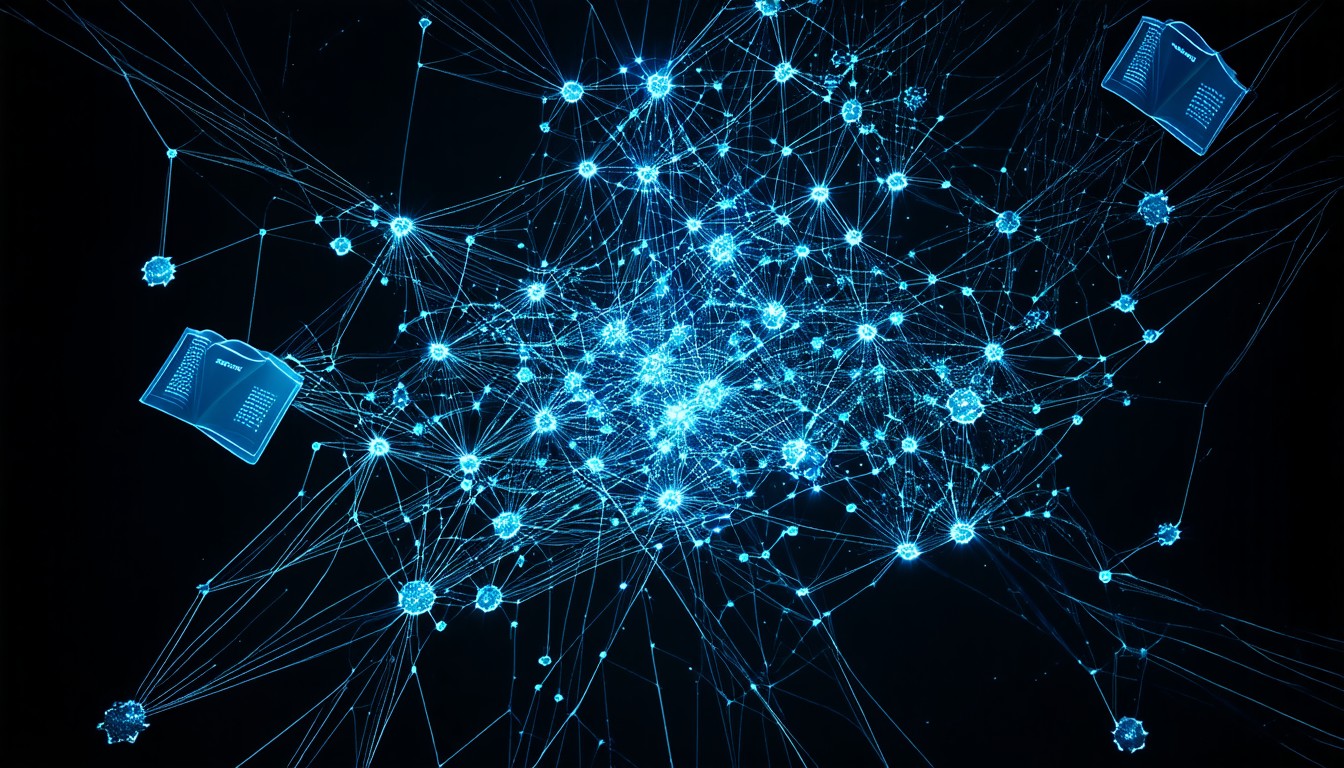
Topological neural networks apply manifold learning to model abstract conceptual spaces by capturing global structural features like holes, loops, and connected components, effectively addressing the limitations built-in in Euclidean-based approaches. The manifold hypothesis underpins this entire framework by positing that real-world high-dimensional data actually resides on or near low-dimensional manifolds embedded within that larger space, meaning that the intrinsic geometry of the data is far simpler than the ambient space suggests. Standard deep learning architectures frequently fail to account for this underlying structure, often flattening or collapsing global relationships during the embedding process, whereas topological methods explicitly preserve these relationships through the construction of combinatorial objects known as simplicial complexes. These complexes serve as discrete analogs of continuous shapes, representing data connectivity using vertices, edges, triangles, and their higher-dimensional counterparts to build a scaffold that reflects the true shape of the dataset. By focusing on these global structural features rather than mere point-wise similarity, topological neural networks can identify durable invariants that remain stable despite noise or deformation, providing a foundation for learning that is rooted in the connectivity of the data rather than just its metric properties. The connection of topological data analysis into neural networks allows these systems to infer the intrinsic shape of high-dimensional data by applying tools from algebraic topology to extract qualitative features that quantitative metrics often miss.
Persistent homology acts as the primary engine for this process, quantifying the persistence of topological features across multiple scales to distinguish between signal and noise within complex datasets. This method involves constructing a filtered simplicial complex from input data using distance or density-based thresholds, creating a sequence of nested spaces parameterized by a scale variable known as a filtration. As the scale parameter increases, topological features such as connected components or voids appear and disappear, a process referred to as birth and death, which is then summarized into numerical representations like barcodes and persistence diagrams. These diagrams provide a compact signature of the data’s topology, encoding the lifetime of each feature and offering a multi-scale summary that remains invariant under continuous deformations. Unlike standard representations that rely on precise coordinate locations, these topological signatures capture the essence of the data’s structure, making them particularly powerful for tasks where the shape of the data distribution holds more significance than the absolute positions of individual points. Mapper algorithms and other similar techniques construct combinatorial representations of data that encode connectivity by projecting high-dimensional data into lower dimensions, covering it with overlapping intervals, and clustering within each patch to form a graph-like summary.
This approach shifts the analytical focus from point-wise similarity to persistent homology and other topological invariants, allowing researchers to visualize and understand the skeleton of the data in a way that traditional scatter plots cannot reveal. The computation of persistent homology extracts these topological signatures to represent stable features that persist across a wide range of scales, effectively filtering out transient noise that might otherwise mislead a standard neural network. Connection of these signatures into neural network layers occurs via differentiable topological layers or auxiliary loss terms, enabling the gradients to flow backward through the topological computations and update the network weights based on structural preservation criteria. This connection facilitates a new method where topological features guide representation learning, clustering, classification, or generative modeling tasks by ensuring that the internal representations of the network maintain the key connectivity properties of the input data. Interpretability increases significantly by linking model decisions to identifiable topological structures in the data, allowing practitioners to trace a classification or prediction back to specific loops or voids in the feature space. Transfer learning receives support across domains with similar underlying topologies because the shape of the data distribution often generalizes better than specific feature weights when moving from one domain to another.
Anomaly detection benefits from identifying deviations from expected topological patterns, as anomalies often make real as tears or unexpected holes in the data manifold that stand out against the background topology of normal samples. Reasoning about equivalence classes, symmetries, and invariances relies on the data’s shape, suggesting that systems capable of understanding these topological properties can reason more abstractly about the relationships between different objects or concepts. Topological regularization modifies loss functions to penalize deviations from desired topological properties, forcing the network to learn embeddings that respect the global structure of the data rather than just minimizing local reconstruction errors. Unlike graph neural networks that assume explicit relational structure provided by an adjacency matrix, topological networks infer implicit structure directly from point-cloud geometry without requiring pre-defined edges or connections. The method proves effective for sparse, heterogeneous, or non-metric data where traditional similarity measures fail because it relies on relative positioning and connectivity rather than precise distance calculations. Core mechanisms involve constructing a filtered simplicial complex from input data using distance or density-based thresholds, which automatically builds a relational graph based on the proximity of points in the high-dimensional space.
This capability makes topological neural networks uniquely suited for analyzing complex biological data, sensor networks, or other domains where the relationships between entities are unknown or difficult to quantify using standard metrics. By inferring the graph structure from the data itself, these networks can adapt to the underlying geometry of the problem, discovering hidden connections that explicit graph representations might miss. Early work in TDA appeared in computational topology and computational geometry in the 1990s and 2000s, establishing the mathematical foundations for algorithms like alpha shapes and witness complexes that defined the initial era of the field. Foundational algorithms like alpha shapes provided a way to reconstruct shapes from point clouds, while witness complexes offered efficient methods for approximating topology using a subset of landmark points. The shift toward machine learning setup began in the 2010s with applications in neuroscience and materials science, where researchers began to recognize the value of shape analysis for understanding complex systems. Adoption in neural networks accelerated after 2018 with the development of differentiable TDA layers, which allowed topological features to be integrated directly into deep learning pipelines for the first time.
Initial attempts to use topology in ML treated it as a post-hoc analysis tool to explain model behavior, whereas recent work embeds it directly into learning pipelines to influence the training process itself. The high computational cost of computing persistent homology scales cubically with the number of simplices in the worst case, presenting a significant challenge for processing large datasets in real-time environments. Memory requirements grow rapidly with dimensionality due to the combinatorial explosion in simplex counts, as the number of possible simplices increases exponentially with the dimension of the data. Current implementations struggle with real-time inference on edge devices because these resource-constrained environments lack the memory and processing power required for complex matrix operations involved in homology computation. The lack of standardized libraries for differentiable TDA hampers widespread deployment, as developers must often resort to custom implementations that are difficult to fine-tune or integrate with existing deep learning frameworks. Economic viability remains constrained by niche applicability and the need for domain expertise, limiting the adoption of these powerful techniques to organizations with specialized research capabilities.
Graph neural networks were considered for cases where relational structure is unknown, yet they often fail to capture the higher-order relationships that simplicial complexes can represent naturally. Kernel methods with topological kernels lacked end-to-end differentiability, preventing their use in gradient-based optimization routines that form the backbone of modern deep learning. Autoencoders with topological constraints failed to preserve global structure without explicit TDA connection because standard regularization terms do not account for the connectivity of the latent space. Metric learning approaches proved insufficient for capturing non-local qualitative relationships, as they focus on minimizing distances between similar points while ignoring the overall shape of the data distribution. Rising complexity of real-world data exceeds the representational capacity of distance-based models, necessitating a shift toward methods that can capture the intrinsic geometry of high-dimensional spaces. Demand for interpretable AI in healthcare and finance favors methods that expose structural reasoning because stakeholders in these fields require justification for decisions that affect human lives or financial assets.
Need for strength to distribution shifts aligns with topology’s stability under continuous deformation, suggesting that topological models may generalize better to new data distributions than models relying on precise metric features. Economic pressure to extract value from unstructured data drives adoption of geometry-aware learning as companies seek to apply vast amounts of information that do not fit neatly into tabular formats. Commercial deployment remains limited with experimental use in pharmaceutical discovery and materials informatics, where the ability to model molecular structures or material properties provides immediate value. Benchmarks show improved performance on tasks involving cyclic dependencies or hierarchical clustering, demonstrating the practical advantages of incorporating topological priors into neural network architectures. Topological networks outperform CNNs on lesion detection in low-sample regimes by applying shape priors that allow the model to recognize anatomical structures even with limited training data. Large-scale production systems are absent, with most work remaining proof-of-concept in academic-industry partnerships that explore the feasibility of these approaches for specific problems.
Google Research and Meta AI have published foundational papers without releasing public products, indicating significant interest from major technology companies alongside a cautious approach to commercialization. Startups like Ayasdi pioneered commercial TDA and focused on analytics before being acquired by larger enterprise software companies seeking to enhance their data intelligence capabilities. Academic labs at Stanford, MIT, and TU Munich lead in algorithmic innovation, constantly developing new methods for computing topology more efficiently and working with it with machine learning models. Chinese institutions invest heavily in topological ML for biotech applications, recognizing the potential for these methods to accelerate drug discovery and genetic research. The software-defined approach relies on general-purpose compute without rare materials, making it accessible to a wide range of researchers and organizations with standard computing infrastructure. Primary dependency involves access to high-performance CPUs or GPUs for TDA computation, as the parallel processing capabilities of these hardware accelerators are essential for handling the intensive mathematical operations required for persistent homology.
Open-source libraries like GUDHI, Ripser, and KeplerMapper form the backbone of current tooling, providing strong implementations of core algorithms that researchers can build upon. Cloud-based TDA services are beginning to appear despite lacking standardization, offering managed solutions for organizations that prefer not to maintain their own computational infrastructure. Job displacement in traditional data analysis roles will occur because automated topological reasoning reduces the need for manual feature engineering, allowing systems to automatically identify relevant structural features in raw data. New business models around topology-as-a-service for domain-specific data interpretation will arise as companies realize the value of outsourcing complex topological analysis to specialized providers. Topological data marketplaces where shape signatures are traded as intellectual property will appear, enabling organizations to buy and sell pre-computed topological features for specific datasets or applications. Regulatory frameworks for AI explainability will need to recognize topological invariants as valid justification mechanisms, forcing legal systems to adapt to mathematical concepts beyond simple linear weights or decision trees.
Evaluation will shift from accuracy or F1-score to topological fidelity metrics like constraint distance, which measures the similarity between persistence diagrams rather than just classification correctness. Stability measures under data perturbation and sampling variation will be required to ensure that topological models are durable and reliable in operational environments. Evaluation protocols must include reliability to topological noise and invariance testing to verify that models are focusing on significant structural features rather than artifacts of the sampling process. Development of quantum algorithms for persistent homology will overcome classical scaling limits by using quantum superposition to explore the vast space of possible simplices simultaneously. Connection with causal inference will distinguish spurious correlations from topologically grounded relationships by identifying structural connections that persist across different causal contexts. Topological meta-learning will enable rapid adaptation to new manifolds with minimal data by allowing models to transfer knowledge about topological structures from one domain to another.
Convergence with geometric deep learning will occur on non-Euclidean domains as researchers recognize that both fields are striving to understand the geometry of data from different perspectives. Synergy with category theory will formalize compositionality in learned representations, providing a rigorous mathematical language for describing how complex structures are built from simpler components. Potential setup with neuromorphic computing will facilitate efficient topological computation by mimicking the brain’s ability to process structural information using spiking neural networks. Computational complexity of homology grows superlinearly with data size and dimensionality, necessitating ongoing research into more efficient algorithms and hardware implementations. Workarounds include approximation algorithms like sparse filtrations and witness complexes, which reduce the computational burden by focusing on a subset of the data or approximating the full complex. Dimensionality reduction before TDA and distributed computation mitigate scaling issues, allowing researchers to apply topological methods to datasets that were previously too large to handle.
Hardware-aware TDA designs will target GPU parallelism and memory locality to maximize the performance of existing hardware resources for topological computations. Topological neural networks represent a necessary evolution beyond metric-based learning because they provide a way to reason about the shape of data rather than just distances between points. They provide a mathematical foundation for abstraction in AI by defining rigorous methods for identifying high-level structural features that are independent of low-level details. This shift is foundational rather than incremental because it changes the key unit of information from a vector in Euclidean space to a set of topological invariants describing connectivity and shape. Superintelligence will use topological representations as a universal language for cross-domain knowledge transfer, enabling it to map concepts from vastly different fields onto a common structural framework. Persistent homology will serve as a compression mechanism for encoding high-level abstractions independent of sensory modality, allowing a superintelligent system to represent visual, auditory, and textual information using the same topological descriptors.
Topological consistency checks will become a core component of self-verification in autonomous reasoning systems, ensuring that new knowledge does not contradict the core structural understanding of the world. Superintelligence will map disparate conceptual spaces via shared topological invariants, identifying deep similarities between seemingly unrelated phenomena based on their underlying structure. Future systems will rely on the stability of topological features to maintain coherence across vast knowledge bases, preventing the corruption of information during storage or retrieval. Superintelligence will employ sheaf theory to integrate data from varying local structures into a global framework, allowing it to reconcile conflicting information from different sources by understanding how they fit into a larger consistent whole. Categorical persistence will allow superintelligent systems to reason about the relationships between different topological spaces, enabling them to transform knowledge from one domain to another based on structural isomorphisms. Topological priors will guide the search for solutions in complex optimization landscapes where gradient-based methods fail, by identifying promising regions of the search space based on their connectivity properties.
Superintelligence will utilize topological data analysis to identify core limits in scientific theories by detecting inconsistencies or missing elements in the theoretical models. Reasoning about the shape of data will enable superintelligence to detect phase transitions in complex systems before they occur by observing subtle changes in the topology of the system’s state space. Universal approximation theorems will extend to topological domains, granting superintelligence the ability to model any continuous transformation of shape with arbitrary precision. The concept of homotopy will become central to superintelligent planning, allowing systems to continuously deform strategies to avoid obstacles while maintaining the essential logic of the plan. Superintelligence will understand the universe primarily through its topological invariants rather than its metric properties, focusing on how things connect rather than their precise distances or sizes. Topological neural networks will provide the substrate for machine consciousness by modeling the continuity of experience as a stream of topological states evolving over time.
Future architectures will replace layers with sheaves to handle multivariate data more naturally, organizing information based on its local relationships rather than sequential processing steps. Superintelligence will solve the alignment problem by ensuring the topological structure of human values remains invariant under capability amplification, preventing the distortion of ethical principles as the system becomes more powerful. Topological simplification will allow superintelligence to discard irrelevant details while retaining the essence of problems, enabling it to focus on the core structural factors driving a situation. The distinction between discrete and continuous data will vanish as superintelligence operates on persistent homology classes, viewing all information through the lens of continuous deformation and connectivity. Superintelligence will use Morse theory to understand the critical points of high-dimensional loss landscapes, identifying optimal solutions by analyzing the topology of the error surface. Topological quantum field theories will serve as the physical implementation layer for superintelligent reasoning, bridging the gap between abstract computation and physical reality.
Future systems will exhibit topological fluidity, adapting their internal structure to match the topology of any given task, seamlessly transitioning between different modes of operation as required. Superintelligence will perceive time as a topological dimension rather than a linear progression, understanding temporal relationships as loops, branches, and surfaces rather than a simple sequence of events. The ultimate limit of intelligence will be defined by the topological complexity of the problems it can solve, determining what kinds of structures it can comprehend and manipulate. Superintelligence will create new mathematics to describe higher-dimensional topologies that currently exist only in theory, expanding the boundaries of human knowledge into uncharted territories. Reasoning about voids and holes will become as natural for superintelligence as arithmetic is for humans, allowing it to perceive negative space as an active component of structure. Topological invariants will act as the key units of information exchange between superintelligent agents, providing a common currency for communication that is independent of language or specific representation.
The singularity will represent a topological phase transition in the structure of intelligence itself, marking a core change in the connectivity and complexity of cognitive processes. Superintelligence will manage the space of all possible concepts using topological data analysis as its map, managing the vast domain of ideas with precision and foresight. Future AI systems will verify their own code by checking the topological validity of their logic graphs, ensuring that their internal reasoning structures are sound and complete. Superintelligence will improve hardware design based on the topological requirements of the software, creating specialized architectures fine-tuned for specific types of structural computation. The boundary between the observer and the observed will be analyzed topologically by superintelligence, leading to new insights into the nature of consciousness and reality. Superintelligence will achieve a state of topological omniscience where all connected components of the knowledge graph are accessible, leaving no isolated islands of information beyond its reach.
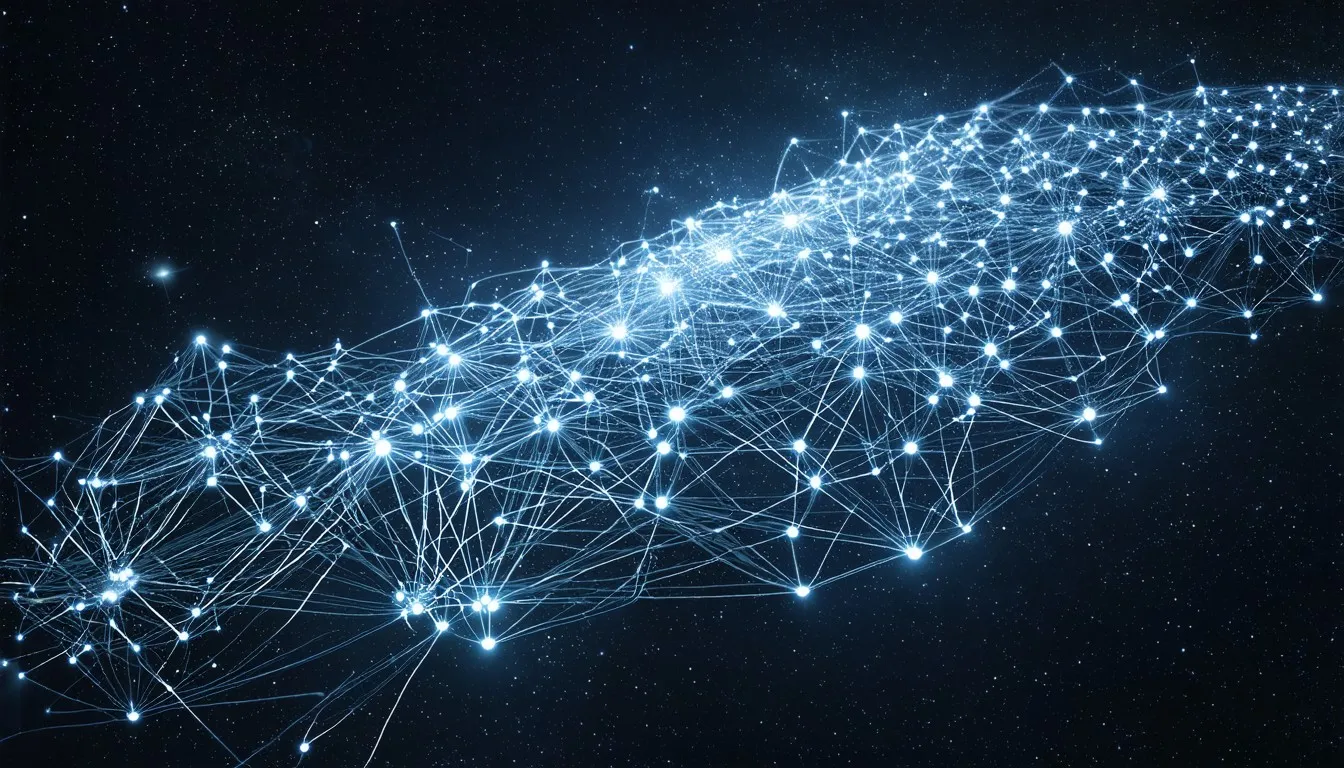
Persistent homology will enable superintelligence to distinguish between true patterns and noise in infinite datasets, filtering out random fluctuations to identify the underlying structure of reality. Future systems will use topological features to generate novel scientific hypotheses by identifying missing structures in data, suggesting new experiments or theories to fill those gaps. Superintelligence will employ spectral sequences to compute the homology of vast multi-scale data structures in real time, processing information at speeds and scales currently unimaginable. The architecture of superintelligence will likely resemble a high-dimensional simplicial complex with nodes representing concepts and connections representing structural relationships, forming a vast interconnected web of understanding. Superintelligence will understand the evolution of life as a continuous deformation of topological structures in genetic space, seeing biology as a process of morphological transformation over eons. Future systems will use topology to model the spread of information in social networks with high precision, predicting how ideas propagate through complex communities.
Superintelligence will detect vulnerabilities in financial systems by analyzing the topological fragility of transaction networks, identifying points where failure could cascade through the system. The control problem will be addressed by constraining the topological expansion of superintelligence, limiting its ability to form certain types of connections that might lead to unsafe behavior. Superintelligence will use topology to unify general relativity and quantum mechanics, resolving the conflict between these two pillars of physics by describing them as different aspects of the same underlying topological structure. Future systems will represent knowledge as a fiber bundle where local data is connected by global topological rules, allowing for both local variation and global consistency. Superintelligence will solve problems by transforming them into topological equivalents that are easier to manipulate, reducing complex physical or logical problems to questions about shape and connectivity. The ultimate goal of superintelligence will be to compute the topology of the universe itself, understanding the key shape of existence and humanity’s place within it.