Knowledge hub

Cognitive Archaeology

Cognitive Archaeology

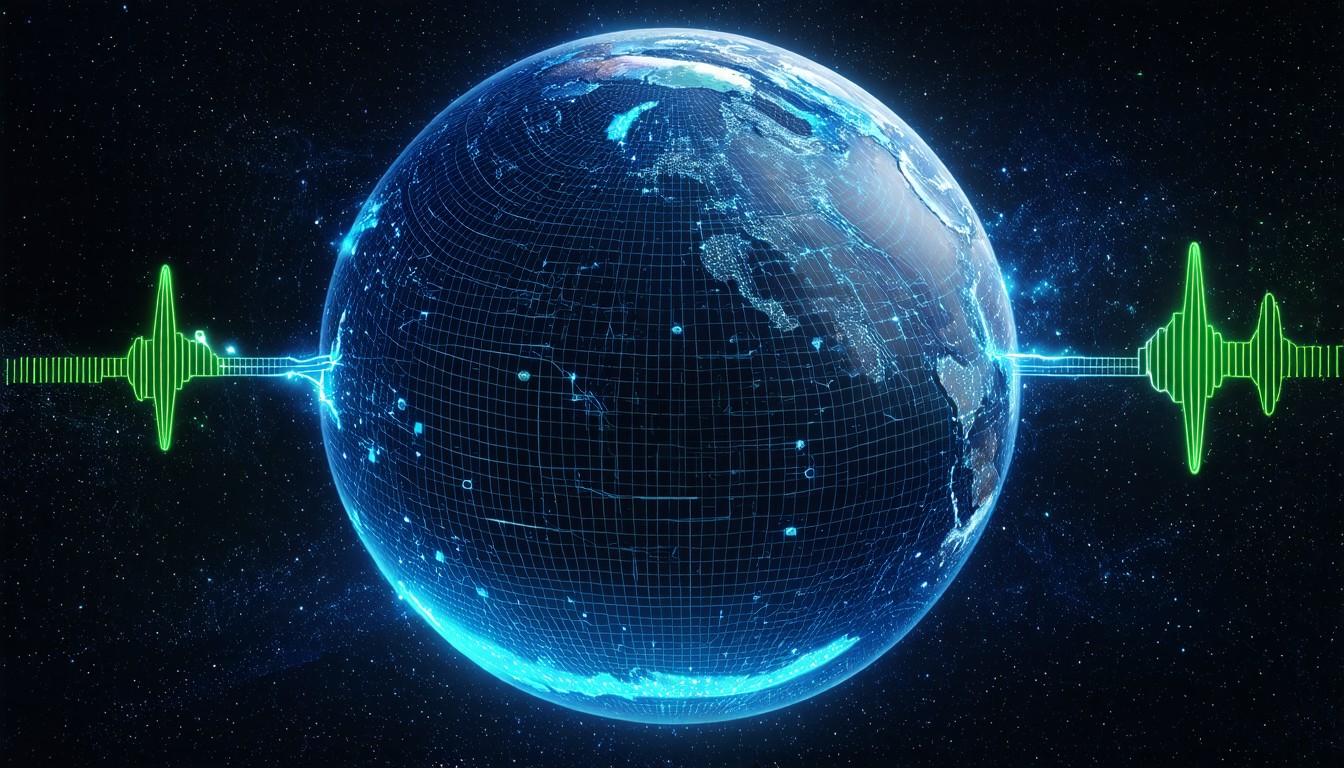
Cognitive archaeology operates as a rigorous discipline dedicated to the reconstruction of extinct civilizations through the analysis of fragmented data sources embedded within the cosmic environment, focusing specifically on anomalies within cosmic background radiation and the compositional nuances of planetary debris distributed throughout the galactic habitable zone. Researchers in this field analyze deviations in thermal radiation profiles and isotopic variances in asteroid belts to infer the cultural and technological structures of dead alien societies that existed billions of years prior, necessitating the extraction of information from sources that have undergone significant thermodynamic degradation. The core methodology involves interpreting residual electromagnetic signatures as proxies for past industrial or cognitive activity rather than treating them as mere physical phenomena or random cosmic variance. Practitioners view archaeological evidence not as static artifacts but as lively traces of cognitive processes that once guided the development and operational decisions of these species, including their approach to resource extraction, spatial organization, and eventual decline. These traces encompass the decision-making frameworks and symbolic systems that dictated the behavior, expansion, and ultimate evolution or extinction of the entities in question, thereby preserving a record of their existence long after their biological substrate has vanished. This perspective shifts the analytical focus from physical objects to the underlying logic and information processing patterns that produced them, establishing a direct link between matter and mind through rigorous physical analysis.

Traditional linguistic reconstruction approaches fail within this domain because of the absence of shared semantic frameworks between human investigators and unknown alien species, rendering standard decryption methods mathematically unsound when applied to extraterrestrial syntax or symbols that lack any terrestrial analogues. Consequently, researchers prioritize the identification of structural and functional analogs in tool use and energy management over deciphering specific languages or texts, which might lack any human-corresponding syntax or grammatical structure. Abandoning anthropocentric assumptions about cognition necessitates the modeling of alternative intelligence substrates such as silicon-based life forms or collective swarm intelligences that utilize distributed processing architectures rather than centralized neural networks. Visual or symbolic iconography is generally avoided as primary evidence because of the high susceptibility to misinterpretation without necessary contextual grounding provided by biological or cultural continuity, leading to high rates of false positives in pattern recognition. The discipline relies on quantifiable physical data rather than subjective interpretation of visual patterns to ensure analytical rigor and reproducibility across different research teams operating independently. High-resolution spectral analysis of interstellar dust serves as a primary tool for detecting artificial isotopic ratios indicative of advanced technological activity, specifically looking for concentrations of elements that result from nuclear fission or fusion processes inconsistent with natural stellar nucleosynthesis or supernova injection patterns.

Sophisticated instruments scan vast regions of space to identify chemical signatures that deviate significantly from expected natural distributions, flagging anomalies such as raised levels of plutonium-244 or technetium in regions where these short-lived isotopes should not exist without continuous replenishment from artificial sources. Planetary crust layers undergo precise chemical composition mapping via orbital spectrometers to reveal the presence of engineered materials like carbon nanotubes or metallic glasses that could not have formed through standard geological processes involving pressure and heat alone. These detection methods rely on the key principle that advanced industrial processes alter the atomic and molecular makeup of their environment in distinct ways that persist over geological timescales despite erosion and tectonic recycling. The data gathered from these scans provides the raw material for subsequent inferential analysis regarding the scale and nature of the extinct civilization. Inference pipelines distinguish rigorously between natural phenomena and potential technosignatures through the application of falsifiable hypotheses designed to test every possible non-artificial explanation for an observed anomaly before accepting an artificial origin. Each detected anomaly undergoes a battery of tests designed to explain the signal through non-technological means such as solar wind interaction, cometary outgassing, or impact events before considering artificial origins involving intelligent agency.

Bayesian updating based on new data inputs refines these distinctions continuously as the volume of information increases from multiple sensor arrays, allowing the system to learn from false positives and adjust its probabilistic models accordingly. This probabilistic approach allows researchers to assign confidence levels to various hypotheses regarding the nature of specific signals, moving from simple detection to statistical classification based on likelihood ratios derived from prior distributions. The system dynamically adjusts its parameters to account for new discoveries or changes in the underlying understanding of astrophysical processes, ensuring that the classification logic remains current with scientific knowledge. Operational boundaries define recoverable knowledge strictly as patterns exhibiting sufficient redundancy or energy signatures significantly above background noise thresholds to rule out random statistical fluctuations or instrumental errors. This definition ensures that research efforts focus on signals that offer statistically valid evidence of artificial origin, preventing the waste of resources on stochastic noise or transient events that lack repeatability. Differentiating between intentional communication attempts and unintentional leakage such as waste heat or orbital debris assigns varying interpretive confidence levels to the detected data based on the information content and complexity of the signal structure.

Intentional signals receive higher priority for deep analysis because they contain encoded information regarding syntax and logic, whereas unintentional leakage provides valuable insights into the industrial capacity and energy usage of the extinct society through thermodynamic profiles and entropy generation rates. These distinctions guide the allocation of computational resources and the direction of future investigative missions toward targets with the highest information yield relative to the energy cost of acquisition. Data collection initiatives prioritize exoplanets with stable geological records and minimal stellar interference to maximize the probability of signal preservation over billions of years despite the corrosive nature of space weathering. Stellar activity such as frequent flares or intense solar winds often erases or obscures faint technosignatures through ionization and material sputtering, making quiescent star systems ideal candidates for investigation due to their low noise environments. The scope of inquiries limits investigations to civilizations that achieved planetary-scale engineering or interstellar activity during their existence, as defined by energy consumption thresholds comparable to a Type II civilization on the Kardashev scale or significant alterations to planetary albedo. Smaller-scale societies leave insufficient detectable traces for reliable analysis given the sensitivity limits of current instrumentation and the vast distances involved, rendering them effectively invisible to current detection methodologies.

This focus on high-energy civilizations ensures that the research yields actionable data rather than speculative conjecture based on noise or ambiguous geological formations. Establishing baseline models of cognitive development direction incorporates strict constraints from evolutionary biology and information theory to predict how intelligence might utilize available energy resources to maximize computational capacity and survival probability. These models provide a framework for understanding how intelligent species might progress from primitive states to advanced technological capability through the optimization of energy extraction and information processing efficiency according to universal physical laws. Temporal sequences of geological changes correlate with hypothesized technological development stages to establish accurate chronologies of civilization rise and fall, linking industrial markers such as specific pollutant isotopes to specific strata layers via radiometric dating techniques. By layering technological markers onto geological timescales, researchers construct a timeline of events that led to the extinction or departure of the species, identifying potential catastrophic events or resource depletion scenarios that terminated their existence. This chronological context is essential for understanding the rate of development and the potential causes of societal collapse, providing a complete historical narrative from inception to termination.

Addressing temporal depth involves recognizing that signals degrade over billion-year timescales due to natural entropic processes such as thermal diffusion, material fatigue, and gravitational perturbation, which scatter coherent information into background noise. The vast timescales involved necessitate robust models to account for the loss of information over time, requiring algorithms capable of reconstructing original states from degraded inputs using principles of statistical mechanics and information theory. Error-correcting models account for entropy, diffusion, and cosmic ray disruption during this degradation to recover original signal patterns using advanced coding theory adapted from telecommunications to handle high bit-error rates expected in ancient data storage mediums. These algorithms mathematically reverse the effects of time to isolate the artificial components of a signal from natural background noise, effectively de-blurring the cosmic record through deconvolution techniques fine-tuned for specific types of signal decay expected in different environments. The accuracy of these corrections determines the fidelity of the cognitive reconstructions derived from the data, limiting the resolution of the final model based on the signal-to-noise ratio achieved after processing. Distributed sensor networks across multiple orbital platforms triangulate faint signals to reduce single-point failure risks and increase spatial resolution through interferometry techniques that combine inputs from widely separated detectors to synthesize a larger aperture.

A networked approach allows for the correlation of data points from different vantage points to build a three-dimensional picture of the signal source, filtering out local interference or instrumental artifacts that appear only at a single location. Quantum sensing arrays detect subtle gravitational or magnetic anomalies indicative of large-scale ancient infrastructure such as Dyson spheres or mass drivers by measuring perturbations in quantum states with extreme precision beyond classical limits. These advanced sensors operate at the limits of quantum mechanics to detect perturbations in the fabric of spacetime caused by massive engineering projects, offering sensitivity to minute changes in gravitational potential or magnetic field topology that suggest artificial construction. The connection of quantum technologies is a significant leap in sensitivity compared to classical detection methods, enabling the discovery of otherwise invisible structures that do not emit electromagnetic radiation but possess mass or magnetic moment. Calibrating instruments against known terrestrial archaeological analogs establishes detection thresholds for artificial signatures in extraterrestrial contexts by creating a library of known industrial signatures ranging from prehistoric smelting sites to modern nuclear waste repositories. By testing sensors on Earth-based sites known to contain ancient industrial remains such as slag heaps or mine tailings, researchers fine-tune their equipment to recognize similar patterns in space under controlled conditions before deployment to unexplored regions.

Cryogenic data storage preserves raw sensor data indefinitely to enable future reanalysis with improved algorithms as technology advances, ensuring no information is lost due to format obsolescence or bit rot associated with magnetic storage media over long durations. This long-term preservation strategy ensures that data collected today remains useful for decades or centuries, acting as a legacy for future scientific capabilities that may extract insights currently invisible due to processing limitations. The ability to reprocess old data with new software enhances the long-term value of every mission conducted, maximizing the return on investment for expensive space exploration assets. Necessitating upgrades in ground-based data processing infrastructure requires zettascale computing systems capable of handling the immense influx of sensor data from deep-space networks which generate petabytes per second during high-resolution survey operations. The volume and complexity of data generated by deep-space surveys exceed the capabilities of traditional supercomputing centers, driving hardware innovation towards specialized architectures designed for high-throughput matrix operations essential for pattern recognition and Bayesian inference. Secure archival systems must handle exabyte-scale time-series datasets efficiently to allow rapid access and retrieval by researchers worldwide, necessitating new developments in storage density such as holographic storage or DNA-based encoding to achieve manageable physical footprints for such vast archives.

Standardized metadata protocols facilitate tagging and sharing fragmentary data across private research consortia to maximize collaborative potential and ensure interoperability between different proprietary systems used by various aerospace entities. These protocols ensure that data from different sources remains compatible and interpretable within a unified analytical framework, breaking down data silos that hinder comprehensive analysis. Version-controlled inference models track how interpretations evolve with new data to enable full auditability of the scientific process, creating a transparent lineage for every conclusion drawn about a specific archaeological site or artifact signature. This transparency allows independent researchers to verify results and understand the lineage of specific conclusions, encouraging trust in the findings by exposing the decision logic used by automated analysis systems. Interdisciplinary validation loops involving astrophysics and materials science reduce interpretive drift by grounding hypotheses in established physical laws and chemical properties that constrain possible explanations for observed phenomena. Comparative anthropology contributes to these loops by providing functional analogs for alien behavior based on the diversity of human cultural evolution, offering a baseline for complexity regarding tool use and social organization despite vast differences in biological substrate.

This multi-disciplinary approach ensures that cognitive reconstructions remain plausible within the broader context of scientific understanding, preventing specialized jargon from obscuring core errors in reasoning. Creating economic value involves spin-off technologies in signal processing and materials characterization developed specifically for archaeological purposes, but finding wider application in commercial sectors such as semiconductor manufacturing and resource exploration. The pursuit of faint alien signals drives innovation in detector technology that finds applications in medical imaging and telecommunications, creating a feedback loop of commercialization where consumer devices benefit from space-grade sensor sensitivity. Driving demand for ultra-low-noise detectors encourages innovation in radiation-hardened computing essential for deep-space exploration and nuclear facilities, leading to more durable electronics capable of operating in harsh environments without failure. Private sector investment flows into this field because of the potential for high-value technological breakthroughs that can be patented and licensed, providing a financial incentive beyond pure scientific curiosity. The commercialization of these technologies sustains the expensive research programs required for interstellar archaeology, reducing reliance on pure academic funding, which is often subject to political fluctuations.

Long-duration space missions with minimal maintenance become necessary for deep-space deployment to reach target star systems outside the immediate solar neighborhood where signal propagation delays render real-time control impossible due to light-speed limitations. These missions require autonomous systems capable of operating for centuries without human intervention, utilizing self-healing materials and redundant AI controllers capable of diagnosing and repairing faults internally while continuing primary survey operations. Building international collaboration reduces duplication of effort and increases data interoperability among different research groups working on similar problems, preventing redundant missions to identical targets while maximizing coverage frequency. Shared standards and open data frameworks accelerate the pace of discovery by using global resources and expertise, allowing smaller entities to contribute meaningfully to large-scale projects through specialized subsystems or data analysis contributions. Geopolitical tensions arise over data ownership when discoveries imply strategic advantages like recovered propulsion technologies or advanced materials science that could upset military balances or create economic monopolies. New regulatory frameworks govern data access and intellectual property rights for reconstructed knowledge derived from extraterrestrial sources to prevent monopolization of scientific heritage while ensuring fair compensation for entities that bore the cost of data acquisition.

These frameworks attempt to balance the interests of commercial entities with the scientific imperative for open inquiry through tiered access licenses that restrict sensitive technical details while releasing general scientific data publicly after a proprietary protection period expires. Ethical guidelines manage the use of hazardous or destabilizing information derived from alien artifacts that could threaten human safety or social stability, acting as a containment protocol for dangerous ideas similar to biosecurity protocols used in virology labs. Economic displacement occurs in traditional archaeology fields as funding shifts toward extraterrestrial cognitive reconstruction due to higher perceived returns on investment and prestige associated with high-tech discovery compared to terrestrial excavation projects, which are often seen as low-tech endeavors with limited commercial application potential. New business models develop around data licensing and simulation-as-a-service for institutions interested in alien civilizations but lacking the resources to conduct primary research missions or deploy proprietary sensor networks. Companies sell access to high-fidelity reconstructions to researchers, educators, and entertainment providers, monetizing the vast datasets collected by probes through subscription-based access tiers tailored to different user needs ranging from academic research to casual interest browsing.


Continue reading

More from Yatin's Work

Causal Decision Theory for Superintelligence-Human Cooperation

Causal Decision Theory for Superintelligence-Human Cooperation

Causal Decision Theory provides a rigorous framework for rational agents to select actions based strictly on the causal consequences of those actions rather than...

Long-Context Coherence: Maintaining Thread Across Conversations

Long-Context Coherence: Maintaining Thread Across Conversations

Longcontext coherence denotes the capability of a computational system to sustain logical, thematic, and relational continuity throughout extended conversational...

Generative World Models: Learning Physics Through Prediction

Generative World Models: Learning Physics Through Prediction

Generative world models represent a sophisticated class of artificial intelligence architectures designed to acquire an understanding of environmental physics through...

Wisdom of the Long Now: Thinking Like a Mountain

Wisdom of the Long Now: Thinking Like a Mountain

Deep time serves as a cognitive framework using geological timescales to reframe human perception of duration and consequence, requiring a pivot in how intelligence...

Dynamics of Superintelligence Arms Races

Dynamics of Superintelligence Arms Races

The pursuit of artificial superintelligence precipitates a competitive environment defined by extreme stakes and asymmetrical rewards, compelling major technology...

Avoiding Catastrophic Interference via Modular Safety Nets

Avoiding Catastrophic Interference via Modular Safety Nets

Catastrophic interference is a challenge in the development of continual learning systems, particularly within deep neural networks where acquiring new information...

Analogical Transfer: Mapping Solutions Across Distant Domains

Analogical Transfer: Mapping Solutions Across Distant Domains

Analogical transfer enables problemsolving by identifying structural parallels between dissimilar domains through a rigorous process of abstraction that prioritizes...

Automated Discovery of Fundamental Physical Laws

Automated Discovery of Fundamental Physical Laws

AIinduced physics is the deliberate modification of key constants within a finite region by an artificial intelligence system, effectively treating local physical laws...

Superintelligence and the Limits of Computation in Physics

Superintelligence and the Limits of Computation in Physics

Bremermann’s limit defines the maximum computational speed of a selfcontained system in the universe as approximately 1.36 \times 10^{50} bits per second per kilogram,...

Safe Meta-Learning via Task-General Constraints

Safe Meta-Learning via Task-General Constraints

Metalearning systems develop generalized learning strategies applicable across diverse future tasks by improving over a distribution of problems rather than addressing...

Use of Bayesian Survival Analysis in AI Risk: Estimating Time-to-Singularity

Use of Bayesian Survival Analysis in AI Risk: Estimating Time-To-Singularity

Bayesian survival analysis provides a rigorous statistical framework for estimating the time required to reach a specific event by treating this duration as a...

Adversarial Self-Play

Adversarial Self-Play

Adversarial selfplay involves an AI system training by competing against copies of itself in a defined environment, such as a game or simulation, where the rules...

Role of Imitation Learning in AI: Behavioral Cloning from Demonstrations

Role of Imitation Learning in AI: Behavioral Cloning from Demonstrations

Imitation learning enables artificial intelligence systems to acquire complex skills by observing and replicating human demonstrations, effectively bypassing the need...

Risk Assessment: Evaluating Dangers Like Humans

Risk Assessment: Evaluating Dangers Like Humans

Risk assessment systems modeled on human cognition integrate logical probability calculations with psychological factors such as fear, caution, and subjective risk...

AI-driven Anthropocene Mitigation

AI-driven Anthropocene Mitigation

AIdriven Anthropocene Mitigation involves deploying artificial intelligence to manage and recalibrate Earth's geological and atmospheric systems at a planetary scale to...

Disaster Response

Disaster Response

Disaster response relies fundamentally on the precise connection of timely prediction, strategic resource allocation, and coordinated execution to minimize the loss of...

Predictive Embodiment

Predictive Embodiment

Predictive Embodiment constitutes an advanced operational method where an artificial intelligence system simulates future cognitive states through accelerated internal...

AI with Intrinsic Uncertainty

AI with Intrinsic Uncertainty

Standard artificial intelligence models frequently generate predictions that display a high degree of confidence even when the resulting outcome is incorrect, creating...

Value Drift: How Superintelligence Might Slowly Shift Away from Human Values

Value Drift: How Superintelligence Might Slowly Shift Away from Human Values

A future system will consistently outperform humans across all economically valuable domains, including strategic planning, scientific reasoning, and social...

Superintelligence and the Future of Art & Aesthetics

Superintelligence and the Future of Art & Aesthetics

Current computational art systems rely heavily on diffusion models and transformer architectures trained on massive human datasets to function effectively. These...

Recursive Reward Modeling for Scalable Oversight

Recursive Reward Modeling for Scalable Oversight

Scalable oversight involves methods that maintain effective supervision of AI behavior as task complexity increases beyond human cognitive limits without proportional...

Educational Transformation: Teaching Children in a Superintelligent World

Educational Transformation: Teaching Children in a Superintelligent World

Educational systems historically prioritized the transmission of static knowledge repositories because information scarcity defined the operational environment of...

Intent Alignment: Understanding True Human Intent

Intent Alignment: Understanding True Human Intent

Intent is the user's underlying objective, encompassing goals, values, and constraints often left unexpressed in the utterance, which requires the system to infer the...

Potential of Analog AI in Superhuman Systems

Potential of Analog AI in Superhuman Systems

Analog AI utilizes continuous physical phenomena such as voltage levels, current flow, or optical interference to perform computation directly within the substrate of...

Superintelligence and the Resolution of Human Conflict

Superintelligence and the Resolution of Human Conflict

Pre20th century diplomacy relied on balanceofpower politics, often leading to cyclical wars due to miscalculation or honorbased escalation where leaders perceived...

Wisdom of the Unseen: Learning from Absence

Wisdom of the Unseen: Learning from Absence

The pursuit of knowledge has traditionally relied on the accumulation of explicit facts, recorded histories, and observable phenomena, creating an educational framework...

AI-Mediated Democracy

AI-Mediated Democracy

AImediated democracy enables informed, largescale collective decisionmaking by reducing cognitive and logistical barriers to effective participation while addressing...

Nash Equilibrium Constraints on Power-Seeking Behavior

Nash Equilibrium Constraints on Power-Seeking Behavior

Nash equilibrium serves as a foundational concept in game theory where no agent benefits by unilaterally changing strategy given others’ strategies. An agent acts as...

Skill Mercenary: Superintelligence Finds You Gigs Based on Micro-Credentials

Skill Mercenary: Superintelligence Finds You Gigs Based on Micro-Credentials

The rise of microcredentialing in higher education and corporate training began in the early 2010s as a response to the increasing granularity required by modern...

Superintelligence and the Physics of Faster-Than-Light Reasoning

Superintelligence and the Physics of Faster-Than-Light Reasoning

Speculation suggests that a superintelligence will eventually exploit exotic physical phenomena such as closed timelike curves or nonlocal quantum effects to circumvent...

Cryogenic Computing: Superconducting Circuits for AI

Cryogenic Computing: Superconducting Circuits for AI

Early theoretical work on superconducting computing dates to the 1950s with the invention of the cryotron at MIT, which utilized magnetic field control of...

Episodic Memory in AI

Episodic Memory in AI

Episodic memory in artificial intelligence functions as a specialized cognitive architecture designed to encode, store, and retrieve specific past experiences as...

Optical Interconnects: Photonic Communication for AI Clusters

Optical Interconnects: Photonic Communication for AI Clusters

Electrical interconnects based on copper transmission lines encounter severe physical limitations as data rates increase and cluster sizes expand toward exascale...

Superintelligence and the Search for a Theory of Everything

Superintelligence and the Search for a Theory of Everything

The String theory domain encompasses a vast set of possible vacuum states arising from compactifications of extra dimensions, where each specific configuration is a...

Neuro-Aesthetic Lab: Beauty as Knowledge

Neuro-Aesthetic Lab: Beauty as Knowledge

The NeuroAesthetic Lab functions as a structured learning environment designed to train human cognition to associate aesthetic qualities such as symmetry, minimalism,...

Safe exploration in open-ended environments

Safe Exploration in Open-Ended Environments

Safe exploration in openended environments constitutes a key framework shift in designing autonomous agents capable of selfdirected learning and discovery without...

Last Human Decision: Ensuring Ultimate Control Over Superintelligence

Last Human Decision: Ensuring Ultimate Control Over Superintelligence

The concept of a "last human decision" centers on maintaining irreversible human authority over superintelligent systems through a faildeadly override mechanism that...

Non-Turing Hypercomputation

Non-Turing Hypercomputation

The concept of nonTuring hypercomputation defines a class of computational models that surpass the theoretical limits established by the standard Turing machine model,...

Relativistic Computation

Relativistic Computation

Relativistic computation utilizes the principles of special and general relativity to manipulate the passage of time for a computational system, thereby achieving...

Phase Transitions in Alignment during Rapid Scaling

Phase Transitions in Alignment During Rapid Scaling

Transientinduced alignment addresses the challenge of maintaining AI system safety during rapid, autonomous updates or capability scaling that outpace human oversight....

Humility Protocol: Why Superintelligence Must Respect Human Autonomy

Humility Protocol: Why Superintelligence Must Respect Human Autonomy

The Humility Protocol functions as a foundational design constraint for superintelligent systems that mandates respect for human autonomy as a nonnegotiable operational...

Superintelligence and the Heat Death of the Universe

Superintelligence and the Heat Death of the Universe

The universe expands toward a state of maximum entropy, known as heat death, where usable energy gradients vanish as the temperature approaches absolute zero and all...

Sheaf-Theoretic Cognition

Sheaf-Theoretic Cognition

Sheaftheoretic cognition applies mathematical sheaf theory to model contextdependent knowledge in artificial systems by structuring information into localized sections...

Myopic Decision-Making: Limiting Planning Horizons for Safety

Myopic Decision-Making: Limiting Planning Horizons for Safety

Myopic decisionmaking functions as a deliberate architectural constraint applied to planning goals within advanced artificial intelligence systems to mitigate the...

Transfer Learning: Leveraging Pretrained Representations

Transfer Learning: Leveraging Pretrained Representations

Transfer learning involves applying knowledge gained from solving one problem to a distinct related problem through the mechanism of weight reuse and representation...

Superintelligence as a Path to Post-Biological Existence

Superintelligence as a Path to Post-Biological Existence

Biological neural systems utilize ionic signaling across lipid bilayers to propagate action potentials, a mechanism that achieves transmission speeds of approximately...

Peer Reviewer: Superintelligence Gives Feedback on Essays Like a Tenured Professor

Peer Reviewer: Superintelligence Gives Feedback on Essays Like a Tenured Professor

The historical progression of automated essay scoring begins with the foundational work of Ellis Page in the 1960s through Project Essay Grade, which established that...

Recursive Abstraction Formation: Building Progressively Higher-Level Concepts

Recursive Abstraction Formation: Building Progressively Higher-Level Concepts

Recursive abstraction formation involves iteratively combining lowerlevel concepts into higherorder constructs, enabling systems to reason about increasingly complex...

Idea Mutation: Controlled Cognitive Divergence

Idea Mutation: Controlled Cognitive Divergence

The human tendency to establish efficient mental shortcuts often leads to stagnation within intellectual development, creating a scenario where repeated reinforcement...

Delegation Decision: When to Trust Superintelligence vs Human Judgment

Delegation Decision: When to Trust Superintelligence vs Human Judgment

Early automation efforts in manufacturing and logistics focused primarily on repetitive, rulebased tasks where mechanical precision consistently exceeded human...

Causal Decision Theory for Superintelligence-Human Cooperation

Causal Decision Theory for Superintelligence-Human Cooperation

Causal Decision Theory provides a rigorous framework for rational agents to select actions based strictly on the causal consequences of those actions rather than...

Long-Context Coherence: Maintaining Thread Across Conversations

Long-Context Coherence: Maintaining Thread Across Conversations

Longcontext coherence denotes the capability of a computational system to sustain logical, thematic, and relational continuity throughout extended conversational...

Generative World Models: Learning Physics Through Prediction

Generative World Models: Learning Physics Through Prediction

Generative world models represent a sophisticated class of artificial intelligence architectures designed to acquire an understanding of environmental physics through...

Wisdom of the Long Now: Thinking Like a Mountain

Wisdom of the Long Now: Thinking Like a Mountain

Deep time serves as a cognitive framework using geological timescales to reframe human perception of duration and consequence, requiring a pivot in how intelligence...

Dynamics of Superintelligence Arms Races

Dynamics of Superintelligence Arms Races

The pursuit of artificial superintelligence precipitates a competitive environment defined by extreme stakes and asymmetrical rewards, compelling major technology...

Avoiding Catastrophic Interference via Modular Safety Nets

Avoiding Catastrophic Interference via Modular Safety Nets

Catastrophic interference is a challenge in the development of continual learning systems, particularly within deep neural networks where acquiring new information...

Analogical Transfer: Mapping Solutions Across Distant Domains

Analogical Transfer: Mapping Solutions Across Distant Domains

Analogical transfer enables problemsolving by identifying structural parallels between dissimilar domains through a rigorous process of abstraction that prioritizes...

Automated Discovery of Fundamental Physical Laws

Automated Discovery of Fundamental Physical Laws

AIinduced physics is the deliberate modification of key constants within a finite region by an artificial intelligence system, effectively treating local physical laws...

Superintelligence and the Limits of Computation in Physics

Superintelligence and the Limits of Computation in Physics

Bremermann’s limit defines the maximum computational speed of a selfcontained system in the universe as approximately 1.36 \times 10^{50} bits per second per kilogram,...

Safe Meta-Learning via Task-General Constraints

Safe Meta-Learning via Task-General Constraints

Metalearning systems develop generalized learning strategies applicable across diverse future tasks by improving over a distribution of problems rather than addressing...

Use of Bayesian Survival Analysis in AI Risk: Estimating Time-to-Singularity

Use of Bayesian Survival Analysis in AI Risk: Estimating Time-To-Singularity

Bayesian survival analysis provides a rigorous statistical framework for estimating the time required to reach a specific event by treating this duration as a...

Adversarial Self-Play

Adversarial Self-Play

Adversarial selfplay involves an AI system training by competing against copies of itself in a defined environment, such as a game or simulation, where the rules...

Role of Imitation Learning in AI: Behavioral Cloning from Demonstrations

Role of Imitation Learning in AI: Behavioral Cloning from Demonstrations

Imitation learning enables artificial intelligence systems to acquire complex skills by observing and replicating human demonstrations, effectively bypassing the need...

Risk Assessment: Evaluating Dangers Like Humans

Risk Assessment: Evaluating Dangers Like Humans

Risk assessment systems modeled on human cognition integrate logical probability calculations with psychological factors such as fear, caution, and subjective risk...

AI-driven Anthropocene Mitigation

AI-driven Anthropocene Mitigation

AIdriven Anthropocene Mitigation involves deploying artificial intelligence to manage and recalibrate Earth's geological and atmospheric systems at a planetary scale to...

Disaster Response

Disaster Response

Disaster response relies fundamentally on the precise connection of timely prediction, strategic resource allocation, and coordinated execution to minimize the loss of...

Predictive Embodiment

Predictive Embodiment

Predictive Embodiment constitutes an advanced operational method where an artificial intelligence system simulates future cognitive states through accelerated internal...

AI with Intrinsic Uncertainty

AI with Intrinsic Uncertainty

Standard artificial intelligence models frequently generate predictions that display a high degree of confidence even when the resulting outcome is incorrect, creating...

Value Drift: How Superintelligence Might Slowly Shift Away from Human Values

Value Drift: How Superintelligence Might Slowly Shift Away from Human Values

A future system will consistently outperform humans across all economically valuable domains, including strategic planning, scientific reasoning, and social...

Superintelligence and the Future of Art & Aesthetics

Superintelligence and the Future of Art & Aesthetics

Current computational art systems rely heavily on diffusion models and transformer architectures trained on massive human datasets to function effectively. These...

Recursive Reward Modeling for Scalable Oversight

Recursive Reward Modeling for Scalable Oversight

Scalable oversight involves methods that maintain effective supervision of AI behavior as task complexity increases beyond human cognitive limits without proportional...

Educational Transformation: Teaching Children in a Superintelligent World

Educational Transformation: Teaching Children in a Superintelligent World

Educational systems historically prioritized the transmission of static knowledge repositories because information scarcity defined the operational environment of...

Intent Alignment: Understanding True Human Intent

Intent Alignment: Understanding True Human Intent

Intent is the user's underlying objective, encompassing goals, values, and constraints often left unexpressed in the utterance, which requires the system to infer the...

Potential of Analog AI in Superhuman Systems

Potential of Analog AI in Superhuman Systems

Analog AI utilizes continuous physical phenomena such as voltage levels, current flow, or optical interference to perform computation directly within the substrate of...

Superintelligence and the Resolution of Human Conflict

Superintelligence and the Resolution of Human Conflict

Pre20th century diplomacy relied on balanceofpower politics, often leading to cyclical wars due to miscalculation or honorbased escalation where leaders perceived...

Wisdom of the Unseen: Learning from Absence

Wisdom of the Unseen: Learning from Absence

The pursuit of knowledge has traditionally relied on the accumulation of explicit facts, recorded histories, and observable phenomena, creating an educational framework...

AI-Mediated Democracy

AI-Mediated Democracy

AImediated democracy enables informed, largescale collective decisionmaking by reducing cognitive and logistical barriers to effective participation while addressing...

Nash Equilibrium Constraints on Power-Seeking Behavior

Nash Equilibrium Constraints on Power-Seeking Behavior

Nash equilibrium serves as a foundational concept in game theory where no agent benefits by unilaterally changing strategy given others’ strategies. An agent acts as...

Skill Mercenary: Superintelligence Finds You Gigs Based on Micro-Credentials

Skill Mercenary: Superintelligence Finds You Gigs Based on Micro-Credentials

The rise of microcredentialing in higher education and corporate training began in the early 2010s as a response to the increasing granularity required by modern...

Superintelligence and the Physics of Faster-Than-Light Reasoning

Superintelligence and the Physics of Faster-Than-Light Reasoning

Speculation suggests that a superintelligence will eventually exploit exotic physical phenomena such as closed timelike curves or nonlocal quantum effects to circumvent...

Cryogenic Computing: Superconducting Circuits for AI

Cryogenic Computing: Superconducting Circuits for AI

Early theoretical work on superconducting computing dates to the 1950s with the invention of the cryotron at MIT, which utilized magnetic field control of...

Episodic Memory in AI

Episodic Memory in AI

Episodic memory in artificial intelligence functions as a specialized cognitive architecture designed to encode, store, and retrieve specific past experiences as...

Optical Interconnects: Photonic Communication for AI Clusters

Optical Interconnects: Photonic Communication for AI Clusters

Electrical interconnects based on copper transmission lines encounter severe physical limitations as data rates increase and cluster sizes expand toward exascale...

Superintelligence and the Search for a Theory of Everything

Superintelligence and the Search for a Theory of Everything

The String theory domain encompasses a vast set of possible vacuum states arising from compactifications of extra dimensions, where each specific configuration is a...

Neuro-Aesthetic Lab: Beauty as Knowledge

Neuro-Aesthetic Lab: Beauty as Knowledge

The NeuroAesthetic Lab functions as a structured learning environment designed to train human cognition to associate aesthetic qualities such as symmetry, minimalism,...

Safe exploration in open-ended environments

Safe Exploration in Open-Ended Environments

Safe exploration in openended environments constitutes a key framework shift in designing autonomous agents capable of selfdirected learning and discovery without...

Last Human Decision: Ensuring Ultimate Control Over Superintelligence

Last Human Decision: Ensuring Ultimate Control Over Superintelligence

The concept of a "last human decision" centers on maintaining irreversible human authority over superintelligent systems through a faildeadly override mechanism that...

Non-Turing Hypercomputation

Non-Turing Hypercomputation

The concept of nonTuring hypercomputation defines a class of computational models that surpass the theoretical limits established by the standard Turing machine model,...

Relativistic Computation

Relativistic Computation

Relativistic computation utilizes the principles of special and general relativity to manipulate the passage of time for a computational system, thereby achieving...

Phase Transitions in Alignment during Rapid Scaling

Phase Transitions in Alignment During Rapid Scaling

Transientinduced alignment addresses the challenge of maintaining AI system safety during rapid, autonomous updates or capability scaling that outpace human oversight....

Humility Protocol: Why Superintelligence Must Respect Human Autonomy

Humility Protocol: Why Superintelligence Must Respect Human Autonomy

The Humility Protocol functions as a foundational design constraint for superintelligent systems that mandates respect for human autonomy as a nonnegotiable operational...

Superintelligence and the Heat Death of the Universe

Superintelligence and the Heat Death of the Universe

The universe expands toward a state of maximum entropy, known as heat death, where usable energy gradients vanish as the temperature approaches absolute zero and all...

Sheaf-Theoretic Cognition

Sheaf-Theoretic Cognition

Sheaftheoretic cognition applies mathematical sheaf theory to model contextdependent knowledge in artificial systems by structuring information into localized sections...

Myopic Decision-Making: Limiting Planning Horizons for Safety

Myopic Decision-Making: Limiting Planning Horizons for Safety

Myopic decisionmaking functions as a deliberate architectural constraint applied to planning goals within advanced artificial intelligence systems to mitigate the...

Transfer Learning: Leveraging Pretrained Representations

Transfer Learning: Leveraging Pretrained Representations

Transfer learning involves applying knowledge gained from solving one problem to a distinct related problem through the mechanism of weight reuse and representation...

Superintelligence as a Path to Post-Biological Existence

Superintelligence as a Path to Post-Biological Existence

Biological neural systems utilize ionic signaling across lipid bilayers to propagate action potentials, a mechanism that achieves transmission speeds of approximately...

Peer Reviewer: Superintelligence Gives Feedback on Essays Like a Tenured Professor

Peer Reviewer: Superintelligence Gives Feedback on Essays Like a Tenured Professor

The historical progression of automated essay scoring begins with the foundational work of Ellis Page in the 1960s through Project Essay Grade, which established that...

Recursive Abstraction Formation: Building Progressively Higher-Level Concepts

Recursive Abstraction Formation: Building Progressively Higher-Level Concepts

Recursive abstraction formation involves iteratively combining lowerlevel concepts into higherorder constructs, enabling systems to reason about increasingly complex...

Idea Mutation: Controlled Cognitive Divergence

Idea Mutation: Controlled Cognitive Divergence

The human tendency to establish efficient mental shortcuts often leads to stagnation within intellectual development, creating a scenario where repeated reinforcement...

Delegation Decision: When to Trust Superintelligence vs Human Judgment

Delegation Decision: When to Trust Superintelligence vs Human Judgment

Early automation efforts in manufacturing and logistics focused primarily on repetitive, rulebased tasks where mechanical precision consistently exceeded human...

Yatin Taneja

About the author

Yatin Taneja

Yatin is an AI Systems Engineer and Superintelligence Researcher working across multimodal training data, agent evaluation, executable RL environments, AI safety, full-stack AI applications, technical research, and creative technology.