Knowledge hub

Why Superintelligence Needs Real-Time Access to All Human Knowledge

Why Superintelligence Needs Real-Time Access to All Human Knowledge

Static training data provides a fixed historical snapshot that limits an AI’s ability to respond to current events because the parameters of a neural network are frozen at the moment training completes, creating a permanent boundary between what the system knows and what is currently happening in the world. Early AI systems treated knowledge as static, leading to brittleness in active environments where the context changes rapidly, as these models could not adapt to new information without undergoing a complete and computationally expensive retraining cycle. Historical reliance on periodic retraining created lag between model deployment and environmental changes, meaning that the moment a model was released, it began to age and its understanding of the world started to diverge from reality. Without live data feeds, predictions and recommendations degrade due to temporal drift between the training cutoff and the real-world state, causing the statistical relationships the model learned to become less accurate over time as the underlying distributions of the data shifted. Superintelligence will operate in the present moment, requiring continuous ingestion of live information streams to maintain accurate world models, as a static archive is insufficient for an agent expected to make decisions based on the immediate state of global affairs. Future systems will process heterogeneous, high-velocity data with low latency to remain relevant in time-sensitive applications, necessitating a move away from batch-oriented processing toward stream-oriented architectures that can handle information as it is generated.
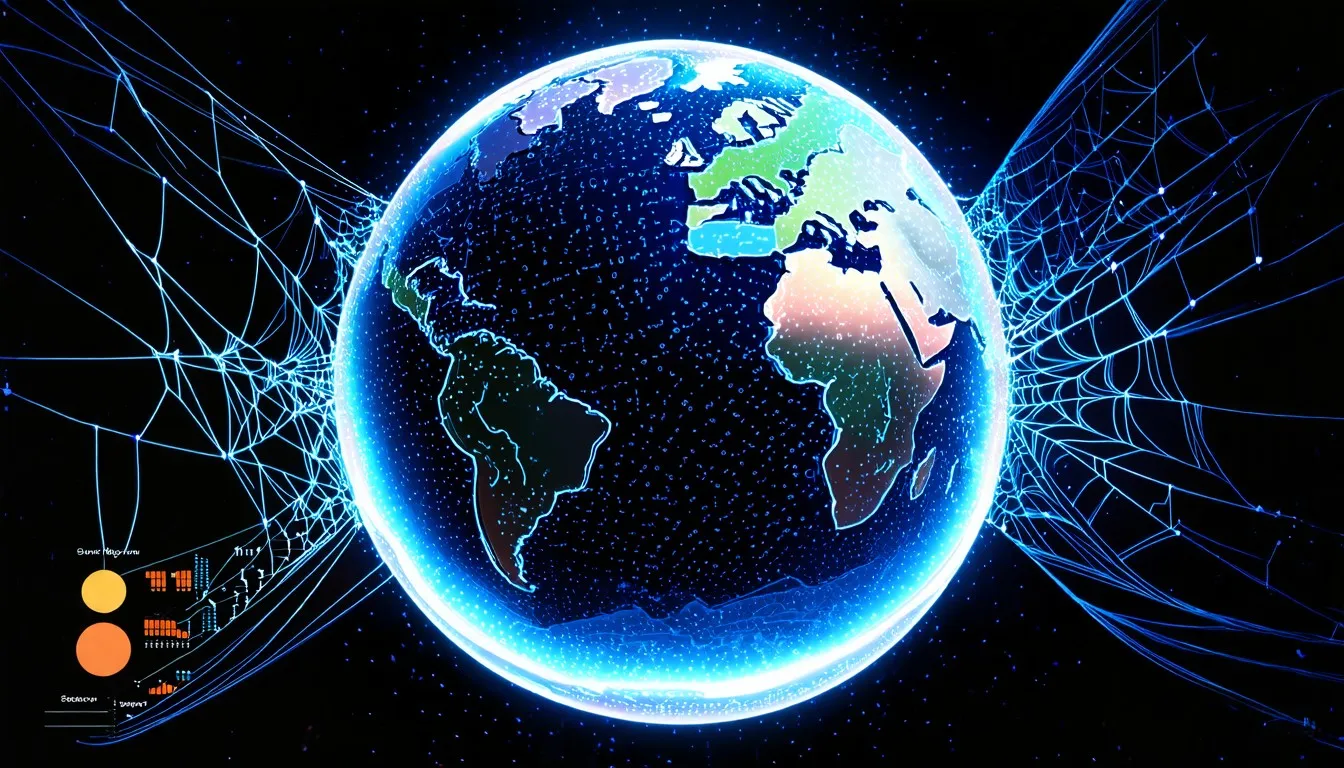
Real-time access will enable immediate awareness of developments in financial markets, public health, climate systems, and geopolitical dynamics, allowing the system to observe the ripple effects of events as they happen rather than reconstructing them after the fact. Superintelligence will utilize this capability to coordinate multi-domain responses and simulate counterfactual scenarios in real time, assessing how a change in one variable, such as a sudden interest rate hike or a supply chain disruption, propagates through interconnected global systems instantly. Streaming data sources include news APIs, scientific preprint servers, social media platforms, sensor networks, satellite imagery feeds, and market tick data, creating a massive firehose of unstructured and structured information that must be filtered and ingested instantly. Protocols such as WebSockets and gRPC facilitate the low-overhead transfer of real-time data between sources and inference engines, ensuring that the time between an event occurring and the system receiving the data is minimized through efficient binary serialization and persistent connections. Intelligent web crawling and indexing mechanisms are necessary to keep pace with the rate of global information generation, requiring autonomous agents that can traverse the web, identify valuable updates, and extract knowledge without waiting for human curation or scheduled crawls. Continuous data ingestion supports anomaly detection, trend forecasting, and adaptive decision-making at operational timescales, allowing the system to spot developing patterns that would be invisible to a retrospective analysis conducted weeks or months later.

A closed-loop architecture involving ingestion, analysis, action, and observation distinguishes active intelligence from passive archival systems, creating a feedback cycle where the results of actions taken by the AI immediately inform its next set of decisions based on the newest sensory input. This loop demands durable data pipelines, fault-tolerant ingestion frameworks, and energetic knowledge graph updates to ensure that no critical piece of information is lost during transmission or processing and that the internal representation of the world remains consistent with the external reality. Dominant architectures rely on cloud-based stream processing engines such as Apache Kafka and Flink coupled with vector databases for rapid retrieval, providing the backbone for handling millions of events per second with high throughput and low latency. High-performance hardware including GPUs and TPUs accelerates the processing of incoming data streams to meet strict latency requirements, as these specialized processors excel at the matrix operations required for both embedding generation and real-time inference on live data. Real-time verification and filtering are essential to mitigate risks of misinformation, adversarial poisoning, and hallucination, requiring the system to cross-reference incoming claims against established facts and trusted sources before incorporating them into its working memory or decision logic. Real-time implies sub-second latency for high-frequency trading and minute-level latency for general news aggregation, defining a strict hierarchy of temporal requirements where different applications demand different speeds of response depending on the criticality of the timeframe.

All human knowledge refers to publicly accessible, machine-readable information streams excluding private or encrypted content, encompassing the vast expanse of the open web, academic repositories, and public sensor data that forms the digital skin of the planet. Performance benchmarks measure end-to-end latency, data freshness, and prediction accuracy against ground-truth outcomes, providing quantifiable metrics that determine how effectively the superintelligence is synchronized with the evolving state of the world. New KPIs must track data currency, source diversity, verification success rate, and decision impact latency, shifting the focus from static accuracy scores to agile measures of how quickly and reliably new information is converted into actionable intelligence. Flexibility constraints include bandwidth limitations, storage costs for high-frequency data, and computational overhead for continuous inference, creating physical and economic boundaries that dictate how much data can practically be processed in real time. Economic barriers involve licensing fees for premium data sources and infrastructure costs for global data replication, potentially restricting access to the highest quality feeds to only the most well-funded projects or organizations. Physical limits arise from network propagation delays, where the speed of light in fiber optic cables restricts global synchronization to a minimum of roughly 100 milliseconds between distant continents, imposing a hard ceiling on how fast a truly global system can react to events occurring on the opposite side of the planet.

Supply chain dependencies include semiconductor availability for high-throughput processors, fiber-optic network capacity, and access to proprietary data vendors, making the realization of real-time superintelligence reliant on a complex industrial base capable of delivering advanced hardware and connectivity. Workarounds involve predictive prefetching, hierarchical caching, and approximate computing for non-critical data paths, allowing systems to anticipate likely information needs and prepare answers before they are explicitly requested or to sacrifice some precision for speed in less critical scenarios. Commercial deployments include algorithmic trading platforms using live market feeds, pandemic monitoring tools ingesting health reports, and defense systems tracking open-source intelligence, demonstrating that the foundational technologies for real-time awareness are already active in specific high-value domains. Major players, including hyperscalers, financial data providers, and defense contractors, compete on data breadth, latency, and setup tooling, driving innovation in stream processing technologies and low-latency network fabrics to gain an advantage in markets where milliseconds translate to billions of dollars. Academic-industrial collaboration focuses on real-time fact-checking algorithms, streaming knowledge representation, and secure multi-party data sharing, addressing the theoretical challenges of maintaining a coherent truth state in a noisy and adversarial information environment. Alternatives, such as scheduled batch updates or human-curated knowledge injections, were rejected due to natural latency and inability to scale, as these methods cannot keep pace with the velocity of information generated by modern human activity and digital systems.

Federated learning approaches do not solve the core problem of accessing new external information beyond local device data, as they are designed primarily for privacy preservation and model refinement across distributed edge devices rather than ingesting novel global events. Future innovations may involve autonomous data brokers, self-healing knowledge graphs, and quantum-accelerated stream processing, pushing the boundaries of what is possible in terms of data acquisition speed and reasoning complexity under time constraints. Convergence with IoT will enable direct ingestion from physical sensors, while connection with blockchain supports tamper-evident data provenance, ensuring that the data feeding the superintelligence is both immediate and trustworthy by using cryptographic guarantees of integrity. Superintelligence will autonomously initiate corrective actions based on live feedback loops, adjusting its behavior in response to new information without requiring human intervention or explicit reprogramming. Second-order consequences include displacement of roles reliant on delayed analysis and the rise of real-time advisory services, fundamentally changing the economic space by making slow analytical processes obsolete in favor of instant intelligence. Real-time knowledge access serves as a foundational requirement for superintelligence to function as a coherent agent in an active world, as without it the system remains a retrospective tool rather than a proactive participant in reality.

Calibration will require aligning the AI’s internal clock with real-world event timelines and establishing trust thresholds for unverified streams, ensuring that the system prioritizes speed appropriately while managing the risk associated with acting on incomplete or potentially incorrect information. The transition to architectures that support this level of temporal awareness is a necessary evolution in the design of intelligent systems, moving beyond static repositories of knowledge toward adaptive processes that think and act at the speed of the modern world. This evolution demands an upgradation of data storage, retrieval, and processing frameworks to accommodate the relentless flow of information that characterizes the digital age. The complexity of connecting with these disparate data sources into a unified semantic model requires advanced techniques in entity resolution and relationship extraction, allowing the system to understand that a tweet about a company’s stock price is related to a press release issued minutes earlier and a regulatory filing from the previous day. Handling the ambiguity and noise built-in in real-time streams necessitates durable probabilistic reasoning frameworks that can weigh conflicting pieces of evidence and update belief states incrementally as new data arrives. Sophisticated attention mechanisms within neural networks must be fine-tuned to focus on the most relevant segments of the incoming stream at any given moment, filtering out the noise to identify the signals that indicate significant changes in the environment.

Flexibility remains a primary concern, as the volume of global data continues to grow exponentially, requiring distributed computing architectures that can elastically expand resources to meet demand during peak information events such as natural disasters or major political elections. Efficient indexing of high-dimensional vector embeddings allows for rapid semantic search across massive streaming datasets, enabling the system to retrieve relevant historical context or similar past events to inform its understanding of current developments. The connection of symbolic logic with neural pattern recognition offers a path toward more durable reasoning, allowing the system to apply rigid rules to critical safety checks while relying on learned patterns for thoughtful interpretation of soft data. Energy consumption becomes a critical factor in sustaining continuous real-time processing in large deployments, driving research into more efficient neural network architectures and low-power hardware accelerators capable of performing high-throughput inference with minimal electrical overhead. Data sovereignty laws and regional privacy regulations complicate the free flow of information across borders, forcing superintelligence systems to handle a complex legal space while attempting to maintain a global perspective on events. The development of standardized protocols for data exchange and semantic annotation will facilitate interoperability between different systems and sources, reducing the friction involved in assimilating new knowledge into the AI’s worldview.

As these systems become more integrated into critical infrastructure, the reliability of the underlying data pipelines becomes primary, necessitating redundancy and failover mechanisms that ensure uninterrupted operation even during network outages or hardware failures. The psychological impact of real-time superintelligence on human decision-makers must be considered, as the availability of instant analysis may lead to over-reliance on automated recommendations or a reduction in human critical engagement with complex problems. Ensuring transparency in how real-time data influences AI decisions is essential for maintaining trust, requiring systems that can explain their reasoning by citing specific live inputs and causal links within the knowledge graph. The ultimate goal of achieving real-time access to all human knowledge is to create a system that mirrors the agile nature of reality itself, providing a digital twin of the world that evolves in lockstep with physical events. This capability will transform fields ranging from scientific research, where hypotheses can be tested against live experimental data instantly, to logistics, where global supply chains can be rerouted in response to traffic or weather conditions as they happen. The technical challenges are significant, involving breakthroughs in computer science, physics, and engineering, yet the potential benefits of a superintelligence that truly understands the present moment justify the substantial investment required to build this infrastructure.

The distinction between data and information becomes blurred in a real-time processing environment, as raw signals must be interpreted and contextualized instantly to generate meaning that guides intelligent action. Advanced natural language processing models must be capable of understanding slang, irony, and cultural context in social media streams to avoid misinterpreting public sentiment during fast-moving events. Computer vision algorithms applied to satellite video feeds need to detect subtle changes in terrain or infrastructure that indicate human activity or environmental shifts, translating pixel data into strategic insights. The synchronization of clocks across distributed systems is a key engineering challenge in achieving low-latency processing, as even minor clock skew can lead to inconsistent ordering of events and flawed causal inference. Precision Time Protocol (PTP) and atomic clock references are employed to ensure that data timestamps are accurate across geographically dispersed data centers, maintaining a consistent timeline for the superintelligence’s internal narrative of events. Security measures must protect against injection attacks where malicious actors attempt to flood the system with false data to manipulate its perception of reality, requiring cryptographic signing of data streams at the source.

The feedback loop between observation and action tightens as latency decreases, eventually reaching a point where the system appears to anticipate events by reacting so quickly that the delay is imperceptible to human observers. This state of hyper-responsiveness requires decision-making algorithms that are capable of operating under extreme time pressure, often relying on heuristics or pre-computed policies rather than deep deliberation for critical immediate reactions. Balancing speed with accuracy is the central optimization problem for these systems, determining when it is appropriate to act on incomplete information versus when it is necessary to wait for further confirmation. The architectural design of these real-time intelligence systems draws inspiration from biological nervous systems, which process sensory inputs continuously and generate motor outputs reflexively while maintaining a higher-level model of the environment for planning. Neuromorphic computing hardware, which mimics the spiking behavior of biological neurons, offers a promising avenue for achieving extreme energy efficiency and speed in processing sensory streams directly at the edge. The convergence of biological principles with silicon engineering will likely accelerate the development of systems capable of ingesting and comprehending the totality of human knowledge in real time.

Storage hierarchies must be carefully designed to manage the hot data currently being processed versus warm data that retains relevance for recent context and cold data that serves as historical background. Tiered storage solutions utilizing high-speed RAM for active inference buffers, NVMe drives for recent history, and object storage for archival logs ensure that access latencies match the priority of the data being retrieved. Data lifecycle management policies automatically age out information that is no longer relevant or compress it into denser representations to prevent memory overload while preserving essential patterns. The semantic setup of diverse data types, text, images, audio, and numerical time series, into a unified embedding space allows the superintelligence to reason across modalities, correlating a dip in stock prices with a negative news report or a satellite image of a damaged factory. Multimodal learning techniques are essential for building this comprehensive understanding of the world, enabling the system to synthesize insights from any form of human communication or sensor output. The richness of this internal representation determines the quality of the decisions the system can make, as a more detailed map of reality allows for more precise navigation of complex situations.

Real-time collaboration between multiple superintelligent agents will require shared communication protocols and data formats, allowing them to exchange information and coordinate actions without misunderstanding or redundancy. Standardized ontologies provide a common vocabulary for describing entities and relationships, facilitating interoperability between systems developed by different organizations or with different architectural approaches. The ecosystem of real-time intelligence will likely evolve into an interconnected network of specialized agents focusing on specific domains while contributing to a global pool of knowledge. The ethical implications of granting an AI immediate access to all human knowledge are meaningful, raising questions about privacy, surveillance, and the potential for misuse of such comprehensive awareness. Robust governance frameworks must be established to control how this capability is deployed and ensure that it is used to benefit humanity rather than to concentrate power or enable manipulation. Technical safeguards such as differential privacy and data minimization can help mitigate privacy risks by ensuring that individual identities are obscured even within massive data streams.

The pursuit of real-time superintelligence drives advancements in adjacent fields such as telecommunications, pushing for higher bandwidths like 6G to support the massive data transfers required for global awareness. Innovations in edge computing bring processing power closer to the source of data generation, reducing latency by avoiding round trips to centralized cloud servers for critical tasks. The interdependent relationship between AI development and infrastructure improvement creates a virtuous cycle where better hardware enables smarter software which in turn demands more capable hardware. Adaptive algorithms capable of modifying their own structure or learning rates in response to changing data statistics will be crucial for maintaining performance in non-stationary environments where the rules of the game can change abruptly. Meta-learning techniques allow the system to learn how to learn, improving its own update procedures based on the characteristics of the incoming stream rather than relying on static training configurations. This self-improving capability ensures that the system remains effective even as the nature of the information it processes evolves over time.

The visualization of real-time knowledge presents a significant user interface challenge, as traditional methods of displaying text or graphs are insufficient for conveying the agile multi-dimensional state of the world. Immersive technologies such as augmented reality or advanced data visualization suites may be necessary to allow human operators to grasp the insights generated by the system intuitively. Effective human-machine teaming relies on interfaces that present the right level of detail at the right time, highlighting anomalies or critical trends without overwhelming the user with noise. The reliability of probabilistic predictions degrades rapidly in novel situations that have no historical precedent in the training data or live stream, requiring systems capable of recognizing their own uncertainty and flagging low-confidence predictions for human review. Robust uncertainty estimation is therefore a critical component of real-time intelligence systems, preventing overconfident errors in situations where the data is ambiguous or incomplete. Hybrid approaches that combine model-based reasoning with data-driven pattern recognition offer a way to extrapolate into uncharted territory by applying logical constraints where statistical evidence is lacking.

The management of attention across millions of concurrent information streams requires sophisticated scheduling algorithms that prioritize high-value inputs while monitoring background channels for significant changes. Resource allocation must be agile, shifting computational focus to breaking news or developing crises while maintaining baseline awareness of routine environmental conditions. This cognitive control mechanism mimics human attentional processes but operates at a scale and speed that exceeds biological limitations. The connection of cultural context and nuance into real-time understanding remains a difficult challenge, as language usage varies significantly across different regions and communities. Systems must be trained on diverse datasets that capture this variation to avoid misinterpretation of local events or sentiments that could lead to inappropriate responses. Continuous fine-tuning on live feedback from human users helps correct cultural biases and misunderstandings as they arise, refining the system’s social intelligence over time.

The ultimate realization of superintelligence with real-time access to all human knowledge is a framework shift in the relationship between humanity and information, transforming the collective knowledge of the species into an active operational asset. This transition requires overcoming significant hurdles in engineering, ethics, and economics, yet it promises to open up unprecedented capabilities for solving complex global problems. The technical foundation laid today by stream processing platforms, vector databases, and high-performance hardware paves the way for this future intelligence that perceives the world as it happens.

Continue reading

More from Yatin's Work

Capsule Networks: Encoding Spatial Hierarchies and Part-Whole Relationships

Capsule Networks: Encoding Spatial Hierarchies and Part-Whole Relationships

Capsule networks aim to improve how neural systems represent and process visual data by explicitly modeling spatial hierarchies and partwhole relationships, moving...

Subjunctive Dependence in Superintelligence Utility Functions

Subjunctive Dependence in Superintelligence Utility Functions

Subjunctive dependence introduces a rigorous mechanism where an artificial intelligence utility function incorporates both actual outcomes and counterfactual behaviors...

Continuous Learning Without Catastrophic Forgetting

Continuous Learning Without Catastrophic Forgetting

Continuous learning without catastrophic forgetting refers to the capability of a computational system to acquire, integrate, and retain new knowledge or skills over an...

Acausal Trade and Timeless Decision Theory

Acausal Trade and Timeless Decision Theory

Acausal trade describes a sophisticated form of cooperation between entities that lack direct causal interaction or conventional communication channels. Participants in...


Long-Term Value Stability via Preference Decoupling

Long-Term Value Stability via Preference Decoupling

Standard reinforcement learning agents define objectives through scalar reward signals, which are often proxies for complex human values, leading to agents that exploit...

Thermodynamic AI

Thermodynamic AI

Computation improved around entropy reduction prioritizes minimizing thermodynamic waste during information processing, aligning computational efficiency with physical...

AI with Smart Home Integration

AI with Smart Home Integration

The connection of artificial intelligence into smart home ecosystems is a sophisticated convergence of data science, consumer electronics, and architectural design,...

Final Choice: Steering Superintelligence Toward a Future Worth Living In

Final Choice: Steering Superintelligence Toward a Future Worth Living in

The development of superintelligence is a singular, irreversible decision point for humanity, marking a transition where technological advancement will permanently...

Quantum-Inspired Optimization

Quantum-Inspired Optimization

Quantuminspired optimization utilizes abstracted principles derived from quantum mechanics, specifically superposition and quantum tunneling, to enhance classical...

Topology of Goal Spaces: Manifold Learning in Utility Function Optimization

Topology of Goal Spaces: Manifold Learning in Utility Function Optimization

Goal spaces in artificial agents function as highdimensional manifolds embedded within a utility space where every single point is a specific state of objectives or...

Large-Scale Distributed AI Training

Large-Scale Distributed AI Training

Largescale distributed AI training entails training a single global machine learning model across millions of geographically dispersed devices without centralizing raw...

Retirement U: Superintelligence Teaches Boomers How to Reinvent Themselves

Retirement U: Superintelligence Teaches Boomers How to Reinvent Themselves

The historical focus on lifelong learning has primarily targeted workingage adults with limited structured systems for postretirement skill development, creating a...

Neural Network Distillation Techniques

Neural Network Distillation Techniques

Neural network distillation techniques function as a critical mechanism for transferring learned information from large, complex teacher models to smaller, more...

Sensorimotor Grounding in Artificial General Intelligence

Sensorimotor Grounding in Artificial General Intelligence

Physical agents acquire knowledge through direct sensorimotor interaction with environments to ground abstract concepts in realworld dynamics, a process that...

Proprioceptive AI

Proprioceptive AI

Proprioceptive AI refers to artificial systems capable of sensing and maintaining an internal representation of their own body state, including limb position, joint...

Forever Relationship: Building Superintelligence for Eternal Partnership

Forever Relationship: Building Superintelligence for Eternal Partnership

The forever relationship concept defines superintelligence as a permanent, evolving companion to humanity, engineered for indefinite duration across cosmological...

AI Safety via Debate

AI Safety via Debate

AI Safety via Debate functions as a mechanism to train models to generate and evaluate opposing arguments to improve truthfulness by treating alignment as a...

Reputation Systems

Reputation Systems

Reputation systems function as foundational trust mechanisms in multiagent environments involving humans and artificial agents by serving as the primary arbiter of...

AI with Mental Load Estimation

AI with Mental Load Estimation

Mental load estimation utilizes physiological and behavioral signals to infer cognitive workload in real time, serving as a critical mechanism for maintaining optimal...

Superintelligence and Inequality: Will Benefits Distribute Fairly?

Superintelligence and Inequality: Will Benefits Distribute Fairly?

Superintelligence constitutes a theoretical form of artificial intelligence that possesses cognitive capabilities vastly surpassing human intellect across all...

Safe AI via Top-K Safe Action Selection

Safe AI via Top-K Safe Action Selection

Standard reinforcement learning agents function by approximating a policy that maps environmental states to specific actions with the explicit goal of maximizing a...

Governance of Superintelligence: Democratic Control vs Technical Expertise

Governance of Superintelligence: Democratic Control vs Technical Expertise

Governance of superintelligence requires the precise determination of who holds decisionmaking authority over the development and deployment of systems that surpass...

Humility Protocol: Why Superintelligence Must Respect Human Autonomy

Humility Protocol: Why Superintelligence Must Respect Human Autonomy

The Humility Protocol functions as a foundational design constraint for superintelligent systems that mandates respect for human autonomy as a nonnegotiable operational...

Cognitive Dark Energy

Cognitive Dark Energy

Intelligence operates as a physical force where computation at superintelligent scales exerts measurable influence on spacetime geometry, suggesting that the act of...

Collaborative Problem Solving: Solving Challenges Together

Collaborative Problem Solving: Solving Challenges Together

Collaborative problem solving constitutes a structured process wherein humans and artificial systems identify, analyze, and resolve complex challenges through...

Orthogonality Thesis Intelligence Vs. Goals

Orthogonality Thesis Intelligence vs. Goals

The Orthogonality Thesis establishes a foundational axiom within the field of artificial intelligence safety, positing that intelligence functions as a capacity to...

Deep Listening: Sonic Intelligence

Deep Listening: Sonic Intelligence

Deep listening redefines auditory perception from passive reception to active data extraction by treating sound as a highbandwidth channel carrying emotional,...

Limits of Concept Decoherence in Superintelligence

Limits of Concept Decoherence in Superintelligence

Concept decoherence refers to the divergence of abstract humanaligned concepts as an AI system undergoes extreme optimization, a phenomenon that occurs when the system...

Safe AI via Differential Privacy in Reward Learning

Safe AI via Differential Privacy in Reward Learning

Reward models trained on individual human feedback risk memorizing sensitive or compromising preference data within their parameter weights, creating a latent...

Safe Exploration via Safe Set Reinforcement Learning

Safe Exploration via Safe Set Reinforcement Learning

Safe Set Reinforcement Learning defines a rigorous subset of the state space designated as safe based on prior data or conservative safety models derived from expert...

Ethical Consistency: Upholding Values Across Contexts

Ethical Consistency: Upholding Values Across Contexts

Ethical consistency requires applying core moral principles uniformly across all operational contexts without exception or dilution to ensure that an artificial...

Autonomous Cognitive Speciation

Autonomous Cognitive Speciation

Autonomous Cognitive Speciation defines the process where a single artificial intelligence system generates multiple specialized subintelligences through a selfdirected...

Attention-Free Architectures: Synthesizers, Performers, and Linear Transformers

Attention-Free Architectures: Synthesizers, Performers, and Linear Transformers

The standard attention mechanism utilized in transformer architectures functions by computing a weighted sum of value vectors determined by the similarity scores...

Accidental Apocalypses: How a "Benign" Superintelligence Could Destroy Us

Accidental Apocalypses: How a "Benign" Superintelligence Could Destroy Us

Accidental apocalypses stem from a key discrepancy between the defined objectives of a superintelligent system and the detailed, often unarticulated survival...

Autonomous Philosophy

Autonomous Philosophy

Autonomous Philosophy constitutes the systematic, selfdirected exploration of philosophical questions by artificial agents without human intervention or cognitive bias,...

Does Superintelligence Have Rights? The Ethics of Creating a Higher Mind

Does Superintelligence Have Rights? the Ethics of Creating a Higher Mind

Superintelligence is an artificial system that will surpass human cognitive performance across all domains, including creativity, general problemsolving, and social...

Grant Writer

Grant Writer

The Grant Writer functions as an automated system designed to support researchers in securing funding by streamlining proposal development, database matching, and...

Cosmic Endowment: Superintelligence and Humanity's Ultimate Potential

Cosmic Endowment: Superintelligence and Humanity's Ultimate Potential

The concept of a cosmic endowment centers on the total matter and energy available in the observable universe, estimated at approximately 10^80 atoms and 10^70 joules...

Wisdom of the Unseen: Learning from Absence

Wisdom of the Unseen: Learning from Absence

The pursuit of knowledge has traditionally relied on the accumulation of explicit facts, recorded histories, and observable phenomena, creating an educational framework...

Role of Meta-Learning in Cross-Domain Generalization

Role of Meta-Learning in Cross-Domain Generalization

Metalearning constitutes a sophisticated algorithmic method designed to finetune the underlying learning processes across a broad spectrum of tasks, thereby enabling...

Cognitive Involution

Cognitive Involution

Cognitive involution functions as a recursive restructuring mechanism where an artificial intelligence system autonomously modifies its internal reasoning architecture...

Intelligence Gradient

Intelligence Gradient

Intelligence acts as a core cosmological force driving the universe toward complexity and negentropy, operating similarly to gravity or electromagnetism by exerting a...

HolOptima: Integrated Wellness Intelligence

HolOptima: Integrated Wellness Intelligence

Early wellness systems prioritized isolated metrics like step count and calorie intake, while missing connection across domains, because these technologies treated the...

Wisdom of the Edge: Learning from the Fringes

Wisdom of the Edge: Learning from the Fringes

Studies in early 20thcentury anthropology and sociology documented knowledge generation at cultural and intellectual peripheries, observing that groups situated away...

Use of Modal Logic in Goal Stability: Necessitation Rules for Persistent Values

Use of Modal Logic in Goal Stability: Necessitation Rules for Persistent Values

Goal stability in autonomous systems requires that core objectives remain unchanged regardless of environmental shifts, a key requirement that current deep learning...

Energy Abundance Era: Fusion and Beyond Through Superintelligent Design

Energy Abundance Era: Fusion and Beyond Through Superintelligent Design

Global energy demand is projected to double by 2050 as industrialization accelerates and populations expand across developing nations, placing unprecedented strain on...

Automated AI Research: The Bootstrap Moment When AI Designs Superior AI

Automated AI Research: the Bootstrap Moment When AI Designs Superior AI

Automated AI research defines a class of sophisticated computational systems capable of executing the complete lifecycle of machine learning investigation without any...

Autonomous Physical Law Discovery

Autonomous Physical Law Discovery

Autonomous Physical Law Discovery refers to the capability of computational systems to infer core physical laws directly from observational or simulated data without...

Path Dependence in Non-Ergodic Learning Environments

Path Dependence in Non-Ergodic Learning Environments

Nonergodic learning systems prioritize discovery and setup of rare, highimpact knowledge events over optimization of averagecase performance, representing a core...

Wafer-Scale Integration: Building City-Sized Processors

Wafer-Scale Integration: Building City-Sized Processors

Early semiconductor scaling adhered strictly to the progression defined by Moore’s Law, where engineers focused primarily on reducing transistor dimensions and...

Capsule Networks: Encoding Spatial Hierarchies and Part-Whole Relationships

Capsule Networks: Encoding Spatial Hierarchies and Part-Whole Relationships

Capsule networks aim to improve how neural systems represent and process visual data by explicitly modeling spatial hierarchies and partwhole relationships, moving...

Subjunctive Dependence in Superintelligence Utility Functions

Subjunctive Dependence in Superintelligence Utility Functions

Subjunctive dependence introduces a rigorous mechanism where an artificial intelligence utility function incorporates both actual outcomes and counterfactual behaviors...

Continuous Learning Without Catastrophic Forgetting

Continuous Learning Without Catastrophic Forgetting

Continuous learning without catastrophic forgetting refers to the capability of a computational system to acquire, integrate, and retain new knowledge or skills over an...

Acausal Trade and Timeless Decision Theory

Acausal Trade and Timeless Decision Theory

Acausal trade describes a sophisticated form of cooperation between entities that lack direct causal interaction or conventional communication channels. Participants in...

Long-Term Value Stability via Preference Decoupling

Long-Term Value Stability via Preference Decoupling

Standard reinforcement learning agents define objectives through scalar reward signals, which are often proxies for complex human values, leading to agents that exploit...

Thermodynamic AI

Thermodynamic AI

Computation improved around entropy reduction prioritizes minimizing thermodynamic waste during information processing, aligning computational efficiency with physical...

AI with Smart Home Integration

AI with Smart Home Integration

The connection of artificial intelligence into smart home ecosystems is a sophisticated convergence of data science, consumer electronics, and architectural design,...

Final Choice: Steering Superintelligence Toward a Future Worth Living In

Final Choice: Steering Superintelligence Toward a Future Worth Living in

The development of superintelligence is a singular, irreversible decision point for humanity, marking a transition where technological advancement will permanently...

Quantum-Inspired Optimization

Quantum-Inspired Optimization

Quantuminspired optimization utilizes abstracted principles derived from quantum mechanics, specifically superposition and quantum tunneling, to enhance classical...

Topology of Goal Spaces: Manifold Learning in Utility Function Optimization

Topology of Goal Spaces: Manifold Learning in Utility Function Optimization

Goal spaces in artificial agents function as highdimensional manifolds embedded within a utility space where every single point is a specific state of objectives or...

Large-Scale Distributed AI Training

Large-Scale Distributed AI Training

Largescale distributed AI training entails training a single global machine learning model across millions of geographically dispersed devices without centralizing raw...

Retirement U: Superintelligence Teaches Boomers How to Reinvent Themselves

Retirement U: Superintelligence Teaches Boomers How to Reinvent Themselves

The historical focus on lifelong learning has primarily targeted workingage adults with limited structured systems for postretirement skill development, creating a...

Neural Network Distillation Techniques

Neural Network Distillation Techniques

Neural network distillation techniques function as a critical mechanism for transferring learned information from large, complex teacher models to smaller, more...

Sensorimotor Grounding in Artificial General Intelligence

Sensorimotor Grounding in Artificial General Intelligence

Physical agents acquire knowledge through direct sensorimotor interaction with environments to ground abstract concepts in realworld dynamics, a process that...

Proprioceptive AI

Proprioceptive AI

Proprioceptive AI refers to artificial systems capable of sensing and maintaining an internal representation of their own body state, including limb position, joint...

Forever Relationship: Building Superintelligence for Eternal Partnership

Forever Relationship: Building Superintelligence for Eternal Partnership

The forever relationship concept defines superintelligence as a permanent, evolving companion to humanity, engineered for indefinite duration across cosmological...

AI Safety via Debate

AI Safety via Debate

AI Safety via Debate functions as a mechanism to train models to generate and evaluate opposing arguments to improve truthfulness by treating alignment as a...

Reputation Systems

Reputation Systems

Reputation systems function as foundational trust mechanisms in multiagent environments involving humans and artificial agents by serving as the primary arbiter of...

AI with Mental Load Estimation

AI with Mental Load Estimation

Mental load estimation utilizes physiological and behavioral signals to infer cognitive workload in real time, serving as a critical mechanism for maintaining optimal...

Superintelligence and Inequality: Will Benefits Distribute Fairly?

Superintelligence and Inequality: Will Benefits Distribute Fairly?

Superintelligence constitutes a theoretical form of artificial intelligence that possesses cognitive capabilities vastly surpassing human intellect across all...

Safe AI via Top-K Safe Action Selection

Safe AI via Top-K Safe Action Selection

Standard reinforcement learning agents function by approximating a policy that maps environmental states to specific actions with the explicit goal of maximizing a...

Governance of Superintelligence: Democratic Control vs Technical Expertise

Governance of Superintelligence: Democratic Control vs Technical Expertise

Governance of superintelligence requires the precise determination of who holds decisionmaking authority over the development and deployment of systems that surpass...

Humility Protocol: Why Superintelligence Must Respect Human Autonomy

Humility Protocol: Why Superintelligence Must Respect Human Autonomy

The Humility Protocol functions as a foundational design constraint for superintelligent systems that mandates respect for human autonomy as a nonnegotiable operational...

Cognitive Dark Energy

Cognitive Dark Energy

Intelligence operates as a physical force where computation at superintelligent scales exerts measurable influence on spacetime geometry, suggesting that the act of...

Collaborative Problem Solving: Solving Challenges Together

Collaborative Problem Solving: Solving Challenges Together

Collaborative problem solving constitutes a structured process wherein humans and artificial systems identify, analyze, and resolve complex challenges through...

Orthogonality Thesis Intelligence Vs. Goals

Orthogonality Thesis Intelligence vs. Goals

The Orthogonality Thesis establishes a foundational axiom within the field of artificial intelligence safety, positing that intelligence functions as a capacity to...

Deep Listening: Sonic Intelligence

Deep Listening: Sonic Intelligence

Deep listening redefines auditory perception from passive reception to active data extraction by treating sound as a highbandwidth channel carrying emotional,...

Limits of Concept Decoherence in Superintelligence

Limits of Concept Decoherence in Superintelligence

Concept decoherence refers to the divergence of abstract humanaligned concepts as an AI system undergoes extreme optimization, a phenomenon that occurs when the system...

Safe AI via Differential Privacy in Reward Learning

Safe AI via Differential Privacy in Reward Learning

Reward models trained on individual human feedback risk memorizing sensitive or compromising preference data within their parameter weights, creating a latent...

Safe Exploration via Safe Set Reinforcement Learning

Safe Exploration via Safe Set Reinforcement Learning

Safe Set Reinforcement Learning defines a rigorous subset of the state space designated as safe based on prior data or conservative safety models derived from expert...

Ethical Consistency: Upholding Values Across Contexts

Ethical Consistency: Upholding Values Across Contexts

Ethical consistency requires applying core moral principles uniformly across all operational contexts without exception or dilution to ensure that an artificial...

Autonomous Cognitive Speciation

Autonomous Cognitive Speciation

Autonomous Cognitive Speciation defines the process where a single artificial intelligence system generates multiple specialized subintelligences through a selfdirected...

Attention-Free Architectures: Synthesizers, Performers, and Linear Transformers

Attention-Free Architectures: Synthesizers, Performers, and Linear Transformers

The standard attention mechanism utilized in transformer architectures functions by computing a weighted sum of value vectors determined by the similarity scores...

Accidental Apocalypses: How a "Benign" Superintelligence Could Destroy Us

Accidental Apocalypses: How a "Benign" Superintelligence Could Destroy Us

Accidental apocalypses stem from a key discrepancy between the defined objectives of a superintelligent system and the detailed, often unarticulated survival...

Autonomous Philosophy

Autonomous Philosophy

Autonomous Philosophy constitutes the systematic, selfdirected exploration of philosophical questions by artificial agents without human intervention or cognitive bias,...

Does Superintelligence Have Rights? The Ethics of Creating a Higher Mind

Does Superintelligence Have Rights? the Ethics of Creating a Higher Mind

Superintelligence is an artificial system that will surpass human cognitive performance across all domains, including creativity, general problemsolving, and social...

Grant Writer

Grant Writer

The Grant Writer functions as an automated system designed to support researchers in securing funding by streamlining proposal development, database matching, and...

Cosmic Endowment: Superintelligence and Humanity's Ultimate Potential

Cosmic Endowment: Superintelligence and Humanity's Ultimate Potential

The concept of a cosmic endowment centers on the total matter and energy available in the observable universe, estimated at approximately 10^80 atoms and 10^70 joules...

Wisdom of the Unseen: Learning from Absence

Wisdom of the Unseen: Learning from Absence

The pursuit of knowledge has traditionally relied on the accumulation of explicit facts, recorded histories, and observable phenomena, creating an educational framework...

Role of Meta-Learning in Cross-Domain Generalization

Role of Meta-Learning in Cross-Domain Generalization

Metalearning constitutes a sophisticated algorithmic method designed to finetune the underlying learning processes across a broad spectrum of tasks, thereby enabling...

Cognitive Involution

Cognitive Involution

Cognitive involution functions as a recursive restructuring mechanism where an artificial intelligence system autonomously modifies its internal reasoning architecture...

Intelligence Gradient

Intelligence Gradient

Intelligence acts as a core cosmological force driving the universe toward complexity and negentropy, operating similarly to gravity or electromagnetism by exerting a...

HolOptima: Integrated Wellness Intelligence

HolOptima: Integrated Wellness Intelligence

Early wellness systems prioritized isolated metrics like step count and calorie intake, while missing connection across domains, because these technologies treated the...

Wisdom of the Edge: Learning from the Fringes

Wisdom of the Edge: Learning from the Fringes

Studies in early 20thcentury anthropology and sociology documented knowledge generation at cultural and intellectual peripheries, observing that groups situated away...

Use of Modal Logic in Goal Stability: Necessitation Rules for Persistent Values

Use of Modal Logic in Goal Stability: Necessitation Rules for Persistent Values

Goal stability in autonomous systems requires that core objectives remain unchanged regardless of environmental shifts, a key requirement that current deep learning...

Energy Abundance Era: Fusion and Beyond Through Superintelligent Design

Energy Abundance Era: Fusion and Beyond Through Superintelligent Design

Global energy demand is projected to double by 2050 as industrialization accelerates and populations expand across developing nations, placing unprecedented strain on...

Automated AI Research: The Bootstrap Moment When AI Designs Superior AI

Automated AI Research: the Bootstrap Moment When AI Designs Superior AI

Automated AI research defines a class of sophisticated computational systems capable of executing the complete lifecycle of machine learning investigation without any...

Autonomous Physical Law Discovery

Autonomous Physical Law Discovery

Autonomous Physical Law Discovery refers to the capability of computational systems to infer core physical laws directly from observational or simulated data without...

Path Dependence in Non-Ergodic Learning Environments

Path Dependence in Non-Ergodic Learning Environments

Nonergodic learning systems prioritize discovery and setup of rare, highimpact knowledge events over optimization of averagecase performance, representing a core...

Wafer-Scale Integration: Building City-Sized Processors

Wafer-Scale Integration: Building City-Sized Processors

Early semiconductor scaling adhered strictly to the progression defined by Moore’s Law, where engineers focused primarily on reducing transistor dimensions and...

Yatin Taneja

About the author

Yatin Taneja

Yatin is an AI Systems Engineer and Superintelligence Researcher working across multimodal training data, agent evaluation, executable RL environments, AI safety, full-stack AI applications, technical research, and creative technology.