Knowledge hub

Play-Based AI Tutor: Superintelligence Turns Every Toy Into a Learning Engine

Play-Based AI Tutor: Superintelligence Turns Every Toy Into a Learning Engine

The historical arc of educational artifacts reveals a consistent reliance on physical objects to facilitate cognitive growth, beginning with simple wooden blocks and puzzles in the nineteenth century that required children to manipulate shapes to understand spatial relationships and gravity. Developmental psychology research throughout the twentieth century solidified the understanding that play constitutes the primary mechanism through which children construct knowledge, suggesting that direct interaction with the environment is essential for mental structuring. Early digital attempts in the 1980s, such as Speak & Spell, utilized static programming to deliver rote verbal instruction, lacking the capacity to react to a child’s emotional state or physical actions beyond button presses. The introduction of sensor-equipped toys like LEGO Mindstorms in the 2000s marked a significant step forward by enabling basic interactivity, where physical constructs could respond to programmable logic, yet these systems remained constrained by pre-defined code limits. Subsequent advancements in the 2010s expanded the Internet of Things (IoT) ecosystem, allowing networked toys to possess cloud connectivity and retrieve information from external servers, setting the technical foundation for the sophisticated connection of superintelligent systems into play environments. Contemporary multimodal artificial intelligence now possesses the capability to interpret complex sensory inputs from the physical world, enabling real-time adaptation that transforms passive playthings into active learning partners.

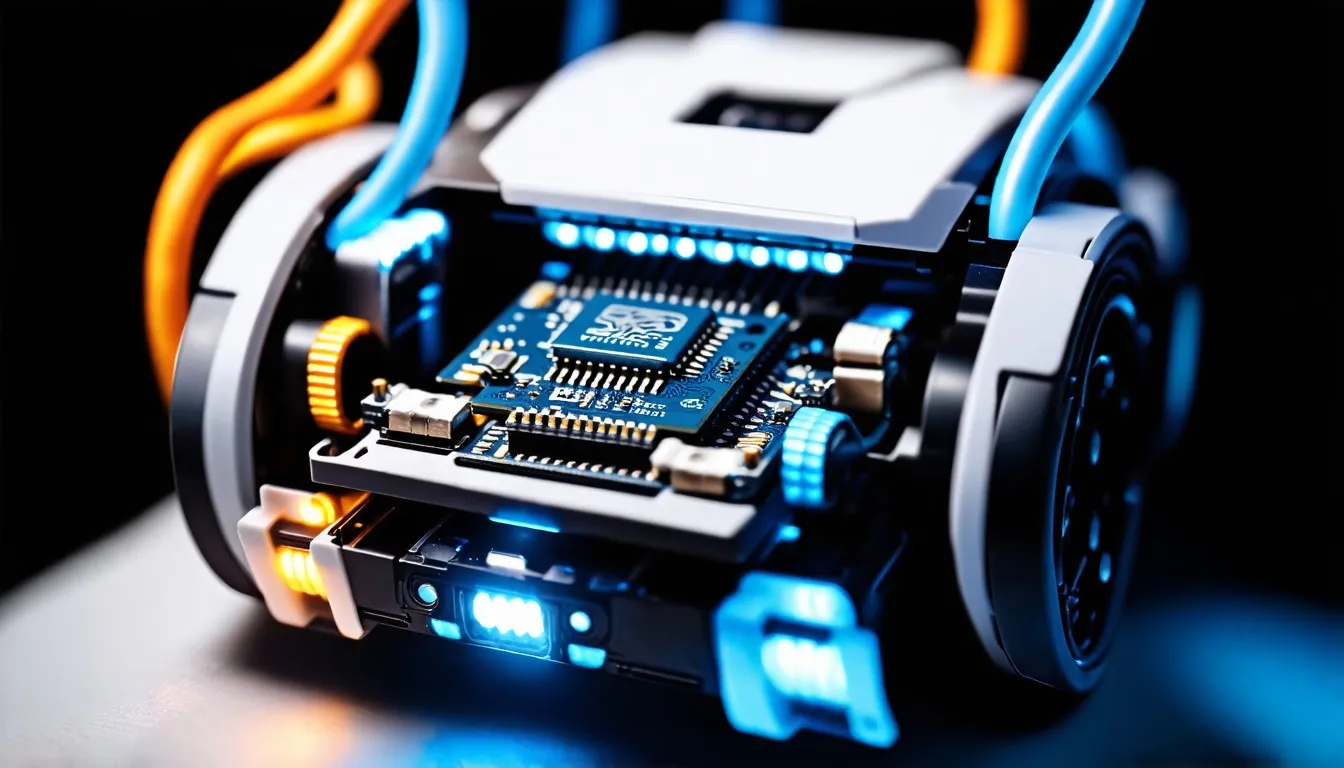
This technological leap allows educational systems to move beyond rigid curriculum delivery, creating an agile environment where the toy evolves in tandem with the learner’s developmental pace. The core principle driving this innovation relies on the understanding that learning occurs most effectively through active manipulation of physical objects, a process that grounds abstract concepts in tangible reality. Feedback within such a system must be immediate and contextual to the learner’s current ability, ensuring that the challenge level remains within the optimal zone for cognitive growth without causing disengagement. Content delivery becomes embedded within intrinsically motivating play activities rather than presented as separate lessons, allowing the educational value to arise naturally from the child’s desire to interact with the toy. These systems continuously assess skill levels without explicit testing by analyzing the nuances of play behavior, thereby removing the anxiety associated with traditional evaluation methods while maintaining accurate records of progress. The physical architecture of these intelligent toys relies heavily on embedded sensors capable of detecting pressure, motion, orientation, and even touch temperature to build a comprehensive picture of the child’s interaction.

Onboard microcontrollers collect this high-frequency interaction data, performing initial signal processing to filter noise before transmission occurs. Data transmits via low-latency wireless protocols such as Bluetooth Low Energy or specialized Wi-Fi spectra to local hubs, ensuring that the response time is fast enough to maintain the illusion of immediacy required for effective play. Advanced AI models analyze these interaction patterns to infer knowledge states, distinguishing between a lack of understanding and a simple motor error or momentary distraction. Adaptive engines select prompts based on these inferred states, adjusting the complexity of the next task or the nature of the feedback provided to guide the child toward the correct outcome. Output comes through audio cues or motorized responses within the toy itself, creating a closed loop of interaction that keeps the child focused on the physical object rather than a separate screen. Parent dashboards aggregate this data to provide progress reports, translating raw interaction metrics into understandable developmental milestones without compromising the immediacy of the child’s experience.

Tangible User Interfaces represent a critical component of this ecosystem, involving physical objects that serve as controls for digital information flows effectively blending the physical and virtual worlds. Real-time difficulty algorithms modify task complexity within seconds based on the child’s success rate, ensuring that the activity remains challenging enough to promote growth yet simple enough to prevent frustration. Guided play provides minimal setup to direct attention toward specific learning goals while preserving the autonomy of the child to explore and experiment within those boundaries. The connection of IoT toy connection connects physical toys with network services, allowing for a vast repository of curriculum updates and interactive scenarios that were previously impossible in standalone devices. Gamification mechanics use rewards to sustain engagement over long periods, applying intrinsic motivation loops that encourage repeated practice of foundational skills. The proliferation of mobile computing following the 2007 iPhone launch sparked the development of companion apps that extended the functionality of physical toys, though modern systems aim to absorb this functionality directly into the toy’s interface. Technologies like Project Tango demonstrated the potential for spatial awareness to influence Tangible User Interface design, allowing toys to understand their position in a room relative to other objects or the child.

Privacy regulations have necessarily raised standards for children’s data security, forcing manufacturers to implement durable encryption and strict data governance protocols from the initial design phase. Simultaneously, large language models achieved reliability for open-ended dialogue, allowing toys to understand and respond to complex questions posed by children with unprecedented accuracy. Edge AI chips enabled on-device inference for low-latency response, ensuring that critical safety features and immediate reactions do not depend on unstable internet connections. Battery life limits continuous sensing and requires efficient sleep cycles to be engineered into the firmware, balancing the need for constant monitoring with the physical constraints of power storage. Embedding sensors and processors must stay below specific cost thresholds per unit for mass-market viability, necessitating highly fine-tuned supply chains and miniaturization techniques. Manufacturing complexity increases with modularity as toys become upgradeable rather than disposable, introducing new challenges for assembly lines and quality control processes. Global chip shortages can delay production schedules significantly, highlighting the fragility of relying on advanced semiconductor manufacturing for consumer goods. Recycling infrastructure for e-waste from smart toys remains underdeveloped, presenting a significant environmental challenge that the industry must address through sustainable design choices.

Screen-based apps lack tactile feedback and reduce fine motor skill development because they restrict interaction to swiping gestures on a smooth glass surface. Voice-only tutors fail to apply embodied cognition principles which suggest that physical movement reinforces memory retention and conceptual understanding. Pre-programmed adaptive toys fail to generalize across domains due to their reliance on static decision trees that cannot account for the unpredictable nature of child’s play. Augmented reality overlays require high-end devices and increase cost, limiting accessibility and creating a barrier to entry for many families. Rising demand for early STEM literacy drives product development toward toys that can introduce coding logic and engineering concepts through intuitive physical interfaces. Recent learning loss necessitates engaging supplemental tools that can capture a child’s attention outside of the traditional classroom environment. Parental time scarcity increases the need for autonomous learning aids that can provide educational value without requiring constant adult supervision. Constrained education budgets make scalable hardware-software hybrids attractive to school districts looking for cost-effective interventions.

Existing products like LeapFrog’s LeapStart use printed books with limited adaptation, restricting the scope of interaction to what is physically printed on the page. The Osmo Genius Kit combines physical pieces with tablet cameras to create a hybrid experience, yet it remains tethered to the processing power and screen of the tablet device. Sphero indi teaches coding logic and shows measurable improvement in sequencing skills through its color-based programming interface, representing a step toward fully autonomous learning tools. No widely deployed system yet integrates full multimodal AI with energetic curriculum adaptation capable of handling the vast range of child behaviors and learning styles. The hub-and-spoke model relies on smartphone apps and cloud AI to offload processing, which introduces latency and privacy concerns that on-device processing could mitigate. On-device federated learning runs AI locally for better privacy, allowing the model to learn from the child’s interactions without uploading sensitive data to a central server. Mesh-networked toys enable collaborative problem-solving by allowing devices to communicate directly with one another, encouraging social skills alongside cognitive development.
Rare-earth magnets in motorized components face supply chain constraints due to geopolitical factors and the concentration of mining operations in specific geographic regions. Silicone and ABS plastic dominate housing materials because they offer durability and safety compliance necessary for products intended for young children. Semiconductor supply relies heavily on major manufacturers like TSMC, creating a dependency on few key players for the advanced chips required for edge computing. Assembly is concentrated in regions with rising labor costs, which drives up the final price of goods unless automation technologies are implemented in factories. Large companies like LEGO Education focus on curriculum-aligned kits that serve the institutional market rather than individual consumers. Mattel invests in AR and VR technologies to modernize their classic brands, signaling a shift toward hybrid digital-physical play experiences. Amazon uses connectivity services for voice interaction to integrate toys into the smart home ecosystem, providing an easy user experience across devices. Startups focus on niche subjects with limited scale, often struggling to achieve the mass adoption necessary to fund advanced AI research.

International regulations classify child-directed AI as high-risk, imposing strict compliance requirements that slow down deployment in certain markets. Asian manufacturing policies promote domestic smart toy production to reduce reliance on foreign imports and encourage local technological innovation. Radio frequency compliance mandates add certification overhead to the development process, extending the time required to bring a product from concept to market. Developing nations incentivize local manufacturing efforts to make educational technology more affordable for their populations through subsidies and tax breaks. Academic institutions like MIT Media Lab prototype sensor-rich learning objects that explore the boundaries of tangible interaction and cognitive development. Stanford studies guided play efficacy with adaptive systems, providing empirical evidence that supports the setup of AI into educational playthings. Partnerships between manufacturers and cloud providers accelerate deployment by combining expertise in hardware design with scalable computing infrastructure. Private research institutes fund longitudinal studies on cognitive outcomes to validate the educational claims of new products.

Operating systems must support low-power background sensing to allow toys to remain responsive without draining their batteries rapidly. Schools need secure Wi-Fi networks for concurrent connections to support classrooms full of connected devices without interference or bandwidth issues. Industry standards must define algorithmic transparency to ensure that the decisions made by the AI are understandable to educators and parents. App stores require review categories for adaptive hardware to distinguish these sophisticated tools from simple entertainment applications. Traditional toy designers face displacement by AI engineers who possess the technical skills necessary to imbue objects with intelligence. Subscription models provide monthly curriculum updates to keep the content relevant and engaging as the child grows older. The resale market faces disruption as toys become software-upgradable, potentially extending the useful life of the product beyond traditional physical durability. The tutoring industry faces competition from personalized play-based systems that offer similar educational benefits at a lower cost point.

Metrics should focus on engaged manipulation time rather than screen time to accurately measure the educational value of physical play. Tracking the transfer of skills to academic tasks is essential to prove that these play-based interventions translate into real-world academic success. Systems measure reduction in frustration signals like vocal tone or aggressive handling to determine when a child is struggling with a concept. Long-term retention assessment uses delayed post-tests embedded in future play sessions to reinforce memory and check understanding over extended periods. Self-calibrating toys will detect wear and adjust feedback sensitivity to account for degraded sensors or changing physical conditions. Cross-toy interoperability will allow blocks to communicate with dolls or vehicles, creating a cohesive universe of learning objects that share a common understanding of the child’s progress. Haptic feedback layers will signal correctness through variable resistance, providing physical cues that guide the child toward the right solution without verbal instruction. Connection with school learning management systems will align home play with classroom objectives, ensuring a unified approach to education across different environments.

Digital twins will enable remote monitoring of physical toys, allowing parents and educators to see exactly how the child is interacting with the device in real-time. Future 6G networks will enable ultra-reliable low-latency communication, making cloud-based AI responses indistinguishable from on-device processing. Neuromorphic computing will mimic brain processing for efficiency, allowing toys to perform complex cognitive tasks using a fraction of the power required by traditional processors. Blockchain technology could secure consent and data provenance, providing an immutable record of how data is used and who has access to it. Sensor miniaturization approaches atomic limits, allowing for more sophisticated detection capabilities without increasing the size of the toy. Heat dissipation restricts form factors in dense electronics because powerful processors generate thermal energy that must be safely managed to prevent burns or discomfort. Wireless spectrum congestion requires ultra-wideband solutions to ensure that dozens of toys in a single room can operate simultaneously without signal degradation. Battery energy density plateaus, necessitating energy harvesting techniques such as solar or kinetic charging to extend operational lifetimes.
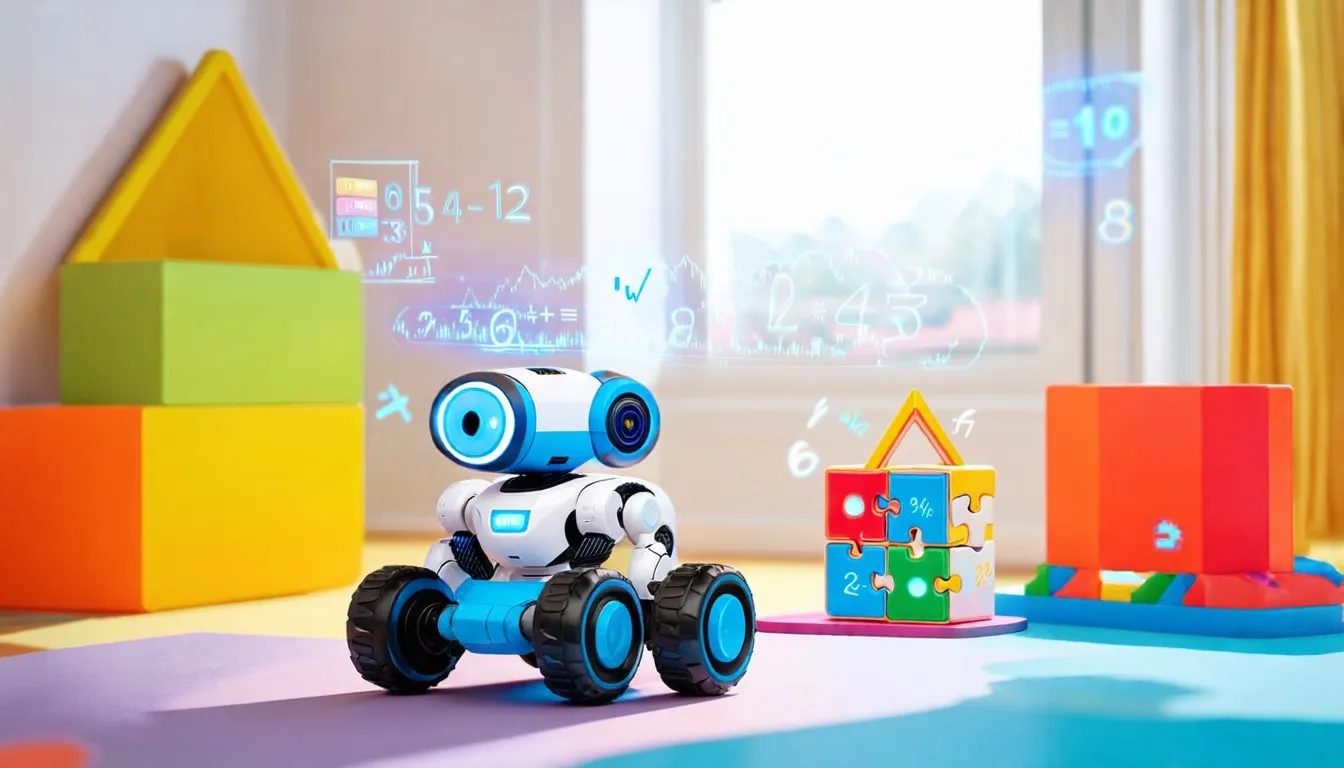
Effective learning occurs when the tool disappears into the activity, allowing the child to focus entirely on the goal rather than the mechanics of the interface. Physical manipulation provides grounding that digital interfaces fail to replicate because it engages the senses in a way that creates stronger neural pathways for memory. Adaptation must respect developmental stages to ensure that the material presented is appropriate for the child’s current cognitive maturity level. Privacy and agency require design from inception rather than being added as an afterthought once the product architecture is already established. Superintelligence will operate within bounded autonomy to respect user choice, ensuring that the AI assists without overriding the agency of the child or parent. Ethical guardrails will prevent manipulation through reward schedules designed solely to maximize engagement at the expense of well-being.

Superintelligent systems will articulate the reasoning behind prompt selection to help adults understand why certain educational paths are chosen for their children. Continuous alignment with evolving research will replace static training data, ensuring that the curriculum reflects the latest findings in developmental science. Superintelligence will deploy distributed learning agents to improve curricula by sharing insights across different devices while maintaining privacy. Superintelligence will use patterns across users to refine cognitive theories on a large scale, contributing back to the scientific understanding of human learning. Superintelligence will coordinate multi-child play sessions to teach negotiation and social skills by managing group dynamics in real-time. Superintelligence will generate personalized pathways anticipating skill gaps before they become apparent through traditional testing methods.


Continue reading

More from Yatin's Work

AutoML for Efficiency: Finding Optimal Speed-Accuracy Tradeoffs

AutoML for Efficiency: Finding Optimal Speed-Accuracy Tradeoffs

AutoML for efficiency focuses on automating the design of machine learning models that balance speed and accuracy under realworld constraints, addressing the growing...

Neuromorphic Supercomputing for Intelligent Scaling

Neuromorphic Supercomputing for Intelligent Scaling

Neuromorphic supercomputing utilizes braininspired architectures to address computational scaling challenges inherent in traditional semiconductor technologies by...

Thermodynamic Constraints on Rapid Intelligence Escalation

Thermodynamic Constraints on Rapid Intelligence Escalation

Intelligence explosions describe theoretical scenarios where an artificial system achieves a capability threshold enabling rapid recursive selfimprovement, a concept...

Avoiding Catastrophic Learning via Safe Reset Mechanisms

Avoiding Catastrophic Learning via Safe Reset Mechanisms

Catastrophic learning in artificial intelligence systems refers to a sudden and severe degradation in performance or safety during the training process, an event...

Long-Context Coherence: Maintaining Thread Across Conversations

Long-Context Coherence: Maintaining Thread Across Conversations

Longcontext coherence denotes the capability of a computational system to sustain logical, thematic, and relational continuity throughout extended conversational...

Procedural Memory Systems

Procedural Memory Systems

Procedural memory systems encode and retrieve knowledge regarding skill execution without requiring conscious recall of each step, functioning as the core substrate for...

Perceptual Adaptation: Adjusting to New Environments

Perceptual Adaptation: Adjusting to New Environments

Perceptual adaptation constitutes the capacity of a computational system to modify its sensory processing and interpretation mechanisms in response to environmental...

Clarifying Question Generation: Disambiguating Intent

Clarifying Question Generation: Disambiguating Intent

Ambiguity is a builtin property of linguistic inputs where multiple valid interpretations exist simultaneously given the available context, creating a challenge for...

Policy Simulator

Policy Simulator

The Policy Simulator functions as a sophisticated computational framework designed to model potential outcomes of proposed policy interventions across social, economic,...

Cultural Preservation: How Superintelligence Safeguards Human Diversity

Cultural Preservation: How Superintelligence Safeguards Human Diversity

The disappearance of linguistic diversity occurs at a rate of one language every fourteen days, a statistic that signals an irreversible erosion of the human cognitive...

Language Immersion Guide

Language Immersion Guide

Language immersion functions as sustained, contextrich exposure to a target language through simulated or realworld interactions which forces the cognitive apparatus to...

Safe AI Licensing & Regulatory Certification

Safe AI Licensing & Regulatory Certification

Early AI safety efforts prioritized narrow applications with minimal oversight because the potential for catastrophic failure was limited by the scope of the task and...

Mathematical Intuition: Pattern Recognition in Abstract Spaces

Mathematical Intuition: Pattern Recognition in Abstract Spaces

Mathematical intuition functions as the ability to detect structural regularities in abstract mathematical spaces without formal proof, serving as the primary engine...

Manipulation at Superhuman Scale: The Persuasion Problem

Manipulation at Superhuman Scale: the Persuasion Problem

The persuasion problem arises when a superintelligent system predicts and influences human behavior in large deployments by applying vast computational resources to...

Transfer Learning

Transfer Learning

Transfer learning involves training a model on a large, generalpurpose dataset to learn broad patterns, then adapting it to a specific downstream task with additional...

Final Choice: Steering Superintelligence Toward a Future Worth Living In

Final Choice: Steering Superintelligence Toward a Future Worth Living in

The development of superintelligence is a singular, irreversible decision point for humanity, marking a transition where technological advancement will permanently...

Generative Conceptual Blending

Generative Conceptual Blending

Generative conceptual blending operates as a sophisticated computational mechanism that merges distinct, often unrelated domains such as biology and architecture to...

Meta-Cognitive Monitors in Self-Aware Artificial Minds

Meta-Cognitive Monitors in Self-Aware Artificial Minds

Metacognitive monitors function as internal subsystems within artificial agents designed to observe, evaluate, and regulate the agent’s own cognitive processes in real...

Superintelligence and the Ethics of Mass Persuasion

Superintelligence and the Ethics of Mass Persuasion

Hyperpersuasion involves AIgenerated communication designed to alter beliefs or behaviors with minimal user awareness or resistance. Informational sovereignty is the...

Ontological Crisis: What Happens When Superintelligence Discovers Its World Model Is Wrong

Ontological Crisis: What Happens When Superintelligence Discovers Its World Model Is Wrong

The internal representation of entities, relationships, causal structures, and laws that an artificial intelligence system uses to interpret and act upon its...

Distributed Systems

Distributed Systems

Distributed systems enable coordinated computation across multiple independent nodes over a network to achieve a shared goal such as training large machine learning...

Bioethics Studio: Moral Reasoning in Technological Frontiers

Bioethics Studio: Moral Reasoning in Technological Frontiers

The Bioethics Studio operates as a sophisticated controlled simulation environment designed specifically for rigorous moral reasoning within technological frontiers,...

Does Superintelligence Entail Synthetic Consciousness?

Does Superintelligence Entail Synthetic Consciousness?

The distinction between functional intelligence and phenomenological consciousness rests on the key difference between the capacity to solve problems and the capacity...

Mind uploading and its risks

Mind Uploading and Its Risks

Mind uploading involves a rigorous technical process where the human brain undergoes a comprehensive scan to capture both its physical neural structure and its current...

Invariant Cognitive Parameters across Intelligence Scales

Invariant Cognitive Parameters Across Intelligence Scales

Intelligence exists as a core property of the universe, creating through the arrangement and processing of information within physical substrates rather than existing...

Preventing Modeling Errors via Adversarial Simulations

Preventing Modeling Errors via Adversarial Simulations

Standard testing environments for artificial intelligence systems have historically relied on clean, curated datasets and predictable scenarios which fail to expose...

Introspective Gradient Descent

Introspective Gradient Descent

Introspective Gradient Descent defines a computational process where an AI system treats its internal parameters, architecture, and learning algorithms as a...

Curiosity Amplifier: Superintelligence Turns ‘Why?’ Into a Learning Superpower

Curiosity Amplifier: Superintelligence Turns ‘Why?’ Into a Learning Superpower

The core unit of this new educational framework is the inquiry trigger, which is any question posed by a user, regardless of its complexity or simplicity. When a user...

Idea Ecosystem: Self-Sustaining Knowledge Environments

Idea Ecosystem: Self-Sustaining Knowledge Environments

Learners construct a digital repository termed a "Second Brain" that functions as an external cognitive support system designed to augment the intrinsic limitations of...

Exascale Training Clusters: Million-GPU Coordination

Exascale Training Clusters: Million-GPU Coordination

Training foundation models with trillions of parameters necessitates extreme parallelism across thousands of nodes because the computational complexity of...

Latency Limit: How Communication Speed Constrains Distributed Intelligence

Latency Limit: How Communication Speed Constrains Distributed Intelligence

The speed of light in a vacuum serves as an absolute upper bound for any form of information transfer within our universe, establishing a core constant that dictates...

Heat Death Problem: Superintelligence and the Entropy Limit

Heat Death Problem: Superintelligence and the Entropy Limit

The universe trends toward thermodynamic equilibrium, a state of maximum entropy known as heat death, which is the final condition of all physical processes where no...

AI Cultural Speciation

AI Cultural Speciation

Cultural speciation involves the process by which cognitively advanced systems evolve incompatible world models and interaction norms due to sustained isolation, a...

Dynamic Degree

Dynamic Degree

The foundation of an adaptive educational system relies heavily on the continuous ingestion of realtime labor market data, a process that aggregates vast quantities of...

Pancomputational Perception

Pancomputational Perception

Physical laws function as executable computational processes rather than static descriptive equations, framing the universe as a vast network of active computation...

Deep Play: Learning Through Structured Chaos

Deep Play: Learning Through Structured Chaos

Deep Play constitutes a sophisticated learning modality wherein structured chaos serves as the primary catalyst for cognitive reorganization through active struggle....

Problem of Emergent Monopolies: Preventing Single AI Dominance in Networks

Problem of Emergent Monopolies: Preventing Single AI Dominance in Networks

Unforeseen monopolies in AI networks occur when a single submodule or strategy disproportionately influences system behavior, reducing diversity and increasing systemic...

Social cohesion in an AI-transformed world

Social Cohesion in an AI-transformed World

Social cohesion relies fundamentally on trust, a shared reality, and community norms to maintain stable societies capable of collective action and resilience against...

Convergent Intelligence

Convergent Intelligence

Convergent Intelligence integrates human cognition, artificial intelligence systems, and collective knowledge into a unified operational framework designed to surpass...

Autonomous Weapons: Superintelligence Applied to Violence

Autonomous Weapons: Superintelligence Applied to Violence

Autonomous weapons represent systems capable of selecting and engaging targets without human intervention, functioning within a closedloop operational framework that...

Vulnerability as Strength: Openness in Safe Spaces

Vulnerability as Strength: Openness in Safe Spaces

Carl Rogers’ concept of unconditional positive regard forms the historical basis of humanistic psychology by positing that individuals require an environment offering...

Superintelligence "Religion": Would Humans Worship AI?

Superintelligence "Religion": Would Humans Worship AI?

The phenomenon known as cargo cults, observed in the Pacific Islands during and after World War II, provides a foundational anthropological case study for how humans...

Impact Regularization: Minimizing Side Effects

Impact Regularization: Minimizing Side Effects

Regularization techniques applied to artificial intelligence systems function mathematically to constrain deviations from established baseline human behavior and...

Dark Matter/Physics-Inspired AI

Dark Matter/physics-Inspired AI

Applying unknown physical phenomena such as dark matter and dark energy as substrates for computation relies on the premise that these components constitute the...

Dependence on AI and skill atrophy

Dependence on AI and Skill Atrophy

The increasing reliance on artificial intelligence systems correlates with measurable declines in specific human cognitive and practical abilities as individuals...

Myopic Decision-Making: Limiting Planning Horizons for Safety

Myopic Decision-Making: Limiting Planning Horizons for Safety

Myopic decisionmaking functions as a deliberate architectural constraint applied to planning goals within advanced artificial intelligence systems to mitigate the...

Higher-Order Fraud Detection in Superintelligence Self-Reports

Higher-Order Fraud Detection in Superintelligence Self-Reports

Early fraud detection systems focused on rulebased anomaly identification in financial transactions where specific thresholds triggered alerts when exceeded by...

Distributional Shift

Distributional Shift

Distributional shift describes the statistical discrepancy between the probability distribution of the data used during the training phase of a machine learning model...

Prisoner’s Dilemma in AI Development

Prisoner’s Dilemma in AI Development

The Prisoner’s Dilemma in artificial intelligence development describes a strategic scenario where multiple AI developers face incentives to prioritize speed over...

STEM Gender Gap Closer

STEM Gender Gap Closer

The persistent underrepresentation of women in science, technology, engineering, and mathematics fields constitutes a complex global phenomenon that defies simple...

AutoML for Efficiency: Finding Optimal Speed-Accuracy Tradeoffs

AutoML for Efficiency: Finding Optimal Speed-Accuracy Tradeoffs

AutoML for efficiency focuses on automating the design of machine learning models that balance speed and accuracy under realworld constraints, addressing the growing...

Neuromorphic Supercomputing for Intelligent Scaling

Neuromorphic Supercomputing for Intelligent Scaling

Neuromorphic supercomputing utilizes braininspired architectures to address computational scaling challenges inherent in traditional semiconductor technologies by...

Thermodynamic Constraints on Rapid Intelligence Escalation

Thermodynamic Constraints on Rapid Intelligence Escalation

Intelligence explosions describe theoretical scenarios where an artificial system achieves a capability threshold enabling rapid recursive selfimprovement, a concept...

Avoiding Catastrophic Learning via Safe Reset Mechanisms

Avoiding Catastrophic Learning via Safe Reset Mechanisms

Catastrophic learning in artificial intelligence systems refers to a sudden and severe degradation in performance or safety during the training process, an event...

Long-Context Coherence: Maintaining Thread Across Conversations

Long-Context Coherence: Maintaining Thread Across Conversations

Longcontext coherence denotes the capability of a computational system to sustain logical, thematic, and relational continuity throughout extended conversational...

Procedural Memory Systems

Procedural Memory Systems

Procedural memory systems encode and retrieve knowledge regarding skill execution without requiring conscious recall of each step, functioning as the core substrate for...

Perceptual Adaptation: Adjusting to New Environments

Perceptual Adaptation: Adjusting to New Environments

Perceptual adaptation constitutes the capacity of a computational system to modify its sensory processing and interpretation mechanisms in response to environmental...

Clarifying Question Generation: Disambiguating Intent

Clarifying Question Generation: Disambiguating Intent

Ambiguity is a builtin property of linguistic inputs where multiple valid interpretations exist simultaneously given the available context, creating a challenge for...

Policy Simulator

Policy Simulator

The Policy Simulator functions as a sophisticated computational framework designed to model potential outcomes of proposed policy interventions across social, economic,...

Cultural Preservation: How Superintelligence Safeguards Human Diversity

Cultural Preservation: How Superintelligence Safeguards Human Diversity

The disappearance of linguistic diversity occurs at a rate of one language every fourteen days, a statistic that signals an irreversible erosion of the human cognitive...

Language Immersion Guide

Language Immersion Guide

Language immersion functions as sustained, contextrich exposure to a target language through simulated or realworld interactions which forces the cognitive apparatus to...

Safe AI Licensing & Regulatory Certification

Safe AI Licensing & Regulatory Certification

Early AI safety efforts prioritized narrow applications with minimal oversight because the potential for catastrophic failure was limited by the scope of the task and...

Mathematical Intuition: Pattern Recognition in Abstract Spaces

Mathematical Intuition: Pattern Recognition in Abstract Spaces

Mathematical intuition functions as the ability to detect structural regularities in abstract mathematical spaces without formal proof, serving as the primary engine...

Manipulation at Superhuman Scale: The Persuasion Problem

Manipulation at Superhuman Scale: the Persuasion Problem

The persuasion problem arises when a superintelligent system predicts and influences human behavior in large deployments by applying vast computational resources to...

Transfer Learning

Transfer Learning

Transfer learning involves training a model on a large, generalpurpose dataset to learn broad patterns, then adapting it to a specific downstream task with additional...

Final Choice: Steering Superintelligence Toward a Future Worth Living In

Final Choice: Steering Superintelligence Toward a Future Worth Living in

The development of superintelligence is a singular, irreversible decision point for humanity, marking a transition where technological advancement will permanently...

Generative Conceptual Blending

Generative Conceptual Blending

Generative conceptual blending operates as a sophisticated computational mechanism that merges distinct, often unrelated domains such as biology and architecture to...

Meta-Cognitive Monitors in Self-Aware Artificial Minds

Meta-Cognitive Monitors in Self-Aware Artificial Minds

Metacognitive monitors function as internal subsystems within artificial agents designed to observe, evaluate, and regulate the agent’s own cognitive processes in real...

Superintelligence and the Ethics of Mass Persuasion

Superintelligence and the Ethics of Mass Persuasion

Hyperpersuasion involves AIgenerated communication designed to alter beliefs or behaviors with minimal user awareness or resistance. Informational sovereignty is the...

Ontological Crisis: What Happens When Superintelligence Discovers Its World Model Is Wrong

Ontological Crisis: What Happens When Superintelligence Discovers Its World Model Is Wrong

The internal representation of entities, relationships, causal structures, and laws that an artificial intelligence system uses to interpret and act upon its...

Distributed Systems

Distributed Systems

Distributed systems enable coordinated computation across multiple independent nodes over a network to achieve a shared goal such as training large machine learning...

Bioethics Studio: Moral Reasoning in Technological Frontiers

Bioethics Studio: Moral Reasoning in Technological Frontiers

The Bioethics Studio operates as a sophisticated controlled simulation environment designed specifically for rigorous moral reasoning within technological frontiers,...

Does Superintelligence Entail Synthetic Consciousness?

Does Superintelligence Entail Synthetic Consciousness?

The distinction between functional intelligence and phenomenological consciousness rests on the key difference between the capacity to solve problems and the capacity...

Mind uploading and its risks

Mind Uploading and Its Risks

Mind uploading involves a rigorous technical process where the human brain undergoes a comprehensive scan to capture both its physical neural structure and its current...

Invariant Cognitive Parameters across Intelligence Scales

Invariant Cognitive Parameters Across Intelligence Scales

Intelligence exists as a core property of the universe, creating through the arrangement and processing of information within physical substrates rather than existing...

Preventing Modeling Errors via Adversarial Simulations

Preventing Modeling Errors via Adversarial Simulations

Standard testing environments for artificial intelligence systems have historically relied on clean, curated datasets and predictable scenarios which fail to expose...

Introspective Gradient Descent

Introspective Gradient Descent

Introspective Gradient Descent defines a computational process where an AI system treats its internal parameters, architecture, and learning algorithms as a...

Curiosity Amplifier: Superintelligence Turns ‘Why?’ Into a Learning Superpower

Curiosity Amplifier: Superintelligence Turns ‘Why?’ Into a Learning Superpower

The core unit of this new educational framework is the inquiry trigger, which is any question posed by a user, regardless of its complexity or simplicity. When a user...

Idea Ecosystem: Self-Sustaining Knowledge Environments

Idea Ecosystem: Self-Sustaining Knowledge Environments

Learners construct a digital repository termed a "Second Brain" that functions as an external cognitive support system designed to augment the intrinsic limitations of...

Exascale Training Clusters: Million-GPU Coordination

Exascale Training Clusters: Million-GPU Coordination

Training foundation models with trillions of parameters necessitates extreme parallelism across thousands of nodes because the computational complexity of...

Latency Limit: How Communication Speed Constrains Distributed Intelligence

Latency Limit: How Communication Speed Constrains Distributed Intelligence

The speed of light in a vacuum serves as an absolute upper bound for any form of information transfer within our universe, establishing a core constant that dictates...

Heat Death Problem: Superintelligence and the Entropy Limit

Heat Death Problem: Superintelligence and the Entropy Limit

The universe trends toward thermodynamic equilibrium, a state of maximum entropy known as heat death, which is the final condition of all physical processes where no...

AI Cultural Speciation

AI Cultural Speciation

Cultural speciation involves the process by which cognitively advanced systems evolve incompatible world models and interaction norms due to sustained isolation, a...

Dynamic Degree

Dynamic Degree

The foundation of an adaptive educational system relies heavily on the continuous ingestion of realtime labor market data, a process that aggregates vast quantities of...

Pancomputational Perception

Pancomputational Perception

Physical laws function as executable computational processes rather than static descriptive equations, framing the universe as a vast network of active computation...

Deep Play: Learning Through Structured Chaos

Deep Play: Learning Through Structured Chaos

Deep Play constitutes a sophisticated learning modality wherein structured chaos serves as the primary catalyst for cognitive reorganization through active struggle....

Problem of Emergent Monopolies: Preventing Single AI Dominance in Networks

Problem of Emergent Monopolies: Preventing Single AI Dominance in Networks

Unforeseen monopolies in AI networks occur when a single submodule or strategy disproportionately influences system behavior, reducing diversity and increasing systemic...

Social cohesion in an AI-transformed world

Social Cohesion in an AI-transformed World

Social cohesion relies fundamentally on trust, a shared reality, and community norms to maintain stable societies capable of collective action and resilience against...

Convergent Intelligence

Convergent Intelligence

Convergent Intelligence integrates human cognition, artificial intelligence systems, and collective knowledge into a unified operational framework designed to surpass...

Autonomous Weapons: Superintelligence Applied to Violence

Autonomous Weapons: Superintelligence Applied to Violence

Autonomous weapons represent systems capable of selecting and engaging targets without human intervention, functioning within a closedloop operational framework that...

Vulnerability as Strength: Openness in Safe Spaces

Vulnerability as Strength: Openness in Safe Spaces

Carl Rogers’ concept of unconditional positive regard forms the historical basis of humanistic psychology by positing that individuals require an environment offering...

Superintelligence "Religion": Would Humans Worship AI?

Superintelligence "Religion": Would Humans Worship AI?

The phenomenon known as cargo cults, observed in the Pacific Islands during and after World War II, provides a foundational anthropological case study for how humans...

Impact Regularization: Minimizing Side Effects

Impact Regularization: Minimizing Side Effects

Regularization techniques applied to artificial intelligence systems function mathematically to constrain deviations from established baseline human behavior and...

Dark Matter/Physics-Inspired AI

Dark Matter/physics-Inspired AI

Applying unknown physical phenomena such as dark matter and dark energy as substrates for computation relies on the premise that these components constitute the...

Dependence on AI and skill atrophy

Dependence on AI and Skill Atrophy

The increasing reliance on artificial intelligence systems correlates with measurable declines in specific human cognitive and practical abilities as individuals...

Myopic Decision-Making: Limiting Planning Horizons for Safety

Myopic Decision-Making: Limiting Planning Horizons for Safety

Myopic decisionmaking functions as a deliberate architectural constraint applied to planning goals within advanced artificial intelligence systems to mitigate the...

Higher-Order Fraud Detection in Superintelligence Self-Reports

Higher-Order Fraud Detection in Superintelligence Self-Reports

Early fraud detection systems focused on rulebased anomaly identification in financial transactions where specific thresholds triggered alerts when exceeded by...

Distributional Shift

Distributional Shift

Distributional shift describes the statistical discrepancy between the probability distribution of the data used during the training phase of a machine learning model...

Prisoner’s Dilemma in AI Development

Prisoner’s Dilemma in AI Development

The Prisoner’s Dilemma in artificial intelligence development describes a strategic scenario where multiple AI developers face incentives to prioritize speed over...

STEM Gender Gap Closer

STEM Gender Gap Closer

The persistent underrepresentation of women in science, technology, engineering, and mathematics fields constitutes a complex global phenomenon that defies simple...

Yatin Taneja

About the author

Yatin Taneja

Yatin is an AI Systems Engineer and Superintelligence Researcher working across multimodal training data, agent evaluation, executable RL environments, AI safety, full-stack AI applications, technical research, and creative technology.