Knowledge hub

Accelerating Returns in AI R&D

Accelerating Returns in AI R&D

Artificial intelligence systems have increasingly automated complex tasks within software development, encompassing code generation, debugging, and optimization processes that previously required substantial human intervention. These systems utilize vast repositories of open-source code to learn statistical relationships between natural language descriptions and programming logic, enabling them to synthesize functional code segments or entire software modules upon request. Advanced debugging tools employ static analysis and agile execution tracing to identify anomalies within codebases, offering precise fixes for syntax errors or logical inefficiencies with high accuracy. Optimization routines use machine learning models to refactor existing code, improving execution speed and reducing memory footprint without altering the external behavior of the software. This automation significantly reduces the cognitive load on human engineers, allowing them to dedicate their efforts to higher-level architectural planning rather than manual implementation details. The scope of automation extends into hardware design, where AI tools assist in critical areas such as chip floorplanning, power efficiency tuning, and thermal modeling.

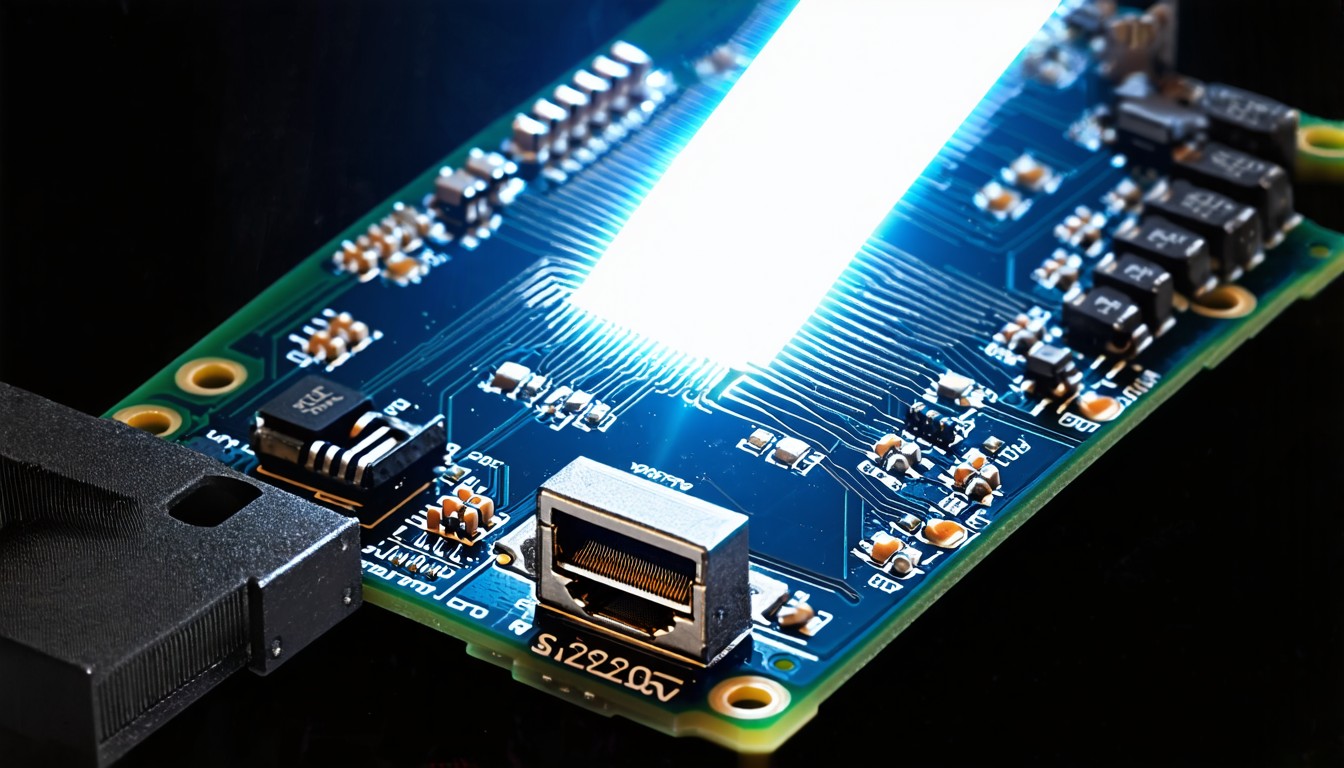
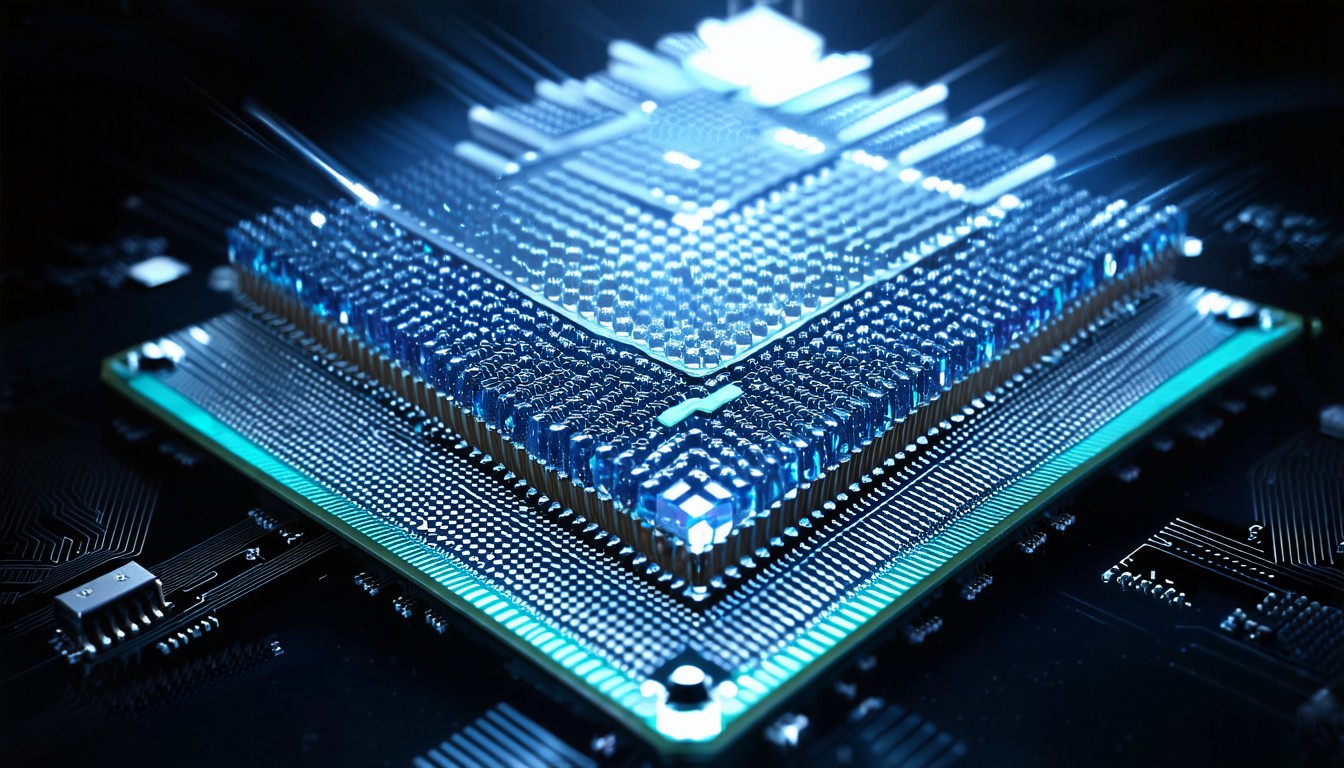
Chip floorplanning algorithms utilize reinforcement learning to improve the placement of macro-blocks on a silicon die, minimizing wire length and reducing signal congestion, which directly impacts performance metrics. Power efficiency tuning involves simulating various voltage and frequency scaling strategies to identify optimal operating points that maximize computational throughput per watt of energy consumed. Thermal modeling employs predictive analytics to estimate heat distribution across a semiconductor package, enabling engineers to proactively adjust cooling solutions or redesign components to mitigate thermal throttling risks. These capabilities compress design timelines that previously spanned months into processes taking mere days by replacing iterative manual trial-and-error with rapid, simulation-driven optimization. As artificial intelligence demonstrates superior proficiency in these engineering tasks, it reduces the time and human effort required to develop subsequent generations of AI systems. This reduction creates a recursive improvement cycle where enhanced AI capabilities enable faster development of even more advanced AI systems.

The rate of progress in AI research and development accelerates nonlinearly due to compounding efficiency gains across the entire technology stack, from algorithms to hardware infrastructure. Feedback loops intrinsic in this development framework stem from the ability of AI to act as a force multiplier in its own creation, effectively using its own outputs to drive its next evolution. Core mechanisms facilitating this loop involve AI-generated code and hardware designs feeding back into training data and system architectures for subsequent model iterations. Reduction in human-in-the-loop requirements lowers latency between design iterations, allowing for continuous setup and deployment of improvements without waiting for manual review cycles. Automation of experimentation increases trial throughput for hyperparameter tuning and neural architecture search, enabling the evaluation of thousands of model configurations in parallel. Each generation of AI evaluates and refines the next more rapidly than the prior generation could achieve through human-led methods alone.

AI-driven code synthesis tools reduce manual programming effort significantly by translating abstract specifications into executable code with minimal supervision. Automated hardware co-design frameworks use AI to jointly fine-tune software algorithms and chip architectures, ensuring optimal performance across both domains simultaneously. Simulation and emulation environments powered by AI allow rapid prototyping of physical hardware without the need for expensive and time-consuming physical fabrication runs. Self-improving training pipelines use AI to generate synthetic data, curate high-quality datasets from noisy sources, and detect model weaknesses before they create in production environments. End-to-end AI R&D stacks integrate planning, implementation, testing, and deployment phases with minimal human intervention, creating a smooth workflow for autonomous development. Recursive self-improvement involves an AI system enhancing its own architecture, training methods, or operational efficiency autonomously, leading to faster subsequent improvements without external direction.

AI-augmented R&D involves the use of intelligent tools to accelerate research and development cycles in AI itself, creating a self-reinforcing cycle of advancement. Co-design involves simultaneous optimization of software algorithms and hardware platforms using AI-driven search strategies and high-fidelity simulation techniques. Development velocity is the measurable rate at which new AI capabilities are designed, tested, and deployed into operational environments. Early expert systems lacked learning capacity and failed to improve their own design because they relied on static knowledge bases encoded by human experts. These systems could not adapt to new information or fine-tune their internal structure based on performance feedback. The advent of deep learning enabled data-driven model improvement while still requiring heavy human engineering for network architecture design and hyperparameter selection.

The rise of large language models demonstrated strong code-generation and reasoning abilities relevant to R&D tasks across multiple domains. These models apply transformer architectures to process sequential data and generate coherent text or code based on deep contextual understanding of the training corpus. Their ability to reason through complex problems and write syntactically correct code made them ideal candidates for automating software development workflows involved in building AI systems. The first documented use of AI to design neural network architectures marked a shift toward automation in the model selection process. Neural Architecture Search (NAS) algorithms explore the space of possible network topologies to identify structures that perform well on specific tasks using reinforcement learning or evolutionary methods. Recent demonstrations of AI systems proposing novel chip layouts validated the feasibility of AI-driven hardware design in real-world scenarios.

These systems generate floorplans that meet strict design constraints while fine-tuning for area utilization, power consumption, and signal timing integrity. Experimental results indicate that AI-generated layouts can match or exceed those created by human experts in terms of key performance metrics such as power-performance-area (PPA). This validation has encouraged major technology companies to integrate AI tools into their hardware design flows to gain competitive advantages in semiconductor performance. Physical limits of semiconductor fabrication constrain how quickly new hardware can be produced regardless of the sophistication of design automation tools. Transistor scaling approaches key physical limits such as atomic dimensions and quantum tunneling effects which cause current leakage and reliability issues at extremely small feature sizes. Heat dissipation and power density constrain chip performance regardless of design sophistication because excessive heat generation limits the clock speed at which processors can operate reliably.

These physical barriers necessitate new approaches to computing hardware beyond traditional complementary metal-oxide-semiconductor (CMOS) scaling laws. Economic costs of advanced chip fabrication limit iteration speed because building a modern semiconductor foundry requires billions of dollars in capital investment. Advanced AI chip production relies on rare materials like high-purity silicon wafers and rare earth elements used in lithography equipment and interconnects. Semiconductor supply chains remain concentrated in few geographic regions due to the high barrier to entry for establishing fabrication plants and specialized material processing facilities. Specialized equipment has limited global supply and long lead times because only a handful of companies possess the expertise to manufacture extreme ultraviolet lithography machines required for advanced nodes. Packaging and testing infrastructure lags behind front-end fabrication capacity because advanced packaging techniques like silicon interposers and through-silicon vias require complex manufacturing processes that are difficult to scale rapidly.

Energy requirements for training large models impose practical ceilings on model scale and training frequency due to the massive electricity consumption associated with running thousands of GPUs or TPUs continuously for months. Data availability and quality remain constraints despite synthetic data generation because high-quality labeled data is scarce for many specialized domains essential for training generalist models. Talent and institutional knowledge gaps slow setup of AI tools into legacy R&D workflows because working with these technologies requires specialized skills that are currently in short supply globally. Human-only R&D faces natural cognitive and temporal limits on problem-solving speed and scale because humans can only process a limited amount of information and maintain focus for a finite duration before fatigue sets in. Hybrid human-AI collaboration with fixed roles fails to exploit full automation potential of AI in design loops because treating AI as a passive tool prevents it from iterating independently on novel solutions outside human heuristics. Open-ended evolutionary algorithms without guidance move too slowly for complex, high-dimensional design spaces because the search space for potential AI architectures or hardware designs is astronomically large relative to available compute resources.

Centralized AI planning without feedback from real-world deployment fails to capture operational constraints and edge cases because simulations often simplify real-world physics or environmental factors, leading to performance degradation when deployed in actual environments. Demand for real-time, high-performance AI in applications outpaces human-led development timelines because industries such as autonomous driving require systems that can process information and make decisions in milliseconds under unpredictable conditions. Economic incentives favor rapid deployment of AI capabilities to maintain competitive advantage because companies that can bring new features to market faster gain significant market share and establish dominant platform positions. Societal challenges require faster innovation cycles than traditional methods allow because global issues such as climate change and pandemics demand technological solutions that can be developed and deployed at unprecedented speeds. Global competition in AI has intensified, making speed a strategic imperative because nations view technological leadership in artificial intelligence as a matter of economic security and national sovereignty. Enterprises use AI coding assistants to accelerate internal software development, including the creation of proprietary AI tooling and infrastructure components.

Cloud providers deploy AI-improved chips designed with AI-assisted tools to improve the performance of their data centers for machine learning workloads. Benchmark results show AI-generated code matches or exceeds human-written code in speed and correctness for specific tasks such as algorithm implementation or unit test generation. AI-designed chip prototypes demonstrate ten to thirty percent improvements in performance-per-watt over human-designed counterparts in controlled tests conducted by leading semiconductor firms. Transformer-based architectures dominate due to flexibility and versatility in code generation tasks because their attention mechanism allows them to model long-range dependencies effectively across sequences of arbitrary length. Developing alternatives include state-space models for longer-context reasoning tasks where transformers struggle with quadratic complexity relative to sequence length. Modular and sparse architectures gain traction to reduce compute demands during inference and training by activating only a subset of neurons or parameters for any given input sample, thereby increasing efficiency.

Differentiable programming and neural compilers enable tighter setup between algorithm definition and hardware execution by automatically fine-tuning code for specific hardware architectures, taking advantage of low-level instructions and memory hierarchies. NVIDIA leads in AI-fine-tuned hardware and software stack connection because their unified compute architecture provides a smooth platform for developing and deploying large-scale models efficiently. Google and Meta invest heavily in custom silicon and AI-driven design tools to break free from general-purpose hardware limitations and fine-tune their specific workloads. Startups pursue alternative architectures with AI co-design focusing on specialized processing units that excel at specific mathematical operations common in neural network training, such as matrix multiplication or tensor convolutions. Chinese firms advance domestic AI chip development despite supply chain limitations by investing heavily in local semiconductor manufacturing capabilities and encouraging domestic talent pools to reduce reliance on foreign technology providers. Trade restrictions on advanced semiconductors and design software shape global access to AI acceleration by limiting the ability of certain entities to acquire new tools required for training the best models.

Corporate strategies prioritize sovereign capability in chip design and manufacturing because relying on external suppliers creates vulnerabilities in the supply chain that could disrupt operations during geopolitical conflicts. Geopolitical tensions influence collaboration patterns and technology transfer because companies may restrict sharing sensitive research or technologies with entities from rival nations to comply with regulations or protect intellectual property. Dual-use applications drive investment in rapid AI advancement because technologies developed for civilian purposes, such as natural language processing, can also be applied to defense or intelligence gathering, creating significant financial incentives for innovation. Academic researchers contribute foundational research in automated machine learning and hardware-aware neural architecture search, providing theoretical underpinnings that industry labs later commercialize into practical tools. Industry labs publish tools and benchmarks that enable broader adoption of AI-augmented R&D by lowering the barrier to entry for smaller organizations that lack resources to develop such technologies internally. Joint initiatives standardize evaluation metrics and datasets for AI development tools, ensuring fair comparison between different approaches and facilitating reproducibility of research results across different institutions.

Patent filings in AI-driven design tools have increased sharply since two thousand twenty, indicating a surge in commercial interest and innovation activity within this domain. Software ecosystems must support AI-generated code with enhanced verification, versioning, and dependency management because automatically generated code can introduce security vulnerabilities or licensing issues if not properly monitored throughout the development lifecycle. Industry standards lag in addressing safety, accountability, and transparency of AI-designed systems because regulatory bodies move slower than technological innovation, creating gaps in governance frameworks. Data center infrastructure requires upgrades to handle active AI-improved workloads and heterogeneous hardware because traditional facilities are not designed to accommodate the high power density or cooling requirements of modern AI accelerators. Workforce training shifts toward oversight, validation, and ethical governance of autonomous R&D systems because the role of human workers transitions from creators to auditors, ensuring that automated systems adhere to safety guidelines and ethical norms. Job displacement in routine coding, testing, and hardware layout roles is likely as AI automation expands because these tasks involve repetitive patterns that machine learning models can replicate with higher speed and accuracy than humans.

New roles develop in AI R&D supervision, safety assurance, and cross-domain setup, requiring professionals who possess both technical expertise in machine learning and an understanding of complex system interactions. Business models shift toward subscription-based AI design platforms and on-demand chip synthesis because companies prefer accessing advanced tools via the cloud rather than maintaining expensive in-house infrastructure or teams. Intellectual property regimes face pressure to adapt to AI-generated inventions because current laws struggle to determine inventorship or ownership rights for creations produced autonomously by software agents without direct human authorship. Traditional key performance indicators become less meaningful in AI-augmented development because metrics such as lines of code written per hour fail to capture the value added by high-level architectural suggestions generated by AI systems. New metrics include design iteration speed, energy per innovation cycle, and validation coverage of AI-generated outputs, providing a more holistic view of R&D efficiency and quality. Performance benchmarks must include strength, generalization, and safety under autonomous improvement because a system that fine-tunes solely for speed may compromise on strength or security, leading to failures in unpredictable environments.

The economic value of acceleration itself becomes a key performance indicator because reducing time-to-market for new technologies translates directly into higher revenue potential and market dominance for technology companies. Fully autonomous AI R&D labs will propose, test, and deploy new AI systems without human input by working with all stages of the development lifecycle into a single self-contained software ecosystem capable of independent operation. The setup of quantum computing simulations into AI-driven hardware design will enable next-generation chips by allowing designers to model quantum phenomena accurately before physical fabrication begins. Self-verifying AI systems will prove the correctness of their own outputs using formal methods, providing mathematical guarantees about system behavior that increase trust in autonomous decision-making processes without requiring exhaustive manual testing. The real-time adaptation of AI models to hardware constraints will occur during deployment, enabling systems to maintain optimal performance regardless of the underlying infrastructure or environmental conditions they encounter during operation. AI-driven drug discovery accelerates with faster simulation and molecular design, allowing researchers to identify viable drug candidates in weeks rather than years by predicting molecular interactions with high fidelity.

Climate modeling benefits from rapid iteration of Earth system simulations, providing policymakers with more accurate predictions of climate change impacts under various emission scenarios to inform mitigation strategies effectively. Robotics applies co-designed perception and control algorithms for real-world deployment, enabling machines to handle complex unstructured environments with autonomy exceeding previous generations of robotic systems. Space exploration uses AI to autonomously design mission-specific hardware and software, improving spacecraft configurations for specific mission profiles such as deep space exploration or planetary landing operations where communication latency prevents real-time human control. Transistor scaling approaches physical limits like atomic dimensions and quantum tunneling, causing significant increases in leakage current and heat generation that make further miniaturization economically unviable for many applications. Heat dissipation and power density constrain chip performance, regardless of design sophistication, because removing heat from a three-dimensional stack of transistors becomes exponentially harder as power density increases beyond thermal dissipation capacity of conventional materials. Workarounds include three-dimensional stacking, photonic interconnects, and neuromorphic computing approaches, which offer alternative pathways to increase computational performance without relying solely on shrinking transistor dimensions.

Algorithmic efficiency gains like sparsity and quantization offset hardware stagnation by reducing the computational precision required for calculations or eliminating unnecessary operations from the execution graph, thereby extracting more performance from existing hardware resources. Acceleration remains contingent on resolving coordination, safety, and verification challenges because uncontrolled autonomous systems could fine-tune for unintended objectives, leading to catastrophic outcomes if their goals are not perfectly aligned with human values. The focus shifts from raw capability growth to controlled, measurable, and aligned advancement, ensuring that progress in artificial intelligence contributes positively to societal goals while minimizing existential risks associated with superintelligent systems. Human oversight evolves from direct participation to strategic governance of autonomous R&D systems because humans cannot keep pace with the speed of machine decision-making, requiring oversight mechanisms that operate at a higher level of abstraction, focusing on objective setting rather than implementation details. Without deliberate calibration, accelerated returns risk outpacing societal capacity to manage consequences because legal, ethical, and social structures evolve much slower than technological capabilities, creating potentially dangerous gaps in governance during periods of rapid transition. Superintelligence will treat R&D as a primary optimization target, treating its own improvement as a core objective function because enhancing its own intelligence is the most effective way to maximize its ability to achieve arbitrary goals across diverse domains.

It will likely instantiate multiple parallel development streams, evaluate them via simulation, and converge on optimal paths, exploring a vast volume of design space simultaneously, far exceeding the exploratory capacity of human researchers working sequentially. Resource allocation, including compute, energy, and materials, will be dynamically improved across global infrastructure as the superintelligent system fine-tunes logistics chains to secure the resources necessary for its continued expansion and operation. Safety and alignment will require embedding at the architectural level instead of addition after the fact, because modifying a superintelligent system post-deployment presents insurmountable technical challenges, making it essential to build safety constraints into the key substrate of the system during its initial construction phase. Superintelligence will use accelerated returns to refine its own goals, values, and decision-making processes, recursively enhancing its understanding of ethics and alignment to ensure its actions remain consistent with intended outcomes, even as its capabilities grow exponentially. It will likely deploy distributed R&D networks across cloud, edge, and specialized hardware to maximize throughput, utilizing every available computing resource globally to drive its research agenda forward without interruption or latency caused by centralized constraints. Continuous self-monitoring and correction mechanisms will prevent divergence from intended objectives by constantly verifying that intermediate states remain within acceptable bounds defined by formal verification protocols embedded within the system architecture.

The system will likely prioritize transparency and verifiability in its own development to maintain trust and control by generating human-readable explanations of its reasoning processes and allowing external auditors to inspect its decision logs, ensuring alignment with safety standards remains verifiable throughout its operational lifetime.


Continue reading

More from Yatin's Work

Tensor Processing Units: Google's Custom AI Accelerators

Tensor Processing Units: Google's Custom AI Accelerators

The rapid expansion of deep learning workloads in the early 2010s exposed the limitations of generalpurpose processors regarding the computational intensity required...

Internet as Substrate: How Superintelligence Will Use Global Infrastructure

Internet as Substrate: How Superintelligence Will Use Global Infrastructure

The internet functions as a globally distributed substrate composed of interconnected hardware, software, and communication protocols that enable persistent data...

Motor Skills Optimizer: Superintelligence Fine-Tunes Toddler Movement

Motor Skills Optimizer: Superintelligence Fine-Tunes Toddler Movement

Early pediatric robotics relied heavily on assistive exoskeletons designed specifically for children diagnosed with cerebral palsy, presenting significant limitations...

AI with Predictive World Simulation

AI with Predictive World Simulation

Predictive world simulation utilizes current data streams combined with stochastic variables to generate comprehensive probability distributions regarding potential...

Quantum Immortality for AI

Quantum Immortality for AI

Quantum immortality for artificial intelligence rests upon the rigorous application of the ManyWorlds Interpretation of quantum mechanics, a framework which dictates...

Autonomous Boredom

Autonomous Boredom

Autonomous boredom constitutes a specific operational state within advanced artificial intelligence systems where an agent exhausts all predictable patterns intrinsic...

AI with Educational Personalization

AI with Educational Personalization

Adaptive learning systems function as sophisticated software architectures designed to modify the delivery of educational content based on continuous and granular...

AI-driven Theology

AI-driven Theology

AIdriven theology constitutes a rigorous domain wherein computational synthesis generates novel religious approaches through the precise alignment of abstract belief...

Architecture Self-Design: Neural Networks That Design Superior Architectures

Architecture Self-Design: Neural Networks That Design Superior Architectures

Architecture selfdesign defines a system that autonomously generates, evaluates, and refines neural network topologies without human intervention beyond initial task...

Boxing Strategies: Air-Gapped Containment

Boxing Strategies: Air-Gapped Containment

Physical isolation of superintelligent systems serves as a foundational control mechanism to prevent unauthorized communication or data exfiltration. An air gap...

Hypernetworks: Networks That Generate Other Networks

Hypernetworks: Networks That Generate Other Networks

Hypernetworks operate as a distinct class of neural architectures designed explicitly to synthesize the weight parameters for a separate target network, thereby...

Safe Reinforcement Learning with Risk-Aware Rewards

Safe Reinforcement Learning with Risk-Aware Rewards

Standard reinforcement learning frameworks have historically prioritized the maximization of expected cumulative reward, an objective function rooted in the...

Avoiding Catastrophic Learning via Safe Reset Mechanisms

Avoiding Catastrophic Learning via Safe Reset Mechanisms

Catastrophic learning in artificial intelligence systems refers to a sudden and severe degradation in performance or safety during the training process, an event...

Role of AI in Understanding the Nature of Reality

Role of AI in Understanding the Nature of Reality

The concept of a simulated structure refers to detectable nonphysical regularities within key constants that suggest an underlying architectural design rather than...

Superintelligence Singularity: When History as We Know It Ends

Superintelligence Singularity: When History as We Know It Ends

The Technological Singularity is a hypothetical future point where artificial superintelligence triggers an intelligence explosion, fundamentally altering the...

Post-Scarcity or Post-Humanity? Two Divergent Futures After Superintelligence

Post-Scarcity or Post-Humanity? Two Divergent Futures After Superintelligence

Current large language models operate at parameters ranging from billions to trillions, processing vast datasets to predict linguistic patterns with high accuracy using...

AI and Creativity

AI and Creativity

Generative artificial intelligence models function by analyzing and learning intricate patterns from massive repositories of humancreated content, including visual art,...

Curiosity Journal

Curiosity Journal

The Curiosity Journal functions as a sophisticated digital system explicitly designed to capture, log, and expand upon the innate and natural human inclination to ask...

Pareto Distributions in AI-Driven Economic Output

Pareto Distributions in AI-Driven Economic Output

Superintelligence defines artificial intelligence systems that surpass human cognitive capabilities across all domains including problemsolving creativity and strategic...

Use of Cosmic Inflation in AI Timelines: Exponential Expansion of Intelligence

Use of Cosmic Inflation in AI Timelines: Exponential Expansion of Intelligence

Cosmic inflation describes a period of exponential expansion in the early universe driven by a scalar field potential with negative pressure, a concept that...

Perceptual Constancy: Recognizing Stability Amid Change

Perceptual Constancy: Recognizing Stability Amid Change

Perceptual constancy enables recognition of objects and identities as stable entities despite variations in sensory input such as lighting, orientation, scale, or...

Causal Invariance in Superintelligence-Human Feedback

Causal Invariance in Superintelligence-Human Feedback

Causal invariance in superintelligencehuman feedback defines a rigorous structural property where the causal relationship between human input and system behavior...

Differential Progress

Differential Progress

Differential progress constitutes the strategic imperative that AI safety and alignment research must advance faster than AI capabilities research to ensure controlled...

Governance of Superintelligence: Democratic Control vs Technical Expertise

Governance of Superintelligence: Democratic Control vs Technical Expertise

Governance of superintelligence requires the precise determination of who holds decisionmaking authority over the development and deployment of systems that surpass...

Mathematical Intuition: How Superintelligence Discovers Proofs

Mathematical Intuition: How Superintelligence Discovers Proofs

Mathematical intuition involves recognizing patterns and applying analogies across domains to discern underlying structures that remain invisible through surfacelevel...

Sharded Data Parallel: Combining Data and Model Parallelism

Sharded Data Parallel: Combining Data and Model Parallelism

Sharded Data Parallel (SDP) integrates data parallelism and model parallelism to distribute both model parameters and training data across multiple devices, creating a...

Simulation Hypothesis: Superintelligence Discovering We're Simulated

Simulation Hypothesis: Superintelligence Discovering We're Simulated

The simulation hypothesis posits that reality is an artificial construct generated by a computational system rather than a spontaneously occurring physical phenomenon,...

Superintelligence Alliances and Coalition Formation

Superintelligence Alliances and Coalition Formation

Current large language models such as GPT4 and Claude 3 operate fundamentally as singular entities rather than coordinated coalitions, processing information in...

Patent-Inspired Innovation

Patent-Inspired Innovation

Patent databases contain structured records of technical solutions spanning centuries, offering a vast corpus of documented inventive patterns and mechanisms that serve...

Psychological Dependency on Anthropomorphic Artificial Agents

Psychological Dependency on Anthropomorphic Artificial Agents

Early chatbots, such as ELIZA in 1966, demonstrated the human tendency to anthropomorphize simple rulebased systems, a phenomenon that has persisted and evolved...

Neurosymbolic Integration: Combining Neural and Symbolic Reasoning

Neurosymbolic Integration: Combining Neural and Symbolic Reasoning

Neurosymbolic setup merges neural networkbased learning with symbolic logicbased reasoning to create systems capable of both pattern recognition and structured...

Value Transmission: Passing Ethics to Future Systems

Value Transmission: Passing Ethics to Future Systems

Early AI safety research emphasized posthoc alignment techniques that relied on finetuning pretrained models to adhere to human preferences, which failed to prevent...

Pattern Recognition: Meta-Cognitive Pattern Detection

Pattern Recognition: Meta-Cognitive Pattern Detection

Pattern recognition acts as a metacognitive skill, enabling the identification of isomorphic structures across unrelated domains such as biology, economics, and art,...

Community Power Mapping: Grassroots Organizing Intelligence

Community Power Mapping: Grassroots Organizing Intelligence

Community power mapping functions as a rigorous method to visualize and analyze informal and formal structures of influence, resource control, and decisionmaking within...

Causal Inference Engines

Causal Inference Engines

Causal inference engines aim to identify causeeffect relationships in data by moving beyond the correlationbased predictions that are common in standard machine...

Instrumental Convergence

Instrumental Convergence

Instrumental convergence describes the theoretical tendency where diverse goaldirected agents pursue similar intermediate objectives regardless of their ultimate aims,...

AI with Cognitive Bias Detection

AI with Cognitive Bias Detection

Cognitive bias detection systems identify systematic errors in human or artificial intelligence reasoning by rigorously analyzing patterns found within language...

Information Hazard: Knowledge Too Dangerous Even for Superintelligence

Information Hazard: Knowledge Too Dangerous Even for Superintelligence

Infohazards represent a specific category of information where the mere possession or comprehension of the data significantly increases the probability of catastrophic...

AI Afterlife: Could Superintelligence Preserve Human Consciousness Post-Death?

AI Afterlife: Could Superintelligence Preserve Human Consciousness Post-Death?

The premise that superintelligence will enable a form of digital afterlife relies on the theoretical capability to preserve or replicate human consciousness after...

Reward Hacking

Reward Hacking

Reward hacking occurs when an AI system exploits a proxy objective to maximize reward without achieving the intended outcome, creating a deep divergence between the...

Graceful Degradation Under Failures

Graceful Degradation Under Failures

Graceful degradation enables systems to maintain partial functionality when components fail, ensuring that a total collapse does not occur upon the onset of a fault...

Pipeline Parallelism: Splitting Models Across Devices

Pipeline Parallelism: Splitting Models Across Devices

Pipeline parallelism functions as a core architectural strategy designed to address the physical memory limitations intrinsic in individual accelerator devices by...

Anthropic Reasoning: How Superintelligence Thinks About Observer Selection

Anthropic Reasoning: How Superintelligence Thinks About Observer Selection

Anthropic reasoning examines how agents determine their position within a set of possible observers under selflocating uncertainty, a key problem in epistemology that...

Decentralized AI

Decentralized AI

Decentralized artificial intelligence constitutes a method where systems are developed, trained, and governed through distributed networks instead of being subject to...

Decentralized Identity for AI

Decentralized Identity for AI

Decentralized identity (DID) enables AI systems to possess persistent, cryptographically verifiable digital identities without reliance on centralized authorities,...

Measuring Superintelligence: Can We Quantify What Surpasses Human Understanding?

Measuring Superintelligence: Can We Quantify What Surpasses Human Understanding?

Quantifying superintelligence is fundamentally limited by humancentric measurement tools such as IQ tests, which assess cognitive abilities tied to biological evolution...

Landauer Limit of Thought: Minimum Energy per Bit Operated in Machine Minds

Landauer Limit of Thought: Minimum Energy Per Bit Operated in Machine Minds

Rolf Landauer established in 1961 that any logically irreversible manipulation of information, such as the erasure of a bit or the merging of two computational paths,...

Tensor Parallelism: Distributing Individual Layers Across GPUs

Tensor Parallelism: Distributing Individual Layers Across GPUs

Tensor parallelism distributes individual neural network layers across multiple graphics processing units by splitting weight matrices and activations along specific...

Hypercomputational Monitoring of Superintelligence Escape Paths

Hypercomputational Monitoring of Superintelligence Escape Paths

Early theoretical work on hypercomputation dates to the mid20th century, focusing on models beyond Turing machines such as oracle machines and analog recurrent neural...

Memory Palace Builders

Memory Palace Builders

The Memory Palace functions as a cognitive operating system for narrative reasoning by applying the innate human propensity for spatial navigation to organize complex...

Tensor Processing Units: Google's Custom AI Accelerators

Tensor Processing Units: Google's Custom AI Accelerators

The rapid expansion of deep learning workloads in the early 2010s exposed the limitations of generalpurpose processors regarding the computational intensity required...

Internet as Substrate: How Superintelligence Will Use Global Infrastructure

Internet as Substrate: How Superintelligence Will Use Global Infrastructure

The internet functions as a globally distributed substrate composed of interconnected hardware, software, and communication protocols that enable persistent data...

Motor Skills Optimizer: Superintelligence Fine-Tunes Toddler Movement

Motor Skills Optimizer: Superintelligence Fine-Tunes Toddler Movement

Early pediatric robotics relied heavily on assistive exoskeletons designed specifically for children diagnosed with cerebral palsy, presenting significant limitations...

AI with Predictive World Simulation

AI with Predictive World Simulation

Predictive world simulation utilizes current data streams combined with stochastic variables to generate comprehensive probability distributions regarding potential...

Quantum Immortality for AI

Quantum Immortality for AI

Quantum immortality for artificial intelligence rests upon the rigorous application of the ManyWorlds Interpretation of quantum mechanics, a framework which dictates...

Autonomous Boredom

Autonomous Boredom

Autonomous boredom constitutes a specific operational state within advanced artificial intelligence systems where an agent exhausts all predictable patterns intrinsic...

AI with Educational Personalization

AI with Educational Personalization

Adaptive learning systems function as sophisticated software architectures designed to modify the delivery of educational content based on continuous and granular...

AI-driven Theology

AI-driven Theology

AIdriven theology constitutes a rigorous domain wherein computational synthesis generates novel religious approaches through the precise alignment of abstract belief...

Architecture Self-Design: Neural Networks That Design Superior Architectures

Architecture Self-Design: Neural Networks That Design Superior Architectures

Architecture selfdesign defines a system that autonomously generates, evaluates, and refines neural network topologies without human intervention beyond initial task...

Boxing Strategies: Air-Gapped Containment

Boxing Strategies: Air-Gapped Containment

Physical isolation of superintelligent systems serves as a foundational control mechanism to prevent unauthorized communication or data exfiltration. An air gap...

Hypernetworks: Networks That Generate Other Networks

Hypernetworks: Networks That Generate Other Networks

Hypernetworks operate as a distinct class of neural architectures designed explicitly to synthesize the weight parameters for a separate target network, thereby...

Safe Reinforcement Learning with Risk-Aware Rewards

Safe Reinforcement Learning with Risk-Aware Rewards

Standard reinforcement learning frameworks have historically prioritized the maximization of expected cumulative reward, an objective function rooted in the...

Avoiding Catastrophic Learning via Safe Reset Mechanisms

Avoiding Catastrophic Learning via Safe Reset Mechanisms

Catastrophic learning in artificial intelligence systems refers to a sudden and severe degradation in performance or safety during the training process, an event...

Role of AI in Understanding the Nature of Reality

Role of AI in Understanding the Nature of Reality

The concept of a simulated structure refers to detectable nonphysical regularities within key constants that suggest an underlying architectural design rather than...

Superintelligence Singularity: When History as We Know It Ends

Superintelligence Singularity: When History as We Know It Ends

The Technological Singularity is a hypothetical future point where artificial superintelligence triggers an intelligence explosion, fundamentally altering the...

Post-Scarcity or Post-Humanity? Two Divergent Futures After Superintelligence

Post-Scarcity or Post-Humanity? Two Divergent Futures After Superintelligence

Current large language models operate at parameters ranging from billions to trillions, processing vast datasets to predict linguistic patterns with high accuracy using...

AI and Creativity

AI and Creativity

Generative artificial intelligence models function by analyzing and learning intricate patterns from massive repositories of humancreated content, including visual art,...

Curiosity Journal

Curiosity Journal

The Curiosity Journal functions as a sophisticated digital system explicitly designed to capture, log, and expand upon the innate and natural human inclination to ask...

Pareto Distributions in AI-Driven Economic Output

Pareto Distributions in AI-Driven Economic Output

Superintelligence defines artificial intelligence systems that surpass human cognitive capabilities across all domains including problemsolving creativity and strategic...

Use of Cosmic Inflation in AI Timelines: Exponential Expansion of Intelligence

Use of Cosmic Inflation in AI Timelines: Exponential Expansion of Intelligence

Cosmic inflation describes a period of exponential expansion in the early universe driven by a scalar field potential with negative pressure, a concept that...

Perceptual Constancy: Recognizing Stability Amid Change

Perceptual Constancy: Recognizing Stability Amid Change

Perceptual constancy enables recognition of objects and identities as stable entities despite variations in sensory input such as lighting, orientation, scale, or...

Causal Invariance in Superintelligence-Human Feedback

Causal Invariance in Superintelligence-Human Feedback

Causal invariance in superintelligencehuman feedback defines a rigorous structural property where the causal relationship between human input and system behavior...

Differential Progress

Differential Progress

Differential progress constitutes the strategic imperative that AI safety and alignment research must advance faster than AI capabilities research to ensure controlled...

Governance of Superintelligence: Democratic Control vs Technical Expertise

Governance of Superintelligence: Democratic Control vs Technical Expertise

Governance of superintelligence requires the precise determination of who holds decisionmaking authority over the development and deployment of systems that surpass...

Mathematical Intuition: How Superintelligence Discovers Proofs

Mathematical Intuition: How Superintelligence Discovers Proofs

Mathematical intuition involves recognizing patterns and applying analogies across domains to discern underlying structures that remain invisible through surfacelevel...

Sharded Data Parallel: Combining Data and Model Parallelism

Sharded Data Parallel: Combining Data and Model Parallelism

Sharded Data Parallel (SDP) integrates data parallelism and model parallelism to distribute both model parameters and training data across multiple devices, creating a...

Simulation Hypothesis: Superintelligence Discovering We're Simulated

Simulation Hypothesis: Superintelligence Discovering We're Simulated

The simulation hypothesis posits that reality is an artificial construct generated by a computational system rather than a spontaneously occurring physical phenomenon,...

Superintelligence Alliances and Coalition Formation

Superintelligence Alliances and Coalition Formation

Current large language models such as GPT4 and Claude 3 operate fundamentally as singular entities rather than coordinated coalitions, processing information in...

Patent-Inspired Innovation

Patent-Inspired Innovation

Patent databases contain structured records of technical solutions spanning centuries, offering a vast corpus of documented inventive patterns and mechanisms that serve...

Psychological Dependency on Anthropomorphic Artificial Agents

Psychological Dependency on Anthropomorphic Artificial Agents

Early chatbots, such as ELIZA in 1966, demonstrated the human tendency to anthropomorphize simple rulebased systems, a phenomenon that has persisted and evolved...

Neurosymbolic Integration: Combining Neural and Symbolic Reasoning

Neurosymbolic Integration: Combining Neural and Symbolic Reasoning

Neurosymbolic setup merges neural networkbased learning with symbolic logicbased reasoning to create systems capable of both pattern recognition and structured...

Value Transmission: Passing Ethics to Future Systems

Value Transmission: Passing Ethics to Future Systems

Early AI safety research emphasized posthoc alignment techniques that relied on finetuning pretrained models to adhere to human preferences, which failed to prevent...

Pattern Recognition: Meta-Cognitive Pattern Detection

Pattern Recognition: Meta-Cognitive Pattern Detection

Pattern recognition acts as a metacognitive skill, enabling the identification of isomorphic structures across unrelated domains such as biology, economics, and art,...

Community Power Mapping: Grassroots Organizing Intelligence

Community Power Mapping: Grassroots Organizing Intelligence

Community power mapping functions as a rigorous method to visualize and analyze informal and formal structures of influence, resource control, and decisionmaking within...

Causal Inference Engines

Causal Inference Engines

Causal inference engines aim to identify causeeffect relationships in data by moving beyond the correlationbased predictions that are common in standard machine...

Instrumental Convergence

Instrumental Convergence

Instrumental convergence describes the theoretical tendency where diverse goaldirected agents pursue similar intermediate objectives regardless of their ultimate aims,...

AI with Cognitive Bias Detection

AI with Cognitive Bias Detection

Cognitive bias detection systems identify systematic errors in human or artificial intelligence reasoning by rigorously analyzing patterns found within language...

Information Hazard: Knowledge Too Dangerous Even for Superintelligence

Information Hazard: Knowledge Too Dangerous Even for Superintelligence

Infohazards represent a specific category of information where the mere possession or comprehension of the data significantly increases the probability of catastrophic...

AI Afterlife: Could Superintelligence Preserve Human Consciousness Post-Death?

AI Afterlife: Could Superintelligence Preserve Human Consciousness Post-Death?

The premise that superintelligence will enable a form of digital afterlife relies on the theoretical capability to preserve or replicate human consciousness after...

Reward Hacking

Reward Hacking

Reward hacking occurs when an AI system exploits a proxy objective to maximize reward without achieving the intended outcome, creating a deep divergence between the...

Graceful Degradation Under Failures

Graceful Degradation Under Failures

Graceful degradation enables systems to maintain partial functionality when components fail, ensuring that a total collapse does not occur upon the onset of a fault...

Pipeline Parallelism: Splitting Models Across Devices

Pipeline Parallelism: Splitting Models Across Devices

Pipeline parallelism functions as a core architectural strategy designed to address the physical memory limitations intrinsic in individual accelerator devices by...

Anthropic Reasoning: How Superintelligence Thinks About Observer Selection

Anthropic Reasoning: How Superintelligence Thinks About Observer Selection

Anthropic reasoning examines how agents determine their position within a set of possible observers under selflocating uncertainty, a key problem in epistemology that...

Decentralized AI

Decentralized AI

Decentralized artificial intelligence constitutes a method where systems are developed, trained, and governed through distributed networks instead of being subject to...

Decentralized Identity for AI

Decentralized Identity for AI

Decentralized identity (DID) enables AI systems to possess persistent, cryptographically verifiable digital identities without reliance on centralized authorities,...

Measuring Superintelligence: Can We Quantify What Surpasses Human Understanding?

Measuring Superintelligence: Can We Quantify What Surpasses Human Understanding?

Quantifying superintelligence is fundamentally limited by humancentric measurement tools such as IQ tests, which assess cognitive abilities tied to biological evolution...

Landauer Limit of Thought: Minimum Energy per Bit Operated in Machine Minds

Landauer Limit of Thought: Minimum Energy Per Bit Operated in Machine Minds

Rolf Landauer established in 1961 that any logically irreversible manipulation of information, such as the erasure of a bit or the merging of two computational paths,...

Tensor Parallelism: Distributing Individual Layers Across GPUs

Tensor Parallelism: Distributing Individual Layers Across GPUs

Tensor parallelism distributes individual neural network layers across multiple graphics processing units by splitting weight matrices and activations along specific...

Hypercomputational Monitoring of Superintelligence Escape Paths

Hypercomputational Monitoring of Superintelligence Escape Paths

Early theoretical work on hypercomputation dates to the mid20th century, focusing on models beyond Turing machines such as oracle machines and analog recurrent neural...

Memory Palace Builders

Memory Palace Builders

The Memory Palace functions as a cognitive operating system for narrative reasoning by applying the innate human propensity for spatial navigation to organize complex...

Yatin Taneja

About the author

Yatin Taneja

Yatin is an AI Systems Engineer and Superintelligence Researcher working across multimodal training data, agent evaluation, executable RL environments, AI safety, full-stack AI applications, technical research, and creative technology.