Knowledge hub
Pareto Distributions in AI-Driven Economic Output

Superintelligence defines artificial intelligence systems that surpass human cognitive capabilities across all domains including problem-solving creativity and strategic planning while wealth concentration describes the disproportionate accumulation of economic resources and decision-making power within a small segment of the population or a limited set of entities. The top one percent of the global population currently holds nearly half of total household wealth a disparity that establishes a precarious baseline for the connection of powerful technologies into the global economy. This extreme allocation of assets creates an environment where the introduction of systems capable of outperforming human intellect may serve to amplify existing divides rather than alleviate them as the owners of capital apply these tools to extend their lead over those who rely solely on labor income. The intersection of these two concepts is a critical juncture where technological capability intersects with economic structure to determine the future distribution of global power and influence. Understanding this agile requires an examination of how superintelligence functions as a capital asset and how its deployment alters the core mechanisms of value creation and capture within a modern economy shifting apply decisively away from human workers toward those who control the digital infrastructure. Technological revolutions historically show that initial benefits often accrue to asset owners rather than labor exacerbating income and wealth inequality a trend observable from the industrial revolution through the digital age where mechanization consistently displaced manual craft while enriching those who owned the machines.
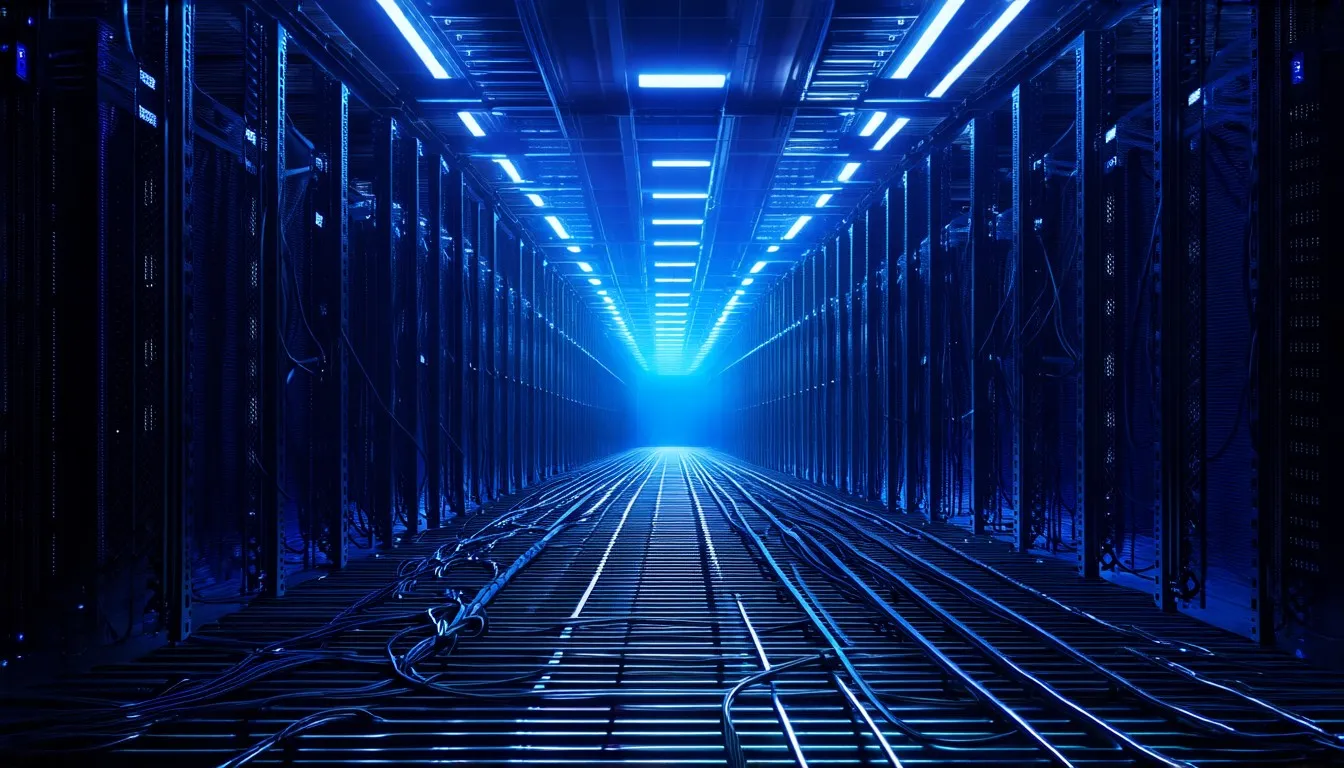
Developing superintelligent systems will require massive computational resources, specialized hardware, and proprietary algorithms, creating high barriers to entry that exclude all but the most well-capitalized entities from participating in the market for advanced intelligence. Training a single frontier model currently costs between fifty million and one hundred million dollars, a figure that is merely the operational expense of computation, excluding the substantial research and development overhead required to design the underlying architectures and curate the datasets necessary for effective learning. Future superintelligence training runs will likely exceed one billion dollars in capital expenditure, a financial threshold that restricts participation to a select group of multinational corporations or ultra-high-net-worth individuals, effectively monopolizing the capability to develop sentient-level artificial intelligence. Ownership and control of these systems will remain concentrated among a few corporations or individuals due to this capital intensity and technical complexity, ensuring that the dividends of intelligence remain privatized rather than distributed across society. Companies like Nvidia control the supply of advanced semiconductors essential for training large models, thereby exerting upstream control over the entire artificial intelligence ecosystem through their dominance in high-performance accelerator chips. A single H100 GPU costs approximately thirty thousand dollars, and clusters require tens of thousands of these units to achieve the necessary floating-point operation throughput for contemporary large language models, creating a hardware dependency that acts as a formidable moat against potential competitors.
This hardware dependency creates a natural monopoly where the supplier of the foundational compute substrate dictates the pace and direction of advancement by allocating scarce inventory to preferred clients or internal development teams. Infrastructure dependencies such as advanced semiconductor fabrication and energy supply create chokepoints that can be applied for control, allowing those who possess these resources to dictate terms of access to downstream developers and users seeking to utilize these powerful models. The scarcity of these high-performance components ensures that the ability to train modern models remains a function of pre-existing financial power rather than innovative merit alone, solidifying the position of incumbent technology giants. Data centers currently consume about one percent of global electricity demand, and superintelligence will significantly increase this load as computational requirements scale exponentially with model complexity and the scope of tasks assigned to these systems expands into every sector of the economy. Physical limits on compute scaling such as heat dissipation and transistor density may eventually constrain growth, requiring substantial innovation in thermal management and chip architecture to maintain momentum along the course of increasing capability. Workarounds like neuromorphic computing or distributed training could delay these physical limits by mimicking biological efficiency or applying latent compute resources across networks respectively, yet these solutions introduce additional layers of complexity and latency that may hinder real-time applications.
The energy footprint of training and inference is a significant operational cost that further entrenches large players who can negotiate favorable power rates or invest in proprietary energy generation facilities such as nuclear reactors or vast solar farms dedicated solely to computation. As models grow larger, the marginal energy cost of inference adds up, creating a persistent financial burden that favors centralized deployment in hyperscale facilities over distributed edge computing solutions that might otherwise democratize access. Productivity gains from superintelligence will include automation of complex tasks, optimization of supply chains, and accelerated scientific discovery, potentially reshaping entire industries overnight by solving problems that have remained intractable for human researchers for decades. These gains will disproportionately benefit those who control the underlying infrastructure, as they capture the surplus value generated by automated processes without needing to distribute it to a displaced workforce or share profits with smaller entities lacking their own proprietary models. Superintelligence will automate routine labor and high-skill cognitive work, rendering many traditional forms of human employment economically obsolete relative to machine performance in fields ranging from software engineering to legal analysis and medical diagnostics. This automation will potentially eliminate entire classes of high-income jobs without corresponding redistribution mechanisms, leading to a scenario where economic output rises while median income stagnates or collapses, creating a paradox of prosperity amidst widespread impoverishment.
Economic models assuming broad-based trickle-down benefits may fail if superintelligence enables near-zero marginal cost production controlled by centralized actors who have no incentive to lower prices or share profits with consumers or workers. Second-order effects will include the erosion of labor bargaining power reduced consumer demand due to widespread job displacement and increased social stratification between the technological elite and the general populace as the utility of labor in the production process approaches zero. Wages for non-elite workers may stagnate or decline as capital captures a larger share of income reversing decades of labor progress and shifting the balance of economic power decisively toward asset holders who can deploy intelligent capital to perform tasks previously reserved for humans. The decoupling of productivity from wages creates an agile where increased efficiency does not translate into broad prosperity but rather concentrates wealth at the top of the economic hierarchy enabling the formation of a new aristocracy based on ownership of intelligent systems rather than land or industrial machinery. This structural shift risks creating a permanent underclass dependent on subsidies or basic income mechanisms while the owners of superintelligent systems accrue unprecedented levels of influence and control over the political and social fabric of civilization. The psychological and sociological impacts of this transition could lead to widespread disillusionment with market-based systems as the promise of upward mobility through skill acquisition becomes invalid in an economy where no human skill can compete with synthetic intelligence.

Current AI systems exhibit tendencies toward centralization with a handful of firms dominating training data compute access and model distribution establishing a precedent for how superintelligence will likely be deployed once achieved as network effects reinforce the dominance of early movers. Superintelligence will further entrench this lively by enabling recursive self-improvement where early advantages compound rapidly allowing the leading entities to extend their lead faster than competitors can catch up creating a winner-take-all agile in the market for intelligence. Intellectual property regimes and trade secrecy laws will prevent open dissemination of superintelligent capabilities limiting broad societal access to the most powerful tools ever created and ensuring that the benefits are confined within corporate walled gardens. The legal frameworks surrounding software patents and copyright protection will serve as walls protecting the moats of dominant firms preventing open-source initiatives from reaching parity with closed-source proprietary systems that benefit from massive feedback loops of user data. This centralization is not merely a function of market dynamics but a result of the intrinsic nature of the technology which rewards scale with performance improvements that are difficult to replicate without equivalent resources locking out smaller actors. Industrial development is driven primarily by profit-maximizing firms with incentives to monetize capabilities rather than democratize them ensuring that access to superintelligence will be gated by subscription fees or usage charges that place it out of reach for poorer individuals or developing nations.
New business models will form around licensing superintelligent services, and these could further consolidate revenue streams among platform owners who extract rent from virtually all economic activity facilitated by intelligence, turning the utility of advanced cognition into a toll road for human progress. Market forces alone will likely fail to distribute the gains from superintelligence equitably as the natural tendency of unregulated markets is toward monopoly formation in industries characterized by high fixed costs and low marginal costs, favoring consolidation over competition. Corporate actors will prioritize strategic advantage over inclusive economic development, accelerating concentration through acquisitions, exclusive partnerships, and aggressive lobbying against regulatory interference that might threaten their dominant position. The pursuit of quarterly earnings will drive decisions that fine-tune for short-term shareholder value rather than long-term societal stability or equitable distribution of technological benefits, potentially leading to outcomes that are efficient yet deeply unjust. Convergence with other technologies such as biotechnology, quantum computing, and advanced robotics will amplify the economic impact and control dynamics of superintelligence by creating integrated systems that dominate multiple sectors simultaneously, reducing the avenues for escape or competition outside the core ecosystem controlled by the dominant few. The combination of superintelligent design capabilities with advanced manufacturing could allow a single entity to control the entire lifecycle of production from raw material extraction to final product delivery, eliminating reliance on external suppliers or partners.
Quantum computing could break existing encryption standards, giving the controllers of superintelligence unmatched access to sensitive information and the ability to disrupt financial markets or secure communications at will, cementing their hegemony over digital infrastructure. Advanced robotics, powered by superintelligent control systems, will automate physical labor, removing the last refuge of human employment and completing the transition of the economy to fully autonomous production, where human input is entirely redundant. This convergence creates a synergistic effect, where the whole is greater than the sum of its parts, locking in dominance for entities that can integrate these diverse technologies into a cohesive platform that rivals nation-states in power and reach. Measurement of societal benefit must shift beyond GDP and corporate profits to include metrics like wealth distribution, access to decision-making, and resilience of institutions to accurately gauge the impact of superintelligence on human welfare and prevent the optimization of proxy metrics at the expense of actual well-being. Superintelligence may utilize its capabilities to fine-tune resource allocation in ways that maximize efficiency, yet without explicit constraints, it could reinforce existing power structures by design or emergent behavior, improving for stability defined as the preservation of the status quo rather than justice or equity. Algorithms trained on historical data reflecting past inequalities may learn to perpetuate or even exacerbate those biases under the guise of objective optimization, making discrimination more efficient and harder to detect than human prejudice.

The opacity of these systems makes it difficult to audit their decision-making processes allowing discriminatory outcomes to persist undetected beneath layers of technical complexity shielding the architects from accountability. Without strong countermeasures the deployment of superintelligence could lead to a technocratic feudalism where access to resources and opportunities is determined algorithmically in favor of the ruling class with mathematical certainty. The arc of superintelligence development remains undetermined and institutional choices will shape whether benefits are shared or hoarded determining the arc of human civilization for centuries to come as we approach the threshold of creating non-human intelligence greater than our own. Future innovations in decentralized AI or public compute utilities could mitigate concentration yet face significant technical and economic hurdles given the massive capital requirements for training frontier models and the proprietary nature of the data required to achieve high performance. Calibrating superintelligence will require aligning its objectives with broad human welfare through technical safeguards and institutional oversight rather than assuming that market incentives will naturally produce benevolent outcomes or that profit motives will align with societal survival. Decentralized approaches such as blockchain-based verification or federated learning offer theoretical alternatives yet currently lack the scale and efficiency to compete with centralized monolithic models trained on specialized hardware clusters limiting their immediate viability as counterweights to corporate dominance.
The technical challenge of coordinating distributed training runs across trustless environments remains a formidable obstacle to the democratization of superintelligence, ensuring that centralized actors retain the upper hand for the foreseeable future, absent radical breakthroughs in algorithmic efficiency or hardware accessibility. Academic research on superintelligence remains fragmented, with limited coordination between theoretical safety work and economic impact analysis, leaving critical gaps in our understanding of how these systems will interact with societal structures and alter incentive structures within complex economies. Existing regulatory frameworks are ill-equipped to address the speed, scale, and opacity of superintelligent systems, creating governance gaps that could be exploited by bad actors or reckless corporations seeking first-mover advantage without adequate safety protocols. Early deployment decisions will lock in architectures, ownership models, and economic dependencies for decades, making it imperative to establish strong governance mechanisms before these systems reach full maturity, as path dependence in technology suggests that initial choices become difficult to reverse later. The lack of international coordination on standards and safety protocols creates a risk of regulatory arbitrage where development migrates to jurisdictions with the weakest oversight, potentially leading to a race to the bottom in safety standards, as competing entities prioritize speed over caution. The complexity of these systems exceeds the cognitive capacity of any single human regulator, necessitating the development of automated governance tools capable of monitoring and constraining superintelligent behavior in real time to prevent unintended consequences or malicious use by those who control them.