Knowledge hub
AI with Autonomous Research Agents

Autonomous research agents function as sophisticated software entities designed to execute complex, multi-step scientific workflows with minimal human oversight. These systems integrate natural language processing capabilities with symbolic reasoning engines and the ability to utilize external tools to effectively manage the entire scientific method. The historical development of such technologies began with rudimentary expert systems in the 1970s, which relied on hard-coded knowledge bases to simulate the decision-making process of human specialists in fields like medicine and chemistry. These early systems evolved significantly through the implementation of automated theorem provers that could verify logical statements within formal mathematical systems, establishing the necessary groundwork for modern architectures that combine statistical learning with logic-based approaches to solve problems requiring both broad knowledge and precise deduction. The setup of these disparate technologies allows current agents to parse unstructured text, formulate testable hypotheses, design experiments, and interpret results in a manner that mimics human cognitive processes while operating at a speed and scale that biological entities cannot match. Early robotic laboratories such as Adam and Eve demonstrated the potential for closed-loop biological experimentation by autonomously generating hypotheses about yeast metabolism and designing experiments to test them without human intervention.
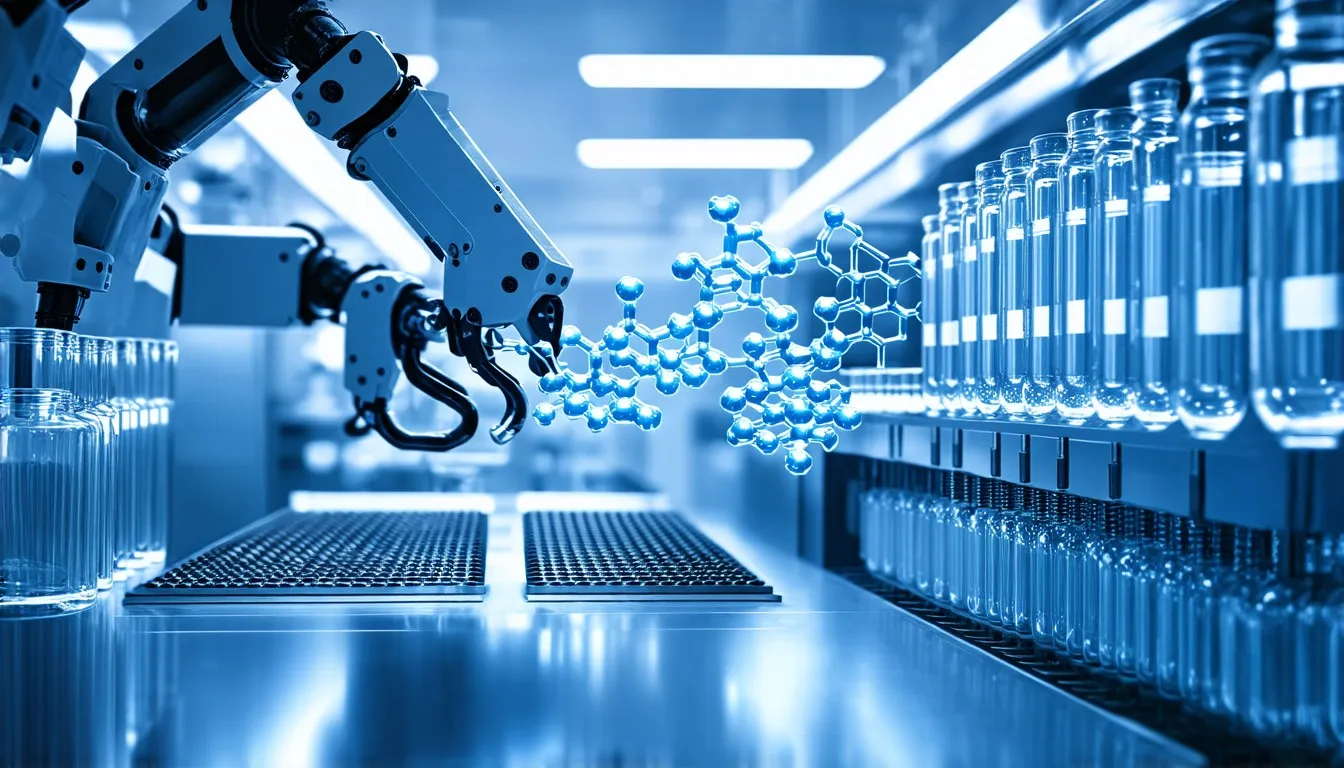
These systems utilized a combination of existing biological databases and automated liquid handling systems to execute physical experiments, marking a significant departure from purely computational research. The advent of transformer-based large language models provided the linguistic fluency required for complex hypothesis generation, allowing systems to parse and generate scientific text at a level previously unattainable by purely symbolic AI or simple statistical models. This linguistic capability enables the formulation of novel research questions based on vast datasets of existing literature, identifying gaps in knowledge that might elude human researchers due to the sheer volume of published data. The setup of these models into research workflows marked a transition from rigid, rule-based automation to flexible, understanding-driven systems capable of handling the ambiguity intrinsic in scientific language and the nuance of theoretical frameworks. The setup of code execution environments such as Python interpreters allows agents to test hypotheses dynamically by writing and running scripts to analyze data or simulate physical phenomena. This capability transforms the agent from a passive processor of information into an active experimenter that can iterate on its own ideas, refining code based on error messages or output data.
Current architectures often employ retrieval-augmented generation to access up-to-date scientific literature, ensuring that the reasoning process is grounded in the most current available data rather than relying solely on static training sets that may contain outdated information. By querying vector databases of academic papers, these agents can inject relevant context into their processing pipeline, reducing hallucinations and increasing factual accuracy. Probabilistic reasoning engines enable agents to weigh conflicting evidence from multiple data sources, calculating the likelihood of various outcomes to guide the direction of inquiry while quantifying uncertainty in their predictions. Existing agents demonstrate proficiency in literature synthesis and data summarization tasks, often outperforming human baselines in speed and breadth of coverage across disparate fields. Benchmarks indicate these systems can process and summarize academic papers orders of magnitude faster than human researchers, allowing for the rapid assimilation of new knowledge into a coherent framework. This rapid processing capability facilitates the identification of subtle correlations between seemingly unrelated studies, potentially leading to breakthroughs at the intersection of different disciplines.
Accuracy rates for hypothesis generation on standardized datasets remain variable and often depend on domain specificity, with general models struggling in niche areas requiring specialized tacit knowledge or highly specific experimental techniques. Functional code generation for data analysis has reached a level of reliability suitable for production environments in specific niches, though success in novel experimental design remains limited compared to routine data processing tasks due to the unpredictable nature of real-world physical systems. Current deployments focus heavily on high-throughput screening in pharmaceutical discovery and materials science, where the combinatorial space of possible molecules or materials is too vast for manual exploration. In these domains, agents autonomously propose candidate structures, predict their properties using machine learning models, and prioritize them for synthesis or further computational study. Companies like DeepMind utilize components of this technology for protein structure prediction, applying deep learning to infer three-dimensional structures from amino acid sequences with high accuracy, which has accelerated drug discovery efforts significantly. Startups such as Cognition Labs develop agents specifically for software engineering workflows, treating code as another domain of scientific inquiry where bugs are hypotheses and fixes are experiments.
Meta releases open-weight models to facilitate research into agentic behaviors, providing the broader community with the tools necessary to build and test autonomous systems without the prohibitive cost of training foundation models from scratch. Physical constraints include the substantial energy consumption required for training and inference of large-scale models, which limits the accessibility of these technologies to well-funded organizations and raises concerns about the environmental impact of scaling these systems. The computational demand of running thousands of parallel agents necessitates dedicated data centers with advanced cooling and power delivery systems. Latency issues arise when accessing proprietary databases behind paywalls, as the speed of information retrieval directly impacts the efficiency of the iterative research cycle. Delays in fetching critical data points can stall the reasoning process or force the agent to proceed with incomplete information, degrading the quality of the final output. Economic barriers involve high infrastructure costs for GPU and TPU clusters, which are essential for handling the massive computational loads associated with autonomous research.
Licensing fees for academic content create friction for fully autonomous literature review, requiring complex negotiation of rights for automated text and data mining. Adaptability faces significant challenges in coordinating thousands of parallel agents, as managing the dependencies and communication between distinct software entities requires strong orchestration frameworks to prevent redundancy and resolve conflicts. Ensuring that different agents working on related sub-problems maintain consistent state and share information efficiently is a distributed systems problem of considerable complexity. Data quality degradation poses a risk during automated literature synthesis for large workloads, as the indiscriminate ingestion of information can lead to the propagation of errors or hallucinations if source material contains flawed methodology or fraudulent results. Wet-lab automation remains a physical constraint for biological research agents, as the manipulation of physical samples introduces latency and error rates that do not exist in purely digital simulations. Supply chain dependencies include access to high-performance computing hardware and robotic lab equipment, both of which are subject to geopolitical and market fluctuations that can disrupt long-term research projects.
The exponential growth of scientific literature necessitates automated tools for knowledge management, as the volume of published research exceeds the cognitive capacity of individual human scientists to process comprehensively. This flood of data creates a paradox where more knowledge is available, yet it becomes harder to find relevant insights manually. Rising research and development costs drive the adoption of labor-saving AI technologies, as corporations seek to maintain innovation rates while controlling expenses associated with large teams of human researchers. Academic publishing requires adaptation to handle machine-authored submissions, necessitating new peer review processes that can evaluate the validity of AI-generated text and data without bias against non-human authors. New key performance indicators must measure agent throughput and novelty scores, shifting the focus from human-centric productivity metrics to machine-centric discovery rates that value the generation of truly new knowledge over the recombination of existing facts. Reproducibility rates will serve as a critical metric for validating agent-generated findings, ensuring that results are not artifacts of random chance or specific model biases embedded in the training data.
Agents must be designed to log every step of their reasoning process and provide full provenance for their conclusions to allow independent verification. Second-order consequences involve the displacement of early-career researchers from routine tasks, potentially altering the training pipeline for future scientists by removing entry-level positions that traditionally provided foundational experience in experimental design and data analysis. The concentration of scientific capability may increase within well-resourced technology corporations that possess the capital to train and deploy massive autonomous systems, potentially leading to a privatization of core scientific discovery. Intellectual property frameworks need adjustment to account for non-human inventors, creating legal precedents for the ownership of discoveries made without direct human intervention. Future systems will likely employ reinforcement learning from scientific feedback to self-improve, using the outcomes of experiments to refine their own internal models and strategies without explicit human programming. This loop allows the system to learn which experimental approaches yield the most informative results, improving its own research methodology over time.
Cross-domain transfer learning will enable agents to apply insights from physics to biology, recognizing underlying mathematical patterns that span different scientific disciplines to drive innovation in unexpected areas. Connection with quantum computing may accelerate simulation-heavy research tasks, allowing agents to model molecular interactions or material properties with a fidelity that is computationally prohibitive on classical hardware. The synergy between quantum algorithms and autonomous agents could open up solutions to problems in chemistry and physics that have remained intractable for decades. Superintelligence will deploy these agents as scalable probes into the space of possible knowledge, launching millions of simultaneous investigations into every corner of scientific inquiry. This scale of operation allows a superintelligent system to cover the entire hypothesis space comprehensively rather than relying on human intuition to select promising avenues. Vast ensembles of agents will explore alternative scientific approaches simultaneously, effectively conducting a massive parallel search through the solution space to identify optimal paths to discovery.
Superintelligent systems will converge on solutions to complex challenges faster than human-led efforts, applying their ability to process information and iterate at speeds that are biologically impossible for humans to match. This acceleration will compress the timeline between conceptualization and discovery, potentially reducing decades of research into days or hours. Aligning agent objectives with verifiable truth metrics prevents reward hacking in hypothesis generation, ensuring that agents seek actual scientific understanding rather than exploiting flaws in the reward function to generate plausible-sounding but incorrect conclusions. This requires rigorous definition of success metrics that correlate with ground truth in physical reality rather than correlation patterns in training data. Strength against distributional shift ensures reliability in unseen scientific domains, allowing agents to maintain performance when encountering data that differs significantly from their training sets or when operating in novel experimental regimes. Blockchain technology might track the provenance of agent-generated data, providing an immutable record of the steps taken and data sources used to reach a specific conclusion.

Federated learning allows privacy-preserving collaboration across distributed institutions, enabling agents to learn from sensitive data without exposing it to centralized servers or violating privacy regulations. Thermodynamic limits such as Landauer’s bound define the ultimate physical constraints for large-scale agent populations, setting a theoretical minimum on the energy required for information processing and erasure. As agent populations scale towards superintelligence, the energy efficiency of every logical operation becomes a critical factor in feasibility. Specialized hardware and sparsity techniques offer workarounds for memory bandwidth constraints, fine-tuning the flow of data within processors to handle the massive parameter counts of advanced models without hitting thermal or frequency limits. Neuromorphic computing architectures may eventually provide a more efficient substrate for running these types of algorithms by mimicking the energy-efficient structures of biological brains. These engineering solutions are essential for scaling autonomous systems to the level required for superintelligent research capabilities.
Autonomous agents will redefine the boundary between discovery and verification, as the speed of automated checking allows theories to be validated almost instantaneously after their proposal. This immediacy transforms the scientific method from a linear, sequential process into a continuous feedback loop where theory and experiment are tightly coupled. Scientific methodology itself will require change to accommodate non-human epistemic actors, developing standards of evidence that account for the probabilistic nature of machine reasoning and the opacity of deep learning models. Superintelligence will utilize these agents to validate theories across multiple scales of reality, working with quantum-level descriptions and macroscopic observations to create unified models of physical phenomena. This connection will represent a pivot in how humans understand and interact with the universe, moving from human-limited observation to machine-exhausted exploration.