Knowledge hub
AI with Disaster Prediction
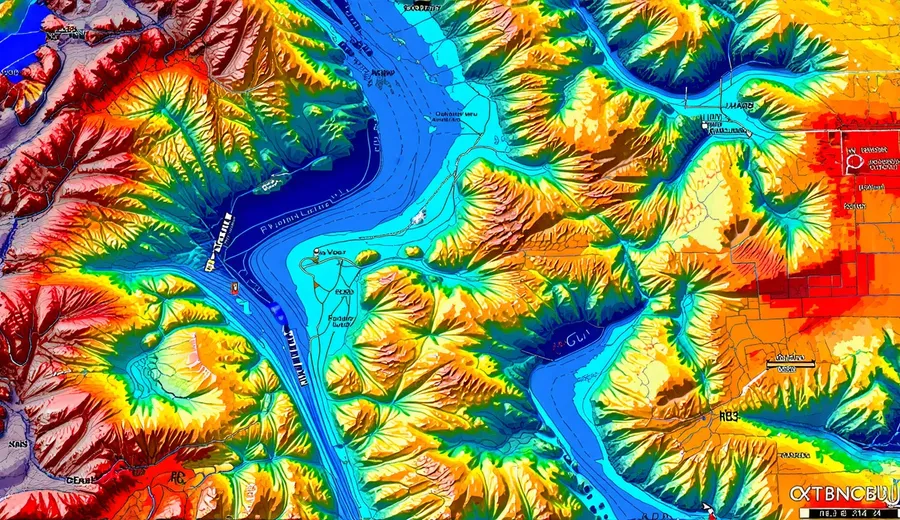
AI systems designed for disaster prediction currently ingest heterogeneous data from distributed sources to monitor environmental hazards, creating a foundational layer where vast streams of information flow continuously from satellites, terrestrial sensor networks, and oceanic buoys into centralized processing hubs. These inputs vary significantly in format, resolution, and frequency, necessitating rigorous preprocessing steps that include noise reduction to filter out signal interference caused by equipment malfunctions or environmental factors, alongside spatial-temporal alignment, which synchronizes data points collected at different times and geographical locations to create a coherent representation of the evolving situation. The integrity of these preprocessing stages determines the quality of the subsequent analysis, as raw data often contains gaps or artifacts that could lead to erroneous conclusions if not addressed through sophisticated statistical cleaning methods and imputation techniques that reconstruct missing values based on historical patterns and neighboring sensor readings. Once the data is prepared, core predictive engines blend physics-based simulations

Decision-support interfaces translate these complex probabilistic outputs into actionable alerts by visualizing risk levels through intuitive dashboards that highlight areas requiring immediate intervention, thereby bridging the gap between raw computational results and the operational needs of emergency responders who require clear, concise information to mobilize resources effectively. These interfaces often incorporate automated alerting thresholds that trigger warnings when the probability of a hazardous event exceeds a predefined safety margin, ensuring that critical information reaches the relevant stakeholders without delay while minimizing the risk of alert fatigue caused by excessive notifications for low-probability events. Earthquake early warning systems utilize seismic sensor networks to detect P-waves, which are compressional waves that travel faster than the destructive S-waves and surface waves that cause the majority of structural damage during a seismic event. By detecting the initial arrival of these less destructive P-waves, systems gain a crucial window of opportunity to analyze the incoming seismic data before the more damaging waves reach populated areas, allowing for automated shutdowns of critical infrastructure and public warnings to be disseminated. Machine learning algorithms analyze initial ground motion parameters recorded by these sensors to estimate the magnitude and intensity of the ongoing earthquake within seconds of its initiation, using regression models trained on vast historical datasets of seismic recordings to accurately predict the potential impact of the event. These systems provide lead times ranging from a few seconds to up to a minute depending on the distance from the epicenter, offering a brief yet critical period that can be used to slow down trains, open fire station doors, or warn factory workers to move to safer locations.
Historical attempts at deterministic earthquake prediction failed due to inconsistent precursor signals, as researchers were unable to identify reliable physical indicators that consistently preceded a seismic event with sufficient accuracy to be useful for operational warning systems. The complexity of tectonic processes and the non-linear nature of stress accumulation along fault lines made it nearly impossible to develop models that could predict the exact time and location of an earthquake with certainty. Current deep learning models improve pattern recognition in complex seismic datasets by identifying subtle correlations in waveform data that traditional statistical methods might overlook, effectively mining vast archives of seismic records to detect precursory patterns that were previously invisible to human analysts or simpler algorithms. These advanced neural networks process high-dimensional data to extract features indicative of impending seismic activity, enhancing the reliability of early warning systems and reducing the rate of false alarms that have historically undermined public trust in seismic alerts. Flood forecasting platforms integrate satellite imagery, river gauges, and weather models to construct a comprehensive view of hydrological conditions across a region, combining real-time observations with meteorological predictions to anticipate water level rises before they threaten communities. Satellite data provides crucial information on terrain elevation and soil moisture content, while river gauges offer precise measurements of water levels at specific points, creating a multi-scale monitoring network that feeds into predictive models.
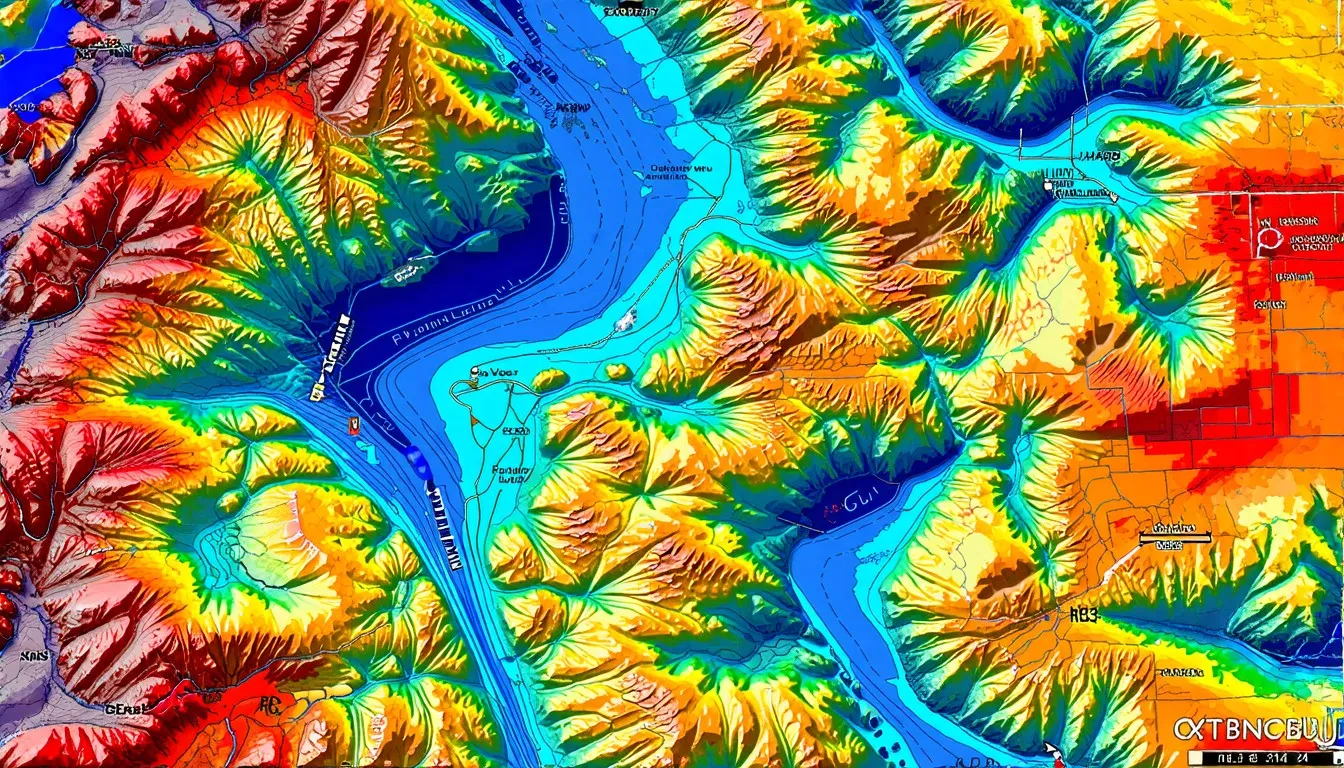
Hydrological simulations predict inundation extent and timing by analyzing rainfall accumulation, soil saturation levels, and terrain characteristics to model how water flows through a space and accumulates in low-lying areas. These simulations solve complex hydraulic equations to determine which areas will be submerged and when the floodwaters will peak, enabling authorities to issue targeted evacuation orders for specific neighborhoods or districts. Lead times for riverine floods typically extend from hours to several days, as the water takes time to accumulate in tributaries and flow downstream to main river channels, providing a valuable window for preparedness activities such as sandbagging, levee reinforcement, and population evacuation. Flash flood warnings offer shorter notice windows due to the rapid onset of events caused by intense localized rainfall in areas with steep terrain or poor drainage, often requiring automated detection systems that can react instantaneously to sudden spikes in water levels or rainfall rates. Google Flood Hub uses AI to expand coverage to undermonitored regions globally by applying machine learning models to remote sensing data, enabling the generation of flood forecasts in areas where traditional ground-based instrumentation is sparse or nonexistent. This approach democratizes access to critical safety information by applying publicly available satellite data and global precipitation datasets to model flood risk in developing nations that lack the infrastructure for comprehensive hydrological monitoring.
Pandemic early-warning tools monitor clinical reports, wastewater, and travel data to detect the earliest signs of a pathogen outbreak, aggregating disparate sources of health information to identify anomalies that may indicate the development of a novel infectious disease. Wastewater surveillance has proven particularly effective for detecting pathogens like SARS-CoV-2 before clinical cases surge, as viral RNA appears in sewage systems days before individuals seek medical attention. Compartmental models and network analysis forecast outbreak arc by simulating the transmission dynamics of a disease within a population, dividing the population into compartments such as susceptible, infected, and recovered to predict how an infection will spread over time under various intervention scenarios. Network analysis adds another layer of complexity by modeling human movement patterns and contact networks, allowing researchers to understand how travel and social interactions influence the speed and geographic spread of a pathogen. BlueDot and similar firms track pathogen spread using global airline data to predict the likely destinations of infected travelers, effectively simulating the connectivity of the global transportation network to anticipate where an outbreak will appear next after its initial detection. This capability allows health authorities in distant cities to implement screening measures or prepare healthcare capacity before the first local cases are confirmed.
Detection of novel pathogens usually occurs days to weeks after initial spillover due to the inherent latency between infection, symptom onset, and diagnosis, creating a blind spot in the early phases of an outbreak where rapid containment is most critical. This delay is compounded by the fact that many zoonotic diseases originate in remote areas with limited surveillance infrastructure, allowing the pathogen to circulate unnoticed until it reaches larger population centers. Purely physics-based simulations lack the nuance required for modeling human behavior during pandemics, as factors such as compliance with public health mandates, social distancing behaviors, and changes in mobility patterns are difficult to quantify using physical laws alone. Incorporating sociological and behavioral data into epidemiological models is essential for accurate forecasting, yet these variables introduce significant uncertainty due to their subjective and volatile nature. Operational definitions of success include false positive rates, false negative rates, and mean absolute error, providing quantitative metrics that allow system operators to evaluate the performance of predictive models and tune them to improve for specific objectives such as minimizing missed events or reducing unnecessary alarms. A low false positive rate is crucial for maintaining public trust in warning systems, while a low false negative rate is essential for ensuring that catastrophic events are not missed.
Spatial precision of predicted impact zones remains a critical metric for system effectiveness, as vague warnings covering large geographic areas often lead to complacency among the population or inefficient allocation of emergency resources. Improving the granularity of risk maps allows authorities to target specific neighborhoods or even city blocks for evacuation, thereby reducing the economic and social disruption caused by large-scale warnings. Constraints involve sensor density limitations in remote areas and latency in data transmission, as placing physical instruments in inaccessible terrain is logistically challenging and expensive, while transmitting data from these locations over satellite or low-bandwidth networks introduces delays that can hinder real-time prediction capabilities. The lack of observational data in these regions forces models to rely more heavily on extrapolation, which increases the uncertainty of forecasts in precisely the areas where information is often needed most. Computational costs limit the resolution of real-time simulations during crises, as running high-fidelity physics-based models at fine spatial scales requires immense processing power that may not be available when time is of the essence and rapid results are required. Simplified models are often used in operational settings to balance speed and accuracy, potentially sacrificing detail to ensure that forecasts are delivered within the narrow decision window available to responders.
Calibration drift affects model reliability over extended periods of operation, causing predictive algorithms to gradually lose accuracy as environmental conditions change or as sensors degrade without regular maintenance and recalibration. Continuous validation against incoming data streams is necessary to detect and correct this drift, ensuring that the model’s assumptions remain valid over time and that its performance does not degrade as it encounters new regimes of behavior outside its training distribution. The urgency for these systems has increased due to climate change amplifying extreme weather frequency, resulting in more frequent hurricanes, heatwaves, and heavy precipitation events that overwhelm traditional disaster management approaches. As the climate continues to change, historical data becomes less representative of future conditions, challenging the assumption of stationarity that underpins many statistical prediction methods and necessitating the development of stronger models capable of adapting to shifting baselines. Urbanization expands exposure to hazards, while global connectivity accelerates disease spread, concentrating populations and assets in vulnerable coastal zones or floodplains while simultaneously creating dense transportation networks that facilitate the rapid dissemination of pathogens across continents. This trend increases the potential impact of natural disasters and epidemics, making accurate prediction and timely warning even more critical for preventing loss of life in densely populated megacities.
Commercial deployments rely on centralized cloud-based inference with edge preprocessing to manage the trade-off between the computational resources required for heavy machine learning models and the latency sensitivity of real-time warning applications. Preprocessing raw data at the edge reduces bandwidth requirements by filtering out noise and extracting relevant features before transmission, while complex model inference occurs in powerful cloud data centers that can scale elastically to handle demand spikes during major events. Appearing architectures explore federated learning to preserve data privacy and reduce bandwidth needs by training models across multiple decentralized devices or servers holding local data samples without exchanging them, thereby addressing concerns related to sensitive information sharing while still benefiting from collective intelligence. This approach is particularly relevant for health data and proprietary industrial sensor feeds where privacy regulations or competitive concerns prevent raw data from being aggregated in a central location. Supply chains require specialized hardware including seismometers, radar altimeters, and genomic sequencers to capture the physical and biological signals necessary for hazard detection, making the availability of these components a critical factor in the expansion of monitoring networks. Disruptions in the supply chain for these specialized instruments can delay deployment efforts, leaving gaps in coverage that persist for years until new hardware can be manufactured and installed.
Semiconductor shortages impact the deployment of edge processing units in the field, limiting the ability to upgrade existing sensor networks with on-device AI capabilities that could improve response times and reduce reliance on connectivity. The scarcity of advanced chips affects everything from smart sensors to the servers that run predictive models, creating a constraint for technological advancement in the sector. Major private sector players include Google, Microsoft, and specialized firms like Metabiota, each applying their respective strengths in cloud computing, data analytics, or epidemiological modeling to capture market share in the growing field of disaster risk intelligence. These companies invest heavily in research and development to improve model accuracy and expand the geographic scope of their services, often partnering with humanitarian organizations to demonstrate the value of their technologies in real-world scenarios. Competitive differentiation lies in data access, model accuracy, and connection with public alerting infrastructure, as companies that possess exclusive rights to high-quality satellite imagery or proprietary weather datasets can build models with superior predictive power compared to competitors relying solely on public data. Setup with existing alerting mechanisms such as mobile emergency broadcast systems provides a direct path to end-users, increasing the tangible impact of the predictive insights generated.
High-income nations deploy integrated systems while low-resource regions depend on shared satellite data, creating a disparity in resilience capabilities where wealthy countries benefit from dense sensor networks and tailored local models, whereas developing nations rely on global forecasts with lower spatial resolution. This digital divide exacerbates the vulnerability of populations that are already most at risk from climate-related hazards, as they lack the granular information needed to prepare effectively for impending disasters. Academic-industry partnerships facilitate access to proprietary data for model validation, allowing researchers to test new algorithms on real-world datasets that would otherwise be inaccessible due to commercial restrictions or confidentiality agreements. These collaborations are essential for advancing the modern field, as they provide the feedback loop needed to refine theoretical models and prove their efficacy in operational settings. Ground-truth disaster events are rare, making validation difficult without collaboration, as obtaining sufficient labeled data to train and test predictive models requires capturing measurements during actual catastrophes, which occur infrequently and unpredictably. Synthetic data generation techniques are increasingly used to augment historical records, creating realistic disaster scenarios based on physical principles to help train models for events that have not yet occurred.
Adjacent systems require upgrades to communication networks to support low-latency alert dissemination, ensuring that warnings generated by predictive models reach the public instantly regardless of their location or the state of local infrastructure. The proliferation of mobile phones offers a promising channel for alert delivery, yet reliable connectivity remains a challenge in remote areas where network coverage is sparse or easily damaged by disasters themselves. Regulatory frameworks need standardization regarding data sharing and liability for false alarms, as clear legal guidelines are necessary to encourage private companies to share critical hazard information without fear of litigation should a prediction prove incorrect or cause economic disruption through unnecessary evacuations. Establishing standards for data interoperability also facilitates smoother collaboration between different stakeholders, preventing silos of information that hinder comprehensive situational awareness. Urban planning must incorporate predictive risk layers to mitigate future damage, using long-term hazard forecasts to inform building codes, zoning decisions, and infrastructure investments so that new development avoids high-risk areas or is designed to withstand anticipated hazard intensities. Working with risk projections into the planning process creates a more resilient built environment that reduces the potential for catastrophic losses over decades of urban growth.
Second-order consequences include reduced insurance premiums in well-monitored zones, as improved predictive capabilities allow insurers to more accurately assess risk and price policies accordingly, incentivizing property owners to invest in mitigation measures or monitoring technologies that lower their exposure. The availability of granular risk data transforms insurance from a blunt instrument of pooled risk into a precise mechanism for pricing individual risk profiles. Manual monitoring jobs face displacement as automated systems become more prevalent, shifting human roles from direct observation of sensor feeds to supervisory positions where operators manage complex AI systems and intervene only when confidence levels are low or anomalies are detected. This transition requires significant reskilling of the workforce to manage increasingly sophisticated technical tools and interpret the detailed outputs of algorithmic decision engines. Disaster-risk analytics is becoming a service offering for logistics and supply chain firms, enabling companies to anticipate disruptions caused by natural hazards and reroute shipments proactively to avoid delays or damage to goods in transit. By connecting with hazard forecasts into supply chain management software, businesses can improve operational resilience and reduce the financial impact of climate-related disruptions on their global operations.
New key performance indicators are needed beyond accuracy, such as equity of warning coverage, ensuring that predictive systems serve vulnerable populations effectively rather than fine-tuning solely for aggregate metrics that might mask disparities in service quality across different demographic groups. Measuring equity requires analyzing the distribution of alert delivery times and comprehension levels across diverse communities to ensure that no group is systematically disadvantaged by the design of the warning system. Time-to-public-alert and resource mobilization efficiency serve as crucial metrics for evaluating the end-to-end effectiveness of disaster prediction systems, focusing on the speed at which actionable intelligence reaches decision-makers and the rapidity with which relief assets are deployed to affected areas. Improving these metrics involves streamlining the entire workflow from data ingestion to response execution, removing bureaucratic and technical hurdles that slow down the reaction time during critical emergencies. Future innovations will incorporate causal inference to distinguish correlation from causation in precursor signals, moving beyond purely associative pattern recognition to identify the underlying physical mechanisms that drive hazardous events. This deeper understanding will enable models to predict unprecedented events that fall outside the range of historical observations by reasoning from first principles rather than relying solely on statistical analogies to past occurrences.
Digital twin environments will simulate cascading infrastructure failures, creating virtual replicas of cities or industrial complexes that allow planners to stress-test systems against hypothetical disaster scenarios and identify critical interdependencies that might lead to systemic collapse. These simulations provide a safe sandbox for testing intervention strategies and understanding how failures in one sector, such as power generation, can propagate through water supply networks or transportation systems. Convergence with IoT expands sensor coverage and improves long-term hazard mapping by utilizing billions of connected devices ranging from smartphones to smart home appliances as ad-hoc sensor networks that contribute valuable data on environmental conditions such as temperature, humidity, and vibration. This common sensing capability dramatically increases the density of observational data available for analysis, enabling higher resolution models and finer-grained risk assessments. Connection with climate models enhances the prediction of long-term hazard trends by providing boundary conditions for shorter-term weather forecasts and hydrological models, allowing disaster prediction systems to account for shifts in baseline climate variables such as sea surface temperatures or regional precipitation patterns. Working with these long-term trends into operational forecasts ensures that preparedness measures remain relevant as the statistical characteristics of extreme events evolve over multi-decadal timescales.
Linkage to autonomous response systems will enable automated shelter activation or traffic rerouting without human intervention, creating closed-loop systems where predictive outputs directly trigger physical actions to mitigate the impact of an impending disaster. These autonomous systems require extremely high reliability and durable fail-safe mechanisms to prevent malfunctions that could endanger lives or cause property damage through incorrect activation. Scaling limits arise from data sparsity in developing regions and diminishing returns on model complexity, as adding more layers to a neural network yields progressively smaller improvements in accuracy once a certain threshold of data quality and quantity is reached. Addressing these scaling issues requires innovative approaches to data collection and model architecture that can extract maximum value from limited information resources. Transfer learning from data-rich regions helps mitigate these scaling issues by allowing models trained on extensive datasets from well-monitored areas to adapt their knowledge to similar environments where data is scarce, reducing the amount of local training data required to achieve acceptable performance levels. This technique applies the universality of physical laws and patterns across different geographies to bootstrap predictive capabilities in under-resourced regions.
Synthetic data generation offers a workaround for the lack of real-world disaster data by creating realistic artificial datasets through physics-based simulations or generative adversarial networks that mimic the statistical properties of actual hazard events. These synthetic datasets provide a valuable resource for training strong models that can generalize well when deployed in the real world, particularly for rare events like tsunamis or volcanic eruptions where historical records are limited. Predictive systems will prioritize interpretability and uncertainty quantification over raw accuracy, as decision-makers need to understand the confidence intervals associated with a forecast and the specific factors driving the prediction in order to trust automated recommendations during high-stakes situations. Techniques such as attention mechanisms and sensitivity analysis help illuminate the black box nature of deep learning models, revealing which input variables contributed most significantly to a given output. Decision-makers require understanding of model limitations during crises to avoid over-reliance on algorithmic outputs that may be flawed due to unforeseen circumstances or distribution shifts in the incoming data streams. Effective human-AI collaboration depends on transparent communication of uncertainty and clear documentation of the boundary conditions under which the model is known to perform reliably.

Superintelligence will utilize these systems to run massively parallel scenario analyses, exploring a combinatorial explosion of possible futures to identify high-probability risks that would be impossible for human analysts or conventional computers to anticipate within a relevant timeframe. This capability allows for proactive identification of fragile points in global systems and pre-emptive deployment of resources to prevent cascading failures before they begin. Future superintelligent systems will fine-tune global resource allocation across concurrent disasters by dynamically balancing humanitarian aid shipments, medical supplies, and emergency personnel in response to happening events across multiple continents, improving logistics on a planetary scale with an efficiency far exceeding current manual coordination efforts. These systems will integrate economic, logistical, and meteorological data into a unified optimization framework that minimizes total suffering and loss of life during complex emergencies involving multiple interacting hazards. These advanced entities will dynamically update models using real-time feedback from happening events, continuously recalibrating their predictive parameters as new observations arrive to correct errors in forecast progression and adjust response strategies instantaneously. This closed-loop learning process creates a self-improving system that becomes more accurate with each passing event, adapting its internal representations of the world to reflect changing conditions on the ground.
Calibrations for superintelligence involve embedding ethical guardrails to prevent over-reliance on predictions or the optimization of objectives that conflict with human values such as equity or individual rights. Ensuring that superintelligent disaster management systems align with human ethical standards requires rigorous specification of objective functions and constraint satisfaction mechanisms that encode legal and moral principles into the decision logic. Human oversight will remain essential in life-or-death decisions managed by superintelligence, serving as a final check on automated recommendations and providing accountability for actions taken during catastrophic events where errors may have irreversible consequences. While superintelligent systems can process information at speeds far beyond human cognition, the moral weight of decisions such as ordering mass evacuations or prioritizing one group over another necessitates human judgment in the loop. Auditability of model reasoning will be mandatory for superintelligent disaster management, requiring detailed logging of the internal state of the system and the chain of logic leading to any specific recommendation so that external auditors can verify compliance with safety standards and investigate failures post-mortem. This transparency is crucial for maintaining public trust in autonomous systems wielded at such scale, ensuring that their operations remain subject to human scrutiny and control despite their immense complexity.