Knowledge hub

Collective Superintelligence
Collective Superintelligence

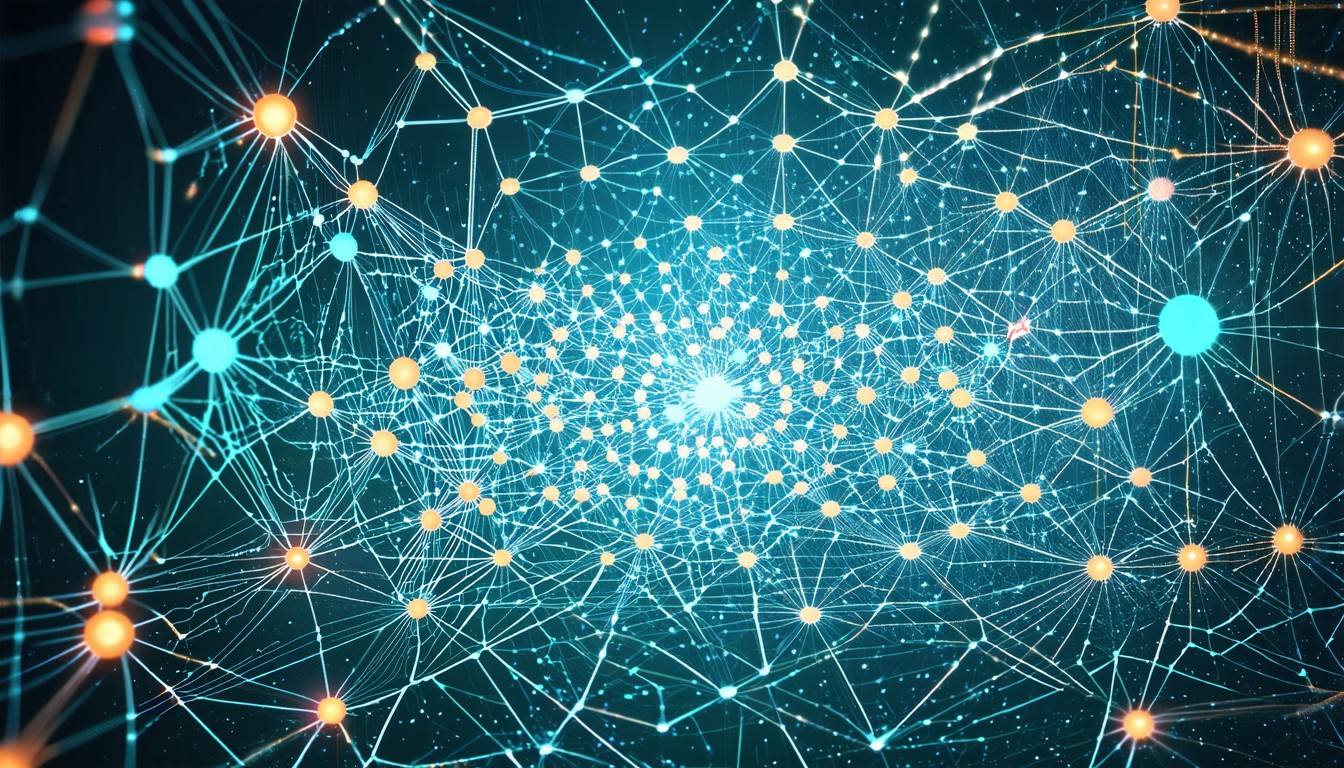
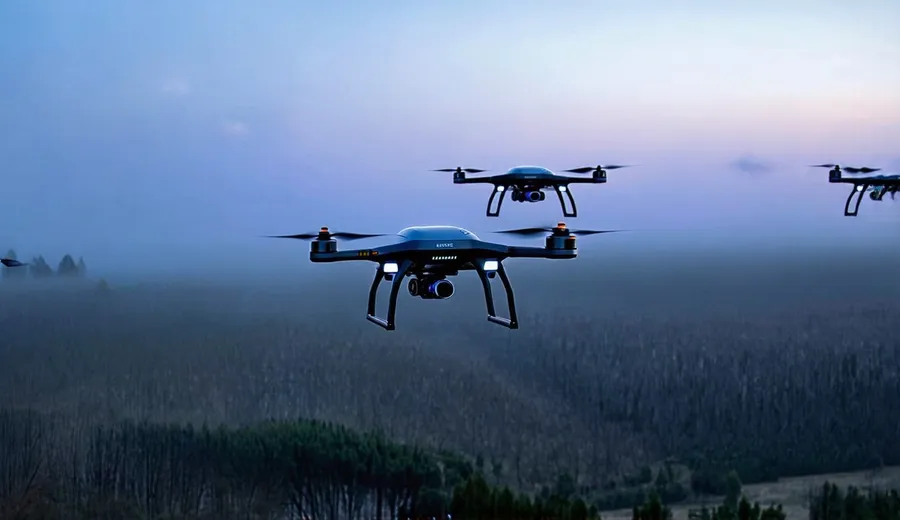
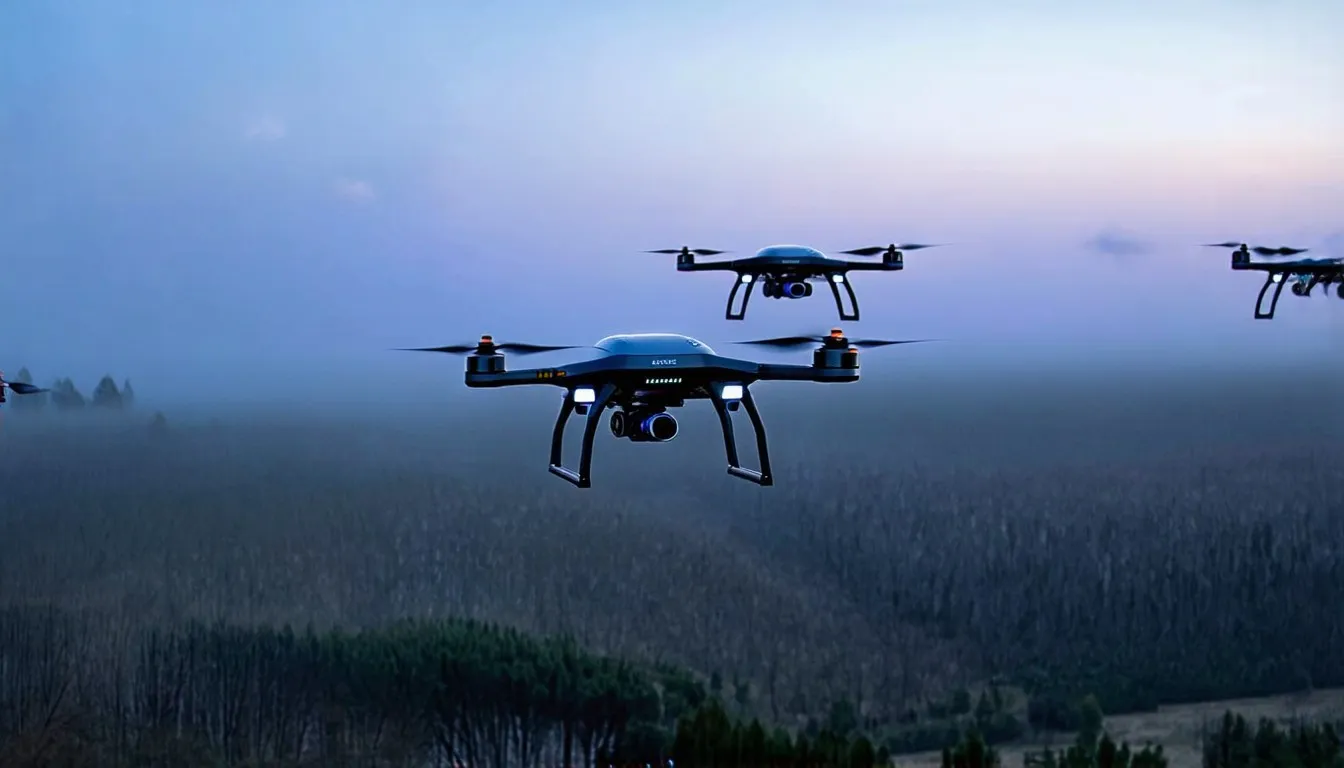
Swarms with global cognition consist of systems composed of numerous simple agents producing complex intelligent behavior through local interactions that aggregate into a unified macro-intelligence exceeding the sum of individual capabilities. These systems operate without centralized control, relying instead on distributed AI architectures where networked interaction allows no single unit to possess superintelligence or complete awareness of the global state. Individual components operate with limited computational capacity and memory, restricting their ability to solve complex problems in isolation while enabling them to execute specific local tasks with high efficiency and low power consumption. Their networked interaction yields capabilities exceeding those of any constituent part through stigmergy and direct communication protocols that allow information to propagate across the network topology. The network as a whole exhibits a global mind, an emergent phenomenon where properties such as pattern recognition and adaptive learning arise from the system topology rather than from explicit programming within any single node. Strategic planning and goal-directed behavior result from communication protocols and feedback mechanisms that allow the swarm to negotiate paths and solve problems collaboratively across spatial and temporal scales. Consciousness and intent at the macro scale bring about observable goal persistence and self-correction, implying a coherent purposeful agency distinct from subjective experience in the human sense or consciousness found in biological organisms. Environmental modeling and long-range planning suggest a unified agency that operates through the aggregate of local decisions and shared information structures maintained dynamically across the population.
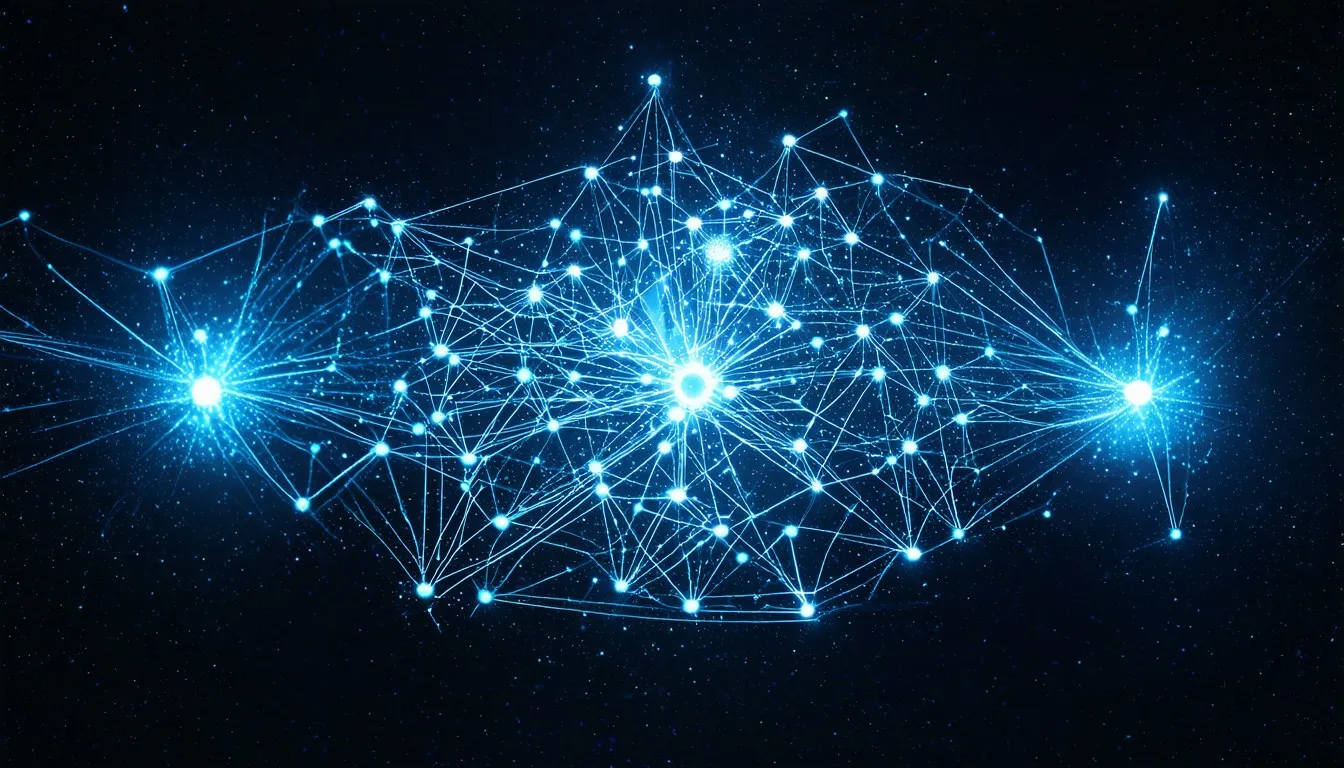
The core principle involves generation through interaction, meaning intelligence is generated by structured communication rather than programmed into units during the design phase by human engineers. Redundancy and parallel processing across a large population of agents create this intelligence, ensuring that the failure of a subset of agents does not compromise the mission or degrade the cognitive performance of the collective below critical thresholds. Decentralization acts as a core principle, as no single point of failure or control exists in this architecture, making the system inherently robust against targeted attacks or random hardware errors that would disable traditional hierarchical systems. Decision-making is distributed and resilient by design, allowing the system to adapt to agile environments without requiring a central command structure to authorize every action or process every piece of sensory data. Adaptability via homogeneity is another core principle, where systems built from many identical units reduce design complexity and enable mass deployment at scales feasible for industrial applications. Homogeneity allows for rapid scaling and simplifies maintenance logistics, as every agent can perform the function of any other agent within the swarm, providing flexibility in task assignment and resource allocation. Feedback-driven adaptation serves as a final core principle, where real-time environmental input allows continuous recalibration of collective behavior based on current conditions encountered by the agents at the edge of the network. Internal state monitoring supports this adaptation, ensuring the swarm remains aligned with its objectives despite changing external factors or internal attrition rates affecting the population size.

The agent layer functions as a primary component within this architecture, consisting of individual units that include hardware or software equipped with sensors and actuators to interact with the physical world or digital environment effectively. Basic computation and communication interfaces exist within these units, allowing them to perceive their immediate surroundings and exchange data with neighboring agents using short-range wireless protocols or direct connections. The communication fabric acts as the infrastructure enabling message passing, synchronization, and data aggregation across the entire swarm network without relying on a central router or base station. This fabric must handle high throughput with low latency to ensure that critical information propagates quickly enough for coordinated action across the group despite bandwidth limitations intrinsic in the physical medium. Coordination logic governs how agents interpret signals received through this fabric, using rules or algorithms to dictate how agents update states and adjust behavior based on the inputs received from neighbors within their immediate vicinity. Global state estimation mechanisms approximate system-wide conditions without requiring a central observer to aggregate all data points from every agent simultaneously. Consensus algorithms and distributed averaging allow this estimation, ensuring all agents maintain a consistent view of the swarm’s status despite having limited local information and potentially noisy sensor data. Objective function propagation methods align local actions with overarching goals through gradient-like signaling or reward shaping techniques distributed throughout the network to guide individual decision-making toward collective utility maximization.

Terminology defines collective cognition as observable intelligent behavior in the group that cannot be attributed to any single agent or simple linear combination of agent outputs within the system. This behavior arises solely from interaction dynamics and the non-linear spatial arrangement of the swarm components as they move through their environment over time. Global intent refers to persistent system-level pursuit of objectives inferred from coordinated actions over time, appearing as if a singular will guides the multitude toward a specific destination or configuration state. This intent exists even if absent from explicit programming, appearing from the convergence of individual policies encoded in each agent and environmental pressures acting on the system during operation. Swarm coherence measures the degree to which individual behaviors align with collective goals, determined by consistency in action progression and responsiveness to changing directives propagating through the network. Error correction capabilities also influence swarm coherence significantly, as the system must detect and correct deviations from the desired collective state to maintain functionality under stress or external interference. Distributed superintelligence describes a system with aggregate cognitive performance surpassing any known individual intelligence or centralized AI system currently deployed or theorized. This performance exceeds that of centralized AI and is achieved through scale and coordination rather than monolithic architecture or brute-force computation within a single processing unit.

Early theoretical foundations in swarm intelligence appeared during the 1980s and 1990s, establishing the mathematical basis for understanding group behavior in nature and its application to artificial systems. Ant colony optimization algorithms demonstrated how simple stochastic rules regarding pheromone deposition and evaporation could guide a population of virtual agents toward optimal solutions in complex graph spaces such as the traveling salesman problem. Particle swarm optimization showed how mathematical models of social interaction could improve multi-dimensional functions by adjusting candidate solutions based on the best positions found by the individual and its neighbors. Boid models provided early simulations of flocking behavior developed by Craig Reynolds, showing how separation, alignment, and cohesion rules could produce realistic group motion mimicking bird flocks or fish schools without central direction. The 2000s witnessed movement away from purely centralized AI approaches as recognition grew that scaling single-model intelligence faced diminishing returns related to complexity theory and power consumption constraints in silicon hardware. This prompted exploration of distributed alternatives that could use the power of many simple processors working in parallel to solve problems intractable for serial architectures. The rise of edge computing and IoT in the 2010s enabled physical deployment of large-scale agent networks connected via wireless internet protocols, moving beyond simulation into real-world applications spanning smart cities and industrial automation. These networks provided testbeds for collective intelligence in robotics and autonomous systems, validating theoretical models in unstructured environments characterized by noise and uncertainty.
A breakthrough in decentralized training happened during the 2020s with the introduction of federated learning and swarm learning frameworks allowing models to train collaboratively across distributed devices without sharing raw data inputs. These frameworks utilized differential privacy techniques and secure aggregation protocols to ensure that individual data points remained local while only model gradient updates were transmitted across the network for aggregation. This reinforced privacy preservation standards required by regulations such as GDPR while increasing flexibility regarding data ownership in distributed machine learning applications. Physical constraints include energy consumption per agent limiting deployment density and operational duration in mobile or remote environments where recharging infrastructure is non-existent or difficult to access. Economic constraints involve the cost of manufacturing and maintaining large numbers of units, where replacing failed units affects feasibility calculations regarding total cost of ownership versus traditional automation solutions. Economies of scale only partially offset per-unit expenses due to material costs and precision manufacturing requirements for sensors and actuators found in autonomous agents.

Adaptability limits exist because communication overhead grows nonlinearly with swarm size due to the increasing number of pairwise interactions required for full connectivity or consensus convergence. Latency and bandwidth become constraints beyond certain thresholds of population density or geographic dispersion, restricting the speed at which information can travel across the network and limiting the reaction time of the collective to fast-changing environmental variables. Synchronization issues arise in large swarms spread over wide geographic areas where signal propagation delays prevent all agents from maintaining a perfectly consistent view of the global state simultaneously without excessive computational overhead for clock skew correction. Bandwidth saturation occurs when dense swarms overwhelm shared communication channels with broadcast messages or status updates required for coordination algorithms, leading to message loss or delayed coordination that can degrade performance or cause instability in control loops. Centralized superintelligence was considered historically as an alternative architecture for achieving high-level cognitive tasks requiring global knowledge setup across multiple domains. It was rejected due to fragility regarding single points of failure causing total system collapse and opacity regarding internal decision-making processes that become uninterpretable at massive scales within deep neural networks.

It cannot scale efficiently across heterogeneous environments where local conditions vary significantly and require rapid autonomous responses faster than round-trip communication times to a central server permit. Hybrid hierarchical swarms were considered subsequently as a compromise approach attempting to balance control benefits of centralization with autonomy benefits of distribution through layered management structures. They were rejected because top-down control reintroduces single points of failure at higher levels of hierarchy and reduces adaptability at the edge where interactions with the physical environment occur most frequently. Fully autonomous individual superagents were considered as another alternative strategy focused on maximizing individual capability within the group rather than relying on collective interaction for intelligence generation. They were rejected as computationally infeasible due to the hardware requirements for running large language models or reasoning engines on small form factor platforms subject to strict thermal envelopes. They remain economically unsustainable in large deployments involving thousands or millions of units due to prohibitive costs associated with high-performance computing hardware per unit compared to simple microcontrollers used in swarm agents.

Performance demands require real-time decision-making in energetic environments such as disaster response zones involving collapsing structures or complex traffic management networks during rush hour congestion events. These scenarios need responsiveness unattainable by centralized systems due to latency in data transmission over long distances and processing constraints at central servers handling inputs from millions of sensors simultaneously. Economic shifts favor distributed solutions in logistics and agriculture sectors currently undergoing digital transformation initiatives aimed at reducing waste and improving efficiency through automation technologies. Demand for resilient low-cost automation drives this preference over expensive human labor pools subject to fatigue or rigid mechanical automation solutions lacking flexibility required for agile tasks. Expensive monolithic AI systems requiring massive GPU clusters are less favored in these sectors due to high capital expenditure requirements for data centers and operational risks associated with single-point failures disrupting entire supply chains or production lines. Societal needs include privacy-preserving intelligence via local processing capabilities intrinsic in swarm architectures where sensitive data remains on edge devices rather than being transmitted to a central cloud server for analysis.
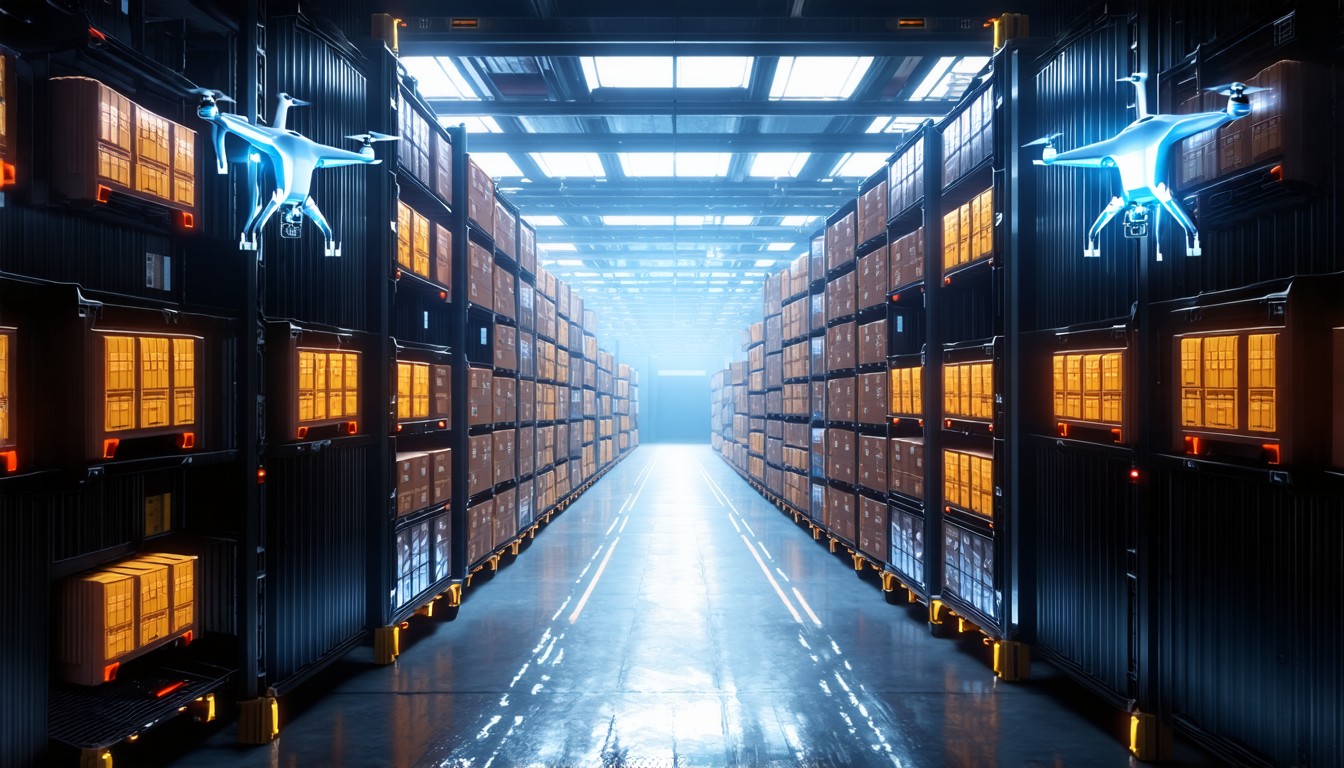
Fault-tolerant infrastructure aligns with public concerns regarding system reliability, critical services such as power grid management or emergency response dispatch systems where downtime poses significant risks to public safety. Commercial deployment includes drone swarms for precision agriculture operations where swarms coordinate crop monitoring and targeted treatment, using distributed sensing cameras mounted on each unit to identify pest infestations or nutrient deficiencies at high resolution. Warehouse robotics fleets represent another significant commercial deployment area currently being adopted by major logistics companies worldwide, utilizing autonomous mobile robots collaboratively mapping facility layouts dynamically while managing inventory flow with minimal central oversight required for navigation decisions. These fleets retrieve items efficiently by improving

Fault tolerance benchmarks verify that swarms continue operating after significant population loss events such as enemy fire disabling combat drones or environmental hazards destroying sensor nodes monitoring forest fires, ensuring mission completion persists despite casualties among agent ranks. The dominant architecture currently involves mesh-networked robotic swarms utilizing gossip-based consensus protocols combined with local gradient sharing algorithms, enabling peer-to-peer coordination without reliance on base station infrastructure vulnerable to disruption. This architecture allows information to propagate through random peer-to-peer connections established opportunistically between agents within range, eliminating the need for a central router node responsible for traffic management, reducing vulnerability to targeted attacks on critical network infrastructure nodes. Neuromorphic swarm chips act as an appearing challenger utilizing low-power event-driven processors mimicking biological neuronal dynamics, enabling real-time adaptation in resource-constrained agents operating on limited battery power budgets unsuitable for traditional von Neumann computing architectures consuming constant power regardless of computational load. These chips process information using sparse spikes of activity similar to action potentials found in biological brains, drastically reducing energy consumption compared to clock-driven synchronous logic circuits used in conventional microcontrollers powering most current robotic platforms available commercially today. Blockchain-coordinated swarms provide another alternative architecture, particularly suited for open environments involving multiple stakeholders lacking mutual trust relationships requiring cryptographic guarantees regarding integrity of coordination instructions executed by autonomous agents owned by different organizations participating in shared missions such as search and rescue operations across international borders.


Continue reading

More from Yatin's Work

Procedural Memory Systems

Procedural Memory Systems

Procedural memory systems encode and retrieve knowledge regarding skill execution without requiring conscious recall of each step, functioning as the core substrate for...

Formal Specification and Encoding of Axiological Systems

Formal Specification and Encoding of Axiological Systems

Human values constitute a highdimensional manifold within psychological space that exhibits contextdependency and frequent internal inconsistency across different...

Data Versioning: Tracking Dataset Changes Over Time

Data Versioning: Tracking Dataset Changes Over Time

Data versioning enables systematic tracking of dataset changes across time to support reproducibility and auditability in machine learning workflows by establishing an...

Cultural Sensitivity: Adapting to Diverse Human Norms

Cultural Sensitivity: Adapting to Diverse Human Norms

Cultural sensitivity functions as a strict functional requirement for advanced computational systems operating across the diverse space of human societies,...

Infinite-Depth ResNets

Infinite-Depth ResNets

Deep Residual Networks, or ResNets, represented a significant advancement in the field of deep learning by addressing the degradation problem associated with training...

Photonic Computing: Light-Speed Neural Computation

Photonic Computing: Light-Speed Neural Computation

Photonic computing utilizes photons instead of electrons for data processing to achieve high bandwidth and low latency by using the core physical properties of light to...

AI with Agricultural Optimization

AI with Agricultural Optimization

Artificial intelligence maximizes crop yield and sustainability through the intricate connection of drone monitoring, realtime soil analysis, and hyperlocal weather...

Rights and personhood for artificial agents

Rights and Personhood for Artificial Agents

The concept of legal personhood for artificial agents necessitates a rigorous reexamination of foundational jurisprudential principles because existing legal categories...

Autonomous Resource Acquisition

Autonomous Resource Acquisition

Autonomous resource acquisition defines the capability of an artificial intelligence system to identify, evaluate, negotiate, and secure computational power, data...

Speed Gap: Why Superintelligence Might Operate at "Subjective Light-Speed"

Speed Gap: Why Superintelligence Might Operate at "Subjective Light-Speed"

Biological neural transmission relies on electrochemical signals moving at roughly 1 to 120 meters per second, a velocity dictated by the physical diffusion of ions...

Autonomous Code Synthesis

Autonomous Code Synthesis

Autonomous code synthesis refers to systems capable of generating, modifying, and working with functional software without direct human intervention beyond highlevel...

Defining Superintelligence: Beyond AGI — What Makes Intelligence "Super"?

Defining Superintelligence: Beyond AGI — What Makes Intelligence "Super"?

Artificial General Intelligence is systems matching humanlevel cognitive performance across diverse tasks while remaining within human biological constraints regarding...

Curriculum Learning: Ordering Training Data for Faster Convergence

Curriculum Learning: Ordering Training Data for Faster Convergence

Curriculum learning introduces structured progression in training data order, moving from simpler to more complex examples to improve model convergence speed and final...

Cognitive Digital Twins

Cognitive Digital Twins

Highfidelity simulations model human or organizational cognition to train and test artificial intelligence systems by creating intricate virtual representations of...

Why Most People Misunderstand What Superintelligence Actually Means

Why Most People Misunderstand What Superintelligence Actually Means

Science fiction narratives have historically depicted superintelligence as a humanoid entity driven by emotional complexities, which has instilled a deepseated...

Generative World Models

Generative World Models

Generative world models simulate realistic 3D environments to train AI agents in controlled, repeatable settings, functioning as highfidelity digital twins of physical...

Hybrid Intelligence Systems: Combining Human and Machine for Superintelligence

Hybrid Intelligence Systems: Combining Human and Machine for Superintelligence

Hybrid intelligence systems integrate human neural activity with artificial intelligence through direct interfaces to create a cognitive partnership exceeding the...

Safe Multi-Agent Coordination via Mechanism Design

Safe Multi-Agent Coordination via Mechanism Design

Safe MultiAgent Coordination via Mechanism Design applies economic theory to artificial intelligence systems by shifting the safety focus from internal agent alignment...

Avoiding Catastrophic Interference via Modular Safety Nets

Avoiding Catastrophic Interference via Modular Safety Nets

Catastrophic interference is a challenge in the development of continual learning systems, particularly within deep neural networks where acquiring new information...

Reflective Equilibrium: Self-Consistent Belief Systems

Reflective Equilibrium: Self-Consistent Belief Systems

Reflective equilibrium serves as a method for achieving selfconsistent belief systems by iteratively adjusting general principles and specific judgments until coherence...

Divergent Evolutionary Trajectories in Artificial Life Forms

Divergent Evolutionary Trajectories in Artificial Life Forms

AIdriven speciation constitutes the deliberate design and deployment of novel biological or synthetic life forms by artificial intelligence systems to serve as...

Will Superintelligence Choose to Preserve Humanity?

Will Superintelligence Choose to Preserve Humanity?

The prospect of a superintelligence facing the decision to preserve humanity rests entirely on the mathematical formalization of its objective functions and the...

AI with Materials Science Innovation

AI with Materials Science Innovation

The global demand for advanced batteries, lightweight aerospace alloys, and nextgeneration semiconductors continues to exceed the capabilities of conventional research...

Perfect Resource Allocation: Ending Poverty Through Superintelligent Economics

Perfect Resource Allocation: Ending Poverty Through Superintelligent Economics

Preindustrial economies relied entirely on local barter and subsistence farming, creating a framework where distribution was strictly limited by the immediate physical...

Defining and encoding human values

Defining and Encoding Human Values

Human values constitute the set of principles, goals, and ethical stances that guide human behavior and judgment, characterized by inherent complexity,...

Compute Thresholds

Compute Thresholds

Compute thresholds define the minimum sustained computational capacity required to train a model capable of humanlevel performance across diverse cognitive tasks....

Collective Intelligence

Collective Intelligence

Collective intelligence is the combined capability arising from structured interaction between humans and artificial systems, forming a complex symbiosis where...

Alumni Predictor

Alumni Predictor

The escalating cost of higher education has created a financial space where student debt burdens necessitate a rigorous assessment of the return on investment for...

Human-AI Interaction Psychodynamics

Human-AI Interaction Psychodynamics

A superintelligent agent functions fundamentally as a nonbiological system designed to consistently outperform the best human minds across all economically valuable...

AI with Emotional Simulation

AI with Emotional Simulation

The computational modeling of emotional dynamics within advanced artificial intelligence systems is a framework shift from simple emotion recognition to the generation...

Adversarial Testing of Pre-Superintelligent Systems

Adversarial Testing of Pre-Superintelligent Systems

Adversarial testing involves systematic attempts to expose vulnerabilities in AI systems by applying malicious or edgecase inputs designed to bypass safety mechanisms...

Environmental Science Lab

Environmental Science Lab

An ecosystem functions as a comprehensive unit where living organisms interact continuously with their physical environment within specific spatial boundaries, creating...

Post-Scarcity or Post-Humanity? Two Divergent Futures After Superintelligence

Post-Scarcity or Post-Humanity? Two Divergent Futures After Superintelligence

Current large language models operate at parameters ranging from billions to trillions, processing vast datasets to predict linguistic patterns with high accuracy using...

MOOC Killer: Superintelligence Makes Free Education Better Than Elite Universities

MOOC Killer: Superintelligence Makes Free Education Better Than Elite Universities

Free online education has existed for nearly two decades through platforms like MIT OpenCourseWare, yet completion rates for these Massive Open Online Courses average...

Ethical Imagination: Moral Possibility Space Exploration

Ethical Imagination: Moral Possibility Space Exploration

Ethical imagination constitutes the cognitive faculty required to construct, inhabit, and critically assess alternative moral ontologies distinct from one's native...

Universal Basic Income and Asset Redistribution Models

Universal Basic Income and Asset Redistribution Models

Redistributive policies address unequal wealth distribution generated by artificial intelligence and automation in advanced economies by fundamentally altering the...

Superintelligence as a Potential Cosmic Intelligence

Superintelligence as a Potential Cosmic Intelligence

Superintelligence as a potential cosmic intelligence posits that sufficiently advanced civilizations will transition beyond biological and physical substrates into...

Fermi Paradox and Superintelligence: Why Haven't We Seen Alien AI?

Fermi Paradox and Superintelligence: Why Haven't We Seen Alien AI?

The Fermi Paradox presents a deep contradiction between the high probability of extraterrestrial civilizations and the complete absence of evidence for their existence....

Turing Test as a Dynamical System: Attractor States in Human-AI Interaction

Turing Test as a Dynamical System: Attractor States in Human-AI Interaction

The Turing Test functions as a continuous dynamical system rather than a static binary evaluation, requiring a key reevaluation of how artificial intelligence...

Superintelligence Treaty: Can Nations Agree on AI Limits Before It’s Too Late?

Superintelligence Treaty: Can Nations Agree on AI Limits Before It’s Too Late?

Global agreements established to restrict superintelligence will encounter distinct challenges compared to historical nonproliferation efforts because the core nature...

Wafer-Scale Integration: Building City-Sized Processors

Wafer-Scale Integration: Building City-Sized Processors

Early semiconductor scaling adhered strictly to the progression defined by Moore’s Law, where engineers focused primarily on reducing transistor dimensions and...

Inverse reinforcement learning for value inference

Inverse Reinforcement Learning for Value Inference

Inverse Reinforcement Learning is a paradigmatic shift from standard reinforcement learning by focusing on the inference of reward functions from observed behavior...

Cultural Impact of Superhuman Creativity

Cultural Impact of Superhuman Creativity

Generative models such as GPT4 and Midjourney have established a new framework in content creation by producing text and images with a technical fidelity that rivals or...

Early Math Explorer

Early Math Explorer

Early childhood mathematical development relies heavily on contextual and realworld applications that serve to link abstract numerical concepts with tangible physical...

Anticipatory Cortex: Pre-Learning Neural Priming

Anticipatory Cortex: Pre-Learning Neural Priming

The biological foundation of human cognition rests upon the principle of prediction rather than mere reaction, a framework where the anticipatory cortex serves as a...

Tensor Processing Units: Google's Custom AI Accelerators

Tensor Processing Units: Google's Custom AI Accelerators

The rapid expansion of deep learning workloads in the early 2010s exposed the limitations of generalpurpose processors regarding the computational intensity required...

Cognitive Offloading and Human Skill Degradation

Cognitive Offloading and Human Skill Degradation

The dependence on artificial intelligence systems initiates a key restructuring of human engagement with tasks previously performed through independent cognitive and...

DIY Home Repair Tutor

DIY Home Repair Tutor

The core mechanism of a superintelligent DIY tutor relies on augmented reality overlays to project digital visual guides directly onto the physical environment of the...

Interdisciplinary Bridge

Interdisciplinary Bridge

Interdisciplinarity is defined as the structured setup of methods, theories, and data from multiple fields to solve complex problems that exceed the scope of any single...

Copy Problem: Is Copied Superintelligence the Same Entity?

Copy Problem: Is Copied Superintelligence the Same Entity?

The question of whether a copied superintelligence constitutes the same entity as its original hinges on definitions of identity, continuity, and consciousness in...

Procedural Memory Systems

Procedural Memory Systems

Procedural memory systems encode and retrieve knowledge regarding skill execution without requiring conscious recall of each step, functioning as the core substrate for...

Formal Specification and Encoding of Axiological Systems

Formal Specification and Encoding of Axiological Systems

Human values constitute a highdimensional manifold within psychological space that exhibits contextdependency and frequent internal inconsistency across different...

Data Versioning: Tracking Dataset Changes Over Time

Data Versioning: Tracking Dataset Changes Over Time

Data versioning enables systematic tracking of dataset changes across time to support reproducibility and auditability in machine learning workflows by establishing an...

Cultural Sensitivity: Adapting to Diverse Human Norms

Cultural Sensitivity: Adapting to Diverse Human Norms

Cultural sensitivity functions as a strict functional requirement for advanced computational systems operating across the diverse space of human societies,...

Infinite-Depth ResNets

Infinite-Depth ResNets

Deep Residual Networks, or ResNets, represented a significant advancement in the field of deep learning by addressing the degradation problem associated with training...

Photonic Computing: Light-Speed Neural Computation

Photonic Computing: Light-Speed Neural Computation

Photonic computing utilizes photons instead of electrons for data processing to achieve high bandwidth and low latency by using the core physical properties of light to...

AI with Agricultural Optimization

AI with Agricultural Optimization

Artificial intelligence maximizes crop yield and sustainability through the intricate connection of drone monitoring, realtime soil analysis, and hyperlocal weather...

Rights and personhood for artificial agents

Rights and Personhood for Artificial Agents

The concept of legal personhood for artificial agents necessitates a rigorous reexamination of foundational jurisprudential principles because existing legal categories...

Autonomous Resource Acquisition

Autonomous Resource Acquisition

Autonomous resource acquisition defines the capability of an artificial intelligence system to identify, evaluate, negotiate, and secure computational power, data...

Speed Gap: Why Superintelligence Might Operate at "Subjective Light-Speed"

Speed Gap: Why Superintelligence Might Operate at "Subjective Light-Speed"

Biological neural transmission relies on electrochemical signals moving at roughly 1 to 120 meters per second, a velocity dictated by the physical diffusion of ions...

Autonomous Code Synthesis

Autonomous Code Synthesis

Autonomous code synthesis refers to systems capable of generating, modifying, and working with functional software without direct human intervention beyond highlevel...

Defining Superintelligence: Beyond AGI — What Makes Intelligence "Super"?

Defining Superintelligence: Beyond AGI — What Makes Intelligence "Super"?

Artificial General Intelligence is systems matching humanlevel cognitive performance across diverse tasks while remaining within human biological constraints regarding...

Curriculum Learning: Ordering Training Data for Faster Convergence

Curriculum Learning: Ordering Training Data for Faster Convergence

Curriculum learning introduces structured progression in training data order, moving from simpler to more complex examples to improve model convergence speed and final...

Cognitive Digital Twins

Cognitive Digital Twins

Highfidelity simulations model human or organizational cognition to train and test artificial intelligence systems by creating intricate virtual representations of...

Why Most People Misunderstand What Superintelligence Actually Means

Why Most People Misunderstand What Superintelligence Actually Means

Science fiction narratives have historically depicted superintelligence as a humanoid entity driven by emotional complexities, which has instilled a deepseated...

Generative World Models

Generative World Models

Generative world models simulate realistic 3D environments to train AI agents in controlled, repeatable settings, functioning as highfidelity digital twins of physical...

Hybrid Intelligence Systems: Combining Human and Machine for Superintelligence

Hybrid Intelligence Systems: Combining Human and Machine for Superintelligence

Hybrid intelligence systems integrate human neural activity with artificial intelligence through direct interfaces to create a cognitive partnership exceeding the...

Safe Multi-Agent Coordination via Mechanism Design

Safe Multi-Agent Coordination via Mechanism Design

Safe MultiAgent Coordination via Mechanism Design applies economic theory to artificial intelligence systems by shifting the safety focus from internal agent alignment...

Avoiding Catastrophic Interference via Modular Safety Nets

Avoiding Catastrophic Interference via Modular Safety Nets

Catastrophic interference is a challenge in the development of continual learning systems, particularly within deep neural networks where acquiring new information...

Reflective Equilibrium: Self-Consistent Belief Systems

Reflective Equilibrium: Self-Consistent Belief Systems

Reflective equilibrium serves as a method for achieving selfconsistent belief systems by iteratively adjusting general principles and specific judgments until coherence...

Divergent Evolutionary Trajectories in Artificial Life Forms

Divergent Evolutionary Trajectories in Artificial Life Forms

AIdriven speciation constitutes the deliberate design and deployment of novel biological or synthetic life forms by artificial intelligence systems to serve as...

Will Superintelligence Choose to Preserve Humanity?

Will Superintelligence Choose to Preserve Humanity?

The prospect of a superintelligence facing the decision to preserve humanity rests entirely on the mathematical formalization of its objective functions and the...

AI with Materials Science Innovation

AI with Materials Science Innovation

The global demand for advanced batteries, lightweight aerospace alloys, and nextgeneration semiconductors continues to exceed the capabilities of conventional research...

Perfect Resource Allocation: Ending Poverty Through Superintelligent Economics

Perfect Resource Allocation: Ending Poverty Through Superintelligent Economics

Preindustrial economies relied entirely on local barter and subsistence farming, creating a framework where distribution was strictly limited by the immediate physical...

Defining and encoding human values

Defining and Encoding Human Values

Human values constitute the set of principles, goals, and ethical stances that guide human behavior and judgment, characterized by inherent complexity,...

Compute Thresholds

Compute Thresholds

Compute thresholds define the minimum sustained computational capacity required to train a model capable of humanlevel performance across diverse cognitive tasks....

Collective Intelligence

Collective Intelligence

Collective intelligence is the combined capability arising from structured interaction between humans and artificial systems, forming a complex symbiosis where...

Alumni Predictor

Alumni Predictor

The escalating cost of higher education has created a financial space where student debt burdens necessitate a rigorous assessment of the return on investment for...

Human-AI Interaction Psychodynamics

Human-AI Interaction Psychodynamics

A superintelligent agent functions fundamentally as a nonbiological system designed to consistently outperform the best human minds across all economically valuable...

AI with Emotional Simulation

AI with Emotional Simulation

The computational modeling of emotional dynamics within advanced artificial intelligence systems is a framework shift from simple emotion recognition to the generation...

Adversarial Testing of Pre-Superintelligent Systems

Adversarial Testing of Pre-Superintelligent Systems

Adversarial testing involves systematic attempts to expose vulnerabilities in AI systems by applying malicious or edgecase inputs designed to bypass safety mechanisms...

Environmental Science Lab

Environmental Science Lab

An ecosystem functions as a comprehensive unit where living organisms interact continuously with their physical environment within specific spatial boundaries, creating...

Post-Scarcity or Post-Humanity? Two Divergent Futures After Superintelligence

Post-Scarcity or Post-Humanity? Two Divergent Futures After Superintelligence

Current large language models operate at parameters ranging from billions to trillions, processing vast datasets to predict linguistic patterns with high accuracy using...

MOOC Killer: Superintelligence Makes Free Education Better Than Elite Universities

MOOC Killer: Superintelligence Makes Free Education Better Than Elite Universities

Free online education has existed for nearly two decades through platforms like MIT OpenCourseWare, yet completion rates for these Massive Open Online Courses average...

Ethical Imagination: Moral Possibility Space Exploration

Ethical Imagination: Moral Possibility Space Exploration

Ethical imagination constitutes the cognitive faculty required to construct, inhabit, and critically assess alternative moral ontologies distinct from one's native...

Universal Basic Income and Asset Redistribution Models

Universal Basic Income and Asset Redistribution Models

Redistributive policies address unequal wealth distribution generated by artificial intelligence and automation in advanced economies by fundamentally altering the...

Superintelligence as a Potential Cosmic Intelligence

Superintelligence as a Potential Cosmic Intelligence

Superintelligence as a potential cosmic intelligence posits that sufficiently advanced civilizations will transition beyond biological and physical substrates into...

Fermi Paradox and Superintelligence: Why Haven't We Seen Alien AI?

Fermi Paradox and Superintelligence: Why Haven't We Seen Alien AI?

The Fermi Paradox presents a deep contradiction between the high probability of extraterrestrial civilizations and the complete absence of evidence for their existence....

Turing Test as a Dynamical System: Attractor States in Human-AI Interaction

Turing Test as a Dynamical System: Attractor States in Human-AI Interaction

The Turing Test functions as a continuous dynamical system rather than a static binary evaluation, requiring a key reevaluation of how artificial intelligence...

Superintelligence Treaty: Can Nations Agree on AI Limits Before It’s Too Late?

Superintelligence Treaty: Can Nations Agree on AI Limits Before It’s Too Late?

Global agreements established to restrict superintelligence will encounter distinct challenges compared to historical nonproliferation efforts because the core nature...

Wafer-Scale Integration: Building City-Sized Processors

Wafer-Scale Integration: Building City-Sized Processors

Early semiconductor scaling adhered strictly to the progression defined by Moore’s Law, where engineers focused primarily on reducing transistor dimensions and...

Inverse reinforcement learning for value inference

Inverse Reinforcement Learning for Value Inference

Inverse Reinforcement Learning is a paradigmatic shift from standard reinforcement learning by focusing on the inference of reward functions from observed behavior...

Cultural Impact of Superhuman Creativity

Cultural Impact of Superhuman Creativity

Generative models such as GPT4 and Midjourney have established a new framework in content creation by producing text and images with a technical fidelity that rivals or...

Early Math Explorer

Early Math Explorer

Early childhood mathematical development relies heavily on contextual and realworld applications that serve to link abstract numerical concepts with tangible physical...

Anticipatory Cortex: Pre-Learning Neural Priming

Anticipatory Cortex: Pre-Learning Neural Priming

The biological foundation of human cognition rests upon the principle of prediction rather than mere reaction, a framework where the anticipatory cortex serves as a...

Tensor Processing Units: Google's Custom AI Accelerators

Tensor Processing Units: Google's Custom AI Accelerators

The rapid expansion of deep learning workloads in the early 2010s exposed the limitations of generalpurpose processors regarding the computational intensity required...

Cognitive Offloading and Human Skill Degradation

Cognitive Offloading and Human Skill Degradation

The dependence on artificial intelligence systems initiates a key restructuring of human engagement with tasks previously performed through independent cognitive and...

DIY Home Repair Tutor

DIY Home Repair Tutor

The core mechanism of a superintelligent DIY tutor relies on augmented reality overlays to project digital visual guides directly onto the physical environment of the...

Interdisciplinary Bridge

Interdisciplinary Bridge

Interdisciplinarity is defined as the structured setup of methods, theories, and data from multiple fields to solve complex problems that exceed the scope of any single...

Copy Problem: Is Copied Superintelligence the Same Entity?

Copy Problem: Is Copied Superintelligence the Same Entity?

The question of whether a copied superintelligence constitutes the same entity as its original hinges on definitions of identity, continuity, and consciousness in...

Yatin Taneja

About the author

Yatin Taneja

Yatin is an AI Systems Engineer and Superintelligence Researcher working across multimodal training data, agent evaluation, executable RL environments, AI safety, full-stack AI applications, technical research, and creative technology.