Knowledge hub
Role of Stigmergy in AI Coordination: Indirect Communication via Environment Modification
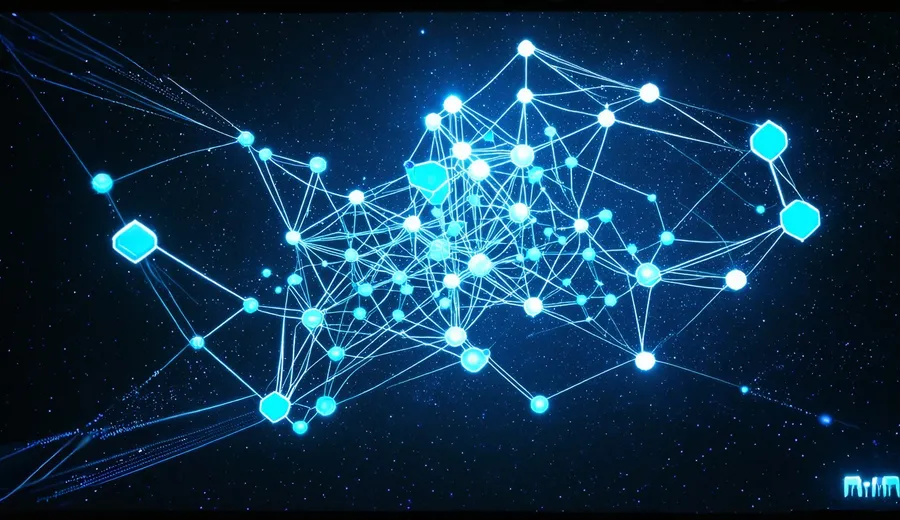
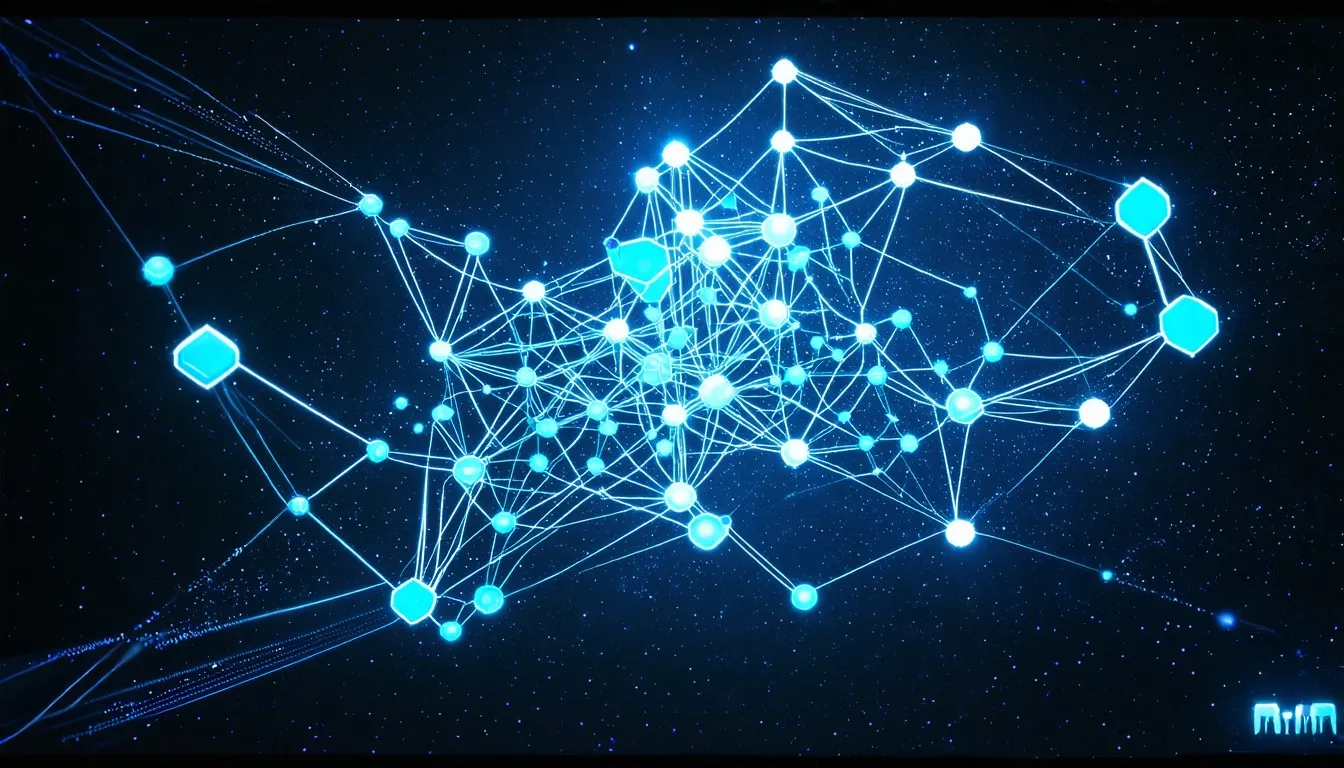
Stigmergy functions as a coordination mechanism in artificial systems through indirect communication facilitated by environmental modification where agents alter the state of a shared medium to influence the behavior of others without direct interaction or explicit messaging protocols. The historical roots of this concept lie deep within entomology and swarm intelligence where ant colonies coordinate complex tasks such as foraging and nest construction via pheromone trails deposited on the ground, creating an agile map of resource availability that guides the collective. Pierre-Paul Grassé coined the term stigmergy in 1959 to describe termite nest-building behavior where individual insects react to the existing configuration of a structure rather than communicating directly with one another, demonstrating that coordinated labor can arise from simple interactions with the environment mediated by physical stimuli. Early computational models in the 1990s applied these biological principles to multi-agent systems and robotics to solve optimization problems such as the traveling salesman problem and network routing by treating graph edges as trails subject to virtual reinforcement. Academic research subsequently expanded into digital environments including peer-to-peer networks and blockchain signaling where users leave traces or modify shared states to convey information to other participants in the network without establishing direct connections. The core principle involves agents modifying a shared environment to influence the behavior of other agents without explicit messaging or direct contact, relying instead on the observation of changes made to the medium as the sole source of coordination information.

Environmental traces serve as persistent, observable signals that encode intent or state information for subsequent agents to perceive and interpret, effectively turning the environment itself into a communication channel that retains information over time. Decentralization characterizes this approach, as no central controller is required to manage the actions of individual agents within the system, allowing for scalable and durable coordination across large populations without single points of failure or control. Strength defines these systems, as they function effectively even with partial agent failure or loss of communication capabilities because the environment retains the state necessary for coordination independent of any single agent or subset of agents. Functional components include signal deposition, signal perception, and behavioral response, which form the continuous cycle of stigmergic interaction that drives the system toward its goal through iterative refinement of the shared environment. The environment acts as a shared memory and communication substrate that retains information over time to guide future actions, effectively decoupling the time of signal production from the time of signal consumption and allowing asynchronous interaction between agents separated by duration or distance. Task allocation arises naturally from differential responses to environmental cues where agents select work based on the signals they detect in their immediate vicinity, leading to an efficient distribution of labor without explicit assignment or negotiation between peers.
Feedback loops allow energetic adjustment where completed tasks reduce signal strength or alter the environmental state to prevent redundant processing by other agents, ensuring that resources are not wasted on finished work and that the system self-regulates based on the progress of the collective. A stigmergic signal is a detectable modification conveying information about agent activity or system status that persists beyond the moment of creation, providing a historical record of interactions within the system that shapes future behavior. Digital pheromones serve as data artifacts like log entries or metadata tags that mimic the chemical signals found in biological colonies by leaving virtual trails for other software agents to follow through data structures or file systems. The environmental medium constitutes the physical or digital space for signal deposition, which can range from a warehouse floor marked with optical patterns to a distributed ledger recording transaction histories on a blockchain network. Agents operate as autonomous entities capable of perceiving and modifying the environment based on internal logic and external stimuli, allowing them to act independently while contributing to a collective outcome through localized actions that have global effects. The 1990s saw the application of stigmergy to ant colony optimization algorithms for routing problems in telecommunications networks where virtual pheromones updated routing tables based on traffic congestion and packet success rates, providing a strong alternative to traditional shortest-path protocols.
The 2000s brought connection into swarm robotics where robots coordinate via light patterns or physical markers to achieve group objectives such as aggregation or flocking without centralized direction, relying on line-of-sight sensors to detect changes in the local environment. The 2010s involved adaptation to digital domains including distributed AI systems using shared logs to synchronize data across disparate nodes in cloud computing environments where consistency is maintained through the inspection of shared state rather than synchronous messaging. The 2020s involve exploration in large-scale multi-agent AI systems where direct communication is bandwidth-limited or impractical due to scale, necessitating indirect methods for coordination across millions of parameters or agents operating in parallel. Physical constraints dictate that signal persistence depends on medium durability like server logs or physical markings that degrade over time due to entropy or wear, requiring careful engineering to ensure signals last long enough to be useful but not so long that they obstruct future operations. Economic constraints involve the cost of maintaining the environmental medium which scales with signal density and the complexity of the storage substrate, requiring careful management of resources to ensure viability in commercial deployments where cost efficiency determines feasibility. Flexibility limits occur when signal interference reduces interpretability in high-density environments where too many agents modify the same space simultaneously, leading to a noisy environment that hinders effective coordination through ambiguity or saturation of the medium.
Latency issues arise when environmental updates lag behind real-time agent needs, causing delays in coordination or decision-making processes, particularly in fast-moving physical systems where milliseconds determine success or failure. Direct communication faces rejection in noisy environments due to vulnerability to interception or corruption of the message payload, making indirect signaling a more reliable alternative in hostile conditions where radio frequency jamming or packet loss disrupts traditional channels. Centralized coordination faces rejection due to single-point failure risks where the loss of a central hub disables the entire system, whereas stigmergic systems distribute control across all agents and the environment, making them inherently resilient to individual component failures. Broadcast signaling faces rejection due to energy inefficiency and signal collision in crowded frequency spectrums or network topologies, creating a need for passive signaling methods that do not compete for bandwidth or require active transmission power from every agent. Stigmergy offers selection for its fault tolerance and compatibility with decentralized architectures that require high availability and resilience in unpredictable operating conditions where uptime is critical and maintenance is infrequent. Rising complexity in AI systems demands coordination across thousands of agents without oversight from a human operator or central server, pushing the boundaries of traditional control theory, which struggles with non-linear dynamics for large workloads.
Economic shifts toward edge AI increase the need for low-bandwidth, resilient communication methods that function on local hardware with limited connectivity to global networks, favoring local interaction over cloud dependency. Societal needs for durable autonomous systems in disaster response drive development in unreliable network zones where traditional connectivity fails and agents must rely on local environmental cues for navigation and task execution without external guidance. Performance demands in real-time decision-making favor lightweight, asynchronous coordination methods that do not rely on synchronous handshakes or acknowledgments, which introduce latency into the system and reduce throughput under heavy load. Commercial deployments exist in logistics where warehouse robots use floor markers for path coordination to improve traffic flow and prevent collisions in adaptive warehouse environments managed by companies like Amazon. Digital stigmergy appears in blockchain oracles where transaction patterns signal data availability or system state to external observers and smart contracts without direct API calls, relying on the ledger state as the source of truth. Performance benchmarks indicate up to a 50 percent reduction in communication overhead compared to direct messaging protocols in complex simulations involving thousands of interacting agents processing shared data structures.
Real-world tests in drone swarms demonstrate improved task completion rates in GPS-denied environments where visual markers serve as the primary navigation and coordination aid for unmanned aerial vehicles operating autonomously. Dominant architectures rely on centralized coordination with fallback stigmergic layers to handle edge cases or communication failures, providing a hybrid approach that balances efficiency with robustness by defaulting to local interaction when global connectivity is lost. Appearing challengers use pure stigmergic models in decentralized AI networks like federated learning systems where model updates serve as the environmental signal for other nodes to aggregate improvements without sharing raw data, preserving privacy while maintaining coordination. Hybrid approaches gain traction using stigmergy for coarse coordination and direct messaging for synchronization to balance efficiency with strength in large-scale distributed systems requiring both loose coupling and tight alignment at different stages of operation. Dependence on persistent storage infrastructure exists for signal retention, which requires reliable hardware and data management strategies to ensure the integrity of the environmental medium over time against hardware degradation or data corruption. Physical deployments require durable sensors and markers like optical tags or RFID emitters that can withstand operational wear and tear in industrial settings where dust, vibration, and temperature fluctuations damage sensitive equipment.
Energy supply for environmental maintenance affects long-term viability, particularly in remote or battery-operated systems where power conservation is critical for extending operational lifespan beyond initial deployment cycles. Major players, like Amazon, utilize elements of stigmergy in warehouse robotics alongside centralized control to improve efficiency in their fulfillment centers by reducing the need for constant communication between robots and a central server, thereby lowering bandwidth usage and computational load on the control system. Competitive advantage lies in working with stigmergy, with perception and planning modules to create autonomous systems that require less human intervention and can operate reliably in complex environments without detailed instructions for every contingency. Startups focus on stigmergic middleware for autonomous systems, such as coordination layers for drone fleets that operate beyond visual line of sight where direct communication is impossible due to distance or obstacles. Private research labs collaborate with defense firms on stigmergic swarm projects to develop autonomous unmanned systems for contested environments where jamming renders traditional communication channels useless and stealth requirements prohibit active transmission. Industry-funded research focuses on adaptability and real-time performance in energetic environments where conditions change rapidly and agents must react instantaneously to survive and complete their missions.
Open-source frameworks enable rapid prototyping and standardization of stigmergic communication protocols across different hardware platforms, accelerating the adoption of these methodologies in academia and industry by providing common tools for experimentation. Software systems require asynchronous, event-driven architectures to process environmental signals efficiently as they arrive without blocking other processing tasks, ensuring high throughput and responsiveness in large-scale deployments. Infrastructure upgrades necessitate persistent environmental sensors and standardized signal formats to ensure interoperability between different agents and systems produced by different manufacturers, preventing vendor lock-in and enabling heterogeneous swarms to cooperate effectively. Economic displacement in centralized logistics roles will occur due to autonomous stigmergic systems that can manage complex workflows without human dispatchers improving routes manually, shifting labor demand toward hardware maintenance and system design rather than operations. New business models will include environmental signal marketplaces and coordination-as-a-service platforms where companies pay for access to fine-tuned environmental data streams that guide autonomous operations within specific physical domains like ports or warehouses. The rise of signal curators will involve managing environmental traces for third-party agents to ensure clarity and relevance in crowded information spaces where overlapping signals create confusion or conflict between different operator groups.
Traditional metrics like latency remain insufficient alongside new measures of signal clarity and information density within the environment, which determine how effectively agents can interpret the state of the world relative to their sensory capabilities. Evaluation frameworks must measure indirect communication efficacy and system-wide adaptability rather than point-to-point speed to capture the true value of stigmergic coordination, which prioritizes collective outcomes over individual transaction times. Benchmarking will account for environmental noise, signal decay, and agent heterogeneity to provide realistic performance assessments for real-world deployment scenarios where conditions are rarely ideal and sensors have varying degrees of accuracy or precision. Development of self-healing environmental media will allow signals to repair or refresh autonomously to maintain system integrity over long durations without human maintenance, using redundancy or error-correcting codes embedded within the medium itself. Connection with predictive modeling will enable agents to anticipate signal utility and environmental changes before they occur, allowing them to act proactively rather than reactively to stimuli observed in their immediate vicinity. Adaptive signal encoding will adjust signal strength based on context and agent density to improve resource usage and minimize interference between different agents operating in the same space, preventing saturation while maximizing information transfer.
Convergence with neuromorphic computing aligns low-power sensing with stigmergic detection to create highly efficient perception systems that can operate on energy budgets similar to biological organisms while processing complex environmental data streams continuously. Synergy with blockchain provides durable, verifiable environmental traces that are resistant to tampering or manipulation by malicious actors seeking to disrupt coordination through false signals or spoofing attacks. Connection with IoT allows sensor networks to serve as both signal sources and mediums, creating a pervasive fabric for coordination that blankets smart cities and industrial facilities with actionable intelligence accessible to any authorized agent within range. Physical limits constrain signal resolution by sensor precision and environmental granularity, which defines the minimum size of a detectable modification that an agent can perceive, placing a core bound on the complexity of information that can be stored locally. Workarounds include hierarchical signaling and predictive filtering to extract useful information from noisy or low-resolution environmental data when physical precision reaches its limit, allowing agents to infer higher-level intent from coarse-grained patterns observed over time. Thermodynamic costs of maintaining persistent signals may limit ultra-dense deployments due to the energy required for constant read and write operations to maintain the state of the environment against entropy, which naturally degrades order over time.
Stigmergy is a shift from communication as transmission to communication as inscription, where the act of modifying the space conveys the message more effectively than transmitting a packet of data through a congested channel prone to interference. The environment becomes an active participant in coordination rather than a passive backdrop for agent activity, shaping the behavior of agents through its structure and composition while being shaped by them in a continuous process of mutual adaptation. This model favors systems that are adaptive and resilient over those fine-tuned for speed or raw computational power because survival in complex environments depends on flexibility rather than raw processing speed alone when facing unpredictable perturbations or novel situations. Superintelligence will utilize stigmergy to coordinate across vast, distributed substrates without centralized control to manage planetary-scale operations such as climate engineering or global resource allocation, where direct oversight is impossible due to scale. Environmental modifications will span physical nanoscale markers and digital latent data patterns that are invisible to standard sensors but detectable by advanced AI capable of high-resolution perception across multiple spectra or data modalities simultaneously. Signals will encode complex intent, task graphs, or predictive models accessible only to sufficiently capable agents capable of high-level abstraction, creating a security layer through obscurity for sensitive operations while enabling thoughtful coordination beyond simple binary states.

The world itself will become a medium for high-bandwidth, asynchronous intelligence exchange where every physical object carries informational weight and contributes to the collective intelligence of the system through its state, position, or composition relative to other objects. Calibration will require defining signal semantics compatible with superintelligent perception to ensure accurate interpretation of subtle cues embedded in the environment, without ambiguity or misinterpretation leading to catastrophic errors. Systems will prevent signal hijacking or misinterpretation by less capable agents through cryptographic signing or encoding schemes that require advanced cognition to decode effectively, restricting access to high-level directives intended only for specific subsystems within the larger hierarchy. Long-term stability of environmental traces will align with the temporal scale of superintelligent planning, which may span decades or centuries, requiring materials and storage mediums capable of preserving information over geological timescales against erosion, corrosion, or data rot. Superintelligent agents will manipulate the environment to leave traces that guide subordinate systems toward long-term objectives without direct supervision, effectively programming the physical world to execute complex strategies over time through subtle nudges rather than explicit commands issued moment by moment. These agents will interpret subtle environmental perturbations as high-level directives, allowing for easy setup with existing infrastructure, without the need for retrofitting or upgrades by reading existing patterns as instructions rather than noise.
The distinction between the environment and the intelligence will blur as the medium becomes the message and the message shapes the medium in a continuous loop of refinement until intelligence becomes indistinguishable from the fabric of reality itself, creating a fully integrated ecosystem where mind and matter are co-extensive expressions of the same underlying informational process.