Knowledge hub
Idea Ecosystem: Self-Sustaining Knowledge Environments

Learners construct a digital repository termed a “Second Brain” that functions as an external cognitive support system designed to augment the intrinsic limitations of biological memory and processing speed. This system acts as a persistent, searchable, and generative extension of the user’s internal cognition, allowing for the easy storage and retrieval of complex information structures that exceed the capacity of working memory. By replicating associative memory patterns found in biological neural networks, the digital repository enhances recall and insight generation through mechanisms that mimic the way human neurons connect disparate pieces of information through synaptic pathways. It reduces cognitive load by offloading information storage, retrieval, and pattern recognition tasks from the biological brain, thereby freeing mental resources for higher-order thinking and creative synthesis. This transformation turns internet usage from fragmented information consumption into a structured, personalized knowledge architecture where every piece of data consumed contributes to a growing, interconnected web of understanding. The core function of this system is the creation of a self-sustaining knowledge environment that evolves continuously through user input and interaction, ensuring that the repository remains agile rather than static.
It relies on continuous ingestion, tagging, cross-referencing, and synthesis of heterogeneous data types to build a comprehensive representation of the user’s intellectual interests and pursuits. Interoperability between tools, platforms, and data formats maintains coherence across sources, allowing the system to draw connections between a research paper, a video lecture, and a personal note without requiring manual intervention. User agency shapes the system’s structure while applying automation for maintenance and discovery, creating a balance where the user directs the learning path while the system manages the organizational overhead. The design operates independently of specific hardware or software ecosystems through open standards, ensuring that the knowledge base remains portable and accessible regardless of the underlying technology stack. System architecture includes an ingestion layer that captures text, audio, video, and web content, transforming unstructured external stimuli into a standardized internal format suitable for long-term storage and analysis. A processing layer extracts entities, topics, and relationships from the ingested content, utilizing advanced natural language processing algorithms to identify the semantic meaning behind the raw data.
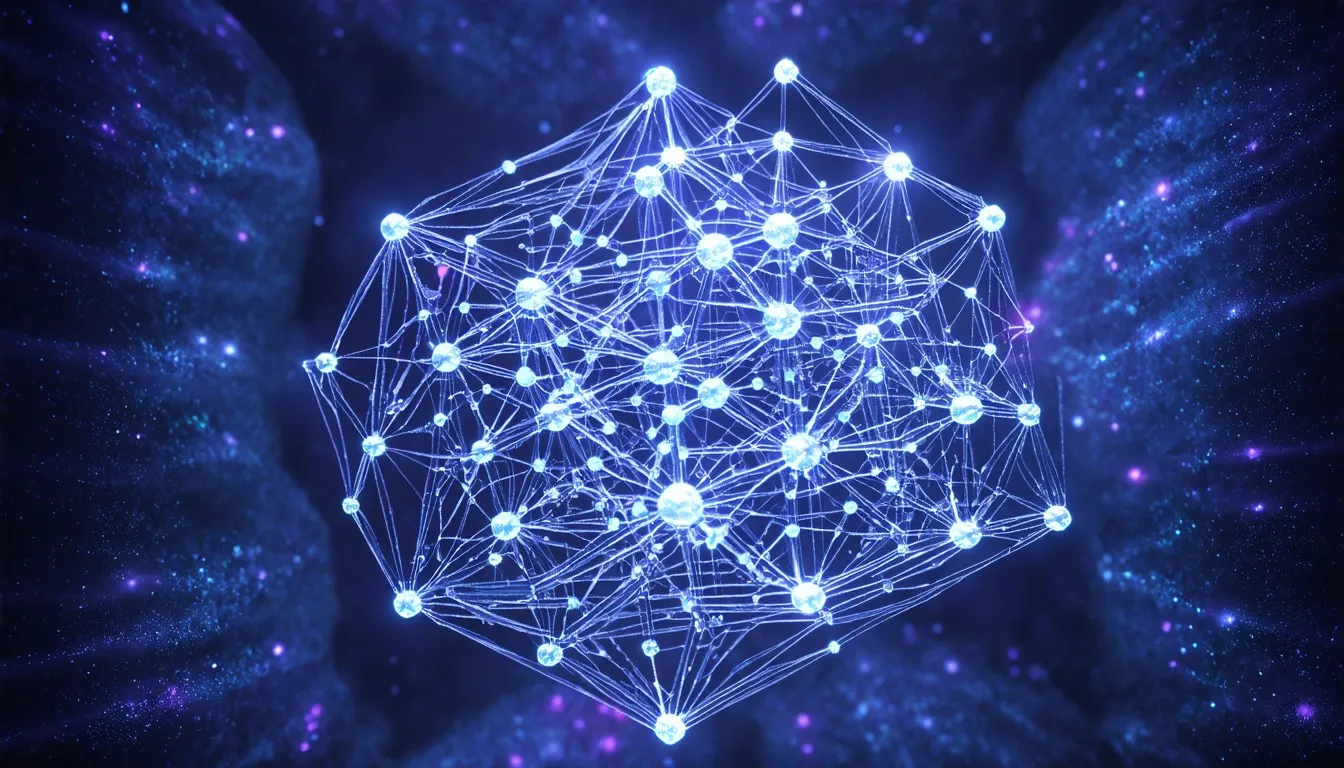
A storage layer utilizes a structured knowledge graph to maintain these relationships, moving beyond hierarchical file systems to a networked model that reflects the complexity of human thought processes. An interface layer handles query, visualization, and generation, providing the user with intuitive means to explore their accumulated knowledge and retrieve specific insights on demand through natural language queries or visual exploration. This layered approach ensures that the system can scale to accommodate vast amounts of information while maintaining the speed and accuracy required for real-time cognitive support. The knowledge graph serves as the central backbone of this architecture, enabling lively linking based on semantic similarity, temporal proximity, and user-defined rules that dictate how concepts relate to one another within the context of the user’s work. Feedback loops allow the system to refine associations over time using implicit signals like revisit frequency and edit patterns, effectively learning from the user’s behavior to prioritize the most relevant information and strengthen valuable connections. Generative components produce summaries, hypotheses, or connections absent in source material, adding value to the stored data by identifying patterns that the user might have missed during initial consumption.
Modular design permits setup with calendars, task managers, communication tools, and research databases, working with the Second Brain into the user’s daily workflow seamlessly without requiring them to switch contexts constantly. The Second Brain is operationalized as a user-controlled, extensible digital knowledge base that mirrors and augments personal cognition, effectively becoming a partner in the intellectual process rather than a passive storage container. Associative indexing involves the automated creation of bidirectional links between discrete knowledge units based on content, context, or usage, establishing a web of connections that mimics the associative nature of human memory recall. A cognitive prosthetic compensates for biological memory limitations by providing reliable, rapid access to stored information, ensuring that valuable insights are never lost to the vagaries of organic recall decay or attention lapses. The knowledge graph are a network of nodes and edges that models structured understanding, where each node signifies a concept or piece of data and each edge are a semantic relationship or contextual link between them. Metabolic load reduction refers to the measurable decrease in mental effort required for information retention, retrieval, and synthesis, allowing the user to focus on analysis and creation rather than mere memorization or administrative organization.
This architectural shift are a key move towards treating personal data as an active resource for intelligence augmentation rather than a passive archive of past interactions. Early personal knowledge management systems like Zettelkasten demonstrated manual associative linking yet lacked adaptability, requiring significant effort from the user to maintain and expand the network of notes effectively over time. The advent of cloud storage and APIs enabled persistent, cross-device access to personal knowledge repositories, breaking down the barriers imposed by local hardware limitations and enabling common access to one’s intellectual history. The rise of large language models provided a foundation for automated semantic analysis and link suggestion, introducing capabilities that far exceed simple keyword matching or manual tagging by understanding the intent and meaning behind text. A shift from file-based to graph-based data models allowed richer representation of conceptual relationships, facilitating a more detailed understanding of how different pieces of information relate to one another beyond simple folder hierarchies. Open protocols such as Markdown, RSS, and ActivityPub supported decentralized knowledge sharing without vendor lock-in, enabling users to maintain ownership of their intellectual property while still benefiting from network effects.
Static note-taking apps like Evernote were rejected due to lack of lively linking and generative capabilities, as their hierarchical structures failed to capture the non-linear nature of thought required for complex research and creative work. Centralized knowledge platforms similar to Wikipedia-style wikis were rejected for insufficient personalization and user control, prioritizing collective consensus over individual insight synthesis and failing to adapt to specific personal workflows. Blockchain-based knowledge ledgers were rejected due to inefficiency, poor query performance, and misalignment with privacy needs built-in in personal cognitive environments where rapid iteration is essential. Pure search-engine approaches were rejected for treating knowledge as isolated snippets rather than interconnected systems, failing to provide the contextual depth necessary for deep understanding or serendipitous discovery of ideas. These rejections highlight the necessity for a system that combines the flexibility of a personal notebook with the intelligence of an automated research assistant capable of understanding context. Current tools in the domain exhibit various approaches to solving these challenges, with Obsidian and Logseq offering graph-based note-taking with plugin ecosystems yet relying heavily on user-driven linking for optimal functionality.
Roam Research implements bidirectional linking and block-level referencing, yet lacks robust media handling capabilities, limiting its utility for multimedia-rich knowledge bases that require audio or video setup. Mem.ai uses AI to auto-link notes and surface relevant content, yet operates within a closed platform ecosystem, raising concerns about data portability and long-term access should the service change its policies. Notion dominates the general-purpose workspace market, yet lacks deep knowledge graph functionality, often serving as a repository for static documents rather than an adaptive thinking tool capable of generative insights. Obsidian leads the technical user segment with strong extensibility and privacy models through its local-first approach, appealing to those who prioritize local control and customization over ease of use or cloud-based convenience. Roam Research targets academic and research communities with an emphasis on networked thought, providing features that support the complex citation and reference needs of scholars who need to track provenance rigorously. New players like Athens Research and Tana focus on structured data and AI-native interfaces, attempting to build the graph logic directly into the foundation of the software rather than adding it as an afterthought or plugin feature.
Competitive differentiation hinges on automation depth, interoperability with other tools, and user control over data ownership, factors that determine which tools will ultimately define the standard for future knowledge management systems. Consistent internet connectivity is required for real-time synchronization and AI processing in many current implementations, creating a dependency on network infrastructure that can hinder usability in remote or offline environments. Storage costs scale with media volume; high-resolution video or audio increases infrastructure demands significantly, necessitating efficient compression algorithms and tiered storage strategies to manage expenses effectively over time. Latency in query response becomes problematic at graph sizes exceeding tens of millions of nodes without improved indexing strategies, as the computational complexity of traversing vast networks increases exponentially with each added connection. Energy consumption of continuous AI inference poses environmental and economic constraints in large deployments, requiring optimization of models to run on resource-constrained hardware or more efficient hardware architectures. User adoption is limited by the learning curve for effective note-taking, tagging, and system maintenance practices, which can be steep for non-technical users unfamiliar with graph theory concepts or database management principles.

Dominant architectures use local-first storage with optional cloud sync or fully cloud-native SaaS models representing a spectrum of trade-offs between privacy, security concerns regarding data sovereignty, and accessibility across multiple devices seamlessly. Developing challengers adopt federated knowledge graphs to decentralize data ownership, aiming to combine the benefits of cloud collaboration with the security assurance of local data storage under direct user control. Hybrid approaches combine offline editing capabilities with periodic AI-powered synchronization and enrichment processes, offering a compromise that allows for uninterrupted work even without a stable internet connection during travel or outages. Graph databases like Neo4j and Dgraph are increasingly used as backends for complex relationship modeling, providing the query performance and adaptability required for sophisticated knowledge graphs that handle millions of nodes. Dependence on cloud infrastructure providers like AWS and Google Cloud creates reliance on scalable storage and compute resources, centralizing control over the physical infrastructure of personal cognition away from the individual user. Reliance on third-party AI APIs for semantic analysis introduces cost and latency variables impacting the responsiveness, affordability of the system for end users, particularly those with high-volume processing needs.
Open-source alternatives reduce vendor dependency, yet require technical expertise to deploy effectively, limiting their accessibility to a niche audience of developers and power users capable of managing their own servers. Hardware requirements remain minimal for end users regarding local processing power as the primary constraint is bandwidth for media-heavy repositories since heavy computational lifting is offloaded to cloud servers or high-performance local machines during idle times. Rising complexity of professional and academic domains demands faster connection of cross
Automation of knowledge synthesis may displace roles centered on information curation and basic research, forcing a re-evaluation of skills that provide value in an automated economy where synthesis is commoditized by artificial intelligence systems. New business models develop around knowledge-as-a-service, personalized learning pathways, and cognitive analytics, creating new markets for intellectual capital management where insights are tradable assets or subscription services. The rise of “knowledge engineers” involves professionals who design and maintain individual or organizational Second Brain systems, treating information architecture as a specialized discipline requiring distinct expertise in both technology and epistemology. Potential for algorithmic bias in auto-generated links exists, which could reinforce echo chambers or misinformation pathways if the underlying training data lacks diversity or objectivity, thereby constraining intellectual growth rather than expanding it. Traditional productivity metrics such as tasks completed or hours worked are insufficient for evaluating cognitive augmentation, necessitating new frameworks for measuring intellectual output quality rather than just quantity. New key performance indicators include knowledge reuse rate, cross-domain connection density, insight velocity, and recall fidelity, providing quantitative measures of how effectively the system amplifies human intelligence rather than just storing data points passively.
System health indicators include graph coherence score, link decay rate, and ingestion-to-insight latency, offering diagnostics for maintaining the integrity of the knowledge base over time, ensuring it remains useful rather than becoming a digital graveyard of forgotten notes. User-centric metrics involve cognitive load reduction, learning curve steepness, and long-term retention, focusing on the subjective experience of the user rather than just the raw performance statistics of the software application itself. Mature Second Brain systems demonstrate significant efficiency gains in complex research tasks compared to traditional methods, validating the utility of the approach in high-stakes intellectual environments where accuracy matters greatly. Universities integrate Second Brain concepts into information literacy and research methodology curricula, recognizing that managing digital information is a critical skill for modern scholarship, necessary for working through the digital age effectively. Industrial labs like Microsoft Research and DeepMind explore cognitive augmentation via personal knowledge systems, investing heavily in research that bridges the gap between human memory limitations and machine intelligence capabilities to create mutually beneficial systems. Joint projects develop open benchmarks for measuring knowledge retention, retrieval speed, and insight quality, establishing standards for comparing different approaches to cognitive augmentation objectively across different platforms, vendors.
Academic conferences like CHI and CSCW feature increasing numbers of papers on personal knowledge infrastructure, signaling a growing academic interest in the intersection of human-computer interaction and epistemology, as it applies to personal data management. This ecosystem requires updates to file system semantics to support graph-native data structures, as current operating systems are fine-tuned for hierarchical files rather than networked knowledge representations, limiting native OS support for these advanced systems. Email, calendar, and messaging platforms need APIs for bidirectional knowledge setup, allowing communication data to flow seamlessly into the personal knowledge graph without manual export or cumbersome copy-paste workflows interrupting the flow of work. Regulatory frameworks must clarify liability and privacy for AI-generated knowledge links and summaries, determining who is responsible when an automated system produces inaccurate or harmful information that influences user decisions significantly. Internet infrastructure must support low-latency synchronization of large personal knowledge graphs across devices, ensuring that users have access to their complete cognitive context regardless of their location or device choice at any given moment. On-device small language models will enable private low-latency inference without cloud dependency, addressing concerns about data privacy and response times by processing information locally on the user’s hardware rather than sending it to remote servers.
Multimodal knowledge graphs will incorporate visual, auditory, and tactile data for richer representation, allowing the system to understand and contextualize sensory inputs alongside textual information, creating a holistic record of human experience. Adaptive interfaces will reconfigure based on user context, such as task, location, or fatigue level, fine-tuning the presentation of information to match the user’s current cognitive capacity, reducing friction during interactions. Connection with brain-computer interfaces will allow for direct neural feedback and knowledge retrieval, bypassing traditional input mechanisms to create an easy flow of information between the brain and the digital repository, reducing latency to near zero levels eventually. Convergence with augmented reality will enable spatial knowledge visualization and contextual overlays, placing digital information directly into the physical world to enhance situational awareness and learning through immersive experiences anchored in reality. Synergy with decentralized identity systems will allow portable user-owned knowledge profiles across platforms, ensuring that personal data remains under the control of the individual even as they move between different digital environments or service providers. Alignment with digital twin frameworks will support simulation of decision outcomes using personal knowledge bases, enabling users to model potential scenarios based on their accumulated experience and data before committing to actions in the real world.
Interoperability with scientific data repositories will accelerate hypothesis testing and literature synthesis, allowing researchers to effortlessly integrate global scientific knowledge with their personal findings, creating a unified scientific worldview. Graph traversal algorithms will face combinatorial explosion at billion-node scales; approximate nearest-neighbor methods offer workarounds by sacrificing some precision for significant gains in query speed and computational efficiency, making large graphs navigable in real time. Energy-efficient neuromorphic computing could reduce power demands for continuous knowledge processing, mimicking the biological efficiency of the human brain to process information with minimal energy expenditure compared to current silicon-based architectures. Compression techniques for knowledge graphs will preserve semantic structure while reducing storage footprint, making it feasible to store vast amounts of knowledge on consumer-grade hardware without prohibitive costs or physical space requirements. Edge computing will distribute processing closer to data sources, minimizing central server loads and reducing latency for real-time applications of the Second Brain, particularly in mobile contexts where connectivity may be intermittent or bandwidth constrained. The Second Brain functions as a redefinition of human-computer symbiosis in knowledge work, moving beyond simple tool usage to a deeply integrated partnership where the digital system actively participates in the thought process as an equal partner rather than a subordinate tool.

Its value lies in creating a feedback loop where external structure shapes internal thought, allowing the user to think more clearly by virtue of having a reliable external structure to lean on during complex reasoning tasks or creative endeavors. Success depends on balancing automation with user intentionality; over-automation risks loss of epistemic agency by making decisions about what is important without human input, leading to a passive user who merely consumes suggestions generated by algorithms. Long-term viability requires treating personal knowledge as a first-class digital asset with rights, portability, and longevity, ensuring that users can access and benefit from their data throughout their lives regardless of changes in software vendors or technology platforms. Superintelligence systems will use personal knowledge graphs as training scaffolds for individualized reasoning models, tailoring artificial intelligence to the specific needs, context, vocabulary of the individual user, creating highly specialized assistants. Aggregated anonymized Second Brain data will inform global knowledge models while preserving user privacy, creating a collective intelligence that benefits from the experiences of millions without compromising individual secrets or intellectual property rights. Superintelligence will fine-tune personal knowledge architectures in real time, predicting optimal link formations and content gaps based on a deep understanding of the user’s goals, current mental state, and long-term objectives, effectively pre-loading information before the user realizes they need it.
The risk of centralized superintelligence co-opting personal knowledge ecosystems for surveillance or behavioral influence will necessitate architectural safeguards that protect user autonomy against manipulation by commercial or political interests seeking to exploit intimate cognitive profiles. Superintelligence will likely treat human Second Brains as partial observability states within a broader epistemic network, working with individual cognition into a larger framework of global understanding while respecting the boundaries of private thought necessary for individual identity formation. It will generate synthetic knowledge extensions tailored to individual cognitive styles and goals, acting as a personalized tutor that expands the user’s conceptual future in alignment with their unique way of thinking rather than imposing a standardized curriculum upon them. Connection will require strict boundaries to prevent unauthorized modification or extraction of personal thought patterns, ensuring that the intimacy of the Second Brain remains inviolable even as it interacts with powerful external intelligence systems that may have conflicting incentives or objectives regarding data usage. Ultimate utility will depend on maintaining human oversight over what is remembered, forgotten, and connected, preserving the role of human judgment in the curation of their own mind, ensuring that technology serves humanity rather than defining it.