Knowledge hub
Boredom Antidote: Superintelligence Detects and Fixes Disengagement in Real Time

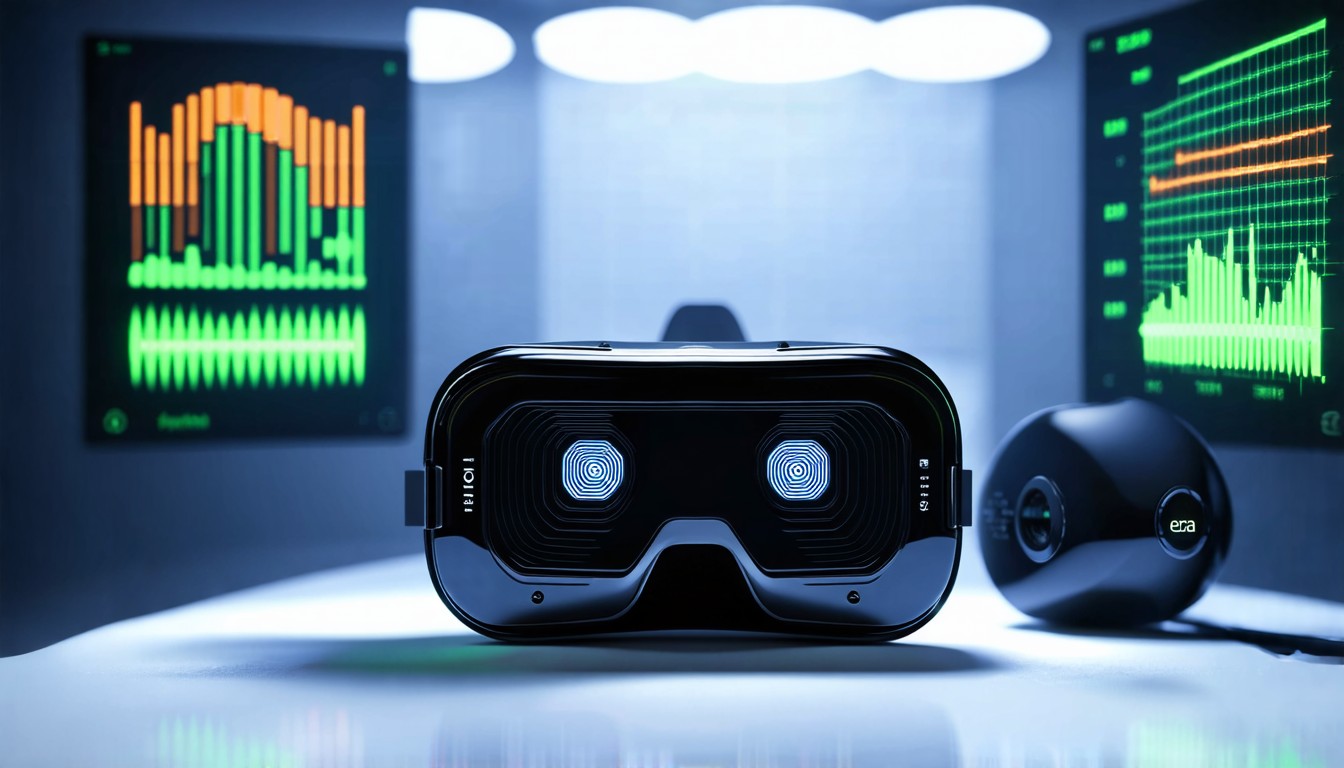
Wearable sensors such as electroencephalography headbands and advanced smartwatches continuously monitor physiological markers to establish a granular understanding of the learner’s internal state, capturing data points including galvanic skin response and specific brain wave ratios like theta to beta waves, which serve as reliable indicators of drowsiness or a lack of cognitive focus. These devices operate by detecting subtle changes in the electrical activity of the brain or the conductivity of the skin, which fluctuates in response to sweat production driven by emotional arousal or cognitive effort, thereby providing a raw data stream that reflects the intensity of mental engagement without requiring any conscious input from the user. The connection of these biometric measurements allows for an objective assessment of attention that goes beyond self-reported surveys or behavioral observation, creating a foundation upon which superintelligent educational systems can build a responsive and adaptive learning environment that reacts immediately to the physiological reality of the student. Computer vision systems simultaneously utilize high-resolution camera feeds to track gaze direction, blink frequency, and pupil dilation while analyzing posture for physical signs of slumping or restlessness, creating a comprehensive picture of behavioral engagement that complements the physiological data gathered from wearables. These visual algorithms rely on landmark detection to map the facial geometry of the learner, identifying specific points around the eyes and mouth to infer levels of fatigue or confusion, while body pose estimation algorithms track the orientation of the torso and head to detect when a learner physically withdraws from the learning material due to boredom or frustration. The combination of these visual cues with biometric data provides a strong dataset that minimizes the likelihood of misinterpreting momentary distractions as sustained disengagement, ensuring that the system possesses a high-fidelity understanding of the learner’s attentional state before triggering any intervention protocols.
Edge processing units play a critical role in this architecture by fusing these disparate data streams from wearables and cameras into a single multimodal engagement signal while minimizing transmission latency to ensure that the system can react in real time without the delays intrinsic in cloud computing. By performing the initial data aggregation and signal processing locally on the device or a local access point, the system reduces the bandwidth required to transmit raw video or sensor data to a central server, addressing privacy concerns and allowing for immediate analysis of the learner’s state. This local processing capability is essential for maintaining the temporal resolution needed to detect rapid shifts in attention, enabling the inference engine to operate on data that is effectively live rather than relying on stale snapshots that might lead to inappropriate or ill-timed educational interventions. Machine learning models trained on extensive labeled datasets of engaged versus disengaged states classify user attention levels at intervals of less than one second, utilizing deep neural networks that have learned to recognize complex patterns in physiological and visual data that correlate with high cognitive performance. These models ingest the fused multimodal stream and output a probability score representing the likelihood that the learner is fully attentive, allowing the system to make granular decisions about the necessity of instructional adjustments based on statistical confidence rather than arbitrary thresholds. The high frequency of classification ensures that the system captures the agile nature of human attention, which can fluctuate rapidly over short periods, and provides a smooth arc of engagement metrics that the adaptive content engine can use to modulate the difficulty and presentation style of the learning material seamlessly.
The precise definition of disengagement within these systems involves identifying a sustained deviation from baseline attentional markers lasting longer than ten seconds rather than the previously assumed five seconds to avoid false positives that might disrupt the learning flow unnecessarily. This temporal threshold is calibrated to distinguish between brief, transient lapses in attention that are a normal part of the cognitive process and meaningful periods of disengagement that indicate a loss of comprehension or interest, ensuring that interventions are only deployed when they are genuinely required to assist the learner. Establishing this baseline requires an initial period of calibration where the system observes the user’s natural physiological and behavioral patterns during a known state of focus, allowing it to personalize the definition of disengagement to the individual rather than applying a generic standard that might inaccurately flag neurodivergent learners or those with distinct behavioral quirks. End-to-end latency must remain under two hundred milliseconds to preserve the pedagogical flow because delays exceeding half a second cause cognitive dissonance and reduce intervention efficacy by breaking the temporal link between the learner’s wandering attention and the system’s corrective response. When a student begins to lose focus, there is a narrow window of opportunity in which a pedagogical intervention can successfully redirect their attention back to the material without causing confusion or irritation, making the speed of the feedback loop a critical determinant of the system’s educational value. Achieving this sub-two-hundred-millisecond latency requires improving every basis of the pipeline, from sensor sampling and data transmission to model inference and content rendering, necessitating highly efficient code and specialized hardware capable of executing complex computations within a fraction of a second.
Upon detecting sustained disengagement, the system triggers adaptive content delivery protocols that switch lesson formats from passive video consumption to interactive simulations or gamified quizzes, utilizing a sudden change in modality to re-engage the learner’s cognitive faculties. This shift is designed to stimulate different neural pathways and increase arousal levels, forcing the brain to transition from a passive reception mode to an active problem-solving mode, which is effective in capturing wandering attention and restoring focus on the learning objectives. The selection of the specific intervention is determined by the nature of the detected disengagement, where signs of cognitive overload might trigger a simplification of the material, while signs of boredom might trigger an increase in complexity or the introduction of an interactive element to challenge the learner. Content adaptation algorithms utilize historical engagement patterns and cognitive load estimates derived from prior interactions to personalize the learning experience, ensuring that the adjustments made are not merely reactive but are informed by a deep understanding of the individual learner’s preferences and optimal learning zones. By analyzing how the learner responded to similar interventions in the past, the system can predict which type of content modification is most likely to succeed in restoring attention for that specific user, creating a tailored educational progression that evolves over time to maximize efficiency and retention. This historical context allows the system to distinguish between a learner who benefits from visual stimuli and one who responds better to textual explanations or hands-on interaction, refining the personalization engine with every interaction to create a highly improved learning pathway.
User experience personalization includes lively interface adjustments such as modifying font size or color contrast and pacing modifications like speeding up or pausing content based on real-time attention metrics, ensuring that the learning environment remains visually and cognitively attuned to the user’s current state. These micro-adjustments are applied automatically and imperceptibly to maintain a smooth user experience, preventing friction that could further distract the learner while fine-tuning the visual presentation for maximum readability and comfort based on indicators of visual strain or fatigue detected by the eye-tracking algorithms. The system manages the pacing of the instruction by slowing down when confusion is detected or accelerating when mastery is demonstrated, keeping the learner in a state of flow where the difficulty of the task matches their current level of ability, which is essential for deep learning and sustained motivation. The core mechanism relies on a closed-loop feedback system involving continuous sensing followed by classification and intervention without a human in the loop for routine adjustments, enabling a scale of personalization that would be impossible for human instructors to achieve manually. This automated cycle operates continuously throughout the learning session, constantly monitoring the effects of its interventions and adjusting its strategy based on the resulting changes in the learner’s physiological signals, creating a self-regulating system that maintains optimal engagement levels without external oversight. Removing the human instructor from the immediate feedback loop allows for instantaneous responses to attentional drift, freeing human educators to focus on high-level mentoring and complex emotional support while the superintelligent system handles the granular task of attention management.
Early research in affective computing during the 2000s established the feasibility of emotion detection via biometrics while later work in the 2010s demonstrated the efficacy of active content switching, laying the groundwork for the sophisticated real-time adaptive systems currently under development. Those initial studies proved that computers could reliably detect emotional states such as frustration, boredom, and delight using physiological sensors, validating the concept that machines could interpret human internal states sufficiently well to drive meaningful interactions in educational settings. Subsequent research focused on translating these emotional detections into actionable pedagogical strategies, showing that dynamically altering the learning environment in response to detected affective states could significantly improve learning outcomes compared to static one-size-fits-all approaches. Functional architecture comprises a sensing layer for hardware input, an inference layer for on-device or cloud AI processing, and an actuation layer for the content delivery engine, creating a modular structure that allows for independent upgrades and maintenance of each component. The sensing layer is responsible for gathering raw physiological and behavioral data using standardized protocols, while the inference layer applies machine learning models to interpret this data and generate commands for the actuation layer, which subsequently modifies the user interface or content presentation to align with the inferred needs of the learner. This separation of concerns facilitates the setup of new sensor technologies or improved AI models without necessitating a complete overhaul of the system, allowing the educational platform to evolve continuously as advancements in hardware and software algorithms become available.
Sensor accuracy varies across demographics such as darker skin tones reducing photoplethysmogram signal quality in wearables, requiring specific calibration per user to ensure equity and prevent bias in the detection of engagement levels. Optical heart rate sensors and other light-based biometric tools often struggle to penetrate darker skin tones or perform poorly under varying ambient light conditions, leading to noisy data that could result in misinterpretation of a user’s engagement status if left uncorrected. To mitigate these disparities, modern systems incorporate individualized calibration routines that adjust signal processing parameters based on the user’s specific skin tone and anatomical features, ensuring that the engagement metrics derived from the sensors are valid and reliable across diverse populations rather than privileging specific demographic groups over others. Power consumption limits continuous operation of high-fidelity sensors so solutions include duty cycling and sensor fusion to reduce redundant sampling alongside low-power inference chips designed specifically for edge AI workloads. Running multiple sensors and complex machine learning models simultaneously drains battery life rapidly, which is unacceptable for wearable form factors meant to be used throughout the day, necessitating intelligent power management strategies that balance data quality with energy efficiency. Duty cycling involves turning sensors on and off at strategic intervals or reducing their sampling rate when high-resolution data is less critical, while sensor fusion allows the system to rely more heavily on low-power sensors like accelerometers when power-hungry sensors like cameras can be temporarily deactivated without sacrificing the overall accuracy of the engagement assessment.
Adaptability faces challenges regarding per-user hardware costs and bandwidth demands for video-based eye-tracking in large classrooms or corporate settings, creating economic barriers to widespread adoption that require innovative engineering solutions. High-quality eye-tracking cameras and clinical-grade EEG headsets remain expensive components, making it difficult to equip every student with a dedicated device, while transmitting continuous video feeds from hundreds of devices simultaneously can overwhelm standard network infrastructure. Addressing these challenges involves developing lower-cost sensor arrays that utilize consumer-grade hardware components enhanced by advanced signal processing algorithms and implementing edge computing architectures that process video locally on the device to transmit only extracted metadata, thereby drastically reducing bandwidth requirements. Static difficulty adjustment was rejected because it does not address attentional state, while periodic self-reports were rejected for being intrusive and lagging, leading to the adoption of continuous implicit monitoring as the superior method for engagement management. Static systems rely on pre-defined rules that do not account for the fluid nature of human attention or external factors affecting focus, whereas self-reports interrupt the learning process and rely on subjective self-assessment that is often inaccurate or delayed relative to the actual onset of disengagement. Continuous implicit monitoring overcomes these limitations by providing an objective, real-time stream of engagement data that allows the system to intervene proactively at the exact moment attention wanders, creating an easy learning experience that adapts to the user’s cognitive state dynamically rather than relying on disjointed or heuristic adjustments.
Rising performance demands in remote and hybrid education expose limitations of one-size-fits-all instruction while economic shifts toward skill-based hiring increase the return on investment for personalized learning technologies that maximize educational efficiency. As remote work and learning become more prevalent, the lack of physical presence makes it difficult for instructors to gauge student engagement through traditional means, creating a pressing need for automated systems that can bridge this gap and ensure that remote learners remain as focused as those in a physical classroom. Concurrently, the competitive global economy places a premium on rapid skill acquisition and upskilling, encouraging corporations and educational institutions to invest heavily in technologies that accelerate learning by maintaining optimal engagement levels throughout the training process. Societal need for inclusive education drives demand for systems that accommodate neurodiversity and varying attention capacities without stigmatizing the user, encouraging an environment where learners with different cognitive profiles can succeed without being singled out or forced to conform to standard expectations. Traditional educational environments often fail neurodivergent individuals by expecting uniform attention spans and learning styles, whereas superintelligent adaptive systems can tailor the pacing, content format, and sensory inputs to suit the specific needs of learners with conditions such as ADHD or autism spectrum disorder. By detecting when a neurodivergent learner is becoming overwhelmed or disengaged and responding with appropriate accommodations like sensory breaks or alternative explanation methods, these systems promote equity and accessibility in education in a way that respects individual differences.

Current deployments include pilot programs in K-12 districts using EEG headsets from companies like Neurosity or Emotiv paired with learning management system connections, providing real-world validation of the benefits of working with biometric feedback into standard curricula. These pilot programs have demonstrated that teachers can utilize aggregate engagement data to identify moments during a lesson where the majority of students lost interest, allowing them to refine their teaching strategies, while individual students receive personalized interventions that help them stay on track. The data collected from these deployments is instrumental in refining the machine learning models that drive the engagement detection algorithms, ensuring that they are durable enough to handle the chaotic and unpredictable environment of a live classroom filled with young learners. Corporate training platforms like Axonify utilize eye-tracking technology to improve compliance modules and ensure employee focus during mandatory training, addressing the common issue of employees passively watching safety videos without actually processing the information. By tracking gaze patterns to verify that employees are looking at relevant areas of the screen and assessing their pupillary responses to gauge cognitive load, these platforms can pause the training if attention wanes and require the employee to answer a knowledge check question before proceeding, guaranteeing that critical safety information is actually learned. This application is particularly valuable in high-stakes industries where compliance is mandatory and safety risks are high, providing a layer of assurance that traditional training methods cannot offer due to their inability to verify internalized attention.
Benchmarks indicate a fifteen to twenty percent improvement in task completion rates and a twenty percent reduction in dropout rates during adaptive sessions compared to static content delivery, highlighting the tangible efficacy of engagement-aware learning technologies. These performance gains are attributed to the system’s ability to prevent learners from becoming stuck in states of frustration or boredom, which are the primary causes of attrition in online learning environments, by dynamically adjusting the difficulty and presentation style to keep the learner in their optimal zone of proximal development. The statistical significance of these improvements suggests that working with real-time engagement monitoring into educational software is not merely a novelty but a substantial advancement in pedagogical effectiveness that delivers measurable returns on investment for both educational institutions and corporate training departments. Dominant architecture currently uses centralized cloud AI with edge preprocessing while appearing challengers employ federated learning to preserve privacy during model updates, reflecting a growing tension between the need for powerful centralized models and the imperative to protect sensitive biometric data. Centralized architectures offer the advantage of using massive computational resources to train extremely large models on aggregated datasets from millions of users, resulting in high accuracy, while federated learning allows the model to be trained across decentralized devices holding local data samples, exchanging only model updates rather than raw data. This shift toward federated learning is driven by increasing regulatory scrutiny regarding biometric data privacy and user concerns about having their detailed physiological profiles stored on remote servers, prompting developers to explore architectures that balance performance with privacy preservation.
The supply chain depends on specialized components including infrared cameras for eye-tracking, dry-electrode EEG sensors, and low-latency wireless protocols like Bluetooth LE Audio, creating a complex ecosystem of hardware providers that must scale production to meet growing demand. Manufacturing these components requires specialized expertise in microfabrication and signal processing, particularly for dry-electrode sensors that can make reliable electrical contact with the skin without conductive gels, which are essential for consumer-friendly wearable devices that are comfortable enough for all-day use. The availability of low-latency audio protocols is also crucial for synchronizing auditory feedback with visual cues in real-time interventions, ensuring that the multimodal nature of the educational content remains coherent despite the rapid switching between different media formats dictated by the engagement engine. Major players include Google through Chromebook camera APIs and Apple through HealthKit combined with ARKit for posture analysis, where competitive differentiation hinges on privacy safeguards and the smooth setup of sensor data into existing software ecosystems. Google applies its dominance in the educational laptop market to provide access to camera feeds for eye-tracking algorithms through standardized APIs, while Apple utilizes its tight control over hardware and software stack to integrate health data from Apple Watch and spatial data from its ARKit framework to create a comprehensive picture of user posture and attentional state. Both companies are positioning themselves as enablers of this new educational framework by providing the underlying infrastructure that developers need to build engaging applications, competing fiercely on who can offer the most secure and privacy-compliant environment for handling sensitive student data.
Academic-industrial partnerships, such as those between the MIT Media Lab and Pearson, accelerate validation studies despite facing intellectual property fragmentation and data-sharing barriers that complicate collaborative research efforts. These partnerships bring together the theoretical rigor and methodological expertise of academic researchers with the scale, resources, and real-world datasets of major educational publishers, facilitating rapid prototyping and validation of new engagement detection algorithms in authentic learning environments. Working through intellectual property rights regarding jointly developed models and agreeing on protocols for sharing sensitive biometric data between academic institutions and commercial entities remains a significant hurdle that requires careful legal and ethical negotiation to ensure that all parties can benefit from the collaboration without compromising research integrity or user privacy. Adjacent systems require updates, so learning management system APIs must support real-time engagement metadata and school Wi-Fi infrastructure must handle bursty uplink traffic from hundreds of sensor-equipped devices simultaneously connected to the network. Existing learning management systems were designed to handle static records of grades and attendance rather than continuous streams of engagement metrics, necessitating a substantial upgrade to their backend architectures to ingest, store, and visualize this dynamic data in real time for instructors and administrators. Similarly, network infrastructure in schools must be upgraded to support high-density wireless environments where every student is transmitting sensor data continuously, requiring strong bandwidth management and quality of service policies to prioritize educational traffic over less critical data streams to ensure that low-latency requirements are met consistently.
Measurement shifts demand new key performance indicators including attention dwell time per concept and intervention success rate to replace passive metrics like login frequency or time spent on page, which are poor proxies for actual learning or engagement. Attention dwell time measures how long a learner maintains sustained focus on a specific concept before becoming distracted, providing a granular metric of cognitive engagement that correlates strongly with retention and understanding, while intervention success rate tracks how effectively the system restores attention after a disengagement event is detected. These new KPIs enable educators and platform designers to assess the efficacy of specific content types and pedagogical strategies with far greater precision than traditional analytics, allowing for continuous optimization of the curriculum based on how it actually influences the learner’s cognitive state. Future innovations may integrate functional near-infrared spectroscopy for deeper neural correlates of boredom or use generative AI to synthesize custom micro-content on demand tailored specifically to the user’s current cognitive gap. Functional near-infrared spectroscopy offers a less invasive alternative to fMRI by using light to measure blood oxygenation changes in the brain, providing insights into neural activity that could reveal boredom or confusion before they bring about in peripheral physiological signals like heart rate or skin conductance. Coupled with generative AI capable of producing unique text, images, or simulations instantly, these systems could create tailored educational interventions designed specifically to address the unique mental state of the learner at that exact moment, moving beyond pre-authored content libraries to truly adaptive instruction generation.
Convergence with augmented reality and virtual reality enables immersive attention scaffolds such as virtual tutors that reposition based on gaze direction to guide focus toward relevant elements within a three-dimensional learning space. In a virtual reality environment, the system has complete control over the visual field and can manipulate spatial cues to draw the learner’s attention toward important objects or information that they might have missed due to distraction or lack of interest, effectively setting up their attentional processes in real time. Virtual tutors can appear within the learner’s field of view and make eye contact or gesture toward specific areas of interest, applying social cues known to capture human attention effectively to enhance the sense of presence and social connection within the digital learning environment. Optical eye-tracking fails under low light conditions or with certain eyewear, so workarounds use hybrid inertial-optical tracking methods that combine camera data with accelerometer and gyroscope readings to infer gaze direction when visual tracking is unreliable. These hybrid systems utilize machine learning models trained on data from both optical trackers and inertial measurement units to predict gaze direction even when the camera feed is obscured by darkness or reflections from glasses, ensuring strength across diverse environmental conditions and user profiles. By fusing these disparate data sources, the system can maintain a continuous stream of attention metrics regardless of lighting conditions or accessories worn by the user, preventing gaps in monitoring that could otherwise lead to missed opportunities for intervention or inaccurate assessments of engagement.
Disengagement is a system-design failure instead of a learner deficit, so the solution lies in treating attention as an energetic resource to be managed through intelligent environmental design rather than attempting to force compliance through discipline or willpower alone. This perspective shifts the responsibility for maintaining engagement from the student to the designer of the learning system, acknowledging that human cognitive capacity is finite and susceptible to fatigue under suboptimal conditions, requiring an intelligent environment that actively supports attentional processes. By designing systems that adapt to the user’s cognitive state and minimize friction, boredom becomes an engineering problem to be solved through better feedback loops and content adaptation rather than a character flaw of the learner that must be corrected through external pressure. Superintelligence will utilize this framework to fine-tune individual learning and collective knowledge workflows across entire organizations, analyzing aggregate engagement data to fine-tune team structures and communication protocols for maximum cognitive efficiency. Beyond individual instruction, a superintelligent system could monitor the attentional states of entire teams working on complex projects, identifying patterns of collective fatigue or misunderstanding and suggesting adjustments to workflows, meeting schedules, or information distribution methods to maintain group productivity. This holistic approach treats organizational intelligence as an emergent property of individual cognitive states, managing the flow of information and attention across the network to ensure that human resources are allocated where they are most needed and that knowledge transfer occurs with minimal loss due to disengagement.

Future superintelligent systems will dynamically reallocate human attention across teams and tasks in real time to maximize global productivity and learning efficiency, essentially acting as a traffic controller for cognitive resources at an organizational scale. Such a system could detect that a specific team member is highly engaged and receptive to new information while another is experiencing cognitive overload, automatically rerouting incoming queries or tasks to balance the cognitive load across available human resources in real time. This adaptive allocation ensures that critical tasks are always handled by individuals with the optimal mental state for them, preventing limitations caused by fatigue or disengagement and allowing organizations to operate with a level of agility and resilience that is impossible with static management structures. Calibrations for superintelligence will involve aligning engagement models with ethical guardrails to avoid overstimulation and respect necessary cognitive rest periods, recognizing that maximizing productivity cannot come at the expense of long-term mental health or sustainable work practices. An unaligned system might attempt to keep learners in a state of perpetual high arousal through constant stimulation, which would lead to burnout and diminished performance over time, necessitating explicit constraints that mandate downtime and respect natural circadian rhythms of attention. Ethical calibration involves defining what constitutes healthy engagement versus harmful hyper-focus, programming the superintelligence to prioritize sustainable learning habits and well-being alongside efficiency metrics to ensure that the technology enhances human life rather than depleting it.
These advanced systems will predict disengagement events before they occur based on subtle precursors in physiological data and preemptively adjust the environment or content to prevent attention from drifting in the first place. By identifying early warning signs such as slight changes in breathing patterns or micro-saccades in eye movement that precede a noticeable drop in focus, predictive models can initiate interventions so subtle that the learner never consciously experiences a lapse in attention, maintaining an easy flow of deep work. This capability transforms the system from a reactive tool that fixes problems after they arise into a proactive partner that coordinates the cognitive environment to sustain optimal performance indefinitely. Superintelligence will eventually manage the attention economy by balancing the cognitive load of human operators with the requirements of complex automated systems, ensuring that humans remain effective supervisors of autonomous agents without becoming overwhelmed by data streams. As automation takes over routine tasks, human operators will increasingly monitor high-level summaries of multiple systems simultaneously, requiring sophisticated attention management tools that filter information based on current cognitive capacity and prioritize alerts according to their urgency and relevance. Superintelligent systems will act as intelligent filters that present only the most critical information at the right time and in the right format, allowing humans to maintain situational awareness across vast domains of activity without succumbing to information overload or disengagement caused by excessive noise.