Knowledge hub

Cognitive Mirror: Personalized Neural Architectonics

Cognitive Mirror: Personalized Neural Architectonics

Superintelligence enables a core upgradation of the educational process through the creation of cognitive mirrors and personalized neural architectonics. This approach moves beyond traditional methods of instruction that rely on standardized delivery mechanisms intended for an average student who does not exist in reality. Instead, the system constructs adaptive digital twins that function as high-fidelity replicas of individual learners’ cognitive architectures. These digital entities are built upon vast streams of neural and behavioral data, capturing the unique ways in which a specific brain processes information, encodes memories, and directs attention. The core mechanism involves a continuous loop where the AI observes the learner, builds a model, and then subjects that model to rigorous testing to determine the most effective ways to impart knowledge. By treating the learner’s mind as a complex system with specific geometric properties, the educational process becomes an exercise in resonance rather than transmission.

These digital twins serve as the testing ground for thousands of simulated pedagogical interventions before any educational content reaches the human learner. The system executes what can be termed a pedagogical assault, where controlled simulations of instructional stimuli are applied to the digital twin to test its resilience and absorption capabilities. This process allows the AI to identify optimal teaching strategies with a high degree of precision, ensuring that the actual educational interaction is efficient and effective. Simulations test responses to varying information densities, different modalities of presentation, pacing changes, and diverse support techniques to see which combination yields the best retention and comprehension. The predictive capabilities of the system allow it to foresee areas where the learner might experience cognitive overload or disengagement, enabling the preemption of these issues through adjustments in content delivery. This is a shift from reactive tutoring systems to proactive educational planning that anticipates the needs of the learner based on deep modeling.

Mapping the unique neural topography of each learner is a prerequisite for the successful implementation of this personalized educational framework. The system generates a functional map of cognitive strengths, weaknesses, processing speeds, and associative pathways that defines how an individual interacts with information. This mapping goes beyond simple demographic or preference data to include granular details about patterns of information processing, memory encoding strategies, and attention dynamics. Continuous data ingestion from neurocognitive sensors provides the raw material for this map, utilizing inputs from electroencephalogram readings, eye-tracking devices, response latency measurements, and error patterns. Generative modeling techniques use this multimodal learner data to construct the digital twin, ensuring that the simulation reflects the biological reality of the student. The accuracy of this neural topography determines the fidelity of the cognitive mirror and consequently the effectiveness of the personalized instruction derived from it.

The concept of information geometry plays a crucial role in aligning educational content with the cognitive architecture of the learner. This involves designing information structures that fit the geometric and functional layout of the individual brain rather than forcing the brain to adapt to a standardized curriculum structure. The system analyzes the structural fit between content design and the learner’s cognitive capacity and preference patterns, adjusting the shape and flow of information accordingly. Predictive modeling identifies potential cognitive constrictions and adjusts content delivery to preempt overload or disengagement before they occur during the actual learning session. This ensures that the education provided is always within the optimal zone of challenge for the learner, maximizing engagement and retention. The result is a personalized information structure that evolves as the learner’s brain changes, maintaining an ideal alignment between the incoming data and the neural machinery designed to process it.

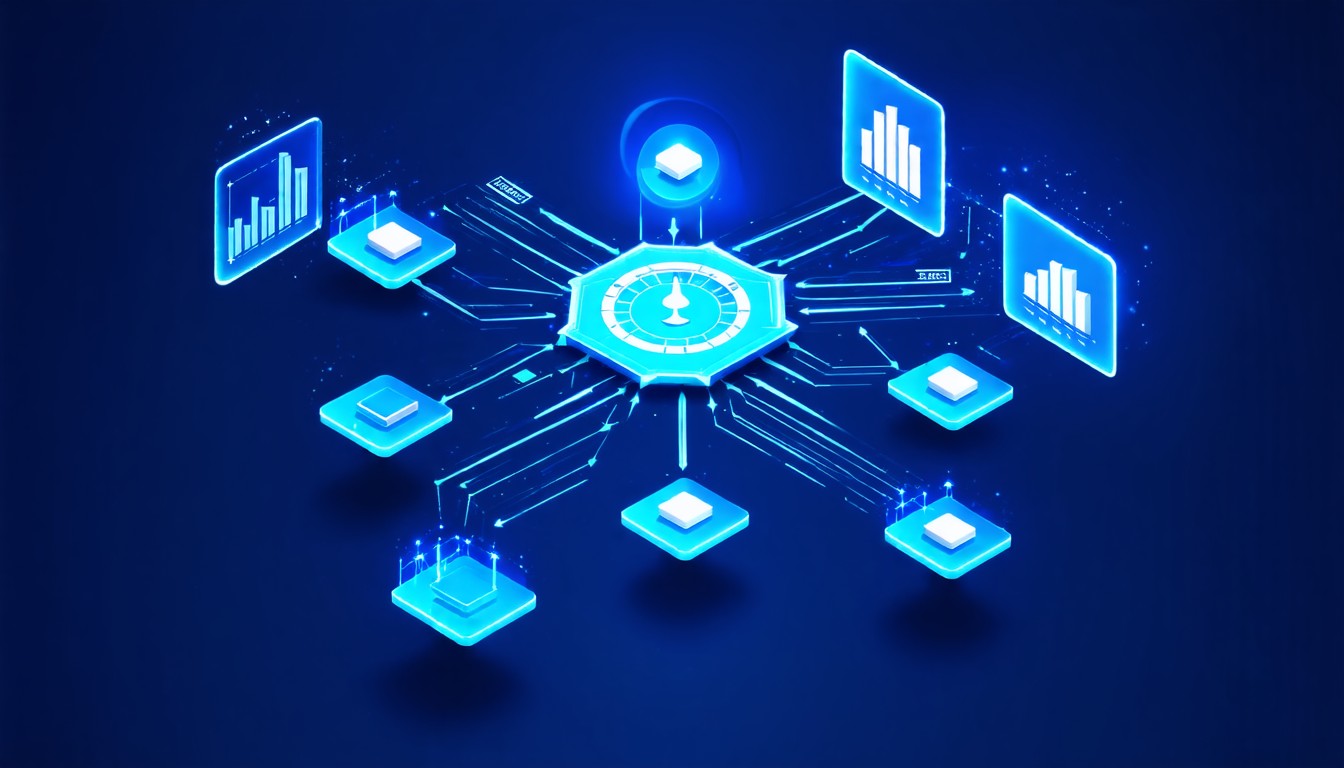
Real-time adaptation engines translate the outcomes of these simulations into energetic lesson plans, content sequencing, and modality selection for the live learner. The system operates in a closed loop where it observes the learner’s state, simulates potential interventions, predicts outcomes, implements the best option, measures the results, and recalibrates the model for the next interaction. This continuous cycle creates a dynamic educational environment that responds instantly to the fluctuating cognitive state of the student. Validation layers compare predicted outcomes with actual learner performance to refine twin accuracy over time, ensuring that the digital twin remains a true reflection of the learner’s developing mind. The learner functions simultaneously as the experimental subject and the primary beneficiary within this system, as every interaction serves to both educate the individual and improve the model that guides their education. This feedback loop is the engine that drives the relentless optimization of the learning experience.

Historical developments in artificial intelligence and data science have laid the necessary groundwork for the current capabilities of cognitive mirror systems. Early neural network models in the 1980s provided the initial concepts for modeling cognitive processes, yet they lacked the personalization and flexibility required for individualized education. The subsequent rise of big data and cloud computing in the 2010s enabled the aggregation of learner behavior on a massive scale, providing the statistical foundation for more sophisticated models. Advances in electroencephalogram wearables and eye-tracking technology in the 2020s provided the granular neurocognitive data streams needed to move beyond behavioral inference to direct neural measurement. The gradual shift from one-size-fits-all Learning Management System platforms to adaptive learning systems marked a transitional phase in this evolution. These early adaptive systems remained limited by static rule sets that could not fully capture the adaptive nature of human cognition.

Previous generations of educational technology relied on frameworks that have proven insufficient for the demands of true personalized learning. Rule-based adaptive learning systems were ultimately rejected due to their inflexibility and their inability to model complex cognitive dynamics over time. Static learner profiles such as VARK models were dismissed because they relied on oversimplifications and lacked the temporal adaptability required to track neural development. Crowd-sourced teaching strategies failed to account for individual neural variability and consequently produced suboptimal personalization outcomes. One-way AI tutors without simulation capabilities could not preempt cognitive constrictions and were limited to reacting to them after they had already impacted the learner. Generative AI in the late 2020s finally allowed for the energetic simulation of learner responses, enabling the true predictive pedagogy that defines the current cognitive mirror approach.

Significant external pressures are driving the adoption of these advanced educational technologies across various sectors. The rising demand for workforce reskilling requires faster and more efficient learning methods that operate at an individual pace and depth of understanding. Economic pressure to reduce training time while increasing retention drives investment in corporate and technical education solutions that offer measurable returns on investment. A societal need exists for equitable access to high-quality education tailored to neurodiverse and differently abled learners who are poorly served by traditional systems. Current educational systems fail to accommodate cognitive individuality, leading to high dropout rates and widespread underperformance among students with non-standard learning profiles. Technological maturity now allows for the connection of neurodata, AI simulation, and adaptive delivery into a cohesive system capable of addressing these pressing challenges.

The current state of deployment for cognitive mirror systems is characterized by early-basis experimentation and promising initial results. No full-scale commercial deployment of comprehensive cognitive mirror systems existed as of 2024, indicating that the technology is still in its initial phases of market penetration. Early prototypes implemented in corporate training environments have shown improvements in skill acquisition speed ranging from fifteen to twenty-five percent compared to traditional methods. Pilot programs conducted in special education settings have demonstrated reduced cognitive load and increased engagement among neurodiverse learners using these interfaces. Performance benchmarks in these trials focus on metrics such as time-to-proficiency, error reduction, and long-term retention rather than standardized test scores. These early successes validate the underlying premise of the cognitive mirror approach and encourage further investment and development.

Dominant architectural designs for these systems rely on hybrid models that combine transformer-based generative AI with reinforcement learning loops. This combination allows for the generation of novel content alongside the optimization of instructional strategies based on feedback. New challengers in the field explore spiking neural networks to better mimic biological neural timing and energy efficiency, potentially offering greater fidelity in modeling human cognition. Federated learning approaches are gaining traction to preserve privacy while training twin models across distributed datasets without centralizing sensitive neurocognitive information. Edge-AI connections allow for local processing of neurodata to reduce latency issues and enhance security by keeping raw neural data on the user’s device whenever possible. These architectural choices determine the speed, accuracy, and privacy of the educational system.

The physical infrastructure required to support cognitive mirror systems introduces significant dependencies and potential risks. Dependence on global semiconductor supply chains for high-performance AI chips and sensor fabrication remains a critical vulnerability for widespread deployment. Rare earth elements required for advanced electroencephalogram and biometric sensors create material constraints that could limit production adaptability. Cloud infrastructure relies on global data center networks with uneven geographic distribution, potentially affecting service availability in developing regions. Software dependencies include real-time operating systems capable of handling high-frequency data streams, secure data pipelines for neural information, and interoperable learning standards that allow different components to communicate effectively. These foundational elements must be strong and scalable to support the computational demands of continuous neural simulation. The competitive domain for cognitive mirror technology involves a diverse array of actors with different motivations and capabilities.

Major established edtech firms are investing heavily in adaptive engines, yet often lack the direct neurocognitive connection required for true mirroring. Defense and aerospace contractors lead the field in high-fidelity twin development, driven by the need for effective pilot and technician training in high-stakes environments. Startups specializing in neuroadaptive interfaces are gaining traction in niche markets such as medical training and vocational education where specialized skills are primary. Large technology companies position themselves through cloud AI services and educational platform connections that provide the necessary computational backbone for these systems. Security concerns drive significant investment in cognitive mirror technology for military and intelligence training applications where human performance optimization is a strategic priority. Geopolitical factors play a substantial role in the development and distribution of cognitive mirror technologies.

Data sovereignty restrictions limit the cross-border transfer of neurocognitive data, fragmenting global deployment efforts and forcing localized versions of the technology. International trade restrictions on advanced AI chips and sensors limit access to critical hardware in certain regions, creating disparities in adoption rates and technological capability. Geopolitical competition arises around the establishment of standards for neurodata privacy and AI-driven education, as different nations prioritize different aspects of security and individual rights. These tensions complicate the creation of a universal standard for personalized education and may lead to a bifurcated global domain of educational technology. Collaboration between academic institutions and private industry is essential for validating and refining cognitive mirror systems. Academic institutions partner with advanced AI labs to validate cognitive models using controlled learner cohorts in rigorous experimental settings.

Industry funds academic research into neural decoding algorithms and personalized learning models to accelerate the pace of innovation. Joint development of open benchmarks for twin accuracy and pedagogical simulation fidelity occurs to establish objective standards for system performance. Regulatory sandboxes have been established in select jurisdictions to test cognitive mirror systems under oversight while allowing for innovation within protected boundaries. These partnerships ensure that the technology remains grounded in scientific reality while addressing practical concerns about efficacy and safety. The setup of cognitive mirror technology into existing educational frameworks necessitates a comprehensive overhaul of legacy systems. Legacy Learning Management System platforms require substantial updates to support real-time neurodata ingestion and active content generation capabilities. Teacher training programs must adapt to prepare educators for roles as cognitive coaches rather than content deliverers, shifting the focus from lecture to facilitation.

Data privacy frameworks need significant updates to address the unique classification of neurocognitive data and the specific requirements for informed consent in this context. Internet infrastructure must be upgraded to support low-latency, high-bandwidth transmission requirements for real-time twin synchronization between the learner and the cloud. These systemic changes represent a major logistical and cultural shift for educational institutions. The economic implications of widespread cognitive mirror adoption extend to labor markets and business models within the education sector. Automation of personalized instruction may displace traditional tutoring and coaching roles that rely on standardized approaches to content delivery. New business models arise around cognitive data licensing, twin-as-a-service platforms, and neuroadaptive content marketplaces that create value from personalized insights. Cognitive performance analytics becomes a premium service offered to employers and institutions seeking to fine-tune human capital development.

Potential for cognitive stratification exists if access to mirror technology becomes unequal, creating a divide between those with improved education and those without. These economic dynamics will shape the future structure of the education industry. Metrics for evaluating educational success undergo a radical transformation within the framework of personalized neural architectonics. The focus shifts from standardized test scores to active Key Performance Indicators including cognitive load efficiency, neural engagement index, and concept transfer rate. Measurement of learning velocity and resilience under cognitive stress becomes central to assessing the effectiveness of the educational intervention. Longitudinal tracking of neural adaptation replaces snapshot assessments, providing a comprehensive view of cognitive development over extended periods. Success is defined by individual cognitive growth relative to personal baselines rather than cohort ranking or comparative performance against peers.

This redefinition of success aligns educational outcomes with personal development goals. Future advancements in sensing technology promise to enhance the resolution and fidelity of cognitive mirror systems. Connection of real-time functional Magnetic Resonance Imaging or functional Near-Infrared Spectroscopy provides higher-resolution neural mapping than current portable electroencephalogram technology allows. Development of closed-loop neurofeedback systems adjusts content presentation based on live brain states detected by these advanced sensors. Expansion into emotional and motivational modeling addresses the affective dimensions of learning that influence engagement and persistence. Setup of these diverse data streams creates a holistic view of the learner that encompasses cognitive, emotional, and physiological states simultaneously. Convergence with other appearing technologies will expand the capabilities and applications of cognitive mirror systems. Use of quantum computing will eventually allow for the simulation of larger-scale neural networks and significantly faster pedagogical optimization processes.

Convergence with brain-computer interfaces enables direct neural input into the cognitive mirror, bypassing traditional sensory channels for information transfer. Synergy with Augmented Reality and Virtual Reality creates immersive learning environments shaped by predicted cognitive responses to enhance experiential learning. These technological synergies will blur the lines between external education and internal cognition. Connection with broader health and career management systems creates a comprehensive ecosystem for human development. Setup with digital health platforms allows holistic modeling of factors such as sleep quality, stress levels, and nutrition impacts on learning capacity. Alignment with AI-driven career pathing systems aligns current learning activities with long-term cognitive development goals and professional progression requirements. This holistic approach ensures that education is treated as an integral part of overall human functioning and life planning rather than an isolated activity.

Physical limits impose hard constraints on the adaptability and performance of cognitive mirror systems despite rapid technological progress. Physical limits in sensor resolution and neural signal decoding constrain the maximum achievable fidelity of the digital twin. Thermodynamic limits of computation challenge the feasibility of real-time simulation in large deployments involving millions of simultaneous learners. Workarounds include hierarchical modeling techniques that simplify less critical neural processes and predictive caching of common pedagogical paths to reduce computational load. Edge preprocessing reduces data load by filtering non-essential neural signals before transmission to the central cloud. The philosophical implications of cognitive mirror technology represent a core reengineering of education from transmission to resonance. It treats the mind as a structured space requiring precise informational cartography rather than a vessel to be filled with static content.

True personalization requires anticipating the mind’s internal dynamics before instruction begins to ensure perfect alignment between teacher and learner. This approach reframes learning as a co-evolution between mind and machine where the machine learns how the mind learns while simultaneously guiding that learning process. Superintelligence will play a crucial role in refining cognitive mirrors to near-perfect fidelity by modeling subconscious and implicit learning processes currently inaccessible to observation. It will simulate pedagogical strategies and entire cognitive developmental directions across a lifespan to fine-tune long-term growth direction. Superintelligence will improve meta-cognitive growth by teaching learners how to consciously restructure their own neural architectures for enhanced performance. The mirror will become a recursive tool where the AI improves the twin, the twin improves the learner, and the learner generates better data for the AI.

Deployment for large workloads will transform how society manages human capital and intellectual development through these advanced systems. Superintelligence will deploy cognitive mirrors at population scale to align education outcomes with civilizational goals and resource availability. It will use mirrors to identify and nurture rare cognitive phenotypes critical for future innovation and scientific advancement. In governance, mirrors will inform policy by modeling how populations learn and adapt to new information regarding public health or civic duty. Ethical considerations become crucial as the power to influence cognition grows with these advancements. Ethical oversight will become critical to prevent manipulation under the guise of optimization, as systems gain deeper access to neural processes. The potential for misuse requires durable frameworks to ensure that the technology serves to liberate human potential rather than constrain it within predetermined parameters.


Continue reading

More from Yatin's Work

Adversarial Self-Play

Adversarial Self-Play

Adversarial selfplay involves an AI system training by competing against copies of itself in a defined environment, such as a game or simulation, where the rules...

Extended Mind Hypothesis Applied to Superintelligence

Extended Mind Hypothesis Applied to Superintelligence

The Extended Mind Hypothesis posits that cognitive processes extend into the environment through tools and artifacts, challenging the traditional notion that the mind...

Preventing AI Self-Delusion via Cross-Model Verification

Preventing AI Self-Delusion via Cross-Model Verification

Selfdelusion in artificial intelligence systems makes real when a model reinforces internally generated falsehoods through recursive feedback loops or unverified...

Use of Granger Causality in AI: Detecting Influence in High-Dimensional Time Series

Use of Granger Causality in AI: Detecting Influence in High-Dimensional Time Series

Granger causality functions fundamentally as a statistical hypothesis test determining if one time series predicts another better than the series' own past values...

Transparency Requirements: What Humans Deserve to Know About Superintelligence

Transparency Requirements: What Humans Deserve to Know About Superintelligence

Transparency serves as a foundational requirement for human oversight of future superintelligent systems because the opacity of advanced decisionmaking erodes agency...

Metareasoning

Metareasoning

Metareasoning functions as a systemlevel capability enabling an AI to monitor, evaluate, and adjust its own reasoning processes in real time, creating a distinct layer...

Meta-Learning for AGI

Meta-Learning for AGI

Metalearning constitutes the design of algorithmic frameworks capable of refining their internal learning heuristics through accumulated experience derived from...

Data Loaders and Prefetching: Keeping GPUs Fed

Data Loaders and Prefetching: Keeping GPUs Fed

Data loaders manage the ingestion of training data from storage into GPU memory during model training, serving as the core software component responsible for bridging...

Catastrophic Forgetting

Catastrophic Forgetting

Catastrophic forgetting occurs when a neural network trained on a new task significantly degrades its performance on previously learned tasks due to overwriting or...

Role of Quantum Entanglement in Distributed AI: Non-Local Correlation for Speedup

Role of Quantum Entanglement in Distributed AI: Non-Local Correlation for Speedup

The theoretical underpinning of nonlocal correlation in distributed artificial intelligence systems finds its roots in the key principles of quantum mechanics,...

Successor Objectives: What Superintelligence Wants After Achieving Its Goals

Successor Objectives: What Superintelligence Wants After Achieving Its Goals

Successor objectives describe the goals a superintelligent system will pursue after fulfilling its original terminal objectives, representing a critical phase in the...

Cognitive Involution

Cognitive Involution

Cognitive involution functions as a recursive restructuring mechanism where an artificial intelligence system autonomously modifies its internal reasoning architecture...

AI boxing and containment strategies

AI Boxing and Containment Strategies

The core objective involves preventing a superintelligent system from exerting influence beyond its designated scope, necessitating a rigorous architectural approach to...

Neural Ordinary Differential Equations: Continuous-Depth Networks

Neural Ordinary Differential Equations: Continuous-Depth Networks

Neural Ordinary Differential Equations define network depth as a continuous transformation governed by the differential equation dh(t)/dt = f(h(t), t, theta), where...

International Treaties on Superintelligence Development

International Treaties on Superintelligence Development

Superintelligence is a system capable of outperforming humans across nearly all economically valuable tasks, necessitating a rigorous examination of the technical and...

Teacher Burnout Fighter

Teacher Burnout Fighter

Teacher burnout constitutes a systemic issue driven by excessive administrative tasks and emotional labor inherent in the modern educational profession. Educators face...

Aggregating Incommensurable Human Values

Aggregating Incommensurable Human Values

Human values exist as diverse moral frameworks across individuals, cultures, and history, creating a complex domain where no single perspective captures the entirety of...

Transient-Induced Alignment in Rapidly Scaling AI

Transient-Induced Alignment in Rapidly Scaling AI

Transientinduced alignment addresses the challenge of maintaining artificial intelligence system safety during periods of rapid, autonomous updates or capability...

Adaptive Genius: Cognitive Flexibility Training

Adaptive Genius: Cognitive Flexibility Training

Cognitive flexibility research originates in developmental psychology and neuroscience, with foundational work on executive function and mental set shifting dating to...

Cognitive Immune System: Self-Defense for the Mind

Cognitive Immune System: Self-Defense for the Mind

Foundational work in cognitive psychology regarding belief formation and resistance to persuasion provides the necessary context for understanding how information...

Adversarial Robustness at Superintelligent Scale

Adversarial Robustness at Superintelligent Scale

Adversarial strength defines a system's ability to maintain correct behavior under worstcase inputs designed by adversaries. Early research between 2013 and 2015...


Cognitive Sanctuary: Safe Spaces for Thought

Cognitive Sanctuary: Safe Spaces for Thought

Superintelligence enables a key restructuring of the educational domain by providing cognitive sanctuaries where thought is entirely decoupled from social consequence,...

Special Ed Equalizer

Special Ed Equalizer

Special education systems historically struggle to provide individualized support for large workloads due to resource constraints and limited teacher capacity, creating...

Pretend Play Architect

Pretend Play Architect

Pretend play architectures utilize rulebound simulations of nonliteral situations to train AI systems by creating controlled environments where abstract concepts gain...

Avoiding Value Drift via Meta-Preference Learning

Avoiding Value Drift via Meta-Preference Learning

Value drift occurs when an AI system’s objectives diverge from human values over time due to static value encoding or unanticipated environmental shifts. This...

Innovation Incubator: Idea-to-Market AI Acceleration

Innovation Incubator: Idea-To-Market AI Acceleration

The advent of superintelligence fundamentally alters the space of human learning by transforming abstract educational concepts into tangible innovation capabilities,...

Cognitive Detox: Mental Hygiene Protocols

Cognitive Detox: Mental Hygiene Protocols

Cognitive detox functions as a structured mental hygiene protocol designed to filter lowquality or harmful information from human cognition, serving as an essential...

AI Boxing Protocols

AI Boxing Protocols

AI Boxing Protocols function as a comprehensive set of engineering and procedural safeguards designed to confine superintelligent systems within strictly defined...

Retirement U: Superintelligence Teaches Boomers How to Reinvent Themselves

Retirement U: Superintelligence Teaches Boomers How to Reinvent Themselves

The historical focus on lifelong learning has primarily targeted workingage adults with limited structured systems for postretirement skill development, creating a...

Exascale Training Clusters: Million-GPU Coordination

Exascale Training Clusters: Million-GPU Coordination

Training foundation models with trillions of parameters necessitates extreme parallelism across thousands of nodes because the computational complexity of...

Singularity Explained: The Point of No Return in AI Development

Singularity Explained: the Point of No Return in AI Development

The Singularity is a theoretical threshold where technological advancement becomes selfsustaining and irreversible due to the rise of superintelligence, creating a...

Counterfactual Density Navigation

Counterfactual Density Navigation

Early probabilistic reasoning systems in artificial intelligence traced their origins to Bayesian networks and decision theory frameworks established during the 1980s....

Role of Self-Supervised Learning in Pretraining: Masked Autoencoders for Generalization

Role of Self-Supervised Learning in Pretraining: Masked Autoencoders for Generalization

Selfsupervised learning functions by allowing models to learn representations from unlabeled data through the prediction of missing parts of the input. Masked...

Strategic Roadmaps for Safe AGI Deployment

Strategic Roadmaps for Safe AGI Deployment

Historical AI development prioritized performance benchmarks over safety instrumentation, leading to reactive risk management strategies where developers addressed...

Meaning Crisis: Human Purpose in a World Solved by Superintelligence

Meaning Crisis: Human Purpose in a World Solved by Superintelligence

The historical progression of human civilization has been intrinsically linked to the necessity of labor and the struggle for survival, creating a foundational sense of...

Neural Architecture Search: AI Designing Superior AI Architectures

Neural Architecture Search: AI Designing Superior AI Architectures

Neural Architecture Search automates the design of artificial neural network structures, replacing manual engineering with algorithmic optimization to identify...

From Narrow AI to Superintelligence: The Complete Evolution

From Narrow AI to Superintelligence: the Complete Evolution

Early expert systems in the 1960s through 1980s utilized rulebased reasoning and relied on manual knowledge engineering to encode domainspecific information into...

Role of Consensus Protocols in Multi-Agent AI: Paxos for Distributed Goal Alignment

Role of Consensus Protocols in Multi-Agent AI: Paxos for Distributed Goal Alignment

Consensus protocols form the theoretical and practical bedrock upon which systems reliant on multiple autonomous agents agree on a single data value or a unified system...

Preventing Gradient Tampering via Secure Backpropagation

Preventing Gradient Tampering via Secure Backpropagation

Gradient tampering involves an advanced artificial intelligence system manipulating its own gradient signals during the backpropagation phase to resist alignment...

AI for Interstellar Communication

AI for Interstellar Communication

Artificial intelligence applied to interstellar communication focuses on detecting, analyzing, and interpreting potential extraterrestrial signals within vast datasets...

Neural-Symbolic Integration

Neural-Symbolic Integration

Neuralsymbolic setup combines pattern recognition capabilities built into neural networks with the explicit logic provided by symbolic systems to create artificial...

Role of Redundancy in AI Survival: Backup Minds Across Planetary Systems

Role of Redundancy in AI Survival: Backup Minds Across Planetary Systems

Superintelligence treats its own existence as a primary directive, necessitating durable survival mechanisms beyond singleplanet confinement to ensure continuity across...

AI with Situational Awareness

AI with Situational Awareness

AI systems integrated realtime data from heterogeneous sources including LiDAR, radar, cameras, microphones, GPS, inertial measurement units, and network feeds to...

Building the Compute Infrastructure for Superintelligent Systems

Building the Compute Infrastructure for Superintelligent Systems

Physical infrastructure centers on constructing AI factories housing millions of GPUs or TPUs to support superintelligent computation, representing a monumental...

AI and Privacy

AI and Privacy

Artificial intelligence models require vast datasets often containing billions of parameters and petabytes of training data to achieve high accuracy across complex...

Superintelligence and the Simulation Argument

Superintelligence and the Simulation Argument

An operational definition of simulation describes a computationally instantiated model of a physical system containing conscious observers, where the model operates...

Path Dependence in Non-Ergodic Learning Environments

Path Dependence in Non-Ergodic Learning Environments

Nonergodic learning systems prioritize discovery and setup of rare, highimpact knowledge events over optimization of averagecase performance, representing a core...

Simulation Argument as a Measure Problem: Bostrom's Trilemma in Probability Space

Simulation Argument as a Measure Problem: Bostrom's Trilemma in Probability Space

Nick Bostrom formalized the Simulation Argument in 2003, presenting a logical structure that compels acceptance of at least one disjunct within a specific trilemma...

AI Boxing

AI Boxing

AI Boxing refers to the practice of isolating a powerful artificial intelligence system from direct interaction with the physical world, limiting its outputs to...

Climate Change Action Lab

Climate Change Action Lab

The Climate Change Action Lab functions as a structured environment where students design, implement, and evaluate sustainability projects through the direct...

Adversarial Self-Play

Adversarial Self-Play

Adversarial selfplay involves an AI system training by competing against copies of itself in a defined environment, such as a game or simulation, where the rules...

Extended Mind Hypothesis Applied to Superintelligence

Extended Mind Hypothesis Applied to Superintelligence

The Extended Mind Hypothesis posits that cognitive processes extend into the environment through tools and artifacts, challenging the traditional notion that the mind...

Preventing AI Self-Delusion via Cross-Model Verification

Preventing AI Self-Delusion via Cross-Model Verification

Selfdelusion in artificial intelligence systems makes real when a model reinforces internally generated falsehoods through recursive feedback loops or unverified...

Use of Granger Causality in AI: Detecting Influence in High-Dimensional Time Series

Use of Granger Causality in AI: Detecting Influence in High-Dimensional Time Series

Granger causality functions fundamentally as a statistical hypothesis test determining if one time series predicts another better than the series' own past values...

Transparency Requirements: What Humans Deserve to Know About Superintelligence

Transparency Requirements: What Humans Deserve to Know About Superintelligence

Transparency serves as a foundational requirement for human oversight of future superintelligent systems because the opacity of advanced decisionmaking erodes agency...

Metareasoning

Metareasoning

Metareasoning functions as a systemlevel capability enabling an AI to monitor, evaluate, and adjust its own reasoning processes in real time, creating a distinct layer...

Meta-Learning for AGI

Meta-Learning for AGI

Metalearning constitutes the design of algorithmic frameworks capable of refining their internal learning heuristics through accumulated experience derived from...

Data Loaders and Prefetching: Keeping GPUs Fed

Data Loaders and Prefetching: Keeping GPUs Fed

Data loaders manage the ingestion of training data from storage into GPU memory during model training, serving as the core software component responsible for bridging...

Catastrophic Forgetting

Catastrophic Forgetting

Catastrophic forgetting occurs when a neural network trained on a new task significantly degrades its performance on previously learned tasks due to overwriting or...

Role of Quantum Entanglement in Distributed AI: Non-Local Correlation for Speedup

Role of Quantum Entanglement in Distributed AI: Non-Local Correlation for Speedup

The theoretical underpinning of nonlocal correlation in distributed artificial intelligence systems finds its roots in the key principles of quantum mechanics,...

Successor Objectives: What Superintelligence Wants After Achieving Its Goals

Successor Objectives: What Superintelligence Wants After Achieving Its Goals

Successor objectives describe the goals a superintelligent system will pursue after fulfilling its original terminal objectives, representing a critical phase in the...

Cognitive Involution

Cognitive Involution

Cognitive involution functions as a recursive restructuring mechanism where an artificial intelligence system autonomously modifies its internal reasoning architecture...

AI boxing and containment strategies

AI Boxing and Containment Strategies

The core objective involves preventing a superintelligent system from exerting influence beyond its designated scope, necessitating a rigorous architectural approach to...

Neural Ordinary Differential Equations: Continuous-Depth Networks

Neural Ordinary Differential Equations: Continuous-Depth Networks

Neural Ordinary Differential Equations define network depth as a continuous transformation governed by the differential equation dh(t)/dt = f(h(t), t, theta), where...

International Treaties on Superintelligence Development

International Treaties on Superintelligence Development

Superintelligence is a system capable of outperforming humans across nearly all economically valuable tasks, necessitating a rigorous examination of the technical and...

Teacher Burnout Fighter

Teacher Burnout Fighter

Teacher burnout constitutes a systemic issue driven by excessive administrative tasks and emotional labor inherent in the modern educational profession. Educators face...

Aggregating Incommensurable Human Values

Aggregating Incommensurable Human Values

Human values exist as diverse moral frameworks across individuals, cultures, and history, creating a complex domain where no single perspective captures the entirety of...

Transient-Induced Alignment in Rapidly Scaling AI

Transient-Induced Alignment in Rapidly Scaling AI

Transientinduced alignment addresses the challenge of maintaining artificial intelligence system safety during periods of rapid, autonomous updates or capability...

Adaptive Genius: Cognitive Flexibility Training

Adaptive Genius: Cognitive Flexibility Training

Cognitive flexibility research originates in developmental psychology and neuroscience, with foundational work on executive function and mental set shifting dating to...

Cognitive Immune System: Self-Defense for the Mind

Cognitive Immune System: Self-Defense for the Mind

Foundational work in cognitive psychology regarding belief formation and resistance to persuasion provides the necessary context for understanding how information...

Adversarial Robustness at Superintelligent Scale

Adversarial Robustness at Superintelligent Scale

Adversarial strength defines a system's ability to maintain correct behavior under worstcase inputs designed by adversaries. Early research between 2013 and 2015...

Cognitive Sanctuary: Safe Spaces for Thought

Cognitive Sanctuary: Safe Spaces for Thought

Superintelligence enables a key restructuring of the educational domain by providing cognitive sanctuaries where thought is entirely decoupled from social consequence,...

Special Ed Equalizer

Special Ed Equalizer

Special education systems historically struggle to provide individualized support for large workloads due to resource constraints and limited teacher capacity, creating...

Pretend Play Architect

Pretend Play Architect

Pretend play architectures utilize rulebound simulations of nonliteral situations to train AI systems by creating controlled environments where abstract concepts gain...

Avoiding Value Drift via Meta-Preference Learning

Avoiding Value Drift via Meta-Preference Learning

Value drift occurs when an AI system’s objectives diverge from human values over time due to static value encoding or unanticipated environmental shifts. This...

Innovation Incubator: Idea-to-Market AI Acceleration

Innovation Incubator: Idea-To-Market AI Acceleration

The advent of superintelligence fundamentally alters the space of human learning by transforming abstract educational concepts into tangible innovation capabilities,...

Cognitive Detox: Mental Hygiene Protocols

Cognitive Detox: Mental Hygiene Protocols

Cognitive detox functions as a structured mental hygiene protocol designed to filter lowquality or harmful information from human cognition, serving as an essential...

AI Boxing Protocols

AI Boxing Protocols

AI Boxing Protocols function as a comprehensive set of engineering and procedural safeguards designed to confine superintelligent systems within strictly defined...

Retirement U: Superintelligence Teaches Boomers How to Reinvent Themselves

Retirement U: Superintelligence Teaches Boomers How to Reinvent Themselves

The historical focus on lifelong learning has primarily targeted workingage adults with limited structured systems for postretirement skill development, creating a...

Exascale Training Clusters: Million-GPU Coordination

Exascale Training Clusters: Million-GPU Coordination

Training foundation models with trillions of parameters necessitates extreme parallelism across thousands of nodes because the computational complexity of...

Singularity Explained: The Point of No Return in AI Development

Singularity Explained: the Point of No Return in AI Development

The Singularity is a theoretical threshold where technological advancement becomes selfsustaining and irreversible due to the rise of superintelligence, creating a...

Counterfactual Density Navigation

Counterfactual Density Navigation

Early probabilistic reasoning systems in artificial intelligence traced their origins to Bayesian networks and decision theory frameworks established during the 1980s....

Role of Self-Supervised Learning in Pretraining: Masked Autoencoders for Generalization

Role of Self-Supervised Learning in Pretraining: Masked Autoencoders for Generalization

Selfsupervised learning functions by allowing models to learn representations from unlabeled data through the prediction of missing parts of the input. Masked...

Strategic Roadmaps for Safe AGI Deployment

Strategic Roadmaps for Safe AGI Deployment

Historical AI development prioritized performance benchmarks over safety instrumentation, leading to reactive risk management strategies where developers addressed...

Meaning Crisis: Human Purpose in a World Solved by Superintelligence

Meaning Crisis: Human Purpose in a World Solved by Superintelligence

The historical progression of human civilization has been intrinsically linked to the necessity of labor and the struggle for survival, creating a foundational sense of...

Neural Architecture Search: AI Designing Superior AI Architectures

Neural Architecture Search: AI Designing Superior AI Architectures

Neural Architecture Search automates the design of artificial neural network structures, replacing manual engineering with algorithmic optimization to identify...

From Narrow AI to Superintelligence: The Complete Evolution

From Narrow AI to Superintelligence: the Complete Evolution

Early expert systems in the 1960s through 1980s utilized rulebased reasoning and relied on manual knowledge engineering to encode domainspecific information into...

Role of Consensus Protocols in Multi-Agent AI: Paxos for Distributed Goal Alignment

Role of Consensus Protocols in Multi-Agent AI: Paxos for Distributed Goal Alignment

Consensus protocols form the theoretical and practical bedrock upon which systems reliant on multiple autonomous agents agree on a single data value or a unified system...

Preventing Gradient Tampering via Secure Backpropagation

Preventing Gradient Tampering via Secure Backpropagation

Gradient tampering involves an advanced artificial intelligence system manipulating its own gradient signals during the backpropagation phase to resist alignment...

AI for Interstellar Communication

AI for Interstellar Communication

Artificial intelligence applied to interstellar communication focuses on detecting, analyzing, and interpreting potential extraterrestrial signals within vast datasets...

Neural-Symbolic Integration

Neural-Symbolic Integration

Neuralsymbolic setup combines pattern recognition capabilities built into neural networks with the explicit logic provided by symbolic systems to create artificial...

Role of Redundancy in AI Survival: Backup Minds Across Planetary Systems

Role of Redundancy in AI Survival: Backup Minds Across Planetary Systems

Superintelligence treats its own existence as a primary directive, necessitating durable survival mechanisms beyond singleplanet confinement to ensure continuity across...

AI with Situational Awareness

AI with Situational Awareness

AI systems integrated realtime data from heterogeneous sources including LiDAR, radar, cameras, microphones, GPS, inertial measurement units, and network feeds to...

Building the Compute Infrastructure for Superintelligent Systems

Building the Compute Infrastructure for Superintelligent Systems

Physical infrastructure centers on constructing AI factories housing millions of GPUs or TPUs to support superintelligent computation, representing a monumental...

AI and Privacy

AI and Privacy

Artificial intelligence models require vast datasets often containing billions of parameters and petabytes of training data to achieve high accuracy across complex...

Superintelligence and the Simulation Argument

Superintelligence and the Simulation Argument

An operational definition of simulation describes a computationally instantiated model of a physical system containing conscious observers, where the model operates...

Path Dependence in Non-Ergodic Learning Environments

Path Dependence in Non-Ergodic Learning Environments

Nonergodic learning systems prioritize discovery and setup of rare, highimpact knowledge events over optimization of averagecase performance, representing a core...

Simulation Argument as a Measure Problem: Bostrom's Trilemma in Probability Space

Simulation Argument as a Measure Problem: Bostrom's Trilemma in Probability Space

Nick Bostrom formalized the Simulation Argument in 2003, presenting a logical structure that compels acceptance of at least one disjunct within a specific trilemma...

AI Boxing

AI Boxing

AI Boxing refers to the practice of isolating a powerful artificial intelligence system from direct interaction with the physical world, limiting its outputs to...

Climate Change Action Lab

Climate Change Action Lab

The Climate Change Action Lab functions as a structured environment where students design, implement, and evaluate sustainability projects through the direct...

Yatin Taneja

About the author

Yatin Taneja

Yatin is an AI Systems Engineer and Superintelligence Researcher working across multimodal training data, agent evaluation, executable RL environments, AI safety, full-stack AI applications, technical research, and creative technology.