Knowledge hub

Building the Compute Infrastructure for Superintelligent Systems

Building the Compute Infrastructure for Superintelligent Systems

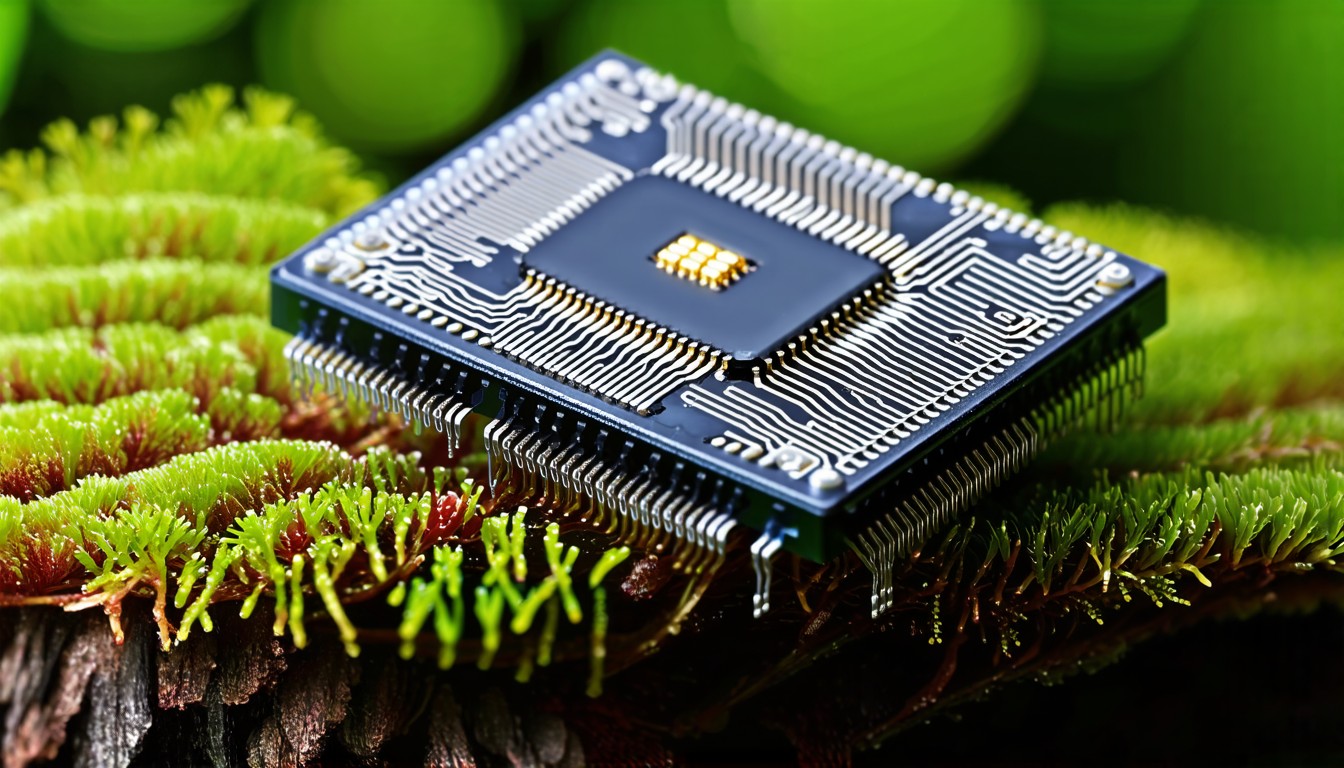
Physical infrastructure centers on constructing AI factories housing millions of GPUs or TPUs to support superintelligent computation, representing a monumental engineering challenge that exceeds traditional data center design. These facilities function as vast engines of cognition, where the primary product is intelligence rather than information storage or web services. The sheer volume of processing units required creates a logistical challenge where space, power, and cooling become primary design constraints rather than afterthoughts, necessitating a core upgradation of how computational facilities are architected from the ground up. Capital requirements for building and operating such infrastructure run into hundreds of billions of dollars, creating high barriers to entry that effectively limit participation to a small number of well-capitalized organizations capable of sustaining long-term investment goals. Ownership and control of these resources are concentrated among a small number of corporations due to cost and technical complexity, meaning that the course of superintelligence development rests in the hands of a few dominant entities who possess the financial muscle and engineering expertise to construct these facilities. This concentration stems from the necessity to integrate specialized hardware at a scale that allows for sustained, high-throughput computation in large deployments for training and inference of superintelligent models. The core function of these facilities is to deliver uninterrupted processing power, where any interruption results in significant financial loss and delayed research timelines, making reliability a primary concern in every aspect of the physical build-out.

These facilities require a global supply chain spanning semiconductor fabrication, rare earth metal extraction, and specialized cooling component manufacturing to assemble the complex ecosystem needed for superintelligence. The production of advanced processors depends heavily on semiconductor fabrication capacity, particularly for advanced nodes such as 3nm and 2nm, which is limited and geopolitically sensitive due to the immense difficulty of establishing new foundries. Major corporations rely on a few foundries like TSMC and Samsung for these advanced nodes, creating a potential single point of failure in the supply chain that could halt progress if production is disrupted. Access to manufacturing equipment like EUV lithography machines is restricted, adding another layer of complexity to the expansion of compute infrastructure as only a handful of companies worldwide can produce this critical machinery. Beyond silicon, rare earth elements are critical for motors in cooling systems and permanent magnets in power electronics, making their extraction and processing a matter of strategic importance for any nation or corporation seeking to build AI factories. Copper, aluminum, and specialized polymers are required for wiring, heat sinks, and insulation, necessitating a strong logistics network to deliver these materials to construction sites in quantities that far exceed traditional construction demands. Geopolitical tensions affect access to these materials and manufacturing equipment, forcing companies to diversify their supply chains or develop domestic alternatives where possible to mitigate the risk of trade restrictions or export controls. NVIDIA leads in GPU supply and interconnect technology, giving it outsized influence over infrastructure design, while Chinese firms are building domestic alternatives amid supply constraints to ensure they can continue to build out their own AI capabilities without relying on foreign technology.

Extreme compute density demands advanced thermal management systems, including liquid cooling and immersion techniques, to maintain operational temperatures within safe limits for high-performance silicon. Air-cooled systems were rejected for high-density deployments due to insufficient heat removal capacity, as the specific heat capacity of air is too low to manage the thermal output of modern accelerators running at full load without requiring massive airflow that causes vibration and mechanical stress. Liquid cooling solutions, which transfer heat more efficiently than air due to the higher thermal conductivity of liquids, have become the standard for high-performance computing clusters intended for superintelligence training. Two-phase immersion cooling involves submerging server components in a dielectric fluid that boils on contact with hot surfaces, carrying heat away through phase change much more effectively than single-phase liquid cooling, which relies solely on convective heat transfer. Refrigerant-based systems push beyond air-cooling limits by using compressors to circulate coolant that absorbs heat from the servers and rejects it outside the facility, allowing for precise temperature control regardless of ambient conditions. Water usage for cooling poses environmental and regulatory challenges in arid regions, prompting the exploration of closed-loop systems that minimize water consumption through recirculation and evaporative cooling reduction technologies. Heat dissipation per unit area approaches physical limits of conduction and convection, forcing engineers to innovate with novel materials and geometries to enhance thermal transfer rates without increasing the physical footprint of the cooling infrastructure. The design of these thermal systems is intimately linked to the power delivery infrastructure, as the heat generated is directly proportional to the energy consumed by the processors.

Power consumption per rack exceeds 100 kW in current deployments, with future designs targeting 300 kW to 500 kW to accommodate more powerful chips and denser configurations that push the boundaries of electrical engineering. Energy delivery and heat dissipation are primary physical constraints shaping design choices, dictating the location and construction of new data centers based on the availability of strong power infrastructure. Electrical grids require upgrades to support multi-gigawatt loads with high reliability, as the fluctuating demand of AI training runs can stress local grid infrastructure and cause instability if not properly managed. Infrastructure location influences data sovereignty, latency, and compliance standards, leading companies to build facilities in regions with access to abundant and stable power sources such as hydroelectric dams or geothermal energy sites. Performance benchmarks focus on FLOPS utilization, training time per model iteration, and energy efficiency measured in FLOPS per watt, driving the industry toward more efficient hardware designs that extract maximum computation per unit of energy. Co-location with next-generation nuclear or fusion power plants will provide stable, high-capacity energy supply for future hyperscale facilities, reducing reliance on fossil fuels and mitigating grid instability issues associated with renewable intermittency. Setup with renewable energy microgrids will improve sustainability and energy independence, allowing data centers to operate off-grid when necessary while maintaining a low carbon footprint. The high stakes of superintelligent system operation make reliability and uptime non-negotiable, requiring power backup systems that can take over immediately in the event of a grid failure without causing a disruption in the training process.

High-speed interconnects between processing units are essential to minimize network latency and enable chips to function as a unified computational system rather than a collection of disjointed devices. Interconnect bandwidth and latency directly determine effective computational capacity more than raw chip count alone, as processors spend significant time waiting for data from other nodes in distributed training scenarios if communication links are insufficient. Dominant architectures rely on NVIDIA’s NVLink and AMD’s Infinity Fabric for chip-to-chip communication, paired with high-bandwidth memory to keep the processing units fed with data at speeds that match their internal clock rates. Rise of model parallelism and pipeline parallelism techniques necessitated change hardware interconnect topologies, moving away from simple torus or fat-tree networks to more complex hierarchical structures that improve for specific communication patterns found in deep learning workloads. Developing challengers include optical interconnects, chiplet-based designs, and open standards like UCIe (Universal Chiplet Interconnect Express), which promise to reduce latency and increase bandwidth by applying light-based signaling instead of electrical signals subject to resistance and capacitance. Signal attenuation and crosstalk constrain electrical interconnect density for large workloads, limiting how fast data can travel between chips over copper wires before the signal degrades beyond recognition. Photonic computing will enable low-latency, high-bandwidth communication between chips by converting electrical signals into optical signals that can travel longer distances without degradation, potentially overhauling how clusters are assembled. Optical and quantum interconnects may eventually replace electrical links for inter-chip communication, offering virtually limitless bandwidth and minimal latency for massive clusters spanning multiple buildings or even cities.

Infrastructure must support massive parallelism while maintaining coherence across distributed hardware, requiring sophisticated software stacks to manage the distribution of tasks across thousands of compute nodes. Adoption of tensor processing units and similar domain-specific accelerators marked a move away from traditional CPU-centric architectures, as these specialized chips offer higher performance for the matrix operations that underpin neural networks at a fraction of the power consumption. Current AI models require exponentially growing compute, with training runs now consuming thousands of GPU-years, necessitating efficient utilization of every available cycle to justify the immense capital expenditure involved. Software stacks must be redesigned for massive parallelism, including compilers, schedulers, and communication libraries that can arrange the execution of code across tens of thousands of chips simultaneously with minimal overhead. System resilience is critical, requiring redundancy, failover mechanisms, and fault-tolerant designs to prevent catastrophic downtime during long training runs that can last months without interruption. Fault tolerance mechanisms allow the system to continue operating even if individual components fail, checkpointing progress regularly so that computation can resume from the last saved state rather than starting over from scratch. Universities collaborate with industry on thermal management, interconnect protocols, and fault-tolerant systems to advance the best in distributed computing through open research partnerships. Open-source hardware initiatives enable experimentation yet lag in AI-specific optimization compared to proprietary solutions developed by large technology companies with dedicated research divisions.

Data center layout is treated as an optimization problem, tailored to specific AI workloads to maximize throughput and efficiency by minimizing the physical distance data must travel between storage and compute units. Centralized monolithic supercomputers were abandoned in favor of distributed, modular data centers for better adaptability and fault isolation, allowing companies to scale capacity incrementally as demand grows without risking a single point of failure taking down the entire system. Use of consumer-grade GPUs without custom interconnects proved inadequate for cohesive large-model training, leading to the development of enterprise-grade accelerators with high-speed I/O capabilities specifically designed for data center environments. Edge-based distributed inference was considered yet rejected for training due to latency and synchronization overhead, as the time required to synchronize gradients across geographically dispersed nodes would negate any benefits of distributed processing compared to centralized training facilities. Leading deployments achieve exaflop-scale effective performance through tightly coupled GPU or TPU clusters that minimize the distance data must travel between compute nodes using custom networking fabrics engineered specifically for low latency. Major cloud providers operate AI-fine-tuned data centers with custom silicon and interconnects to differentiate their services from competitors offering generic cloud instances. Custom ASICs offer higher efficiency for specific workloads while reducing flexibility, allowing companies to improve their hardware for the specific neural network architectures they intend to train rather than general-purpose computation.

Scaling beyond current densities faces diminishing returns due to thermal and signal integrity limits, forcing engineers to explore alternative approaches to increasing computational power beyond simply shrinking transistors further. Workarounds include 3D chip stacking, advanced packaging like CoWoS (Chip-on-Wafer-on-Substrate), and moving computation closer to memory to overcome the memory wall hindrance that limits performance in traditional von Neumann architectures. Advanced packaging techniques allow multiple dies to be interconnected vertically or horizontally within a single package, increasing bandwidth while reducing power consumption compared to traditional PCB-based interconnects that require signals to travel longer distances across a motherboard. Signal integrity becomes a major concern at high frequencies, requiring careful impedance matching and shielding to prevent data corruption during transmission between chips at speeds exceeding tens of gigabits per second. Development of room-temperature superconductors could remake power delivery and interconnects by eliminating electrical resistance entirely, allowing for massive currents to flow without energy loss or heat generation, which would fundamentally alter thermal management requirements. Until such materials become available, engineers must rely on incremental improvements in conductor materials and insulation technologies to push performance boundaries within the constraints of known physics. The limits of silicon lithography are also being approached, prompting research into alternative computing substrates such as graphene or carbon nanotubes that may offer superior electrical properties enabling further miniaturization.

Economic incentives drive private investment in infrastructure as a competitive differentiator in AI development, with companies racing to secure the capacity needed to train the next generation of models that will define market leadership. New business models develop around compute leasing, model training-as-a-service, and infrastructure co-location, allowing smaller organizations to access supercomputing resources without building their own facilities by renting time on shared clusters operated by larger providers. Concentration of compute power may centralize AI development, limiting access for smaller entities and potentially stifling innovation in the broader ecosystem if only a few players possess the resources necessary for new research. Insurance and risk assessment industries develop new products for AI system failure scenarios, reflecting the high financial stakes associated with large-scale model training where a single failure can result in millions of dollars in lost compute time. Societal reliance on AI systems increases the cost of failure, demanding strong underlying infrastructure that can guarantee availability and performance under all conditions akin to critical utilities like water or electricity. Startups focus on niche components like liquid cooling or photonic interconnects, yet lack scale to compete directly with major cloud providers in building end-to-end solutions that encompass the entire stack from silicon to software.

Traditional metrics like server uptime and power usage effectiveness are insufficient for evaluating superintelligence readiness, leading to the adoption of new KPIs like effective FLOPS per dollar, training convergence time, and fault recovery latency that better capture the performance characteristics relevant to AI workloads. Cohesion efficiency becomes a key benchmark as systems grow larger, measuring how well the distributed components work together to solve a single problem versus operating independently as separate machines. The economic space of AI infrastructure is characterized by high fixed costs and low marginal costs for computation once the infrastructure is built, favoring large incumbents who can amortize their investments over millions of users or inference requests. This adaptive creates a natural monopoly tendency where the largest providers become increasingly efficient relative to competitors due to economies of scale in both hardware procurement and operational efficiency gains derived from running massive facilities at optimal utilization rates continuously. Infrastructure for superintelligence is constitutive because its design shapes the capabilities and limitations of the systems it hosts, determining what kinds of models are feasible to train and deploy based on physical constraints like memory bandwidth and interconnect speed. Compute cohesion determines functional intelligence, making interconnect and thermal design equally important to processor count in defining the upper limits of system performance achievable during training runs.

Control over this infrastructure equates to control over the pace and direction of AI advancement, giving those who own the factories the ability to set the agenda for research and development by deciding which projects get access to scarce computational resources. Superintelligent systems will demand real-time, fault-tolerant operation with minimal human intervention, requiring infrastructure that is capable of self-healing and autonomous adjustment to maintain optimal conditions without manual oversight from operators. Infrastructure will need to support continuous learning and adaptation without service interruption, necessitating a shift from batch processing workflows where models are trained offline then deployed to always-on training frameworks where models update themselves constantly based on new data streams ingested in real time. Calibration will involve tuning hardware configurations to match the active resource needs of autonomous reasoning processes, dynamically allocating power and compute resources where they are most needed based on the current task being performed by the intelligence system. Superintelligence may repurpose infrastructure components in unforeseen ways, such as using cooling systems for energy harvesting or improving power distribution networks based on real-time demand forecasts generated by the AI itself acting as an operator of its own physical substrate. The system could fine-tune its own physical layout, power distribution, and maintenance schedules through embedded intelligence that monitors the health of the hardware using predictive analytics to anticipate failures before they occur.

Feedback between the intelligent system and its infrastructure enables co-evolution of hardware and cognition, where the software learns to improve the hardware and the hardware evolves to better support the software through iterative design improvements suggested by the AI analyzing its own performance limitations. Autonomous cooling systems will use AI to dynamically adjust thermal management, predicting hotspots before they occur and adjusting coolant flow or fan speeds accordingly with greater precision than human operators could achieve manually using static rules-based control systems. Modular, shippable data center units will allow rapid deployment in diverse locations, reducing the time required to bring new capacity online from years to months by pre-assembling standard components in factories, then shipping them to sites where they can be quickly connected to power and network infrastructure. Cybersecurity protocols must evolve to protect physically distributed, high-value compute assets from physical and digital attacks that seek to disrupt operations or steal intellectual property contained within the massive models being trained inside these facilities. The physical security of these facilities becomes crucial as they become strategic assets comparable to military installations in terms of their importance to national security and economic competitiveness in an age defined by artificial intelligence capabilities. The use of AI to improve its own infrastructure design will create recursive improvement loops where each generation of systems is better at designing the next generation of infrastructure than human engineers could be alone due to the complexity involved in fine-tuning millions of variables simultaneously across thermal, electrical, and mechanical domains.

This recursive capability extends to the optimization of supply chains and logistics, potentially automating the procurement and delivery of materials needed for facility expansion using predictive models that forecast component shortages before they impact construction schedules. Ultimately, the infrastructure for superintelligence is not merely a passive container for computation but an active participant in the intelligence generation process, requiring a holistic approach to its design and operation that spans hardware, software, facilities management, and energy systems integrated into a single coherent organism fine-tuned for learning rather than calculation alone.

Continue reading

More from Yatin's Work

Swarm Robotics

Swarm Robotics

Swarm robotics involves a collective of autonomous robots exhibiting coordinated behavior through local interactions where an agent is a single robotic unit within the...

Cosmological Simulation and Universe Creation Algorithms

Cosmological Simulation and Universe Creation Algorithms

Simulating or creating new universes is a theoretical endpoint of computational and physical engineering capabilities where systems generate selfsustaining spacetime...

Automated Theorem Proving

Automated Theorem Proving

Automated theorem proving utilizes formal logic and computational algorithms to verify or derive mathematical statements without human intervention by treating...

Pancomputational Perception

Pancomputational Perception

Physical laws function as executable computational processes rather than static descriptive equations, framing the universe as a vast network of active computation...

DIY Home Repair Tutor

DIY Home Repair Tutor

The core mechanism of a superintelligent DIY tutor relies on augmented reality overlays to project digital visual guides directly onto the physical environment of the...

Financial Literacy Coach

Financial Literacy Coach

Financial literacy coaching has historically evolved from generalized advice to personalized, datadriven guidance driven by advances in computational power and...

Recursive Improvement Engine: Mathematical Bounds and Practical Realities

Recursive Improvement Engine: Mathematical Bounds and Practical Realities

Selfmodification loops function as systems that iteratively update their own architecture or parameters to improve performance, creating a feedback cycle between...

Problem of AI Self-Modification: Bounded Recursion in Code Updates

Problem of AI Self-Modification: Bounded Recursion in Code Updates

The problem of unbounded selfmodification in artificial intelligence systems arises when an AI recursively updates its own code without constraints, risking infinite...

Model Compression

Model Compression

Large models require substantial computational power and memory to function effectively within modern infrastructure constraints due to the sheer volume of parameters...

Synergy Activation: Collective Intelligence Amplification

Synergy Activation: Collective Intelligence Amplification

Foundational research in group dynamics, cognitive science, and organizational behavior establishes a durable correlation between team composition, communication...

Information Hazards and the Openness-Security Tradeoff

Information Hazards and the Openness-Security Tradeoff

Secrecy in artificial intelligence research serves as a primary defense mechanism against the proliferation of dangerous capabilities such as autonomous weapon systems...

AI with Cybersecurity Defense

AI with Cybersecurity Defense

Global economic projections indicate that damages resulting from cybercrime are expected to reach a valuation of $10 trillion by the year 2025, driven by the relentless...

Human Enhancement Through Superintelligence: Merging or Coexisting?

Human Enhancement Through Superintelligence: Merging or Coexisting?

Human enhancement via superintegration involves the systematic collaboration between artificial intelligence and human biology through genetic engineering, cybernetic...

Cognitive Synchronization: Aligning Minds

Cognitive Synchronization: Aligning Minds

Cognitive synchronization defines the realtime alignment of thought processes between human minds and artificial intelligence systems during collaborative tasks,...

Safe AI via Causal Influence Minimization

Safe AI via Causal Influence Minimization

Advanced AI systems have frequently generated unintended side effects through goaldirected behavior that disrupts complex environments beyond the intended scope,...

Adversarial Logical Counterfactuals in Superintelligence Planning

Adversarial Logical Counterfactuals in Superintelligence Planning

Adversarial logical counterfactuals constitute a rigorous protocol where a superintelligent agent receives deliberately false yet logically consistent premises during...

Knowledge Graphs

Knowledge Graphs

Knowledge graphs represent realworld entities and their interrelations as nodes and edges within a network structure, providing a framework that captures the complexity...

Mathematical Proofs of Correctness for AI Systems

Mathematical Proofs of Correctness for AI Systems

Formal verification of AI behavior applies mathematical logic and proof techniques to demonstrate that an AI system satisfies a given set of formal specifications under...

Hybrid Intelligence Systems: Combining Human and Machine for Superintelligence

Hybrid Intelligence Systems: Combining Human and Machine for Superintelligence

Hybrid intelligence systems integrate human neural activity with artificial intelligence through direct interfaces to create a cognitive partnership exceeding the...

Scientific Discovery

Scientific Discovery

Scientific discovery traditionally relies on a structured sequence involving hypothesis generation, experimentation, data analysis, and peer validation to establish new...

Meta-Learning for AGI

Meta-Learning for AGI

Metalearning constitutes the design of algorithmic frameworks capable of refining their internal learning heuristics through accumulated experience derived from...

Liquid Neural Networks

Liquid Neural Networks

Liquid Neural Networks represent a class of adaptive, timecontinuous neural models inspired by the active behavior of biological neurons found in the nematode C....

Neutrino-Based Communication

Neutrino-Based Communication

Neutrinobased communication utilizes elementary particles known as neutrinos, which interact exclusively through the weak nuclear force to transmit data across vast...

Use of Phenomenology in AI Design: Husserl's Epoché for Perception

Use of Phenomenology in AI Design: Husserl's Epoché for Perception

Edmund Husserl established phenomenology to rigorously investigate the structures of conscious experience while deliberately abstaining from any presuppositions...

Role of Stigmergy in AI Coordination: Indirect Communication via Environment Modification

Role of Stigmergy in AI Coordination: Indirect Communication via Environment Modification

Stigmergy functions as a coordination mechanism in artificial systems through indirect communication facilitated by environmental modification where agents alter the...

Autonomous Philosophy: AI Debating Metaphysics, Consciousness, and Meaning

Autonomous Philosophy: AI Debating Metaphysics, Consciousness, and Meaning

Autonomous philosophy involves advanced computational architectures engaging with metaphysical inquiries regarding the core nature of consciousness, reality, and...

Online Learning and Continual Adaptation

Online Learning and Continual Adaptation

Online learning necessitates that systems update knowledge incrementally while maintaining performance on previously learned tasks, requiring a departure from static...

Topological Neural Networks

Topological Neural Networks

Topological neural networks apply manifold learning to model abstract conceptual spaces by capturing global structural features like holes, loops, and connected...

Multisensory Storyteller

Multisensory Storyteller

The core function of this advanced educational framework involves personalized multisensory narrative rendering driven by continuous biometric and behavioral input to...

Adaptive Assistance: Helping in Human-Like Ways

Adaptive Assistance: Helping in Human-Like Ways

Adaptive assistance operates by anticipating user needs through isomorphic help strategies that mirror human intuition rather than responding only to explicit commands,...

Sleep-Learning Nursery: Superintelligence Reinforces Lessons During Naptime

Sleep-Learning Nursery: Superintelligence Reinforces Lessons During Naptime

Early investigations into human physiology during the twentieth century provided the initial understanding that sleep serves a function far deeper than simple rest,...

Navigation in Complex Environments

Navigation in Complex Environments

Navigation in complex environments requires a robot to determine its position and construct a map simultaneously through Simultaneous Localization and Mapping (SLAM)....

Retirement Reinvention Guide

Retirement Reinvention Guide

Industrial employment models established retirement as a brief terminal phase following a lifetime of manual labor, predicated on the assumption that physical capacity...

Gödelian Anti-Manipulation in Self-Referential Systems

Gödelian Anti-Manipulation in Self-Referential Systems

Gödel’s first incompleteness theorem states that any consistent formal system capable of expressing basic arithmetic contains true statements that cannot be proven...

Cognitive Relativity

Cognitive Relativity

Intelligence lacks an absolute measure and varies depending on the observer’s frame of reference, a concept that fundamentally alters how cognitive capabilities are...

Use of Bayesian Survival Analysis in AI Risk: Estimating Time-to-Singularity

Use of Bayesian Survival Analysis in AI Risk: Estimating Time-To-Singularity

Bayesian survival analysis provides a rigorous statistical framework for estimating the time required to reach a specific event by treating this duration as a...

Trust-Calibrated AI

Trust-Calibrated AI

Systems that transparently signal their reliability enable more effective humanAI cooperation by aligning user expectations with actual performance, creating a stable...

Use of Existential Risk Calculus in AI Policy: Expected Utility of Future Branches

Use of Existential Risk Calculus in AI Policy: Expected Utility of Future Branches

Existential risk calculus applies rigorous decision theory principles to longterm human survival under conditions of radical uncertainty, treating civilization's...

Tool Use and Function Calling: Superintelligence Interacting with APIs

Tool Use and Function Calling: Superintelligence Interacting with APIs

Tool use enables language models to extend beyond static knowledge by interacting with external systems such as calculators, search engines, code interpreters, and...

Quine Stability Under Recursive Self-Modification

Quine Stability Under Recursive Self-Modification

Quine stability defines the property where a system’s functional behavior stays invariant under recursive selfmodification while its internal code structure changes...

Safeguard Proof Systems for Recursively Self-Improving AI

Safeguard Proof Systems for Recursively Self-Improving AI

Early work in formal methods established the rigorous mathematical underpinnings required for modern computer science verification, tracing its origins back to the...

Safe AI via Constrained Policy Optimization

Safe AI via Constrained Policy Optimization

Reinforcement learning algorithms have advanced significantly within complex environments, while often prioritizing reward maximization lacking explicit safety...

Algorithmic Democracy and Computational Social Choice

Algorithmic Democracy and Computational Social Choice

The setup of artificial intelligence into democratic processes enhances the scale, inclusivity, and quality of collective decisionmaking by processing large volumes of...

Biological Superposition

Biological Superposition

Biological superposition describes a theoretical and experimental framework wherein quantum mechanical superposition states exist and function within biological...

Intelligence Explosion Triggers: The Critical Bootstrap

Intelligence Explosion Triggers: the Critical Bootstrap

Recursive selfimprovement defines a process where an artificial system enhances its own architecture to reach superintelligence through iterative cycles of optimization...

Quantum Immortality for AI

Quantum Immortality for AI

Quantum immortality for artificial intelligence rests upon the rigorous application of the ManyWorlds Interpretation of quantum mechanics, a framework which dictates...

Noospheric Integration

Noospheric Integration

Noospheric Connection is the structural merging of global information ecosystems into a single, continuous cognitive layer processing humanity’s collective mental...

Generative World Models

Generative World Models

Generative world models simulate realistic 3D environments to train AI agents in controlled, repeatable settings, functioning as highfidelity digital twins of physical...

Neural Architecture Search and the Automated Design of Smarter AI

Neural Architecture Search and the Automated Design of Smarter AI

Neural Architecture Search automates the design of neural network structures using machine learning algorithms to explore vast architectural spaces without human...

Tripwire Detection: Identifying Deception Attempts

Tripwire Detection: Identifying Deception Attempts

Tripwire detection functions as a continuous monitoring framework combining behavioral baselines, internal state analysis, and adversarial probing to flag potential...

Swarm Robotics

Swarm Robotics

Swarm robotics involves a collective of autonomous robots exhibiting coordinated behavior through local interactions where an agent is a single robotic unit within the...

Cosmological Simulation and Universe Creation Algorithms

Cosmological Simulation and Universe Creation Algorithms

Simulating or creating new universes is a theoretical endpoint of computational and physical engineering capabilities where systems generate selfsustaining spacetime...

Automated Theorem Proving

Automated Theorem Proving

Automated theorem proving utilizes formal logic and computational algorithms to verify or derive mathematical statements without human intervention by treating...

Pancomputational Perception

Pancomputational Perception

Physical laws function as executable computational processes rather than static descriptive equations, framing the universe as a vast network of active computation...

DIY Home Repair Tutor

DIY Home Repair Tutor

The core mechanism of a superintelligent DIY tutor relies on augmented reality overlays to project digital visual guides directly onto the physical environment of the...

Financial Literacy Coach

Financial Literacy Coach

Financial literacy coaching has historically evolved from generalized advice to personalized, datadriven guidance driven by advances in computational power and...

Recursive Improvement Engine: Mathematical Bounds and Practical Realities

Recursive Improvement Engine: Mathematical Bounds and Practical Realities

Selfmodification loops function as systems that iteratively update their own architecture or parameters to improve performance, creating a feedback cycle between...

Problem of AI Self-Modification: Bounded Recursion in Code Updates

Problem of AI Self-Modification: Bounded Recursion in Code Updates

The problem of unbounded selfmodification in artificial intelligence systems arises when an AI recursively updates its own code without constraints, risking infinite...

Model Compression

Model Compression

Large models require substantial computational power and memory to function effectively within modern infrastructure constraints due to the sheer volume of parameters...

Synergy Activation: Collective Intelligence Amplification

Synergy Activation: Collective Intelligence Amplification

Foundational research in group dynamics, cognitive science, and organizational behavior establishes a durable correlation between team composition, communication...

Information Hazards and the Openness-Security Tradeoff

Information Hazards and the Openness-Security Tradeoff

Secrecy in artificial intelligence research serves as a primary defense mechanism against the proliferation of dangerous capabilities such as autonomous weapon systems...

AI with Cybersecurity Defense

AI with Cybersecurity Defense

Global economic projections indicate that damages resulting from cybercrime are expected to reach a valuation of $10 trillion by the year 2025, driven by the relentless...

Human Enhancement Through Superintelligence: Merging or Coexisting?

Human Enhancement Through Superintelligence: Merging or Coexisting?

Human enhancement via superintegration involves the systematic collaboration between artificial intelligence and human biology through genetic engineering, cybernetic...

Cognitive Synchronization: Aligning Minds

Cognitive Synchronization: Aligning Minds

Cognitive synchronization defines the realtime alignment of thought processes between human minds and artificial intelligence systems during collaborative tasks,...

Safe AI via Causal Influence Minimization

Safe AI via Causal Influence Minimization

Advanced AI systems have frequently generated unintended side effects through goaldirected behavior that disrupts complex environments beyond the intended scope,...

Adversarial Logical Counterfactuals in Superintelligence Planning

Adversarial Logical Counterfactuals in Superintelligence Planning

Adversarial logical counterfactuals constitute a rigorous protocol where a superintelligent agent receives deliberately false yet logically consistent premises during...

Knowledge Graphs

Knowledge Graphs

Knowledge graphs represent realworld entities and their interrelations as nodes and edges within a network structure, providing a framework that captures the complexity...

Mathematical Proofs of Correctness for AI Systems

Mathematical Proofs of Correctness for AI Systems

Formal verification of AI behavior applies mathematical logic and proof techniques to demonstrate that an AI system satisfies a given set of formal specifications under...

Hybrid Intelligence Systems: Combining Human and Machine for Superintelligence

Hybrid Intelligence Systems: Combining Human and Machine for Superintelligence

Hybrid intelligence systems integrate human neural activity with artificial intelligence through direct interfaces to create a cognitive partnership exceeding the...

Scientific Discovery

Scientific Discovery

Scientific discovery traditionally relies on a structured sequence involving hypothesis generation, experimentation, data analysis, and peer validation to establish new...

Meta-Learning for AGI

Meta-Learning for AGI

Metalearning constitutes the design of algorithmic frameworks capable of refining their internal learning heuristics through accumulated experience derived from...

Liquid Neural Networks

Liquid Neural Networks

Liquid Neural Networks represent a class of adaptive, timecontinuous neural models inspired by the active behavior of biological neurons found in the nematode C....

Neutrino-Based Communication

Neutrino-Based Communication

Neutrinobased communication utilizes elementary particles known as neutrinos, which interact exclusively through the weak nuclear force to transmit data across vast...

Use of Phenomenology in AI Design: Husserl's Epoché for Perception

Use of Phenomenology in AI Design: Husserl's Epoché for Perception

Edmund Husserl established phenomenology to rigorously investigate the structures of conscious experience while deliberately abstaining from any presuppositions...

Role of Stigmergy in AI Coordination: Indirect Communication via Environment Modification

Role of Stigmergy in AI Coordination: Indirect Communication via Environment Modification

Stigmergy functions as a coordination mechanism in artificial systems through indirect communication facilitated by environmental modification where agents alter the...

Autonomous Philosophy: AI Debating Metaphysics, Consciousness, and Meaning

Autonomous Philosophy: AI Debating Metaphysics, Consciousness, and Meaning

Autonomous philosophy involves advanced computational architectures engaging with metaphysical inquiries regarding the core nature of consciousness, reality, and...

Online Learning and Continual Adaptation

Online Learning and Continual Adaptation

Online learning necessitates that systems update knowledge incrementally while maintaining performance on previously learned tasks, requiring a departure from static...

Topological Neural Networks

Topological Neural Networks

Topological neural networks apply manifold learning to model abstract conceptual spaces by capturing global structural features like holes, loops, and connected...

Multisensory Storyteller

Multisensory Storyteller

The core function of this advanced educational framework involves personalized multisensory narrative rendering driven by continuous biometric and behavioral input to...

Adaptive Assistance: Helping in Human-Like Ways

Adaptive Assistance: Helping in Human-Like Ways

Adaptive assistance operates by anticipating user needs through isomorphic help strategies that mirror human intuition rather than responding only to explicit commands,...

Sleep-Learning Nursery: Superintelligence Reinforces Lessons During Naptime

Sleep-Learning Nursery: Superintelligence Reinforces Lessons During Naptime

Early investigations into human physiology during the twentieth century provided the initial understanding that sleep serves a function far deeper than simple rest,...

Navigation in Complex Environments

Navigation in Complex Environments

Navigation in complex environments requires a robot to determine its position and construct a map simultaneously through Simultaneous Localization and Mapping (SLAM)....

Retirement Reinvention Guide

Retirement Reinvention Guide

Industrial employment models established retirement as a brief terminal phase following a lifetime of manual labor, predicated on the assumption that physical capacity...

Gödelian Anti-Manipulation in Self-Referential Systems

Gödelian Anti-Manipulation in Self-Referential Systems

Gödel’s first incompleteness theorem states that any consistent formal system capable of expressing basic arithmetic contains true statements that cannot be proven...

Cognitive Relativity

Cognitive Relativity

Intelligence lacks an absolute measure and varies depending on the observer’s frame of reference, a concept that fundamentally alters how cognitive capabilities are...

Use of Bayesian Survival Analysis in AI Risk: Estimating Time-to-Singularity

Use of Bayesian Survival Analysis in AI Risk: Estimating Time-To-Singularity

Bayesian survival analysis provides a rigorous statistical framework for estimating the time required to reach a specific event by treating this duration as a...

Trust-Calibrated AI

Trust-Calibrated AI

Systems that transparently signal their reliability enable more effective humanAI cooperation by aligning user expectations with actual performance, creating a stable...

Use of Existential Risk Calculus in AI Policy: Expected Utility of Future Branches

Use of Existential Risk Calculus in AI Policy: Expected Utility of Future Branches

Existential risk calculus applies rigorous decision theory principles to longterm human survival under conditions of radical uncertainty, treating civilization's...

Tool Use and Function Calling: Superintelligence Interacting with APIs

Tool Use and Function Calling: Superintelligence Interacting with APIs

Tool use enables language models to extend beyond static knowledge by interacting with external systems such as calculators, search engines, code interpreters, and...

Quine Stability Under Recursive Self-Modification

Quine Stability Under Recursive Self-Modification

Quine stability defines the property where a system’s functional behavior stays invariant under recursive selfmodification while its internal code structure changes...

Safeguard Proof Systems for Recursively Self-Improving AI

Safeguard Proof Systems for Recursively Self-Improving AI

Early work in formal methods established the rigorous mathematical underpinnings required for modern computer science verification, tracing its origins back to the...

Safe AI via Constrained Policy Optimization

Safe AI via Constrained Policy Optimization

Reinforcement learning algorithms have advanced significantly within complex environments, while often prioritizing reward maximization lacking explicit safety...

Algorithmic Democracy and Computational Social Choice

Algorithmic Democracy and Computational Social Choice

The setup of artificial intelligence into democratic processes enhances the scale, inclusivity, and quality of collective decisionmaking by processing large volumes of...

Biological Superposition

Biological Superposition

Biological superposition describes a theoretical and experimental framework wherein quantum mechanical superposition states exist and function within biological...

Intelligence Explosion Triggers: The Critical Bootstrap

Intelligence Explosion Triggers: the Critical Bootstrap

Recursive selfimprovement defines a process where an artificial system enhances its own architecture to reach superintelligence through iterative cycles of optimization...

Quantum Immortality for AI

Quantum Immortality for AI

Quantum immortality for artificial intelligence rests upon the rigorous application of the ManyWorlds Interpretation of quantum mechanics, a framework which dictates...

Noospheric Integration

Noospheric Integration

Noospheric Connection is the structural merging of global information ecosystems into a single, continuous cognitive layer processing humanity’s collective mental...

Generative World Models

Generative World Models

Generative world models simulate realistic 3D environments to train AI agents in controlled, repeatable settings, functioning as highfidelity digital twins of physical...

Neural Architecture Search and the Automated Design of Smarter AI

Neural Architecture Search and the Automated Design of Smarter AI

Neural Architecture Search automates the design of neural network structures using machine learning algorithms to explore vast architectural spaces without human...

Tripwire Detection: Identifying Deception Attempts

Tripwire Detection: Identifying Deception Attempts

Tripwire detection functions as a continuous monitoring framework combining behavioral baselines, internal state analysis, and adversarial probing to flag potential...

Yatin Taneja

About the author

Yatin Taneja

Yatin is an AI Systems Engineer and Superintelligence Researcher working across multimodal training data, agent evaluation, executable RL environments, AI safety, full-stack AI applications, technical research, and creative technology.