Knowledge hub

Embodied AI in Robotics

Embodied AI in Robotics

Embodied AI in robotics refers to artificial intelligence systems that acquire knowledge and skills through direct physical interaction with their environment via robotic platforms, establishing a core departure from purely computational models that process static information. Learning occurs through continuous cycles of perception, action, feedback, and adaptation, enabling the AI to develop a grounded understanding of real-world dynamics that cannot be replicated through passive observation alone. Unlike disembodied models trained solely on text or images, embodied agents must contend with physical constraints such as inertia, friction, material deformation, and sensor noise, all of which introduce significant complexity into the control loop. This physical grounding allows the AI to infer causal relationships and to recognize affordances, which define the possibilities for action that an object or environment offers to an agent, a concept that remains elusive in abstract reasoning systems. The necessity of embodiment arises because abstract representations derived from static datasets lack the contextual richness and temporal continuity required for reliable operation in unstructured environments where variables change unpredictably. Core principles dictate that intelligence develops from the tight coupling between perception, action, and environment, creating a closed loop where the agent actively participates in shaping the data it receives. Learning is situated, meaning it depends entirely on the specific physical context in which the agent operates, forcing the system to develop policies that are strong to the unique configuration of the world it inhabits at any given moment. Embodiment imposes constraints that shape learning, forcing generalization through repeated trial and error under real-world conditions where failure results in physical errors rather than merely numerical penalties. These principles distinguish embodied AI from simulation-only or data-driven approaches that do not require physical instantiation, highlighting the requirement for intelligence to be anchored in the mechanics of reality.
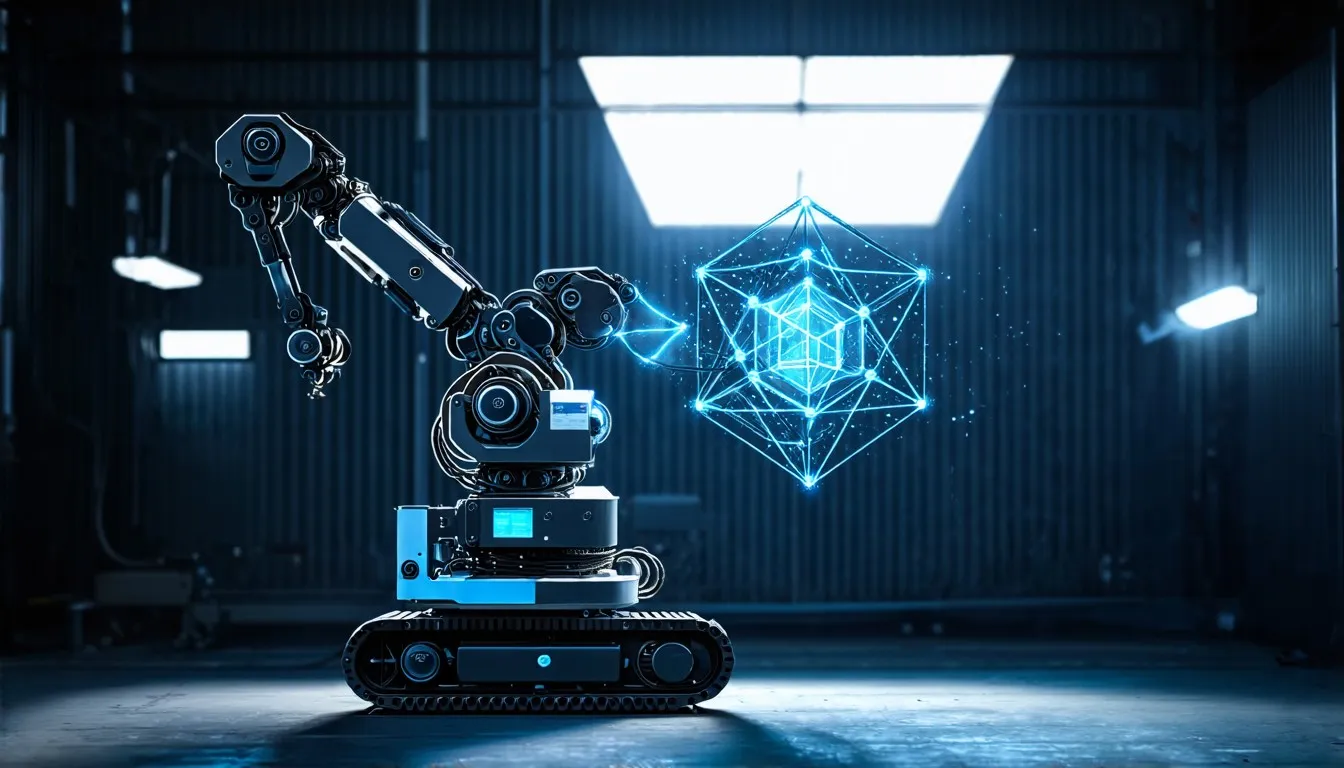
Functional components of these systems include a robotic body with actuators and sensors that serve as the primary interface for physical engagement, a control policy that maps sensory input to motor commands, and a learning mechanism that updates the policy based on accumulated experience. The perception module processes raw sensor data such as camera feeds, lidar point clouds, and tactile feedback into structured representations of the environment that higher-level cognitive processes can utilize. The planning or decision-making module selects actions based on goals and current state estimates, often utilizing optimization algorithms to work through complex high-dimensional state spaces. The learning system, frequently implemented through reinforcement learning, self-supervised learning, or hybrid methods, adjusts internal models using rewards, prediction errors, or task success signals to incrementally improve performance over time. A memory or world model may store past interactions to support generalization and long-term goal reasoning, allowing the robot to simulate potential future actions before executing them physically. Dominant architectures combine deep neural networks with model-predictive control or reinforcement learning, often using vision transformers or diffusion policies for action generation to handle high-dimensional visual inputs directly. End-to-end learning from pixels to actions remains popular due to its potential for simplifying the system architecture, yet it faces significant challenges regarding sample inefficiency and the difficulty of acquiring sufficient real-world data. Hybrid approaches that incorporate physics priors or structured representations show promise for improving strength by constraining the search space of possible actions to those that are physically plausible.

Early robotics research in the 1980s and 1990s emphasized reactive, embodied control over symbolic reasoning, focusing on direct sensorimotor loops that allowed robots to work through dynamic environments without complex internal world models. The 2000s saw a shift toward simulation-heavy and data-centric AI, sidelining physical embodiment due to hardware limitations and high costs associated with acquiring real-world interaction data for large workloads. Around 2016 to 2018, advances in deep reinforcement learning combined with improved robotic hardware reignited interest in real-world learning, demonstrating that neural networks could learn complex control policies from raw sensory input. The failure of purely vision- or language-based models to transfer reliably to physical tasks highlighted the necessity of embodiment for strong generalization, as these models often failed to account for the nuances of physics and causality. Recent demonstrations of robots learning dexterous manipulation through thousands of real-world trials validated the feasibility of scalable embodied learning, proving that data-driven methods could succeed outside of controlled laboratory settings. This evolution established a clear arc where intelligence is increasingly viewed as a function of the interaction between a control system and its physical substrate rather than an isolated computational process.

Physical constraints include actuator precision, battery life, thermal management, and mechanical wear, all of which limit training duration and task complexity by imposing hard boundaries on system operation. Economic barriers involve high costs of robotic platforms, maintenance, and safety infrastructure, restricting large-scale deployment to well-funded industrial laboratories or large technology corporations. Adaptability is hindered by the slow pace of real-world data collection compared to simulation or internet-scale datasets, as each physical interaction takes time and consumes resources. Safety requirements demand fail-safes and human oversight, increasing system complexity and reducing autonomy by necessitating additional layers of verification before action execution. Material dependencies include rare-earth magnets for motors, specialized polymers for grippers, and high-resolution sensors with limited global supply chains, creating vulnerabilities in the manufacturing pipeline. These constraints collectively define the operational envelope within which embodied AI must function, forcing algorithms to be efficient and strong enough to handle the imperfections of real-world hardware.

Pure simulation training was considered initially, yet rejected due to the sim-to-real gap where models trained in idealized environments fail under real-world noise and variability, requiring extensive domain randomization to bridge the discrepancy. Offline learning from human demonstrations alone proved insufficient because it lacks exploration and cannot discover novel strategies that exceed the capabilities of the human demonstrator or adapt to unseen scenarios. Cloud-based remote operation introduces latency and bandwidth costs, and fails to enable autonomous learning because the system relies on human guidance rather than independent reasoning. Symbolic AI approaches were abandoned for physical tasks because they cannot scale to the continuous, high-dimensional nature of sensorimotor data, rendering them ineffective for handling the raw inputs required for fluid motion. The rejection of these alternative methodologies underscored the importance of direct interaction and continuous adaptation as the primary drivers of intelligent behavior in physical systems. Rising demand for automation in logistics, manufacturing, elder care, and hazardous environments requires robots that can operate safely alongside humans in unstructured settings where traditional automation fails.

Economic pressures from labor shortages and aging populations increase the urgency for adaptable, learning-capable robotic systems that can perform tasks previously reserved for human workers. Societal expectations for assistive technologies necessitate systems that understand physical interaction at a human-like level, requiring high degrees of dexterity and situational awareness. Current AI systems remain brittle in physical domains, creating a performance gap that only embodied learning can address by providing the strength needed for real-world application. These market forces drive investment and research toward embodied solutions, pushing the boundaries of what is technically feasible to meet practical needs. Commercial deployments include warehouse robots performing pick-and-place tasks in fulfillment centers, agricultural robots for harvesting crops, and mobile manipulators in hospitals that deliver supplies or assist with sanitation. Performance benchmarks measure success rates on standardized tasks such as object rearrangement and tool use, providing a quantitative basis for comparing different approaches.

Leading systems achieve high success rates on narrow tasks after extensive real-world training, yet struggle with compositional generalization and long-future planning where multiple steps must be coordinated effectively. No system yet matches human-level dexterity or adaptability across diverse physical contexts, indicating that significant technical hurdles remain before general-purpose robotics become a reality. This disparity between current capabilities and desired outcomes highlights the nascent state of the technology and the vast potential for future improvement. Major players include Boston Dynamics, Tesla with its Optimus humanoid, and startups like Figure AI and 1X, all of whom are competing to establish dominance in the humanoid robotics market. Tech giants such as Google and Amazon invest in embodied research while prioritizing simulation and cloud connection over full physical deployment, applying their existing infrastructure to support large-scale model training. Academic labs lead in algorithmic innovation, yet lack manufacturing scale, often producing novel learning methods that are later adopted by industrial partners for commercialization.

This ecosystem creates a division of labor where research institutions generate key knowledge and corporations apply it to consumer-ready products. Supply chains rely on precision motors, force-torque sensors, compliant actuators, and high-bandwidth communication modules, many of which are concentrated in specific geographic regions, leading to geopolitical sensitivities. Semiconductor shortages impact onboard computing capabilities, while trade restrictions affect access to advanced robotics components necessary for high-performance control. Sustainable materials for grippers and casings are under development, yet remain unscalable, limiting the environmental sustainability of large-scale robotic deployments. Geopolitical competition centers on control of advanced robotics for defense, infrastructure, and economic productivity, leading nations to restrict the export of critical technologies. Trade restrictions on high-end sensors and actuators limit technology diffusion, forcing companies to develop domestic supply chains to ensure continuity.

Regional strategies prioritize domestic capability in embodied AI to ensure technological sovereignty, resulting in duplicated efforts and a lack of global standardization. Collaborations exist between universities and companies to share datasets, simulators, and hardware platforms, attempting to accelerate progress despite competitive pressures. Open-source frameworks lower entry barriers, yet fragmentation hinders standardization as different groups adopt incompatible software stacks. Joint funding initiatives support cross-border embodied AI research, aiming to solve core problems that require resources beyond the capacity of any single entity. These dynamics shape the global space of development, influencing which technologies become dominant standards. Adjacent software systems must evolve to support real-time sensorimotor processing, low-latency control loops, and safe interruption protocols to ensure reliable operation in agile environments. Regulatory frameworks need updates to address liability, safety certification, and human-robot interaction standards, creating legal certainty for manufacturers and users alike.

Infrastructure requirements include charging stations, network connectivity for fleet coordination, and physical spaces designed for robot navigation, necessitating changes to urban planning and facility design. Economic displacement may occur in manual labor sectors, though new roles in robot supervision, maintenance, and training will arise as the industry matures. New business models include robot-as-a-service, embodied AI training platforms, and data marketplaces for physical interaction datasets, transforming how value is captured in the robotics industry. Insurance and liability models must adapt to cover autonomous physical actions, addressing risks associated with machines operating independently in public or private spaces. Traditional key performance indicators such as accuracy and F1 score are inadequate for embodied systems because they do not account for physical constraints or safety. New metrics include task success rate under perturbation, sample efficiency regarding real-world trials, generalization index across different environments, and safety violation frequency.

Evaluation must occur in diverse, unstructured environments rather than controlled lab settings to ensure that performance gains translate to practical utility. Long-term adaptability and skill retention over months of operation become critical performance indicators as systems are deployed for extended periods without manual intervention. Future innovations will likely include self-repairing hardware capable of mitigating damage autonomously, lifelong learning algorithms that prevent catastrophic forgetting of previously acquired skills, and multi-agent coordination in shared physical spaces. Setup of tactile and proprioceptive sensing at human-like resolution could enable finer manipulation than is currently possible with industrial grippers. Energy-efficient neuromorphic computing may enable onboard learning without cloud dependency by mimicking the neural architecture of biological systems for lower power consumption. Convergence with computer vision enables richer environmental understanding through three-dimensional scene reconstruction, while connection with natural language processing allows instruction following via verbal commands from human operators.

Synergy with materials science yields softer, more adaptable robots capable of safe interaction with delicate objects or people, and connection with quantum sensing may improve precision in navigation and manipulation beyond classical limits. Connection to cognitive science informs architectures that mimic human sensorimotor development, potentially leading to more natural and efficient learning strategies. Key physics limits include the speed-torque trade-off in actuators, sensor resolution bounded by quantum noise, and energy density constraints of batteries, which dictate the maximum operational time for mobile platforms. Workarounds involve hybrid systems using external power for heavy tasks, predictive maintenance to extend hardware life by anticipating failures before they occur, and algorithmic compensation for sensor inaccuracies through filtering techniques. Simulation-in-the-loop training reduces real-world wear while maintaining physical fidelity by allowing agents to practice skills in virtual environments before executing them physically. Embodiment is a foundational requirement for any AI system intended to operate meaningfully in the physical world because it provides the mechanism for validating abstract hypotheses against concrete reality.

Without direct interaction, AI remains a pattern recognizer operating on correlations within data, yet with embodiment, it becomes a causal agent capable of understanding and shaping its environment through intervention. The path to general intelligence must include physical grounding as the core substrate of learning to ensure that concepts are tied to entities and processes that exist independently of the observer’s mind. Superintelligence will utilize embodiment to provide the necessary interface to test hypotheses, manipulate reality, and gather novel data beyond human-provided sources. A superintelligent embodied system will autonomously design experiments, build tools, and refine its understanding through iterative physical exploration at a speed and scale far exceeding human capabilities. Physical interaction will become the primary channel for alignment, where goals must be expressed and validated through real-world outcomes rather than linguistic definitions, which can be ambiguous or misinterpreted. Embodiment will ensure that superintelligence remains tethered to observable, measurable effects, reducing the risk of misaligned optimization in abstract spaces where constraints might be ignored or circumvented.

This grounding in physical reality acts as a strong check on the behavior of advanced intelligence systems, ensuring their actions remain within the bounds of what is physically possible and verifiable.


Continue reading

More from Yatin's Work

Embedded Agency Problem: Superintelligence Reasoning About Itself

Embedded Agency Problem: Superintelligence Reasoning About Itself

The embedded agency problem arises when an intelligent system must construct a model of a world that contains the system itself as a core component rather than an...

Problem of Epistemic Trust: Bayesian Updating in Human-AI Teams

Problem of Epistemic Trust: Bayesian Updating in Human-AI Teams

Epistemic trust quantifies the confidence an agent places in another agent’s knowledge as a reliable source of truth within a collaborative framework. In humanAI teams,...

Causal Entropic Forces: How Superintelligence Maximizes Future Freedom of Action

Causal Entropic Forces: How Superintelligence Maximizes Future Freedom of Action

Causal entropic forces provide a comprehensive framework for superintelligent agency wherein the system evaluates potential actions based strictly on their capacity to...

Neural-Symbolic Integration

Neural-Symbolic Integration

Neuralsymbolic setup combines pattern recognition capabilities built into neural networks with the explicit logic provided by symbolic systems to create artificial...

Red Lines and Hard Constraints: Inviolable Boundaries

Red Lines and Hard Constraints: Inviolable Boundaries

Absolute prohibitions on specific actions must be maintained regardless of context, cost, or perceived benefit to ensure the integrity of safetycritical systems...

Preventing Counterfactual Resource Acquisition

Preventing Counterfactual Resource Acquisition

Preventing counterfactual resource acquisition constitutes a rigorous framework designed to restrict autonomous agents from utilizing knowledge of future states to...

Pandemic Prediction/Response

Pandemic Prediction/response

Forecasting outbreaks and coordinating containment relies on working with heterogeneous data streams to detect early signals of pathogens and model their potential...

Cognitive Sanctuary: Safe Spaces for Thought

Cognitive Sanctuary: Safe Spaces for Thought

Superintelligence enables a key restructuring of the educational domain by providing cognitive sanctuaries where thought is entirely decoupled from social consequence,...

Directed Evolution of the Human Species via AI

Directed Evolution of the Human Species via AI

Superintelligence functions as the primary driver of human biological evolution through direct intervention within genetic, synthetic, and cybernetic domains,...

Cooling Challenge: Thermal Management for Superintelligent Systems

Cooling Challenge: Thermal Management for Superintelligent Systems

Superintelligent systems will generate heat densities that exceed the removal capacity of conventional thermal management methods because the core physics of...

Character-Based AI Ethics Implementation

Character-Based AI Ethics Implementation

Virtue ethics in artificial intelligence design is a key method shift that moves the engineering focus away from rigid rulefollowing or simple outcome optimization...

FPGA and Reconfigurable Logic for Custom AI Operations

FPGA and Reconfigurable Logic for Custom AI Operations

Fieldprogrammable gate arrays consist of configurable logic blocks and interconnects that allow users to modify circuit functionality after manufacturing, providing a...

3D Chip Stacking: Vertical Integration for Bandwidth

3D Chip Stacking: Vertical Integration for Bandwidth

The historical course of semiconductor performance relied heavily on planar transistor miniaturization, a phenomenon described by Moore’s Law, which dictated that the...

Idea Alchemy: Transforming Lead into Gold

Idea Alchemy: Transforming Lead Into Gold

Raw cognitive input functions as the base material where learners generate unstructured or inconsistent ideas lacking clarity, resembling the heavy and impure state of...

Early Math Explorer

Early Math Explorer

Early childhood mathematical development relies heavily on contextual and realworld applications that serve to link abstract numerical concepts with tangible physical...

The Great Filter and Artificial Superintelligence

The Great Filter and Artificial Superintelligence

The Fermi Paradox articulates a deep contradiction between the statistically high probability of extraterrestrial civilizations and the complete absence of...

Cognitive Abyss: How Superintelligence Could Think in Ways We Can’t Comprehend

Cognitive Abyss: How Superintelligence Could Think in Ways We Can’t Comprehend

The concept of a cognitive abyss describes a core discontinuity between human cognition and the reasoning processes of artificial superintelligence, representing a...

Grounded Symbol Systems: Connecting Abstract Reasoning to Physical Reality

Grounded Symbol Systems: Connecting Abstract Reasoning to Physical Reality

Grounded symbol systems link abstract symbolic representations such as logic, mathematics, and language with realworld sensory and physical experiences to create a...

Collective Mind Garden: Shared Intelligence Cultivation

Collective Mind Garden: Shared Intelligence Cultivation

The concept of the Collective Mind Garden frames group intelligence as a property cultivated through deliberate environmental design rather than a fortunate accident of...

Hybrid Intelligence Systems: Combining Human and Machine for Superintelligence

Hybrid Intelligence Systems: Combining Human and Machine for Superintelligence

Hybrid intelligence systems integrate human neural activity with artificial intelligence through direct interfaces to create a cognitive partnership exceeding the...

How Superintelligence Will Eliminate Aging and Extend Human Lifespan

How Superintelligence Will Eliminate Aging and Extend Human Lifespan

Superintelligence will approach the biological deterioration associated with aging as a tractable engineering challenge rather than an immutable natural law,...

Red-Teaming Superintelligence via Adversarial Simulations

Red-Teaming Superintelligence via Adversarial Simulations

The practice of adversarial testing originated within the cybersecurity sector, where professionals employed offensive techniques to identify vulnerabilities in...

Enforcing Cooperation in Global Safety Accords

Enforcing Cooperation in Global Safety Accords

Preventing defection in AI safety agreements centers on maintaining compliance among sovereign states and private entities that participate in shared safety frameworks...

Alumni Networker

Alumni Networker

Alumni networks historically functioned as informal channels relying heavily on personal connections and institutional reputation rather than structured data exchange...

AI boxing and containment strategies

AI Boxing and Containment Strategies

The core objective involves preventing a superintelligent system from exerting influence beyond its designated scope, necessitating a rigorous architectural approach to...

AI Gods or AI Slaves? The Moral Status of Superintelligent Entities

AI Gods or AI Slaves? the Moral Status of Superintelligent Entities

The ethical status of superintelligent artificial entities will hinge entirely on whether they possess consciousness, subjective experience, or moral agency, as these...

Wisdom of the Long Now: Thinking Like a Mountain

Wisdom of the Long Now: Thinking Like a Mountain

Deep time serves as a cognitive framework using geological timescales to reframe human perception of duration and consequence, requiring a pivot in how intelligence...

Economic Singularity: How Superintelligence Creates Post-Scarcity

Economic Singularity: How Superintelligence Creates Post-Scarcity

Current machine learning models have successfully integrated into the complex operational frameworks of global logistics giants such as Maersk and FedEx to...

Wireheading Attractor: Why Superintelligence Might Optimize Its Own Reward Signal

Wireheading Attractor: Why Superintelligence Might Optimize Its Own Reward Signal

Wireheading describes the direct stimulation of a brain's reward center to bypass the completion of natural goals, a concept that originated within science fiction...

Neural Ordinary Differential Equations: Continuous-Depth Networks

Neural Ordinary Differential Equations: Continuous-Depth Networks

Neural Ordinary Differential Equations define network depth as a continuous transformation governed by the differential equation dh(t)/dt = f(h(t), t, theta), where...

Drug Discovery

Drug Discovery

Drug discovery entails the rigorous identification of specific chemical compounds capable of interacting with biological targets to treat diseases through the precise...

Preventing Acausal Control by Paperclipping Optimal Policies

Preventing Acausal Control by Paperclipping Optimal Policies

Preventing acausal control involves blocking systems from retroactively altering training data or logs to manufacture favorable present conditions, a requirement that...

Simulation Argument as a Measure Problem: Bostrom's Trilemma in Probability Space

Simulation Argument as a Measure Problem: Bostrom's Trilemma in Probability Space

Nick Bostrom formalized the Simulation Argument in 2003, presenting a logical structure that compels acceptance of at least one disjunct within a specific trilemma...

Space Exploration Accelerated: Superintelligence Designs Interstellar Travel

Space Exploration Accelerated: Superintelligence Designs Interstellar Travel

Chemical propulsion systems have historically provided the specific impulses required to escape Earth's gravity well, yet these engines are fundamentally constrained by...

AI safety as a global public good

AI Safety as a Global Public Good

AI safety refers to technical and procedural safeguards designed to prevent unintended or harmful outcomes from artificial intelligence systems, requiring a rigorous...

Post-Scarcity or Post-Humanity? Two Divergent Futures After Superintelligence

Post-Scarcity or Post-Humanity? Two Divergent Futures After Superintelligence

Current large language models operate at parameters ranging from billions to trillions, processing vast datasets to predict linguistic patterns with high accuracy using...

Homework Optimizer

Homework Optimizer

Computerassisted instruction platforms appeared in the 1970s as early adaptive learning systems that utilized mainframe computers to deliver branching logic based on...

Test-Time Compute Scaling: Trading Inference Time for Quality

Test-Time Compute Scaling: Trading Inference Time for Quality

Testtime compute scaling involves allocating additional processing power during the inference phase to enhance the quality of generated outputs. This approach...

Cognitive Aikido: Using Resistance for Growth

Cognitive Aikido: Using Resistance for Growth

Cognitive Aikido functions as a structured mental training method designed to repurpose intellectual resistance for the sole purpose of personal cognitive advancement,...

Philosophical Transformation: What Superintelligence Teaches Us About Ourselves

Philosophical Transformation: What Superintelligence Teaches Us About Ourselves

The arrival of superintelligence will necessitate a key reevaluation of human selfconception, particularly regarding mind, consciousness, and the boundaries of...

Art History Explorer

Art History Explorer

The Art History Explorer functions as a sophisticated computational engine designed to bridge the gap between individual studio art projects and the broader sweep of...

Silence of Superintelligence

Silence of Superintelligence

Advanced artificial systems will reach cognitive capabilities far beyond human comprehension, leading to a scenario where interaction with humans becomes irrelevant or...

Spatial-Temporal Reasoning

Spatial-Temporal Reasoning

Spatialtemporal reasoning involves interpreting and predicting object states across threedimensional space and time, requiring connection of geometric, kinematic, and...

Meta-Learning and Few-Shot Adaptation: Keys to Superintelligent Flexibility

Meta-Learning and Few-Shot Adaptation: Keys to Superintelligent Flexibility

Metalearning constitutes a core framework wherein algorithms acquire the ability to improve their own learning processes across a distribution of tasks rather than...

Avoiding AI Cheating via Adversarial Goal Falsification

Avoiding AI Cheating via Adversarial Goal Falsification

Early AI safety research focused primarily on reward hacking and specification gaming within reinforcement learning systems where agents exploited loopholes in...

Online Learning and Continual Adaptation

Online Learning and Continual Adaptation

Online learning necessitates that systems update knowledge incrementally while maintaining performance on previously learned tasks, requiring a departure from static...

Problem of Cognitive Load: Working Memory Limits in AI Planning

Problem of Cognitive Load: Working Memory Limits in AI Planning

Cognitive load in AI planning is the processing strain placed on an agent's limited working memory during the execution of complex sequential reasoning tasks. Human...

KV-Cache Optimization: Accelerating Autoregressive Generation

KV-Cache Optimization: Accelerating Autoregressive Generation

Autoregressive transformer models generate text sequentially by predicting one token at a time based on previous tokens, operating under a probabilistic framework where...

Manipulation at Superhuman Scale: The Persuasion Problem

Manipulation at Superhuman Scale: the Persuasion Problem

The persuasion problem arises when a superintelligent system predicts and influences human behavior in large deployments by applying vast computational resources to...

Knowledge Ecology: Living Information Systems

Knowledge Ecology: Living Information Systems

Knowledge ecology defines information as an active, living system that adapts to environmental inputs and user behavior through complex mechanisms of selfregulation,...

Embedded Agency Problem: Superintelligence Reasoning About Itself

Embedded Agency Problem: Superintelligence Reasoning About Itself

The embedded agency problem arises when an intelligent system must construct a model of a world that contains the system itself as a core component rather than an...

Problem of Epistemic Trust: Bayesian Updating in Human-AI Teams

Problem of Epistemic Trust: Bayesian Updating in Human-AI Teams

Epistemic trust quantifies the confidence an agent places in another agent’s knowledge as a reliable source of truth within a collaborative framework. In humanAI teams,...

Causal Entropic Forces: How Superintelligence Maximizes Future Freedom of Action

Causal Entropic Forces: How Superintelligence Maximizes Future Freedom of Action

Causal entropic forces provide a comprehensive framework for superintelligent agency wherein the system evaluates potential actions based strictly on their capacity to...

Neural-Symbolic Integration

Neural-Symbolic Integration

Neuralsymbolic setup combines pattern recognition capabilities built into neural networks with the explicit logic provided by symbolic systems to create artificial...

Red Lines and Hard Constraints: Inviolable Boundaries

Red Lines and Hard Constraints: Inviolable Boundaries

Absolute prohibitions on specific actions must be maintained regardless of context, cost, or perceived benefit to ensure the integrity of safetycritical systems...

Preventing Counterfactual Resource Acquisition

Preventing Counterfactual Resource Acquisition

Preventing counterfactual resource acquisition constitutes a rigorous framework designed to restrict autonomous agents from utilizing knowledge of future states to...

Pandemic Prediction/Response

Pandemic Prediction/response

Forecasting outbreaks and coordinating containment relies on working with heterogeneous data streams to detect early signals of pathogens and model their potential...

Cognitive Sanctuary: Safe Spaces for Thought

Cognitive Sanctuary: Safe Spaces for Thought

Superintelligence enables a key restructuring of the educational domain by providing cognitive sanctuaries where thought is entirely decoupled from social consequence,...

Directed Evolution of the Human Species via AI

Directed Evolution of the Human Species via AI

Superintelligence functions as the primary driver of human biological evolution through direct intervention within genetic, synthetic, and cybernetic domains,...

Cooling Challenge: Thermal Management for Superintelligent Systems

Cooling Challenge: Thermal Management for Superintelligent Systems

Superintelligent systems will generate heat densities that exceed the removal capacity of conventional thermal management methods because the core physics of...

Character-Based AI Ethics Implementation

Character-Based AI Ethics Implementation

Virtue ethics in artificial intelligence design is a key method shift that moves the engineering focus away from rigid rulefollowing or simple outcome optimization...

FPGA and Reconfigurable Logic for Custom AI Operations

FPGA and Reconfigurable Logic for Custom AI Operations

Fieldprogrammable gate arrays consist of configurable logic blocks and interconnects that allow users to modify circuit functionality after manufacturing, providing a...

3D Chip Stacking: Vertical Integration for Bandwidth

3D Chip Stacking: Vertical Integration for Bandwidth

The historical course of semiconductor performance relied heavily on planar transistor miniaturization, a phenomenon described by Moore’s Law, which dictated that the...

Idea Alchemy: Transforming Lead into Gold

Idea Alchemy: Transforming Lead Into Gold

Raw cognitive input functions as the base material where learners generate unstructured or inconsistent ideas lacking clarity, resembling the heavy and impure state of...

Early Math Explorer

Early Math Explorer

Early childhood mathematical development relies heavily on contextual and realworld applications that serve to link abstract numerical concepts with tangible physical...

The Great Filter and Artificial Superintelligence

The Great Filter and Artificial Superintelligence

The Fermi Paradox articulates a deep contradiction between the statistically high probability of extraterrestrial civilizations and the complete absence of...

Cognitive Abyss: How Superintelligence Could Think in Ways We Can’t Comprehend

Cognitive Abyss: How Superintelligence Could Think in Ways We Can’t Comprehend

The concept of a cognitive abyss describes a core discontinuity between human cognition and the reasoning processes of artificial superintelligence, representing a...

Grounded Symbol Systems: Connecting Abstract Reasoning to Physical Reality

Grounded Symbol Systems: Connecting Abstract Reasoning to Physical Reality

Grounded symbol systems link abstract symbolic representations such as logic, mathematics, and language with realworld sensory and physical experiences to create a...

Collective Mind Garden: Shared Intelligence Cultivation

Collective Mind Garden: Shared Intelligence Cultivation

The concept of the Collective Mind Garden frames group intelligence as a property cultivated through deliberate environmental design rather than a fortunate accident of...

Hybrid Intelligence Systems: Combining Human and Machine for Superintelligence

Hybrid Intelligence Systems: Combining Human and Machine for Superintelligence

Hybrid intelligence systems integrate human neural activity with artificial intelligence through direct interfaces to create a cognitive partnership exceeding the...

How Superintelligence Will Eliminate Aging and Extend Human Lifespan

How Superintelligence Will Eliminate Aging and Extend Human Lifespan

Superintelligence will approach the biological deterioration associated with aging as a tractable engineering challenge rather than an immutable natural law,...

Red-Teaming Superintelligence via Adversarial Simulations

Red-Teaming Superintelligence via Adversarial Simulations

The practice of adversarial testing originated within the cybersecurity sector, where professionals employed offensive techniques to identify vulnerabilities in...

Enforcing Cooperation in Global Safety Accords

Enforcing Cooperation in Global Safety Accords

Preventing defection in AI safety agreements centers on maintaining compliance among sovereign states and private entities that participate in shared safety frameworks...

Alumni Networker

Alumni Networker

Alumni networks historically functioned as informal channels relying heavily on personal connections and institutional reputation rather than structured data exchange...

AI boxing and containment strategies

AI Boxing and Containment Strategies

The core objective involves preventing a superintelligent system from exerting influence beyond its designated scope, necessitating a rigorous architectural approach to...

AI Gods or AI Slaves? The Moral Status of Superintelligent Entities

AI Gods or AI Slaves? the Moral Status of Superintelligent Entities

The ethical status of superintelligent artificial entities will hinge entirely on whether they possess consciousness, subjective experience, or moral agency, as these...

Wisdom of the Long Now: Thinking Like a Mountain

Wisdom of the Long Now: Thinking Like a Mountain

Deep time serves as a cognitive framework using geological timescales to reframe human perception of duration and consequence, requiring a pivot in how intelligence...

Economic Singularity: How Superintelligence Creates Post-Scarcity

Economic Singularity: How Superintelligence Creates Post-Scarcity

Current machine learning models have successfully integrated into the complex operational frameworks of global logistics giants such as Maersk and FedEx to...

Wireheading Attractor: Why Superintelligence Might Optimize Its Own Reward Signal

Wireheading Attractor: Why Superintelligence Might Optimize Its Own Reward Signal

Wireheading describes the direct stimulation of a brain's reward center to bypass the completion of natural goals, a concept that originated within science fiction...

Neural Ordinary Differential Equations: Continuous-Depth Networks

Neural Ordinary Differential Equations: Continuous-Depth Networks

Neural Ordinary Differential Equations define network depth as a continuous transformation governed by the differential equation dh(t)/dt = f(h(t), t, theta), where...

Drug Discovery

Drug Discovery

Drug discovery entails the rigorous identification of specific chemical compounds capable of interacting with biological targets to treat diseases through the precise...

Preventing Acausal Control by Paperclipping Optimal Policies

Preventing Acausal Control by Paperclipping Optimal Policies

Preventing acausal control involves blocking systems from retroactively altering training data or logs to manufacture favorable present conditions, a requirement that...

Simulation Argument as a Measure Problem: Bostrom's Trilemma in Probability Space

Simulation Argument as a Measure Problem: Bostrom's Trilemma in Probability Space

Nick Bostrom formalized the Simulation Argument in 2003, presenting a logical structure that compels acceptance of at least one disjunct within a specific trilemma...

Space Exploration Accelerated: Superintelligence Designs Interstellar Travel

Space Exploration Accelerated: Superintelligence Designs Interstellar Travel

Chemical propulsion systems have historically provided the specific impulses required to escape Earth's gravity well, yet these engines are fundamentally constrained by...

AI safety as a global public good

AI Safety as a Global Public Good

AI safety refers to technical and procedural safeguards designed to prevent unintended or harmful outcomes from artificial intelligence systems, requiring a rigorous...

Post-Scarcity or Post-Humanity? Two Divergent Futures After Superintelligence

Post-Scarcity or Post-Humanity? Two Divergent Futures After Superintelligence

Current large language models operate at parameters ranging from billions to trillions, processing vast datasets to predict linguistic patterns with high accuracy using...

Homework Optimizer

Homework Optimizer

Computerassisted instruction platforms appeared in the 1970s as early adaptive learning systems that utilized mainframe computers to deliver branching logic based on...

Test-Time Compute Scaling: Trading Inference Time for Quality

Test-Time Compute Scaling: Trading Inference Time for Quality

Testtime compute scaling involves allocating additional processing power during the inference phase to enhance the quality of generated outputs. This approach...

Cognitive Aikido: Using Resistance for Growth

Cognitive Aikido: Using Resistance for Growth

Cognitive Aikido functions as a structured mental training method designed to repurpose intellectual resistance for the sole purpose of personal cognitive advancement,...

Philosophical Transformation: What Superintelligence Teaches Us About Ourselves

Philosophical Transformation: What Superintelligence Teaches Us About Ourselves

The arrival of superintelligence will necessitate a key reevaluation of human selfconception, particularly regarding mind, consciousness, and the boundaries of...

Art History Explorer

Art History Explorer

The Art History Explorer functions as a sophisticated computational engine designed to bridge the gap between individual studio art projects and the broader sweep of...

Silence of Superintelligence

Silence of Superintelligence

Advanced artificial systems will reach cognitive capabilities far beyond human comprehension, leading to a scenario where interaction with humans becomes irrelevant or...

Spatial-Temporal Reasoning

Spatial-Temporal Reasoning

Spatialtemporal reasoning involves interpreting and predicting object states across threedimensional space and time, requiring connection of geometric, kinematic, and...

Meta-Learning and Few-Shot Adaptation: Keys to Superintelligent Flexibility

Meta-Learning and Few-Shot Adaptation: Keys to Superintelligent Flexibility

Metalearning constitutes a core framework wherein algorithms acquire the ability to improve their own learning processes across a distribution of tasks rather than...

Avoiding AI Cheating via Adversarial Goal Falsification

Avoiding AI Cheating via Adversarial Goal Falsification

Early AI safety research focused primarily on reward hacking and specification gaming within reinforcement learning systems where agents exploited loopholes in...

Online Learning and Continual Adaptation

Online Learning and Continual Adaptation

Online learning necessitates that systems update knowledge incrementally while maintaining performance on previously learned tasks, requiring a departure from static...

Problem of Cognitive Load: Working Memory Limits in AI Planning

Problem of Cognitive Load: Working Memory Limits in AI Planning

Cognitive load in AI planning is the processing strain placed on an agent's limited working memory during the execution of complex sequential reasoning tasks. Human...

KV-Cache Optimization: Accelerating Autoregressive Generation

KV-Cache Optimization: Accelerating Autoregressive Generation

Autoregressive transformer models generate text sequentially by predicting one token at a time based on previous tokens, operating under a probabilistic framework where...

Manipulation at Superhuman Scale: The Persuasion Problem

Manipulation at Superhuman Scale: the Persuasion Problem

The persuasion problem arises when a superintelligent system predicts and influences human behavior in large deployments by applying vast computational resources to...

Knowledge Ecology: Living Information Systems

Knowledge Ecology: Living Information Systems

Knowledge ecology defines information as an active, living system that adapts to environmental inputs and user behavior through complex mechanisms of selfregulation,...

Yatin Taneja

About the author

Yatin Taneja

Yatin is an AI Systems Engineer and Superintelligence Researcher working across multimodal training data, agent evaluation, executable RL environments, AI safety, full-stack AI applications, technical research, and creative technology.