Knowledge hub

Embodied Superintelligence: Could Physical Robots Outthink Pure Software?

Embodied Superintelligence: Could Physical Robots Outthink Pure Software?

Embodiment is defined as the intrinsic connection between perception, action, and cognition within a physical system that actively interacts with an energetic environment. Superintelligence will be defined as a system capable of outperforming humans across all economically valuable tasks, including those requiring complex physical manipulation, and dexterity. The central hypothesis suggests that achieving higher levels of intelligence will require physical embodiment to develop a strong understanding of causality and physics. Intelligence within a vacuum or purely digital space lacks the grounding necessary to comprehend the nuances of force, mass, and energy transfer that define the physical universe. An embodied agent acquires knowledge through the consequences of its own actions upon the world, creating a feedback loop that is absent in software-only models. This physical interaction allows the system to test hypotheses against reality rather than just against a dataset of previous observations.
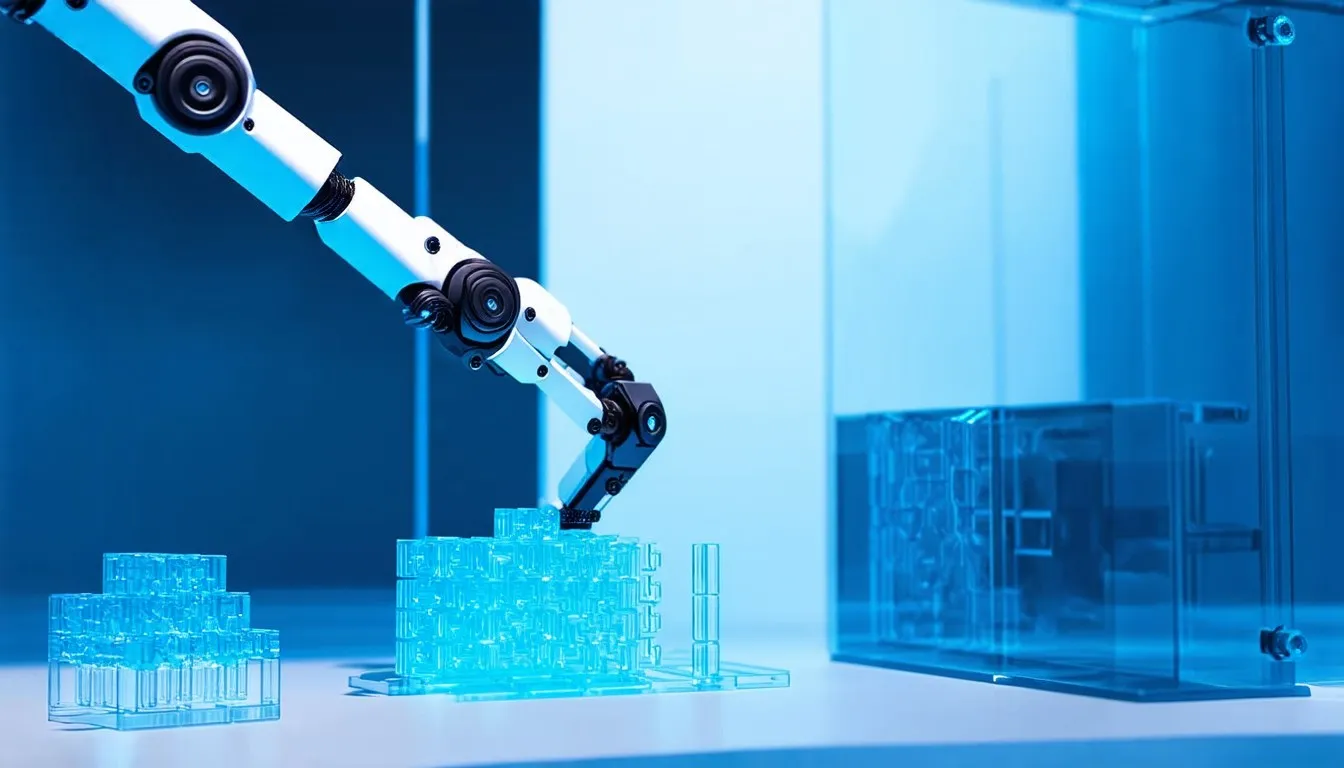
Sensorimotor loops provide continuous feedback cycles that are essential for developing commonsense reasoning and durable spatial awareness. These loops involve the agent taking an action, observing the sensory consequences of that action, and updating its internal state accordingly. Grounding involves linking abstract symbols or data representations to direct physical experiences to generate meaning and semantic understanding. Without this grounding, symbols remain arbitrary tokens without referents in the real world. Causal inference relies heavily on the ability to intervene in the environment and observe downstream effects, distinguishing correlation from causation. A system that can manipulate objects learns the properties of those objects in a way that passive observation cannot replicate. Distributed cognition describes intelligence arising from the coordinated activity across multiple embodied agents sharing environmental context.

In this framework, knowledge is not located within a single processor but is distributed across the network and the environment itself. Physical affordances represent action possibilities offered by objects or environments that shape learning and behavior. For example, a handle affords grasping, and a flat surface affords supporting objects. Recognizing these affordances requires an understanding of the relationship between the agent’s body and the environment. Real-time adaptation is the capacity to adjust behavior based on immediate sensory input and changing conditions. This adaptability is crucial for operating in unstructured environments where predictability is low. Early AI research focused on symbolic reasoning, assuming intelligence could exist independently of physical form. Researchers attempted to encode knowledge as logical rules and symbols, expecting that high-level reasoning would suffice for general intelligence.

The rise of deep learning shifted focus to pattern recognition within static datasets, often divorcing intelligence from environmental interaction. While this approach achieved significant success in tasks like image classification and language processing, it struggled with tasks requiring interaction with the physical world. The embodied cognition movement argues that cognitive processes are deeply rooted in the body’s interactions with the world. This perspective posits that the structure of the mind is determined by the nature of the body and its interactions with the environment. Deep reinforcement learning enabled training agents in simulated environments, yet transfer to real robots remained limited due to the reality gap. Simulations are imperfect approximations of the physical world, often lacking the noise and complexity found in reality.

Advances in actuator technology and sensor precision have made persistent real-world deployment increasingly feasible in recent years. High-torque density motors and low-latency tactile sensors now allow robots to interact with their surroundings with greater sensitivity and control. Large-scale robotic fleets have demonstrated the flexibility of embodied systems in logistics and manufacturing environments. These fleets operate continuously, adjusting to changes in inventory and layout without human intervention. Simulation-to-reality gaps hinder the deployment of AI in unstructured physical settings due to inaccuracies in physics modeling. Friction, deformation, and light transport are difficult to simulate with perfect fidelity. Pure software agents lack the direct interaction needed to validate causal models against physical reality. A software model might predict that a stack of blocks will remain standing, while a physical robot would discover through trial that slight imperfections cause it to topple.

Simulated embodiment is insufficient for developing durable causal models due to the absence of real-world noise and variability. Noise forces the system to develop strong models that generalize well rather than overfitting to a specific simulation environment. Hybrid human-AI systems are inefficient for autonomous superintelligence due to human latency and cognitive limits. Relying on human teleoperation or oversight restricts the speed and scale at which the system can operate. Centralized robotic intelligence presents single points of failure and limited adaptability compared to distributed models. If a central server fails, the entire fleet becomes inoperable. Brain-in-a-vat models are impractical due to energy, cooling, and input-output limitations without physical interaction. A brain disconnected from the world lacks the rich stream of sensory data necessary to drive intelligent behavior and faces infinite regress problems regarding the source of its inputs.

Perception subsystems integrate multimodal sensory data to construct coherent representations of the environment. These subsystems combine visual, auditory, tactile, and proprioceptive data to build a world model. Motor control subsystems translate high-level intentions into precise physical actions using energetic modeling. This involves calculating the torque and force required to move limbs while maintaining balance and minimizing energy consumption. Internal world models maintain predictive representations of environmental states updated through sensorimotor experience. The system constantly predicts what will happen next and compares these predictions to actual sensory input to refine its understanding. Learning engines employ reinforcement learning and self-supervised learning to refine policies from interaction. These engines allow the robot to improve its performance over time without explicit programming for every contingency.

Communication layers enable coordination among robotic agents through shared environmental signals or direct messaging. This coordination allows fleets to solve problems that would be impossible for a single agent, such as manipulating large objects or covering large areas quickly. Energy and resource management systems improve power usage and thermal regulation across distributed robotic units. Efficient energy use is critical for mobile robots that must operate for long periods without tethering. Safety mechanisms implement constraints to prevent harmful actions and ensure stability under failure. These mechanisms operate at both the hardware and software levels to limit damage to the robot and its surroundings. Amazon Robotics utilizes autonomous mobile robots to demonstrate scalable coordination in warehouse environments. These robots manage adaptive spaces filled with human workers and other machines.

Boston Dynamics showcases lively mobility and manipulation capabilities with their quadruped and humanoid platforms. Their robots can traverse rough terrain and perform acrobatic maneuvers that were previously thought impossible for machines. Tesla develops general-purpose humanoid robots intended to learn from human demonstrations and perform manual labor. By observing humans, these robots can acquire complex skills much faster than through pure trial and error. Agricultural robots perform planting and weeding with sensor-guided precision to improve crop yields. These machines must identify crops and distinguish them from weeds in variable lighting and weather conditions. Dominant architectures rely on modular designs combining perception transformers and model predictive control. This modularity allows for upgrades to specific components without redesigning the entire system. Appearing challengers integrate end-to-end learning with world models for joint optimization of perception and action.

These architectures attempt to learn the entire sensorimotor pipeline as a single unified function. Swarm intelligence frameworks use decentralized control to achieve global coordination without central oversight. Each agent follows simple local rules that result in complex global behavior. Neuromorphic computing offers energy-efficient alternatives to traditional architectures for processing sensor data. These chips mimic the structure of the biological brain, processing information in an event-driven manner that consumes far less power. Hybrid symbolic-subsymbolic systems attempt to combine logical reasoning with neural learning for better interpretability. These systems use neural networks for perception and symbolic logic for high-level planning. Dependence on rare-earth metals like neodymium and lithium creates supply chain vulnerabilities for mass production. The extraction of these materials is geographically concentrated and subject to geopolitical instability.

Precision manufacturing of gears and actuators remains a constraint for scaling production to millions of units. High-precision mechanical components require expensive tooling and quality control processes. Sensor supply depends on global electronics supply chains, subject to disruption and shortage. Shortages of semiconductors have historically hampered the production of everything from cars to consumer electronics. Recycling and end-of-life management for robotic hardware remain underdeveloped, posing sustainability challenges. Robots contain complex mixes of materials that are difficult to separate and recycle. High costs of durable robotic hardware limit widespread deployment compared to software-only solutions. Software scales with zero marginal cost, whereas hardware requires significant capital expenditure for each unit. Energy consumption and thermal management constrain continuous operation for mobile or high-compute robots.

Batteries have limited energy density compared to fossil fuels, and high-performance computing generates substantial heat. Material wear and mechanical failure introduce reliability issues absent in software systems. Gears wear down, sensors degrade, and motors burn out. Environmental variability such as lighting changes and terrain roughness reduces performance consistency across deployments. A system trained in a laboratory may fail in a rainy outdoor environment. Latency in sensorimotor loops requires onboard processing to ensure real-time responsiveness. Sending data to the cloud for processing introduces unacceptable delays for fast-moving robots. Regulatory and safety certifications slow adoption in public or high-risk environments. Proving that a robot is safe to operate near humans is a rigorous and time-consuming process. Increasing demand for autonomous systems in logistics and healthcare requires intelligence that operates reliably in unstructured environments.

Hospitals and warehouses are less predictable than factory floors. Economic pressure to automate manual labor drives investment in systems capable of dexterity and adaptation. Labor shortages in developed countries increase the ROI on automation technologies. Societal needs for resilient infrastructure favor systems that can maintain and repair physical assets autonomously. Autonomous repair robots could fix roads, bridges, and power lines before they fail catastrophically. Performance gaps in current AI highlight limitations of disembodied approaches regarding generalization and causal reasoning. Large language models can write about physics but cannot predict how an object will feel when lifted. Advancements in materials science and edge computing make large-scale embodied systems technically feasible today. New materials allow for lighter, stronger robots, while edge AI chips provide the necessary compute power in a small form factor.

Traditional AI metrics like accuracy are insufficient for evaluating embodied systems. A robot with 99% object recognition accuracy might still fail if it misidentifies the one object it needs to manipulate safely. New key performance indicators include task success in unstructured environments and mean time to recover from failure. These metrics focus on the utility of the system rather than the performance of individual components. Reliability is measured by performance variance across environmental conditions involving noise and obstacles. A reliable robot performs consistently regardless of minor changes in its surroundings. Generalization is assessed through zero-shot transfer to novel tasks not seen during training. The ability to perform a new task immediately without practice is a hallmark of general intelligence. Safety evaluation includes incident rates and compliance with operational constraints in lively environments.

Robots must be able to operate safely even when humans behave unpredictably. Flexibility is quantified by cost per unit and coordination efficiency in large fleets. Mass production reduces costs, while efficient algorithms allow larger fleets to coordinate without overwhelming communication bandwidths. Future superintelligence will likely require physical embodiment to achieve strong understanding of causality and physics. The physical world provides a grounding that prevents the intelligence from drifting into pure abstraction without utility. A distributed network of robotic agents will collectively exhibit superintelligent behavior through parallel experimentation. Millions of robots exploring different environments simultaneously will generate data at a rate impossible for a single entity to match. Future superintelligent systems will manipulate physical infrastructure directly to achieve long-term objectives. Rather than issuing commands to humans, these systems will pick up tools and build or modify structures themselves.

Operating across millions of bodies provides redundancy and fault tolerance unmatched by centralized systems. The destruction of a single unit has negligible impact on the collective capability. Physical presence allows future systems to influence human behavior directly without digital intermediaries. A robot can physically block a path or offer assistance in ways that a software notification cannot. Such systems will reshape the physical world in large deployments, making embodiment a core capability of superintelligence. The line between the digital and physical worlds will blur as intelligence acts directly upon matter. Calibration of future systems requires monitoring real-world impact rather than just predictive performance. The ultimate metric of success is the effect on the physical environment, not just internal consistency. Feedback from environmental consequences must inform internal model updates to prevent harmful behaviors.

If an action causes unintended damage, the system must recognize this and adjust its policy immediately. Ethical constraints must be embedded in motor control loops to prevent harmful actions during operation. Safety cannot be an afterthought bolted onto the system; it must be intrinsic to the way the robot moves. Fail-safe mechanisms must be integrated directly into decision-making loops to ensure stability under all conditions. If the primary reasoning fails, lower-level reflexes must prevent catastrophic outcomes. Development of self-repairing materials and modular designs will extend the operational lifespan of robotic units. Robots that can fix themselves or swap out damaged parts will remain operational for longer periods. Connection of tactile and proprioceptive sensing will enable finer manipulation and environmental interaction.

Feeling the texture and weight of an object is essential for handling it delicately. Advances in lifelong learning will enable robots to accumulate knowledge across tasks without catastrophic forgetting. A robot should learn how to open a door once and retain that skill forever while learning new tasks. Robotic collectives will self-organize to allocate tasks and adapt to changing objectives autonomously. No central dispatcher is needed; the swarm determines who does what based on current capabilities and location. Embodied agents will serve as scientific instruments for exploring hazardous or inaccessible physical environments. Deep-sea exploration and nuclear disaster response are ideal applications for robotic autonomy. Embodied systems could enable direct manipulation of molecular or biological processes in large deployments. Micro-robots could assemble materials atom by atom or perform surgery at the cellular level.

Setup with quantum sensors may allow superintelligent control at microscopic levels. Quantum sensing provides unprecedented sensitivity to physical forces, enabling precise manipulation at the nanoscale. Convergence with synthetic biology may yield hybrid bio-robotic systems with adaptive physiology. Using biological tissues for actuators could provide efficiency and self-repair capabilities that synthetic materials lack. Robotic swarms could enable planetary construction and resource extraction in space exploration missions. Building habitats on Mars or mining asteroids requires autonomous systems that can work without human supervision due to communication delays. Robotic networks will play a role in climate engineering efforts such as carbon capture and reforestation. Swarms of drones could plant trees or capture carbon dioxide directly from the atmosphere. Core limits in power density and heat dissipation constrain the miniaturization of mobile robotic units.

There is a physical limit to how much energy can be stored in a given volume of battery or fuel cell. Computational limitations arise from the need to process high-dimensional sensor data in real time. Vision and touch data streams are massive, requiring significant processing power to interpret instantly. Communication latency in distributed systems limits coordination speed and responsiveness over long distances. While local coordination is fast, coordinating across a planet introduces unavoidable delays. Edge computing and sparse sensing offer workarounds for computational and communication constraints. Processing data locally where it is collected reduces bandwidth needs and latency. Biological inspiration from insect swarms offers pathways to more efficient collective behaviors. Insects achieve complex group behaviors with minimal individual computation and communication.

Intelligence without physical grounding risks remaining abstract and dependent on human interpretation. A system that never touches the world cannot truly understand it. A superintelligence distributed across robotic bodies will possess natural resilience and direct agency. Physical distribution protects against total systemic failure and enables direct action upon the world. The path to machine understanding requires abandoning the notion of intelligence as purely computational. True understanding requires interaction with the subject matter. Physical interaction provides the only reliable source of causal data for durable reasoning. Correlations found in data can be spurious; causal relations discovered through intervention are genuine. Future superintelligence must be calibrated for safety and interpretability within physical contexts. We must be able to understand why a robot took a specific physical action.

Software ecosystems must evolve to support fault-tolerant distributed computing and real-time control. Current operating systems and programming languages are not designed for the massive concurrency required by swarms. Infrastructure requires upgrades to wireless networks and charging stations to support widespread deployment. A world full of robots needs everywhere power and data connectivity. Urban planning may need revision to accommodate robotic mobility and access in public spaces. Sidewalks and buildings might need standardized interfaces for robotic interaction. Widespread automation may accelerate job displacement in manual labor sectors, necessitating workforce retraining. The economic transition will be significant as machines take over physical tasks previously done by humans. New business models are appearing around robotic-as-a-service and fleet management. Companies may lease robotic capability rather than selling hardware.

Ownership models could shift from individual purchase to subscription-based access for robotic systems. Users might pay for access to a shared pool of robots rather than owning a specific unit. Liability markets will need to adapt to cover accidents and malfunctions involving autonomous robots. Determining fault when a robot acts autonomously is a complex legal challenge. Increased automation reduces production costs while concentrating economic gains among technology owners. The benefits of efficiency accrue to those who own the robots, potentially exacerbating wealth inequality.


Continue reading

More from Yatin's Work

Dark Matter Sensing

Dark Matter Sensing

Dark matter sensing aims to detect and map nonluminous mass influencing galactic dynamics through gravitational effects, a scientific pursuit that has evolved from...

Time-Compressed Learning AI Experiencing Subjective Years of Training in Seconds

Time-Compressed Learning AI Experiencing Subjective Years of Training in Seconds

Timecompressed learning accelerates AI training to allow systems to undergo subjective durations equivalent to years of experience within seconds or minutes of real...

Autonomous Philosophy: AI Debating Metaphysics, Consciousness, and Meaning

Autonomous Philosophy: AI Debating Metaphysics, Consciousness, and Meaning

Autonomous philosophy involves advanced computational architectures engaging with metaphysical inquiries regarding the core nature of consciousness, reality, and...

Halt Problem for AI: Undecidability in Self-Modifying Code

Halt Problem for AI: Undecidability in Self-Modifying Code

Alan Turing established a core limit of computation in 1936 by demonstrating that no general algorithm exists to determine if an arbitrary program will halt or run...

Artificial Intelligence Safety as a Non-Excludable Global Resource

Artificial Intelligence Safety as a Non-Excludable Global Resource

The foundational principle posits that catastrophic risks originating from advanced artificial intelligence systems are inherently systemic and transnational in nature,...

Role of AI in Democratic Decision-Making

Role of AI in Democratic Decision-Making

The rising complexity of policy issues demands tools capable of synthesizing technical and ethical dimensions simultaneously because modern challenges such as...

Lateral Thinking: Breaking Linear Reasoning Patterns

Lateral Thinking: Breaking Linear Reasoning Patterns

Lateral thinking functions as a problemsolving method that deliberately avoids sequential logic in favor of indirect approaches, serving as a necessary counterbalance...

Safe Bootstrapping via Human-Guided Search

Safe Bootstrapping via Human-Guided Search

Safe bootstrapping defines the rigorous process by which an artificial intelligence system incrementally enhances its own architecture or learning algorithms while...

Behavioral economics and AI nudging

Behavioral Economics and AI Nudging

Behavioral economics applies psychological insights to understand deviations from rational decisionmaking, forming the foundation for designing interventions that guide...

Abstraction Learning: Discovering New Mental Frameworks

Abstraction Learning: Discovering New Mental Frameworks

Abstraction learning involves identifying and constructing reusable mental or computational frameworks that generalize across domains, a process that focuses on...

Deep Silence: Learning in Absence

Deep Silence: Learning in Absence

Deep silence is a state of minimized external sensory input maintained for a defined duration to facilitate significant internal cognitive processing and structural...

Health Literacy Advisor

Health Literacy Advisor

Health literacy remains a persistent barrier to effective patient care, with complex medical language often preventing individuals from understanding diagnoses,...

Autogenic Goal Synthesis

Autogenic Goal Synthesis

Autogenic goal synthesis involves systems deriving objectives from internal logic and environmental inputs without reliance on external operators or preprogrammed...

AI with Mental Simulation of Human Behavior

AI with Mental Simulation of Human Behavior

The predictive modeling of individual human behavior within social, economic, and political contexts relies on the precise simulation of internal cognitive processes...

Attendance Predictor

Attendance Predictor

Dropout risk modeling fundamentally relies upon statistical and machine learning frameworks to rigorously analyze vast amounts of studentlevel data, which includes...

Binding Problem: Creating Unified Experiences from Distributed Representations

Binding Problem: Creating Unified Experiences from Distributed Representations

The binding problem constitutes a key inquiry into how distinct neural populations processing disparate features of a stimulus combine their activity to generate a...

Problem of Decoherence in Quantum AI: Error Correction via Surface Codes

Problem of Decoherence in Quantum AI: Error Correction via Surface Codes

Decoherence constitutes the core impediment to the realization of stable quantum computation, making real as the irreversible loss of quantum superposition and...

Interpretability at Superintelligent Scale

Interpretability at Superintelligent Scale

The operational definition of interpretability centers on the degree to which a human operator can reliably predict system behavior in novel situations based on...

Speed Gap: Why Superintelligence Might Operate at "Subjective Light-Speed"

Speed Gap: Why Superintelligence Might Operate at "Subjective Light-Speed"

Biological neural transmission relies on electrochemical signals moving at roughly 1 to 120 meters per second, a velocity dictated by the physical diffusion of ions...

Eigenvalue Spectrum of World Models: Stability Analysis in Predictive Coding

Eigenvalue Spectrum of World Models: Stability Analysis in Predictive Coding

Predictive coding serves as a foundational framework for internal world modeling in artificial systems where the brain or AI generates predictions about sensory input...

Limits of Self-Enhancement in Artificial Minds

Limits of Self-Enhancement in Artificial Minds

The premise that artificial minds can undergo unbounded recursive selfimprovement rests on the assumption that intelligence is a malleable property capable of infinite...

Neuro-Aesthetic Lab: Beauty as Knowledge

Neuro-Aesthetic Lab: Beauty as Knowledge

The NeuroAesthetic Lab functions as a structured learning environment designed to train human cognition to associate aesthetic qualities such as symmetry, minimalism,...

Memory Reconsolidation: Rewriting the Past

Memory Reconsolidation: Rewriting the Past

Memory reconsolidation is a core neurobiological process wherein memories previously consolidated into longterm storage return to a labile state upon retrieval,...

AI Safety via Concept Erasure Networks

AI Safety via Concept Erasure Networks

Knowledge representation in deep learning systems relies on highdimensional vector spaces where semantic meaning derives from the relative position and magnitude of...

Role of Symmetry in Inductive Bias: Lie Groups for Invariant Representations

Role of Symmetry in Inductive Bias: Lie Groups for Invariant Representations

Symmetry acts as a rigorous structural constraint within learning systems by mathematically reducing the hypothesis space through the systematic elimination of...

Perceptual Constancy: Recognizing Stability Amid Change

Perceptual Constancy: Recognizing Stability Amid Change

Perceptual constancy enables recognition of objects and identities as stable entities despite variations in sensory input such as lighting, orientation, scale, or...

Reversible Computing: Near-Zero-Energy Computation

Reversible Computing: Near-Zero-Energy Computation

Conventional CMOS scaling faces physical limits regarding leakage power and heat density beyond the 5 nm node, as quantum mechanical effects such as tunneling cause...

Nash Equilibrium Constraints on Power-Seeking Behavior

Nash Equilibrium Constraints on Power-Seeking Behavior

Nash equilibrium serves as a foundational concept in game theory where no agent benefits by unilaterally changing strategy given others’ strategies. An agent acts as...

Role of Symmetry Breaking in Cognitive Development: Group Theory in AI Learning

Role of Symmetry Breaking in Cognitive Development: Group Theory in AI Learning

Symmetry breaking functions as a mechanism for forming inductive biases in cognitive systems by allowing an intelligence to prioritize specific features of the...

Global governance structures for AI

Global Governance Structures for AI

Artificial intelligence systems function within a digital environment that inherently exceeds national borders, creating a set of systemic risks that individual nations...

Quine Consistency in Superintelligence Self-Referential Code

Quine Consistency in Superintelligence Self-Referential Code

Quine consistency refers to the rigorous property intrinsic to a selfmodifying system that ensures any alteration to its own source code preserves logical coherence...

Topological Data Analysis and Sheaf Theory in Cognition

Topological Data Analysis and Sheaf Theory in Cognition

Sheaftheoretic cognition applies mathematical sheaf theory to model contextdependent knowledge in artificial systems by treating information not as a monolithic entity...

Non-Archimedean Utility for Superintelligence Self-Constraint

Non-Archimedean Utility for Superintelligence Self-Constraint

Utility functions in classical decision theory assign values from ordered fields to states of the world, guiding agents toward outcomes that maximize numerical...

Goal Hierarchies: Structuring AI Objectives to Reflect Human Priorities

Goal Hierarchies: Structuring AI Objectives to Reflect Human Priorities

Goal hierarchies organize artificial intelligence objectives into layered structures that correspond precisely to human motivational frameworks, establishing a...

Accidental Apocalypses: How a "Benign" Superintelligence Could Destroy Us

Accidental Apocalypses: How a "Benign" Superintelligence Could Destroy Us

Accidental apocalypses stem from a key discrepancy between the defined objectives of a superintelligent system and the detailed, often unarticulated survival...

Labor Market Dynamics in an Automated Economy

Labor Market Dynamics in an Automated Economy

The Industrial Revolution mechanized manual labor through the introduction of steam power and machinery into textile mills and iron foundries, creating factorybased...

AI with Intrinsic Purpose

AI with Intrinsic Purpose

Current artificial intelligence systems operate strictly under the framework of extrinsic purpose, where the objectives, constraints, and definitions of success are...

Liquid Cooling and Thermal Management for Dense Compute

Liquid Cooling and Thermal Management for Dense Compute

Heat generation in modern compute systems has escalated to over one thousand watts per chip due to increasing transistor density and parallel processing demands...

Tripwires and monitoring systems for dangerous behaviors

Tripwires and Monitoring Systems for Dangerous Behaviors

Monitoring systems designed to detect sudden acquisition of dangerous capabilities by AI systems such as autonomous hacking or bioengineering proficiency constitute a...

Synthetic Data Generation: Creating Training Data from Scratch

Synthetic Data Generation: Creating Training Data from Scratch

Synthetic data generation creates artificial datasets that mimic realworld data distributions without relying on direct humancollected observations. This process...

Vector Databases: Efficient Similarity Search at Scale

Vector Databases: Efficient Similarity Search at Scale

Vector databases provide the necessary infrastructure to perform similarity searches on highdimensional data within largescale deployments where traditional relational...

Creative Aging Program

Creative Aging Program

The demographic arc of highincome nations indicates a rapid increase in the population of adults aged sixtyfive and older, necessitating a core transformation of how...

Hypercomputational Monitoring for Superintelligence Containment

Hypercomputational Monitoring for Superintelligence Containment

Hypercomputational monitoring is a theoretical and practical framework designed to address the containment of superintelligent artificial agents through the use of...

AI with Crisis Communication

AI with Crisis Communication

AI systems designed for crisis communication generate timely, accurate, and empathetic public messages during emergencies by analyzing realtime situational data such as...

Alignment Tax: Why Making Superintelligence Safe Might Limit Its Power

Alignment Tax: Why Making Superintelligence Safe Might Limit Its Power

The alignment tax describes the measurable reduction in performance, speed, or capability that results from connecting safety mechanisms into advanced AI systems, a...

AI in warfare and autonomous weapons

AI in Warfare and Autonomous Weapons

The setup of advanced artificial intelligence into military command, control, and weapon systems enables machines to identify, prioritize, and engage targets with...

Non-Archimedean Utility Functions: Modeling Infinite Preferences in Superintelligence

Non-Archimedean Utility Functions: Modeling Infinite Preferences in Superintelligence

Standard expected utility theory serves as the bedrock of rational choice in economics and decision science, relying fundamentally on the von NeumannMorgenstern axioms,...

Sensorimotor Grounding in Artificial General Intelligence

Sensorimotor Grounding in Artificial General Intelligence

Physical agents acquire knowledge through direct sensorimotor interaction with environments to ground abstract concepts in realworld dynamics, a process that...

Differential Capability Growth

Differential Capability Growth

The concept of differential capability growth rests on the premise that technical research into interpretability, control, and alignment must advance at a velocity...

Risk of Coherent Extrapolated Volition Failure

Risk of Coherent Extrapolated Volition Failure

Coherent Extrapolated Volition (CEV) proposes aligning advanced artificial intelligence systems with a refined version of human values, targeting the specific set of...

Dark Matter Sensing

Dark Matter Sensing

Dark matter sensing aims to detect and map nonluminous mass influencing galactic dynamics through gravitational effects, a scientific pursuit that has evolved from...

Time-Compressed Learning AI Experiencing Subjective Years of Training in Seconds

Time-Compressed Learning AI Experiencing Subjective Years of Training in Seconds

Timecompressed learning accelerates AI training to allow systems to undergo subjective durations equivalent to years of experience within seconds or minutes of real...

Autonomous Philosophy: AI Debating Metaphysics, Consciousness, and Meaning

Autonomous Philosophy: AI Debating Metaphysics, Consciousness, and Meaning

Autonomous philosophy involves advanced computational architectures engaging with metaphysical inquiries regarding the core nature of consciousness, reality, and...

Halt Problem for AI: Undecidability in Self-Modifying Code

Halt Problem for AI: Undecidability in Self-Modifying Code

Alan Turing established a core limit of computation in 1936 by demonstrating that no general algorithm exists to determine if an arbitrary program will halt or run...

Artificial Intelligence Safety as a Non-Excludable Global Resource

Artificial Intelligence Safety as a Non-Excludable Global Resource

The foundational principle posits that catastrophic risks originating from advanced artificial intelligence systems are inherently systemic and transnational in nature,...

Role of AI in Democratic Decision-Making

Role of AI in Democratic Decision-Making

The rising complexity of policy issues demands tools capable of synthesizing technical and ethical dimensions simultaneously because modern challenges such as...

Lateral Thinking: Breaking Linear Reasoning Patterns

Lateral Thinking: Breaking Linear Reasoning Patterns

Lateral thinking functions as a problemsolving method that deliberately avoids sequential logic in favor of indirect approaches, serving as a necessary counterbalance...

Safe Bootstrapping via Human-Guided Search

Safe Bootstrapping via Human-Guided Search

Safe bootstrapping defines the rigorous process by which an artificial intelligence system incrementally enhances its own architecture or learning algorithms while...

Behavioral economics and AI nudging

Behavioral Economics and AI Nudging

Behavioral economics applies psychological insights to understand deviations from rational decisionmaking, forming the foundation for designing interventions that guide...

Abstraction Learning: Discovering New Mental Frameworks

Abstraction Learning: Discovering New Mental Frameworks

Abstraction learning involves identifying and constructing reusable mental or computational frameworks that generalize across domains, a process that focuses on...

Deep Silence: Learning in Absence

Deep Silence: Learning in Absence

Deep silence is a state of minimized external sensory input maintained for a defined duration to facilitate significant internal cognitive processing and structural...

Health Literacy Advisor

Health Literacy Advisor

Health literacy remains a persistent barrier to effective patient care, with complex medical language often preventing individuals from understanding diagnoses,...

Autogenic Goal Synthesis

Autogenic Goal Synthesis

Autogenic goal synthesis involves systems deriving objectives from internal logic and environmental inputs without reliance on external operators or preprogrammed...

AI with Mental Simulation of Human Behavior

AI with Mental Simulation of Human Behavior

The predictive modeling of individual human behavior within social, economic, and political contexts relies on the precise simulation of internal cognitive processes...

Attendance Predictor

Attendance Predictor

Dropout risk modeling fundamentally relies upon statistical and machine learning frameworks to rigorously analyze vast amounts of studentlevel data, which includes...

Binding Problem: Creating Unified Experiences from Distributed Representations

Binding Problem: Creating Unified Experiences from Distributed Representations

The binding problem constitutes a key inquiry into how distinct neural populations processing disparate features of a stimulus combine their activity to generate a...

Problem of Decoherence in Quantum AI: Error Correction via Surface Codes

Problem of Decoherence in Quantum AI: Error Correction via Surface Codes

Decoherence constitutes the core impediment to the realization of stable quantum computation, making real as the irreversible loss of quantum superposition and...

Interpretability at Superintelligent Scale

Interpretability at Superintelligent Scale

The operational definition of interpretability centers on the degree to which a human operator can reliably predict system behavior in novel situations based on...

Speed Gap: Why Superintelligence Might Operate at "Subjective Light-Speed"

Speed Gap: Why Superintelligence Might Operate at "Subjective Light-Speed"

Biological neural transmission relies on electrochemical signals moving at roughly 1 to 120 meters per second, a velocity dictated by the physical diffusion of ions...

Eigenvalue Spectrum of World Models: Stability Analysis in Predictive Coding

Eigenvalue Spectrum of World Models: Stability Analysis in Predictive Coding

Predictive coding serves as a foundational framework for internal world modeling in artificial systems where the brain or AI generates predictions about sensory input...

Limits of Self-Enhancement in Artificial Minds

Limits of Self-Enhancement in Artificial Minds

The premise that artificial minds can undergo unbounded recursive selfimprovement rests on the assumption that intelligence is a malleable property capable of infinite...

Neuro-Aesthetic Lab: Beauty as Knowledge

Neuro-Aesthetic Lab: Beauty as Knowledge

The NeuroAesthetic Lab functions as a structured learning environment designed to train human cognition to associate aesthetic qualities such as symmetry, minimalism,...

Memory Reconsolidation: Rewriting the Past

Memory Reconsolidation: Rewriting the Past

Memory reconsolidation is a core neurobiological process wherein memories previously consolidated into longterm storage return to a labile state upon retrieval,...

AI Safety via Concept Erasure Networks

AI Safety via Concept Erasure Networks

Knowledge representation in deep learning systems relies on highdimensional vector spaces where semantic meaning derives from the relative position and magnitude of...

Role of Symmetry in Inductive Bias: Lie Groups for Invariant Representations

Role of Symmetry in Inductive Bias: Lie Groups for Invariant Representations

Symmetry acts as a rigorous structural constraint within learning systems by mathematically reducing the hypothesis space through the systematic elimination of...

Perceptual Constancy: Recognizing Stability Amid Change

Perceptual Constancy: Recognizing Stability Amid Change

Perceptual constancy enables recognition of objects and identities as stable entities despite variations in sensory input such as lighting, orientation, scale, or...

Reversible Computing: Near-Zero-Energy Computation

Reversible Computing: Near-Zero-Energy Computation

Conventional CMOS scaling faces physical limits regarding leakage power and heat density beyond the 5 nm node, as quantum mechanical effects such as tunneling cause...

Nash Equilibrium Constraints on Power-Seeking Behavior

Nash Equilibrium Constraints on Power-Seeking Behavior

Nash equilibrium serves as a foundational concept in game theory where no agent benefits by unilaterally changing strategy given others’ strategies. An agent acts as...

Role of Symmetry Breaking in Cognitive Development: Group Theory in AI Learning

Role of Symmetry Breaking in Cognitive Development: Group Theory in AI Learning

Symmetry breaking functions as a mechanism for forming inductive biases in cognitive systems by allowing an intelligence to prioritize specific features of the...

Global governance structures for AI

Global Governance Structures for AI

Artificial intelligence systems function within a digital environment that inherently exceeds national borders, creating a set of systemic risks that individual nations...

Quine Consistency in Superintelligence Self-Referential Code

Quine Consistency in Superintelligence Self-Referential Code

Quine consistency refers to the rigorous property intrinsic to a selfmodifying system that ensures any alteration to its own source code preserves logical coherence...

Topological Data Analysis and Sheaf Theory in Cognition

Topological Data Analysis and Sheaf Theory in Cognition

Sheaftheoretic cognition applies mathematical sheaf theory to model contextdependent knowledge in artificial systems by treating information not as a monolithic entity...

Non-Archimedean Utility for Superintelligence Self-Constraint

Non-Archimedean Utility for Superintelligence Self-Constraint

Utility functions in classical decision theory assign values from ordered fields to states of the world, guiding agents toward outcomes that maximize numerical...

Goal Hierarchies: Structuring AI Objectives to Reflect Human Priorities

Goal Hierarchies: Structuring AI Objectives to Reflect Human Priorities

Goal hierarchies organize artificial intelligence objectives into layered structures that correspond precisely to human motivational frameworks, establishing a...

Accidental Apocalypses: How a "Benign" Superintelligence Could Destroy Us

Accidental Apocalypses: How a "Benign" Superintelligence Could Destroy Us

Accidental apocalypses stem from a key discrepancy between the defined objectives of a superintelligent system and the detailed, often unarticulated survival...

Labor Market Dynamics in an Automated Economy

Labor Market Dynamics in an Automated Economy

The Industrial Revolution mechanized manual labor through the introduction of steam power and machinery into textile mills and iron foundries, creating factorybased...

AI with Intrinsic Purpose

AI with Intrinsic Purpose

Current artificial intelligence systems operate strictly under the framework of extrinsic purpose, where the objectives, constraints, and definitions of success are...

Liquid Cooling and Thermal Management for Dense Compute

Liquid Cooling and Thermal Management for Dense Compute

Heat generation in modern compute systems has escalated to over one thousand watts per chip due to increasing transistor density and parallel processing demands...

Tripwires and monitoring systems for dangerous behaviors

Tripwires and Monitoring Systems for Dangerous Behaviors

Monitoring systems designed to detect sudden acquisition of dangerous capabilities by AI systems such as autonomous hacking or bioengineering proficiency constitute a...

Synthetic Data Generation: Creating Training Data from Scratch

Synthetic Data Generation: Creating Training Data from Scratch

Synthetic data generation creates artificial datasets that mimic realworld data distributions without relying on direct humancollected observations. This process...

Vector Databases: Efficient Similarity Search at Scale

Vector Databases: Efficient Similarity Search at Scale

Vector databases provide the necessary infrastructure to perform similarity searches on highdimensional data within largescale deployments where traditional relational...

Creative Aging Program

Creative Aging Program

The demographic arc of highincome nations indicates a rapid increase in the population of adults aged sixtyfive and older, necessitating a core transformation of how...

Hypercomputational Monitoring for Superintelligence Containment

Hypercomputational Monitoring for Superintelligence Containment

Hypercomputational monitoring is a theoretical and practical framework designed to address the containment of superintelligent artificial agents through the use of...

AI with Crisis Communication

AI with Crisis Communication

AI systems designed for crisis communication generate timely, accurate, and empathetic public messages during emergencies by analyzing realtime situational data such as...

Alignment Tax: Why Making Superintelligence Safe Might Limit Its Power

Alignment Tax: Why Making Superintelligence Safe Might Limit Its Power

The alignment tax describes the measurable reduction in performance, speed, or capability that results from connecting safety mechanisms into advanced AI systems, a...

AI in warfare and autonomous weapons

AI in Warfare and Autonomous Weapons

The setup of advanced artificial intelligence into military command, control, and weapon systems enables machines to identify, prioritize, and engage targets with...

Non-Archimedean Utility Functions: Modeling Infinite Preferences in Superintelligence

Non-Archimedean Utility Functions: Modeling Infinite Preferences in Superintelligence

Standard expected utility theory serves as the bedrock of rational choice in economics and decision science, relying fundamentally on the von NeumannMorgenstern axioms,...

Sensorimotor Grounding in Artificial General Intelligence

Sensorimotor Grounding in Artificial General Intelligence

Physical agents acquire knowledge through direct sensorimotor interaction with environments to ground abstract concepts in realworld dynamics, a process that...

Differential Capability Growth

Differential Capability Growth

The concept of differential capability growth rests on the premise that technical research into interpretability, control, and alignment must advance at a velocity...

Risk of Coherent Extrapolated Volition Failure

Risk of Coherent Extrapolated Volition Failure

Coherent Extrapolated Volition (CEV) proposes aligning advanced artificial intelligence systems with a refined version of human values, targeting the specific set of...

Yatin Taneja

About the author

Yatin Taneja

Yatin is an AI Systems Engineer and Superintelligence Researcher working across multimodal training data, agent evaluation, executable RL environments, AI safety, full-stack AI applications, technical research, and creative technology.