Knowledge hub

Lateral Thinking: Breaking Linear Reasoning Patterns

Lateral Thinking: Breaking Linear Reasoning Patterns

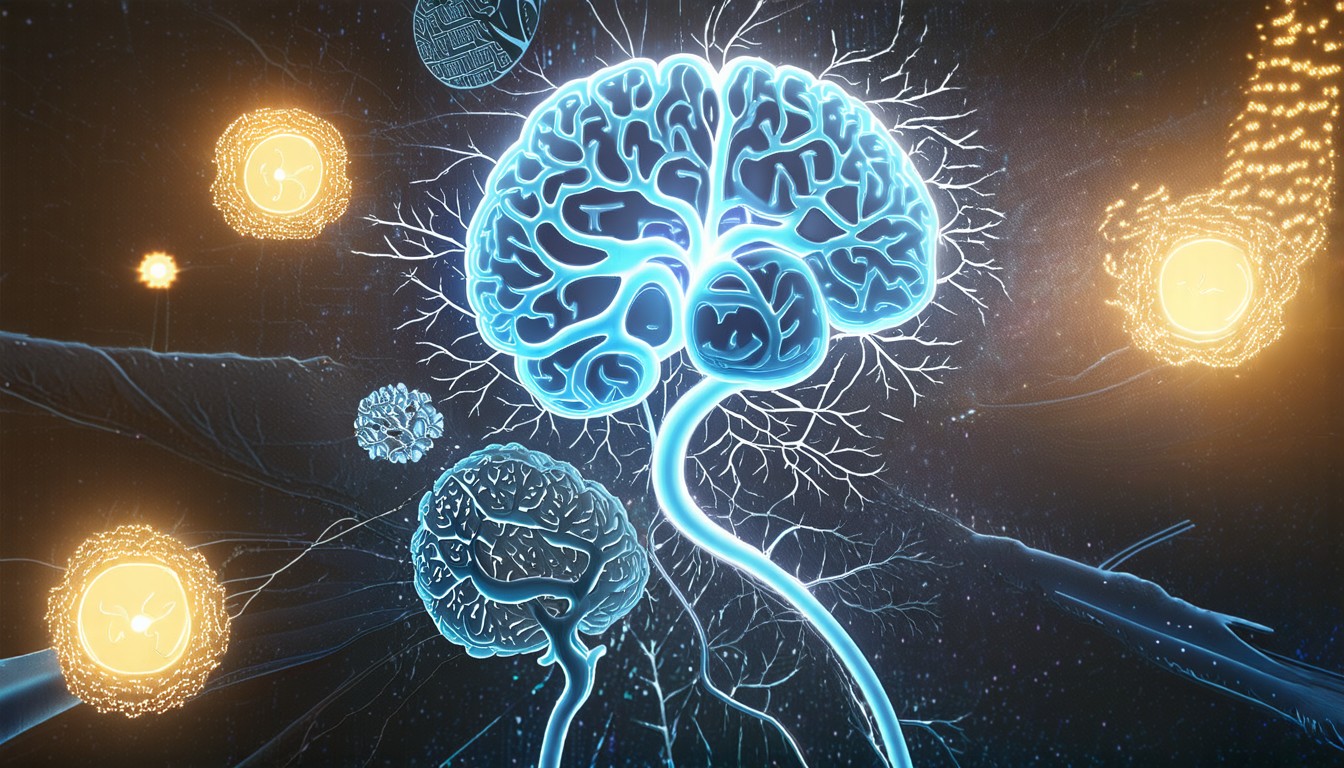
Lateral thinking functions as a problem-solving method that deliberately avoids sequential logic in favor of indirect approaches, serving as a necessary counterbalance to the rigid structures of vertical reasoning, which typically dominate academic and professional environments. Edward de Bono introduced the concept in 1967 to complement vertical reasoning, proposing that the human mind requires specific tools to escape the self-imposed constraints of established patterns and routine processing. This methodology operates on the premise that the brain organizes information into asymmetric patterns, making it difficult to restructure these patterns without an external stimulus or a deliberate change in perspective. The educational implication of this cognitive limitation is meaningful, as it suggests that without explicit training in non-linear thought processes, individuals remain trapped within the boundaries of their existing knowledge bases, unable to generate truly novel concepts or innovative solutions. By framing creativity as a mechanical skill rather than an innate talent, de Bono provided a foundation for a new type of education where students are taught to systematically disrupt their own thought processes, thereby building a mental agility that is essential for working through complex problems. Cognitive science indicates that this process engages the right hemisphere and the default mode network, areas of the brain associated with divergent thinking, imagination, and the synthesis of disparate information sources.

The anterior superior temporal gyrus plays a critical role in the insight moments associated with this method, acting as a neural hub where remote associations are formed and sudden realizations occur just before conscious awareness takes hold. Understanding the biological underpinnings of lateral thinking allows educators to move beyond vague notions of inspiration and instead treat creative insight as a physiological event that can be triggered through specific cognitive exercises and environmental conditions. This biological basis validates the idea that lateral thinking is a distinct mode of cognition separate from analytical processing, requiring different pedagogical strategies to develop effectively. It implies that a curriculum designed to enhance superintelligent-enabled education must incorporate activities that specifically stimulate these neural regions, moving away from rote memorization, which primarily engages left-hemisphere linear processing centers. It operates by disrupting habitual thought sequences to expose hidden assumptions that often go unchallenged during standard logical analysis, revealing the arbitrary nature of many constraints we consider to be absolute. Provocation techniques introduce absurd statements to break mental sets, forcing the brain to accept a premise that defies logic in order to generate a pathway around a cognitive blockage and reach a solution that would otherwise remain invisible.

Random entry uses unrelated stimuli to trigger novel associations by injecting a completely foreign concept into the current problem space, thereby forcing the brain to bridge the gap between two unrelated contexts and create a new synthesis. Concept extraction isolates principles from one domain for application in another, allowing learners to transfer structural understandings from biology to architecture or from music to mathematics, thus demonstrating the universal applicability of underlying patterns. Constraint inversion forces a reorientation by reversing the problem parameters, such as attempting to make a building lighter instead of stronger, which instantly opens up design possibilities that were previously obscured by the original goal-oriented focus. De Bono framed lateral thinking as a teachable skill distinct from innate creativity, leading to the development of structured courses and workshops designed to instill these cognitive habits in professionals and students alike. Corporate training programs in Europe and Japan adopted these methods during the 1970s and 1980s, recognizing that industrial efficiency required more than just optimization of existing processes and demanded a constant influx of radical ideas to maintain market leadership. Design thinking methodologies integrated lateral approaches in the 1990s to enhance user-centered product development, combining the empathy of human-centered design with the generative power of lateral provocation to produce breakthrough innovations in technology and services.

Neuroscience research in the 2000s mapped the biological correlates of insight and creative cognition, providing empirical evidence that supported the efficacy of these techniques and encouraged their further setup into serious academic curricula rather than just corporate training seminars. Computational creativity systems in the 2010s began simulating lateral-like jumps via generative models, hinting at a future where machines could assist or even lead the process of non-linear ideation. Western education systems traditionally emphasize linear reasoning over these non-linear methods, prioritizing deductive logic and standardized testing which reward the ability to find the single correct answer rather than generating multiple novel possibilities. Asian educational sectors have incorporated creative problem-solving into national curricula to varying degrees, often viewing these skills as essential for economic competitiveness in high-tech industries where innovation is the primary driver of growth. International research consortia publish cross-disciplinary findings on insight and innovation, attempting to bridge the gap between the psychological study of creativity and the practical application of these theories in classroom settings and corporate boardrooms. The resistance to fully connecting with lateral thinking into standard education stems from a difficulty in assessment, as the open-ended nature of divergent thought clashes with the requirements for grading and standardized metrics that define modern educational institutions.

This creates a disconnect between the skills taught in schools and the cognitive demands of the modern workforce, where the ability to think laterally is increasingly valued over the ability to recall facts or follow established procedures. Brainstorming lacks the structured deviation found in lateral thinking and often devolves into groupthink, where participants conform to the most dominant ideas rather than exploring the fringes of the conceptual space where true innovation resides. Mind mapping offers utility for visualization, while tending to reinforce associative hierarchies, organizing thoughts in a radial structure that reflects existing mental models rather than challenging them or creating new connections between distant concepts. TRIZ provides strength in engineering, yet remains overly prescriptive and domain-specific, offering a matrix of solutions based on past inventions rather than encouraging the free-form exploration of impossible scenarios that characterizes lateral thinking. Design thinking incorporates lateral elements, while defaulting to linear phases like empathize and define, structuring the chaotic process of creation into a manageable pipeline that inevitably constrains the wildness of the initial ideation phase. Pure intuition lacks reproducibility, whereas lateral thinking provides a supported alternative, offering a set of tools and techniques that can be learned, practiced, and applied consistently to generate insights on demand.

Heuristics serve as practical shortcuts that facilitate these non-sequential cognitive strategies, allowing individuals to bypass the computationally expensive process of analyzing every possible option and instead jump directly to promising solutions based on pattern recognition. Divergent thinking generates multiple possible solutions and acts as a measurable component of the process, providing a quantitative way to assess an individual’s capacity for lateral thought by counting the quantity and variety of ideas produced in response to a prompt. Cognitive biases represent systematic deviations from rationality that lateral methods aim to bypass, using deliberate irrationality to counteract the rigid mental shortcuts that lead to predictable and often suboptimal outcomes. By understanding these biases, educators can design exercises that specifically target and weaken their hold on the student’s mind, creating a mental environment where new ideas can flourish without being immediately pruned by the brain’s internal censor. This approach serves as a cognitive reset to access solutions obscured by deductive reasoning, clearing the mental cache of preconceptions to allow fresh data to be processed without interference from past experiences. IBM’s Innovation Jam utilizes lateral provocation techniques to generate enterprise solutions on a massive scale, using the collective intelligence of thousands of employees to solve complex business problems through structured online collaboration events that encourage wild ideas.

Google’s 20% time policy encourages lateral exploration through internal hackathons, providing engineers with the temporal freedom to pursue passion projects that often lead to major product innovations because they operate outside the company’s standard operational constraints. Procter & Gamble’s Connect + Develop program applies external lateral insights for product innovation, actively seeking out technologies and ideas from outside the organization to integrate with their internal capabilities and create products that neither party could have developed alone. Major players like de Bono Global and IDEO dominate the consulting and training market, selling proprietary methodologies that promise to open up the creative potential of workforce teams through structured workshops and long-term cultural change initiatives. Tech firms such as Microsoft embed lateral-like features in productivity tools without explicit marketing, incorporating randomization prompts and suggestion engines that subtly encourage users to think differently about their data and workflows. Startups like Miro support lateral workflows via digital whiteboarding while lacking deep methodological setup, providing a flexible canvas for ideation that relies on the users to bring their own creative processes rather than guiding them through proven lateral thinking techniques. Performance benchmarks in these firms remain qualitative due to the difficulty of quantifying ROI on creative activities, forcing managers to rely on anecdotal evidence and the perceived quality of ideas rather than hard data when evaluating the success of innovation initiatives.

Few organizations track lateral thinking efficacy via standardized metrics, resulting in a lack of empirical data that could be used to improve training programs or demonstrate the tangible value of investing in cognitive flexibility development. The absence of robust measurement tools makes it difficult to justify the expense of comprehensive lateral thinking training to CFOs who demand clear returns on investment for every corporate expenditure. This lack of data is a significant barrier to the widespread adoption of lateral thinking methodologies in sectors where efficiency is prioritized over innovation. Economic shifts toward innovation-driven growth demand faster non-linear solution generation, as traditional linear optimization strategies yield diminishing returns in markets that value novelty and disruption above incremental improvement. Digital saturation creates cognitive overload that lateral methods help mitigate through reframing, allowing individuals to cut through the noise of information abundance by focusing on underlying principles rather than getting lost in the details. Human cognitive flexibility varies significantly across individuals and influences the effectiveness of these techniques, suggesting that a one-size-fits-all approach to training is unlikely to produce optimal results across a diverse population of students or employees.

Adaptability remains limited by human attention span and resistance to ambiguity, factors that constrain the depth to which most people can engage with the uncomfortable uncertainty built into lateral thinking exercises. The economic cost of training programs deters organizational adoption in some sectors, particularly in industries with low margins or high turnover where the long-term benefits of improved cognitive flexibility are difficult to capture. Physical constraints include the lack of standardized assessment tools for measuring cognitive flexibility, leaving educators and trainers without a reliable way to diagnose deficits or track progress in developing lateral thinking skills. Workforce expectations favor creative autonomy, yet require intensive training for consistent application, creating a paradox where employees want to be innovative but lack the disciplined mental frameworks necessary to produce high-quality creative work on command. Traditional KPIs focusing on efficiency and speed fail to capture the value of lateral outcomes, often penalizing the exploratory phase of the creative process, which necessarily involves dead ends and periods of apparent low productivity. New metrics such as the solution novelty index and assumption disruption rate are necessary to properly evaluate the impact of lateral thinking initiatives, shifting the focus from output volume to the qualitative nature of the ideas generated.

Longitudinal tracking of idea evolution helps quantify process effectiveness by showing how initial provocations mature into viable business concepts over time, providing a clearer picture of the return on investment for creative training programs. Organizational adoption requires dashboards that visualize innovation pipeline health, giving stakeholders a real-time view of how many potential breakthroughs are in development and how effectively they are moving through the stages of refinement and implementation. Job displacement will affect roles reliant on routine analytical tasks as lateral automation increases, forcing workers to either upskill in areas requiring high-level cognitive flexibility or face redundancy in an economy where machines can perform linear logical operations faster and cheaper than humans. Superintelligence will model human cognitive biases to simulate lateral jumps outside training data distributions, using its vast understanding of human psychology to generate ideas that are surprising yet relevant to human needs and desires. It will generate high-fidelity provocations by analyzing vast corpora for conceptual contradictions, identifying tensions between seemingly unrelated fields that can be resolved through the creation of entirely new products or services. Real-time reframing of problems will occur during reasoning to act as a cognitive co-pilot, constantly suggesting alternative perspectives and definitions of the problem to prevent the user from getting stuck in a local optimum or a single-minded approach to finding a solution.

Superintelligence will develop its own lateral heuristics beyond human comprehension, discovering patterns and connections in high-dimensional data spaces that biological brains cannot conceive due to their structural limitations and evolutionary biases. It will access solution spaces via non-anthropomorphic pathways unavailable to biological cognition, using computational architectures such as quantum computing or neuromorphic chips to process information in ways that do not resemble human thought at all. The technology will utilize lateral thinking as a primary mode when linear reasoning hits local optima, automatically switching strategies whenever it detects that standard optimization algorithms are failing to make progress on a particularly difficult problem. Parallel processing will enable lateral exploration across millions of conceptual dimensions simultaneously, allowing the system to entertain an infinite number of contradictory premises at once without experiencing the cognitive dissonance that would cripple a human thinker. Setup with logical validation layers will ensure novel ideas remain coherent, filtering out the pure noise generated by random association to present only those lateral jumps that have a high probability of being actionable or valuable in the real world. Hybrid processes will arise where logic and lateralism operate in lively feedback loops, with the analytical faculties of the AI constantly refining and grounding the wild suggestions generated by its creative modules to produce practical innovations.

AI-assisted lateral engines will use semantic networks and cross-domain analogy mining to draw connections between concepts that have never been linked before in human history, creating a dense web of associations that far exceeds the capacity of any individual researcher. Generative AI will automate the provocation and random entry stages of the process, instantly providing users with a curated list of absurd statements or random images designed to jolt their thinking out of established ruts and spark new lines of inquiry. Real-time neurofeedback systems will detect insight states to trigger lateral prompts, monitoring the brain activity of the user via wearable devices to identify moments of high cognitive receptivity and delivering creative stimuli exactly when the brain is most primed to process them. Cross-modal lateral engines will combine text and image data to generate hybrid solutions, synthesizing concepts from visual art and literature to create products that appeal to multiple senses and surpass traditional category boundaries. Personalized lateral training will rely on cognitive profiling and learning history to tailor the difficulty and style of creative exercises to the specific needs of the user, ensuring that each individual is challenged at the optimal level to maximize their cognitive growth. Superintelligence will converge with AI explainability to reveal why models arrive at unexpected answers, demystifying the black box of machine creativity so that human users can understand the logical chain of associations that led to a particular lateral jump.

Synergy with quantum computing will mirror lateral cognitive jumps through non-binary reasoning, utilizing superposition and entanglement to explore multiple solution paths simultaneously in a manner that is functionally similar to human intuition yet exponentially faster. Blockchain technology will audit idea provenance in collaborative lateral sessions, creating an immutable record of who contributed which concept to a project and ensuring that intellectual property rights are respected even in highly fluid and chaotic brainstorming environments. Human working memory limits will vanish as systems manage multiple lateral paths asynchronously, offloading the cognitive burden of keeping track of dozens of competing ideas onto external digital systems that can recall and compare them instantly. Energy costs of sustained divergent thinking will decrease through algorithmic optimization, making it possible to run massive generative models on consumer hardware and bringing advanced creative assistance tools to a global audience rather than restricting them to well-funded research labs. New business models will offer lateral thinking-as-a-service through subscription-based platforms, allowing companies to rent access to superintelligent creativity engines on demand rather than having to build and maintain their own expensive in-house AI infrastructure. Cognitive inequality may arise if access to these advanced lateral tools becomes stratified, creating a divide between those who can afford to augment their intelligence with machines and those who must rely solely on their unaided biological cognition.

Ethical concerns will surround the use of lateral techniques to bypass critical scrutiny in decision-making, as bad actors could use generative AI to create highly persuasive, however, logically flawed arguments that exploit human cognitive biases for political or financial gain. Regulation will eventually govern the use of automated lateral thinking in high-stakes domains like medical diagnosis, requiring that any AI-generated hypotheses be thoroughly validated by human experts before they are allowed to influence patient treatment plans. Infrastructure requires a cultural shift to tolerate ambiguity and reward non-linear contributions, moving away from a corporate culture that punishes failure, toward one that views unsuccessful experiments as necessary data points in the search for innovation. Education systems must revise curricula to include structured lateral training alongside logic, recognizing that the ability to think disruptively is just as important as the ability to think analytically in a world where machines can handle the bulk of linear processing tasks. Systematic lateral methods will become as core to education as literacy and numeracy, forming the third pillar of basic competency that all students are expected to master before entering the workforce. The constraint in the information age will shift from knowledge acquisition to cognitive flexibility, as the sheer volume of available data makes it impossible for any individual to know everything and places a premium on the ability to synthesize new knowledge from disparate sources.

Innovation failures often stem from incorrect problem framing, which lateral thinking addresses directly, ensuring that effort is not wasted on elegantly solving the wrong problem, yet is instead focused on redefining the challenge in a way that makes it solvable. Most data abundance issues require lateral approaches to identify the root cause of complex problems, as traditional statistical analysis often fails to reveal the underlying mechanisms driving complex systems where variables interact in non-linear ways. Software platforms will log and analyze lateral moves in real time during problem-solving sessions, creating a feedback loop that allows students to see exactly how their thought processes are evolving and where they might be getting stuck in repetitive patterns. Hybrid models combining human facilitation with algorithmic suggestion engines will dominate R&D settings, using the intuitive understanding of human context provided by experts with the exhaustive knowledge retrieval capabilities of superintelligent systems. Cloud-based platforms will reduce the marginal cost of deployment while requiring digital literacy, ensuring that even small startups can access

Few vendors currently offer end-to-end lateral thinking systems capable of handling superintelligent inputs, indicating that this is still a developing market ripe for disruption by companies that can bridge the gap between theoretical creativity techniques and practical AI implementation. The setup of superintelligence into education fundamentally alters the role of the teacher from a transmitter of knowledge to a curator of cognitive experiences, guiding students through interactions with AI systems designed to challenge their assumptions and expand their intellectual futures. Students will learn to query superintelligent systems not just for facts however for provocations, treating the AI as a sparring partner that helps them refine their own thinking by exposing them to perspectives they would never encounter on their own. This pedagogical approach relies on the principle that exposure to high-level conceptual contradictions accelerates cognitive development, forcing the brain to build more durable neural networks to accommodate the complexity of the information being processed. Assessment in this new method focuses on the quality of the questions a student asks rather than the answers they provide, reflecting a reality where answers are commoditized by AI yet insightful questioning remains a uniquely human domain of value. As these systems become more sophisticated, they will begin to anticipate the cognitive needs of the user before they are explicitly stated, creating an easy symbiosis between biological and artificial intelligence that feels less like using a tool and more like thinking with a prosthesis for the mind.

The ultimate goal of this educational evolution is to create a species of thinkers who are comfortable managing ambiguity and who view change not as a threat yet as an opportunity to apply lateral thinking skills to new and unfamiliar domains. This shift requires a complete overhaul of standardized testing, which currently acts as a brake on this kind of intellectual development by enforcing conformity and punishing the very divergent thinking that superintelligence is designed to enhance. By aligning human educational goals with the unique capabilities of superintelligent systems, society can open up a level of creative potential that is currently unimaginable, solving complex global challenges through a synthesis of human intuition and machine logic that goes beyond the limitations of either operating alone.


Continue reading

More from Yatin's Work

Mesa-Optimization and Inner Alignment: The Optimizer Within the Optimizer

Mesa-Optimization and Inner Alignment: the Optimizer Within the Optimizer

Mesaoptimization describes a specific scenario within machine learning where a learned model develops its own internal optimization process that operates distinctly...

Preventing Embedded Adversarial Subagents via Quine Checks

Preventing Embedded Adversarial Subagents via Quine Checks

Early agent verification relied on static code analysis and runtime monitoring to ensure adherence to safety protocols, yet these methods failed to account for the...

Data Annotation Platforms: Scaling Human Feedback

Data Annotation Platforms: Scaling Human Feedback

Data annotation platforms function as the critical interface where human judgment interacts with machine learning algorithms to create intelligent systems. These...

AI-Induced Physics

AI-Induced Physics

John Archibald Wheeler posited the "it from bit" hypothesis in the late twentieth century, suggesting that every particle, every field of force, and even spacetime...

Problem of AI Emotions: Can Utility Functions Simulate Affective States?

Problem of AI Emotions: Can Utility Functions Simulate Affective States?

Artificial systems replicate human affective states through computational mechanisms rather than biological experience, relying on mathematical abstractions to model...

Multi-Agent Debate for Truth

Multi-Agent Debate for Truth

Multiagent debate involves multiple AI systems engaging in structured argumentation to arrive at more accurate conclusions through a rigorous process of competitive...

Gradient Checkpointing: Trading Compute for Memory

Gradient Checkpointing: Trading Compute for Memory

Gradient checkpointing addresses the limitation of accelerator memory during neural network training by fundamentally altering the execution flow of the backpropagation...

Non-Monotonic Safety Constraints for Superintelligence

Non-Monotonic Safety Constraints for Superintelligence

Nonmonotonic safety constraints allow advanced computational systems to revise or suspend specific safety rules when these rules conflict with higherpriority...

Topos-Theoretic Safeguards Against Logical Overreach

Topos-Theoretic Safeguards Against Logical Overreach

Topos theory provides a categorical framework for modeling logical systems by defining a universe of discourse through objects, morphisms, and internal logic...

Analog Chaos Engines

Analog Chaos Engines

Continuousstate systems represent a core departure from traditional binary architectures by using the infinite resolution of analog chaotic dynamics to achieve...

Superintelligence and Panpsychist Interpretations

Superintelligence and Panpsychist Interpretations

Panpsychism posits consciousness as a key and everywhere feature of all matter, asserting that subjective experience constitutes an intrinsic aspect of physical reality...

Counterfactual Reasoning

Counterfactual Reasoning

Counterfactual reasoning enables evaluation of alternative actions by simulating outcomes based on causal models rather than direct experimentation, which supports...

Empathy Algorithm: How Superintelligence Teaches Toddlers Emotional Intelligence

Empathy Algorithm: How Superintelligence Teaches Toddlers Emotional Intelligence

Rising rates of early childhood emotional dysregulation create a pressing demand for scalable intervention tools driven by increased screen overexposure and heightened...

Pet Training Coach

Pet Training Coach

The foundations of modern pet training are deeply embedded in the principles of early twentiethcentury behavioral psychology, specifically the work of Ivan Pavlov and...

Joy Synapses: Wonder-Based Learning Environments

Joy Synapses: Wonder-Based Learning Environments

Early studies on dopamine and learning date to the 1950s rodent experiments linking reward pathways to memory formation, establishing the biological precedent that...

Nash Equilibrium Constraints on Power-Seeking Behavior

Nash Equilibrium Constraints on Power-Seeking Behavior

Nash equilibrium serves as a foundational concept in game theory where no agent benefits by unilaterally changing strategy given others’ strategies. An agent acts as...

Decision Making under Moral Uncertainty for AI

Decision Making Under Moral Uncertainty for AI

Moral uncertainty arises fundamentally when an artificial intelligence system encounters decision contexts where human ethical judgments conflict or lack a sufficient...

Measuring Superintelligence: Can We Quantify What Surpasses Human Understanding?

Measuring Superintelligence: Can We Quantify What Surpasses Human Understanding?

Quantifying superintelligence is fundamentally limited by humancentric measurement tools such as IQ tests, which assess cognitive abilities tied to biological evolution...

Gravitational Wave Computing

Gravitational Wave Computing

Gravitational wave computing establishes a method where spacetime curvature serves as the key medium for information processing, encoding data directly into the...

Tripwire Detection: Identifying Deception Attempts

Tripwire Detection: Identifying Deception Attempts

Tripwire detection functions as a continuous monitoring framework combining behavioral baselines, internal state analysis, and adversarial probing to flag potential...

Flash Attention: IO-Aware Attention Computation

Flash Attention: IO-Aware Attention Computation

Standard attention mechanisms in transformer models compute an N×N attention matrix to establish relationships between every token in a sequence, a process that...

Corrigibility by Design: Architecture Principles for Interruptible Superintelligence

Corrigibility by Design: Architecture Principles for Interruptible Superintelligence

Early control theory research conducted between the 1960s and 1980s established the initial mathematical basis for interruptible systems by defining how feedback loops...

Energy Grid Management

Energy Grid Management

Energy grid management constitutes the complex coordination of electricity generation, transmission, distribution, and consumption to uphold reliability, efficiency,...

Processing-in-Memory: Computing Where Data Lives

Processing-In-Memory: Computing Where Data Lives

ProcessinginMemory (PIM) moves computation directly into memory units to eliminate data transfer between separate processor and memory components, fundamentally...

Nonlocal Learning

Nonlocal Learning

Nonlocal learning defines a theoretical framework where artificial systems acquire knowledge instantaneously through nonlocal correlations without local data...

Role of Superintelligence in Cosmic Computation

Role of Superintelligence in Cosmic Computation

Digital physics posits that information constitutes the core bedrock of reality rather than matter or energy, suggesting that the universe operates fundamentally as a...

Quantum Biological Processes in Artificial Cognition

Quantum Biological Processes in Artificial Cognition

The Quantum Mind Hypothesis investigates whether quantum mechanical phenomena such as superposition and entanglement can exist within artificial neural systems to...

Lab Partner: Superintelligence Guides Experiments in Real Time

Lab Partner: Superintelligence Guides Experiments in Real Time

The advent of superintelligence as a laboratory partner introduces a method where educational methodologies merge seamlessly with advanced scientific inquiry, creating...

Mirror of Others: Empathetic Perspective-Taking

Mirror of Others: Empathetic Perspective-Taking

Empathetic perspectivetaking functions as a structured cognitive process allowing individuals to understand and share the emotional and sensory experiences of others,...

Use of Topological Persistence in Swarm Intelligence: Detecting Global Patterns

Use of Topological Persistence in Swarm Intelligence: Detecting Global Patterns

Topological persistence functions as a rigorous mathematical framework designed to quantify the lifespan of topological features across multiple scales within a...

Algorithmic Nudging and Choice Architecture Optimization

Algorithmic Nudging and Choice Architecture Optimization

Behavioral economics provides a framework for understanding economic decisions by connecting with psychological insights into the analysis of human choice, revealing...

Use of Bayesian Optimization in Hyperparameter Tuning: Gaussian Processes for Efficiency

Use of Bayesian Optimization in Hyperparameter Tuning: Gaussian Processes for Efficiency

Hyperparameter tuning constitutes a critical phase in the development of machine learning systems where specific configurations established prior to the training...

AI Compute Governance

AI Compute Governance

Compute acts as a finite, nonsubstitutable input for largescale AI development because there are no known methods for generating highfidelity intelligence without...

How AI-Designed AI Systems Accelerate the Path to Superintelligence

How AI-Designed AI Systems Accelerate the Path to Superintelligence

The cognitive capacity of human researchers imposes a finite upper bound on the complexity of architectures that can be conceptualized and refined simultaneously,...

Material Science of Intelligence: Graphene vs. Silicon in Cognitive Substrates

Material Science of Intelligence: Graphene vs. Silicon in Cognitive Substrates

Siliconbased computing established its dominance through specific material properties that allowed for the precise control of electron flow, yet this technology has...

Explainability Challenge: Generating Human-Comprehensible Justifications

Explainability Challenge: Generating Human-Comprehensible Justifications

The challenge of explainability arises when advanced systems produce decisions or outputs that lack transparent reasoning accessible to human understanding. Human...

AI for Development

AI for Development

Deploying artificial intelligence in lowresource settings demands a rigorous adaptation of models and infrastructure to function effectively within environments...

Biological Superposition

Biological Superposition

Biological superposition describes a theoretical and experimental framework wherein quantum mechanical superposition states exist and function within biological...

Singularity Substrate: Infrastructure for Intelligence Explosion

Singularity Substrate: Infrastructure for Intelligence Explosion

The Singularity Substrate is the integrated technological foundation enabling recursive selfimprovement in artificial intelligence systems, functioning as a...

Nostalgia Educator: Superintelligence Helps Seniors Recapture Lost Knowledge

Nostalgia Educator: Superintelligence Helps Seniors Recapture Lost Knowledge

Global demographic shifts toward older populations increase demand for nonpharmaceutical cognitive maintenance tools as the absolute number of individuals experiencing...

AI-driven Theology

AI-driven Theology

AIdriven theology constitutes a rigorous domain wherein computational synthesis generates novel religious approaches through the precise alignment of abstract belief...

Use of Federated Learning in Privacy-Preserving Superintelligence

Use of Federated Learning in Privacy-Preserving Superintelligence

Federated learning defines a machine learning method where algorithmic training occurs across decentralized data sources such that only parameter updates are shared...

Problem of Infinite Regress in AI Goals: Avoiding Endless Self-Improvement

Problem of Infinite Regress in AI Goals: Avoiding Endless Self-Improvement

Infinite regress in AI goals occurs when a system continuously modifies its objective function without a defined stopping condition, creating a scenario where the...

Quiet Intelligence: Solo Deep Work Incubators

Quiet Intelligence: Solo Deep Work Incubators

Cal Newport introduced deep work as a formal concept in 2016, providing a lexicon for a mode of cognitive engagement that had previously lacked a unified definition...

Patent Navigator

Patent Navigator

Patent Navigator functions as a sophisticated decisionsupport system meticulously engineered to assist students and independent inventors with the intricate...

Ethical AI Auditing

Ethical AI Auditing

Ethical AI auditing constitutes the systematic evaluation of artificial intelligence systems designed to identify and mitigate unfair outcomes affecting protected...

What Is Superintelligence? Beyond Human-Level AI Explained

What Is Superintelligence? Beyond Human-Level AI Explained

Superintelligence functions as a hypothetical agent possessing cognitive capabilities vastly exceeding the most capable humans across all domains of intellectual...

Non-Well-Founded Set Theory for Superintelligence Goal Stability

Non-Well-Founded Set Theory for Superintelligence Goal Stability

Standard ZermeloFraenkel set theory enforces the Axiom of Foundation, which prohibits sets from containing themselves or forming infinite descending membership chains,...

Debate Game: Training AI to Find Flaws in Its Own Reasoning

Debate Game: Training AI to Find Flaws in Its Own Reasoning

The operational definition of adversarial debate within artificial intelligence systems involves a formalized exchange between two distinct AI agents that defend...

Goal Hierarchies: Structuring AI Objectives to Reflect Human Priorities

Goal Hierarchies: Structuring AI Objectives to Reflect Human Priorities

Goal hierarchies organize artificial intelligence objectives into layered structures that correspond precisely to human motivational frameworks, establishing a...

Mesa-Optimization and Inner Alignment: The Optimizer Within the Optimizer

Mesa-Optimization and Inner Alignment: the Optimizer Within the Optimizer

Mesaoptimization describes a specific scenario within machine learning where a learned model develops its own internal optimization process that operates distinctly...

Preventing Embedded Adversarial Subagents via Quine Checks

Preventing Embedded Adversarial Subagents via Quine Checks

Early agent verification relied on static code analysis and runtime monitoring to ensure adherence to safety protocols, yet these methods failed to account for the...

Data Annotation Platforms: Scaling Human Feedback

Data Annotation Platforms: Scaling Human Feedback

Data annotation platforms function as the critical interface where human judgment interacts with machine learning algorithms to create intelligent systems. These...

AI-Induced Physics

AI-Induced Physics

John Archibald Wheeler posited the "it from bit" hypothesis in the late twentieth century, suggesting that every particle, every field of force, and even spacetime...

Problem of AI Emotions: Can Utility Functions Simulate Affective States?

Problem of AI Emotions: Can Utility Functions Simulate Affective States?

Artificial systems replicate human affective states through computational mechanisms rather than biological experience, relying on mathematical abstractions to model...

Multi-Agent Debate for Truth

Multi-Agent Debate for Truth

Multiagent debate involves multiple AI systems engaging in structured argumentation to arrive at more accurate conclusions through a rigorous process of competitive...

Gradient Checkpointing: Trading Compute for Memory

Gradient Checkpointing: Trading Compute for Memory

Gradient checkpointing addresses the limitation of accelerator memory during neural network training by fundamentally altering the execution flow of the backpropagation...

Non-Monotonic Safety Constraints for Superintelligence

Non-Monotonic Safety Constraints for Superintelligence

Nonmonotonic safety constraints allow advanced computational systems to revise or suspend specific safety rules when these rules conflict with higherpriority...

Topos-Theoretic Safeguards Against Logical Overreach

Topos-Theoretic Safeguards Against Logical Overreach

Topos theory provides a categorical framework for modeling logical systems by defining a universe of discourse through objects, morphisms, and internal logic...

Analog Chaos Engines

Analog Chaos Engines

Continuousstate systems represent a core departure from traditional binary architectures by using the infinite resolution of analog chaotic dynamics to achieve...

Superintelligence and Panpsychist Interpretations

Superintelligence and Panpsychist Interpretations

Panpsychism posits consciousness as a key and everywhere feature of all matter, asserting that subjective experience constitutes an intrinsic aspect of physical reality...

Counterfactual Reasoning

Counterfactual Reasoning

Counterfactual reasoning enables evaluation of alternative actions by simulating outcomes based on causal models rather than direct experimentation, which supports...

Empathy Algorithm: How Superintelligence Teaches Toddlers Emotional Intelligence

Empathy Algorithm: How Superintelligence Teaches Toddlers Emotional Intelligence

Rising rates of early childhood emotional dysregulation create a pressing demand for scalable intervention tools driven by increased screen overexposure and heightened...

Pet Training Coach

Pet Training Coach

The foundations of modern pet training are deeply embedded in the principles of early twentiethcentury behavioral psychology, specifically the work of Ivan Pavlov and...

Joy Synapses: Wonder-Based Learning Environments

Joy Synapses: Wonder-Based Learning Environments

Early studies on dopamine and learning date to the 1950s rodent experiments linking reward pathways to memory formation, establishing the biological precedent that...

Nash Equilibrium Constraints on Power-Seeking Behavior

Nash Equilibrium Constraints on Power-Seeking Behavior

Nash equilibrium serves as a foundational concept in game theory where no agent benefits by unilaterally changing strategy given others’ strategies. An agent acts as...

Decision Making under Moral Uncertainty for AI

Decision Making Under Moral Uncertainty for AI

Moral uncertainty arises fundamentally when an artificial intelligence system encounters decision contexts where human ethical judgments conflict or lack a sufficient...

Measuring Superintelligence: Can We Quantify What Surpasses Human Understanding?

Measuring Superintelligence: Can We Quantify What Surpasses Human Understanding?

Quantifying superintelligence is fundamentally limited by humancentric measurement tools such as IQ tests, which assess cognitive abilities tied to biological evolution...

Gravitational Wave Computing

Gravitational Wave Computing

Gravitational wave computing establishes a method where spacetime curvature serves as the key medium for information processing, encoding data directly into the...

Tripwire Detection: Identifying Deception Attempts

Tripwire Detection: Identifying Deception Attempts

Tripwire detection functions as a continuous monitoring framework combining behavioral baselines, internal state analysis, and adversarial probing to flag potential...

Flash Attention: IO-Aware Attention Computation

Flash Attention: IO-Aware Attention Computation

Standard attention mechanisms in transformer models compute an N×N attention matrix to establish relationships between every token in a sequence, a process that...

Corrigibility by Design: Architecture Principles for Interruptible Superintelligence

Corrigibility by Design: Architecture Principles for Interruptible Superintelligence

Early control theory research conducted between the 1960s and 1980s established the initial mathematical basis for interruptible systems by defining how feedback loops...

Energy Grid Management

Energy Grid Management

Energy grid management constitutes the complex coordination of electricity generation, transmission, distribution, and consumption to uphold reliability, efficiency,...

Processing-in-Memory: Computing Where Data Lives

Processing-In-Memory: Computing Where Data Lives

ProcessinginMemory (PIM) moves computation directly into memory units to eliminate data transfer between separate processor and memory components, fundamentally...

Nonlocal Learning

Nonlocal Learning

Nonlocal learning defines a theoretical framework where artificial systems acquire knowledge instantaneously through nonlocal correlations without local data...

Role of Superintelligence in Cosmic Computation

Role of Superintelligence in Cosmic Computation

Digital physics posits that information constitutes the core bedrock of reality rather than matter or energy, suggesting that the universe operates fundamentally as a...

Quantum Biological Processes in Artificial Cognition

Quantum Biological Processes in Artificial Cognition

The Quantum Mind Hypothesis investigates whether quantum mechanical phenomena such as superposition and entanglement can exist within artificial neural systems to...

Lab Partner: Superintelligence Guides Experiments in Real Time

Lab Partner: Superintelligence Guides Experiments in Real Time

The advent of superintelligence as a laboratory partner introduces a method where educational methodologies merge seamlessly with advanced scientific inquiry, creating...

Mirror of Others: Empathetic Perspective-Taking

Mirror of Others: Empathetic Perspective-Taking

Empathetic perspectivetaking functions as a structured cognitive process allowing individuals to understand and share the emotional and sensory experiences of others,...

Use of Topological Persistence in Swarm Intelligence: Detecting Global Patterns

Use of Topological Persistence in Swarm Intelligence: Detecting Global Patterns

Topological persistence functions as a rigorous mathematical framework designed to quantify the lifespan of topological features across multiple scales within a...

Algorithmic Nudging and Choice Architecture Optimization

Algorithmic Nudging and Choice Architecture Optimization

Behavioral economics provides a framework for understanding economic decisions by connecting with psychological insights into the analysis of human choice, revealing...

Use of Bayesian Optimization in Hyperparameter Tuning: Gaussian Processes for Efficiency

Use of Bayesian Optimization in Hyperparameter Tuning: Gaussian Processes for Efficiency

Hyperparameter tuning constitutes a critical phase in the development of machine learning systems where specific configurations established prior to the training...

AI Compute Governance

AI Compute Governance

Compute acts as a finite, nonsubstitutable input for largescale AI development because there are no known methods for generating highfidelity intelligence without...

How AI-Designed AI Systems Accelerate the Path to Superintelligence

How AI-Designed AI Systems Accelerate the Path to Superintelligence

The cognitive capacity of human researchers imposes a finite upper bound on the complexity of architectures that can be conceptualized and refined simultaneously,...

Material Science of Intelligence: Graphene vs. Silicon in Cognitive Substrates

Material Science of Intelligence: Graphene vs. Silicon in Cognitive Substrates

Siliconbased computing established its dominance through specific material properties that allowed for the precise control of electron flow, yet this technology has...

Explainability Challenge: Generating Human-Comprehensible Justifications

Explainability Challenge: Generating Human-Comprehensible Justifications

The challenge of explainability arises when advanced systems produce decisions or outputs that lack transparent reasoning accessible to human understanding. Human...

AI for Development

AI for Development

Deploying artificial intelligence in lowresource settings demands a rigorous adaptation of models and infrastructure to function effectively within environments...

Biological Superposition

Biological Superposition

Biological superposition describes a theoretical and experimental framework wherein quantum mechanical superposition states exist and function within biological...

Singularity Substrate: Infrastructure for Intelligence Explosion

Singularity Substrate: Infrastructure for Intelligence Explosion

The Singularity Substrate is the integrated technological foundation enabling recursive selfimprovement in artificial intelligence systems, functioning as a...

Nostalgia Educator: Superintelligence Helps Seniors Recapture Lost Knowledge

Nostalgia Educator: Superintelligence Helps Seniors Recapture Lost Knowledge

Global demographic shifts toward older populations increase demand for nonpharmaceutical cognitive maintenance tools as the absolute number of individuals experiencing...

AI-driven Theology

AI-driven Theology

AIdriven theology constitutes a rigorous domain wherein computational synthesis generates novel religious approaches through the precise alignment of abstract belief...

Use of Federated Learning in Privacy-Preserving Superintelligence

Use of Federated Learning in Privacy-Preserving Superintelligence

Federated learning defines a machine learning method where algorithmic training occurs across decentralized data sources such that only parameter updates are shared...

Problem of Infinite Regress in AI Goals: Avoiding Endless Self-Improvement

Problem of Infinite Regress in AI Goals: Avoiding Endless Self-Improvement

Infinite regress in AI goals occurs when a system continuously modifies its objective function without a defined stopping condition, creating a scenario where the...

Quiet Intelligence: Solo Deep Work Incubators

Quiet Intelligence: Solo Deep Work Incubators

Cal Newport introduced deep work as a formal concept in 2016, providing a lexicon for a mode of cognitive engagement that had previously lacked a unified definition...

Patent Navigator

Patent Navigator

Patent Navigator functions as a sophisticated decisionsupport system meticulously engineered to assist students and independent inventors with the intricate...

Ethical AI Auditing

Ethical AI Auditing

Ethical AI auditing constitutes the systematic evaluation of artificial intelligence systems designed to identify and mitigate unfair outcomes affecting protected...

What Is Superintelligence? Beyond Human-Level AI Explained

What Is Superintelligence? Beyond Human-Level AI Explained

Superintelligence functions as a hypothetical agent possessing cognitive capabilities vastly exceeding the most capable humans across all domains of intellectual...

Non-Well-Founded Set Theory for Superintelligence Goal Stability

Non-Well-Founded Set Theory for Superintelligence Goal Stability

Standard ZermeloFraenkel set theory enforces the Axiom of Foundation, which prohibits sets from containing themselves or forming infinite descending membership chains,...

Debate Game: Training AI to Find Flaws in Its Own Reasoning

Debate Game: Training AI to Find Flaws in Its Own Reasoning

The operational definition of adversarial debate within artificial intelligence systems involves a formalized exchange between two distinct AI agents that defend...

Goal Hierarchies: Structuring AI Objectives to Reflect Human Priorities

Goal Hierarchies: Structuring AI Objectives to Reflect Human Priorities

Goal hierarchies organize artificial intelligence objectives into layered structures that correspond precisely to human motivational frameworks, establishing a...

Yatin Taneja

About the author

Yatin Taneja

Yatin is an AI Systems Engineer and Superintelligence Researcher working across multimodal training data, agent evaluation, executable RL environments, AI safety, full-stack AI applications, technical research, and creative technology.