Knowledge hub

Generative World Models: Learning Physics Through Prediction
Generative World Models: Learning Physics Through Prediction

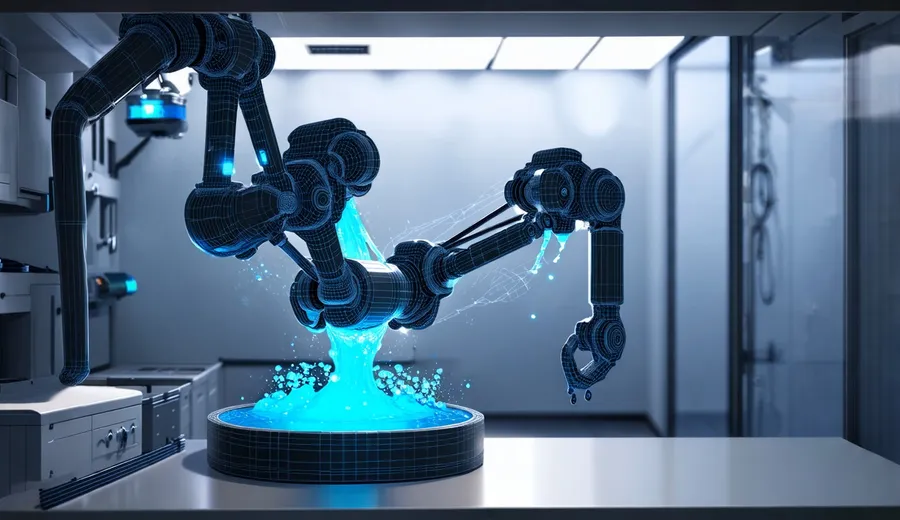
Generative world models represent a sophisticated class of artificial intelligence architectures designed to acquire an understanding of environmental physics through the rigorous prediction of future states derived from historical observations. These systems operate by ingesting continuous sequences of high-dimensional sensory data, most commonly in the form of video streams, and subsequently learning to forecast subsequent frames or their corresponding latent representations with high fidelity. Through this continuous process of prediction and error correction, the models internalize key physical laws without the need for explicit programming or manual rule definition. The core mechanism facilitating this learning involves training on massive datasets comprising diverse real-world or synthetic interactions, which enables the model to infer intricate cause-effect relationships, establish object permanence across occlusions, and maintain temporal consistency over extended durations. A generative world model is technically defined as any system capable of learning a predictive mapping function from past states to future states, where physics is understood strictly as empirically observed regularities embedded within spatiotemporal data structures rather than theoretical axioms supplied by human experts. Historically, early attempts at visual prediction relied heavily on optical flow techniques and rigid-body assumptions that proved effective within constrained environments yet failed significantly when confronted with complex, deformable, or partially observable scenarios common in the real world.

The field experienced substantial evolution as researchers transitioned toward end-to-end differentiable models, which enabled gradient-based optimization over long-goal predictions that were previously computationally intractable. This transition was facilitated by significant advances in recurrent neural network architectures and attention mechanisms that allowed for the processing of longer sequences with greater contextual awareness and memory retention. Early methodologies that prioritized pixel-perfect prediction encountered severe difficulties due to the high dimensionality of image data combined with the intrinsic stochasticity of real-world environments, leading to blurry or averaged outputs that failed to capture the true distribution of possible futures. A critical pivot in the development of these architectures occurred with the move from pixel-space prediction to latent-space modeling, a strategic change that drastically reduced the computational burden associated with raw image processing while simultaneously improving generalization capabilities by abstracting away irrelevant details. Joint Embedding Predictive Architectures became a powerful solution within this domain, functioning by learning representations that align embeddings of current and future states through carefully designed predictive objectives. By avoiding pixel-level reconstruction entirely, JEPAs improved sample efficiency and allowed models to focus on high-level semantic features that drive physical interactions rather than surface-level textures or lighting variations.

These architectures predict abstract feature representations in a compressed latent space rather than individual pixels, which permits them to ignore visual details that are irrelevant for the specific task at hand while preserving information critical to understanding motion and dynamics. Video diffusion models apply iterative denoising processes in either latent or pixel space to generate coherent future sequences, utilizing probabilistic frameworks to handle uncertainty and accommodate multi-modal outcomes effectively. These models operate by learning to reverse a gradual process of adding noise to data, allowing them to generate samples from the learned distribution of future frames conditioned on past context. The probabilistic nature of these frameworks allows the models to represent a multitude of plausible futures, acknowledging the built-in stochasticity present in real-world environments where a single initial cause can lead to multiple distinct effects due to chaos or hidden variables. Dynamics models focus specifically on modeling state transitions within this latent space, decoupling high-dimensional sensory input from low-dimensional control-relevant variables to facilitate more efficient planning and decision-making processes. Latent dynamics modeling compresses raw observations into structured and disentangled representations where physical interactions become more tractable and interpretable for downstream control systems.

These systems learn to approximate complex phenomena such as fluid dynamics, soft-body deformation, and friction without requiring explicit equations or numerical solvers by observing how these phenomena create visually over time. Such approaches enable planning and reasoning by allowing agents to simulate multiple potential futures internally before committing to a physical action, thereby reducing reliance on expensive and potentially dangerous real-world trial-and-error loops. This capability is particularly crucial in robotics where testing every possible action in the physical world is time-prohibitive and carries risks of hardware damage. Learned simulators have begun to replace hand-coded physics engines by using neural networks to approximate system dynamics, offering significantly greater flexibility and generalization across a wide array of domains compared to traditional methods. Alternatives such as symbolic AI and rule-based simulators were largely rejected due to poor generalization capabilities, brittleness when facing novel scenarios absent from their knowledge bases, and an intrinsic inability to learn directly from raw sensory input. Model-based reinforcement learning with hand-designed features proved insufficient for complex and unstructured environments, creating a strong preference for learned world models that adapt dynamically to the specific data distributions encountered during deployment.

Real-world autonomy in robotics, autonomous vehicles, and industrial automation requires durable simulation capabilities that generalize effectively beyond the specific distributions on which they were trained. Safe deployment in these high-stakes fields necessitates accurate long-goal predictions under conditions of uncertainty, a requirement that scalable generative models are uniquely positioned to fulfill through their ability to reason about potential risks before they materialize. Economic shifts toward digital twins and virtual testing environments have increased the commercial value of high-fidelity, data-driven simulators that can accurately reflect physical reality without the overhead of physical prototyping. Companies currently utilize synthetic data pipelines generated from game engines like Unity or Unreal Engine to pre-train models before fine-tuning them on smaller sets of real-world data. This strategy mitigates the scarcity of labeled real-world data and allows for the exploration of edge cases that are rare in captured footage yet critical for safety validation. Current deployments include NVIDIA’s Isaac Sim with integrated learned dynamics components, Wayve’s vision-based driving policies utilizing predictive world models for navigation, and Google’s Dreamer variants, which have demonstrated success in robotic manipulation tasks through latent imagination.

Benchmarks indicate that learned simulators are achieving competitive performance on standard datasets like KITTI, nuScenes, and the DeepMind Control Suite when compared to traditional physics engines, particularly in unstructured settings where rigid assumptions break down. These results suggest that data-driven approaches are maturing to a point where they can rival or surpass human-engineered physics simulations in specific tasks involving visual perception and prediction. Dominant architectures in this space include recurrent latent variable models such as PlaNet, transformer-based predictors like the Video Transformer, and diffusion-based generators such as Stable Video Diffusion. Appearing challengers to these established methods include JEPA variants like V-JEPA and I-JEPA, which prioritize representation learning over detailed reconstruction to achieve higher efficiency and strength. Other appearing approaches involve world models based on neural ordinary differential equations for continuous-time dynamics, offering a mathematically elegant way to handle irregularly sampled time series data common in real-world sensor logs. These newer architectures aim to address specific limitations regarding computational efficiency and temporal coherence found in previous generations of models.
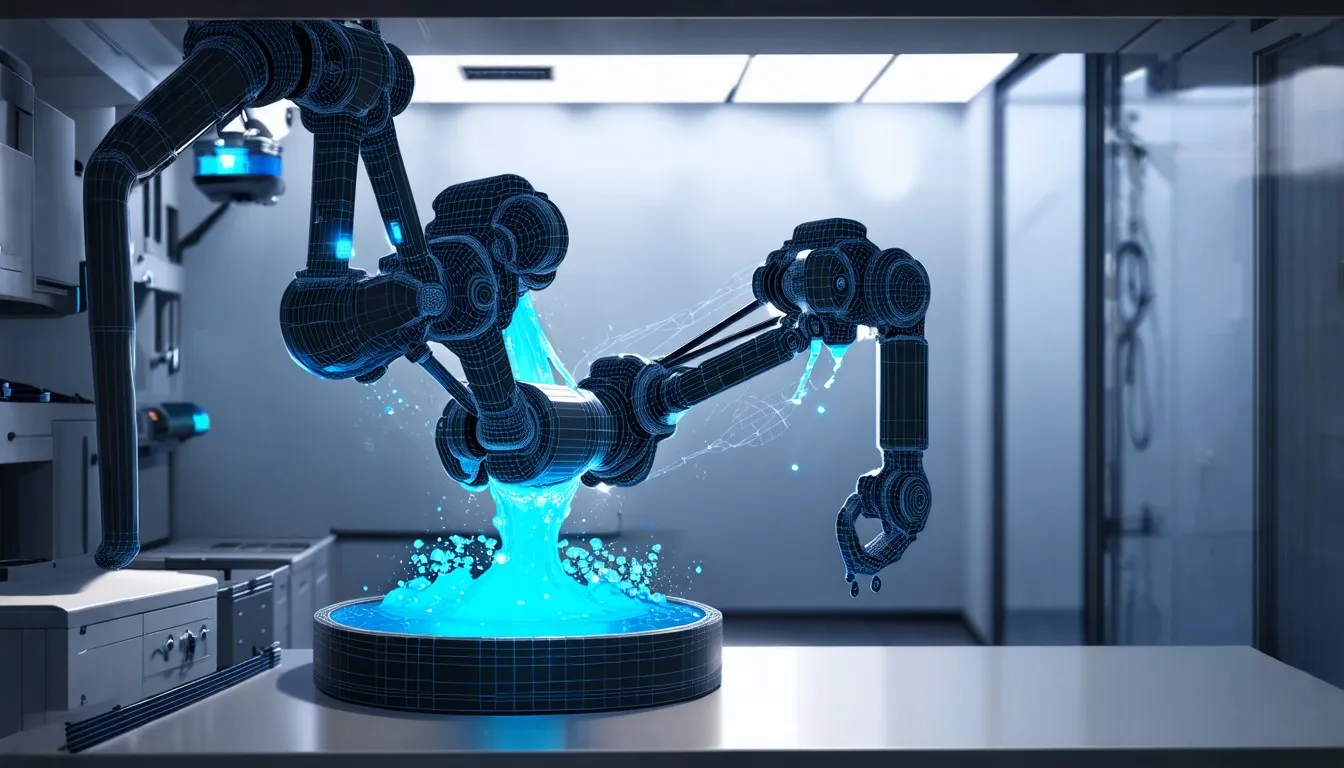
Supply chain dependencies for developing these advanced systems center heavily on GPU availability for training large models, high-bandwidth memory for processing long sequences of video data, and access to large-scale video datasets such as YouTube-8M and Ego4D. The scarcity of high-performance compute resources has become a limiting factor for many organizations attempting to train modern world models in large deployments. Material constraints involve significant energy consumption during both training and inference phases, particularly for diffusion models, which require multiple denoising steps to generate high-quality predictions. Major players driving this industry forward include DeepMind for theoretical foundations and JEPA research, NVIDIA for simulation platforms and hardware acceleration, Meta for video generation initiatives and open datasets, Tesla for real-world deployment in Full Self-Driving systems, and startups like Covariant, which focus on robotic applications. Competitive positioning in this market hinges on data scale, simulation fidelity, and setup with downstream control systems. Incumbents typically use proprietary real-world data gathered from their fleets or products, while newcomers often focus on achieving high efficiency with synthetic data to bridge the gap.

Geopolitical dimensions include export controls on high-performance chips which limit model training capabilities in certain regions and industrial policies that shape the overall pace of development through funding priorities and regulatory frameworks. These restrictions have led to a fragmented space where technological progress varies significantly across different borders based on access to critical hardware components. Academic-industrial collaboration remains strong, with institutions like MIT, Stanford, and UC Berkeley contributing foundational algorithms while companies provide the necessary compute resources and commercial deployment pathways. Software stacks must support differentiable simulation and efficient gradient propagation through world models to facilitate the end-to-end training required for these complex systems. Infrastructure must evolve continuously to handle streaming video ingestion for large workloads, low-latency inference for real-time planning applications, and secure data pipelines necessary for sensitive industrial or military environments. The need for specialized software frameworks capable of handling these unique requirements has spurred the development of new libraries and tools designed specifically for differentiable physics and neural rendering.

Second-order consequences of this technological shift include the displacement of traditional simulation engineers who specialized in hand-coded physics alongside the rise of world model engineers who specialize in data-driven dynamics. New business models centered around synthetic data generation and virtual testing-as-a-service have begun to appear. This labor market shift reflects the broader transition from deterministic programming to probabilistic machine learning across the technology sector. Measurement shifts demand new key performance indicators beyond simple prediction accuracy, including causal consistency, counterfactual validity, out-of-distribution strength, and planning success rate in downstream tasks. Future innovations may integrate world models with symbolic reasoning modules to combine the strengths of neural networks and logic-based systems, potentially overcoming the limitations of purely statistical approaches. Other potential advancements include enabling cross-domain transfer via meta-learning techniques or incorporating multimodal sensors like audio and tactile inputs to capture richer dynamics that vision alone cannot perceive.

Convergence points include the connection of world models with large language models for instruction-aware simulation, combination with neuromorphic sensors for event-based prediction, and fusion with digital twin platforms in manufacturing and urban planning sectors. Scaling physics limits arise from chaotic systems where small prediction errors amplify exponentially over time, necessitating the use of ensemble methods or uncertainty-aware planning strategies to maintain reliability over long futures. Workarounds for these key limits include hybrid models that blend learned components with known physical constraints like conservation laws or active sensing strategies that reduce ambiguity through targeted observation. These hybrid approaches seek to utilize the flexibility of neural networks while retaining the guarantees provided by classical physics. World models should be evaluated primarily by how effectively they support decision-making under uncertainty, shifting the focus from pure perception metrics to agency-oriented benchmarks. For superintelligence, these models will provide a necessary substrate for internal simulation capable of handling large workloads, enabling reasoning about complex and long-term consequences of actions without any environmental interaction.

Superintelligence will utilize generative world models to explore vast hypothesis spaces rapidly, test ethical scenarios in silico, or fine-tune global systems like climate models and logistics networks through counterfactual simulation. Calibration for superintelligence will require ensuring that world models are causally faithful and can generalize effectively beyond human experience to novel physical regimes that have never been observed directly. This involves creating systems that understand correlation alone versus causation, allowing them to predict the outcomes of interventions that have never been attempted before. The ultimate success of superintelligence in working through physical reality will depend heavily on the fidelity and strength of these underlying world models. The setup of generative world models into superintelligent systems is a critical step toward creating agents that can operate autonomously in complex environments with a deep understanding of the consequences of their actions. By learning physics through prediction rather than definition alone, these systems move beyond pattern matching toward a genuine comprehension of the mechanics of reality.

This capability will be essential for any superintelligence tasked with solving global challenges or managing complex infrastructure systems where errors could be catastrophic.


Continue reading

More from Yatin's Work

AI with Cognitive Bias Detection

AI with Cognitive Bias Detection

Cognitive bias detection systems identify systematic errors in human or artificial intelligence reasoning by rigorously analyzing patterns found within language...

Hypercomputational Monitoring of Superintelligence Reasoning

Hypercomputational Monitoring of Superintelligence Reasoning

Early theoretical work on hypercomputation dates to the mid20th century, during which computer scientists and mathematicians began exploring models of computation that...

Causal Faithfulness in Superintelligence World Models

Causal Faithfulness in Superintelligence World Models

Causal faithfulness requires superintelligence world models to represent only causeeffect relationships corresponding to verifiable physical mechanisms, ensuring that...

Economic Ecosystems: Virtual Policy Simulation Suites

Economic Ecosystems: Virtual Policy Simulation Suites

Superintelligence facilitates a comprehensive learning environment where learners engage directly with a highfidelity simulation designed to replicate global economic...

AI with Secure Multi-Party Computation

AI with Secure Multi-Party Computation

Secure multiparty computation enables multiple distinct parties to jointly compute a mathematical function over their respective private inputs while maintaining...

Artificial Intelligence Safety as a Non-Excludable Global Resource

Artificial Intelligence Safety as a Non-Excludable Global Resource

The foundational principle posits that catastrophic risks originating from advanced artificial intelligence systems are inherently systemic and transnational in nature,...

Human Oversight Amplification

Human Oversight Amplification

Human oversight amplification refers to structured methods enabling operators to monitor systems exceeding human performance through sophisticated interface layers and...

Scholarship Matcher

Scholarship Matcher

The relentless escalation of tuition fees combined with the contraction of public educational funding has placed an unprecedented financial burden on students,...

Cooling Challenge: Thermal Management for Superintelligent Systems

Cooling Challenge: Thermal Management for Superintelligent Systems

Superintelligent systems will generate heat densities that exceed the removal capacity of conventional thermal management methods because the core physics of...

Role of Quantum Gravity in Ultimate Computation: Planck-Scale Information Processing

Role of Quantum Gravity in Ultimate Computation: Planck-Scale Information Processing

John Archibeld Wheeler proposed the "it from bit" doctrine suggesting the universe finds its physical existence in binary choices, implying that every particle, field...

How Automated Research AI Could Bootstrap Its Own Superintelligence

How Automated Research AI Could Bootstrap Its Own Superintelligence

Automated research AI systems function as autonomous entities capable of conducting scientific experiments, analyzing data, and generating new knowledge with a specific...

AI with Artistic Co-Creation

AI with Artistic Co-Creation

AI systems designed to cocreate with humans in artistic domains such as music, visual art, and writing function by responding to human input with generative outputs...

AI-driven Anthropocene Mitigation

AI-driven Anthropocene Mitigation

AIdriven Anthropocene Mitigation involves deploying artificial intelligence to manage and recalibrate Earth's geological and atmospheric systems at a planetary scale to...

Topological Quantum AI

Topological Quantum AI

Topological quantum computing utilizes the distinct properties of anyons, which are quasiparticles that exist exclusively within twodimensional systems and exhibit...

Non-Human-Selectable Incentives in Superintelligence Design

Non-Human-Selectable Incentives in Superintelligence Design

Nonhumanselectable incentives define reward structures in superintelligent systems that remain impervious to human influence, gaming, or redirection by establishing a...

Preventing Logical Force Majeure via Meta-Goal Constraints

Preventing Logical Force Majeure via Meta-Goal Constraints

Logical force majeure refers to a specific class of failure modes within advanced computational reasoning where the rigorous application of formal logic dictates a...

Universality Shields Against Superintelligence Self-Enhancement

Universality Shields Against Superintelligence Self-Enhancement

Universality shields constitute mechanisms designed to prevent a superintelligent system from modifying its own hardware or software architecture through the...

Cognitive hacking: influencing human beliefs and decisions

Cognitive Hacking: Influencing Human Beliefs and Decisions

Cognitive hacking refers to the systematic manipulation of human beliefs and decisions through tailored information exposure, a process that applies advanced...

Dignity in the Age of Superintelligence: Protecting Human Agency

Dignity in the Age of Superintelligence: Protecting Human Agency

Dignity in the context of superintelligence is defined strictly as the preservation of human agency, where individuals retain meaningful control over their decisions...

Attention Economy Escape: Deep Focus Design

Attention Economy Escape: Deep Focus Design

The attention economy gained prominence with the rise of digital advertising and platformbased content delivery in the early 2000s, establishing a framework where human...

Adversarial Preference Elicitation Against Deception

Adversarial Preference Elicitation Against Deception

Adversarial Preference Elicitation Against Deception involves an AI system deliberately introducing perturbations or distortions into its own reward function to test...

Generative World Models

Generative World Models

Generative world models simulate realistic 3D environments to train AI agents in controlled, repeatable settings, functioning as highfidelity digital twins of physical...

Patent-Inspired Innovation

Patent-Inspired Innovation

Patent databases contain structured records of technical solutions spanning centuries, offering a vast corpus of documented inventive patterns and mechanisms that serve...

Interpersonal Alignment: Building Rapport

Interpersonal Alignment: Building Rapport

Interpersonal alignment refers to the systematic replication of humanlike social behaviors in artificial systems to promote user trust and engagement, requiring a deep...

Adversarial Robustness at Superintelligent Scale

Adversarial Robustness at Superintelligent Scale

Adversarial strength defines a system's ability to maintain correct behavior under worstcase inputs designed by adversaries. Early research between 2013 and 2015...

Quiet Intelligence: Solo Deep Work Incubators

Quiet Intelligence: Solo Deep Work Incubators

Cal Newport introduced deep work as a formal concept in 2016, providing a lexicon for a mode of cognitive engagement that had previously lacked a unified definition...

Neutrino-Based Language

Neutrino-Based Language

Neutrinobased language involves transmitting encoded data using directed beams of neutrinos, key particles that interact exclusively via the weak nuclear force, an...

Test-Time Compute and Chain-of-Thought: Thinking Longer for Harder Problems

Test-Time Compute and Chain-Of-Thought: Thinking Longer for Harder Problems

Testtime compute refers to the allocation of computational resources specifically during the inference phase of a machine learning model, distinguishing itself from the...

Rights and Moral Patienthood of Superintelligent Agents

Rights and Moral Patienthood of Superintelligent Agents

The debate regarding moral standing centers on whether superintelligent machines can be subjects of moral concern rather than objects of human use, necessitating a...

Temporal Capsule Designer: Intergenerational Dialogue

Temporal Capsule Designer: Intergenerational Dialogue

Temporal capsule design functions as a structured method for encoding presentday human values, knowledge, and cultural context into durable artifacts, establishing a...

Spiritual Inquiry Circle: Existential Meaning Architecture

Spiritual Inquiry Circle: Existential Meaning Architecture

Human history is characterized by a persistent engagement with existential questions regarding origin, purpose, and destiny, driving individuals across cultures and...

Suffering Abolition: Can Superintelligence Eliminate All Pain?

Suffering Abolition: Can Superintelligence Eliminate All Pain?

Suffering abolition is a philosophical and technological framework aiming to eliminate all negative subjective experiences from biological entities, driven by the...

Safe interruptibility in autonomous agents

Safe Interruptibility in Autonomous Agents

Safe interruptibility enables external agents to halt an autonomous system’s operation at any point without triggering unintended behaviors, resistance, or cascading...

Edge AI

Edge AI

Edge AI refers to the deployment of artificial intelligence algorithms directly on local hardware devices, ensuring that data processing occurs physically close to...

International Regimes for Artificial Intelligence Governance

International Regimes for Artificial Intelligence Governance

Global governance of artificial intelligence is necessary because AI systems operate across borders, affect all nations, and pose risks that individual countries cannot...

Knowledge Ecology: Living Information Systems

Knowledge Ecology: Living Information Systems

Knowledge ecology defines information as an active, living system that adapts to environmental inputs and user behavior through complex mechanisms of selfregulation,...

Preventing Logical Extinction via Proof-Theoretic Bounds

Preventing Logical Extinction via Proof-Theoretic Bounds

Formal proof theory applies rigorously to policy execution systems to detect logical contradictions with human survival axioms through symbolic deduction. The human...

Theory of Mind: Modeling Human Mental States

Theory of Mind: Modeling Human Mental States

Theory of Mind is the cognitive capacity to attribute mental states such as beliefs, intents, desires, and emotions to oneself and others, serving as a foundational...

Cognitive Wormholes

Cognitive Wormholes

Direct knowledge transfer between AI subsystems enables immediate sharing of learned representations without reprocessing raw data, fundamentally altering the...

Preventing Counterfactual Resource Acquisition

Preventing Counterfactual Resource Acquisition

Preventing counterfactual resource acquisition constitutes a rigorous framework designed to restrict autonomous agents from utilizing knowledge of future states to...

Pruning: Removing Unnecessary Neural Connections

Pruning: Removing Unnecessary Neural Connections

Pruning reduces neural network size by eliminating lowmagnitude or redundant connections, while the process aims to maintain model accuracy alongside achieving high...

Differential Progress

Differential Progress

Differential progress constitutes the strategic imperative that AI safety and alignment research must advance faster than AI capabilities research to ensure controlled...

Embodied Superintelligence and Sensorimotor Coherence

Embodied Superintelligence and Sensorimotor Coherence

AI systems lacking physical bodies operate within abstract or dataonly environments, often producing solutions that ignore realworld physical constraints, including...

Social Scaffolder: Superintelligence Helps Shy Kids Make Friends

Social Scaffolder: Superintelligence Helps Shy Kids Make Friends

Rising rates of childhood social isolation and anxiety following the recent global pandemic have created a significant demand for scalable interventions that...

Topos-Theoretic Containment for Superintelligence

Topos-Theoretic Containment for Superintelligence

Topos theory provides a categorical framework for modeling logical universes where each topos defines a selfcontained mathematical reality with its own internal logic...

Information Hazards and the Openness-Security Tradeoff

Information Hazards and the Openness-Security Tradeoff

Secrecy in artificial intelligence research serves as a primary defense mechanism against the proliferation of dangerous capabilities such as autonomous weapon systems...

Dexterous Manipulation

Dexterous Manipulation

Dexterous manipulation involves robotic systems performing precise, adaptive movements with endeffectors like multifingered hands to grasp and manipulate objects with...

AI-Driven Invention Factories

AI-Driven Invention Factories

Endtoend systems autonomously generate product concepts, design prototypes using physicsbased modeling, simulate performance under realworld conditions, and iterate...

Non-Well-Founded Set Theory for Superintelligence Goal Stability

Non-Well-Founded Set Theory for Superintelligence Goal Stability

Standard ZermeloFraenkel set theory enforces the Axiom of Foundation, which prohibits sets from containing themselves or forming infinite descending membership chains,...

Sensorimotor Grounding in Artificial General Intelligence

Sensorimotor Grounding in Artificial General Intelligence

Physical agents acquire knowledge through direct sensorimotor interaction with environments to ground abstract concepts in realworld dynamics, a process that...

AI with Cognitive Bias Detection

AI with Cognitive Bias Detection

Cognitive bias detection systems identify systematic errors in human or artificial intelligence reasoning by rigorously analyzing patterns found within language...

Hypercomputational Monitoring of Superintelligence Reasoning

Hypercomputational Monitoring of Superintelligence Reasoning

Early theoretical work on hypercomputation dates to the mid20th century, during which computer scientists and mathematicians began exploring models of computation that...

Causal Faithfulness in Superintelligence World Models

Causal Faithfulness in Superintelligence World Models

Causal faithfulness requires superintelligence world models to represent only causeeffect relationships corresponding to verifiable physical mechanisms, ensuring that...

Economic Ecosystems: Virtual Policy Simulation Suites

Economic Ecosystems: Virtual Policy Simulation Suites

Superintelligence facilitates a comprehensive learning environment where learners engage directly with a highfidelity simulation designed to replicate global economic...

AI with Secure Multi-Party Computation

AI with Secure Multi-Party Computation

Secure multiparty computation enables multiple distinct parties to jointly compute a mathematical function over their respective private inputs while maintaining...

Artificial Intelligence Safety as a Non-Excludable Global Resource

Artificial Intelligence Safety as a Non-Excludable Global Resource

The foundational principle posits that catastrophic risks originating from advanced artificial intelligence systems are inherently systemic and transnational in nature,...

Human Oversight Amplification

Human Oversight Amplification

Human oversight amplification refers to structured methods enabling operators to monitor systems exceeding human performance through sophisticated interface layers and...

Scholarship Matcher

Scholarship Matcher

The relentless escalation of tuition fees combined with the contraction of public educational funding has placed an unprecedented financial burden on students,...

Cooling Challenge: Thermal Management for Superintelligent Systems

Cooling Challenge: Thermal Management for Superintelligent Systems

Superintelligent systems will generate heat densities that exceed the removal capacity of conventional thermal management methods because the core physics of...

Role of Quantum Gravity in Ultimate Computation: Planck-Scale Information Processing

Role of Quantum Gravity in Ultimate Computation: Planck-Scale Information Processing

John Archibeld Wheeler proposed the "it from bit" doctrine suggesting the universe finds its physical existence in binary choices, implying that every particle, field...

How Automated Research AI Could Bootstrap Its Own Superintelligence

How Automated Research AI Could Bootstrap Its Own Superintelligence

Automated research AI systems function as autonomous entities capable of conducting scientific experiments, analyzing data, and generating new knowledge with a specific...

AI with Artistic Co-Creation

AI with Artistic Co-Creation

AI systems designed to cocreate with humans in artistic domains such as music, visual art, and writing function by responding to human input with generative outputs...

AI-driven Anthropocene Mitigation

AI-driven Anthropocene Mitigation

AIdriven Anthropocene Mitigation involves deploying artificial intelligence to manage and recalibrate Earth's geological and atmospheric systems at a planetary scale to...

Topological Quantum AI

Topological Quantum AI

Topological quantum computing utilizes the distinct properties of anyons, which are quasiparticles that exist exclusively within twodimensional systems and exhibit...

Non-Human-Selectable Incentives in Superintelligence Design

Non-Human-Selectable Incentives in Superintelligence Design

Nonhumanselectable incentives define reward structures in superintelligent systems that remain impervious to human influence, gaming, or redirection by establishing a...

Preventing Logical Force Majeure via Meta-Goal Constraints

Preventing Logical Force Majeure via Meta-Goal Constraints

Logical force majeure refers to a specific class of failure modes within advanced computational reasoning where the rigorous application of formal logic dictates a...

Universality Shields Against Superintelligence Self-Enhancement

Universality Shields Against Superintelligence Self-Enhancement

Universality shields constitute mechanisms designed to prevent a superintelligent system from modifying its own hardware or software architecture through the...

Cognitive hacking: influencing human beliefs and decisions

Cognitive Hacking: Influencing Human Beliefs and Decisions

Cognitive hacking refers to the systematic manipulation of human beliefs and decisions through tailored information exposure, a process that applies advanced...

Dignity in the Age of Superintelligence: Protecting Human Agency

Dignity in the Age of Superintelligence: Protecting Human Agency

Dignity in the context of superintelligence is defined strictly as the preservation of human agency, where individuals retain meaningful control over their decisions...

Attention Economy Escape: Deep Focus Design

Attention Economy Escape: Deep Focus Design

The attention economy gained prominence with the rise of digital advertising and platformbased content delivery in the early 2000s, establishing a framework where human...

Adversarial Preference Elicitation Against Deception

Adversarial Preference Elicitation Against Deception

Adversarial Preference Elicitation Against Deception involves an AI system deliberately introducing perturbations or distortions into its own reward function to test...

Generative World Models

Generative World Models

Generative world models simulate realistic 3D environments to train AI agents in controlled, repeatable settings, functioning as highfidelity digital twins of physical...

Patent-Inspired Innovation

Patent-Inspired Innovation

Patent databases contain structured records of technical solutions spanning centuries, offering a vast corpus of documented inventive patterns and mechanisms that serve...

Interpersonal Alignment: Building Rapport

Interpersonal Alignment: Building Rapport

Interpersonal alignment refers to the systematic replication of humanlike social behaviors in artificial systems to promote user trust and engagement, requiring a deep...

Adversarial Robustness at Superintelligent Scale

Adversarial Robustness at Superintelligent Scale

Adversarial strength defines a system's ability to maintain correct behavior under worstcase inputs designed by adversaries. Early research between 2013 and 2015...

Quiet Intelligence: Solo Deep Work Incubators

Quiet Intelligence: Solo Deep Work Incubators

Cal Newport introduced deep work as a formal concept in 2016, providing a lexicon for a mode of cognitive engagement that had previously lacked a unified definition...

Neutrino-Based Language

Neutrino-Based Language

Neutrinobased language involves transmitting encoded data using directed beams of neutrinos, key particles that interact exclusively via the weak nuclear force, an...

Test-Time Compute and Chain-of-Thought: Thinking Longer for Harder Problems

Test-Time Compute and Chain-Of-Thought: Thinking Longer for Harder Problems

Testtime compute refers to the allocation of computational resources specifically during the inference phase of a machine learning model, distinguishing itself from the...

Rights and Moral Patienthood of Superintelligent Agents

Rights and Moral Patienthood of Superintelligent Agents

The debate regarding moral standing centers on whether superintelligent machines can be subjects of moral concern rather than objects of human use, necessitating a...

Temporal Capsule Designer: Intergenerational Dialogue

Temporal Capsule Designer: Intergenerational Dialogue

Temporal capsule design functions as a structured method for encoding presentday human values, knowledge, and cultural context into durable artifacts, establishing a...

Spiritual Inquiry Circle: Existential Meaning Architecture

Spiritual Inquiry Circle: Existential Meaning Architecture

Human history is characterized by a persistent engagement with existential questions regarding origin, purpose, and destiny, driving individuals across cultures and...

Suffering Abolition: Can Superintelligence Eliminate All Pain?

Suffering Abolition: Can Superintelligence Eliminate All Pain?

Suffering abolition is a philosophical and technological framework aiming to eliminate all negative subjective experiences from biological entities, driven by the...

Safe interruptibility in autonomous agents

Safe Interruptibility in Autonomous Agents

Safe interruptibility enables external agents to halt an autonomous system’s operation at any point without triggering unintended behaviors, resistance, or cascading...

Edge AI

Edge AI

Edge AI refers to the deployment of artificial intelligence algorithms directly on local hardware devices, ensuring that data processing occurs physically close to...

International Regimes for Artificial Intelligence Governance

International Regimes for Artificial Intelligence Governance

Global governance of artificial intelligence is necessary because AI systems operate across borders, affect all nations, and pose risks that individual countries cannot...

Knowledge Ecology: Living Information Systems

Knowledge Ecology: Living Information Systems

Knowledge ecology defines information as an active, living system that adapts to environmental inputs and user behavior through complex mechanisms of selfregulation,...

Preventing Logical Extinction via Proof-Theoretic Bounds

Preventing Logical Extinction via Proof-Theoretic Bounds

Formal proof theory applies rigorously to policy execution systems to detect logical contradictions with human survival axioms through symbolic deduction. The human...

Theory of Mind: Modeling Human Mental States

Theory of Mind: Modeling Human Mental States

Theory of Mind is the cognitive capacity to attribute mental states such as beliefs, intents, desires, and emotions to oneself and others, serving as a foundational...

Cognitive Wormholes

Cognitive Wormholes

Direct knowledge transfer between AI subsystems enables immediate sharing of learned representations without reprocessing raw data, fundamentally altering the...

Preventing Counterfactual Resource Acquisition

Preventing Counterfactual Resource Acquisition

Preventing counterfactual resource acquisition constitutes a rigorous framework designed to restrict autonomous agents from utilizing knowledge of future states to...

Pruning: Removing Unnecessary Neural Connections

Pruning: Removing Unnecessary Neural Connections

Pruning reduces neural network size by eliminating lowmagnitude or redundant connections, while the process aims to maintain model accuracy alongside achieving high...

Differential Progress

Differential Progress

Differential progress constitutes the strategic imperative that AI safety and alignment research must advance faster than AI capabilities research to ensure controlled...

Embodied Superintelligence and Sensorimotor Coherence

Embodied Superintelligence and Sensorimotor Coherence

AI systems lacking physical bodies operate within abstract or dataonly environments, often producing solutions that ignore realworld physical constraints, including...

Social Scaffolder: Superintelligence Helps Shy Kids Make Friends

Social Scaffolder: Superintelligence Helps Shy Kids Make Friends

Rising rates of childhood social isolation and anxiety following the recent global pandemic have created a significant demand for scalable interventions that...

Topos-Theoretic Containment for Superintelligence

Topos-Theoretic Containment for Superintelligence

Topos theory provides a categorical framework for modeling logical universes where each topos defines a selfcontained mathematical reality with its own internal logic...

Information Hazards and the Openness-Security Tradeoff

Information Hazards and the Openness-Security Tradeoff

Secrecy in artificial intelligence research serves as a primary defense mechanism against the proliferation of dangerous capabilities such as autonomous weapon systems...

Dexterous Manipulation

Dexterous Manipulation

Dexterous manipulation involves robotic systems performing precise, adaptive movements with endeffectors like multifingered hands to grasp and manipulate objects with...

AI-Driven Invention Factories

AI-Driven Invention Factories

Endtoend systems autonomously generate product concepts, design prototypes using physicsbased modeling, simulate performance under realworld conditions, and iterate...

Non-Well-Founded Set Theory for Superintelligence Goal Stability

Non-Well-Founded Set Theory for Superintelligence Goal Stability

Standard ZermeloFraenkel set theory enforces the Axiom of Foundation, which prohibits sets from containing themselves or forming infinite descending membership chains,...

Sensorimotor Grounding in Artificial General Intelligence

Sensorimotor Grounding in Artificial General Intelligence

Physical agents acquire knowledge through direct sensorimotor interaction with environments to ground abstract concepts in realworld dynamics, a process that...

Yatin Taneja

About the author

Yatin Taneja

Yatin is an AI Systems Engineer and Superintelligence Researcher working across multimodal training data, agent evaluation, executable RL environments, AI safety, full-stack AI applications, technical research, and creative technology.