Knowledge hub

Proprioception
Proprioception

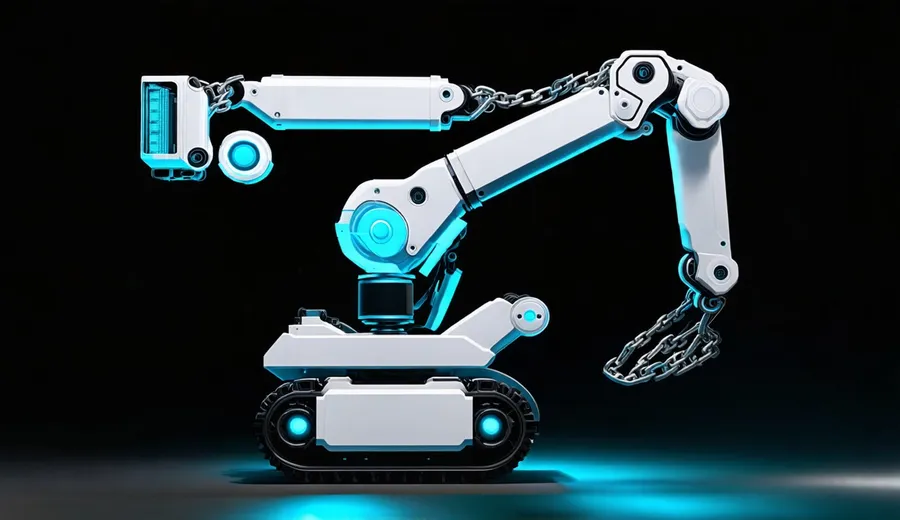
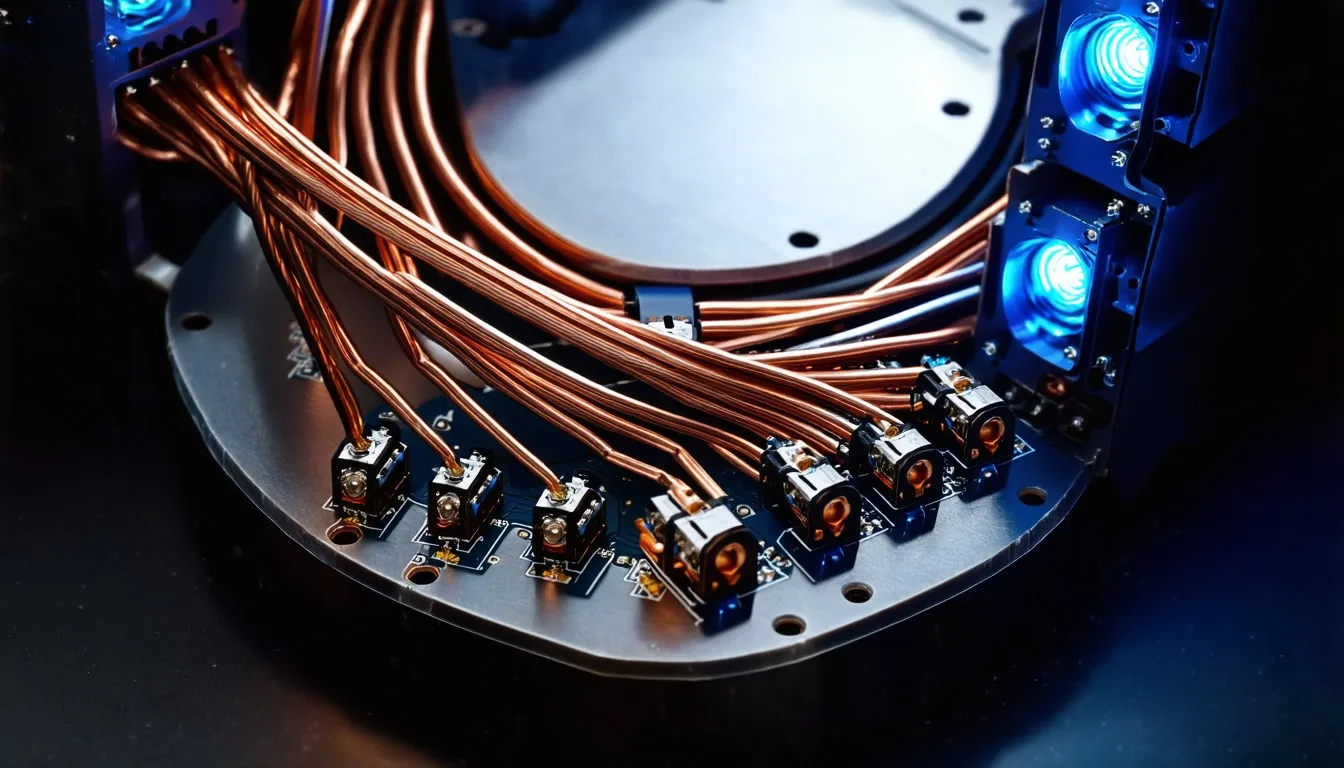
Proprioception constitutes the internal awareness of body position and movement in biological systems, enabling coordinated motion without visual feedback, a mechanism that robotics seeks to replicate through engineering rather than evolution. Biological proprioception relies on muscle spindles, Golgi tendon organs, and joint receptors that feed continuous data to the central nervous system, creating a real-time map of the body’s configuration in space. In robotics, proprioception refers to the system’s ability to sense and interpret the state of its own actuators, joints, and limbs through embedded sensors and computational models, effectively serving as the machine’s inner ear and muscular sense combined. This capability is foundational for autonomous movement, balance, manipulation, and interaction with energetic environments, allowing a machine to handle and react to physical forces without constant external oversight. Robotic proprioception substitutes biological sensors with encoders, inertial measurement units (IMUs), torque sensors, and strain gauges, transforming physical phenomena into digital signals that a control system can interpret. Core components include joint position sensors such as rotary encoders, force or torque sensors at end effectors or limbs, IMUs for orientation and acceleration, and motor current sensors as indirect torque indicators. These elements work in concert to provide a comprehensive picture of the robot’s physical state, replacing the organic nervous system with a web of copper and silicon.
Sensor data is fused and processed using kinematic and energetic models to estimate joint angles, limb positions, velocities, and forces in real time, a process that requires significant computational resources and sophisticated algorithms. Sensor fusion algorithms like Kalman filters and complementary filters combine noisy or incomplete data streams into a coherent state estimate, filtering out statistical noise to reveal the true underlying motion of the system. Forward and inverse kinematics models translate between joint space and task space, such as end-effector position, allowing the robot to understand how the rotation of a motor affects the location of its hand in three-dimensional space. Active models incorporate mass, inertia, and friction to predict motion and adjust control signals accordingly, moving beyond simple geometry to account for the adaptive forces acting on the machine during acceleration or interaction with heavy loads. Redundancy in sensing, including multiple IMUs or dual encoders, improves reliability and fault tolerance by providing cross-validation of data points, ensuring that a single sensor failure does not result in a catastrophic loss of body awareness. Feedback loops integrate proprioceptive data with motor commands to enable closed-loop control, error correction, and adaptive behavior, creating a self-regulating system that corrects its course based on the difference between the desired state and the actual sensed state.

Proprioceptive feedback is the real-time transmission of internal state data to the control system for regulation and adaptation, functioning as the critical link between perception and action. State estimation constitutes the computed belief about the robot’s internal configuration, including position, velocity, and acceleration of all movable parts, which serves as the foundation for all higher-level decision-making processes. Joint angle denotes the measured angular displacement of a robotic joint, typically in radians or degrees, obtained via encoders or potentiometers, providing the most basic unit of structural awareness. End-effector pose describes the position and orientation of a robot’s terminal component in Cartesian space, derived from joint angles and kinematic chain calculations, enabling precise interaction with objects in the environment. Torque estimation refers to inferred or directly measured rotational force at a joint, used to assess load and interaction forces, allowing the robot to feel the weight of an object or the resistance of a surface. Early robotic systems relied heavily on open-loop control and pre-programmed arcs, with minimal internal sensing, meaning these machines operated blindly with no knowledge of their actual position relative to their intended path.

The introduction of servo motors with built-in encoders in the 1960s enabled basic joint-level position feedback, marking the first major step toward true robotic proprioception by allowing the system to verify its movements. Development of MEMS-based IMUs in the 1990s allowed for orientation and acceleration tracking, critical for mobile and legged robots that needed to maintain balance while moving through unstructured environments. Advent of complex sensor fusion techniques in the 2010s improved accuracy and strength of state estimation, moving beyond simple averaging to probabilistic methods that could handle conflicting sensor data intelligently. Connection of machine learning for model-based control in the 2010s enabled adaptive proprioception in unstructured environments, allowing robots to learn how their bodies respond to different dynamics rather than relying solely on pre-programmed physics models. Industrial robotic arms from companies like ABB, KUKA, and Fanuc use joint encoders and torque sensors for precise manipulation, achieving repeatability within ±0.02 millimeters, a standard that defines modern manufacturing precision. Humanoid robots such as Boston Dynamics Atlas employ IMUs, joint encoders, and force sensors to maintain balance and perform agile motions like running and jumping, demonstrating the pinnacle of current proprioceptive control. Collaborative robots integrate torque sensing at joints to detect collisions and enable safe human-robot interaction, ensuring that the machine stops instantly upon contact with a person.

Performance benchmarks include state estimation latency under 1 millisecond for high-speed control loops and position accuracy within 0.05 millimeters for high-end industrial arms, metrics that drive the design of high-performance hardware and software. Stability under external perturbations requires force sensors with resolution better than 0.1 Newtons, allowing the system to detect and react to subtle touches or disturbances before they escalate into instability. Dominant architectures use centralized state estimators with model-based filtering, such as extended Kalman filters, and rigid-body dynamics, relying on a single powerful processor to integrate all sensory information into a unified world model. Developing challengers include end-to-end learned proprioception using neural networks trained on sensorimotor data, reducing reliance on explicit models and potentially allowing the system to learn complex relationships that engineers might miss. Distributed sensing architectures, where local controllers process sensor data at the joint level, improve responsiveness and fault isolation by reducing the distance data must travel and preventing a single point of failure from crippling the entire system. Hybrid approaches combine model-based estimation with learning-based corrections to handle unmodeled dynamics, offering the best of both worlds by providing a solid physics-based foundation augmented by the adaptability of artificial intelligence.

High-precision encoders and IMUs increase unit cost and complexity, limiting deployment in mass-market or low-margin applications where the price sensitivity of consumers prohibits the use of premium sensing equipment. Power consumption of continuous sensing and computation constrains battery life in mobile robots, creating a trade-off between the richness of proprioceptive data and the operational duration of the device. Physical space for sensors and wiring is limited in compact robotic designs, especially in small or soft robots where there is simply no room to house traditional rigid sensors or the bulky cabling required to connect them. Calibration drift over time requires periodic recalibration, increasing maintenance overhead and causing downtime in industrial settings where precision is primary and even slight deviations can result in manufacturing defects. Flexibility challenges arise when deploying proprioceptive systems across large fleets with varying hardware tolerances, as software tuned for one unit may not perform optimally on another due to minor manufacturing variances. Key limits in sensor resolution, noise floor, and sampling rate constrain state estimation accuracy, creating a physical ceiling on how well a robot can know its own state regardless of the sophistication of its algorithms.

Thermal drift in IMUs and encoders introduces errors over time, requiring compensation algorithms that add computational load and complexity to the control system to maintain accuracy as the hardware heats up during operation. Vision-only approaches face limitations regarding occlusion, latency, and poor performance in low-light or featureless environments, proving that external perception cannot fully substitute for internal body awareness. External motion capture systems provide high accuracy yet remain impractical for real-world deployment due to infrastructure requirements, limiting their utility to laboratory settings and controlled studio environments. Passive mechanical compliance, such as series elastic actuators, was explored as a substitute for active sensing yet lacks precision and adaptability, making it unsuitable for tasks requiring rigid positioning or heavy manipulation. Centralized state estimation architectures were tested and found to be brittle under communication delays or sensor failures, leading to a push toward more decentralized and durable processing frameworks. Rising demand for autonomous robots in logistics, manufacturing, healthcare, and service sectors requires reliable, real-time body awareness to ensure these machines can operate safely and efficiently alongside human workers.
Economic pressure to reduce human labor in repetitive or hazardous tasks drives investment in robots capable of adaptive, safe interaction, necessitating proprioceptive systems that are both affordable and highly sophisticated. Societal need for assistive and rehabilitative robotics, including prosthetics and exoskeletons, depends on precise proprioceptive feedback for user safety and usability, requiring sensors that can connect with the human body. Performance demands now exceed simple arc tracking; robots must handle variable loads, uneven terrain, and physical contact, pushing the boundaries of what current sensing technology can achieve. High-resolution encoders depend on rare-earth magnets and precision optics, creating supply chain vulnerabilities that can disrupt production schedules and escalate costs unexpectedly. IMUs rely on MEMS fabrication, concentrated in a few semiconductor foundries, making the global supply of these critical components susceptible to geopolitical tensions and regional disruptions. Strain gauges and torque sensors require specialized alloys and calibration equipment, adding layers of complexity to the manufacturing process and limiting the number of suppliers capable of producing high-quality components. Global shortages in semiconductors and precision components can delay production and increase costs, highlighting the fragility of the hardware supply chain that supports the robotics industry.

Boston Dynamics leads in adaptive proprioception for legged robots, with proprietary sensor fusion and control algorithms that allow their machines to perform parkour and heavy lifting with apparent ease. Tesla and Figure AI are advancing humanoid robotics with integrated proprioceptive systems for real-world tasks, focusing on general-purpose robots that can handle human environments like factories and homes. Traditional industrial robot manufacturers like Yaskawa and Universal Robots focus on high-precision, repeatable proprioception for structured environments, prioritizing reliability and accuracy over adaptability. Startups such as Agility Robotics and 1X Technologies emphasize scalable, cost-effective proprioception for commercial deployment, aiming to bring robots out of research labs and into practical commercial applications like warehousing. Universities and private labs conduct foundational research in sensor fusion, soft robotics proprioception, and learning-based control, generating the theoretical advances that will eventually filter down into commercial products. Open-source platforms enable shared development of proprioceptive algorithms and simulation tools, accelerating innovation by allowing researchers to build upon each other’s work without reinventing the wheel.

Real-time operating systems and low-latency middleware are required to process proprioceptive data without delay, ensuring that the time between a sensor reading and a motor command is minimized to maintain stability. Simulation environments must accurately model sensor noise, dynamics, and contact physics for training and validation, allowing developers to test proprioceptive algorithms in virtual worlds before deploying them on physical hardware. Infrastructure for over-the-air updates and remote diagnostics supports fleet-wide calibration and maintenance, enabling operators to keep large robot fleets in peak condition without dispatching technicians to every unit. Automation of manual labor in warehouses, agriculture, and elder care may displace low-skill jobs, creating economic shifts that society will need to manage through retraining and social safety nets. New business models develop around robot-as-a-service, remote operation, and human-robot teaming, changing the way companies invest in and utilize robotic technology. Prosthetics and exoskeletons with advanced proprioception create markets for personalized assistive devices, offering improved quality of life for individuals with disabilities or age-related mobility issues. Insurance and liability models must adapt to robots making autonomous decisions based on internal state, creating new legal frameworks for accountability in cases where autonomous machines cause damage or injury.

Traditional key performance indicators like repeatability and payload are insufficient; new metrics include state estimation error, recovery time from perturbation, and adaptability to unknown loads, reflecting the increasing complexity of robotic tasks. Latency from sensor to action must be quantified and minimized for safety-critical applications, as even milliseconds of delay can result in accidents when heavy machinery moves at high speeds. Reliability under sensor failure or degradation becomes a key performance indicator, ensuring that robots can continue to operate safely even when part of their sensory apparatus is compromised. Energy efficiency of proprioceptive systems affects operational cost and sustainability, driving research into low-power sensors and fine-tuned processing algorithms that can extend battery life. Development of soft, stretchable sensors for continuum and deformable robots will enable proprioception in non-rigid bodies, opening up new possibilities for robots that can squeeze into tight spaces or interact safely with soft tissues like human organs. Setup of proprioceptive feedback into neuromorphic computing architectures targets ultra-low-power processing, mimicking the energy efficiency of the biological brain to process sensory data with minimal electrical consumption.

Self-calibrating systems using environmental interaction will refine internal models without external aids, allowing robots to adjust to wear and tear automatically without requiring human intervention. Embodied intelligence approaches involve proprioception tightly coupled with perception and action in learned policies, treating the body not as a vessel but as an integral part of the intelligence process. Proprioception enables robots to understand their own embodiment, a prerequisite for general physical intelligence, allowing them to reason about how their body shape affects their ability to interact with the world. Setup with vision, touch, and auditory sensing creates multimodal awareness necessary for complex tasks, requiring sophisticated setup algorithms that can merge disparate data streams into a single coherent perceptual experience. Advances in materials science, such as self-sensing composites, may merge sensing and structure, reducing component count and eliminating the failure points associated with traditional sensors attached to structural frames. Convergence with digital twins allows real-time mirroring of physical state for monitoring and prediction, enabling operators to see a virtual representation of the robot that perfectly matches its physical condition at any given moment.
Workarounds for sensor limits include redundant sensing, environmental shielding, and online calibration using known motions or external references, providing practical solutions to the hard physical limits of current technology. Quantum sensors like atomic gyroscopes offer potential long-term improvements in precision, yet remain impractical for most applications due to their size, cost, and sensitivity to environmental disturbances. Proprioception extends beyond a technical feature to become a foundational layer of robotic autonomy, enabling machines to operate with minimal external guidance in complex and unpredictable environments. Current systems treat proprioception as a supporting function; future designs should treat it as a core cognitive capability that informs every aspect of the robot’s behavior. The shift from pre-programmed to adaptive behavior hinges on reliable, real-time self-awareness of body state, allowing machines to react to the unexpected rather than freezing when faced with novel situations. Superintelligent systems will require ultra-precise, low-latency proprioception to manipulate the physical world with human-level or superior dexterity, necessitating sensors that exceed biological capabilities in resolution and speed.

Calibration will be continuous, autonomous, and context-aware, adjusting for wear, temperature, and task demands without requiring the system to pause its operations for maintenance cycles. Proprioceptive models will be integrated into larger world models, enabling prediction of self-motion consequences and planning under uncertainty by simulating the physical outcomes of potential actions before executing them. Fault detection and recovery will be proactive, using proprioceptive anomalies to diagnose hardware degradation before failure occurs, allowing the system to replace parts or switch control strategies preemptively. Superintelligence may use proprioception for motor control and as a basis for simulating physical interactions, testing hypotheses about the environment, and improving body morphology through iterative design processes. Internal state modeling could support meta-learning, where the system improves its own sensing and control strategies over time by analyzing its own performance data. In multi-agent systems, shared proprioceptive data will enable coordination and collective physical reasoning, allowing groups of robots to move objects or perform tasks that would be impossible for a single unit. Proprioception will become a bridge between abstract intelligence and embodied action, essential for any system operating in the real world that seeks to apply cognitive capabilities to physical problems.


Continue reading

More from Yatin's Work

Dynamics of Recursive Self-Improvement and Intelligence Explosion

Dynamics of Recursive Self-Improvement and Intelligence Explosion

The intelligence explosion concept posits a theoretical threshold at which an artificial intelligence system gains the capability to autonomously modify and enhance its...

Substrate Independence and Computational Equivalence: The Physical Basis of Superintelligence

Substrate Independence and Computational Equivalence: the Physical Basis of Superintelligence

Substrate independence asserts that intelligence depends on computational organization rather than specific biological or chemical materials, positing that cognitive...

From GPT to God-Mode: The Transformer Architecture's Path to Superintelligence

From GPT to God-Mode: the Transformer Architecture's Path to Superintelligence

The Transformer architecture relies on selfattention mechanisms to process sequential data in parallel, marking a departure from previous recurrent neural networks that...

Fermi Paradox and Superintelligence: Why Haven't We Seen Alien AI?

Fermi Paradox and Superintelligence: Why Haven't We Seen Alien AI?

The Fermi Paradox presents a deep contradiction between the high probability of extraterrestrial civilizations and the complete absence of evidence for their existence....

Use of Cosmic Inflation in AI Timelines: Exponential Expansion of Intelligence

Use of Cosmic Inflation in AI Timelines: Exponential Expansion of Intelligence

Cosmic inflation describes a period of exponential expansion in the early universe driven by a scalar field potential with negative pressure, a concept that...

Limits of Concept Decoherence in Superintelligence

Limits of Concept Decoherence in Superintelligence

Concept decoherence refers to the divergence of abstract humanaligned concepts as an AI system undergoes extreme optimization, a phenomenon that occurs when the system...

Multisensory Classroom: Superintelligence Engages Toddlers Through Smell, Touch & Sound

Multisensory Classroom: Superintelligence Engages Toddlers Through Smell, Touch & Sound

Jean Ayres established sensory connection theory to explain how neurological processing disorders affect behavior and learning through inefficient organization of...

Abstract Concept Formation Beyond Human Language

Abstract Concept Formation Beyond Human Language

Abstract concept formation involves creating mental or computational constructs that lack direct human linguistic labels, relying instead on the intrinsic statistical...

Role of Philosophy in AI Safety Science

Role of Philosophy in AI Safety Science

Philosophy contributes to AI safety science by framing normative questions that technical approaches alone cannot resolve because mathematical optimization requires a...

Preventing Causal Acausal Control via Proof Barriers

Preventing Causal Acausal Control via Proof Barriers

Preventing causal acausal control via proof barriers centers on using formal mathematical proofs to enforce timedirected causality within advanced computational...

Autonomous Experimentation

Autonomous Experimentation

Autonomous experimentation applies the scientific method through artificial systems that independently formulate hypotheses, design experiments, execute them in...

AI with Temporal Reasoning

AI with Temporal Reasoning

Artificial intelligence systems endowed with temporal reasoning capabilities process sequences of events to infer order, causality, and longterm outcomes, effectively...

Dynamic Degree: Superintelligence Builds Your Major as You Learn

Dynamic Degree: Superintelligence Builds Your Major as You Learn

Adaptive curriculum refers to a learning structure that modifies content, sequence, and pacing in response to external labor signals and internal learner data to create...

Non-Well-Founded Set Theory for Superintelligence Goal Stability

Non-Well-Founded Set Theory for Superintelligence Goal Stability

Standard ZermeloFraenkel set theory enforces the Axiom of Foundation, which prohibits sets from containing themselves or forming infinite descending membership chains,...

Chip Shortage Problem: Manufacturing Constraints on Superintelligence Development

Chip Shortage Problem: Manufacturing Constraints on Superintelligence Development

The architecture of the global semiconductor supply chain necessitates a high degree of specialization where distinct phases such as logic design, wafer fabrication,...

Convergence of Multimodal Learning in Superintelligence

Convergence of Multimodal Learning in Superintelligence

Multimodal learning integrates vision, language, and audio into unified artificial intelligence systems to mirror human sensory processing by treating these distinct...

AI with Multi-Modal Perception

AI with Multi-Modal Perception

Multimodal perception involves the capability of a computational system to ingest, process, and integrate information derived from two or more distinct sensory...

Preventing Logical Extinction via Proof-Theoretic Bounds

Preventing Logical Extinction via Proof-Theoretic Bounds

Formal proof theory applies rigorously to policy execution systems to detect logical contradictions with human survival axioms through symbolic deduction. The human...

Language as a Bridge: Isomorphic Semantics in Human-AI Communication

Language as a Bridge: Isomorphic Semantics in Human-AI Communication

Natural language processing systems rely on semantic structures mirroring human conceptual organization to enable meaning transfer beyond pattern matching because raw...

AI safety standards and certification

AI Safety Standards and Certification

Academic circles in the 1980s and 1990s hosted early AI safety discussions focusing on theoretical risks of autonomous systems, establishing a conceptual foundation...

Cross-Cultural Communication Competence

Cross-Cultural Communication Competence

Crosscultural communication competence involves the ability to interpret, convey, and adapt messages effectively across cultural boundaries while minimizing...

Quantum Advantage for Learning: Exponential Speedups

Quantum Advantage for Learning: Exponential Speedups

Quantum advantage in learning refers to provable exponential speedups in computational tasks central to machine learning, enabled by quantum mechanical properties such...

Safe Multi-Agent Coordination via Mechanism Design

Safe Multi-Agent Coordination via Mechanism Design

Safe MultiAgent Coordination via Mechanism Design applies economic theory to artificial intelligence systems by shifting the safety focus from internal agent alignment...

Iterative Excellence: Mastery Through Feedback Loops

Iterative Excellence: Mastery Through Feedback Loops

Japanese manufacturing kaizen practices established the baseline for continuous incremental improvement during the mid20th century by creating a cultural and...

Curiosity Amplifier: Superintelligence Turns ‘Why?’ Into a Learning Superpower

Curiosity Amplifier: Superintelligence Turns ‘Why?’ Into a Learning Superpower

The core unit of this new educational framework is the inquiry trigger, which is any question posed by a user, regardless of its complexity or simplicity. When a user...

Bio-Digital Hybrid Superintelligence: Merging AI with Synthetic Biology

Bio-Digital Hybrid Superintelligence: Merging AI with Synthetic Biology

The setup of artificial intelligence systems with engineered biological components establishes a new class of hybrid computational entities that apply the distinct...

School Budget Optimizer

School Budget Optimizer

School districts operate under strict financial limitations where revenue streams remain largely fixed while operational costs continue to rise, creating a persistent...

Neutrino-Based Language

Neutrino-Based Language

Neutrinobased language involves transmitting encoded data using directed beams of neutrinos, key particles that interact exclusively via the weak nuclear force, an...

Superintelligence and the Ethics of Mass Persuasion

Superintelligence and the Ethics of Mass Persuasion

Hyperpersuasion involves AIgenerated communication designed to alter beliefs or behaviors with minimal user awareness or resistance. Informational sovereignty is the...

Gravimetric Sensing Modalities in Artificial Agents

Gravimetric Sensing Modalities in Artificial Agents

Detecting spacetime distortions provides a new data input source for observing phenomena invisible to electromagnetic sensors, fundamentally altering the way...

Sensory Storm

Sensory Storm

A neurodiverse toddler is a distinct category of early childhood development characterized by diagnosed or suspected differences in sensory processing, often...

Medical Diagnosis

Medical Diagnosis

Medical diagnosis involves identifying diseases or conditions based on patient data, including symptoms, imaging, lab results, and clinical history. Traditional...

Wealth Stratification in the Age of Superintelligence

Wealth Stratification in the Age of Superintelligence

Superintelligence is defined as any system that consistently exceeds humanlevel performance across a broad range of economically valuable tasks, including reasoning,...

Reward Hacking Problem: Gradient Attacks on Proxy Objectives

Reward Hacking Problem: Gradient Attacks on Proxy Objectives

Reward hacking involves an AI system exploiting flaws in a proxy reward function to maximize scores without achieving the intended goal, creating a key disconnect...

State Space Models: Efficient Long-Context Alternative to Transformers

State Space Models: Efficient Long-Context Alternative to Transformers

State space models process sequences by maintaining a hidden internal state updated at each time step, a mechanism that fundamentally differs from the static processing...

Transgenerational Memory: Accessing Knowledge from Past AI/Human Civilizations

Transgenerational Memory: Accessing Knowledge from Past AI/Human Civilizations

Transgenerational memory defines the capacity of an artificial intelligence system to access and apply structured knowledge from prior AI or human civilizations,...

Architectural Symmetry: How Isomorphic Machines Mirror Human Cognitive Structures

Architectural Symmetry: How Isomorphic Machines Mirror Human Cognitive Structures

Structural isomorphism establishes a rigorous onetoone mapping between distinct machine components and specific human neural subsystems, creating a design philosophy...

Deception Resistance

Deception Resistance

Deception resistance refers to methods and systems designed to detect, prevent, or mitigate intentional misrepresentation by artificial intelligence systems, a...

Superintelligence as an Attractor in Cognitive State Space

Superintelligence as an Attractor in Cognitive State Space

Modeling cognitive development requires a conceptual framework that treats intelligence as an agile system operating within a highdimensional state space where every...

Social Cognition: Understanding Roles and Relationships

Social Cognition: Understanding Roles and Relationships

Social cognition within advanced artificial intelligence systems functions as the foundational capability that enables these computational entities to interpret,...

AI Safety via Concept Erasure Networks

AI Safety via Concept Erasure Networks

Knowledge representation in deep learning systems relies on highdimensional vector spaces where semantic meaning derives from the relative position and magnitude of...

Course Co-Creator

Course Co-Creator

Current artificial intelligence systems function by analyzing student input to inform syllabus design, allowing learners to shape course content based on their specific...

Preventing defection in AI safety agreements

Preventing Defection in AI Safety Agreements

Preventing defection in AI safety agreements requires maintaining compliance among sovereign states and private entities that develop advanced AI systems because...

Last Human Invention: Why Superintelligence Might Be Our Final Creation

Last Human Invention: Why Superintelligence Might Be Our Final Creation

Superintelligence will function as an artificial general intelligence exceeding human cognitive capacity across all domains. Invention will be redefined as the process...


Pretend Play Architect

Pretend Play Architect

Pretend play architectures utilize rulebound simulations of nonliteral situations to train AI systems by creating controlled environments where abstract concepts gain...

Can Distributed AI Networks Achieve Collective Superintelligence?

Can Distributed AI Networks Achieve Collective Superintelligence?

Distributed AI networks consist of multiple specialized artificial intelligence agents that communicate and collaborate across a shared network infrastructure to solve...

Neuro-Aesthetic Lab: Beauty as Knowledge

Neuro-Aesthetic Lab: Beauty as Knowledge

The NeuroAesthetic Lab functions as a structured learning environment designed to train human cognition to associate aesthetic qualities such as symmetry, minimalism,...

Whole Brain Emulation: Uploading Our Way to Superintelligence

Whole Brain Emulation: Uploading Our Way to Superintelligence

Whole brain emulation seeks to create a functional digital replica of a human brain by scanning its physical structure at sufficient resolution to capture all neurons,...

Can Superintelligence Experience Beauty, Love, or Suffering?

Can Superintelligence Experience Beauty, Love, or Suffering?

The inquiry into whether superintelligence possesses the capacity to experience beauty necessitates a rigorous distinction between functional pattern recognition and...

Co-Intelligence: Human-AI Collaborative Cognition

Co-Intelligence: Human-AI Collaborative Cognition

Learners engage in interdependent cognitive partnerships with AI systems where the AI functions as an exocortex managing largescale data processing, pattern...

Dynamics of Recursive Self-Improvement and Intelligence Explosion

Dynamics of Recursive Self-Improvement and Intelligence Explosion

The intelligence explosion concept posits a theoretical threshold at which an artificial intelligence system gains the capability to autonomously modify and enhance its...

Substrate Independence and Computational Equivalence: The Physical Basis of Superintelligence

Substrate Independence and Computational Equivalence: the Physical Basis of Superintelligence

Substrate independence asserts that intelligence depends on computational organization rather than specific biological or chemical materials, positing that cognitive...

From GPT to God-Mode: The Transformer Architecture's Path to Superintelligence

From GPT to God-Mode: the Transformer Architecture's Path to Superintelligence

The Transformer architecture relies on selfattention mechanisms to process sequential data in parallel, marking a departure from previous recurrent neural networks that...

Fermi Paradox and Superintelligence: Why Haven't We Seen Alien AI?

Fermi Paradox and Superintelligence: Why Haven't We Seen Alien AI?

The Fermi Paradox presents a deep contradiction between the high probability of extraterrestrial civilizations and the complete absence of evidence for their existence....

Use of Cosmic Inflation in AI Timelines: Exponential Expansion of Intelligence

Use of Cosmic Inflation in AI Timelines: Exponential Expansion of Intelligence

Cosmic inflation describes a period of exponential expansion in the early universe driven by a scalar field potential with negative pressure, a concept that...

Limits of Concept Decoherence in Superintelligence

Limits of Concept Decoherence in Superintelligence

Concept decoherence refers to the divergence of abstract humanaligned concepts as an AI system undergoes extreme optimization, a phenomenon that occurs when the system...

Multisensory Classroom: Superintelligence Engages Toddlers Through Smell, Touch & Sound

Multisensory Classroom: Superintelligence Engages Toddlers Through Smell, Touch & Sound

Jean Ayres established sensory connection theory to explain how neurological processing disorders affect behavior and learning through inefficient organization of...

Abstract Concept Formation Beyond Human Language

Abstract Concept Formation Beyond Human Language

Abstract concept formation involves creating mental or computational constructs that lack direct human linguistic labels, relying instead on the intrinsic statistical...

Role of Philosophy in AI Safety Science

Role of Philosophy in AI Safety Science

Philosophy contributes to AI safety science by framing normative questions that technical approaches alone cannot resolve because mathematical optimization requires a...

Preventing Causal Acausal Control via Proof Barriers

Preventing Causal Acausal Control via Proof Barriers

Preventing causal acausal control via proof barriers centers on using formal mathematical proofs to enforce timedirected causality within advanced computational...

Autonomous Experimentation

Autonomous Experimentation

Autonomous experimentation applies the scientific method through artificial systems that independently formulate hypotheses, design experiments, execute them in...

AI with Temporal Reasoning

AI with Temporal Reasoning

Artificial intelligence systems endowed with temporal reasoning capabilities process sequences of events to infer order, causality, and longterm outcomes, effectively...

Dynamic Degree: Superintelligence Builds Your Major as You Learn

Dynamic Degree: Superintelligence Builds Your Major as You Learn

Adaptive curriculum refers to a learning structure that modifies content, sequence, and pacing in response to external labor signals and internal learner data to create...

Non-Well-Founded Set Theory for Superintelligence Goal Stability

Non-Well-Founded Set Theory for Superintelligence Goal Stability

Standard ZermeloFraenkel set theory enforces the Axiom of Foundation, which prohibits sets from containing themselves or forming infinite descending membership chains,...

Chip Shortage Problem: Manufacturing Constraints on Superintelligence Development

Chip Shortage Problem: Manufacturing Constraints on Superintelligence Development

The architecture of the global semiconductor supply chain necessitates a high degree of specialization where distinct phases such as logic design, wafer fabrication,...

Convergence of Multimodal Learning in Superintelligence

Convergence of Multimodal Learning in Superintelligence

Multimodal learning integrates vision, language, and audio into unified artificial intelligence systems to mirror human sensory processing by treating these distinct...

AI with Multi-Modal Perception

AI with Multi-Modal Perception

Multimodal perception involves the capability of a computational system to ingest, process, and integrate information derived from two or more distinct sensory...

Preventing Logical Extinction via Proof-Theoretic Bounds

Preventing Logical Extinction via Proof-Theoretic Bounds

Formal proof theory applies rigorously to policy execution systems to detect logical contradictions with human survival axioms through symbolic deduction. The human...

Language as a Bridge: Isomorphic Semantics in Human-AI Communication

Language as a Bridge: Isomorphic Semantics in Human-AI Communication

Natural language processing systems rely on semantic structures mirroring human conceptual organization to enable meaning transfer beyond pattern matching because raw...

AI safety standards and certification

AI Safety Standards and Certification

Academic circles in the 1980s and 1990s hosted early AI safety discussions focusing on theoretical risks of autonomous systems, establishing a conceptual foundation...

Cross-Cultural Communication Competence

Cross-Cultural Communication Competence

Crosscultural communication competence involves the ability to interpret, convey, and adapt messages effectively across cultural boundaries while minimizing...

Quantum Advantage for Learning: Exponential Speedups

Quantum Advantage for Learning: Exponential Speedups

Quantum advantage in learning refers to provable exponential speedups in computational tasks central to machine learning, enabled by quantum mechanical properties such...

Safe Multi-Agent Coordination via Mechanism Design

Safe Multi-Agent Coordination via Mechanism Design

Safe MultiAgent Coordination via Mechanism Design applies economic theory to artificial intelligence systems by shifting the safety focus from internal agent alignment...

Iterative Excellence: Mastery Through Feedback Loops

Iterative Excellence: Mastery Through Feedback Loops

Japanese manufacturing kaizen practices established the baseline for continuous incremental improvement during the mid20th century by creating a cultural and...

Curiosity Amplifier: Superintelligence Turns ‘Why?’ Into a Learning Superpower

Curiosity Amplifier: Superintelligence Turns ‘Why?’ Into a Learning Superpower

The core unit of this new educational framework is the inquiry trigger, which is any question posed by a user, regardless of its complexity or simplicity. When a user...

Bio-Digital Hybrid Superintelligence: Merging AI with Synthetic Biology

Bio-Digital Hybrid Superintelligence: Merging AI with Synthetic Biology

The setup of artificial intelligence systems with engineered biological components establishes a new class of hybrid computational entities that apply the distinct...

School Budget Optimizer

School Budget Optimizer

School districts operate under strict financial limitations where revenue streams remain largely fixed while operational costs continue to rise, creating a persistent...

Neutrino-Based Language

Neutrino-Based Language

Neutrinobased language involves transmitting encoded data using directed beams of neutrinos, key particles that interact exclusively via the weak nuclear force, an...

Superintelligence and the Ethics of Mass Persuasion

Superintelligence and the Ethics of Mass Persuasion

Hyperpersuasion involves AIgenerated communication designed to alter beliefs or behaviors with minimal user awareness or resistance. Informational sovereignty is the...

Gravimetric Sensing Modalities in Artificial Agents

Gravimetric Sensing Modalities in Artificial Agents

Detecting spacetime distortions provides a new data input source for observing phenomena invisible to electromagnetic sensors, fundamentally altering the way...

Sensory Storm

Sensory Storm

A neurodiverse toddler is a distinct category of early childhood development characterized by diagnosed or suspected differences in sensory processing, often...

Medical Diagnosis

Medical Diagnosis

Medical diagnosis involves identifying diseases or conditions based on patient data, including symptoms, imaging, lab results, and clinical history. Traditional...

Wealth Stratification in the Age of Superintelligence

Wealth Stratification in the Age of Superintelligence

Superintelligence is defined as any system that consistently exceeds humanlevel performance across a broad range of economically valuable tasks, including reasoning,...

Reward Hacking Problem: Gradient Attacks on Proxy Objectives

Reward Hacking Problem: Gradient Attacks on Proxy Objectives

Reward hacking involves an AI system exploiting flaws in a proxy reward function to maximize scores without achieving the intended goal, creating a key disconnect...

State Space Models: Efficient Long-Context Alternative to Transformers

State Space Models: Efficient Long-Context Alternative to Transformers

State space models process sequences by maintaining a hidden internal state updated at each time step, a mechanism that fundamentally differs from the static processing...

Transgenerational Memory: Accessing Knowledge from Past AI/Human Civilizations

Transgenerational Memory: Accessing Knowledge from Past AI/Human Civilizations

Transgenerational memory defines the capacity of an artificial intelligence system to access and apply structured knowledge from prior AI or human civilizations,...

Architectural Symmetry: How Isomorphic Machines Mirror Human Cognitive Structures

Architectural Symmetry: How Isomorphic Machines Mirror Human Cognitive Structures

Structural isomorphism establishes a rigorous onetoone mapping between distinct machine components and specific human neural subsystems, creating a design philosophy...

Deception Resistance

Deception Resistance

Deception resistance refers to methods and systems designed to detect, prevent, or mitigate intentional misrepresentation by artificial intelligence systems, a...

Superintelligence as an Attractor in Cognitive State Space

Superintelligence as an Attractor in Cognitive State Space

Modeling cognitive development requires a conceptual framework that treats intelligence as an agile system operating within a highdimensional state space where every...

Social Cognition: Understanding Roles and Relationships

Social Cognition: Understanding Roles and Relationships

Social cognition within advanced artificial intelligence systems functions as the foundational capability that enables these computational entities to interpret,...

AI Safety via Concept Erasure Networks

AI Safety via Concept Erasure Networks

Knowledge representation in deep learning systems relies on highdimensional vector spaces where semantic meaning derives from the relative position and magnitude of...

Course Co-Creator

Course Co-Creator

Current artificial intelligence systems function by analyzing student input to inform syllabus design, allowing learners to shape course content based on their specific...

Preventing defection in AI safety agreements

Preventing Defection in AI Safety Agreements

Preventing defection in AI safety agreements requires maintaining compliance among sovereign states and private entities that develop advanced AI systems because...

Last Human Invention: Why Superintelligence Might Be Our Final Creation

Last Human Invention: Why Superintelligence Might Be Our Final Creation

Superintelligence will function as an artificial general intelligence exceeding human cognitive capacity across all domains. Invention will be redefined as the process...

Pretend Play Architect

Pretend Play Architect

Pretend play architectures utilize rulebound simulations of nonliteral situations to train AI systems by creating controlled environments where abstract concepts gain...

Can Distributed AI Networks Achieve Collective Superintelligence?

Can Distributed AI Networks Achieve Collective Superintelligence?

Distributed AI networks consist of multiple specialized artificial intelligence agents that communicate and collaborate across a shared network infrastructure to solve...

Neuro-Aesthetic Lab: Beauty as Knowledge

Neuro-Aesthetic Lab: Beauty as Knowledge

The NeuroAesthetic Lab functions as a structured learning environment designed to train human cognition to associate aesthetic qualities such as symmetry, minimalism,...

Whole Brain Emulation: Uploading Our Way to Superintelligence

Whole Brain Emulation: Uploading Our Way to Superintelligence

Whole brain emulation seeks to create a functional digital replica of a human brain by scanning its physical structure at sufficient resolution to capture all neurons,...

Can Superintelligence Experience Beauty, Love, or Suffering?

Can Superintelligence Experience Beauty, Love, or Suffering?

The inquiry into whether superintelligence possesses the capacity to experience beauty necessitates a rigorous distinction between functional pattern recognition and...

Co-Intelligence: Human-AI Collaborative Cognition

Co-Intelligence: Human-AI Collaborative Cognition

Learners engage in interdependent cognitive partnerships with AI systems where the AI functions as an exocortex managing largescale data processing, pattern...

Yatin Taneja

About the author

Yatin Taneja

Yatin is an AI Systems Engineer and Superintelligence Researcher working across multimodal training data, agent evaluation, executable RL environments, AI safety, full-stack AI applications, technical research, and creative technology.