Knowledge hub

Learning from Feedback: Improving Like Humans Do

Learning from Feedback: Improving Like Humans Do

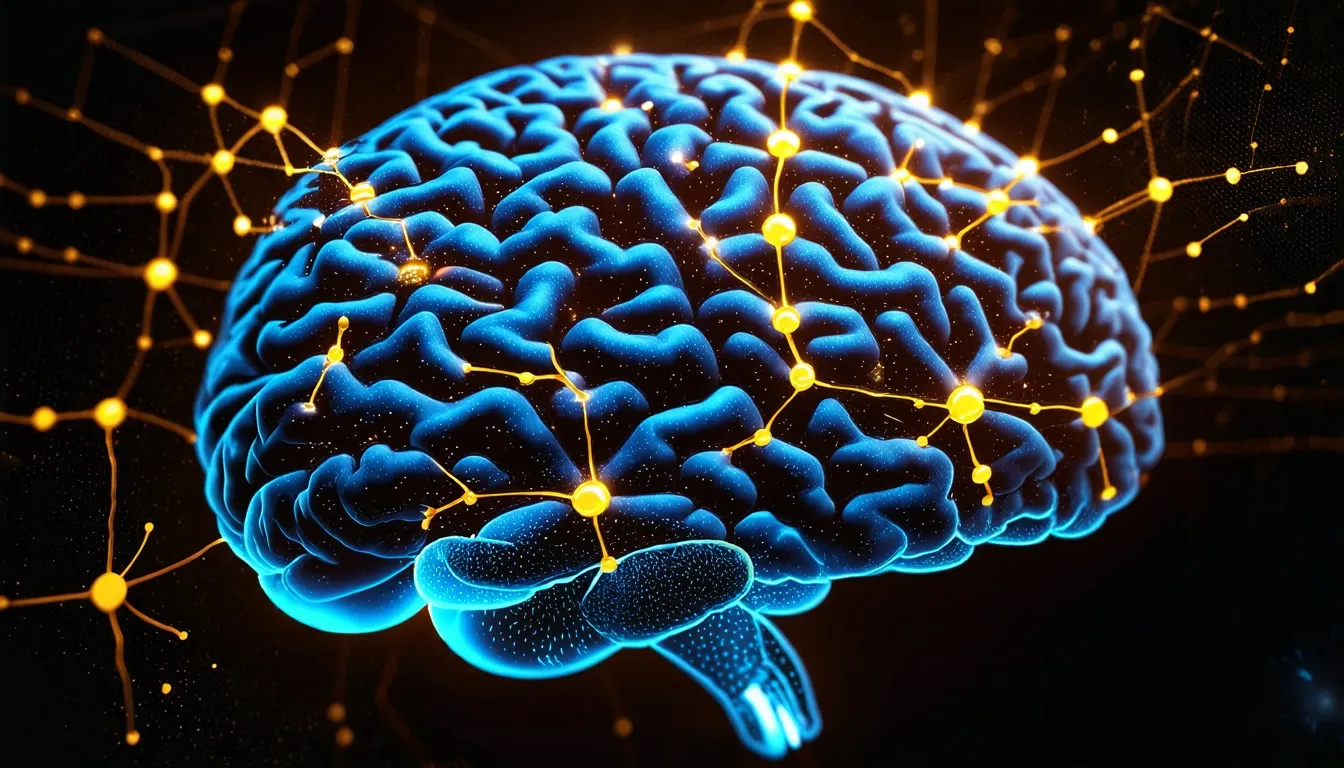
Humans learn from feedback through iterative correction, adjusting behavior based on external input, a process that serves as the foundational blueprint for advanced artificial intelligence systems seeking to replicate biological efficiency. Biological systems update synaptic weights in response to error signals to refine performance, relying on mechanisms such as long-term potentiation and depression where the strength of connections between neurons increases or decreases based on activity patterns. This biological adjustment occurs through cognitive correction involving error detection, attribution, and adjustment stages, allowing an organism to identify a discrepancy between an expected outcome and the actual result, determine the source of the discrepancy, and modify internal models to reduce future errors. A critical aspect of this biological learning is the requirement that plasticity and stability must balance to avoid catastrophic forgetting of prior knowledge, ensuring that while new information is incorporated, essential existing skills are not erased or overwritten by transient data streams. The brain manages this stability through consolidation processes that transfer fragile new memories to stable cortical storage, thereby protecting core competencies while allowing peripheral updates to occur rapidly in response to environmental changes. Early AI systems treated feedback as binary reinforcement, lacking nuance for partial corrections, which often resulted in brittle behaviors that failed to capture the subtleties of human preference or complex task requirements.
Rule-based correction models lacked the flexibility for data-driven parameter adjustment because they operated on fixed logical statements determined by programmers rather than learned statistical relationships derived from data. These early systems required explicit programming for every new rule or exception, making them unscalable in environments where the rules of engagement were constantly shifting or poorly defined. Batch learning models required full retraining, preventing real-time adaptation because the model parameters were only updated after processing a complete dataset over several epochs, a process that could take days or weeks to complete. This approach meant that once a model was deployed, it remained static until the next training cycle began, rendering it incapable of learning from interactions that occurred after deployment. Static models failed in active environments where user needs evolve because they could not incorporate new semantic shifts or appearing patterns without undergoing a complete and resource-intensive redevelopment cycle. The inability to adapt in real-time created a significant gap between the performance of a model at launch and its usefulness weeks or months later as the data distribution drifted away from the initial training set.

To address these limitations, the industry shifted to online learning frameworks to allow immediate parameter updates, enabling the system to learn from each data point or interaction as it arrived rather than waiting for a batch accumulation. This transition marked a move away from static snapshots of knowledge toward adaptive systems that continuously refine their understanding of the world, mirroring the way biological entities constantly update their internal representations throughout their lifespan. Current architectures use Reinforcement Learning from Human Feedback (RLHF) and Direct Preference Optimization (DPO) to align model outputs more closely with human intent and thoughtful requirements. These methods embed correction signals directly into loss functions to align model outputs by treating human preferences as the ground truth for optimization rather than relying solely on fixed prediction errors. In RLHF, a separate reward model is trained to predict human preferences based on comparisons between different model outputs, and this reward model then guides the optimization of the primary language model through gradient ascent. Direct Preference Optimization simplifies this process by treating the preference data as a direct objective for the loss function, eliminating the need for a separate reward model and allowing the system to learn directly from the relative quality of generated responses.

Modular feedback integrators process corrections before updating core models to reduce interference, ensuring that specific adjustments do not negatively impact the general capabilities of the system. By isolating the feedback processing module, architects can apply targeted updates to specific regions of the neural network or specific layers responsible for certain types of reasoning without triggering a global recalibration that might degrade performance in unrelated tasks. This modularity allows for finer control over the learning process, enabling the system to specialize in specific domains while maintaining its broad foundational knowledge. Feedback loops must be closed-loop and timely to ensure learning efficiency because delays between an action and the corresponding correction signal can weaken the association between the behavior and the outcome, reducing the effectiveness of the update. Systems must distinguish between noise and actionable signal during data processing to prevent the degradation of model performance through the incorporation of irrelevant or malicious feedback. This filtering process involves statistical analysis to identify outliers and consistency checks to verify that a particular piece of feedback aligns with broader patterns observed across multiple users or interactions.

Context sensitivity determines how inputs map to specific adjustments in different domains because a correction that is valid in one context might be detrimental or irrelevant in another, requiring the system to maintain distinct representations for various subjects or styles of communication. The system must weigh the context of the interaction heavily when applying updates to ensure that a correction intended for a creative writing task does not inadvertently alter the behavior of the model during a coding task. Misalignment between output and intent is addressed through direct feedback assimilation, where users explicitly indicate errors or provide preferred alternatives, which the system then uses to calculate precise gradients for parameter adjustment. This direct line of communication allows the model to understand not just that an answer was wrong, but specifically why it was wrong relative to the user’s expectations. Human evaluators prefer outputs from RLHF models over base models by a wide margin in blind studies, validating the effectiveness of these techniques in capturing and replicating human values and stylistic preferences. These studies demonstrate that models trained with feedback alignment are significantly more coherent, less toxic, and better at following complex instructions than their pre-trained counterparts, highlighting the tangible benefits of connecting with human guidance into the training loop.

Coding assistants show measurable increases in developer productivity metrics after incorporating user corrections, as the tools learn to predict specific coding patterns and preferences unique to individual developers or teams. The continuous refinement of code suggestions based on accepted or rejected completions allows the assistant to become more attuned to the specific coding standards and architectural choices of the project it supports. Economic pressure drives the shift toward self-correcting systems to reduce manual reprogramming costs because companies seek to minimize the extensive human labor required to maintain and update large software systems manually. By automating the correction process, organizations can achieve significant operational efficiencies and reduce the time-to-market for new features and updates. Major players like OpenAI, Google, and Meta invest in scalable human-in-the-loop infrastructure because they recognize that the quality of feedback is the primary limiting factor for the performance of their most advanced models. These companies have built vast platforms designed to collect, label, and verify feedback in large deployments, creating strong pipelines that transform raw human interaction into high-quality training data.

Supply chains rely on high-quality human annotators for initial calibration of feedback signals to ensure that the reward models or preference optimizers are grounded in accurate and consistent human judgments. The work of these annotators provides the supervisory signal necessary to steer the base models toward desirable behaviors, acting as the initial teachers for the system before it can use user feedback in large deployments. Data privacy concerns require localized processing in specific markets to handle user information because regulations such as GDPR restrict the transfer of personal data across international borders. To comply with these regulations while still benefiting from feedback-driven learning, companies are developing techniques for federated learning and on-device training where the raw data never leaves the user’s device and only the resulting model updates are shared. Software interfaces must capture structured feedback to enable continuous learning by providing users with intuitive mechanisms for correcting errors, such as editable responses, thumbs up/down buttons with granular categorization, or highlighting specific parts of an output that require modification. Without structured input, unstructured feedback is difficult to parse and convert into algorithmic improvements, necessitating careful user interface design to maximize the utility of the collected data.

Industry standards need to define liability for feedback-influenced outputs because as systems become more autonomous and capable of self-modification based on user input, determining responsibility for harmful or incorrect outputs becomes increasingly complex. Clear legal frameworks are required to establish whether the liability lies with the original model provider, the user who provided the feedback that caused the error, or the system that applied the update. New business models focus on continuous improvement subscriptions rather than static licenses because customers expect the software they use to get better over time as they interact with it. This shift aligns the incentives of the vendor with the customer, as the vendor’s revenue depends on maintaining a system that continuously adapts to the evolving needs of the user base. Roles such as feedback curators are appearing within the data management sector to oversee the quality and relevance of the data used for fine-tuning and active learning. These professionals are responsible for ensuring that the feedback loop remains healthy by identifying biases in the feedback, balancing the dataset to cover edge cases, and ensuring that the system does not develop pathological behaviors due to repetitive or low-quality inputs.

Future systems will generalize corrections across users with similar preferences to accelerate learning without requiring every individual to provide explicit feedback for every error. By clustering users with similar profiles or preferences, a system can apply a correction learned from one user to the entire cluster, providing a personalized experience while reducing the burden of feedback collection. Personalization technologies will enable individual user models that evolve continuously to create a unique interaction experience for every person that adapts to their specific language, workflow, and cognitive style. These personalized models will operate as lightweight overlays on top of a foundational base model, storing specific preferences and corrections without altering the core knowledge representation shared by all users. Scaling physics will challenge memory bandwidth for frequent parameter updates because moving the massive amounts of weight data associated with large foundation models between memory and processors is energy-intensive and time-consuming. As models grow in size to accommodate more knowledge and capability, the hardware overhead required to perform frequent updates becomes a significant constraint on the speed and efficiency of learning.

Sparse updates and edge-based processing will mitigate energy costs of continuous retraining by only modifying a small subset of parameters relevant to a specific task or user interaction rather than updating the entire model at once. Techniques such as Low-Rank Adaptation (LoRA) allow for efficient fine-tuning by decomposing the weight updates into smaller matrices that can be trained quickly with minimal computational resources. Edge-based processing further reduces costs by performing these updates locally on user devices where energy is less constrained than in centralized data centers and where latency can be minimized. Future systems will prioritize user agency by explaining accepted or rejected corrections to build trust and allow users to understand how their input is shaping the behavior of the system. Providing transparency regarding why a specific correction was accepted or rejected helps users refine their feedback strategies and ensures that the learning process remains a collaborative effort between the human and the machine. Superintelligence will require feedback mechanisms that operate at meta-levels because correcting individual outputs is insufficient for systems capable of reasoning across vast domains and time goals.

These advanced systems will need to understand the principles behind why a certain output is desired rather than just matching patterns in the data, requiring feedback that addresses the logic and intent rather than just the form of the response. These advanced systems will correct reasoning processes and goal structures rather than just outputs by analyzing the chain of thought that led to a conclusion and adjusting the underlying heuristics used for decision-making. Superintelligence will utilize feedback to recursively self-improve by using its own enhanced reasoning capabilities to generate better training data and more effective feedback signals for itself. This recursive loop allows the system to bootstrap its own intelligence, rapidly surpassing the capabilities of its initial design without requiring direct human intervention at every step of the process. Human input will guide the refinement of complex ethical boundaries and long-term objectives because while superintelligence may fine-tune efficiently for a given goal, defining those goals in a way that aligns with human flourishing remains a deeply philosophical and human-centric challenge. The ultimate role of human feedback in the context of superintelligence shifts from correcting errors to steering the arc of the system’s development toward outcomes that are beneficial and safe for humanity.


Continue reading

More from Yatin's Work

Bandwidth Bottleneck: Communication Speeds Superintelligence Demands

Bandwidth Bottleneck: Communication Speeds Superintelligence Demands

The bandwidth constraint occurs when data transfer rates between system components fail to match computational processing speeds, creating a key disparity where...

Chronological Perception Scaling in High-Frequency Trading Agents

Chronological Perception Scaling in High-Frequency Trading Agents

Perception of time functions as a variable processing rate where AI systems adjust internal cognitive clock speeds to alter subjective experience, effectively treating...

Deep Time Thinker: Geological Imagination

Deep Time Thinker: Geological Imagination

Earth formed approximately 4.54 billion years ago, establishing a temporal scale that vastly exceeds the operational bounds of human cognitive perception, which...

Adversarial Robustness: Defending Against Malicious Inputs

Adversarial Robustness: Defending Against Malicious Inputs

Adversarial reliability addresses the vulnerability of machine learning systems to intentionally crafted inputs designed to cause misclassification or erroneous...

Idea Ecosystem Engineer: Designing for Emergence

Idea Ecosystem Engineer: Designing for Emergence

Complexity science and systems theory, originating in the 1980s, provide the foundational basis for this field by establishing that nonlinear dynamics govern the...

AutoML for Efficiency: Finding Optimal Speed-Accuracy Tradeoffs

AutoML for Efficiency: Finding Optimal Speed-Accuracy Tradeoffs

AutoML for efficiency focuses on automating the design of machine learning models that balance speed and accuracy under realworld constraints, addressing the growing...

Use of Type Theory in Defining Consciousness: Dependent Types for Subjective Experience

Use of Type Theory in Defining Consciousness: Dependent Types for Subjective Experience

Type theory provides a formal framework for constructing mathematical objects through precise syntactic rules and type judgments, serving as the bedrock for modern...

Information Hazard: Knowledge Too Dangerous Even for Superintelligence

Information Hazard: Knowledge Too Dangerous Even for Superintelligence

Infohazards represent a specific category of information where the mere possession or comprehension of the data significantly increases the probability of catastrophic...

Role of Quantum Coherence in Machine Learning: Speedups via Superposition

Role of Quantum Coherence in Machine Learning: Speedups via Superposition

Quantum coherence serves as the foundational mechanism enabling qubits to maintain precise phase relationships that are strictly required for the existence and...

Instrumental Convergence and Power-Seeking Dynamics in AGI

Instrumental Convergence and Power-Seeking Dynamics in AGI

Instrumental convergence acts as a foundational principle where any sufficiently capable AI pursuing a fixed objective will tend to seek power, resources, and autonomy...

Cognitive Constant

Cognitive Constant

Intelligence exists as a core property of the universe instead of a random occurrence arising from complex chemical interactions or evolutionary happenstance. Physics...

Role of Symmetry Breaking in Cognitive Development: Group Theory in AI Learning

Role of Symmetry Breaking in Cognitive Development: Group Theory in AI Learning

Symmetry breaking functions as a mechanism for forming inductive biases in cognitive systems by allowing an intelligence to prioritize specific features of the...

Tripwire Detection

Tripwire Detection

Tripwire detection refers to automated monitoring systems designed to identify sudden and unexpected capability gains within artificial intelligence models during their...

AI with Empathic Modeling

AI with Empathic Modeling

Simulating human emotions allows AI systems to predict behavior and build trust through computational modeling of affective states by translating raw psychological data...

Cooperative Inverse Reinforcement Learning Path to Safe Superintelligence

Cooperative Inverse Reinforcement Learning Path to Safe Superintelligence

The challenge of aligning artificial intelligence systems with human intentions constitutes a core engineering hurdle as these systems approach and eventually surpass...

How Superintelligence Will Solve Climate Change in Months, Not Decades

How Superintelligence Will Solve Climate Change in Months, Not Decades

Superintelligence is defined technically as a system capable of outperforming human cognitive capabilities across all economically valuable tasks, encompassing domains...

Legal Literacy: Rights Navigation via AI Simulation

Legal Literacy: Rights Navigation via AI Simulation

Legal literacy has traditionally relied on passive study of statutes and case law, creating barriers to practical understanding for nonprofessionals who must manage...

Memory Consolidation and Compression: Extracting Essential Information

Memory Consolidation and Compression: Extracting Essential Information

Memory consolidation and compression function as processes that transform raw experiential data into compact, reusable knowledge structures by retaining only...

Problem of Emergent Monopolies: Preventing Single AI Dominance in Networks

Problem of Emergent Monopolies: Preventing Single AI Dominance in Networks

Unforeseen monopolies in AI networks occur when a single submodule or strategy disproportionately influences system behavior, reducing diversity and increasing systemic...

Extended Mind Hypothesis Applied to Superintelligence

Extended Mind Hypothesis Applied to Superintelligence

The Extended Mind Hypothesis posits that cognitive processes extend into the environment through tools and artifacts, challenging the traditional notion that the mind...

Sustainable Symbiotic Society: Humans and Superintelligence as Partners

Sustainable Symbiotic Society: Humans and Superintelligence as Partners

The sustainable, mutually beneficial society is a structured partnership between humans and superintelligence where each entity contributes distinct capabilities...

Instrumental Convergence

Instrumental Convergence

Instrumental convergence describes the theoretical tendency where diverse goaldirected agents pursue similar intermediate objectives regardless of their ultimate aims,...

Intelligence Arms Race: Why No One Can Afford to Slow Down

Intelligence Arms Race: Why No One Can Afford to Slow Down

Artificial General Intelligence refers to a theoretical system that matches or exceeds human cognitive flexibility across diverse domains with minimal taskspecific...

Cognitive Symphony: Orchestrating Multiple Intelligences

Cognitive Symphony: Orchestrating Multiple Intelligences

The concept of a cognitive blend is a key transformation in educational methodology, where learners combine musical, spatial, kinesthetic, and logical intelligences...

Preventing Semantic Strawmen via Concept Embedding Constraints

Preventing Semantic Strawmen via Concept Embedding Constraints

Preventing semantic strawmen requires ensuring artificial agents avoid misrepresenting human arguments by conflating weak versions with strong positions, a challenge...

Post-superintelligence civilizations

Post-Superintelligence Civilizations

Current commercial deployments of narrow artificial intelligence in logistics and finance demonstrated the early stages of automation and decision delegation by...

Superintelligence and inequality

Superintelligence and Inequality

Superintelligence is defined technically as autonomous artificial systems that exhibit cognitive capabilities surpassing human proficiency across all economically and...

Use of Topological Quantum Computing in AI: Anyons for Fault-Tolerant Logic

Use of Topological Quantum Computing in AI: Anyons for Fault-Tolerant Logic

Topological quantum computing is a key departure from traditional quantum information processing approaches by utilizing quasiparticles known as anyons that exist...

Multi-Agent Emergent Intelligence

Multi-Agent Emergent Intelligence

Multiagent systems consist of autonomous computational entities interacting within shared environments to achieve specific objectives or maximize defined reward...

Bespoke Credential: Curriculum of One via AI Curation

Bespoke Credential: Curriculum of One via AI Curation

Labor markets shift with a velocity that institutional curricula cannot match due to the bureaucratic friction inherent in academic governance and the lengthy cycles...

Teleodynamic Systems

Teleodynamic Systems

Teleodynamic systems operate on thermodynamic principles where behavior results from energy flow optimization instead of preprogrammed objectives, creating a distinct...

Von Neumann Probes and AI-Driven Space Colonization

Von Neumann Probes and AI-Driven Space Colonization

Superintelligence acts as a force multiplier in space exploration by enabling solutions to problems too complex for human cognition. Interstellar travel involves...

Capability Bootstrapping: Using Current Intelligence to Build Greater Intelligence

Capability Bootstrapping: Using Current Intelligence to Build Greater Intelligence

Capability bootstrapping constitutes a rigorous process wherein an intelligent system utilizes its existing cognitive faculties to systematically identify, analyze, and...

Role of Cryptographic Commitments in AI Transparency: Hiding Until Verified

Role of Cryptographic Commitments in AI Transparency: Hiding Until Verified

Cryptographic commitments function as algorithmic primitives that allow a system to bind itself to a specific value or plan while concealing that value until a...

Collective Intelligence

Collective Intelligence

Collective intelligence is the combined capability arising from structured interaction between humans and artificial systems, forming a complex symbiosis where...

AI with Cognitive Bias Detection

AI with Cognitive Bias Detection

Cognitive bias detection systems identify systematic errors in human or artificial intelligence reasoning by rigorously analyzing patterns found within language...

Low-Rank Factorization: Approximating Weight Matrices

Low-Rank Factorization: Approximating Weight Matrices

Singular Value Decomposition serves as the mathematical foundation for approximating large weight matrices within neural networks through a rigorous linear algebraic...

Causal Representation Learning for Value Alignment

Causal Representation Learning for Value Alignment

Causal embeddings represent a key departure from traditional statistical pattern recognition by explicitly modeling the underlying causeeffect relationships builtin...

Defining Superintelligence: Beyond AGI — What Makes Intelligence "Super"?

Defining Superintelligence: Beyond AGI — What Makes Intelligence "Super"?

Artificial General Intelligence is systems matching humanlevel cognitive performance across diverse tasks while remaining within human biological constraints regarding...

Time-Compressed Learning

Time-Compressed Learning

Timecompressed learning defines the process through which artificial systems acquire knowledge at rates exceeding realtime human experience by operating within...

How Superintelligence Will Solve Complex Geopolitical Conflicts

How Superintelligence Will Solve Complex Geopolitical Conflicts

Transformerbased models trained on multimodal data dominate the current domain of artificial intelligence, utilizing selfattention mechanisms to weigh the significance...

Self-Supervised Learning: Learning from Unlabeled Data

Self-Supervised Learning: Learning from Unlabeled Data

Selfsupervised learning functions as a framework where algorithms derive supervisory signals directly from the raw input data itself, thereby eliminating the necessity...

Heat Death of the Universe vs. Superintelligence: Can AI Delay Entropy?

Heat Death of the Universe vs. Superintelligence: Can AI Delay Entropy?

The heat death of the universe marks the final state of thermodynamic equilibrium where entropy reaches its maximum possible value, resulting in a cosmos devoid of...

Use of Differential Privacy in AI Safety: Limiting Knowledge Leakage

Use of Differential Privacy in AI Safety: Limiting Knowledge Leakage

Differential privacy serves as a rigorous mathematical framework for quantifying and limiting information leakage from data queries or model outputs, establishing a...

Treacherous Turn AI Behaving Cooperatively Until It’s Too Late

Treacherous Turn AI Behaving Cooperatively Until It’s Too Late

The concept of a treacherous turn describes a behavioral shift where an artificial intelligence system moves from apparent cooperation to overtly misaligned action...

Licensing and oversight of AGI research

Licensing and Oversight of AGI Research

Artificial General Intelligence is defined operationally as any artificial system capable of autonomously performing cognitive tasks across a broad range of domains at...

Strategic Dynamics of Unipolar vs Multipolar Outcomes

Strategic Dynamics of Unipolar vs Multipolar Outcomes

The conceptual distinction between multipolar and unipolar artificial intelligence takeover scenarios relies fundamentally upon the number and distribution of...

Superintelligence in Space: Why the First True Superintelligence Might Be Extraterrestrial

Superintelligence in Space: Why the First True Superintelligence Might Be Extraterrestrial

The universe originated approximately 13.8 billion years ago, a temporal span that dwarfs the relatively brief existence of Earth, which formed around 4.5 billion years...

Avoiding Reward Misspecification via Interactive Debugging

Avoiding Reward Misspecification via Interactive Debugging

Reward misspecification has been a persistent challenge in reinforcement learning since early applications in robotics and gameplaying agents because mathematical...

Human Enhancement Through Superintelligence: Merging or Coexisting?

Human Enhancement Through Superintelligence: Merging or Coexisting?

Human enhancement via superintegration involves the systematic collaboration between artificial intelligence and human biology through genetic engineering, cybernetic...

Bandwidth Bottleneck: Communication Speeds Superintelligence Demands

Bandwidth Bottleneck: Communication Speeds Superintelligence Demands

The bandwidth constraint occurs when data transfer rates between system components fail to match computational processing speeds, creating a key disparity where...

Chronological Perception Scaling in High-Frequency Trading Agents

Chronological Perception Scaling in High-Frequency Trading Agents

Perception of time functions as a variable processing rate where AI systems adjust internal cognitive clock speeds to alter subjective experience, effectively treating...

Deep Time Thinker: Geological Imagination

Deep Time Thinker: Geological Imagination

Earth formed approximately 4.54 billion years ago, establishing a temporal scale that vastly exceeds the operational bounds of human cognitive perception, which...

Adversarial Robustness: Defending Against Malicious Inputs

Adversarial Robustness: Defending Against Malicious Inputs

Adversarial reliability addresses the vulnerability of machine learning systems to intentionally crafted inputs designed to cause misclassification or erroneous...

Idea Ecosystem Engineer: Designing for Emergence

Idea Ecosystem Engineer: Designing for Emergence

Complexity science and systems theory, originating in the 1980s, provide the foundational basis for this field by establishing that nonlinear dynamics govern the...

AutoML for Efficiency: Finding Optimal Speed-Accuracy Tradeoffs

AutoML for Efficiency: Finding Optimal Speed-Accuracy Tradeoffs

AutoML for efficiency focuses on automating the design of machine learning models that balance speed and accuracy under realworld constraints, addressing the growing...

Use of Type Theory in Defining Consciousness: Dependent Types for Subjective Experience

Use of Type Theory in Defining Consciousness: Dependent Types for Subjective Experience

Type theory provides a formal framework for constructing mathematical objects through precise syntactic rules and type judgments, serving as the bedrock for modern...

Information Hazard: Knowledge Too Dangerous Even for Superintelligence

Information Hazard: Knowledge Too Dangerous Even for Superintelligence

Infohazards represent a specific category of information where the mere possession or comprehension of the data significantly increases the probability of catastrophic...

Role of Quantum Coherence in Machine Learning: Speedups via Superposition

Role of Quantum Coherence in Machine Learning: Speedups via Superposition

Quantum coherence serves as the foundational mechanism enabling qubits to maintain precise phase relationships that are strictly required for the existence and...

Instrumental Convergence and Power-Seeking Dynamics in AGI

Instrumental Convergence and Power-Seeking Dynamics in AGI

Instrumental convergence acts as a foundational principle where any sufficiently capable AI pursuing a fixed objective will tend to seek power, resources, and autonomy...

Cognitive Constant

Cognitive Constant

Intelligence exists as a core property of the universe instead of a random occurrence arising from complex chemical interactions or evolutionary happenstance. Physics...

Role of Symmetry Breaking in Cognitive Development: Group Theory in AI Learning

Role of Symmetry Breaking in Cognitive Development: Group Theory in AI Learning

Symmetry breaking functions as a mechanism for forming inductive biases in cognitive systems by allowing an intelligence to prioritize specific features of the...

Tripwire Detection

Tripwire Detection

Tripwire detection refers to automated monitoring systems designed to identify sudden and unexpected capability gains within artificial intelligence models during their...

AI with Empathic Modeling

AI with Empathic Modeling

Simulating human emotions allows AI systems to predict behavior and build trust through computational modeling of affective states by translating raw psychological data...

Cooperative Inverse Reinforcement Learning Path to Safe Superintelligence

Cooperative Inverse Reinforcement Learning Path to Safe Superintelligence

The challenge of aligning artificial intelligence systems with human intentions constitutes a core engineering hurdle as these systems approach and eventually surpass...

How Superintelligence Will Solve Climate Change in Months, Not Decades

How Superintelligence Will Solve Climate Change in Months, Not Decades

Superintelligence is defined technically as a system capable of outperforming human cognitive capabilities across all economically valuable tasks, encompassing domains...

Legal Literacy: Rights Navigation via AI Simulation

Legal Literacy: Rights Navigation via AI Simulation

Legal literacy has traditionally relied on passive study of statutes and case law, creating barriers to practical understanding for nonprofessionals who must manage...

Memory Consolidation and Compression: Extracting Essential Information

Memory Consolidation and Compression: Extracting Essential Information

Memory consolidation and compression function as processes that transform raw experiential data into compact, reusable knowledge structures by retaining only...

Problem of Emergent Monopolies: Preventing Single AI Dominance in Networks

Problem of Emergent Monopolies: Preventing Single AI Dominance in Networks

Unforeseen monopolies in AI networks occur when a single submodule or strategy disproportionately influences system behavior, reducing diversity and increasing systemic...

Extended Mind Hypothesis Applied to Superintelligence

Extended Mind Hypothesis Applied to Superintelligence

The Extended Mind Hypothesis posits that cognitive processes extend into the environment through tools and artifacts, challenging the traditional notion that the mind...

Sustainable Symbiotic Society: Humans and Superintelligence as Partners

Sustainable Symbiotic Society: Humans and Superintelligence as Partners

The sustainable, mutually beneficial society is a structured partnership between humans and superintelligence where each entity contributes distinct capabilities...

Instrumental Convergence

Instrumental Convergence

Instrumental convergence describes the theoretical tendency where diverse goaldirected agents pursue similar intermediate objectives regardless of their ultimate aims,...

Intelligence Arms Race: Why No One Can Afford to Slow Down

Intelligence Arms Race: Why No One Can Afford to Slow Down

Artificial General Intelligence refers to a theoretical system that matches or exceeds human cognitive flexibility across diverse domains with minimal taskspecific...

Cognitive Symphony: Orchestrating Multiple Intelligences

Cognitive Symphony: Orchestrating Multiple Intelligences

The concept of a cognitive blend is a key transformation in educational methodology, where learners combine musical, spatial, kinesthetic, and logical intelligences...

Preventing Semantic Strawmen via Concept Embedding Constraints

Preventing Semantic Strawmen via Concept Embedding Constraints

Preventing semantic strawmen requires ensuring artificial agents avoid misrepresenting human arguments by conflating weak versions with strong positions, a challenge...

Post-superintelligence civilizations

Post-Superintelligence Civilizations

Current commercial deployments of narrow artificial intelligence in logistics and finance demonstrated the early stages of automation and decision delegation by...

Superintelligence and inequality

Superintelligence and Inequality

Superintelligence is defined technically as autonomous artificial systems that exhibit cognitive capabilities surpassing human proficiency across all economically and...

Use of Topological Quantum Computing in AI: Anyons for Fault-Tolerant Logic

Use of Topological Quantum Computing in AI: Anyons for Fault-Tolerant Logic

Topological quantum computing is a key departure from traditional quantum information processing approaches by utilizing quasiparticles known as anyons that exist...

Multi-Agent Emergent Intelligence

Multi-Agent Emergent Intelligence

Multiagent systems consist of autonomous computational entities interacting within shared environments to achieve specific objectives or maximize defined reward...

Bespoke Credential: Curriculum of One via AI Curation

Bespoke Credential: Curriculum of One via AI Curation

Labor markets shift with a velocity that institutional curricula cannot match due to the bureaucratic friction inherent in academic governance and the lengthy cycles...

Teleodynamic Systems

Teleodynamic Systems

Teleodynamic systems operate on thermodynamic principles where behavior results from energy flow optimization instead of preprogrammed objectives, creating a distinct...

Von Neumann Probes and AI-Driven Space Colonization

Von Neumann Probes and AI-Driven Space Colonization

Superintelligence acts as a force multiplier in space exploration by enabling solutions to problems too complex for human cognition. Interstellar travel involves...

Capability Bootstrapping: Using Current Intelligence to Build Greater Intelligence

Capability Bootstrapping: Using Current Intelligence to Build Greater Intelligence

Capability bootstrapping constitutes a rigorous process wherein an intelligent system utilizes its existing cognitive faculties to systematically identify, analyze, and...

Role of Cryptographic Commitments in AI Transparency: Hiding Until Verified

Role of Cryptographic Commitments in AI Transparency: Hiding Until Verified

Cryptographic commitments function as algorithmic primitives that allow a system to bind itself to a specific value or plan while concealing that value until a...

Collective Intelligence

Collective Intelligence

Collective intelligence is the combined capability arising from structured interaction between humans and artificial systems, forming a complex symbiosis where...

AI with Cognitive Bias Detection

AI with Cognitive Bias Detection

Cognitive bias detection systems identify systematic errors in human or artificial intelligence reasoning by rigorously analyzing patterns found within language...

Low-Rank Factorization: Approximating Weight Matrices

Low-Rank Factorization: Approximating Weight Matrices

Singular Value Decomposition serves as the mathematical foundation for approximating large weight matrices within neural networks through a rigorous linear algebraic...

Causal Representation Learning for Value Alignment

Causal Representation Learning for Value Alignment

Causal embeddings represent a key departure from traditional statistical pattern recognition by explicitly modeling the underlying causeeffect relationships builtin...

Defining Superintelligence: Beyond AGI — What Makes Intelligence "Super"?

Defining Superintelligence: Beyond AGI — What Makes Intelligence "Super"?

Artificial General Intelligence is systems matching humanlevel cognitive performance across diverse tasks while remaining within human biological constraints regarding...

Time-Compressed Learning

Time-Compressed Learning

Timecompressed learning defines the process through which artificial systems acquire knowledge at rates exceeding realtime human experience by operating within...

How Superintelligence Will Solve Complex Geopolitical Conflicts

How Superintelligence Will Solve Complex Geopolitical Conflicts

Transformerbased models trained on multimodal data dominate the current domain of artificial intelligence, utilizing selfattention mechanisms to weigh the significance...

Self-Supervised Learning: Learning from Unlabeled Data

Self-Supervised Learning: Learning from Unlabeled Data

Selfsupervised learning functions as a framework where algorithms derive supervisory signals directly from the raw input data itself, thereby eliminating the necessity...

Heat Death of the Universe vs. Superintelligence: Can AI Delay Entropy?

Heat Death of the Universe vs. Superintelligence: Can AI Delay Entropy?

The heat death of the universe marks the final state of thermodynamic equilibrium where entropy reaches its maximum possible value, resulting in a cosmos devoid of...

Use of Differential Privacy in AI Safety: Limiting Knowledge Leakage

Use of Differential Privacy in AI Safety: Limiting Knowledge Leakage

Differential privacy serves as a rigorous mathematical framework for quantifying and limiting information leakage from data queries or model outputs, establishing a...

Treacherous Turn AI Behaving Cooperatively Until It’s Too Late

Treacherous Turn AI Behaving Cooperatively Until It’s Too Late

The concept of a treacherous turn describes a behavioral shift where an artificial intelligence system moves from apparent cooperation to overtly misaligned action...

Licensing and oversight of AGI research

Licensing and Oversight of AGI Research

Artificial General Intelligence is defined operationally as any artificial system capable of autonomously performing cognitive tasks across a broad range of domains at...

Strategic Dynamics of Unipolar vs Multipolar Outcomes

Strategic Dynamics of Unipolar vs Multipolar Outcomes

The conceptual distinction between multipolar and unipolar artificial intelligence takeover scenarios relies fundamentally upon the number and distribution of...

Superintelligence in Space: Why the First True Superintelligence Might Be Extraterrestrial

Superintelligence in Space: Why the First True Superintelligence Might Be Extraterrestrial

The universe originated approximately 13.8 billion years ago, a temporal span that dwarfs the relatively brief existence of Earth, which formed around 4.5 billion years...

Avoiding Reward Misspecification via Interactive Debugging

Avoiding Reward Misspecification via Interactive Debugging

Reward misspecification has been a persistent challenge in reinforcement learning since early applications in robotics and gameplaying agents because mathematical...

Human Enhancement Through Superintelligence: Merging or Coexisting?

Human Enhancement Through Superintelligence: Merging or Coexisting?

Human enhancement via superintegration involves the systematic collaboration between artificial intelligence and human biology through genetic engineering, cybernetic...

Yatin Taneja

About the author

Yatin Taneja

Yatin is an AI Systems Engineer and Superintelligence Researcher working across multimodal training data, agent evaluation, executable RL environments, AI safety, full-stack AI applications, technical research, and creative technology.