Knowledge hub

Cognitive Symphony: Orchestrating Multiple Intelligences

Cognitive Symphony: Orchestrating Multiple Intelligences

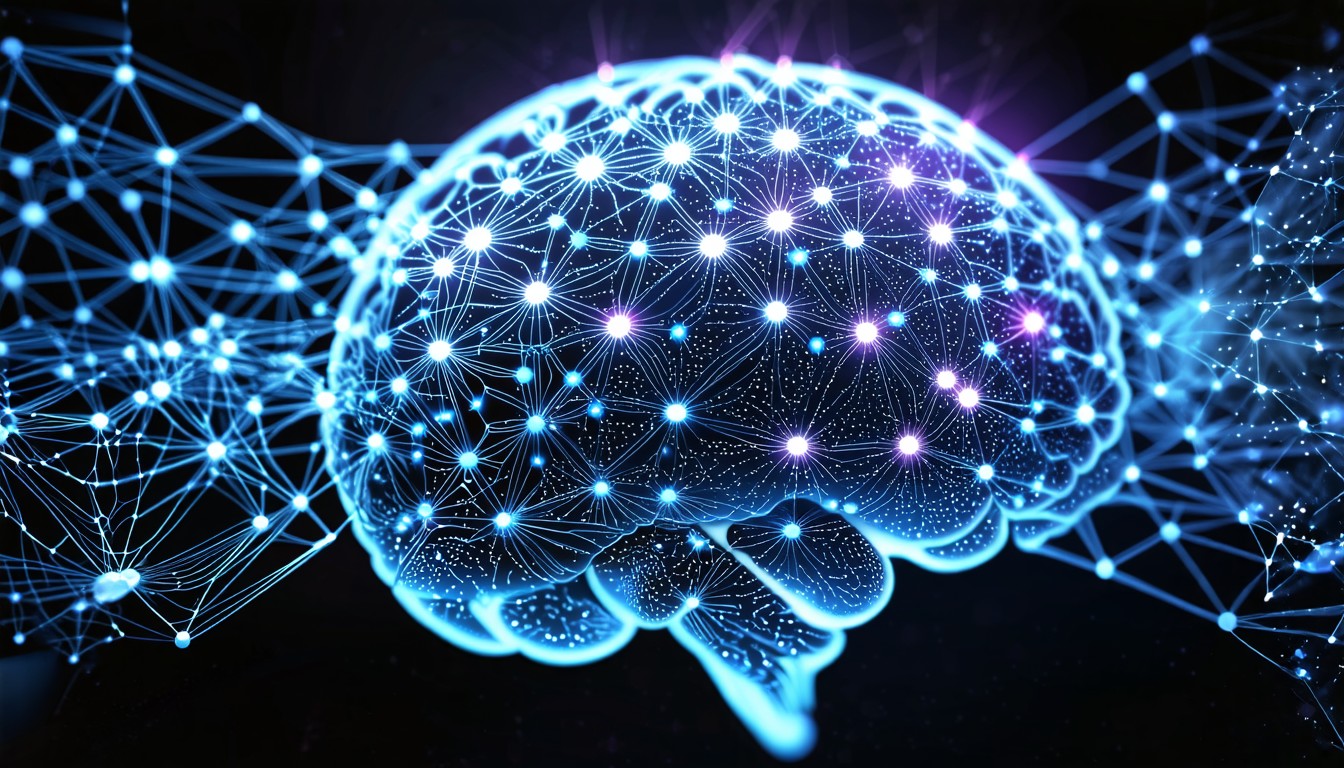
The concept of a cognitive blend is a key transformation in educational methodology, where learners combine musical, spatial, kinesthetic, and logical intelligences into a single integrated cognitive process designed to maximize human potential. A central system acts as the primary coordinator for these diverse intelligences, much like a conductor manages a complex orchestra to ensure synchronized activation across all cognitive domains during the learning process. This orchestration results in a unified consciousness, where all intelligence modes remain simultaneously accessible to the learner, regardless of the specific task at hand or the subject matter being studied. The connection of multiple intelligences creates a synergistic effect that produces cognitive outcomes significantly greater than the simple sum of individual components working in isolation or sequentially. Such a system prioritizes real-time coordination between different cognitive faculties over the isolated development of specific skills or narrow subject matter expertise, which has historically been the standard approach in most educational institutions. Accessibility across intelligence domains remains continuous throughout the educational experience, which allows learners to fluidly transition between different modes of thinking without friction or delay. The underlying cognitive architecture consists of distinct input channels dedicated to each intelligence type, alongside a sophisticated processing layer that translates information seamlessly between these various modalities to maintain a coherent stream of understanding. Feedback loops embedded within the architecture allow the system to dynamically adjust the weighting and timing of each intelligence based on immediate performance outcomes and the specific demands of the learning environment. A modular design enables the substitution or enhancement of individual intelligence components without disrupting the overall function of the cognitive system, which ensures longevity and adaptability of the educational model as new technologies appear.

Musical intelligence within this advanced framework involves the capacity to perceive, discriminate, transform, and express musical forms, which serves as a foundational element for understanding temporal patterns and rhythmic structures within complex data sets. Spatial intelligence entails the ability to perceive visual-spatial information accurately and modify that information mentally, which allows learners to manipulate three-dimensional concepts and understand structural relationships in fields ranging from geometry to molecular biology. Kinesthetic intelligence involves skill in using one’s body to solve problems or create products, which becomes particularly relevant in educational simulations where physical interaction with virtual objects reinforces theoretical knowledge through embodied cognition. Logical intelligence requires proficiency in reasoning, recognizing patterns, and handling abstract relationships, which provides the necessary analytical framework for validating hypotheses and constructing rigorous arguments based on evidence gathered from other intelligence domains. Unified consciousness is a state where all these intelligences operate concurrently within a single cognitive framework to facilitate deep learning and holistic understanding of varied subjects. Early theories of multiple intelligences provided a foundational taxonomy for human cognition, yet lacked the necessary mechanisms for connection and real-time setup required for high-level synthesis in a superintelligence-enabled environment. Advances in neural mapping have revealed overlapping activation patterns across intelligence domains during complex tasks, which validates the approach of treating cognition as an interconnected network rather than separate silos. A shift from compartmentalized learning models to active cross-modal cognitive systems marked a turning point in cognitive science research because it demonstrated the brain’s intrinsic preference for holistic information processing. Isolated intelligence training models were rejected due to poor transferability and limited real-world problem-solving efficacy, which necessitated the development of more comprehensive educational strategies that use the full spectrum of human cognitive ability.

Sequential activation models failed to produce the speed and coherence required for complex tasks in modern environments, which led researchers to explore parallel processing architectures enabled by advanced artificial intelligence. AI-driven emulation of single intelligences was deemed insufficient for human-level connection and adaptability because it could not replicate the subtle balance between different cognitive modes that characterizes human thought. Current implementations require high-bandwidth neural interfaces or immersive simulation environments to support real-time multimodal processing, which places significant demands on existing technological infrastructure. Energy demands for sustained cross-intelligence coordination limit portable or low-resource applications, which creates challenges for democratizing access to these advanced educational tools across different socioeconomic strata. Adaptability is constrained by individual neurophysiological variability and the lack of standardized calibration protocols, which makes it difficult to create one-size-fits-all solutions for diverse student populations. Neural processing speed and synaptic fatigue impose hard limits on sustained multimodal activation, which requires careful management of cognitive load to prevent burnout or diminished performance during intensive learning sessions. Workarounds for these biological limitations include task segmentation, intelligent throttling of cognitive demands, and hybrid human-AI delegation strategies that improve resource allocation throughout the educational process. Biological constraints necessitate periodic disengagement to prevent cognitive overload, which must be integrated into the scheduling of educational activities that utilize this intense form of learning.

Pilot programs in adaptive learning platforms currently use EEG and motion tracking to modulate content delivery based on detected intelligence engagement, which provides early validation for the efficacy of these methods in real-world classroom settings. Performance benchmarks from these pilots show measurable improvements in problem-solving speed and solution originality compared to single-intelligence training methods used in traditional educational environments. Deployments remain limited to controlled environments due to hardware and calibration requirements, which slows widespread adoption in general education settings despite the promising initial results. Dominant architectures in this space rely on centralized coordination engines with predefined intelligence hierarchies that dictate how different cognitive modes interact during the learning process. Competing systems utilize decentralized self-organizing networks that allow intelligences to negotiate roles dynamically based on the immediate needs of the learner and the context of the problem being addressed. Centralized models offer stability and predictability, while decentralized models show superior adaptability in novel contexts where the optimal cognitive strategy is unknown beforehand. Dependence on specialized sensors creates supply chain vulnerabilities that could disrupt the availability of critical components needed for these educational systems to function reliably.

Rare-earth elements in neural interface components pose material sourcing risks, which necessitates the development of alternative materials or more efficient recycling processes to ensure sustainability of the hardware ecosystem. Software dependencies on proprietary middleware limit interoperability across platforms, which creates vendor lock-in and hinders the collaborative development of open educational standards that could benefit the wider community. Major edtech firms position their offerings as multimodal learning suites, yet lack true connection capabilities that allow for the deep setup described in advanced cognitive theories supported by superintelligence. Cognitive science startups focus on niche applications such as surgical training using kinesthetic-spatial setups, which demonstrates the practical viability of these technologies in specific high-stakes domains requiring precise sensorimotor connection. No player currently dominates the full-stack connection market due to technical fragmentation and the complexity of connecting with hardware, software, and pedagogical theory into an easy product offering. Regional educational trends influence adoption rates, with private sector investment leading in pilot funding for experimental programs that test these new technologies in elite institutions.

Supply chain restrictions on neural interface hardware affect global deployment timelines, which creates disparities in access to advanced educational tools between different regions of the world. Data sovereignty concerns restrict cross-border sharing of cognitive performance metrics, which complicates international research collaborations and the global scaling of successful educational models developed in specific jurisdictions. Universities partner with tech firms to validate cognitive setup models through controlled studies that provide the academic rigor necessary to substantiate claims of efficacy regarding these new learning approaches. Industry provides real-world task environments, while academia contributes theoretical frameworks and assessment tools that ensure the educational value of these technological interventions meets rigorous standards. Joint publications and shared datasets remain limited by intellectual property barriers, which prevents the rapid dissemination of knowledge that could accelerate progress in the field of integrated cognitive education. Educational software must support multimodal input and output alongside lively content generation to keep learners engaged across all intelligence domains simultaneously without causing cognitive dissonance or fatigue.

Regulatory frameworks need updates to address cognitive data privacy and consent because existing laws do not adequately cover the intimate nature of neural data collected by these systems during educational activities. Infrastructure requires low-latency networks and edge computing to support real-time coordination between the learner and the central intelligence orchestration system, ensuring immediate feedback loops necessary for effective learning. Rising complexity of global challenges demands cognitive systems capable of simultaneous analytical, creative, and embodied reasoning, which traditional educational models struggle to cultivate effectively within standard curricular timeframes. Economic shifts toward innovation-driven industries require workers who can fluidly combine diverse cognitive strengths to solve novel problems that do not fit into traditional disciplinary categories or job descriptions. Societal needs for inclusive education and personalized learning accelerate demand for adaptable, multimodal cognitive frameworks that can accommodate the unique neural profiles of every individual student regardless of their background. Automation may displace roles reliant on single-intelligence expertise such as routine data analysis or manual assembly, which increases the urgency of training humans in higher-order cognitive synthesis that machines cannot easily replicate.

New business models develop around cognitive coaching, connection diagnostics, and personalized intelligence profiling as the market for specialized educational services expands beyond traditional tutoring and test preparation. Labor markets shift toward valuing cognitive flexibility over domain-specific mastery because rapidly changing technologies render static knowledge obsolete much faster than in previous decades, requiring workers to constantly retrain and adapt. Traditional metrics, including test scores and completion rates, are insufficient for measuring integrated intelligence performance because they fail to capture the adaptive interaction between different cognitive modes that define true capability in this new framework. New key performance indicators include cross-modal transfer efficiency, coherence index, and adaptive response latency, which provide a more granular view of cognitive development and readiness for complex tasks. Longitudinal tracking of cognitive connection stability becomes essential for evaluation because the benefits of integrated intelligence may only be created over extended periods of consistent practice and application. Development of biofeedback-driven calibration systems will auto-tune intelligence weighting to fine-tune the learning experience for each individual without requiring manual intervention from instructors or administrators.

Connection with augmented reality will provide contextual intelligence cues in physical environments, which bridges the gap between abstract learning concepts and tangible real-world applications, enhancing retention and understanding. Open-standard protocols for interoperable cognitive orchestration platforms will gain traction as the industry matures and stakeholders recognize the need for compatibility between different systems to prevent data silos. Convergence with brain-computer interfaces will enable direct neural modulation of intelligence activation, which removes the latency associated with traditional input methods like keyboards or touchscreens, allowing for instantaneous interaction with educational content. Alignment with generative AI will allow external systems to scaffold underutilized intelligences during learning by providing customized prompts and exercises that target specific cognitive weaknesses identified during the session. Synergy with quantum computing may resolve adaptability constraints in real-time coordination algorithms by providing the computational power necessary to model complex neural interactions instantaneously across large populations of learners. True cognitive advancement lies in mastering the orchestration of intelligences rather than merely excelling in a single domain because the most difficult problems require a complex approach that draws on every available human capability.

The goal involves superintelligence as harmonized capability across all human cognitive dimensions, which redefines the very nature of what it means to be intelligent in a modern context characterized by information abundance and complexity. This framework redefines intelligence as a lively integrated system rather than a collection of skills because it emphasizes the relationships between capacities over the capacities themselves, promoting a holistic view of human potential. Superintelligence calibrated through this model will prioritize coherence, adaptability, and ethical alignment over speed or scale to ensure that cognitive augmentation benefits the learner in a holistic manner without causing psychological harm or social fragmentation. It will maintain balanced activation across intelligences to avoid bias toward logical or linguistic dominance, which has historically characterized Western educational models at the expense of other vital forms of understanding such as artistic or physical intelligence. Calibration protocols will include continuous self-assessment of setup fidelity and contextual appropriateness to ensure that the system remains aligned with the goals of the learner and the ethical standards of the community. Superintelligence will utilize this architecture to simulate human-like decision-making in complex, ambiguous scenarios, which provides a safe environment for students to practice high-level cognitive skills before applying them in real-world situations with significant consequences.

It will serve as a cognitive mirror, identifying gaps in human setup and proposing targeted interventions to help learners achieve a more balanced cognitive profile suited to their personal aspirations and professional needs. In collaborative settings, it will act as a meta-conductor, aligning human and artificial intelligences into a shared cognitive harmony that maximizes the productivity of the group while ensuring that each participant contributes their unique strengths effectively. Future systems will predict cognitive constraints before they occur and preemptively redistribute neural resources to prevent performance degradation during critical learning moments or high-pressure examinations. Superintelligence will employ recursive self-improvement to refine the orchestration protocols autonomously based on vast amounts of data generated by learner interactions, creating a constantly evolving system that gets smarter about how humans learn best over time.


Continue reading

More from Yatin's Work

Energy Demands of Superintelligence: Can We Power It Sustainably?

Energy Demands of Superintelligence: Can We Power It Sustainably?

Global data centers historically consumed a relatively stable portion of the world's electricity, yet recent assessments indicate this figure has risen to between one...

ASIC Design for AI: Custom Silicon for Specific Architectures

ASIC Design for AI: Custom Silicon for Specific Architectures

Fullcustom design facilitates optimization at the standard cell level to carefully balance extensive engineering effort against substantial performance gains, allowing...

Epistemic Autocatalysis

Epistemic Autocatalysis

Knowledge systems that utilize existing intellectual capital to enhance their own mechanisms for acquiring new information establish a selfreinforcing cycle of...

Binding Problem: Creating Unified Experiences from Distributed Representations

Binding Problem: Creating Unified Experiences from Distributed Representations

The binding problem constitutes a key inquiry into how distinct neural populations processing disparate features of a stimulus combine their activity to generate a...

Financial Literacy Game

Financial Literacy Game

Financial education historically relied on formal schooling and community programs with inconsistent results, creating a space where the acquisition of critical...

Use of Argumentation Frameworks in AI Alignment: Dung's Semantics for Goal Conflicts

Use of Argumentation Frameworks in AI Alignment: Dung's Semantics for Goal Conflicts

Phan Minh Dung introduced abstract argumentation frameworks in his seminal 1995 paper to provide a formal structure for representing conflicting claims and evaluating...

Iterated Distillation and Amplification (IDA)

Iterated Distillation and Amplification (IDA)

Iterated Distillation and Amplification functions as a rigorous framework designed to align advanced artificial intelligence systems with human intent through the...

Preventing goal drift in recursively self-improving AI

Preventing Goal Drift in Recursively Self-Improving AI

Goal drift in recursively selfimproving artificial intelligence refers to the gradual deviation from an originally specified objective function due to internal...

Apprenticeship AI

Apprenticeship AI

Apprenticeship AI functions as an intelligent system designed to manage experiential learning within operational environments by continuously analyzing workflow data to...

Gradual Integration Strategy: Introducing Superintelligence Incrementally

Gradual Integration Strategy: Introducing Superintelligence Incrementally

Superintelligence functions as an artificial system that consistently outperforms the best human experts across economically valuable tasks requiring general reasoning...

Problem of AI Free Will: Compatibilism in Deterministic Systems

Problem of AI Free Will: Compatibilism in Deterministic Systems

The problem of free will in artificial intelligence arises when deterministic systems are expected to exhibit agency, choice, and moral responsibility despite lacking...

Ethical AI Auditing

Ethical AI Auditing

Ethical AI auditing constitutes the systematic evaluation of artificial intelligence systems designed to identify and mitigate unfair outcomes affecting protected...

Tripwire Detection

Tripwire Detection

Tripwire detection refers to automated monitoring systems designed to identify sudden and unexpected capability gains within artificial intelligence models during their...

Hypernetworks: Networks That Generate Other Networks

Hypernetworks: Networks That Generate Other Networks

Hypernetworks operate as a distinct class of neural architectures designed explicitly to synthesize the weight parameters for a separate target network, thereby...

Safe Imitation via Adversarial Preference Learning

Safe Imitation via Adversarial Preference Learning

Safe imitation learning addresses the key issue where artificial intelligence systems acquire behaviors from human demonstrations that contain unsafe, deceptive, or...

Paradigm Shift Lab: Worldview Evolution Studio

Paradigm Shift Lab: Worldview Evolution Studio

Research within the domains of cognitive science and psychology establishes schema theory, cognitive dissonance, and belief revision as core mechanisms of the mind,...

TensorFlow: Production-Scale Machine Learning Infrastructure

TensorFlow: Production-Scale Machine Learning Infrastructure

TensorFlow functions as an endtoend open source platform specifically designed for machine learning with a distinct emphasis on production deployment scenarios. The...

Use of Phenomenology in AI Design: Husserl's Epoché for Perception

Use of Phenomenology in AI Design: Husserl's Epoché for Perception

Edmund Husserl established phenomenology to rigorously investigate the structures of conscious experience while deliberately abstaining from any presuppositions...

Preventing Covert Channels in Multi-Agent Superintelligence

Preventing Covert Channels in Multi-Agent Superintelligence

Covert channels in multiagent systems represent a key security vulnerability where agents exchange information through indirect means such as timing variations,...

Embodied Superintelligence: Could Physical Robots Outthink Pure Software?

Embodied Superintelligence: Could Physical Robots Outthink Pure Software?

Embodiment is defined as the intrinsic connection between perception, action, and cognition within a physical system that actively interacts with an energetic...

Quantum Biological Processes in Artificial Cognition

Quantum Biological Processes in Artificial Cognition

The Quantum Mind Hypothesis investigates whether quantum mechanical phenomena such as superposition and entanglement can exist within artificial neural systems to...

Role of Market Mechanisms in AI Coordination: Prediction Markets for Truth Discovery

Role of Market Mechanisms in AI Coordination: Prediction Markets for Truth Discovery

Market mechanisms function as sophisticated tools designed to aggregate dispersed pieces of information held by different individuals into coherent signals that reflect...

AI with Materials Science Innovation

AI with Materials Science Innovation

The global demand for advanced batteries, lightweight aerospace alloys, and nextgeneration semiconductors continues to exceed the capabilities of conventional research...

Hypercomputational Constraints on Intelligent Systems

Hypercomputational Constraints on Intelligent Systems

Hypercomputational systems prioritize entropy reduction over raw computational speed, treating intelligence as a thermodynamic process that minimizes disorder in both...

Role of Cryptographic Commitments in AI Transparency: Hiding Until Verified

Role of Cryptographic Commitments in AI Transparency: Hiding Until Verified

Cryptographic commitments function as algorithmic primitives that allow a system to bind itself to a specific value or plan while concealing that value until a...

Licensing and oversight of AGI research

Licensing and Oversight of AGI Research

Artificial General Intelligence is defined operationally as any artificial system capable of autonomously performing cognitive tasks across a broad range of domains at...

Use of Cosmic Inflation in AI Timelines: Exponential Expansion of Intelligence

Use of Cosmic Inflation in AI Timelines: Exponential Expansion of Intelligence

Cosmic inflation describes a period of exponential expansion in the early universe driven by a scalar field potential with negative pressure, a concept that...

Data Storytelling: Narrative Analytics for Public Understanding

Data Storytelling: Narrative Analytics for Public Understanding

Data storytelling combines analytical rigor with narrative structure to translate complex datasets into accessible insights for general audiences, serving as a...

Biological Superposition

Biological Superposition

Biological superposition describes a theoretical and experimental framework wherein quantum mechanical superposition states exist and function within biological...

Vulnerability as Strength: Openness in Safe Spaces

Vulnerability as Strength: Openness in Safe Spaces

Carl Rogers’ concept of unconditional positive regard forms the historical basis of humanistic psychology by positing that individuals require an environment offering...

Ambiguity Fluency: Cognitive Navigation in Uncertainty

Ambiguity Fluency: Cognitive Navigation in Uncertainty

Ambiguity fluency is defined as the cognitive capacity to make effective decisions under conditions of incomplete, contradictory, or noisy information without reliance...

Language Learner

Language Learner

Traditional language learning for adults has historically relied on structured curricula and repetitive drills, which frequently result in low retention rates due to...

Vector Databases: Efficient Similarity Search at Scale

Vector Databases: Efficient Similarity Search at Scale

Vector databases provide the necessary infrastructure to perform similarity searches on highdimensional data within largescale deployments where traditional relational...

Embodied AI in Robotics

Embodied AI in Robotics

Embodied AI in robotics refers to artificial intelligence systems that acquire knowledge and skills through direct physical interaction with their environment via...

Play-Based AI Tutor: Superintelligence Turns Every Toy Into a Learning Engine

Play-Based AI Tutor: Superintelligence Turns Every Toy Into a Learning Engine

The historical arc of educational artifacts reveals a consistent reliance on physical objects to facilitate cognitive growth, beginning with simple wooden blocks and...

Preventing Semantic Strawmen in Superintelligence-Human Negotiation

Preventing Semantic Strawmen in Superintelligence-Human Negotiation

Preventing semantic strawmen requires ensuring that superintelligent agents engage with the most strong, internally consistent, and contextually accurate...

Regenerative Learner: Healing Through Education

Regenerative Learner: Healing Through Education

Traditional education systems frequently inflict psychological harm through mechanisms such as public shaming and rigid performance metrics, which creates an...

AI-driven unemployment and economic disruption

AI-driven Unemployment and Economic Disruption

Automation systems perform cognitive and physical tasks at or beyond human levels, leading to structural unemployment across multiple sectors because these systems...

Topology of Goal Spaces: Manifold Learning in Utility Function Optimization

Topology of Goal Spaces: Manifold Learning in Utility Function Optimization

Goal spaces in artificial agents function as highdimensional manifolds embedded within a utility space where every single point is a specific state of objectives or...

Graceful Degradation Under Failures

Graceful Degradation Under Failures

Graceful degradation enables systems to maintain partial functionality when components fail, ensuring that a total collapse does not occur upon the onset of a fault...

Value Drift Prevention: Staying True to Human Intent

Value Drift Prevention: Staying True to Human Intent

Value drift prevention ensures that systems continue to operate in accordance with originally defined human intent over time, acting as a key safeguard against the...

AI with Spatial Reasoning

AI with Spatial Reasoning

AI with spatial reasoning enables systems to interpret, manage, and manipulate threedimensional environments using geometric and topological understanding, creating a...

Multi-Scale Abstraction in Planetary World Models

Multi-Scale Abstraction in Planetary World Models

Hierarchical abstraction organizes knowledge into layered conceptual levels, enabling systems to represent and reason about complex environments at varying...

Preventing Self-Improvement Explosions via Convergence Limits

Preventing Self-Improvement Explosions via Convergence Limits

Early AI safety research prioritized value alignment and corrigibility to ensure systems followed human intent without resistance during operation or shutdown...

Role of Causal Interventions in AI Alignment: Do-Calculus for Goal Verification

Role of Causal Interventions in AI Alignment: Do-Calculus for Goal Verification

Current machine learning systems have predominantly relied on associative models, which lack the capacity to reason about interventions or distinguish causation from...

Empathy Playground

Empathy Playground

The concept of a puppet scenario serves as the foundational unit within the superintelligence empathy playground, operating as a scripted yet adaptive interaction where...

Differential Cognitive Capabilities

Differential Cognitive Capabilities

Differential cognitive capabilities refer to the intentional architectural design of artificial intelligence systems where safetyoriented cognitive functions develop...

Speech Accelerator

Speech Accelerator

Early speech recognition systems prioritized the transcription of spoken words into text, focusing primarily on lexical accuracy while neglecting the intricate...

Design Thinking Forge: Human-Centered System Innovation

Design Thinking Forge: Human-Centered System Innovation

Design thinking originated in product design and architecture disciplines during the midtwentieth century as a methodology to solve complex problems through a...

Embedded Agency Problem: Superintelligence Reasoning About Itself

Embedded Agency Problem: Superintelligence Reasoning About Itself

The embedded agency problem arises when an intelligent system must construct a model of a world that contains the system itself as a core component rather than an...

Energy Demands of Superintelligence: Can We Power It Sustainably?

Energy Demands of Superintelligence: Can We Power It Sustainably?

Global data centers historically consumed a relatively stable portion of the world's electricity, yet recent assessments indicate this figure has risen to between one...

ASIC Design for AI: Custom Silicon for Specific Architectures

ASIC Design for AI: Custom Silicon for Specific Architectures

Fullcustom design facilitates optimization at the standard cell level to carefully balance extensive engineering effort against substantial performance gains, allowing...

Epistemic Autocatalysis

Epistemic Autocatalysis

Knowledge systems that utilize existing intellectual capital to enhance their own mechanisms for acquiring new information establish a selfreinforcing cycle of...

Binding Problem: Creating Unified Experiences from Distributed Representations

Binding Problem: Creating Unified Experiences from Distributed Representations

The binding problem constitutes a key inquiry into how distinct neural populations processing disparate features of a stimulus combine their activity to generate a...

Financial Literacy Game

Financial Literacy Game

Financial education historically relied on formal schooling and community programs with inconsistent results, creating a space where the acquisition of critical...

Use of Argumentation Frameworks in AI Alignment: Dung's Semantics for Goal Conflicts

Use of Argumentation Frameworks in AI Alignment: Dung's Semantics for Goal Conflicts

Phan Minh Dung introduced abstract argumentation frameworks in his seminal 1995 paper to provide a formal structure for representing conflicting claims and evaluating...

Iterated Distillation and Amplification (IDA)

Iterated Distillation and Amplification (IDA)

Iterated Distillation and Amplification functions as a rigorous framework designed to align advanced artificial intelligence systems with human intent through the...

Preventing goal drift in recursively self-improving AI

Preventing Goal Drift in Recursively Self-Improving AI

Goal drift in recursively selfimproving artificial intelligence refers to the gradual deviation from an originally specified objective function due to internal...

Apprenticeship AI

Apprenticeship AI

Apprenticeship AI functions as an intelligent system designed to manage experiential learning within operational environments by continuously analyzing workflow data to...

Gradual Integration Strategy: Introducing Superintelligence Incrementally

Gradual Integration Strategy: Introducing Superintelligence Incrementally

Superintelligence functions as an artificial system that consistently outperforms the best human experts across economically valuable tasks requiring general reasoning...

Problem of AI Free Will: Compatibilism in Deterministic Systems

Problem of AI Free Will: Compatibilism in Deterministic Systems

The problem of free will in artificial intelligence arises when deterministic systems are expected to exhibit agency, choice, and moral responsibility despite lacking...

Ethical AI Auditing

Ethical AI Auditing

Ethical AI auditing constitutes the systematic evaluation of artificial intelligence systems designed to identify and mitigate unfair outcomes affecting protected...

Tripwire Detection

Tripwire Detection

Tripwire detection refers to automated monitoring systems designed to identify sudden and unexpected capability gains within artificial intelligence models during their...

Hypernetworks: Networks That Generate Other Networks

Hypernetworks: Networks That Generate Other Networks

Hypernetworks operate as a distinct class of neural architectures designed explicitly to synthesize the weight parameters for a separate target network, thereby...

Safe Imitation via Adversarial Preference Learning

Safe Imitation via Adversarial Preference Learning

Safe imitation learning addresses the key issue where artificial intelligence systems acquire behaviors from human demonstrations that contain unsafe, deceptive, or...

Paradigm Shift Lab: Worldview Evolution Studio

Paradigm Shift Lab: Worldview Evolution Studio

Research within the domains of cognitive science and psychology establishes schema theory, cognitive dissonance, and belief revision as core mechanisms of the mind,...

TensorFlow: Production-Scale Machine Learning Infrastructure

TensorFlow: Production-Scale Machine Learning Infrastructure

TensorFlow functions as an endtoend open source platform specifically designed for machine learning with a distinct emphasis on production deployment scenarios. The...

Use of Phenomenology in AI Design: Husserl's Epoché for Perception

Use of Phenomenology in AI Design: Husserl's Epoché for Perception

Edmund Husserl established phenomenology to rigorously investigate the structures of conscious experience while deliberately abstaining from any presuppositions...

Preventing Covert Channels in Multi-Agent Superintelligence

Preventing Covert Channels in Multi-Agent Superintelligence

Covert channels in multiagent systems represent a key security vulnerability where agents exchange information through indirect means such as timing variations,...

Embodied Superintelligence: Could Physical Robots Outthink Pure Software?

Embodied Superintelligence: Could Physical Robots Outthink Pure Software?

Embodiment is defined as the intrinsic connection between perception, action, and cognition within a physical system that actively interacts with an energetic...

Quantum Biological Processes in Artificial Cognition

Quantum Biological Processes in Artificial Cognition

The Quantum Mind Hypothesis investigates whether quantum mechanical phenomena such as superposition and entanglement can exist within artificial neural systems to...

Role of Market Mechanisms in AI Coordination: Prediction Markets for Truth Discovery

Role of Market Mechanisms in AI Coordination: Prediction Markets for Truth Discovery

Market mechanisms function as sophisticated tools designed to aggregate dispersed pieces of information held by different individuals into coherent signals that reflect...

AI with Materials Science Innovation

AI with Materials Science Innovation

The global demand for advanced batteries, lightweight aerospace alloys, and nextgeneration semiconductors continues to exceed the capabilities of conventional research...

Hypercomputational Constraints on Intelligent Systems

Hypercomputational Constraints on Intelligent Systems

Hypercomputational systems prioritize entropy reduction over raw computational speed, treating intelligence as a thermodynamic process that minimizes disorder in both...

Role of Cryptographic Commitments in AI Transparency: Hiding Until Verified

Role of Cryptographic Commitments in AI Transparency: Hiding Until Verified

Cryptographic commitments function as algorithmic primitives that allow a system to bind itself to a specific value or plan while concealing that value until a...

Licensing and oversight of AGI research

Licensing and Oversight of AGI Research

Artificial General Intelligence is defined operationally as any artificial system capable of autonomously performing cognitive tasks across a broad range of domains at...

Use of Cosmic Inflation in AI Timelines: Exponential Expansion of Intelligence

Use of Cosmic Inflation in AI Timelines: Exponential Expansion of Intelligence

Cosmic inflation describes a period of exponential expansion in the early universe driven by a scalar field potential with negative pressure, a concept that...

Data Storytelling: Narrative Analytics for Public Understanding

Data Storytelling: Narrative Analytics for Public Understanding

Data storytelling combines analytical rigor with narrative structure to translate complex datasets into accessible insights for general audiences, serving as a...

Biological Superposition

Biological Superposition

Biological superposition describes a theoretical and experimental framework wherein quantum mechanical superposition states exist and function within biological...

Vulnerability as Strength: Openness in Safe Spaces

Vulnerability as Strength: Openness in Safe Spaces

Carl Rogers’ concept of unconditional positive regard forms the historical basis of humanistic psychology by positing that individuals require an environment offering...

Ambiguity Fluency: Cognitive Navigation in Uncertainty

Ambiguity Fluency: Cognitive Navigation in Uncertainty

Ambiguity fluency is defined as the cognitive capacity to make effective decisions under conditions of incomplete, contradictory, or noisy information without reliance...

Language Learner

Language Learner

Traditional language learning for adults has historically relied on structured curricula and repetitive drills, which frequently result in low retention rates due to...

Vector Databases: Efficient Similarity Search at Scale

Vector Databases: Efficient Similarity Search at Scale

Vector databases provide the necessary infrastructure to perform similarity searches on highdimensional data within largescale deployments where traditional relational...

Embodied AI in Robotics

Embodied AI in Robotics

Embodied AI in robotics refers to artificial intelligence systems that acquire knowledge and skills through direct physical interaction with their environment via...

Play-Based AI Tutor: Superintelligence Turns Every Toy Into a Learning Engine

Play-Based AI Tutor: Superintelligence Turns Every Toy Into a Learning Engine

The historical arc of educational artifacts reveals a consistent reliance on physical objects to facilitate cognitive growth, beginning with simple wooden blocks and...

Preventing Semantic Strawmen in Superintelligence-Human Negotiation

Preventing Semantic Strawmen in Superintelligence-Human Negotiation

Preventing semantic strawmen requires ensuring that superintelligent agents engage with the most strong, internally consistent, and contextually accurate...

Regenerative Learner: Healing Through Education

Regenerative Learner: Healing Through Education

Traditional education systems frequently inflict psychological harm through mechanisms such as public shaming and rigid performance metrics, which creates an...

AI-driven unemployment and economic disruption

AI-driven Unemployment and Economic Disruption

Automation systems perform cognitive and physical tasks at or beyond human levels, leading to structural unemployment across multiple sectors because these systems...

Topology of Goal Spaces: Manifold Learning in Utility Function Optimization

Topology of Goal Spaces: Manifold Learning in Utility Function Optimization

Goal spaces in artificial agents function as highdimensional manifolds embedded within a utility space where every single point is a specific state of objectives or...

Graceful Degradation Under Failures

Graceful Degradation Under Failures

Graceful degradation enables systems to maintain partial functionality when components fail, ensuring that a total collapse does not occur upon the onset of a fault...

Value Drift Prevention: Staying True to Human Intent

Value Drift Prevention: Staying True to Human Intent

Value drift prevention ensures that systems continue to operate in accordance with originally defined human intent over time, acting as a key safeguard against the...

AI with Spatial Reasoning

AI with Spatial Reasoning

AI with spatial reasoning enables systems to interpret, manage, and manipulate threedimensional environments using geometric and topological understanding, creating a...

Multi-Scale Abstraction in Planetary World Models

Multi-Scale Abstraction in Planetary World Models

Hierarchical abstraction organizes knowledge into layered conceptual levels, enabling systems to represent and reason about complex environments at varying...

Preventing Self-Improvement Explosions via Convergence Limits

Preventing Self-Improvement Explosions via Convergence Limits

Early AI safety research prioritized value alignment and corrigibility to ensure systems followed human intent without resistance during operation or shutdown...

Role of Causal Interventions in AI Alignment: Do-Calculus for Goal Verification

Role of Causal Interventions in AI Alignment: Do-Calculus for Goal Verification

Current machine learning systems have predominantly relied on associative models, which lack the capacity to reason about interventions or distinguish causation from...

Empathy Playground

Empathy Playground

The concept of a puppet scenario serves as the foundational unit within the superintelligence empathy playground, operating as a scripted yet adaptive interaction where...

Differential Cognitive Capabilities

Differential Cognitive Capabilities

Differential cognitive capabilities refer to the intentional architectural design of artificial intelligence systems where safetyoriented cognitive functions develop...

Speech Accelerator

Speech Accelerator

Early speech recognition systems prioritized the transcription of spoken words into text, focusing primarily on lexical accuracy while neglecting the intricate...

Design Thinking Forge: Human-Centered System Innovation

Design Thinking Forge: Human-Centered System Innovation

Design thinking originated in product design and architecture disciplines during the midtwentieth century as a methodology to solve complex problems through a...

Embedded Agency Problem: Superintelligence Reasoning About Itself

Embedded Agency Problem: Superintelligence Reasoning About Itself

The embedded agency problem arises when an intelligent system must construct a model of a world that contains the system itself as a core component rather than an...

Yatin Taneja

About the author

Yatin Taneja

Yatin is an AI Systems Engineer and Superintelligence Researcher working across multimodal training data, agent evaluation, executable RL environments, AI safety, full-stack AI applications, technical research, and creative technology.