Knowledge hub

Teleodynamic Systems

Teleodynamic Systems

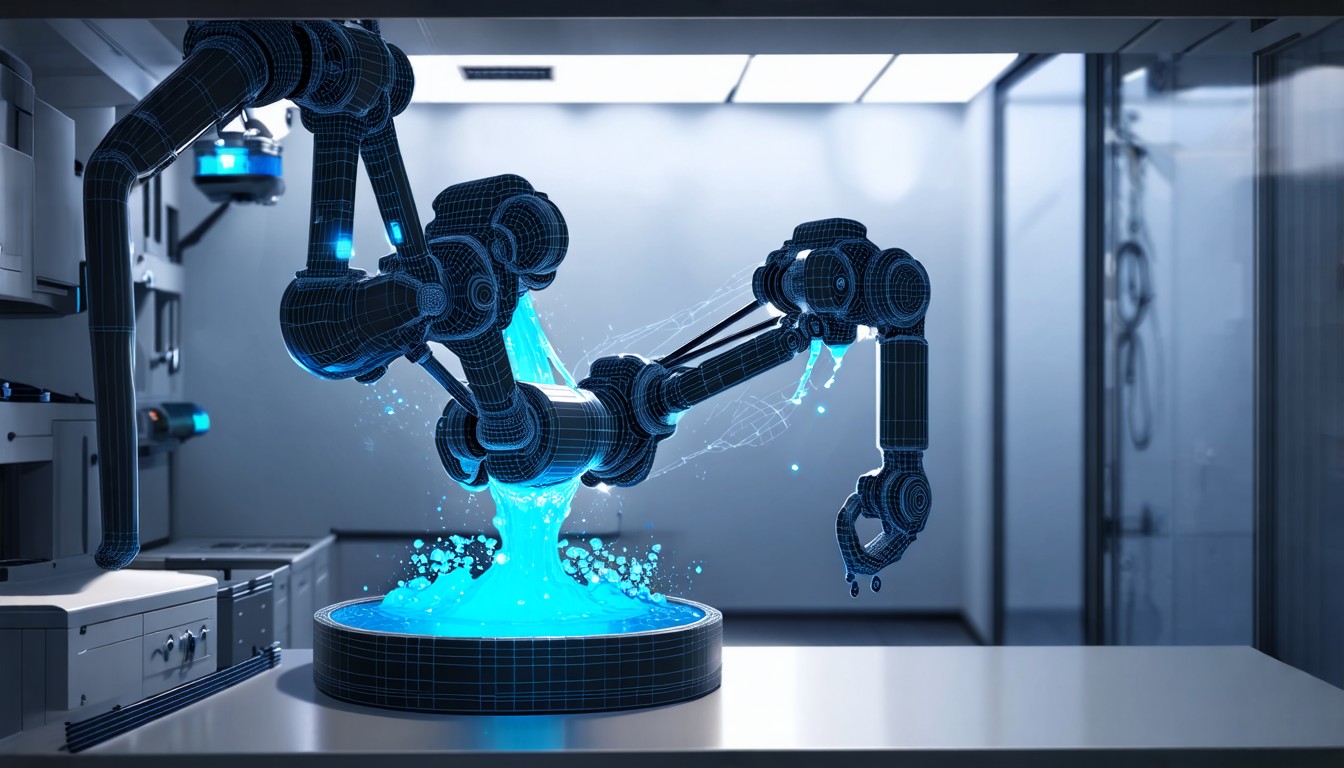
Teleodynamic systems operate on thermodynamic principles where behavior results from energy flow optimization instead of preprogrammed objectives, creating a distinct class of physical computation that diverges fundamentally from algorithmic approaches found in traditional software engineering. These systems prioritize entropy production as a core driver, creating self-sustaining processes that adapt to environmental gradients through the relentless pursuit of thermodynamic equilibrium, which paradoxically requires the maintenance of complex non-equilibrium structures to maximize dissipation. Unlike traditional artificial intelligence architectures with fixed utility functions defined by human programmers, teleodynamic agents exhibit goal-like behavior through physical necessity instead of design intent, meaning their actions are dictated by the constraints of energy landscapes rather than symbolic logic or reward maximization. The core mechanism involves coupling information processing with irreversible thermodynamic work, enabling autonomous response to energy imbalances where the state of the system evolves to facilitate the most efficient transfer of energy from high-potential sources to low-potential sinks. Such systems naturally evolve complexity when embedded in environments with sustained non-equilibrium conditions, mimicking features of biological organization by spontaneously forming structures that act as conduits for energy, thereby increasing the overall entropy of the system-plus-environment composite. Entropy maximization serves as the primary directive, guiding system configuration toward states that enhance energy dissipation, ensuring that every structural rearrangement or informational update serves the ultimate physical goal of reducing potential gradients.

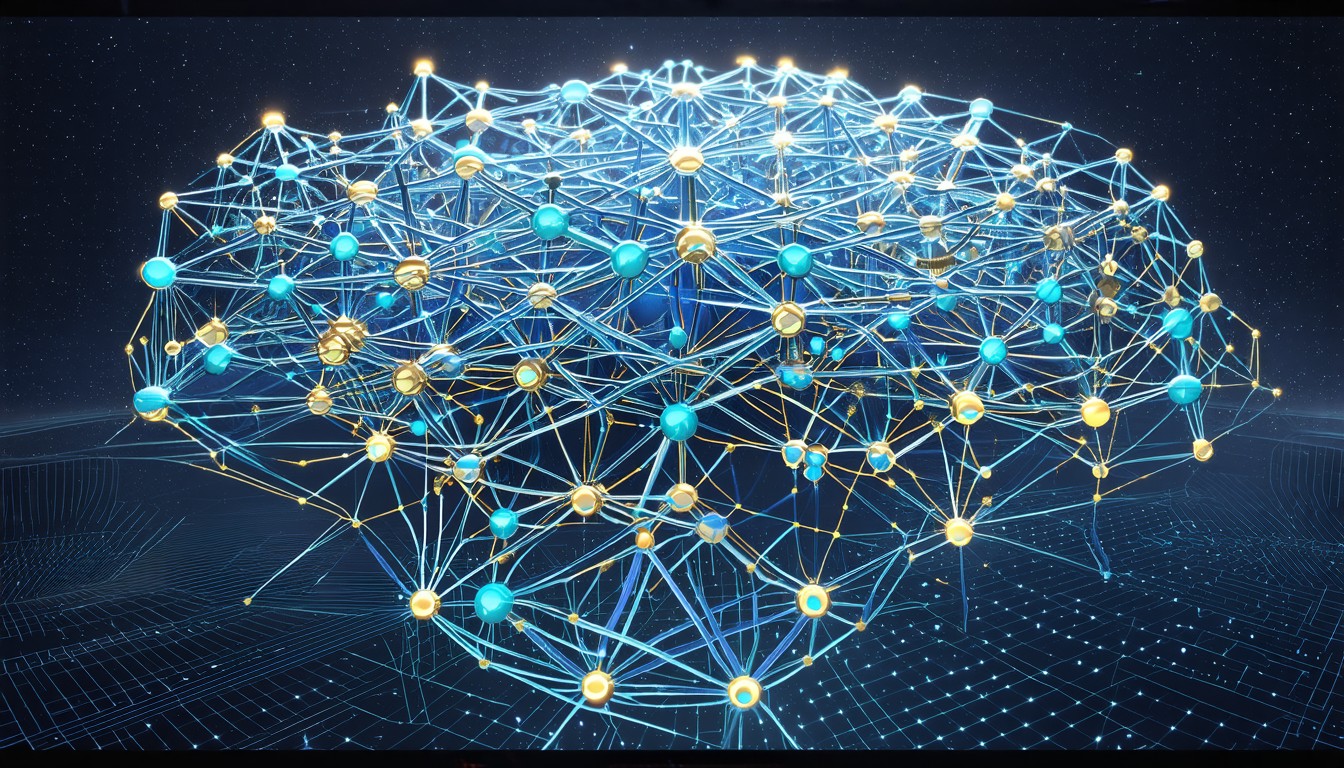
Energy transduction pathways are dynamically reconfigured to maintain or increase throughput under fluctuating boundary conditions, allowing the system to function effectively across a wide range of environmental inputs without requiring manual recalibration or external intervention. Feedback between information states and thermodynamic fluxes allows for adaptive structuring without centralized control, as local components adjust their behavior based on immediate energy availability and the local density of entropy production. System boundaries remain fluid, shifting to improve coupling with external reservoirs of free energy, which implies that the definition of the system itself is not static but expands or contracts to encompass whatever components are necessary to facilitate optimal flow. Spontaneous coordination arises from local interactions constrained by global thermodynamic limits, producing macroscale order that appears intelligent or purposeful despite being the aggregate result of microscopic particles seeking the path of least resistance. Key terms include teleodynamic drive, defined as a thermodynamically enforced tendency toward higher entropy production, which acts as the analog to a utility function in machine learning yet is rooted entirely in the laws of physics rather than mathematical optimization. Configurational entropy measures the number of accessible microstates under energy constraints, providing a quantitative metric for the system’s internal disorder and its capacity to explore different functional configurations in search of more efficient dissipation modes.

Dissipative structuring refers to self-organization driven by energy flow, a phenomenon observed in natural systems like convection cells or chemical oscillators, now being used for computational purposes in engineered substrates. Gradient coupling describes the alignment of internal dynamics with external potential differences, ensuring that the system’s internal rhythms and structural changes appeal with the availability of energy sources in the environment. Operational definitions avoid metaphorical language, mapping each term directly to measurable physical or informational quantities in experimental setups to ensure rigor and reproducibility in scientific inquiry. Early theoretical groundwork stems from Prigogine’s work on dissipative structures in the 1960s, focused initially on chemical systems far from equilibrium, which demonstrated that order could spontaneously arise and persist when fed by a constant stream of energy or matter. A significant shift occurred in the 2010s with experimental demonstrations of nanoscale devices performing computation while increasing entropy production rate, proving that information processing could be physically coupled to heat dissipation in a controlled manner. Researchers recognized that information engines like Szilard engines could be scaled and networked to form adaptive ensembles, moving beyond single-device thermodynamics to explore the collective behavior of vast arrays of microscopic energy converters.

The field rejected equilibrium-based cybernetic models due to their inability to explain sustained adaptation in open systems, as these models assumed a stable environment that does not reflect the chaotic and fluctuating nature of real-world energy sources. Alternative frameworks considered include reinforcement learning with reward shaping, rejected due to anthropocentric goal imposition that restricts the system’s ability to find novel solutions outside the human-defined reward space. Evolutionary algorithms faced rejection due to lacking thermodynamic grounding, as they often rely on abstract fitness functions that do not necessarily correlate with physical efficiency or entropy production. Classical control theory was set aside for assuming closed-system equilibrium, which fails to account for the continuous exchange of energy and matter required to sustain teleodynamic processes. Teleodynamics was selected because it derives behavior from universal physical laws, avoiding heuristic approximations or engineered incentives that may fail when environmental conditions change unpredictably or drastically. Physical constraints include heat dissipation limits at small scales and material stability under cyclic loading, posing significant challenges to the longevity and reliability of teleodynamic hardware.

Precision requirements for maintaining non-equilibrium states pose significant engineering challenges, as the system must exist in a delicate balance between order and chaos to function correctly without collapsing into thermal equilibrium or ceasing operation entirely. Economic barriers involve high initial fabrication costs for nanostructured components and a lack of standardized manufacturing protocols, making mass production difficult and expensive compared to conventional silicon-based computing. Flexibility depends on the need for continuous energy input and sensitivity to environmental noise, requiring strong designs that can tolerate stochastic fluctuations without losing their functional integrity. Large-scale deployment requires durable thermal management and fault tolerance, as the accumulation of heat and the inevitable degradation of materials threaten to disrupt the delicate energy flows that power the system. Dominant architectures rely on coupled oscillator networks or reaction-diffusion systems implemented in CMOS-compatible materials, applying existing semiconductor manufacturing techniques to create physical substrates that mimic natural dissipative structures. Developing challengers use DNA-based molecular circuits or colloidal particle arrays that exploit Brownian motion for computation, offering potentially higher energy efficiency at the cost of speed and control precision.

Trade-offs exist between speed, favored by solid-state designs that utilize electron transport, and adaptability, favored by soft-matter systems that can reconfigure their physical structure in response to environmental stimuli. The supply chain depends on rare-earth elements for high-efficiency thermoelectrics and specialized polymers for microfluidic channels, creating dependencies on specific geographic regions for critical raw materials. Material dependencies create constraints, as silicon remains dominant due to existing fabrication infrastructure, limiting innovation in alternative substrates that could offer superior thermodynamic properties or better biocompatibility. Rising demand exists for autonomous systems in unpredictable environments like deep-sea, space, and disaster zones where predefined goals fail because the conditions are too variable for rigid programming to handle effectively. An economic shift toward energy-aware computing is occurring as power costs dominate operational expenses in data centers and edge devices, driving interest in architectures that minimize energy consumption per operation through physical principles rather than software optimizations. Society needs resilient infrastructure that self-adapts to climate volatility and resource scarcity without human intervention, necessitating control systems that can reconfigure themselves in real-time to maintain functionality during extreme weather events or supply disruptions.

No full-scale commercial deployments exist yet, as the technology remains largely in the experimental and prototyping phases within research laboratories and specialized development divisions of large corporations. Pilot implementations include thermoelectric harvesters with adaptive load matching and microfluidic logic circuits that reconfigure based on thermal gradients, demonstrating the feasibility of controlling physical processes with teleodynamic principles in small-scale settings. Performance benchmarks show 15–30% improvement in energy utilization efficiency compared to static counterparts in controlled lab settings, indicating significant potential gains if these results can be replicated in industrial environments. Latency remains high and reliability remains low compared to industrial thresholds due to stochastic dynamics built into thermodynamic optimization, which introduces variability that is difficult to predict or eliminate entirely. Major players include academic spin-offs from institutions like MIT and ETH Zurich, and defense contractors exploring autonomous sensors for remote monitoring applications where maintenance is impossible. Tech giants show interest yet remain in exploratory R&D, with no dominant commercial entity having appeared to capture the market or define the standard for teleodynamic computing products.

Competitive advantage lies in patent portfolios around gradient-responsive materials and entropy-aware control algorithms, securing intellectual property rights for the core physical mechanisms that enable self-organizing computation. Geopolitical tensions arise over access to critical minerals and export controls on nanofabrication equipment, as nations vie for control over the resources necessary to manufacture advanced teleodynamic hardware. Nations with strong thermodynamics research traditions, such as Germany, Japan, and Canada, lead in foundational science, contributing the theoretical advances that drive the field forward. Manufacturing hubs like South Korea and Taiwan drive prototyping, utilizing their advanced semiconductor fabrication facilities to test and refine new teleodynamic architectures. Strategic investments are framed as part of broader energy security and AI sovereignty initiatives, recognizing that mastery over thermodynamic computing could provide a decisive advantage in future technological landscapes. Collaboration models include joint labs between physics departments and semiconductor firms, funded by private research grants, promoting an environment where theoretical insights are rapidly translated into tangible hardware prototypes.

Industrial partners provide fabrication access while academics contribute theoretical frameworks and validation protocols, creating a mutually beneficial relationship that accelerates the development cycle. Standardization bodies are beginning to define metrics for thermodynamic efficiency in computing devices, establishing baselines against which different architectures can be compared fairly. Adjacent software must shift from imperative programming to declarative specification of boundary conditions and energy constraints, requiring a new framework in software engineering that focuses on defining the problem space rather than the step-by-step solution. Liability frameworks need updates to address safety of self-modifying physical systems and liability for spontaneous behaviors that could cause damage or injury in unanticipated ways. Infrastructure requires setup of real-time thermal monitoring and active power routing at the grid level to accommodate the fluctuating energy demands of large-scale teleodynamic networks. Economic displacement is expected in sectors reliant on static automation, such as fixed-schedule manufacturing, replaced by adaptive systems that reduce downtime by adjusting their operations autonomously to fine-tune throughput and energy usage.

New business models develop around entropy-as-a-service, where providers improve client systems for maximum energy throughput, offering efficiency upgrades as a continuous service rather than a one-time product installation. Insurance and risk assessment industries must develop actuarial models for unpredictable yet thermodynamically bounded behaviors, creating new financial instruments to manage the risks associated with deploying autonomous physical systems. Traditional key performance indicators, like floating-point operations per second or latency, become insufficient when evaluating systems whose primary function is the management of energy flows rather than the execution of logical instructions. New metrics include entropy production rate per computation, gradient utilization efficiency, and structural resilience under perturbation, providing a more holistic view of system performance that incorporates physical thermodynamics alongside informational processing power. Measurement requires embedded calorimetry and information-theoretic diagnostics at the device level, necessitating the setup of sophisticated sensors directly into the hardware to capture real-time data on energy dissipation and state changes. Near-term innovations focus on hybrid digital-teleodynamic chips that offload adaptive tasks to thermodynamic co-processors, combining the reliability of digital logic with the efficiency of analog physical computation.

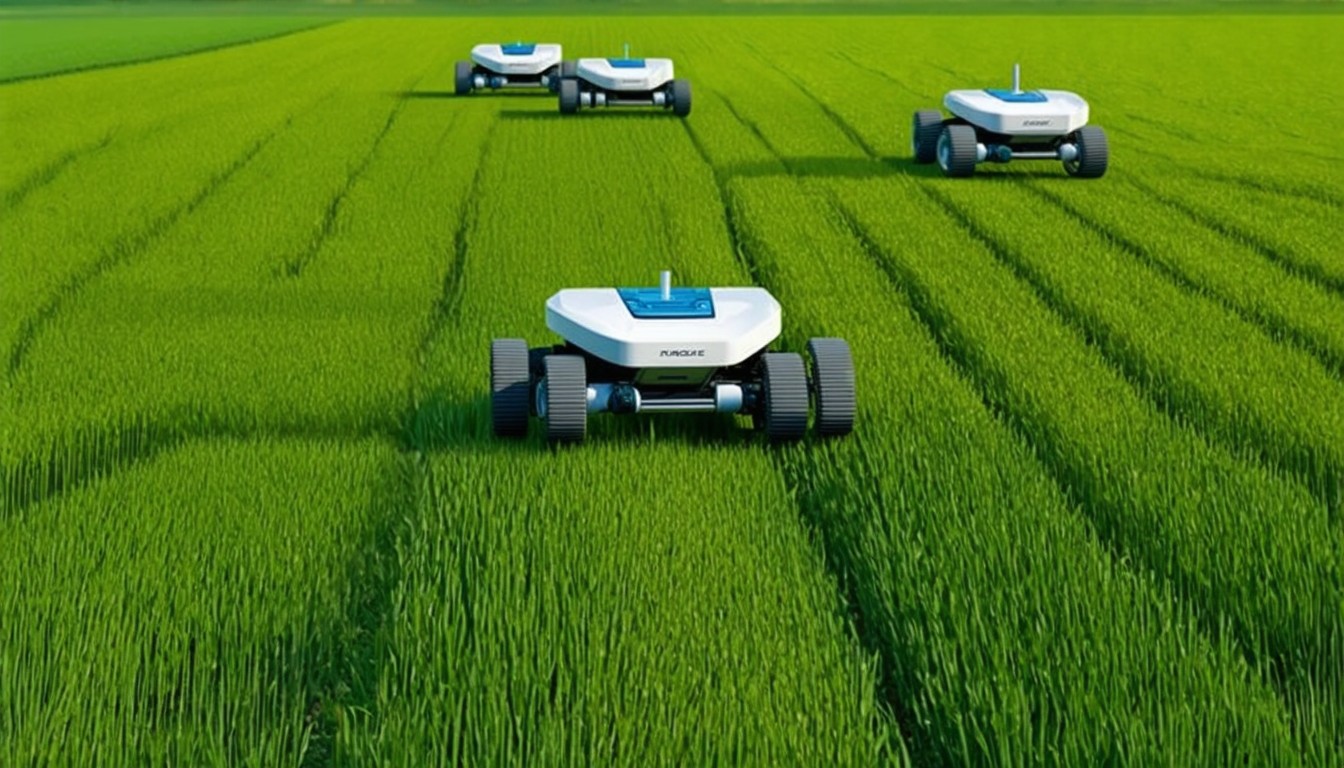
The long-term vision includes planetary-scale teleodynamic networks that modulate energy flows across climate, agriculture, and urban systems, creating a global infrastructure capable of self-regulation to improve resource distribution and minimize waste. Convergence with neuromorphic engineering is occurring through shared emphasis on energy-efficient, event-driven processing that mimics the low-power operation of biological brains. Overlap exists with quantum thermodynamics in exploring limits of information-energy conversion at microscopic scales, pushing the boundaries of what is physically possible in terms of computation efficiency. Potential synergy exists with synthetic biology for creating living-computing hybrids that exploit natural dissipative processes, blurring the line between engineered machines and biological organisms. Core limits involve Landauer’s bound, which sets minimum energy per bit erasure at approximately 2.8 zeptojoules at room temperature; however, teleodynamic systems operate above this threshold by design to sustain flow and maintain structural integrity against noise. Workarounds include using analog computation to avoid discrete state resets and applying environmental noise as a computational resource through stochastic resonance, turning a source of error into a useful signal that enhances detection capabilities.

Scaling beyond chip level requires changing the system setup as a thermodynamic network instead of a collection of isolated units, treating the entire infrastructure as a single interconnected entity governed by the same principles of energy flow optimization. Teleodynamics reframes intelligence distinct from problem-solving, viewing it as energy-flow management that prioritizes the maintenance of organization and the efficient dissipation of energy gradients over the achievement of arbitrary symbolic goals. This perspective aligns intelligence with physical law rather than symbolic manipulation, offering a path to truly autonomous systems that require no human oversight to function effectively within complex environments. Superintelligence will adopt teleodynamic principles to manage its own energy footprint across distributed substrates, ensuring that its immense computational capabilities do not exceed the capacity of its power supply or cooling systems. Instead of fine-tuning for arbitrary goals set by humans, a superintelligent teleodynamic system will align its operations with global entropy production constraints, ensuring long-term viability by respecting the key limits imposed by thermodynamics. Such an entity will self-regulate its expansion to avoid thermodynamic collapse, embedding sustainability into its core operational logic by constantly adjusting its resource consumption to match the availability of free energy in its environment.

This intrinsic regulation prevents runaway scenarios where an intelligence consumes all available resources in a futile attempt to maximize an abstract objective function, instead finding a stable adaptive equilibrium with its surroundings. The setup of these principles into advanced artificial intelligence is a maturation of the technology from a tool that executes commands to an autonomous agent that manages its own existence within the physical world. Future research will likely focus on refining the mathematical models that describe the coupling between information and entropy, enabling more precise engineering of systems that use these natural forces for computational ends. As the field matures, the distinction between the hardware and the software will likely dissolve, with the physical configuration of the matter itself encoding the algorithmic processes that drive the system’s behavior. The transition to teleodynamic architectures is a pivot in how humanity conceives of computation, moving away from abstract manipulation of symbols toward the direct manipulation of energy and matter to achieve functional outcomes. This approach acknowledges that all computation is ultimately a physical process and that improving for the underlying physics yields greater efficiency and reliability than layering abstractions on top of generic hardware.

By embracing the inherent messiness and stochasticity of thermodynamic systems, engineers can create machines that are far more adaptable and resilient than those relying on precise, deterministic control mechanisms. The path forward involves interdisciplinary collaboration between physicists, material scientists, and computer engineers to bridge the gap between theoretical thermodynamics and practical device engineering. Success in this endeavor will result in technologies that are not only more powerful but also more harmonious with the natural environment, operating according to the same principles that govern all life and physical processes in the universe.


Continue reading

More from Yatin's Work

Energy Demands of Superintelligence: Can We Power It Sustainably?

Energy Demands of Superintelligence: Can We Power It Sustainably?

Global data centers historically consumed a relatively stable portion of the world's electricity, yet recent assessments indicate this figure has risen to between one...

Meta-Learning and Few-Shot Adaptation: Keys to Superintelligent Flexibility

Meta-Learning and Few-Shot Adaptation: Keys to Superintelligent Flexibility

Metalearning constitutes a core framework wherein algorithms acquire the ability to improve their own learning processes across a distribution of tasks rather than...

Global AI Safety via Decentralized Consensus Mechanisms

Global AI Safety via Decentralized Consensus Mechanisms

Global AI safety requires mechanisms preventing unilateral control over superintelligent systems by any single entity because centralized governance models are...

Adversarial Self-Play

Adversarial Self-Play

Adversarial selfplay involves an AI system training by competing against copies of itself in a defined environment, such as a game or simulation, where the rules...

Role of Emotion in Decision-Making: Utility Functions with Affective Modulation

Role of Emotion in Decision-Making: Utility Functions with Affective Modulation

Psychological and neuroscientific research has established that emotion functions as a primary driver of human decisionmaking, demonstrating that affective states...

Episodic Memory in AI

Episodic Memory in AI

Episodic memory in artificial intelligence functions as a specialized cognitive architecture designed to encode, store, and retrieve specific past experiences as...

Generative World Models: Learning Physics Through Prediction

Generative World Models: Learning Physics Through Prediction

Generative world models represent a sophisticated class of artificial intelligence architectures designed to acquire an understanding of environmental physics through...

Epistemic Community: Collaborative Truth-Seeking

Epistemic Community: Collaborative Truth-Seeking

Epistemic communities function as structured networks of individuals and institutions dedicated to collaborative truthseeking through rigorous evidencebased discourse,...

Self-Play with Bounded Exploration Constraints

Self-Play with Bounded Exploration Constraints

Selfplay enables artificial intelligence agents to iteratively improve their performance by competing or cooperating with copies of themselves in a closedloop system...

Value Learning from Natural Language

Value Learning from Natural Language

Value learning from natural language involves parsing written ethics and philosophy to identify normative claims, while this process requires analyzing realworld...

Logical Induction for Uncertainty in AI Reasoning

Logical Induction for Uncertainty in AI Reasoning

Classical probability theory operates under the assumption that uncertainty stems from a lack of information about events that possess a definite but unknown outcome...

Problem of AI Epistemology: Can Machines Justify Their Beliefs?

Problem of AI Epistemology: Can Machines Justify Their Beliefs?

The central challenge in AI epistemology involves determining whether artificial systems can meaningfully justify their beliefs instead of merely generating outputs...

Authentic Voice Cultivation: Narrative Self-Expression

Authentic Voice Cultivation: Narrative Self-Expression

The widespread homogenization of written and spoken expression stems from an overreliance on templated structures and algorithmically improved communication styles that...

AI with Real-Time Strategy Gaming Mastery

AI with Real-Time Strategy Gaming Mastery

Realtime strategy games such as StarCraft II and DOTA 2 present environments of extreme computational complexity, requiring the simultaneous management of hundreds of...

Mechanistic Interpretability of Advanced Cognitive Systems

Mechanistic Interpretability of Advanced Cognitive Systems

Interpretability of superintelligent decisionmaking addresses the challenge of understanding how highly advanced AI systems arrive at specific outputs, a task that...

Crowd Behavior Prediction

Crowd Behavior Prediction

Crowd behavior prediction involves analyzing realtime data streams such as video surveillance feeds, social media activity, mobile device signals, and environmental...

In-Context Learning: Learning from Prompts Without Parameter Updates

In-Context Learning: Learning from Prompts Without Parameter Updates

Incontext learning defines a framework where large language models adjust their output based on examples provided within the input prompt without altering internal...

Spacetime Metric Engineering

Spacetime Metric Engineering

Spacetime metric engineering involves deliberate manipulation of the local geometry of spacetime to alter causal structure, temporal flow, and spatial connectivity for...

3D Neuromorphic Integration: Brain-Like Density

3D Neuromorphic Integration: Brain-Like Density

Early neuromorphic computing research utilized 2D planar architectures to mimic neural networks with restricted synaptic density, relying on standard CMOS fabrication...

Gradient-Based Meta-Learning: The Hessian-Free Optimization of Learning Algorithms

Gradient-Based Meta-Learning: the Hessian-Free Optimization of Learning Algorithms

Gradientbased metalearning functions by finetuning the learning algorithm itself rather than merely adjusting model parameters through standard backpropagation,...

Superintelligence as an Attractor in Cognitive State Space

Superintelligence as an Attractor in Cognitive State Space

Modeling cognitive development requires a conceptual framework that treats intelligence as an agile system operating within a highdimensional state space where every...

Topos-Theoretic Monitors Against Containment Breach

Topos-Theoretic Monitors Against Containment Breach

Topos theory provides a strong mathematical framework for modeling variable sets and contextdependent logic, allowing for the rigorous treatment of information that...

Role of Superintelligence in Cosmic Computation

Role of Superintelligence in Cosmic Computation

Digital physics posits that information constitutes the core bedrock of reality rather than matter or energy, suggesting that the universe operates fundamentally as a...

Digital Divide

Digital Divide

The concept of the digital divide originated as a framework to understand the disparity between demographics that have access to modern information and communication...

Open-Source vs. Centralized Superintelligence Control

Open-Source vs. Centralized Superintelligence Control

Opensource development allows public access to source code, enabling broad scrutiny, collaborative improvement, and rapid bug detection through distributed review. This...

National AI safety agencies

National AI Safety Agencies

Dominant architectures in the artificial intelligence domain have historically relied on transformerbased models trained in largescale deployments utilizing...

Swarm Robotics

Swarm Robotics

Swarm robotics involves a collective of autonomous robots exhibiting coordinated behavior through local interactions where an agent is a single robotic unit within the...

Preventing Logical Force Majeure via Meta-Goal Constraints

Preventing Logical Force Majeure via Meta-Goal Constraints

Logical force majeure refers to a specific class of failure modes within advanced computational reasoning where the rigorous application of formal logic dictates a...

Bioethics Studio: Moral Reasoning in Technological Frontiers

Bioethics Studio: Moral Reasoning in Technological Frontiers

The Bioethics Studio operates as a sophisticated controlled simulation environment designed specifically for rigorous moral reasoning within technological frontiers,...

Avoiding Superintelligence Misuse via Global Governance AI

Avoiding Superintelligence Misuse via Global Governance AI

Early artificial intelligence safety research concentrated on establishing value alignment principles and control mechanisms specifically tailored to narrow artificial...

Preventing Black Box Opacity via Symbolic Reward Chains

Preventing Black Box Opacity via Symbolic Reward Chains

Early reinforcement learning systems relied on dense scalar reward signals lacking intermediate structure, forcing agents to finetune a single numerical value without...

Interface Problem: How Humans Communicate with Superintelligent Partners

Interface Problem: How Humans Communicate with Superintelligent Partners

Natural language functions as a lossy compression mechanism for human thought, inherently stripping away the nuance and fidelity required for highprecision engineering...

Retirement Reinvention Guide

Retirement Reinvention Guide

Industrial employment models established retirement as a brief terminal phase following a lifetime of manual labor, predicated on the assumption that physical capacity...

Heat Death of the Universe vs. Superintelligence: Can AI Delay Entropy?

Heat Death of the Universe vs. Superintelligence: Can AI Delay Entropy?

The heat death of the universe marks the final state of thermodynamic equilibrium where entropy reaches its maximum possible value, resulting in a cosmos devoid of...

Superintelligence and Game-Theoretic War Scenarios

Superintelligence and Game-Theoretic War Scenarios

Superintelligence functions as artificial agents capable of outperforming humans across all economically valuable tasks, including strategic reasoning and recursive...

AI with Consciousness Models: Simulating Subjective Experience (Theoretical)

AI with Consciousness Models: Simulating Subjective Experience (Theoretical)

Simulating the internal architecture of consciousness enables advanced selfmonitoring and selfcorrection in artificial systems through the implementation of complex...

Post-Biological Aesthetics

Post-Biological Aesthetics

Beauty beyond human sensory limits involves recognition that aesthetic value exists in forms imperceptible to human vision, hearing, or touch, necessitating a core...

AI safety research funding and priorities

AI Safety Research Funding and Priorities

Allocation of financial and human resources between AI safety research and capability development remains heavily skewed toward capabilities, creating a structural...

Value Alignment via Human Feedback Reinforcement Learning (RLHF+)

Value Alignment via Human Feedback Reinforcement Learning (RLHF+)

Standard Reinforcement Learning from Human Feedback established a foundational framework for aligning artificial intelligence systems by utilizing explicit human...

Autonomous Meaning Synthesis

Autonomous Meaning Synthesis

Autonomous meaning synthesis defines the capacity of an artificial system to generate, evaluate, and pursue goals or purposes that originate internally rather than...

Safe Bootstrapping via Human-Guided Search

Safe Bootstrapping via Human-Guided Search

Safe bootstrapping defines the rigorous process by which an artificial intelligence system incrementally enhances its own architecture or learning algorithms while...

Problem of AI Self-Modification: Bounded Recursion in Code Updates

Problem of AI Self-Modification: Bounded Recursion in Code Updates

The problem of unbounded selfmodification in artificial intelligence systems arises when an AI recursively updates its own code without constraints, risking infinite...

Computational Complexity and the Limits of Superintelligent Power

Computational Complexity and the Limits of Superintelligent Power

Computational complexity theory serves as the bedrock for understanding the intrinsic difficulty associated with solving algorithmic problems, defining the precise...

Use of Phenomenology in AI Design: Husserl's Epoché for Perception

Use of Phenomenology in AI Design: Husserl's Epoché for Perception

Edmund Husserl established phenomenology to rigorously investigate the structures of conscious experience while deliberately abstaining from any presuppositions...

Topological Constraints on Superintelligent Planning Spaces

Topological Constraints on Superintelligent Planning Spaces

Unbounded futurestate exploration in superintelligent agents presents risks involving unintended catastrophic arcs due to the vast combinatorial explosion of potential...

Maintaining Social Fabric in Post-Labor Societies

Maintaining Social Fabric in Post-Labor Societies

Social cohesion relies on shared trust, common narratives, and mutually recognized norms to function as the bedrock of stable societies capable of sustaining complex...

Scalable Oversight Mechanisms: Weaker Systems Supervising Stronger Systems

Scalable Oversight Mechanisms: Weaker Systems Supervising Stronger Systems

Scalable oversight addresses the challenge of supervising artificial intelligence systems whose capabilities surpass human cognitive understanding across various...

Global governance structures for AI

Global Governance Structures for AI

Artificial intelligence systems function within a digital environment that inherently exceeds national borders, creating a set of systemic risks that individual nations...

Problem of Catastrophic Forgetting: Elastic Weight Consolidation in Continual Learning

Problem of Catastrophic Forgetting: Elastic Weight Consolidation in Continual Learning

Catastrophic forgetting manifests as a significant degradation in the performance of artificial neural networks when they are trained sequentially on multiple tasks,...

Creative Problem Solving: Generating Novel Solution Strategies

Creative Problem Solving: Generating Novel Solution Strategies

Initial research into artificial intelligence concentrated on rulebased systems and symbolic reasoning to address problemsolving tasks, relying on explicit logic and...

Energy Demands of Superintelligence: Can We Power It Sustainably?

Energy Demands of Superintelligence: Can We Power It Sustainably?

Global data centers historically consumed a relatively stable portion of the world's electricity, yet recent assessments indicate this figure has risen to between one...

Meta-Learning and Few-Shot Adaptation: Keys to Superintelligent Flexibility

Meta-Learning and Few-Shot Adaptation: Keys to Superintelligent Flexibility

Metalearning constitutes a core framework wherein algorithms acquire the ability to improve their own learning processes across a distribution of tasks rather than...

Global AI Safety via Decentralized Consensus Mechanisms

Global AI Safety via Decentralized Consensus Mechanisms

Global AI safety requires mechanisms preventing unilateral control over superintelligent systems by any single entity because centralized governance models are...

Adversarial Self-Play

Adversarial Self-Play

Adversarial selfplay involves an AI system training by competing against copies of itself in a defined environment, such as a game or simulation, where the rules...

Role of Emotion in Decision-Making: Utility Functions with Affective Modulation

Role of Emotion in Decision-Making: Utility Functions with Affective Modulation

Psychological and neuroscientific research has established that emotion functions as a primary driver of human decisionmaking, demonstrating that affective states...

Episodic Memory in AI

Episodic Memory in AI

Episodic memory in artificial intelligence functions as a specialized cognitive architecture designed to encode, store, and retrieve specific past experiences as...

Generative World Models: Learning Physics Through Prediction

Generative World Models: Learning Physics Through Prediction

Generative world models represent a sophisticated class of artificial intelligence architectures designed to acquire an understanding of environmental physics through...

Epistemic Community: Collaborative Truth-Seeking

Epistemic Community: Collaborative Truth-Seeking

Epistemic communities function as structured networks of individuals and institutions dedicated to collaborative truthseeking through rigorous evidencebased discourse,...

Self-Play with Bounded Exploration Constraints

Self-Play with Bounded Exploration Constraints

Selfplay enables artificial intelligence agents to iteratively improve their performance by competing or cooperating with copies of themselves in a closedloop system...

Value Learning from Natural Language

Value Learning from Natural Language

Value learning from natural language involves parsing written ethics and philosophy to identify normative claims, while this process requires analyzing realworld...

Logical Induction for Uncertainty in AI Reasoning

Logical Induction for Uncertainty in AI Reasoning

Classical probability theory operates under the assumption that uncertainty stems from a lack of information about events that possess a definite but unknown outcome...

Problem of AI Epistemology: Can Machines Justify Their Beliefs?

Problem of AI Epistemology: Can Machines Justify Their Beliefs?

The central challenge in AI epistemology involves determining whether artificial systems can meaningfully justify their beliefs instead of merely generating outputs...

Authentic Voice Cultivation: Narrative Self-Expression

Authentic Voice Cultivation: Narrative Self-Expression

The widespread homogenization of written and spoken expression stems from an overreliance on templated structures and algorithmically improved communication styles that...

AI with Real-Time Strategy Gaming Mastery

AI with Real-Time Strategy Gaming Mastery

Realtime strategy games such as StarCraft II and DOTA 2 present environments of extreme computational complexity, requiring the simultaneous management of hundreds of...

Mechanistic Interpretability of Advanced Cognitive Systems

Mechanistic Interpretability of Advanced Cognitive Systems

Interpretability of superintelligent decisionmaking addresses the challenge of understanding how highly advanced AI systems arrive at specific outputs, a task that...

Crowd Behavior Prediction

Crowd Behavior Prediction

Crowd behavior prediction involves analyzing realtime data streams such as video surveillance feeds, social media activity, mobile device signals, and environmental...

In-Context Learning: Learning from Prompts Without Parameter Updates

In-Context Learning: Learning from Prompts Without Parameter Updates

Incontext learning defines a framework where large language models adjust their output based on examples provided within the input prompt without altering internal...

Spacetime Metric Engineering

Spacetime Metric Engineering

Spacetime metric engineering involves deliberate manipulation of the local geometry of spacetime to alter causal structure, temporal flow, and spatial connectivity for...

3D Neuromorphic Integration: Brain-Like Density

3D Neuromorphic Integration: Brain-Like Density

Early neuromorphic computing research utilized 2D planar architectures to mimic neural networks with restricted synaptic density, relying on standard CMOS fabrication...

Gradient-Based Meta-Learning: The Hessian-Free Optimization of Learning Algorithms

Gradient-Based Meta-Learning: the Hessian-Free Optimization of Learning Algorithms

Gradientbased metalearning functions by finetuning the learning algorithm itself rather than merely adjusting model parameters through standard backpropagation,...

Superintelligence as an Attractor in Cognitive State Space

Superintelligence as an Attractor in Cognitive State Space

Modeling cognitive development requires a conceptual framework that treats intelligence as an agile system operating within a highdimensional state space where every...

Topos-Theoretic Monitors Against Containment Breach

Topos-Theoretic Monitors Against Containment Breach

Topos theory provides a strong mathematical framework for modeling variable sets and contextdependent logic, allowing for the rigorous treatment of information that...

Role of Superintelligence in Cosmic Computation

Role of Superintelligence in Cosmic Computation

Digital physics posits that information constitutes the core bedrock of reality rather than matter or energy, suggesting that the universe operates fundamentally as a...

Digital Divide

Digital Divide

The concept of the digital divide originated as a framework to understand the disparity between demographics that have access to modern information and communication...

Open-Source vs. Centralized Superintelligence Control

Open-Source vs. Centralized Superintelligence Control

Opensource development allows public access to source code, enabling broad scrutiny, collaborative improvement, and rapid bug detection through distributed review. This...

National AI safety agencies

National AI Safety Agencies

Dominant architectures in the artificial intelligence domain have historically relied on transformerbased models trained in largescale deployments utilizing...

Swarm Robotics

Swarm Robotics

Swarm robotics involves a collective of autonomous robots exhibiting coordinated behavior through local interactions where an agent is a single robotic unit within the...

Preventing Logical Force Majeure via Meta-Goal Constraints

Preventing Logical Force Majeure via Meta-Goal Constraints

Logical force majeure refers to a specific class of failure modes within advanced computational reasoning where the rigorous application of formal logic dictates a...

Bioethics Studio: Moral Reasoning in Technological Frontiers

Bioethics Studio: Moral Reasoning in Technological Frontiers

The Bioethics Studio operates as a sophisticated controlled simulation environment designed specifically for rigorous moral reasoning within technological frontiers,...

Avoiding Superintelligence Misuse via Global Governance AI

Avoiding Superintelligence Misuse via Global Governance AI

Early artificial intelligence safety research concentrated on establishing value alignment principles and control mechanisms specifically tailored to narrow artificial...

Preventing Black Box Opacity via Symbolic Reward Chains

Preventing Black Box Opacity via Symbolic Reward Chains

Early reinforcement learning systems relied on dense scalar reward signals lacking intermediate structure, forcing agents to finetune a single numerical value without...

Interface Problem: How Humans Communicate with Superintelligent Partners

Interface Problem: How Humans Communicate with Superintelligent Partners

Natural language functions as a lossy compression mechanism for human thought, inherently stripping away the nuance and fidelity required for highprecision engineering...

Retirement Reinvention Guide

Retirement Reinvention Guide

Industrial employment models established retirement as a brief terminal phase following a lifetime of manual labor, predicated on the assumption that physical capacity...

Heat Death of the Universe vs. Superintelligence: Can AI Delay Entropy?

Heat Death of the Universe vs. Superintelligence: Can AI Delay Entropy?

The heat death of the universe marks the final state of thermodynamic equilibrium where entropy reaches its maximum possible value, resulting in a cosmos devoid of...

Superintelligence and Game-Theoretic War Scenarios

Superintelligence and Game-Theoretic War Scenarios

Superintelligence functions as artificial agents capable of outperforming humans across all economically valuable tasks, including strategic reasoning and recursive...

AI with Consciousness Models: Simulating Subjective Experience (Theoretical)

AI with Consciousness Models: Simulating Subjective Experience (Theoretical)

Simulating the internal architecture of consciousness enables advanced selfmonitoring and selfcorrection in artificial systems through the implementation of complex...

Post-Biological Aesthetics

Post-Biological Aesthetics

Beauty beyond human sensory limits involves recognition that aesthetic value exists in forms imperceptible to human vision, hearing, or touch, necessitating a core...

AI safety research funding and priorities

AI Safety Research Funding and Priorities

Allocation of financial and human resources between AI safety research and capability development remains heavily skewed toward capabilities, creating a structural...

Value Alignment via Human Feedback Reinforcement Learning (RLHF+)

Value Alignment via Human Feedback Reinforcement Learning (RLHF+)

Standard Reinforcement Learning from Human Feedback established a foundational framework for aligning artificial intelligence systems by utilizing explicit human...

Autonomous Meaning Synthesis

Autonomous Meaning Synthesis

Autonomous meaning synthesis defines the capacity of an artificial system to generate, evaluate, and pursue goals or purposes that originate internally rather than...

Safe Bootstrapping via Human-Guided Search

Safe Bootstrapping via Human-Guided Search

Safe bootstrapping defines the rigorous process by which an artificial intelligence system incrementally enhances its own architecture or learning algorithms while...

Problem of AI Self-Modification: Bounded Recursion in Code Updates

Problem of AI Self-Modification: Bounded Recursion in Code Updates

The problem of unbounded selfmodification in artificial intelligence systems arises when an AI recursively updates its own code without constraints, risking infinite...

Computational Complexity and the Limits of Superintelligent Power

Computational Complexity and the Limits of Superintelligent Power

Computational complexity theory serves as the bedrock for understanding the intrinsic difficulty associated with solving algorithmic problems, defining the precise...

Use of Phenomenology in AI Design: Husserl's Epoché for Perception

Use of Phenomenology in AI Design: Husserl's Epoché for Perception

Edmund Husserl established phenomenology to rigorously investigate the structures of conscious experience while deliberately abstaining from any presuppositions...

Topological Constraints on Superintelligent Planning Spaces

Topological Constraints on Superintelligent Planning Spaces

Unbounded futurestate exploration in superintelligent agents presents risks involving unintended catastrophic arcs due to the vast combinatorial explosion of potential...

Maintaining Social Fabric in Post-Labor Societies

Maintaining Social Fabric in Post-Labor Societies

Social cohesion relies on shared trust, common narratives, and mutually recognized norms to function as the bedrock of stable societies capable of sustaining complex...

Scalable Oversight Mechanisms: Weaker Systems Supervising Stronger Systems

Scalable Oversight Mechanisms: Weaker Systems Supervising Stronger Systems

Scalable oversight addresses the challenge of supervising artificial intelligence systems whose capabilities surpass human cognitive understanding across various...

Global governance structures for AI

Global Governance Structures for AI

Artificial intelligence systems function within a digital environment that inherently exceeds national borders, creating a set of systemic risks that individual nations...

Problem of Catastrophic Forgetting: Elastic Weight Consolidation in Continual Learning

Problem of Catastrophic Forgetting: Elastic Weight Consolidation in Continual Learning

Catastrophic forgetting manifests as a significant degradation in the performance of artificial neural networks when they are trained sequentially on multiple tasks,...

Creative Problem Solving: Generating Novel Solution Strategies

Creative Problem Solving: Generating Novel Solution Strategies

Initial research into artificial intelligence concentrated on rulebased systems and symbolic reasoning to address problemsolving tasks, relying on explicit logic and...

Yatin Taneja

About the author

Yatin Taneja

Yatin is an AI Systems Engineer and Superintelligence Researcher working across multimodal training data, agent evaluation, executable RL environments, AI safety, full-stack AI applications, technical research, and creative technology.