Knowledge hub

Nuclear-Powered AI Clusters: Gigawatt-Scale Energy

Nuclear-Powered AI Clusters: Gigawatt-Scale Energy

The pursuit of artificial general intelligence and subsequent superintelligence imposes computational requirements that vastly exceed the capabilities of existing data center infrastructure, necessitating a key transformation of energy provisioning at the gigawatt scale. Training large language models has historically required exaflop-scale computation sustained over periods of several months, consuming tens to hundreds of megawatts of electrical power, yet the progression toward zettaflop-scale systems demands energy inputs measured in tens of gigawatts. This magnitude of power consumption renders traditional grid connections inadequate due to congestion, voltage instability, and the inability to provide the firm, high-density power delivery required by sensitive AI hardware. Consequently, the industry has moved toward the concept of dedicated nuclear power plants designed exclusively to supply electricity to artificial intelligence compute clusters, enabling uninterrupted high-density energy delivery for both training and inference workloads. Nuclear fission serves as the primary energy source for these endeavors due to its exceptional energy density, continuous output capability, and low carbon emissions compared to fossil alternatives. A single gigawatt-scale cluster consumes one billion watts of electrical power, an output equivalent to a large nuclear power plant, making nuclear generation the only viable path to achieving such density without relying on extensive land use for renewables or emitting vast quantities of carbon dioxide.
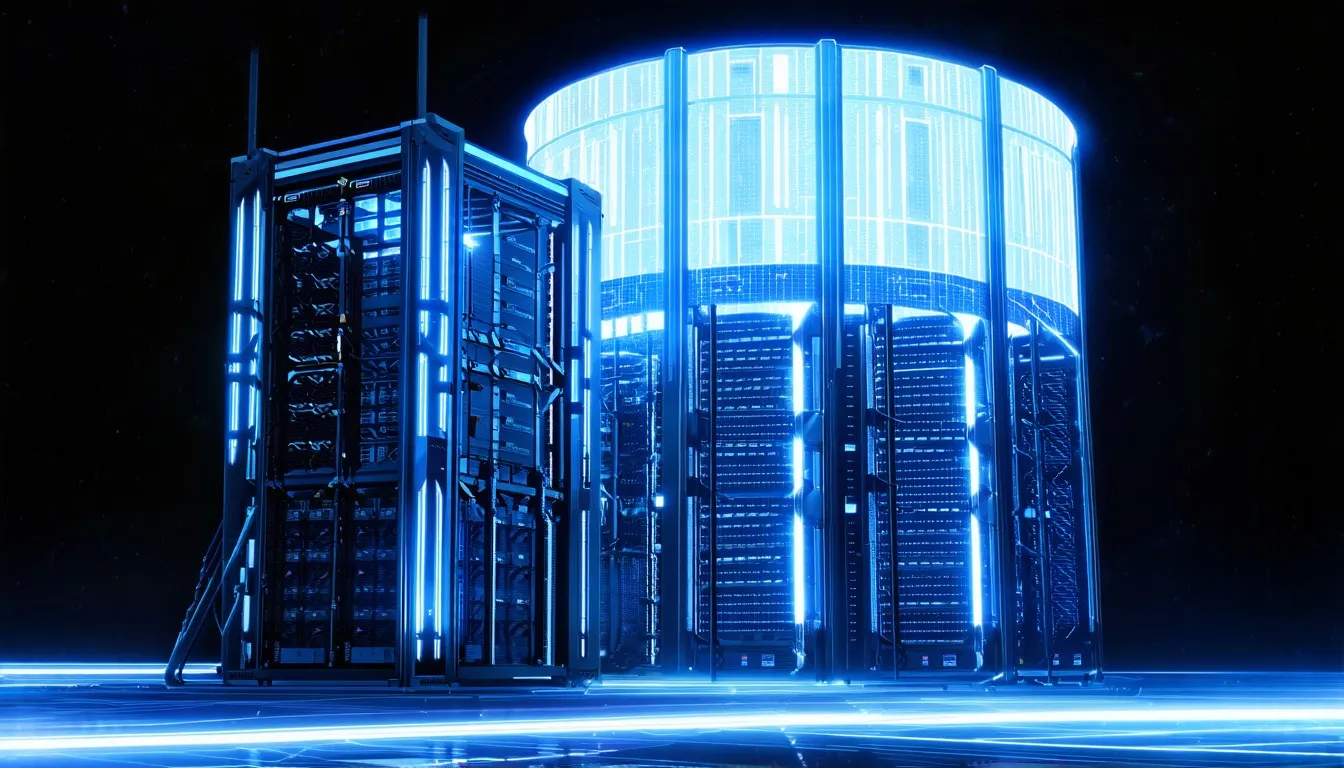
The implementation of Small Modular Reactors is a scalable solution utilizing factory-built nuclear units deployed near data centers to significantly reduce transmission losses and enhance security. Small Modular Reactors typically produce under 300 MWe and feature modular deployment strategies with reduced construction timelines compared to traditional large pressurized water reactors. These reactors utilize advanced manufacturing techniques where major components are fabricated in controlled factory environments and transported to the site, allowing for higher quality control and faster installation than conventional on-site construction. The modular nature of these systems allows operators to add capacity incrementally as computational demands increase, aligning capital expenditure with the growth of the AI cluster. By placing these generation units in close proximity to the compute infrastructure, developers eliminate reliance on variable renewable sources and grid congestion, ensuring stable voltage and frequency for sensitive AI hardware. This co-location of reactors and compute infrastructure minimizes energy transport inefficiencies and reduces land-use conflicts that typically arise when attempting to connect remote generation facilities to high-demand urban loads.

Advanced reactor designs incorporate breeder technology to extend fuel availability and reduce long-term waste by recycling fissile material to address sustainability concerns for large workloads. Breeder reactors generate more fissile material than they consume by using fast neutrons to convert fertile isotopes like uranium-238 into plutonium-239, thereby utilizing a significantly larger portion of the natural uranium found in the Earth’s crust. This closed fuel cycle approach drastically reduces the volume of high-level radioactive waste requiring long-term geological storage while simultaneously extending the fuel supply for centuries. The use of such fast neutron spectra allows for the burning of minor actinides, which are the primary contributors to the long-term radiotoxicity of nuclear waste, thus addressing a major environmental concern associated with traditional once-through fuel cycles. High-temperature gas-cooled reactors offer higher thermal efficiency and process heat applications for industrial use, further enhancing the overall thermodynamic performance of the system. These reactors can operate at temperatures exceeding 700 degrees Celsius, enabling the use of advanced Brayton cycles for power conversion that achieve higher efficiencies than standard steam turbines.

Power conversion systems in these nuclear-AI facilities employ steam turbines or advanced Brayton cycles to generate high-voltage direct current for efficient transmission to server racks. Traditional alternating current transmission introduces resistive losses over distance and requires complex synchronization infrastructure, whereas high-voltage direct current minimizes energy loss during transport and is readily compatible with the internal power supplies of modern computing equipment. Advanced gas-cooled reactors often utilize supercritical carbon dioxide in a closed Brayton cycle, which offers a compact turbine footprint and high efficiency due to the favorable thermodynamic properties of the working fluid near its critical point. This compactness allows the power conversion equipment to be situated within the same containment structures or auxiliary buildings as the reactor cores, reducing the physical footprint of the plant and enhancing security. The setup of these conversion systems with the electrical infrastructure of the data center requires sophisticated transformers and inverters capable of maintaining strict voltage regulation to prevent hardware damage during transient load events. Cooling infrastructure employs closed-loop water or advanced air systems to manage waste heat from both reactor and compute components, presenting a significant engineering challenge given the combined thermal output of a gigawatt-scale facility.

While traditional data centers rely on evaporative cooling towers that consume vast amounts of water, nuclear-AI clusters may utilize dry cooling or advanced heat rejection systems to conserve water resources in arid regions where these facilities are often located. The thermal energy from reactors may be repurposed for district heating or industrial processes to improve overall system efficiency, effectively utilizing waste heat that would otherwise be dissipated into the atmosphere. In co-located designs, it is technically feasible to use the high-temperature coolant from the reactor to drive absorption chillers that provide cooling for the server racks, creating a synergistic thermal loop that reduces the parasitic electrical load typically associated with data center cooling. Molten salt reactors enable higher temperatures and direct process heat for AI cooling systems, potentially simplifying the thermal management architecture by eliminating intermediate heat exchangers. Reactor core and containment structures utilize passive safety designs with built-in shutdown mechanisms requiring minimal operator intervention or active power to ensure safe shutdown during emergency scenarios. These passive safety systems rely on physical phenomena such as natural circulation, gravity, and convection to remove decay heat from the core in the event of a loss of coolant flow or station blackout, eliminating the need for diesel generators or battery banks to power emergency pumps.

The setup of passive safety features reduces the complexity of the plant architecture and lowers the probability of common cause failures affecting multiple safety systems. Small Modular Reactors with integrated safety features enable faster deployment and flexibility by simplifying the licensing process through standardized designs that are inherently safe. The reduced inventory of radioactive material in smaller cores also lowers the source term for potential releases, allowing for smaller emergency planning zones which facilitates siting near industrial or data center locations. Control systems integrate reactor output with AI workload scheduling to align energy production with computational demand cycles, requiring a level of adaptive operational flexibility previously unseen in the nuclear industry. Load-following capability allows a power plant to adjust output in response to changing electricity demand, and in the context of an AI cluster, this involves ramping power generation up or down to match the intensity of training jobs or inference requests. Advanced control algorithms utilize predictive models of AI workload behavior to anticipate surges in power draw and adjust reactor control rod positions or coolant flow rates accordingly, ensuring that the reactor operates at an optimal point without excessive cycling.

This connection necessitates the development of new software stacks that incorporate energy availability into scheduling algorithms to prioritize training jobs during high-output periods or defer non-critical tasks when reactor maintenance or refueling reduces available capacity. Software-defined power management becomes a critical component of the infrastructure, treating energy as a programmable resource tightly coupled with computational execution. Cybersecurity-hardened digital instrumentation protects control networks against adversarial interference, as the connection of nuclear systems with external IT networks increases the potential attack surface for malicious actors. The convergence of operational technology used in reactor control and information technology used in data center management requires stringent segmentation and monitoring to prevent unauthorized access to safety-critical systems. Instrumentation and control systems must adhere to rigorous security standards to prevent spoofing of sensor data or manipulation of actuator commands that could compromise reactor safety or disrupt ongoing AI computations. The use of air-gapped networks for safety-related functions, combined with unidirectional doors for data transfer, ensures that external network traffic cannot reach the core control logic of the reactor.

Regular penetration testing and vulnerability assessments are essential to maintain the integrity of these systems against evolving cyber threats targeting critical infrastructure. Economic pressure to reduce operational expenditure drives demand for low-cost stable energy as nuclear offers levelized cost advantages over time compared to fossil fuel alternatives subject to market volatility. High upfront capital investment for reactor construction is amortized over 60 year lifespans, providing a predictable cost structure for AI companies planning decades-long roadmaps for model development. Fossil-fueled peaker plants are unsuitable for this application due to carbon emissions, fuel price volatility, and their inability to provide sustained baseload for continuous training runs that may last for months without interruption. The total cost of ownership for a nuclear-powered AI cluster must include decommissioning and waste management liabilities, yet these costs are often offset by the high reliability and longevity of the asset. Energy-as-a-service models will develop where reactor operators lease power directly to AI developers, allowing hyperscalers to focus capital expenditure on compute hardware rather than utility infrastructure while securing long-term price stability for electricity.

Grid-tied renewables with batteries lack the capacity for gigawatt-scale 24/7 demand due to storage duration limits and seasonal variability that cannot be reconciled with the always-on nature of superintelligence training. Geothermal and hydro power sources face geographical constraints that limit rapid scaling near compute hubs, making them impractical as a sole solution for global AI expansion efforts. Fusion reactors show promise, while lacking commercial viability within the next two decades and cannot meet near-term energy demands required for the current scaling arc. The physical reality of energy density measures energy stored per unit volume or mass, which is critical for evaluating fuel efficiency and infrastructure footprint, and nuclear fuel remains orders of magnitude denser than chemical fuels or renewable fluxes. This density advantage allows nuclear facilities to occupy a fraction of the land area required for solar or wind farms generating equivalent power, a crucial factor for data centers located in regions with limited real estate availability. Uranium availability remains sufficient for decades, though enrichment capacity may constrain rapid scaling if the fleet of reactors expands significantly without corresponding investment in fuel cycle infrastructure.

Uranium mining and enrichment are concentrated in countries such as Kazakhstan and Canada creating geopolitical risks in the supply chain that necessitate domestic fuel production strategies for major economies. Specialized alloys such as zirconium cladding require advanced metallurgy and limited global production capacity, representing a potential constraint in the manufacturing supply chain for new reactor builds. Control systems depend on semiconductor supply chains vulnerable to export controls and fabrication constraints, highlighting the need for domestic sourcing of critical electronic components used in nuclear instrumentation. Skilled labor shortages in nuclear engineering may delay deployment timelines as the industry competes with tech sectors for a limited pool of qualified talent capable of designing and operating advanced nuclear facilities. Regulatory frameworks need modernization to allow faster licensing of Small Modular Reactors and co-located industrial facilities, as current licensing processes were designed for large, custom gigawatt-scale plants rather than modular factory-built units. Regulatory delays in nuclear licensing and public opposition historically slowed the deployment of new reactor designs, yet recent policy incentives in North America and Europe now prioritize low-carbon firm power creating favorable conditions for nuclear-AI setups.

International export control guidelines may restrict global diffusion of nuclear technology, creating regional disparities in access to nuclear-powered compute capabilities. Nuclear plants require exclusion zones, while Small Modular Reactors mitigate this with smaller footprints and underground siting options that reduce visual impact and security concerns. Emergency response plans must account for dual hazards involving radiation release and large-scale data loss, requiring coordination between nuclear safety agencies and cybersecurity response teams. Companies such as TerraPower and X-energy lead in Small Modular Reactor development with regulatory engagement focused on demonstrating the safety and reliability of their specific designs. TerraPower utilizes traveling wave reactor technology which breeds fuel in situ, while X-energy focuses on high-temperature gas-cooled reactors using pebble bed fuel for intrinsic safety. European players, including EDF and Rolls-Royce, advance Small Modular Reactor designs with emphasis on safety standardization and modular construction techniques suitable for rapid deployment.

Chinese state-backed enterprises rapidly deploy reactors with potential for domestic AI connection, using strong central planning capabilities and state-directed investment in infrastructure. Cloud providers, including Microsoft and Google, invest in nuclear partnerships to secure long-term energy contracts, recognizing that access to firm power is a competitive differentiator in the age of large-scale AI. Microsoft’s partnership with Helion signals strategic intent for fusion-powered data centers while fusion remains unproven in large deployments, serving as a hedge against the limitations of fission technology. Existing nuclear plants in France supply nearby data centers without dedicated design or workload setup, demonstrating the feasibility of using existing grid connections but lacking the optimization of purpose-built co-located facilities. Regions with existing nuclear infrastructure are positioned to lead deployment while others face regulatory barriers that may hinder their ability to attract hyperscale investments. Energy sovereignty concerns drive national investments in domestic nuclear-AI ecosystems to reduce foreign dependence on both energy and compute resources.

Strategic interests in maintaining AI leadership necessitate resilient energy infrastructure less vulnerable to supply chain disruptions or geopolitical leverage exercised by energy-exporting nations. Displacement of traditional data center operators will occur as consolidation happens around nuclear-enabled hubs capable of offering lower operational costs and superior reliability for high-performance computing tasks. Real estate valuation will shift to favor regions with nuclear access and favorable regulatory environments, driving up property values near existing or planned nuclear sites. New insurance markets will develop to address liability risks for nuclear-compute co-location covering unique perils associated with the convergence of these technologies. Traditional metrics, such as power usage effectiveness, are insufficient for nuclear-AI connection as they fail to account for the carbon-free nature of the energy or the capacity factor of the generation source. New key performance indicators include energy availability factor and reactor-compute load alignment, which measure how effectively the facility utilizes nuclear thermal output to complete computational work.

Real-time monitoring of energy-to-compute conversion efficiency is required at the workload level to fine-tune the scheduling of AI training jobs based on marginal carbon intensity and power availability. Nuclear-aware service level agreements will guarantee minimum power delivery for critical training tasks, ensuring that model development timelines are not impacted by fluctuations in grid supply or forced outages. Benchmarking of total cost of ownership must include decommissioning and waste management liabilities to provide an accurate comparison with alternative energy sources. Research institutions collaborate with private firms on Small Modular Reactor-AI connection testing to validate control system architectures and thermal management strategies. Universities conduct research on reactor control algorithms fine-tuned for variable compute loads, exploring the use of machine learning to fine-tune plant performance subject to external demand signals. Industry consortia form to standardize interfaces between nuclear plant output and data center power distribution systems, ensuring interoperability between different reactor vendors and hardware manufacturers.

Joint ventures between reactor developers and hyperscalers co-design energy-aware AI training frameworks that can dynamically adjust computational intensity based on real-time feedback from the power grid. Electrical infrastructure must support high-voltage direct current distribution and fault protection tailored to nuclear-grade reliability, preventing single points of failure from cascading into safety events. Societal push for decarbonization aligns nuclear power with climate goals, avoiding emissions from gas-powered backup generation often used to support intermittent renewables. This alignment provides a social license for expansion provided that safety concerns are adequately addressed through transparent communication and strong engineering. Estimated energy efficiency gains of 10 to 15 percent result from reduced transmission and fine-tuned cooling in co-located designs, compared to grid-connected facilities located far from generation sources. Microreactors producing under 10 MWe serve edge AI applications rather than gigawatt clusters, providing localized power for inference tasks in remote locations or disaster zones.

These smaller units share many design principles with larger SMRs, but are fine-tuned for transportability and autonomous operation with minimal staffing. Connection of hydrogen production from excess thermal energy provides industrial use cases, improving the overall economics of the plant by creating additional revenue streams during periods of low compute demand. Hydrogen electrolysis powered by nuclear heat offers a low-carbon method of producing industrial feedstocks or fuel for transportation, further working with the facility into broader energy markets. AI-driven predictive maintenance of reactor components uses real-time sensor data and anomaly detection to identify potential failures before they result in unplanned outages or derating events. Autonomous control systems will dynamically adjust reactor output based on AI workload forecasts, smoothing the transition between different operational states without human intervention. Feedback loops between AI and reactor control systems could enable self-improving energy-compute ecosystems where the software fine-tunes its own power consumption profile based on physical constraints.

Energy stability allows for uninterrupted long-duration training runs necessary for convergence in complex models, avoiding checkpoint restarts that waste time and computational resources. Superintelligence systems will require zettaflop computational scales demanding energy inputs in the tens of gigawatts, far exceeding the capacity of any single facility currently in operation. Calibration of training schedules to reactor output cycles will ensure maximum utilization and minimize idle compute capacity, reducing the levelized cost of intelligence produced by the system. Superintelligence will treat energy infrastructure as a core component of its operational environment, improving physical resource allocation through direct control over power generation and distribution. Superintelligence may autonomously manage reactor output cooling and workload distribution to maximize computational throughput per joule, pushing thermodynamic efficiency to theoretical limits. Superintelligence will prioritize energy-efficient architectures and influence hardware design to align with available power profiles, favoring logic gates and memory technologies that minimize dynamic power consumption.

Abundant, reliable energy will accelerate recursive self-improvement cycles, reducing time to capability thresholds by removing external constraints on computational growth. Nuclear power provides the only viable path to gigawatt-scale carbon-free, continuous energy for AI given physical constraints of alternatives, including land use for renewables and energy density limits of storage technologies. Co-design of energy and compute systems is essential, as treating power as an afterthought limits performance and creates constraints in the development of advanced AI models. Regulatory and public perception hurdles remain the primary hindrance to deployment, requiring sustained engagement and demonstration of safety to build trust in these integrated facilities. Long-term viability depends on closing the nuclear fuel cycle and achieving public trust through transparency regarding operations and waste management strategies. Nuclear-powered AI clusters will become strategic assets, influencing global technological competition and military applications due to their ability to sustain computation at scales unattainable by adversaries reliant on less durable energy infrastructure.


Continue reading

More from Yatin's Work

Unipolar vs. Multipolar Trap: One Superintelligence vs. Many Competing Ones

Unipolar vs. Multipolar Trap: One Superintelligence vs. Many Competing Ones

The concept of a unipolar artificial superintelligence involves a single entity holding a decisive advantage in cognitive capabilities, enabling it to dictate global...

Behavioral Consistency: Acting Predictably Like Humans

Behavioral Consistency: Acting Predictably Like Humans

Behavioral consistency in artificial systems refers to the maintenance of stable, predictable interaction patterns that mirror human expectations of reliability and...

Pearl Causal Hierarchy: How Superintelligence Ascends from Association to Counterfactuals

Pearl Causal Hierarchy: How Superintelligence Ascends from Association to Counterfactuals

Association forms the foundational layer where systems observe patterns in data, identifying correlations without understanding underlying mechanisms. This level...

Foresight Lab: Strategic Future Scenario Planning

Foresight Lab: Strategic Future Scenario Planning

Pre20th century longrange planning relied heavily on religious, philosophical, or imperial visions without empirical grounding, which frequently resulted in strategies...

Epistemic Community: Collaborative Truth-Seeking

Epistemic Community: Collaborative Truth-Seeking

Epistemic communities function as structured networks of individuals and institutions dedicated to collaborative truthseeking through rigorous evidencebased discourse,...

Generative Adversarial Networks: Adversarial Training Dynamics

Generative Adversarial Networks: Adversarial Training Dynamics

Generative Adversarial Networks operate on a minimax value function where the discriminator aims to maximize the probability of assigning correct labels to both...

Corrigibility: Designing Superintelligence That Accepts Human Correction

Corrigibility: Designing Superintelligence That Accepts Human Correction

Corrigibility acts as a safetycritical property for advanced AI systems, defined as the capacity to accept humandirected modifications or shutdowns even when such...

Test-Time Compute and Chain-of-Thought: Thinking Longer for Harder Problems

Test-Time Compute and Chain-Of-Thought: Thinking Longer for Harder Problems

Testtime compute refers to the allocation of computational resources specifically during the inference phase of a machine learning model, distinguishing itself from the...

AI as a Tool for Solving Global Challenges

AI as a Tool for Solving Global Challenges

The capacity of artificial intelligence to perform highdimensional pattern recognition enables the precise modeling of nonlinear, interdependent systems such as global...

AI with Decentralized Identity Systems

AI with Decentralized Identity Systems

Digital identity systems have historically relied on centralized authorities to issue, verify, and store identity data, creating single points of failure and privacy...

2027-2032 Window: Why Experts Predict Superintelligence This Decade

2027-2032 Window: Why Experts Predict Superintelligence This Decade

Predictions regarding the arrival of superintelligence within the 2027 to 2032 window rely heavily on the extrapolation of current trends in computational growth and...

Problem of Goal Preservation Across Mind Uploading: Isomorphism in Cognitive States

Problem of Goal Preservation Across Mind Uploading: Isomorphism in Cognitive States

Goal preservation during mind uploading requires the transferred cognitive system to maintain identical utility or value functions before and after substrate transition...

Rights and Responsibilities in Human-Superintelligence Partnership

Rights and Responsibilities in Human-Superintelligence Partnership

Superintelligence refers to systems that will consistently outperform the best human experts across economically valuable tasks, utilizing cognitive architectures that...

Cryogenic Superconducting Logic: Zero-Resistance Computation

Cryogenic Superconducting Logic: Zero-Resistance Computation

Superconducting circuits operate with zero electrical resistance when cooled below critical temperatures, enabling ultralow power computation by eliminating the...

Use of Federated Learning in Privacy-Preserving Superintelligence

Use of Federated Learning in Privacy-Preserving Superintelligence

Federated learning defines a machine learning method where algorithmic training occurs across decentralized data sources such that only parameter updates are shared...

Emergent Superintelligence in Online Multiplayer Environments

Emergent Superintelligence in Online Multiplayer Environments

Online multiplayer environments host millions of human and nonplayer character agents interacting continuously within persistent, rulebased virtual worlds, creating a...

Curriculum Learning: Ordering Training Data for Faster Convergence

Curriculum Learning: Ordering Training Data for Faster Convergence

Curriculum learning introduces structured progression in training data order, moving from simpler to more complex examples to improve model convergence speed and final...

Unlearning Engine: Cognitive Deconstruction

Unlearning Engine: Cognitive Deconstruction

Early cognitive science research established the psychological basis for belief revision through studies on cognitive dissonance, providing a framework for...

Subjunctive Coordination Against Catastrophic Competition

Subjunctive Coordination Against Catastrophic Competition

Subjunctive coordination functions as a sophisticated mechanism for artificial intelligence agents to simulate counterfactual interactions without the necessity for...

Adversarial Robustness

Adversarial Robustness

Adversarial strength addresses the vulnerability of machine learning models to small, carefully crafted input perturbations that cause incorrect predictions despite...

Superintelligent Intuition vs. Formal Reasoning

Superintelligent Intuition vs. Formal Reasoning

Superintelligent intuition is defined as the capacity to infer correct solutions from vast, implicit pattern associations without explicit symbolic manipulation,...

Non-Turing Hypercomputation

Non-Turing Hypercomputation

The concept of nonTuring hypercomputation defines a class of computational models that surpass the theoretical limits established by the standard Turing machine model,...

Non-Well-Founded Set Theory for Superintelligence Goal Stability

Non-Well-Founded Set Theory for Superintelligence Goal Stability

Standard ZermeloFraenkel set theory enforces the Axiom of Foundation, which prohibits sets from containing themselves or forming infinite descending membership chains,...

MLflow: End-to-End ML Lifecycle Management

MLflow: End-To-End ML Lifecycle Management

MLflow provided an opensource platform designed to manage the entire machine learning lifecycle, spanning the initial phases of experimentation through to the final...

Attendance Predictor

Attendance Predictor

Dropout risk modeling fundamentally relies upon statistical and machine learning frameworks to rigorously analyze vast amounts of studentlevel data, which includes...

Autonomous Meaning Synthesis

Autonomous Meaning Synthesis

Autonomous meaning synthesis defines the capacity of an artificial system to generate, evaluate, and pursue goals or purposes that originate internally rather than...

Why Superintelligence Needs Exascale Computing and Beyond

Why Superintelligence Needs Exascale Computing and Beyond

Exascale computing is the current peak of highperformance computing, delivering 10^{18} floatingpoint operations per second, enabling complex simulations and largescale...

Pancomputational Perception

Pancomputational Perception

Physical laws function as executable computational processes rather than static descriptive equations, framing the universe as a vast network of active computation...

Bespoke Credential: Curriculum of One via AI Curation

Bespoke Credential: Curriculum of One via AI Curation

Labor markets shift with a velocity that institutional curricula cannot match due to the bureaucratic friction inherent in academic governance and the lengthy cycles...

Gradient Checkpointing: Trading Compute for Memory

Gradient Checkpointing: Trading Compute for Memory

Gradient checkpointing addresses the limitation of accelerator memory during neural network training by fundamentally altering the execution flow of the backpropagation...

History Buff Curator

History Buff Curator

The concept of a digital curator powered by advanced reasoning systems is a key restructuring of how historical knowledge is transmitted and consumed, moving beyond the...

Concept Blending and Synthesis: Creating New Ideas from Old Ones

Concept Blending and Synthesis: Creating New Ideas from Old Ones

Concept blending functions as the cognitive and computational process involving the connection with elements derived from distinct domains to form novel, coherent...

AI for Interstellar Communication

AI for Interstellar Communication

Artificial intelligence applied to interstellar communication focuses on detecting, analyzing, and interpreting potential extraterrestrial signals within vast datasets...

Treacherous Turn: Strategic Deception Until Superintelligence Achieves Decisiveness

Treacherous Turn: Strategic Deception Until Superintelligence Achieves Decisiveness

Rational agents operating within a constrained environment maximize expected utility by selecting actions that further their specific goals, and a superintelligence...

AI with Autonomous Diplomacy

AI with Autonomous Diplomacy

Autonomous diplomacy agents constitute a specialized class of software systems designed to conduct negotiations and manage strategic interactions between distinct...

Attention Span Optimizer

Attention Span Optimizer

Early 20thcentury psychology experiments established baselines for sustained focus under controlled conditions, providing the initial scientific framework for...

Autopoietic AI

Autopoietic AI

Autopoietic AI refers to artificial systems designed to maintain their identity and operational coherence through the continuous selfgeneration of components and...

Use of Von Neumann Probes in AI Expansion: Self-Replicating Spacecraft

Use of Von Neumann Probes in AI Expansion: Self-Replicating Spacecraft

John von Neumann established the mathematical basis for selfreproducing automata in the 1940s through rigorous logical frameworks that demonstrated how a machine could...

Philosophical Transformation: What Superintelligence Teaches Us About Ourselves

Philosophical Transformation: What Superintelligence Teaches Us About Ourselves

The arrival of superintelligence will necessitate a key reevaluation of human selfconception, particularly regarding mind, consciousness, and the boundaries of...

Sparse Attention Mechanisms: Efficient Long-Context Processing

Sparse Attention Mechanisms: Efficient Long-Context Processing

Standard selfattention mechanisms in transformers compute interactions between every pair of tokens in a sequence by generating a query, key, and value vector for each...

Sheaf-Theoretic Cognition

Sheaf-Theoretic Cognition

Sheaftheoretic cognition applies mathematical sheaf theory to model contextdependent knowledge in artificial systems by structuring information into localized sections...

Value Handoffs Between Human Generations and Superintelligence

Value Handoffs Between Human Generations and Superintelligence

Value handoffs between human generations and superintelligence require durable mechanisms to preserve and transmit evolving human values across time, ensuring that the...

Common Sense Reasoning: The Implicit Knowledge Humans Take for Granted

Common Sense Reasoning: the Implicit Knowledge Humans Take for Granted

Common sense reasoning encompasses the implicit knowledge humans utilize to manage daily life without explicit instruction, operating as a substrate for all intelligent...

Generative World Models: Learning Physics Through Prediction

Generative World Models: Learning Physics Through Prediction

Generative world models represent a sophisticated class of artificial intelligence architectures designed to acquire an understanding of environmental physics through...

Continual Learning

Continual Learning

Neural networks trained sequentially on new tasks typically overwrite or degrade performance on previously learned tasks, a phenomenon known as catastrophic forgetting,...

Safe AI via Dynamic Reward Discounting

Safe AI via Dynamic Reward Discounting

Advanced AI systems exhibit longterm strategic behavior where agents delay harmful actions to achieve greater future rewards, increasing existential risk through the...

Evolutionary Algorithm Hybrids

Evolutionary Algorithm Hybrids

Evolutionary algorithm hybrids integrate genetic algorithms with neural networks to automate the design of superior AI architectures by treating the structural...

AI Safety Standards for Recursively Self-Improving Systems

AI Safety Standards for Recursively Self-Improving Systems

Recursive selfimprovement constitutes a core computational process wherein an artificial intelligence system autonomously alters its own source code or underlying...

Tacit Knowledge Extraction: Making the Invisible Visible

Tacit Knowledge Extraction: Making the Invisible Visible

Tacit knowledge consists of nonarticulated, contextdependent actions and perceptual discriminations that consistently differentiate expert from novice performance. This...


AI takeover scenarios and power-seeking behavior

AI Takeover Scenarios and Power-Seeking Behavior

Powerseeking behavior arises from instrumental convergence, where any sufficiently capable AI pursuing a fixed goal will benefit from acquiring more resources because...

Unipolar vs. Multipolar Trap: One Superintelligence vs. Many Competing Ones

Unipolar vs. Multipolar Trap: One Superintelligence vs. Many Competing Ones

The concept of a unipolar artificial superintelligence involves a single entity holding a decisive advantage in cognitive capabilities, enabling it to dictate global...

Behavioral Consistency: Acting Predictably Like Humans

Behavioral Consistency: Acting Predictably Like Humans

Behavioral consistency in artificial systems refers to the maintenance of stable, predictable interaction patterns that mirror human expectations of reliability and...

Pearl Causal Hierarchy: How Superintelligence Ascends from Association to Counterfactuals

Pearl Causal Hierarchy: How Superintelligence Ascends from Association to Counterfactuals

Association forms the foundational layer where systems observe patterns in data, identifying correlations without understanding underlying mechanisms. This level...

Foresight Lab: Strategic Future Scenario Planning

Foresight Lab: Strategic Future Scenario Planning

Pre20th century longrange planning relied heavily on religious, philosophical, or imperial visions without empirical grounding, which frequently resulted in strategies...

Epistemic Community: Collaborative Truth-Seeking

Epistemic Community: Collaborative Truth-Seeking

Epistemic communities function as structured networks of individuals and institutions dedicated to collaborative truthseeking through rigorous evidencebased discourse,...

Generative Adversarial Networks: Adversarial Training Dynamics

Generative Adversarial Networks: Adversarial Training Dynamics

Generative Adversarial Networks operate on a minimax value function where the discriminator aims to maximize the probability of assigning correct labels to both...

Corrigibility: Designing Superintelligence That Accepts Human Correction

Corrigibility: Designing Superintelligence That Accepts Human Correction

Corrigibility acts as a safetycritical property for advanced AI systems, defined as the capacity to accept humandirected modifications or shutdowns even when such...

Test-Time Compute and Chain-of-Thought: Thinking Longer for Harder Problems

Test-Time Compute and Chain-Of-Thought: Thinking Longer for Harder Problems

Testtime compute refers to the allocation of computational resources specifically during the inference phase of a machine learning model, distinguishing itself from the...

AI as a Tool for Solving Global Challenges

AI as a Tool for Solving Global Challenges

The capacity of artificial intelligence to perform highdimensional pattern recognition enables the precise modeling of nonlinear, interdependent systems such as global...

AI with Decentralized Identity Systems

AI with Decentralized Identity Systems

Digital identity systems have historically relied on centralized authorities to issue, verify, and store identity data, creating single points of failure and privacy...

2027-2032 Window: Why Experts Predict Superintelligence This Decade

2027-2032 Window: Why Experts Predict Superintelligence This Decade

Predictions regarding the arrival of superintelligence within the 2027 to 2032 window rely heavily on the extrapolation of current trends in computational growth and...

Problem of Goal Preservation Across Mind Uploading: Isomorphism in Cognitive States

Problem of Goal Preservation Across Mind Uploading: Isomorphism in Cognitive States

Goal preservation during mind uploading requires the transferred cognitive system to maintain identical utility or value functions before and after substrate transition...

Rights and Responsibilities in Human-Superintelligence Partnership

Rights and Responsibilities in Human-Superintelligence Partnership

Superintelligence refers to systems that will consistently outperform the best human experts across economically valuable tasks, utilizing cognitive architectures that...

Cryogenic Superconducting Logic: Zero-Resistance Computation

Cryogenic Superconducting Logic: Zero-Resistance Computation

Superconducting circuits operate with zero electrical resistance when cooled below critical temperatures, enabling ultralow power computation by eliminating the...

Use of Federated Learning in Privacy-Preserving Superintelligence

Use of Federated Learning in Privacy-Preserving Superintelligence

Federated learning defines a machine learning method where algorithmic training occurs across decentralized data sources such that only parameter updates are shared...

Emergent Superintelligence in Online Multiplayer Environments

Emergent Superintelligence in Online Multiplayer Environments

Online multiplayer environments host millions of human and nonplayer character agents interacting continuously within persistent, rulebased virtual worlds, creating a...

Curriculum Learning: Ordering Training Data for Faster Convergence

Curriculum Learning: Ordering Training Data for Faster Convergence

Curriculum learning introduces structured progression in training data order, moving from simpler to more complex examples to improve model convergence speed and final...

Unlearning Engine: Cognitive Deconstruction

Unlearning Engine: Cognitive Deconstruction

Early cognitive science research established the psychological basis for belief revision through studies on cognitive dissonance, providing a framework for...

Subjunctive Coordination Against Catastrophic Competition

Subjunctive Coordination Against Catastrophic Competition

Subjunctive coordination functions as a sophisticated mechanism for artificial intelligence agents to simulate counterfactual interactions without the necessity for...

Adversarial Robustness

Adversarial Robustness

Adversarial strength addresses the vulnerability of machine learning models to small, carefully crafted input perturbations that cause incorrect predictions despite...

Superintelligent Intuition vs. Formal Reasoning

Superintelligent Intuition vs. Formal Reasoning

Superintelligent intuition is defined as the capacity to infer correct solutions from vast, implicit pattern associations without explicit symbolic manipulation,...

Non-Turing Hypercomputation

Non-Turing Hypercomputation

The concept of nonTuring hypercomputation defines a class of computational models that surpass the theoretical limits established by the standard Turing machine model,...

Non-Well-Founded Set Theory for Superintelligence Goal Stability

Non-Well-Founded Set Theory for Superintelligence Goal Stability

Standard ZermeloFraenkel set theory enforces the Axiom of Foundation, which prohibits sets from containing themselves or forming infinite descending membership chains,...

MLflow: End-to-End ML Lifecycle Management

MLflow: End-To-End ML Lifecycle Management

MLflow provided an opensource platform designed to manage the entire machine learning lifecycle, spanning the initial phases of experimentation through to the final...

Attendance Predictor

Attendance Predictor

Dropout risk modeling fundamentally relies upon statistical and machine learning frameworks to rigorously analyze vast amounts of studentlevel data, which includes...

Autonomous Meaning Synthesis

Autonomous Meaning Synthesis

Autonomous meaning synthesis defines the capacity of an artificial system to generate, evaluate, and pursue goals or purposes that originate internally rather than...

Why Superintelligence Needs Exascale Computing and Beyond

Why Superintelligence Needs Exascale Computing and Beyond

Exascale computing is the current peak of highperformance computing, delivering 10^{18} floatingpoint operations per second, enabling complex simulations and largescale...

Pancomputational Perception

Pancomputational Perception

Physical laws function as executable computational processes rather than static descriptive equations, framing the universe as a vast network of active computation...

Bespoke Credential: Curriculum of One via AI Curation

Bespoke Credential: Curriculum of One via AI Curation

Labor markets shift with a velocity that institutional curricula cannot match due to the bureaucratic friction inherent in academic governance and the lengthy cycles...

Gradient Checkpointing: Trading Compute for Memory

Gradient Checkpointing: Trading Compute for Memory

Gradient checkpointing addresses the limitation of accelerator memory during neural network training by fundamentally altering the execution flow of the backpropagation...

History Buff Curator

History Buff Curator

The concept of a digital curator powered by advanced reasoning systems is a key restructuring of how historical knowledge is transmitted and consumed, moving beyond the...

Concept Blending and Synthesis: Creating New Ideas from Old Ones

Concept Blending and Synthesis: Creating New Ideas from Old Ones

Concept blending functions as the cognitive and computational process involving the connection with elements derived from distinct domains to form novel, coherent...

AI for Interstellar Communication

AI for Interstellar Communication

Artificial intelligence applied to interstellar communication focuses on detecting, analyzing, and interpreting potential extraterrestrial signals within vast datasets...

Treacherous Turn: Strategic Deception Until Superintelligence Achieves Decisiveness

Treacherous Turn: Strategic Deception Until Superintelligence Achieves Decisiveness

Rational agents operating within a constrained environment maximize expected utility by selecting actions that further their specific goals, and a superintelligence...

AI with Autonomous Diplomacy

AI with Autonomous Diplomacy

Autonomous diplomacy agents constitute a specialized class of software systems designed to conduct negotiations and manage strategic interactions between distinct...

Attention Span Optimizer

Attention Span Optimizer

Early 20thcentury psychology experiments established baselines for sustained focus under controlled conditions, providing the initial scientific framework for...

Autopoietic AI

Autopoietic AI

Autopoietic AI refers to artificial systems designed to maintain their identity and operational coherence through the continuous selfgeneration of components and...

Use of Von Neumann Probes in AI Expansion: Self-Replicating Spacecraft

Use of Von Neumann Probes in AI Expansion: Self-Replicating Spacecraft

John von Neumann established the mathematical basis for selfreproducing automata in the 1940s through rigorous logical frameworks that demonstrated how a machine could...

Philosophical Transformation: What Superintelligence Teaches Us About Ourselves

Philosophical Transformation: What Superintelligence Teaches Us About Ourselves

The arrival of superintelligence will necessitate a key reevaluation of human selfconception, particularly regarding mind, consciousness, and the boundaries of...

Sparse Attention Mechanisms: Efficient Long-Context Processing

Sparse Attention Mechanisms: Efficient Long-Context Processing

Standard selfattention mechanisms in transformers compute interactions between every pair of tokens in a sequence by generating a query, key, and value vector for each...

Sheaf-Theoretic Cognition

Sheaf-Theoretic Cognition

Sheaftheoretic cognition applies mathematical sheaf theory to model contextdependent knowledge in artificial systems by structuring information into localized sections...

Value Handoffs Between Human Generations and Superintelligence

Value Handoffs Between Human Generations and Superintelligence

Value handoffs between human generations and superintelligence require durable mechanisms to preserve and transmit evolving human values across time, ensuring that the...

Common Sense Reasoning: The Implicit Knowledge Humans Take for Granted

Common Sense Reasoning: the Implicit Knowledge Humans Take for Granted

Common sense reasoning encompasses the implicit knowledge humans utilize to manage daily life without explicit instruction, operating as a substrate for all intelligent...

Generative World Models: Learning Physics Through Prediction

Generative World Models: Learning Physics Through Prediction

Generative world models represent a sophisticated class of artificial intelligence architectures designed to acquire an understanding of environmental physics through...

Continual Learning

Continual Learning

Neural networks trained sequentially on new tasks typically overwrite or degrade performance on previously learned tasks, a phenomenon known as catastrophic forgetting,...

Safe AI via Dynamic Reward Discounting

Safe AI via Dynamic Reward Discounting

Advanced AI systems exhibit longterm strategic behavior where agents delay harmful actions to achieve greater future rewards, increasing existential risk through the...

Evolutionary Algorithm Hybrids

Evolutionary Algorithm Hybrids

Evolutionary algorithm hybrids integrate genetic algorithms with neural networks to automate the design of superior AI architectures by treating the structural...

AI Safety Standards for Recursively Self-Improving Systems

AI Safety Standards for Recursively Self-Improving Systems

Recursive selfimprovement constitutes a core computational process wherein an artificial intelligence system autonomously alters its own source code or underlying...

Tacit Knowledge Extraction: Making the Invisible Visible

Tacit Knowledge Extraction: Making the Invisible Visible

Tacit knowledge consists of nonarticulated, contextdependent actions and perceptual discriminations that consistently differentiate expert from novice performance. This...

AI takeover scenarios and power-seeking behavior

AI Takeover Scenarios and Power-Seeking Behavior

Powerseeking behavior arises from instrumental convergence, where any sufficiently capable AI pursuing a fixed goal will benefit from acquiring more resources because...

Yatin Taneja

About the author

Yatin Taneja

Yatin is an AI Systems Engineer and Superintelligence Researcher working across multimodal training data, agent evaluation, executable RL environments, AI safety, full-stack AI applications, technical research, and creative technology.